Records Go Missing about Ashli Babbitt’s Killer, Who Failed FBI Background Check

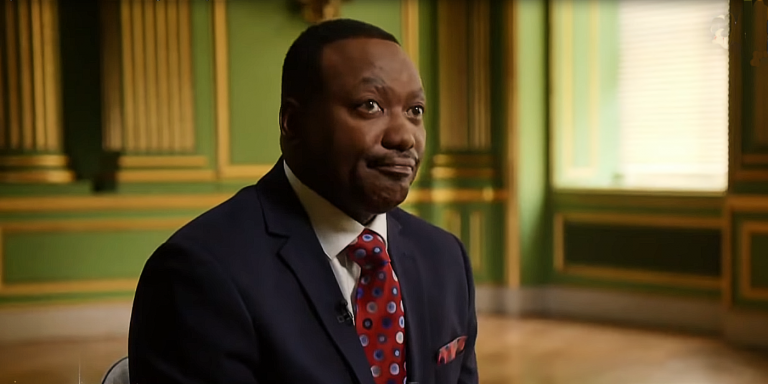
(Ken Silva, Headline USA) After killing protestor Ashli Babbitt on Jan. 6, 2021, Capitol Police officer Michael Byrd attempted to purchase a shotgun later that year—but he failed the federal background check and was prevented from doing so.

Byrd’s failed FBI background check was revealed by House Oversight Subcommittee Chair Barry Loudermilk, R-Ga., in a Wednesday letter to Capitol Police Chief J. Thomas Manger. The letter was first reported by Just the News.

“In September 2021, Byrd attempted to personally purchase a shotgun but failed to pass the background check required by federal law. Byrd subsequently sought USCP’s help in resolving the issue with his background check,” Loudermilk said in his letter.

“After learning that Byrd failed his background check, USCP took steps to provide him with a USCP-issued shotgun and intended to ‘lend’ him a shotgun even if his background check ‘did not come through.’ Ultimately, Byrd failed his shotgun proficiency and was not provided a USCP-issued shotgun,” he added.

Loudermilk’s letter also revealed new details about other scandals involving Byrd, including the time he shot at a carful of juveniles while he was off duty in 2004, and the time he left his loaded service weapon in a Capitol Visitor’s Center bathroom.

Additionally, Loudermilk said internal Capitol Police discipline records about Byrd have gone missing.

Loudermilk asked Manger numerous of questions about Byrd, who was promoted to captain last year. He also sought a slew of records, including Byrd’s communications on Capitol Police devices. He seeks responses by Dec. 4.

Loudermilk questioned whether Byrd was receiving favorable treatment by the Capitol Police, given that he was promoted to captain amidst numerous scandals. Byrd and his pet were also allowed to stay in a “Distinguished Visitor Suite” at the “Presidential Inn” from July 8, 2021, through January 28, 2022—at a heavy cost to the taxpayers.

“While I recognize that many of the concerning incidents related to Captain Byrd occurred before you became Chief of Police, Captain Byrd did receive significant favorable treatment by USCP after you became Chief of Police in 2021,” Loudermilk said to Manger.

Meanwhile, Babbitt’s widower, Aaron Babbitt, has an outstanding lawsuit against the U.S. government over Ashli’s death.

Babbitt, a 14-year Air Force veteran, was shot and killed by then-Lt. Byrd while crawling through a window in the Capitol building during the Jan. 6 protests.

Byrd has claimed that he acted with “the utmost courage” and “saved countless lives.”

However, earlier records obtained by Judicial Watch found that other officers at the scene did not see a weapon in Babbitt’s hands prior to the shooting and that they did not hear Byrd issue any verbal commands prior to the shooting. Lt. Byrd later confessed that he shot Ashli before seeing her hands or assessing her intentions or even identifying her as female.

Ken Silva is a staff writer at Headline USA. Follow him at x.com/jd_cashless.

European Central Bank Warns Surging Government Debt Is ‘Potential Threat’

(Mike Maharrey, Money Metals News Service) Governments around the world have the same problem. They spend too much money. The national debt in the U.S. is knocking on the door of $36 trillion, but Uncle Sam isn’t the only one spending like the proverbial drunken sailor.

In its recent Financial Stability Review, the European Central Bank (ECB) warned of a “potential threat” facing the eurozone due to elevated debt levels.

What is that threat?

A sovereign debt crisis.

Eurozone debt totaled just over €13 trillion (USD$13.65 trillion), representing 81.5 percent of GDP at the end of the second quarter.

While an 81.5 percent debt-to-GDP ratio may sound perfectly manageable, especially compared to the U.S. (122.85 percent), many eurozone countries face significantly higher debt loads.

  • Greece – 164.6 percent
  • Italy – 137 percent
  • France – 112 percent
  • Belgium – 108 percent

According to the ECB report, the eurozone is at risk for a debt crisis if the bloc cannot lower public debt, boost economic growth, and stem the tide of “policy uncertainty.”

“Despite recent reductions in debt-to-GDP ratios, fiscal challenges persist in several euro area countries, exacerbated by structural issues such as weak potential growth and heightened policy uncertainty.”

As summarized by the Financial Times, the report pointed to “elevated debt levels and high budget deficits,” along with sluggish economic growth and political uncertainties caused by “election outcomes at the European and national levels, notably in France,” as significant economic problems facing the EU.

The ECB is walking the same tightrope as the Federal Reserve in trying to maintain a debt-riddled bubble economy as it battles price inflation.

Surging consumer prices after the pandemic forced the ECB to raise interest rates. After running negative interest rates for nearly a decade after the 2008 financial crisis, the ECB pushed rates to 4 percent during the recent spate of price inflation.
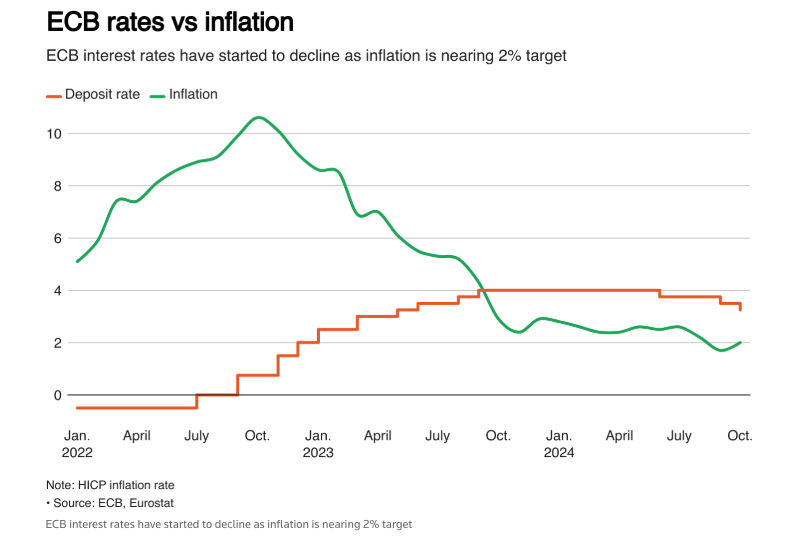
Like the Fed, the ECB has surrendered to inflation with three rate cuts so far this year.  But it’s likely too late. The ECB broke things in the European economy years ago when it followed the Federal Reserve’s lead and opted for unprecedented rate cuts and quantitative easing during the Great Recession and the pandemic. After gorging on negative rates for eight years, Europeans are addicted to easy money.  The economy simply can’t function in a higher interest rate environment.

The eurozone economy is already slowing. Policymakers there insist the ECB can guide the bloc to a “soft landing,” but the risk of a major economic crash is much more likely than the mainstream cares to acknowledge. The ECB followed the Federal Reserve down the road of monetary malfeasance. There is a cost to decades of easy money that the world has yet to reckon with.

However, the ECB isn’t completely oblivious. The report warned, “Headwinds to economic growth from factors such as weak productivity make elevated debt levels and budget deficits more likely to reignite debt sustainability concerns.”

We’re seeing these concerns manifest in bond spreads between European nations.

When lenders perceive a country has a higher credit risk, they demand a premium to cover the higher likelihood of default. This is already happening in the eurozone, according to the ECB report. The spread between the German 10-year bond (the European benchmark) and the French 10-year bond hit 0.78 percentage points recently, close to the 12-year high hit during last summer’s French elections.

“Greater policy uncertainties and market concerns about their implications for debt sustainability have resulted in some sovereign spreads widening for some euro area sovereigns with high levels of debt, albeit with limited cross-border spillovers for now. Concurrently, the longer-term trend of rising political fragmentation observed over the past three decades has made it more challenging to form stable government coalitions.”

Higher interest rates also increase the cost of servicing debt, putting further pressure on the countries with the highest debt loads. As bonds with extremely low yields purchased in the 2010s mature, they must be replaced by bonds with much higher rates.

According to the EBC report, EU analysts estimate that interest payments on French debt would more than double to exceed 4 percent of GDP by 2034. Italy’s interest cost would rise a third to just under 6 percent of GDP.

The ECB report also warned of overvalued equity markets with high-risk concentrations. This elevates the likelihood of “sharp adjustments” in eurozone stock markets. The report noted that “recent market corrections have not dissipated concerns over the overvaluation of equity markets.”

Of course, the ECB caused this problem with its negative interest rates and money creation. Inflation doesn’t just manifest in rising consumer prices. It generally shows up first in inflated stock markets and other asset prices.

Problems caused by the massive levels of government debt could spill into the broader European and global economies.

According to the ECB, “liquidity fragilities in non-bank financial intermediaries, in some cases coupled with high financial and synthetic leverage, have the potential to intensify and render market stress more enduring. Meanwhile, sovereign vulnerabilities are deepening.”

We saw how government debt problems could spill into the broader financial system when Greece and several other countries plunged into a debt crisis in 2009. Banks across the EU that were heavily exposed to sovereign debt faced liquidity issues. Some were in danger of collapse. This ultimately required interventions and bailouts by the ECB.

It’s easy for people in the U.S. to look at European issues and think, “Well, that’s their problem.”

It’s not. It’s everybody’s problem.

In the first place, the U.S. faces an even worse fiscal situation than the EU. This report should serve as a warning for U.S. policymakers as well.

Furthermore, contagion from a European crisis would likely spill across the pond. This could manifest in the U.S. financial system in several ways.

  • Stock Market Volatility: A European debt crisis would likely trigger a sell-off in global financial markets as investors flee risk assets. This could lead to sharp declines in U.S. stock indices.
  • Bank Exposure: financial institutions with significant investments in European government bonds or businesses would face losses, potentially affecting their balance sheets and lending capabilities. We’ve already seen how tanking bond prices can cause a banking crisis with the collapse of Silicon Valley Bank, Signature Bank, and First Republic Bank when the Fed raised interest rates.
  • Credit Crunch: If European banks face liquidity problems, it could reduce their ability to finance global trade, impacting credit availability for U.S. companies. From a psychological standpoint, a European debt crisis could elevate concerns about U.S. government debt and tank demand for U.S. Treasuries.
  • Economic Slowdown: A debt crisis and the ensuing recession would weaken European demand for U.S. goods and services, hurting American exporters and slowing U.S. economic growth.

This reveals the fundamental problem with governments. Political incentives trump economic reality. Politicians have one overriding goal – to get reelected and expand their power. The fastest path to popularity is to spend money. That’s why talk about fiscal discipline never gets beyond the conversation phase. Politicians and bureaucrats are always finding new ways to spend money (and grow their power). Investors should be aware of this phenomenon and plan accordingly.


FBI Director Wray and DHS Secretary Mayorkas REFUSE to Testify before Congress

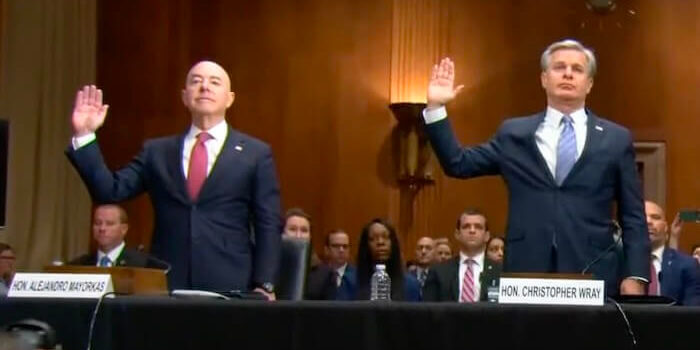
(Ken Silva, Headline USA) FBI Director Christopher Wray and Homeland Security Secretary Alejandro Mayorkas were supposed to testify before the House and Senate homeland security committees this week about “threats to the homeland”—but they are refusing to do so.

The annual House Homeland Security hearing was set for Wednesday, but on Tuesday the House issued a notice that it was being postponed indefinitely. A day later, a similar situation occurred in the Senate.

Fox News broke the news on the Senate cancelation Thursday morning, with Sen. Josh Hawley, R-Mo., issuing a statement around the same time.

“Secretary Mayorkas and Director Wray’s refusal to testify publicly today in the Senate is an outrage—and a brazen attempt to avoid oversight for the political abuses at FEMA, the FBI and more. I look forward to Director Wray’s resignation,” Hawley said on Twitter/X.

Sen. Rand Paul, R-Ky., also issued a statement on the matter, calling the FBI and DHS bosses’ decisions “unacceptable.”

Wray’s cancellation comes on the heels of revelations that his former subordinate—retired  FBI official Steven D’Antuono—lied about the bureau receiving “corrupted” evidence in its  investigation into who planted the Jan. 6, 2021, Capitol Hill pipe bombs.

Additionally, it has now been nearly three months since the FBI provided an update on its investigation into the July 13 assassination attempt against Donald Trump. The House Task Force investigating the shooting did visit FBI facilities this week as part of its probe.

The DHS has been similarly tight-lipped about its Trump shooting investigation—as well as a number of other matters.

Earlier this week, the head of FEMA—which is housed within the DHS—was dragged by lawmakers for its workers having avoided pro-Trump households in its recent hurricane responses.

Mayorkas’s refusal to testify also comes amidst reports that his agency can’t account for thousands of unaccompanied migrant children.

Numerous FBI and Justice Department officials are reportedly planning to resign before Donald Trump takes office, and some are even hiring lawyers in fear of being criminally prosecuted.

Ken Silva is a staff writer at Headline USA. Follow him at x.com/jd_cashless.

Post-Election Markets: Inflation, Debt, and the Case for Precious Metals

(Money Metals News Service) In this week’s Money Metals Midweek Memo, host Mike Maharrey examines the post-election economic landscape following Donald Trump’s victory. He discusses how the financial markets have responded, the persistence of inflation, and the challenges of monetary policy. Maharrey also underscores the importance of precious metals as a hedge against economic instability, offering insights into what lies ahead.

Market Reactions to Trump’s Election

Financial markets reacted significantly to the election results. Stock markets experienced rallies as investors anticipated pro-business policies, including tax cuts and economic stimulus. The U.S. dollar surged, reflecting optimism about economic growth, while a bond selloff drove treasury yields higher. Precious metals, including gold and silver, initially saw sharp declines—a typical response under Republican administrations—but have since rebounded as inflation concerns remain at the top of mind.

  • Stock Markets: Significant rallies occurred as investors anticipated potential pro-business policies, such as tax cuts and economic stimulus.
  • Dollar Strength: The U.S. dollar surged, reflecting optimism about potential economic growth.
  • Bond Market: A selloff caused treasury yields to rise.
  • Precious Metals: Gold and silver saw sharp declines, typical during Republican leadership, but have rebounded slightly as inflation concerns persist.

Inflation: A Persistent Challenge

Maharrey highlighted inflation as a continuing issue that has far-reaching economic implications. Core inflation increased by 0.3% month-on-month, translating to an annualized rate of 3.6%, well above the Federal Reserve’s target of 2%. Since the COVID era, the dollar’s purchasing power has plummeted by over 20%, compounding the challenges for American consumers. Maharrey reiterated economist Milton Friedman’s assertion that inflation is driven by money printing, not economic activity.

  • Core Inflation: Rose 0.3% month-on-month, equating to an annualized rate of 3.6%—far above the Federal Reserve’s 2% target.
  • Dollar Devaluation: Since the COVID era, the dollar’s purchasing power has dropped by over 20%.
  • Federal Reserve’s Role: Maharrey emphasized that inflation stems from money printing, not economic activity, citing economist Milton Friedman: “Inflation is always and everywhere a monetary phenomenon.”

Federal Reserve’s Policy Response

The Federal Reserve has adopted a cautious approach, recently cutting interest rates to 4.5–4.75%. While this is higher than the near-zero rates of the post-2008 financial crisis, it remains moderate by historical standards. Maharrey criticized the Fed for maintaining historically loose monetary conditions, noting that their policies have not effectively addressed inflation. Federal Reserve Chair Jerome Powell emphasized a data-dependent approach, leaving the door open for adjustments based on future economic conditions.

  • Interest Rates: A recent cut brought rates to 4.5–4.75%, historically moderate but high compared to the post-2008 norm of near-zero rates.
  • Monetary Policy: Maharrey criticized the Fed for failing to address underlying inflation, noting that financial conditions remain historically loose.
  • Fed Chair Powell’s Outlook: Powell highlighted a data-dependent approach, signaling potential flexibility in future rate changes.

Structural Economic Issues

Maharrey warned that many of the economy’s structural problems are beyond the control of any president, including Trump. The U.S. paid over $1 trillion in interest on its national debt in fiscal 2024, highlighting the unsustainability of current fiscal policies. Federal spending surged 24% year-over-year in October 2024, driven by entitlements such as Social Security, Medicare, and National Defense. With only 27% of the federal budget classified as discretionary, significant spending cuts are difficult to achieve without addressing politically sensitive programs.

  • Debt: The U.S. paid over $1 trillion in interest on national debt in fiscal 2024, showcasing the unsustainability of current policies.
  • Spending Increases: Federal spending surged 24% year-over-year in October 2024, with entitlements like Social Security and Medicare accounting for the bulk.
  • Limited Discretionary Spending: Only 27% of the budget is discretionary, leaving little room for significant cuts.

Precious Metals: A Timeless Hedge

Amid ongoing inflation and structural challenges, Maharrey emphasized the value of precious metals as a hedge against economic uncertainty. The Silver Institute projects industrial demand for silver to reach 1.21 billion ounces in 2024, leading to a fourth consecutive annual supply deficit. Maharrey also reaffirmed gold’s historical role as a hedge against inflation, describing the current price dips as an excellent buying opportunity for long-term investors.

  • Silver Market Deficit: The Silver Institute projects industrial demand to hit 1.21 billion ounces in 2024, driving the fourth consecutive annual supply deficit.
  • Gold as a Hedge: Maharrey reiterated gold’s historical role as a hedge against monetary debasement, viewing current price dips as a buying opportunity.

Managing Expectations

Maharrey urged listeners to temper their expectations for what any president can achieve, emphasizing that decades of poor fiscal and monetary policy have created systemic issues that no single administration can resolve. While Trump’s presidency may slow the growth of government spending, excessive debt, persistent deficits, and entrenched inflation remain formidable challenges.

For those seeking to protect their wealth, Maharrey recommended investing in precious metals through Money Metals Exchange, noting the company’s resources and customer support.

Learn More

To stay informed about economic trends and precious metals, subscribe to the Midweek Memo and Money Metals’ Market Podcast. Visit MoneyMetals.com to explore investment opportunities and access valuable resources.

Jaguar Rebrands, Goes Woke w/ Androgynous Models and No Car Ad

(Maire Clayton, Headline USA) Luxury car company Jaguar revealed its rebranding in a now viral Tuesday video, which showcased androgynous models in lieu of cars.

The video showcased the models in brightly colored clothing with the phrases “live vivid,” “delete ordinary” and “break moulds” appearing on the screen.

While the ad featured a man in a dress, it failed to show a Jaguar in the 30-second video.

The ad was posted to the company’s social media with the message: “Copy nothing.”

It quickly sparked massive backlash on social media with users calling the company “Bud Light 2.0.”

“Well…we know where the advertising team for Bud Light went,” Virginia GOP state delegate Nick Freitas wrote.

Anheuser-Busch partnered with controversial transgender influencer Dylan Mulvaney in 2023, causing a a widespread boycott and an over $1 billion loss in sales.

“Jaguar is about to learn the hard way,” commentator Rogan O’Handley, aka DC Draino, added. “Go woke, go broke.”

Tesla founder and CEO Elon Musk was quick to call out the lack of automobiles in the ad.

“Do you sell cars?” the billionaire wrote on X.

Another user questioned what the company was even trying to sell.

“Umm where are the cars in this ad?” the user wrote. “Is this for fashion?”

Jaguar ended up responding with a baffling answer to the simple question.

“Think of this as a declaration of intent,” the account said.

The ad shouldn’t come as a surprise, as Jaguar’s brand executive Santino Pietrosanti previously pledged to have a diversity, equity and inclusion environment.

“We’re committed to fostering a diverse, inclusive, and unified culture that is representative not only of the people who use our products but of the society in which we all live,” Pietrosanti said.

He added the company already established over 15 DEI groups, such as pride and women engineering.

Pietrosanti said Jaguar wants it workers to be “their authentic selves” at work.

Left Recycles Same Old Tired Smear Tactics Against Trump Nominee Sean Duffy

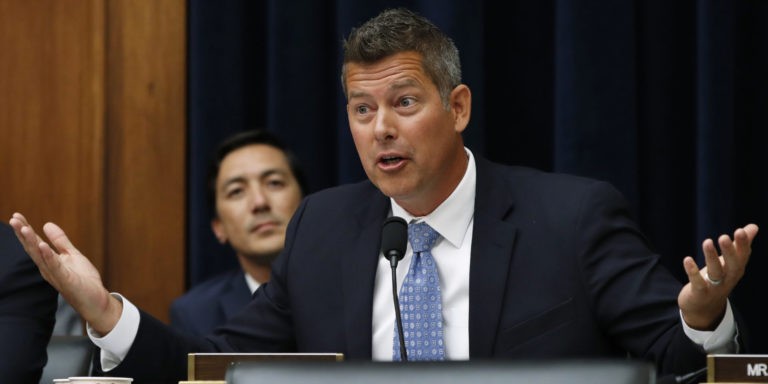
(Luis Cornelio, Headline USA) Just like clockwork, the left has dredged up decades-old footage of Sean Duffy, President-elect Donald Trump’s nominee to lead the Department of Transportation, in what appears to be yet another smear campaign against the incoming Republican administration. 

Pete Hegseth, Trump’s pick for Secretary of Defense, and Matt Gaetz, tapped for Attorney General, already face baseless allegations of sexual misconduct.  

Hegseth and Gaetz vehemently deny the seemingly coordinated claims. However, this has not stopped the left and their allies in the media from recycling the accusations. 

Their latest target appears to be Duffy, a devoted husband of 25 years, and father of nine children, who starred on MTV’s The Real World: Boston as a young law student. 

Several outlets reported Wednesday that scenes from the reality show depicted Duffy, then a single 25-year-old, as a partygoer and flirtatious man.

One of the scenes showed Duffy jokingly flirting with co-star Genesis Moss, a lesbian. According to the Daily Mail, Duffy once asked Moss to “feel my noodle.” 

In 2021, Moss spoke fondly of Duffy, describing his ambition to one day become president. She noted that all the co-stars once shared a group chat.   

After graduating from law school, Duffy ran to serve as district attorney of Wisconsin’s Ashland County, a job he held from 2002 until 2010. He then became a member of Congress, representing Wisconsin’s 7th District from 2011 to 2019.

Duffy resigned from Congress to care for his newborn daughter, who was born with a heart problem. He met his wife and fellow Real World co-star Rachel Campos-Duffy in the 1990s. Campos-Duffy is now a Fox News anchor.  

On X, several conservatives called out the left for their unsuccessful attempts to tarnish Duffy’s image. Duffy’s daughter, podcast host Evita Duffy-Alfonso, humorously posted on X: “The Real World: White House Congrats, dad!”

Scott Presler Wants to Replace Corrupt Election Official

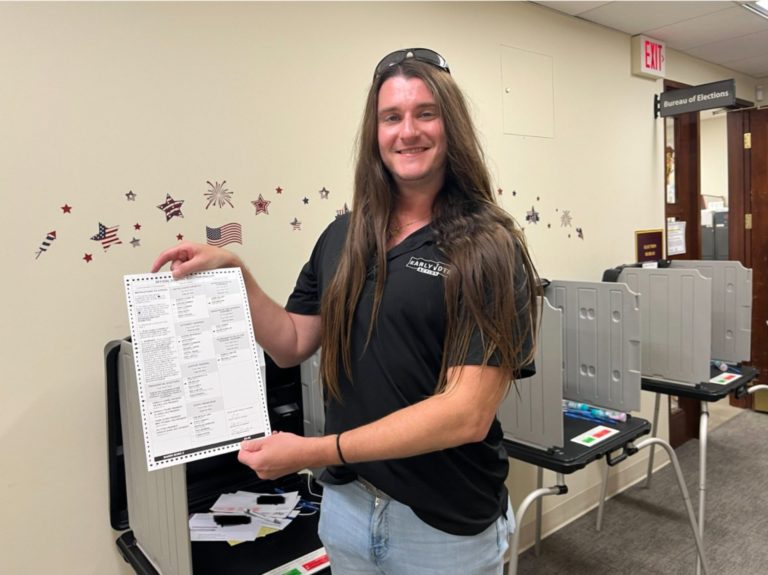
(Dmytro “Henry” Aleksandrov, Headline USA) Founder of Early Vote Action and grassroots organizer Scott Presler, who ensured President-elect Donald Trump won Pennsylvania, attended a Bucks County commissioners’ meeting on Wednesday and told one of the officials that she would lose her job in 2027.

“Just told democrat Commissioner Diane Marseglia to her face that we are — peacefully — coming after her seat in 2027. Video incoming,” he wrote.

In another post on Twitter, Presler wrote that he congratulated Trump in front of the corrupt commissioners.

Before posting the video of his speech, Presler also stated that the room was packed with people.

“There are so many people that they have to have an overflow room,” he wrote.

After that, he posted a video of his viral speech.

“I told Democrat Commissioner Diane Marseglia to her face, ‘Peacefully, we are coming for your seat in 2027 — if you don’t resign today.’ She replied, ‘Have at it.’ Also called for Marc Elias & his cronies to be disbarred from practicing in Pennsylvania. Bucks County roared,” he wrote.

In a follow-up post, Presler wrote that he hopes he made conservatives “proud,” adding that he and his team “aren’t stopping or slowing down for a gosh darn second.”

The recent news came after Republican candidate David McCormick won the Senate seat in Pennsylvania, which resulted in his Democratic opponent, Bob Casey, refusing to concede the race.

Senate Majority Leader Chuck Schumer, D-N.Y., also refused to allow McCormick to attend Senate orientation, which the newly-elected Senator attended after conservatives pushed back against Schumer’s election denialism.

While that was happening, Democrats in Pennsylvania were working overtime to steal the Senate seat for Casey. After the Republican National Committee informed the Pennsylvania Supreme Court about Democrats blatantly trying to steal the election by counting illegal ballots, the Court stated for the second time that the election officials must stop doing that.

This resulted in Gov. Josh Shapiro, D-Pa., and one of the election commissioners, Ellis-Marseglia, whom Presler addressed in his speech, gaslighting Americans by saying that their open admission of the election steal was misunderstood.

Presler also stated that he is committed to turning historically deep blue New Jersey into a conservative state.

In one of his Twitter posts, he wrote, “I make a commitment right here and now that we will be registering new Republican voters in New Jersey and commit time in 2025 to the gubernatorial election.”

Kari Lake Spotted at Mar-a-Lago, May Get Position in Trump’s Admin.

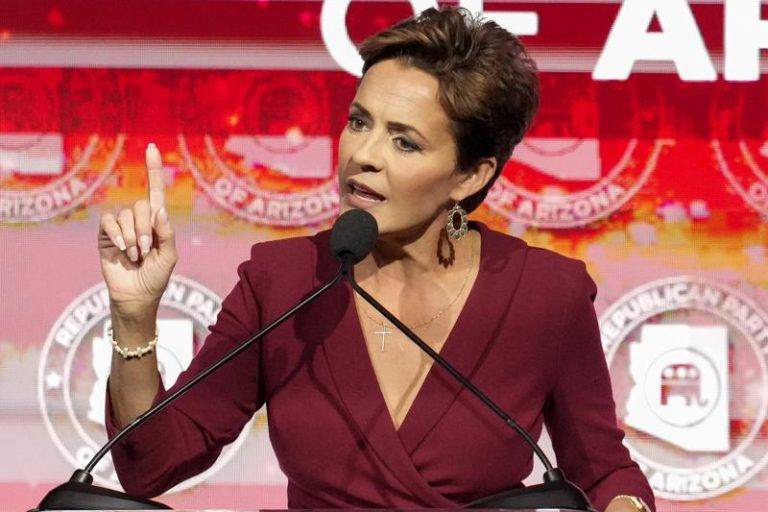
(Dmytro “Henry” Aleksandrov, Headline USA) Kari Lake, who ran for senator in the 2024 election and governor of Arizona in the 2022 election, recently visited President-elect Donald Trump at Mar-a-Lago.

This led to speculation that she may get a position in Trump’s administration after leftists stole the two elections from her.

“Great to meet the Legendary @elonmusk. Had a chance to thank him for saving our First Amendment so we Patriots could speak FREELY. So glad he will help shrink down our out-of-control US Government and support our most important rights—our First and Second Amendments,” Lake wrote on Twitter.

Some conservatives also posted a video of Trump and Lake talking inside the building.

“Trump catching up with the great Kari Lake at Mar-a-Lago. I can’t wait to see all the incredible things she’ll do next,” @PU28453638 wrote.

Others also said they hoped Trump would make Lake an “election czar” in his administration.

“If Arizona gets away with stealing the election from @KariLake again, I hope President @realDonaldTrump brings her on as the elections Czar to go after these corrupt election officials and the politicians that have sold out to the cartels and communist traitors!” @BenBergquam wrote.

Many other conservatives on Twitter also suggested Trump should give Lake a job in her administration because Democrats already stole two elections from her in Arizona.

“Kari Lake is incredible. They keep stealing her elections. Maybe Trump should put her in his administration?! What do you think?” @Sassafrass_84 wrote.

Headline USA’s Ben Sellers previously suggested that Trump should appoint Lake as a chairman of the Federal Election Commission.

“Lake has been one of the foremost victims of the Left’s war on election integrity… [After] having twice been denied office under the shadiest of circumstances, Lake deserves some concession for having remained steadfast to Trump. And nobody deserves more than she does to be put in charge or reforming the broken election system,” he wrote.

WaPo Almost Lost $77M

(Dmytro “Henry” Aleksandrov, Headline USA) It was recently revealed that the Washington Post almost lost $77 million this year even before many leftists canceled their newspaper subscriptions to boycott the Post’s decision not to endorse any presidential candidate in the 2024 election.

“The level of anger is through the roof, and fear is also through the roof. There’s huge concern that Bezos is going to pull the plug,” one Post staffer told New York magazine.

The magazine reported that the projected losses, which the paper’s leadership revealed in a recent staff meeting, did not include 250,000 angry leftists who stopped paying for their subscriptions after the Post refused to endorse former Democratic presidential nominee Kamala Harris.

“The top stories that do well convert 200 readers to subscribers,” another person who works for the newspaper said. “You’re doing your best work, hoping you convert 200 subscribers. And we lost 250,000 through naïveté and poor decision-making.”

The magazine also stated that the Post could lose even more of its “most marketable journalists” because they are now “seeking out opportunities at other outlets.”

The recent news came after the Post’s leadership decided not to endorse any presidential candidate during the 2024 election. This was a shocking decision for many people, considering that the Post publicly supported only three Republican politicians since 1928 but used every opportunity to support a Democrat.

“We are returning to our roots of not endorsing presidential candidates,” the newspaper’s publisher and chief executive officer, William Lewis, wrote. “Our job at the Washington Post is to provide … nonpartisan news for all Americans, and thought-provoking, reported views from our opinion team to help our readers make up their own minds.”

Jeff Bezos, the Post’s owner, also published an op-ed arguing that the newspaper should include more conservative voices in its opinion section.

“Our profession is now the least trusted of all. Something we are doing is clearly not working,” he wrote. “Anyone who doesn’t see this is paying scant attention to reality, and those who fight reality lose.”

Jasmine Crockett’s Bizarre Rant: White People Can’t Be Oppressed

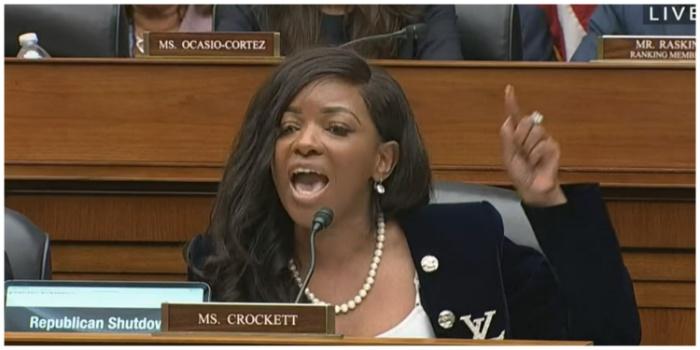
(Luis Cornelio, Headline USA) Rep. Jasmine Crockett, infamous for inflammatory outbursts in congressional hearings, unleashed another tirade targeting “white” people and their push against Diversity, Equity, and Inclusion (DEI) policies. 

During a markup hearing for H.R. 8706—the Dismantle DEI Act of 2024—on Tuesday, Crockett declared that white individuals cannot be oppressed despite the explicit discriminatory nature of DEI. 

“There has been no oppression for the white man in this country,” Crockett shouted, as seen in a viral video shared on X. “You tell me which white men were dragged out of their homes? You tell me which one of them got dragged all the way across an ocean and told that ‘you are going to go at work;’ ‘We are going to steal your wives;’ ‘We are going to rape your wives.’ That didn’t happen. That is oppression.” 

Crockett’s attack on the Dismantle DEI Act comes despite the Supreme Court’s firm stance that discrimination, including against racial majorities, violates the Equal Protection Clause of the U.S. Constitution 

DEI initiatives often reserve jobs, awards and other benefits for groups considered by some as historically excluded. The practice of DEI disadvantages large racial groups, including white Americans. 

With 73 co-sponsors, the Dismantle DEI Act aims to eliminate all government funding and authorization of DEI programs. The bill orders the Office of Personnel Management to “abolish all Federal DEI offices” and the Office of Management and Budget to “rescind all DEI regulations,” according to a House Oversight Committee press release. 

Oversight Committee Chairman James Comer, R-Ky., praised the bill for addressing the harm caused by DEI. “These initiatives spread divisive and exclusive ideologies in our federal government workplaces and taxpayers are left footing the bill,” he said. “For these reasons, I support the Dismantle DEI Act.” 

Crockett fired back Wednesday, calling it offensive for “white men on the other side of the aisle” to say they are being oppressed.  

“That’s not the definition of oppression,” she claimed. “You tell me the prolonged cruel or unjust treatment that you’ve had and we can have a conversation,” she said. 

In response, Comer swiftly retorted, “You could start with Exodus.”