Why Did the Price of Palladium Suddenly Spike?

(Mike Maharrey, Money Metals Exchange) While everybody was watching the gold and silver bulls run, the price of palladium shot up by about 8 percent on Thursday (Oct 24).

In fact, palladium is up by around 27 percent since earlier this month, having spiked from $922 an ounce to over $1,195 today.

What is going on with this rather obscure but important metal?

What Is Palladium? 

Palladium is a rare silver-white metal in the family of platinum group metals (PGMs). It was discovered by English chemist William Hyde Wollaston in 1802.

Palladium is a key component in catalytic converters for gasoline-powered vehicles. The auto sector accounts for about 85 percent of palladium offtake.

Palladium’s conductivity and durability also make it ideal for small electronic components. It is an important part of multilayer ceramic capacitors (MLCCs) found in devices such as cell phones, laptops, and televisions.

Like its cousin platinum, palladium is also used to make jewelry.

Palladium is about 30 times rarer than gold. Globally, mines produce about 200 tons of platinum each year. This compares to gold output of around 3,000 tons annually.

Most global platinum production is a byproduct of nickel and platinum mining.

Palladium reserves are concentrated in a few key areas. Russia and South Africa produce most of the world’s palladium, with Russia contributing around 38 percent of the total. When factoring in recycling, Russia accounts for about a quarter of the world’s palladium supply.

Russia’s MMC Norilsk Nickel PJSC ranks as the world’s biggest palladium producer.

Palladium Supply Threat

In the spring of 2022, the price of palladium soared to over $3,000 an ounce. This was due to fears of supply disruptions after Russia invaded Ukraine. At the time demand was also growing due to tightening global emission regulations and an economic boom in China.

As fears over supply chain disruptions eased and demand in the automobile industry sagged, the price of palladium slowly tumbled. It has been hovering in the $900 to $1,000 an ounce range for the past year.

So, why did the price of palladium suddenly spike?

According to a Bloomberg report, the U.S. is pushing G-7 members to sanction Russian palladium.

“The Biden administration floated the potential restrictions at a meeting of G-7 finance officials in Washington this week as it mulls fresh ways to squeeze President Vladimir Putin’s war efforts.”

A commodity analyst with TD Securities told Bloomberg the threat of supply disruptions has “reignited buying activity,” and “fear is the trade.”

The Biden administration may find convincing other G-7 members to go along with palladium sanctions a tough sell. It also remains unclear how much U.S. and G-7 sanctions would impact the global market. According to the Bloomberg report, Russia sells most of its palladium to China.

Nevertheless, a researcher with Amalgamated Metal Trading told Bloomberg that sanctions would likely tighten the market because “South Africa and the other major producers won’t be able to fill the gap.”

Palladium is already in a supply squeeze. Demand has outstripped supply for three straight years, and the projection is for a 358,000-ounce market deficit in 2024. A commodity strategist at Saxo Bank said above-ground stocks of palladium are nearly depleted, adding that the sanction threat may “further rattle a long-held spec short while raising supply anxiety in a market that remains in a deficit.”

Palladium Demand Boost?

There has also been market speculation that demand for palladium could increase as China looks for ways to stimulate its economy. When China embarked on a significant stimulus policy back in 2019, the price of palladium soared.

Even before the news of possible Russian sanctions, the palladium market was already pricing in the possibility of higher Chinese demand.

China accounts for 30 to 35 percent of global palladium demand. China is one of the world’s largest automobile markets. Even with the global shift toward EVs, gasoline-powered vehicles still dominate the Chinese market.

There was also news out of Russia that added a little bullish momentum to the palladium market. Russia reportedly plans to allocate 51.5 billion rubles to buy precious metals, including palladium, to hold in its state fund.

What’s Next for Palladium?

Tight supply and increasing demand are a recipe for rising prices. However, it seems unlikely we’ll see a return to $3,000 palladium in the near future due to limiting factors including a shift toward platinum in catalytic converter production. Nevertheless, there does seem to be a bullish picture developing in the palladium market and there may be momentum for further price gains.
De-Dollarization: Major International Bank Joins Chinese Payment Global System

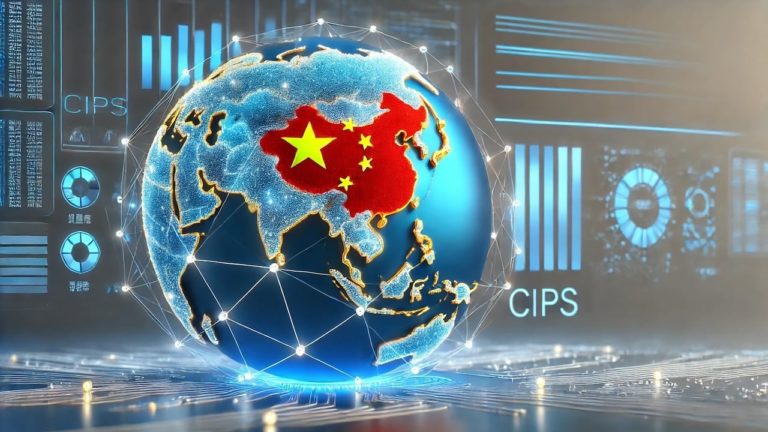
(Mike Maharrey, Money Metals News Service) HSBC Hong Kong announced it will formally join China’s Cross-Border Interbank Payment System (Cips).

The move is yet another body blow to dollar dominance. According to the Financial Times, it will give “the world’s biggest player in trade finance a key role in Beijing’s push to expand use of the renminbi.”

London-based HSBC is one of the world’s largest banking and financial institutions. It was founded in 1865 to facilitate trade between Europe and Asia. HSBC operates in over 60 countries across Asia, Europe, North America, and the Middle East.

HSBC already indirectly participates in Cips. By becoming a direct participant in the payment system, the bank’s Hong Kong unit will be able to directly settle payments in renminbi for the first time.

According to the Financial Times, HSBC is in the midst of a “sweeping overhaul” that will set up its UK and Hong Kong units as separate divisions.

A bank executive said the move to join Cips is “in response to the needs of our customers.”

Another Step Toward De-Dollarization 

China touts Cips as an alternative to the SWIFT payment system.

China established Cips in 2015, but the system has gained more attention since the U.S. and its allies locked Russia out of SWIFT in response to its invasion of Ukraine.

SWIFT serves as the global economy’s superhighway. In effect, it operates as a global financial messaging service, facilitating cross-border payments. As the SWIFT website puts it, “SWIFT is the way the world moves value.”

Since the dollar serves as the world reserve currency, SWIFT effectively facilitates an international dollar system.

Cips partners with SWIFT, but it also has a standalone messaging system. It is currently used by 135 countries that are part of China’s “Belt and Road” infrastructure program.

Leaders in some countries have become wary since the U.S. has weaponized the dollar for foreign policy purposes.

While aggressive sanctions may make sense from a Western foreign policy perspective, it has made a lot of countries wary and sped up the movement to minimize dependence on the greenback. After all, if you have something that can be used as leverage against you, it’s only natural to try to minimize your exposure to that thing. If the U.S. can pull the dollar rug out from under you, why not try to get that rug out of the room?

When announcing HSBC Hong Kong’s plan to join Cips at a conference in Beijing, David Liao, HCBC co-chief executive of the bank’s business in Chinese territory, said the dominant role of the U.S. dollar was being “diluted.”

Executive dean of the Chongyang Institute for Financial Studies at Renmin University of China Wang Wen noted that “in the past two years, the US has promoted the weaponization of finance and abused the U.S. dollar payment system to strike, retaliate against and sanction other countries,” and this has “forced countries to be willing to accept new cross-border payment systems.”

While the dollar isn’t in any danger of losing its status as the world’s reserve currency (yet), we are seeing a global move toward a “multipolar” financial system that doesn’t rely solely on the dollar.

Wang told the Financial Times that many large international banks are making “two-way bets” on competing international payments systems, and he said Cips could boost the role of the Chinese yuan in international finance. He said Cips provides “diversified arrangements for a better cross-border system, making the internationalization of the renminbi more rapid in the future.”

Even a modest erosion of dollar dominance could have significant ramifications for the U.S. economy. And we’re already seeing it happen. Dollar reserves globally have dropped by 14 percent since 2002, and de-dollarization accelerated after the U.S. and her Western allies aggressively sanctioned Russia.

Because the global financial system runs on dollars, the world needs a lot of them, and the United States depends on this global demand to underpin its bloated government. The only reason the U.S. can borrow, spend, and run massive budget deficits to the extent that it does is the dollar’s role as the world reserve currency. It creates a built-in global demand for dollars and dollar-denominated assets. This absorbs the Federal Reserve’s money creation and helps maintain dollar strength despite the Federal Reserve’s inflationary policies.

But what happens if that demand drops?

A de-dollarization of the world economy would cause a dollar glut. The value of the U.S. currency would further depreciate. At the extreme, global de-dollarization could spark a currency crisis. You and I would feel the impact through more price inflation eating away at the purchasing power of the dollar. In the worst-case scenario, it could lead to hyperinflation.

Ex-Trump Official Crying ‘Hitler’ is War Profiteer w/ Financial Ties to Child Migrant Housing

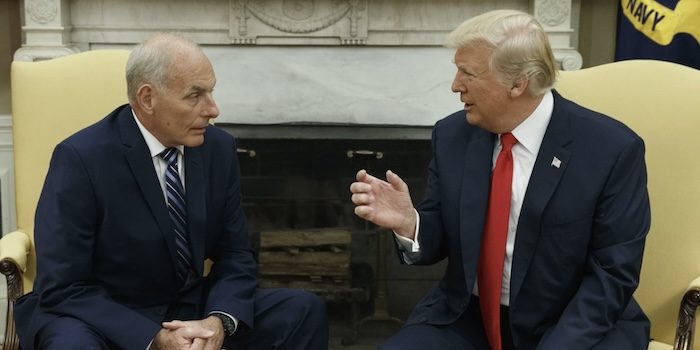
(Ken Silva, Headline USA) Former chief of staff John Kelly has made waves recently with his claims that Donald Trump meets the definition of a fascist and that while in office, he suggested that Adolf Hitler “did some good things.”

Kelly, the retired Marine general who worked for Trump in the White House from 2017 to 2019, previously accused Trump of calling veterans killed in combat “suckers” and “losers.”

However, records show that Kelly has a perverse financial motive to smear Trump.

Indeed, after Kelly left the White House in 2019, he became a board member of Caliburn International, which operated the largest shelter for unaccompanied migrant children in the country.

In 2021, Caliburn reportedly split into two companies, Acuity International and Valiance Humanitarian, with the latter taking the child-migrant housing business. It’s not clear what Kelly’s role with Valiance is, but he’s still on the board of Valiance’s parent company, private equity firm DC Capital Partners.

Acuity has also reportedly received contracts in Ukraine, giving Kelly another reason to smear Trump. The firm held a conference on supporting Ukraine’s war just last month in Warsaw.

“Maybe John Kelly had the grand idea to leak this non-story when he was flying back from Ukraine, because he saw how big the profit margins were going to be should Kamala Harris win,” remarked Natalie Winters on the War Room.

Despite Kelly’s dubious financial motives—or perhaps because of them—Kamala Harris has seized on his comments.

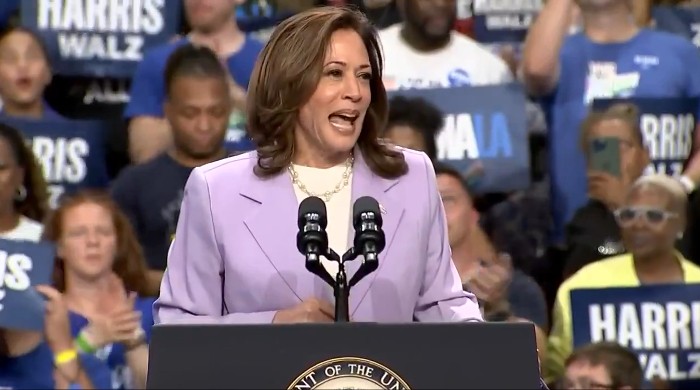
The Democratic presidential nominee said Kelly’s comments, less than two weeks before voters will decide whether to send Trump back to the Oval Office, were a “911 call to the American people” by the former chief of staff.

“This is a window into who Donald Trump really is, from the people who know him best, from the people who have worked with him side by side in the Oval Office and in the Situation Room,” Harris told reporters Wednesday outside the vice president’s residence in Washington.

Ken Silva is a staff writer at Headline USA. Follow him at x.com/jd_cashless.

FBI Arrests 72-Year-Old Machine Gun Maker

(Ken Silva, Headline USA) They call him the “AK Guru.”

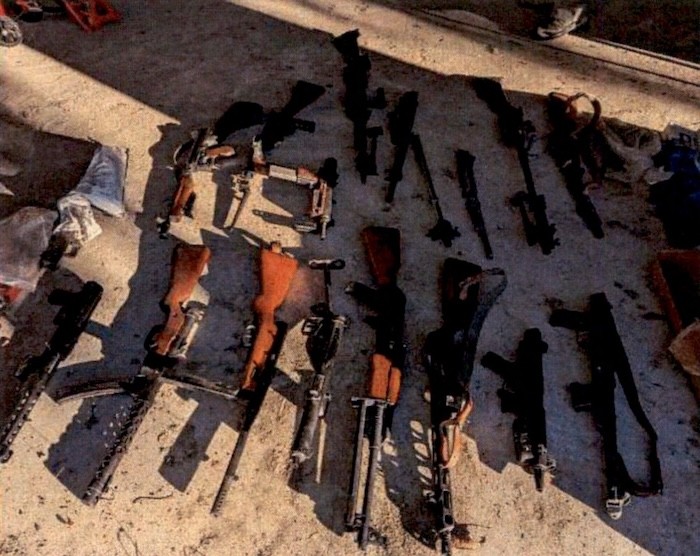
Earl Carter Jr., 72, of Hamlet, North Carolina, allegedly manufactured more than 1,000 fully automatic AK-47s and other firearms, selling them to groups around the area—including “multiple prominent local individuals.”

After manufacturing machine guns for a “significant portion” of his life, Carter was arrested earlier this month. Charging papers unsealed this week describe an underground gun-making enterprise that could be fit for a Breaking Bad-style television series.

“CARTER has connections around the world who are able to smuggle firearms from Europe into the United States … CARTER has sold over 1000 fully automatic AK-47s to different groups in the area and that individuals from the ‘mountains’ have purchased multiple fully automatic AK-47s a week from CARTER,” stated the FBI’s criminal complaint, which was first reported by Court Watch.

“CARTER is an individual who is well connected and has sold machineguns to multiple prominent local individuals.”

According to the 14-page criminal complaint, the FBI eventually nabbed the 72-year-old Carter because one of his clients turned snitch.

An FBI informant bought four machine guns and two illegal suppressors from someone in Wake County. That person, identified in charging papers as “CD-1,” then snitched on Carter and agreed to cooperate against him.

The FBI executed a search warrant on Carter’s home on Oct. 15, finding a cache of firearms.

“Of these firearms, investigators specifically seized at least one AK style rifle that had a “third pin”; an exterior indicator that an AK style rifle is constructed with parts capable of functioning as a machinegun,” the criminal complaint said.

“In addition to the AK style rifles, over twenty other firearms were found during the search warrant execution. In addition to the firearms being found, investigators also seized a homemade suppressor.”

The criminal complaint said there’s more information about Carter’s criminal enterprise that has yet to be disclosed.

Carter was ordered to remain in jail on Thursday. Future hearings have yet to be scheduled.

Ken Silva is a staff writer at Headline USA. Follow him at x.com/jd_cashless.

Kamala Once Wanted to Completely Ban Guns

(Dmytro “Henry” Aleksandrov, Headline USA) Democratic presidential nominee Kamala Harris has always been a radical, and the recently unearthed audio proved it.

The Washington Free Beacon found an audio recording in which Harris admitted that it “would be great” if all guns were banned in the United States.

Harris, then San Francisco’s district attorney, revealed her anti-Second Amendment beliefs at a 2006 event hosted by the Commonwealth Club of California.

Harris commented after the moderator Mary Cranston asked whether gun ownership should be banned for every American except for law enforcement.

“Yeah, and it would be great to end world hunger and a couple of other things, too. Are we going to really be able to get rid of people owning and possessing guns? I don’t know,” she said, explaining that it may not happen soon because the U.S. Constitution allows Americans to own firearms.

“I don’t think we’re anywhere close to that right now,” said Harris. “I would not put all my effort into that being the solution because I think it’s a long way off.”

It wasn’t the only time when Harris showed her true colors. She previously advocated for the confiscation of firearms, using shootings in the United States as an opportunity to take away one of the constitutional rights in this country.

“In our country today, the leading cause of death of American children is gun violence.  Gun violence has terrorized and traumatized so many of our communities in this country, Harris said on Oct. 26, 2023. “And let us be clear, it does not have to be this way, as our friends in Australia have demonstrated.”

Harris, of course, meant the total confiscation of guns in Australia between 1996 and 1997.

Harris also showed her tyrannical nature during a press conference with now-Gov. Gavin Newson, D-Calif., in the early 2000s.

“We’re going to require responsible behaviors among everybody in the community. Just because you legally possess a gun in the sanctity of your locked home doesn’t mean that we’re not going to walk into that home and check to see if you’re being responsible and safe in the way you conduct your affairs,” she said.

After she replaced Joe Biden, Harris tried to appear less far-left than she really was, but people still saw through the leftist narrative.

“Kamala Harris is the most anti-gun candidate who has ever been as close as she is to becoming president, even if she has been less than forthcoming on her specific views on firearms and the Second Amendment,” the National Rifle Association wrote.

Trump Sues Leftist Brits Campaigning for Kamala

(Dmytro “Henry” Aleksandrov, Headline USA) Republican presidential nominee Donald Trump filed a Federal Election Commission complaint against “far-left” U.K.’s Labour Party helping the campaign of Democratic presidential nominee Kamala Harris for “illegal foreign campaign contributions” and “interference in our elections.”

“In two weeks, Americans will once again reject the oppression of big government that we rejected in 1776,” the Trump campaign wrote.

Trump’s team then added that the Harris team is losing, and that is why it needs people from other countries to interfere in this election.

“They know they can’t win the American people. President Trump will return strength to the White House and put America and our people first. The Harris campaign’s acceptance and use of this illegal foreign assistance is just another feeble attempt in a long line of anti-American election interference,” the campaign wrote.

Trump campaign lawyer Gary Lawkowski also addressed foreign election interference in a formal letter to the Federal Election Commission that Politico accessed.

“Those searching for foreign interference in our elections need to look no further than [the] LinkedIn post. The interference is occurring in plain sight. [The] posts and press reporting surrounding the relationship between the Harris campaign and the Labour Party create a reasonable inference that the Labour Party has made, and the Harris campaign has accepted, illegal foreign national contributions,” Lawkowski wrote.

He then urged the commission to investigate the election interference.

“To protect our democracy from foreign illicit influence, it is imperative that the Federal Election Commission open a MUR, find reason to believe, and investigate this matter immediately,” Lawkowski wrote.

The Labour Party officials tried to defend themselves and other leftists who started helping Harris’s campaign, releasing a statement to Politico.

“It is common practice for campaigners of all political persuasions from around the world to volunteer in U.S. elections,” a U.K. Labour Party spokesperson said Wednesday. “Where Labour activists take part, they do so at their own expense, in accordance with the laws and rules.”

Dems May Use Resurfaced Law to Murder Opposition

(Dmytro “Henry” Aleksandrov, Headline USA) The Left won’t give up the power that easy.

The directive by the Department of Defense that became effective on Sept. 27 recently resurfaced and showed that the government would start using lethal force against those who oppose the current regime.

Since Democrats are now in power, these enemies are conservatives, Christians, and people who support Republican presidential nominee Donald Trump.

“Assistance in responding with assets with potential for lethality, or any situation in which it is reasonably foreseeable that providing the requested assistance may involve the use of force that is likely to result in lethal force, including death or serious bodily injury,” the document stated.

The directive admitted that “confrontations” between civilians and law enforcement are “anticipated.”

“It also includes all support to civilian law enforcement officials in situations where a confrontation between civilian law enforcement and civilian individuals or groups is reasonably anticipated. Such use of force must be in accordance with DoDD 5210.56, potentially as further restricted based on the specifics of the requested support,” the document said.

The directive also noted that the government would do that only if the president of the United States allowed it.

“The Defense Intelligence Components will only conduct, or provide support for the conduct of, covert activities… [when] such actions have been approved by the President and directed by the Secretary of Defense,” the document stated.

So, would Joe Biden allow that to happen? Yes, he would. Earlier this year, he refused to guarantee a peaceful and non-violent election, adding that Trump should be in prison.

Biden also admitted that other Democrats would oppose Trump’s stepping into the White House. Rep. Jamie Raskin, D-Md., repeatedly said that Democrats wouldn’t certify the 2024 election results if Trump wins, going as far as holding secret “tabletop exercises” for Jan. 6, 2025. Leftists at Homeland Security would do the same thing.

The now-infamous directive was brought to light by former Independent presidential candidate Robert F. Kennedy Jr.

“[The directive gave] the Pentagon power — for the first time in history — to use lethal force to kill Americans on U.S. soil who protest government policies,” he wrote.

Alex Jones of Infowars also praised RFK Jr. for informing Americans about what the current government is trying to keep in the dark.

Something’s Up: Justin Trudeau Rebukes Foreign Workers in Canada-First Stunt 

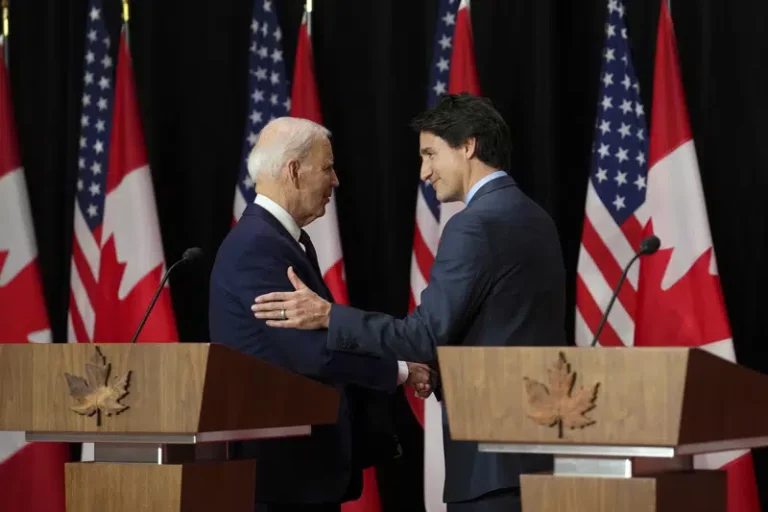
(Luis Cornelio, Headline USA) Prime Minister Justin Trudeau had a come-to-Jesus moment on Thursday, signaling a major shift against immigration and suggesting he wants to make Canada great again. 

Trudeau announced plans to slash drastically the number of foreign workers admitted into Canada, demanding businesses hire Canadian nationals.  

“We’re going to have fewer temporary foreign workers in Canada,” Trudeau wrote Wednesday on X. “We’re bringing in stricter rules for companies to prove why they can’t hire Canadian workers first.” 

In a tweet on Thursday, he added, “We’re going to significantly reduce the number of immigrants coming to Canada for the next two years. This is temporary — to pause our population growth and let our economy catch up.” 

Canadian Minister of Immigration Marc Miller detailed the new policy, claiming that the government aims to limit population growth between 2025 and 2027. 

Canada will accept no more than 395,000 permanent residents in 2025, with the number dropping to 380,000 in 2026 and 365,000 in 2027.

Miller added that temporary population reductions are expected to reach 445,000 in 2025 and 445,662 by 2026. 

“These reductions are the result of a series of changes implemented over the past year, including a cap on international students and tightened eligibility requirements for temporary foreign workers,” Miller wrote on X.

The announcement contradicts Trudeau’s years-long support for increased immigration as evidenced on his X page. 

In November 2023, he partnered with the Biden-Harris administration to “help refugees and migrants” access basic necessities. He boasted of the partnership and also shared a photo of himself with Biden. 

In 2017, Trudeau seemed to rebuke then-President Donald Trump’s travel ban, tweeting, “To those fleeing persecution, terror & war, Canadians will welcome you, regardless of your faith. Diversity is our strength. #WelcomeToCanada.” 

In 2014, a year before becoming prime minister, Trudeau insisted that Canada “must focus on nation building and recommit to bringing permanent immigrants here with a path to citizenship.” 

So-Called Trump Victim Waits Till Cusp of 3rd Election to Speak Out

(Luis Cornelio, Headline USA) A former activist for Barack Obama has come forward with allegations that President Donald Trump inappropriately touched her over three decades ago—allegedly after an introduction by Jeffrey Epstein. 

Stacey Williams—a former model, Democrat activist and Harris campaign ally—claimed Trump groped her in 1993 during a meeting with him and Epstein, her then-boyfriend. 

As reported by The Guardian (the outlet that published these claims), Williams had previously hinted at the allegations on social media but did not fully come forward until participating in a campaign call organized by Vice President Kamala Harris on Monday.

Williams admitted that she wants Harris to win the 2024 election and reportedly worked for Clean Tech for Obama, a group advocating for Obama’s 2008 election. 

It is not immediately clear why Williams remained silent during Trump’s 2016 and 2020 campaigns, as well as earlier in the current election cycle. 

Moreover, her allegations coincided with the release of a Sports Illustrated documentary, in which she shared her alleged encounter with Trump and Epstein. 

When asked about the documentary’s timing in a CNN interview, Williams insisted she had no control over its release date. 

“I can’t control when that documentary comes out. I can’t control the fact that it’s premiering two weeks before the election,” she claimed, which was recorded roughly two years ago.

Trump spokesperson Karoline Leavitt dismissed the accusations, calling them a “fake story” orchestrated by the Harris campaign. 

“These accusations, made by a former activist for Barack Obama and announced on a Harris campaign call two weeks before the election, are unequivocally false,” Leavitt added. 

On X, critics pointed out inconsistencies in Williams’s story, particularly regarding her account of confronting Epstein over the assault by Trump outside his Upper East Side apartment in 1993. 

In fact, Town & Country Magazine noted Epstein did not own the apartment until 1996—three years after the alleged confrontation. 

Despite this, several leftist outlets repeatedly covered the story in what has been described as a “psy op” against Trump just weeks before the election.

L.A. Times Editor Quits after Publication’s Owner Strikes Down Kamala Endorsement

(Headline USA) The editorial editor for the Los Angeles Times quit in protest after the newspaper’s owner blocked a decision to endorse Vice President Kamala Harris.

“I am resigning because I want to make it clear that I am not OK with us being silent,” Mariel Garza told the Columbia Journalism Review. “In dangerous times, honest people need to stand up. This is how I’m standing up.”

Garza’s resignation followed the news this week that Patrick Soon-Shiong, the billionaire doctor who purchased the Los Angeles Times in 2018 for $500 million, shot down the Times editorial board’s attempt to endorse Harris.

This will be the first election cycle since 2004 in which the Times has not endorsed a candidate.

In a social media post, Soon-Shiong explained he offered the editorial board the chance to “draft a factual analysis of all the POSITIVE AND NEGATIVE policies by EACH candidate during their tenures at the White House, and how these policies affected the nation.”

“With this clear and non-partisan information side-by-side, our readers could decide who would be worthy of being President for the next four years,” he wrote. “Instead of adopting this path as suggested, the Editorial Board chose to remain silent and I accepted their decision.”

The non-endorsement of Harris is a blow to the Democrat, who began her political career in California, where the paper is based.

Garza alleged Soon-Shiong’s decision not to endorse Harris amounted to greater political interference than if he had just allowed the editorial board to throw its support behind her.

“This is a point in time where you speak your conscience no matter what,” Garza told CJR. “And an endorsement was the logical next step after a series of editorials we’ve been writing about how dangerous Trump is to democracy, about his unfitness to be president, about his threats to jail his enemies.”