

House Adopts Contentious Rules That Make Ousting Speaker More Difficult

(After a brief and intense debate, lawmakers passed the Republican-proposed House rules package, 215-209, for the incoming 119th Congress Friday evening.

Besides typical procedural updates and reforms, the resolution is filled with Republican objectives, such as eliminating the House’s Diversity and Inclusion office, authorizing subpoenas of officials connected to the investigation of the Biden family’s finances, and requiring congressional financial audits of potentially inflationary legislation.

Notably, the new rules make ousting the House speaker more difficult by allowing only members of the majority party to introduce motions to vacate, plus require at least eight cosponsors from the majority party.

Rep. Nick LaLota, R-N.Y., said raising the threshold is a commonsense way to prevent unwarranted challenges to the House speaker’s authority

“This change ensures that leadership challenges are not frivolously pursued, but instead reflect a genuine, collective concern shared by a broader group of members,” he said on the House floor. “It strikes a balance between protecting a Speaker’s ability to lead, and preserving the right of members to hold leadership accountable.”

The package also reverts the House Oversight and Accountability Committee to the House Oversight and Government Reform Committee, and renames the Office of Congressional Ethics to the Office of Congressional Conduct.

Much to Democrats’ ire, Republicans added two last-minute measures immediately after the House speaker election, one “restoring family-centric language” in the rules and the other forbidding the speaker from entertaining a motion that the House suspend the rules except on Mondays, Tuesdays and Wednesdays.

Rep. Jim McGovern, D-Mass., accused Republicans of caving to their most extreme members.

“Clearly, Republicans have decided to double down on the dysfunction, so I don’t want to hear any lectures about bipartisanship,” McGovern said, ignoring the recent grandstanding from House Minority Leader Hakeem Jeffries and lame-duck President Joe Biden that the paryt should reach across the aisle for the sake of civility and greater cooperation.

McGovern referenced 12 non-amendable bills included in the package for future consideration that would fulfill multiple Republican objectives, including strengthened voter registration requirements and the protection of biological sex distinctions in sports under Title IX rules.

Several bills relate to border security, including legislation making sanctuary cities ineligible for migrant program federal funds and authorizing the deportation of migrants who commit certain crimes.

Other bills would prohibit moratoriums on hydraulic fracking, protect the lives of newborns who survive abortions, and let the U.S. government impose sanctions on the International Criminal Court if it goes after “any protected person of the United States and its allies.”

Rep. Pramila Jayapal, D-Wash., claimed the legislation was merely a Republican distraction that fails to address the problems relevant to Americans.

“This rules package makes very clear what the Republican majority will not do in the 119th Congress,” Jayapal said. “After presiding over the 118th Congress and enacting the least amount of legislation in history signed into law that actually benefits the American people, Republicans want to continue that tradition by fast-tracking twelve bills that do nothing to lower costs or raise wages for the American people.”

Rep. Rick Crawford, R-Ark., disagreed.

“[These bills] show unequivocally our party’s support for securing our borders, standing up for the right to life, ensuring that only American citizens are allowed to vote for national office, providing lower cost energy for American families and businesses, and stopping the scourge of drugs like fentanyl from entering our communities,” Crawford said. “I thank our entire leadership team for putting forward this fair and forward-thinking package.”

One Democrat joined Republicans in supporting the bill. Five Democrats and five Republicans abstained from voting.

Just How Good Was Gold in 2024?

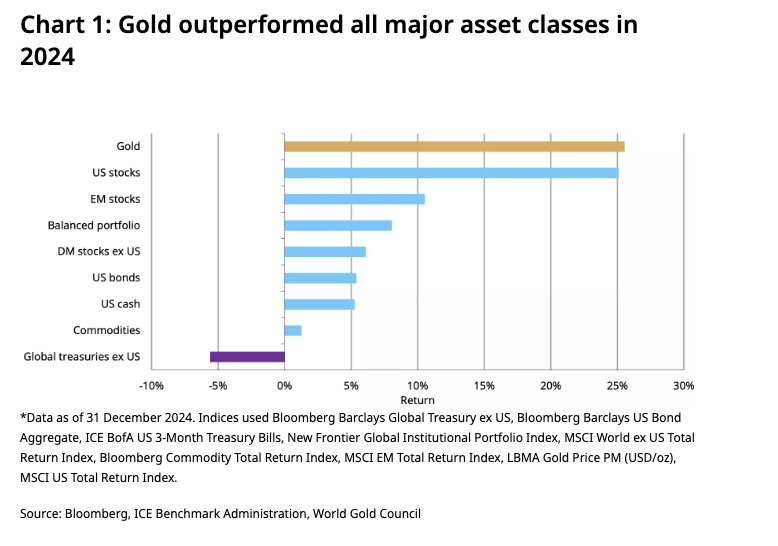
(Mike Maharrey, Money Metals News Service) Gold was one of the best-performing asset classes in 2024, outgaining the red-hot U.S. stock market.

People who follow financial news know that gold had a great year. Despite its typical apathy toward gold, even the mainstream was forced to sit up and take notice. But you may not realize just how well gold did.

Just how well did the yellow metal perform last year?

The gold price rose 26.5 percent in 2024, setting several new price records along the way. It was the biggest annual percentage gain since 2010 during the quantitative easing (money printing) years in the wake of the 2008 financial crisis.

During its sustained rally, gold set 40 new all-time highs based on the afternoon London Bullion Market Association p.m. price. The most recent was $2,777.80 per once on Oct. 30.

Gold also set a record in real terms, cracking the inflation-adjusted price all-time high set back in 1980.

Gold Beat U.S. Stocks

Most people fixated on the red-hot U.S. stock market last year.

Gold was better.

The yellow metal edged out U.S. stocks to rank first among traditional asset classes.

Gold also performed better than U.S. bonds, dollars, commodities, and global treasuries.

With its huge post-election surge, Bitcoin was the only asset to beat out gold. The cryptocurrency price more than doubled, rising 111.5 percent.

The World Gold Council pinpointed three factors driving gold’s impressive bull run.

  • Strong central bank and investor demand, which offset declining consumer demand
  • Heightened geopolitical risk due to increased conflicts, along with a busy electoral year across the world
  • Periods of opportunity costs when markets saw lower yields and a weakening U.S. dollar.

Don’t Overlook Silver

Silver remained well below its all-time high throughout 2024, creating the impression that it underperformed. However, it had a pretty solid year as well.

Silver kicked off 2024 at $23.99 per ounce and closed out the year at $28.91, a 20.5 percent gain.

Silver’s gains weren’t quite as beefy as U.S. stocks, but it still outperformed emerging market stocks, U.S. bonds, commodities, and global treasuries.

Investors will want to keep a close eye on silver as we move into 2025. Historically, silver has lagged behind gold in the early stages of a gold bull run but outperforms the yellow metal in the later stages of the rally.

There are also several signs that silver is underpriced.

Analysts project that there was a fourth straight supply deficit in the silver market, meaning there was more silver consumed than was pulled out of the ground or reclaimed through recycling. This market deficit is expected to come in at around 182 million ounces. This is in line with the supply shortfall in 2023. According to the Silver Institute, this market deficit is “elevated by historical standards.”

The gold-silver ratio also indicates silver is underpriced. The current gold-silver ratio is over 88-1. That means it takes 88 ounces of silver to buy one ounce of gold.

In the modern era, the gold-silver ratio has averaged between 40-1 and 60-1. When the gold-silver ratio gets far above the high end of that historical average, it tends to return to the mean with a vengeance.

For instance, in 2020, the gold-silver ratio set a record of 123-1 as Covid hysteria gripped the world and then plunged to around 60-1 as central banks around the world cranked up the money creation machine to cope with governments shutting down economies.

Looking Ahead

Most mainstream analysts expect the gold bulls to keep running in 2025.

JP Morgan projects gold will crack the $3,000 level this year.

A JP Morgan analyst wrote, “We maintain our multi-year bullish outlook on gold for a third year in a row. … Gold still looks well situated to hedge the elevated levels of uncertainty around the macro landscape heading into the initial stages of the Trump administration in 2025.”

Central banks and Asian demand drove the 2024 gold rally, with Western retail investors largely remaining on the sidelines. If they jump into the market this year, we could see another strong upward price surge. An analyst told Yahoo Finance that falling interest rates as the Fed eases monetary policy coupled with a pickup in price inflation could boost Western demand.

Analyst Jesse Colombo thinks the next phase of the bull market could be right around the corner.

It’s important to note that most mainstream analysts have a rather bullish view of the economy in general. They expect the economy to glide to a “soft landing” as the Federal Reserve keeps price inflation under control.

If there is a major economic crisis (and that is entirely possible given the massive level of debt and the large number of bubbles in the economy), the Federal Reserve will most likely slash rates back to zero and start running QE After all, that’s the fork it knows.

In this scenario, the price of gold would likely blow through the roof.

CES Showcases Top Trends in Electronics and Emerging Technologies (Including AI)

(Headline USA) CES, the annual trade show of all things tech, is upon us.

The multi-day event, organized by the Consumer Technology Association, kicks off this week in Las Vegas—where swaths of the latest gadgets and advances across industries like personal tech, transportation, health care, sustainability and more are set to be on display. And, like last year, artificial intelligence is everywhere you look.

CES 2024 saw more than 138,000 attendees, according to the CTA, and organizers expect to see at least that amount again for this year’s show. Over 4,500 exhibitors, including 1,400 startups, are also anticipated across 2.5 million net square feet of floor space this week.

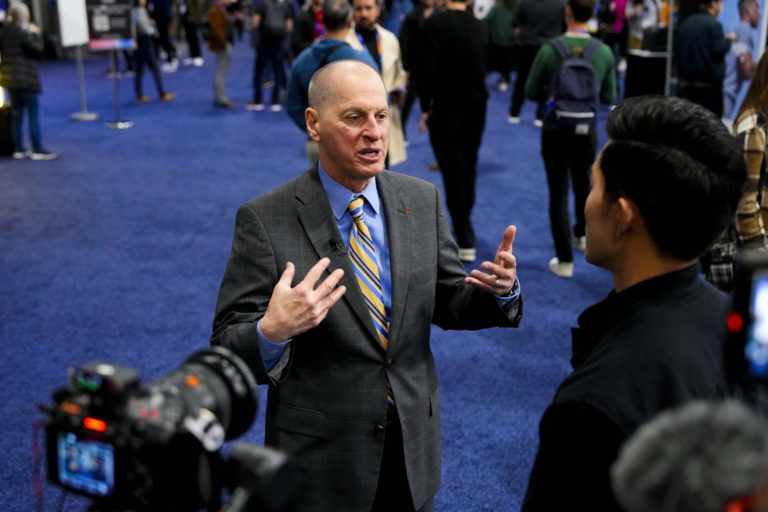
“These are the people getting together, focusing on solving some of the world’s biggest problems—and magic occurs,” Gary Shapiro, CEO and vice chair of the CTA, told the Associated Press ahead of this week’s show.

Formerly known as the Consumer Electronics Show, CES brings attendees and exhibitors from around the globe, with Shapiro noting that organizers expected some 50,000 attendees to come from outside the U.S.

Beyond an array of startups, big-name companies set to make appearances this year include Nvidia, Delta Air Lines, Honda, Volvo, Panasonic and L’Oréal.

There may be some increased security this year. CES 2025 arrives less than one week after a highly decorated Army soldier fatally shot himself in a Tesla Cybertruck packed with explosives before it burst into flames outside of President-elect Donald Trump’s hotel in Las Vegas—not far from much of the trade show’s planned event space.

Shapiro said that organizers regularly work with officials for event safety and that “modest” changes were made in response to recent events, but couldn’t go into further detail.

The AP spoke with Shapiro about what to expect for CES 2025. The conversation has been edited for clarity and length.

CES 2025 is here. What are the main themes we can expect this week?

CES 2025 will be an exceptional leap forward in terms of innovation and technology, with a focus on a variety of themes important to the future of humanity. Over 4,000 companies will be here, on literally miles and miles of exhibit space. And they’ll be showing solutions to fundamental human problems—like access to food, clean air, clean water and mobility, as well as health care technology.

We also have newer categories. We’re seeing more technology for the disability community, for example. Products that can serve people with disabilities had a large presence last year, and we expect that to be even bigger this year. Overall, the show is serving humanity and using technology and innovation to fill in gaps where we need a lot more work.

AI is everywhere again this year. Are there any specific trends we should keep an eye out for?

Generative AI is affecting virtually every area. Just about every major exhibitor will be talking about AI in one form or another at CES this week. For businesses, the focus is more on enterprise and productivity. But for individuals, it’s about personalization.

We’ll see exhibitors, such as PC companies, focusing on personalization in new products for the PC and laptop marketplace. And then there’s AI being used in mobility—and not just in features for cars and self-driving. It’s for all sorts of vehicles, including agricultural products from companies like Caterpillar and John Deere.

What kind of oversight is there for the gadgets and products we’ll see at CES this week?

The industry representing the companies involved welcomes government regulation. The government’s job is to say this is what is unsafe. And so the companies know what is legal and what is not. At the same time, a big challenge is if government stops innovation—so the question is for every country is finding that balance.

How could policies from the incoming Trump administration—like proposed tariffs on foreign goods—impact consumer products like those seen at CES?

We expect the Trump administration to take a much more pro-business approach that favors innovation, including a focus on all sorts of energy sources, which is very important important. But tariffs are taxes. And we know that they are inflationary and paid for by consumers.

If we go forward with the proposals that the president-elect has indicated he may put in place, there would be severe impacts on the prosperity of the U.S. It depends on how exactly these tariffs are adopted, but under some of the proposals, we estimate a range of a 30 to 50% price increases for basic products like PCs, cell phones, laptops, tablets, smartwatches and all sorts of different products that consumers get a great value on today. That means that fewer people will be able to access these products. And, of course, other countries may then retaliate against U.S. exports. We don’t want to go in that direction.

Are there any increased safety precautions CES is taking following last week’s Cybertruck explosion?

CES has always focused on safety. There’s a lot of things we can’t talk about, but suffice it to say, we work with federal, state, local and facility officials for lots of planning. We’ve made some modest changes given the recent events, but we’re always trying to do it better.

CES also arrives a month after the fatal shooting of UnitedHealthcare’s CEO. Have companies made any additional security requests for their attending executives?

I think companies are excited to come here. And any requests we’ve gotten have been extremely isolated.

Having top executives here, especially after COVID, is very special. People are focused on coming to Las Vegas and having this opportunity to meet face-to-face and finding the serendipity and discovery that happens when you’re making these business connections in person. That’s why trade shows like CES and others are such important events for the world.

Adapted from reporting by the Associated Press

Trump Seeks to Rein In GOP Dissenters w/ Mar-a-Lago Summits

(Julianna Frieman, Headline USA) President-elect Donald Trump plans to rein in Republican dissenters with a Mar-a-Lago summit Friday through Sunday ahead of his inauguration.

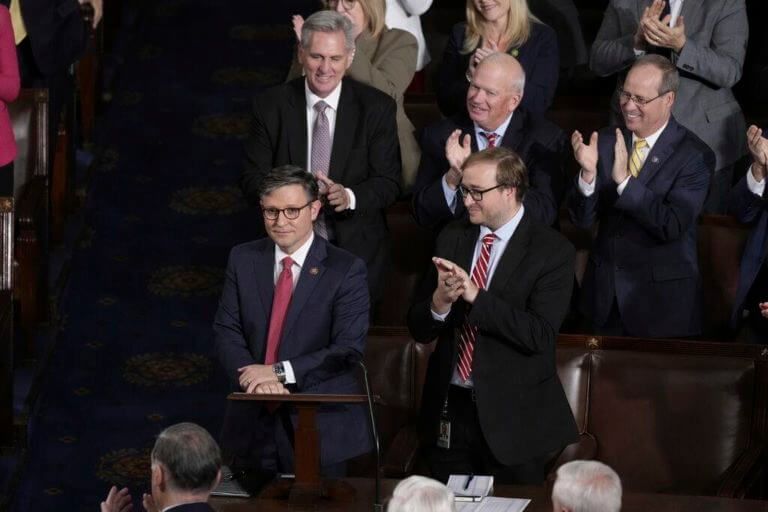
Trump-endorsed House Speaker Mike Johnson was narrowly reelected to a second term Friday after two GOP holdouts changed their votes.

Trump reportedly worked with Johnson to determine which groups of House Republicans would be invited to meet with him at his Florida estate following Friday’s debacle, three sources involved in the planning told NBC News.

House Freedom Caucus members, lawmakers representing states affected by the state and local tax deduction cap and chairs and key committees will reportedly meet with Trump over the weekend, according to the outlet.

Members of the Freedom Caucus released a letter indicating that they held their nose in voting for Johnson, citing their “steadfast support of President Trump.”

Three GOP congressmen—Reps. Thomas Massie of Kentucky, Keith Self of Texas and Ralph Norman of South Carolina—initially voted against Johnson, who Trump said has his “Complete & Total Endorsement.”

Trump added in his Dec. 30 Truth Social post a warning to Republicans not to “blow” their upcoming opportunity to govern with the GOP in control of all three branches of government.

Self and Norman changed their minds minutes after casting their first votes. Both lawmakers revealed that Trump called them on the phone with a convincing rebuttal to their initial opposition.

Norman said Trump and Johnson promised to “fight for us” and “fight for everybody,” according to The Hill. Self said his talks with the president-elect were “lively.”

On Monday, Congress is scheduled to certify Trump’s second term—just as a massive snowstorm hits the U.S. Capitol.

Johnson urged lawmakers against leaving Washington, D.C. over the weekend, telling NBC News, “We got a big snowstorm coming to D.C., and we encourage all of our colleagues do not leave town, stay here, because, as you know, the Electoral Count Act requires this on Jan. 6 at 1 p.m., so whether we’re in a blizzard or not, we’re going to be in that chamber making sure this is done.”

Julianna Frieman is a freelance writer published by the Daily Caller, Headline USA, The Federalist, and the American Spectator. Follow her on Twitter at @JuliannaFrieman.

Nvidia Defies ‘Bubble Burst’ Projections, Continues to Drive AI Stocks Upward

(Headline USA) U.S. stock indexes were rising Monday morning to recover more of the holiday-season slide that bridged the new year.

The S&P 500 was 0.8% higher in early trading and on track for a second straight gain following five straight losses—its longest losing streak since April.

The Dow Jones Industrial Average was up 126 points, or 0.3%, as of 9:35 a.m. Eastern time, and the Nasdaq composite was 1.3% higher.

Tech stocks again led the way, including those swept up in the frenzy around artificial-intelligence technology. Nvidia climbed 3.1% ahead of a speech by CEO Jensen Huang at the annual CES convention in Las Vegas, which is due to take place after trading ends for the day.

Nvidia and other AI stocks keep climbing even as criticism rises that their stock prices have already shot too high, too fast. Despite worries about a potential bubble, the industry keeps talking up its potential.

Microsoft Vice Chair Brad Smith said on Friday the company was on track to invest about $80 billion to build out AI-enabled datacenters to train AI models this fiscal year.

Smith said AI is the biggest opportunity “to harness new technology to invigorate the nation’s economy” since the invention of electricity. Microsoft rose 1.1%.

Uber drove 3.9% higher after the ride-hailing app said it would accelerate $1.5 billion in purchases of its own stock, part of a previously announced $7 billion buyback program.

Uber’s chief financial officer, Prashanth Mahendra–Rajah, said it’s making the move because its stock price looks cheap compared with the strength of its business.

In the old economy, U.S. Steel climbed 4.2% after it and Japan’s Nippon Steel filed a federal lawsuit challenging President Joe Biden’s decision to block a proposed nearly $15 billion deal for Nippon to buy its Pittsburgh-based rival.

The suit, filed in the U.S. Court of Appeals for the District of Columbia, alleges that it was a political decision and violated the companies’ due process. Japanese leaders have also said there is scant evidence that the merger would create a national security concern for the U.S.

This upcoming week will have one fewer day of trading than usual. The New York Stock Exchange and Nasdaq will close their stock and options markets on Thursday in observance of a National Day of Mourning for former President Jimmy Carter.

But the calendar is nevertheless packed with potentially market-moving events.

Tuesday will deliver the latest updates on monthly job openings advertised by U.S. employers and on the health of businesses in the services industries. On Wednesday, the Federal Reserve will release the minutes from its last policy meeting, where it cut its main interest rate for a third straight time but hinted fewer reductions may come in 2025.

Friday will bring the week’s headliner: the monthly jobs report, along with an update on how U.S. consumers are feeling.

So far, the economy has remained remarkably resilient despite high interest rates the Fed instituted in recent years to stifle inflation. The Fed began cutting rates in September after inflation pulled nearly all the way down to its 2% target. But getting the last percentage point of improvement from inflation may be more difficult.

Treasury yields have climbed in the bond market as a result. That has the power to hurt stock prices because higher-paying bonds can peel away investors who otherwise might buy stocks.

At Morgan Stanley, strategist Michael Wilson said the sweet spot for U.S. stocks is likely a yield of between 4.00% and 4.50% for the 10-year Treasury. It drove above that level in mid-December and has remained there.

Adapted from reporting by the Associated Press

Watch as Biden Can’t Pronounce the Name of the Birthday Boy

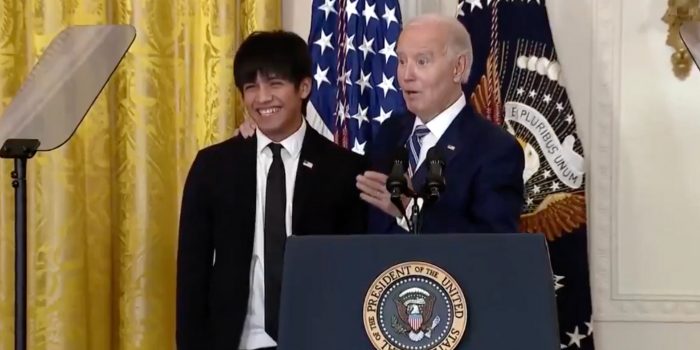
(Julianna Frieman, Headline USA) President Joe Biden failed to pronounce the name of a 17-year-old boy he invited to the podium Sunday as he tried to sing “Happy Birthday” to him.

Biden brought the teenage boy named Alicio to the front of the East Room after signing the Social Security Fairness Act, video posted on social media shows.

The 82-year-old Democrat sang the words to “Happy Birthday” off-key before mumbling through the part where he had to say Alicio’s name.

“Happy Birthday to you. Happy Birthday to you. Happy Birthday…” Biden trailed off before spitting out gibberish in place of the boy’s name. “Happy Birthday to… alright!”

The subject of Biden’s gaffe stood beside him, grinning through the cringe.

Social media users ripped into Biden as an “embarrassment,” rejoicing that 15 days remain until President-elect Donald Trump takes office.

“Have you ever sung ‘Happy Birthday’ to someone, forgot their name, and just mumbled it instead? Joe Biden just did that,” Trump supporter and X influencer “Brick Suit” said.

Before botching Alicio’s “Happy Birthday,” Biden signature put into law a bill meant to increase Social Security benefits for government employees including teachers, firefighters, police officers and “others,” CNBC reported.

Biden said, “The bill I’m signing today is about a simple proposition: Americans who have worked hard all their lives to earn an honest living should be able to retire with economic security and dignity.”

On Friday, Vice President Kamala Harris embarrassed herself similarly—she forgot the words to the Pledge of Allegiance.

While standing before a room of senators she was responsible for swearing in as part of the 119th Congress, Harris butchered the Pledge of Allegiance in a moment that has since gone viral.

“Kamala Harris is just one heartbeat away from becoming our next president and yet she can’t remember the pledge of allegiance. Perhaps it is because she grew up in Canada and hates America? Perhaps she’s drunk? Perhaps she’s stupid. We may never know,” X user @amuse wrote.

Julianna Frieman is a freelance writer published by the Daily Caller, Headline USA, The Federalist, and the American Spectator. Follow her on Twitter at @JuliannaFrieman.

Everyday Economics: Signs of Slowing Economic Activity as Jobs Report Looms

(The upcoming week is filled with crucial economic data releases that will provide insight into the state of the U.S. economy as it transitions into 2025.

A mix of labor market reports and key Fed communications will shift expectations about growth and Federal Reserve policy, resulting in large swings in the interest rates that govern consumer borrowing costs for credit cards, auto loans and mortgages.

The main event is the December jobs report, where employment gains are expected to have slowed. December’s labor market data is likely to show:

  • A steady unemployment rate around 4.2%. While some unemployed workers were able to find work, others recently became unemployed. This is consistent with leading indicators like the rising 4-week average of initial jobless claims combined with a slight easing of the number of continued claims.
  • Steady wage growth, holding near 0.4% month-over-month, as both labor supply and demand softened in tandem.

Meanwhile, the Fed’s December FOMC meeting minutes, set to be released midweek, will provide deeper insights into policymakers’ thinking.

Despite a higher terminal rate suggested in the Fed’s dot plot, there are signs of slowing economic momentum:

  • Core inflation, as measured by the PCE index, is decelerating faster than expected.
  • Growth projections for Q4 GDP have been revised downward, with the Atlanta Fed GDPNow model estimating 2.4% growth (down from 3.3% in late November) and Goldman Sachs now forecasting 2.3% growth in Q4.

In other key reports:

  1. ISM Services Index: Following a slight improvement in ISM Manufacturing for December, the ISM Services reading is expected to strengthen modestly compared to November, reflecting resilience in the services sector despite broader economic headwinds.
  2. November Job Openings (JOLTS): Consensus expectations for 7.7 million openings may be overly optimistic. Labor demand likely softened in November.

As inflation continues to moderate and labor market conditions gradually loosen, this week’s data will shape traders’ expectations for 2025.

While the Fed remains committed to its 2% inflation target, slower GDP growth and tighter financial conditions could spark debate among dovish FOMC members about the timeline for resuming rate cuts. For now, market participants anticipate a pause in the Fed’s rate-cutting cycle until at least June.

NOLA Terrorist Made Surveillance Trips, Used Meta Glasses to Record Attack

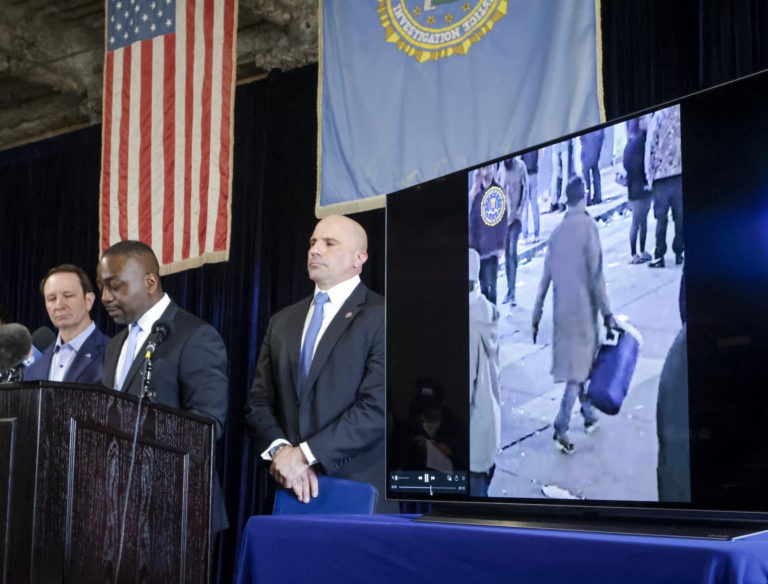
(Shamsud Din Jabbar made two scouting trips to New Orleans prior to his New Year’s Day attack on Bourbon Street, the FBI said during a Sunday news conference.

FBI Special Agent in Charge Lionel Merkel detailed Jabbar’s preparation, describing his travels, surveillance efforts and use of advanced technology in the lead-up to the terrorist attack.

In the early-morning hours of Jan. 1, Jabbar drove a pickup truck through police barriers in New Orleans’s historic French Quarter, killing 14 and injuring at least 35 others. Jabbar himself was killed in a shootout with police, after injuring at least two members of local law enforcement.

“FBI New Orleans deeply mourns the loss of those who tragically lost their lives and extends our hearts to those who endured the panic and horror of witnessing this act of terror,” Merkel said. “Today, we’re providing a clearer picture of the planning and steps Jabbar took to carry out this heinous attack.”

Jabbar posted five videos to Facebook between 1:29 a.m. and 3:02 a.m. on Jan. 1, proclaiming his allegiance to ISIS and explaining his motivations. The pickup truck he was driving also had an ISIS flag in it.

The investigation revealed that Jabbar traveled extensively in the months before the attack, visiting New Orleans in October and November 2024. During these trips, he reportedly stayed at rental properties, conducted surveillance using high-tech glasses capable of recording video, and familiarized himself with the French Quarter’s layout.

Jabar was seen wearing the glasses and riding a bike through the French Quarter during his October visit, capturing footage of the area. Authorities have asked anyone who may have encountered Jabbar during these trips to come forward.

On Dec. 31, he rented a white pickup truck and drove from Texas to Louisiana, Merkel said. Surveillance footage showed him arriving at a rental home on Vanderbilt Street in New Orleans about 10 p.m. Hours later, he drove the truck to the French Quarter, Merkel said.

Between 12:41 a.m. and 3:15 a.m., Jabbar strategically placed improvised explosive devices—none of which detonated—at key locations on Bourbon Street, including in coolers left on street corners.

The explosive materials recovered at the Mandeville Street address were identified as R-Salt, a substance similar in composition to the commonly available RDX, the ATF said. Materials from the rental home also tested positive for RDX.

“Typically, RDX requires specific detonators or safety mechanisms to ensure proper activation,” an ATF representative said. “Jabbar’s devices used a substitute mechanism, which reflects a lack of understanding about how these materials function.”

Jabbar also reportedly traveled to Canada, Japan and Egypt in 2023, officials said at the news conference. Investigators were working to determine whether these trips contributed to his radicalization or planning.

“Our agents are getting answers to where he went, who he met with and how those trips may or may not tie into his actions here,” Myrthil said.

Federal investigators so far believe Jabbar acted alone, but are continuing to explore his contacts.

“All investigative details and evidence that we have now still support that Jabbar acted alone here in New Orleans,” said Deputy Assistant Director Christopher Raia. “We have not seen any indications of an accomplice in the United States, but we are still looking into potential associates in the U.S. and outside of our borders.”

Early speculation centered around a possible connection with a Las Vegas attack that occurred later that day. Officials have identified Matthew Livelsberger, a Green Beret from Colorado Springs, as the driver of the Tesla Cybertruck that exploded outside the Trump Tower Las Vegas hotel on Jan. 1.

But the circumstances of his death—from a gunshot wound to the head prior to the explosion—and whether he controlling the vehicle the time of the the attack remain shrouded in mystery.

Both suspects were active or former U.S. Army members who had previously been stationed at North Carolina’s Fort Bragg (now called Fort Liberty) and had served in Afghanistan.

Both also used the same relatively unknown rental app, Turo, to obtain the vehicles used in their respective attacks.

Joshua Jackson, New Orleans special agent in charge, said Jabbar privately purchased a semiautomatic rifle on Nov. 19 from an individual in a legal transaction in Arlington, Texas.

“This was a chance encounter,” Jackson said. “There’s no way this individual knew that Jabbar was radicalized or had any sort of awareness that this attack was imminent.”

In addition to using the Meta glasses to conduct surveillance, Jabbar also reportedly used the high-tech gadget to record the attack itself. However, officials declined to elaborate on the specific use of the glasses during the press conference.

Meta glasses, made in partnership with Ray-Ban, are frames with a built-in camera, speakers and artificial intelligence. They can be controlled with your voice, buttons and some simple gestures.

Some functions, such as listening to music or interacting with Meta’s AI assistant, require the device to be either paired with a phone or able to access the internet.

The wearable does not have a display built into the lens, unlike some past industry attempts at building augmented-reality smart glasses. However, Meta has said it is working on a pair of glasses that will give users a fully holographic experience.

One of the glasses’ main selling points is the ability to capture images and video using the onboard camera, then upload those files to Instagram or Facebook. You can also livestream, but only to Meta’s compatible social platforms.

There are visual indicators built into the system that allow bystanders to know when you’re shooting video or taking photos. This LED privacy indicator stays on while you use the camera functions. According to Meta, you can’t disable this light to be more discreet in your actions.

You can also use the glasses to make audio and video calls, message people or listen to music.

The camera also allows Meta’s AI assistant to see what you’re seeing, allowing it to translate text into multiple languages (spoken back to you, or shown on a paired phone app), and answer simple questions, such as searching the nearest landmark to your location.

Headline USA’s Ben Sellers and the Associated Press contributed to this report.

FBI Informant Asks Trump for Jan. 6 Pardon

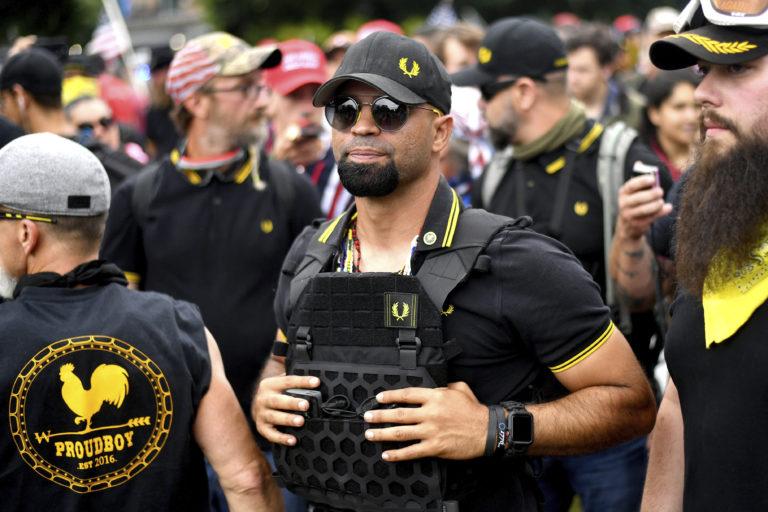
(Ken Silva, Headline USA) Former Proud Boys leader and confirmed FBI informant Enrique Tarrio has requested a pardon from President-elect Donald Trump for the convictions he received in May 2023 over his role in the Jan. 6, 2021, Capitol Hill uprising.

“I respectfully request on my client’s behalf the consideration of a full and complete Presidential Pardon for Henry ‘Enrique’ Tarrio,’” his lawyer said in a letter Monday, as reported by New York Times reporter Alan Feuer.

Tarrio is serving 22 years in prison, despite him not even being in the Capitol on Jan. 6. Tarrio had been arrested two days earlier in a separate case and ordered out of DC, but prosecutors said he organized and directed the attack by Proud Boys who stormed the Capitol on Jan. 6.

Previously, Tarrio served as a federal informant from 2012 through at least 2014. According to the Guardian, his informing led to the prosecution of 13 people on federal charges in two separate cases, and had helped local authorities investigate a gambling ring.

Tarrio, who’s been behind bars since his March 2022 arrest, was convicted of sedition in May 2023 after a four-month trial mired in controversy.

In February it was revealed that the Proud Boys hadn’t actually created their alleged blueprint for storming the Capitol. Rather, a tech entrepreneur with connections to the national security state created the “1776 Returns” document and passed it on to someone else, who gave it to the Proud Boys.

Earlier this year, it was revealed that the man who created the 1776 Returns manifesto is an Israeli intelligence asset.

Still more misconduct was revealed in late March 2023, when defense lawyers discovered that someone close to them was an FBI informant.

But despite these and other examples of misconduct—and despite there were allegedly at least 50 undercover law enforcers or informants in the Jan. 6 crowd—the presiding judge denied every motion for redress filed by the defense.

In addition to Tarrio, a Miami resident, three other Proud Boys were convicted of seditious conspiracy: Ethan Nordean, Joseph Biggs and Zachary Rehl.

Ken Silva is a staff writer at Headline USA. Follow him at x.com/jd_cashless.

Will the Jan. 6 Snowstorm Stop Congress from Certifying Trump’s Election Win?

(Julianna Frieman, Headline USA) Members of Congress could face difficulties returning to the U.S. Capitol on Monday as a massive winter snowstorm threatens the certification of President-elect Donald Trump’s 2024 election win.

A winter storm warning was issued for Washington, D.C., central Maryland and Northern Virginia from 10 p.m. Sunday evening until 1 a.m. Tuesday morning, according to Fox 5 DC. Lawmakers who went back home for the weekend could potentially face difficulties returning to certify Trump’s second term.

Washington D.C. could see between 5 and 10 inches of snow, according to weather alerts that float the possibility of 12-inch snowfall in certain areas as well. Photos and videos posted on social media showed the U.S. Capitol building and the White House covered in fresh snowfall.

Newly reelected House Speaker Mike Johnson, R-La., made clear to colleagues that Trump’s certification would not be postponed for a snow day.

“We got a big snowstorm coming to D.C., and we encourage all of our colleagues do not leave town, stay here, because, as you know, the Electoral Count Act requires this on Jan. 6 at 1 p.m., so whether we’re in a blizzard or not, we’re going to be in that chamber making sure this is done,” Johnson told NBC News.

The Electoral Count Act says that a joint session of Congress must ensue on Jan. 6 — but it does not specify that the counting must conclude on that date. The House and Senate are expected to convene Monday at 1 p.m.

In 2021, Congress did not finish counting until the morning of Jan. 7.

Since the new 119th Congress was in session on Friday for swearing-in ceremonies, most members likely stayed in D.C. over the weekend.

Vice President Kamala Harris is set to preside over the certification of the reelection of Trump, who crushed her in the popular vote, Electoral College and all seven battleground states.

On Friday, Harris, who has two weeks left as President of the Senate, tensely and uncomfortably swore in members of the new GOP Senate majority.

Julianna Frieman is a freelance writer published by the Daily Caller, Headline USA, The Federalist, and the American Spectator. Follow her on Twitter at @JuliannaFrieman.