Will Brazil Ban Twitter? Country Investigates Elon Musk for Defying Censorship

(Ken Silva, Headline USA) Brazilian Federal Supreme Court Justice Alexandre de Moraes has reportedly launched a criminal investigation into Twitter owner Elon Musk spreading disinformation, obstructing justice, and defying the judge’s orders to ban accounts from his platform, now known as X.

The news of Moraes’s investigation came Sunday, days after U.S. journalist Michael Shellenberger reported on the Brazilian version of the “Twitter Files”—revealing internal records about how the Brazilian government ordered Twitter to censor controversial content.

According to Shellenberger, Moraes illegally demanded that Twitter reveal personal details about Twitter users who used hashtags he did not like; demanded access to Twitter’s internal data, in violation of Twitter policy; sought to censor, unilaterally, Twitter posts by sitting members of Brazil’s Congress; and used the platform’s content moderation policies against supporters of then-president Jair Bolsonaro.

Unlike the conduct described in the U.S. Twitter Files, much of Brazil’s actions against Twitter may be legal. That’s because Brazil’s electoral court voted in late 2022 to give Moraes unilateral power to order tech companies to remove many online posts and videos. Social networks reportedly must comply with those demands within two hours or face the potential suspension of their services in Brazil—which is what appears to be transpiring now with Twitter.

However, Musk is signalling that he won’t comply with the draconian law. Instead, the billionaire is calling for Moraes’s resignation.

“Coming shortly, 𝕏 will publish everything demanded by [Moraes] and how those requests violate Brazilian law,” Musk said Sunday. “This judge has brazenly and repeatedly betrayed the constitution and people of Brazil. He should resign or be impeached.”

Musk also reportedly warned that “we will probably lose all revenue in Brazil and have to shut down our office there.”

According to Fox Business, Twitter can be fined the equivalent of $19,740 a day for violating Moraes’s social-media takedown orders.

Ken Silva is a staff writer at Headline USA. Follow him at twitter.com/jd_cashless.

Why Is the Mainstream Always Pooh-Poohing Gold?

(Mike Maharrey, Money Metals News Service) According to the mainstream, it’s always time to sell gold. Maybe listening to mainstream talking heads isn’t the best strategy.

On March 8, CNBC Fast Money featured TD Securities senior commodity strategist Daniel Ghali arguing that it was time to take profits on gold.

That didn’t age well.

Gold closed around $2,162 that day. Since then, the yellow metal has gone up over 8 percent.

It’s not so much that Ghali made the wrong call. Anybody trying to predict market movements is going to make the wrong call from time to time. The issue is the mainstream constantly poo-poos gold, whether it’s going up, down, or sideways.

A few years ago, CNBC commentator Jim Lebenthal went as far as to say he has no interest in gold because it has “no uses as a metal.”

This is a ridiculous take. Gold has all kinds of uses from jewelry to electronics. The tech sector used nearly 300 tons of gold in 2023.

Meanwhile, the mainstream financial media constantly fawn over Bitcoin. Talk about something with no use in the real world.

A Bloomberg article recently noted that when gold hit a record high a few weeks ago, “no one besides a few gold bugs seemed to care.” But when Bitcoin set records, “everybody cared.”

“The Financial Times had a piece on investing in crypto miners, a long read about what crypto still gets wrong, and a cry of pain for UK investors denied the right to hold Bitcoin exchange-traded funds. The Telegraph had almost a full page on how to buy. Bitcoin also made it into the Market Report section of the Daily Mail and got good exposure in the Times too — with another cry of pain for UK investors and the fusty bureaucrats who won’t let them get easy exposure to the asset of the century.

“Unless I missed it, none of these papers had an article on gold.”

This is nothing new. Dave Ramsey, a darling in some segments of the financial planning world, constantly dumps on gold and silver. While gold historically has retained its purchasing power better than any paper currency ever printed, Ramsey claims, “It has a crummy track record as an investment.”

As Money Metals CEO Stefan Gleason points out, “Ramsey has a crummy grasp of recent history.”

“From 2000-2010, gold gained a cumulative 280 percent. But for the stock market, it was a lost decade. The S&P 500 fell 24 percent over that same period.”

Going back further in time, paper assets got clobbered by inflation in the 1970s, while gold delivered average annual returns of 30.7 percent. The S&P 500 barely eked out nominal gains of 1.6 percent per year. That certainly didn’t keep pace with double-digit inflation.

But most financial planners share Ramsey’s attitude, and it is constantly regurgitated on mainstream financial networks from CNBC to Fox Business.

Why?

I think there are two reasons.

First, selling physical gold doesn’t benefit financial planners.

As former stockbroker and financial journalist Guy Christopher once pointed out, gold and silver in your possession have no counterparties and no continuing fees and commissions.

“Once you own gold, that part of your wealth and your future is out of Wall Street’s hands.”

Since the world of investing and financial planning and the mainstream financial media are connected at the hip, pundits and talking heads tend to reflect this attitude.

As Gleason put it, investments in physical gold and silver are rarely recommended by financial advisors simply because they have little financial incentive to do so.

“These ‘investment professionals’ prefer to turn over account holdings every year or two because they make commissions every time they do.  But when people buy physical precious metals, they tend to hold them very long term, often passing them on to heirs. Few transactions mean few commissions.”

A second reason the mainstream tends to poo-poo precious metals is more fundamental. Most mainstream financial planners and pundits simply don’t understand macroeconomics. They are steeped in Keynesian nonsense including the notion that a little inflation is a good thing, money printing and government stimulus can “rescue” a shaky economy with no consequences down the road, and a strong economy creates inflation.

During his CNBC interview, Ghali said the economic backdrop doesn’t support gold in the longer term.

“From here I think the easy part is over. The risk-reward for higher gold prices is now dependent on macro trends.”

He’s not wrong about the importance of macro trends on the trajectory of gold. But he has no clue what those macro trends are. He almost certainly believes the Fed beat inflation, it can go ahead and cut rates, and the economy is going to glide to a soft landing. That, after all, is the mainstream mantra.

But the reality is inflation is sticky and rate cuts ultimately mean more inflation. The mainstream is literally celebrating a victory over inflation so the Fed can create more! Meanwhile, while the interest rate environment and monetary policy are still historically loose, the Fed has raised rates to break things in this debt-riddled bubble economy.

The Fed will most likely cut rates in the foreseeable future. In fact, the cuts will likely be far deeper than anybody in the mainstream anticipates – as in all the way to zero. That’s because they won’t be cutting because they beat inflation. They’ll be cutting because we’re in the midst of another financial crisis. That will also mean a return to quantitative easing.

So, if higher gold prices are dependent on macro trends, now is the time to buy gold and silver – not sell! No matter how the mainstream prattles on. 


Mike Maharrey is a journalist and market analyst for MoneyMetals.com with over a decade of experience in precious metals. He holds a BS in accounting from the University of Kentucky and a BA in journalism from the University of South Florida.


Zimbabwe Gets Gold-Backed Currency, But It Won’t Solve Root Issue

(Mike Maharrey, Money Metals News Service) On Friday, Zimbabwe officials introduced a gold-backed currency in an effort to stabilize the economy. But the root of the country’s problem remains – the government.

The ZiG (Zimbabwe gold) will replace the Zimbabwean dollar (RTGS) over the next month. The currency will be a “structured currency” backed primarily by gold but also by other forex reserves including dollars. Central bank governor John Mushayavanhu said the ZiG would be set at “a market-determined exchange rate.”

The ZiG currency will reportedly be introduced at a rate of 13.56 per dollar. 

The currency will be available in denominations of 1, 2, 5, 10, 50, 100, and 200 ZiG. The country will also mint coins.

Currently, most transactions in Zimbabwe use U.S. dollars. The greenback will remain legal tender in the country. Due to a major coin shortage, Zimbabweans have resorted to using candy and pins as change.

The rollout of the ZiG will happen quickly.

According to a statement released Saturday, “The banking sector and Payment Systems Providers (PSP) have made satisfactory progress in converting the ZW$ balances into Zimbabwe Gold (ZiG).”

“The conversion process will continue for other economic sectors until Friday, 12 April 2024. Thereafter, the Reserve Bank expects that all the online payment platforms will be operating smoothly for all transactions in the economy.”

Zimbabweans will have 21 days to exchange RTGS for ZiG. 

Zimbabwe reportedly holds about 1.1 tons of gold in the country, with another 1.5 tons abroad. The central bank also has $100 million in cash along with diamonds and other precious minerals. Mushayavanhu said the reserves total $285 million, “more than three times cover for the ZiG currency being issued”.

Zimbabwe’s History of Monetary Malfeasance 

Zimbabwe is hoping the gold-backed currency will stabilize the country’s financial system. It is currently straining under rampant inflation.

The RTGS has lost about 800 percent of its value against the dollar in 2023 alone.

Hyperinflation wiped out the value of the Zimbabwe dollar in the early 2000s. In 2009, the government abandoned its own currency and adopted foreign currencies – primarily the U.S. dollar (or, more accurately, the Federal Reserve Note).

The African nation reintroduced the Zimbabwe dollar also known as the bond note in 2016. It was to be backed by the U.S. dollar loan facility. Then-central bank governor John Mangudya swore the new Zimbabwe dollar would remain on par with the greenback. But the bond note crashed when the government once again began printing excess money. By mid-July 2019, price inflation had increased to 175 percent.

As Business Insider Africa put it, “Zimbabwe continues to bear the scars of hyperinflation endured during the extended leadership of Robert Mugabe.”

New Currency Same Problem

Backing the Zimbabwe currency with gold is a great idea, but the ZiG will collapse just like previous Zimbabwean currencies if the government doesn’t change its ways.

Putting the Zimbabwe dollar on a gold standard would theoretically slam the door on the Zimbabwe government’s inflationary policies. Backing currency with a hard asset limits money creation. The government can’t create more dollars unless it gets more gold. A gold standard puts a natural brake on monetary expansion.

This would benefit Zimbabweans who would enjoy a stable currency and could maintain their purchasing power over time.

But this isn’t the same as owning physical gold and using it as money. A gold-backed paper currency is still fiat. The limitation on monetary expansion imposed by backing a currency with gold or silver is only as good as the discipline of those who control it.

In other words, the success of the ZiG with require fiscal discipline on the part of the government. It can’t rely on money printing to support its spending. Therein lies the rub. Government people tend to quickly abandon any pretense of linking the currency to gold when they discover it puts the kibosh on expanding their power.

Economist Godfrey Kanyenze made this very point in an interview with the BBC:

“We now end up in the same place where we started – where assurances are being given to the market that the government will live within its means. The political culture has not changed – the critical point is discipline on the part of the authorities.”

The bottom line is if the government continues to print money to pay its bills, nothing will fundamentally change in Zimbabwe – gold or no gold.   

The problem is there is nothing to stop the government from changing the “market-determined exchange rate.”

This is exactly what President Franklin D. Roosevelt did in the U.S. In 1934, he increased the government’s fixed price for gold from $20.67 to $35 per ounce. This effectively increased the value of gold on the Federal Reserve’s balance sheet by 69 percent and allowed the government to print more money within the law that was intended to prevent excessive money creation.

Simply put, pegging the currency to gold won’t prevent debasement if the government constantly raises the peg.

As economist Milton Friedman once said, “Inflation is always and everywhere a monetary phenomenon, in the sense that it is and can be produced only by a more rapid increase in the quantity of money than in output.”

In other words, if a country is experiencing price inflation and currency devaluation, it is ultimately the government’s fault. Price inflation is a symptom of monetary inflation – government creating more and more currency to prop up spending.

During Zimbabwe’s first round of hyperinflation, the government was printing money to finance Mugabe’s military involvement in the Congo. It was also allegedly creating currency to pay for government corruption and to fill the pockets of politicians and their buddies.

More recently, Al Jazeera reported, “The printing of new money by the central bank has also worsened the situation, reversing gains made in the past two years that saw inflation decrease from a peak of 800 percent in 2020 to 60 percent in January [2023].”

The rollout of the ZiG could indicate that Zimbabwe officials have finally learned their lesson and are making a sincere effort to reform the country’s financial system. But given history – not just in Zimbabwe but all over the world – I’m skeptical. Only time will tell if the government has truly changed its ways.


Mike Maharrey is a journalist and market analyst for MoneyMetals.com with over a decade of experience in precious metals. He holds a BS in accounting from the University of Kentucky and a BA in journalism from the University of South Florida.

Lee Greenwood Fires Back at ‘Twisted’ Criticism of ‘God Bless the USA Bible’

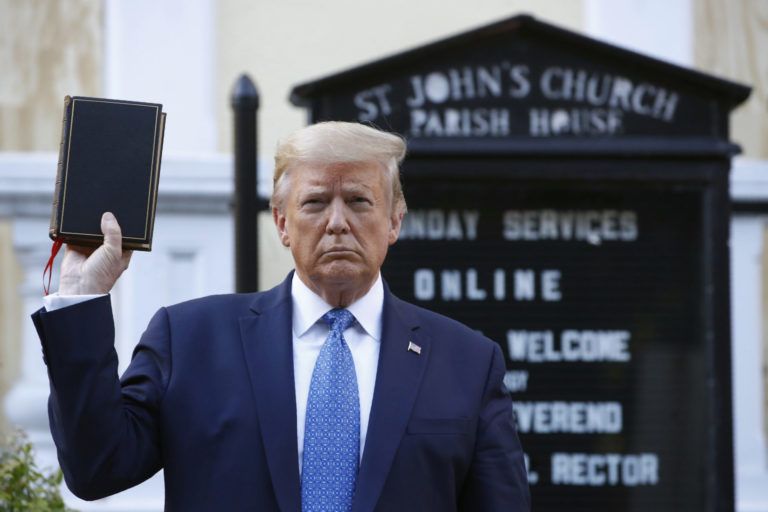
(Luis Cornelio, Headline USA) American singer-songwriter Lee Greenwood didn’t mince words when addressing the left’s vitriolic criticisms of his collaboration with former President Donald Trump for the release of a limited-edition God Bless the USA Bible. 

During an April 1 interview on Fox News’s Jesse Waters Tonight, Greenwood remarked that the left’s stance is “pretty twisted,” suggesting they’re so apprehensive of Trump that they’re willing to suppress their faith just to denounce him.

“I’m ashamed of them for not putting their faith forward and they are just hateful for Donald Trump,” Greenwood said. “I would tell you this, the history of God Bless the USA, the song, is what led us to this point here.”

Late last month, Trump and Greenwood unveiled the special edition Bible, which also featured the Declaration of Independence, the Bill of Rights, the Pledge of Allegiance and the U.S. Constitution.  

Despite criticism from the left, the Bible garnered significant success, drawing ire toward both Trump and Greenwood, the latter having been a featured performer at numerous Trump rallies over the past years—a fact he emphasized during his April 1 interview with Fox News.

“For more than three years I’ve been performing with the Holy Bible and the King James Version and from front to back it is the unedited Bible. God Bless the USA is added to the front of it and the back of the book the four documents the started our country, which I felt were important because I’m a patriot,” Greenwood added. 

In response to Fox’s Watters asking Greenwood about the media’s characterization of Trump’s Christian supporters as being part of a “religious cult” due to their steadfast support for the former president, Greenwood sarcastically rebutted, “It’s hardly a cult, isn’t it?” 

The singer juxtaposed the number of individuals identifying as transgender with the number of Christians, likely aiming to suggest that it’s the left, not conservatives, who exhibit cult-like behavior. 

“There is [sic] 1.9 million transgenders in the United States, and there’s 200 million Christians that are registered. I think it’s a little out of proportion that we’re talking too much about that subject. I want to talk more about faith,” Greenwood said. 

Hunter Attorney Caught w/ Jill’s ‘Work Husband’ Days Before Infamous Conference

(Luis Cornelio, Headline USA) The legal defense team for Hunter Biden, notably, met with Anthony Bernal, a top aide for First Lady Jill Biden who is famously known as her “work husband.” This encounter took place just days before Hunter Biden chose to defy a subpoena from congressional investigators.

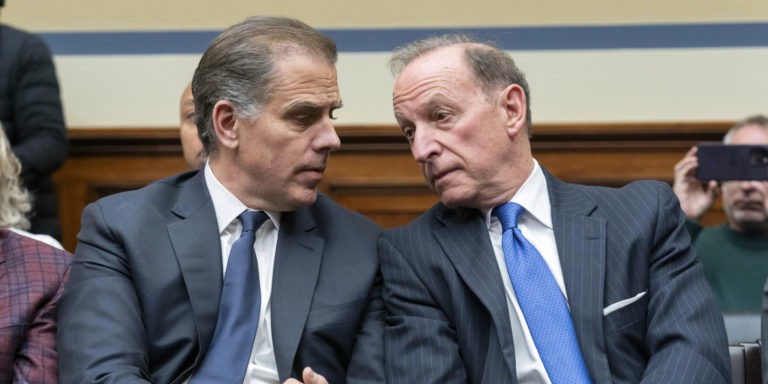
According to the New York Post’s report on White House visitor logs, Hunter Biden’s attorney, Abbe Lowell, met with Bernal on Dec. 11. Two days later, on Dec. 13, Hunter Biden famously disregarded a subpoena and held a highly dramatic press conference outside the Capitol.

The White House claimed that Lowell’s visit to the White House was related to a Hanukkah reception and that no business related to Hunter Biden was discussed, the Post reported. 

Despite the White House’s efforts to dispel rumors of potential coordination, Press Secretary Karine Jean-Pierre admitted in December that Joe Biden was “familiar” with Hunter Biden’s premeditated attempt to defy the subpoena that day.

Hunter Biden’s defiance prompted Republican lawmakers to threaten to hold him in contempt of Congress—a threat they ultimately abandoned after the first son agreed to appear for a deposition.

In response to the meeting, House Oversight Committee Chairman James Comer, R-Ky., called on the White House to provide information about potential coordination between Hunter Biden and Biden administration officials. 

Comer told the Post on Saturday, “We’ve called on the White House to provide information about whether President Biden sought to influence or obstruct our investigation by preventing, discouraging, or dissuading his son from complying with the subpoenas for a deposition as part of the House of Representatives’ impeachment inquiry, but the White House has refused to provide any information.”

At the time, Hunter Biden had requested a public hearing rather than the accustomed behind-closed-doors transcribed interviews. Ironically, Hunter Biden would ignore another invitation for a public hearing in the months ahead. 

It isn’t immediately clear what Lowell and Bernal discussed in their Dec. 11 meeting. Such a meeting further cements Bernal’s role as a central figure in the scandals rocking the White House.

According to the Post, the House Oversight Committee identified Bernal as one of the individuals who had access to the classified documents held at the Penn Biden Center. Such access was granted before the documents were made public in November 2022.  

In addition to his role with the classified documents, Bernal has emerged as the purported “work husband” of Jill Biden, the Post reported. 

Bernal’s involvement with the first lady dates back to 2008 and he is facing accusations of bullying and sexual harassment, the Post added. He is an openly gay man.

RNC Leaders Unveil $50.5M Fundraiser Plan: Election Integrity and Voter Mobilization

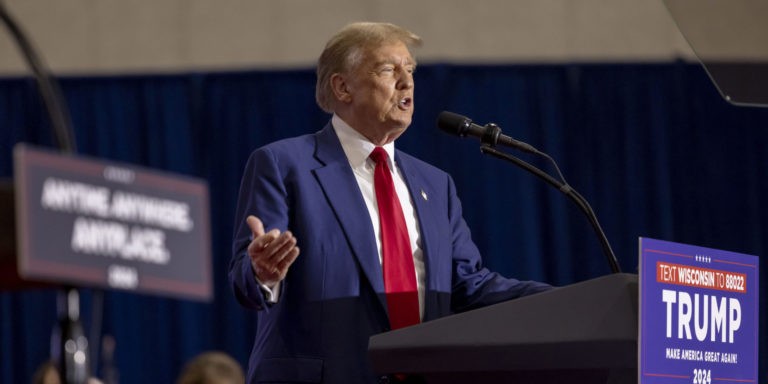
(Luis Cornelio, Headline USA) The leadership at the Republican National Committee announced the forthcoming initiatives following former President Donald Trump’s landmark $50.5 million fundraiser on Saturday evening. 

Securing the ballot and launching aggressive get-out-to-vote campaigns were underscored as the two priorities for the RNC leading up to the 2024 general election, as explained by RNC Chairman Michael Whatley and Co-Chair Lara Trump during an interview with Fox News’s Sunday Morning Futures. 

“We are going to spend every single dollar that we raised on two key, critical, core missions for the RNC, which are getting out the vote and protecting the ballot,” Whatley told host Maria Bartiromo.

Whatley’s remarks come less than 24 hours after Donald Trump surpassed President Joe Biden’s infamous $25 million fundraiser last week in New York City, a feat that only happened after rallying support from former presidents Barack Obama and Bill Clinton, along with prominent Hollywood celebrities. 

Also on Sunday, Lara Trump remarked that Biden’s $25 million accomplishment was solely achievable through the backing of left-wing celebrities. 

“He needed celebrities like Lizzo, Stephen Colbert [and] Anna Wintour,” Lara Trump said. “We needed one man, Donald J. Trump, one president, to double that. It was history made last night.” 

The substantial fundraisers come amid the impending heated 2024 general election battle between Biden and Donald Trump. According to numerous polls, Biden and Donald Trump are virtually neck and neck, with the latter often seizing the lead in several swing states. 

During the Sunday interview, Lara Trump conveyed to Bartiromo that the RNC is focusing its efforts on all states, with particular emphasis on swing states where Trump maintains an advantage over the incumbent president.

She added, “Listen, every state matters, obviously. But there are the key battleground states, as Michael mentioned, that we do have to focus on. Pennsylvania is absolutely one of those states.”

Expanding on her remarks, Lara Trump continued, “We also have to focus on states like Arizona, Wisconsin, Michigan, a state that was a huge win for Donald Trump in 2016, I think we can get back under our belt. Georgia, a state that Donald Trump also wants to focus highly on.”

Not-So-Tough Illegal Behind Viral Videos Claims Persecution Following ICE Arrest

(Luis Cornelio, Headline USA) The now-arrested illegal alien behind viral TikTok videos demonstrating how to squat in homes and exploit U.S. public benefits is now claiming victimhood over what he claimed to be persecution over his social media posts. 

In an interview with the New York Post from his jail cell, Leonel Moreno claimed to fear for his “freedom” and compared being arrested for skipping ICE parole hearings to the persecution he allegedly faced in Venezuela.

“I came here to the United States because of persecution in my country … But they’re doing the same thing to me in the United States – persecuting me,” Moreno stated in Spanish.

He continued, “It’s all misinformation in the media about me. They’re defaming me. They’re misrepresenting me in the news … I am a good father, a good husband, a good son, a good person, humble, respectful to people who respect me.”

Seemingly in tears, Moreno lamented, “I miss my entire life – I miss my freedom.” Later in the interview, he voiced concerns about his life, claiming, “I am afraid they’re going to kill me. They’re coming for my life – anyone!”

Moreno’s claims of fear represent a stark contrast to his previous defiant demeanor showcased in many of his viral videos.

Before his arrest by federal immigration authorities, Moreno posted videos on his now-suspended TikTok (where he boasted over 500,000 followers), advocating for illegal immigrants to squat homes in the U.S. “Guys, I am considering invading a home… This is going to be my next business: invade abandoned homes,” he claimed in one of his videos.


View this profile on Instagram


Leonel moreno (@leitooficial_26) • Instagram photos and videos

In other videos, Moreno criticized law enforcement after the arrest of a 15-year-old illegal immigrant (also from Venezuela) accused of attempted murder for shooting a Brazilian tourist inside a Times Square sporting goods store.  According to authorities, Jesus Rivas-Figueroa, the alleged shooter, fired at NYPD officers who pursued him to a nearby train station in February. 

In another video, Moreno boasted about his daughter, whom he claimed was a U.S. citizen entitled to certain public benefits.

ICE apprehended Moreno on March 29 after he illegally re-entered the U.S. on April 3, 2022. ICE informed the Post that Moreno failed to attend mandatory check-ins.

The Post reported that Moreno could face firearm charges following the emergence of photos depicting him with guns. Federal law prohibits illegal immigrants from purchasing or possessing firearms.

On Sunday, Headline USA reached out to the Geauga County Jail and the Sheriff’s Office, where Moreno is currently held. The county jail suggested that only Lieutenant Kathy Rose, who oversees operations, could provide information about the case. Rose was unavailable for immediate comment regarding Moreno’s arrest and potential federal or state charges.

House Leaders Demand Answers from Mayorkas on Terrorists Being Released into US

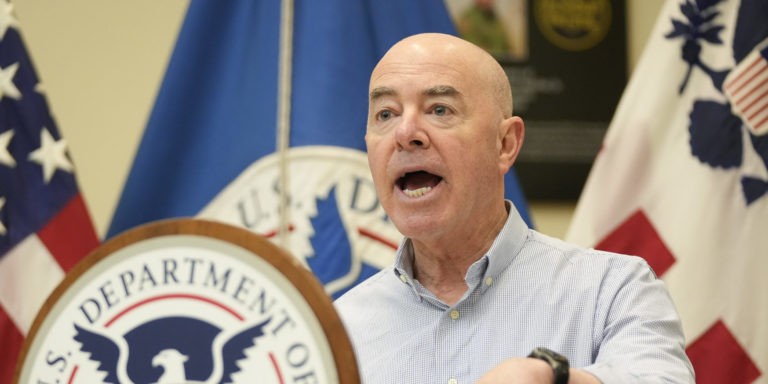
(Bethany Blankley, The Center Square) – Republican members of the U.S. House Committee on Homeland Security are demanding answers from Department of Homeland Security Secretary Alejandro Mayorkas after learning that Border Patrol agents are releasing known or suspected terrorists (KSTs) into the country.

The demand comes after Republican members led the charge to impeach Mayorkas in February and after FBI Director Christopher Wray testified before Congress expressing concerns about those illegally entering the U.S. with ties to the terrorist group ISIS.

In fiscal 2023, the greatest number of KSTs, 736, were apprehended at the northern and southern borders, The Center Square reported. This fiscal year, as of March 22, 210 known or suspected terrorists were apprehended attempting to illegally enter the U.S., according to CBP data. The majority are being apprehended at the northern border.

House Republicans are expressing concerns about those who weren’t being caught, or were being caught after they were released into the U.S.

U.S. Reps. Mark Green, R-Tenn., August Pfluger, R-Texas, and Clay Higgins, R-Louisiana, sent a letter Wednesday to Mayorkas requesting information about U.S. Customs and Border Protection processing and detention procedures for inadmissible aliens already identified on the Terrorist Screening Dataset, the federal database that contains sensitive information on terrorist identities.

Green chairs the U.S. House Committee on Homeland Security; Pfluger chairs the Subcommittee on Counterterrorism, Law Enforcement, and Intelligence; Higgins chairs the Subcommittee on Border Security and Enforcement.

“The committee is concerned with DHS’s current practices in processing and releasing known or suspected terrorists encountered at the Southwest border,” the lawmakers wrote.

They also said that since Feb. 1, 2024, their staffs have contacted DHS several times to confirm and clarify the facts surrounding reports of KSTs being released into the country.

“However, our questions have not been answered,” they said. “In addition to these unanswered requests for information, we are now facing a consistent stream of cases highlighted in the news of aliens allegedly on the terrorist watchlist either being apprehended at the border or discovered in the interior.”

They cite several examples. One includes a Somali who’d been in the country illegally for a year and was arrested by Immigration and Customs Enforcement agents in Minnesota. The Somali, reportedly a member of the Somali terrorist group al-Shabaab, was caught and released by Border Patrol agents in San Ysidro, California, in March 2023.

Another includes a Lebanese man with ties to the Iranian-backed terrorist group Hezbollah. He was apprehended between ports of entry in March 2024 and reportedly told federal agents he planned to travel to New York and make a bomb.

Another includes an Eritrean man who last month opened fire on a convenience store where he worked, allegedly attacked law enforcement officers and later engaged in a stand-off with officers from his camper van in North Carolina. He reportedly illegally entered the U.S. after living in Haiti and has been living in North Carolina for six months.

In another case, a Pakistani man illegally entered the U.S. and was apprehended by Border Patrol agents. Less than two weeks later, the Terrorist Screening Center confirmed he was on the terror watchlist. Despite this, ICE agents released him through Mayorkas’ Alternatives to Detention Program, a program identified by the lawmakers as illegal.

The committee notes that over 350 illegal foreign nationals identified as KSTs have been apprehended attempting to illegally cross the southwest border between ports of entry since the beginning of fiscal 2021.

It fails to note that nearly three times as many have been apprehended at the northern border over the same time period – a total of 981. Northern border apprehensions of KSTs consistently outnumber southwest border apprehensions, The Center Square has reported. This fiscal year, the trend continues; 127 KSTs have been apprehended at the northern border compared to 83 at the southwest border.

The letter was sent after – at a November 2023 committee hearing – Mayorkas would not confirm that those identified as KSTs and apprehended by Border Patrol agents were detained until they were removed from the country. It was also sent after the committee has held several hearings about threats posed to Americans by the terrorist groups Hamas, Hezbollah and ISIS, and those with ties to them illegally entering the country.

Last month, U.S. Rep. Roger Williams, R-Texas, introduced a bill to require federal agents to screen everyone who enters the country illegally against the terrorist watch list in another attempt to block illegal entry of those who wish to commit harm against Americans.

Inflation, COVID-Era Spending Policies Result in Teacher Layoffs Nationwide

(Bethany Bankley, The Center Square) – School districts across the country are laying off teachers, citing high inflationary costs, budget deficits, and federal COVID-era funding running out after receiving windfalls in federal subsidies for three years.

The federal COVID-era subsidies were funded through ESSER (Elementary and Secondary School Emergency Relief) grants administered by state education agencies. Financed through the CARES Act and supplemental appropriations, the grant funding expires Sept. 30.

In California, within one month, roughly 1,600 California public school teachers and staff received layoff notices – a “massive increase” from previous years, California Teachers Association president David Goldberg told the Orange County Register.

Recent announcements include Pasadena Unified School District’s cutting 200 jobs and Anaheim Union High School District cutting 100, citing declining enrollment, the end of ESSER funding and budget shortfalls, for example, according to news reports.

The number of total education job losses won’t be known until after the state legislature passes a budget in June. The budget shortfall varies: Gov. Gavin Newsom’s projected shortfall is $38 billion, the state Legislative Analyst’s Office’s is $73 billion.

In Arkansas, which has been grappling with a teacher shortage for years, the Little Rock School District began its first round of layoffs in February, citing declining enrollment, high construction costs, and high interest rates on debt payments, the Arkansas Times reported. This is after nearly 10% of teachers in the Arkansas public school system left the education workforce before the 2023-2024 school year, according to a recent state report.

In New York, school districts statewide are facing budget shortfalls and massive layoffs due to the governor’s proposed budget, which reduces public school funding by $400 million, News 12 Long Island reported. The Riverhead Central School District already announced it is cutting 38 teaching jobs due to “fiscal” reasons, citing $19 million in COVID money it already spent with no more relief money coming. Buffalo Public Schools announced it was cutting $90 million from its 2024-2025 budget citing the COVID relief money ending. This translates to roughly 310 fulltime job cuts.

In Maryland, the Howard County Public School System announced 348 jobs would likely be cut in order to balance its fiscal 2025 budget. With a $103 million budget shortfall and increasing costs, including 13.6% increases in employee health insurance costs alone, its acting superintendent said, “a significant portion of our budget is staff, we cannot address the structural financial challenges without impacting staff,” the Baltimore Sun reported.

In Massachusetts, Dighton-Rehoboth Superintendent of Schools Bill Runey articulated a fiscal crisis many states are facing: “inflation is at record highs” but state funding for public schools doesn’t account for it. “We are cutting positions, and other districts are cutting even more,” he said, the Taunton Daily Gazette reported. “COVID relief artificially boosted the budget,” he said, and loss of ESSER money and high inflationary costs created a “fiscal crisis.”

In Texas, Arlington ISD announced it is cutting 275 jobs funded by ESSER, including positions related to classroom support, mental health, tutoring and after-school care.

Fort Worth ISD also announced it was cutting 133 ESSER funded jobs. This is after the district cut 200 jobs and had a $80 million deficit in the 2022-2023 school year, the Fort Worth Report reported. Well before COVID money was funneled into schools, Fort Worth ISD’s school board for more than a decade voted to pass unbalanced budgets with deficits, the Fort Worth Report notes.

Despite rising property taxes and a $1.2 billion bond project approved by voters in 2021, the district kept increasing its budget beyond its revenue as it continued to lose students. The district has lost enrollment every year since 2017. Enrollment dropped by roughly 10% between 2019 and 2021, the Wall Street Journal reported.

Education job losses are part of a predictable fiscal cliff, Education Resource Strategies, a nonprofit consultant that works with school districts, warned last year.

ESSER allocated $190 billion nationwide over three years, accounting for between 4% and 7% of total education funding for each state, through a round of funding allocated by Congress (ESSER I, ESSER II, and ESSER III). ESSER funds were used to augment budgets impacted by declining student enrollment, increasing employee salaries and benefits, and widespread inflation, the group and others say. Some finance experts warned against districts using ESSER money to fund salaries knowing the funds would not last.

As federal funds augmented budgets, inflationary costs continued to skyrocket from insurance to electricity, food, supplies and other expenses.

School districts in some states were already facing severe enrollment losses, which directly impact funding formulas. “ESSER may have temporarily mitigated what would have otherwise been significant revenue loss in some districts. This means that districts with enrollment decline may face an even steeper cliff than anticipated,” ERS said.

Based on several factors, ERS identified 15 states that would suffer the most this year from ESSER losses. It also published a report to help districts identify ESSER fiscal cliff risks.

House GOP Investigates Failures Leading to 200,000 Deportation Case Dismissals

(Bethany Blankley, The Center Square) – U.S. House Republicans are demanding answers from Department of Homeland Security Secretary Alejandro Mayorkas as to why more than 200,000 deportation cases were dismissed.

A new report published by the Transactional Records Access Clearinghouse (TRAC) at Syracuse University found that 200,000 deportation cases were dismissed because DHS employees or Border Patrol agents didn’t file the proper paperwork with the courts in time for scheduled hearings.

House Judiciary Committee Chairman Jim Jordan, R-Ohio, and Immigration Integrity, Security, and Enforcement Subcommittee Chairman Tom McClintock, R-California, launched an investigation this week. They sent letters to Mayorkas and to Mary Cheng, acting director of the Executive Office for Immigration Review (EOIR), demanding information.

TRAC researchers evaluated data from January 2021 through February 2024 to determine the number of cases that were dismissed due to Notice to Appear documents not being filed with courts. One of the policies implemented by Mayorkas for which he was impeached relates to changing the detention and removal process. This included mass releasing illegal foreign nationals into the country who were given NTAs and told to appear before an immigration court at a date several years into the future.

By law, DHS is required to file NTAs with the court listed on them. Once filed, removal proceedings officially begin. If NTAs aren’t filed, the removal process doesn’t begin. If a hearing is scheduled before an NTA is filed, the case is thrown out and a new NTA must be filed. According to the report, of the data evaluated, NTAs were only refiled in 25% of the dismissed cases.

TRAC researchers said “the almost total lack of transparency on where and why these DHS failures occurred” is “troubling.”

They also said they weren’t able to obtain information “on just which agency created and issued these NTAs. While we suspect that most are created by Border Patrol agents, and thus should be filed with the court by Customs and Border Protection, we don’t know if the problem is concentrated there, and if so, which sectors and specific locations are most responsible.”

The greatest number of dismissals were in Houston, Miami, Los Angeles and El Paso, according to the data.

NTAs are filed with immigration courts by CBP Office of Field Operations agents and DHS’ Immigration and Customs Enforcement and U.S. Citizenship and Immigration Services agents. “No information to our knowledge has been publicly released by DHS on why and where these problems occur,” TRAC said.

House Republicans aim to find out.

In their letter to Mayorkas, Jordan and McClintock highlight data from the TRAC report and expressed concern “with DHS’s inaction, which exacerbates the nation’s already backlogged immigration courts and creates additional chaos in the Biden Administration’s immigration crisis.”

They also pointed out that the roughly 200,000 deportation case dismissals due to DHS not filing NTAs were significantly greater than the more than 15,500 DHS “failure to prosecute” cases reported between fiscal 2017 and 2020.

They requested that Mayorkas provide documents and information from Jan. 20, 2021, to the present related to the number of cases EOIR dismissed for DHS’s failure to prosecute; the number of cases described in question 1 for which DHS eventually filed an NTA; and all DHS reports on cases dismissed for failure to prosecute.”

In their letter to Cheng, they highlighted the same data and expressed similar concerns. They requested her to provide the number of cases EOIR dismissed for DHS’s failure to prosecute; the number of cases described in question 1 for which DHS eventually filed an NTA; and all EOIR’s Cognos failure to prosecute reports.

They gave a deadline for the requested material to be provided by April 17.