NASA’s Unadulterated Space Dust May Offer Clues to Life Beyond Earth

0

(Headline USA) Asteroid samples fetched by NASA hold not only the pristine building blocks for life but also the salty remains of an ancient water world, scientists reported Wednesday.

The findings provide the strongest evidence yet that asteroids may have planted the seeds of life on Earth and that these ingredients were mingling with water almost right from the start.

“That’s the kind of environment that could have been essential to the steps that lead from elements to life,” said the Smithsonian Institution’s Tim McCoy, one of the lead study authors.

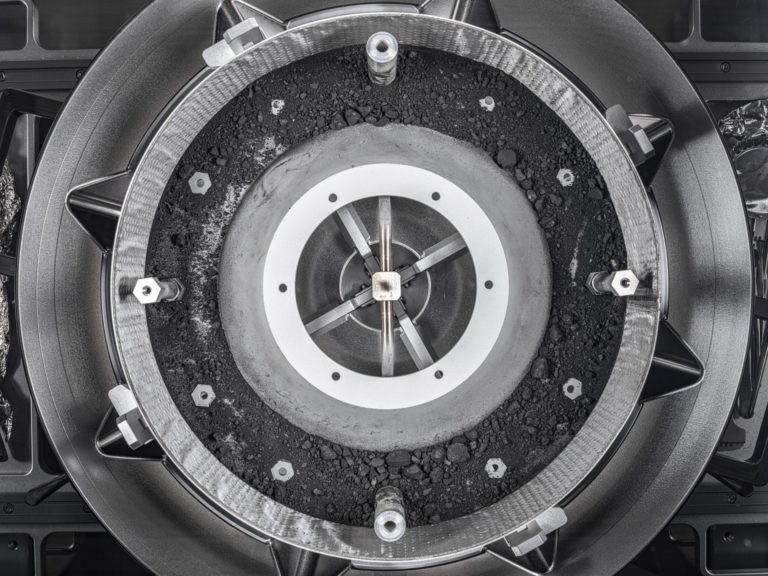
NASA’s Osiris-Rex spacecraft returned 4 ounces of dust and pebbles from the near-Earth asteroid Bennu, delivering the sample canister to the Utah desert in 2023 before swooping off after another space rock. It remains the biggest cosmic haul from beyond the moon. The two previous asteroid sample missions, by Japan, yielded considerably less material.

Small amounts of Bennu’s precious black grains—leftovers from the solar system’s formation 4.5 billion years ago—were doled out to the two separate research teams whose studies appeared in the journals Nature and Nature Astronomy. But it was more than enough to tease out the sodium-rich minerals and confirm the presence of amino acids, nitrogen in the form of ammonia and even parts of the genetic code.

Some if not all of the delicate salts found at Bennu—similar to what’s in the dry lakebeds of California’s Mojave Desert and Africa’s Sahara—would be stripped away if present in falling meteorites.

“This discovery was only possible by analyzing samples that were collected directly from the asteroid then carefully preserved back on Earth,” the Institute of Science Tokyo’s Yasuhito Sekine, who was not involved in the studies, said in an accompanying editorial.

Combining the ingredients of life with an environment of sodium-rich salt water, or brines, “that’s really the pathway to life,” said McCoy, the National Museum of Natural History’s curator of meteorites. “These processes probably occurred much earlier and were much more widespread than we had thought before.”

NASA’s Daniel Glavin said one of the biggest surprises was the relatively high abundance of nitrogen, including ammonia. While all of the organic molecules found in the Bennu samples have been identified before in meteorites, Glavin said the ones from Bennu are valid—“real extraterrestrial organic material formed in space and not a result of contamination from Earth.”

Bennu—a rubble pile just one-third of a mile across — was originally part of a much larger asteroid that got clobbered by other space rocks. The latest results suggest this parent body had an extensive underground network of lakes or even oceans, and that the water evaporated away, leaving behind the salty clues.

Sixty labs around the world are analyzing bits of Bennu as part of initial studies, said the University of Arizona’s Dante Lauretta, the mission’s chief scientist who took part in both studies.

Most of the $1 billion mission’s cache has been set aside for future analysis. Scientists stress more testing is needed to better understand the Bennu samples, as well as more asteroid and comet sample returns. China plans to launch an asteroid sample return mission this year.

Many are pushing for a mission to collect rocks and dirt from the potentially waterlogged dwarf planet Ceres in the main asteroid belt.

Jupiter’s moon Europa and Saturn’s moon Enceladus also beckon as enticing water worlds. Meanwhile, NASA has core samples awaiting pickup at Mars, but their delivery is on hold while the space agency studies the quickest and cheapest way to get them here.

“Are we alone?” McCoy said. “That’s one of the questions we’re trying to answer.”

Adapted from reporting by the Associated Press
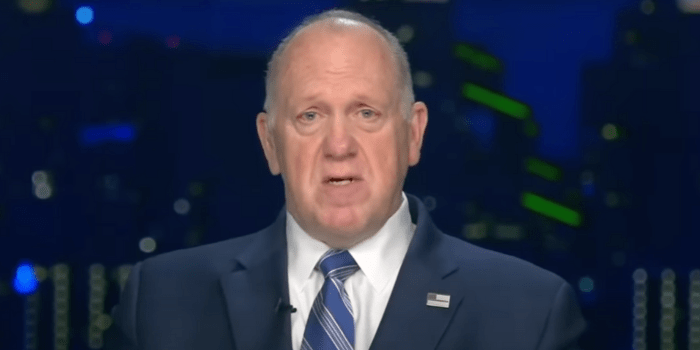
Tom Homan Blasts MSNBC’s Joy Reid: ‘She’s Dumber than a Box of Rocks’

(Maire Clayton, Headline USA) President Donald Trump’s “border czar” Tom Homan took down MSNBC’s Joy Reid after the leftist commentator attacked the administration’s crackdown on illegal immigration.

“She’s dumber than a box of rocks,” Homan told Fox News host Jesse Watters Tuesday night.

The no-nonsense Homan explained how the U.S. Immigration and Customs Enforcement is helping American citizens.

“What ICE did in Chicago is saved children. What we did in New York today is save children,” he said. “Just in Chicago alone we arrested at least nine sexual predators, most of them child sex predators. We took them off the street.”

He warned that those who oppose Trump’s immigration plan are not going to be successful in stopping the mass deportation of illegals.

“Under Biden, we had a 3,500% increase in people on terrorist watch lists. No, we’re saving this nation. We make America safe again,” he continued. “So they need to get out of the way because we’re coming. We’re going to do it. They’re not going to stop us.”

Homan previously slammed singer and former Disney Channel star Selena Gomez for her now-deleted video where she cried because of illegal immigrants being deported. 

He said she should be upset with the children who have been sex trafficked and cartel crime.

Some Democrats plan on fighting the new administration.

Pittsburgh Mayor Ed Gainey bluntly stated Monday he refuses to work with ICE.

“I am not going to be working with ICE,” the mayor said. “My administration will not work with ICE.”

Denver Mayor Mike Johnston made comments earlier in January that he believes there should be places to provide sanctuary for illegal immigrants.

ICE arrested over 3,500 during Trump’s first week back in office, according to Axios.

On Wednesday, ICE’s X account stated over 1,000 were arrested, as the department continues to post the daily arrest numbers.

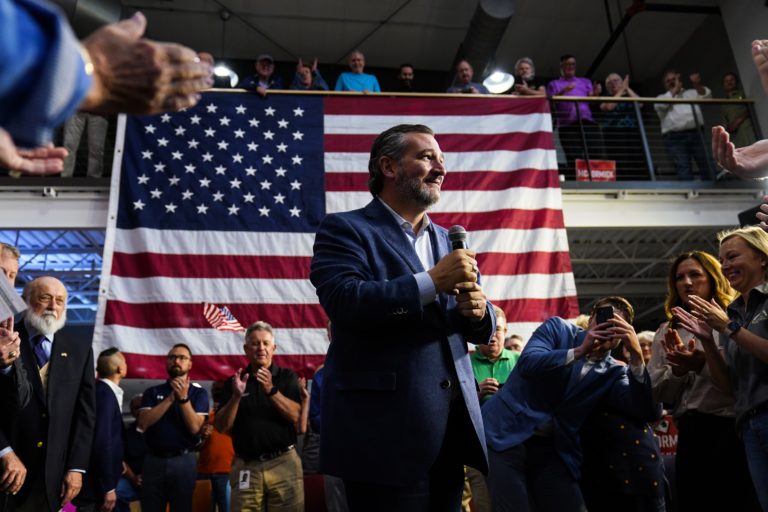
Cruz Makes ‘Very Serious’ Case for US to Retake the Panama Canal

(Julianna Frieman, Headline USA) Sen. Ted Cruz, R-Texas, made a “very serious” case for the U.S. to retake the Panama Canal during Wednesday’s episode of his podcast.

Cruz, chairman of the Senate Committee on Commerce, Science and Technology, kicked off a Senate hearing Tuesday by launching formal investigative efforts into Panama’s violation of 1977 Panama Treaty. The senator blasted Panama as a “bad actor” that fell to the dangerous influence of China.

Cruz delved into the reasons for his support of President Donald Trump retaking the Panama Canal, explaining that it was more than American expansionism that caused the issue to emerge.

“This is not simply Donald Trump raising an issue, ‘Gosh, we want the Panama Canal,’” Cruz said on Verdict with Ted Cruz.

“Panama made a commitment when Jimmy Carter gave this away. And they made a commitment, No. 1, that the Panama Canal would remain neutral, that it would not allow another foreign power to have control over it, to have military access to it,” he continued. “And No. 2, they made a commitment in treaty that they would charge fair and equitable fees.”

The senator said that “China controls” both the Pacific and Atlanta sides of the Panama Canal. He warned that China has the power to “shut down all traffic” traversing the canal, which could harm U.S. interests.

“Panama makes roughly $3 billion in fees from transit across the Panama Canal,” Cruz said, adding that “75% of those transits are American ships.”

The Texan pointed out that Panama makes billions charging American cargo ships, commercial ships and military ships for using the canal.

He made clear that “there is a strong argument that Panama is in violation of the treaty.”

Cruz was optimistic about Trump’s negotiation power over Panama, saying the “worst-case scenario” would be a reduction of cost.

The GOP senator reflected on his hearing, telling listeners he was shocked that Democrats agreed with him on the threat of Chinese influence over the canal.

“I didn’t know if the Democrats would show up at the hearing and begin screaming and saying, ‘Trump is a lunatic and how dare he do this.’  I didn’t know what they would say,” Cruz said.

He added, “The most interesting thing about the hearing today is the Democrats, almost every Democrat, echoed the points that you and I have been making, that China has far too much influence over the Panama Canal, and also the Panama Canal is charging excessive fees. I’m not sure what that means, but it surprised me.”

Julianna Frieman is a freelance writer published by Headline USA, the Daily Caller, The Federalist, and the American Spectator. Follow her on Twitter at @JuliannaFrieman.

‘Losing Her S**t’: Bernie’s Onesie Tantrum at RFK Jr. Hearing Cracks Up Ex-Fox News Host

(Julianna Frieman, Headline USA) Political commentator Megyn Kelly was unable to contain her laughter during Robert F. Kennedy Jr.’s confirmation hearing Wednesday as Sen. Bernie Sanders, I-Vt., threw a tantrum about a baby onesie.

Kelly—a former prime-time Fox News host and cohost of NBC’s Today show—was prominently seated behind Kennedy, President Donald Trump’s nominee for secretary of Health and Human Services.

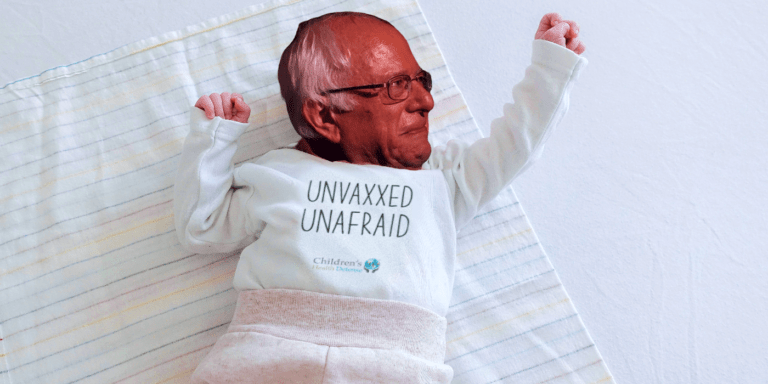
The influential SiriusXM host cracked up after the socialist Sanders displayed an enlarged image of a onesie sold by Children’s Health Defense that read “Unvaxxed Unafraid.”

Kennedy was the CHD founder and a former chairman of the board, but he cut ties from the organization after embarking on his political career last year.

“Are you supportive of these onesies?” Sanders asked.

Social-media users immediately spotted Kelly “laughing her a** off” as the senator spiraled out.

“Megyn Kelly in the background absolutely losing her s**t,” Stephen L. Miller, contributing editor of The Spectator, wrote on X with video of the exchange.

Kelly addressed the viral moment on her show Wednesday evening, telling her audience that “the Democrats made fools of themselves.”

She called Sanders’s meltdown “one of the lowlights of the day,” but could not help but admit its hilarity.

“Instead of talking about what he’s gonna do to try to get the chemicals out of our food supply, try to work with farmers and ranchers to help them avoid these toxic pesticides,” Kelly said, criticizing Sanders for wasting his time, “Instead of spending time on that, the Democrats want to talk about baby clothes.”

Kelly mocked Sanders’s emphatic rant, calling him “ridiculous” for derailing an HHS confirmation hearing with such a subject.

“Meanwhile, guarantee you, those onesies are probably selling out like wildfire right now,” she said.

As of Friday morning the onesies were still being sold by CHD, which offered an extra 10% off for those using the promo code BERNIE. In addition to the white onesies displayed by Sanders, the CHD store also carried them in pink and heather blue.

Julianna Frieman is a freelance writer published by Headline USA, the Daily Caller, The Federalist, and the American Spectator. Follow her on Twitter at @JuliannaFrieman.

Trump’s FBI Boss Pick Kash Patel Says He Supports Warrantless FISA Surveillance

(Ken Silva, Headline USA) Donald Trump’s pick to run the FBI, Kash Patel, disappointed civil libertarians and privacy advocates during his Thursday confirmation hearing, where he told Congress that he supports warrantless searches of U.S. communications collected under Section 702 of the Foreign Intelligence Surveillance Act.

Section 702 of FISA allows the FBI and other agencies to collect without a warrant the communications of foreigners located in other countries, including when those subjects are in contact with Americans or other people inside the U.S.

Those U.S. communications are then stored in a database, and are subject to warrantless searches by federal agents—though a district court recently deemed this practice unconstitutional. According to an ODNI report from last year, Section 702 was used to query the communications of U.S. persons 57,094 times between December 2022 and November 2023.

Patel, who used Section 702 when he worked in the Justice Department, was first asked about the issue by Sen. John Cornyn, R-Texas. Patel defended warrantless FISA 702 on the grounds that it produces information for the President’s daily brief, and that the intelligence gathered from 702 can be used for things such as rescuing American hostages.

“Section 702 makes up about 45% of the presidential daily briefing,” he said.

“Having a warrant requirement is just not [compatible] with the requirement to protect American citizens,” he added.

Sen. Mike Lee, R-Utah, disagreed.

“This misses the point. The concern Americans have isn’t about real-time collection of foreign targets. The concern is once those [foreign] communications are stored, you have within them incidentally collected communications of Americans—text messages, emails, recorded phone calls and so forth,” Lee said.

Lee then asked Patel whether a warrant is required to search through the U.S. communications collected under 702. Patel said he believe a warrant is required—an incorrect answer.

“Under current law, they routinely access [U.S. communications] without a warrant … They’re supposed to have a good reason. But we’ve found that on hundreds of thousands of occasions, they search for Americans without a warrant,” Lee said, correcting Patel’s incorrect answer.

Despite Patel’s misunderstanding of the law and his willingness to continue warrantless surveillance, Lee said he supported his nomination.

Patel did say he’ll work with Congress to implement more safeguards to FISA.

Ken Silva is a staff writer at Headline USA. Follow him at x.com/jd_cashless.

‘He Screwed w/ Me’: VP Vance Tells All About Trump’s ‘Red Button’ Prank

(Julianna Frieman, Headline USA) Vice President J.D. Vance told Fox News in an interview that aired Wednesday night all about the time President Donald Trump pulled a prank on him by pushing the “red button.”

Upon taking office for his second term, Trump reinstated the famous Diet Coke button on his Oval Office desk, which gives the president immediate access to his favorite beverage.

“He screwed with me about that, actually,” Vance told Fox News host Sean Hannity.

Vance said he and Trump were having an Oval Office powwow with Senate Majority Leader John Thune, R-S.D., and House Speaker Mike Johnson, R-La., when the interaction occurred.

“So, we’re just mid-conversation. I think we were with Senator Thune and Speaker Johnson. And he has this beautiful ornate wooden box on his desk with a red button, and he presses it. And he just kind of looks over at me, and I’m like, ‘Sir, is that—’” Vance recalled on Hannity with a burst of laughter.

The Fox News host was instantly amused as Vance remembered asking, “Did something and just happen?”

Vance said Trump quelled his concerns by telling him, “No, I just ordered a Diet Coke.”

Vance visited the Oval Office for the first time with Trump in video captured by Johnson. The GOP House speaker posted the footage on social media on Jan. 22, celebrating Vance’s “rise from humble circumstances.”

Coca-Cola Chairman and CEO James Quincey personally met Trump days before his inauguration to gift him a special gift, the first ever Presidential Commemorative Inaugural Diet Coke bottle.

The label of Trump’s custom Diet Coke bottle showed a picture of the White House with the words, “The Inauguration of President of the United States,” as well as Trump’s full name and the date of his inauguration, Jan. 20, 2025.

Julianna Frieman is a freelance writer published by Headline USA, the Daily Caller, The Federalist, and the American Spectator. Follow her on Twitter at @JuliannaFrieman.

Out of Vogue: Lefty Fashion Mag Swipes at Melania after Doting on Upholstery Queen Jill Biden

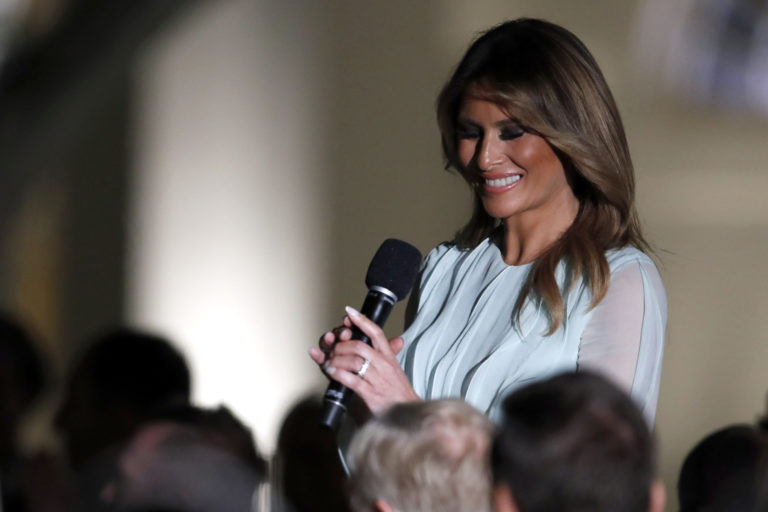
(Julianna Frieman, Headline USA) Vogue took a swipe at First Lady Melania Trump on Tuesday after spending the past four years lapping praise on former First Lady Jill Biden, whose fashion sense has been compared to that of the White House drapes.

In an article titled “Melania Trump Cosplays The Apprentice in Her Official Portrait,” Vogue fashion writer Hannah Jackson took aim at Trump’s wife for dressing like a “freelance magician.”

“The choice to wear a tuxedo—as opposed to a blazer or blouse—made Trump look more like a freelance magician than a public servant. It’s perhaps unsurprising that a woman who lived in a gold-encrusted penthouse, whose fame is so intertwined with a reality-television empire, would refuse to abandon theatrics—even when faced with 248 years of tradition,” the author wrote for Vogue.

Vogue proudly put former Vice President Kamala Harris on their cover twice.

Harris reportedly flipped out in 2021 when the magazine caught her off guard and featured and “disrespectful” image of herself wearing a casual jacket and sneakers instead of one in traditional business attire.

Harris also marked the anniversary of Hamas’s deadly Oct. 7, 2023 attack on Israel with her second Vogue cover photoshoot as the 2024 Democrat presidential nominee.

As for Jill Biden, she also appeared on the cover of two issues of Vogue, one in June 2021 and the other in July 2024, just after former President Joe Biden dropped his reelection bid.

Although Vogue branded Melania Trump as a “freelance magician,” Biden’s wife showed she has an eclectic style beyond fashioning oneself like a bold-patterned sofa.

The former first lady was infamous for her White House Christmas decorations, which bore comparison to the dystopian Hunger Games series and the circus.

Julianna Frieman is a freelance writer published by Headline USA, the Daily Caller, The Federalist, and the American Spectator. Follow her on Twitter at @JuliannaFrieman.

Silver’s Bright Future: Why the Market is Poised for a Surge

(Money Metals News Service) In the latest episode of the Money Metals Midweek Memo, host Mike Maharrey dives deep into the silver market’s outlook, highlighting increasing industrial demand, supply shortages, and bullish projections from mainstream analysts.

Silver’s 2024 Performance and Market Sentiment

Despite a common perception that silver has underperformed, silver prices rose 20.5% in 2024, making it one of the best-performing asset classes of the year. While gold has repeatedly set record highs, silver remains around $20 below its all-time high, reinforcing the belief that it is a laggard.

However, many experts argue that silver is undervalued relative to its supply and demand fundamentals. Maharrey points to growing mainstream bullish sentiment, with Saxo Bank’s head of commodity strategy, Ole Hansen, predicting a 30% price increase in 2025 due to silver’s dual role as an industrial and monetary metal.

The Driving Force: Industrial Demand for Silver

The industrial demand for silver has surged, particularly in the green energy sector, with solar energy leading the charge. Each solar panel uses about 20 grams (0.64 oz) of silver, and with 100 million ounces of silver consumed by the solar industry in 2023, the sector accounted for 14% of total silver demand.

A study from Australia projects that solar energy alone could consume up to 95% of total silver demand within the next 10–15 years. While this might be an aggressive estimate, Maharrey emphasizes that demand from China and India, the largest consumers of solar energy, will remain strong regardless of U.S. political shifts.

Why Substitutes for Silver Are Unlikely

Analysts once assumed that silver’s use in solar panels would decrease as alternative materials were developed. However, a 2020 Saxo Bank report debunked this assumption, noting that:

“Potential substitute metals cannot match silver in terms of energy output per solar panel. Non-silver PVs tend to be less reliable and have shorter lifespans.”

Newer high-efficiency solar panels actually require 20–120% more silver than previous models.

AI and High-Performance Computing: A New Source of Demand

Beyond solar energy, Artificial Intelligence (AI) and high-performance computing (HPC) are also driving silver demand. AI chips and data centers require highly conductive materials like silver to improve processing speed, electrical efficiency, and cooling performance.

Maharrey points out that the electrification of industries and the expansion of AI-driven technologies will continue pushing silver demand upward for years to come.

Silver’s Persistent Supply Deficit

While demand surges, silver supply continues to shrink. The Silver Institute projects that industrial demand will exceed 700 million ounces in 2024, setting a record. At the same time, silver mine production has been declining since 2016.

Key supply concerns include:

  • Silver’s fourth consecutive supply deficit in 2024, expected to be around 215 million ounces, the second-largest deficit on record.
  • Declining mine output: Only 20–30% of silver comes from primary silver mines, while 70–80% is a byproduct of other metals like copper and zinc. This means silver mining does not rapidly respond to price increases the way gold mining does.

With fewer new silver mines opening, Metals Focus forecasts that silver prices will break all-time records in the next five years, potentially exceeding $50 per ounce.

Investment Demand: A Contrarian Bullish Indicator

While industrial demand for silver is soaring, investment demand has lagged, particularly in the United States and Europe. The Silver Institute expects physical investment in silver (coins and bars) to decline 15% in 2024, reaching a four-year low of 208 million ounces.

However, contrarian analysts see this as bullish. Jesse Colombo, available on Money Metals Exchange, explains:

“The core idea behind this approach is that the crowd tends to be wrong at major market turning points. As a market peaks, the crowd becomes excessively bullish. At market bottoms, they become overly bearish.”

Since Western investors are currently bearish on silver, contrarians argue this is a sign of an upcoming price breakout.

The Gold-Silver Ratio: A Historic Buying Opportunity

Another key indicator is the gold-silver ratio, which currently sits at over 90:1. Historically, when this ratio exceeds 80:1, silver has often experienced sharp price increases to correct the imbalance.

For reference:

  • The last time the ratio was this high was during the COVID-19 crisis in 2020, when it reached 123:1 before plummeting to 60:1 as silver prices surged.
  • Historically, the modern-era average for the gold-silver ratio is between 40:1 and 60:1, meaning silver is heavily undervalued at current levels.

What Comes Next?

Maharrey emphasizes that while predicting exact timelines is difficult, the fundamental indicators all point toward a major silver rally. With:

  • Surging industrial demand (solar, AI, electrification)
  • Shrinking supply and production constraints
  • A historically high gold-silver ratio
  • Growing mainstream bullish sentiment

… all signs indicate that silver remains significantly undervalued and may be on the verge of a breakout.

Time to Act: Silver on Sale

With silver prices still hovering around $30 per ounce, Maharrey concludes:

“When something is on sale, you shop for it.”

For investors looking to add silver to their portfolio, Money Metals Exchange offers a variety of silver bars, coins, and bullion, with low premiums due to subdued U.S. investment demand.

To learn more, visit MoneyMetals.com or call 1-800-800-1865 to speak with a precious metals specialist.

TD Issues Red Alert: “Explosive Upside Convexity in Silver Markets…”

(Money Metals News Service) Gold is breaking out to new all-time highs this morning, rising $25 to top $2,795 per ounce.

At the same time, silver continues its march upwards, rising another 60 cents this morning to trade at $31.65 per ounce.

High drama in the institutional markets for gold and silver — unfolding mostly in the background over the past 45 days – may finally be bleeding out into the mainstream.

Specifically, Trump’s threat to impose import tariffs has led to a mad scramble at the institutional level to transport gold and silver bullion into the United States from all over the world before any potential tariffs are put into place.

A short squeeze may be unfolding at the COMEX; some traders are having difficulty sourcing metal and are closing out hedges to avoid getting caught on the wrong side of the trade.

On Wednesday, an analyst at TD Commodities warned the market is especially underestimating the possibility of a big move in silver, writing “explosive upside convexity in silver markets remains severely underpriced, particularly with few days remaining until the proposed deadline for tariffs for Canada & Mexico.”

Meanwhile, Trump has been pounding the table for lower rates and loudly blamed the Fed yesterday for causing the inflation America has seen in recent years.

“If the Fed had spent less time on DEI, gender ideology, ‘green’ energy, and fake climate change, Inflation would never have been a problem,” Trump said in a Truth Social post.

Money Metals will keep you informed as these fast-moving events continue to unfold.

Silver Mine Production: More Questions Than Answers

(Mike Maharrey, Money Metals News Service) Silver demand has been red hot, driven by a rapid increase in industrial offtake. However, mine production has been flat for nearly a decade.

Can silver producers ramp up and meet demand?

According to analysis by Metals Focus, the trajectory of the silver mining sector is “uncertain.”

Based on preliminary data, silver mine output increased by about 2 percent in 2024, breaking a trend of declining silver production.

Is this the start of a new trend? And will it be enough to satisfy the increasing appetite for silver?

Silver mine output peaked in 2016 at 900 million ounces. Up until last year, silver production had dropped by an average of 1.4 percent each year. In 2023, mines produced 814 million ounces of silver.

Why the decline?

According to Metals Focus, a combination of reserve depletion, mine closures, and a 20 percent drop in ore grades drove sagging mine output.

At the peak of mine output, the price of silver averaged around $13.30 an ounce. Since 2016, the average price has increased to $20.70 an ounce. Today, the price is well over $31 an ounce.

Why aren’t miners increasing production to cash in on that increase?

Approximately 70–80 percent of silver mined globally is produced as a byproduct of mining other metals, such as copper, lead, and zinc. The share of silver produced by primary silver mines fell from approximately 32 percent pre-2016 to 28 percent in 2023.

As Metals Focus explained, this underscores a fundamental dynamic in the silver mining industry.

“By-product silver revenue does not dictate the economics of an operation, instead mining plans are dependent on the market of the mining industry dominant metal. This means a significant portion of global silver supply is dissociated from silver market fundamentals.”

In effect, rising silver prices don’t motivate copper or zinc miners to produce more silver, meaning the industry is slow to respond to supply constraints.

And there are significant supply constraints, with silver demand rapidly increasing.

Industrial demand is expected to set a record in 2024, topping 700 million ounces. However, although mine output is finally expected to chart a 2 percent increase in 2024, it won’t be enough to offset demand. The market is looking at a fourth straight market deficit.

Can the mining industry close this gap?

Looking ahead, Metals Focus calls the trajectory of mine output “uncertain.”

“Supply will experience staggered growth, rising to a peak of 856Moz in 2027 and plateau thereafter. In contrast, production from currently operating mines is expected to fall by 2029 and so output will become increasingly reliant on the successful commissioning of developing projects. Given the challenges associated with advancing projects through to production, the outlook for silver mine supply is therefore uncertain.”

Metals Focus projects declining output from the world’s biggest silver producers.

Mexico, Peru, China and, to a lesser extent, Chile and Bolivia, produce 62 percent of the total supply in 2024. By 2029, production from the top five producers is forecast to fall by 19 million ounces. This will be driven by a 13 percent decline in Mexican mine output.

There has been an increase in exploration outlays. According to Metals Focus, the average annual sustaining and non-sustaining exploration expenditure by a select group of major silver producers was $400 million. Since 2021, miners have exceeded that average. According to Metals Focus, this highlights “renewed efforts from major silver producers to expand their respective production portfolios.”

However, Metals Focus cautions that exploration expenditures don’t necessarily translate to more silver.

“Looking beyond 2025, there are several primary silver projects in the pipeline, but all require further derisking in order to advance to a final positive investment decision. Taking into account construction timelines and possible delays, it is unlikely many of these projects will reach production before the end of the decade. Therefore, future supply will remain reliant on expansions at existing operations and byproduct production at gold and base metal mines.”

It appears that for the next few years at least, we will have to depend on drawdowns of above-ground stocks to meet the silver supply deficit.


Mike Maharrey is a journalist and market analyst for MoneyMetals.com with over a decade of experience in precious metals. He holds a BS in accounting from the University of Kentucky and a BA in journalism from the University of South Florida.