White House Correspondent Hits Back at ‘Low-Level’ Reporter Who Think She’s Too Hot

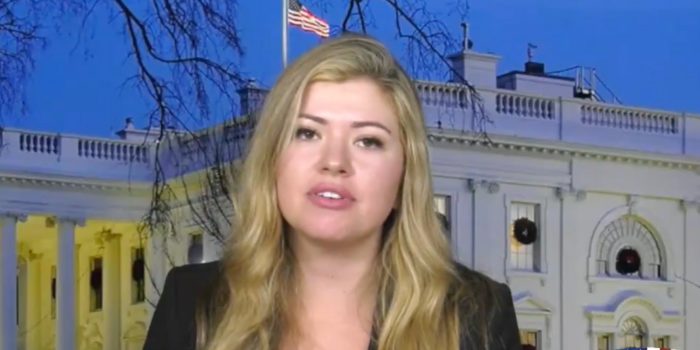
(Julianna Frieman, Headline USA) War Room co-host Natalie Winters, who made her debut as White House correspondent on Tuesday, hit back at “low-level” reporters who wasted hundreds of words criticizing her wardrobe choice.

To the chagrin of legacy media gatekeepers, White House Press Secretary Karoline Leavitt announced during her first briefing that President Donald Trump welcomes all media, including podcasters and social media influencers, to cover his administration.

On Thursday, the Daily Mail ran an article titled “Controversial White House Correspondent slammed over ‘inappropriate’ outfits,” which focused on Winters’s black layered sweater and white skirt.

The anonymous Daily Mail reporter, whose name has since been hidden and replaced with “Daily Mail Reporter,” regurgitated several social media comments likening the War Room co-host’s fashion sense to that of an unprofessional “high school intern.”

Winters took aim at the slew of negative headlines ripping on her style, finding humor in one that said she was “under attack for being too hot.”

The White House correspondent blasted the mainstream press for going to war with Steve Bannon and his show, and she reminded her audience that  Bannon was targeted by Democrats who weaponized the justice system to send him to prison.

“Someone who had a master’s degree in journalism at the Daily Mail, now to discredit this show and myself, is going to write a thousand-word article criticizing me, trying to make me look like a vapid, dumb bimbo for wearing a sweater,” Winters said.

She told reporters who are salivating to attack her wardrobe, “Have fun covering my wardrobe choices for the next four years.”

“While you sit in a stupid cubicle as a low-label reporter for the Daily Mail, I’ll be in the White House press briefing room co-hosting one of the most influential podcasts that has ever existed in the history of this country,” Winters said.

Winters made a social media post sharing an image of Jane Herz, the Daily Mail reporter behind the article.

“What a gross, pathetic life you have,” Winters wrote of Herz on X.

Julianna Frieman is a freelance writer published by Headline USA, the Daily Caller, The Federalist, and the American Spectator. Follow her on Twitter at @JuliannaFrieman.

Gruesome Reports of Cannibalism in Illegal South African Gold Mine

(Mike Maharrey, Money Metals News Service) A gruesome situation in a South African gold mine underscores the problem of illegal mining.

Miners trapped by government officials in the abandoned Buffelsfontein Gold Mine allegedly turned to cannibalism to survive.

Last August, South African authorities initiated a crackdown on the illegal mining operation. Hoping to force the miners to the surface, police cut off food and water, and blocked key exit shafts, leaving only the main entrance accessible. This effectively left the miners with two options – leave the mine and face criminal charges or stay put and risk their lives.

Government officials insist the miners could have come to the surface at any time, but refused to do so because they knew they faced prosecution. More than 1,300 people left the mine over the five-month standoff and faced their day in court, but 300 people remained in the mine.

As time wore on, the miners became increasingly weak and some were reportedly legitimately trapped.

South Africa mining minister Gwede Mantashehe said the blood is on the miners’ heads.

“If you go to a dangerous place such as a neglected mine and stay there for about three months, starving yourself to death, how does that become the responsibility of the state?”

Public pressure and a legal challenge led to a court-ordered rescue operation in January. Officials say 246 miners survived the ordeal, but 78 people died.

Survivors interviewed by the Telegraph said some of their fellow miners “resorted to cannibalism.”

“They cut parts of legs, arms, and ribs for sustenance. They decided it was their only remaining option for survival.”

The miners interviewed by the Telegraph insisted they didn’t resort to eating their deceased companions, but they did eat cockroaches to survive.

Cracking down on illegal mining operations is publicly popular, but not everyone sympathizes with the government. South Africa’s second-largest trade union federation called the incident “one of the most horrific displays of state wilful negligence in recent history.”

Illegal Mining

As the Telegraph put it, illegal miners make a “risky living by trespassing in disused gold mines to eke out what is left of the deposits.”

Illegal mining is a growing problem around the world. It often occurs in environmentally sensitive areas, and officials say it causes severe environmental, social, and economic damage.

It also deprives governments of valuable tax revenues.

South African officials claim illegal mining costs the country around £3 billion in lost receipts.

According to South African officials, highly organized, “ruthless” criminal gangs run illegal mining operations. According to the Telegraph, the reason South African officials opted to “smoke the miners out” of the Buffelsfontein mine was it was “too dangerous to enter the warren of old workings to confront armed criminal gangs.”

Even without the risk of prosecution, illegal mining is a dangerous enterprise. IIlegal mines often operate in remote areas and there is no “workplace safety.”

Illegal miners in South Africa are called “zama zamas”, translating roughly to “those who take a chance” or “those who try their luck.  They come from a long line of men and women who have risked everything in pursuit of gold and silver.

It just goes to show the value of these precious metals.

The United States has a long history of gold rushes where people risked life, limb, and money. It makes sense when you think about it.

What kind of risk would you take if you had the possibility of digging money out of the ground?


Mike Maharrey is a journalist and market analyst for MoneyMetals.com with over a decade of experience in precious metals. He holds a BS in accounting from the University of Kentucky and a BA in journalism from the University of South Florida.

Trump Reveals Official Start Date of Mexico, Canada Tariffs

(Luis Cornelio, Headline USA) The wait for President Donald Trump’s tariffs is over.

Trump announced he will impose tariffs on imported goods from Mexico and Canada starting Saturday, fulfilling one of his key campaign promises. 

“We’ll be announcing the tariffs on Canada and Mexico for a number of reasons,” Trump said while addressing reporters from the Oval Office on Thursday. 

He pointed to the unprecedented number of illegal aliens and fentanyl flooding into the country, along with the massive trade deficits with both Canada and Mexico, as reasons for the tariffs. 

“I’ll be putting the tariff of 25% on Canada and separately 25% on Mexico, and we will really have to do that because we have very big deficits with those countries,” Trump declared. “Those tariffs may or may not rise with time.” 

Asked whether oil would be included in the tariffs, Trump replied, “Oil is going to have nothing to do with it as far as I’m concerned.” 

Later, Trump pushed back on a reporter’s claim that oil would be excluded from the tariffs. 

“I didn’t say that. You said that,” Trump said. “We may or may not. We’re going to make that determination, probably tonight, on oil. Because they send us oil, we’ll see. It depends on what the price is. If the oil is properly priced, if they treat us properly—which they don’t.” 

The newly sworn-in president called out the nation’s neighboring countries: “Look, Mexico and Canada have never been good to us on trade. They’ve treated us very unfairly on trade, and we will be able to make that up very quickly because we don’t need the products that they have.” 

Oil and lumber are among the goods imported from Canada and Mexico that Trump said the U.S. does not need.  

“We have more than almost anybody in those two categories,” he said, slamming the U.S. subsidies to Canada—$175 billion a year—and Mexico—$250-300 billion annually. 

DOJ Signals Charges for Sanctuary Officials After Releasing Immigrant Guilty of Assault

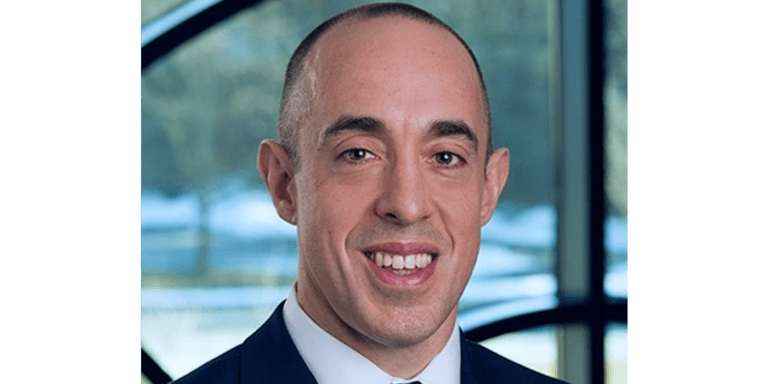
(Luis Cornelio, Headline USA) So-called sanctuary jurisdictions may soon face legal consequences if they continue to hinder federal immigration operations, Acting Deputy Attorney General Emil Bove suggested on Thursday. 

“We will use every tool at our disposal to prevent sanctuary city policies from impeding and obstructing lawful federal operations designed to make America safe again and end the national crisis arising from four years of failed immigration policy,” Bove wrote Thursday in a statement announcing the arrest of an illegal alien in Ithaca, New York. 

Bove’s rebuke of sanctuary cities came after the Tompkins County Sheriff’s Office failed to honor a federal arrest warrant for Jesus Romero-Hernandez, a 27-year-old Mexican national. He had been in local custody after pleading guilty to third-degree state assault charges.

The DOJ said that Romero-Hernandez faced additional federal charges in January 2024 for illegally reentering the U.S. after a prior removal.

Federal immigration authorities issued an arrest warrant for Romero-Hernandez after learning of his arrest in New York, but local law enforcement ignored it. 

Romero-Hernandez was released on Jan. 28 after being hit with a time-served sentence of time served. This forced federal agents to locate him in the streets of New York rather than inside a guarded facility. 

“Yesterday, despite the warrant, a defendant with no legal status and a history of violence was released into the community,” Bove said, noting that the U.S. Marshals and Homeland Security Investigations assisted in the arrest. “Federal agents risked their safety and pursued the defendant in unsafe conditions.”

Bove added, “I applaud the U.S. Attorney’s commitment to investigate these circumstances for potential prosecution, and the efforts of the agents who were able to arrest the defendant under wholly avoidable circumstances.”

Roseanne Barr Blasts Wokeness, ‘Hollywood Has Made Itself Irrelevant’

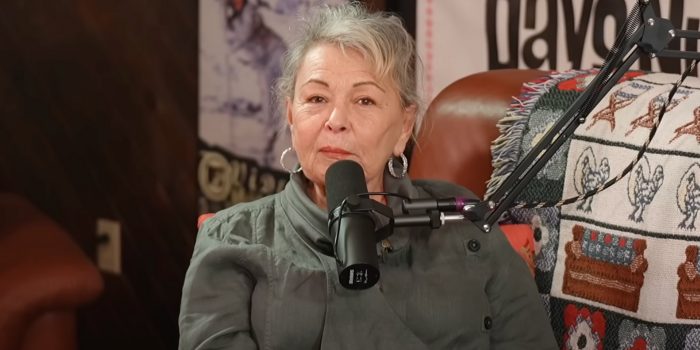
(Maire Clayton, Headline USA) Actress and comedian Roseanne Barr told Variety that if the entertainment industry wants to survive, it should “work with” President Donald Trump.

Barr said the industry needs to get back in touch with the common American.

“Hollywood has made itself irrelevant to the American people,” she noted.

She noted how woke policies continue to cause companies to lose massive amounts of money.

“If they want to survive, they should work with the new president. American people elected him in an overwhelming victory,” she continued. “They should get back in touch with [them] and make some money, which I don’t know if they do or not ’cause they’ve proven to be ideologues rather than [business people].”

The Rosanne actress added that she is in the process of making a new show and isn’t concerned if Hollywood doesn’t want to pick it up.

“If Hollywood doesn’t buy it, then I’m just gonna make it myself,” she said. “Does anybody in [Hollywood] like America or the people who watch TV? Because the people who watch TV would really like to see a show where working-class people win against the enemies of America.”

She described the show as a cross between The Roseanne Show and The Sopranos.

“It’s silly and out there,” she told the outlet. “[It will contain] very offensive ideas and a lot of swearing.”

Barr was previously dropped from the Rosanne reboot in 2018 after referring to former Obama aide Valarie Jarrett as a Planet of the Apes character.

Barr wasn’t the only celebrity to shun the woke ideology that is rampant in the entertainment industry.

Actor Rob Schneider previously stated he plans on starting a new media company and will be creating a women’s talk show to be the opposite of The View.

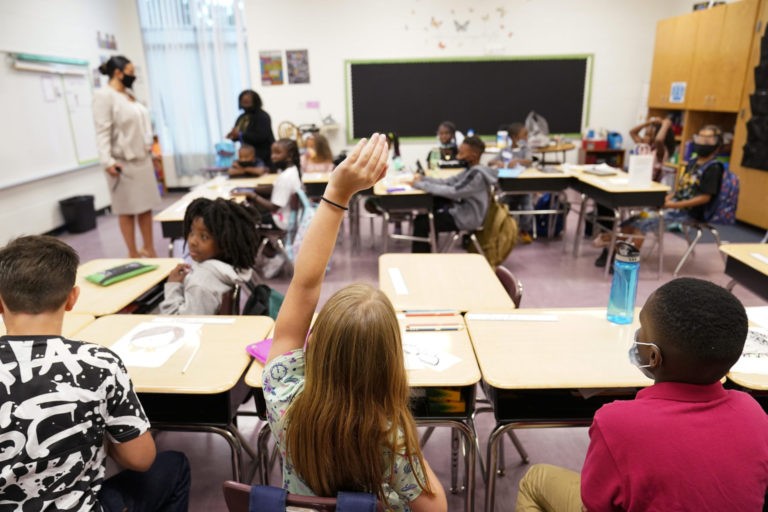
Nat’l Report Card: Kids FARTHER Behind in Literacy, Show Little Progress in Math

(Headline USA) America’s children have continued to lose ground on reading skills in the wake of the COVID-19 pandemic and have made little improvement in math, according to the latest results of an exam known as the nation’s report card.

The findings are yet another setback for U.S. schools and reflect the myriad challenges that have upended education, from pandemic school closures to a youth mental health crisis and high rates of chronic absenteeism.

They also come against the backdrop of an aggressive push by many in the public school system to double down on promoting woke political agendas in situations where schools used to be relegated to the conveyance of basic factual information.

Both the information being presented and the teaching methods themselves have come under fire for advancing Marxist principles, including attacks on meritocracy and efforts to create equal outcomes for all students rather than equal opportunities.

As the tests show, that has led many teachers, some of whom struggle themselves with basic competency in the content matter, to focus on teaching to the lowest common denominator—the weakest link in the class, and to modify their expectations accordingly, as well as their instruction.

The national exam results also show growing inequality: While the highest-performing students have started to regain lost ground, lower-performing students are falling farther behind.

Given every two years to a sample of America’s children, the National Assessment of Educational Progress is considered one of the best gauges of the academic progress of the U.S. school system. The most recent exam was administered in early 2024 in every state, testing fourth- and eighth-grade students on math and reading.

“The news is not good,” said Peggy Carr, commissioner of the National Center for Education Statistics, which oversees the assessment. “We are not seeing the progress we need to regain the ground our students lost during the pandemic.”

Among the few bright spots was an improvement in fourth grade math, where the average score ticked up 2 points on a scale of 500. It’s still 3 points lower than the 2019 pre-pandemic average, yet some states and districts made significant strides, including in Washington, D.C., where the average score increased 10 points.

For the most part, however, American schools have not yet begun to make progress.

Growing numbers of students lack basic reading skills

The average math score for eighth grade students was unchanged from 2022, while reading scores fell 2 points at both grade levels. One-third of eighth grade students scored below “basic” in reading, more than ever in the history of the assessment.

Students are considered below basic if they are missing fundamental skills. For example, eighth grade students who scored below basic in reading were typically unable to make a simple inference about a character’s motivation after reading a short story, and some were unable to identify that the word “industrious” means “to be hard working.”

Especially alarming to officials was the divide between higher- and lower-performing students, which has grown wider than ever. Students with the highest scores outperformed their peers from two years ago, making up some ground lost during the pandemic. But the lowest performers are scoring even lower, falling farther behind.

It was most pronounced in eighth grade math: While the top 10% of students saw their scores increased by 3 points, the lowest 10% decreased by 6 points.

“We are deeply concerned about our low-performing students,” said Lesley Muldoon, executive director of the National Assessment Governing Board, which sets policies for the exam. “For a decade, these students have been on the decline. They need our urgent attention and our best effort.”

The drop in scores continues a post-pandemic slide

The latest setbacks follow a historic backslide in 2022. In that year’s exam, student achievement fell across both subjects and grade levels, in some cases by unprecedented levels.

This round of testing again featured students whose lives were disrupted by the pandemic. When COVID hit in 2020, the fourth graders were in kindergarten, and the eighth graders were in fourth grade.

But Carr said poor results can no longer be blamed solely on the pandemic, warning that the nation’s education system faces “complex challenges.”

A survey done alongside the exam found in 2022 that fewer young students were reading for enjoyment, which is linked to lower reading scores. And new survey results found that students who are often absent from class—a persistent problem nationwide—are struggling the most.

“The data are clear,” Carr said. “Students who don’t come to school are not improving.”

The results provide fresh fuel for a national debate over the impact of pandemic school closures, though they’re unlikely to add clarity.

Some studies have found that longer closures led to bigger academic setbacks. Those slower to reopen were often in urban and Democratic-led areas, while more rural and Republican-led areas were quicker.

The new results don’t show a “direct link” on the topic, Carr said, though she said students clearly do better when they’re in school.

Among the states that saw reading scores fall in 2024 are Florida and Arizona, which were among the first to return to the classroom during the pandemic. Meanwhile, some big school systems that had longer closures made strides in fourth grade math, including Los Angeles and New York City.

The success of big urban districts—14 of which saw notable improvement in fourth-grade math when the nation as a whole saw only minor gains—can be credited to academic recovery efforts funded by federal pandemic relief, claimed Ray Hart, executive director of the Council of Great City Schools.

Investing in efforts like intensive tutoring programs and curriculum updates is “really proving to make a difference,” he said.

It remains unclear how the Biden administration’s open borders—bringing in millions of illegal immigrants—might have helped to draw down the average scores, particularly in English literacy and reading comprehension.

The U.S. Education Department said the results are “heartbreaking” and reflect an education system that is failing students despite billions of dollars in annual funding and more than $190 billion in federal pandemic relief.

“The Trump Administration is committed to reorienting our education system to fully empower states, to prioritize meaningful learning, and provide universal access to high-quality instruction,” the department said in a statement. “Change must happen, and it must happen now.”

Rep. Tim Walberg, R-Mich., chair of the House Education and Workforce Committee, said the decline is “clearly a reflection of the education bureaucracy continuing to focus on woke policies rather than helping students learn and grow.”

“I’m thankful we have an administration that is looking to reverse course,” he said in a reference to President Donald Trump.

Compared with 2019 results, eighth grade reading scores are now down 8 points. Reading scores are down 5 points in both grades. And in fourth grade math, scores are down 3 points.

Yet officials say there’s reason to be optimistic. Carr highlighted improvement in Louisiana, where fourth grade reading is now back above pre-pandemic levels, and in Alabama, which accomplished that feat in fourth grade math.

Carr was especially laudatory of Louisiana, where a campaign to improve reading proficiency resulted in both higher- and lower-performing students exceeding 2019 scores.

She drew attention to the state’s focus on the science of reading—a research-backed approach that focuses on teaching phonics, or the building blocks of words, as children build toward literacy. The concept has been embraced by a growing number of blue and red states and has been credited for gains in some states.

“I would not say that hope is lost, and I would not say that we cannot turn this around,” Carr said. “It’s been demonstrated that we can.”

Adapted from reporting by the Associated Press

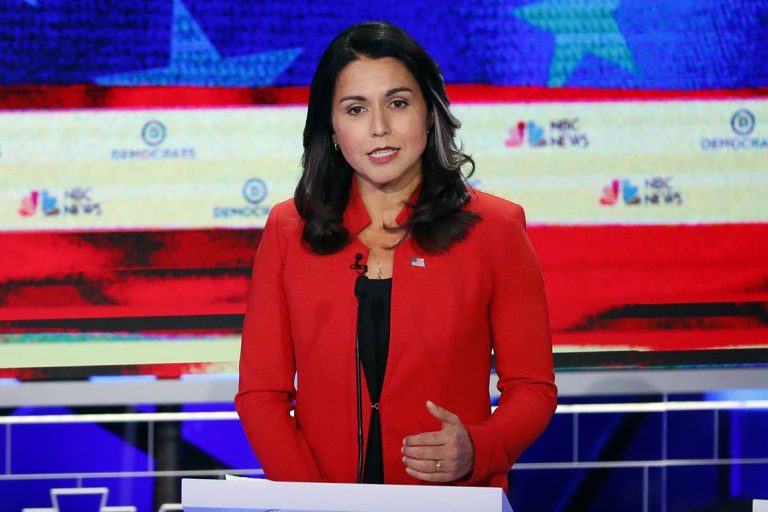
Tulsi Gabbard Stands by Edward Snowden During Contentious ODNI Confirmation Hearing

(Headline USA) Tulsi Gabbard, President Donald Trump’s pick to be director of national intelligence, faced sharp criticism from Democrats and Republicans alike Thursday during a fiery confirmation hearing focused on her past support for whistleblower Edward Snowden—but Gabbard stood her ground and refused to disavow him.

Gabbard started her hearing by telling lawmakers that big changes are needed to address years of failures of America’s intelligence service. She said too often intelligence has been false or politicized, leading to wars, foreign policy failures and the misuse of espionage.

“The bottom line is this must end. President Trump’s reelection is a clear mandate from the American people to break this cycle of failure and the weaponization and politicization of the intelligence community,” Gabbard told the Senate Intelligence Committee.

Gabbard promised to be objective and noted her military service, saying she would bring the same sense of duty and responsibility to the Office of the Director of National Intelligence, which oversees and coordinates the work of 18 intelligence agencies.

The questions raised by senators about Gabbard’s judgment and experience make her one of the more contentious of Trump’s Cabinet nominees. Given thin Republican margins in the Senate, she will need almost all GOP senators to vote yes in order to win confirmation.

A former Democratic congresswoman from Hawaii, Gabbard is a lieutenant colonel in the National Guard who deployed twice to the Middle East and ran for president in 2020. She has no formal intelligence experience, however, and has never run a government agency or department.

It’s Gabbard’s comments, however, that have posed the biggest challenge to her confirmation.

In a back-and-forth Thursday that at times grew heated, lawmakers from both parties raised concerns about her statements supportive of Snowden, a former National Security Agency contractor who fled to Russia after exposing a vast and previously hidden domestic surveillance system in America.

Several senators, including Republicans James Lankford of Oklahoma and Susan Collins of Maine, pressed Gabbard on whether she would push to pardon Snowden, or whether she considered him a traitor. On the last question, Gabbard repeatedly declined to answer.

“Yes or no, is Edward Snowden a traitor to the United States of America?” asked Democratic Sen. Michael Bennet of Colorado.

Gabbard said that while Snowden revealed important facts about surveillance programs she believes are unconstitutional, he violated rules about protecting classified secrets. “Edward Snowden broke the law,” she said.

Following the hearing, Snowden himself spoke about the matter, noting that the vast majority of Americans support him being pardoned.

“The Senate Intel Committee spent nearly the entirety of its session today furiously demanding that DNI nominee Gabbard condemn me personally, a position now opposed by something like 94% of Americans,” Snowden said on Twitter/X. “Courts have been ruling for ten years that NSA broke the law, guys. Move on.”

Senators also pressed her about her changing views of the surveillance program known as Section 702, which allows authorities to collect the communications of suspected terrorists overseas.

As a lawmaker, Gabbard sponsored legislation that would have repealed it. She argued then that the program could be violating the rights of Americans whose communications are swept up inadvertently, but national security officials say the program has saved lives.

She now says she supports the program, noting new safeguards designed to protect Americans’ privacy.

Gabbard defended her change of opinion, and said her critics are opposed to her nomination because she asks tough questions and doesn’t always follow Washington dogma.

“The fact is what truly unsettles my political opponents is that I refuse to be their puppet,” she said.

Gabbard is among a couple of nominees who are facing more difficultly gaining unanimous support from Republican senators. Sens. Todd Young, Susan Collins and James Lankford were among the most aggressive questioners Thursday, but it remained unclear if they were satisfied enough by her responses to move her out of committee and confirm her on the Senate floor. The committee has not yet scheduled a vote.

There has been much discussion over whether the committee vote on Gabbard should be made in public or in private as the panel usually operates. Many of Trump’s supporters want it to be public to pressure any GOP senator who is considering opposing her nomination.

Sen. Tom Cotton, chairman of the Senate Intelligence Committee, supports Gabbard’s nomination and said at the start of Thursday’s hearing that he hopes she can rein in an office that he said has grown too large and bureaucratic.

Cotton, an Arkansas Republican, noted that the Office of the Director of National Intelligence is now larger, in terms of staffing, than any of the agencies it was created to oversee.

“Look at where conventional thinking has got us. Maybe Washington could use a little more unconventional thinking,” Cotton said. “Ms. Gabbard, I submit that, if confirmed, the measure of your success will largely depend on whether you can return the ODNI to its original size, scope, and mission.”

Adapted from reporting by the Associated Press

Criminally Pardoned Schiff Attacks Kash Patel for Exercising Civil Liberties

(Ben Sellers, Headline USA) A confessed criminal who managed to avoid consequence by accepting an unprecedented preemptive pardon from former President Joe Biden attacked President Donald Trump’s choice for FBI director, Kash Patel, for exercising his civil right not to bear witness against himself during a secretive Star Chamber inquisition by disgraced ex-special prosecutor Jack Smith. 

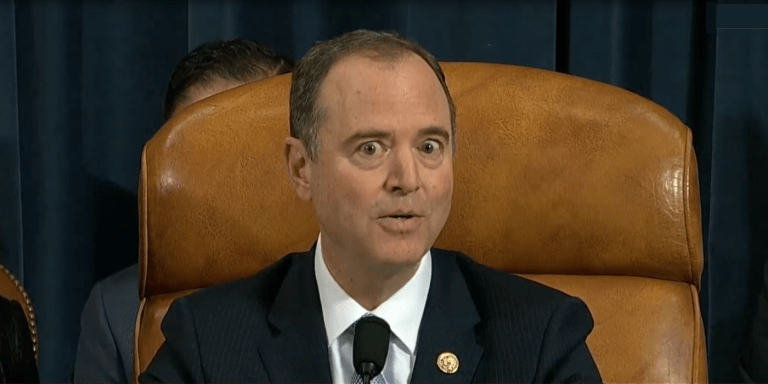
“Mr. Patel may be, I don’t know, but he may be the first nominee for FBI director in history who felt it necessary to plead the 5th,” Sen. Adam Schiff, D-Calif., suggested during Thursday’s confirmation hearing.

Schiff—who forced black, female Sen. Laphonza Butler, D-Calif., to step aside and make way for him to fill the seat left open by the late Dianne Feinstein—kicked off his career in Congress’s upper chamber last week with the dubious distinction of becoming the first sitting U.S. senator ever to accept a criminal pardon.

Despite efforts by the Biden administration to gaslight the public, a 1915 Supreme Court ruling makes clear that pardon recipients must affirmatively accept them and, in doing so, thereby acknowledge the underlying guilt for which they are receiving clemency.

In the case of Schiff, the pardon is narrowly tailored to his work on then-Speaker Nancy Pelosi’s partisan Jan. 6 committee.

It absolves the committee members, who are unnamed, from “any offenses against the United States which they may have committed or taken part in arising from or in any manner related to the activities or subject matter of the Select Committee to Investigate the January 6th Attack on the United States Capitol.”

Schiff had repeatedly signaled that he would reject such a measure.

However, he appeared to embrace the pardon after it was issued.

The J6 committee is believed to have illegally withheld exculpatory data, both from the public and from other House members, and possibly to have attempted the destruction of the data in violation of House rules.

Subsequent GOP-led oversight hearings also revealed that committee members had coached the star witness, former White House aide Cassidy Hutchinson, into changing her testimony under duress and coercion from Rep. Liz Cheney of Wyoming.

Reports also suggested Hutchinson may have been propositioned by an unnamed committee member for sexual favors.

If confirmed as FBI director, Patel may opt to investigate the committee’s conduct regardless and force the testimony of all those who accepted pardons—thereby waiving their Fifth Amendment right to protect from self-incrimination.

Without the Constitution to hide behind, Schiff and his fellow lawmakers would have no choice but to speak candidly or to risk perjuring themselves—likely resulting in their expulsion from Congress, if not additional criminal penalties.

The current showdown between Schiff and Patel is not their first rodeo together, however.

During House Republicans’ investigation into the Russia-collusion hoax that undermined Trump’s first presidential term, Patel served as the chief investigator, working closely with then-Rep. Devin Nunes, the chairman of the House Intelligence Committee.

“Kash was instrumental in unraveling the Russia collusion hoax and finding evidence of government malfeasance despite constant attempts by the FBI and DOJ to stonewall our investigation,” Nunes recently told Fox News.

Attempting to sow confusion by actively pushing disinformation in the public hearings was Schiff, the committee’s ranking minority member, who at one point claimed to have smoking-gun evidence that linked Trump to Russia. It never materialized, although Schiff was ridiculed for trying to solicit nude photographs of Trump from what turned out to be a pair of Russian pranksters.

Schiff went on to lead both of the failed impeachment cases against Trump during his first presidential term, during which he may again have violated multiple laws as he leveraged the weaponized deep state to target his political enemies. That included illegally subpoenaing the phone records of other sitting members of Congress.

Like Schiff, several other Democrats attempted to carp on Patel’s refusal to authorize the release of his grand-jury testimony in the lawfare case led by ex-special counsel Jack Smith that related to Trump’s handling of classified documents under the Presidential Records Act.

Patel confirmed having heard Trump issue an order to declassify documents but did not know which documents since Smith’s secretive investigation—in collusion with the law-enforcement organization Patel soon hopes to lead—had kept secret the specific details about the documents used in the case against Trump.

Sen. Sheldon Whitehouse, D-R.I. talked in circles while attempting to claim that Patel himself had the authority to let his testimony from Smith’s grand-jury investigation be released.

But as Schiff sought to resurrect the stunt, he was shut down by committee chair Chuck Grassley, R-Iowa, who pointed to a social-media post from former acting Director of National Intelligence Ric Grenell confirming that witnesses had been threatened not to disclose the testimony.

Despite the rampant corruption that, with Schiff, now leads back to their own committee, Republican members of the Senate Judiciary Committee, including Sens. Thom Tillis of North Carolina and John Kennedy of Louisiana, seemed to urge Patel not to respond in kind to the years of lawfare abuse that Democrats had waged.

Nonetheless, Tillis observed that he had already filled his Kash Patel BINGO card covering the lies that Democrats were expected to tell during the hearing.

Schiff, meanwhile, urged his low-info supporters to “think about where we are in this moment,” before launching into a rant about all the actions Trump had already taken to prevent seditious conspirators from once again weaponizing the deep state against him.

“We have a new president. He’s fired prosecutors who investigated him. He’s investigating other prosecutors, or his Department of Justice is. He’s fired inspector generals who might hold him accountable,” Schiff griped.

“How did we get here? Where we are defending a nominee like this, who makes songs with convicts who attack law enforcement? How did we get here? And where are we going?” Schiff’s rant continued. “History is littered with democracies that lost their freedoms and didn’t notice it while it was happening.”

Ben Sellers is the editor of Headline USA. Follow him at x.com/realbensellers.

Actors Push for Texas to Become the ‘New Hollywood’

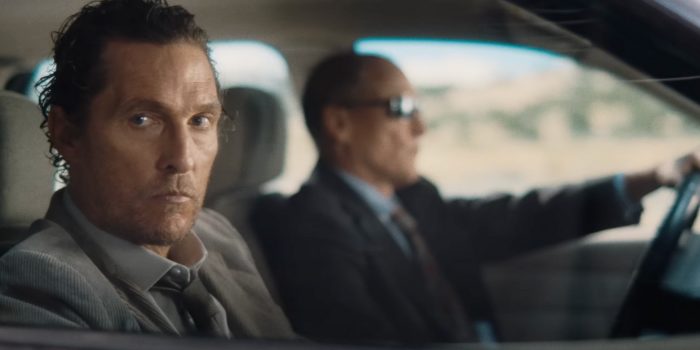
(Maire Clayton, Headline USA) Actor Matthew McConaughey and Woody Harrelson started in an ad promoting the entertainment industry to move away from California and go to Texas.

The Texas natives released the over four minute video with the campaign dubbed “True to Texas.”

“Texas stories deserve a Texas backdrop,” McConaughey posted on Wednesday. “That’s why I teamed up with Dennis Quaid, Woody Harrelson, Billy Bob Thornton, and Renée Zellweger for True to Texas. It’s time to bring film and TV productions home!”

During the ad, which was written and directed by True Detective creator Nic Pizzolatto, the two reprised their roles as they drive in a car with actor Dennis Quaid handcuffed in the backseat.

“Hollywood is flat circle, Woody,” McConaughey said. “This industry is like somebody’s memory of an industry. I’m talking about a whole new hub for film and television. A renaissance. A rebirth.”

Harrelson suggested Texas becomes “the new Hollywood.”

“A small fraction of Texas budget surplus to turn this state into the new Hollywood,” the actor stated in the video.

“Filming in Texas isn’t just about showcasing our stunning landscapes—it’s about creating jobs, boosting local economies, and building a thriving industry right here at home,” the campaign’s website stated. “Let’s keep the cameras rolling and the economy growing—because everything’s bigger (and better) in Texas!”

The video had mixed reactions on social media with some praising it and others were skeptical.

One expressed the need to go back to how movies used to be.

“Now, this is the best thing i’ve heard in a long time! I used to love the movies. I grew up with the movies,” the user wrote. “Now movies are filled with propaganda. I want escapeism back!”

Others want to make sure the Lone Star State to become another California.

“Don’t bring Hollywood to Texas, please,” one skeptical user wrote.

‘Arctic Frost’: Internal Records Reveal Code-Name of FBI Operation to Target Trump

(Ken Silva, Headline USA) During the 2020 presidential debates, Joe Biden warned that America was about to enter a “dark winter.” In keeping with that theme, the FBI’s operation against Donald Trump was code-named “Arctic Frost,” newly released whistleblower documents show.

Sen. Chuck Grassley, R-Iowa, released the documents on Thursday during the confirmation hearing for Trump’s nominee for FBI director, Kash Patel. Along with revealing the code-name Arctic Winter, the internal emails show that the same senior official who obstructed the bureau’s Hunter Biden investigation also led the FBI’s case against Trump. That agent, former FBI Assistant Special Agent in Charge Timothy Thibault, retired in 2022 after Grassley exposed his anti-Trump bias.

One of the emails from Thibault, dated Feb. 14, 2022, asks another FBI official to review his draft opening of the operation that would later be code-named Arctic Fox. That email included the draft, which contained similar language that would eventually appear in Special Counsel Jack Smith’s indictment against Trump. Specifically, Thibault detailed Trump’s so-called “fake electors” scheme—the plan to use alternate electors to challenge the results of controversial results in Nevada, Georgia, Pennsylvania, Michigan, Wisconsin and Arizona.

Grassley said the fact that Thibault’s initial draft was incorporated in Smith’s failed indictment suggests that the senior FBI agent essentially opened and approved his own investigation.

Grassley also noted that the emails he released didn’t initially list Trump as a criminal subject of Arctic Fox. Even though he wasn’t initially a criminal subject, he was indicted anyway (the Supreme Court largely collapsed Smith’s case last year when it ruled that former Presidents have immunity for official acts they take in office, and Smith dropped the case altogether after Trump’s election victory). Grassley wants to know who decided to make the decision to add Trump as a criminal subject.

“Was Trump still removed as an investigative subject?  If so, which Justice Department and FBI officials—other than Jack Smith—later added him for prosecution?” Grassley asked on Thursday.

Grassley told Patel that if he’s approved to become FBI director, the senator expects him to produce all records on this matter. Patel promised he’d respond to all “appropriate” congressional requests for information.

Ken Silva is a staff writer at Headline USA. Follow him at x.com/jd_cashless.