Fed Hits Pause, Tells Us What We Already Knew

(Mike Maharrey, Money Metals News Service) The Federal Reserve put a pause on interest rate cuts at its January meeting, finally admitting what I’ve been saying for quite a while: price inflation is still sticky.

As widely expected, the Fed stood pat on interest rates, holding the federal funds rate steady at the current target range of 4.25 percent to 4.50 percent. The central bank trimmed rates at its previous three meetings, starting with a supersized half-percent cut last September when it seemingly declared victory over inflation.

At the first FOMC meeting of 2025, Powell & Company finally acknowledged that price inflation remains a problem. In the official FOMC statement, the central bankers removed language stating, “Inflation has made progress toward the Committee’s 2 percent objective,” and simply conceded “inflation remains somewhat elevated.”

Indeed, it is.

The CPI has climbed the past three months, from 2.4 percent in September, 2.6 percent in October, and 2.7 percent in November. The last time we saw a 2.9 percent handle was in July. In fact, the annual CPI was only 3.1 percent in June 2023.

Meanwhile, core CPI has been mired around 3 percent for months.

Powell signaled that the Federal Reserve wasn’t in any hurry to cut rates again, despite President Trump’s demand that interest rates “drop immediately.”

During his post-meeting press conference, Powell said the FOMC will need to see “real progress on inflation or some weakness in the labor market before we consider making adjustments.”

Powell refused to comment on President Trump’s demands, saying, “It’s not appropriate for me to do so.”

“The public should be confident that we will continue to do our work as we always have, focusing on using our tools to achieve our goals and really keeping our heads down and doing our work,”

The Inflation Problem

Taking something of a wait-and-see attitude, Powell said, “With our policy stance significantly less restrictive than it had been, and the economy remaining strong, we do not need to be in a hurry to adjust our policy stance.”

In fact, monetary policy is not only “less restrictive.” It is loose from a historical standpoint, as indicated by the Chicago Fed’s National Financial Conditions Index (NFCI). The index stood at -0.67 as of Jan. 24, a negative number signaling loose monetary policy.

In other words, despite acknowledging the inflation problem, Fed monetary policy is set to be mildly inflationary.

We’re seeing this inflationary pressure in the increasing money supply.

The M2 money supply bottomed a little over a year ago at $20.60 trillion. Since then, it has crept upward. As of December, it was at 21.5 trillion. That’s the highest level since October 2022.

The money supply rose by 0.4 percent in December alone. This represents an annual monetary inflation rate of nearly 5 percent.

This is – by definition – inflation.

And it underscores an important point: the Fed never did enough to slay the inflation dragon.

To use a sports analogy, it seems like Powell and Company are constantly chasing the game. They fall behind early and desperately try to catch up.

Remember when price inflation first started heating up? For months, Powell and his minions insisted inflation was “transitory” before finally acknowledging the problem and confronting it. Then, despite the fact it’s been clear for months that price inflation wasn’t dead and buried, the central bankers pretended it was, even delivering a third rate cut in December while playing lip service to controlling the inflationary devil.

The Other Problem

Price inflation isn’t the only problem facing the Fed. It also has to contend with a massive debt problem and a bubble economy that it helped create.

The Fed incentivized a borrowing binge and created all kinds of malinvestments in the economy with well over a decade of easy money. It pumped nearly $9 trillion in new money (inflation) into the economy through quantitative easing alone from the onset of the Great Recession through the pandemic. That’s on top of the inflation it created with nearly a decade of zero percent interest rates.

The central bank addicted the economy to easy money and took it away, and now the addict is desperate for another fix.

That monetary malfeasance has consequences that the Fed is trying to avoid by getting rates back to artificially low levels.

In effect, the central bankers at the Federal Reserve are walking a tightrope and their balance isn’t great. As I explained recently, Trump’s demands for lower rates underscore the Catch-22 facing the Fed.

On the one hand, it needs to keep rates elevated to address price inflation.

On the other hand, the debt-riddled bubble economy can’t function in a higher interest rate environment.

Despite the illusion of strength and the Fed’s insistence that economic activity is expanding at “a solid pace,” there are cracks in the foundation. U.S. corporate bankruptcies hit a 14-year high in 2024, outpacing the pandemic era. Meanwhile, the U.S. government is forking out over $1 trillion per year just to service the interest expense on the national debt.

They won’t say it out loud, but Powell & Company knows higher rates are a problem. That’s why they started cutting in the first place, and it’s why Trump is jonesing for lower rates.

The bottom line is the Fed needs to simultaneously raise and lower rates.

Obviously, that isn’t a thing.

The question is – from which side of the tightrope will the central bankers fall?


Mike Maharrey is a journalist and market analyst for MoneyMetals.com with over a decade of experience in precious metals. He holds a BS in accounting from the University of Kentucky and a BA in journalism from the University of South Florida.

‘Sick to My Stomach’: Fox News Reporter Reveals Personal Connection to DC Plane Crash

(Julianna Frieman, Headline USA) Fox News reporter Bill Melugin revealed his personal connection to a plane crash in Washington, D.C. on Wednesday night.

An American Airlines jet carrying 60 passengers and four crew members collided with an Army helicopter while landing at Ronald Reagan National Airport. Melugin wrote on social media that his friend’s wife, who he met years ago while working in North Carolina, was a passenger on the downed flight.

“Yes. One of my friends is going through this right now. His wife was on the flight. Sweet girl who I knew from my time working in NC years ago when they were dating. They have two children ages 3 and 1,” Melugin wrote on X.

He added, “I feel sick to my stomach for him. Our friend group is with him for support – but conflicting reports of survivors is absolutely excruciating when no info is being provided.”

The Los Angeles-based national correspondent was responding to colleague Guy Benson’s post about the tragedy, which said the following: “The conflicting online rumors about survivors are excruciating—and must be downright torturous for loved ones praying for a miracle.”

As the Fox News reporter feared for his friends, Rep. Eric Swalwell, D-Calif., took to social media for a different reason—to make the plane crash all about himself.

“I landed at DCA this evening at 8:42 p.m., IAH—DCA, minutes before an in-flight collision over the airport,” Swalwell wrote on X. “My thoughts are with all involved and their families. Hoping first responders find survivors.”

Swalwell got slammed for his initial focus on “Me. Me. Me.” One social media user screenshotted his post and scribbled out the first line, saying he “fixed it” as only the Democrat’s well-wishes remained visible.

Some social media users questioned the timing of the D.C. plane crash, noting that it happened just after Secretary of Defense Pete Hegseth and Transportation Secretary Sean Duffy, both former Fox News hosts, were confirmed in President Donald Trump’s administration.

“This is quite the political timing for an aircraft disaster. These are the kinds of things that get Americans asking questions,” journalist Kyle Becker wrote on X.

Trump took to Truth Social early Thursday and said the D.C. plane crash “should have been prevented.” The president was briefed about what he called a “terrible night” and promised to provide more details about the situation as they emerge.

Julianna Frieman is a freelance writer published by Headline USA, the Daily Caller, The Federalist, and the American Spectator. Follow her on Twitter at @JuliannaFrieman.

Leaker Exposes Trump’s Purported Plan to End Ukraine War w/in 100 Days

(Ken Silva, Headline USA) Someone has reportedly leaked Donald Trump’s plan to end the war in Ukraine within 100 days.

Though the White House hasn’t verified its authenticity, Newsweek reported Monday that the Ukrainian news site Strana published details of Trump’s purported plan.

“Trump’s alleged 100-day plan to end the war in Ukraine includes conducting a phone call with Putin in late January or early February, meeting with both Putin and Zelensky in February or March, and declaring a ceasefire along the front lines by Easter, which falls on April 20 this year,” Newsweek reported.

According to Newsweek’s translation, the ceasefire would entail Ukrainian troops being withdrawn from Kursk. A peace conference would then be held to finalize a peace deal.

“The proposed parameters of the agreement to end the war include barring Ukraine from becoming a member of NATO and declaring neutrality, Kyiv becoming a part of the EU by 2030, and the EU facilitating postwar reconstruction. Ukraine would also maintain the size of its army and continue to receive military support from the U.S. It would also ‘refuse military and diplomatic attempts to return the occupied territories’ and ‘officially recognize the sovereignty of the Russian Federation over them,’” Newsweek reported.

“The idea of lifting some sanctions against Russia was also noted, possibly within three years, depending on its compliance with the agreement to end the war. The restrictions on importing Russian energy sources to the EU would allegedly be lifted, with special duties imposed on them, and the funding going toward Ukraine’s restoration.”

Once peace is reached, Ukraine would end its period of martial law—meaning Ukrainian President Volodymyr Zelenskyy would step down from power since his term ended last year. Zelenskky said in late 2023 that holding new elections in the middle of the ongoing conflict with Russia would be “utterly irresponsible.”

However, Zelenskyy’s office has called the leaked plans fake. The White House hasn’t responded to Newsweek’s request for comment.

“If the plan is legitimate, leaking it could have been an attempt to sabotage it from moving forward,” Antiwar.com writer Dave DeCamp noted.

Meanwhile, Trump still hasn’t spoken to Russian President Vladimir Putin since taking office, which is step one of the purported plan.

Ken Silva is a staff writer at Headline USA. Follow him at x.com/jd_cashless.

Collision over D.C. Tests 2 Newly Confirmed Fox News Hosts; Dozens Dead in Potomac

0

(Headline USA) Two former Fox News hosts—newly appointed Transportation Secretary Sean Duffy and Defense Secretary Pete Hegseth—faced the first tests of their mettle after an American Airlines jet carrying 60 passengers and four crew members collided with an Army helicopter while landing at Ronald Reagan National Airport near Washington.

Three soldiers were onboard the UH-60 Blackhawk based at Fort Belvoir in Virginia while on a training flight, an Army official said.

Video from an observation camera at the nearby Kennedy Center showed two sets of lights consistent with aircraft appearing to join in a fireball.

As of Thursday morning, at least 27 had been confirmed dead following a large search-and-rescue operation in the nearby Potomac River, but the precise number of victims was unclear as rescue crews hunted for any survivors.

“May God Bless their souls,” President Donald Trump said in a statement late Wednesday.

“Thank you for the incredible work being done by our first responders,” he added. “I am monitoring the situation and will provide more details as they arise.”

There was no immediate word on the cause of the Wednesday collision, but all takeoffs and landings from the airport were halted as dive teams scoured the site and helicopters from law enforcement agencies across the region flew over the scene in a methodical search for bodies.

Images from the river showed boats around the partly submerged wing and what appeared to be the mangled wreckage of the plane’s fuselage.

“We are going to recover our fellow citizens,” District of Columbia Mayor Muriel Bowser said at a somber news conference at the airport in which she declined to say how many bodies had been recovered.

The regional flight was reportedly inbound from Kansas. Passengers included a group of figure skaters, their coaches and family members who were returning from a development camp that followed the U.S. Figure Skating Championships in Wichita.

“When one person dies it’s a tragedy, but when many, many, many people die it’s an unbearable sorrow,” said Sen. Roger Marshall, R-Kan.

Sen. Jerry Moran, R-Kan., said he expected that many people in Wichita would know people who were on the flight.

“I know that flight. I’ve flown it several times myself,” he said. “This is a very personal circumstance.”

Two of those coaches were identified by the Kremlin as Russian figure skaters Evgenia Shishkova and Vadim Naumov, who won the pairs title at the 1994 world championships and competed twice in the Olympics. The Skating Club of Boston lists them as coaches and their son, Maxim Naumov, is a competitive figure skater for the U.S.

“We are devastated by this unspeakable tragedy and hold the victims’ families closely in our hearts,” U.S. Figure Skating said in a statement.

The Federal Aviation Administration said the midair crash occurred before 9 p.m. in some of the most tightly controlled and monitored airspace in the world, just over three miles south of the White House and the Capitol.

Military aircraft frequently conduct training flights in and around the congested and heavily-restricted airspace around the nation’s capital for familiarization and continuity of government planning.

Investigators will try to piece together the aircrafts’ final moments before their collision, including contact with air-traffic controllers, as well as a loss of altitude by the passenger jet.

American Airlines Flight 5342 was inbound to Reagan National at an altitude of about 400 feet and a speed of about 140 miles per hour when it suffered a rapid loss of altitude over the Potomac River, according to data from its radio transponder. The Canadian-made Bombardier CRJ-701 twin-engine jet, manufactured in 2004, can be configured to carry up to 70 passengers.

A few minutes before landing, air-traffic controllers asked the arriving commercial jet if it could land on the shorter Runway 33 at Reagan National and the pilots said they were able. Controllers then cleared the plane to land on Runway 33. Flight tracking sites showed the plane adjust its approach to the new runway.

Less than 30 seconds before the crash, an air-traffic controller asked the helicopter if it had the arriving plane in sight. The controller made another radio call to the helicopter moments later: “PAT 25 pass behind the CRJ.” Seconds after that, the two aircraft collided.

The plane’s radio transponder stopped transmitting about 2,400 feet short of the runway, roughly over the middle of the river.

Trump questioned the unusual circumstances, including the decisions made by the helicopter pilots and the air-traffic controllers in a post via Truth Social.


The collision occurred on a warm winter evening in Washington, with temperatures registering as high as 60 degrees Fahrenheit, following a stretch days earlier of intense cold and ice.

On Wednesday, the Potomac River was 36 degrees Fahrenheit, according to the National Oceanic and Atmospheric Administration. The National Weather Service reported that wind gusts of up to 25 mph were possible in the area throughout the evening.

American Airlines CEO Robert Isom expressed “deep sorrow” for the crash and said the company was focused on the needs of passengers, crew, first responders and families and loved ones of those involved.

Some 300 first responders were on scene. Inflatable rescue boats were launched into the Potomac River from a point along the George Washington Parkway, just north of the airport, and first responders set up light towers from the shore to illuminate the area near the collision site. At least a half-dozen boats were scanning the water using searchlights.

“It’s a highly complex operation,” said D.C. fire chief John Donnelly. “The conditions out there are extremely rough for the responders.”

Hegseth, sworn in days ago as defense secretary, posted on social media that an investigation has been “launched immediately” by the Army and the Defense Department.

Duffy, just sworn in earlier this week, said at a somber news conference at the airport early Thursday that his agency would provide all possible resources to the investigation.

The last major fatal crash involving a U.S. commercial airline occurred in 2009 near Buffalo, New York. Everyone aboard the Bombardier DHC-8 propeller plane was killed, including 45 passengers, 2 pilots and 2 flight attendants. Another person on the ground also died, bringing the total death toll to 50. An investigation determined that the captain accidentally caused the plane to stall as it approached the airport in Buffalo.

Reagan Airport will reopen at 11 a.m. Thursday, the FAA announced. It had previously said the airport would be closed until 5 a.m. Friday.

Located along the Potomac River, just southwest of the city, Reagan National is a popular choice because it’s much closer than the larger Dulles International Airport, which is deeper in Virginia.

Depending on the runway being used, flights into Reagan can offer passengers spectacular views of landmarks like the Washington Monument, the Lincoln Memorial, the National Mall and the U.S. Capitol. It’s a postcard-worthy welcome for tourists visiting the city.

The collision recalled the crash of an Air Florida flight that plummeted into the Potomac on January 13, 1982, that killed 78 people. That crash was attributed to bad weather.

Adapted from reporting by the Associated Press

Huh? Deported Colombians Criticize US Free Meals While Praising Their Homeland

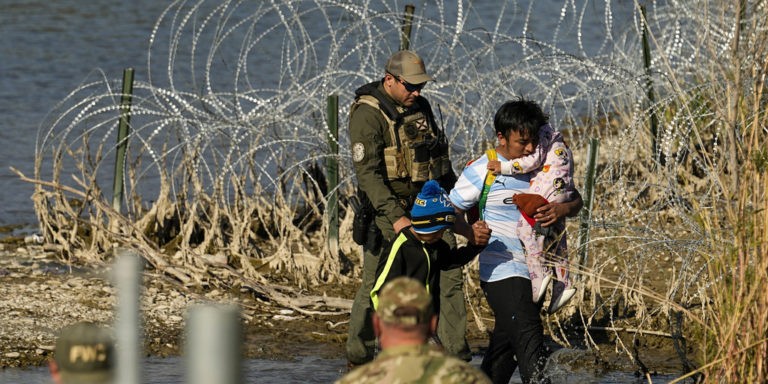
(Luis Cornelio, Headline USA) A group of deported Colombians had nothing but negative words to describe their treatment by the U.S. government during their removal proceedings, leading some to rediscover an appreciation for their home country. 

Addressing reporters at a Colombian airport, at least two deportees rebuked U.S. taxpayer-funded meals and claimed they suffered mistreatment at the hands of immigration authorities, although they provided no evidence to substantiate these claims. 

“How was the treatment from the beginning?” a state-sponsored journalist asked an unidentified woman in a Spanish interview.

The interviews seemed produced by the Colombian government, and it’s unclear whether officials directed the deportees to make false statements about their experiences in U.S. detention centers.

“Terrible,” she replied while holding what appeared to be her toddler son. “I mean, the food… I was robbed in Mexico. They robbed all my documents and my cellphone. They almost stole my baby.”

She added, “The treatment was horrible. They woke us up like we were the worst of the world.”

The woman claimed she was detained for eight days and said her baby was malnourished, according to doctors’ notes. She explained her deportation was expedited due to her child. 

“Don’t leave because they’re deporting everybody,” she advised when asked to provide a message to fellow citizens. “They’re not going to release you the next day. Some people have been detained for a month.” 

Another deportee echoed the sentiment, claiming: “They threw our clothes and only allowed us to keep our cellphones.” 

He continued, “They didn’t allow us to shower. They woke us up at 3 in the morning. They would wait until we fell asleep and then wake us up within the hour.” 

Asked whether the treatment improved upon the arrival of Colombian authorities, the man replied, “Yes.”

“They let us take showers and brush our teeth. Technically, they treated us well,” he said. “They’d say, ‘Thank you’ and ask us, ‘Where we lived’ and things like that.” 

This group likely includes individuals whom Colombian President Gustavo Petro refused to accept a few days ago.

According to President Donald Trump, Petro’s socialist government rejected a request for an American plane carrying illegal aliens to land in Colombia.  

In response, Trump swiftly announced high tariffs and revoked the visas of government officials and their family members, prompting Petro to walk back his comments. 

The Petro regime even offered to use a government plane to transport the deportees. This plane was visible during the illegal aliens’ interviews. 

Tom Homan, White House border czar, addressed accusations against ICE agents regarding the so-called mistreatment of illegal aliens.  

“That’s a bunch of crap,” Homan stated in response to a reporter’s claim that ICE failed to provide water to detainees. “ICE detention facilities have the highest detention standards in the industry.” 

RFK Jr. Shuts Down Senate Dems’ Absurd Attacks—Even Over Baby Onesies

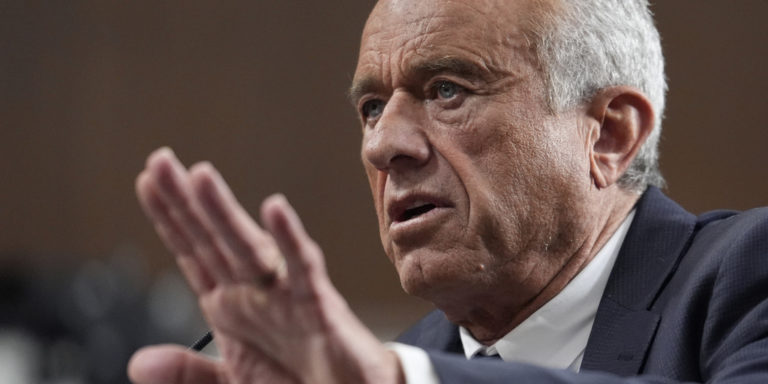
(Luis Cornelio, Headline USA) Robert F. Kennedy Jr. rose above the vicious attacks from Senate Democrats during the confirmation hearing for his nomination as the next secretary of the Department of Health and Human Services (HHS). 

The leftist attacks repeatedly fumbled as RFK Jr. maintained his composure, responding to each of the questions with poise and expertise. Much of the hearing centered on the Democratic Party’s concerns about his expertise, stance on abortion and even baby onesies. 

 Sen. Bernie Sanders, I-Vt., grilled RFK Jr. about so-called anti-vaxx onesies sold by Children’s Health Defense, a non-profit he previously chaired.  

The onesies bore the phrases, “Unvaxxed, Unafraid” and “No Vax, No Problem,” mirroring RFK Jr.’s support for health freedoms. 

“They are selling what’s called onesies, these little things, clothing for babies,” Sanders exclaimed, pointing to printouts of the onesies. 

“You say you are pro-vaccine. Yet your organization is making money selling a child’s product to parents for 26 bucks, which casts fundamental doubt on the usefulness of vaccines,” Sanders added. 

RFK Jr. reminded the self-described democratic socialist senator that he has “no power over” the non-profit, as he had resigned from the board months earlier. 

Not to be outdone by Sanders, Sen. Elizabeth Warren, D-Mass., asked RFK Jr. if he planned to make money from drug companies.  

“Who, me?” RFK Jr. replied. He is notoriously known for his stances against Big Pharma.  

“Yes, you!” Warren insisted.

“Oh yeah! I’m happy to commit to that. I don’t think any of them want to give me money, by the way,” he replied, drawing laughter from the hearing’s audience. 

Later in the hearing, RFK Jr. addressed dubious accusations labeling him as a conspiracy theorist—an epithet often hurled at conservatives who challenge leftist narratives.  

RFK Jr. said this label is merely used to discredit him because he always asks, “difficult questions.” He then broke down several so-called conspiracies that had turned out to be accurate. 

“That label was applied to me because I said the vaccines, the COVID vaccines, didn’t prevent transmission and wouldn’t prevent infection when the government was telling Americans that it would,” RFK Jr. stated. 

“I was called a conspiracy theorist because I said red dye caused cancer and now FDA has acknowledged that in fact, it did,” he added. 

“I was called a conspiracy theorist because I said fluoride lowered IQ,” the incoming HHS secretary said, pointing to a study published in the JAMA Network that supports his theory. 

It is unclear when the Senate will vote on RFK Jr.’s nomination. Only seven out of 22 members of the Trump cabinet have been confirmed.

These cabinet members are EPA Administrator Lee Zeldin, Transportation Secretary Sean Duffy, Treasury Secretary Scott Bessent, Homeland Security Secretary Kristi Noem, Defense Secretary Pete Hegseth, CIA Director John Ratcliffe and Secretary of State Marco Rubio.

Elon Musk Plans on Suing Tim Walz over Nazi Allegations

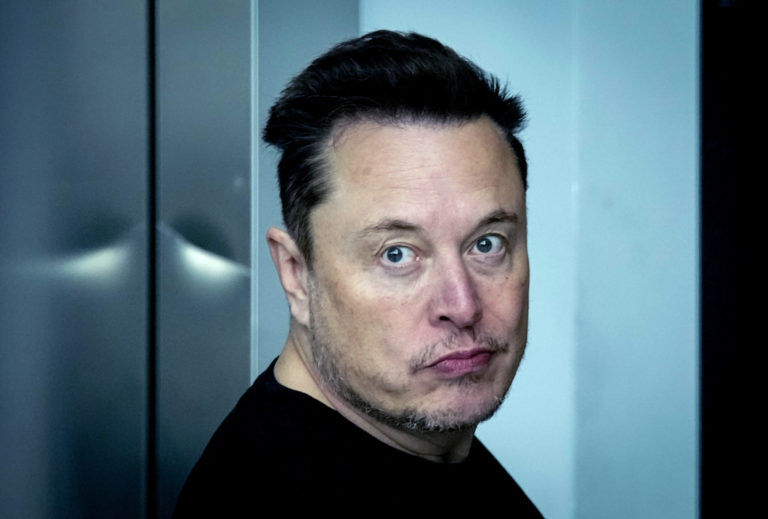
(Maire Clayton, Headline USA) Billionaire Elon Musk threatened to sue former Democratic Vice Presidential candidate Tim Walz after he claimed Musk did a “Natzi salute” during President Donald Trump’s inauguration.

Walz went on MSNBC’s The Rachel Maddow Show Tuesday night and complained that people spent days debating on Musk’s arm movement.

“Of course he did, but that is a distraction from what, I think you said it, this is ‘game on’ stuff right here,” Walz said regarding Musk. 

The Minnesota governor doubled down and tried to claim individuals needed to stay focused on the big picture.

“So I would tell people stay focused. Don’t take the bait on the distractions,” Walz said. “Surround yourself with people who understand this, and recognize the things they went after today are basically a big chunk of what society does, and people like to have clean water, and hospitals, and safety, and roads, and airports, all the things that they are going after… We have to find that voice. We have to push back. We have to be organized.”

The clip circulated on social media with filmmaker Robby Starbuck reposting it.

“Creepy Tim Walz says ‘of course’ Elon did a Nazi salute,” he wrote. “I hope Elon sues him for all he’s worth.”

The Tesla founder responded to the post with the possibility of suing the governor.

” I think I will. Tim Walz is a creepy,” Musk wrote and added a clown emoji.

Social media users supported the potential lawsuit that Musk suggested.

“He got what he asked for,” one user wrote. “If it had been the other side making allegations like this they would try and deplatform them as they did with Trump and many others in the past.”

While Walz made allegations against Musk during his interview, he also claimed it has been “pure hell” since he and former Vice President Kamala Harris lost the 2024 election.

X Teams w/ Visa in Push to Create an ‘Everything App’

(Headline USA) X is teaming up with Visa to soon offer a system for real-time payments on the social media platform—signaling some progress in a yearslong vision from billionaire owner Elon Musk to create an “everything app.”

Visa is the first partner for the platform’s “X Money Account” service, which is set to launch later this year, X CEO Linda Yaccarino said in a Tuesday post announcing the news.

The offering, Yaccarino noted, will support an in-platform digital wallet and peer-to-peer payments connected to users’ debit cards, with an option to transfer funds to a bank account.

According to Visa, which also posted about the partnership on X Tuesday, these services will be powered by Visa Direct—the payment giant’s instant money transferring service—and will be available to X Money Account users in the U.S.

Whether X Money will become available to consumers in other countries, and perhaps through additional payment partners in the near future is still known. And an exact date for the U.S. launch has also not been announced yet.

In her post Tuesday, Yaccarino called the partnership with Visa a “milestone for the Everything App” and the “first of many big announcements about X Money this year.”

The prospect of San Francisco-based X, formerly known as Twitter, becoming an “everything app” has been floated around for some time.

Before officially closing the deal to purchase the platform for $44 billion back in 2022, Musk expressed interest in creating his own version of something similar to China’s WeChat—a “super app” that does video chats, messaging, streaming and payments.

And his fascination with such a platform began long before the Twitter deal was on the table. Musk has been toying with the idea of an “everything app” since the late 1990s when he launched a startup called X.com that was later merged into what became X.com.

He continued to push for PayPal to diversify but was rebuffed by company CEO Peter Thiel and other executives. PayPal was sold in 2002 to eBay for $1.5 billion—providing Musk with a windfall that he funneled into the creation of SpaceX and an investment in Tesla in its early days.

The landscape is far more competitive today—with a handful of companies making similar efforts to expand their in-platform offerings. Other social-media giants, such as Facebook parent Meta, have added shopping, games and even dating features.

Consumers now have different platforms at their disposal for communications, payment services, entertainment and more. How X’s coming “everything” features will fare has yet to be seen.

X’s ambitions could thrust the company into the crosshairs of other powerful tech giants trying to fend off a perceived competitive threat. U.S. regulators have alleged that Apple, for example, has been illegally using its market power to stifle so-called super apps from making their way onto its iPhone since 2017.

As part of an antitrust lawsuit filed last year, the Biden Justice Department said it had uncovered evidence showing that Apple believed a super app would lessen consumers’ usage of the iPhone’s own software and services, including payment processing.

The Cupertino, California, company has vehemently denied the allegations and is trying to persuade a federal judge in New Jersey to dismiss the entire case.

Adapted from reporting by the Associated Press

Trump Offers Exit Cash to Lazy Bureaucrats Working Remotely

(Luis Cornelio, Headline USA) The White House delivered a blunt message to government bureaucrats adamantly opposed to returning to the office: accept this final offer or get lost.

The Office of Personnel Management (OPM) is offering to pay the salaries of federal employees through Sept. 30, but they must resign by Feb. 6, according to a memo published on a government website. 

These buyout offers—reported first by Axios and Fox News—come one week after President Donald Trump ended his predecessor’s generous remote work policies. Under the president’s orders, workers must be in the office at least five days a week. 

This change impacted more than 46 percent of the 2.28 million federal employees who are “telework-eligible,” including 228,000 who currently work full time from their homes. 

The White House expects up to 10 percent of federal workers to accept the offers, potentially saving taxpayers up to $100 billion annually. 

The OPM memo reviewed by Headline USA stated that the program would expire in less than two weeks. 

“If you resign under this program, you will retain all pay and benefits regardless of your daily workload and will be exempted from all applicable in-person work requirements until September 30, 2025 (or earlier if you choose to accelerate your resignation for any reason),” the memo declared. 

OPM also noted, “Whichever path you choose, we thank you for your service to The United States of America.” 

A senior administration official told Axios that the current remote work policies are “unacceptable,” noting that the COVID-19 pandemic ended years ago. 

“The government-wide email being sent today is to make sure that all federal workers are on board with the new administration’s plan to have federal employees in office and adhering to higher standards,” the official said. “We’re five years past COVID and just 6 percent of federal employees work full-time in office.” 

Trump Signs Laken Riley Act as 1st Piece of Legislation, Vows to Restock Gitmo w/ Illegals

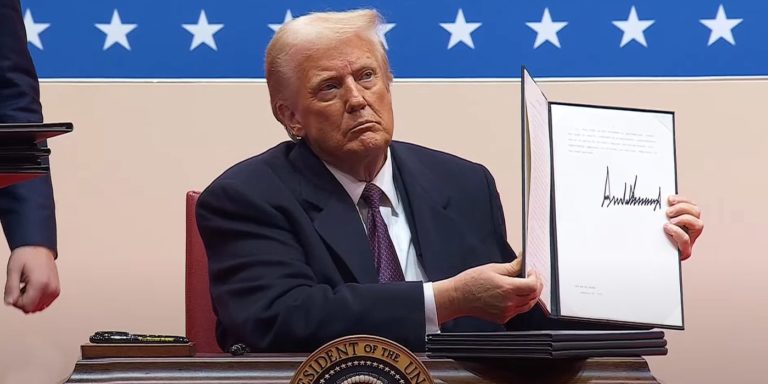
(Headline USA) President Donald Trump on Wednesday signed the Laken Riley Act into law, giving federal authorities broader power to deport immigrants in the U.S. illegally who have been accused of crimes. He also announced at the ceremony that his administration planned to send the “worst criminal aliens” to a detention center in Guantanamo Bay, Cuba.

The bipartisan act, the first piece of legislation approved during Trump’s second term, was named for Riley, a 22-year-old Georgia nursing student who was slain last year by a Venezuelan illegal.

“She was a light of warmth and kindness,” Trump said during a ceremony that included Riley’s parents and sister. “It’s a tremendous tribute to your daughter what’s taking place today, that’s all I can say. It’s so sad we have to be doing it.”

Trump has promised to drastically increase deportations, but he also said at the signing that some of the people being sent back to their home countries couldn’t be counted on to stay there.

“Some of them are so bad that we don’t even trust the countries to hold them because we don’t want them coming back, so we’re gonna send ’em out to Guantanamo,” Trump said. He said that he’d direct federal officials to get facilities in Cuba ready to receive migrant criminals.

“We have 30,000 beds in Guantanamo to detain the worst criminal aliens threatening the American people,” the president said.

The White House announced a short time later that Trump had signed a presidential memorandum on Guantanamo.

The move immediately doubles U.S. detention lockup capacities, Trump said at the signing ceremony, noting that Guantanamo, is “a tough place to get out of.”

In subsequent comments to reporters outside the White House, new Homeland Security Secretary Kristi Noem said of expanded detention facilities that “we’re building it out” and that the administration would seek funding via spending bills Congress is set to consider.

The administration’s border czar, Tom Homan, said U.S. Immigration and Customs Enforcement would run the facility in Cuba and that the “the worst of the worst” could go to Guantanamo.

Still, the details of Trump’s plan were not immediately clear. The U.S. military base has been used to house detainees from the U.S. war on terrorism for years.

But authorities have also detained immigrants at sea at a facility known as the Migrant Operations Center on Guantanamo, a site the U.S. has long leased from the Cuban government. Many of those housed there have been from Haiti and Cuba.

The Supreme Court ruled in 2008 that enemy combatants in the war on terror held without charge at the military prison at Guantanamo had the right to challenge their detention in federal court. But the justices did not decide whether the president had the authority to detain people at all.

Before Trump took office, the Democrat administrations of Barack Obama and Joe Biden worked to reduce the number of terrorism suspects held at Guantanamo.

“The latent fear from the election cycle of looking soft on crime snowballed into aiding and abetting Trump’s total conflation of immigration with crime,” said Hannah Flamm, interim senior director of policy at the International Refugee Assistance Project.

“I think it is pivotal to understand: This bill, framed as connected to a tragic death, is pretext to fortify a mass deportation system,” she added.

Laken Riley was out for a run in February 2024 when she was killed by Jose Antonio Ibarra, a Venezuelan national who was in the country illegally. Ibarra was found guilty in November and sentenced to life without parole.

Ibarra had been arrested for illegal entry in September 2022 near El Paso, Texas, and released to pursue his case in immigration court. Federal officials say he was arrested by New York police in August 2023 for child endangerment and released. Police say he was also issued a citation for shoplifting in Georgia in October 2023.

The act quickly passed the newly Republican-controlled Congress with some Democratic support, even though open-border activists said it possibly could lead to large roundups of people for offenses as minor as shoplifting.

The swift passage, and Trump’s signing nine days after taking office, adds to the potent symbolism for conservatives.

Riley’s mother thanked Trump while holding back tears.

“He said he would secure our borders and he would never forget about Laken and he hasn’t,” she said.

Several top Republican lawmakers and Noem attended the signing ceremony, as did Sen. John Fetterman, D-Pa., a cosponsor.

Under the new law, federal officials would have to detain any immigrant arrested or charged with crimes such as theft or assaulting a police officer, or offenses that injure or kill someone.

State attorneys general could sue the U.S. government for harm caused by federal immigration decisions—potentially allowing the leaders of conservative states to help dictate immigration policy set by Washington.

Adapted from reporting by the Associated Press