Brett Kavanaugh Accuser Admits Being ‘Naive’ After Dems Exposed Her Identity

(Luis Cornelio, Headline USA) Dr. Christine Blasey Ford, known for her accusations against then-Judge Brett Kavanaugh during his Supreme Court confirmation hearings in 2018, said she was “naive” when she testified before the Senate Judiciary Committee. 

“Maybe I was naive for sure about the consequences and how bad it would be after I testified,” Blasey Ford said during an interview with CBS’s Sunday Morning. 

Her remarks referred to her 2018 testimony before the Senate, during which she claimed that Kavanaugh sexually assaulted her during a party in the 1980s when they were both high schoolers. There has been no evidence to prove such claims.

Blasey Ford initially shared her story in a confidential letter with Sen. Dianne Feinstein, D-Calif. However, the letter was later leaked to The Intercept. Feinstein faced scorching criticism amid accusations that her office made the letter public to sink Kavanaugh’s nomination to the Supreme Court. 

Kavanaugh categorically denied such allegations, with several party attendees stating they did not remember any altercation between Ford and Kavanaugh. Despite this, Senate Democrats cunningly sought to tarnish Kavanaugh’s reputation as a mass rapist. 

When pressed about why everyone but her remembered the party, Blasey Ford replied on Sunday: “There were so many parties in high school and this was a pretty unremarkable one and his friends not being able to recall that evening, I guess, just doesn’t surprise me because everyone sort of got together almost every night to hang out together.” 

She added: “For survivors out there, you know it happens to you, so even if no one ever believed you or no one thought it happens or no one saw it… it doesn’t mean it didn’t happen.” 

CBS reported that Blasey Ford had to stay in hotel rooms following her testimony. Recounting the death threats, she recalled: “‘I want to see you six feet under.’ ‘I want to see you 12 feet under’ — a lot of those. ‘I hope you get cancer.’ ‘I hope you die.’ ‘I give you a year.’ ‘Glad you have two kids because we have two opportunities.’” 

Blasey Ford said six years after making her story public, she still hires security, costing at least $10,000 a night. 

Blasey Ford’s remarks came after the release of her memoir: One Way Back. 

Democrats have weaponized her remarks against Kavanaugh and former President Donald Trump, accusing the former of being an illegitimate justice on the Supreme Court. Kavanaugh has faced credible death threats following his appointment to the court. 

The primary witness to the alleged assault, Mark Judge, stated, “I have no memory of this alleged incident,” and affirmed that he “does not recall the party” and “never saw Brett act in the manner Dr. Ford describes.” 

Additionally, Patrick J. Smyth, another individual identified by Blasey Ford as having attended the party in the 1980s, declared, “I have no knowledge of the party in question; nor do I have any knowledge of the allegations of improper conduct she has leveled against Brett Kavanaugh.’” 

Comer: ‘Criminal Referrals’ Imminent if Hunter Skips Hearing

(Luis Cornelio, Headline USA) House Oversight Committee Chairman James Comer, R-Ky., stated Sunday that criminal referrals could be imminent if Hunter Biden fails to attend a March 20 public hearing that aims at clarifying the inconsistent narratives regarding President Joe Biden’s alleged involvement in an influence-peddling scheme. 

Comer’s mention of potential criminal referrals followed criticism from Hunter Biden’s attorney, Abbe Lowell, who derided the hearing as a “carnival sideshow” lacking “proper” purpose. However, Comer cautioned that if Hunter Biden does not appear, “it’s not going to end well for the Bidens.”

In an interview with Fox News’s Maria Bartiromo on Sunday Morning Futures, Comer stated, “We have three witnesses … that have already testified under oath to significantly different stories as to what exactly the Biden influence peddling schemes were. This is very serious because we’re at the point now of criminal referrals.”

Responding, Bartiromo inquired about the number of referrals anticipated in the impeachment inquiry of Joe Biden, to which Comer replied, “multiple.”

He elaborated, saying, “We’ve accumulated lots of evidence of wrongdoing from the 170 suspicious activity reports to the multiple shell companies that were used to launder the money and then send the 10 different Biden family members incremental payments.” 

Comer’s remarks pointed to several payments allegedly originating from foreign entities and distributed among various members of the Biden family. Notably, these transactions occurred during Joe Biden’s vice presidency and involved countries such as Romania, Kazakhstan, Ukraine and Russia. 

Discussing these payments, Comer remarked, “I think most Americans would agree that we don’t need the immediate family of our president of the United States profiting to the tune of tens of millions of dollars from our adversaries.” 

Later in the same interview, he added, “We’re at the point of holding people accountable for criminal wrongdoing, and I think we’ve already demonstrated several instances of criminal mischief by multiple members of the Biden family.” 

Comer’s Sunday remarks mirror those of Republican lawmakers who anticipate a potential Republican victory in the 2024 White House race. Consequently, they could appoint an attorney general ready to act on those criminal referrals if the current Democrat incumbent, Merrick Garland, does not. 

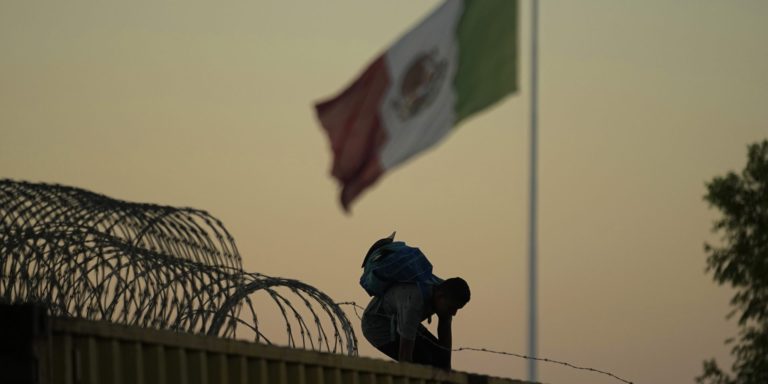
Hezbollah Member Caught at Border: Admits Intent to ‘Make a Bomb’

(Luis Cornelio, Headline USA) U.S. border authorities apprehended a Hezbollah member after he confessed to attempting to enter the country with the intention of making “a bomb.”

Basel Bassel Ebbadi, a Lebanese national and self-professed member of the extremist organization Hezbollah, was intercepted on March 9 in Texas. Upon being apprehended, Ebbadi disclosed his purpose for crossing the border, stating, “I’m going to try to make a bomb.”

The revelation emerged from DHS leaked documents obtained by the New York Post. 

The 22-year-old man claimed he fled Lebanon because he “didn’t want to kill people” at the behest of Hamas, an ally of Hezbollah. “Once you’re in, you can never get out,” the man purportedly remarked, referring to the terrorist organizations. 

Ebbadi admitted that his training primarily focused on targeting “those who were not Muslim,” according to the Post. 

A Border Patrol document revealed that Ebbadi confessed to undergoing seven years of training with Hezbollah and serving as an active member responsible for guarding weapons for at least four additional years.

Hezbollah, also known as Hizballah, is a Shiite Muslim political party based in Lebanon. While it currently holds several seats in the Lebanese parliament, it also maintains a military wing linked to terrorist organizations. 

The group is aligned with Iran and has launched numerous attacks against Israel following Hamas’s invasion into southern Israel. 

Shortly after his arrest, Ebbadi was referred to the Tactical Terrorism Response Team (TTRT) for allegedly making “terroristic threats to personnel.” 

The Post reported that Ebbadi is currently undergoing deportation proceedings. 

The Post‘s report emerges amid widespread concerns about security at the southern border. DHS Secretary Alejandro Mayorkas faced impeachment proceedings in the House of Representatives due to the turmoil gripping the border.

In Fiscal Year 2022, Border Patrol encountered at least 98 individuals on the terror watch list. By Fiscal Year 2023, the number of individuals with terror ties surged to 172. In the current fiscal year, authorities have apprehended at least 59 individuals.

“This underscores the need for border security measures as potential threats to both public safety and national security are evident and exploit security vulnerabilities,” Texas DPS Lt. Chris Olivarez said in an interview with the Post.

“The federal government has failed to enact border security measures, and the state of Texas, through Governor Abbott’s Operation Lone Star, will continue to take unprecedented action to help secure the border,” he added.

Biden Wearing Special Shoes for ‘Stability’ Amid Age Concerns

(Luis Cornelio, Headline USA) President Joe Biden’s latest choice in footwear has ignited a flurry of commentary on social media, raising fresh questions about his health ahead of the 2024 presidential election. 

Biden was spotted three weeks ago wearing Hoka shoes, known for their enhanced cushioning and stability, as reported by Fox News. 

However, the Republican National Committee’s research Twitter page suggested on Saturday that Biden’s adoption of these “lifestyle sneakers” is a desperate measure to avert potential tripping mishaps.

The RNC Research shared an Inside Edition segment showcasing Biden’s latest choice of footage. “They’re so-called ‘lifestyle sneakers’ made by Hoka designed for maximum comfort and support while walking or hiking,” Inside Edition highlighted. 

The specific model Biden was seen wearing, notably following his visit to the southern border two weeks ago, is the “Hoka Transport.” 

An Inside Edition anchor described the shoes as “quite comfortable” with “wide soles,” saying, “no doubt great for stability and the president does have a history of stumbling.”

Tellingly, the Hoka Transport carries the seal of approval from the American Pediatric Association for its positive impact on foot health, as detailed by Inside Edition.

This footwear revelation comes mere weeks after White House physician Kevin C. O’Connor reaffirmed that the president suffers from peripheral neuropathy, a condition stemming from nerve damage that causes foot weakness or pain. 

But the shoes aren’t the sole adjustment in Biden’s routine. Following multiple stumbles while ascending the stairs of Air Force One, the White House has opted for shorter stairs for the president’s convenience.

In June 2023, Biden famously stumbled during a graduation ceremony at the U.S. Air Force Academy, fueling concerns about his stability and overall physical health. 

The White House attempted, albeit unsuccessfully, to dispel such rumors by claiming that the president tripped after accidentally kicking a sandbag. 

At 81 years old, Biden is the oldest president in U.S. history. Polls suggest many Americans, including many of his own voters, are debating if he’s too old for re-election.

Federal Government Paying Rural Hospitals to Close Overnight Services

(Headline USA) As rural hospitals continue to struggle financially, a new type of hospital is slowly taking root, especially in the Southeast.

Rural emergency hospitals receive more than $3 million in federal funding a year and higher Medicare reimbursements in exchange for closing all inpatient beds and providing 24/7 emergency care. While that makes it easier for a hospital to keep its doors open, experts say it doesn’t solve all of the challenges facing rural health care.

People might have to travel further for treatments for illnesses that require inpatient stays, like pneumonia. In some of the communities where hospitals have converted to the new designation, residents are confused about what kind of care they can receive. Plus, rural hospitals are hesitant to make the switch, because there’s no margin of error.

“It’s ironic” that the facilities that might need the most help can’t afford to take the risk, said Carrie Cochran-McClain, chief policy officer at the National Rural Health Association. She pointed to having to give up certain services and benefits, such as a federal discount program for prescription drugs.

The government, which classifies hospitals by type, rolled out the rural emergency option in January 2023. Only 19 hospitals across the U.S. received rural emergency hospital status last year, according to the University of North Carolina’s Sheps Center for Health Services Research.

The majority are in the South, with some in the Midwest, and hospitals in Nebraska and Florida recently started to explore the option.

The designation is aimed at a very specific population, said George Pink, deputy director of the Sheps Center’s Rural Health Research Program, and that’s rural hospitals on the brink of closure with few people getting inpatient care already.

That was the case for Irwin County Hospital in Ocilla, Georgia, which was the second rural emergency hospital established in the U.S.

Weeks prior to converting, the hospital received at least $1 million in credit from the county so it could make pay employees — money that county board of supervisors chairman Scott Carver doubted he’d see returned.

“We operate on a $6 million budget for the county, so to extend that kind of line of credit was dangerous on our part to some degree,” he said. “But … we felt like we had to try.”

Irwin County Hospital became a rural emergency hospital on Feb. 1, 2023. Quentin Whitwell, the hospital’s CEO, said it was an ideal candidate.

“We’re still finding out what some of the impacts are, given that it’s a new thing,” said Whitwell, who through his company Progressive Health Systems owns and manages six hospitals in the Southeast, most of which are rural emergency hospitals or have applied for the designation. “But the change to a rural emergency hospital has transformed this hospital.”

A combination of state programs and tax credits, plus the new designation, means the hospital has $4 million in the bank, Carver said. Simply put, the work was worth it to him.

Traci Harper, a longtime Ocilla resident, isn’t so sure. About a year ago, she rushed her son to the hospital for emergency care for spinal meningitis.

Because the new designation requires the hospital to transfer patients to larger hospitals within 24 hours, Harper’s son was sent to another in-state facility and three days later ended up getting the care he needed in a hospital in Jacksonville, Florida.

“That’s two hours away,” she said. “The whole time I could have taken him there myself, but nobody told me that.”

Nebraska’s first rural emergency hospital opened in February in a city called Friend.

Warren Memorial Hospital had reached a breaking point: Federal pandemic relief money had dried up. The city, which owns the hospital, had to start extending lines of credit so hospital employees could get paid. A major street repair project was even delayed, said Jared Chaffin, the hospital’s chief financial officer and one of three co-CEOs.

“Back in the summer, we were barely surviving,” said Amy Thimm, the hospital’s vice president of clinical services and quality and co-CEO.

Though residents expressed concerns at a September town hall about closing inpatient services, the importance of having emergency care outweighed other worries.

“We have farmers and ranchers and people who don’t have the time to drive an hour to get care, so they’ll just go without,” said Ron Te Brink, co-CEO and chief information officer. “Rural health care is so extremely important to a lot of Nebraska communities like ours.”

The first federal payment, about $270,000, arrived March 5. Chaffin projects the hospital’s revenue will be $6 million this year — more than it’s ever made.

“That’s just insane, especially for our little hospital here,” he said. “We still have Mount Everest to climb, and we still have so much work ahead of us. The designation alone is not a savior for the hospital — it’s a lifeline.”

That lifeline has proven difficult to hold onto for Alliance Healthcare System in Holly Springs, Mississippi, another one of Whitwell’s hospitals and the fourth facility in the country to convert.

Months after being approved as a rural emergency hospital in March 2023, the Centers for Medicare and Medicaid Services reneged on its decision.

Hospital CEO Dr. Kenneth Williams told The Associated Press that the government said the hospital isn’t rural because it is less than an hour away from Memphis. A CMS spokesperson said the facility was “inadvertently certified.”

The hospital has until April to transition back to full service, but many in the community of largely retirees believe the hospital has closed, Williams said. Patient volume is at a record low. If the federal payments stop coming, Williams isn’t sure the hospital will survive.

“We might have been closed if we hadn’t (become a rural emergency hospital), so … something had to be done,” he said. “Do I regret all of the issues that for some reason we’ve incurred that the other (hospitals) have not? I don’t know.”

Though Alliance appears to be one of few facilities that have been negatively impacted by converting to a rural emergency hospital, Pink said it’s too soon to know if the federal designation is a success.

“If my intuition is correct, it will probably work well for some communities and it may not work well for others,” he said.

Cochran-McClain said her organization is trying to work with Congress to change regulations that have been a barrier for rural facilities, like closing inpatient behavioral health beds that are already scarce.

Brock Slabach, the National Rural Health Association’s chief operations officer, told the AP that upwards of 30 facilities are interested in converting to rural emergency hospitals this year.

As Whitwell sees it: “As this program evolves, there will be more people that I think will understand the value.”

The Associated Press Health and Science Department receives support from the Robert Wood Johnson Foundation. The AP is solely responsible for all content.

Adapted from reporting by the Associated Press

Report: Billions in Subsidies go to Polluting Pennsylvania Plant

(Anthony Hennen, The Center Square) – Though state governments promise all sorts of benefits when they offer tax breaks to a factory, the financial help rarely gets revoked if environmental rules get violated.

A new report from the Environmental Integrity Project found that, among 50 plastics plants built or expanded in America, 64% have taken government subsidies and 84% have violated their air pollution limits.

Those plants have pocketed $9 billion nationally in various subsidies.

“Too many of these companies frequently violate their air pollution control permits, often releasing hazardous chemicals that risk the health and safety of nearby communities,” the report noted.

Much of the growth in the plastics industry centers in Texas and Louisiana – the largest subsidy, $3.5 billion, went to a petrochemical plant in Lake Charles.

The second-biggest payout, however, was $1.7 billion siphoned from Pennsylvania taxpayers. Those subsidies and tax breaks went to Shell for an ethylene and plastics plant near Pittsburgh.

While the subsidies are meant to goose job creation and spur other industrial projects, pollution levels aren’t a consideration.

“As is true in the other states, Pennsylvania does not tie the subsidies to environmental permit compliance,” the report noted.

The companies getting the most subsidies, too, tend to be partially or wholly owned by foreign companies, sending tax revenues out of the areas where the plants are located.

Promises of economic growth aren’t always fulfilled, either. Recent reports have questioned the economic impact of Shell’s cracker plant in Beaver County, noting that population and job growth have yet to catch up to national averages there.

It has, however, attracted state attention for its pollution violations. From January 2022 to June 2023, the plant violated its air pollution limits more than 50 times. Last May, Shell agreed to pay the Department of Environmental Protection $10 million to resolve its environmental violations, half as a civil penalty and half to fund environmental projects.

“We don’t need taxpayer support for private companies that essentially manufacture pollution: single-use plastics that end up as litter, and toxic air pollution,” Alexandra Shaykevich, research manager at the Environmental Integrity Project and an author of the report, said in a press release. “The plastics industry deserves penalties and more oversight – not more government handouts – for the environmental harm it is causing.”

Environmental advocates chafe at the commonwealth’s subsidies.

“Shell takes this taxpayer money, at the expense of local municipalities, while violating its permits and spewing pollution that poisons our air,” Terrie Baumgardner, outreach coordinator for the Pennsylvania-based Clean Air Council, said in a press release. “Why should Pennsylvania taxpayers continue to subsidize a petrochemical plant that makes single-use plastics from fossil gas, repeatedly violates air quality rules, and creates one of the largest public health hazards in the commonwealth? We must stop subsidizing Shell’s environmental rule breaking.”

Though Shell’s payment was large, the most serious violators of federal clean air standards were all in Texas and Louisiana.

Plastics manufacturing isn’t the only industry getting billions in subsidies. The burgeoning hydrogen hubs on either ends of Pennsylvania, using carbon capture technology, will be heavily dependent on state and federal subsidies to stay profitable.

To prevent problems in the future, the EIP advocated stricter permit limits and better monitoring to track pollution violations from the plants, along with more public access to the data. Getting away from subsidies, too, the report argued, will benefit taxpayers.

“Public funds should be used to benefit projects that support and improve public health,” the report noted. “Local entities should reject and revoke subsidies and tax exemptions for plastics plants that expose neighboring communities to harmful air pollution and are prone to accidents and upset events, especially if they violate their environmental permits. Public subsidies should be contingent upon environmental compliance.”

Teacher Unions Backing Downstate Republicans ‘Very Rare,’ says Researcher

(Catrina Petersen, The Center Square) – Teachers unions have donated hundreds of thousands of dollars to certain Republican candidates’ state legislative primary campaigns, a national trend that can be seen in incumbent state Rep. Adam Niemerg, R-Dieterich, and primary challenger Jim Acklin’s race for the 102nd Illinois House seat.

Acklin received $35,000 from the Illinois Federation of Teachers and $68,500 from the Illinois PAC for Education. His campaign has $116,000 cash on hand, according to campaign fund tracker Illinois Sunshine.

“They [the teacher unions] found somebody that will be their puppet candidate,” said Niemerg. “Now they’re spending $400,000 spreading lies and misinformation about me to try and perpetuate their indoctrination of the kids in the classrooms. The people of southeast Illinois are fed up with it and they’re not going to stand for it.”

Niemerg’s political fund has $121,840 cash on hand.

According to Open Secrets data, the total given to Democrats in the 2021-2022 election cycle from teachers unions’ political action committees is over $4 million. Only $24,000 was given to Republicans nationwide. Sarah Bryner, the Open Secrets director of research and strategy, said it’s very rare you’ll see large sums of money going to Republican primary races.

“By and large they tend to support people who they [the unions] think understand their causes,” said Bryner. “In an election where the general is at play you will see unions getting involved in [Democrat] primaries because that’s where most of the action is because once you get to the general the Democrats are typically already the winner. Typically you’ll just see them supporting Democrats.”

Sarah Bryner, the Open Secrets director of research and strategy, said it’s very rare you’ll see large sums of money going to Republican primary races.

Acklin is a superintendent of Chrisman Schools and ran in 2016 against Blaine Wilhour, R-Beecher City, who currently serves in the 110th Illinois House District. Wilhour’s Republican primary challenger in Tuesday’s election, Matthew Hall, also received $35,000 from the Illinois Federation of Teachers and $65,861 from IPACE.

Wihour’s campaign fund has $147,384 cash on hand. Hall’s fund has $210,461.

The Center Square attempted to reach Acklin and Hall. Both did not respond to  requests for comment.

In the 102nd House District, there is no candidate on the ballot. Both Niemerg and Acklin are write-ins, but there’s also no Democrat challenger yet.

“They could slate a Democrat in, but it wouldn’t matter. In my opinion they’ve got one running against me in the primary already,” said Niemerg.

Reform for Illinois, a non-profit advocating for a more ethical Illinois government, has noticed a lack of competition when it comes to the 2024 primary. Executive Director Alisa Kaplan said the increased polarization could be a contributing factor.

“People and parties have dug their heels in on certain positions so there’s less room for a variety of ideas and positions on issues,” said Kaplan.

Kaplan said her organization, which operates Illinois Sunshine, has noticed Chicago Teachers Union dollars going into the Illinois 20th Senate District race to support kindergarten teacher Graciela Guzman. The fund Gente for Graciela Guzman has $583,155. Guzman recently gained the support of U.S. Sen Bernie Sanders, I-Vermont.

“They’ve put some money behind her [Guzman], nothing like what they had put behind Mayor Brandon Johnson’s campaign. They are up against the very powerful and deep-pocketed Senate President Don Harmon, who has put over $1.5 million into incumbent state Sen. Natalie Toro’s campaign.”

The campaign fund for Toro, D-Chicago, has $2 million with $1.7 million from the Illinois Senate Democrats Fund.

Kaplan said the lack of competition could be because of how hard it is to run for office. She said it costs a lot of money to run, specifically in Illinois. Kaplan said the Democratic party has a lot of money to throw behind the candidate of choice.

There are only two Democrat state senate seats that are contested this primary election.

Greg Bishop contributed to this report. 

Analysts: Policymakers Must Confront Weaponized Migration to Address Border Crisis

(Bethany Blankley, The Center Square) – Unless Congress and policymakers understand how weaponized migration is being used against the U.S., they won’t be able to solve the problem, foreign policy analysts warn.

More than 11 million illegal immigrants entering the U.S. from all over the world is not an accident, military and foreign policy experts have warned. It’s called migrant warfare, The Center Square first reported. The European Commission, United Nations, NATO, and foreign policy institutes have identified hybrid warfare being used in Europe, including migrant warfare, to shape national and international policies.

The United States is also being targeted by foreign adversaries through “weaponized migration,” Kelly Greenhill, a senior research scholar at MIT Center for International Studies and author of “Weapons of Mass Migration,” wrote in an analysis.
“The United States has been an especially frequent target, with the tactic used against nearly every U.S. administration from Dwight Eisenhower’s in the 1950s through George W Bush’s in the first decade of this century,” she wrote. Western governments do not appear to understand how migrant warfare is used to exploit “political divisions that exist within the targeted states.” Engineering the movement of people across international borders “has long been a distressingly effective policy instrument, and it is unlikely to go away anytime soon,” she said. “Unless policymakers begin to confront the forces that enable weaponized migration, the favored policy responses seem destined to increase, rather than curtail.”

She highlighted examples of how weaponized migration has been used to achieve desired outcomes in multiple countries, noting that Cuba and Haiti have used the tactic against the U.S. for decades.

“When weaponized migration is used, it is often successful,” she wrote. Of the 81 cases she identified worldwide since 1951, the tactic achieved the anticipated objective. Targets are disproportionately liberal democracies, she noted, and the effectiveness of weaponized migration “as a method of coercive statecraft depends on the attitude and politics of the targeted country.”

The policies of Department of Homeland Security Secretary Alejandro Mayorkas have been made clear in three key documents: the U.S. Strategy for Addressing the Root Causes of Migration in Central America, the Collaborative Migration Management Strategy, and the Los Angeles Declaration of Migration and Protection, which 21 countries endorsed in June 2022. The Los Angeles Declaration “specifically lays out the goal of collectively expanding access to regular pathways for migrants and refugees into the United States,” the Department of Justice states in a February 2023 “Circumvention of Lawful Pathways” rule published in the Federal Register.

Through the Los Angeles Declaration, in June 2022, the U.S. committed to resettle 20,000 “refugees” from the Americas during fiscal years 2023 and 2024. In fiscal 2022, the federal government issued more than 19,000 H-2 visas to Guatemalans, Hondurans and Salvadorans, a 94% increase from the previous fiscal year.

The rule explains how more Cubans and Nicaraguans were arriving at the southwest border in the fall of 2022 “because neither country accepts removals of their nationals at the rate that the United States seeks to remove them.” As a result, “these challenges” prompted Mayorkas in January 2023 to adopt new parole processes for Cubans, Haitians and Nicaraguans to process them into, not remove from, the United States.

Twenty states sued over Mayorkas’ “lawful pathways” parole programs and lost their first round in court. The U.S. House Committee on Homeland Security identified over a dozen parole programs as illegal and as part of its evidence to impeach Mayorkas.

The DOJ rule also states that “applicants who do not qualify for asylum in Mexico are automatically considered for complementary protection in the United States,” and describes how the State Department is partnering with Guatemala and other countries to move foreign nationals into the United States. On March 15, 2022, the U.S. and the government of Costa Rica signed a migration arrangement to “collaboratively manage migration and expand legal pathways and access to protection,” for example.

Mayorkas created “refugee processing centers” in other countries for the first time in U.S. history, The Center Square first reported. He also expanded processing facilities along the southwest border. In January 2021, DHS allocated $669 million to build and operate 10 soft-sided processing facilities and transferred 10,000 federal personnel from other agencies to them to help move more foreign nationals into the country.

With unprecedented numbers of people from all over the world arriving at U.S. borders in response to Mayorkas’ policies, U.S. Border Patrol chiefs have explained how transnational criminal organizations facilitate illegal activity and pull agents from their primary mission of border security. As a result, retired FBI counterintelligence and the FBI director have repeatedly warned a terrorist attack is more likely to occur.

House Republicans argue Mayorkas has created the border crisis and his recent funding request and the Senate border bill will only facilitate these policies, The Center Square has reported.

By contrast, Texas counties that have declared an invasion, argued safeguarding the constitutional sovereign authority of states must be prioritized to protect citizens.

Realtors Group Ends Commission Model; Biggest ‘Jolt’ in 100 Years

(Tom Gantert, The Center Square) – The National Association of REALTORS announced Friday an agreement where it will end the 6% commission that is routine in home sales.

In the settlement with homeowners, the association will pay $418 million in damages and end litigation on the matter.

Experts say that Americans pay $100 billion a year in real-estate commissions.

Andrew Lokenauth, who writes a finance newsletter, said on Twitter that the deal would end the standard 6% commission and lead to more competition among realtors. He said it could lead to a 30% reduction in commission.

“With commissions potentially dropping 30%, that could put tens of billions of dollars back in the pockets of American home buyers and sellers every year,” Lokenauth tweeted. “A seller of a $500,000 home could save $9,000 or more on a 3% commission instead of 6%. This is expected to drive down housing costs and significantly impact the U.S. housing market.”

“Housing experts predict that this could trigger one of the most significant jolts in the U.S. housing market in 100 years,” Lokenauth said.

A judge has to sign off on the settlement.

“NAR has worked hard for years to resolve this litigation in a manner that benefits our members and American consumers. It has always been our goal to preserve consumer choice and protect our members to the greatest extent possible. This settlement achieves both of those goals,” said Nykia Wright, Interim CEO of NAR, in a media release.

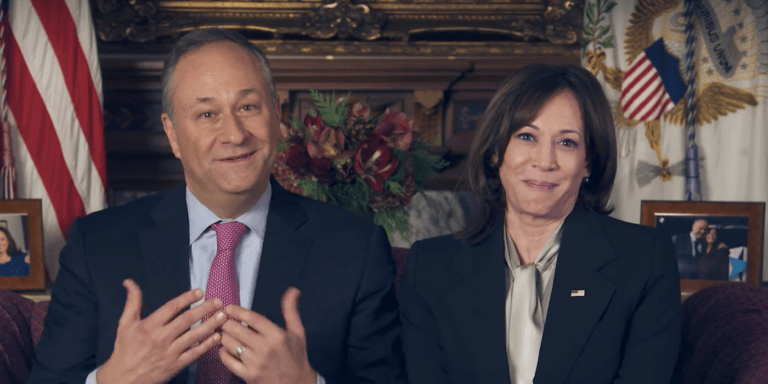
Harris’s Stepdaughter Caught Fundraising for Gazan Group… Again

(Luis Cornelio, Headline USA) Ella Emhoff, the daughter of Second Gentleman Doug Emhoff, was caught fundraising for a Gaza-based United Nations group allegedly involved in the Hamas terror attack on Oct. 7. 

In a now-deleted post on her Instagram account, Emhoff, whose stepmother is Vice President Kamala Harris, shared a fundraising link to the United Nations Relief and Works Agency for Palestine Refugees in the Near East (UNRWA). 

Emhoff deleted the post only after the New York Post inquired about it. Her promotion of the UNRWA came two months after the Biden-Harris administration halted funding to the controversial group pending an investigation into its ties to Hamas.

Hillel Neuer, the executive director of the nonprofit United Nations watchdog, criticized Emhoff’s promotion of the embattled UN-related group.

“We urge Ms. Emhoff to go on the website of UN Watch and read our reports showing how UNRWA teachers and school principals systematically promote and encourage Jihadi terrorism and the slaughter of Jews,” Neuer told the Post. 

UNRWA is under scrutiny after reports implicated at least 450 of its employees in extremist groups in Gaza. At least 12 UNRWA workers were involved int the Hamas-led violence against Israeli citizens on Oct. 7. 1,200 individuals were killed that day.

Hamas tunnels were discovered beneath the agency’s Gaza headquarters, and UNRWA allegedly provided electricity to the terror group. Additionally, a UNRWA teacher reportedly housed a released Israeli hostage. 

Following reports of UNRWA’s alleged ties to terrorism, President Joe Biden suspended U.S. funding to the entity, after it had already received at least $730 million. This decision came after Biden initially reversed a Trump administration ban on U.S. funding to UNRWA, as reported by the Post.

This would mark the second time Emhoff is caught promoting groups tied to the Hamas-governed Gaza Strip. In November 2023, she came under fire after telling her then-315,000 Instagram users to donate to the Palestinian Children’s Relief Fund.

Emhoff’s promotion of UNRWA comes less than a week after her father, who is Jewish, and Harris were associated to an alleged racist, elite country club in Los Angeles, where allegations of drug abuse, nepotism, and sexual harassment were left unaddressed. 

Moreover, Harris faced criticism for echoing Hamas’s demands for an immediate cease-fire in Israeli military actions in the Gaza Strip, as Israeli forces seek the release of hostages held in Gaza.

Emhoff did not immediately respond to questions from Headline USA via Instagram regarding whether she still supports UNRWA or whether she was aware of the allegations against the group.

Headline USA was unable to reach a spokesperson at IMG Models, the model agency representing Emhoff, as their New York offices were closed prior to publication.