Rep. Higgins Says He Mapped out the 5G Towers around Trump Shooter’s Home

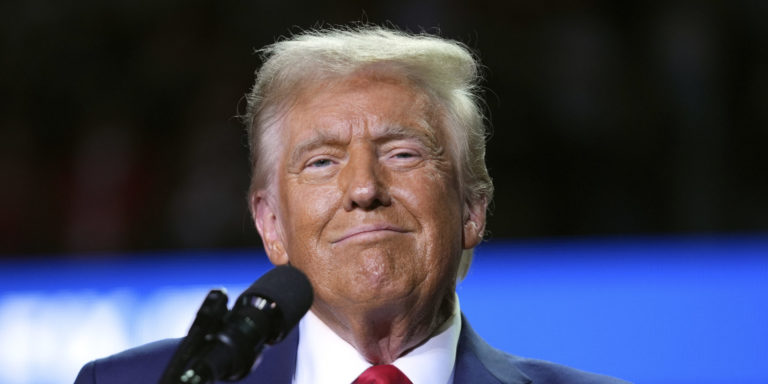
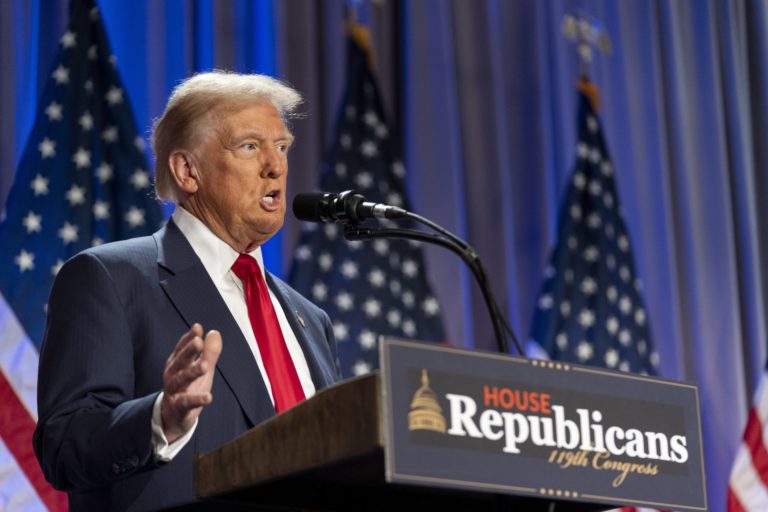
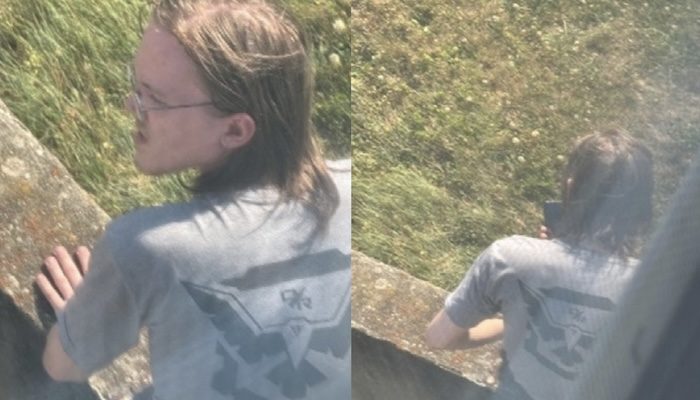
(Ken Silva, Headline USA) Rep. Clay Higgins, R-La., thinks Thomas Crooks shot Donald Trump at the July 13 Butler, Pennsylvania campaign rally because Crooks “went mad.”

Higgins’s theory is supported by the FBI, which reportedly said Crooks may have been suffering from an undiagnosed mental health disorder.

But what Higgins doesn’t know is why Crooks—a highly intelligence student who scored 1500 on his SAT pre-college exam—apparently had a mental-health breakdown. Higgins told reporters Thursday that he’s exploring all possibilities, including the seemingly outlandish—including theories related to vaccines and 5G mobile internet technology.

“I’m the one who found out he was fully vaxxed, I mapped out where the 5G towers are around his home, his gun range, all of that,” Higgins said, presumably referencing Crooks having the full slate of COVID-19 jabs.

“Why am I asking those kind of questions? The people want it.”

Higgins didn’t explain further how vaccines and 5Gs could have propelled Crooks to plot an assassination. Most conspiracy theories about vaccines and 5G are related to health risks, such as that 5G affects cells that were injected into people via the COVID jabs.

Higgins promised that he’ll get to the bottom of the July 13 Trump shooting during the next Congress, when he’ll be leading a subcommittee that will continue to investigate the event.

But Higgins has made similar promises, which he’s yet to live up to, in relation to the Jan. 6.

Indeed, last November Higgins claimed to have uncovered evidence that two busloads of FBI informants were sent to Washington DC to foment violence at the Jan. 6, 2021, Capitol Hill protest-turned-riot.

Days later, Higgins doubled down on his claim, telling Newsmax there were over 200 undercover agents embedded in the Jan. 6 crowd.

To date, Higgins hasn’t provided any actual evidence of his claims.

Ken Silva is a staff writer at Headline USA. Follow him at x.com/jd_cashless.

Trump Receives Patriot’s Honor at Fox News Award Show

(Julianna Frieman, Headline USA) President-elect Donald Trump accepted the “Patriot of the Year” award Thursday evening in Long Island at the annual Fox Nation Patriot Awards.

Fox News awarded Trump the honor to the tune of singer Lee Greenwood’s live performance of “God Bless the USA,” the incoming president’s staple entrance song.

When Trump took the stage to receive his award, deigned to resemble the American flag, he reflected on his “spectacular election” against the Democrats—first President Joe Biden, then Vice President Kamala Harris—and reiterated his promises for the country.

“It was a tremendous day, a tremendous night, a tremendous period of time,” he sad.

Trump mentioned that for 72 days straight, he campaigned without taking a single day of rest in the final stretch before Nov. 5.

The president-elect gave himself credit for his level of productivity in the month following his historic victory. Trump has since announced dozens of Cabinet nominations, met with world leaders at Mar-a-Lago and negotiated foreign policy.

“I think you have seen more happen in the last two weeks than you’ve seen in the last four years, and we’re not even there yet,” Trump said. “We’re going to make America great again.”

The ceremony at the Tilles Center for Performing Arts in Brooklyn, New York was the network’s sixth annual Patriots Awards.

The purpose of the Fox News event is to recognize notable figures, especially military veterans, first responders and those who committed acts of bravery and sacrifice.

Fox News star Sean Hannity hosted the 2024 show, which was previously emceed by former Fox and Friends Weekend co-host and defense secretary nominee Pete Hegseth. Approximately 2,000 guests attended, according to the New York Post, many wearing pro-Trump merchandise.

“What I love about it is unlike, say, the Oscars or the Grammys or the Tonys, this honors the men and women that really do make the country great every day, unsung heroes and real patriots. They never get any recognition,” Hannity told Fox News Digital.

Julianna Frieman is a freelance writer published by the Daily Caller, Headline USA, The Federalist, and the American Spectator. Follow her on Twitter at @JuliannaFrieman.

Scandal-Plagued Dem Mayor Defeated in Primary Election

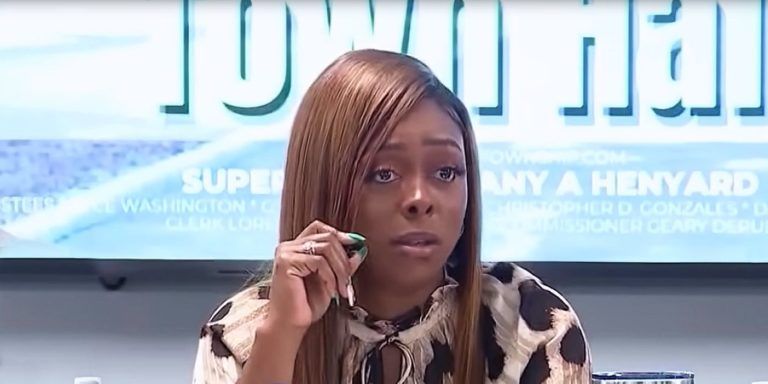
(Luis Cornelio, Headline USA) Infamous Democrats continue to fall like dominos, with Dolton Mayor Tiffany Henyard becoming the latest politician effectively ousted from power after years of controversy and allegations of financial impropriety. 

Henyard, once dubbed Illinois’s “super mayor,” lost the Democratic nomination for her second position as Thornton Township supervisor, Fox News reported Thursday. 

Henyard didn’t even appear on the ballot because her slate lacked a certified assessor, a mandatory requirement, the outlet noted.

Candidates must have eight names on their slate, including candidates for supervisor, highway director, clerk, assessor and four trustees. 

Illinois state senator and Thornton Township Democratic committeeman Napoleon Harris clinched the nomination and could soon replace Henyard. She may still run as an independent or write-in candidate later next year. 

Tellingly, Henyard denied the election results, implying its caucus format was unlawful. Such claims further contradict the Democratic Party’s virtue signaling to Republicans about undermining democracy. 

“You didn’t run none of this the right way. Illegal, Napoleon,” Henyard reportedly claimed, referring to Harris’s decision to hold a caucus instead of a primary. 

Her electoral defeat follows years of accusations over how her Dolton administration handled its finances. 

Henyard repeatedly refused to release spending records, allegedly running afoul of Illinois transparency laws and ignoring demands from Attorney General Kwame Raoul. 

When ordered by a judge to release the records, reports revealed Henyard and her allies spent thousands in taxpayer dollars to fund first-class flights, stays in luxury hotels, airline upgrades and even Uber Eats, according to WGN-9. 

In just five months of 2023, Henyard’s mayoral administration spent over $67,000 in taxpayer money on out-of-town travel alone. Taxpayers also paid $33,920 for trips to New York, Atlanta and Portland. 

Other charges included $11,609 at the luxury Fairmont Austin Hotel, $398 at Ruth’s Chris Steakhouse, $503 for so-called sports/riding apparel and $413 at Walgreens.  

As if that was not enough, taxpayers were on the hook for $24,778 spent on trips to Walmart and Target, over $14,000 for Amazon purchases, $5,000 in Uber Eats and other restaurants and $3,491 for a personal photographer. 

In 2023, Henyard faced backlash for featuring her face and name on a giant billboard, which many viewed as an unethical use of taxpayer money. 

“This is a blatant attempt to promote herself politically,” Illinois-based election attorney Burt Odelson told Fox 32 Chicago at the time. “The township should not have paid for these if they did. And I’m sure they did.” 

Federal Appeals Court Upholds TikTok Ban as Trump Pledges to ‘Save’ It

(Headline USA) A federal appeals court panel on Friday upheld a law that could lead to a ban on TikTok in a few short months, handing a resounding defeat to the popular social-media platform as it fights for its survival in the U.S.

The U.S. Court of Appeals for the District of Columbia Circuit denied TikTok’s petition to overturn the law—which requires TikTok to break ties with its China-based parent company ByteDance or be banned by mid-January—and rebuffed the company’s challenge of the statute, which it argued had ran afoul of the First Amendment.

“The First Amendment exists to protect free speech in the United States,” said the court’s opinion, which was written by Judge Douglas Ginsburg. “Here the Government acted solely to protect that freedom from a foreign adversary nation and to limit that adversary’s ability to gather data on people in the United States.”

TikTok and ByteDance—another plaintiff in the lawsuit—are expected to appeal to the Supreme Court.

Meanwhile, President-elect Donald Trump, who tried to ban TikTok during his first term and whose Justice Department would have to enforce the law, said during the presidential campaign that he is now against a TikTok ban and would work to “save” the social media platform.

Friday’s ruling came after the appeals court panel, composed of two Republican-appointed judges and one Democrat, heard oral arguments in September. The three judges all denied TikTok’s petition. Judge Sri Srinivasan—the chief judge on the court, who was appointed by former President Barack Obama—issued a concurring opinion.

The law, signed by President Joe Biden in April, was the culmination of a years-long saga in Washington over the short-form video-sharing app, which the government sees as a national security threat due to its connections to China.

The U.S. has said it’s concerned about TikTok collecting vast swaths of user data, including sensitive information on viewing habits, that could fall into the hands of the Chinese government through coercion.

Officials have also warned the proprietary algorithm that fuels what users see on the app is vulnerable to manipulation by Chinese authorities, who can use it to shape content on the platform in a way that’s difficult to detect—a concern mirrored by the European Union on Friday as it scrutinizes the video-sharing app’s role in the Romanian elections.

Critics have observed that American content frequently promotes toxic values and ideology, and may have been attributable in large part to the spread among young people of LGBT and transgender identification, as well as neurodivergency and various mental illnesses. In China, by contrast, it is used largely as an educational platform to promote skills and values beneficial to the broader culture and society.

However, a significant portion of the government’s information in the case has been redacted and hidden from the public, as well as the two companies.

TikTok, which sued the government over the law in May, has long denied it could be used by Beijing to spy on or manipulate Americans.

Its attorneys noted the U.S. hasn’t provided evidence to show that the company handed over user data to the Chinese government, or manipulated content for Beijing’s benefit in the U.S.

They have also argued the law is predicated on future risks, which the Department of Justice has emphasized, pointing in part to unspecified action it claims the two companies have taken in the past due to demands from the Chinese government.

After the September hearing, some legal experts had said it was challenging to read the tea leaves on how the three judges would rule.

In a court hearing that lasted more than two hours, the panel appeared to grapple with how TikTok’s foreign ownership affects its rights under the Constitution and how far the government could go to curtail potential influence from abroad on a foreign-owned platform.

The judges pressed Daniel Tenny, a Department of Justice attorney, on the implications the case could have on the First Amendment. But they also expressed some skepticism at TikTok’s arguments, challenging the company’s attorney—Andrew Pincus—on whether any First Amendment rights preclude the government from curtailing a powerful company subject to the laws and influence of a foreign adversary.

In parts of their questions about TikTok’s ownership, the judges cited wartime precedent that allows the U.S. to restrict foreign ownership of broadcast licenses and asked if the arguments presented by TikTok would apply if the U.S. was engaged in war.

To assuage concerns about the company’s owners, TikTok says it has invested more than $2 billion to bolster protections around U.S. user data.

The company also argues the government’s broader concerns could have been resolved in a draft agreement it provided the Biden administration more than two years ago during talks between the two sides. It has blamed the government for walking away from further negotiations on the agreement, which the Justice Department argues is insufficient.

Attorneys for the two companies have claimed it’s impossible to divest the platform commercially and technologically. They also say any sale of TikTok without the coveted algorithm—the platform’s secret sauce that Chinese authorities would likely block under any divesture plan—would turn the U.S. version of TikTok into an island disconnected from other global content.

Still, some investors, including Trump’s former Treasury Secretary Steven Mnuchin and billionaire Frank McCourt, have expressed interest in purchasing the platform. Both men said earlier this year that they were launching a consortium to purchase TikTok’s U.S. business.

This week, a spokesperson for McCourt’s Project Liberty initiative, which aims to protect online privacy, said unnamed participants in their bid have made informal commitments of more than $20 billion in capital.

TikTok’s lawsuit was consolidated with a second legal challenge brought by several content creators—-for which the company is covering legal costs—as well as a third one filed on behalf of conservative creators who work with a nonprofit called BASED Politics Inc.

If TikTok appeals and the courts continue to uphold the law, it would fall on Trump’s Justice Department to enforce it and punish any potential violations with fines. The penalties would apply to app stores that would be prohibited from offering TikTok, and internet hosting services that would be barred from supporting it.


Adapted from reporting by the Associated Press

Obama Pivots to Election Denialism, Accuses Trump of Wanting to Do What Dems Did

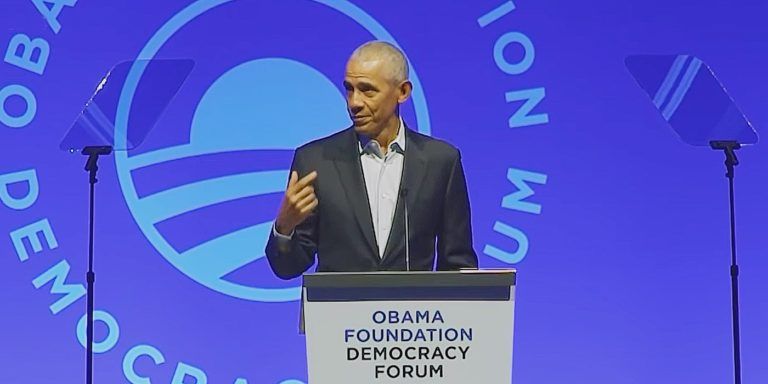
(Julianna Frieman, Headline USA) Former President Barack Obama refused to share a “Kumbaya” moment with Republicans across the aisle Thursday in Chicago, instead opting to accuse his political rivals of rigging elections.

The Democrat kingmaker took aim at the “doom loop” politicians use to portray their opponents as “enemies to be vanquished” during his keynote address at the Obama Foundation’s third annual Democracy Forum.

“There are going to be times, potentially, when one side tries to stack the deck and lock in…,” Obama began, taking a long pause, “…permanent grip on power.”

Borrowing the tactic of projection from Saul Alinsky’s Rules for Radicals, Obama suggested Republicans would actively suppress votes, politicize the armed forces or weaponize the Department of Justice against political opponents—all actions Democrats used during the current presidential term to prevent President-elect Donald Trump from winning.

“And in those circumstances, pluralism does not call for us to just stand back and say, ‘Well… I’m not sure that’s OK,’” Obama said. “In most circumstances, a line has been crossed, and we have to stand firm.”

Obama stoked fear that Trump and his allies would target critics, journalists and political rivals to keep power, rather than simply seeking justice for the abuses that have been heaped on critics of the current Biden administration.

He said pluralism—an apparent euphemism for the Left’s brand of identity politics—was “not about holding hands and singing ‘Kumbaya’” but “about recognizing that any democratic power comes from forging alliances and building coalitions and making room in those coalitions, not only for the woke but also for the waking.”

At one point in his speech, Obama referenced questions he faced about his birth certificate and eligibility to be president.

“Building bridges may require you to deal with people who not only disagree with you, but do not respect you,” he said. “When I was president, there were times where, many times where I was negotiating with people who made it pretty clear they didn’t think I should be president… legally.”

Obama never offered a satisfactory explanation for why his first literary agency, Acton & Dystel, identified Kenya as his birthplace on a 1991 promotional pamphlet, which remained in their online biography of him until 2007. He has consistently refused calls to release his college transcripts, which would likely offer confirmation of whether he was attending school as an international student.

After future President Donald Trump forced the issue, Obama mysteriously furnished a long-form birth certificate more than two years into his presidency, prompting RINO Republicans like Mitt Romney and then-House Speaker John Boehner to declare that the matter had long been settled.

Julianna Frieman is a freelance writer published by the Daily Caller, Headline USA, The Federalist, and the American Spectator. Follow her on Twitter at @JuliannaFrieman.

Trump Announces First AI and Crypto Czar

(Julianna Frieman, Headline USA) President-elect Donald Trump announced the nomination of investor David Sacks to the new role of “White House A.I. & Crypto Czar” Thursday in a post on Truth Social.

“I am pleased to announce that David O. Sacks will be the ‘White House A.I. & Crypto Czar,’” Trump wrote. “In this important role, David will guide policy for the Administration in Artificial Intelligence and Cryptocurrency, two areas critical to the future of American competitiveness.”

Sacks will take the helm of policy concerning the burgeoning impact of artificial intelligence and cryptocurrency. He will protect the U.S. from Big Tech censorship while allowing both emerging industries to thrive, Trump said.


“David will focus on making America the clear global leader in both areas,” the president-elect announced. “He will safeguard Free Speech online, and steer us away from Big Tech bias and censorship. He will work on a legal framework so the Crypto industry has the clarity it has been asking for, and can thrive in the U.S.”

Sacks was also named leader of the Presidential Council of Advisors for Science and Technology.

The 25-year veteran investor previously worked with Trump ally Elon Musk and entrepreneur Peter Thiel as a co-founder of PayPal. He later invested in their companies SpaceX and Palantir.

Sacks is known for founding Craft Ventures, a venture capital firm based in San Francisco. Earlier in his career, he also founded Yammer, an enterprise software company gobbled up by Microsoft in a $1.2 billion acquisition.


Sacks also hosts the All In podcast with co-hosts Chamath Palihapitiya, Jason Calacanis and David Friedberg, where the capitalist quartet discuss politics, current events and the market.

“David has the knowledge, business experience, intelligence, and pragmatism to MAKE AMERICA GREAT in these two critical technologies,” Trump wrote on Truth Social. “Congratulations, David!”

Sacks thanked Trump for choosing him in a post on Truth Social.

“Thank you Mr. President. I am honored and grateful for the trust you have placed in me,” Sacks wrote. “I look forward to advancing American competitiveness in these critical technologies. Under your leadership, the future is bright!”

Julianna Frieman is a freelance writer published by the Daily Caller, Headline USA, The Federalist, and The American Spectator. Follow her on Twitter at @JuliannaFrieman.

Bullet Fragments from Trump Shooter’s Body Unaccounted For, Task Force Member Says

UPDATE: Shortly after the publication of this article, the FBI provided the following statement: “The focus of the FBI’s investigation is the attempted assassination in Butler, Pennsylvania by Thomas Crooks. The Pennsylvania State Police conducted an investigation into the death of Thomas Crooks.  The autopsy was performed by the Allegheny County Medical Examiner’s Office as delegated by the Butler County Coroner’s Office.  The FBI’s role was to be present during the autopsy and collect evidence.

“The FBI is aware that the medical examiner performed a postmortem X-ray on Crooks’ body, which revealed small bullet fragments. The medical examiner extracted one bullet from the body during the autopsy and an FBI agent collected that evidence. The fragment, item 80, was examined at the FBI Laboratory.

“For any further questions about the autopsy, we refer you to the Pennsylvania State Police and the Allegheny County Medical Examiner.”

(Ken Silva, Headline USA) Multiple bullet fragments were found in alleged Trump shooter Thomas Crooks’s skull, neck and upper back, according to his autopsy report, which was exclusively obtained and published by Headline USA in October.

But when Rep. Clay Higgins, R-La., visited the FBI’s lab in Quantico, he was only shown two bullet fragments—one from Crooks’s shoulder, and one that was recovered from the rooftop he used as a perch to shoot at Trump.

Higgins revealed this to reporters Thursday after the House July 13 Task Force held its final hearing into the Butler assassination attempt.

“I’m at Quantico, saying, ‘Where are the other bullet fragments? Here’s two of them: One recovered from Crooks and the other from the roof,’” Higgins said.

“‘We don’t know anything about that, congressman, we’re just lab guys,’” Higgins said he was told.

Higgins also criticized Allegheny County Medical Examiner Ariel Goldschmidt, who conducted the autopsy, for misleading him about the matter. Higgins said Goldschmidt first provided him with Crooks’s autopsy results a week before the Task Force’s first hearing in September—leaving him with the impression that only one bullet fragment was found in Crooks’s shoulder.

Higgins said he only learned of the other fragments when reading a Pennsylvania State Police report, which X-rays that showed the other fragments. (Those other fragments were mentioned in the autopsy report, so it’s not clear why Higgins said he only learned of them from the PSP report.)

Higgins added that he requested Crooks’s X-rays, but hasn’t received them. Headline USA also requested them, but was denied because they’re not subject to disclosure under the state’s public records laws.

The missing bullet fragments might help resolve the controversy of who shot Crooks, and when. Adams Township Police Department Sgt. Aaron Zaliponi shot at Crooks first, and has said he thinks he hit Crooks. The Secret Service put the final kill shot into Crooks 10 seconds later. The FBI and Goldschmidt have both insisted there’s no evidence that Zaliponi hit Crooks, even though Crooks stopped firing after Zaliponi shot at him.

Crooks’s body was released for cremation, so it’s unclear whether the other fragments are recoverable. The FBI didn’t immediately respond to an email seeking comment.

Even though the Task Force has finished its work, Higgins promised to continue investigating the Trump assassination attempts. He said he expects to lead a subcommittee next Congress.

Ken Silva is a staff writer at Headline USA. Follow him at x.com/jd_cashless.

Global Gold ETF Holdings Dipped in November Even as North American Funds Reported Inflows

(Mike Maharrey, Money Metals News Service) The presidential election brought us the “Trump shock” and a healthy correction in the gold market. We saw this reflected in gold flows out of ETFs globally for the first time since April.

While gold continued to flow into North American-based funds, all of the other regions charted outflows, with net global ETF gold holdings dropping by 29 tonnes in November.

Assets under management (AUM) by ETFs dropped 4 percent with a combination of gold outflows and falling prices. Nevertheless, AUM flows remain positive on the year at $2.6 billion.

Despite weaker gold prices and aggressive risk-on positioning after the election, gold continued to flow into North American ETFs. Holdings increased by just under one tonne, valued at $79 million. Demand was primarily driven by Canadian-based funds.

According to the World Gold Council, U.S. funds recorded outflows through the first half of the month but experienced a rebound into the end of the month as the market started pricing in a weaker dollar and lower yields following Scott Bessent’s nomination as Treasury Secretary.

“We also believe demand has found a floor of support due to the expectation for lower yields, a continuation of heightened geopolitical risk, and uncertainty around the implementation of future policy shifts and their global impact under the Trump administration.”

European funds have been shedding gold for several months, and that trend continued in November. Outflows totaled 26 tonnes.

The World Gold Council noted four factors squeezing the European gold ETF market.

  1. Weaker-than-expected macro-economic data
  2. Broader concerns around trade tariffs from the future Trump administration
  3. Central bank rate path uncertainty
  4. Financial market behavior shifting to risk-on

A big drop in the euro against the dollar has also squeezed gold in the eurozone.

Asian funds recorded gold outflows for the first time in 20 months in November. The drop in the gold price dimmed investor interest in China, driving outflows of 2.2 tonnes in the region. However, Indian ETFs reported inflows for the eighth straight month, attracting $175 million last month.

Funds in other regions, including Australia and Africa, reported gold outflows of 0.8 tonnes. Australia led outflows driven by local equity strength, elevated yields, and a weaker gold price.

Gold trading volumes rose for the third straight month in November. They were up 8 percent despite the falling gold price. Both futures trading volumes at COMEX (+50 percent) and Shanghai Futures Exchange (+33 percent) charted notable gains.

Total net longs of COMEX’s gold futures ended November at 768 tonnes, a 15 percent dip month-on-month. Money managers reduced their net long positions by 16 percent to 616 tonnes by the end of the month.

Global over-the-counter (OTC) gold trading saw an 8 percent fall to $167 billion.

ETFs are a convenient way for investors to play the gold market, but owning ETF shares is not the same as holding physical gold.

A gold ETF is backed by a trust company that holds metal owned and stored by the trust. In most cases, investing in an ETF does not entitle you to any amount of physical gold. You own a share of the ETF, not gold itself.

ETFs are relatively liquid. You can buy or sell an ETF with a couple of mouse clicks. You don’t have to worry about transporting or storing metal. In a nutshell, it allows investors to play the gold market without buying full ounces of metal at the spot price.

Since you are just buying a number in a computer, you can easily trade your ETF shares for another stock or cash whenever you want, even multiple times on the same day. Many speculative investors take advantage of this liquidity.

But while a gold ETF is a convenient way to play the price of gold on the market, you don’t actually possess any gold. You have paper. And you don’t know for sure that the fund has all the gold either, especially when the fund sees inflows. In such a scenario, there have been difficulties or delays in obtaining physical metal.

Modern Gold Rush Driving Up Property Values in the Mojave Desert

(Mike Maharrey, Money Metals News Service) Do you like to do things the easy way or the hard way? If you want gold, you can do it the easy way. Just buy some at MoneyMetals.com.

Or you could do it the hard way. Grab your pick and shovel and head out to the Mojave Desert.

Just be warned — you won’t be alone.

Now, I have to confess that sweating in the hot desert digging ditches has no appeal to me. I’m just going to go the Money Metals route to get my gold. But if you’re willing to move some dirt, you could strike it rich!

It’s a powerful dream, right? The hope of digging a hole and finding millions in gold has motivated countless people to pick up everything in search of the elusive metal.

As Joshua D Glawson put it, “The discovery of gold in the United States profoundly shaped the nation’s economic and social development, especially during the 19th century.”

Consider the California gold rush.

In January 1848, James W. Marshall discovered gold at Sutter’s Mill in Coloma, California. News of the discovery spread rapidly, and people from across the country and around the world flocked to California in pursuit of riches. Some 300,000 prospectors, known as “forty-niners,” moved into the state. This led to California’s rapid population growth and eventual statehood in 1850.

And it’s happening again in the 21st century.

With gold prices at record levels, more than a few people are willing to try and get gold the hard way. This has sparked a mini gold rush in the California desert.

According to the Los Angeles Times, people are snapping up claims for gold mines. Entrepreneur Sean Tucker called it “a modern-day gold rush.”

In fact, this gold rush set off a real estate boom in the Mojave town of Johannesburg, located about 140 miles north of Los Angeles.

Johannesburg was a booming mining town back in the 19th century.

Hemet-based real estate agent David Treadwell said there has been a surge in demand for old mining properties. Small claims are selling for under $50,000, while larger claims command hundreds of thousands of dollars.

Tucker has invested millions to buy 97 acres of land and lease 2,500 more. He plans to start full-scale mining in 2025. He told the Times he estimates it will cost around $1,220 per ounce to pull gold out of the ground. That would give him a $1,400 profit at the current gold price.

Real estate agents are cashing in on the gold rush without lifting a shovel.

Randsburg was once a booming mine town with a population of 3,500 people during the last gold rush more than a century ago. Today, it is home to about 45 people. But with their historic ties to gold, properties in the area are selling for up to $175,000.

Real estate brokers make bold promises such as “You only need to find about 18 ounces to make this property pay for itself!”

Of course, that’s easier said than done. History is packed full of the long-forgotten names and faces of men and women who risked – and lost –  everything for a shot at gold’s promised riches. As truck driver Rudy Salazar told the Times, nothing is simple or guaranteed.

“It’s not easy. But I hope it pans out.”

And if it doesn’t, well, he can always head over to Money Metals.

Film Shares Powerful Tale of Drug-Addicted Employee Whose Life Trump Saved

(Luis Cornelio, Headline USA) A long-time aide to the Trump family shared a heartwarming story about how working for the future president saved her life during a relapse with drug addiction. 

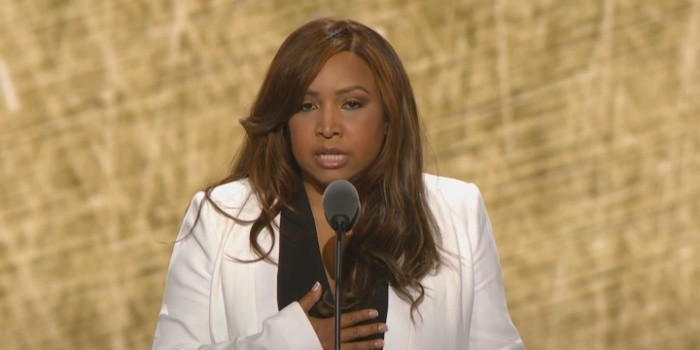
Lynn Patton made the emotional appeal in Tucker Carlson’s Art of the Surge documentary, recounting her years working for real estate mogul Eric Trump. 

“I always say it’s not hyperbole—they truly saved my life,” a visibly emotional Patton said. “I relapsed with cocaine in 2012, I believe. … When I relapsed, Eric Trump called me into his office, [and] confronted me about my drug use.” 

She added: “As I am basically lying to his face, I’m fidgeting and I look up and he’s got tears in his eyes and that’s when I just lost it and I started crying like a baby. … He was like, ‘Lynn, you’re better than this. We want you to get the help that you need.’” 

Patton said Eric’s wife, Lara Trump, was on the phone—and that Donald Trump Jr. and Ivanka Trump later supported her. Patton ultimately sought outpatient treatment and overcame her addiction. 

“When their father still wanted me to work in Washington, I was just for it. Because they gave me another chance and I don’t think people see that side of the family,” Patton said. “They were born and bred in this lifestyle. They live, breathe and eat it—but they’re willing to walk away from all of that for this great country.” 

Patton began working as vice president of the Eric Trump Foundation, which raised over $40 million for children at St. Jude’s Hospital. She worked for the Trump campaign in 2016 as a senior advisor and family liaison, later moving to the Department of Housing and Urban Development (HUD). 

At HUD, Patton overhauled the department and worked to improve Section 8 housing for low-income Americans, going as far as temporarily moving into some of the apartments to oversee needed repairs. 

After Trump left the White House, Patton worked for the pro-Trump Save America PAC until 2022. She later joined Trump’s 2024 presidential campaign as a senior adviser and later became the director of fundraising for Trump’s Patriot Legal Defense Fund, according to her LinkedIn profile.