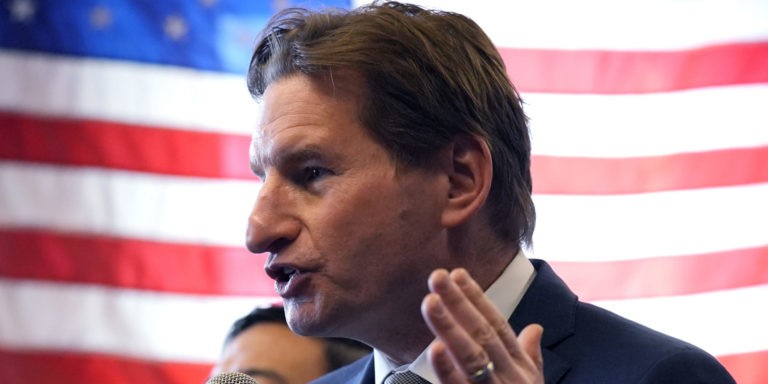
(Julianna Frieman, Headline USA) Outgoing Rep. Dean Phillips, D-Minn., slammed his own party in an interview published Saturday for tuning out the voice of voters and suffering a crushing defeat by President-elect Donald Trump.
Phillips, who challenged President Joe Biden in the 2024 Democrat primary, told POLITICO he found it “awfully unsettling” to be right about the 82-year-old Democrat’s inability to serve a second term.
Dem Rep. Dean Phillips is leaving Congress – and he has some parting words for his “rudderless” party. https://t.co/8RRboZKHUX
“The fact was his approval numbers were historically low. The fact was his physical decline was real. And the only vindication I cared about was my own, and I’m saddened that I’m vindicated,” the congressman said. “I would have much rather traded that vindication for success, and that’s why I’m so utterly disappointed in many of my colleagues and our party”
Phillips urged Democrats to undergo a “comprehensive turnaround” come the midterm elections in 2026 and the next presidential race in 2028. He added that no clear party leader has emerged since Biden’s withdrawal in July and America’s rejection of Vice President Kamala Harris.
“What do we have to do? Listen, it’s not that hard. This is not rocket science,” Phillips told the outlet. “This is representation. It starts with listening, and it means getting out to places and spaces and people and communities that we’ve all but turned our back on.”
The former Democrat presidential candidate highlighted what he called the irony of working-class voters, previously a guaranteed bloc of blue voters, flocking to the Republican Party.
“I think it’s ironic that the Republican Party is now representing America’s working class. It’s astounding, and that was ceded to them by people that have prioritized things like tenure over talent, identity politics over pragmatic problem solving. It’s as simple as that, but it takes leadership,” he said.
Dean Phillips, who challenged Biden in the Democratic primary, called his party “completely delusional” in January.pic.twitter.com/VHz7AEYbFQ
— Julianna Frieman (@JuliannaFrieman) July 2, 2024
Phillips called members of the Democrat Party “completely delusional” in January as they hitched their wagons to Biden. In February, Phillips took to Fox News and called for Biden to step aside.
“We wouldn’t be having these conversations if he was not running for president again,” he told primetime host Jesse Watters at the time.
Rep. Dean Phillips, who ran for president in the Democratic primary, called for Biden to step down in February.
“We wouldn’t be having these conversations if he was not running for president again.”
— Julianna Frieman (@JuliannaFrieman) July 2, 2024
Phillips ended his own presidential primary bid in March after it became clear Biden had majority support from the Democrats.
Julianna Frieman is a freelance writer published by the Daily Caller, Headline USA, The Federalist, and The American Spectator. Follow her on Twitter at @JuliannaFrieman.
(Mike Maharrey, Money Metals News Service) Treasury yields are rising even as the Federal Reserve cuts interest rates.
This is a big problem for Uncle Sam, who is already struggling to pay for its borrow-and-spend addiction.
The central bank has dropped interest rates by 100 basis points since it started easing monetary policy with a super-sized cut in September. Since then, long-term Treasury yields have gone up by over 100 basis points.
Yields hit their low point on Sept. 16, two days before the first Fed rate cut. Since then, the 5-year Treasury yield is up by 106 basis points, the 7-year yield has risen by 105 basis points, the 10-year yield has increased by 100 basis points, and the average 30-year fixed mortgage rate is also up by 100 basis points.
Why Is the Federal Reserve Cutting Rates?
Good question. Because, on the surface, its aggressive monetary loosening doesn’t really make much sense.
The Fed is ostensibly cutting rates because Powell & Company believe they have beaten back inflation.
But they haven’t.
The CPI continues to signal sticky price inflation. None of the Fed’s inflation metrics are at the mythical 2 percent target. Core CPI, excluding more volatile food and energy prices, has been mired at 3 percent for months. Producer prices rose at an alarming rate in November.
Generally, central banks start cutting rates when recession warning signs begin flashing. But GDP is growing. The Federal Reserve insists that the labor market is strong, and despite some recent signs of softening, Fed officials insist it won’t likely weaken further.
Sure, there are some cracks in the economy if you know where to look. But the mainstream narrative is we have a strong economy, and the Fed is guiding us to a soft landing.
As WolfStreet put it, “This time around, the Fed cut amid above-average economic growth with no recession in sight – so that’s unusual – and longer-term yields have risen amid this solid economic growth.”
Either the Fed is secretly worried that the economy could crash, or there is some other reason for the recent monetary easing.
I’m speculating, but I think the real reason the Fed has slashed rates is they know this debt-riddled bubble economy can’t function long-term in a higher interest rate environment (even though rates are still historically low.) They might not see a crisis on the horizon, but they know they’ve created that potential, and they’re trying to walk a tightrope between price inflation and an economic meltdown.
The upward-spiraling national debt highlights the interest problem. Last year, the federal government’s interest expense eclipsed $1 trillion for the first time in history. It was the second biggest spending category in 2024, bigger than national defense and bigger than Medicare. The only spending category that was bigger was Social Security.
And Uncle Sam isn’t the only one feeling the debt crunch. Consumers and businesses are also levered to the hilt.
So, I think one of the quiet reasons the Fed is cutting rates is its attempt to provide some relief for the debtor nation.
The problem is it’s not working.
The Bond Market Is Nervous
Rising Treasury yields reveal a dirty little secret. The central bank has a limited ability to control the long end of the yield curve. It can drive short-term rates lower through monetary policy, but other factors are driving long-term interest rates – namely supply and demand.
Rising yields not only signal investors have bought into the “soft landing,” strong economy mantra, but they also expose a couple of significant concerns.
The re-emergence of price inflation.
Concern about the federal government’s fiscal irresponsibility.
As WolfStreet put it, “There are rising concerns in the bond market about the ballooning US debt, and about the flood of new supply of Treasury securities that the government will have to sell in order to fund the out-of-whack deficits. Treasury buyers and holders are spread far and wide, but higher yields may be necessary to reel in the mass of new buyers needed, even as the Fed is shedding its Treasury holdings through QT.”
“These are worrisome thoughts for potential buyers of long-term Treasury securities; they want to be compensated through higher yields for the risks of higher inflation and the risks this flood of new supply might bring.”
It’s quite possible that the Fed won’t be able to lower federal borrowing costs even with deeper interest rate cuts. As already mentioned, the central bank can move the short end of the rate curve, but it has a much harder time manipulating long-term rates. There are too many other contravening factors.
Ultimately, the federal government needs the Fed to step in and put its big fat thumb on the bond market. That would mean a return to quantitative easing (QE).
In QE operations, the central bank buys Treasuries on the open market. This increased (artificial) demand drives bond prices higher and puts downward pressure on yields. This would be an ideal scenario for the U.S. government. It needs all the help it can get to facilitate its borrow/spend addiction.
But the Fed runs QE operations with money created out of thin air. The new money gets injected into the monetary system and the economy. This is, by definition, inflation.
In other words, the Fed is between a rock and a hard place. It needs to get interest rates down for the Treasury (Fed officials claim they don’t care about the government’s fiscal issues, but I call BS.), but doing so runs the risk of reigniting price inflation.
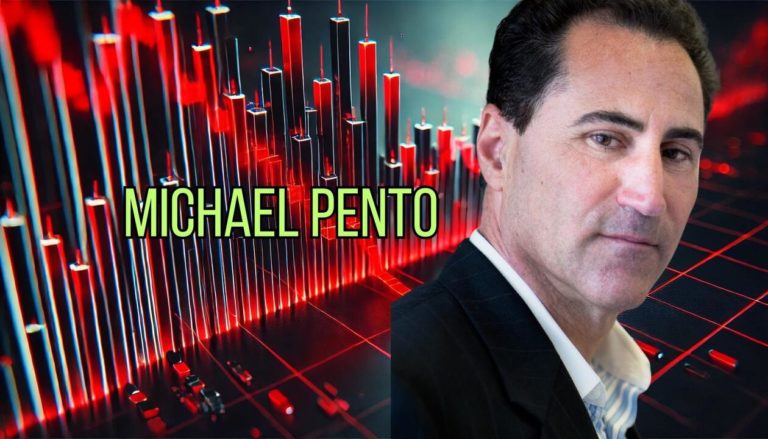
(Money Metals News Service) In a gripping Christmas-week interview, Mike Maharrey spoke with Michael G. Pento, a noted economist, portfolio strategist, and author of The Coming Bond Market Collapse, to dissect the Federal Reserve’s actions, inflation concerns, and the burgeoning U.S. debt crisis.
(Interview Begins Around 4:19 Mark)
Federal Reserve Policy and Inflation
Michael Pento expressed frustration with the Federal Reserve’s continued pursuit of its 2% inflation target, criticizing its mismanagement of monetary policy. Over the past 43 months, inflation exceeded this target, yet the Fed aggressively cut interest rates, including a recent 50 basis point cut. According to Pento, these actions aim to sustain bubbles in equities and real estate, provide relief to the government’s rising debt service costs, and support Treasury markets.
He also highlighted that the Fed’s bond-buying spree and $5 trillion money-printing program post-COVID contributed to significant inflationary pressures. With inflation reported at 2%—down from peak levels of 9%—Pento suggested these figures are misleading, reflecting a downplaying of true inflationary pressures.
The Bond Market Crisis and Liquidity Issues
Pento described the U.S. bond market as increasingly illiquid, with the Federal Reserve’s reverse repo facility falling from $2.5 trillion to $80 billion. He linked these liquidity challenges to rising long-term bond yields, even as the Fed cuts rates. Despite hawkish rhetoric suggesting limited future rate cuts, long-term yields have risen, reflecting distrust in U.S. fiscal stability.
Highlighting the danger of a recession—potentially as early as March 2025—Pento predicted annual federal deficits could balloon to $6 trillion. With current interest payments on U.S. debt already surpassing $1 trillion annually, Pento warned of unsustainable borrowing practices and questioned who would continue purchasing U.S. debt if foreign investors lose confidence.
Negative Real Interest Rates and Asset Bubbles
Pento argued that persistent negative real interest rates—where inflation outpaces nominal interest rates—have distorted markets, incentivizing investors to chase riskier assets like stocks and real estate. He cited examples such as Blackstone’s massive acquisitions of single-family homes during periods of cheap borrowing, leading to inflated asset prices.
However, with mortgage rates potentially climbing into double digits, Pento foresees a steep correction in real estate, regardless of Fed intervention. He also warned that inflationary pressures could render traditional bond investments unattractive, leading to further market instability.
Debt Ceiling and Fiscal Mismanagement
Discussing the recent debt ceiling debates, Pento criticized the lack of meaningful fiscal restraint. Despite political posturing, government spending continues unabated, with stopgap measures adding over $100 billion to expenditures. He expressed skepticism about any administration’s ability to rein in spending, particularly given the mandatory nature of programs like Social Security, Medicare, and defense.
Pento proposed a debt-to-GDP cap as an alternative to the debt ceiling, suggesting it could enforce fiscal discipline while promoting economic stability. Without such measures, he warned of severe consequences, including diminished confidence in the dollar and runaway inflation.
A Call for Sound Money and Fiscal Responsibility
Pento concluded by emphasizing the importance of real returns after inflation for investors, advocating for a focus on tangible assets like base metals and energy. He criticized the Fed’s overreach in manipulating the cost of money and called for a return to market-determined interest rates to restore balance.
Key Takeaways from the Episode
Inflation Targets: The Fed’s focus on a 2% inflation target has exacerbated economic imbalances.
Debt Service Costs: The U.S. debt’s interest payments now exceed $1 trillion annually, with deficits projected to rise further.
Market Risks: Persistent inflation, rising bond yields, and a potential liquidity crisis in 2025 could trigger market instability.
Policy Suggestions: Pento proposed a debt-to-GDP cap to enforce fiscal discipline.
Investment Strategy: He advised prioritizing assets like base metals and energy to hedge against inflation.
Michael Pento’s insights highlight the critical challenges facing the U.S. economy, offering a sobering perspective on inflation, monetary policy, and fiscal mismanagement. For further details and investment guidance, visit PentoPort.com.
Key Questions & Answers
What is causing the Federal Reserve to cut rates despite high inflation?
Michael Pento explained that the Fed is attempting to maintain economic bubbles in equities and real estate, reduce the government’s debt servicing costs, and control money market rates. Despite inflation exceeding its 2% target for 43 months, the Fed continues cutting rates to address these priorities, even at the risk of worsening inflation.
Why are long-term bond yields rising despite rate cuts?
Pento pointed to illiquidity in the bond market, reduced confidence in U.S. fiscal stability, and insufficient foreign demand for U.S. debt as key factors. He noted the dramatic drop in the Fed’s reverse repo facility from $2.5 trillion to $80 billion, indicating a lack of liquidity that pushes yields higher.
How is the bond market signaling deeper economic problems?
Rising long-term yields, even during rate cuts, indicate a lack of confidence in U.S. debt sustainability. Pento warned that future recessions could push deficits to $6 trillion annually, with limited buyers for U.S. bonds, exacerbating the crisis.
What impact will negative real interest rates have on the economy?
Negative real interest rates discourage savings and push investors into riskier assets like stocks and real estate. Pento cited examples of asset bubbles, such as Blackstone buying large quantities of single-family homes, inflating prices and distorting markets.
What would happen to the real estate market if mortgage rates rise significantly?
Pento predicted a sharp decline in the real estate market if mortgage rates reach double digits, as higher borrowing costs would make current price levels unsustainable, leading to a correction regardless of Federal Reserve intervention.
Is the debt ceiling effective in curbing government spending?
Pento argued that the debt ceiling offers limited accountability, as spending continues to increase through stopgap measures. He suggested a debt-to-GDP cap as a more effective mechanism to enforce fiscal discipline and ensure economic stability.
What is the potential impact of rising U.S. debt on inflation and confidence in the dollar?
Continued debt accumulation and money printing risk eroding confidence in the dollar’s purchasing power, which could lead to runaway inflation. Pento emphasized that excessive debt creates systemic risks that could destabilize markets and worsen living standards.
How should investors approach the current economic environment?
Pento advised focusing on tangible assets like base metals and energy, which typically perform well during inflationary periods. He emphasized the importance of achieving real returns after accounting for inflation and avoiding over-reliance on traditional fixed-income investments.
Will the Federal Reserve return to ZIRP and QE during the next recession?
Pento predicted that the Fed would eventually return to zero interest rate policy (ZIRP) and quantitative easing (QE) but only after a significant market downturn of 30–50%. He warned that such measures could exacerbate inflation and harm the middle class.
What changes could improve fiscal responsibility in the U.S.?
Pento proposed implementing a debt-to-GDP cap as a replacement for the debt ceiling. This mechanism would tie government borrowing to the economy’s growth capacity, encouraging stability in bond markets and the U.S. currency.
(Stuart Englert, Money Metals News Service) President Ford inked a consequential executive order on New Year’s Eve in 1974…
Gold enthusiasts can celebrate a golden anniversary on New Year’s Eve and simultaneously mark a market manipulation milestone.
Fifty years ago, President Gerald R. Ford legalized private gold ownership, allowing Americans once again to stack the regal metal as a wealth-preserving asset and safe haven against monetary inflation and currency debasement.
Gold futures trading and market meddling also began in the United States a half-century ago.
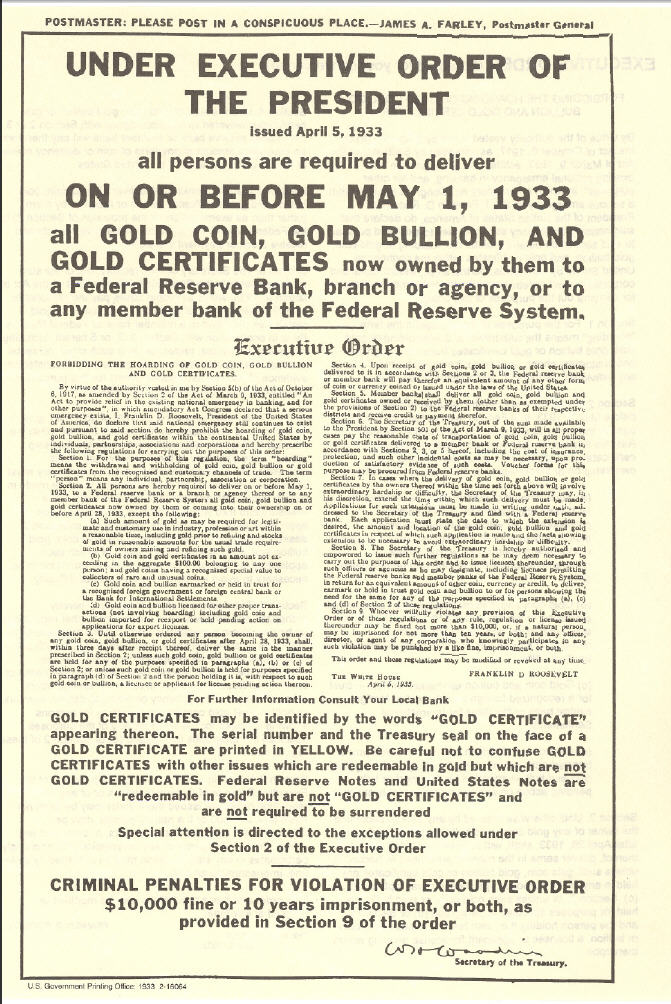
On Dec. 31, 1974, Ford issued an executive order revoking President Franklin D. Roosevelt’s 1933 decree that criminalized gold hoarding and prohibited American citizens from owning more than $100 worth (5 troy ounces at the time) of the demonetized metal.
President Ford signed the order without celebratory remarks or public fanfare. He simply released an official statement citing the legal authority he had to take the action.
Americans Could Buy Gold Again Without Risking Prosecution
While no confetti flew or champagne corks popped in the White House to mark the momentous occasion, repeal of FDR’s 41-year-old edict sparked the largely dormant gold industry and restored trading of the yellow metal as a commodity.
Gold could be owned, bought, and sold domestically as an investment without risking a $10,000 fine and 10 years in prison. Gold coins weren’t U.S. legal tender at the time, and bullion wasn’t used in official foreign exchange after President Richard Nixon delinked the dollar from gold in 1971.
As the nation’s only unelected president and vice president, Ford didn’t have a political or public mandate to legalize gold. Nor was he a fervent goldbug or hard-money proponent.
Mr. Nice Guy, as the nation’s 38th president came to be known, merely went along with a bipartisan measure passed by Congress four months earlier. The no-name bill—Public Law 93-373—permitted “United States citizens to purchase, hold, sell, or otherwise deal with gold in the United States or abroad.”
Introduced by Sen. James Fulbright (D-Ark.), the legislation was approved by a coalition of Democrats and Republicans following a grassroots movement led by James U. Blanchard III, founder of the National Committee to Legalize Gold.
The measure’s passage was attributed to support from free-market gold advocates and its link to a foreign aid package promoted by Nixon. Ford signed the bill into law on Aug. 14, 1974, six days after the partial-term Republican took the presidential oath following Nixon’s resignation over the Watergate scandal.
Gold legalization wasn’t without its concerns and opposition. The decision raised alarms within the U.S. Treasury Department and Federal Reserve, particularly after the gold price climbed to a record high, topping $195 an ounce on Dec. 30, 1974.
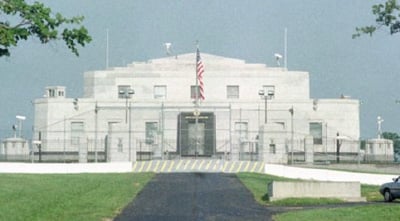
At the time, the statutory gold price was $44.22 an ounce, and the nation’s gold stocks were undergoing a highly publicized audit that began with a congressional, media-covered, and question-raising inspection of a single vault at the Fort Knox (Ky.) Bullion Depository on Sept. 23, 1974.
U.S. Treasury & IMF Sold Gold to Cap Price
Treasury officials worried strong public demand for gold might drive prices higher, increase the nation’s trade deficit if the commodity were imported, and further weaken the unbacked, devalued, and expanding supply of Federal Reserve Notes.
Those were valid concerns amid the inflationary spiral triggered by Nixon’s suspension of the international gold standard, the lingering effects of the 1973 Arab oil embargo, and persistent federal budget deficits and rising national debt.
To contain the price, the Treasury announced plans to sell 2 million ounces of gold bars. The first auction was held on Jan. 6, 1975, less than a week after Ford legalized private gold ownership.
With a subsequent sale on June 30, a total of 1.25 million ounces of gold were sold at prices ranging from $153 to $185 an ounce. Sales of 25 million ounces of International Monetary Fund (IMF) gold commenced in 1976, and Treasury sales of 15.8 million ounces resumed in 1978 to curtail prices and defend the ailing U.S. currency.
U.S. Bullion Depository (at Fort Knox, KY)
Federal Reserve Chairman Arthur Burns called Congress’ decision to remove the ban on private gold ownership “ill-timed” and urged a delay.
Burns feared investors might withdraw funds from savings accounts and sell stocks to buy gold, causing extreme price movements, widespread speculation, and financial market disruptions. He also expressed concern that U.S. Treasury gold sales aimed at controlling the price might require future interventions.
“Once some Treasury sales have been made, it might be difficult to resist pressures for further intervention in the future—either to support the price or to keep it from rising,” Burns wrote in a Nov. 13, 1974, letter to Treasury Secretary William Simon.
Within a few months, Burns negotiated a deal to restrict official gold purchases and restrain gold prices. A declassified letter, dated June 3, 1975, confirms Burns’ clandestine intervention.
“I have a secret understanding in writing with the Bundesbank [German central bank], concurred in by Mr. [Helmut] Schmidt [West Germany’s chancellor at the time], that Germany will not buy gold, either from the market or from another government, at a price above the official price of $42.22 per ounce,” Burns wrote to Ford, who ostensibly was agreeable to the confidential agreement as no evidence has emerged to suggest otherwise.
“I am convinced that by far the best position for us to take at this time is to resist arrangements that provide wide latitude for central banks and governments to purchase gold at a market-related price,” Burns added.
Gold Futures Market Intended to Increase Volatility, Reduce Demand
Various forms of market manipulation and price suppression have been ongoing since gold futures trading opened on the COMEX in New York and four other U.S.-based commodity exchanges on Dec. 31, 1974, which coincided with Ford’s executive order rescinding the ban on private gold ownership.
A telegram sent to the U.S. Secretary of State from the U.S. Embassy in London, England, on Dec. 10, 1974, revealed the importance of gold sales and futures trading.
In the telegram, presumably written by the embassy’s Deputy Chief Ronald Spiers, London gold dealers are described as praising the announced sale of 2 million ounces of U.S. gold and predicting deregulation of—and volatility in—the futures market would reduce demand for physical metal.
“Each of the dealers expressed the belief that the futures market would be of significant proportion and physical trading would be minuscule by comparison,” reads the cable released by WikiLeaks.
“Also expressed was the expectation that large-volume futures dealing would create a highly volatile market. In turn, the volatile price movements would diminish the initial demand for physical holdings and most likely negate long-term hoarding by U.S. citizens.”
Despite fears, opposition, and market meddling, the ability of Americans to own gold revived the retail and wholesale gold business in the United States beyond the dental, jewelry, and collectible coin trade, which were exempt from Roosevelt’s 1933 prohibitive edict.
In anticipation of legal gold ownership, pre-1933 gold coins returned from overseas. Bullion dealers built or leased vaults to store gold. Private mints launched or expanded operations to produce gold rounds and foreign coins.
Coin shops opened from coast to coast to meet pent-up public demand for gold as a hedge against currency debasement and price inflation. The sleepy gold industry was awakened from its four-decade slumber with the stroke of President Ford’s New Year’s Eve pen.
The consequential event warrants a toast to 50 years of legalized gold.
Englert is the author of “Rigged: Exposing the Largest Financial Fraud in History.”
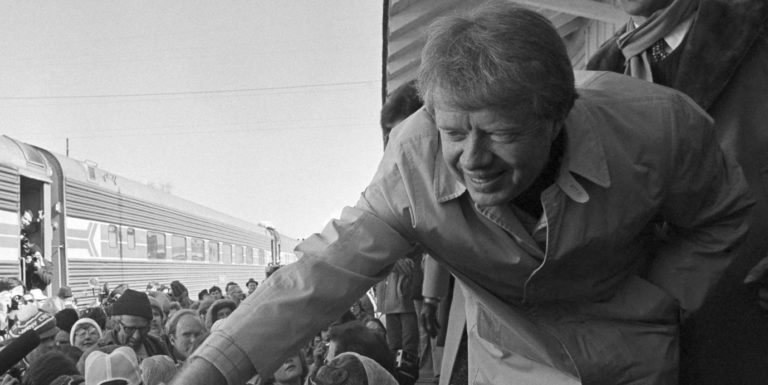
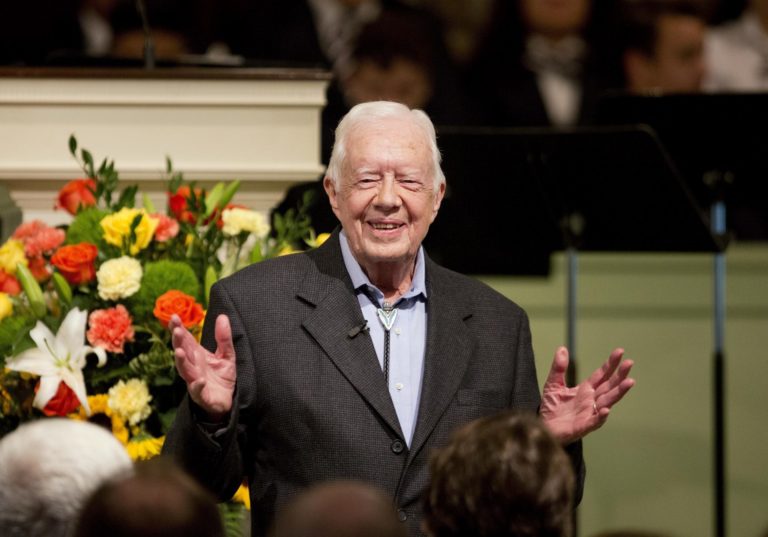
Trump, President Joe Biden and former presidents Barack Obama, George W. Bush and Bill Clinton all thanked Carter for his public service and honorable life after leaving office in 1981.
In a statement posted on Truth Social, Trump acknowledged Carter’s “love and respect” for the country, despite their philosophical and political differences.
“He worked hard to make America a better place, and for that I give him my highest respect,” he added. “He was a truly good man and, of course, will be greatly missed. He was also very consequential, far more than most Presidents, after he left the Oval Office.”
Biden, who has less than a month left in office, echoed Trump’s sentiments in a statement released from the White House, calling Carter a “man of great character and courage.”
“We will always cherish seeing him and Rosalynn together,” the 81-year-old president wrote. “The love shared between Jimmy and Rosalynn Carter is the definition of partnership and their humble leadership is the definition of patriotism.”
Over six decades, Jill and I had the honor of calling Jimmy Carter a dear friend.
But, what’s extraordinary about Jimmy Carter, though, is that millions of people throughout America and the world who never met him thought of him as a dear friend as well. pic.twitter.com/irknhZ6CJY
Biden has ordered an official state funeral for Carter, set to take place about a week from now.
Carter passed away after nearly two years in hospice care and a year after the death of his wife, former First Lady Rosalynn Carter, who died on Nov. 19, 2023.
Obama’s comments about Carter’s passing oddly took a political tone, reflecting on Carter being elected after “the shadow of Watergate.”
“Jimmy Carter promised voters that he would always tell the truth,” Obama declared via Medium. “And he did — advocating for the public good, consequences be damned. He believed some things were more important than reelection — things like integrity, respect, and compassion.”
President Carter taught all of us what it means to live a life of grace, dignity, justice, and service. Michelle and I send our thoughts and prayers to the Carter family, and everyone who loved and learned from this remarkable man. https://t.co/dZHL0Nu0Tj
Bush and Clinton also expressed their condolences to the Carter family in separate statements shared via X.
“We join our fellow citizens in giving thanks for Jimmy Carter and in prayer for his family,” Bush wrote, while Clinton added: “Hillary and I mourn the passing of President Jimmy Carter and give thanks for his long, good life.”
STATEMENT BY PRESIDENT GEORGE W. BUSH ON PRESIDENT JAMES EARL CARTER, JR. ⁰"Laura and I send our heartfelt condolences to Jack, Chip, Jeff, Amy, and the entire Carter family.
“James Earl Carter, Jr., was a man of deeply held convictions. He was loyal to his family, his… pic.twitter.com/2hzebCyS4g
— George W. Bush Presidential Center (@TheBushCenter) December 29, 2024
Before being elected president in the 1976 presidential election, Carter served as the 76th governor of Georgia, was a lieutenant in the U.S. Navy and graduated from the U.S. Naval Academy.
He only served one term, losing re-election to former President Ronald Reagan.
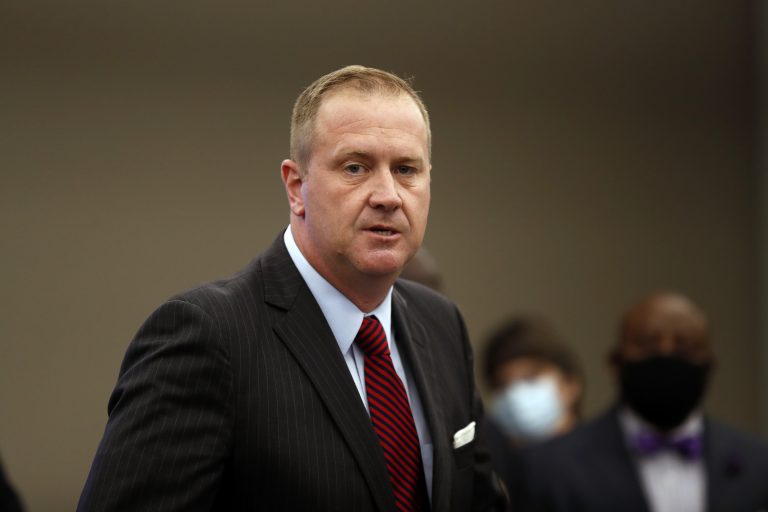
(Luis Cornelio, Headline USA) Sen. Eric Schmitt, R-Mo., issued a blunt response to Democrats clutching their pearls over President-elect Donald Trump’s pledge to deport illegal immigrants. He pointed out that Democratic presidents have previously deported millions of illegal aliens.
In an interview on the latest episode of Fox News Sunday, Schmitt stated that former Presidents Bill Clinton and Barack Obama deported approximately 17 million foreign nationals from the country.
Schmitt aimed his remarks at Sen. Alex Padilla, D-Calif., who during a Senate hearing, claimed that deporting illegal aliens involves “higher prices” and “forceful removal of millions of hard-working community members.”
In response to these claims, Schmitt said, “The idea of deporting people who are here illegally is not a new concept. In fact, the policy and the law of the United States of America for 200 years is if you come here illegally you are detained.”
He added, “If you don’t have a valid reason, either by asylum—by the way, 9 out of 10 asylum claims are bogus—then you are deported. That is how we have always operated.”
Schmitt accused Biden of attempting to shift attitudes towards deporting individuals without legitimate reasons for remaining in the U.S.
“These people do not believe in borders. They think they are arbitrary lines on a map [and] that we are all world citizens and everyone should be able to come here,” he continued.
The senator criticized the left for making American taxpayers cover the expenses for the luxury hotels of foreign nationals while looking the “other way when an illegal immigrant sets a woman on fire on a subway.”
Schmitt referenced the case of Sebastian Zapeta-Calil, a 33-year-old illegal alien accused of setting a woman on fire inside a New York City subway train. Zapeta-Calil had previously been deported in 2018 but returned to the United States.
This case is just one of several high-profile incidents involving illegal aliens. For example, Laken Riley, a beloved 22-year-old nursing student, was viciously murdered by José Antonio Ibarra, a Venezuelan national who was paroled into the U.S. by the Biden administration.
Another case involved Jocelyn Nungaray, a 12-year-old girl from Houston, who investigators said was sexually assaulted and killed by two Venezuelan men, Franklin Pena and Johan Martinez-Rangel.
Donald Trump:
“Within moments of my inauguration, we will begin the largest domestic deportation operation in America.”
(Luis Cornelio, Headline USA) A former health czar is controversially calling on President Joe Biden to expedite the approval of a bird flu vaccine before President-elect Donald Trump is inaugurated on Jan. 20, 2025.
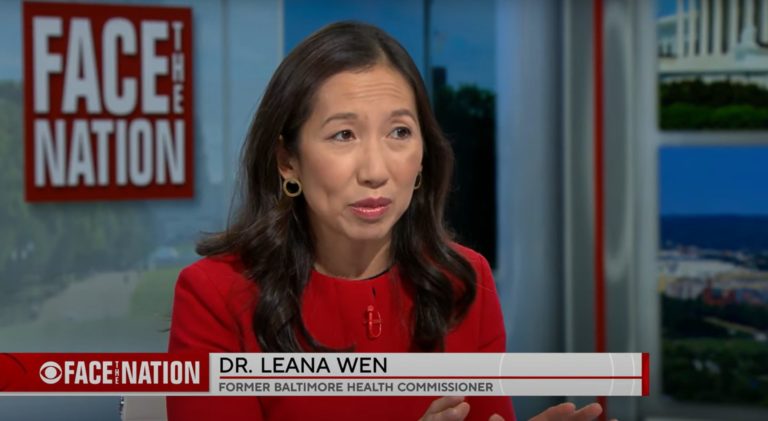
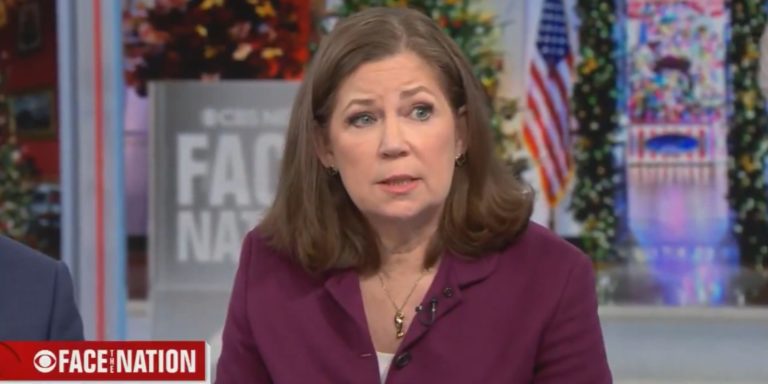
In a Sunday interview with CBS News’s Face the Nation, Dr. Leana Wen, a former Baltimore Health Commissioner and Planned Parenthood president claimed, without evidence, that expedited approval is necessary in case Trump sides with experts who oppose vaccine mandates.
“They could get this authorized now and also get the vaccine out to farmworkers and vulnerable people. I think that’s the right approach because we don’t know what the Trump administration is going to do around bird flu,” Wen said.
She added, “If they have people coming in with anti-vaccine stances, could they hold up vaccine authorization? If they don’t want to know how much bird flu is out there, could they withhold testing?”
Wen’s claims come amid an outbreak of bird flu in poultry and U.S. dairy cows, with some human cases reported among poultry and dairy workers. There has been no person-to-person transmission, though 66 confirmed cases of human infections have been reported in 2024.
The CDC affirmed that the public health risk remains “low.”
Meanwhile, the FDA announced in October a process to manufacture an updated version of bird flu vaccines in the event of a pandemic, according to the American Academy of Pediatrics.
There are at least five vaccines against bird flu that were approved in 2007, 2013 and 2020.
“I think we are all … doing everything we can do to be as prepared as possible to shorten the time needed to get a vaccine to market,” said Jerry P. Weir, the director of the FDA’s Division of Viral Products.
Wen, however, wants the vaccines distributed immediately, even though they have not yet been fully approved.
“This is not like the beginning of COVID, where we were dealing with a new virus and didn’t have a vaccine,” Wen remarked. “There actually is a vaccine developed already against H5N1. The Biden Administration has contracted with manufacturers to make almost 5 million doses of the vaccine. However, they have not asked the FDA to authorize the vaccine.”
She added, “There’s research done on it. They could get this authorized now and also get the vaccine out to farmworkers and vulnerable people.”
Considered one of the biggest presidential failures in modern political history, Carter lost one of the biggest landslides in modern U.S. political history to Ronald Reagan in the 1980 election.
But even though misconduct may have run rampant in his administration, he redeemed himself in his post-presidency—and distinguished himself from later Democrats like presidents Joe Biden, Barack Obama and Bill Clinton—by being what most perceived as a genuinely decent man through his faith, diplomacy, peace advocacy and humanitarian efforts.
Having met him once, while a college newspaper reporter at the University of Virginia, I was among those moved by the deep empathy he exuded.
While in the scrum with professional reporters attempting to shout questions following a speech at U.Va.’s Miller Center for Public Affairs, he paused and looked directly at me, giving me time to get out a question.
Poring through the list I had jotted down, I noticed that he had already answered everything I was prepared to ask. Drawing a blank, I extended my hand, and he smiled warmly, returning my handshake.
Three weeks after his visit to Charlottesville, Carter was announced as the recipient of the 2002 Nobel Peace Prize.
But reflections of Carter’s kindness not only beckon to a different era in political civility—they also reveal just how drastically the values have changed between the two parties in the intervening two decades.
For all intents and purposes, Carter’s presidential achievements would be considered a mixed bag when stacked against failures and malicious corruption of the Biden administration. In contrast with the radical leftists who have hijacked today’s Democratic Party, he was a steadfast liberal in the traditional sense.
During his 2002 speech at the Miller Center, Carter criticized the Bush administration’s newly waged war in the Middle East. With Bush, at the time, benefiting from post-9/11 patriotism that led to soaring approval, Carter did not shy away from rebuking the globalist Republican leader’s foolhardy warmongering.
He called on Bush to avoid a unilateral conflict without working to gain support from the United Nations and gathering a coalition of strong allies, as Bush’s father, George H.W. Bush, and other presidents had in the past.
“Departure from those traditions is a great challenge and a great danger to our country,” he said.
He warned of the great potential for vote fraud without a federal election package, urging the public to “insist that Congress pass this enlightened legislation so that election reform can be put to the desk of George Bush.”
With the execption of his U.N. support, neither of Carter’s positions at the time would sound out of step with the priorities of incoming President-elect Donald Trump, while both of the rebukes on Bush’s presidency would make perfect sense in the context of Biden’s presidency.
Of course, Carter didn’t get everything right. As an expert in landslide political defeats, Carter predicted that Bush, like his father, would experience a political correction of his own in his 2004 reelection campaign.
“I won’t look too far in the future, but you can understand the tradition that I think might be maintained,” he said.
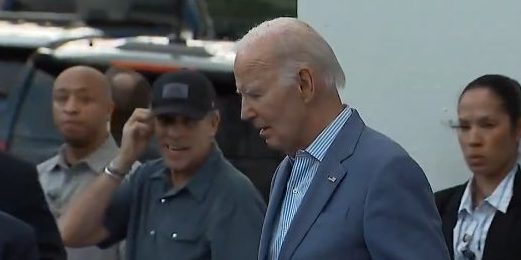
(Julianna Frieman, Headline USA) First Son Hunter Biden stepped in as his father, President Joe Biden, struggled with reporters Saturday after exiting church in St. Croix.
Video shows the Democrat president leaving the building with a freshly pardonedHunter Biden, among others, as a female reporter waiting outside shouted a question about Russian President Vladimir Putin’s response to a commercial airliner reportedly crashing after being shot down, killing 38 passengers on Christmas Day.
The reporter asked, “Mr. President, should Putin take responsibility for the plane crash?”
Biden appeared confused, prompting the woman to repeat her question as the president furrowed his brow and slowly lifted his finger.
Biden, on vacation in the Virgin Islands, addresses the Azerbaijan plane crash as crackhead Hunter beckons him to the car pic.twitter.com/SGvdLXhGRK
“Apparently he did, but I haven’t spoken to him,” Biden said as his only living son stood in the background fixing his hat.
Putin reportedly referred to the downed plane as a “tragic incident” that happened when Russian air defense systems were repelling Ukrainian drones, according to the BBC. The aircraft was reportedly fired upon as it attempted to land in the Russian region of Chechnya, and the strikes are said to have forced the plane to divert across the Caspian Sea.
Azerbaijan Airlines crash: Russian air defences may have shot down the passenger jet after misidentifying it as drones, US intelligence suggests.
Russian President Putin Apologises to Azerbaijan over Azerbaijan Airlines Plane Crash That Killed 38. pic.twitter.com/fqYaPLTLO6
Most of the 67 passengers on the downed Azerbaijan Airlines plane were from Azerbaijan, according to the outlet, and Putin apologized to the president of the neighboring country without taking responsibility. Others on the flight were reportedly from Russia, Kazakhstan and Kyrgystan.
As Biden began walking to the left toward a black vehicle, video shows Hunter Biden reaching out to his father and saying, “Dad!” before he appeared to instruct the president to stop engaging with the press.
Biden adhered to his son’s request by getting into the vehicle as another female reporter shouted out, “A Gaza hostage update Mr. President?”
Crooked Joe Biden and Jill, Ed.D., arrive in St. Croix, U.S. Virgin Islands, for a week in the sun at taxpayers' expense.
Biden has spent 570 days — nearly 40% of his entire presidency — on vacation. pic.twitter.com/xYxYi4LHHU
The interaction occurred during Biden’s 2024 holiday vacation in the U.S. Virgin Islands. The Democrat reportedly spent 570 days of his presidency on vacation — roughly 40% of his time in office, according to RNC Research.
Julianna Frieman is a freelance writer published by the Daily Caller, Headline USA, The Federalist, and The American Spectator. Follow her on Twitter at @JuliannaFrieman.
(Luis Cornelio, Headline USA) A CBS reporter admitted Sunday that the legacy media underreported President Joe Biden’s cognitive decline but stopped short of acknowledging her own network’s role in the cover-up.
CBS News correspondent Jan Crawford made the admission during a segment on Face the Nation, during which guests discussed the most overlooked stories of 2024.
“Under-reported or over-reported? That would be, for me, Joe Biden’s obvious cognitive decline that became undeniable in the televised debate,” Crawford said, referencing Biden’s performance in the debate with now-President-elect Donald Trump in July 2024.
“It has started to emerge that his advisors kind of managed his limitations—which has been reported in The Wall Street Journal—for four years, and he insisted that he could still run for president,” Crawford added, as seen in a clip shared by the Media Research Center on X.
Without blaming herself or her network, Crawford lamented the media’s failure to scrutinize what Republicans and conservative news outlets had reported for years: Biden was unfit for office.
“We should’ve much more forcefully questioned whether he was fit for office for another four years, which could have led to a primary for the Democrats. It could’ve changed the scope of the entire election.”
Addressing Biden’s claims—as reported by The Washington Post—that he could have beaten Trump in the 2024 race had he not dropped out, Crawford said, “That’s either delusional or they’re gaslighting him.”
CBS News chief election correspondent Robert Costa chimed in to defend Biden, claiming the 81-year-old president was merely sick during the first debate.
“President Biden has said repeatedly he was sick during the debate, June 27 in Atlanta and he’s always been fine and he leaves fine—that is his position, the position of many of his top aides as well,” Costa said.
Costa’s defense is typical of the narrative CBS News has pushed over the years, often parroting Biden’s explanations to questions about his cognitive decline nearly verbatim.
Headlines like, “Biden says he hasn’t taken a cognitive test: ‘Why the hell would I take a test?’” and “Biden fields questions about fitness to run for president in 2024: ‘I’ve gotta finish this job’” were common on CBS News.
Even after the debate, CBS ran an article that defended Biden’s mental fitness: “After struggling in first debate, Biden’s campaign remains resolute, family urges him to stay in the race.”
Meanwhile, CBS News’s scrutiny was directed at Trump, the man who swept the 2024 election.
“More than 230 doctors and health care providers call on Trump to release medical records,” read a CBS News headline.
In March 2024, CBS News anchor Margaret Brennan questioned Sen. Dan Sullivan, R-Ark., about Trump’s “mental fitness,” as if questions did not exist about Biden’s own decline.
“I know you have endorsed Mr. Trump,” Brennan said. “He seemed there to confuse Biden for Obama. He also suggested that there were U.S. troops serving in Ukraine. Are you comfortable about his mental fitness?”
Sullivan swiftly retorted, “Compared to the current president? One hundred ten percent.”
Referring to a CBS News poll that showed only 32 percent of American voters believed Biden was fit to serve again, Sullivan added, “And as your polling shows, I think the American people have real concerns where President Biden is with regard to his fitness for office, particularly his mental acuity. And relative to President Biden — or relative to former President Trump — I don’t even think it’s a close call when you see the two in action.”
Watch how the left celebrated Brennan’s line of questioning below: