This Happens Right After Democrats Flip A Red State 

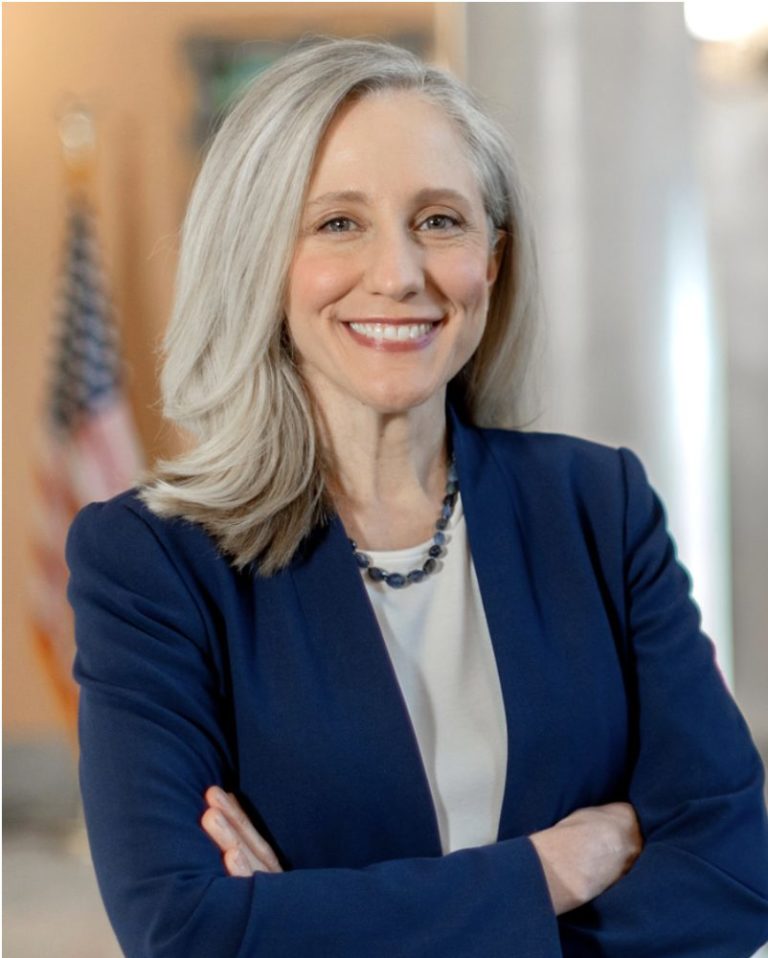
(Mark E. Johnson, Contributor) Newly elected Gov. Abigail Spanberger of Virginia wasted no time demonstrating what happens when Democrats flip a red state.  

After winning office on a campaign that pitched her to Dominion State voters as a moderate, Sparger signed ten executive orders on her first day in office:  

  1. Directed state agencies to review their budgets for possible cuts to save taxpayers money. This plank comes straight out of the MAGA agenda that swept Donald Trump back into office in 2024. This theme appealed strongly to moderate Virginians and helped divert attention from Spanberger’s more ideologically driven positions. 
  2. Ordered state agencies to take action to thwart the intent of Trump’s One Big Beautiful Bill Act, especially the slashing of taxpayer-funded healthcare.
  3. Seize control where possible of local land use policies, transferring authority to state regulatory authorities. 
  4. Similarly, to review the policies of local school boards and transfer influence and control to state regulatory bodies controlled by the governor. 
  5. A second order aimed at nullifying the One Big Beautiful Bill Act, which cut the flow of federal funds coming across the Potomac from Washington, resulting in thousands of unemployed former federal bureaucrats in the commonwealth who lack meaningful private sector skills. 
  6. Reverse reforms initiated by her Republican predecessor to the governing boards of state universities. 
  7. A housekeeping directive to assure continuity of government in the event the governor is incapacitated. 
  8. To delegate to governor’s Chief of Staff many of the powers and duties normally reserved for the governor, covering both emergency and day-to-day authority. Spanberger named Ivy League graduate Bonnie Krenz-Schnurman, her longtime aide, to the position.
  9. Re-establishing DEI policies rolled back by her predecessor. This includes policies requiring “inclusion, diversity and mutual respect for all Virginians” including LGBTQs and those expressing “gender identity” other than male and female.
  10. Restricting the ability of state and local law enforcement to cooperate with federal immigration authorities, which according to the order are “not an appropriate use of state or local resources.”

Key Republicans and conservatives are reacting to Spanberger’s actions. 

Republican State Sen. Tara Durant said Spanberger is downplaying the danger of ending cooperation with ICE:

“It’s frankly offensive. You talk to any family or any victim of any of these serious crimes, whether it’s his children (who) have been raped, or anyone that’s suffered at the hands of an illegal immigrant that’s committing violent crimes. They would beg to differ on that terminology. The bottom line is what is the outcome that Virginians want? They want safe communities. They want to be able to allow their children to go to the local parks. And I’ve already had constituents in my community, in Stafford, that are expressing concerns now about what they’re seeing. So ask any family, any victim about that, and they’ll beg to differ on that terminology. I think that’s playing semantics. And again, what we care about is keeping our community safe. That’s the bottom line. That’s what matters.”

Republican House Leader Terry Kilgore echoed these views, asserting Spanberger’s executive order will contribute to a surge in crime.

“We know how it is in Northern Virginia with some of our prosecutors out there who want to look the other way and coddle criminals. Folks need to be able to walk their street at night without fear of being either shot or kidnapped or raped. It’s a wrong way to move with public safety in Virginia. When Gov. Youngkin had the agreement, we were able to catch all those MS 13 gang members up in Northern Virginia. If we’re not cooperating with ICE, folks are going to get harmed in Virginia.”

Republican commentator Meghan McCain, who is not exactly died-in-the-wool MAGA, opined: 

“Screw any and all of you who lied to low-information voters and sold Abigail Spanberger as some kind of moderate. She’s been in office like 6 hours and is already trying to turn Virginia into Minneapolis.”

Fox News host Mark Levin posted on X that Spanberger “lied through her teeth” about her “moderate” positions in order to get elected, and that she is æmoving at high speed to permanently radicalize and change the state.”

Gov. Abigail Spanberger’s Ten Day 1 Executive Orders


Pelosi ‘Upset’ at Dems Who Voted for Clintons’ Contempt

(Luis CornelioHeadline USA) Former House Speaker Nancy Pelosi reportedly became “upset” with her fellow Democrats after several of them voted to hold former President Bill Clinton and twice-failed presidential candidate Hillary Clinton in contempt of Congress. 

Pelosi was said to have barked at roughly half of the House Oversight Committee’s Democrats after they voted to hold the Clintons in contempt for ignoring congressional subpoenas requesting testimony about their connections to Jeffrey Epstein. 

According to a CNN report published Thursday, Pelosi viewed the contempt vote as premature because of claims that the Clintons were negotiating with the committee over a possible future appearance. 

An anonymous source told CNN that Pelosi was “emphatic,” later adding: “When she speaks, she means it. She knows her voice has power.” 

CNN also reported that Pelosi did not believe the Clintons should be treated the same way the House Select January 6 Committee treated former Trump advisers Steve Bannon and Peter Navarro. 

Bannon and Navarro, both former White House officials, were subpoenaed, held in contempt of Congress, referred to the Biden DOJ, prosecuted, convicted and sentenced to jail time. 

By contrast, Bannon and Navarro argued their testimony was protected by executive privilege tied to their service under President Donald Trump. 

House Oversight Committee Chairman James Comer, R-Ky., subpoenaed Bill and Hillary Clinton in August 2025 as part of the committee’s investigation into Epstein. 

Both Clintons were long-standing allies of Epstein. Yet they dismissed the subpoenas as invalid and politically motivated. 

Comer rejected that assertion during Wednesday’s vote. 

“The Committee does not take this action lightly,” he said. “But subpoenas are not mere suggestions; they carry the force of law and require compliance. Former President Clinton and Secretary Clinton were legally required to appear for depositions before this Committee. They refused.” 

At least nine Democrats voted in favor of holding Bill Clinton in contempt: Reps. Maxwell Frost, Raja Krishnamoorthi, Summer Lee, Stephen Lynch, Ayanna Pressley, Emily Randall, Lateefah Simon, Melanie Stansbury and Rashida Tlaib. 

Three of those lawmakers, Lee, Stansbury and Tlaib, also voted to advance the contempt resolution against Hillary Clinton. 

Dems Falsely Accuse ICE of Detaining 5-Year-Old

(Luis CornelioHeadline USA) A group of Democrats was up in arms after falsely claiming that ICE had detained a 5-year-old child in Minnesota. That anger quickly fizzled once the allegation collapsed under scrutiny. 

The child, 5-year-old Liam Conejo Ramos, was not detained by ICE at all. Instead, agents said they intervened after his father, Adrian Alexander Conejo Arias, an illegal alien from Ecuador, abandoned him in a vehicle while reportedly fleeing arrest. 

In a series of X posts, the Trump administration said Conejo Arias attempted to evade arrest by fleeing on foot, leaving Liam behind in the car. ICE was at Conejo Ramos’s home to arrest him. 

Despite ICE’s account, several Democrats took to X to amplify the false narrative. The claim was fueled by a left-wing Washington Post report published Thursday, which ran the uncontextualized headline: “ICE detains four children from Minnesota school district, including 5-year-old.” 

ICE forcefully rejected that characterization. 

“ICE did NOT target a child. The child was ABANDONED. On January 20, ICE conducted a targeted operation to arrest Adrian Alexander Conejo Arias an illegal alien from Ecuador who was RELEASED into the U.S. by the Biden administration,” ICE wrote on X.  

“As agents approached the driver Adrian Alexander Conejo Arias, fled on foot—abandoning his child. For the child’s safety, one of our ICE officers remained with the child while the other officers apprehended Conejo Arias,” the agency added. 

ICE further explained that when a parent is arrested, agents ask whether the parent wishes to be removed with their child or prefers to designate a safe individual to take custody. 

Both Conejo Arias and 5-year-old Liam were later transported together to an ICE facility in Texas. 

Disgraced Ex-Des Moines Official Pleads Guilty to Federal Charges

(Luis CornelioHeadline USA) The former Des Moines official exposed as an illegal alien posing as an American citizen while collecting a generous taxpayer-funded salary pleaded guilty to federal charges following his high-profile arrest last year. 

Ian Andre Roberts, a Guianan national, entered guilty pleas to making false statements for employment and being an illegal alien in possession of a firearm, prosecutors announced Thursday.

Roberts’ arrest made national headlines after it was revealed that he was an illegal alien who had collected roughly $300,000 from Des Moines taxpayers. 

As detailed by the DOJ, Roberts falsely claimed to be a U.S. citizen on employment paperwork tied to his position with Des Moines Public Schools in June 2023. 

“Roberts was not and has never been a United States citizen,” the DOJ said. 

Federal prosecutors said that Roberts also that on Sept. 26, Roberts “knowingly” possessed a loaded Glock pistol in his vehicle “while knowing that he was unlawfully present in the United States.” 

Prosecutors added that on the same day, Roberts also possessed three additional firearms at his residence, including a loaded pistol, a loaded rifle and a shotgun. 

Roberts is scheduled to be sentenced on May 29.

Biden Crony Accused of Posing as CIA Agent in Scheme to Defraud Oil Trader

(Ken Silva, Headline USA) A newly filed lawsuit in California federal court accuses a Democrat mega donor and Biden family associate of posing as a CIA agent in a scheme to defraud a Dutch oil trader out of “tens of millions of dollars.”

The lawsuit was filed Wednesday by Dutch oil trader Niels Troost against Indian national Gaurav Srivastava, who donated $1.3 million to Democrats, including former President Joe Biden, before more recently becoming close with Republicans—as evidenced by a recent photo of Srivastava with Vice President JD Vance.

According to the lawsuit, Troost’s company, Paramount Energy, dealt with crude oil from Russia. After Russia invaded Ukraine in early 2022, Troost was worried about backlash from the U.S. government due to his dealings with Russia. Troost said in his lawsuit that he expressed those concerns to an African business associate, who put him in touch with the phony CIA agent, Srivastava.

According to the lawsuit, Srivastava convinced Troost that the FBI had compiled a “lengthy report” about him. But Srivastava said he could leverage his CIA connections to allow Troost to continue doing business with Russia without any restrictions.

“[Srivastava] said he ran a CIA ‘Program’ involving monitoring Russian oil flows for U.S. national security and promised Troost that OFAC (and its European counterparts, including Switzerland’s Secrétariat d’État à l’économie (“SECO”)) would allow his businesses to continue trading Russian-origin oil even if Western sanctions were imposed restricting the oil trade,” Troost’s lawsuit says.

“He also claimed that without Srivastava’s help, Troost and his companies ran the risk of being sanctioned by OFAC.”

Srivastava was apparently convincing. Having donated $1.3 million to various Democratic political groups, he had connections to the Atlantic Council, the Biden family, former House Speaker Nancy Pelosi, retired Gen. Wesley Clark, former CIA officer John Maguire, and a slew of other powerful figures. Maguire allegedly vouched for Srivastava’s CIA credentials, and is a defendant in the lawsuit.

Believing that he would benefit from having an American connection to this business, Troost said he was deceived into transferring 50% of a Paramount Energy holding company’s shares to Srivastava in July 2022 for a “nominal payment” of 50,000 Swiss francs.

According to the lawsuit, Srivastava proceeded to siphon tens of millions of dollars into accounts and companies he and his cronies controlled under the phony guise of CIA operations.

In 2023, Troost said he started to realize he’d been conned. Not only was Srivastava not a CIA agent; he wasn’t even an American, according to the lawsuit. Troost rescinded the shareholder agreement, and a vicious public relations battle between the two men ensued.

Meanwhile, the Wall Street Journal and other major outlets began covering Troost’s accusations against Srivastava in 2024. The Atlantic Council severed all ties with Srivastava, while Democratic politicians froze or returned all the donations he made, according to the lawsuit, which represents the latest development in the nasty dispute between the two men.

More recently, Srivastava has ingratiated himself with Republicans now that they’re in power.

In June 2025, Srivastava posted a photograph with Vice President Vance. Two months later in August 2025, he spoke at the America First-Ground Zero conference in Las Vegas, Nevada, introduced by conservative podcaster Laura Logan.

Still, he has kept close contact with the Bidens. He was spotted last March dining with Hunter Biden, and the Daily Beast reported that he was a “landlord” to Joe Biden’s granddaughter, Naomi, 31, and her husband, Peter Neal.

Srivastava did not respond to an email seeking comment on the lawsuit.

Ken Silva is the editor of Headline USA. Follow him at x.com/jd_cashless.

Influencers Banned from Miami Nightclubs after Playing Ye’s Hitler Song

(José Niño, Headline USA) A Miami Beach nightclub sparked outrage after videos emerged showing far right influencers celebrating to Kanye West’s banned track glorifying Hitler, leading to employee terminations and industry wide bans.

On the evening of January 17, 2026, seven far right and manosphere influencers created a firestorm of controversy at Vendôme nightclub in Miami Beach. Videos circulated online showing the group singing along to Kanye West’s prohibited song, “Heil Hitler”  featuring lyrics that repeatedly chant praise for Hitler. The livestreamed nightlife outing reached approximately 50,000 viewers and featured participants performing Nazi salutes while the track played over the venue’s sound system.

The group included nationalist personality Nick Fuentes, British American brothers Andrew and Tristan Tate who face criminal charges in Romania, and several other provocateur style content creators such as “looksmaxer” Clavicular, Muslim streamer Sneako, and Myron Gaines of the Fresh & Fit podcast. The Tate brothers had their Romanian travel ban lifted in early 2025 following reported pressure from the Trump administration, allowing them to visit Florida.

Upon arriving at Vendôme as VIP customers, the group requested the song during their bottle parade, the theatrical presentation of purchased alcohol. Club staff complied, and the song played over the venue’s sound system as influencers chanted along. Multiple participants streamed portions of the evening to their combined audiences.

Kanye West released the track on May 8, 2025, deliberately timing it to coincide with the 80th anniversary of Nazi Germany’s defeat. The song features West and his group chanting praise for Hitler, and concludes with a lengthy sample from a 1935 Adolf Hitler speech. According to German outlet Deutsche Welle, the track remains illegal to distribute in Germany and was swiftly removed from all major streaming platforms including Spotify, YouTube, Apple Music, and SoundCloud.

Miami Beach Mayor Steven Meiner, an Orthodox Jew whose grandparents’ families died during World War II, issued one of the strongest denunciations in a post on Twitter. “I am deeply disturbed and disgusted by these videos of twisted individuals glorifying Hitler and the murder of millions,” Meiner stated last Sunday. 

The Auschwitz Jewish Center Foundation was also critical of this incident. “Adolf Hitler orchestrated the systematic murder of six million Jews and millions of others in the most industrialized genocide in history,” the organization stated. “To chant his name in celebration, raise arms in salute, or treat it as a party anthem mocks the victims and desecrates the memory of the dead.”

Within 24 hours, Vendôme issued a public statement acknowledging the content as “deeply offensive and unacceptable.” By January 20, Vendôme announced termination of three employees, permanent bans for all individuals involved, and implementation of strict content controls.

Clavicular, a 19 year old influencer, demonstrated aggressive defiance in a livestream. “I’m not sorry. I do not apologize for what I did. I would do it again today,” he declared.

Andrew Tate appeared on the Patrick Bet David Podcast to distance himself from the incident. “I didn’t want to go to the club,” Tate claimed, emphasizing he was not dancing or repeating the song’s lyrics, per a report by Times of Israel

Evidence suggests a coordinated hospitality industry response. David Grutman, operating a hospitality empire through his Groot Hospitality company, reportedly issued lifetime bans from all venues in his portfolio, according to a report by JFeed. 

José Niño is the deputy editor of Headline USA. Follow him at x.com/JoseAlNino 


Gold Near $5,000, Silver’s Surge, and the $350T Debt Bomb

(Money Metals News Service) In a recent episode of the Money Metals podcast, host Mike Maharrey sat down with Frank Holmes, Chief Investment Officer at U.S. Global Investors and Executive Chairman of Hive Blockchain Technologies, to unpack why gold is now “knocking on the door” of $5,000 an ounce and why silver is increasingly being treated like a strategic metal.

Holmes said he’s not surprised by the speed of gold’s rise among precious metals. He argued the world is “reliquefying,” with U.S. rates still looking like they could come down by more than 150 basis points, and with political pressure building for easier monetary conditions that push mortgage rates lower.

He tied that directly to housing, calling it the biggest multiplier in the economy. In his telling, $1 spent on housing can multiply to $12, compared to $4 for government projects, making housing a key lever for job creation and economic ignition.

(Interview Starts Around 5:38 Mark)

The $350 Trillion Problem Behind the Gold Move

Frank Holmes put the gold story in blunt macro terms. He said total global debt is about $350 trillion, while the global economy is around $120 trillion, meaning debt is more than three times world GDP.

He argued the G20 continues using money-printing approaches faster than GDP growth, increasing the appeal of “alternative assets such as gold and silver.” He added a real-world signal that people can feel: the disappearance of low-value coinage and the growing friction of cash transactions.

Holmes noted the end of pennies and said it’s been decades since a penny had a penny’s worth of copper in it. He suggested nickels, dimes, and quarters could be next, describing stores that are “out of pennies and quarters,” pushing customers toward card-only payments.

He described this as an inflection point, like ice suddenly giving way when temperatures move from 31 degrees to 33 degrees.

Currency War, BRICS Expansion, and the Fear Trade

Holmes argued the gold and silver run isn’t driven by one headline. He described multiple geopolitical and monetary forces moving in parallel, including what he called a currency war and the weaponization of the BRICS bloc.

He pointed out that BRICS was once five countries and is now “what, 15,” and he framed the bloc as increasingly tied to commodity exporters and trade strategies that pressure America’s influence.

In his view, these tensions feed the “fear trade,” creating the sense that something bigger is shifting under the surface. Greenland and tariffs may dominate headlines, he said, but they’re the “tip of the iceberg” compared to deeper multipolar dynamics.

Silver Becomes a Strategic Metal

Holmes repeatedly returned to silver’s changing role. He said that the precious metal silver isn’t only tied to solar panels anymore. It’s now directly linked to weaponry and national security supply chains, which he argued elevates it into a strategic category.

He connected this to a broader shift in debt spending. Money printing, he said, is no longer mainly about European social welfare programs. It’s increasingly being directed toward national security, rearmament, and rebuilding strategic resilience.

He also referenced Japan’s leadership becoming more openly wary of China, and he described strategic mineral restrictions as a sign of where the conflict pressure is concentrating.

Copper, AI Data Centers, and the Next Bottleneck

Holmes pivoted to the AI buildout as another commodity accelerant. He cited what he called the biggest AI data center built in the world, located in Abilene, Texas, and said the build requires massive amounts of copper for conductivity and infrastructure.

He argued copper isn’t just about wiring. It’s embedded in cooling systems, power transfer, and the physical backbone required to move electricity and heat across hyperscale facilities.

He also warned about a new kind of noise hitting the market. He described watching a high-production, AI-generated video packed with dramatic silver narratives and then researching it and finding it was essentially fiction, a Tom Clancy-style story engineered to go viral.

Why Gold Is “Criminally Underinvested” in the West

Maharrey asked Holmes about a claim from his writing, where he said gold is “criminally underinvested.”

Holmes said he’s long pushed a “10% golden rule,” and he cited Ray Dalio as another prominent advocate of 10% exposure, with Dalio at times going to 20% gold. Holmes argued many U.S. advisors still don’t believe in gold and often liquidate it, but that investor demand will eventually force broader participation.

He offered a stark allocation snapshot. In 2012, when Xi Jinping became “dictator for life,” Holmes said about 8% of Americans had exposure to gold. He said that fell to nearly 1%, and today it’s only “a little over 2%,” while tech and healthcare allocations surged.

In that context, Holmes argued gold is not a crowded trade. He expects violent corrections, but he frames pullbacks as buying opportunities given the geopolitical and monetary backdrop.

Gold Stocks Are Acting Like Growth Stocks

Holmes said what’s “really ripping” is gold stocks. He described the sector as deeply undervalued and said many big gold funds saw redemptions last year, even as gold rose and some gold stocks gained 100%.

Now, he said, corrections are being met with net buying rather than capitulation.

He emphasized operating leverage and momentum screens. He gave an example of an Australian gold producer with revenue up 57% and cash flow up 100%, arguing that these kinds of numbers pull gold miners into mainstream growth models.

He said non-specialist investors buy momentum in revenue, cash flow, EBITDA, and free cash flow, and that those buyers don’t care what sector the company is in if the metrics hit.

Gold’s Permanent Bid: The “Love Trade” and Crisis Money

Holmes described a durable buyer in the gold market. He called it the “love trade,” highlighting India and saying Indian women own more than six times the amount of gold in Fort Knox.

He pointed to gold’s portability in times of crisis, referencing people leaving Syria with 24-karat jewelry and recalling that Vietnamese boat people used gold to secure passage out.

For Holmes, the point was simple. Gold can become money fast, it can be worn, and it can be exchanged when legal systems and contracts can’t be trusted.

Price Targets: $7,000, $11,000, and $20,000

Asked for a 2026 forecast, Holmes wouldn’t give a precise 12-month call. Instead, he offered valuation frameworks.

Using a rough money supply approach, he said money supply is about $140 trillion, with roughly six billion ounces of known gold, and he said the implied valuation comes out near $20,000 per ounce.

He cited James Turk’s foreign currency model and said Turk’s framework suggests about $11,000.

He then offered his own conservative path. He said $7,000 by the time Trump is retired.

Physical Silver Premiums and Three Tailwinds

Holmes closed by distinguishing futures pricing from physical reality. He said the delivery of silver coins trades at a premium to futures, and that the premium has stayed high for years because there is a shortage of physical silver.

He argued that the silver shortage will worsen because industrial demand for solar remains huge, military demand is rising, and debt spending continues to expand.

Maharrey added that when silver starts moving, investor excitement and FOMO can add momentum on top of fundamentals.

Where to Follow Frank Holmes

Holmes directed listeners to “Frank Talk” at usfunds.com, where he said he reaches about 100,000 readers in 80 countries and publishes every Friday.

He described his team’s weekly SWAT-style market analysis and said he also writes special pieces, including one warning people not to get fooled by AI-generated “thud” narratives.

He also mentioned his work at Hive building data centers and said the AI boom is real, driven by business use and national security needs, with a major bottleneck in non-Chinese equipment capacity in the U.S. and Europe.

ABA Can’t End Anti-White Scholarship Discrimination Lawsuit

(Jonathan Bilyk, The Center Square)  The American Bar Association can’t escape a lawsuit accusing the group, tasked with setting national ethical and professional standards for lawyers and judges, of discriminating against white law school students in doling out certain scholarships.

In the ruling, U.S. District Judge Joan B. Gotschall said the lawsuit could continue because the plaintiffs had done enough to show that the ABA’s refusal to accept scholarship applications from white applicants amounted to a potential violation of federal laws forbidding discrimination in the making of contracts.

The judge, however, explicitly shied away from addressing the ABA’s attempt to argue it couldn’t be sued for ant-white racial discrimination, because the First Amendment protected its right to “advocate for diversity in the legal profession.”

Gottschall delivered the decision on Jan. 21, allowing the American Alliance for Equal Rights (AAER) to continue with its legal claims against the ABA.

The AAER is a conservative legal advocacy group which has filed numerous high profile lawsuits in recent years against governments, law firms, and other businesses and organizations, generally accusing them of anti-white or anti-heterosexual discrimination.

The AAER had filed suit against the ABA in April 2025, accusing the ABA of illegally discriminating against white students under its Legal Opportunity Scholarship Fund.

Under LOSF, the ABA for more than two decades has awarded $15,000 annual scholarships to students beginning law school. However, to be eligible for a LOSF scholarship, applicants must be a member of a non-white racial or ethnic minority group, including black, Latino, Native American or Asian.

In addition to satisfying the ABA’s desired racial and ethnic criteria, LOSF scholarship applicants are also evaluated based on “personal statements” and personal and family finances, among others.

However, in their complaint, the AAER noted that only 39% of ABA LOSF scholarship recipients are considered to be “first in their family to attend college.”

In its lawsuit, the AAER notes that white students are ineligible to apply for the scholarship, “regardless of financial need, academic achievement, or any other factor.”

“The ABA’s scholarship thus rests on racial stereotypes, using whiteness as a proxy for advantage and minority status as a proxy for disadvantage,” the AAER said in its complaint.

In the complaint, the AAER notes that the ABA drafts model rules of professional conduct for attorneys, “including the one barring lawyers from ‘discrimination on the basis of race.'”

“But instead of opposing racial discrimination, the ABA practices it,” the AAER said in its complaint.

In filing the complaint, the AAER asserted the ABA has improperly continued its discriminatory scholarship program even after the U.S. Supreme Court ruled in 2023 that “race-based admissions in higher education” are illegal under federal civil rights law, no matter the race of those receiving preference or being discriminated against.

And they noted in their complaint that the race-based scholarships are in keeping with the ABA’s practice of requiring law schools to “‘demonstrate by concrete action,’ a commitment to diversity, ‘particularly racial and ethnic minorities,'” in order to maintain their accreditation.

In response, the ABA moved in June 2025 to dismiss the lawsuit. Among other defenses, the ABA particularly argued it should be allowed to exclude white applicants when awarding scholarships, regardless of the apparent prohibition on such discrimination in federal law.

They argued the ABA should have a First Amendment right to create scholarship programs open only to non-white applicants because such awards are in keeping with the ABA’s policy of increasing diversity in the ranks of American lawyers.

“As AAER’s own complaint acknowledges, the ABA is an advocate for diversity in the legal profession,” the ABA wrote in its brief. “It is the ABA’s First Amendment right to express its views on this issue, and to engage in expressive conduct consistent with its views—including by awarding scholarship funds to LOSF participants.”

The ABA also urged the judge to reject the AAER’s assertion that the LOSF scholarship program violates potential applicants’ contractual rights under federal non-discrimination law.

The ABA asserted no one has a legal or contractual right to any scholarship funds, which are “discretionary gifts” awarded by the ABA.

In her decision, Gottschall declined to rule on the ABA’s First Amendment arguments. The judge agreed with the AAER that it would “premature” to rule on such claims at this point in the proceedings.

Rather, the judge said the AAER had done enough to move ahead on their claims of discrimination in the makings of contracts.

While the ABA argued the scholarships are “discretionary gifts” and the applications are not contracts, the judge noted the AAER had shown that applicants must sign a release allowing the ABA to, “among other things … use a winner’s application materials for promotional purposes.”

“Since that is effectively a license to use copyrighted application materials, and a license constitutes valuable consideration sufficient to form a contract, the court concludes that the amended complaint pleads a plausible … claim (under federal law),” Gottschall wrote.

The ABA has been represented by attorneys Joseph J. Torres and Katherine M. Funderburg, of the firm of Jenner & Block, of Chicago.

The AAER is represented by attorneys Matt Pociask, Thomas R. McCarthy, Cameron T. Norris and R. Gabriel Anderson, of the firm of Consovoy McCarthy, of Arlington, Virginia; and Adam K. Mortara, of LawFair LLC, of Nashville, Tennessee.

Zelensky Claims Deal for Security Guarantees from US Is ‘Done’ After Meeting Trump

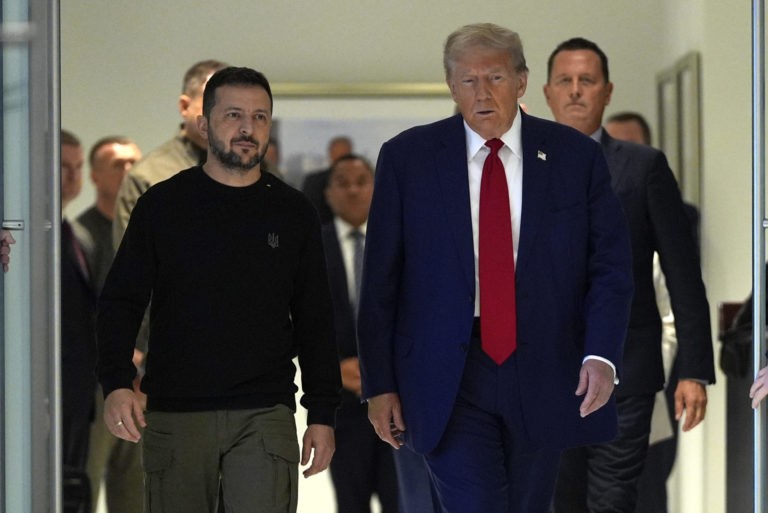
(Kyle Anzalone, Antiwar.com) President Donald Trump and Ukrainian Leader Volodymyr Zelensky met in Davos on the sidelines of the World Economic Forum. Following the meeting, Zelensky said an agreement had been reached with the US that would grant Ukraine security guarantees.

On Thursday, Zelensky told reporters that the document on US security guarantees has been completed. He noted that “we need to sign” the deal, which “will come only after the war stops.”

Zelensky also said that Trump had organized a trilateral meeting between Ukrainian, Russian, and American officials in the UAE that will take place on Friday. Moscow has not stated if it plans to send representatives to the Emirates. 

Trump said the meeting with Zelensky was “very good,” but did not provide details on what the leaders discussed. After the meeting, a Ukrainian official told Axios, “It was one of the best meetings they’ve had. Trump was in a good mood.”

The US signing a treaty or security pact with Ukraine will likely be rejected by Russia. President Vladimir Putin has repeatedly stated that one of Moscow’s core objectives in Ukraine is to force Kiev to adopt neutrality. 

However, Trump’s envoy, Steve Witkoff, claims that the White House is making progress toward a deal to end the conflict. He told reporters in Davos that there was only one issue to resolve before a deal to end the Ukraine war could be reached. 

While in Davos, Zelensky also criticized European leadership over their policies on Russia and Iran. “Instead of becoming a truly global power, Europe remains a beautiful but fragmented kaleidoscope of small and middle powers,” he told the audience at the WEF. 

This article originally appeared at Antiwar.com.  


House Passes $839 Billion Defense Bill Bursting With Pork

(Alan Mosley, Antiwar.com) The House of Representatives on Thursday approved an $838.7 billion fiscal 2026 defense spending bill, moving one of the largest appropriations measures in U.S. history toward final passage in the Senate. In a 341-88 vote that crossed party lines, lawmakers advanced the sprawling defense and related appropriations package, underscoring persistent majorities in both parties willing to expand military outlays even amid growing concerns about fiscal discipline.

The total exceeds the Pentagon’s original FY 2026 budget request by $8.4 billion but still falls far short of more than $50 billion in additional funds the Defense Department sought after submitting its budget to Congress. That gap reflects, among other things, a stark $26.5 billion in “funding discrepancies” between the Pentagon’s request and the broader reconciliation bill – essentially accounting errors that left vital programs underfunded and were partly addressed by the House’s topline increase.

To fiscal conservatives and critics of Washington’s military spending consensus, those discrepancies signal deep structural problems in defense budgeting: an inability to accurately forecast needs, manage programs, or adhere to prudent fiscal stewardship. Lining up nearly three dozen major weapon systems, force structures, and procurement lines every year, the Pentagon’s budget process has consistently produced overruns and unpredictable spending swings that funnel money to entrenched interests rather than identified national priorities.

Yet the House markup did not merely bridge gaps; it added money to programs that the services themselves did not request – or, in some cases, explicitly asked to cancel. 

Lawmakers tacked on $897 million for the Navy’s sixth-generation F/A-XX fighter program, directed a contract award for engineering and development, and preserved $1.1 billion for the Air Force’s E-7 Wedgetail airborne early warning aircraft, which the service had sought to terminate. The Army’s agile funding proposal was rejected, while about $300 million was allotted for the Joint Light Tactical Vehicle program despite the Army’s call to end it.

Such additions comprise what critics deride as classic “pork-barrel” spending: earmarks and authorizations that serve narrow local or industrial constituencies rather than measurable defense needs. Funding lines for munitions procurement, disparate platforms, and legacy systems balloon irrespective of operational justification, raising perennial questions about legislative oversight and taxpayer value.

Compounding those concerns, the House Rules Committee refused to allow several amendments aimed at reigning in spending or constraining executive war powers to reach the floor. Measures that would have restricted funding for operations in Venezuela and others that would limit the scope of presidential military action were blocked from debate, leaving the core text untouched since its release. To some observers, the procedural closure itself was as significant as the topline figures: despite robust majorities on the floor, substantive policy alternatives were stifled before they could be considered.

Historically, the sheer scale of the defense appropriation reflects decades of incremental growth in U.S. military spending. Annual defense budgets have routinely eclipsed half a trillion dollars for more than a decade, and the FY 2026 package continues a long trend in which appropriators add funds above and beyond executive branch requests. By contrast, civilian programs and domestic discretionary spending have struggled to keep pace, prompting both political and public disquiet about national priorities.

Supporters of the bill defend the scale and scope as necessary to maintain U.S. military readiness, industrial base capacity, and technological edge in an era of renewed great-power competition. They argue that predictable and robust funding deters adversaries and reassures allies, even if some line items exceed Pentagon forecasts. Opponents counter that emboldening the military establishment with ever-expanding budgets encourages intervention abroad and diverts resources from pressing domestic needs.

While the House’s 341-88 vote gives the bill substantial momentum, its journey is not complete. The Senate must act before the end of the current funding deadline on January 30 to avert a lapse in appropriations. Senate debate may give rise to further amendments or adjustments, but the core framework reflects a bipartisan consensus that large and growing defense outlays are politically durable, even as questions about accountability, efficiency, and strategic purpose multiply.

This article originally appeared at Antiwar.com.