Trump Says Greenland Deal Gives US ‘Total Access’ Without the US ‘Paying Anything’

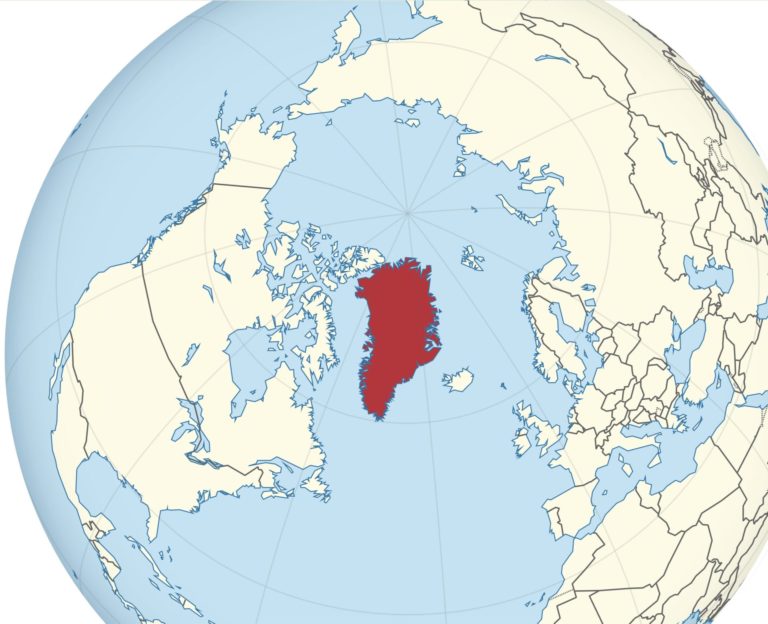
(Kyle Anzalone, Antiwar.com) President Donald Trump said the agreement he is negotiating regarding Greenland will give the US “total access.”

“It’s really being negotiated now, the details of it, but essentially it’s total access. There’s no end. There’s no time limit,” Trump said in an interview on Thursday. “We will have everything we want, we’re getting everything we want, at no cost.”

On Wednesday, Trump met with NATO Secretary General Mark Rutte to discuss Greenland. Following the meeting, Trump announced that they had reached the “framework” of an agreement for the Danish colony, without providing details. 

A Danish politician told The New York Times that Denmark was willing to give the US sovereignty over small portions of Greenland to build military bases. 

The new agreement does not appear to be substantially different from the 1951 treaty that governs the US relationship with Greenland. Under the pact, the US is allowed to build new bases and expand its existing ones in the Danish colony. 

Trump has argued that the US must seize Greenland from Denmark to protect the colony from Russian or Chinese invasion. 

This article originally appeared at Antiwar.com.  

Kushner’s WEF Speech Pitches ‘Glitzy Gaza’ Rebuild

(Alan Mosley, Antiwar.com) Senior White House advisor Jared Kushner on Thursday pitched an ambitious plan to transform war-ravaged Gaza into a Mediterranean resort hub, telling global business and political elites at the World Economic Forum annual meeting in Davos that reconstruction could be completed within three years if Hamas fully disarms under the next phase of President Donald Trump’s peace plan.

Speaking at a signing ceremony for Trump’s newly announced “Board of Peace,” Kushner said Gaza’s rebuilding would depend entirely on demilitarization. “Without that, we can’t rebuild,” he said, adding that Hamas’s continued armament would be “what holds back Gaza and the people of Gaza from achieving their aspiration.” The Board of Peace, chaired by Trump, is intended to oversee Gaza’s reconstruction and broader postwar governance.

Kushner concluded his remarks with an appeal for critics – both international and Israeli – to withhold judgment for a month, including those objecting to the participation of Turkey and Qatar, countries Israel has accused of backing Hamas. “Just calm down for 30 days,” he said, arguing that the initiative’s ultimate goal was peace and dignity for both Israelis and Palestinians through cooperation among Arab, Muslim, and Western states.

Trump echoed the optimism, describing Gaza in real-estate terms. “I’m a real estate person at heart,” he said, pointing to Gaza’s coastline as a “beautiful piece of property” that could become something “great to watch” if the plan succeeds. Kushner labeled the proposal’s ambition as aiming for “catastrophic success,” a phrase he used to describe a sweeping redevelopment rather than incremental relief.

Slides shown during the presentation depicted terraced apartment towers, promenades, a seaport, and an airport. Reconstruction would begin in Rafah and move northward to Gaza City, with Kushner insisting there was “no plan B.” He argued that similar cities for millions of residents had been built elsewhere in the region within a few years and that the same could be done in Gaza under the right conditions.

Central to the plan is an economic overhaul. Kushner said roughly 85 percent of Gaza’s economy has long depended on aid, a model he called unsustainable and demeaning. The proposal seeks to introduce “free-market” principles, with a target of $25 billion in investment to rebuild infrastructure and public services destroyed since the October 7, 2023, Hamas attack that triggered the current war. Kushner claimed that within a decade Gaza’s GDP could reach $10 billion, with average household incomes of $13,000 a year and “100 percent full employment.”

Security provisions were outlined in a slide titled “demilitarization principles.” Heavy weapons would be immediately decommissioned, while personal arms would be phased out as a new Palestinian police force gains capacity. Militants who surrender weapons would be offered amnesty, reintegration, or safe passage, with some potentially vetted for roles in a new National Committee for the Administration of Gaza (NCAG), a technocratic body overseen by the Board of Peace. Israeli forces would withdraw to a perimeter only after Gaza-wide demilitarization, according to the plan.

The proposal fits a pattern in Kushner’s approach to the conflict. His presentation leaned heavily on investment, governance reforms, and security guarantees, while setting strict preconditions that place the burden of progress on disarmament. Critics note that this echoes his earlier efforts during Trump’s first term.

Kushner was the architect of the 2019 “Deal of the Century,” a plan that Palestinians widely rejected as an economic inducement divorced from political realities. The initiative promised tens of billions in investment while sidelining issues such as occupation and refugee rights, and it was boycotted by Palestinian leaders. That history, along with Kushner’s close relationship with Israeli Prime Minister Benjamin Netanyahu and his role in moving the U.S. embassy to Jerusalem, fueled perceptions of a pro-Israel tilt.

Also drawing ire are Kushner’s past comments treating Gaza as a real-estate opportunity, including remarks suggesting the enclave’s waterfront could be “very valuable” if residents were relocated during a cleanup and rebuilding phase. Those statements have resurfaced as Kushner again frames Gaza’s future in terms of redevelopment potential.

Whether the “glitzy Gaza” vision gains traction now will depend less on architectural renderings than on political realities on the ground. For the moment, Kushner’s Davos pitch underscores the administration’s belief that security first, markets second, and peace last is the sequence through which Gaza’s future will be decided.

This article originally appeared at Antiwar.com.  

Trump Plotting Regime Change in Cuba by Year’s End: WSJ

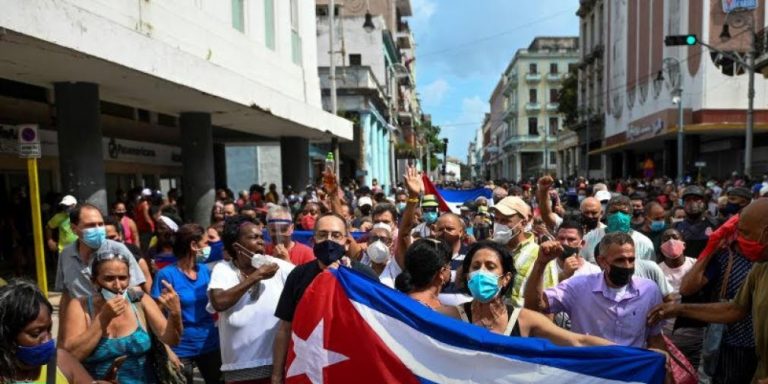
(Will Porter, Antiwar.com) The Donald Trump administration hopes to execute a regime change in Cuba by the end of 2026, according to sources cited by the Wall Street Journal. The report comes just weeks after the US military kidnapped Venezuelan President Nicolas Maduro on dubious drug charges.

The newspaper said Washington is now “searching for Cuban government insiders who can help cut a deal to push out the Communist regime by the end of the year,” with senior US officials holding regular meetings with Cuban exiles and pressure groups in recent months.

The administration believes the Cuban government is more “fragile” than ever and its economy “close to collapse,” the Journal added. While there is currently no “concrete plan” to topple the Cuban state, the paper said the capture of Venezuelan President Nicolas Maduro earlier this month serves as a “blueprint” for US officials.

Maduro’s January 3 kidnapping was reportedly helped along by “an asset within the Venezuelan leader’s inner circle,” an outcome the White House hopes to repeat in Cuba. Dissidents and exiles have been used in a number of prior US regime change operations – including in Cuba itself – with opposition activists playing a major role in the 2003 invasion of Iraq.

Asked whether Cuba was “the Trump administration’s next target” during an appearance on Meet the Press the day after Maduro’s capture, Secretary of State Marco Rubio refused to answer directly, only saying that the country’s socialist government was “a huge problem.”

“I’m not going to talk to you about what our future steps are going to be and our policies are going to be right now in this regard. But I don’t think it’s any mystery that we are not big fans of the Cuban regime, who, by the way, are the ones that were propping up Maduro,” Rubio said.

An unnamed White House official said much the same to the Journal, and warned that Havana should “make a deal before it’s too late,” echoing a recent social media post by Trump verbatim. While it’s unclear what kind of deal the administration is seeking, in the same post the president insisted that Cuba stop receiving oil and subsidies from Venezuela.

Cuban President Miguel Diaz-Canel rejected that demand, saying that “Cuba is a free, independent and sovereign nation. No one tells us what to do.” He added that his country was “ready to defend the homeland to the last drop of blood.”

The United States attempted to overthrow the Cuban government in the disastrous 1961 Bay of Pigs invasion. More than 1,200 Cuban exiles armed and trained by the US were captured by Cuban forces during the botched operation, with over 100 more killed. In the decades since, Washington has maintained a trade embargo on the Caribbean nation and has repeatedly threatened its government with regime change.


This article originally appeared at Antiwar.com. 

Venezuela War Powers Resolution Fails in House

(Kyle Anzalone, Antiwar.com) The House of Representatives failed to pass legislation that would block President Donald Trump from waging war in Venezuela

The vote ended in a tie, 215-215, with two Republicans voting with all Democrats for the War Powers Resolution on Venezuela. One Republican did not vote. The legislation was cosponsored by Thomas Massie (R-KY) and over 120 Democratic Representatives.  

The vote caused a commotion on the floor as Speaker Mike Johnson (R-LA) held the vote open for 30 minutes. One Democratic member shouted at Johnson to close the vote. Voting was closed after Rep. Wesley Hunt (R-TX) arrived to cast the vote that killed the legislation. 

Speaking in favor of the legislation, several Democrats argued that President Trump failed to follow Constitutional procedures when ordering military operations against Venezuela that led to the kidnapping of President Nicolas Maduro. 

However, Erik Sperling of Just Foreign Policy notes that some Democrats criticized Trump for not removing the government of Venezuela. “In effect, they criticized him for not going far enough with regime change,” Sperling explained to Antiwar.com

The Senate previously rejected a War Powers Resolution for Venezuela on a narrow vote. President Trump has lashed out at Republicans for voting in favor of bills that attempt to limit his war-making. 

This article originally appeared at Antiwar.com.  

Millions of Americans Prepare for Potentially Catastrophic Ice Storm. Here’s What the Numbers Show

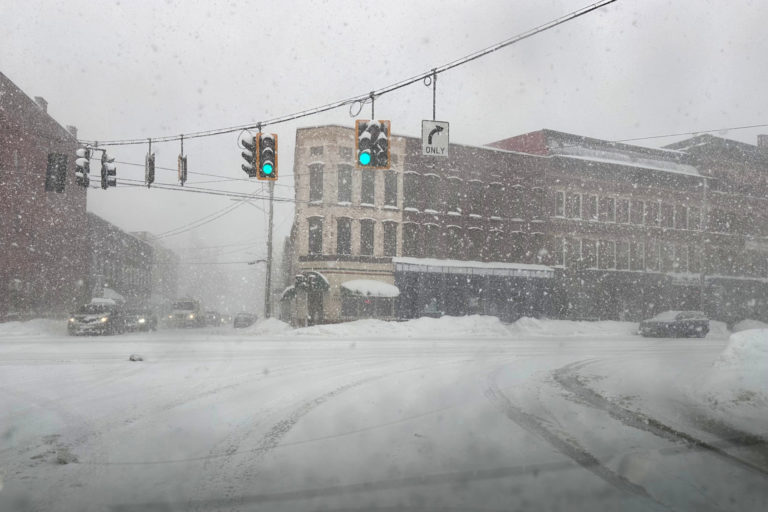
(Headline USA) Millions of Americans from New Mexico to the Carolinas are bracing for a potentially catastrophic ice storm that could crush trees and power lines and knock out power for days, while Washington, D.C., Philadelphia, New York City and Boston could see enough snow to make travel very difficult or nearly impossible, forecasters say.

More than 170 million people — about half the population of the United States — were in the path of heavy snow and crippling ice, the National Weather Service said Friday. Alerts from the weather service stretched from Arizona and Montana in the West to the Carolinas and Maine in the east.

The storm, which began early Friday and continues through the weekend, is also projected to bring heavy snow and all types of wintry precipitation, including freezing rain and sleet. An atmospheric river of moisture could be in place by the weekend, pulling precipitation across Texas and other states along the Gulf Coast and continuing across Georgia and the Carolinas before heading northeast, forecasters said.

“Snow amounts could reach a foot or more in the I-95 major cities from D.C. to Boston,” said weather service forecasters on the East Coast, who are increasingly confident the storm will strike the big cities.

More than 1,500 flights scheduled to fly through U.S. airports Saturday were canceled by the time the storm began early Friday, according to the flight tracking website FlightAware. Airports in Dallas, Atlanta, Oklahoma and Tennessee were among the most affected.

Here’s a look at the storm and how people are preparing for it, by the numbers:

0

The number of snowplows owned by the city of Jackson, Mississippi, where a mix of ice and sleet is possible this weekend. The city uses other heavy machinery like skid steers and small excavators to clear roads, said James Caldwell, deputy director of public works. Jackson also has three trucks that carry salt and sand to spread across roads before freezing weather.

0.5

The amount of ice — half an inch, or 1.27 centimeters — that can lead to a crippling ice storm, toppling trees and power lines to create widespread and long-lasting power outages. The latest forecasts from the weather service warn of the potential for a half-inch of ice or more for many areas, including parts of Arkansas, Louisiana, Alabama and Tennessee.

1

The number of Nashville snowplows named after country music legend and Tennessee native Dolly Parton (Dolly Plowton). Another snowplow in East Tennessee was named Snowlene after her classic hit song “Jolene” as part of a 2022 naming contest.

3

The number of layers needed to keep warm in extreme cold. AP video journalist Mark Vancleave in Minnesota explains the benefits of all three — a base layer, a middle layer and an outer shell — in this video.

12

The number of beet juice-dispensing trucks in the city of Chicago, according to Cole Stallard, Chicago’s commissioner of Streets and Sanitation. The natural sugars of beet juice lower the freezing point of water, allowing salt mixtures to work at much lower temperatures and preventing refreezing, while also helping salt stick to the road longer.

15

The number of snow and ice removal trucks operated by Memphis, Tennessee’s Division of Public Works. The city also has six trucks that spread brine, a mixture designed to melt wintry precipitation. Statewide, the Tennessee Department of Transportation has 851 salt trucks and 634 brine trucks, and most of the salt trucks double as plows.

32

The degree in Fahrenheit when water freezes, equivalent to 0 Celsius. This is a magic number when it comes to winter weather, said Eric Guillot, a scientist at the weather service. If the temperature is slightly above 32, it will be mostly liquid. But the colder it is below the mark, the more efficiently precipitation will freeze.

45

The number of snowplow trucks at the ready in Nashville, Tennessee, according to the Nashville Department of Transportation and Multimodal Infrastructure.

50 below zero

The windchill value — how cold it feels to a person when winds are factored in — that is expected in parts of the Northern Plains, the weather service projects. That equates to minus 45.6 Celsius and is forecast for parts of northern Minnesota and North Dakota.

“When the weather forecast says, ‘feels like negative 34,’ it’s just a matter of covering skin and being prepared for it,” said Nils Anderson, who owns Duluth Gear Exchange, an outdoor equipment store in Duluth, Minnesota.

600

The number of miles added last year to snowplow routes in Nashville, Tennessee. That was done “to get deeper into our neighborhoods — roads that had never been plowed before,” said Alex Apple, a spokesperson for Nashville Mayor Freddie O’Connell.

1,000-plus

Texas has this number of pieces of winter weather equipment, including snowplows, motor graders and brine tankers, Texas Department of Transportation spokesperson Adam Hammons said. He said the agency also works with state partners and contractors to get more equipment when needed. In the Dallas area, “right now our main focus is treating our roadways in advance of the storm,” agency spokesperson Tony Hartzel said Wednesday.

78,000

The number of cubic yards of salt on hand at the Arkansas Department of Transportation. The state has 121 salt houses around the Arkansas, plus 600 salt spreaders and 700 snowplows, said Dave Parker, an agency spokesperson.


Adapted from reporting by the Associated Press

Pentagon Contractor Indicted in Leak Case Tied to Search of Washington Post Reporter’s Home

(Headline USA) A Pentagon contractor was indicted Thursday on charges that he illegally removed and shared classified national defense information with a journalist, a case that has drawn national attention after federal agents searched a reporter’s home as part of the investigation.

Aurelio Luis Perez-Lugones was charged with five counts of unlawfully transmitting and one count of unlawfully retaining classified national defense information, the Justice Department said Thursday. The case, which has been linked to last week’s search of Washington Post reporter Hannah Natanson’s home in Virginia, has drawn scrutiny from press freedom advocates who say it reflects a more aggressive posture by the Justice Department toward leak investigations involving journalists.

Perez-Lugones is accused of taking home printouts of classified documents from his workplace and later passing them to a reporter, FBI Director Kash Patel said in a statement. A Justice Department news release doesn’t name the reporter or the reporter’s employer, and the indictment itself wasn’t immediately made public. The reporter co-wrote and contributed to at least five articles that contained classified information provided by Perez-Lugones, authorities said.

Investigators found phone messages between Perez-Lugones and the reporter in which they discussed the information that he provided, authorities said. “I’m going quiet for a bit … just to see if anyone starts asking questions,” Perez-Lugones said after sending one of the documents, according to the news release.

“Illegally disclosing classified defense information is a grave crime against America that puts both our national security and the lives of our military heroes at risk,” Attorney General Pamela Bondi said in a statement.

Attorneys for Perez-Lugones didn’t immediately respond to an email seeking comment.

Perez-Lugones, 61, of Laurel, Maryland, has remained jailed since his Jan. 8 arrest. He held a top secret security clearance and is accused of printing out classified and sensitive reports from where he works as a systems engineer and information technology specialist for a government contractor.

In October, Perez-Lugones took a screenshot of a classified intelligence report involving an unspecified foreign country and pasted the image into a Microsoft Word document that he printed out, according to an FBI agent’s affidavit.

Authorities found documents marked “SECRET,” including one in a lunchbox, when they searched his home and car this month, according to court papers.

On Wednesday, the Washington Post asked for a court order requiring authorities to return electronic devices that they seized from reporter Natanson’s home last week. Federal agents seized a phone, two laptops, a recorder, a portable hard drive and a Garmin smartwatch, according to a court filing.

A federal magistrate judge in Alexandria, Virginia, temporarily barred the government from reviewing any material from the seized devices. The judge also scheduled a Feb. 6 hearing on the newspaper’s request.

“The outrageous seizure of our reporter’s confidential newsgathering materials chills speech, cripples reporting, and inflicts irreparable harm every day the government keeps its hands on these materials,” the Post said in a statement.

Natanson has been covering Republican President Donald Trump’s transformation of the federal government. The Post recently published a piece in which she described gaining hundreds of new sources from the federal workforce, leading one colleague to call her “the federal government whisperer.”


Adapted from reporting by the Associated Press

Headline Geopolitics: David Miller on Pax Judaica

(José Niño, Headline USA) In this Headline Geopolitics episode, José Niño is joined by David Miller, investigative researcher and host of Palestine Declassified. Miller recounts how he was fired from the University of Bristol over anti-Zionist views, then won in court, setting a potential legal precedent protecting political dissent in the UK.

The conversation explores Miller’s concept of Pax Judaica, the limits of traditional Israel-lobby analysis, and how influence operates through media, intelligence, finance, and academia. We also examine the UAE–Israel alliance, Zionist power projection in Africa and Latin America, and the intensifying crackdown on Palestine advocacy across the West.

Watch the full interview here:

Follow David Miller on X: https://x.com/Tracking_Power
More of his work: https://linktr.ee/tracking_power

José Niño is the deputy editor of Headline USA. Follow him at x.com/JoseAlNino

Poland Announces Plans for Another Expansion in Gold Reserves

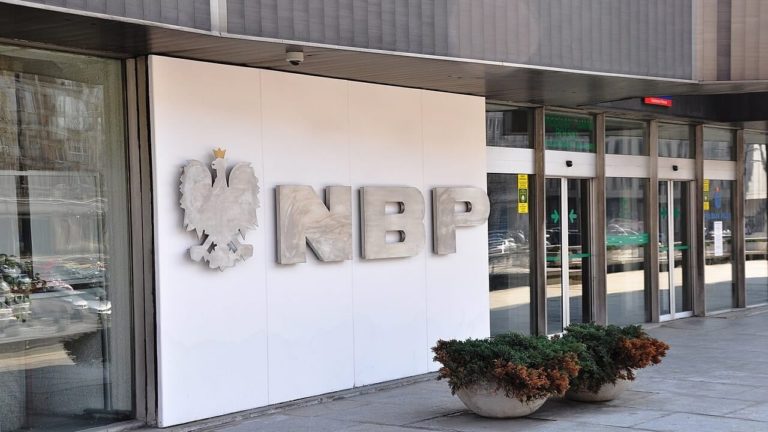
(Mike Maharrey, Money Metals News Service) The National Bank of Poland has approved a plan to purchase even more gold.

On Tuesday (Jan. 20), the bank issued a statement saying it plans to purchase up to 150 more tonnes of gold, raising its holdings to a maximum of 700 tonnes.

Poland has been one of the world’s largest gold buyers. Last fall, the Polish central bank announced plans to further increase its gold holdings and set a goal of 30 percent of reserves.

The new policy will allow the central bank to hold up to 700 tonnes of gold even if the value exceeds 30 percent of reserves.

The central bank did not set a timeline for reaching the goal.

Governor Adam Glapiński said the increase in gold reserves would elevate Poland to an “elite” status.

“This will place Poland among the elite 10 countries with the largest gold reserves in the world.”

Poland was one of the biggest gold buyers last year. It added another 12 tonnes of gold to its reserves in November, increasing the country’s official gold holding to 543 tonnes. That represented 28 percent of its total reserves based on gold prices at the end of November.

The Polish central bank already holds more gold than the European Central Bank. To put the country’s gold reserves in context, in 1996, the NBP only held 14 tonnes of gold.

This is the third time Poland has raised its gold reserve target in the last few years. It initially announced an increase in its gold holdings in 2021. Then, in 2024, Glapiński indicated the central bank planned to increase its gold holdings to 20 percent of its reserves.

“This makes Poland a more credible country; we have a better standing in all ratings, we are a very serious partner, and we will continue to buy gold.”

When he initially announced plans to further expand Poland’s gold reserves, Glapiński called gold “the only safe investment for state reserves,” in these “difficult times of global turmoil and the search for a new financial order.”

In an interview in 2024, Glapiński said that it is not directly linked to any national economic policies, is a safe haven during crises, and retains its real value over the long term.

“It is a symbol of stability that enhances our credibility in the eyes of investors and foreign partners.”

According to the NBP’s website, gold is not a liability and carries no counterparty risk. Furthermore, its physical characteristics ensure durability and near indestructibility.

When he announced the initial plan to expand its gold reserves in 2021, Glapiński said holding gold was a matter of financial security and stability. 

“Gold will retain its value even when someone cuts off the power to the global financial system, destroying traditional assets based on electronic accounting records. Of course, we do not assume that this will happen. But as the saying goes – forewarned is always insured.

“And the central bank is required to be prepared for even the most unfavorable circumstances. That is why we see a special place for gold in our foreign exchange management process.”

Glapiński also pointed out that “gold is free from credit risk and cannot be devalued by any country’s economic policy.”

“Besides, it is extremely durable, virtually indestructible.”

Poland has also brought some of its gold home. In 2019, the Polish central bank covertly moved 100 tonnes of gold from London vaults to a facility in Warsaw.

Poland isn’t alone in boosting its gold holdings.

On net, central banks globally increased their official gold reserves by 1,044.6 tonnes in 2024. It was the third-largest expansion of central bank gold reserves on record, coming in just 6.2 tonnes lower than in 2023 and 91 tonnes lower than the all-time high set in 2022. (1,136 tonnes). 2022 was the highest level of net purchases on record, dating back to 1950, including since the suspension of dollar convertibility into gold in 1971.

To put that into context, central bank gold reserves increased by an average of just 473 tonnes annually between 2010 and 2021.


Mike Maharrey is a journalist and market analyst for Money Metals with over a decade of experience in precious metals. He holds a BS in accounting from the University of Kentucky and a BA in journalism from the University of South Florida.

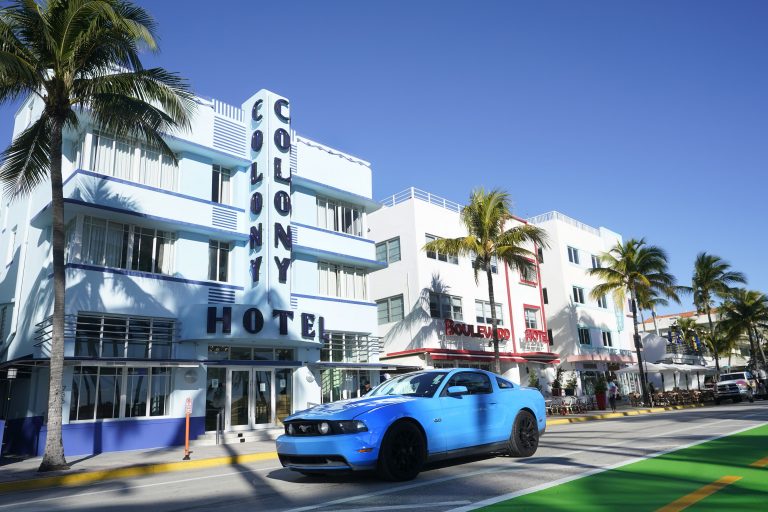
Free Speech Under Fire After Florida Police Question Veteran Over Social Media Post

(José Niño, Headline USA) Two Miami Beach, Florida detectives showed up at Raquel Pacheco’s door last Monday, asking about a Facebook comment she wrote criticizing Mayor Steven Meiner. The visit has triggered fierce condemnation from civil rights organizations and ignited national debate about First Amendment protections.

The controversy began when Pacheco, a U.S. Army National Guard veteran and former political candidate, responded to Meiner’s Facebook post earlier this month claiming Miami Beach ranks as the nation’s most tolerant city. She wrote that the mayor “consistently calls for the death of all Palestinians, tried to shut down a theater for showing a movie that hurt his feelings, and REFUSES to stand up for the LGBTQ community.”

Six days later, two Intelligence Unit detectives arrived at her South Beach residence. Per a report by CBS News, Pacheco recorded the encounter, capturing her response when officers questioned her about the post. “Am I being charged with a crime? OK, you are here to investigate a statement that I allegedly made on Facebook,” she told them, refusing to answer without legal representation.

According to the civil liberties organization The Foundation for Individual Rights and Expression, detectives explained their visit by stating the “concerning part” was that her Palestine comment could “probably incite somebody to do something radical.” They advised her to “refrain from posting things like that because that could get something incited.”

The Miami Herald reported that police spokesperson Christopher Bess confirmed the mayor’s office flagged Pacheco’s comment. According to CBS Austin, police Chief Wayne Jones defended the visit, citing “real, ongoing national and international concerns surrounding antisemitic attacks” and claiming he had “serious concerns that her remarks could trigger physical action by others,” per a report by The Forward

FIRE sent a scathing letter to Chief Jones last Wednesday, calling the visit “an egregious abuse of power” that violates constitutional principles. Director of public advocacy Aaron Terr wrote that “law enforcement officers making a surprise appearance on an individual’s doorstep to convey official disapproval of her protected expression represents an egregious abuse of power.”

FIRE’s analysis applied the Supreme Court’s Brandenburg standard, which holds that inflammatory speech loses First Amendment protection only if directed at inciting imminent lawless action and likely to produce such action. “By no stretch of the imagination did Pacheco call for any unlawful action, and there is certainly no evidence that anyone was likely to engage in such action after reading her post, let alone immediately,” FIRE stated.

The incident represents the third major First Amendment controversy involving Miami Beach and Mayor Meiner in less than two years. In March 2025, Meiner attempted to evict O Cinema for screening “No Other Land,” an Oscar-winning documentary about Palestinian displacement. In September 2025, Jewish Voice for Peace filed a federal lawsuit alleging Miami Beach violated First Amendment rights by passing an anti-protest ordinance.

Pacheco described the police visit’s impact powerfully. “My overwhelming feeling was that freedom of speech as I know it died at my front step yesterday. It’s an incredibly, incredibly sad thing,” she told CBS News Miami. She characterized the encounter as “an intimidation tactic” designed to silence criticism.

The Miami Herald reported that Pacheco has hired attorney Miriam Haskell and filed public records requests to determine who complained and who ordered the police visit. 

José Niño is the deputy editor of Headline USA. Follow him at x.com/JoseAlNino 

Indian Democrat Who Speaks Badly Broken English Introduces Bill to Dismantle ICE

(José Niño, Headline USA) A Michigan congressman introduced legislation to eliminate Immigration and Customs Enforcement within three months, responding directly to the fatal shooting of a Minneapolis mother by a federal agent during an enforcement operation.

Rep. Shri Thanedar, R-MI., filed the Abolish ICE Act last Tuesday, declaring the agency operates beyond reform after 37-year-old Renee Nicole Good died from gunshots fired by ICE agent Jonathan Ross. Video analysis shows Good turned her steering wheel away from Ross approximately one second before he fired three shots through her windshield.

“ICE is completely out of control,” Thanedar stated during a press briefing. “Since ICE’s establishment in 2003, they’ve prioritized aggressive enforcement and violence rather than due process.”

The bill would rescind ICE’s remaining funding and transfer its responsibilities to other federal agencies within 90 days of enactment. 

Good had just dropped her six-year-old son at elementary school when the confrontation occurred during Operation Metro Surge, which deployed roughly 3,000 federal agents to Minneapolis. She was pronounced dead approximately one hour after being shot.

Progressive lawmakers quickly rallied behind the legislation. Rep. Ilhan Omar, D-MN, whose district includes the shooting location, described ICE as an occupying force acting in a lawless manner. “Federal law enforcement is being dispatched as an occupying force into Minneapolis,” Omar declared on MSNBC.

The Department of Homeland Security defended the agency vigorously. Assistant Secretary Tricia McLaughlin told Newsweek that ICE will persist in enforcing immigration laws to ensure American safety. ​​”DHS is a law enforcement agency, and it will continue to carry out immigration enforcement for the safety of Americans who have been victimized by rapists, murderers, drug traffickers, and gang members,” McLaughlin stated.

White House spokesperson Abigail Jackson characterized ICE officers as heroic professionals acting with integrity. “The entire Trump administration supports our heroic ICE officers who act with the utmost professionalism and integrity to enhance safety in American communities,” Jackson stated.

Rep. Ken Calvert, R-Ca., amplified Republican opposition on social media. “Democrats who have advocated abolishing ICE are out of touch with the American people. If Democrats want to advocate changing the immigration enforcement policies carried out by ICE so be it, but they should stop vilifying the proud Americans who work there and keep us safe,” Calvert posted.

José Niño is the deputy editor of Headline USA. Follow him at x.com/JoseAlNino