When Should You Sell Your Gold and Silver

(Money Metals News Service) In this episode of the Money Metals Midweek Memo, host Mike Maharrey opened with a story from his childhood about a quarter superglued to a school cafeteria floor.

In the 1980s, a quarter could actually buy something. If it had been minted before 1965, it would have contained 90 percent silver. Today, the melt value of a pre-1965 quarter is about $14.60. That old prank becomes a powerful metaphor in a world where silver and gold have surged.

Maharrey connected that memory to a recent headline out of Macau. A luxury hotel that opened in 2006 tore up its lobby floor, which had been embedded with 1 kilogram gold bars as part of a decorative golden pathway. The hotel’s parent company liquidated 79 kilograms of gold and pocketed $12.8 million. Management described the sale as a way to strengthen its financial position and invest if suitable opportunities arise.

That decision raised a deeper question. When should you sell your gold and silver?

The Macau Gold Sale and the Fiat Question

Macau, a former Portuguese colony handed over to China in 1999, operates as a special administrative region similar to Hong Kong. It is the only place in China where casino gambling is legal, though Beijing has pushed the region to diversify. The Grand Emperor closed its casino last fall and is renovating the lobby, which gave executives a reason to remove the gold.

Still, Maharrey questioned the logic. The company did not cite debt repayment or specific capital expenditures. Instead, it suggested the gold sale would provide flexibility for future investments. To Maharrey, the gold already was the investment.

A MarketWatch reporter pressed him on whether the transaction was conducted in Hong Kong currency and whether he was implying that the Hong Kong currency is devalued. His answer was yes. He broadened the argument to all fiat currencies. Whether US currency, Hong Kong currency, or the yuan, governments are inflating and devaluing their money.

Gold’s price is not simply rising. In many cases, currencies are losing purchasing power relative to gold. In some countries, gold’s gains measured in local currency have been even more dramatic than in US currency. Central banks understand this dynamic. That is why gold buying has surged globally. Physical gold demand reached record levels last year, almost everywhere except the United States, with much of the buying driven by Asia, including China, Japan, and India.

The Debt Black Hole and $6000 Gold

Maharrey pointed to a recent forecast from CIBC, the Canadian bank, which raised its gold price projection to $6000 this year. Analysts there argued that US Treasuries are no longer viewed as risk-free and that Western economies face near record debt to GDP ratios. Governments are more likely to inflate than constrain their way out of these obligations.

The Federal Reserve openly targets 2 percent annual inflation. That means a planned reduction in purchasing power every single year. Over five years, that compounds to more than 10 percent erosion in the US currency’s value. Against that backdrop, holding long-term savings in fiat currency becomes a losing strategy.

Maharrey described this environment as a global debt black hole. Governments need inflation to sustain borrowing. Fiat systems were designed to allow money creation without constraint. Gold, by contrast, cannot be printed. That scarcity is precisely why central banks are accumulating it and why mainstream analysts now speak openly about $6000 gold.

So When Should You Actually Sell

Maharrey made it clear that he is not arguing that you should never sell gold or silver. The key is why you are selling and what you are doing with the proceeds.

Selling makes sense when you are converting metal into something tangible or productive. If you sell silver to fund long-delayed home repairs, you are transforming stored value into improved property. If you liquidate an ounce of gold to take a meaningful vacation, you are exchanging stored purchasing power for life experience. If you rebalance your portfolio with a specific strategy in mind, that is a deliberate financial decision.

Selling also makes sense when it strengthens your balance sheet. Paying down high-interest debt or covering a necessary expense can justify converting metal into cash.

What does not make sense, in Maharrey’s view, is selling simply because the price has gone up and then sitting on depreciating fiat currency. Converting gold or silver into cash with no defined purpose exposes you to the very inflation risk that metals are meant to hedge. If you sell and immediately spend, you preserve value. If you sell and hold cash for two years, you likely lose purchasing power.

Corrections will happen in bull markets. Both gold and silver will pull back at times. But the broader fundamentals remain intact. Central bank buying, de-dollarization trends, and massive sovereign debt loads are not disappearing anytime soon.

Silver, the Lombardi Trophy, and an $80 Price

The episode closed with a look at silver’s performance through the lens of the Lombardi Trophy. Produced each year by Tiffany and Company, the Super Bowl trophy is made of sterling silver, which is 92.5 percent silver by weight. It stands 20.75 inches tall and weighs 7 pounds, or 3175 grams.

Using a silver price of $76.50 per ounce on game day, which equated to about $2.46 per gram, Maharrey calculated a melt value of roughly $7810.50. One year earlier, when the Philadelphia Eagles hoisted the trophy, its melt value was just over $2990.

Silver recently moved back above $80 per ounce after pulling back from a spike to $120. With prices still roughly $40 below that peak and some analysts projecting $100 silver in the near future, Maharrey suggested that the current correction could present an opportunity.

His core message was direct.

Sell with intention, not emotion. Sell when you are converting metal into something real. Do not sell simply to trade enduring money for depreciating currency.

In a world of 2 percent inflation targets and expanding debt, gold and silver remain tools for preserving purchasing power, not assets to abandon at the first sign of a price surge.

House GOP Pushes Strict Proof-of-Citizenship Requirement for Voters Ahead of Midterm Elections

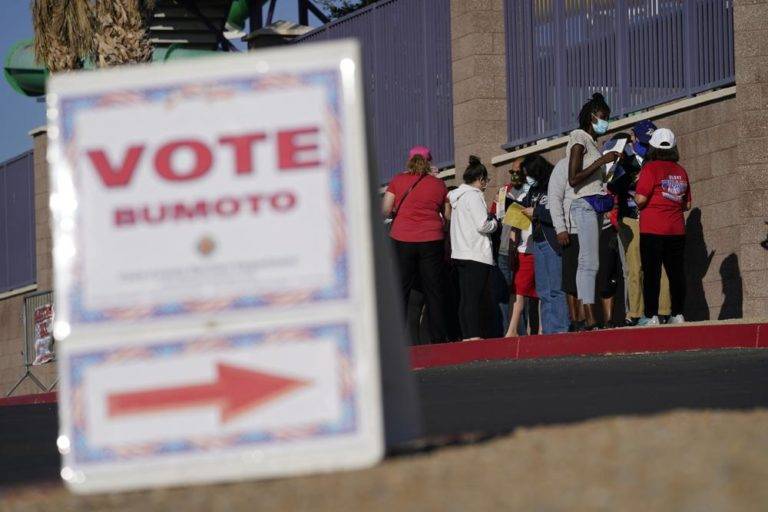
(Headline USA) House Republicans are rushing ahead on Wednesday on legislation that would impose strict new proof-of-citizenship requirements ahead of the midterm elections, a longshot Trump administration priority that faces sharp blowback in the Senate.

The bill, called the Safeguard American Voter Eligibility, or SAVE America Act, would require Americans to prove they are citizens when they register to vote, mostly through a valid U.S. passport or birth certificate. It would also require a valid photo identification before voters can cast ballots, which some states already demand.

Republicans said the legislation is needed to prevent voter fraud, but Democrats warn it will disenfranchise millions of Americans by making it harder to vote. Federal law already requires that voters in national elections be U.S. citizens, but there’s no requirement to provide documentary proof. 

“Some of my colleagues will call this voter suppression or Jim Crow 2.0,” said Rep. Bryan Steil, R-Wis., presenting the package at a committee hearing.

But he said “those allegations are false,” and he argued the bill is needed to enforce existing laws, particularly those that bar immigrants who are not citizens from voting. “The current law is not strong enough,” he said.

The legislation is actually a do-over of a similar bill the House approved last year, which also sought to clamp down on fraudulent voting, particularly among noncitizens. It won the support of four House Democrats, but stalled in the Republican-led Senate.

This version toughens some of the requirements further, while creating a process for those whose names may have changed, particularly during marriage, to provide the paperwork necessary and further attest to their identity.

It also imposes requirement on states to share their voter information with the Department of Homeland Security, as a way to verify the citizenship of the names on the voter rolls. That has drawn pushback from elections officials as potentially intrusive on people’s privacy.

The new rules in the bill would take effect immediately, if the bill is passed by both chambers of Congress and signed into law.

In the Senate, where Republicans also have majority control, there does not appear to be enough support to push the bill past the chamber’s filibuster rules, which largely require 60 votes to advance legislation.

That frustration has led some Republicans, led by Sen. Mike Lee of Utah, to push for a process that would skip the 60-vote threshold in this case, and allow the bill to be debated through a so-called standing filibuster — a process that would open the door to potentially endless debate.

Lee made the case to GOP senators at a closed-door lunch this week, and some said afterward they are mulling the concept.

“I think most people’s minds are open,” said Sen. John Kennedy, R-La., “My mind’s certainly open.”

But Murkowski of Alaska said she is flat out against the legislation.

“Not only does the U.S. Constitution clearly provide states the authority to regulate the ‘times, places, and manner’ of holding federal elections, but one-size-fits-all mandates from Washington, D.C., seldom work in places like Alaska,” she said.

Karen Brinson Bell of Advance Elections, a nonpartisan consulting firm, said the bill adds numerous requirements for state and local election officials with no additional funding.

“Election officials have a simple request of Congress — that you help share their burdens not add to them,” she said.  

Adapted from reporting by the Associated Press

SCOOP: Thomas Crooks Was Hospitalized 2 Months before Butler Trump Shooting

(Ken Silva, Headline USA) The FBI has released new documents about Thomas Crooks, the man who allegedly shot Donald Trump in the ear—revealing that Crooks was hospitalized two months before his alleged July 13, 2024, assassination attempt in Butler, Pennsylvania.

The information about Crooks’s May 2024 hospitalization is included in a set of 41 heavily redacted pages released by the FBI on Monday—the first time the bureau has released records about Butler since the Biden administration. There exists thousands of pages of records that the bureau has yet to release.

According to the records, someone who knew Crooks told the FBI that he was hospitalized for dehydration.

“The last time that [REDACTED saw Crooks was approximately one month ago, June 2024, when she observed [REDACTED]. Approximately two months ago, May 2024, [REDACTED] … [REDACTED] stated that Crooks was dehydrated and needed to be taken to the hospital,” a July 14, 2024, FBI memo says.

“[REDACTED] believes he was taken to St. Clair Hospital in Bethel Park. [REDACTED] stated that she thought it was strange that [REDACTED] did not take him to the hospital themselves.”

The FBI records also included interviews with Butler rallygoers and local police.

One person said that she was almost hit by a light silver Subaru Hatchback about five minutes after shots were fired.

“[REDACTED] didn’t get a look at the license plate, but believed the driver to be an older white male with short hair and tan skin,” another July 15, 2024, FBI memo says.

Another rallygoer near the AGR building—used by Crooks as his rooftop perch—said she thought the shots came from inside the building. Local snipers were located there, but by all accounts did not take any shots.

Along with interviewing witnesses, the FBI also investigated someone identified on a business card that was left at the Butler rally. It’s not clear why agents found the business card of interest. They apparently never learned whether the person went to the event. An FBI report recommended “reaching out to [REDACTED] through his contact information on the business card to determine if he was there, and if so, complete an interview with him.”

Additionally, the FBI records show that agents investigated the mysterious white Chevy van, which was left unattended about a half-mile away from the rally site searched by a bomb squad hours after the shooting.

According to the records, the van’s owner has no criminal history, no gun permits, no records of firearms purchase, and no outstanding warrants. It’s unclear if agents interviewed the owner. The FBI report recommended that they do so.

Ken Silva is the editor of Headline USA. Follow him at x.com/jd_cashless.

Bondi Deflected Questions on Epstein Files Across 5-hour Hearing

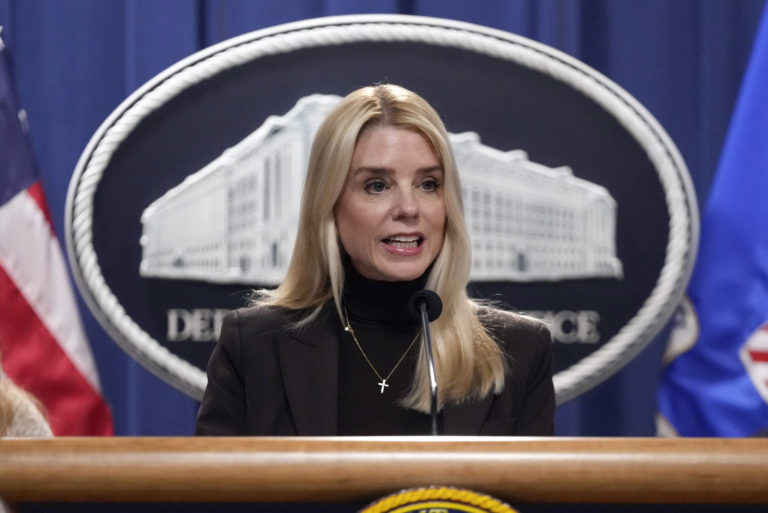
(Headline USA) Attorney General Pam Bondi took heated questions from lawmakers in a combative congressional hearing over the Justice Department’s handling of files related to Jeffrey Epstein that have exposed sensitive private information about victims despite redaction efforts.

Bondi tried to turn the page from persistent criticism of the Justice Department by aggressively pivoting across the five-hour hearing.

The attorney general gave a wide-ranging, passionate defense of President Donald Trump, mocked her Democratic questioners and refused to directly respond to accusations from representatives that she is perpetuating a cover-up and ignoring victims, several of whom were sitting behind her in the hearing room.

Bondi also defended the department’s handling of the files, even as its political saga continues to dog her term. The attorney general had a similarly tumultuous hearing before Congress in October.

Rep. Jamie Raskin, the ranking Democrat on the House Judiciary Committee, told reporters following the hearing that Attorney General Pam Bondi had evaded answering most questions from Democrats, especially as they focused on the release of the case files on Jeffrey Epstein.

“To us, it feels like we are in the middle of a cover-up,” Raskin said, adding that he felt Bondi’s demeanor showed that the Trump administration showed it was not respecting the will of Congress with what’s known as the Epstein Files Transparency Act.

But he alluded to more battles with the attorney general, especially if Democrats take the House majority next year. He said Democrats would have the power to issue subpoenas to force sworn testimony, including from Trump administration officials.

Democrats have hammered Bondi repeatedly for the latest file dump disclosing some victims’ identities. North Carolina Republican Rep. Brad Knott offered Bondi a defense.

“Many on this committee made very serious efforts … to give you the resources and time” to “thoroughly go through that file” to make sure victims were shielded, he said.

Knott argued that such amendments to the Epstein disclosure resolution were “met with refusal” from House leadership.

Democrats on the committee have argued throughout the day that Bondi’s department still has managed to redact considerable portions of the documents.

Rep. Dan Goldman had a handful of prominent victims of Jeffrey Epstein’s abuse who are in the hearing room with Attorney General Pam Bondi stand and raise their hands if they had tried to speak with the Department of Justice but not received a response.

All of the survivors raised their hands.

Goldman pointed to an email contained in released files that contained a list of victims, but only one had been blacked out. “That is clearly intentional to intimidate these survivors and victims,” he said.

Bondi pushed back on the accusation that it was an intentional mistake.

Democratic Rep. Jared Moskowitz mocked the researched notes that Bondi has been been using in her come backs against Democrats on the House Judiciary Committee.

He told the attorney general that in the spirit of the Olympics, he would score the quality of the political insult and held up a small whiteboard.

Bondi responded by saying that Moskowitz had mocked the Bible by earlier holding up a copy of the book and saying that “Trump’s name appears more in the Epstein files than God appears in the book about God.”

Moskowitz shot back, “I want it from the burn book.” When Bondi declined to engage, he wrote a “0” on his whiteboard.

Among the feistiest and most bitter exchanges came with Rep. Becca Balint, a Vermont Democrat who tried to ask Bondi whether the Justice Department had questioned different Trump administration officials about their ties to Epstein.

Bondi declined to answer directly, instead saying that Commerce Secretary Howard Lutnick had already answered questions on the issue.

As Balint tried to press further, Bondi responded, “Shame on you.” That touched off a furious response from a frustrated Balint, who said: “This is pathetic. I am not asking trick questions. The American people deserve to know. These are senior Trump officials.”

The situation became even more tense when Bondi referenced “antisemitic culture” and a resolution that she said Balint voted against.

The question was cut off by a shouting Balint, who said: “You want to go there? Are you serious? Talking about antisemitism to a woman who lost her grandfather in the Holocaust!”

The attorney general distanced herself from a decision last year to transfer Ghislaine Maxwell, the former girlfriend and confidant of Jeffrey Epstein, to a federal prison camp in Texas.

That transfer last year by the Bureau of Prisons, which sits under the Department of Justice, has been widely criticized. Bondi said she agreed that Maxwell should not receive any comforts while she serves out a 20-year prison sentence for sex trafficking minors.

“I was not involved in that at all,” she told lawmakers.

Democratic Rep. Joe Neguse questioned Attorney General Pam Bondi on why she had hired Jared Wise, who was charged in connection to the Jan. 6th 2021 riot at the U.S. Capitol and was captured on a police-worn body camera urging people to “kill” officers.

Bondi acknowledged that Wise was working at the Justice Department, noting that he had been pardoned by President Donald Trump.

Neguse responded, “This is who you choose, as the chief law enforcement officer of the United States of America, to hire at the Department of Justice,” and added, “and yet you expect hard-working police officers across the country to believe that you take law enforcement seriously?”

Attorney General Pam Bondi is facing some of the toughest questioning from Republican Rep. Thomas Massie, a Kentucky lawmaker who broke with his party to advance the legislation that forced the released of the case files on Jeffrey Epstein.

Massie took Bondi to task for the release of victims’ personal information, telling her, “Literally the worse thing you could do to survivors, you did.”

He also questioned her why more men seemingly connected to Epstein’s abuse are not under investigation.

Bondi responded in the way she has to most Democrats who brought up the Epstein files, by shooting back that he was only focused on the files because President Donald Trump is mentioned in them.

She accused Massie of having “Trump-derangement syndrome” and called him a “hypocrite.”

Democratic Rep. Lou Correa asked a handful of survivors of Jeffrey Epstein’s abuse who are attending Attorney General Pam Bondi’s hearing to stand and raise their hand if they felt that the Department of Justice would support them.

None raised their hand.

Correa underscored the importance of law enforcement supporting victims and making sure they are heard as they seek justice.

Bondi responded to Correa’s point by saying she wanted victims to come forward.

“We want to work with them,” she said.

She was responding to an old video of Trump and Epstein at a party together by saying it was “ridiculous” for Democratic Rep. Ted Lieu to ask her whether she would investigate Trump’s connections to Epstein.

“They are trying to deflect from all the great things Donald Trump has done,” Bondi exclaimed.

Democratic Rep. Zoe Lofgren used her time to highlight several emails released in the case files on Jeffrey Epstein that seem to refer to others being involved in the abuse of underage girls and asked Attorney General Pam Bondi whether she would open investigations.

“We will look and investigate any case, involving any victim,” Bondi responded, adding, “We will look into anything.”

But Bondi quickly raised her tone and volume as she accused Lofgren of filibustering her allotted time for questioning.

Democratic lawmakers and the public are demanding follow-up investigations into a number of individuals who were connected to Epstein, but the FBI last year released a memo saying no one else would be charged. Also, an Associated Press review of internal Justice Department records shows investigators found scant evidence the well-connected financier led a sex trafficking ring serving powerful men.

The attorney general addressed the victims of Jeffrey Epstein’s abuse during the House Judiciary Committee, saying she was “deeply sorry” for what they had suffered.

Bondi has been severely criticized by survivors of Epstein’s abuse, including several who were in attendance at the committee hearing Wednesday, for failing to redact personal information, including nude photos, of victims in the release of over 3.5 million case files on Epstein.

Bondi did not explicitly apologize for that failure, but said the Justice Department has taken down files when they were made aware that they included victims’ information and that staff had tried to do “our very best in the time frame allotted by the legislation” mandating the release of the files.

“Any accusations of criminal wrongdoing will be taken seriously and investigated,” the attorney general added.

Attorney General Pam Bondi ended a hearing that spanned over five hours at the Capitol with handshakes from Republican lawmakers and walking out a staff exit of the hearing room.

The hearing was marked by sharp back-and-forth between Bondi and Democratic lawmakers, who repeatedly brought up how the Department of Justice has handled the release of case files on Jeffrey Epstein.

By the end, Bondi was visibly tired, but did not back down from trading barbs with Democrats.


Adapted from reporting by the Associated Press

Alleged Kirk Assassin’s Furry Roommate Spotted in Texas

(Ken Silva, Headline USA) After disappearing from Utah under a cloud of suspicion, alleged Charlie Kirk assassin Tyler Robinson’s transgender roommate, Lance Twiggs, has been spotted in Texas living with his Mormon family, according to the Daily Mail.

“Twiggs was spotted with long, unkempt hair, a Taco Bell tee shirt, and a hardcover fantasy novel in a quiet suburban neighborhood,” the New York Post reported Wednesday, citing the Daily Mail’s paywalled story.

Twiggs left the secluded desert town near the Arizona border as speculation swirled over his involvement in the crime,” the Post added. “Sources told the outlet he spends most of his time at home gaming and reading fantasy novels, and mostly goes out to pickup takeout food and run errands for his parents.”

A Robinson family member, who spoke under the condition of anonymity, said last month that she wasn’t sure if Twiggs, who has an attorney, is still cooperating with law enforcement’s investigation. She added that she’s sure that Robinson is guilty.

Twiggs shared a $1,800-a-month townhouse with Robinson. After Robinson’s arrest, Washington County Sheriff Nate Brooksby said Twiggs was in a “safe space very far away from St. George,” though he offered no specifics.

Twiggs was 22 at the time of the shooting, and was quickly revealed to be a “wannabe professional gamer” who was reportedly considering a sex change.

“In November 2024, Twiggs posted about his anxiety with injecting cross-sex hormones. Replying to a thread on injection pain, he wrote: ‘seriously. sometimes it’s just muscle memory, sometimes i gotta get buzzed on something so i’m not too anxious about it,’” independent journalist Andy Ngo reported last September.

A purported neighbor also said the two were in a romantic relationship. The neighbor said he saw them holding hands and kissing.

Law enforcement has said Robinson may have been motivated by Kirk’s alleged “transphobia.”

Ken Silva is the editor of Headline USA. Follow him at x.com/jd_cashless.

Indicted Rep. McIver Asks ICE Director if He’s Going to Hell 

(Luis CornelioHeadline USA) A congressional hearing featuring ICE Director Todd Lyons grew tense after Rep. LaMonica McIver, D-N.J., accused him of having “blood” on his hands and asked him what would happen to him on Judgment Day. 

Lyons was testifying before the House Committee on Homeland Security on Tuesday when McIver pressed the questions. McIver is the same member of Congress facing a grand jury indictment tied to her protest at an ICE facility in Newark. 

McIver’s line of questioning began with: “Do you consider yourself a religious man?” followed by, “How do you think Judgment Day will work for you, with so much blood on your hands?” 

Taken aback, Lyons replied, “I’m not gonna entertain that question.”

“Oh. OK, of course not. Do you think you’re going to hell, Mr. Lyons?” McIver countered. 

The exchange between McIver and Lyons has since gone viral on social media, largely due to the aggressive line of questioning. 

The confrontation prompted House Homeland Security Chairman Andrew Garbarino to interrupt and remind members of the committee’s rules:

“The witnesses are here voluntarily, and I will continue to remind members that while oversight is important, aggressively attacking those witnesses personally is inappropriate and not in keeping with the traditions of our committee.” 

McIver dismissed the rebuke, sarcastically telling him, “Mr. Chairman, I’m just asking a question. You all, you guys are always talking about religion here in the Bible. I mean, it’s OK for me to ask a question, right? But let me continue on. I got your note.” 

She then asked how many agencies “routinely kill American citizens and still get funding.” 

McIver’s questioning comes as she and other Democrats have criticized immigration enforcement, particularly in Minnesota, where two ICE agents fatally shot anti-ICE protesters.  

The federal government maintains the agents acted in self-defense, while Democrats claim the incidents reflect broader issues of excessive force. 

McIver herself faces a three-count indictment for allegedly impeding federal officers outside an ICE facility in Newark, N.J., in 2025, including two felonies and one misdemeanor. 

Openly Gay Texas Judge Speedlin Gonzalez Suspended After Indictment 

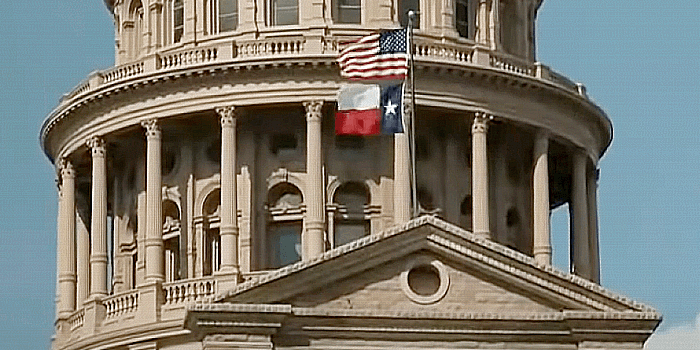
(Luis CornelioHeadline USA) Texas’s first openly gay judge was suspended without pay after being indicted in a criminal case involving allegations of courtroom abuse of power. 

The State Commission on Judicial Conduct suspended Judge Rosie Speedlin-Gonzalez on Thursday after a Bexar County grand jury indicted her on charges of official oppression and unlawful restraint involving defense attorney Elizabeth Russell. 

The charges stem from a courtroom altercation in which Speedlin-Gonzalez allegedly ordered Russell handcuffed during a dispute. The incident occurred after Russell asked to speak with her client, who had pleaded “true” to one of the allegations. 

Speedlin-Gonzalez told Russell she could not coach her client, prompting Russell to object to continuing the hearing, according to Texas Scorecard. 

In response, Speedlin-Gonzalez scolded Russell, telling her she was “not allowed to be argumentative and argue just for the sake of argument.” 

The judge then ordered a court officer to arrest Russell and “put her in the box.” 

“You will not run around these courtrooms, especially 13, and think that you can just conduct yourself in the way you’ve been conducting yourself for at least the last six years, Ms. Russell,” said Speedlin-Gonzalez, according to the outlet. 

Russell filed a criminal complaint against the judge after her release, leading to Speedlin-Gonzalez’s indictment on Jan. 29, 2026. 

State Commission on Judicial Conduct Chairman Gary Steel wrote that the suspension takes effect immediately and will remain in place until the charges are dismissed, resolved or otherwise addressed by further order. 

Stacey Plaskett Begged Epstein for Cash Using a Pseudonym 

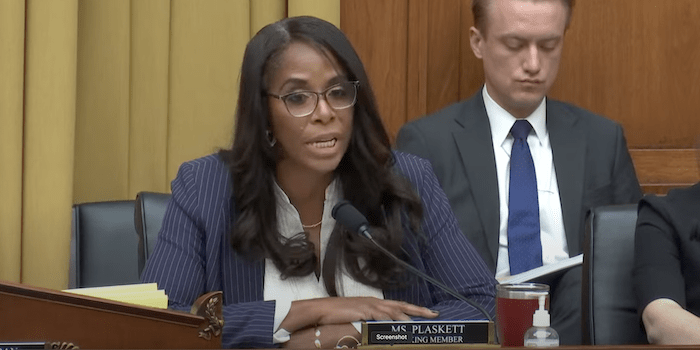
(Luis CornelioHeadline USA) Rep. Stacey Plaskett, D-V.I., concealed her identity in an email using a pseudonym to solicit money from longtime associate Jeffrey Epstein, according to a recent report covering DOJ-released emails. 

In one email, dated May 5, 2017, Plaskett used the pseudonym “LeRoy Daughter,” an apparent reference to her father, LeRoy Plaskett, to request funding for a one-year project to “create a new voter file.” 

The project, part of Plaskett’s congressional campaign, aimed to compile and update the data of recent Virgin Islands voters, including phone numbers, email and home addresses. 

“This is the most important group to poll for messaging and later phone banking for support and get to the polls,” Plaskett reportedly wrote, as reported by the Washington Free Beacon. 

“This project would allow us to completely outperform anyone in any race,” Plaskett added. “Jeffrey, would really appreciate your support in the project and thoughts on our home and national scene.” 

According to the Free Beacon, Plaskett used the pseudonym again on July 11, 2018, to invite Epstein to a campaign fundraiser in New York City. 

This new Free Beacon report comes as Plaskett faces mounting scrutiny for her ties to Epstein. 

In a separate email, she asked whether it was “presumptuous” to consider him a friend. Epstein replied: “Privileged to be called friend.” At the time, Epstein had already been convicted of procuring a child for prostitution. 

The emails suggest that Plaskett and Epstein may have been closer than publicly acknowledged.  

Additional communications released by the House Oversight Committee indicate Plaskett texted Epstein during an anti-Trump congressional hearing in 2018, with messages appearing to coordinate her questions to former Trump attorney Michael Cohen. 

The secret coordination triggered a House censure on Nov. 18, 2025, which Plaskett narrowly survived. 

SCOOP: OKC Bomb Plotter Sues Prison for Sex Abuse

(Ken Silva, Headline USA) In 2017, Oklahoma man Jerry Drake Varnell was the target of a sting operation to bomb a bank.

In that case, the FBI initially determined that Varnell, who is schizophrenic, “does not appear to have the means to actually commit this act.” Nevertheless, the FBI had an informant introduce him to an undercover agent, who provided him with a van, barrels, a burner phone, latex gloves, electrical tape, and 1,000 pounds of ammonium nitrate fuel oil.

The agent then picked Varnell up from his house, drove him to a storage unit, and gave him step-by-step instructions on how to assemble an explosive device using the materials the FBI supplied. After that, the undercover agent insisted that Varnell be the one to drive the van downtown, where he was arrested after attempting to detonate the bomb.

Despite those factors, Varnell was convicted in early 2019, and sentenced to 25 years in prison in March 2020.

It looks like things have gotten even worse for Varnell since then. In a recently filed lawsuit against the Bureau of Prisons, he claims to have been sexually assaulted by fellow inmates and abused by prison staff. Varnell also said in his lawsuit that he’s a “mixed-race, intersex, bisexual male with identifying female characteristics.”

According to his Dec. 22 lawsuit, in September 2022 he was placed in a cell with an “Afro-American, homosexual male named Deshaun Sellers.” Varnell said he was sexually assaulted by Sellers, who allegedly threatened to kill him if he told anyone.

Varnell still decided to file a complaint, and he was transferred to another unit. However, he said he had a similar experience with another inmate, J. McFadden.

Varnell was again transferred. But this time, prison officials saw that he was wearing nipple rings, and forced him to have them removed.

According to the lawsuit, a prison official used plastic sheers, which “tore Plaintiff’s nipple and areolas.”

“Plaintiff was in excruciating pain from the torturous operation,” his lawsuit says.

Additionally, Varnell said he had to shower in front of prison officers, medical staff and other inmates, which further traumatized him.

Varnell’s lawsuit seeks $5 million in compensatory damages. The prison has yet to respond to his lawsuit.

Ken Silva is the editor of Headline USA. Follow him at x.com/jd_cashless.

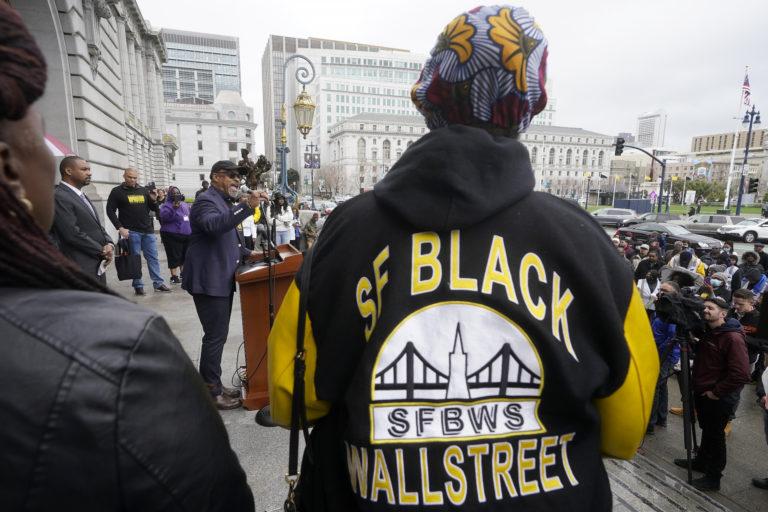
San Francisco Sued Over Reparations Fund for Black Residents

(Chris Woodward, The Center Square) A lawsuit is challenging a San Francisco ordinance that establishes a reparations fund for Black residents.

The ordinance, signed in December by San Francisco Mayor Daniel Lurie, a Democrat, is aimed at addressing systematic harms. Even so, the Pacific Legal Foundation said this is wrong.

“The purpose of the lawsuit is to make sure that the city and county of San Francisco is not spending taxpayer dollars on an unconstitutional, unlawful plan, which is the reparations plan,” Pacific Legal Foundation attorney Andrew Quinio told The Center Square this week. “By having the San Francisco Human Rights Commission administer the funds to implement this reparations plan, San Francisco is engaging in steps that will carry out a plan that violates the Constitution.”

Pacific Legal Foundation filed the pro bono lawsuit on behalf of San Francisco residents Richard “Richie” Greenberg and Arthur Ritchie, as well as the Californians for Equal Rights Foundation.

“I’ve been keenly paying attention to this issue of reparations for several years now, watching as city hall officials (and now the mayor) have consistently ignored law and constitutional rights of us taxpayers,” said Greenberg in a CFER news release. “I have reached out to the Board of Supervisors, the mayor, the city attorney, and the reparations committee itself to demand they cease wasting taxpayers’ money on this unconstitutional plan, and the time has come to bring them to court.”

According to a page on the Pacific Legal Foundation’s website, the ordinance stems from the African American Reparations Advisory Committee, which the city established in 2020 to develop proposals for reparations. In 2023, the committee released suggestions that included programs and benefits such as a one-time payment of $5 million, supplemental income for lower-income households, job and tuition assistance, and the elimination of student loan debt.

The African American Reparations Advisory Committee did not respond to The Center Square’s request for comment.

“You can’t treat people differently based on race. You can’t advantage or disadvantage people based on race, ethnicity and ancestry as the reparations plan does here,” Quinio told The Center Square during a phone interview. “San Francisco is using taxpayer dollars to bring that plan forward and make that plan come to fruition, and they can’t do that.”

The lawsuit is filed in San Francisco Superior Court, which is a state court.

Quinio, who is in Orange County, expects a response from San Francisco in the next month. Depending on how the city responds, Quinio said it might be another month before a judge decides motions.

The Center Square reached out to Mayor Lurie’s office for comment and was told it had not yet received the lawsuit.

“Once we are served, we will review the complaint and respond in court,” Jen Kwart, communications director at the Office of City Attorney David Chiu, told The Center Square.

Meanwhile, Quinio expressed hope the lawsuit will “demonstrate to other cities, counties or states that taxpayers take their taxpayer dollars very seriously,” not to mention the responsibilities of their governments.

“A lot of these cities and counties and states that are studying this are doing it really without regard for the public funds and resources that they are already putting behind these efforts,” said Quinio.