NJ Gov. Sherrill Launches Portal to Monitor ICE

(Luis CornelioHeadline USA) Newly sworn-in New Jersey Gov. Mikie Sherrill followed through on her promise to launch a local portal for her administration to track ICE operations across the Garden State. 

Sherrill, a Democrat who took office on Jan. 20, formally announced the portal on Wednesday, touting it as a way for individuals to report videos of ICE interactions in the state.  

She said the portal is intended to allow the local government to monitor potential civil rights violations by President Donald Trump’s immigration officers. 

“If you’re approached by an agent or see an ICE operation taking place, and you’re at a safe distance – send us your videos,” Sherrill wrote on X. 

The portal is one of three actions taken by Sherrill to counter ICE operations in New Jersey, as announced in a press conference on Wednesday.

In addition to the portal, she said she signed an executive order banning ICE from launching operations from any state property and launched a website to “make sure people know their Constitutional rights when interacting with federal agents.” 

The portal is housed on the website of New Jersey’s acting attorney general, Jennifer Davenport. 

The portal encourages the public to submit reports of “incidents involving harmful conduct by, or negative interactions with, federal personnel conducting immigration enforcement in New Jersey.” 

It added, “Federal agents have authority to enforce federal immigration laws, but they must do so lawfully. Examples of concerning activity include uses of excessive force, warrantless searches or arrests, racial profiling, wrongful detentions, interference with voting, or other civil-rights violations.” 

Social Media Company Says that Social Media Addiction if Fake

(Headline USA) Adam Mosseri, the head of Meta’s Instagram, testified Wednesday during a landmark social media trial in Los Angeles that he disagrees with the idea that people can be clinically addicted to social media platforms.

The question of addiction is a key pillar of the case, where plaintiffs seek to hold social media companies responsible for harms to children who use their platforms. Meta Platforms and Google’s YouTube are the two remaining defendants in the case, which TikTok and Snap have settled.

At the core of the Los Angeles case is a 20-year-old identified only by the initials “KGM,” whose lawsuit could determine how thousands of similar lawsuits against social media companies would play out. She and two other plaintiffs have been selected for bellwether trials — essentially test cases for both sides to see how their arguments play out before a jury.

Mosseri, who’s headed Instagram since 2018 said it’s important to differentiate between clinical addiction and what he called problematic use. The plaintiff’s lawyer, however, presented quotes directly from Mosseri in a podcast interview a few years ago where he used the term addiction in relation to social media use, but he clarified that he was probably using the term “too casually,” as people tend to do.

Mosseri said he was not claiming to be a medical expert when questioned about his qualifications to comment on the legitimacy of social media addiction, but said someone “very close” to him has experienced serious clinical addiction, which is why he said he was “being careful with my words.”

He said he and his colleagues use the term “problematic use” to refer to “someone spending more time on Instagram than they feel good about, and that definitely happens.”

It’s “not good for the company, over the long run, to make decisions that profit for us but are poor for people’s well-being,” Mosseri said.

Mosseri and the plaintiff’s lawyer, Mark Lanier, engaged in a lengthy back-and-forth about cosmetic filters on Instagram that changed people’s appearance in a way that seemed to promote plastic surgery.

“We are trying to be as safe as possible but also censor as little as possible,” Mosseri said.

In the courtroom, bereaved parents of children who have had social media struggles seemed visibly upset during a discussion around body dysmorphia and cosmetic filters. Meta shut down all third-party augmented reality filters in January 2025. The judge made an announcement to members of the public on Wednesday after the displays of emotion, reminding them not to make any indication of agreement or disagreement with testimony, saying that it would be “improper to indicate some position.”

During cross examination, Mosseri and Meta lawyer Phyllis Jones tried to reframe the idea that Lanier was suggesting in his questioning that the company is looking to profit off of teens specifically.

Mosseri said Instagram makes “less money from teens than from any other demographic on the app,” noting that teens don’t tend to click on ads and many don’t have disposable income that they spend on products from ads they receive. During his opportunity to question Mosseri for a second time, Lanier was quick to point to research that shows people who join social media platforms at a young age are more likely to stay on the platforms longer, which he said makes teen users prime for meaningful long-term profit.

“Often people try to frame things as you either prioritize safety or you prioritize revenue,” Mosseri said. “It’s really hard to imagine any instance where prioritizing safety isn’t good for revenue.”

Meta CEO Mark Zuckerberg is expected to take the stand next week.

In recent years, Instagram has added a slew of features and tools it says have made the platform safer for young people. But this does not always work. A report last year, for instance, found that teen accounts researchers created were recommended age-inappropriate sexual content, including “graphic sexual descriptions, the use of cartoons to describe demeaning sexual acts, and brief displays of nudity.”

In addition, Instagram also recommended a “range of self-harm, self-injury, and body image content” on teen accounts that the report says “would be reasonably likely to result in adverse impacts for young people, including teenagers experiencing poor mental health, or self-harm and suicidal ideation and behaviors.” Meta called the report “misleading, dangerously speculative” and said it misrepresents its efforts on teen safety.

Meta is also facing a separate trial in New Mexico that began this week.

Adapted from reporting by the Associated Press.

Immigration Enforcement Surge to End in Minnesota, Homan Says

(Andrew Rice, The Center Square) White House Border Czar Tom Homan said on Thursday the monthslong immigration enforcement operation in Minnesota will end in the next week. 

On Dec. 4, the U.S. Department of Homeland Security sent 2,000 federal agents to the Minneapolis and St. Paul metropolitan areas as part of Operation Metro Surge. 

Homan said officials have “greatly reduced” the number of targets throughout Minnesota. He said federal agents have arrested murderers, sex offenders, national security threats and gang members. 

“We have obtained an unprecedented level of coordination with law enforcement officials that is focused on promoting public safety across the entire state,” Homan said. 

Homan said President Donald Trump agreed with his proposal to end the immigration enforcement surge throughout the state. He said federal immigration enforcement agents in Minnesota will be relocated to other parts of the country. 

“A significant drawdown has already been underway this week and will continue to the next week,” Homan said. “Law enforcement officers drawn down from this surge operation will either return to the duty station or be assigned elsewhere.”

Homan did not specify how many federal agents would be removed from Minnesota. He said investigators of fraud in the state would continue to remain on the ground. 

Last week, Homan announced 700 federal agents would leave the state. In that announcement, he said roughly 150 agents is the typical amount of immigration enforcement in Minnesota.

“President Trump and I want to thank the men and women of ICE and CBP and partner agencies who have been assigned here during Operation Metro surge, you achieved a great success for the Minnesota communities,” Homan said.

Trump’s Approval Rating Higher in Israel Than in the US

(Kyle Anzalone, Libertarian Institute) President Donald Trump has substantially higher approval ratings among Israelis than among Americans. Trump had taken several positions that are unpopular with Americans but favorable to Israel.

According to a new poll conducted by the Jewish People Policy Institute, Trump’s approval in Israel is 73%. There is a wide gap between right-wing and left-wing Israelis. Only a third of left-wing Israelis approve of Trump, while 92% of those on the right have a favorable view of the American President.

A New York Times analysis of multiple recent surveys that measured Americans’ views on Trump, found a majority disapprove of the President. 56% of Americans disapprove of the President, while just 41% favor.

The higher poll numbers in Israel could be the result of Trump making several statements that support Israel, but contradict what he promised to do as President. While Trump told Americans on the campaign trail he would avoid wars in the Middle East, in June, he bombed Iran to help Israel destroy nuclear sites. The President is meeting with Israeli Prime Minister Benjamin Netanyahu on Wednesday, and is considering attacking Iran again.

Additionally, Trump promised to release files related to Jeffrey Epstein. Many Americans believe the documents will show Epstein was at the head of an international sex trafficking ring that exploited underage girls, and the convicted sex criminal had deep ties in Tel Aviv.

Trump and his administration have refused to release the files. A Congressional effort led by Republican Thomas Massie forced the government to release the documents. However, the White House has slow-walked the process and redacted much of the valuable information.

This article originally appeared at The Libertarian Institute.

DHS Pleads for Money; Democrat Offers Alternative Funding Bill Excluding ICE

(Thérèse Boudreaux, The Center Square) With less than 48 hours until the funding stopgap for the Department of Homeland Security expires, a hyper-partisan Congress faces limited options to avoid a partial government shutdown.

Senate Democrats say they will reject any Homeland Security funding bill – the only fiscal year 2026 appropriations bill that isn’t yet law – unless it heavily restricts how DHS can conduct immigration enforcement. 

But Republicans have condemned Democrats’ list of ultimatums, pointing out that a partial shutdown wouldn’t affect Immigration and Customs Enforcement operations due to the $75 billion in extra funding it received last year. 

Instead, agencies like FEMA, the U.S. Coast Guard, the Secret Service and the Transportation Security Administration will feel the strain.

In a congressional hearing Wednesday that focused on the potential impacts of a shutdown on those agencies, Appropriations Committee Chairman Tom Cole, R-Okla., reminded lawmakers that letting DHS funding lapse “will not achieve the objectives Democrats claim to seek.”

“No matter what Democrats do or say, immigration enforcement will continue,” Cole said. “But if they persist in holding government funding hostage to force their third shutdown in recent months, it will be other critical components of national security that will be harmed.”

TSA Deputy Administrator Ha McNeill told lawmakers that many TSA agents are still financially reeling from the impact of the previous government shutdown that lasted a record 43 days.

“[S]hutdown and funding uncertainties have real and measurable impacts on recruitment, retention, and employee morale,” McNeill stated. “Furthermore, a shutdown would impact TSA’s technology deployment timelines. A shutdown would delay technology improvements and deployments, preventing us from giving our workforce the tools they need to do their jobs.”

Federal employees deemed “essential” – including TSA agents and some members of FEMA, the Coast Guard, and the Secret Service – must work without pay during a shutdown, while the rest are furloughed.

While those agencies won’t shutter, they will cease nonessential operations, which can have both immediate and long-term negative impacts, Vice Admiral Thomas Allan, the Coast Guard’s Vice Commandant, told lawmakers.

“Although missions like law enforcement, national defense, and emergency response continue, a funding lapse has severe and lasting challenges for the Coast Guard’s workforce, operational readiness, and long-term capabilities,” Allan said in prepared statements, mentioning deferred maintenance and backlogs in supplies.

“We are unable to pay our contractors, including small businesses that rely on timely payment to survive,” he added. “We cease activities that do not protect the safety of human life or property from imminent danger, including routine patrols, as well as some fisheries enforcement, maintenance of aids to navigation, and commercial vessel safety inspections.”

Despite the agency heads pleading for funding, both parties are still at a stalemate as Democrats refuse to budge on their demands and Republicans refuse to accept them. 

Hoping to buy more time to negotiate, Republican leaders have drafted a four-week Continuing Resolution

But House Appropriations Ranking Member Rosa DeLauro, D-Conn., introduced on Wednesday another alternative to preventing a partial shutdown: funding all DHS agencies except ICE and Customs and Border Protection.

“Immigration and Customs Enforcement cannot be abolished, but I will not provide a single dime of funding until we see radical changes in how it operates,” DeLauro told the committee. “If Republican leadership blocks this legislation from moving forward, they are responsible for any shuttered agencies, furloughed workers, missed paychecks, or reduced services.”

DeLauro’s counterproposal would also exclude ICE and CBP from DHS’s transfer authority to prevent the department from bypassing congressional intent.

It is unclear how many, if any, Republicans will support the bill. House Republicans still feel jilted that the Senate is recrafting the Homeland Security bill, while Senate Majority Leader John Thune, R-S.D., is still expressing optimism that the parties can reach a compromise.

Trump Administration Still Running Budget Deficits Despite Surge in Tariff Revenue

(Mike Maharrey, Money Metals News Service) Tariff revenue is closing the budget deficit, but federal spending continues to increase, erasing some of those gains and driving Uncle Sam deeper into debt.

The federal government ran a $94.62 billion deficit in January, according to the monthly Treasury statement. That was down 26 percent compared to January 2025.

The year-on-year drop was built on the back of strong government receipts. Uncle Sam collected $559.94 billion last month, up $47 billion (9 percent) from a year ago.

Through the first four months of fiscal 2026, the federal government has collected $1.79 trillion, up 17 percent compared to the same period in fiscal 2025.

Tariff receipts are pumping up federal revenues. Customs duties totaled $27.7 billion in January, roughly the same as December. This was modestly below the $30 billion monthly pace ‌late last year. To put this into perspective, tariff receipts in January 2025 (before President Trump announced his tariff policy) totaled just $7.3 billion.

Looking at the trend, it appears the federal government has likely maxed out tariff receipts. Ostensibly, tariffs will ease as new deals are reached.

Houston! We Have a Spending Problem!

White House officials and pundits have made a big deal about tariff revenue. Some people have even claimed the federal government could eliminate the income tax and rely solely on customs receipts. A quick glance at the numbers reveals this is a fantasy.

In fact, the big surge in tariff revenue can’t even erase the monthly budget shortfalls.

Why not?

Because the federal government has a spending problem.

The Trump administration blew through another $654.55 billion last month. That was a 2 percent year-on-year increase. January outlays pushed spending through the first four months of fiscal 2026 to $2.48 trillion, also a 2 percent increase.

That might not sound like a significant increase. But weren’t we told there would be spending cuts?

There were some cuts.

The increased spending comes despite cuts to the EPA and the Department of Education budget that are now showing up in the data. Lower disaster spending also helped moderate spending levels through the first two months of fiscal ’26.

Looking at the big picture, the spending trajectory is up. Even with all the hype about DOGE and some lip service to cutting spending during the early days of the Trump administration, the U.S. government spent just over $7 trillion last year. That’s an average of $583.3 billion per month or $19.2 billion per day.

Despite some non-specific talk about “spending cuts,” there seems to be little to no commitment to dealing with the runaway spending substantially.

The Big Beautiful Bill trimmed some spending but increased it in other areas. Furthermore, those “cuts” were from projected spending increases. Actual expenditures will still go up, just not as fast as originally planned. The bottom line is that even with the Big Beautiful Bill, spending will increase on an absolute basis. We’re seeing it now.

And all that waste uncovered by DOGE? Virtually none of it was removed from the budget.

This is par for the course. It’s a lot easier to talk about spending cuts than it is to actually cut spending.

You might recall that President Biden promised that the [pretend] spending cuts would save “hundreds of billions” with the debt ceiling deal (aka the [misnamed] Fiscal Responsibility Act).

That never happened.

Supporters of the Big Beautiful Bill expect economic growth stimulated by tax cuts to boost revenue and narrow the deficit. However, history casts significant doubt on this claim.

The ugly truth is the government isn’t committed to cutting spending in any meaningful way, and it always finds new reasons to spend even more, whether for “crises” at home or wars overseas.

The Interest Problem

On October 21, the national debt surged to over $38 trillion. Less than three months later, the debt stands at $38.7 trillion.

Uncle Sam must pay interest on all that debt. Interest expense has grown into the second-largest spending category in the federal budget behind only Social Security.

In January, the Treasury forked out $71.8 billion on interest expense alone. That pushed interest expense to $426.47 billion through the first four months of fiscal 2026. That was up 8.7 percent compared to the same period in fiscal ’25.

Interest on the national debt cost $1.2 trillion in fiscal 2025. That was up 7.3 percent over 2024.

Net interest (interest expense – interest receipts) was $76 billion in January.

Through the first four months of the fiscal year, the federal government spent more on interest on the debt than it did on national defense ($341 billion) or Medicare ($403 billion). The only higher spending category is Social Security ($540 billion).

Much of the debt currently on the books was financed at very low rates before the Federal Reserve started its hiking cycle. Every month, some of that super-low-yielding paper matures and must be replaced by bonds yielding much higher rates. And even after the Federal Reserve cut rates, Treasury yields have pushed upward as demand for U.S. debt sags.

When people say the spending is unsustainable, it feels like an understatement. However, very few people in the political class seem the least bit interested in tackling the problem. The bad news is that at some point, the problem is going to tackle them.


Mike Maharrey is a journalist and market analyst for Money Metals with over a decade of experience in precious metals. He holds a BS in accounting from the University of Kentucky and a BA in journalism from the University of South Florida.


Silver Market Expected to Run Sixth Straight Supply Deficit This Year

(Mike Maharrey, Money Metals News Service) The silver market is projected to run its sixth straight structural supply deficit in 2026 as investment demand remains high.

Based on preliminary data compiled by the Silver Institute, silver demand outstripped supply by about 95 million ounces last year, leading to the fifth straight market deficit. Including the projected 2025 shortfall, the 5-year market deficit will climb above 800 million ounces, an entire year of mining output.

The Silver Institute projects a deficit of around 67 million ounces in 2026.

This underscores the key dynamic driving the silver market right now – there simply isn’t enough metal.

When demand outpaces supply (mining output + recycling), silver consumers must tap into existing above-ground stocks. This drives prices higher as those holding silver aren’t keen to give it up at a lower price.

Silver Supply and Demand Dynamics

Industrial and jewelry demand dropped in 2025 due to the rapidly rising price, but there was robust investment demand, especially late in the year. This trend is expected to continue into 2026, as the Silver Institute noted that the dynamics driving the silver market to record highs that scaled $120 an ounce remain “firmly in place.”

“These include tight physical supply in London, a volatile geopolitical backdrop, U.S. policy uncertainty, and concerns over the Federal Reserve’s independence. In addition, silver’s underlying supply-demand fundamentals remain supportive.”

Looking ahead, the Silver Institute projects global demand will remain largely unchanged this year, with strong retail investment demand offsetting sluggishness in industrial and jewelry due to the higher price.

Industrial demand is expected fall about 2 percent to a 4-year low of 650 million ounces. Price pressure is expected to accelerate efforts to substitute less costly metals for silver in the solar energy sector. According to the Silver Institute, “While global solar installations are expected to continue rising, ongoing thrifting and outright substitution away from silver will result in falling silver PV demand.

However, silver demand will likely remain robust in the computing sector as companies continue to build data centers and other AI-related technologies.

Jewelry demand is also expected to drop for the second straight year in 2026 as high prices squeeze the market.

Falling demand in these sectors will be largely offset by physical investment demand. The Silver Institute forecasts bar and coin demand will rise by 20 percent to a three-year high of 227 million ounces as Western investors finally jump on the bandwagon.

“After three consecutive years of decline, Western physical investment is expected to recover in 2026, as silver’s exceptional price performance and ongoing macroeconomic uncertainty rekindle investor interest.”

The Silver Institute also expects investment demand in India to build on last year’s substantial gains amid positive investor sentiment. Keep in mind, it was a surge in Indian demand that sparked the first silver squeeze that pushed the price above $50 for the first time.

On the supply side, mine production and recycling are both expected to grow, driving a 1.5 percent supply increase to a decade-high 1.05 billion ounces.

The Silver Institute remains bullish on the silver price, despite the recent correction that pushed prices back to the $80 level.

“The global economic and geopolitical environment is likely to remain supportive for precious metals prices in 2026. In addition, physical liquidity in the London silver market may remain relatively tight. Furthermore, a still-supportive macroeconomic backdrop and forecasted strength in gold should help limit downside risks for the silver price, even though heightened price volatility will remain a feature for the foreseeable future.”


Mike Maharrey is a journalist and market analyst for Money Metals with over a decade of experience in precious metals. He holds a BS in accounting from the University of Kentucky and a BA in journalism from the University of South Florida.

Ilhan Omar Invokes Execution While Attacking Trump

(Luis CornelioHeadline USA) Rep. Ilhan Omar D-Minn., implied Wednesday that President Donald Trump would face execution in Somalia, suggesting that “pedophiles” are put to death there after labeling him the “leader of the Pedophile Protection Party.” 

Omar made the bizarre suggestion in an X post responding to a video clip in which Trump criticized Somali immigrants and Omar during a Tuesday interview on Fox Business’ Kudlow. 

“Somalia has come in here—what they’ve done to our country,” Trump told host Larry Kudlow. “These people—they’ve come into our country, and what they’ve done with that fake congresswoman. She is so bad.”

In response to the clip, Omar accused Trump of attempting to deflect from leftist criticism over the Jeffrey Epstein files. 

“The leader of the Pedophile Protection Party is trying to deflect attention from his name being all over the Epstein files,” Omar wrote. “At least in Somalia they execute pedophiles not elect them.” 

Omar’s comments were quickly interpreted as an endorsement of Trump’s execution. 

Her reference to execution appeared tied to claims repeatedly raised by her Democratic colleagues alleging that President Trump was referenced in connection with the rape of young girls alongside Jeffrey Epstein. 

Those allegations trace back to a sensationalized FBI tip referenced in recently released DOJ documents, in which an individual claimed to have overheard Trump discussing abuse of minors in 1995. 

The same tip also falsely alleged that Hillary Clinton, the twice-failed presidential candidate, was responsible for the Oklahoma City bombing. 

Despite the sensational nature of those allegations and their promotion by some Democrats, Trump has not been accused of any wrongdoing related to the Epstein files. 

When Should You Sell Your Gold and Silver

(Money Metals News Service) In this episode of the Money Metals Midweek Memo, host Mike Maharrey opened with a story from his childhood about a quarter superglued to a school cafeteria floor.

In the 1980s, a quarter could actually buy something. If it had been minted before 1965, it would have contained 90 percent silver. Today, the melt value of a pre-1965 quarter is about $14.60. That old prank becomes a powerful metaphor in a world where silver and gold have surged.

Maharrey connected that memory to a recent headline out of Macau. A luxury hotel that opened in 2006 tore up its lobby floor, which had been embedded with 1 kilogram gold bars as part of a decorative golden pathway. The hotel’s parent company liquidated 79 kilograms of gold and pocketed $12.8 million. Management described the sale as a way to strengthen its financial position and invest if suitable opportunities arise.

That decision raised a deeper question. When should you sell your gold and silver?

The Macau Gold Sale and the Fiat Question

Macau, a former Portuguese colony handed over to China in 1999, operates as a special administrative region similar to Hong Kong. It is the only place in China where casino gambling is legal, though Beijing has pushed the region to diversify. The Grand Emperor closed its casino last fall and is renovating the lobby, which gave executives a reason to remove the gold.

Still, Maharrey questioned the logic. The company did not cite debt repayment or specific capital expenditures. Instead, it suggested the gold sale would provide flexibility for future investments. To Maharrey, the gold already was the investment.

A MarketWatch reporter pressed him on whether the transaction was conducted in Hong Kong currency and whether he was implying that the Hong Kong currency is devalued. His answer was yes. He broadened the argument to all fiat currencies. Whether US currency, Hong Kong currency, or the yuan, governments are inflating and devaluing their money.

Gold’s price is not simply rising. In many cases, currencies are losing purchasing power relative to gold. In some countries, gold’s gains measured in local currency have been even more dramatic than in US currency. Central banks understand this dynamic. That is why gold buying has surged globally. Physical gold demand reached record levels last year, almost everywhere except the United States, with much of the buying driven by Asia, including China, Japan, and India.

The Debt Black Hole and $6000 Gold

Maharrey pointed to a recent forecast from CIBC, the Canadian bank, which raised its gold price projection to $6000 this year. Analysts there argued that US Treasuries are no longer viewed as risk-free and that Western economies face near record debt to GDP ratios. Governments are more likely to inflate than constrain their way out of these obligations.

The Federal Reserve openly targets 2 percent annual inflation. That means a planned reduction in purchasing power every single year. Over five years, that compounds to more than 10 percent erosion in the US currency’s value. Against that backdrop, holding long-term savings in fiat currency becomes a losing strategy.

Maharrey described this environment as a global debt black hole. Governments need inflation to sustain borrowing. Fiat systems were designed to allow money creation without constraint. Gold, by contrast, cannot be printed. That scarcity is precisely why central banks are accumulating it and why mainstream analysts now speak openly about $6000 gold.

So When Should You Actually Sell

Maharrey made it clear that he is not arguing that you should never sell gold or silver. The key is why you are selling and what you are doing with the proceeds.

Selling makes sense when you are converting metal into something tangible or productive. If you sell silver to fund long-delayed home repairs, you are transforming stored value into improved property. If you liquidate an ounce of gold to take a meaningful vacation, you are exchanging stored purchasing power for life experience. If you rebalance your portfolio with a specific strategy in mind, that is a deliberate financial decision.

Selling also makes sense when it strengthens your balance sheet. Paying down high-interest debt or covering a necessary expense can justify converting metal into cash.

What does not make sense, in Maharrey’s view, is selling simply because the price has gone up and then sitting on depreciating fiat currency. Converting gold or silver into cash with no defined purpose exposes you to the very inflation risk that metals are meant to hedge. If you sell and immediately spend, you preserve value. If you sell and hold cash for two years, you likely lose purchasing power.

Corrections will happen in bull markets. Both gold and silver will pull back at times. But the broader fundamentals remain intact. Central bank buying, de-dollarization trends, and massive sovereign debt loads are not disappearing anytime soon.

Silver, the Lombardi Trophy, and an $80 Price

The episode closed with a look at silver’s performance through the lens of the Lombardi Trophy. Produced each year by Tiffany and Company, the Super Bowl trophy is made of sterling silver, which is 92.5 percent silver by weight. It stands 20.75 inches tall and weighs 7 pounds, or 3175 grams.

Using a silver price of $76.50 per ounce on game day, which equated to about $2.46 per gram, Maharrey calculated a melt value of roughly $7810.50. One year earlier, when the Philadelphia Eagles hoisted the trophy, its melt value was just over $2990.

Silver recently moved back above $80 per ounce after pulling back from a spike to $120. With prices still roughly $40 below that peak and some analysts projecting $100 silver in the near future, Maharrey suggested that the current correction could present an opportunity.

His core message was direct.

Sell with intention, not emotion. Sell when you are converting metal into something real. Do not sell simply to trade enduring money for depreciating currency.

In a world of 2 percent inflation targets and expanding debt, gold and silver remain tools for preserving purchasing power, not assets to abandon at the first sign of a price surge.

House GOP Pushes Strict Proof-of-Citizenship Requirement for Voters Ahead of Midterm Elections

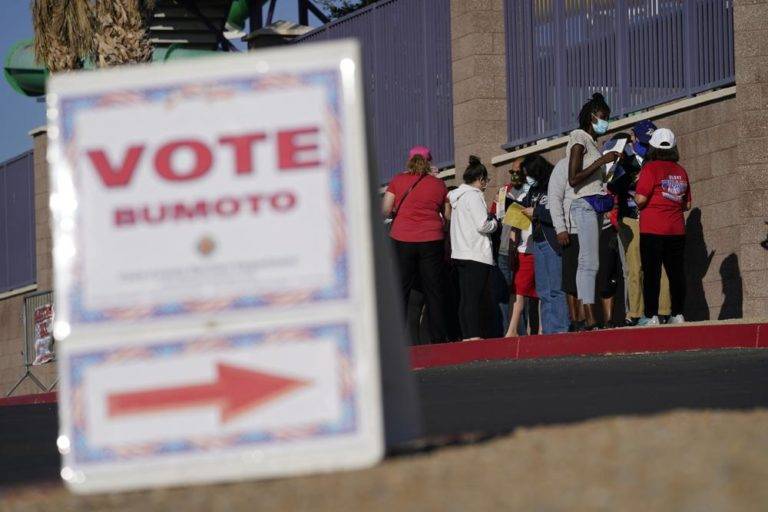
(Headline USA) House Republicans are rushing ahead on Wednesday on legislation that would impose strict new proof-of-citizenship requirements ahead of the midterm elections, a longshot Trump administration priority that faces sharp blowback in the Senate.

The bill, called the Safeguard American Voter Eligibility, or SAVE America Act, would require Americans to prove they are citizens when they register to vote, mostly through a valid U.S. passport or birth certificate. It would also require a valid photo identification before voters can cast ballots, which some states already demand.

Republicans said the legislation is needed to prevent voter fraud, but Democrats warn it will disenfranchise millions of Americans by making it harder to vote. Federal law already requires that voters in national elections be U.S. citizens, but there’s no requirement to provide documentary proof. 

“Some of my colleagues will call this voter suppression or Jim Crow 2.0,” said Rep. Bryan Steil, R-Wis., presenting the package at a committee hearing.

But he said “those allegations are false,” and he argued the bill is needed to enforce existing laws, particularly those that bar immigrants who are not citizens from voting. “The current law is not strong enough,” he said.

The legislation is actually a do-over of a similar bill the House approved last year, which also sought to clamp down on fraudulent voting, particularly among noncitizens. It won the support of four House Democrats, but stalled in the Republican-led Senate.

This version toughens some of the requirements further, while creating a process for those whose names may have changed, particularly during marriage, to provide the paperwork necessary and further attest to their identity.

It also imposes requirement on states to share their voter information with the Department of Homeland Security, as a way to verify the citizenship of the names on the voter rolls. That has drawn pushback from elections officials as potentially intrusive on people’s privacy.

The new rules in the bill would take effect immediately, if the bill is passed by both chambers of Congress and signed into law.

In the Senate, where Republicans also have majority control, there does not appear to be enough support to push the bill past the chamber’s filibuster rules, which largely require 60 votes to advance legislation.

That frustration has led some Republicans, led by Sen. Mike Lee of Utah, to push for a process that would skip the 60-vote threshold in this case, and allow the bill to be debated through a so-called standing filibuster — a process that would open the door to potentially endless debate.

Lee made the case to GOP senators at a closed-door lunch this week, and some said afterward they are mulling the concept.

“I think most people’s minds are open,” said Sen. John Kennedy, R-La., “My mind’s certainly open.”

But Murkowski of Alaska said she is flat out against the legislation.

“Not only does the U.S. Constitution clearly provide states the authority to regulate the ‘times, places, and manner’ of holding federal elections, but one-size-fits-all mandates from Washington, D.C., seldom work in places like Alaska,” she said.

Karen Brinson Bell of Advance Elections, a nonpartisan consulting firm, said the bill adds numerous requirements for state and local election officials with no additional funding.

“Election officials have a simple request of Congress — that you help share their burdens not add to them,” she said.  

Adapted from reporting by the Associated Press