‘Secret Probation Scheme’ Lands Ex-FBI Agent in Prison

(Ken Silva, Headline USA) The Justice Department’s Office of the Inspector General announced last week that an ex-FBI agent who ran a “secret probation scheme” has been sentenced to more than seven years imprisonment.

According to the DOJ-IG, the scheme of former FBI agent William Roy Stone, Jr. conned a woman out of more than $700,000.

Stone had a 12-day jury trial last August, when prosecutors detailed how convinced his victim, identified as “C.T.,” that she was under “secret probation” for federal drug crimes in “Judge Anderson’s court in Austin, Texas.” Judge Anderson is not an actual judge.

Stone and coconspirator Joseph Eventino DeLeon allegedly told the woman that the fictious federal judge had appointed the two of them to administer the conditions of her six year “secret probation.”

According to the DOJ-IG, they required her to text them written reports of her daily activities, and to compensate them for their supervisory services, as well as any expenses they incurred.

“Over the course of eleven months, C.T. gave Mr. Stone more than $700,000 and Mr. DeLeon more than $50,000,” the DOJ-IG said in its announcement last week.

“Mr. Stone and Mr. DeLeon insisted that C.T. was prohibited from disclosing her probation status to anyone, and would risk imprisonment and loss of her children if she did not comply with the terms of her probation,” the DOJ said.

“When C.T. began to question the situation, Mr. Stone assured her everything he’d done was ‘legit.’”

The DOJ-IG also said that the defendants spied on the female victim, discussed her “probation” with a psychiatrist, enlisted another person to impersonate the U.S. Drug Enforcement Administration “Intelligence Center” in a message inquiring about C.T., and even placed spoof calls between Mr. Stone, C.T., and the fictitious Judge Anderson.

“They urged her to distance herself from her family, claiming her family members wanted to take her inheritance away from her, and persuaded her to transfer her inherited assets out of a trust and into an account under her own name,” the DOJ-IG said.

“At one point, they claimed Judge Anderson would discharge C.T.’s probation if C.T. agreed to marry Mr. Stone. Mr. DeLeon even carried a weapon in C.T.’s home while purportedly providing ‘protective services’ for her.”

The DOJ-IG said the Texas Rangers also participated in its investigation of the matter.

Ken Silva is a staff writer at Headline USA. Follow him at twitter.com/jd_cashless.

Senate Slyly Advances Ukraine-Aid Package During Super Bowl

(Jacob Bruns, Headline USA) While millions of Americans were distracted Sunday night by the Super Bowl, the U.S. Senate advanced an appropriations bill that would allocate $60 billion more American tax dollars to the increasingly unpopular war effort in Ukraine, CNBC reported.

The bill, pushed by Democrats and backed by 18 RINOs, was a $95 billion aid package that would fund Ukraine, Israel and Taiwan.

Senate Majority Leader Chuck Schumer, D-N.Y., recognized the irregularity of being in session on Super Bowl Sunday, but he insisted that the legislative body push forward with the financial aid for foreigners.

“I can’t remember the last time the Senate was in session on Super Bowl Sunday, but as I’ve said all week long, we’re going to keep working on this bill until the job is done,” Schumer said.

A former version of the bill failed in the Senate last week, when Republicans rejected the lackluster border-securing proposal that was laden with foreign aid totaling $118 billion, a mere $20 billion of which would be available for border spending.

Critics noted that the funds likely would not have been spent to close the border, but rather to facilitate the asylum process that illegal immigrants have exploited. Homeland Security Secretary Alejandro Mayorkas said no new funding would be used to deport illegals.

The bill on Sunday passed through the Senate with 67 votes, advancing to the next stage, which could cut into a planned two-week recess for the legislators, putting greater pressure on them to simply rubber-stamp it.

Earlier in the day, Sen. Chris Murphy, D-Conn., predicted on CBS’s Face the Nation that it would clear the Senate.

“We’ve already moved past several procedural hurdles that require 60 votes,” Murphy said. “I think there will be 60 votes in the end.”


Nonetheless, several GOP lawmakers voiced strong opposition to it, including Sen. JD Vance, R-Ohio, who warned that Democrats appeared to be laying a trap for President Donald Trump if he were to be re-elected in November.

Sen. Marco Rubio, R-Fla., argued in a Sunday CNN appearance that America’s leaders needed to consider protecting the American people domestically before concerning themselves with the destruction of foreign monsters.

“If we secure our own border here in the United States, I’ve said … we should help Ukraine,” Rubio said. “My problem is this: Before we do these things we have to make Americans a priority again.”

According to a Washington Post report, $60 billion from the bill is earmarked for Ukraine aid.

As of December 2023, America had sent over $79 billion to the eastern European nation, Newsweek claimed, citing Germany’s globalist Kiel Institute for the World Economy as its source.

However, some have put the total price tag much higher since the Biden administration’s refusal to track where the aid is going and how it is being spent has resulted in murky and unreliable bookkeeping from the State Department and the Pentagon.

J6 Filing: FBI Agent in Crowd Cheered as Protestors Stormed Capitol

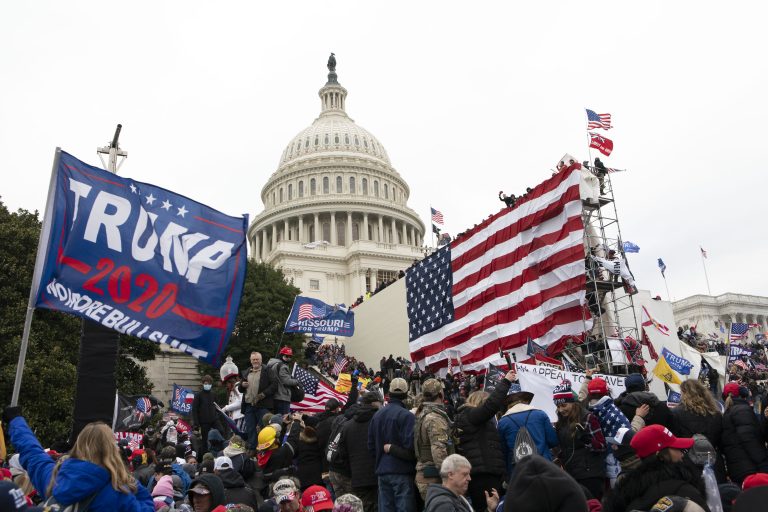
(Ken Silva, Headline USA) Jan. 6 defendant William Pope filed a motion Monday to compel the Justice Department to release evidence related to multiple FBI agents who were among the crowd of protestors on the east side of the Capitol building.

According to Pope’s motion, those agents passively witnessed as protestors stormed Capitol Hill—and at least one of them was cheerleading the event.

Much of Pope’s assertions stem from sealed video surveillance footage he’s reviewed, as well as statements made by former FBI agent John Guandolo, who was also at the Jan. 6 protest.

Pope noted that in the wake of Jan. 6, Guandolo has made numerous statements about being with other FBI agents that day. According to Guandolo, those agents were off duty on Jan. 6, and they were later interviewed by the bureau about their presence there.

“The ones who were there with me, um, both got formerly interviewed and had to explain themselves, which is interesting, they were not … both had taken the day off, so they weren’t in an official capacity at the event, and yet they were questioned by their own leadership, about what they were doing, and why there were with me, interestingly,” Guandolo said in a recent media interview, according to Pope.

By syncing Guandolo’s own videos from Jan. 6 with CCTV footage that day, Pope said he was able to determine when and where Guandolo was—and whom he was with.

“This CCTV shows Guandolo standing behind the stage with the active-duty FBI colleagues he has repeatedly described in testimony and interviews. As people began to run up the steps, Guandolo raised a recording device and pointed it towards the east center steps, which precisely syncs to the clip Guandolo released in his video montage,” Pope said.

“Captured in the audio of Guandolo’s recording is the sound of clapping and a man exclaiming, ‘Oh! Oh! Oh man! This is huge!!!’ When Guandolo’s video is synced to CCTV camera 7231, this clapping sound directly matches the video of the FBI colleague on Guandolo’s right (Colleague 2) who was vigorously clapping,” Pope said.

“The clapping colleague is also seen turning towards Guandolo and the movements of this FBI agent’s mouth precisely match the audio of the man exclaiming, ‘Oh! Oh! Oh man! This is huge!!!’”

According to Pope, his findings indicate that active-duty FBI agents perceived events at the Capitol to not be criminal.

“From the clapping and celebratory expression, we can conclude that these FBI agents were in favor of people accessing the building and that they believed the people had a First Amendment right to be there,” Pope added.

Unfortunately for the public, much of the surveillance footage referenced by Pope is still under seal. Pope said he did provide that footage to Congress.

“Whatever Congress chooses to do with this sealed exhibit and unredacted filing is up to them. Speaker Johnson has pledged to release all the CCTV, so Congress could make these items public, but the sealed exhibit and unredacted filing will not be publicly released by me without Court permission or Congressional action,” Pope said.

Pope seeks to have the court compel the DOJ to identify all FBI employees who were on Capitol grounds, as well as all other local law enforcement with whom John Guandolo had contact—and to produce all related discovery.

The DOJ has yet to respond to Pope’s filing.

Ken Silva is a staff writer at Headline USA. Follow him at twitter.com/jd_cashless.

Utah Legislature Passes Bill to Create Roadblocks for ‘Digital Currency’

(Mike Maharrey, Money Metals News Service) The Utah legislature overwhelmingly approved a bill that would expressly exclude a central bank digital currency (CBDC) from the state’s definition of money, creating potentially significant roadblocks to its use as such in the state.

Rep. Tyler Clancy was the primary sponsor of HB164. Sen. Michael Kennedy ran the bill on the Senate side.

The proposed law would specify that “a central bank digital currency is not specie legal tender and is not legal tender in the state,” effectively excluding CBDC from the state’s definition of money under the Utah Specie Legal Tender Act.

HB164 would also change the definition of money under the state’s Uniform Commercial Code (UCC) to specify that “Money does not include a central bank digital currency.”

On Feb. 9, the Utah Senate passed HB164 by a 27-1 vote. The House previously approved the measure by a vote of 68-0. The bill now moves to Gov. Spencer Cox’s desk for his consideration. He will have 20 days from the date the legislature adjourns for the session to sign or veto HB164. If he takes no action, the bill will become law without his signature.

The legislation defines central bank digital currency as “a digital currency, a digital medium of exchange, or a digital monetary unit of account issued by the United States Federal Reserve System, a federal agency, a foreign government, a foreign central bank, or a foreign reserve system, that is made directly available to a consumer by such entities, or processed or validated directly by such entities.”

The UCC is a set of uniformly adopted state laws governing commercial transactions in the U.S. According to the Uniform Law Commission, “Because the UCC has been universally adopted, businesses can enter into contracts with confidence that the terms will be enforced in the same way by the courts of every American jurisdiction. The resulting certainty of business relationships allows businesses to grow and the American economy to thrive. For this reason, the UCC has been called ‘the backbone of American commerce.’”

Similar legislation has already been signed as law in Indiana and Florida

How Could This Impact the Implementation of a CBDC?

It remains unclear how changing the definition of money in the U.S. would play out in practice against a CBDC if the federal government attempts to implement one.

Passage would, as noted by one opponent of the legislation, put a CBDC “into the bucket of ‘general intangibles’” – rather than money, and wouldn’t ban its use completely.

But it could potentially gum up the works and make it difficult for the government to fully implement a CBDC.

Opponents of the strategy and supporters of CBDC generally take the position that states can’t do anything to stop a CBDC, since – according to their view – under the supremacy clause “any federal law on this point will automatically override state law.”

That’s what they said when California legalized medical marijuana in 1996. It didn’t quite turn out that way.

In the ramp-up to the 1996 vote on Proposition 215, voters were repeatedly told that legalization of marijuana, even for limited medical purposes, was a fruitless effort, since, under the supremacy clause, any such state law would be automatically overridden by the Controlled Substances Act of 1970 (CSA). At best, opponents told Californians, the state would end up in a costly, and losing court effort.

But despite those warnings, Californians voted yes, setting in motion a wave of state cannabis legalization efforts. As of today, despite ongoing federal prohibition, 38 states have legalized what the federal government claims to prohibit. Ultimately, the federal government will most likely be forced to back down, even if just to save face. It has become impossible to fully enforce its federal prohibition over this massive state and individual resistance.

A similar scenario played out in response to the REAL ID Act of 2005. The national ID system still isn’t fully up and running more than 17 years after the “final deadline” for full implementation.

Why not?

Because a significant number of states decided not to participate, drug their feet, or in some cases, simply provide residents with a choice to opt out. Federal officials have confirmed that state-level roadblocks to implementation are the primary reason for the continuing delays.

“Roadblock” is likely how this and other state-based strategies to oppose a CBDC will play out. This is part of James Madison’s four-step blueprint for how states can stop federal programs.

But, as can be seen so far with issues like marijuana and the REAL ID Act, whether a federal program is implemented or not ultimately gets down to the number of roadblocks put up by states, and more importantly, the willingness of the people to participate, or not.

What Is Central Bank Digital Currency?

Generally speaking, digital currencies are virtual banknotes or coins held in a digital wallet on a computer or smartphone. The difference between a central bank (government-imposed) digital currency and peer-to-peer electronic currencies such as Bitcoin and Ethereum is the value of CBDC is backed and controlled by the government, just like traditional fiat currency.

Governments sell the idea of CBDC by promising to provide a safe, convenient, and more secure alternative to physical cash. We’re also told it will help stop dangerous criminals who like the intractability of cash. But there is a darker side – the promise of control.

At the root of the move toward government digital currency is “the war on cash.” The elimination of cash creates the potential for the government to track and even control consumer spending.

Imagine that all cash disappeared this morning and all that was left was a government-controlled digital currency. You would be forced into doing all business electronically with this government money. It would be impossible to hide even the smallest transaction from the government’s eyes. Something as simple as your morning trip to Dunkin would be known by government functionaries. As Bloomberg put it in an article published when China launched a digital yuan pilot program in 2020, digital currency “offers China’s authorities a degree of control never possible with physical money.”

Governments could even “turn off” your ability to make purchases. Bloomberg described the level of control a digital currency could give Chinese officials.

The PBOC (People’s Bank of China) has also indicated that it could put limits on the sizes of some transactions, or even require an appointment to make large ones. Some observers wonder whether payments could be linked to the emerging social-credit system, wherein citizens with exemplary behavior are ‘whitelisted’ for privileges, while those with criminal and other infractions find themselves left out. ‘China’s goal is not to make payments more convenient but to replace cash, so it can keep closer tabs on people than it already does,’ argues Aaron Brown, a crypto investor who writes for Bloomberg Opinion.

Economist Thorsten Polleit explained the level of Big Brother-like government control possible with the advent of a digital euro in an article published by the Mises Wire. As he put it, “the path to becoming a surveillance state regime will accelerate considerably” if and when governments begin issuing CBDC.

In 2022, the Federal Reserve released a “discussion paper” examining the pros and cons of a potential U.S. central bank digital dollar. According to the central bank’s website, there has been no decision on implementing a digital currency, but this pilot program reveals the idea is further along than most people realized.

The Tenth Amendment Center contributed to this report.

Russia Turns to Gold to Raise Cash and Skirt Economic Sanctions

(Mike Maharrey, Money Metals News Service) Russia has reportedly used gold to evade currency restrictions put in place as part of economic sanctions levied in the wake of the invasion of Ukraine.

Under the sanction regime, Russian banks are prohibited from importing dollars or euros into the country. The ban is enforced by locking Russia out of the Society for Worldwide Interbank Financial Telecommunication (SWIFT).

This system enables banks and other institutions to send and receive financial transactions and data in a secure, standardized environment. Because the dollar serves as the world reserve currency, SWIFT effectively facilitates the international dollar system. As the European Council explained it, locking Russia out of SWIFT effectively imposed a currency ban.

As a result, these banks can neither obtain foreign currency (as a transfer of foreign currencies between two banks is generally processed as a transfer abroad involving a foreign intermediary bank) nor transfer assets abroad. This has negative consequences for the Russian and Belarusian economies.

According to a Bloomberg report, Russia has skirted the sanctions and important U.S. and EU banknotes into the country through the United Arab Emirates and Turkey using gold.

With hard currency in the form of dollars and euros, it’s much easier for Russia to obtain goods and services abroad through sellers willing to skirt sanctions for cash.

Reports compiled by Sayari, a financial intelligence company, found that financial institutions in the UAE and Turkey exported more than the equivalent of $82 million in euros, dollars, and UAE dirhams into Russia during the first quarter of 2023. The report shows that several of the same institutions that shipped hard cash to Russia also imported gold from the country within a similar timeframe.

One of the Russian banks reportedly receiving cash for gold was Lanta Bank JSC. The owners of the bank reportedly have a controlling interest in GV Gold, a Russian mining company.

The report says Russian banks were trading gold for currency through at least July or August of last year. A Sayari analyst said gold deliveries seem to have expanded to Hong Kong, in addition to the UAE and Turkey.

Sayari described the trades as “circular,” and reported that gold and banknotes flowed through a network of intermediaries making them difficult to trace. The D.C.-based commercial risk intelligence provider conceded that the data could not trace the imported currencies to the final destination and said it was unclear if the recipients had direct ties to sanctioned entities.

But it seems almost certain Russia has used its vast gold reserves to obtain dollars and euros to facilitate trade despite the globally imposed economic lockdown.

Sanctions have created a shortage of foreign currency in the country, putting a squeeze on the Russian economy and effectively shutting the country out of the global financial system. Bloomberg reported, “It’s possible that some of the country’s banks sought access to the currencies to facilitate imports and other transactions.”

Bloomberg said it could not independently confirm the cash for gold scheme and it is “not clear” if the banks are still using the strategy.

It makes sense that the Russians would turn to the yellow metal. In the years prior to the invasion, the Russian central bank aggressively accumulated gold. In 2018, Russia overtook China to become the world’s fifth-largest gold-holding country.

The Central Bank of Russia bought $4.3 billion worth of gold between June 2019 and June 2020. According to a Bloomberg report in 2020, “Russia spent more than $40 billion building a war chest of gold over the past five years, making it the world’s biggest buyer.”

Russia also ranks second in the world as a gold producer.

Russia’s investment in gold appears to have paid off.

The country has a lot of gold. And the fact is, there are always people and institutions that want gold – sanctions or no sanctions.

At the onset of sanctions, Russian Parliament head Pavel Zavalny made comments indicating that gold would serve an important role as it attempted to maintain trade and continue selling oil and gas despite global sanctions.

If they want to buy, let them pay either in hard currency, and this is gold for us, or pay as it is convenient for us, this is the national currency. As for friendly countries, China or Turkey, which are not involved in the sanctions pressure. We have been proposing to China for a long time to switch to settlements in national currencies for rubles and yuan. With Turkey, it will be lira and rubles. The set of currencies can be different and this is normal practice. You can also trade bitcoins.

In an op-ed published by MarketWatch in April 2022, Brett Arends said Russia’s plan to use gold makes sense.

Gold is completely private. It is completely independent of the SWIFT or any other banking system. And despite the rise of cryptocurrencies, it remains the most widespread and viable global currency that is not controlled by any individual country.

FBI Sued for Records on Ashli Babbitt

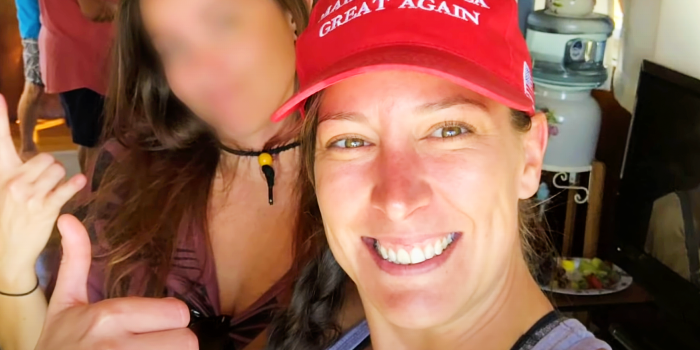
(Ken Silva, Headline USA) Judicial Watch sued the FBI earlier this month for its files on Ashli Babbitt, the protestor shot and killed by a Capitol Police officer on Jan. 6, 2021.

The group’s lawsuit was filed Feb. 2, nearly a year after the FBI denied a Freedom of Information Act request for the Babbitt records.

“Ashli Babbit was the only homicide victim on January 6, yet the FBI has been illicitly hiding its files on Ashli Babbitt from her family for a year,” stated Judicial Watch President Tom Fitton. “Why the cover-up?”

The lawsuit also comes about a month after Judicial Watch and Babbitt’s widower, Aaron Babbitt, sued the U.S. government for wrongful death.

Babbitt, a 14-year Air Force veteran, was shot and killed by Lt. Michael Byrd while crawling through a window in the Capitol building during the Jan. 6 protests.

Byrd has claimed that he acted with “the utmost courage” and “saved countless lives.”

However, earlier records obtained by Judicial Watch found that other officers at the scene did not see a weapon in Babbitt’s hands prior to the shooting and that they did not hear Byrd issue any verbal commands prior to the shooting. Lt. Byrd later confessed that he shot Ashli before seeing her hands or assessing her intentions or even identifying her as female.

“Ashli was unarmed. Her hands were up in the air, empty, and in plain view of Lt. Byrd and other officers in the lobby. Ashli posed no threat to the safety of anyone. Not one member of Congress was in the lobby, which was guarded by multiple armed police officers,” the lawsuit said.

“Ashli could not have seen Lt. Byrd, who was positioned far to Ashli’s left and on the opposite side of the doors, near an opening to the Retiring Room, a distance of approximately 15 feet and an angle of approximately 160 degrees,” the lawsuit said.

“Lt. Byrd, who was not in uniform, did not identify himself as a police officer or otherwise make his presence known to Ashli. Lt. Byrd did not give Ashli any warnings or commands before shooting her dead.”

Judicial Watch has already uncovered Lt. Byrd’s checkered background, including an incident in which Byrd left his service weapon in the Capitol Visitors Center bathroom. The loaded Glock was discovered during a routine security sweep later the same day.

Judicial Watch also revealed an incident where Byrd shot at a carful of juveniles while he was off duty.

“Lt. Byrd’s police powers also were revoked for a prior off-duty shooting into a stolen, moving vehicle in which the occupants were teenagers or juveniles,” the lawsuit said.

“The stolen vehicle was Lt. Byrd’s car. Lt. Byrd fired multiple shots at the fleeing vehicle in a suburban area. Stray bullets from Lt. Byrd’s firearm struck the sides of homes nearby. An official investigation found that Lt. Byrd’s use of force was not justified.”

Babbitt’s widower seeks $30 million in damages over the wrongful death.

Ken Silva is a staff writer at Headline USA. Follow him at twitter.com/jd_cashless.

Trump Unleashes Criticism on ‘Disloyal’ Taylor Swift, ‘Liberal’ Travis Kelce

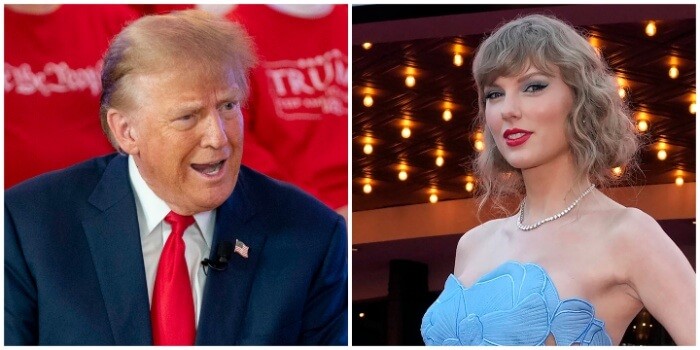
(Luis Cornelio, Headline USA) Former President Donald Trump launched a scathing rebuke at Taylor Swift and her boyfriend, football player Travis Kelce, in a fiery Truth Social post ahead of the Super Bowl on Sunday.

Trump labeled Swift as “disloyal” and referred to Kelce as a “liberal,” likely addressing allegations that Swift might engage in a widespread campaign in support of President Joe Biden’s re-election. 

“I signed and was responsible for the Music Modernization Act for Taylor Swift and all other Musical Artists. Joe Biden didn’t do anything for Taylor, and never will,” Trump said on Sunday.

“There’s no way she could endorse Crooked Joe Biden, the worst and most corrupt President in the History of our Country, and be disloyal to the man who made her so much money,” he added, before admitting he like Kelce “even though he may be a Liberal.” 

In 2018, Trump signed the Music Modernization Act in the company of Kid Rock, Mike Love, and other musicians, safeguarding musicians’ rights in the era of digital streaming and other technologies.

While it remains unclear if Swift plans to endorse Biden’s re-election bid, she supported Biden in the contentious 2020 election.

Swift refrained from endorsing Hillary Clinton in the 2016 election, claiming that Trump would have weaponized her endorsement. 

“Unfortunately in the 2016 election you had a political opponent who was weaponizing the idea of the celebrity endorsement,” Swift told Vogue. “He was going around saying, ‘I’m a man of the people. I’m for you. I care about you.’ I just knew I wasn’t going to help.” 

Swift found herself implicated as an alleged Pentagon “psyop.” However, Pentagon spokesperson Sabrina Singh clarified that the musician is not part of a scheme to brainwash Americans.

Referring to a Swift song, Signh told Politico: “[A]s for this conspiracy theory, we are going to shake it off.”

Woman w/ Gun Killed by Off-Duty Officers at Joel Osteen’s Church; Young Boy Injured

(Headline USA) A woman in a trenchcoat opened fire with a long gun inside celebrity pastor Joel Osteen’s megachurch in Texas before being gunned down by two off-duty officers who confronted her, sending worshippers rushing out of the building between busy Sunday services, authorities said.

The woman entered the Houston church with a 5-year-old boy shortly before 2 p.m. and the child was shot and critically injured. Houston Police Chief Troy Finner said it was not clear whether the young child was struck by the off-duty officers who returned fire. He said a 57-year-old man also was shot and wounded.

The child was in critical condition after being taken to a hospital. The man who was wounded in his hip was stable.

Finner said that after the woman began shooting, both officers “engaged” and the woman was killed. He said that unfortunately “a 5-year-old kid was hit” although he released no immediate details on how the confrontation unfolded.

But he added: “She had a long gun, and it could have been a lot worse.”

The shooting happened between services at the megachurch that is regularly attended by 45,000 people every week, making it the third largest megachurch in the U.S., according to the Hartford Institute for Religion Research. Osteen’s televised sermons reach about 100 countries.

Osteen joined police at a news conference afterward and said the church is “devastated.” But he added that the shooting could have been much worse if it had happened during the larger 11 a.m. service. He added he would pray for the victims and for the woman who did the shooting and their families.

“We’re going to stay strong and we’re going to continue to, to move forward,” Osteen said after authorities spoke. “There are forces of evil, but the forces that are for us—the forces of God—are stronger than that. So we’re going to keep going strong and just, you know, doing what God’s called us to do: lift people up and give hope to the world.”

Witnesses told reporters that they heard multiple gunshots shortly before the church’s 2 p.m. Spanish language service was set to begin.

Christina Rodriguez, who was inside the church, told Houston television station KTRK that she “started screaming, ‘There’s a shooter, there’s a shooter,’” and then she and others ran to the backside of a library inside the building, then stood in a stairway before they were told it was safe to leave.

Texas Gov. Greg Abbott issued a separate statement saying “our hearts are with those impacted by today’s tragic shooting and the entire Lakewood Church community in Houston. Places of worship are sacred.”

At least 20 police and fire trucks were near one of the church’s entrances Sunday afternoon, including the fire department’s hazardous materials truck. Finner said it was reported that the woman had a bomb, but no explosives were found when her vehicle and backpack were searched.

Worshippers could be seen leaving the building as authorities evacuated the church before the news conference. Officials announced a reunification center had been set up at a nearby gym for people to find their loved ones.

Adapted from reporting by the Associated Press

Mayorkas Deflects Blame for Border Crisis, Points Finger at Congress

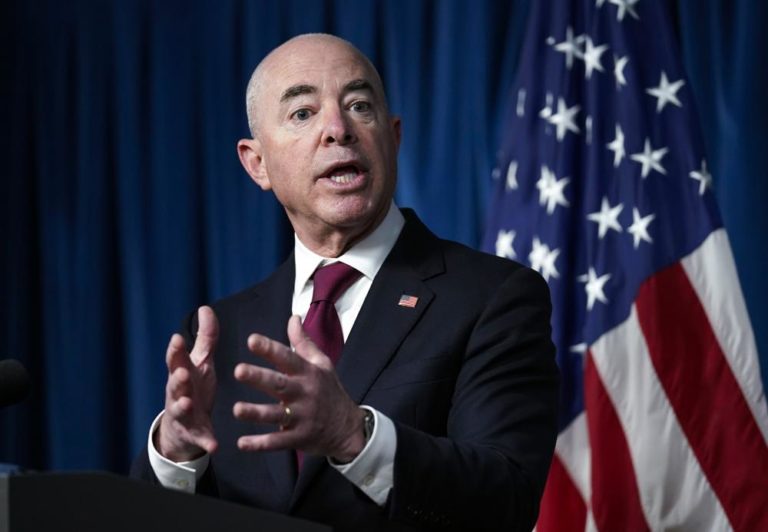
(Luis Cornelio, Headline USA) DHS Secretary Alejandro Mayorkas has rejected accusations that he and President Joe Biden are responsible for the ongoing border crisis, placing the blame on Congress instead.

Mayorkas made these remarks a week after House Republicans nearly impeached him due to the unprecedented surge in illegal immigration. During a Sunday interview with NBC News host Kristen Welker, the secretary faced tough questions about the situation at the border.

“No doubt there is gridlock in Congress. But do you bear responsibility for what is happening at the border with the president himself? It’s called a crisis,” Welker pressed Mayorkas.

In response, Mayorkas retorted, “It certainly is a crisis. And we don’t bear responsibility for a broken system. And we’re doing a tremendous amount within that broken system. But fundamentally … Congress is the only one who can fix it.”

While acknowledging the existence of the border crisis, Mayorkas again avoided shouldering any blame later in the interview.

“There is no question that we have a challenge, a crisis at the border,” Mayorkas added. “And there is no question that Congress needs to fix it. And we’re doing everything we can within that broken system, short of legislation to address what is a not just a challenge for the United States but one throughout our region.”

The Republican-led impeachment attempt against Mayorkas narrowly failed after three Republicans joined Democrats in blocking the resolution. Despite the defeat, House Speaker Mike Johnson, R-La., to pledge a second-round vote.

“He’s right that the border is broken, but it is he and President Biden who broke it,” Johnson said on Twitter, directly responding Mayorkas’s Sunday remarks. 

Johnson emphasized that Mayorkas had stopped the deportation of illegal aliens, halted the construction of the border wall and spewed pro-immigration rhetoric that ultimately triggered the border crisis.

“On 64 occasions, they took direct action to undermine border security,” Johnson added. “They must take action now to unwind their disastrous policies and secure the border.”

Jill Explains Why Joe Forgets When Beau Died; Critics Point Out Discrepancy

(Luis Cornelio, Headline USA) First Lady Jill Biden rushed to defend President Joe Biden amid growing concerns about his mental acuity, following Special Counsel Robert Hur’s citation of age and deteriorated mental faculties as reasons why the president should not be prosecuted for mishandling classified documents. 

Hur’s 338-page report on the criminal investigation into Joe Biden’s unathorized retention of classified information disclosed significant findings. Notably, the president demonstrated an inability to recall the timing of his son Beau Biden’s passing, let alone when the classified documents were delivered to his residence after the end of his tenure as vice preisdent in 2016.

However, Jill Biden responded with a campaign email lambasting Hur and attempting to explain why her 81-year-old husband failed to remember his son’s passing. “I hope you can imagine how it felt to read that attack — not just as Joe’s wife, but as Beau’s mother,” she declared Saturday, according to the New York Post.

“I don’t know what this Special Counsel was trying to achieve. We should give everyone grace, and I can’t imagine someone would try to use our son’s death to score political points,” she added.

Jill Biden stated that the president experiences grief for his son, measuring it not in years but in the depth of sorrow. “If you’ve experienced a loss like that, you know that you don’t measure it in years — you measure it in grief. May 30th is a day forever etched on our hearts. It shattered me, it shattered our family,” she continued. 

Jill Biden’s campaign email came two days after Joe Biden held an impromptu press conference where he also lambasted Hur’s report. “How the hell dare he raise that? Frankly, when I was asked the question, I thought to myself it wasn’t any of their damned business,” Biden retorted in the gaffe-laden conference. 

Observers on social media pointed out a discrepancy in Jill Biden’s email: she is not Beau Biden’s birth mother.

“Jill Biden is not Beau Biden’s mother and they are both disgusting in the way they exploit and misrepresent his tragic death,” author and political commentator Julie Kelly said. Similarly, Twitter account amuse posted: “Neilia Biden was Beau’s mother.”

Jill Biden met then-Senator Joe Biden in 1975, marrying him two years later. At the time, Joe Biden was a widower. His first wife, Neilia Hunter Biden, and daughter Naomi Biden tragically passed away in a car accident in 1972. Both Beau Biden and Hunter Biden were in the car but survived.