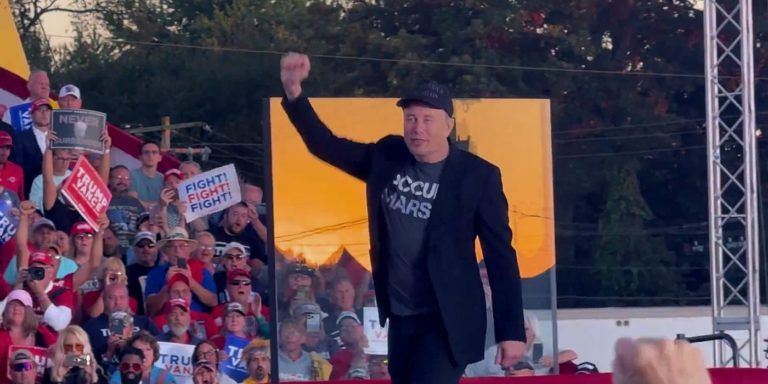
(Julianna Frieman, Headline USA) On the same day that he appeared onstage with GOP presidential candidate Donald Trump during his rescheduled rally in Butler, Pa., billionaire Elon Musk launched a political-action committee aiming to help bring Trump back to the White House.
Musk, the founder of SpaceX and Tesla, endorsed Trump following his now historic July 13 Butler rally, during which the former president took a bullet to the ear before pumping his fist in defiance with a call to “Fight! Fight! Fight!”
During his remarks at the rally Saturday, Musk urged Americans to “be a pest” and get as many people to register to vote as possible.
NEW: Elon Musk ends his speech in Butler, PA, tells people to “vote, vote, vote.”
Soon after, the America PAC sprang onto the scene, targeting seven closely watched swing states: Pennsylvania, Michigan, North Carolina, Wisconsin, Georgia, Nevada and Arizona.
The America PAC promised $47 to anyone who refers registered swing-state voters to sign its petition supporting the First Amendment and Second Amendment of the U.S. Constitution. The goal is to reach a million signatures from registered battleground state voters.
Sign our petition in defense of YOUR Constitutional rights to Free Speech & Bear Arms!
Goal is to get 1M voters in swing states to sign this petition.
For each registered swing state voter you refer that signs the petition, you get $47!https://t.co/PgHAgrmrv8
The America PAC’s official website declares support for the following six values: secure borders, safe cities, free speech, sensible spending, a fair justice system and self-protection. Those interested in working to increase voter turnout may receive starting pay at $30 plus performance bonuses.
Musk (who also owns the X platform formerly known as Twitter), obtained the @america handle on it and began posting pro-MAGA content on Saturday.
Posts by the America PAC include illegal immigration statistics, calls to register to vote, and video clips of Democratic leaders opposing free speech and strong borders.
These are the increases in Illegal Immigration populations in Swing States under The Biden/Harris Administration.
On Sept. 5, Trump announced that Musk will serve as the head of a Government Efficiency Commission if he is elected for a second term come November. The prospective commission would be tasked with auditing and reforming the finances and performance of the entire federal government.
Julianna Frieman is a freelance writer also published by the Daily Caller and The Federalist. Follow her on Twitter at @JuliannaFrieman.
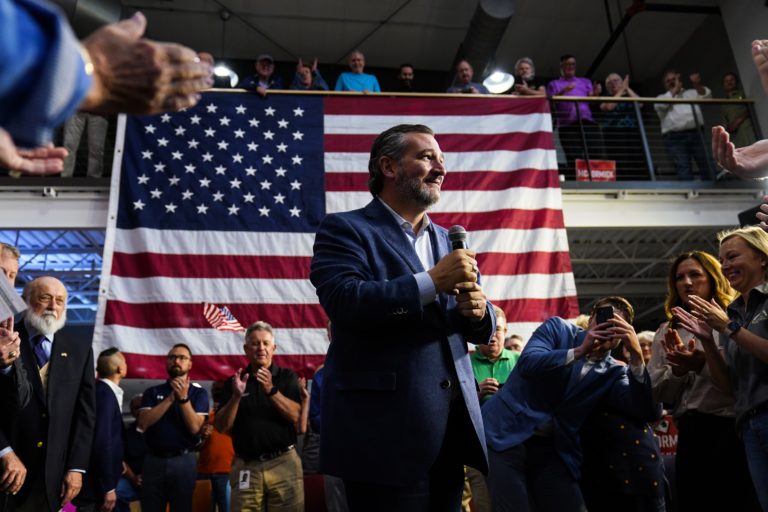
Cruz attacked his Democratic opponent in a way that would make him all red in the face. The GOP senator warned of Allred’s dangerous crime policies and exposed the congressman’s record voting in favor of taxpayer-funded sex-change surgeries on children.
“Ted Cruz is tough on crime,” Collin County Sheriff Jim Skinner said in the first ad. “His opponent, Colin Allred, is soft on it.”
Skinner continued, saying Allred voted in favor of reducing jail sentences for murder, sexual assaults, carjackings and armed home invasions.
In February 2023, Allred joined 172 Democrats to vote against nullifying a rewritten Washington, D.C., law that would have reduced the maximum penalties for crimes including burglary, carjacking and robbery.
D.C. Mayor Muriel Bowser vetoed the rewrite of the city’s criminal code herself in January 2023, calling the reduction of maximum penalties sends “the wrong message,” according to the Associated Press. The D.C. city council then voted to overturn Bowser’s veto.
Cruz’s ad stated that when the issue reached President Joe Biden, he broke from progressive Democrats like Allred by signing into law a resolution blocking the D.C. penalty reduction bill.
BREAKING NEWS: President Biden officially signed my bipartisan resolution to block the D.C. Council’s dangerous overhaul of Washington’s criminal code into law.
This is a major first step to restoring law and order in our nation’s capital city. pic.twitter.com/4h60intj9T
“For eight months, I tried to get the images removed, but Big Tech refused,” said the mother of a victim who was targeted by deepfake AI pornography. “Ted Cruz took action working with Democrat Amy Klobuchar.”
Cruz’s third ad called out Allred’s “extreme liberal vision for America” on LGBT issues allowing men to occupy women’s spaces.
Allred voted for “boys in girls’ locker rooms” and “boys in girls’ bathrooms” via the so-called Equality Act in 2021.
The Democratic congressman remained consistent by voting in favor of “boys in girls’ sports” via the Protection of Women and Girl’s Sports Act in 2023, according to Cruz’s ad.
Cruz’s ad cautioned that Allred intends to allow “drag shows on military bases,” “taxpayer-funded sex-change surgeries” and “taxpayer funds to sterilize minors.”
“Allred’s radical ideas already divide America. Now, he wants to divide our military,” the ad stated.
Julianna Frieman is a freelance writer previously published by the Daily Caller and The Federalist. Follow her on Twitter at @JuliannaFrieman.
(Mike Maharrey, Money Metals News Service) The road out of my neighborhood looks like a war zone. Helene did quite a number on us here in the Tampa Bay Area (and elsewhere).
Storm surge flooding inundated thousands of homes and businesses with up to four feet of water in some areas. As I drive around the area, I see house after house with all the residents’ worldly possessions in a soggy pile on the curb.
But we should be grateful, right? After all, this will create an economic boom!
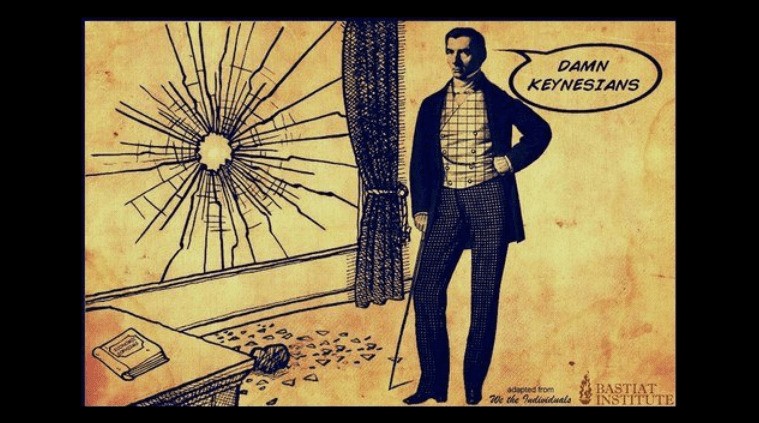
At least, according to some silly Keynesians.
If we believe this economic theory (fallacy), vast sums of money spent to repair damage caused by national disasters stimulate the economy.
A good war will do the trick as well.
In fact, economist (political hack) Paul Krugman once suggested a fake alien invasion would benefit the economy because it would boost government spending.
I’m not making this up. Krugman actually said this:
“If we discovered that, you know, space aliens were planning to attack and we needed a massive buildup to counter the space alien threat and really inflation and budget deficits took secondary place to that, this slump would be over in 18 months,” he said. “And then if we discovered, oops, we made a mistake, there aren’t any aliens, we’d be better—”
I think he was going to say we would be better off.
Ummm. Yeah. OK.
I’m pretty sure building weapons to fight off fake aliens would make my life at least 45 percent better.
And if a fake alien war is good, how great is a hurricane?
I can answer that.
Not great at all.
The notion that disasters have a silver lining stems from the “broken window fallacy.”
Imagine a kid throws a rock through a shop window. The theory is that it’s good for the economy because the shop owner will have to pay somebody for the repair window. As Bastiat explained it:
“If you have been present at such a scene, you will most assuredly bear witness to the fact, that every one of the spectators, were there even thirty of them, by common consent apparently, offered the unfortunate owner this invariable consolation: ‘It is an ill wind that blows nobody good. Everybody must live, and what would become of the glaziers if panes of glass were never broken?’”
In other words, the shopowner’s misfortune is the glass fixer’s good luck.
With the money he makes fixing the window, the glazier can buy a new suit. A tailor will then have money in his pocket to go to a football game. The owner of the football team benefits from another fan in the seats, and on and on it goes. The broken window led to a string of economic transactions. As Bastiat put it, the careless child “spurred trade.”
This seems plausible, right? On the surface, it does appear as if the broken window led to a small economic boom. But we’re missing something, as Bastiat explained:
“But if, on the other hand, you come to the conclusion, as is too often the case, that it is a good thing to break windows, that it causes money to circulate, and that the encouragement of industry in general will be the result of it, you will oblige me to call out, ‘Stop there! Your theory is confined to that which is seen; it takes no account of that which is not seen.’”
So, what have we missed?
We don’t see the money that was never spent.
If the shopkeeper hadn’t had to spend 6 franks on a new window, he might have bought a pair of shoes. Now, that transaction won’t happen, and the cobbler won’t receive that income. As a result, the cobbler will have to postpone buying a new book for his library.
Bastiat summed it up this way:
“Let us take a view of industry in general, as affected by this circumstance. The window being broken, the glazier’s trade is encouraged to the amount of six francs: this is that which is seen.
“If the window had not been broken, the shoemaker’s trade (or some other) would have been encouraged to the amount of six francs: this is that which is not seen.”
A good economist always tries to account for the unseen. But as I said when I explained why price gouging laws during a disaster aren’t helpful, most people aren’t good economists — and that includes a lot of economists.
It should be clear breaking a window does not make society better off. It becomes even more clear when you magnify the destruction to the level produced by a Hurricane.
Yes, billions will be spent to repair and clean up. Roofers, builders, and others will make a lot of money. But you have to stop and consider the cost to others. I doubt anybody in Florida, North Carolina, and other places impacted by Helene will claim they’re better off because their house filled up with water. And just stop and imagine what could have been done with those billions had the hurricane never materialized.
Destruction isn’t progress. This is just a silly Keynesian claptrap.
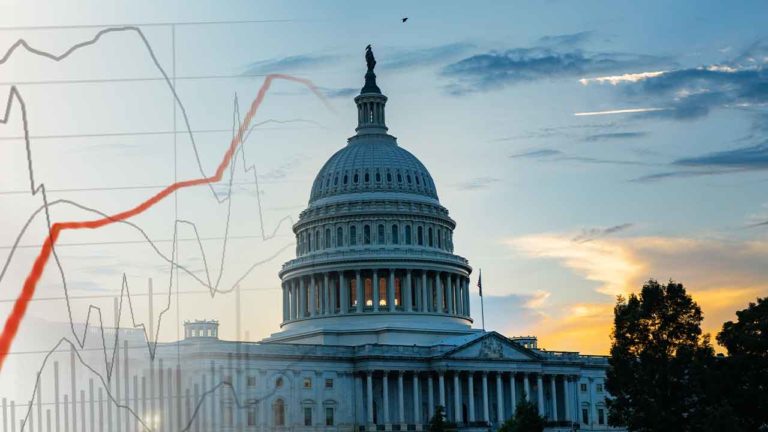
(Stefan Gleason, Money Metals News Service) The mainstream financial media is hailing Friday’s surprise “blowout” jobs report. According to the Labor Department, employers added 254,000 jobs in September, much more than had been forecasted.
President Joe Biden joined Federal Reserve Chairman Jerome Powell in taking a victory lap for the supposedly strong economy.
Among those unimpressed by the latest official data is Senator Marco Rubio (R-FL).
“Another fake jobs report out from Biden-Harris government today,” he posted to social media. “16 of the last 17 reports have been significantly revised downwards after media helps them with their fake headlines.”
Skeptics of rosy government statistics also include the vast majority of Americans who say the economy is far from being in great shape.
A recent Gallup poll showed that only 3% of Americans rate economic conditions as “excellent,” with just 19% saying things are “good” overall. A much larger 48% say the economy is in “poor” shape.
Things may be looking up in Washington and on Wall Street, but 62% of Americans believe economic conditions are “getting worse.” Only 32% say they are improving.
The massive disconnect between the public’s actual experience with the economy and the government’s statistical representations of it is causing confusion, frustration, and denial in the White House.
President Biden, responding angrily to Senator Rubio’s comments, insisted, “The job numbers are what the job numbers are. They’re real.”
What’s real to most Americans is that their rising costs of living are straining their budgets, especially when it comes to housing.
In many states, the median monthly housing payment has nearly doubled in the last four years, according to Redfin.
A record number of Americans are facing the prospect of paying 50% or more of their income on rent or mortgage payments.
Unsurprisingly, actual housing costs aren’t reflected in the Consumer Price Index. The CPI instead employs statistical models such as “owner’s equivalent rent” to arrive at a number that is far removed from reality.
At least the investor class appears to be doing well. The S&P 500 continues to zoom to new records.
But how real are those gains?
A case could be made that the stock market has been running on the fumes of artificial stimulus and may be due for a reckoning.
Still, there’s no denying that investors who bought the S&P 500 at the beginning of the year are sitting on nominal gains of more than 20% – a very good performance by historical standards.
That performance looks far less impressive when measured in terms of real money in the form of gold and silver. In fact, the S&P 500 is down over 6% versus gold in 2024.
It has fallen over 10% when measured against silver, which rose to a multi-year high last week.
Rising precious metals prices reflect the ongoing debasement of the currency.
Today’s fiat Federal Reserve notes fail to meet the Founding Fathers’ original definition of a “dollar” that was linked specifically to gold and silver. The money itself is fake.
That is at the root of why most Americans are struggling with rising costs – and why government-derived, media-hyped narratives about the supposedly strong economy also strike most Americans as fake.
(Mike Maharrey, Money Metals News Service) Russia reportedly plans to add silver and boost its gold, platinum, and palladium holdings in its state fund next year.
This would be the first time Russia has held silver in its state fund.
According to an Interfax report, the 2025 budget calls for an allocation of 51.5 billion rubles to buy precious metals and gemstones. This is a 32 percent increase from previously announced budget plans.
How much silver Russia plans to include in its precious metals strategy remains unclear.
According to a Jerusalem Post report, the move to increase precious metals holdings is “part of an ongoing response to economic sanctions that have isolated the country from the SWIFT banking system.
The SWIFT system serves as the global economy’s superhighway. In effect, it operates as a global financial messaging service, facilitating cross-border payments. Since the dollar is the world reserve currency, SWIFT effectively facilitates an international dollar system.
The United States has taken advantage of its privilege as the issuer of the world’s reserve currency, in effect, weaponizing the dollar for use as a foreign policy tool.
This has led to a movement in many countries to gradually minimize exposure to the dollar. This is a primary driver of ongoing central bank gold accumulation around the world.
As de-dollarization has accelerated, countries have primarily turned to gold as a reserve asset. Russia’s plan to include silver in its strategy is a new development.
According to the Post, “Russia has increasingly focused on diversifying its reserves with highly liquid assets, like gold. However, the mention of silver in this latest budget is significant, as it represents the first time any central bank has explicitly included silver in its purchasing plans during the current bull market for precious metals.”
The Post raises an interesting question: could silver follow the gold’s path?
“Gold, once treated with a degree of skepticism by some governments, has become a safe haven asset, particularly in times of economic uncertainty. Could silver follow a similar trajectory?”
Industrial offtake accounts for more than 50 percent of silver demand, but at its core, it is a monetary metal. The Post speculated that “silver’s dual role as both an industrial commodity and a potential financial asset could make it more attractive to governments seeking to hedge against economic volatility.”
Russia’s pivot to silver comes at a time when the metal seems to be underpriced, given the supply and demand dynamics.
Silver demand has outstripped supply for three straight years, and the Silver Institute projects another market deficit in 2024. This is primarily due to rapidly rising industrial demand, specifically in the solar energy sector.
In 2023, the silver market charted a structural deficit of 184.3 million ounces. The projection is for an even larger supply shortfall this year in the neighborhood of 215 million ounces. This would be the second-largest silver market deficit ever recorded.
(Jan Nieuwenhuijs, Money Metals News Service) President de Gaulle of France initiated the secret operation “Vide-Gousset” and repatriated 3,313 tonnes of gold reserves from the vaults of the Federal Reserve in New York and the Bank of England in London from 1963 until 1966. De Gaulle feared America’s deficit in its balance of payments would rupture Bretton Woods and lead to a devaluation of the dollar against gold.
All France’s dollars were converted into gold, and to avoid treachery, the metal was repatriated over the course of three years. It took 44 boat trips and 129 flights to bring home more than three thousand tonnes of gold to the Banque de France in Paris.
France’s decision turned out extremely well. As was foreseen by the French, the price of gold in dollars increased sharply, from $35 to $800 dollars an ounce, from 1968 until 1980 — the dollar lost 96% of its value against gold. Countries that held on to their dollars were less fortunate.
More recently, after the Great Financial Crisis, the Banque de France repatriated 211 tonnes, upgraded all its bars to current wholesale standards, overhauled its vaults, revived Paris as a trading hub for institutional investors, and history repeats itself as we are in a gold bull market presently.
At a conference in Bretton Woods, New Hampshire, in 1944, delegates from 44 allied nations forged a new international monetary system. An agreement was made on a system of fixed exchange rates and free trade. Currencies were tied to gold via the dollar, as the Federal Reserve promised to buy and sell gold at a fixed price of $35 dollars per ounce, and foreign central banks had the obligation to keep their currencies within the “par values” to the dollar 1.
The greenback was seen as “good as gold” because dollars could always be converted into gold at the Federal Reserve (Fed). And thus, next to gold, foreign central banks would hold dollars as international reserves, which made the Bretton Woods system comparable to the “gold exchange standard” from before the Second World War.
The newly erected International Monetary Fund (IMF) was to supervise Bretton Woods and support countries with short-term balance of payments deficits by lending reserves. With approval from the IMF, countries could devalue (revalue) their currency in case of persistent balance of payment deficits (surpluses) to restore equilibrium.
In 1959, former General of the French military Charles de Gaulle became the President of France and sided with his most influential economic advisor, Jaques Rueff. Rueff and de Gaulle were vocal critics of Bretton Woods and America’s “exorbitant privilege.”
Bretton Woods allowed the U.S. to pay for imports with dollars it created out of thin air, as the system inherently made foreigners need dollars as a trade, intervention, and reserve currency. Only foreign central banks could redeem dollars for gold at the Fed if the Fed allowed them to2. In addition, exported dollars caused inflation abroad as central banks were obliged to defend their exchange rates and thus had to print currency to buy dollars.
The United States was running a balance of payments deficit (more money was exported than imported) since the 1950s, which made U.S. official gold reserves decline — foreign central banks redeemed part of the imported dollars at the Fed. A tipping point was reached in 1960 when America’s external dollar liabilities exceeded its monetary gold holdings, prompting global concern regarding convertibility.
Chart 1. Instead of devaluing the dollar, which would harm the dollar’s power, the U.S. began selling of its gold, slashing their holdings from 20,312 tonnes in 1957 to 9,679 tonnes in 1968.
In the decade from 1958 through 1968, France experienced strong economic growth and had a balance of payments surplus, generating an increase of its international reserves. In 1961, Rueff, as well as other advisors to De Gaulle, theorized that Bretton Woods couldn’t survive because central banks eventually would be unwilling to hoard dollars as the U.S. was running out of gold. The United States would be forced to either devalue the dollar against gold or suspend gold convertibility.
De Gaulle and his team painfully recalled what happened in 1931 when the U.K. devalued sterling against gold in a similar fashion, causing the Banque de France (BdF) to suffer a loss of 2.35 billion French francs, twice the size of its capital. The French Treasury (taxpayer) had to step in to bail out BdF.
France became more reluctant to accumulate dollars despite the interest dollar holders earned.
Chart 2. In 1960, France’s gold reserves were evenly distributed between the vaults of the Fed in New York, the Bank of England in London, and BdF in Paris, a situation then considered optimal.
By November 1961, after the dollar gold price had briefly spiked in London, Fed President Alfred Hayes presented a plan at the Bank for International Settlements (BIS), Bazel, Switzerland, to jointly stabilize the price of gold in the free market (Bordo et al. 2017). European central banks assented to form a “Gold Pool” with the U.S. to buy and sell gold in the London Bullion Market with the objective of keeping the price at $35 dollars. France accepted to join on the condition the U.S. would fix its balance of payments deficit (Avaro, 2022).
Even as France had pledged to cooperate with the Pool’s operations in London, BdF converted newly acquired dollars into gold at the Fed in New York. Consequently, its gold holdings in New York grew relative to those in London and Paris.
De Gaulle opined that American imperialism supported its capital export. In January 1963, he told his spokesperson:
Western Europe has become an American protectorate without even realizing it. We must now rid ourselves of their domination. But the difficulty here is that the colonized don’t really want to emancipate themselves. Since the end of the war, the Americans have subjugated us painlessly and without much resistance.
For the General, gold was also a tool to push back on America’s quest for domination, in which the dollar played a key role. Not long after, in March 1963, De Gaulle began to worry about the geography of the French gold and demanded that all of it was to be repatriated to Paris (Avaro, 2022). Any gold held abroad could be used as leverage against France.
Staff of BdF advised against repatriations, considering the costs of transportation and insurance. In a compromise, the secret operation “Vide-Gousset” was launched in September 1963 to repatriate 400 tonnes of gold from New York (Avaro, 2022; Bruneel, 2012).
Initially, transfers from New York were made by sea, as it was difficult to ensure transport by air. Involving the French Navy was considered, but that would have blown the operation’s cover. Instead, BdF used ocean liners from the Compagnie Générale Transatlantique, capable of shipping 25 tonnes at a pace of two trips per month. Notably, not all gold repatriated went to Paris, some went to a BIS account at the Bank of England (BOE). It’s possible that BdF had engaged with the BIS in location swaps.
De Gaulle’s distrust of the U.S. for safekeeping the French gold went hand in hand with America’s ongoing balance of payments deficit. Great Britain, which De Gaulle viewed as an extension of the U.S., was experiencing a balance of payments deficit, too. Before the dollar, the pound sterling came under attack by speculators in 1964.
Chart 3. Sterling exchange rate. Source: Sterling in Crisis: 1964–1967.
With pound sterling on the brink of devaluing, a dollar degradation became even more likely. From evaluating the finances of both America and Britain, the French took the decision to increase dollar conversion, accelerate repatriating gold from New York, and repatriate gold from London as well. The Banque de France was able to charter passenger planes from Air France to airlift gold from London to Paris starting in December 1964 (Bruneel, 2012).
The communication plan was to first announce one uncommon conversion of dollars; then, a French official would voice concerns regarding international monetary problems and demand America to reform. As planned, BdF publicly announced a conversion of $300 million dollars into gold (267 tonnes) in January 1965, which was followed by the General’s infamous press conference on February 4 at the Élysée Palace, where he advocated for a return to the gold standard. From the De Gaulle:
In the current system, the United States can go into debt for free, at the expense of other countries, because what the United States owes them from trade is paid, at least in part, with dollars only they can create3. Considering the serious consequences and the crisis that could arise from this situation, we think that measures should be taken to avoid this. We consider it necessary that international trade is settled, as was the case before the great misfortunes of the world [First and Second World War], on an indisputable monetary base. One that does not bear the mark of any particular country. What basis? In truth, nobody can really imagine any other standard than gold.
The supreme law, the golden rule that should be reapplied to international economic relationships, is an obligation to settle the balance of payments between one monetary zone and the next through deliveries and withdrawals of precious metals.
Right after his speech, De Gaulle suggested his colleagues send a “Colbert” missile cruiser to New York and pick up French gold in size 4. His Minister of Finance convinced him to give up on this idea as it could damage diplomatic ties inadvertently (Avaro, 2022).
The central bank of France proceeded with more dollar conversions and scheduled passenger and then cargo planes from Air France, capable of carrying roughly 30 tonnes each, to fly between New York and Paris in addition to the ocean liners. Repatriations were covered by the media at the time, but the size and details of the operations were unknown, as far as is disclosed in newspaper archives (source, source).
Chart 4. Distribution of France’s monetary gold (in millions of dollars valued at $35/ounce). The red bar represents the day of De Gaulle’s speech on the return to the gold standard. “Affaire 18” was the code name for repatriations from New York by sea, “Affaire 19” and “Affaire 20” were repatriations by air from London and New York, respectively. Source: A Gold Battle? De Gaulle and the Dollar Hegemony during the Bretton Woods era.
Within a year, nearly all of France’s gold was brought home. Though, as new dollars were acquired, the operation of Vide-Gousset expanded. In 1965 and 1966, no less than 94 air flights were organized, which allowed the repatriation of 1,175 tonnes of gold from London. A total of 1,638 tonnes were recovered from the U.S., divided over 24 boat trips and 35 air flights. In aggregate, 3,313 tonnes were repatriated, according to Honorary Director General of the Banque de France, Didier Bruneel, in “The Secrets of Gold” (Les Secrets de l’Or).
Main vault room of the Banque de France in Paris, date unknown. Source: BdF.
As imbalances in the global financial system kept growing, France saw no other option but to drop out of the London Gold Pool in June 1967. Later that year, the U.K. was forced to devalue pound sterling, and markets began eying the dollar next.
Slowly but surely, things started getting worse, and the Pool was confronted with substantial losses. From March 8 through 14, 1968, the gold syndicate had to sell almost 1,000 tonnes of gold to cap the dollar price of gold. “U.S. air force planes rushed more and more Fort Knox gold to London, and so much piled up in the Bank of England’s weighing room that the floor collapsed,” writes Timothy Green in “The New World of Gold.”
On March 15, 1968, the U.S. ordered the London Bullion Market to be closed for two weeks, and the Pool’s operations were terminated. Thereafter, a two-tiered gold system emerged: the price of gold was allowed to float in the free market, but the official gold price was unaltered at 35$ dollar. Private entities could trade gold at the free market price, and central banks could transact among each at the official price while not being allowed to sell in the free market. Of course, no central bank would sell gold to another central bank for $35 dollars, knowing the actual price was higher.
Ironically, the French franc came under pressure later in 1968, and BdF sold gold chiefly to defend its currency, as it had converted most of its dollars (see chart 1). De Gaulle’s successor, Georges Pompidou, devalued the franc in 1969.
Although it was still possible for European central banks to convert dollars into gold at the Fed under the two-tier system, the Americans would intimidate or blackmail them not to. Finally, President Nixon closed the gold window on August 15, 1971, due to requests by France and Great Britain to exchange dollars for precious metals.
Bretton Woods de facto ended in 1968, but it stumbled on until 1971. Aside from formal changes in the IMF’s Articles of Agreement that were implemented down the line, the era of floating exchange rates began in 1971.
Due to raging inflation in the 1970s, the gold price went up from $35 dollars per ounce in 1968 to $800 in 1980. That’s an increase in the dollar price of gold of 2,200% or a dollar devaluation of 96%, whichever way one prefers to look at it.
France not only accurately predicted the devaluation of the greenback against gold, but it also acted appropriately by converting as much dollars as possible when it could. Repatriating the gold was not only to pressure America to reform but also to prevent uncomfortable outcomes. And virtually all French monetary gold is still stored in La Souterraine, the BdF’s vault in Paris.
In 2018, BdF’s Second Deputy Governor, Sylvie Goulard, published a remarkable article in the Alchemist: “Banque de France and Gold: Past and Future.” First, Goulard reminds her readers of the fact that Paris was an important gold trading hub next to London and New York during the classical gold standard in the 19th century. She continues by stating that “the financial crisis [in 2008] acted as a wake-up call for gold,” which “proved to be an opportunity for gold and for the Banque de France.”
This “wake-up call” prompted the Banque de France to upgrade all its monetary gold to current industry standards between 2009 and 2018, making sure all bars can be deployed in wholesale markets if needed.
Additionally, La Souterraine has been renovated: the floors have been strengthened to support heavy forklift trucks, new vault compartments in different sizes have been added for storing single bars or sealed pallets, there are strong rooms for handling, transportation, and auditing, and a modern IT system is integrated.
In addition to storing France’s monetary gold, BdF offers custody services and trading solutions (spot and swap) for institutional clients and, with the aim of conquering market share from London. Goulard mentions, “In 2012, the Banque de France began to extend its range of gold services to reserve managers.” What she didn’t mention was that France repatriated another 221 tonnes from London around 2015.
After decades of gold demonetization attempts by the U.S., the Great Financial Crisis has revived gold’s role in the international financial system as a reserve asset with no counterparty risk. The price is going up, and more and more central banks are buying gold (and more of it).
Meanwhile, there is a trend of nations repatriating gold, this year, gold has overtaken the euro to become the world’s second-largest reserve currency, while the East is increasingly parting with the dollar as a trade and reserve currency.
My assessment is that the French have once again correctly anticipated developments in the gold market.
The Federal Reserve acted as an agent for the U.S. Treasury, which was and still is the owner of the U.S. monetary gold.
For Germany, i.e., that had American troops on its soil, protecting it from the Soviets, it was “not done” to convert dollars for gold at the Fed. Germany did rapidly increase its gold reserves in the 1950s and 1960s, but mostly through the European Payments Union.
Holding foreign exchange is a loan to the issuer of that currency because that issuer still has to settle a trade imbalance with something real like gold.
I have not been able to find an official source on a French battleship ever arriving in New York to pick up gold.
Most information in this article was drawn from “A Gold Battle? De Gaulle and the Dollar Hegemony during the Bretton Woods era” and “Les Secrets de l’Or.” The full list of sources can be found below:
Avaro, Maylis. “A Gold Battle? De Gaulle and the Dollar Hegemony during the Bretton Woods era.” (2022)
Bordo, Michael, Ronald MacDonald, and Michael J. Oliver. “Sterling in Crisis: 1964–1967” (2009)
Bordo, Michael, Dominique Simard, and Eugene Nelson White. “France and the Breakdown of the Bretton Woods International Monetary System.” (1994)
Bordo, Michael. “The Operation and Demise of the Bretton Woods System; 1958 to 1971.” (2017)
Bordo, Michael, Eric Monnet, and Alain Naef. “The Gold Pool (1961–1968) and the Fall of the Bretton Woods System. Lessons for Central Bank Cooperation.” (2017)
Bundesbank. “Germany’s Gold.” (2018)
Bruneel, Didier. “Les Secrets de l’Or.” (2012)
Federal Reserve Bank of St. Louis. “The United States Balance of Payments 1946–1960.” (1961)
De Gaulle, Charles. Press conference February 4, 1965. INA and Youtube.
Graetz, Michael, and Olivia Briffault. “A “Barbarous Relic”: The French, Gold, and the Demise of Bretton Woods.” (2016)
Green, Timothy. “The New World of Gold.” (1982)
International Monetary Fund. “Articles of Agreement.” (1944)
Manly, Ronan. “The Trigger That Closed the U.S. Gold Window.” (2021)
Nieuwenhuijs, Jan. “France Has Repatriated All Its Monetary Gold.” (2022)
Nieuwenhuijs, Jan. “Gold Wars: the US versus Europe During the Demise of Bretton Woods.” (2024)
Nieuwenhuijs, Jan. “Saudi Central Bank Caught Secretly Buying 160 Tonnes of Gold in Switzerland.” (2024)
Nieuwenhuijs, Jan. “Nations in the mBridge Project Are Stockpiling Gold, Driving Up Prices.” (2024)
Rueff, Jaques. “The Monetary Sin of the West.” (1972)
TIME. “Money: The Gold War.” (1965)
Weston, Rae. “Gold. A World Survey.” (1983)
White, Lawerence H. “The End of Bretton Woods, Jacques Rueff, and the ‘Monetary Sin of the West.’” (2021)
(Money Metals News Service) In a recent episode of the Money Metals podcast, host Mike Maharrey sat down with Joshua D. Glawson, content manager at Money Metals, to discuss the company’s ongoing efforts to provide valuable resources and education on sound money, precious metals investing, and more.
Expanding Educational Content at Money Metals
Joshua D. Glawson highlighted the company’s focus on education, explaining that Money Metals is actively working to expand its content offerings. This includes articles on how to invest in precious metals like gold, silver, and platinum, as well as resources on the best ways to store or loan against these assets. The goal is to empower individuals with the knowledge to make informed decisions about their investments, offering unique insights that aren’t typically found in mainstream financial news sources.
According to Joshua D Glawson of Money Metals Exchange, mainstream media tends to push narratives supporting big government and fiat currency, while Money Metals emphasizes the long-term value of sound money, often challenging conventional economic wisdom.
Their approach is deeply rooted in economic history, geopolitics, and sound monetary principles, giving readers an alternative perspective to the often rigid narratives of more mainstream outlets like Fox Business or CNBC.
The Importance of Sound Money in Today’s Economy
A significant theme throughout the discussion was the importance of understanding sound money principles. Both Maharrey and Glawson stressed that fiat money is constantly devaluing, with inflation being an intentional consequence of the current system.
In contrast, gold and silver, with their historical stability, represent a safe harbor for wealth preservation. Glawson pointed to rising prices for gold and silver, highlighting that these precious metals are at record highs, reflecting the fragility of fiat currency.
In a world where governments frequently print money, Glawson noted that sound money is backed by history, economics, and proven long-term value. He referenced historical instances, such as Franklin D. Roosevelt’s 1933 gold confiscation act, which led to devaluation of the U.S. dollar, demonstrating how similar patterns continue today.
Tools and Resources for Precious Metals Investors
To help individuals navigate the world of precious metals, Money Metals provides a robust resource center. This includes articles comparing investment products, guides on selling precious metals, and even warnings about common scams. Glawson emphasized that the team is constantly updating the content and welcomes feedback from customers, ensuring their information stays relevant and helpful.
Recently, Glawson wrote about the history of U.S. gold rushes, exploring how wealth was once in the hands of the people who physically mined gold. This historical lens, he believes, is crucial to understanding why sound money remains vital today, as it underscores how modern economic challenges stem from a detachment from gold-backed currency systems.
Promoting Sound Money Advocacy
Another highlight of the podcast was the Sound Money Defense League, a key initiative backed by Money Metals. Glawson explained how this grassroots effort is advocating for the removal of taxes on gold and silver transactions at the state level, with the goal of reintroducing sound money policies across the U.S. The league also offers a scholarship to students interested in exploring sound money principles, encouraging young minds to engage with these economic ideas.
This year, they introduced a new journal called the Sound Money Review, which will publish academic essays on the importance of sound money. For Glawson, the journal represents a prestigious and paid opportunity for up-and-coming thinkers in the sound money community.
Looking Ahead: What’s Next for Money Metals?
As the discussion wrapped up, Glawson teased some of the exciting developments ahead for Money Metals, including ongoing content expansion and greater visibility for their depository, which is now the largest in North America.
Additionally, the company is keeping a close eye on global geopolitical events, such as the BRICS economic alliance and U.S. monetary policy, to provide real-time insights for their audience.
Conclusion: A Trusted Source for Precious Metals Insights
The episode closed with mutual admiration between Maharrey and Glawson for their teamwork at Money Metals. Both emphasized the importance of having a solid, trustworthy team behind the scenes. Maharrey noted that Money Metals has cultivated a reputation for quality service and expertise, making them a trusted partner for anyone interested in precious metals investing.
Listeners were encouraged to visit MoneyMetals.com/news for more articles and resources, sign up for the newsletter, and follow Money Metals on social media for regular updates.
This insightful conversation underscored Money Metals’ commitment to educating the public on the value of sound money and the opportunities in precious metals investing, making them a standout resource in today’s economy.
Key Questions & Answers
Here are the key questions and answers from the interview between Mike Maharrey and Joshua D. Glawson on the Money Metals podcast:
What is Money Metals’ goal with its expanded content offerings?
Money Metals aims to provide more education on sound money and investing in precious metals, such as gold, silver, platinum, and palladium. The focus is on helping people understand how to get involved in precious metals and maximize their investments, including offering services like loans against metals and affordable monthly programs to start investing.
How does Money Metals differ from mainstream financial news sources?
Mainstream outlets often support big government, fiat currency, and the Federal Reserve. In contrast, Money Metals offers content that highlights the long-term value of sound money, backed by history and sound economics, and challenges conventional financial wisdom.
The information provided is meant to offer alternative perspectives not typically covered by mainstream sources.
What educational resources does Money Metals provide?
Money Metals offers a robust resource center that includes information on investment products, comparisons of coins and bars, gold-to-silver ratios, guides on selling precious metals, and warnings about scams. These resources are regularly updated to meet customer needs.
Why is historical content, such as the U.S. gold rushes, important?
Historical events like the U.S. gold rushes illustrate how wealth was once in the hands of everyday people and how sound money practices have changed. This historical context helps understand the erosion of purchasing power today due to the detachment from gold-backed systems and fiat currency practices.
What is the Sound Money Defense League, and what is its purpose?
The Sound Money Defense League advocates for state-level policies that eliminate taxes on gold and silver transactions, promoting sound money practices.
It also offers a global scholarship opportunity for students to explore sound money concepts, and has recently launched the Sound Money Review, a paid fellowship publishing academic essays on sound money.
What are some of the future content plans for Money Metals?
Money Metals is expanding its content offerings to include geopolitical analysis, monitoring BRICS and U.S. economic policies, and providing insights into global events that impact precious metals prices.
Additionally, the company is promoting its position as the largest depository in North America.
These questions and answers highlighted Money Metals’ mission to educate and advocate for sound money while providing practical resources for investors.
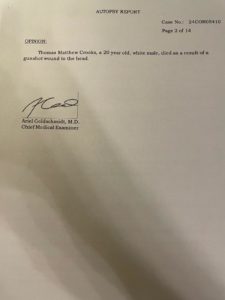
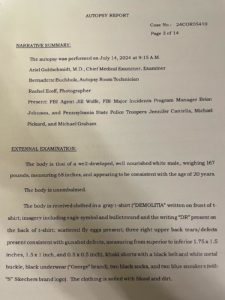
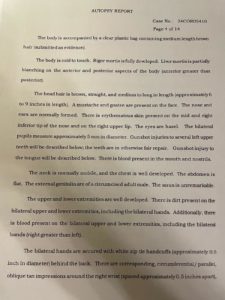
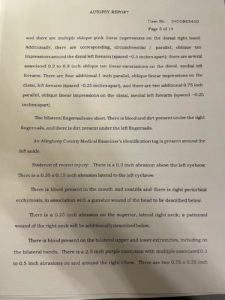
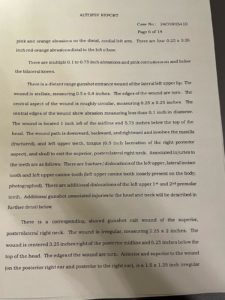
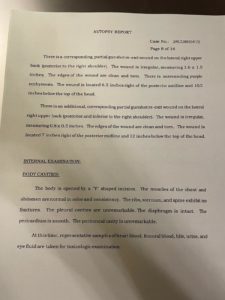
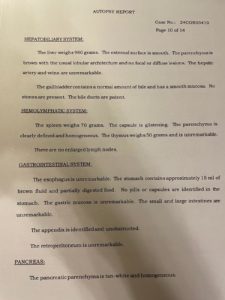
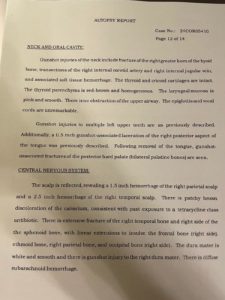
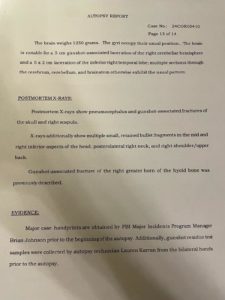
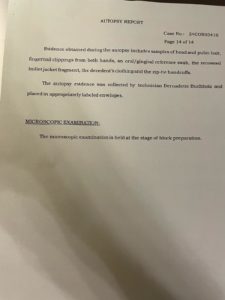
(Ken Silva, Headline USA) Headline USA has obtained the autopsy records for alleged Trump shooter Thomas Crooks following a roughly two-month legal battle.
The 14-page autopsy report from Allegheny County Chief Medical Examiner Ariel Goldschmidt—obtained by this publication on Monday—states that the autopsy was conducted at 9:15 a.m. on July 14—the day after the shooting. Local reports stated that Crooks’ body was left on the rooftop of the AGR building until 6 a.m. on July 14.
Present at the autopsy were FBI agent Jill Wolfe, FBI major incidents program manager Brian Johnson, autopsy room technician Bernadette Buchholz, photographer Rachel Ecoff, and Pennsylvania State Police troopers Jennifer Cantella, Michael Pickard, and Michael Graham, according to the report. Later, the report states that another autopsy technician, Lauren Karran, collected gunshot residue test samples from Crooks’ hands.
🚨We have obtained the autopsy records for alleged Trump shooter Thomas Crooks🚨 They can be found exclusive on Headline USA. See below!!! pic.twitter.com/jlXs6l1gTa
By the time Crooks’ body was examined by Goldschmidt, rigor mortis had set in.
“The body is cold to the touch,” Goldschmidt said in his report, which largely reflects what he told lawmakers during a congressional hearing last month.
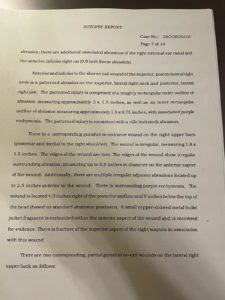
According to the report, Crooks died of a gunshot wound to the head. The report does reveal previously unpublicized information that Crooks suffered five gunshot wounds—an entry wound, an exit wound, a re-entry wound, and “two corresponding, partial re-exit wounds.”
“There is a corresponding, partial gunshot re-exit wound on the lateral right upper back … There is an additional, corresponding partial gunshot re-exit wound on the lateral right upper back,” the report stated.
Goldschmidt’s report comes at a time when there’s still controversy about how many times Crooks was shot—and by whom.
Rep. Clay Higgins, R-La., who sits on the House Task Force investigating the assassination attempts on Trump, has expressed belief that a local cop shot first after Crooks fired eight times. The Secret Service didn’t put the final kill shot into Crooks until 15 seconds after he opened fire, and 10 seconds after the local cop shot first, according to Higgins.
But Goldschmidt denied Higgins’ theory at last month’s congressional hearing, despite the fact that the local cop, Adams Township Police Department Sgt. Aaron Zaliponi, being adamant about hitting Crooks.
Higgins further asked Goldschmidt whether it was possible that Zaliponi’s shot caused a fragment to enter Crooks’s shoulder, which was later also hit by the Secret Service sniper. Goldschmidt also insisted that was impossible, though it’s not clear how he could make that determination.
Along with Goldschmidt’s autopsy report, Headline USA also obtained a previously unpublicized, one-page coroner’s report from Butler County Coroner William Young. The report includes a brief description of the incident leading to death.
“At the cease of gunfire, the subject was found lying prone on the rooftop by emergency personnel, with a rifle near him. The subject’s hands were zip tied behind his back by emergency personnel and pronounced deceased at 18:25 on 07/13/24 by ESU Medic Michel Vasiladiotis-Nicol,” the report said.
Young said he was called around 6:15 a.m. on July 14.
“The decedent was removed from the rooftop at AGR International by Coroner Young and Deputy Bosiljevac. The decendent was taken to Allegheny County Medical Examiner’s Office for a pathological examination,” the report said.
“The remains were then released to Beinhauer-Connell FH.”
Additionally, Headline USA obtained two toxicology reports for Crooks: One from Allegheny County and one from a private firm called NSM Labs. Healdine USA is still analyzing those reports, and plans on publishing them later Monday or Tuesday morning.
Headline USA obtained the above-mentioned records some two months after filing a Right to Know Law request for them. Both Butler County and Allegheny County initially denied the request, but this publication won an appeal with the Pennsylvania Office of Open Records.
Ken Silva is a staff writer at Headline USA. Follow him at x.com/jd_cashless.
(Ben Sellers, Headline USA) While Democrats often virtue-signal to be the party of “diversity,” their own subconscious can sometimes get the better of them, letting slip the sad reality that they are, historically speaking, the party of racism.
President Joe Biden has become notorious for his racist gaffes, trying to overcompensate for his bigotry through his reliance on affirmative-action policies within his administration, such as his deliberate selection of a “black woman” as running mate over more qualified alternatives who failed to check the right identity-politics boxes.
Yet, other bleeding-heart Boomers from the hippie era may be just as tone deaf while trying to trumpet their own progressivism, including MSNBC grande dameAndrea Mitchell.
Even for fake-news standards, the 77-year-old Mitchell, who has spent 30 years as NBC’s chief foreign affairs correspondent, rises above the rest in terms of her devotion to the party-line talking points.
She has recently pushed the claim that Vice President Kamala Harris’s poor showing among male voters was attributable not to Harris’s own shortcomings, but to the systemic sexism of the voters themselves.
“There’s probably a lot of misogyny going on there also, because men are still lagging behind in the polling—that’s hard to quantify,” Mitchell claimed last month during a conversation with Sen. Bob Casey, D-Penn., on her MSNBC show Andrea Mitchell Reports.
During a panel discussion on Sunday’s Meet the Press, however, Mitchell took it a step farther, appearing to blame Harris’s lack of support on her decision to marry a white man, second gentleman Doug Emhoff.
“She’s got such a big problem with men … I think there’s miscegen—misogenation in all of this, black and white men.”
The word miscegenation was frequently applied to the intermingling of races through sex or marriage during the Jim Crow era. The Supreme Court declared laws banning it to be unconstitutional in 1967’s Loving v. Virginia, when Mitchell was 20 years old.
Although the context of the conversation suggests that Mitchell intended to say “misogyny,” her mention of “black and white men” raises the question of whether she was, on some level, aware of the malapropism and perhaps projecting her own prejudices onto male voters.
Mitchell is not the first liberal to conflate the two terms. A 2019 collection of essays by feminist Laura Bates used the title Misogynation to riff off the word “nation.”
Those most likely to object to Harris’s marriage to Emhoff, however, may not be black and white men, but rather Muslims who take issue with Emhoff’s Jewish heritage.
Harris has claimed connections with the Baptist tradition, as well as Hinduism, but has been largely silent on the matter of faith, likely due to the delicacy of current tensions between Palestinian Hamas supporters and Jews following the terrorist attack on Israel exactly a year ago on Monday.
Democrats are desperate to court Muslim voters, particularly in Rust Belt states like Minnesota and Michigan, where they constitute a core constituency that could be essential to Harris’s Electoral College victory.
Notably, Harris eschewed Jewish Pennsylvania Gov. Josh Shapiro when selecting her running mate out of fear that he would deter Muslim voters and that he was, himself, too crafty and ambitious to be trusted—a common anti-Semitic trope.
Meanwhile, even as Harris vies to be the first “black woman” elected president, her actual claim to African–American heritage has come under fire from some high-profile skeptics, including pop-music icon Janet Jackson.
Candace Owens, founder of the Blexit movement and a former star of the Daily Wire, recently dug into the issue of Harris’s lineage and raised questions as to whether Marxist Stanford economist Donald J. Harris was indeed the true father of the Democrat candidate.
The elder Harris has been conspicuously absent from any campaign-related events, including the Democratic National Convention, where his purported daughter accepted the history-making nomination.
(Ben Sellers, Headline USA) An unconfirmed report alleging that the bag of cocaine discovered in the White House in 2023 belonged not to Hunter Biden but to Vice President Kamala Harris could explain why the current administration seems to have delighted in sabotaging its anointed successor.
The video’s apparent source, an X user by the name of James Bolden, posted what seemed to be a hidden-camera interview with a White House insider acknowledging that the cocaine was intended for Harris.
Although the video remained visible on the X platform as of Monday morning, direct embeds of it appeared to have been disabled.
Many pointed to red flags—notably the fact that Bolden’s posts prior to releasing the video on Oct. 2 all appeared to have been deleted. Unlike similar hidden-camera investigations, the identity of the individual making the claims had also been obscured.
Headline USA confirmed that the video was not affiliated with O’Keefe Media Group, the network of undercover reporters led by former Project Veritas founder James O’Keefe that has broken recent bombshells exposing ActBlue and MSNBC, among others.
Some suggested it could even be a reverse smear attempt to discredit the MAGA movement, or perhaps to bolster Democrats’ claims that so-called disinformation on X warranted censorship of the entire platform.
This guy has only been active on Twitter for a few days. This is cap🧢
It follows shortly after a judge’s smackdown of a California law that sought to impose draconian restrictions on artificial-intelligence-generated deepfake videos and other deceptive campaign-related content.
Yet, many scorned Democrats for suggesting that they could be the arbiters of truth in such circumstances after having systematically pushed falsehood after falsehood, not only on social media but also through traditional mainstream media sources.
Despite the many reasons to be suspicious of Bolden’s video, the allegations it made generated valid questions about Harris’s long rumored problems with substance abuse, which may well emerge as part of an October surprise.
In fact, the suggestion that the cocaine might be linked to Harris was floated just days after its discovery, by none other than MSNBC.
RACISM? The White House is now pointing the finger at Kamala Harris. Is the fact that she’s Black the reason they’re implying it was her cocaine? pic.twitter.com/SqEuDbFvJO
Conservative outlet the Gateway Pundit suspected, at the time, that the powerful Biden family could set up Harris to take the rap, perhaps enabling them to swap out the vice president for one deemed a more capable successor.
Are we watching them set up Harris for the take out?
“White House Now Claims Cocaine Was Found in a “Much More Secure Place” Near Situation Room… Next to Where Kamala Harris’s Vehicle is Parked”
However, offering a rare window into the Democrats’ shadowy power dynamic that spilled out into the daylight during the Biden coup in July 2024, it may, in fact, have been Hunter Biden who was being set up to take the fall for the Obama-backed Harris.
Much remains unclear about the relationship between Harris and President Joe Biden, although during the Sept. 10 debate between former President Donald Trump and the vice president, Harris and her ABC News allies tellingly did not dispute or try to “fact check” Trump’s allegation that there was no love lost between the commander-in-chief and his right-hand deputy.
TRUMP: "She got no votes. [Biden] got 14 million votes. You talk about a threat to democracy? [They] threw him out of office."
Biden himself has sent mixed signals. Just a day after the debate, he prominently donned a red MAGA cap while interacting with spectators at a Sept. 11 commemoration event. He was later spotted still carrying the cap while boarding Air Force One.
On the other hand, Biden, on Friday, held a media briefing in which he insisted that he and Harris were “singing from the same song sheet.”
The event, which preempted a speech by Harris in Michigan, was suspected of having been another passive-aggressive effort to undermine her by saddling her with the legacy of inflation, immigration, warmongering and corruption that has outraged voters over the past four years.
Biden says he is in "constant contact" with Kamala Harris.
"We're singing from the same song sheet. She helped pass all the laws [that resulted in record high inflation]. She's a major player in everything we've done."
While little evidence points to Harris’s regular use of cocaine—a stimulant that would likely make her appear wired and jittery—her overly relaxed, and sometimes loopy, demeanor has long fueled suspicions of alcohol and marijuana use that may be impacting her public duties.
The DNC is struggling to keep Kamala Harris sober, addiction is real and she’s got a long road ahead. pic.twitter.com/cEjwHvNW7U
Yet, it remains to be seen whether a serious substance-abuse issue would prove to be prohibitive for voters. George W. Bush was nearly undone by the late-breaking “October surprise” in the 2000 election linking him to a past arrest for driving under the influence, as well as allegations of past cocaine use.
But with the moral equivalency of the Clinton administration still fresh in the minds of many, voters ultimately were able to forgive Bush for his youthful indiscretions.
Allegations of drug use at the White House have spanned at least five decades, with country singer Willie Nelson having often boasted about smoking a “fat Austin torpedo” joint (marijuana was classified as a serious drug offense at the time) on the White House roof during the Carter administration, along with the president’s son Chip.
The Secret Service—which has come under increasing scrutiny following the two assassination attempts on Trump—is believed to have been responsible for covering up the cocaine scandal in July 2023.
Although fingerprints were reportedly found on the baggie, the agency ultimately was unable to provide a suspect and reportedly destroyed the evidence.