Credit Card Spending Tanked in August; U.S. Consumers Tapped Out?

(Mike Maharrey, Money Metals News Service) How close are Americans to hitting their credit card limits? That’s hard to say, but based on the latest consumer credit data from the Federal Reserve, they may be getting closer.

Over the last several months, American consumers have been yo-yo-ing between slowing credit card spending and going on spending sprees. In July, revolving credit, primarily made up of credit card debt, spiked. But in August, credit card balances contracted significantly.

It appears things are getting shaky for Americans buried in debt, and that is bad news for an economy that relies on people buying stuff on credit to keep running.

Overall, consumer debt climbed by 2.1 percent as Americans added another $8.9 billion to their debt balances. This was lower than the $11.8 billion forecast. Americans now owe $5.1 trillion in consumer debt.

The Federal Reserve consumer debt figures include credit card debt, student loans, and auto loans but do not factor in mortgage debt. When you include mortgages, U.S. households are buried under a record level of debt. As of the end of the second quarter, total household debt stood at $17.8 trillion.

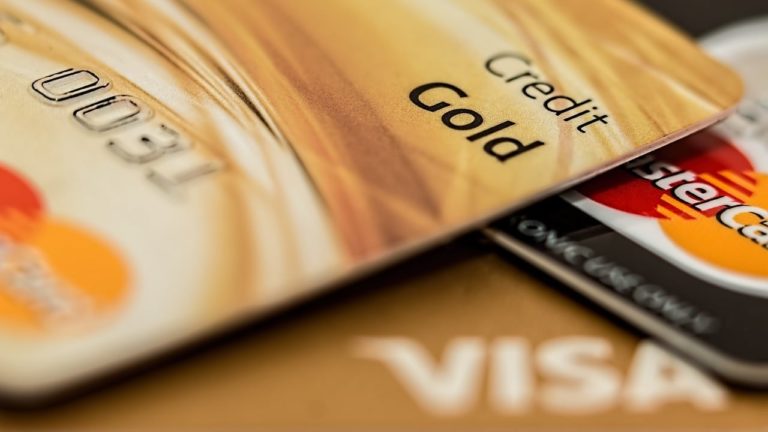
Pundits and politicians have talked up the “robust economy” and the “resilient” American consumer for months, but this economic growth was courtesy of Visa and Mastercard. It was not exactly a sustainable economic trajectory.

Now, it looks like the American consumer might have maxed out the credit card, or they’re at least feeling the strain of sky-high interest rates.

Revolving debt contracted by -1.2 percent in August. It was the biggest decline in revolving credit since March 2021, the onset of government pandemic shutdowns.

The drop in credit card spending was reflected by the tepid 0.1 percent increase in retail sales.

Even with credit card use tanking, American consumers are still buried under a record $1.36 trillion in revolving debt.

The double whammy of rising debt and interest rates exacerbates the debt problem. Average credit card interest rates eclipsed the previous record high of 17.87 percent months ago. The average annual percentage rate (APR) currently stands at 20.65 percent, with some companies charging rates as high as 28 percent.

Americans are feeling the strain of the big debt load and high interest rates, with 9.1 percent of credit card balances entering delinquency in the last year. That’s the highest rate in over a decade.

This underscores the fundamental problem of running an economy on credit. It’s expensive, and credit cards have an inconvenient thing called a limit.

And it appears American consumers may be bumping up against that limit.

Non-revolving debt, primarily reflecting outstanding auto loans, student loans, and loans for other big-ticket durable goods, increased by 3.3 percent after a big 5.2 percent jump in July. Non-revolving debt had been increasing at a tepid pace, under 2 percent earlier this year. The recent acceleration in non-revolving debt likely reflects student loan balances as school gets underway.

Before the pandemic, revolving credit growth averaged 5 percent.

Joe Biden, Jerome Powell, and the talking heads can brag all they want about the “strong economy,” but Americans have been borrowing to buy it. They may have reached their limit, and that’s bad news for an economy that lives on debt.

De-Dollarization: Could a Petroyuan Usurp the Petrodollar?

(Mike Maharrey, Money Metals News Service) Could the petroyuan usurp the petrodollar and become the dominant currency for global oil trade?

If so, such a move would accelerate global de-dollarization and would be disastrous for the United States.

The petroyuan faces a tough road, but one the BRICS nations led by Russia will reportedly consider going down at its fall summit.

In an article published by the OMFIF, Zhejiang University senior fellow and former senior economist for the Bank of International Settlements Herbert Poenisch reported that Russia will push for a new denomination for oil using the mBridge payment system at the BRICS summit at the end of October.

The Bank of International Settlements (BIS) Innovation Hub leads the mBridge project in collaboration with the central banks of Hong Kong, Thailand, China, and the United Arab Emirates. Saudi Arabia – the world’s number two oil producer – recently joined the project.

The goal is to create a cross-border payment system using central bank digital currencies (CBDC). As Poenisch described, the system “allows for immediate settlement among partner central banks.”

“Transactions conducted on this platform avoid scrutiny by outsiders such as SWIFT and the U.S.”

If Russia can convince its fellow BRICS nations to embrace the petroyuan, it would strike a major blow to dollar dominance.

What Is the Petrodollar?

“Petrodollar” refers to the dollar’s role in crude oil transactions.

In the wake of the 1973 oil crisis, Saudi Arabia agreed to conduct all oil transactions in dollars and invest its oil surplus funds in U.S. Treasuries in exchange for U.S. military support.

The agreement was a boon for the dollar and was key in cementing the greenback as the world reserve currency. Due to Saudi Arabia’s prominent role in the global oil trade, the agreement had a far-reaching effect. As a result, virtually all the world’s global oil transactions were priced in dollars. Since the dollar is the dominant currency in this system, the world uses dollars to purchase dollar-denominated assets and debt. This props up dollar dominance.

In effect, the petrodollar ensures a constant demand for dollars. Every country needs them to buy oil. This demand supports the U.S. government’s “borrow and spend” policies, along with its massive deficits. As long as the world needs dollars for oil, it guarantees demand for the greenback. That means the Federal Reserve can print more dollars and issue more Treasuries than it could have otherwise. As an article published by Nasdaq.com reported, the agreement created a “captive market” for U.S. government debt.

Nearly 80 percent of global oil sales are priced in dollars, but countries are increasingly using other currencies.

China has been pushing Saudi Arabia to accept yuan for oil, and the Saudi government has reportedly expressed openness to the idea. Saudia Arabia’s membership in the BRICS bloc this year will likely strengthen the two countries’ economic ties.

If Russia has its way, the entire BRICS bloc could move toward the petroyuan.

The Petrodollar Won’t Be Easy to Bring Down

Many Western observers have downplayed any potential threat to dollar dominance by the BRICS bloc. As Poenisch noted, the 2023 BRICS summit in Johannesburg was generally waved off as no real threat to the dollar. But he said the fall summit in Russia “is set to be ground-breaking.”

Nevertheless, Russia faces several hurdles in its quest for a petroyuan.

One problem is developing a payment process that efficiently operates outside of the dollar-denominated SWIFT system.

The Society for Worldwide Interbank Financial Telecommunication (SWIFT) system serves as the world economy’s superhighway. In effect, it operates as a global financial messaging service, facilitating cross-border payments. Since the dollar serves as the world reserve currency, SWIFT effectively facilitates an international dollar system.

The mBridge project could solve the payment system problem.

But other challenges would remain.

Poenisch pointed out that there is no mechanism to recycle the yuan surpluses that would be generated by oil-producing nations back to countries that need currency to buy oil. Global banks manage currency transfers in the dollar system.

“Any surpluses that were added to the foreign exchange reserves of oil-exporting countries were attracted by foreign banks that lent them to countries in need. With the exception of the Mexican crises in the early 1980s, this process worked smoothly, mainly through the eurodollar market.”

Poenisch said the process would be more difficult for a petroyuan.

“Surplus renminbi has to be either spent on trade with China or added to foreign exchange reserves – now deemed acceptable by the International Monetary Fund since the renminbi is in the special drawing rights basket. BRICS financial intermediaries will face the task of recycling the surpluses to countries in need. This will be testing as China tightly controls the offshore renminbi market.”

While these challenges make the ascendence of the petroyuan unlikely in the near term, it’s not out of the question.

Potential Impact of the Petrodollar’s Demise

The end of the petrodollar could accelerate global de-dollarization, and that would be a disaster for the U.S. economy.

While the current de-dollarization trend doesn’t directly threaten the dollar’s role as the world reserve currency — yet — it could foreshadow bigger problems down the road, especially if it accelerates.

The dollar is already on shaky ground. Many countries are looking for ways to minimize dependence on the greenback due to growing concerns over America’s use of the dollar as a foreign policy weapon.

After the Russian invasion of Ukraine, IMF Managing Director Gita Gopinath warned that sanctions on Russia could erode the dollar’s dominance by encouraging smaller trading blocs using other currencies. That’s exactly what we’re seeing.

And without the petrodollar supporting the greenback, we could see more rapid de-dollarization.

Sputnik explained it this way: 

“If world players significantly reduce the use of U.S. dollars, the U.S.’s ability to issue dollar debt and earn dollars for exports will diminish, and the nation’s economy will shrink, according to international economists.”

In effect, if other nations no longer need dollars to conduct trade, the demand for dollars could plunge significantly. That would create a dollar glut and a rapid devaluation of the greenback. Interest rates on U.S. Treasury bonds would soar. This would be an untenable situation for a government servicing more than $35-plus trillion in debt.

Modest interest rate hikes by the Federal Reserve have already driven interest payments sky-high. The U.S. government now spends more on servicing the debt than it does on national defense or Medicare.

In a nutshell, you should be wary of counting on global petrodollar dominance to prop up the U.S. house of cards economy.

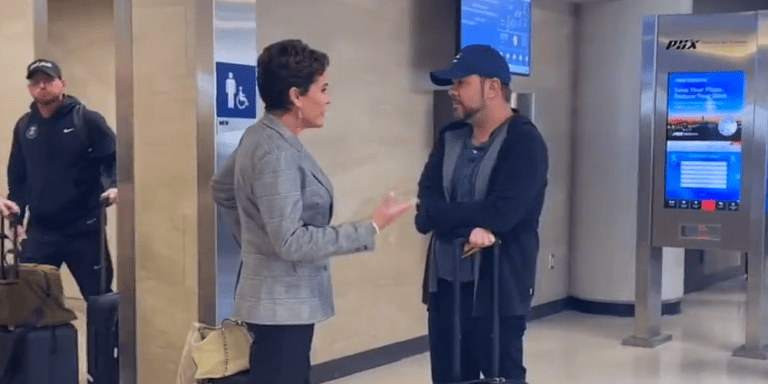
Kari Lake’s Opponent Doesn’t Attend Debate

(Dmytro “Henry” Aleksandrov, Headline USA) Arizona’s Republican congressional candidate Kari Lake’s political opponent recently refused to attend the debate with her.

After Congressman Ruben Gallego, D-Ariz., failed to debate Lake, she used the debate time to put a chair for an hour before the camera to send the message to the state’s voters.

“Ms. Lake accepted the invitation. Mr. Gallego declined,” the debate moderator, Ted Simons, stated.

Even though Gallego did not bother to show up, Lake debated with Simons.

“Ruben refused to debate, but sent his Liberal PBS ‘Moderator’ to fill his shoes,” Lake wrote on Twitter.

After the debate, Lake commented on her political opponent’s absence.

I was supposed to debate @RubenGallego, but he refused to show up. Instead, @tedatpbs debated me. Everything I talk about is common sense. That’s why I’m always willing to walk into hostile territory & defend my views. Ruben’s record is indefensible,” she wrote.

Trending Politics reported that Lake criticized Gallego in another statement.

“Ruben Gallego’s ducking the first debate is just another move from a politician too scared to defend his disastrous record. Arizonans deserve transparency, not excuses, and if he can’t face the voters now, how can they trust him to fight for them in Washington? I’ll never back down from a fight, and I’m ready to show Arizonans what real leadership looks like,” she said.

Some people on Twitter assumed that Gallego did not attend the debate because he didn’t want to look like Gov. Tim Walz, D-Minn.

“I think Ruben Gallego chickened out of debate after watching Tim Walz getting [beaten] from J.D. Vance,” @Instabuydeals wrote.

However, others noted that Gallego implemented Katie Hobbs’s strategy of avoiding the opponent and stealing an election.

“Attempting the Biden Hobbs basement strategy,” @TrumpDailyPosts wrote.

Other conservatives agreed, adding that leftists don’t think they need to debate because they can just steal an election.

“Does this mean they are gonna rig it again? Katie Hobbs didn’t show up either [because] she had Maricopa machines programmed to fail on voting day,” @stealthsteve360 wrote.

Media, Dems Claim Harris, Walz ‘Waste’ Time in Leftist States. Do They?

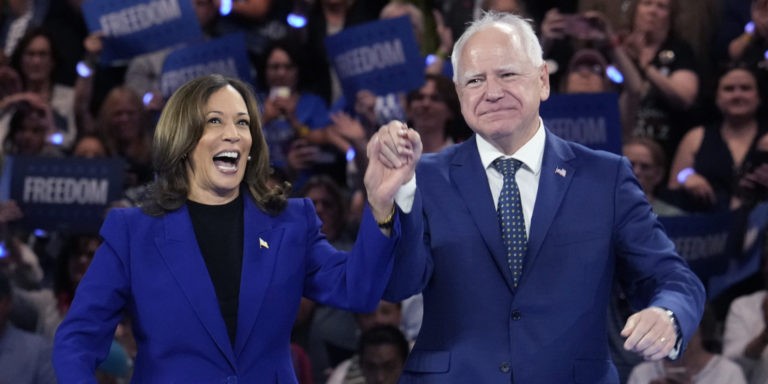
(Dmytro “Henry” Aleksandrov, Headline USA) The conservative media and many Democrats in politics think that the Democratic presidential candidate Kamala Harris and her vice presidential pick, Gov. Tim Walz, D-Minn., are wasting time in far-left states like New York and California instead of the battleground states, but do they?

Breitbart recently reported about the Harris-Walz campaign targeting two deep blue states, claiming that the politicians are wasting their time there one month before the election.

According to the news source, Harris would go to New York City to film three biased and pre-planned interviews while Walz would fly to Los Angeles to campaign there.

The New York Times reported that leftists Howard Stern, Stephen Colbert and the hosts of The View would interview Harris. Breitbart reported that another Democratic Party propagandist and a Los Angeles resident, Jimmy Kimmel, would interview Walz.

Politico, a leftist news source, also published an article in which it wrote about different Democrats claiming that Republican presidential candidate Donald Trump is “everywhere,” anxiously asking why Harris is not spending most of her time in the battleground states like him.

“With early voting by mail and in person already underway in more than half of the country, Harris spent just three days of the last week of September in battleground states,” Politico wrote.

David Axelrod, the longtime Democratic operative who helped Barack Obama with his presidential campaigns, said, “There’s a time at which you just have to barnstorm these battlegrounds.”

Others agreed, noting that Harris could lose swing states like Wisconsin.

“Trump is everywhere again, just like he was then. Our side needs to be, too,” a former Joe Biden staffer said.

Morgan Jackson, a North Carolina-based Democratic strategist, also said it is crucial to campaign during the last month.

“More is always helpful, always better because they just dominate the news cycle for a few days,” Jackson said. “Listen, when these late-breakers are deciding how they’re going to vote, the ones that are really consequential in a tight race — a trip in October is infinitely worth more than one in September because of those late-deciders.”

However, it is possible that the Harris-Walz campaign’s decision to campaign in New York and California is not a waste of time but rather a deliberate decision to prevent deep blue states from turning red.

It was previously reported that Trump could win New York State and New York City, which explains the recent strategy.

There is no evidence that California would vote for Trump, but one could assume that there is the same reasoning behind targeting the leftist state.

Toyota Ends DEI Policies. Will Conservatives Destroy Woke Companies?

(Dmytro “Henry” Aleksandrov, Headline USA) Toyota recently eliminated its DEI policies after facing the pushback from conservatives. Does that mean conservatives in the United States can purge American companies of their wokeness?

Conservative activist Robby Starbuck, who started the Toyota boycott, recently wrote on Twitter that the Japanese car company decided not to push far-left politics on its customers anymore after facing conservative backlash.

According to Starbuck, Toyota won’t participate in pride parades, events and child grooming summer camps. The company also stated that it won’t participate in the Corporate Equality Index social credit system.

The activists wrote that Toyota employees and dealers learned about the recent news via email from the company.

“Our campaigns are so effective that we’re getting some of the biggest corporations on earth to change their policies. The landscape of corporate America is quickly shifting to sanity and neutrality. We are the trend now, not the anomaly,” Starbuck wrote. “We’re winning, and one by one, we WILL bring sanity back to corporate America.”

He also reminded his followers that, with their help, he was able to do the same thing with other companies like “Tractor Supply, John Deere, Harley Davidson, Polaris, Indian Motorcycle, Lowe’s, Ford, Coor, Caterpillar, Stanley Black & Decker and now Toyota + Lexus,” documenting the successes on his Twitter account.

“We are a force to be reckoned with, and we won’t stop until wokeness is extinct,” he wrote.

Starbuck announced the boycott of Toyota on Sept. 26 and told his followers that the same day, the company’s executives started making changes inside Toyota.

Recent news raised the question of whether conservatives could change the culture, and multiple reports from different news sources indicate that this could be the case.

Bloomberg reported that American Netflix consumers canceled the service at a higher rate in July—2.8%—than in any month since February. That happened because the streaming service’s founder, Reed Hastings, endorsed Democratic presidential candidate Kamala Harris on Twitter.

There were also two other now-infamous examples of conservatives boycotting woke companies: Target and Bud Light.

In fact, conservative boycotts became so widespread that people also started ensuring they bought things from conservative or politically neutral companies, with applications like Public Square, text message alerts like Woke Alert and multiple websites helping conservatives accomplish that.

DeSantis Forces Landfill Open, Shuts Down Kamala Questions Ahead of Hurricane

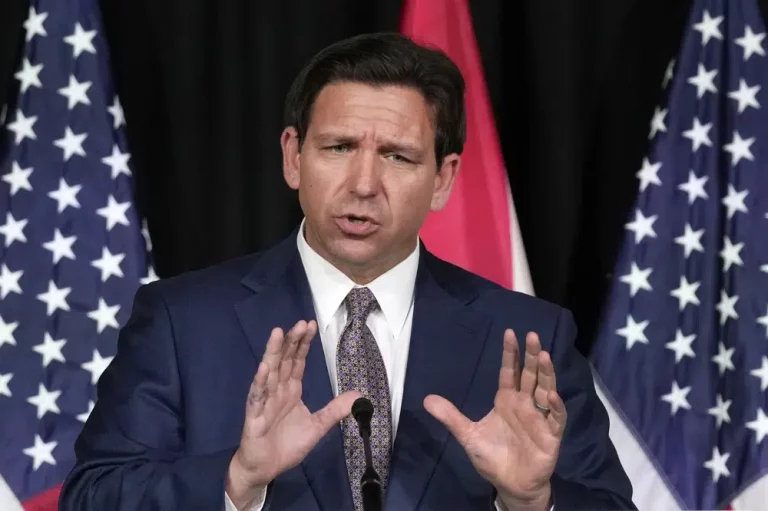
(Luis Cornelio, Headline USA) Florida Gov. Ron DeSantis isn’t playing games with local bureaucrats and the legacy media.

Early Monday morning, the DeSantis administration forcefully ripped open the gates of a Pinellas County landfill in preparation for Hurricane Milton’s arrival, reported Florida’s Voice.

A video obtained by the outlet showed the DeSantis-led Department of Highway Safety and Motor Vehicles ordering the reopening of the landfill after DeSantis mandated 24/7 debris removal availability after the Sunshine State was hit by Hurricane Helene.

According to the outlet, the use of F-250 trucks to rip open the gates was approved by DeSantis administration official Dave Kerner, who was prepared to “demolish the gates entirely.” The video of the operation has gone viral on X, racking up nearly 3 million views in under 24 hours.

“Debris removal must be done 24/7, around the clock. This process cannot be a 9 to 5 job, and we expect local governments and their contractors to show up,” DeSantis wrote on X, sharing a clip from his press conference about the hurricane. 

During the same conference, DeSantis swiftly shut down questions from legacy media about Vice President Kamala Harris’s failed attempt to reach him—claims first reported by NBC News.

“I didn’t know that she had called,” he said. “I’m not sure who they called. They didn’t call me. Their characterization of it was something that they did—it wasn’t anything that anybody in my office did, in terms of saying it was political.”

Politico reporter Gary Fineout followed up with a political question, but DeSantis quickly shut him down. “I don’t really want to answer questions about politics now. This is not a time about politics,” DeSantis said. 

He then addressed Fineout directly: “Excuse, Gary. You and your publication will twist anything that’s done to try to make a political agenda. That’s what you do. That’s how you get your clicks. I understand that. I understand that’s the business model—but I don’t want to talk about politics.” 

Panicked Kamala Finally Agrees to Series of Softball ‘Hollywood’ Interviews

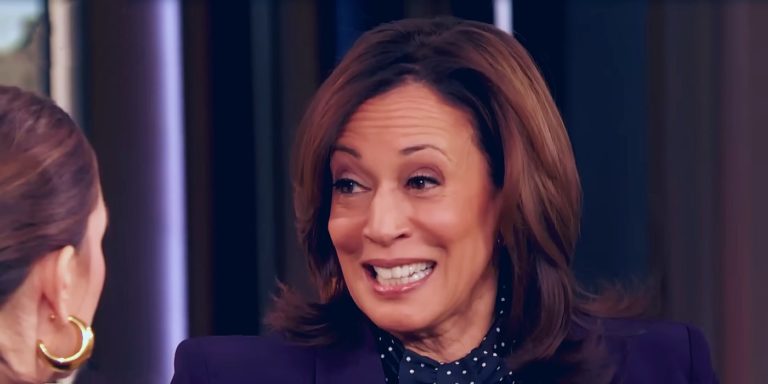
(Chris Cella Jr., Headline USA) With less than a month until the 2024 presidential election, Vice President Kamala Harris is scheduled to appear on several left-leaning talk shows, including The View, The Late Show with Stephen Colbert, and Howard Stern’s SiriusXM satellite-radio show.

While these interviews come amid criticism for her limited media presence since announcing her candidacy well over two months ago, some have observed the dearth of serious hard-news choices while trying to present her case to be the next leader of the country.

On The View, for example, co-hosts Whoopi Goldberg and Joy Behar frequently criticize former President Donald Trump and his policies, while deflecting criticism of the Biden–Harris administration.

Alyssa Farah Griffith—the group’s self-identified conservative and a former White House communications director during the Trump administration—often aligns with her left-leaning co-hosts rather than defending Trump, his policies or his supporters.

Harris is also set to appear on 60 Minutes, a show that has a history of anti-Trump sentiment. Trump was likewise offered a segment on the CBS “news magazine” show but declined to participate unless the network and correspondent Lesley Stahl apologized for a dishonest October 2020 segment that misrepresented the origins of the Hunter Biden laptop controversy.

Colbert has been particularly derogatory about Trump, often using vulgar language to describe him. The former Comedy Central star once referred to the GOP leader as Putin’s c**k holster.

Stern, meanwhile, recently called Trump’s intelligence into question and also insulted Trump’s political supporters, essentially telling half of the listening audience to stop listening to his show.

“I hate the people who vote for Trump,” he whined recently. “I think they are stupid. I have no respect for them.”

It is unlikely, however, that the obsessive-compulsive vaccine Nazi has retained any conservative listeners since casting off his edgy past as a pioneering free-speech advocate in favor of his luxe lifestyle as a quasi-celebrity.

According to Breitbart, Harris’s media blitz aims to enhance her likability among voters as the election season intensifies.

Aside from the puff piece she did with MSNBC’s Stephanie Ruhle and an earlier sit-down with CNN’s Dana Bash, Harris has largely avoided traditional media interviews since being anointed as the Democrats’ plan-B presidential candidate, opting instead for platforms that align with her base.

It seems improbable that Harris will face inquiries about the current administration’s challenges, such as the surge in illegal immigration, rising cost of living due to inflationary federal spending, the chaotic withdrawal from Afghanistan, or the administration’s response to Hurricane Helene.

While Harris engages with these talk show hosts, her vice-Presidential nominee, Tim Walz will  appear Monday on Jimmy Kimmel Live, alongside another eponymous host who, like Stern, pivoted from a history of edgy—albeit racist and misogynist—humor on his former Comedy Central program The Man Show to insufferable wokeness due to his fear of being canceled by Hollywood.

Jean-Pierre’s Viral Clash with Doocy Over Lebanon Aid as Helene Victims Suffer

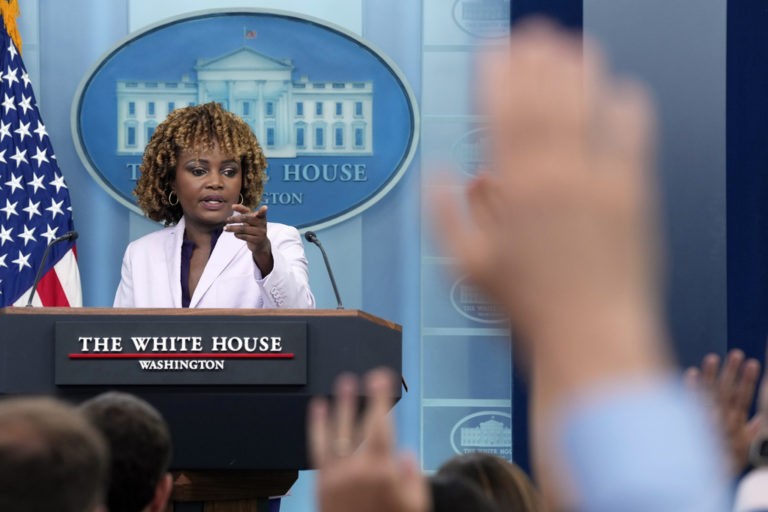
(Luis Cornelio, Headline USA) White House Press Secretary Karine Jean-Pierre stormed out of her daily briefing after being pressed about the Biden-Harris administration’s swift funding for Lebanon while asking Congress to support the SBA’s disaster relief program. 

During the heated and viral exchange, Fox News’s Peter Doocy questioned the administration’s decision to bypass Congress for foreign aid but seek support from lawmakers to provide financial relief to Americans. 

Jean-Pierre claimed that the federal government had already provided over $200 million in assistance and accused Doocy of spreading “dangerous” disinformation, echoing Democratic talking points when confronted with inconvenient facts. 

Doocy countered by reminding her that President Joe Biden had sent a letter to Congress on Friday confirming that the SBA’s disaster loan program had run out of funds. This came just days after Hurricane Helene ravaged many cities in Georgia and North Carolina. 

“Your whole premise of the question is misinformation, sir. Yes! Yes! it’s misinformation,” Jean-Pierre claimed, her voice shaky. “I just mentioned to you that we provided more than $200 million to folks who are impacted in the area.” 

She continued, “Peter this is nothing new. Congress comes together. They provide money, millions of dollars, for disaster relief. We’re asking them to do the job that they have been doing for some time.” 

Unhappy with Jean-Pierre’s vague answer, Doocy retorted, “The president’s letter is not misinformation, would you agree.” To this, Jean-Pierre—once again—claimed that the question’s framing was misinformation. 

After the fiery back-and-forth, Jean-Pierre grabbed her binder of talking points and abruptly ended the press briefing, suggesting that Doocy might not want Americans to receive government funding.

Video of the exchange, first captured by the Media Research Center, has garnered over 45 million views across various re-posts, including one by X owner Elon Musk.

After a fiery back-and-forth, Jean-Pierre grabbed her huge binder with talking points and stormed out of the press room, accusing Doocy of perhaps not wanting Americans to receive funding from the government. 

In addition to the SBA’s funding issues, DHS Secretary Alejandro Mayorkas confirmed that FEMA has also run out of money to support Americans through the remainder of the 2024 hurricane season. 

EXCLUSIVE: MAGA Celeb. ‘Brick Suit’ on Witnessing Trump Shooting, Social-Media Stardom

(Ben Sellers, Headline USA) Most people go to a Trump rally to see one man only. Even if he happens to be talking about tariffs and tax rates, former President Donald Trump never fails to delight and dazzle his audience with a spectacle of a speech.

While the rallies often will deliver some of his greatest hits, including “My Favorite Chart,” “Fight! Fight! Fight!” and “The Fake News Won’t Show This Crowd Size”—not to mention a few esoteric fan-favorites, such as “Dr. Hannibal Lector”—each is unique in its own way due to Trump’s freewheeling and improvisational style.

For that reason, perhaps, Trump has achieved a rare, if not unique, feat in American politics, cultivating his own Deadhead-like groupies who follow him across the country to nearly every rally and public event.

There are the “Front-Row Joes” and the “Beautiful Ladies from North Carolina.” In fact, by harnessing the power of the social media, some Trump super-fans have become celebrities in their own right.

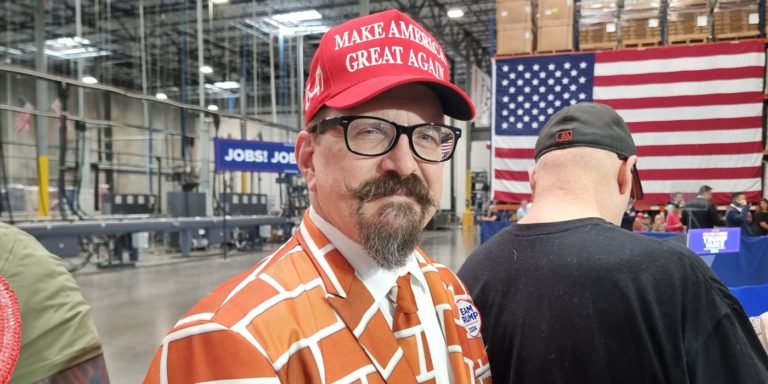
Among them is San Diego-based Blake Marnell, known to his social-media followers as “Brick Suit,” who has amassed a following of more than 237,400 on his X account since joining five years ago.

He’s been interviewed by many major networks and prominent media figures—as well as being attacked by a few fake-news notables, including alleged RFK Jr. seductress Olivia Nuzzi, who jealously derided his invitation to the VIP section of a Mar-a-Lago event.

Remarkably, Marnell has said he did not vote for Trump in his successful 2016 upset of Hillary Clinton—nor, prior to the 2020 election, had he voted for any presidential candidate since Ronald Reagan in 1984, the Arizona Republic reported.

However, his political activism went into overdrive in 2019, when Trump first called him onstage at a rally in Montoursville, Pa., after noticing his unique sartorial statement.

Or so it goes according to his own canonical “origin story”:

At a recent rally in Mint Hill, N.C., Headline USA caught up with Marnell before being booted out of the audience section and directed back into the press pen.

He graciously recounted his rise to MAGA fame, his experiences during the July 13 Butler assassination attempt, and the symbolism of his now-iconic suit.

The questions and responses have been edited slightly for clarity and length.

HUSA: What was it like getting called onstage?

Brick Suit: The first time I got called onstage, completely unexpected: It was in  Montoursville, PA, and I was on the front row. It was the first time I had ever worn my brick suit to a rally, and he saw me in the front row, he said, ‘Look at this guy. Get him up here. Get  him up here.’

People were like, pounding me on the back, saying ‘He’s calling you’ and I managed to climb over the fence, but don’t remember anything about going up onstage or shaking his hand. Don’t  remember anything until I got back. And so, all the memory I have of that is watching the video footage of i, because it was really like out-of-body. I was on autopilot.

HUSA: How many Trump rallies would you estimate you’ve been to?

Brick Suit: I don’t count them. Basically, I make it to as many as I can get to, and I get to as many as I can. So, I don’t really keep track.

HUSA: Are there regulars who you begin to know after a while?

Brick Suit: There are the women who volunteer—the ushers—you see them over there, they’re in those wonderful dresses, basically all color. They come out and they do, like the pre-game work of getting the special guests where they belong… And then they get good seating, and they’re wonderful supporters of the president.

HUSA: Tell me about your experiences as a Twitter/X influencer, and befriending other influencers like Gunther Eagleman.

Brick Suit: I have a lot of Twitter friends and people I follow. Gunther is one of them, yeah. I didn’t have any social media after President Trump called me onstage the first time. So all my social media is since then.

HUSA: Talk a little more about the ‘Brick Suit’ persona.

Brick Suit: Well, the suit is a metaphor for the wall and border security. So that’s a big part of it—it’s visible, and Twitter is sometimes a visible medium, so it fits well, but I also, before Elon [Musk] bought the company, I played by the rules, so I never got  banned, I wasn’t, like, gone for a couple of years.

I think the fact that my Twitter isn’t my real name, that it’s my just a concept about border security and I treat politics, sometimes, with some humor—I think that’s the reason for the success.

HUSA: What are you hoping to hear from Trump at this Mint Hill event?

Brick Suit: This is a new one for me. I’ve never been in one that’s like this, that’s just [being billed as] remarks, where we’re so close. I’m just really excited to to see him in a much more intimate setting and not to be outside in 95-degree sun and 80% humidity—although, if that’s what it was going to be I would be there too.

HUSA: Can you tell me your experiences being at the Butler rally where Trump was nearly assassinated?

Brick Suit: The easiest way to sum it up, without going into a long explanation, is: 15 seconds of confusion because I didn’t know what the sounds were; 10 seconds of realization that it was actually assassination attempt; and then, from there, like 45 seconds that’s just the most extreme concern imaginable for the life of President Trump—and then, relief when he stood up and pumped his first. I couldn’t tell what he was saying, but I could tell he was conscious and he looked—he looked great. And then, cautious optimism that he didn’t have another wound that he couldn’t see, like in the body or something.

I can tell you this: I’ve fired many weapons before. Gunfire sounds a lot different when it’s just the bullets traveling near you than when the gun’s actually being fired—and that’s why I didn’t recognize it as gunfire on the outside.

If you publish this on the web version, you look at my  Twitter, my footage from Butler is on it, but I wasn’t filming when the president was fired at when he was shot, because when I’m in the front row I never film here after he arrives, but I did get my camera out after.

Ben Sellers is the editor of Headline USA. Follow him at x.com/realbensellers.‘

Texas Demands Biden-Harris Verify Nearly Half a Million Unverified Voters

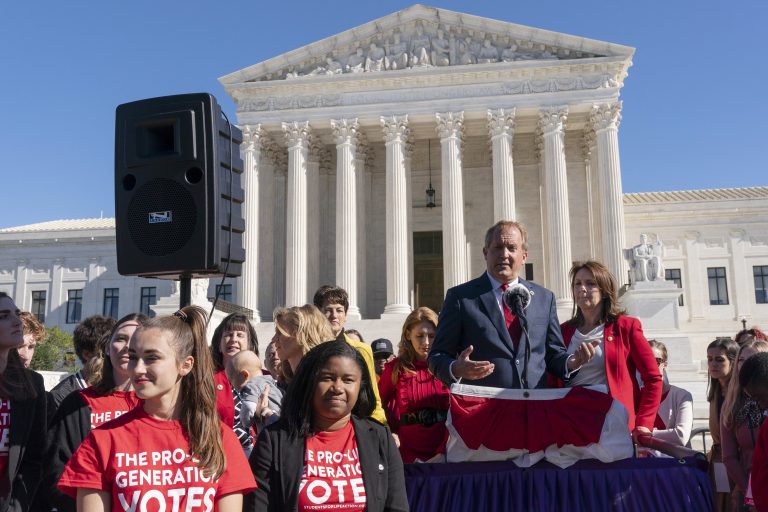
(Luis Cornelio, Headline USA) Texas Attorney General Ken Paxton has demanded that the Biden-Harris administration turn over data to verify the citizenship status of nearly 454,289 registered voters in Texas. 

In a letter addressed to USCIS Director Ur M. Jaddou on Monday, Paxton raised concerns that these individuals may have unlawfully registered to vote without having their citizenship status confirmed.  

Paxton requested Jaddou’s assistance in identifying non-citizens on the voter rolls to ensure only eligible voters cast ballots in the 2024 presidential election, which is expected to be close.

“The Biden-Harris Administration is legally obligated to assist States in doing so, and it is imperative that we use every tool available to uphold the integrity of our elections,” Paxton wrote. 

Paxton’s request follows an investigation by his office and Secretary of State Jane Nelson, which found individuals who registered to vote without providing a state driver’s license or other state-issued identification.  

This, Paxton argued, made it near impossible for state officials to verify these individuals’ citizenship. It is not immediately clear when these individuals were registered to vote. 

“I am not asking for verification of the citizenship of anyone whose voter registration records contains [sic] a driver’s license or state-issued identification number,” Paxton clarified. 

According to Paxton, over 1,300 non-citizens were found registered to vote during an audit of four randomly selected counties. 

“That is 1,300 too many when so many of our federal, state, and local election [sic] are decided by a handful of votes,” Paxton wrote.

Paxton noted that Texas has exhausted all available methods to confirm the citizenship status of the voters in question and is now demanding federal assistance. However, it is unlikely that the Biden-Harris administration will respond or cooperate with Texas on this issue. 

On Sept. 27, the DOJ filed a lawsuit against Alabama after Wes Allen, the Republican secretary of state, inactivated the voter registrations of 3,251 individuals due to a lack of citizenship verification. 

The DOJ argued that Alabama’s actions violated the National Voter Registration Act of 1993.

Allen defended his decision in an interview with Headline USA, stating, “I was elected Secretary of State by the people of Alabama, and it is my Constitutional duty to ensure that only American citizens vote in our elections.”