California Votes to Keep Slavery Legal

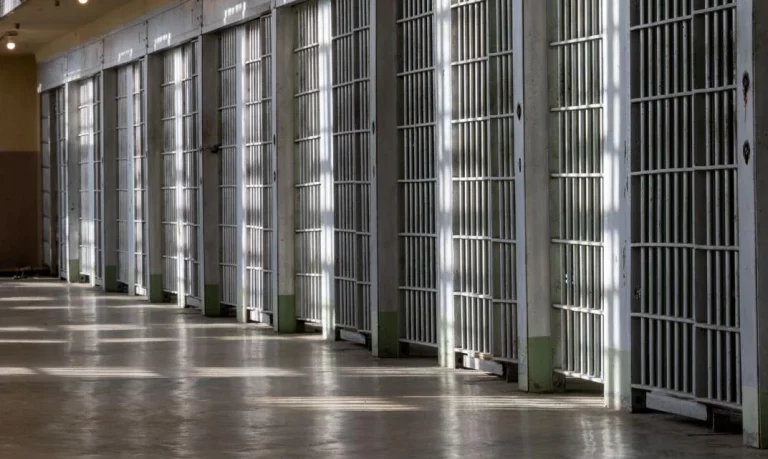
(Ken Silva, Headline USA) California voters have rejected a proposition that would have banned slavery and forced labor in prisons—a measure that conservative states, including Alabama and Tennessee, have already implemented.

California’s Proposition 6 would have amended the state’s constitution to “bar slavery in any form and repeal a current provision allowing involuntary servitude as a punishment for crime.”

But as of the publication of this article, Proposition 6 was failing by nearly 10 percentage points.

Even though slavery is banned in conservative states, some state lawmakers attributed Proposition 6’s failure on a “rightward shift in California on criminal justice,” according to the New York Times.

“I think the narrative around Prop. 6 got swept into the fear politics that are driving the return to mass incarceration and the tough-on-crime era,” said Isaac Bryan, a state assemblyman, told the Times.

“It’s a clear measure in terms of affirming our values and living them out in our constitution,” he reportedly added. “It’s unfortunate and disturbing that it would be struggling the way it is.”

According to the Times, only 41% of those surveyed in September and October indicated that they would support the measure, which was an early sign that it was likely headed toward defeat.

The measure failed despite the fact that there was no opposition argument in the official state voter guide, and that the measure was backed by the California Democratic Party, labor unions and the mayor of Los Angeles, according to the Times.

“But less than $2 million was raised to support Proposition 6, hardly enough to reach most of the state’s 22.6 million voters,” the Times added.

“A stronger campaign explaining the measure may have better positioned Proposition 6 for success … Voters may have been unclear on the level of support or opposition by either party.”

Ken Silva is a staff writer at Headline USA. Follow him at x.com/jd_cashless.

Biden Invites Trump to White House as Kamala Concedes

(Ken Silva, Headline USA) Reuters reported Wednesday that President Joe Biden called President-elect Donald Trump earlier in the day to congratulate him on his victory over Kamala Harris, and to invite him to the White House.

Harris also reportedly called Trump to congratulate him. The Trump campaign commended Harris for admitting defeat.

“President Donald J. Trump and Vice President Kamala Harris spoke by phone earlier today where she congratulated him on his historic victory,” said Trump Campaign Communications Director Steven Cheung.

“President Trump acknowledged Vice President Harris on her strength, professionalism, and tenacity throughout the campaign, and both leaders agreed on the importance of unifying the country.”

Biden will also reportedly address the nation Thursday. Harris was scheduled to give a concession speech around the time of this article’s publication.

Biden’s White House invitation to Trump comes the night after the President skipped Harris’s election watch party.

As has been widely documented, the relationship between Biden and Harris frayed after she helped oust him from the White House in July—allegedly threatening him with the 25th Amendment unless he stepped down as the Democratic candidate.

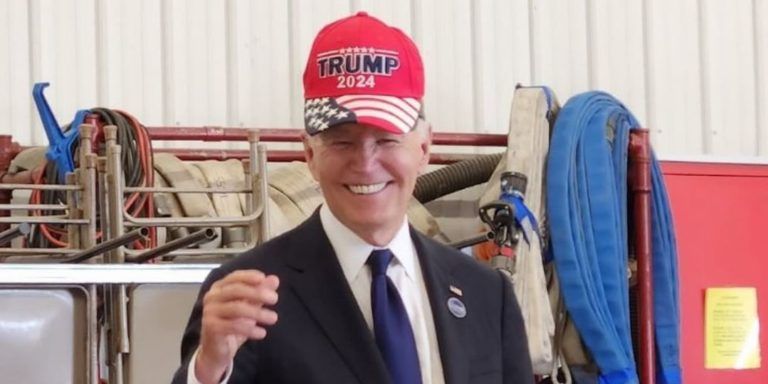
In the wake of Trump’s debate with Harris—where he told the world that Biden “hates her”—Biden donned a MAGA cap.

Biden also took the air out of the Democrats’ attempt to capitalize on a Trump rally comedian’s vulgar remarks about Puerto Rico. After comedian Tony Hinchcliffe’s joke referred to Puerto Rico as a “floating island of garbage” at Trump’s Madison Square Garden rally on Oct. 27, Biden referred to all Trump supporters as the same.

Ken Silva is a staff writer at Headline USA. Follow him at x.com/jd_cashless.

J6er Set for Sentencing Friday Seeks Delay in Light of Trump’s Win

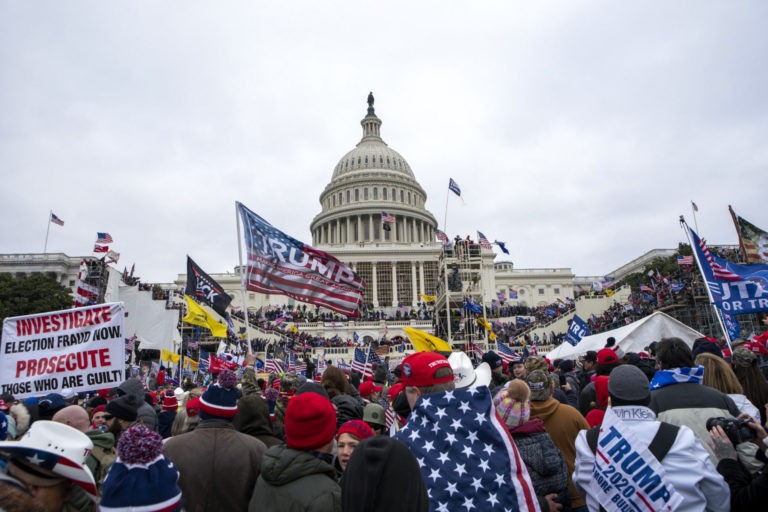
(Ken Silva, Headline USA) Jamiee Avery is set to be sentenced Friday for two misdemeanors in relation to her participation in the Jan. 6, 2021, Capitol Hill uprising, but she’s now asking for a delay in the wake of Donald Trump’s 2024 election victory.

“President-elect Trump, who played an integral role in the events of January 6, 2021, has repeatedly publicly stated that he will pardon January 6 protestors should he win the presidency,” Avery’s motion stated.

“The government has requested a 30-day period of incarceration for Ms. Avery. In light of the real possibility that the incoming Attorney General will dismiss Ms. Avery’s case or at the very least, handle the case in a very different manner, it would be fundamentally unfair to Ms. Avery to move forward to sentencing under these circumstances.”

The motion, which was filed by public defender Elizabeth Mullin, also included a snarky anti-Trump footnote: “Moreover, it would create a gross disparity for Ms. Avery to spend even a day in jail when the man who played a pivotal role in organizing and instigating the events of January 6 will now never face consequences for his role in it.”

Avery’s motion seeks to delay her sentencing to Jan. 20, after Trump’s inauguration.

U.S. District Judge Christopher Reid Cooper has yet to rule on the matter.

In a separate case, Judge Beryl Howell denied a similar motion to delay a status hearing for Jan. 6 protestor Christopher Carnell, who’s been convicted of several misdemeanors and is fighting the unconstitutional felony obstruction charge.

“Mr. Carnell, who was an 18 year old nonviolent entrant into the Capitol on January 6, is expecting to be relieved of the criminal prosecution that he is currently facing when the new administration takes office,” his Wednesday motion stated, as first reported by Politico. “Mr. Carnell is now awaiting further information from the office of the president-elect regarding the timing and expected scope of clemency actions relevant to his case.”

Judge Howell denied that motion within hours, setting the status hearing for Friday.

Dozens, if not hundreds, of other Jan. 6ers are expected to file similar motions.

Ken Silva is a staff writer at Headline USA. Follow him at x.com/jd_cashless.

No Discipline for FBI Official Who Sexually Harassed Employees

(Ken Silva, Headline USA) The DOJ Inspector General released a report Wednesday about an FBI Assistant Special Agent in Charge who was found to have sexually harassed his subordinates, discriminated against a disabled job applicant, and lacked candor during the DOJ-OIG’s investigation.

Despite all that, the FBI ASAC appears to still be with the bureau. Indeed, DOJ-OIG reports typically state when an FBI employee retires during an investigation, but Wednesday’s report doesn’t mention anything to that effect. The report does specify that the ASAC’s boss retired during the DOJ-OIG investigation for failing to report the sexual-harassment complaints.

“The OIG substantiated the allegations that the ASAC sexually harassed an FBI employee, harassed a second FBI employee, discriminated against an applicant to the FBI based on the applicant’s disability, and lacked candor with the OIG, in violation of FBI policy. The OIG also substantiated the allegations that the [Special Agent in Charge] failed to properly report harassment allegations to FBI INSD, in violation of FBI policy,” the DOJ-OIG report said.

“Criminal prosecution of the ASAC was declined. The SAC retired from the FBI prior to the OIG opening this investigation. The OIG has completed its investigation and is providing this report to the FBI for appropriate action,” it added.

The FBI didn’t respond to a Headline USA email query about whether the ASAC is indeed still working, or whether the official is being disciplined at all.

Wednesday’s DOJ-OIG findings follows a similar report from September, when the inspector general found that another ASAC sexually harassed an FBI special agent, made racially insensitive remarks to an FBI investigative analyst, and then threatened his subordinates with retaliation if they complained. In that case, the ASAC retired during the investigation.

Headline USA also exclusively obtained a DOJ-OIG report earlier this year about Jeffrey Sallet, the former third-in-charge at the FBI. According to that report, Sallet made lewd comments during the Jan. 6, 2021, Capitol Hill uprising, and he invited a colleague to join the “harem” of his Texas oil billionaire friend—along with other instances of misconduct.

Like the unnamed ASAC in September’s report, Sallet retired amidst the DOJ-OIG investigation.

Ken Silva is a staff writer at Headline USA. Follow him at x.com/jd_cashless.

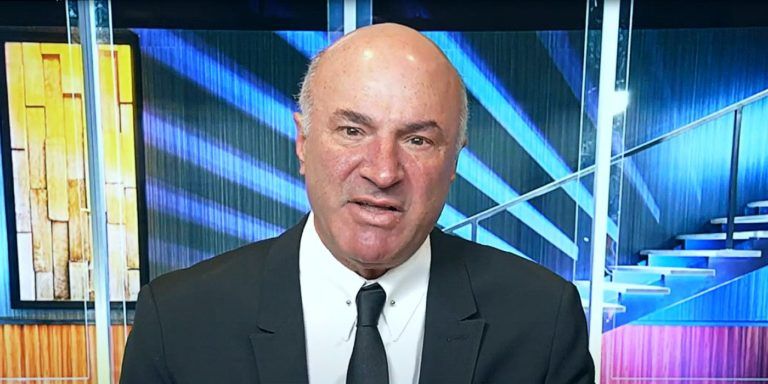
‘They May Not Want To Hear That’: Kevin O’Leary Says Harris Losing Will ‘Be Good’ For Democrats

(Julianna Frieman, Headline USA) Shark Tank investor Kevin O’Leary said Vice President Kamala Harris losing the election will be “good” for the Democratic Party on Tuesday before the 2024 election was called for Republican President-elect Donald Trump.

As Trump took an apparent lead in key battleground states around 11 p.m.—just around the time Harris campaign chair Jen O’Malley Dillon urged staffers to “get some sleep”—O’Leary said on Fox News that election night could be “the greatest night the Democratic Party can ever have if they lose.”

O’Leary recalled being “very troubled” on July 21 when President Joe Biden dropped his reelection bid and endorsed Harris, who the Democrats unquestionably rallied behind as their 2024 candidate without undergoing a democratic progress.

“The analogy is easy to a Super Bowl. You arrive at the Super Bowl game—and by any measure, this is the Super Bowl of global politics, the presidential race,” O’Leary said. “Your quarterback, Biden, is injured. He’s taken out of the game.”

“You don’t bring a quarterback in who’s never, ever, ever won any game anywhere. You run a process. And they missed that opportunity,” he said.

The Shark Tank investor said Democrats have a chance to truly refresh and reevaluate in what was at his time of speaking the prospective upcoming four years of the second Trump administration.

“They get to reboot. They get to go back to the center. They get to scratch this whole thing,” O’Leary said, noting the influences of former House Speaker Nancy Pelosi and Senate Majority Chuck Schumer could be nullified.

He added the loss would also the party to regroup.

“It would be good for them to lose tonight. It would reset and reboot and get that party back to the center,” he added. “It would be good for them. They may not want to hear that.”

Julianna Frieman is a freelance writer published by the Daily Caller, Headline USA, The Federalist, and The American Spectator. Follow her on Twitter at @JuliannaFrieman.

‘Holy Smokes!’: CNN Host Stunned as Kamala Harris Fails to Outperform Biden in One County

(Julianna Frieman, Headline USA) CNN host Jake Tapper was visibly stunned early Wednesday as he was told Vice President Kamala Harris failed to outperform President Joe Biden’s 2020 election results in a single state.

Standing in front of CNN’s election break down board, Tapper asked CNN chief national correspondent John King to show him any county in which Harris bested the president’s final vote count. King clicked out of Bucks County, Pennsylvania and revealed the entire 2020 electoral map.

“So you asked, are there any places where the vice president is overperforming Joe Biden in 2020. So, we can show you that as well, just bring that out here,” King told the CNN host as he changed the settings on the board to show any county in which Harris “outperforms Biden 2020 by 3% or more.”

The electoral map turned entirely gray, revealed that Harried failed to overcome Biden’s performance in any county and their time of reporting.

“Holy smokes!” Tapper exclaimed.

King told Tapper to wait for one graphic to fade off the screen, thinking there might be some county on the East Coast that was obscured. However, the entire map remained.

“Literally nothing?” a surprised Tapper asked.

“Literally nothing,” King confirmed.

“Not one county?” Tapper, still aghast by Harris’s lack of support, said.

Republican President-elect Donald Trump soundly defeated Harris early Wednesday, with Fox News being among the first to call the result when he surged ahead in Pennsylvania and Wisconsin before 2 a.m.

The former president won all seven battleground states, including Arizona, Georgia, Michigan, North Carolina, Nevada, Pennsylvania and Wisconsin. For the first time ever, Trump also won the popular vote and both chambers of Congress.

Julianna Frieman is a freelance writer published by the Daily Caller, Headline USA, The Federalist, and The American Spectator. Follow her on Twitter at @JuliannaFrieman.

Ted Cruz Defeats Senate Challenger in a Win as Big as Texas

(Julianna Frieman, Headline USA)  Sen. Ted Cruz, R-Texas, defeated Democrat challenger Rep. Colin Allred late Tuesday by roughly one million votes in a hotly contested race to hold onto his Senate seat.

Cruz won easily with an almost 10% distance between Allred, who only achieved under five million votes compared to the Republican incumbent’s nearly six million votes, according to the Associated Press early Wednesday, which reported 97 percent of the state’s election results.

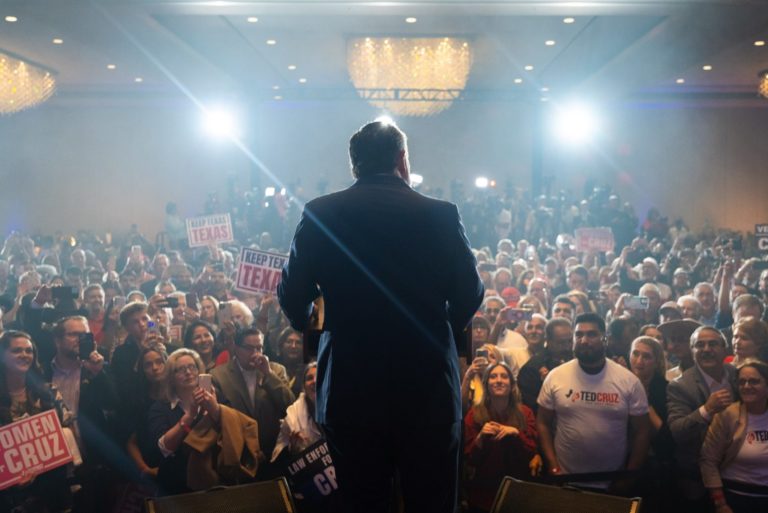
“Thank you, Texas!” Cruz wrote on X early Wednesday with a photo of himself addressing a crowd of supporters.

Cruz addressed the audience of his watch party in Houston Tuesday night after walking out to the song “Eye of the Tiger.”

“Tonight, the people of Texas have spoken, and their message rings clear as a bell across our great state: Texas will remain Texas,” the triumphant senator said.

Cruz expressed gratitude to his wife and voters before extending thanks to Allred for putting up a good fight.

He promised to fight on behalf of all Texans, including those who did not cast a ballot with his name.

“I want to say to all of those who didn’t support me, you have my word I will fight for you, your jobs, your safety and for your constitutional rights,” he said.

Allred, a former NFL linebacker, said in his concession speech that he and his voters will continue to “be patriots” despite their election loss to Cruz.

“It shouldn’t be remarkable to have to admit defeat,” Allred said at his watch party in Dallas. “You can’t just be a patriot when your side wins. Tonight we didn’t win, but we will continue to be patriots.”

Cruz will begin his third term in the Senate with a Republican majority come January.

Julianna Frieman is a freelance writer published by the Daily Caller, Headline USA, The Federalist, and The American Spectator. Follow her on Twitter at @JuliannaFrieman.

Trump Shooting Task Force Sends Scathing Letter to ATF in Wake of Election

(Ken Silva, Headline USA) The House Task Force investigating the Trump assassination attempts wrote to ATF Director Steven Dettelbach on Wednesday to renew its demand for the agency’s investigatory records.

According to the Task Force, the ATF has only provided five pages of documents since its original request on Oct. 3.

“This substantially abridged response letter is unresponsive to the Task Force’s requests and is woefully insufficient in view of the Task Force’s requests for physical documents and materials,” the Task Force letter said.

“Both the Task Force and the American people expect answers about how 20-year-old Thomas Crooks planned and executed a nearly successful assassination, including significant evidence found at the home of Thomas Crooks—a suspected improvised explosive device (IED), materials to make IEDs as well as additional explosives discovered in Crooks’ vehicle.”

The Task Force’s renewed request for documents is specific: It seeks all communications, photos, reports, interview transcripts and other records about the ATF’s response to the July 13 shooting at Butler, Pennsylvania, as well as the alleged Sept. 15 assassination attempt at Trump’s Florida golf course.

“For the avoidance of doubt, such documents and materials shall also include those related to: (i) ATF’s discovery and investigation of the improvised explosive device found at the home of Matthew Crooks; and (ii) efforts to locate, the ultimate location of, and investigation of Thomas Matthew Crooks’s vehicle,” the letter said.

The Task Force also seeks interviews with the ATF agents who provided support in relation to the Sept. 15 event, the agents responded to Crooks’s home on July 13, and the agents who “provided critical incident response functions initiated at approximately 6:12pm in connection with the July 13 event at Butler County Fairgrounds.”

The Task Force’s request may finally yield answers for why an unidentified, plain-clothes ATF agent was at the Butler rally in his “personal capacity”—as the ATF told the Senate Homeland Security Committee.

Recently released interview transcripts show that a Secret Service agent encountered that ATF agent before the shooting, but didn’t question his presence or his credentials.

According to the interview transcripts, the Secret Service site agent said the ATF agent approached her before the shooting with concerns about a bike rack that was used as a crowd barrier.

“He was concerned that people, it might fall over, that people might, you know, be able to, to get, you know, get over it.  And so then he kind of brought it to my attention. I was like, ‘Well, who are you?’ … He said, ‘ATF,’” the agent told lawmakers, according to her interview transcript.

“He just was acting like part of the plan … And then I just, I didn’t ask any further questions.  I mean, at that point I was just like, okay.  I don’t know,” she said.

“I still don’t know why ATF was there or who asked them to be there or what their role was,” she added.

According to the Senate’s report on the Trump shooting, the ATF said the agent was there in a “personal capacity.”

“ATF told the Committee that there was an ATF agent present in his personal capacity at the Butler rally on July 13 but that ATF as an agency had no official presence at the rally and did not provide any security assistance before shots were fired. The committee has yet to speak with the ATF agent who was at the rally,” the report said.

The Task Force’s initial Oct. 3 letter sought info “related to any ATF facial recognition searches of Crooks’ body”—but the new letter Wednesday doesn’t mention that topic.

Ken Silva is a staff writer at Headline USA. Follow him at x.com/jd_cashless.

World Leaders Offer Mixed Reaction to Trump’s Triumphant Return, ‘America First’ Mandate

(Headline USA) The verdict of U.S. voters was more decisive than most pundits and analysts had predicted. Now the world waits to see whether the election of Donald Trump as president for a second time, with a mandate to restore his “America First” agenda will have ripple effects for other nations heavily reliant on the country’s largesse.

Trump secured victory Wednesday after far surpassing the 270 electoral college votes needed to win, with a projected 312 electoral votes even likely besting his first election.

In a victory speech before the official declaration, he vowed to “put our country first” and bring about a “golden age” for America.

His return to the White House, four years after losing office to President Joe Biden, has huge consequences for everything from global trade to climate change to multiple crises and conflicts around the world.

Trump has pledged to ramp up a tariff feud with China, the United States’ growing economic and strategic rival.

In the Middle East, Trump has pledged to end the conflicts between Israel, Hamas and Hezbollah—likely following the same sort of sticks-and-carrots diplomacy that led to unprecedented peace accords in the region during his first term, with an emphasis on undermining and destabilizing the influence of terror sponsor Iran through heavy sanctions.

He has also vowed to end the Russia—Ukraine war within 24 hours of taking office through forced negotiations that are staunchly opposed by Ukrainian President Volodymyr Zelenskyy.

NATO is nervous and Ukraine is anxious

NATO Secretary-General Mark Rutte congratulated Trump. “I look forward to working with him again to advance peace through strength through NATO” in the face of “a growing number of challenges globally,” including “the increasing alignment of China, Russia, North Korea and Iran,” Rutte said.

Trump was a strong critic of the North Atlantic military alliance during his first term, accusing its other members of failing to pull their weight. Earlier this year he said the United States would not defend NATO members that don’t meet defense spending targets.

Rutte emphasized the positive, praising Trump for his work persuading member states to ramp up defense spending and saying NATO was now “stronger, larger, and more united.”

Nowhere are the stakes higher than for Ukraine—the U.S. is by far Kyiv’s biggest military backer as it battles Russian invasion. Zelenskyy, like Rutte, said he welcomed Trump’s “peace through strength” approach, although he was slammed for actively threatening Trump and campaigning against him on behalf of his Democrat rivals—moves unlikely to endear him to the once and future president.

“This is exactly the principle that can practically bring just peace in Ukraine closer,” Zelenskyy wrote on social media.

“I am hopeful that we will put it into action together,” he continued. “We look forward to an era of a strong United States of America under President Trump’s decisive leadership.”

No congratulations were forthcoming from Moscow, where President Vladimir Putin’s spokesman, Dmitry Peskov, declared that Russia-U.S. relations were at the “lowest point in history.” Putin had earlier endorsed both President Joe Biden and Vice President Kamala Harris in the race, although it was unclear how sincere his support was.

European congratulations mask deep divisions

European leaders rushed to congratulate Trump even before his victory was officially declared—some more effusively than others.

Radical leftist British Prime Minister Keir Starmer—another world leader who risked alienating Trump by campaigning on behalf of his political rivals—called it a “historic election victory” and said that “as the closest of allies, the U.K. and U.S. will continue to work together to protect our shared values of freedom and democracy.”

Starmer had dinner with Trump at Trump Tower in September in an apparent attempt to reconcile relations when it became apparent that Trump was the favored frontrunner.

France’s globalist President Emmanuel Macron offered congratulations, “respect and ambition.” Social democratic German Chancellor Olaf Scholz congratulated Trump and said he wanted continued close ties, even if “surely many things will be different under a Donald Trump-led administration.”

Italian Premier Giorgia Meloni, whose conservative government is in some ways close to Trump politically, said Italy and the U.S. had a “strategic bond, which I am sure we will now strengthen even more.”

European leaders were keen to stress that the trans-Atlantic relationship transcended individual politicians, but Trump’s protectionist economic leanings are causing concern. During his last term he slapped tariffs on European steel and aluminum, roiling the bloc’s economy.

European Commission President Ursula von der Leyen stressed that the EU and the U.S. “are bound by a true partnership between our people, uniting 800 million citizens. Let us work together on a transatlantic partnership that continues to deliver for our citizens.”

Europe’s populist politicians, meanwhile, welcomed the victory of a politician they consider a kindred spirit.

“They threatened him with prison, they took his property, they wanted to kill him … and he still won,” said Hungary’s nationalist Prime Minister Viktor Orbán.

On Thursday, Orbán, will hold a summit in Budapest for some 50 other European leaders— many of whom feel much more apprehensive about the impact of a second Trump presidency on Europe’s economy and security.

A Middle East in turmoil awaits Trump’s moves

During his first term, Trump pushed to remake the Middle East by reconciling Israel and Saudi Arabia, but the Biden administration succeeded in reigniting the tinderbox by funnelling billions of dollars in assets to Iran, as well as its failed Afghanistan withdrawal.

All eyes now are on how Trump intervenes in the region’s raging conflicts between Israel and Hamas in Gaza and Israel and Hezbollah in Lebanon.

Israeli Prime Minister Benjamin Netanyahu called Trump’s election win “history’s greatest comeback.”

“Your historic return to the White House offers a new beginning for America and a powerful recommitment to the great alliance between Israel and America. This is a huge victory!” he wrote on social media.

Trump and Netanyahu had a tight relationship during the former president’s first term, but the ties soured when Netanyahu congratulated President Joe Biden for winning in 2020.

Netanyahu’s inner circle hopes Trump will allow Israel free rein against its enemies, but the president-elect is famously unpredictable, and the Israeli leader faces strong opposition at home. On Tuesday he fired popular Defense Minister Yoav Gallant amid divisions over the conduct of the war, a surprise announcement that sparked protests across the country.

Hamas issued a terse statement saying “our position on the new U.S. administration depends on its positions and practical behavior towards our Palestinian people, their legitimate rights and their just cause.”

Washington is one of the key mediators of so-far unsuccessful Gaza cease-fire talks and has publicly accused Hamas of turning down several deals. Hamas has denied this, instead blaming Israel for demanding last minute changes to the proposals.

The challenge of China still looms

There was no immediate reaction from the Chinese government to Trump’s victory, but analysts were pessimistic, citing the likelihood of escalating tariffs and an intensifying confrontation over Taiwan.

“It is not all dark, but there are more challenges than opportunities,” said Da Wei, director of the Center for International Security and Strategy at Tsinghua University in Beijing. “We are clear about the challenges. As for opportunities, we are yet to see them clearly.”

Long-seething territorial disputes in the South China Sea are a delicate fault line in the U.S.–China rivalry in Asia and likely will remain a major foreign policy concern for the next American president.

U.S. allies in Asia, apprehensive about China’s growing clout, clamored for Trump’s attention in congratulatory messages.

“I hope to closely cooperate with President-elect Trump to further elevate Japan–U.S. alliance and relations to even higher levels,” Japanese Prime Minister Shigeru Ishiba told reporters, saying he hoped to speak to the president-elect soon.

South Korean President Yoon Suk Yeol wrote on X: “Under your strong leadership, the future of the ROK-U.S. alliance and America will shine brighter,” using the initials of South Korea’s formal name, the Republic of Korea. “Look forward to working closely with you.”

Tensions between the Koreas are at their highest point in years as North Korean leader Kim Jong Un has repeatedly flaunted his expanding nuclear weapons and missile programs, while providing Russia with munitions and troops to support its war in Ukraine.

In his first term, however, Trump succeeded in de-escalating those tensions by holding a pair of bilateral meetings with Kim, who appeared to slow his nuclear arms testing in response.

Adapted from reporting by the Associated Press

Republicans Flip Senate Decisively as Several Congressional Races Still Too Close to Call

(Headline USA) Republicans regained control of the U.S. Senate and were on pace to keep their majority in the U.S. House with modest pickups for their razor-thin margin, resulting in a full sweep of GOP power in Congress to accompany President-elect Donald Trump’s return to the White House.

As of Wednesday morning, with Senate races in five of the so-called battleground states still too close to call, the GOP was expected to pick up three additional Senate seats in West Virginia, Ohio and Montana. Likewise, based on the already-declared races, NBC News projected a net gain of three in the House, after Republicans flipped five seats to Democrats’ two.

Trump, speaking early Wednesday at his election night party in Florida, said the results delivered an “unprecedented and powerful mandate” for Republicans.

He called the Senate rout “incredible.” And he praised House Speaker Mike Johnson, who dashed from his own party in Louisiana to join Trump. “He’s doing a terrific job,” Trump said.

The rally for Republicans started early on election night in West Virginia, when Jim Justice, the state’s popular governor, flipped the seat held by retiring Sen. Joe Manchin. From there, the Republicans marched alongside Trump across the Senate map.

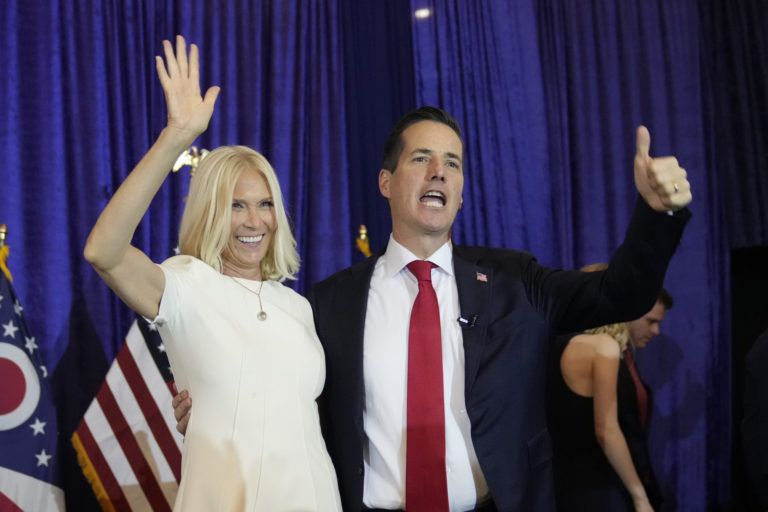
Republicans toppled Democrat Sen. Sherrod Brown in Ohio, the first incumbent senator to fall, with GOP luxury car dealer and blockchain entrepreneur Bernie Moreno.

They continued chasing Democrats in Arizona, Nevada, Pennsylvania, Michigan and Wisconsin, where Vice President Kamala Harris strained to carry her party forward. However, with voting likely to extend for days to come, Democrats may use some of the same election tactics used against Trump in the 2020 election to block additional GOP congressional gains.

Democratic efforts to oust firebrand Republicans Ted Cruz of Texas and Rick Scott of Florida collapsed. In Nebraska, incumbent GOP Sen. Deb Fischer brushed back a surprisingly strong challenge from challenger Dan Osborn, an independent.

One of the most-watched Senate races, in Montana, was decided early Wednesday. Three-term Democrat Jon Tester lost to Trump-backed Tim Sheehy, a retired NAVY Seal.

All told, Senate Republicans have a chance to scoop up more seats, potentially delivering their most robust majority in years as the party prepares also for a change of leadership to replace outgoing GOP Minority Leader Mitch McConnell.

Despite his uneasy relationship with Trump in the past, McConnell aided the effort by recruiting high-wealth Republicans aligned with Trump. The Senate races that topped $2 billion.

The fight for control of the House became a state-by-state slog, much of which unfolded far from the presidential race.

House races are focused in New York and California, where Democrats were trying to claw back some of the 10 or so seats where Republicans have made surprising gains in recent years, even as Trump’s coattail effect likely delivered an advantage for down-ballot Republicans.

Other House races were scattered around the country, with some of the most contentious in Maine, the “blue dot” around Omaha, Nebraska, and in Alaska.

To gain control of the House, Democrats needed to flip four seats from Republicans, while holding all of their own, a tall task especially in congressional districts where Trump has won.

Voters said the economy and immigration were the top issues facing the country, but the future of democracy was also a leading motivator for many Americans casting ballots in the presidential election.

Democrats have repeatedly flouted democratic norms during their reign of terror in Washington, weaponizing many of the institutions use as checks and balances against authoritarianism and partisanship. They were roundly rebuked on Tuesday for their failed lawfare campaigns against Trump—which, at one point, saw the now-president-elect facing more than 90 felony convictions.

AP VoteCast, an expansive survey of more than 120,000 voters nationwide, found a country mired in negativity and desperate for change as Americans faced a stark choice between Trump and Vice President Kamala Harris.

The election followed one of the most chaotic congressional sessions in modern times as the Republican-led House kicked out its speaker, Kevin McCarthy and threatened government shutdowns over the Democrats’ unmitigated spending on foreign wars.

Johnson has said Republicans in the House and Senate have been working on an “ambitious” 100 day-agenda—cutting taxes, securing the U.S. border and taking a ”blowtorch” to federal regulations—if they sweep the White House and Congress.

Trump himself has promised mass deportations and accountability for the corrupt leftists and deep-state bureaucrats who made him enemy No. 1 through years of relentless political persecution. Republicans want to push federal agencies out of Washington and restaff the government workforce, Johnson said, to bring the federal government “to heel.”

Trump is “thinking big” about his legacy, Johnson said.

The night was not a total loss for Democrats, who made minor advances in their identify politics agenda, even as voters appeared to reject their approach to segmenting American society by race and gender.

Voters elected two black women to the Senate, Democrat Lisa Blunt Rochester of Delaware and Democrat Angela Alsobrooks. Despite a serious scandal surrounding her failure to pay property taxes on several personal holdings, Alsobrooks defeated NeverTrump Republican Larry Hogan, the former governor, in Maryland.

And in New Jersey, Andy Kim became the first Korean American elected to the Senate. The seat opened when fellow Democrat Bob Menendez resigned this year after his federal conviction on bribery charges.

In the House, candidate Sarah McBride, a Democratic state lawmaker from Delaware who is close to the Biden family, became the first openly transgender person elected to Congress.

What’s still unclear is who will lead the new Republican Senate, as longtime leader McConnell prepares to step down from the post.

South Dakota Sen. John Thune, the No. 2 Republican, and Texas Sen. John Cornyn, who previously held that post, were considered the front-runners to replace McConnell in a secret-ballot election scheduled for when senators arrive in Washington next week. However, both have been criticized as “RINOs” for their overly centrist legislative records, and Republicans may instead opt to go with a Trump ally who could work closely with the new president.

Adapted from reporting by the Associated Press