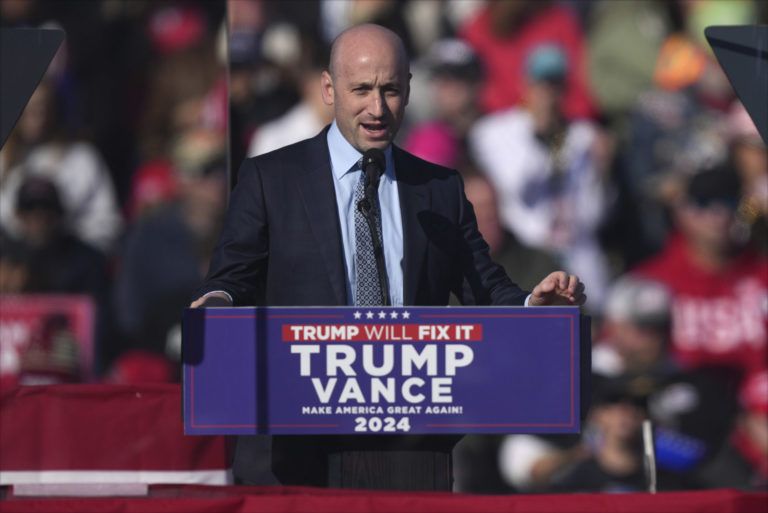
(Headline USA) President-elect Donald Trump is naming longtime adviser Stephen Miller, a border-security hardliner, to be the deputy chief of policy in his new administration.
Confirming the appointment, Vice President-elect JD Vance posted a message of congratulations on Monday to Miller on X and said, “This is another fantastic pick by the president.”
Miller is one of Trump’s longest-serving aides, dating back to his first campaign for the White House. He was a senior adviser in Trump’s first term and has been a central figure in many of his policy decisions, particularly on immigration.
Miller has also helped craft many of Trump’s speeches, and was often the public face of those policies during Trump’s first term in office and during his campaigns.
Since leaving the White House, Miller has served as the president of America First Legal, an organization of former Trump advisers fashioned as a conservative version of the American Civil Liberties Union, challenging the Biden administration, media companies, universities and others over issues such as freedom of speech and religion and national security.
He was also a frequent presence during Trump’s campaign this year, traveling aboard his plane and often speaking ahead of Trump during the pre-shows at his rallies.
Miller drew large cheers at Trump’s rally at Madison Square Garden during the race’s final stretch, telling the crowd that, “your salvation is at hand,” after what he cast as “decades of abuse that has been heaped upon the good people of this nation—their jobs looted and stolen from them and shipped to Mexico, Asia and foreign countries.”
He said the Biden open-borders policies had “ripped away” the lives of victims from their loved ones due to an influx of violent gangs and other criminals.
“We stand here today at a crossroads,” he went on, casting the election as “a choice between betrayal and renewal, between self-destruction and salvation, between the failure of America or the triumph of America.”
Because it is not a Cabinet position, the appointment does not need Senate confirmation.
(Headline USA) More than half of the monkeys bred for medical research that escaped from a compound in South Carolina last week have now been recovered unharmed, officials said Sunday.
Twenty-four monkeys were captured on Sunday, a day after another of the 43 escaped monkeys was recovered.
A “sizeable group” remains active along the compound’s fence line and bedded down in the trees for the night, police in Yemassee, about 50 miles northeast of Savannah, Georgia, said in a statement. Veterinarians have been examining the animals and initial reports indicate they are all in good health, police said.
The Rhesus macaques made a break for it Wednesday after an employee at the Alpha Genesis facility in Yemassee didn’t fully lock a door as she fed and checked on them, officials said.
Since their escape, the monkeys have explored the outer fence of the Alpha Genesis compound, cooing at the monkeys inside. The primates continued to interact with their companions inside the facility Saturday, which police have said was a positive sign.
Alpha Genesis CEO Greg Westergaard has said that efforts to recover all the monkeys will continue for as long as it takes.
The monkeys are about the size of a cat. They are all females weighing about 7 pounds.
Alpha Genesis, federal health officials and police all said the monkeys pose no risk to public health. The facility breeds the monkeys to sell to medical and other researchers.
Alpha Genesis provides primates for research worldwide at its compound in Yemassee, according to its website.
The company took over the research facility in March 2023. Prior to that, the area, known as Morgan Island, had been overseen by the Centers for Disease Control and Prevention.
According to an investigative report by the White Coat Waste Project, a medical watchdog group that has highlighted experiments involving animal cruelty, the island facility was being used by former COVID czar Anthony Fauci to conduct secretive vaccine-related experiments.
Panic struck in May 2022 after three of the monkeys being transported from the facility escaped during a truck crash near Danville, Pa., leading some to wonder if they might be infected with a dangerous disease.
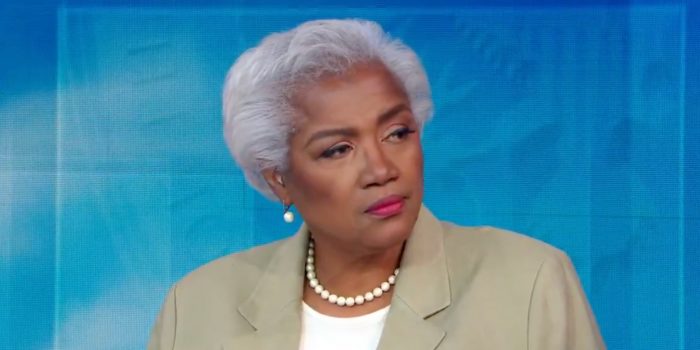
(Julianna Frieman, Headline USA) Former Democrat National Committee Chairwoman Donna Brazile admitted Sunday on ABC’s This Week that Democrats failed to capture voters and must boost their game in future election.
Reflecting on Vice President Kamala Harris’s historic defeat by Republican President-elect Donald Trump, Brazile, who admitted to leaking 2016 debate questions to Democrat nominee Hillary Clinton, said Democrats need “a lot of introspection” to bounce back from devastating losses of the Electoral College, popular vote and both Houses of Congress.
“The truth is we should put it all on a table and have a great introspection as to what happened, what happened in New Jersey when Chris and I were sitting there on election night, and I’m looking at Chris like, ‘Hey, what’s going on? What was going on in Minnesota? What was going on, of course, in Massachusetts and Rhode Island?”” she told host Jonathan Karl and Powerhouse Roundtable panelists.
“Trump improved not just his numbers in the battleground … He also improved in inner cities. He improved in outer suburbs. So it looks like Trump ran the 50-state strategy that the Democrats used to talk about,” former DNC chair @DonnaBrazile says. pic.twitter.com/HwAQPXCb9B
Brazile pointed to Trump’s 50-state strategy as reason for the president-elect’s major gains in Democrat stronghold.
Trump courted support behind the seven battleground states; he held rallies in blue states like New Jersey, New York and Virginia.
“Trump improved not just his numbers in the battleground, which we were talking about on election night, three to four points. He also improved in inner cities, improve in outer suburbs,” Brazile said.
She added Trump’s constant campaigning helped him secure the presidency.
“So, it looks like Trump ran the 50-state strategy that the Democrats used to talk about. So, we can talk about message, and we can talk about the map,” she added. “We can also talk about just, was 107 days enough?”
The Democrat strategist urged members of her party to stick together, declaring Trump won because he is a “better liar” than Harris.
“All of this should be on the table,” Brazile said. “We’re going to have a lot of introspection.”
“I want to say this—look, the Democratic Party, I was there eight years ago when Donald Trump defeated Hillary Clinton. And we looked at ourselves and said, what the hell!” she lamented.
She said Democrats did not do enough during the 2024 election.
“We tried to stitch together the blue wall with Elmer’s glue. We needed duct tape and a lot more,” Brazile continued. “We’ve got to do a better job of reaching the voters where they are and not try to make pretend that this was won simply because Donald Trump is a better liar.”
Julianna Frieman is a freelance writer published by the Daily Caller, Headline USA, The Federalist, and The American Spectator. Follow her on Twitter at @JuliannaFrieman.
(Headline USA) President-elect Donald Trump urged the incoming Republican-led Senate to empower him to appoint some nominees without a Senate vote amid fears that Democrats would use the filibuster, which they previously tried to eliminate, in order to derail his administration by delaying Cabinet appointments.
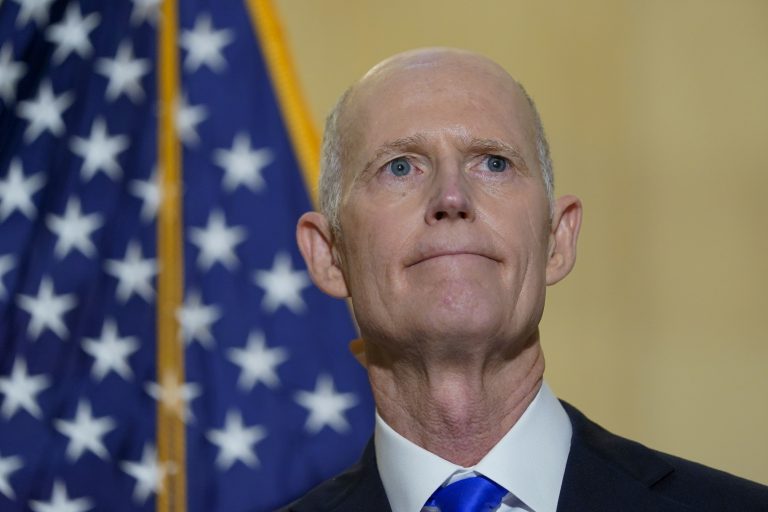
Republican Sens. John Thune of South Dakota, John Cornyn of Texas and Rick Scott of Florida are running in a secret ballot election Wednesday to lead the GOP conference and replace longtime GOP leader Mitch McConnell, who is stepping aside from the job after almost two decades.
All three have courted Trump’s support in the race, vying to show who is the closest to the president-elect as they campaign to become majority leader.
Trump has not endorsed in the race, but on Sunday he made clear that he expects the new leader to go around regular Senate order, if necessary, to allow him to fill his Cabinet quickly.
In a statement on X and Truth Social, Trump said that the next leader “must agree” to allow him to make appointments when the chamber is on recess, bypassing a confirmation vote.
“Any Republican Senator seeking the coveted LEADERSHIP position in the United States Senate must agree to Recess Appointments (in the Senate!), without which we will not be able to get people confirmed in a timely manner,” Trump posted, adding that positions should be filled “IMMEDIATELY!”
The Senate has not allowed presidents to make so-called recess appointments since a 2014 Supreme Court ruling limited the president’s power to do so. Instead, the Senate has held brief “pro-forma” sessions when it is out of town for more than 10 days so that a president cannot take advantage of the absence and start filling posts that have not been confirmed.
But with Trump’s approval paramount in the race, all three candidates quickly suggested that they might be willing to reconsider the practice.
Scott replied to Trump, “100% agree. I will do whatever it takes to get your nominations through as quickly as possible.”
100% agree. I will do whatever it takes to get your nominations through as quickly as possible. https://t.co/GlrHx2zJXh
They must “quickly and decisively” act to get nominees in place and that “all options are on the table to make that happen, including recess appointments,” Thune said in a statement.
We must act quickly and decisively to get the president’s nominees in place as soon as possible, & all options are on the table to make that happen, including recess appointments. We cannot let Schumer and Senate Dems block the will of the American people.https://t.co/h6gDmjhbqn
Cornyn said that Democrats attempting to gum up the works of the new administration—which received a clear mandate from the American people—would only make the Senate’s job more painful.
“It is unacceptable for Senate Ds to blockade President @realDonaldTrump’s cabinet appointments,” he said. “If they do, we will stay in session, including weekends, until they relent.”
He also noted that recess appointments are allowed under the Constitution.
It is unacceptable for Senate Ds to blockade President @realDonaldTrump ‘s cabinet appointments. If they do, we will stay in session, including weekends, until they relent. Additionally, the Constitution expressly confers the power on the President to make recess appointments.…
The social media exchange on Sunday became a first test for the three candidates since Trump was decisively elected last week to a second term.
Conservatives—including prominent pundit Tucker Carlson—have warned that only Scott is truly loyal to Trump’s agenda, although Thune appeared to be the favorite to succeed McConnell.
Red-pilled liberal Robert F. Kennedy Jr. likewise warned that Thune and Cornyn might put other priorities ahead of the “America First” policies that Trump was elected to effect.
Without Rick Scott, the entire Trump reform agenda wobbly.
Trump’s relationship with Congress—especially the advice and consent role afforded to the Senate when it comes to nominations—was tumultuous in his first term as he chafed at the unprecedented resistance to his selections and sought ways to work around lawmakers.
Traditionally, senators have allowed presidents to make their selections swiftly in the spirit of bipartisanship and government efficiency. However, Trump’s promises to “drain the swamp” triggered the Trump Derangement Syndrome of many in the federal bureaucracy, justifying the their minds the decision to violate political norms.
With Trump now entering a second term emboldened by his sweeping election victory, he is already signaling that he expects Senate Republicans, and by extension, their new leader, to fall in line behind his Cabinet selections.
Trump also posted on Sunday that the Senate should not approve any judges in the weeks before Republicans take power next year—a more difficult demand to fulfill as Democrats will control the floor, and hold the majority of votes, until the new Congress is sworn in on Jan. 3. Trump posted that “Democrats are looking to ram through their Judges as the Republicans fight over Leadership. THIS IS NOT ACCEPTABLE.”
Senators who are close to Trump, such as Mike Lee, R-Utah, and Marco Rubio, R-Fla., have endorsed Scott, as have tech mogul Elon Musk and other people who have Trump’s ear.
“We have to be the change,” Scott said on Fox News’s Sunday Morning Futures. “That’s what Donald Trump got elected to do, to be the change.”
All three candidates are promising that they will be more open and transparent than McConnell was and that they would give senators more power to get their priorities to the floor.
They have also tried to make clear that they would have a much different relationship with Trump than McConnell, who once called the former president a “despicable human being” behind closed doors.
As the Senate haggles over how to fill Trump’s Cabinet, many of his allies are campaigning for the nominations. Former GOP presidential candidate Vivek Ramaswamy said on ABC’s This Week that there are “a couple of great options on the table.”
Sen. Bill Hagerty, R-Tenn., who served as U.S. ambassador to Japan between 2017 and 2019, said on CBS’s Face the Nation that he would advance “the positions that President Trump has articulated,” noting that one of his greatest honors was to represent the Trump administration overseas.
“I’ll do that in whatever role necessary,” said Hagerty, who has endorsed Scott in the leadership race.
Trump last week named former campaign adviser Susie Wiles as his chief of staff. On Monday, two other appointments emerged: former ICE chief Tom Homan as his new “border czar,” and Rep. Elise Stefanik, R-N.C., as ambassador to the United Nations.
He has also ruled out two names from his previous administration for top positions.
Trump said Saturday that he would not be inviting Mike Pompeo, his former U.S. Secretary of State and CIA chief, and Nikki Haley, a former South Carolina governor who served as his U.N. ambassador and challenged him for the GOP nomination.
Pompeo rallied with Trump on the night before Election Day but had previously refused to stand by him on lawfare attacks such as the attempt to charge Trump for mishandling classified documents.
“I very much enjoyed and appreciated working with them previously, and would like to thank them for their service to our Country,” Trump posted on his network Truth Social.
Trump’s son, Donald Trump Jr., reposted on X a message by podcaster Dave Smith suggesting to put pressure to “keep all neocons and war hawks out of the Trump administration.”
The “stop Pompeo” movement is great but it’s not enough. Right now we need maximum pressure to keep all neocons and war hawks out of the Trump administration. They have had their time at the table and brought nothing but disaster to the world and this country.
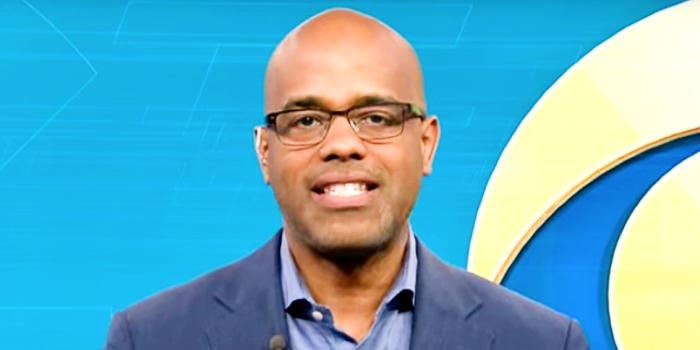
(Julianna Frieman, Headline USA) Jamal Simmons, the former communications director for Vice President Kamala Harris, elicited audible reactions from CNN panelists Sunday when he called for Democrats to disrupt President-elect Donald Trump’s transition.
Simmons suggested President Joe Biden resign before Trump’s inauguration and make Harris the first woman president on CNN State of the Union.
“There’s one promise left that he could fulfill: being a transitional figure. He could resign the presidency in the next 30 days, make Kamala Harris President of the United States,” he said, prompting CNN’s Scott Jennings to laugh, “woah,” and host Dana Bash to say “wow.”
Former VP Harris Comms Director says on CNN that Biden should resign and make Kamala the first woman president to “disrupt” the Trump transition.
“It would dominate the news.”
“Democrats have the learn drama and transparency and doing things that the public wants to see…” pic.twitter.com/fb60u8xZuD
Harris becoming president would absolve her from having to oversee the transfer of power from Biden to Trump, Simmons said.
If Biden resigns, Harris’s ascension to the Oval Office would leave the role of vice president vacant.
Harris would then have to appoint a vice president that must be confirmed by a majority vote of both Houses of Congress, according to the 25th Amendment of the U.S. Constitution.
“Democrats have to learn drama and transparency and doing things that the public will want to see,” Simmons said. “This is the moment to change the entire perspective of how Democrats operate.”
“Okay, this has now jumped from an Internet meme to a Sunday morning show,” Bash quipped.
Jennings joked that Simmons was writing the next season of hit political drama series House of Cards.
Bash brought up a potential vacancy on the U.S. Supreme Court, referencing reports that some Democrats want to pressure Supreme Court Justice Sonia Sotomayor, 70, to retire.
Simmons casted doubt on the idea of a Harris nomination to the Supreme Court but reiterated that the possibility is at the behest of Biden.
What ever could VP Kamala Harris do after losing the presidency to Trump?
CNN commentator suggests Harris should be appointed to the Supreme Court.
“Not only am I floating it, but I want to stir up everything. I want people’s heads to explode…”pic.twitter.com/F47XAD2A5X
“If he did it, again, it would fulfill his promise, his last promise, it would give Kamala Harris the chance to be the 47th President of the United States of America. It would disrupt all of Donald Trump’s paraphernalia,” he laughed. “Right? He’d have to rebrand everything.”
“It would be easier for the next woman to run for president to not have to worry about historical weight,” Simmons said.
Julianna Frieman is a freelance writer published by the Daily Caller, Headline USA, The Federalist, and The American Spectator. Follow her on Twitter at @JuliannaFrieman.
(Headline USA) President-elect Donald Trump, who flouted normal protocol by assembling a privately funded transition team ahead of last week’s election—thereby staving off the possibility of deep-state meddling—hit the ground running with at least two major appointments Monday morning for his incoming administration.
“Homan will be in charge of all Deportation of Illegal Aliens back to their Country of Origin,” Trump wrote in a post on Truth Social late Sunday night.
Harris shunned the role, even denying—along with her media allies—that she had ever been designated for the job, despite evidence to the contrary.
Homan, by contrast, has been one of the staunchest advocates for Trump’s border-enforcement agenda.
When pressed by 60 Minutes recently on how the administration could avoid so-called family separations during the deportation process, Homan pointed out that the children of illegal immigrants could be deported alongside their scofflaw parents.
60 Minutes: Is spending billions on deportation worth it?
Former ICE director and Trump ally Tom Homan: What price do you put on our national security?
60 Minutes: Is there a way to carry out mass deportations without separating families?
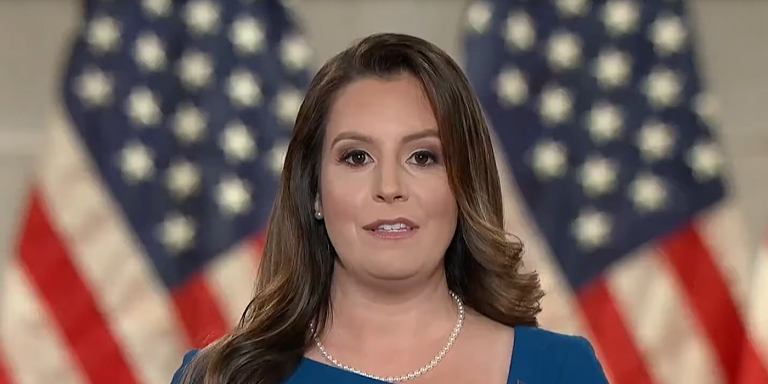
Trump also announced Monday that he had chosen Rep. Elise Stefanik, R-N.Y., to serve as his ambassador to the United Nations—a role previously filled by his top primary rival, Nikki Haley during Trump’s first presidential term.
“Elise is an incredibly strong, tough, and smart America First fighter,” Trump said in a statement Monday announcing his pick.
Stefanik, 40, who serves as House Republican Conference Chair, has long been one of Trump’s most loyal allies in the House, and was among those discussed as a potential vice presidential choice.
Born and raised in upstate New York, Stefanik graduated from Harvard and worked in former President George W. Bush’s White House on the domestic policy council and in the chief of staff’s office.
In 2014, at 30, she became the youngest woman ever elected to Congress, representing upstate New York. She later became the youngest woman to serve in House leadership.
Stefanik was known early in her tenure as a more moderate conservative voice. But she soon attached herself to the former president, quietly remaking her image into that of a staunch MAGA ally—and seeing her power ascend.
She became the House Republican Conference Chair in 2021.
Stefanik spent years positioning herself as one of Trump’s most trusted allies and confidants on the Hill. She endorsed him in the 2024 race before he had even launched his bid, and aggressively campaigned on his behalf during the GOP primary.
She saw her profile rise after her aggressive questioning of a trio of university presidents over anti-Semitism on campus led to two of their resignations—a performance Trump repeatedly praised.
She also defended him vigorously in both of his impeachment trials and railed against his four criminal indictments, including filing an ethics complaint in New York against the judge who heard his civil fraud case.
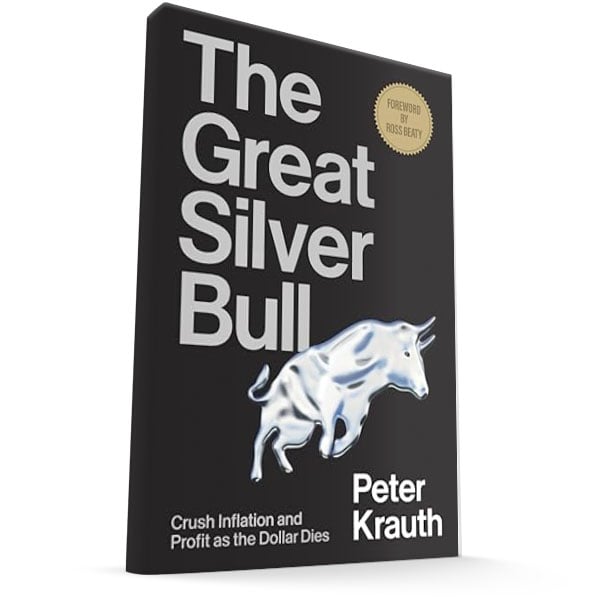
(Money Metals News Service) In a recent interview on the Money Metals podcast, host Mike Maharrey sat down with Peter Krauth, a seasoned precious metals expert and author of The Great Silver Bull.
During their discussion, Krauth shared valuable insights on the current and future state of the silver market, highlighting its role as an undervalued investment, the dynamics of the gold-silver ratio, supply and demand challenges, and the potential impact of economic policy on precious metals.
(Interview Begins Around 6:34 Mark)
Peter Krauth
Peter Krauth is a seasoned metals analyst and expert in the resource market, with over 20 years of experience specializing in precious metals, mining, and energy stocks. He is the editor of the investment newsletter Silver Stock Investor, which focuses exclusively on silver investments.
Silver’s Price Trajectory: Perceptions vs. Reality
Krauth acknowledged the perception that silver lags behind gold in performance. While gold reached 38 new record highs this year, with prices rising by 38% since mid-February, silver has outperformed gold with a 46% gain during the same period.
Krauth emphasized that while silver may often appear as a “laggard” early in a bull market, it historically outpaces gold in the long run, driven by industrial demand and investor interest during periods of market stress.
The Gold-Silver Ratio and What It Signals
The gold-silver ratio, hovering around 83 to 84:1 in recent months, is notably higher than the historical range of 40 to 60:1. This indicates that silver remains relatively undervalued compared to gold, a situation Krauth views as an opportunity for investors.
Despite silver’s gains, the high ratio is partly maintained by gold’s strength and persistent investor interest. Krauth advised keeping a close eye on the gold-silver ratio, as it reinforces silver’s undervaluation and offers a potential entry point for long-term investors.
Supply Deficits: A Key Factor in Silver’s Potential Upswing
One of the more pressing issues Krauth discussed is the silver supply deficit. Over the past three years, silver demand has exceeded supply, driven by an expanding industrial demand—particularly in electronics, solar panels, and electric vehicles. The silver market operates with an annual supply of around 1 billion ounces, 85% from mining and 15% from recycling.
Yet, annual demand has surged to 1.2 billion ounces, creating a 200-million-ounce shortfall, currently covered by existing stockpiles. Krauth predicts that these reserves will deplete within the next 12 to 18 months, which could result in supply constraints and significant price increases if demand remains high.
Industrial Demand: The Steady Floor Under Silver Prices
Industrial demand for silver is strong and growing, with uses across various fields. According to Sprott Investment Management, silver ranks second only to oil in terms of its global applications, spanning electronics, medical applications, and renewable energy.
Notably, in 2024, industrial demand is expected to represent 70% of total silver supply, up from 50% just a few years ago. With renewable energy mandates in many countries, demand from solar panel manufacturing alone accounts for over 20% of global silver consumption.
Parallels with Uranium: Potential for a Strong Price Rally
Krauth drew an intriguing comparison between silver and uranium markets. Like silver, uranium faced a period of high demand and limited supply, with secondary sources filling the gap until they dwindled, leading to a price surge from $23 to $83 per pound over three years.
Krauth sees similar dynamics in silver, where above-ground stockpiles are shrinking, and new supply is limited. He anticipates a price rally in silver, propelled by industrial demand and the eventual depletion of available stockpiles.
Global Factors Influencing Silver: India and Russia
India’s surging silver demand also plays a critical role. The country recently cut import duties on silver, resulting in a fivefold increase in silver imports in Q3 2023 compared to the same period in 2022. India’s expanding solar panel production and cultural affinity for silver jewelry are driving this demand.
Krauth also highlighted Russia’s decision to include silver in its national wealth fund, potentially to support domestic industries and accumulate silver as a strategic asset. Krauth views these developments as additional positive drivers for silver prices.
Policy and Precious Metals: Harris vs. Trump
Looking at the broader economic landscape, Krauth discussed how a potential presidency by either Harris or Trump might influence precious metals. He believes silver and gold are poised to rise regardless of who holds office, as government spending and debt continue to escalate.
While a Harris administration may prioritize renewable energy initiatives that could bolster silver demand, a Trump presidency may favor deregulation and support for mining industries. Both scenarios, Krauth argues, would contribute to a bullish environment for precious metals.
Final Thoughts and The Great Silver Bull
In closing, Krauth recommended his book, The Great Silver Bull, which explores the factors driving the silver market and offers a generational investment perspective. Through short, digestible chapters, Krauth provides insights into silver’s economic fundamentals, its role in portfolio diversification, and strategic approaches for investing in both physical silver and mining stocks.
For those interested in precious metals, Krauth’s comprehensive analysis of silver’s unique market dynamics, historical context, and future potential offer a roadmap for understanding this often-overlooked asset. As the world faces rising demand for renewable energy and geopolitical shifts, silver stands as a compelling investment with substantial growth potential.
Key Questions & Answers
Here are the key questions and answers from the podcast interview between Mike Maharrey and Peter Krauth:
Is silver a laggard compared to gold?
Yes, silver is often perceived as a laggard in bull markets, but it ultimately outperforms gold, especially in the later stages of a bull market. Despite gold reaching record highs this year, silver has actually outpaced gold in percentage terms, with a 46% increase since February compared to gold’s 38% gain. Silver tends to be back-end loaded in bull markets, where its performance accelerates towards the end.
How does the gold-silver ratio affect the silver market?
The high gold-silver ratio, recently around 83 to 84:1, indicates that silver remains undervalued compared to gold. This is an opportunity for investors, as silver is historically undervalued when the ratio is high. The high ratio reinforces silver’s appeal as a long-term investment and reflects its relative affordability against gold.
What impact does the silver supply deficit have on future prices?
With silver demand outstripping supply by 200 million ounces annually, covered by existing stockpiles, there are significant price increases likely once above-ground reserves are depleted. These reserves may run out within the next 12 to 18 months, creating potential for a price rally, especially if demand from industrial uses remains high.
How does industrial demand influence silver prices?
Industrial demand for silver is strong and rising, accounting for around 70% of supply in 2024, compared to 50% in previous years. Silver is essential in electronics, solar panels, electric vehicles, and medical applications, creating a steady demand base. This robust industrial demand will provide a stable floor under silver prices.
Are there similarities between the silver and uranium markets?
There are similarities between silver and uranium markets, where high demand and limited supply eventually led to a price surge in uranium. Similar dynamics are seen in silver, with above-ground stockpiles being drawn down and limited new supply, which could lead to a significant price rally for silver in the future.
How is India influencing the silver market?
India has become a major silver buyer, recently reducing import duties, which led to a fivefold increase in Q3 2023 silver imports compared to 2022. India’s demand for silver is driven by industrial uses like solar panels, cultural jewelry demand, and its bargain-hunting culture as gold prices rise.
What does Russia’s inclusion of silver in its wealth fund mean for the market?
Russia’s decision to include silver in its wealth fund is strategic, possibly to support its domestic industries and accumulate a valuable asset. This move may restrict silver supply on the global market and reflects the geopolitical importance some countries place on silver.
How would a Harris or Trump presidency affect silver and gold markets?
Both candidates would likely drive precious metals prices higher due to continued government spending. A Harris administration may increase renewable energy demand, benefiting silver, while a Trump presidency may favor deregulation and support mining industries. Either outcome would likely have a positive impact on precious metals.
Why should investors consider Krauth’s book, The Great Silver Bull?
The book explores silver as a “generational opportunity” and provides insights into its economic fundamentals, investment potential, and strategies for physical silver and mining stocks. Written in a straightforward, accessible format, it helps investors understand silver’s market dynamics and the factors that influence its long-term value.
(Mike Maharrey, Money Metals Exchange) Gold is fundamentally money, but there is demand for the yellow metal in industry and technology.
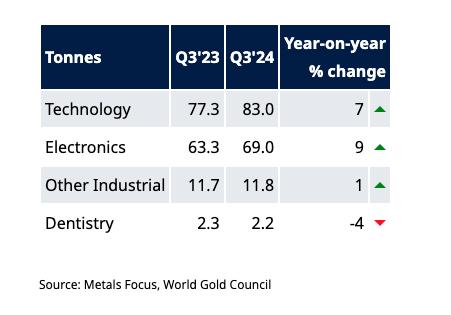
Industrial and tech demand accounted for 83 tons of gold in the third quarter, a 7 percent year-on-year increase. It was a 2-ton increase quarter to quarter.
So far, in 2024, about 245 tons of gold have been consumed in industrial and technical applications.
The vast majority of industrial gold demand comes from the electronics sector. Sixty-nine tons of gold was used in electronics production in Q3, a 9 percent increase on an annual basis.
The three major Eastern electronics fabrication hubs all reported an annual increase in Q3 gold demand:
Japan – 20 percent
South Korea – 20 percent
Mainland China and Hong Kong SAR – 10 percent
Meanwhile, U.S. electronic manufacturers recorded a 4 percent year-on-year decrease.
All the major smartphone companies unveiled new products in Q3, and smartphone shipments increased for the fifth consecutive quarter, but according to IDC, a market intelligence company, the industry is taking a “cautious” stance for the remainder of the year with some emerging signs of economic slowdown.
On the positive side of the equation, the ongoing adoption of 5G and a push for AI-enabled phones lifted gold demand in the wireless sector.
AI is the primary growth driver in the electronics sector, and it pushed another strong quarter in printed circuit boards (PCBs). Automotive electronics also use high-end PCBs to guarantee reliable operation in safety-critical functions.
Low-earth orbit satellites are also increasing demand for PCBs. According to the World Gold Council, the proliferation of satellites for communications and internet service may represent a potential long-term source of demand for gold from both PCB and wireless components.
Gold is also an input in the production of light-emitting diodes (LEDs). The amount of gold used in this sector increased modestly in Q3, fueled by increased adoption in the automobile sector.
Other industrial applications used about 12 tons of gold in Q3. This was almost identical to the Q3 2023 offtake and up 1 ton over the second quarter.
Gold Is a Useless Metal?
Warren Buffett once said, “Gold gets dug out of the ground in Africa or someplace. Then we melt it down, dig another hole, bury it again, and pay people to stand around guarding it. It has no utility. Anyone watching from Mars would be scratching their head.”
You’ll often hear this notion that gold is “useless” from commentators on mainstream financial networks.
As you can see by the growing demand for gold in technology and electronics, this is just silly.
In fact, gold is one of the most useful metals in the world. Due to its utility coupled with its scarcity, gold is also one of the most valuable metals in the world.
In the first place, gold is beautiful. That’s why people all over the world love to wear gold. About three-quarters of gold demand is for jewelry production. About 479.4 tons of gold were used in jewelry fabrication in the second quarter alone.
But gold isn’t just pretty. Gold’s inherent physical and chemical properties make it useful in many industrial and technological applications. Gold doesn’t corrode, it is an exceptional electricity conductor, it is malleable, and gold can be used to catalyze many chemical processes without being consumed.
This is why we see gold increasingly used in the tech sector. In fact, gold would probably be used even more if it weren’t so rare and expensive.
Gold is also important in the medical field. Its inherent stability and unique optical properties make it perfect for use in diagnostic testing. The World Gold Council said that gold is “at the heart of the hundreds of millions of Rapid Diagnostic Tests (RDTs) that are used globally every year.
“This well-established and critically important technology has changed the face of disease diagnosis in the developing world over the last decade.”
Gold nanoparticles are used in testing for malaria, HIV, hepatitis, and other illnesses.
Gold has even been used in some exotic applications. In 2018, a team of Chinese researchers partially restored the sight of blind mice by replacing their deteriorated photoreceptors – sensory structures inside the eye that respond to light – with nano-wires made of gold and titanium.
The point is gold is far from useless.
But fundamentally, gold is money. And everybody wants to have money – especially real money.
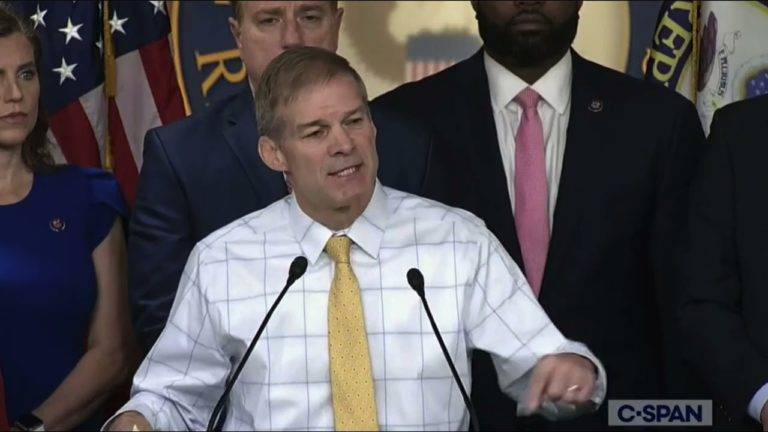
(Luis Cornelio, Headline USA) House Judiciary Committee Chairman Jim Jordan shut down a failed gotcha question during a Sunday CNN interview.
Jordan appeared on CNN’s State of the Union with host Dana Bash, who asked him about Republicans claiming “voter fraud” and “election integrity” only when they lose.
After a brief back and forth, Jordan turned the tables on Bash, asking her about the 10 million missing votes Joe Biden allegedly received in the 2020 presidential election.
Outgoing Vice President Kamala Harris currently claiming little over 71 million votes, far lower than the 81 million declared for Joe Biden in 2020.
As seen in a video shared by journalist Kyle Becker, Bash asked, “Last time around … there were false claims about election fraud when Donald Trump lost. This time, Donald Trump won and you think the election was free and fair. Do you see there’s a little of a…”
Jordan replied, “No, I think the Democrats got to ask: ‘Why did we go from getting 81 million to getting 70 million? What happened to those 10 million people?’”
Later, Bash asked Jordan if he believed the 2020 election was “free and fair.” Jordan replied affirmatively, explaining the unpreceded use of mail-in and absentee ballots.
“There were concerns about 2020 with all the mail-in voting,” he said. “Pennsylvania had like 2.5-something million mail-in ballots come in without any signature verification which was required under Pennsylvania statute. So, there were all types of concerns with how the 2020 election was played out.”
Seconds later, Jordan added, “The biggest question is what happened to the 10 Million voters that Joe Biden got but didn’t come up for Kamala Harris? President Trump’s numbers were right up where they were in 2020 but the Democrats were much lower.”
(Luis Cornelio, Headline USA) Republicans boasted of several positive developments both domestically and globally, all attributed to what has been termed the “Trump Effect.”
Rep. Byron Donalds and content creator Joshua Jake took to X Saturday to highlight 13 major changes following President-elect Donald Trump’s landslide victory on Tuesday.
In a tweet that has garnered over 5.2 million views, Donalds celebrated four domestic wins, including Trump’s selection of campaign manager Susie Wiles as the first female White House chief of staff.
Jake shared a viral compilation clip of the all major changes after Trump was elected. This video has gained over 82 million views.
This week, NYC Mayor Eric Adams halted taxpayer-funded debit cards for illegal aliens and so-called foreign nationals paroled by the Biden-Harris administration.
American shoe company Steve Madden cut its Chinese production by half in preparation for tariffs under Trump, bringing jobs back to the U.S.
Following Trump’s victory, the stock market and Bitcoin hit “all-time highs,” Donalds noted. Notably, Trump had predicted a market crash similar to 1929 if Harris won.
Donalds also noted that after Election Day, a massive caravan of 3,000 would-be illegal aliens disbanded as they realized Biden’s open border policies would soon come to an end.
These victories extended to the international stage as well.
Donalds noted that within 72 hours of Trump’s election, Qatar agreed to kick Hamas leaders out of Doha, their former safe haven. Hamas also called for an “immediate” end to the war with Israel.
In Afghanistan, the Taliban expressed a desire for a “new chapter” with Trump’s return to the White House in 2025.
The Taliban’s comments came after Biden’s disastrous withdrawal from Afghanistan paved the way for the radical Islamist group to take over in 2021.
China, a major competitor, affirmed its desire for a “peaceful coexistence” with the U.S.
Russia, another U.S. rival, declared itself “ready” to speak with the U.S. government. These comments coincide with Ukraine’s conversations with Trump and tech mogul Elon Musk.
The European Union also said it is open to buying natural gas from the U.S. to avoid being hit with tariffs under the new Trump administration.
The "Trump Effect" – 72 hours after winning the 2024 Election:
🇺🇸First female Chief of Staff appointed 🇺🇸NYC to stop giving debit cards to illegals 🇺🇸US companies bring production home 🇺🇸Stock market hitting all-time-highs 🇺🇸Bitcoin hitting all-time-highs 🇲🇽Newest migrant…