Sick: Katie Porter Suggests Trump White House Will Trigger Child Rapes

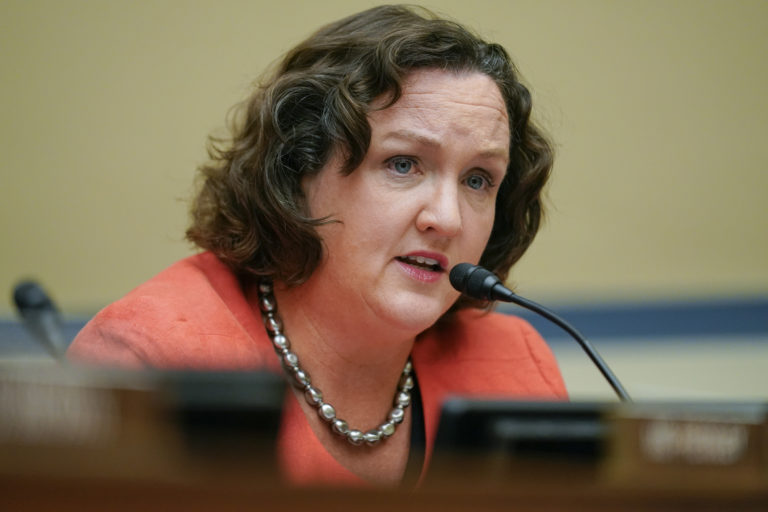
(Luis Cornelio, Headline USA) Rep. Katie Porter claimed Friday that her middle school-aged daughter feared about rape and abortion following Donald Trump’s landslide victory on Nov. 5. 

In an interview with Fox 11 Los Angeles, Porter said her daughter is specifically worried about being molested and being unable to terminate a potential pregnancy. The child is 12 and lives in California. 

“On election night, I went to pick up my daughter from water polo practice, and she’s 12, and she got in the car, and she was crying,” Porter recalled. “I said, ‘Did someone punch you?’ … ‘Did someone hit you? Did the coach yell at you? What happened?” 

According to Porter, the child replied, “‘Mom, Trump won. Trump’s going to win and what if I get raped and I need to have an abortion.’” 

The congresswoman said that her daughter’s concerns are a “reminder” of how “scary” Trump’s historic return to the White House is. 

Porter, a two-term congressman representing California’s 47th District, did not seek re-election in 2024. Instead, she ran unsuccessfully for California’s open Senate seat, losing the election to Rep. Adam Schiff.  

Porter’s comments about her daughter’s alleged worries about abortion drew widespread backlash online. 

Political commentator Collin Rugg, who shared the now-viral clip online, wrote, “Porter is an awful mother assuming this is true.” 

One user agreed, saying, “These liberals are fcking nuts.” 

Another user mocked Porter, adding, “My two years old just told me: ‘Our trade balance with China is too unbalanced to sustain a competitive advantage without substantial tariffs.’” 

A third user chimed in, “Liberals are literally the worst parents on the planet.” 

‘Hail Trump! SNL Airs Post-Election Grievances After Bolstering Loser Kamala

(Luis Cornelio, Headline USA) Saturday Night Live awkwardly grappled with President-elect Donald Trump’s landslide victory, despite the show’s earlier attempt to bolster outgoing Vice President Kamala Harris just before the election. 

In Saturday’s Cold Open, the cast jokingly claimed they had always supported Trump, seemingly fabricating a satirical fear of persecution, invoking Nazi phrases and mocking pro-Trump young voters. 

“This is the same Donald Trump who openly called for vengeance against his political enemies,” Kenan Thompson remarked, as other cast mocked post-election backlash. 

Bowen Yang chimed in, “And now, thanks to the Supreme Court, there are no guardrails.” 

“Nothing to protect the people who are brave enough to speak out against him,” Ego Nwodim added, before Thompson mockingly concluded, “And that is why we at SNL would like to say to Donald Trump, we have been with you all along.” 

The cast continued, “We have never wavered in our support of you, even when others doubted you. Every single person on this stage believed in you. Every single person on this stage voted for you. Because we see ourselves in you.”  

The skit then touched on loyalty pledges, featuring some Nazi undertones. “And if we find out someone here voted for Kamala, we will rat them out so fast,” they added mockingly, introducing three cast members—Jane Wickline, Ashley Padilla and Emil Wakim—as “disgusting” cast members. 

The show also invoked a Nazi reference: “Hail Trump! But the rest of us, Hail Trump, voted for you at least once.” 

One actor followed with, “I voted for you 50 times in Pennsylvania—92% of black women voted for Kamala, but I was one of the proud 8%. For me, it’s brother Donald Trump all the way.” 

The so-called comedians also took shots at Elon Musk and the unwavering support of young voters who backed Trump, mimicking the signature lyrics of Young People’s Y.M.C.A. 

“And to all the young men who helped elect Trump and Elon, we know you felt unseen these past four years. So we say to you, young men, there’s no need to feel down. Young men, pick yourself off the ground. Young men, time to put on your crown. You don’t need to be unhappy…” 

This skit aired a week after NBC, SNL’s parent company, controversially featured Harris on the episode, just before Election Day, potentially violating the Federal Communications Commission’s Equal Time rule.

FCC Commissioner Brendan Carr criticized NBC, which owns multiple broadcast stations, for not immediately offering Trump equal airtime. In response, the company aired a free Trump ad on Nov. 3.

GOP Rep. Eli Crane Wins 2nd Term in Vast Arizona Congressional District

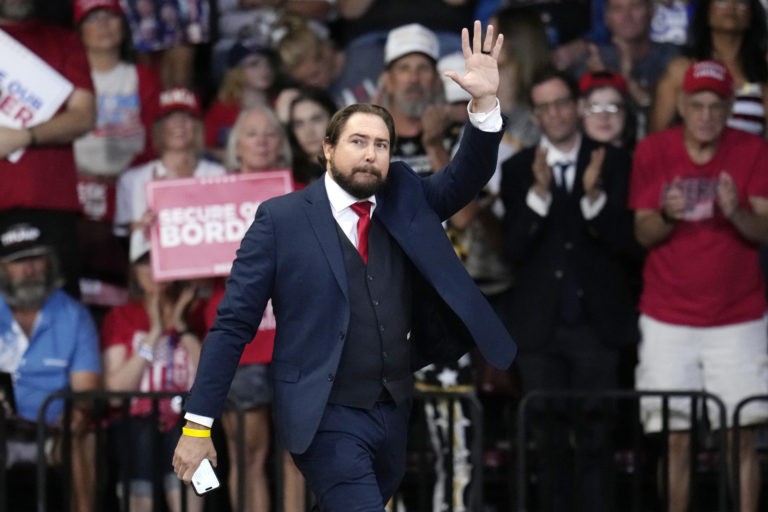
(Headline USA) Rep. Eli Crane, R-Ariz., won reelection in a Republican-leaning congressional district covering vast swaths of rural Arizona.

Crane faced a spirited challenge from Democrat Jonathan Nez, the former Navajo Nation president, in the 2nd District race. Nez was vying to become the first Native American to represent Arizona in Congress.

In a statement late Saturday, Crane commended Nez for entering the race and thanked voters.

“I will continue using every tool in my arsenal to fight against the corruption and selfish interests of the DC elites to put rural Arizonans FIRST,” Crane wrote. “I’m laser-focused on working with President Trump to lower inflation, secure the border and return to peace through strength.”

The district covers much of northeastern Arizona and dips south to the northern Tucson suburbs. It includes 14 of the 22 federally recognized tribes within the state.

Nez said in a statement late Saturday that he called Crane to congratulate him on a hard-fought victory.

“Although we didn’t get the outcome we hoped for, the work we began together is not over,” Nez wrote.

Crane, a retired Navy SEAL who served in the military for 13 years, is a member of the pro-liberty House Freedom Caucus and a staunch ally of President-elect Donald Trump, who won Arizona.

He has been at the forefront of the House investigation into the July 13 assassination attempt on Trump in Butler, Pa.

Crane also was among eight U.S. House Republicans nationally who voted to oust Rep. Kevin McCarthy as House speaker in 2023.

He focused on securing the U.S.–Mexico border and supporting military veterans. In 2022, he unseated three-term Democratic Rep. Tom O’Halleran after the rural district was redrawn to become significantly more conservative.

Nez campaigned largely on securing water rights and fulfilling the needs of rural residents. Nez was the Navajo president from 2019 to 2023 but lost his reelection bid. He also served as the tribe’s vice president, a Navajo County supervisor and a Navajo Nation Council delegate.

Three other U.S. House races in Arizona were too early to call Saturday, most notably the 1st and 6th Congressional Districts.

Republican David Schweikert is seeking an eighth term in the affluent 1st Congressional District that includes north Phoenix, Scottsdale, Fountain Hills and Paradise Valley. His challenger is Democratic former state Rep. Amish Shah.

The 6th Congressional District race pits Republican Rep. Juan Ciscomani against Democrat Kirsten Engel, whom he narrowly beat two years ago. The district runs from Tucson east to the New Mexico state line and includes a stretch of the Arizona-Mexico border.

The U.S. Senate race in Arizona between Democrat Rep. Ruben Gallego and Republican Kari Lake, a well-known former television news anchor and staunch Trump ally, also remained too early to call Saturday.

The lengthy delays fueled renewed suspicions that corrupt election officials in Maricopa and Pima counties may be dragging out the ballot count in order to “find” additional ballots for Gallego.

Maricopa Recorder Stephen Richer, who lost his own primary for reelection earlier this year but remains in power for the general election, has been a vocal opponent of Trump and Lake, and previously received large donations from a leftist donor to fund an anti-Lake political-action committee.

Adapted from reporting by the Associated Press

Average Rate on 30-year Mortgage in U.S. Rises for 6th Straight Week

(Headline USA) The average rate on a 30-year mortgage in the U.S. rose for the sixth straight week, returning to its highest level since early July.

The rate ticked up to 6.79% from 6.72% last week, mortgage buyer Freddie Mac said Thursday. That’s still down from a year ago, when the rate averaged 7.5%.

Borrowing costs on 15-year fixed-rate mortgages, popular with homeowners seeking to refinance their home loan to a lower rate, also edged higher this week. The average rate rose to 6% from 5.99% last week. A year ago, it averaged 6.81%, Freddie Mac said.

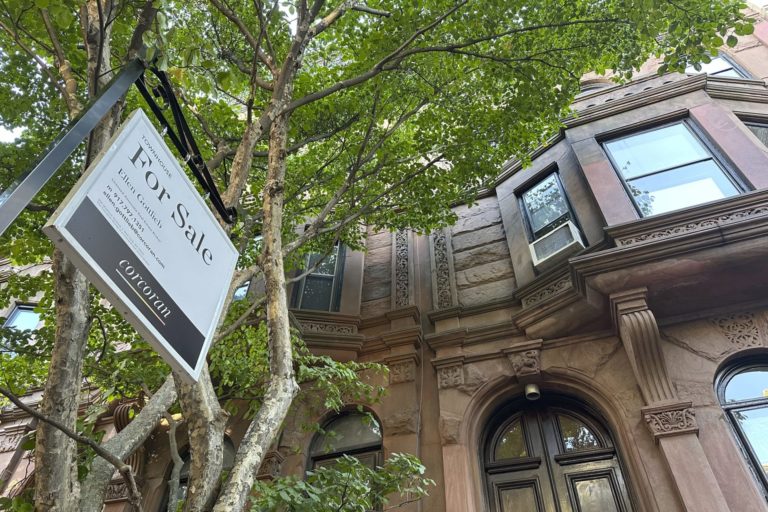
When mortgage rates increase they can add hundreds of dollars a month in costs for borrowers, reducing homebuyers’ purchasing power at a time when home prices remain near all-time highs, even though the housing market remains in a sales slump going back to 2022.

Mortgage rates are influenced by several factors, including the yield on U.S. 10-year Treasury bonds, which lenders use as a guide to price home loans. Bond yields have been rising following encouraging reports on inflation and the economy.

This week, bond yields surged on expectations that President-elect Donald Trump’s plans for higher tariffs, lower tax rates and lighter regulation could lead to bigger economic growth, inflation and U.S. government debt.

The yield on the 10-year Treasury was at 4.36% at midday Thursday. It was at 3.62% as recently as mid-September.

The average rate on a 30-year home loan hasn’t been this high since July 11, when it was 6.89%. In late September, the average rate got as low as 6.08% — its lowest level in two years—following the Federal Reserve’s decision to cut its main interest rate for the first time in more than four years.

While the central bank doesn’t set mortgage rates, its policy pivot cleared a path for mortgage rates to generally go lower.

“While we still expect mortgage rates to stabilize by the end of the year, they will likely be at a higher level than markets were initially expecting prior to election week,” said Ralph McLaughlin, senior economist at Realtor.com.

The recent uptick in mortgage rates has discouraged some would-be home shoppers. Mortgage applications fell last week for the sixth week in a row, sliding 10.8% on a seasonally adjusted basis from the prior week, according to the Mortgage Bankers Association.

Applications for loans to refinance a mortgage fell 19%, though they were still 48% higher than in the same week last year, when rates were higher.

“Rates and borrower demand will likely remain volatile in the coming weeks as financial markets digest both the election results and the Fed’s upcoming monetary policy decisions,” said MBA CEO Bob Broeksmit.

Adapted from reporting by the Associated Press

FEMA Worker Fired after Directing Staff to Avoid Helping Trump Supporters

(Headline USA) A Federal Emergency Management Agency worker has been fired after she directed workers helping hurricane survivors not to go to homes with yard signs supporting President-elect Donald Trump, the agency’s leader said in a statement Saturday.

“This is a clear violation of FEMA’s core values and principles to help people regardless of their political affiliation,” FEMA Administrator Deanne Criswell said. “This was reprehensible.”

The agency did not identify the employee, nor did it say where it happened.

But Florida Gov. Ron DeSantis, calling it “targeted discrimination” of Florida residents who support Trump, said it happened in Florida.

DeSantis said he has directed the Florida Division of Emergency Management to begin an investigation into the matter.

“The blatant weaponization of government by partisan activists in the federal bureaucracy is yet another reason why the Biden-Harris administration is in its final days,” DeSantis said on social media.

“… New leadership is on the way in DC, and I’m optimistic that these partisan bureaucrats will be fired,” he added.

There were no details in FEMA’s statement or DeSantis’s comments about the time frame or community where the incident occurred.

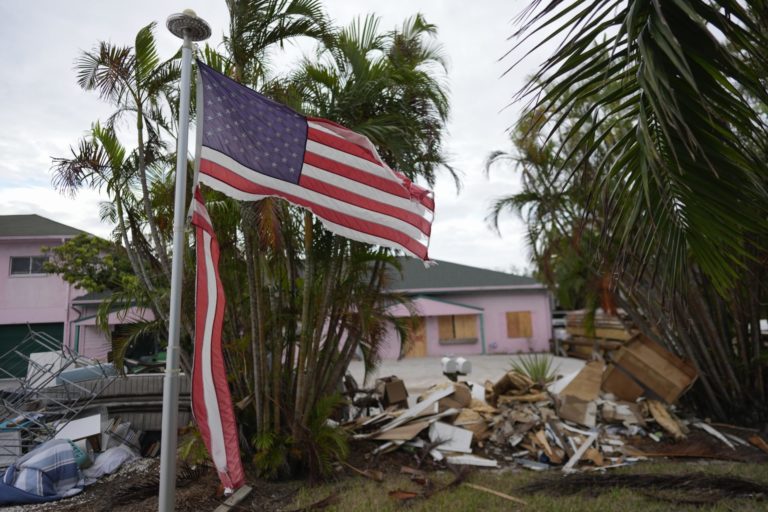
FEMA workers have been in the state helping residents recover from Hurricane Milton, which devastated many Florida communities last month.

Criswell said she is determined to hold employees accountable.

“I will continue to do everything I can to make sure this never happens again,” she said.

The agency has come under harsh attack for its mismanagement of the recent natural disasters, most notably Hurricane Helene, which walloped states including North Carolina, Georgia, Tennessee and South Carolina in late September.

The storm flooded mountain areas, including the communities in western N.C. adjacent to the Swannanoa River, which left cities including Chimney Rock and Asheville devastated.

Many residents said they had not heard from FEMA or other agencies and complained that when community members tried to rally together, federal agencies actively thwarted those efforts at a critical time.

The hurricane, which killed more than 230 people, was one of the top-five deadliest for the region since record-keeping first began in the early 20th century.

Adapted from reporting by the Associated Press

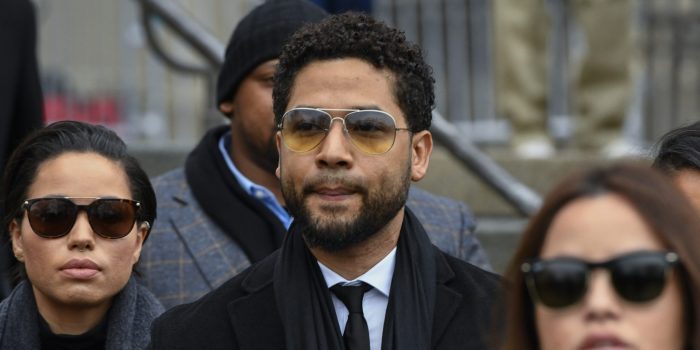
‘Jussie Smollett’ Trends on X after Dubious Post-Election Text Messages Target Blacks

(Headline USA) Online consensus predicted that a series of racist text messages sent to black men, women and students, including middle schoolers, were likely another racial hoax similar to the

Smollett’s name began trending on X as news of the supposed scandal first broke on Thursday, two days after Republicans swept the general-election races to claim the White House, along with a majority in the U.S. Senate and likely building on its narrow House majority.

The messages, invoking slavery, were sent anonymously to residents in several states—including New York, Alabama, California, Ohio, Pennsylvania and Tennessee—prompting inquiries by the FBI and other agencies. They generally used a similar tone but varied in wording.

Some instructed the recipient to show up at an address at a particular time “with your belongings,” while others didn’t include a location. Some of them mentioned the incoming presidential administration.

It wasn’t yet clear who was behind the messages, and there was no comprehensive list of where they were sent, but high school and college students were among the recipients.

The FBI said it was in touch with the Justice Department on the messages, and the Federal Communications Commission said it was investigating the texts “alongside federal and state law enforcement.”

The office of Ohio’s Republican Attorney General Dave Yost also said it was looking into the matter.

Tasha Dunham of Lodi, California, said her 16-year-old daughter showed her one of the messages Wednesday evening before her basketball practice.

The text not only used her daughter’s name, but it directed her to report to a “plantation” in North Carolina, where Dunham said they’ve never lived. When they looked up the address, it was the location of a museum.

“It was very disturbing,” Dunham said. “Everybody’s just trying to figure out what does this all mean for me? So, I definitely had a lot of fear and concern.”

Her daughter initially thought it was a prank, but emotions are high following Tuesday’s presidential election. Dunham and her family thought it could be more nefarious and reported it to local law enforcement.

“I wasn’t in slavery. My mother wasn’t in slavery. But we’re a couple of generations away. So, when you think about how brutal and awful slavery was for our people, it’s awful and concerning,” Dunham said.

About six middle school students in Montgomery County, Pennsylvania, received the messages too, said Megan Shafer, acting superintendent of the Lower Merion School District.

“The racist nature of these text messages is extremely disturbing, made even more so by the fact that children have been targeted,” she wrote in a letter to parents.

Students at some major universities, including Clemson in South Carolina and the University of Alabama, said they received the messages.

The Clemson Police Department said in a statement that it had been notified of the “deplorable racially motivated text and email messages” and encouraged anyone who received one to report it.

Fisk University, a historically black university in Nashville, Tennessee, issued a statement calling the messages that targeted some of its students “deeply unsettling.” It urged calm and assured students that the texts likely were from bots or malicious actors with “no real intentions or credibility.”

Missouri NAACP President Nimrod Chapel said black students who are members of the organization’s Missouri State University chapter received texts citing Trump’s win and calling them out by name as being “selected to pick cotton” next Tuesday.

Chapel said police in the southeastern Missouri city of Springfield, home of the university, have been notified.

“It points to a well-organized and resourced group that has decided to target Americans on our home soil based on the color of our skin,” Chapel said in a statement.

Nick Ludlum, a senior vice president for the wireless industry trade group CTIA, said: “Wireless providers are aware of these threatening spam messages and are aggressively working to block them and the numbers that they are coming from.”

David Brody, director of the Digital Justice Initiative at The Lawyers’ Committee for Civil Rights Under Law, said that they weren’t sure who is behind the messages but estimated they had been sent to more than 10 states, including most Southern states, Maryland, Oklahoma and even the District of Columbia. The district’s Metropolitan Police force said in a statement that its intelligence unit was investigating the origins of the message.

Brody said a number of civil rights laws can be applied to hate-related incidents. The leaders of several left-wing activist groups condemned the messages, including the Southern Poverty Law Center.

“Hate speech has no place in the South or our nation,” said SPLC President and CEO Margaret Huang in a statement via the radical group’s website.

“The threat—and the mention of slavery in 2024— is not only deeply disturbing, but perpetuates a legacy of evil that dates back to before the Jim Crow era, and now seeks to prevent black Americans from enjoying the same freedom to pursue life, liberty, and happiness,” said NAACP President and CEO Derrick Johnson. “These actions are not normal. And we refuse to let them be normalized.”

Racial hoaxes have previously been used for a variety of reasons—particularly during the Trump presidency—to sow discord and racial animus that contributed in large part to the 2020 George Floyd riots.

Trump gained sizable share of black, male voters in the recent election, helping to build a coalition that was outraged over the failures of the Biden–Harris administration, even as Democrats pushed hard to make identity politics and personal attacks the central issue.

Adapted from reporting by the Associated Press

ACLU Seeks More Delays in Ariz. as Maricopa, Pima Drag Out Vote Counts for Kari Lake

(Headline USA) A pair of far-left activist groups on Saturday petitioned the Arizona Supreme Court to extend the deadline for voters to fix problems with their mail-in ballots following delays in vote counting and notifying voters about problems.

The court case could mean further delays in a state and county that has gained notoriety in recent election cycles over its excessively drawn-out ballot-counting process and widespread suspicious of vote fraud, including the last remaining U.S. Senate race to be called in last Tuesday’s election.

Republican Kari Lake and Democrat Ruben Gallego remain neck-in-neck in the race to determine the size of the GOP majority for the Senate as President-elect Donald Trump returns to the White House for his second term.

Lake, a staunch Trump supporter, recently waged a drawn-out legal battle against Maricopa County election officials and others over her 2022 gubernatorial run, where similar delays and election irregularities appeared to help give an advantage to then-Arizona Secretary of State Katie Hobbs.

Although the election officials in Maricopa County, the state’s most populous county, are nominally Republican, some—including lame-duck county Recorder Stephen Richer, who lost his own re-election bid but remains overseeing the general election—have been vocally opposed to Lake and the Trump “America First” movement. Richer also has excepted large amounts of money from leftist donors and formed a PAC directly opposed to Lake and Trump.

Lake also criticized blue-leaning Pima County for refusing even to say how many votes it had received.

Despite the delays and irregularities having already fueled allegations that corrupt officials were rigging the count to find ballots for Gallego, the American Civil Liberties Union and the Campaign Legal Center doubled down by pushing for even more delays.

The activist groups asked the state’s high court in an emergency petition that the original 5 p.m. Sunday deadline be extended up to four days after a voter is sent notice of a problem.

“[T]ens of thousands of Arizonans stand to be disenfranchised without any notice, let alone an opportunity to take action to ensure their ballots are counted,” the groups claimed in the petition.

“Because these ballots have not even been processed, [r]espondents have not identified which ballots are defective and have not notified voters of the need to cure those defects,” the petition stated.

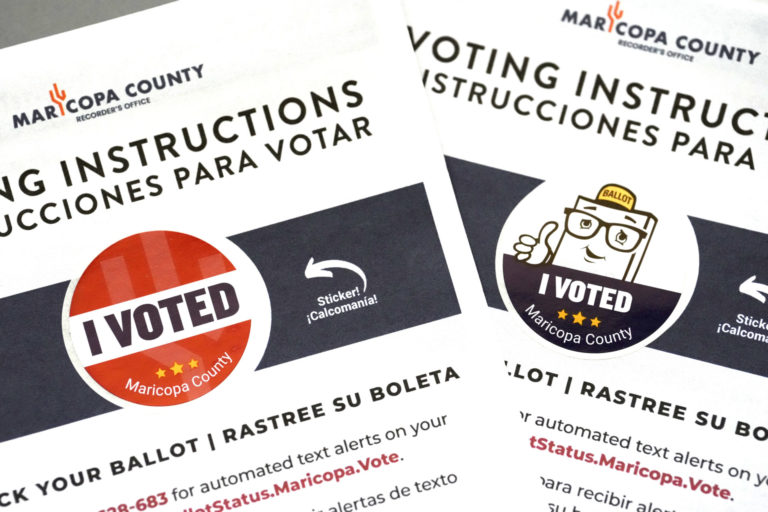
Arizona law says people who vote by mail should receive notice of problems with their ballots, such as a signature that doesn’t match the one on file, and get a chance to correct it in a process known as “curing.”

The groups’ petition noted that as of Friday evening more than 250,000 mail-in ballots had not yet been verified by signature. The bulk of them were in Maricopa County.

Just under 200,000 early ballots remained to be processed as of Saturday, according to estimates on the Arizona Secretary of State’s Office website.

The county takes pride in conducting “accurate and timely” signature verification, and that all signatures for the general election went through the process by the end of the day Friday, “giving voters with questioned signatures ample time to cure their signature,” claimed Taylor Kinnerup, a spokesperson for the Maricopa County Recorder’s Office.

“As an administrative agency, our office is bound by the letter of the law which gives up to five calendar days following an election for a voter to cure their signature,” Kinnerup said. “Voters are contacted directly if their signature is questioned but can also choose to see if their ballot needs to be cured online at BeBallotReady.Vote.”

Adapted from reporting by the Associated Press

Pro-Life Group: Billionaire Pritzker’s National Abortion Push is About 2028 Primary

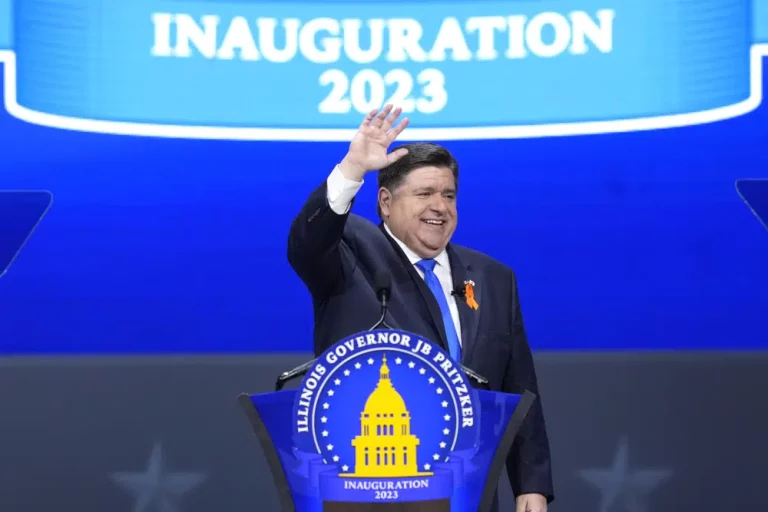
(, The Center Square) Illinois Gov. J.B. Pritzker launched Think Big America, a nonprofit focused on expanding access to abortion in states across the country. It’s part of his broader mission of “combating far-right extremism.”

Think Big invested millions of dollars advocating for abortion ballot initiatives in eight states. Of the eight states, South Dakota, Nebraska and Florida rejected the initiatives this election cycle.

“People felt like their reproductive rights were under attack and so there were a lot of people who showed up to vote around that issue and I am proud to say the organization I founded, Think Big America, we won the vast majority of the referenda across the country that protected women’s reproductive rights,” Pritzker said.

Millions were spent on Arizona’s, Florida’s and Nevada’s ballot initiatives. Thousands were spent on Montana’s, Maryland’s, South Dakota’s, Nebraska’s and Missouri’s abortion initiatives.

Illinois Family Institute Executive Director David Smith said the pro-abortion movement is not an organic movement of ordinary women.

“It’s not organic, it doesn’t come from the grassroots. It’s all hyped up by fear-mongers who claim they [state governments] are going to take this right away from women, when that is not the truth,” said Smith.

Smith said the flurry of referendums started in 2023 when Ohio passed its abortion referendum. George Soros, through a slew of dark money nonprofits, poured at least $16 million into getting the Ohio referendum passed.

For Tuesday’s election, 11 statewide ballot measures related to abortion were certified in Arizona, Colorado, Florida, Maryland, Missouri, Montana, Nebraska, New York, Nevada and South Dakota.

Smith said the spike in ballot measures isn’t due to women seeking to secure their “civil rights,” but instead it’s because a rich man wants to shore up left-wing voters prior to a 2028 Democratic primary.

“I think that by being involved in all these states and giving liberally he is shoring up his credentials in the eyes of the far left-wing activist, who might be influential in the primaries of early 2028,” said Smith.

Pritzker’s estimated net worth is $3.7 billion. Through his nonprofit, he poured millions into advocating for abortion ballot initiatives across the nation.

“Tens of millions across the country have rights that they didn’t have codified before, rights that are now codified in their constitutions,” said Pritzker.

Pro-life groups say they spent decades pushing for Roe v. Wade to be overturned and that this is not what the Supreme Court had in mind when they returned abortion to the states.

“Missourians made history and sent a clear message to the far-right extremists – abortion bans have no place in their state. We are proud to have supported the movement to protect reproductive rights in the Midwest,” Think Big America said in a recent social media post after the 2024 General election.

How to Protect Yourself from Scammers Offering Fake Jobs

(Headline USA) Between finding openings, sending out your resume and interviewing, looking for a job is tough. Now a growing trend of scammers impersonating recruiters is making it even harder.

In the last year, job scams have been on the rise, according to Eva Velasquez, president and CEO of the Identity Theft Resource Center, a nonprofit that helps consumers when their identities are compromised.

Because most job seekers turn to online platforms for employment, scammers impersonate companies and recruiters to trick people into giving them money or personal information.

“We’ve really seen tremendous growth in job scams,” Velasquez said. “I think that’s just due to the fact that we fundamentally changed the way we recruit and hire people.”

It happened to Tehseen Islam, a 28-year-old quality assurance analyst. She had been looking for a job for a few months when she finally got an offer from a well-known marketing technology company. Or at least she thought she did.

After a weeklong process that included an online form with interview screening questions, Islam was offered the job and received a check. She was asked to deposit it and send the company $1,000 to pay for shipment of equipment she’d need for the job.

A few days later, her bank notified her that the check had bounced and, because it looked like she was cooperating with scammers, it was ending all banking relationships with her. That’s when she learned the job was a scam.

“I’m a little traumatized,” said Islam, who lost the $1,000 and unknowingly shared personal information with scammers.

If you’re a job seeker, here are some recommendations from experts on how to avoid job scammers:

Know how job scams work

Job scams are a type of impersonation scam.

Scammers tend to use the name of an employee from a large company and craft a job posting that matches similar positions. An initial red flag is that scammers usually try to make the job very appealing, Velasquez said.

“They’re going to have very high salaries for somewhat low-skilled work,” she said. “And they’re often saying it’s a 100% remote position because that’s so appealing to people.”

Some scammers post fake jobs, but others reach out directly to job seekers through direct messages or texts. If the scammers are looking to steal your personal information, they may ask you to fill out several forms that include information like your Social Security number and driver’s license details.

The only information a legitimate employer should ask for at the beginning of the process is your skills, your work experience, and your contact information, Velasquez said.

Other details don’t generally need to be shared with an employer until after you’ve gotten an offer.

Do your research

Whether you’re replying to a job posting or a recruiter, you must research the company, especially if you didn’t initiate the conversation, Velasquez said.

Fake recruiters often contact job seekers through social media or text messages. If someone reaches out to you, verify their identity before responding to their message.

Here are a few recommendations while you research the recruiter or the company:

  • Don’t respond to the message right away.
  • Go online and research if the company has current job openings on its official website.
  • Research the name of the recruiter and check if the person has a verifiable social media presence.
  • If the company has a job opening on its website, apply directly through the website.

Don’t reply or click on links

If you receive a message from a recruiter, it’s best to not respond unless you know that the source is reputable. Avoid clicking on any links sent to you, whether to apply for a position or to fill out a questionnaire.

In Islam’s case, the scammers sent her a form with interview screening questions where they asked for her personal information.

Don’t deposit checks

A common tactic is for scammers to send you a fake signing bonus and then ask you to send some money back, supposedly to cover expenses. This is a way for scammers to steal money from job seekers, said Alvaro Puig, consumer education specialist at the Federal Trade Commission.

“If you deposit a check and it’s fake, your account will show the money is there. But then days later, the bank will discover that it was a fake check,” Puig said.

So, if you take out money from your account and send it to the fake recruiter, the money will be coming from your bank account and it will be impossible to get back.

Be selective with the job openings you trust

When job hunting through platforms like LinkedIn and Indeed, Velasquez recommends being very cautious with job openings and recruiters you trust. While these platforms are reputable and many of their job postings are real, the companies cannot verify every single employment opportunity posted. This creates an opportunity for scammers to post fake job listings and trick people.

“Don’t let platforms that you know are legitimate allow other people to borrow that trust,” Velasquez said.

After her experience with job scammers, Islam has been more careful with the job openings she trusts. Now, she has a list of steps she follows, including verifying a recruiter’s email through a free email address validator, such as Emailable or Clearout, and calling the company directly.

“This is adding a lot more time to my job search now, but I can’t just blindly trust that this person is who they say they are,” Islam said.

Report the scam

If you or a family member is a victim of a scam, it’s good practice to report it on the FTC’s website.

Adapted from reporting by the Associated Press

Young Black and Latino Men Voted for Trump Because of Jobs

(Headline USA) Brian Leija, a 31-year-old small-business owner from Belton, Texas, was not surprised that a growing number of Latino men of his generation voted for Donald Trump for president this year. Leija had voted for the Republican in 2016 and 2020.

Leija’s rationale was simple: He said he has benefited from Trump’s economic policies, especially tax cuts.

“I am a blue-collar worker,” Leija said. “So, tax breaks for small businesses are ideal for what I do.”

For DaSean Gallishaw, a consultant in Fairfax, Virginia, a vote for Trump was rooted in what he saw as Democrats’ rhetoric not matching their actions. “It’s been a very long time since the Democrats ever really kept their promises to what they’re going to do for the minority communities,” he said.

Gallishaw, 25, who is Black, also voted for Trump twice before. This year, he said, he thought the former president’s “minority community outreach really showed up.”

Trump gained a larger share of Black and Latino voters than he did in 2020, when he lost to Democrat Joe Biden, and most notably among men under age 45, according to AP VoteCast, a nationwide survey of more than 120,000 voters.

Even as Democrat Kamala Harris won majorities of Black and Latino voters, it wasn’t enough to give the vice president the White House, because of the gains Trump made.

Voters overall cited the economy and jobs as the most important issue the country faced. That was true for Black and Hispanic voters as well.

About 3 in 10 Black men under age 45 went for Trump, roughly double the share he got in 2020. Young Latinos, particularly young Latino men, also were more open to Trump than in 2020. Roughly half of young Latino men voted for Harris, compared with about 6 in 10 who went for Biden.

Juan Proaño, CEO of LULAC, the nation’s largest and oldest civil rights organization for Hispanic Americans, said the election results make it clear that Trump’s messaging on the economy resonated with Latinos.

“I think it’s important to say that Latinos have a significant impact in deciding who the next president was going to be and reelected Donald Trump,” Proaño said. “(Latino) men certainly responded to the populist message of the president and focused primarily on economic issues, inflation, wages and even support of immigration reform.”

While about 4 in 10 young voters under 45 across racial and ethnic groups identified the economy as the top issue facing the country, older white and Latino voters were likely to also cite immigration, with about one-quarter of each saying that was the top issue.

A clear majority of young Black voters described the economy as “not so good” or “poor,” compared with about half of older Black voters. Majorities of Latino voters, regardless of age, said the economy is in bad shape.

This is the first time Alexis Uscanga, a 20-year-old college student from Brownville, Texas, voted in a presidential election. The economy and immigration are the issues that drove him to vote for Trump, he said.

“Everything just got a lot more expensive than it once was for me,” Uscanga said. “Gas, grocery shopping even as a college student, everything has gone up in price and that is a big concern for me and other issues like immigration.”

Having grown up selling tamales and used cars, and washing cars, Uscanga knows how hard it can be to make a living. When Trump was president, he said, it did not feel that way, he said.

“Under the Trump presidency more opportunities were abound,” Uscanga said. “I was not very fond of President Trump because of his rhetoric in 2016 but I look aside from that and how we were living in 2018, 2019, I just felt that we lived a good life no matter what the media was saying and that’s why I started supporting him after that.”

Adapted from reporting by the Associated Press