Daily Wire, TPUSA Team Up for New Documentary

(Dmytro “Henry” Aleksandrov, Headline USA) The Daily Wire and Turning Point USA announced on Thursday that they worked together on creating a new documentary, Identity Crisis, that criticizes the “gender” ideology movement.

The Daily Wire reported that conservative commentator Matt Walsh’s 2022 film, What Is a Woman?, inspired the documentary. What Is a Woman? exposed the evils of the “transgender” ideology, specifically the mutilation of children.

Ben Shapiro, editor emeritus and co-founder of the Daily Wire, talked about his company’s acquisition of the film at AmericaFest 2024.

The Daily Wire reported that Identity Crisis will premiere on Twitter on Jan. 10, 2025, and will be available for free through the weekend. Since Jan. 13, 2025, the movie will be available only on DailyWire+.

“After the resounding impact of What Is a Woman?, it’s only natural for the Daily Wire to continue tackling the cultural questions that shape our society,” the company’s co-founder and co-CEO Jeremy Boreing said. “Identity Crisis dives headfirst into what was one of the most pressing issues of the 2024 election, and we’re thrilled to partner with Turning Point USA to distribute this project that is rooted in shared values and a commitment to fearless storytelling.”

TPUSA founder Charlie Kirk also released a statement on Twitter about the upcoming film.

“Matt Walsh and the Daily Wire fundamentally changed the culture when they released What is a Woman? Identity Crisis produced by TPUSA is the culmination and one of the final nails in the coffin of this wicked ideology. Proud to partner with [the Daily Wire] as we work to end this crime against America’s children,” he wrote.

Detransitioner Chloe Cole, who appeared in the film, also stated on Twitter that “this is the most impactful documentary about gender ideology since What is a Woman?“

“I’m so grateful for the opportunity to be a part of this. Just from what I’ve seen so far, it was already the most emotional I’ve been watching a film,” she wrote.

Trump Wants to Stop Biden’s Sale of Border Wall

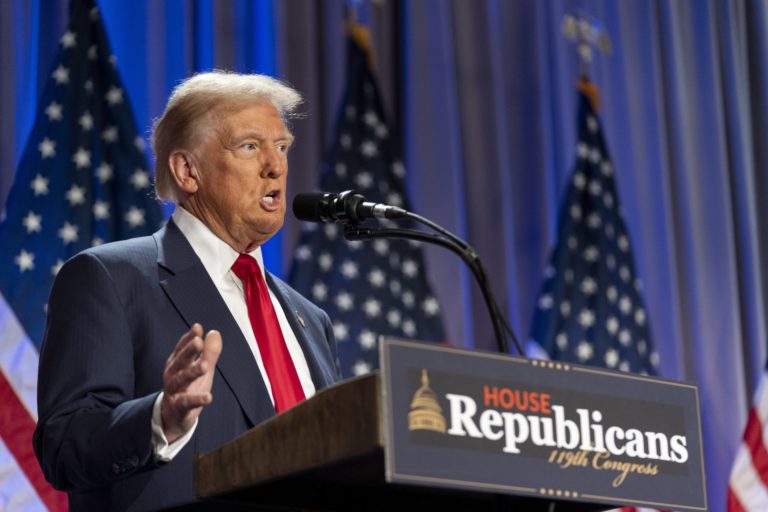
(Dmytro “Henry” Aleksandrov, Headline USA) President-elect Donald Trump recently filed an amicus brief on Thursday in support of a legal effort by Texas and Missouri to “immediately” stop Joe Biden and his administration from selling the border wall materials.

Fox News reported that earlier this week, Texas and Missouri filed a motion in a Texas district court to hold a status conference to determine if the government is in breach of the court’s permanent injunction from earlier this year.

According to the news source, the injunction prohibited the Biden administration from using funds obligated for wall construction for anything other than preventing illegal aliens from entering the country.

“The Court should issue an order directing the Defendants to immediately stop any ongoing sale of border-barrier materials to private parties pending the Court’s review of Defendant’s conduct, and the Court should swiftly conduct a searching examination of the Government’s conduct, by formal discovery if necessary, to examine the Government’s compliance with the law, the Constitution, and the Court’s injunction,” Trump’s amicus brief stated.

The Daily Wire previously reported on Biden’s treasonous decision to sell the border wall parts, and Fox News pointed out that the Biden administration has been auctioning off border wall parts at least since 2023.

Trump’s amicus brief states that if the leftist officials are “deliberately selling off border wall materials at a major financial loss to the Government to obstruct the pro-wall policy of Congress and President Trump, such conduct likely constitutes a criminal act, such as a conspiracy to defraud the United States.”

“At the very least, the reported conduct raises troubling concerns of potentially criminal behavior,” the document stated.

As expected, conservatives opposed the auctions, with Sen. Bill Hagert, R-Tenn., introducing legislation this week to prevent the auctions from happening.

Trump also stated on Monday that he, Texas Attorney General Ken Paxton and others had been working on acquiring the materials.

“What they’re doing is really an act. It’s almost a criminal act,” he said. “They know we’re going to use it, and if we don’t have it, we’re going to have to rebuild it. And it’ll cost double what it cost years ago, and that’s hundreds of millions of dollars because you’re talking about a lot of, a lot of wall.”

Paxton also said that Texas will “prevent any border security materials from being unlawfully sold and to find out the truth about what the federal government may be doing to subvert border wall construction.”

Color-Haired Dem Loses It After Musk Exposes Secret Wishlist in CR Bill

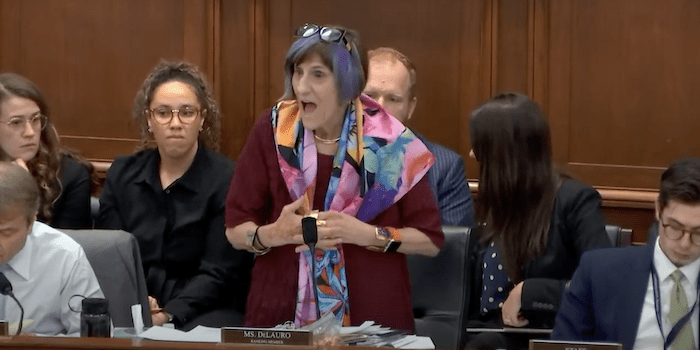
(Luis Cornelio, Headline USA) Rep. Rosa DeLauro, D-Conn., threw a temper tantrum on the House floor, railing against Elon Musk for persuading Republicans to abandon a funding bill plagued with several wish list items from the Democratic Party. 

DeLauro, known for her signature purple-dyed haircut, aired her grievances during Thursday’s debate over continuing resolution (CR) that aimed to fund the federal government and extend the debt ceiling.  

The bill ultimately collapsed after President-elect Donald Trump and Musk scrutinized its baffling provisions hidden in the 1,547-page document.  

“When you have the pen, which is what the Republicans have, they write the bill. They write the bill, they post the bill, they agree on a bill. And you know what? They got scared because President Musk told them. President Musk said, ‘Don’t do it. Don’t do it. Shut the government down,’” DeLauro shouted, drawing cheers and applause from her Democratic colleagues. 

She continued, “Imagine—what does he know about what people go through when the government shuts down? Are his employees furloughed? Hell no! Is he furloughed? No!” 

DeLauro also scolded Republicans for allegedly breaking a bipartisan agreement to fund the government into January 2025, claiming that conservatives consistently “walk away” from deals. 

“We had an agreement,” DeLauro insisted. “But you know, this is not different from what we’ve experienced over the last year and a half or so. Think about it: Biden-McCarthy deal—come together, next day, walk away. Johnson-Schumer deal—next day, walk away. And now, this deal—walk away from it.” 

She concluded with a dramatic appeal to the GOP: “Who do we trust in this body? Above all, can the American people trust us? Trust us with their lives?” 

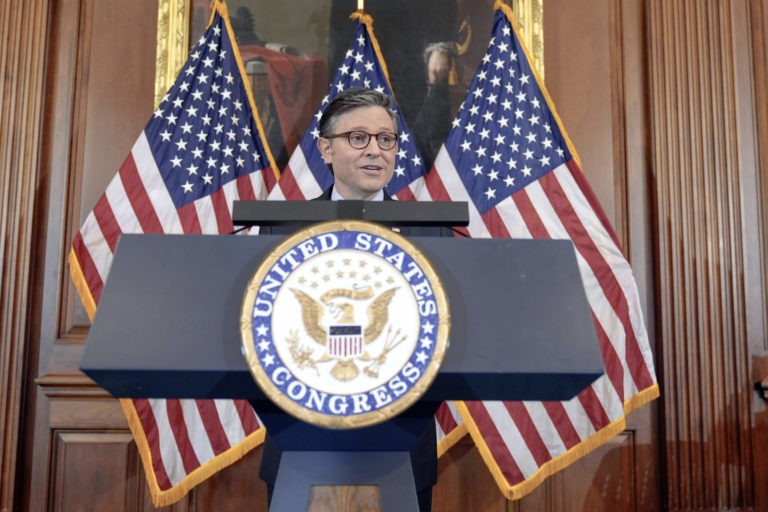
Her remarks came after the public backlash against House Speaker Mike Johnson’s CR bill, which included several concessions to Democrats, such as an extension of the debt ceiling suspension through next year.  

Johnson and his allies abandoned the bill amid mounting backlash, prompting Musk to celebrate via X: “Your elected representatives have heard you and now the terrible bill is dead.” 

Trump and Vice President-elect J.D. Vance also criticized the bill’s debt ceiling provision, arguing it should either be abolished or extended through 2026—well beyond their incoming administration’s term. 

“The most foolish and inept thing ever done by Congressional Republicans was allowing our country to hit the debt ceiling in 2025. It was a mistake and is now something that must be addressed,” Trump and Vance wrote in a joint statement. 

House Republicans ultimately entered an agreement with Democrats on Friday evening, temporarily funding the federal government. The Democratic-led Senate and President Joe Biden are expected to sign the bill.

Senate Dems Seek to Surpass Trump’s Tally on Judicial Appointments Ahead of His Next Term

(Headline USA) President Joe Biden was expected to secure the 235th judicial confirmation of his presidency as soon as Friday, an accomplishment that exceeds his predecessor’s total by one after Democrats put extra emphasis on the federal courts following Donald Trump’s far-reaching first term when he filled three seats to the Supreme Court.

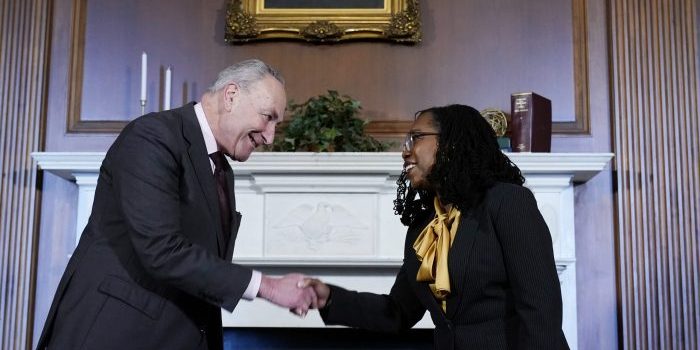
Senate Majority Leader Chuck Schumer, D-N.Y., has teed up votes on two potential California district judges, likely to be the last judicial confirmations this year before the Congress adjourns and makes way for a new, Republican-led Senate. He said he hoped to complete the votes by the end of Friday.

The first confirmation will tie Trump’s number, the second will break it. Come next year, Republicans will look to boost Trump’s already considerable influence on the makeup of the federal judiciary in his second term.

Biden and Senate Democrats placed particular focus on adding women, minorities and public defenders to the judicial rank. About two-thirds of Biden’s appointees are women and a majority of appointees are people of color. The most notable appointee was Supreme Court Justice Ketanji Brown Jackson, the first African–American woman to serve on the nation’s highest court.

“Prior to our effort, the number of women on the federal bench was really diminished. It was overwhelmingly white males,” said Sen. Dick Durbin, the Democratic chairman of the Senate Judiciary Committee.

“We consciously moved forward to bring more women to the bench, and believe me, we had a great talent pool to work with. So I think it’ll enhance the image of the court and its work product to bring these new judges on.”

Biden also placed an emphasis on bringing more civil rights lawyers, public defenders and labor rights lawyers to expand the professional backgrounds of the federal judiciary. More than 45 appointees are public defenders and more than two dozen served as civil rights lawyers.

While Biden did get more district judges confirmed than Trump, he had fewer of higher-tier circuit court appointments than Trump—45 compared to 54 for Trump. And he got one Supreme Court appointment compared to three for Trump.

Republicans, much to Democrats frustration, filled Justice Ruth Bader Ginsburg’s seat on the court the week before the 2020 presidential election. Ginsburg had passed away in September.

Democrats also faced the challenge of confirming nominees during two years of a 50–50 Senate. Rarely a week went by in the current Congress when Schumer did not tee up votes on a judicial confirmation as liberal groups urged Democrats to show the same kind of urgency on judges that Republicans exhibited under Trump.

Some Senate Republicans were harshly critical of Biden’s choices. Sen. Ted Cruz, R-Texas, said talk of diversity did not extend to the views of the nominees.

“One of the consequences of the age of Trump is that it drove Democrats insane and it drove them to the extreme left, so they put people on the bench who were selected because they were extreme partisans,” Cruz said.

Left-wing activist groups said they are delighted with the number of judges Democrats secured, but even more so with the quality of the nominees. They said diversity in personal and professional backgrounds improves judicial decision-making, helps build public trust and inspires people from all walks of life to pursue legal careers.

“For our federal judiciary to actually deliver equal justice for all, it really has to be for all, and that is one reason why we certainly applaud this administration for prioritizing both professional but also demographic diversity,” said Lena Zwarensteyn, senior director of the fair courts program at The Leadership Conference on Civil and Human Rights.

Sen. Charles Grassley, R-Iowa, and the next chairman of the Senate Judiciary Committee, said Democrats showed newfound resolve on judicial confirmations.

“They learned a lesson from the first Trump administration,” Grassley said. “Paying attention to the number of judges you get and the type of judges you put on the court is worth it.”

Trump will inherit nearly three dozen judicial vacancies, but that number is expected to rise because of Republican-appointed judges who held off on retirement in hopes that a Republican would return to office and pick their replacement.

Sen. Richard Blumenthal, D-Conn., acknowledged that the sense of accomplishment for Democrats is muted somewhat knowing that Trump will have another term to continue shaping the federal judiciary.

“I’m not ready to uncork the champagne just because we’ve done some really good work over the last four years,” Blumenthal said.

“We need to be prepared to work, hope for the best and try to defeat nominees who are simply unqualified,” he added. “We have our work cut out for us. The prospects ahead are sobering.”

Grassley promised that he’ll work to best Biden’s number.

“Let me assure you, by January 20th of 2029, Trump will be bragging about getting 240 judges,” Grassley said.

Adapted from reporting by the Associated Press

House GOP Passes Continuing Resolution after Scuttling Trump’s Debt-Ceiling Extension

(With less than seven hours before a partial government shutdown, the House has passed a short-term funding bill to keep the government open and allocate limited federal aid.

The last-minute Continuing Resolution will fund the government until March 14, allocate about $100 billion in disaster relief and extend the farm bill. It received a total of 366 favorable votes, backed by 170 Republicans and 196 Democrats.

The CR is nearly the same as the bill roundly rejected by the House on Thursday, except it axes a provision suspending the debt ceiling.

Between two potential last-ditch funding deals, House Speaker Mike Johnson, R-La., ultimately decided Friday afternoon to bring a single comprehensive funding bill to the floor, a pivot from his expected choice of breaking the funding plan into three separate votes.

The looming partial shutdown right before the holidays is the result of Congress punting the deadline in September, when they passed a temporary Continuing Resolution to keep the government open until Dec. 20.

Johnson’s first attempt at a December government funding deal, a bloated 1,547-page CR negotiated with Democratic congressional leaders, blew up Wednesday night after President-elect Donald Trump and ally Elon Musk loudly condemned it for including billions of dollars worth of wishlist items.

After hastily meeting with members of Trump’s team, Johnson released an 116-page “skinny CR,” which not only cut most of Democrat’s demands but also included a 2-year debt suspension, per Trump’s request.

As expected, Democrats revolted over the axing of their previously negotiated priorities, while a substantial number of Republicans also opposed the bill because of the debt ceiling suspension. With 38 Republicans rejecting the American Relief Act, 2025, it fell embarrassingly short of the two-thirds majority needed to pass, sending Johnson back to the drawing board.

After that, Johnson and his team worked to thread the impossible needle of creating a plan that placates both Democrats and Republicans, coming up with the two potential options late Friday afternoon.

Despite Senate Majority Leader Chuck Schumer, D-N.Y., declaring Friday morning that Senate Democrats would only vote for the original CR, the newest 118-page bill is palatable enough that it is expected to pass the Senate, possibly before Saturday.

If the vote does drag on into the weekend, the temporary government shutdown that follows will have only a minimal impact.

ACLU Discusses Ways to Help Illegals Stay in the U.S.

(Maire Clayton, Headline USA) The far-left American Civil Liberties Union stated they have a plan on how to advise states and cities can help illegals avoid deportation.

Anthony Romero, the executive director of the ACLU, sat down with MSNBC’s Rachel Maddow to discuss the plan the group came up with.

“We have this whole plan around the firewall for freedom … the idea that these local officials can really play an important role in stopping the guardrail abuses,” he said.

Romero proceed to outline how Trump’s administration would try to deport illegal aliens.

“For instance, when they’re going to try and detain and deport all these hundreds of thousands, up to a million, people,” he continued. “That’s an operation that they have the legal power to do, to do the raids.”

He elaborated that it would be difficult due to the amount of illegals.

“But the logistics, they’re going to need mayors and governors or city councils to give them access to police officers or not, jails, where are you going to house all of these folks,” he said.

Romero said he thinks that illegals should be pardoned so they do not have to leave the United States.

He add the cities and states should make it hard for Immigration and Customs Enforcement agents to do their job.

“They should sever these relationships that they have with the federal government on immigration enforcement,” he added.

Trump’s border czar Tom Homan already said he will have no problem arresting anyone who tries to stand in the way.

He previously told the Denver mayor if he tried to hinder immigration efforts he would arrest him.

“But, look, me and the Denver mayor, we agree on one thing,” he said. “He’s willing to go to jail, I’m willing to put him in jail.”

DOJ to Use ‘State Secrets Privilege’ to Suppress Evidence in Trump Assassination Case

(Ken Silva, Headline USA) The Justice Department signaled Friday that it intends to keep classified information secret in the case of Asif Merchant, the Pakistani man who allegedly tried hiring two hitmen in an Iranian-sponsored assassination plot against Donald Trump.

As Headline USA has detailed, the notion that Iran conspired to assassinate Trump is highly dubious. In the Merchant case, the two hitmen he attempted to hire were undercover FBI agents introduced to him by one of their informants. Merchant appears to have been an unwitting dupe in an FBI sting operation.

However, the evidence that would prove whether Merchant was a legitimate assassin or an FBI patsy may never see the light of day. The DOJ said in a Friday motion that it intends to exercise Section 4 of the Classified Information Procedures Act, which allows the U.S. government to keep state secrets just that: secret—even if it negatively impacts the rights of a defendant.

Indeed, courts have ruled that CIPA “provides a means for applying the state-secrets privilege to classified information which, in ordinary circumstances, would be discoverable. Proper application of that privilege requires balancing of the government’s need to protect national security with the right of a defendant to mount a full defense,” according to the DOJ’s motion.

As part of the CIPA procedure, “a court must balance the government’s national security interest against the defendant’s rights to present his defense,” DOJ prosecutors argued in their Friday motion.

The DOJ seeks to hold pretrial conference on Jan. 6 to set a schedule for the government to file motions to keep evidence secret via CIPA.

The DOJ has exercised CIPA in the past to keep damning government scandals from the public.

For instance, former Venezuelan Gen. Clíver Antonio Alcalá Cordones was charged in March 2020 with participating in a narco-terrorism conspiracy with the country’s leader, Nicolás Maduro. According to the DOJ, Cordones conspired with Maduro, other top Venezuelan regime officials, and members of Colombia’s Fuerzas Armadas Revolucionarias de Colombia to ship cocaine to the United States.

However, Cordones outed himself as a CIA asset who participated in the failed CIA-sponsored coup against Maduro in March 2018. Cordones attempted to prove this in court in 2022.

“Cordones’ activities were communicated at the highest levels of a number of U.S. government agencies, including the Central Intelligence Agency (CIA), Treasury Department, the National Security Council, DEA [Drug Enforcement Agency], and DOJ,” the Venezuelan’s lawyers argued in a February 2022 motion.

“Such evidence casts doubt on the government’s theory of prosecution and, to the extent the government is able to prove such a conspiracy, would support a defense of withdrawal from any such conspiracy.”

However, the DOJ successfully invoked Section 4 of CIPA in response to Cordones’s motion. A judge ruled that the “disclosure of the classified materials … to the defense or the public could reasonably be expected to cause serious damage to the national security. Accordingly, it is ordered that the government motion is granted, and the classified materials … need not be disclosed to the defense.”

Cordones pled guilty last year and was sentenced to 260 months in prison in April.

Ken Silva is a staff writer at Headline USA. Follow him at x.com/jd_cashless.

Judge: Ariz. Secretary of State Overstepped His Authority on Elections Manual

(Headline USA) A ruling by a Maricopa County judge has invalidated provisions of Arizona’s elections manual, including one that said the secretary of state must canvass election results even if a county has not certified its ballots.

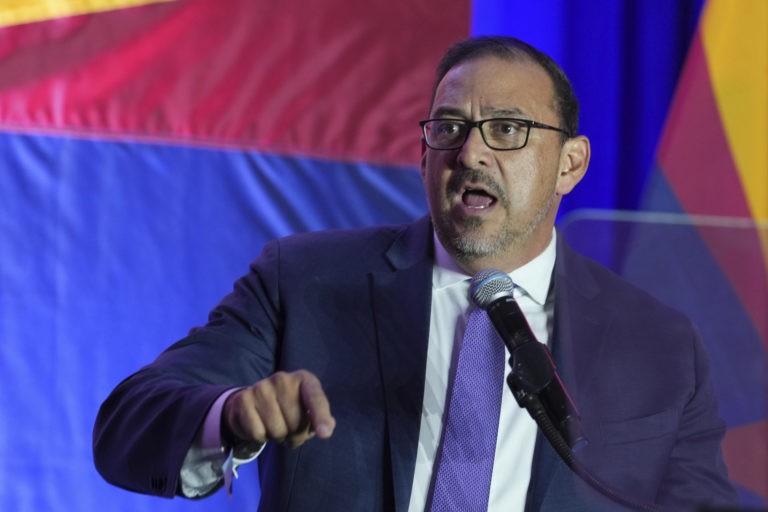
Maricopa County Superior Court Judge Scott Blaney ruled this week that Arizona Secretary of State Adrian Fontes, a Democrat, exceeded his authority when he created the rule in the 2023 Elections Procedures Manual. It required the statewide certification of elections results to move forward even if the vote tallies from every county in the state have not been submitted.

Arizona Gov. Katie Hobbs and Attorney General Kris Mayes, both Democrats, had approved the manual update issued in December 2023.

A spokesperson for the secretary of state’s office said they were evaluating the ruling.

County officials in Arizona have refused to certify votes in the past, citing widespread irregularities in election administration, such as a 2022 debacle in which local officials were given the wrong size paper to use in voting machines.

In nearly every documented case, the widespread irregularities have benefited Democrats, including Fontes, Hobbs and Mayes.

The three leaders, who narroly won the 2022 race have since sought to outlaw and suppress any efforts to question or challenge the outcomes in unusual and disputed races.

In October, a Cochise County official pled guilty to a misdemeanor related to her refusal to certify results in the 2022 midterm election after Mayes aggressively pursued charges against any Republican skeptics.

Fontes had argued that the strict deadline he must follow to submit the state’s election results justified the rule. Blaney agreed a tight deadline must be adhered to but said doing so doesn’t justify excluding a county’s election results.

“Nothing in the statutes permits the Secretary to exclude a particular county’s canvass and/or, by extension, disenfranchise the entirety of the county’s voters,” Blaney wrote. “The Secretary does not have the authority to read such a drastic course of action into the governing statutes.”

In the lawsuit they filed on behalf of the Legislature, Arizona Senate President Warren Petersen and House Speaker Ben Toma, both Republicans, accused Fontes of overstepping his authority by updating rules in the manual.

Arizona Republicans celebrated the decision as a win for the rule of law and election integrity.

“Secretary Fontes attempted to overstep his authority, but the court recognized these actions for what they were—unlawful and unenforceable,” Toma said in a statement.

Adapted from reporting by the Associated Press

Democrat Govs Who Called Trump a ‘Nazi’ and ‘Threat to Democracy’ Now Eager to Work w/ Him

(Headline USA) They warned about him. Now they’ll have to work with him.

A handful of prominent Democratic governors are quickly adjusting their approach to President-elect Donald Trump before he takes office, hoping to avoid antagonizing him to ensure they’ll have a working relationship with his new administration.

They’re in a precarious position: adopting caution while also weighing their party’s desires to stake out early, and often combative, positions against Trump’s agenda.

“It’s a combination of fighting like hell if your values are attacked—or if your innocent communities or innocent people are attacked—and then, on the other hand, you’re trying like heck also to find common ground on things that we could agree on,” New Jersey Democratic Gov. Phil Murphy claimed in an interview with the Associated Press.

Democratic New York Gov. Kathy Hochul is walking a similar tightrope, vowing to push back against Trump, while also appearing hopeful that she and the Republican can work together.

Hochul, who slammed Trump during a speech at the Democratic National Convention and was a prominent campaign surrogate for Democrats this year, has said she and Trump spoke at length after his election victory and were able to find common ground.

“There are areas where we can work together, like infrastructure where we rely on federal money, and he seems to share my priorities, but also I’m going to stand up for protecting rights, reproductive rights and other rights,” she said at a news conference.

Abortion is currently legislated at the state level and is at no risk of going away in New York, which has large Democrat majorities in its state legislature and courts.

Moreover, Trump has signaled that he has no desire to make any changes to the existing abortion policies after the justices he put on the Supreme Court during his first presidential term helped to reverse the 50-year-old federal abortion mandate established by Roe v. Wade.

Rather, it seems that Hochul remained committed to spouting superficial campaign talking points meant to deceive the public—even after the votes have been cast—as cover for her lack of cooperation.

Asked this week whether as governor she would consider pardoning Trump in his New York hush money criminal conviction, Hochul notably didn’t shut down the question. “There is a pardoning process in the state of New York. It is lengthy. It requires a couple of elements. One is remorse,” she said, letting out a quick laugh.

Other Democrats have taken decidedly more combative stances.

California Gov. Gavin Newsom summoned lawmakers back to work this month to allocate more money to the state attorney general’s office so it could launch anticipated legal battles against the Trump administration, effectively wasting taxpayers’ money twice by tying up the federal government with spurious state-level lawsuits.

Newsom’s goal, as he put it, is to “Trump-proof” California’s progressive state laws, raising questions about whether he might pivot back to a more sycophantic posture should the state, notoriously prone to natural disasters, need federal resources for droughts, wildfires, mudslides, tsunamis or any other phenomena.

Shortly after Trump defeated Vice President Kamala Harris, Illinois Gov. J.B. Pritzker and Colorado Gov. Jared Polis formed a group called Governors Safeguarding Democracy to “fortify democratic institutions in the states and ensure the rule of law serves all people,” according to the group’s website.

Still, Polis has put on a balancing act in his relationship with Trump. He’s expressed excitement for Trump’s pick of Robert F. Kennedy Jr. to lead the Department of Health and Human Services, saying he was hopeful Kennedy would take on “big pharma and corporate ag.”

In Massachusetts, Democratic Gov. Maura Healey has taken a somewhat less confrontational attitude toward Trump than she did four years ago when she was the state’s attorney general. Back then, Healey initiated or joined dozens of lawsuits targeting Trump on everything from immigration policy to health care and environmental issues.

Now, as governor of a state that Harris easily won but where Trump got more than 35% of the vote, Healey has sounded more muted in her criticism.

“I think I’ve spoken quite a bit about Donald Trump and my feelings about him,” Healey told reporters after Trump’s win. “We have to see whether he makes good on what he promised and ran on in terms of Project 2025 or other things,” she said, repeating another baseless talking point used by the Harris campaign to mislead voters.

Healey has indicated that she intends to flout federal law by preventing state police from helping enforce deportations of criminal illegal immigrants—a key Trump priority. However, she has been less clear about whether she would bar the state National Guard from helping detain those in the country illegally.

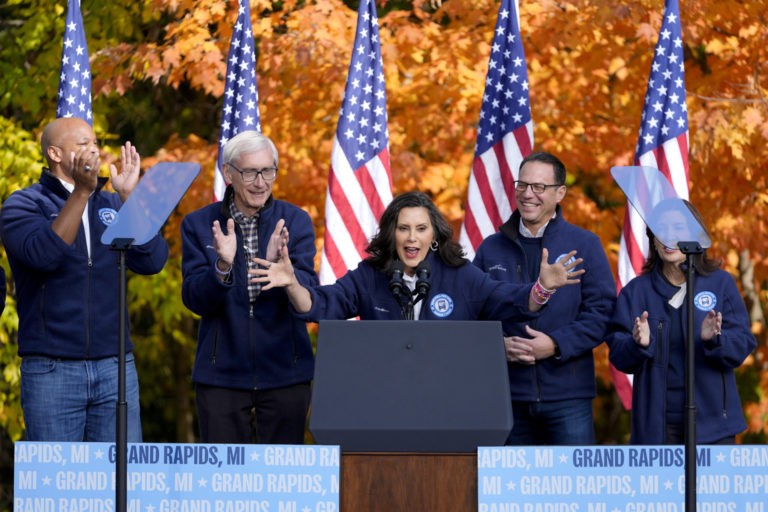
As co-chair of Harris’s presidential campaign, Michigan Gov. Gretchen Whitmer frequently warned about the dangers of a second Trump presidency, describing him as “deranged” and declaring that his reelection would signify that “we failed as a country.”

But after Trump’s victory, the second-term governor has largely stayed out of the spotlight and said little about how she will address some of his policy proposals, such as mass deportations.

“I know that some of my colleagues have staked out some pretty aggressive strategies,” Whitmer told reporters days after the election. “As I’m thinking about what a Trump administration will mean for our work, I’m trying to focus on where we can find some shared priorities.”

Those close to Whitmer describe her approach as a wait-and-see strategy, with hopes of working with the president-elect on areas of shared interest, such as economic development.

“We have worked with the Trump administration before and we will figure out how to work with a Trump administration going into this last two years of my term,” said Whitmer.

Adapted from reporting by the Associated Press

Whitmer Kidnap Inmate Files Complaint against Judge for Sabotaging His Defense

(Ken Silva, Headline USA) Barry Croft Jr., who was found guilty of conspiring to kidnap Michigan Gov. Gretchen Whitmer in late 2022 after his second trial, has filed a complaint from prison against the judge who wouldn’t let a jury learn about the unconstitutional actions of the FBI’s undercover informants and agents.

Croft’s complaint against U.S. District Judge Robert Jonker was mailed to the Judicial Council of the Sixth Circuit on Thursday by documentarian Christina Urso, who has been granted power of attorney for him.

Croft’s complaints include that Judge Jonker didn’t grant his lawyer’s request to subpoena the phone records of three FBI informants—Dan Chappel, Stephen Robeson and Jenny Plunk—even though they were working for the bureau before the alleged Whitmer kidnap plot was hatched. Croft also complained that Judge Jonker suppressed evidence that the FBI threatened Robeson into silence.

The FBI’s threat on Robeson was made during a Dec. 10, 2020, interview with him, where agents seemingly attempted to silence him. The Intercept obtained audio of the interview and published a story about it in March.

“In an extraordinary five-hour conversation, which FBI agents recorded, one of Robeson’s handlers told him: ‘A saying we have in my office is, ‘Don’t let the facts get in the way of a good story,’ right?’ Despite federal and state trials involving the kidnapping plot, this recording — which goes to the heart of questions about whether the FBI entrapped the would-be kidnappers — was never allowed into evidence,” The Intercept reported in March.

“The FBI agents asked Robeson to sign a nondisclosure agreement and proceeded to coach and threaten him to shape his story and ensure that he would never testify before a jury … The agents also made it clear that they had leverage: They knew Robeson had committed crimes while working for the FBI.”

In her video about Croft’s complaint, Urso said it was important to document Jonker’s dubious decisions for the record. Whether the complaint will be successful is another matter. However, the Sixth Circuit is currently considering appeals filed by Croft and his fellow incarcerated defendant, Adam Fox, to toss their convictions and order new trials.

A decision on those appeals could be coming any day now. Meanwhile, Croft and Fox are being held in the notorious supermax prison in Florence, Colorado.

Ken Silva is a staff writer at Headline USA. Follow him at x.com/jd_cashless.