(Clint Siegner, Money Metals News Service) Many Americans are rooting for Donald Trump and his appointees to succeed in their herculean task of slowing or reversing government growth.
Along with the ad hoc working group dubbed the “Department of Government Efficiency (DOGE),” there is much discussion about how runaway big government might be stopped. But there hasn’t yet been talk about how to keep it that way.
Making sure future administrations and legislatures can’t undo or erode important reforms needs to be part of the plan.
Laws, unfortunately, aren’t enough. The Founders drafted the U.S. Constitution to put strict limits on the power and size of the federal government. They would be deeply saddened by how faithfully that document has been interpreted and followed.
While the Constitution gets most of the attention, it was not the only mechanism our Founders implemented to limit government. They gave us free and decentralized money and purposely avoided creating a central bank.
In reality, a true sound money system could be the most effective constraint on government growth and power.
For the majority of the nation’s history, gold and silver served as the official money. The Federal Reserve Bank was established in 1913, but the currency it issued was redeemable in gold until President Nixon put a complete end to that in 1971.
It is no accident the period between 1776 to 1913 – and, a lesser extent, 1913 to 1971 – was one of limited government.
It is also easy to see what happens to the size of government and deficit spending when politicians throw off the shackles of sound money and embrace fiat money.
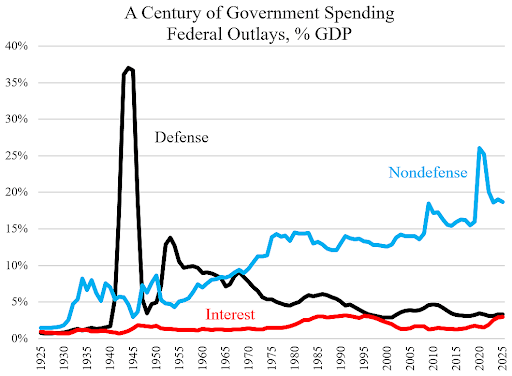
According to the Cato Institute, Government spending as a percentage of overall GDP is roughly 2-½ times larger than it was in 1971. It is ten times what it was in 1913, when the central planners hatched their Federal Reserve scheme to establish a government-charted, privately owned banking cartel.
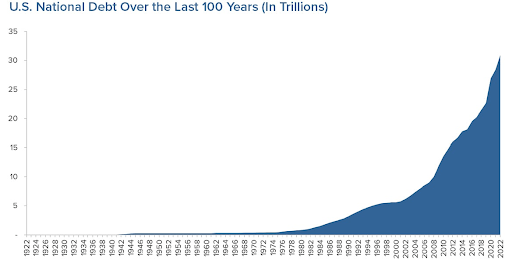
The chart below shows the growth in federal debt. The explosion was not possible before Nixon pulled the plug on the gold standard and the Federal Reserve replaced gold and silver backed currency with Federal Reserve Notes.
Since the gold standard went completely out the window in 1971, the only “constraint” on federal debt has been the debt ceiling, which legislators routinely adjust higher.
The current Congress will undoubtedly raise the ceiling again in a few months. The law has effectively provided no limit, but a gold standard worked great for nearly 200 years.
If the Trump administration succeeds in reining in government, restoring sound money is the best way to ensure the politicians who come next won’t screw it up.
On Wednesday, the incoming first son highlighted headlines that the Los Angeles County fire department donated its “extra” fire equipment to Ukraine, a country the U.S. has funneled hundreds of billions of dollars into since its war with Russia started in February 2022.
“Oh look of course The LA fire department donated a bunch of their supplies to Ukraine,” Trump Jr. wrote on social media of the city’s disastrous response to the California blaze, which raged on for days due to the state’s leftist environmental policies leaving fire hydrants without water and DEI incompetence in emergency services.
Oh look of course The LA fire department donated a bunch of their supplies to Ukraine https://t.co/1XVA15f6oI
Zelenskyy offered to send 150 Ukrainian firefighters to California on Sunday after Trump’s son generated buzz online.
The Ukrainian president wrote, “Today, I instructed Ukraine’s Minister of Internal Affairs and our diplomats to prepare for the possible participation of our rescuers in combating the wildfires in California.”
Today, I instructed Ukraine’s Minister of Internal Affairs and our diplomats to prepare for the possible participation of our rescuers in combating the wildfires in California.
The situation there is extremely difficult, and Ukrainians can help Americans save lives.
— Volodymyr Zelenskyy / Володимир Зеленський (@ZelenskyyUa) January 12, 2025
“The situation there is extremely difficult, and Ukrainians can help Americans save live,” he added in his X post, which included a video of himself speaking. “This is currently being coordinated, and we have offered our assistance to the American side through the relevant channels. 150 of our firefighters are already prepared.”
In his video, Zelenskyy called the California fires “challenging” and commended the “warriors” working hard to extinguish them.
Social media users did not react well to Zelenskyy’s offer, especially after the U.S. spent more than two years forking over taxpayer dollars to fund the country’s foreign war.
How about you just send back the support you have been given? All of it. Then we can fix things faster!
If Ukraine is in the middle of a horrific war for which they need hundreds of billions of dollars in aid and munitions, how is Zelenskyy going to provide fire assistance to California? The mere fact that he’s posting this on social media should tell you all you need to know about… https://t.co/J9vd3F0NkY
Some asked for Ukraine to send back the U.S. support it had received. Others told Zelenskyy, “Worry about your own country.”
“If Ukraine is in the middle of a horrific war for which they need hundreds of billions of dollars in aid and munitions, how is Zelenskyy going to provide fire assistance to California? The mere fact that he’s posting this on social media should tell you all you need to know about everything we’re sending to Ukraine,” X user @cudchewerchad observed.
Julianna Frieman is a freelance writer published by the Daily Caller, Headline USA, The Federalist, and the American Spectator. Follow her on Twitter at @JuliannaFrieman.
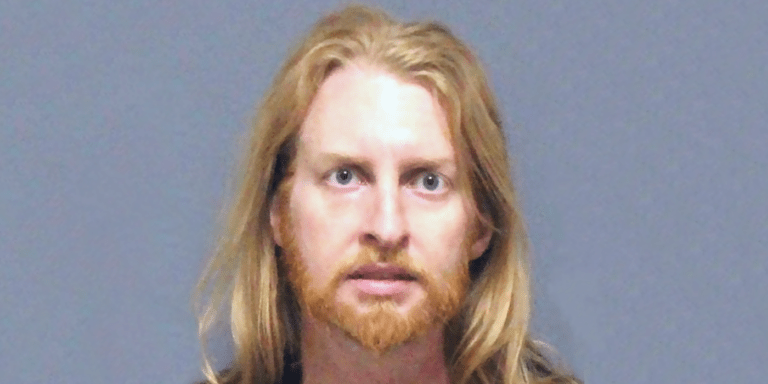
(Ken Silva, Headline USA) Oran Alexander Routh, the son of failed Trump assassin Ryan Routh, has struck an agreement with the Justice Department to plea guilty to one count of possessing child pornography in exchange for having the other charges against him dropped.
Oran Routh was initially arrested on Sept. 24 for possessing child pornography, after FBI agents allegedly found it on his electronic devices while searching his home in relation to his father’s alleged Sept. 15 assassination attempt against Donald Trump. He was indicted on two counts of child-porn possession on Sept. 30, and then hit with another superseding indictment on Oct. 28.
Last Wednesday, he agreed to plea guilty to one charge of possessing child porn of a prepubescent minor or minor under the age of 12. Routh faces up to 20 years in prison and a $250,000 fine.
His sentencing hearing has yet to be set. He remains on house arrest. On Friday, U.S. District Judge Patrick Auld modified the conditions of his house arrest so that he can attend treatment for his ADHD.
“Since being placed on pretrial release, Mr. Routh has been untreated for ADHD. Additionally, the pending charges and the circumstances surrounding the charges have been extremely stressful for Mr. Routh, which has impacted his mental well-being. He is in need of mental health counseling,” a Friday court filing explained.
NEW: Oran Routh, the son of failed Trump assassin Ryan Routh, has struck an agreement with the Justice Department to plea guilty to one count of possessing CP. Also, on Friday a judge modified his conditions of release so he can start treatment for his ADHD.
The son of the failed Trump assassin will start going to Genesis: A New Beginning, in Greensboro, North Carolina, according to a Friday court filing.
Law enforcement started investigating Oran for child pornography in late 2023, when the National Center for Missing & Exploited Children, or NCMEC, flagged a video allegedly on his phone. NCMEC passed that tip along to the Guilford County Sheriff’s Office, which visited his mother’s home last February. Law enforcement didn’t follow up until Oran’s father allegedly tried to kill Trump.
Meanwhile, a recent court filing in Ryan Routh’s assassination case suggests that child porn was also found on the father’s computer.
“Counsel for the defense and members of the defense team shall not possess for any purpose discovery material that contains Child Sexual Abuse Material (CSAM); alternative arrangements will be made for reviewing such discovery,” a protective order in Ryan Routh’s case said.
The father, who faces a federal charge of attempted assassination and a state attempted murder charge, hasn’t been indicted for possessing child porn.
Ken Silva is a staff writer at Headline USA. Follow him at x.com/jd_cashless.
On Sunday Morning Futures, Marshall revealed that Trump has enough votes for his cabinet picks to fly through the Senate confirmation process, which begins on Tuesday.
“I hate to count my chickens before they hatch, but yes, I do,” Marshall told Fox News host Maria Bartiromo, who asked about the senator’s colleagues and their upcoming votes on Trump’s nominees.
He added, “I think they need to go through the hearing process. They are going to get beat up by the legacy media and the left as well, but I think the votes are there.”
Marshall noted that many of Trump’s nominees were intentionally “outside the box,” reiterating the president-elect’s promise to “drain the swamp.”
Bartiromo brought up Marshall’s connection to Department of Health and Human Services nominee Robert F. Kennedy Jr. and Centers for Medicare and Medicaid Services pick Dr. Mehmet Oz.
It was great to bring my family to see our 45th and soon-to-be 47th president, @realDonaldTrump! My daughter, Lauren, and I are ready for President Trump to head to Washington and Make America Great Again. 🇺🇸 pic.twitter.com/7Y9ymGDqNI
Marshall, who is also a doctor, practiced medicine in Great Bend for more than 25 years and in the Army Reserves for seven years, delivering over 5,000 babies as an OB/GYN, according to his website.
The Fox News anchor asked, “I know you have also spent a lot of time with Robert Kennedy Jr. as well as Dr. Oz in the medical field. Tell me more about what you have learned from that time?”
The senator responded, “I’m excited to help Dr. Oz and Bobby Jr. to make America healthy again and we are talking about what that platform looks like. And I think it starts with healthy, quality nutrition. I think it starts with addressing the chronic disease issues and really addressing this mental health crisis.”
Approximately 60% of Americans have chronic diseases, Bartiromo said, to which Marshall said can be remedied with “different behavior.”
“Seventy percent of your health outcomes are determined by you, it’s determined by what you eat, and what you are surrounded by,” he added.
Thanks @RogerMarshallMD for your time today. I enjoyed our conversation. It was an honor meeting your son Cal. Please thank him for his service. https://t.co/OIDopmg1wT
Marshall had a “great meeting” with Kennedy in Dec. 2024, declaring on social media his strong support for the Make America Healthy Again agenda.
The senator signaled his unwavering support for several other Trump nominees following the Republican’s reelection, holding meetings with key administration picks including Elise Stefanik, Tulsi Gabbard, Russ Vought and Scott Bessent.
Julianna Frieman is a freelance writer published by the Daily Caller, Headline USA, The Federalist, and the American Spectator. Follow her on Twitter at @JuliannaFrieman.
(Mike Maharrey, Money Metals News Service) Based on preliminary data, the silver market ran its fourth consecutive record market deficit last year.
This was one of several silver-related stories highlighted in the latest issue of the Silver Institute’s Silver News.
Record industrial demand and a recovery in the jewelry and silverware markets are projected to lift global silver demand to 1.21 billion ounces in 2024.
Meanwhile, mine supply is forecast to rise by just 1 percent.
The combination of surging demand and the modest increase in supply will result in a projected physical deficit in 2024 for the fourth consecutive year. At 182 million ounces, this year’s deficit is little changed from 2023, and still elevated by historical standards.
Record industrial demand is forecast to rise by 7 percent in 2024 to surpass 700 million ounces for the first time. According to the Silver Institute, Green energy applications, particularly in the solar sector, drove the jump in industrial silver demand.
Silver-backed ETFs are on track for their first annual inflows in three years, as expectations of Fed rate cuts have raised silver’s investment appeal.
Physical investment (coin and bar demand) is forecast to fall by 15 percent to a four-year low of 208 million ounces. Demand in the U.S. cratered by 40 percent, driving the overall decline.
There were also some interesting technological advancements using silver reported in the latest issue of Silver News.
South Korean researchers have determined that by adding silver to kesterite-based solar cells, they may be able to increase their efficiency while being commercially viable. They found silver doping can allow the solar cell crystals to grow larger and faster without the defects that often accompany crystal growth.
Physicists at Leiden University in the Netherlands say they have found a novel way to kill cancerous cells using a package of DNA and silver. The process targets malignant cells without harming surrounding structures. This could be a big step forward in cancer treatments as traditional chemotherapy and radiation protocols can harm patients.
Researchers in South Korea are using a feature of silver nanoparticles to develop an anti-counterfeiting technology. Silver nanoparticles discolor when hit with ultraviolet light. The researchers trapped silver nanoparticles inside a polymer matrix and noted that the polymer color ranged from yellow to red depending upon combinations of size and amount of silver particles. Using pixel-sized amounts of a silver/polymer mixture, they produced high-resolution, color images with precise hues. By embedding these images in materials that must be counterfeit-proof, they were able to tell real from fake by what color they became when beamed with Ultraviolet (UV) rays.
Silver has a low correlation with stocks and bonds along with a growing use as an industrial and high-technology metal. These factors make silver a relatively safe investment haven. Institutional investors can therefore strengthen their portfolios by investing in silver, according to a recently published report.
Nanosilver applied to potato crops yielded greater nutritional value, according to a study by Polish researchers.
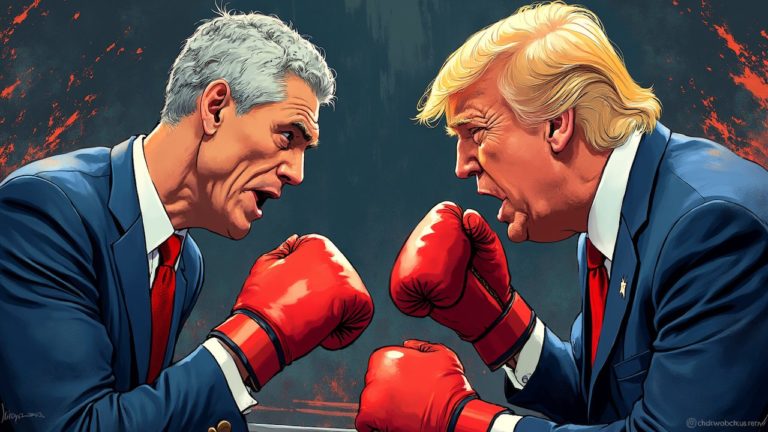
(Mike Maharrey, Money Metals News Service) President Donald Trump hasn’t even been sworn into office yet and he’s already locking horns with Federal Reserve Chairman Jerome Powell.
During the December Fed meeting, Powell & Company indicated that the pace of interest rate cuts will need to move more slowly than initially thought. But Trump says we need lower rates now.
They are both right.
This underscores the Catch-22 facing the central bank and the U.S. economy.
Jerome Powell’s Position
The Federal Reserve declared victory over inflation and began easing monetary policy in September with a supersized 50 basis point rate cut. It proceeded to trim rates two more times, with the latest quarter-point reduction in December.
Powell said the central bank will be “cautious” on rate cuts moving forward, pointing out, “We have been moving sideways on 12-month inflation,” and he noted that the Fed has lowered rates a full percentage point since it began easing monetary policy in September and called the current policy stance “significantly less restrictive.”
“We can, therefore, be more cautious as we consider further adjustments to our policy rate.”
The FOMC also slashed its rate cut projection for 2025 in half. The majority of committee members only anticipated two rate cuts this year. That was down from a projection of four cuts when the committee last issued dot plots in September.
Why the sudden hawkish turn?
No matter how they try to slice and dice the numbers, price inflation remains sticky. Every CPI measure remains well above the mythical 2 percent target. Meanwhile, producer prices surged in November. A rising PPI typically serves as a leading indicator of more consumer price increases coming down the pipeline because producers pass on at least some of their rising costs to consumers.
Given the inflation data, one could argue that the Fed should be raising rates instead of cutting. Keep in mind that then-Fed chair Paul Volker had to jack up interest rates to 20 percent to slay the price inflation of the 1970s.
The fact is the Federal Reserve never did enough to slay inflation. The central bank tightened monetary just enough to subdue the inflation dragon and hoped it wouldn’t get up off the mat. Now it has gone back to creating inflation.
By declaring victory over price inflation and easing monetary policy, the Fed effectively committed to creating more inflation.
Properly defined, inflation is an increase in the supply of money and credit. Price inflation is one symptom of this monetary inflation.
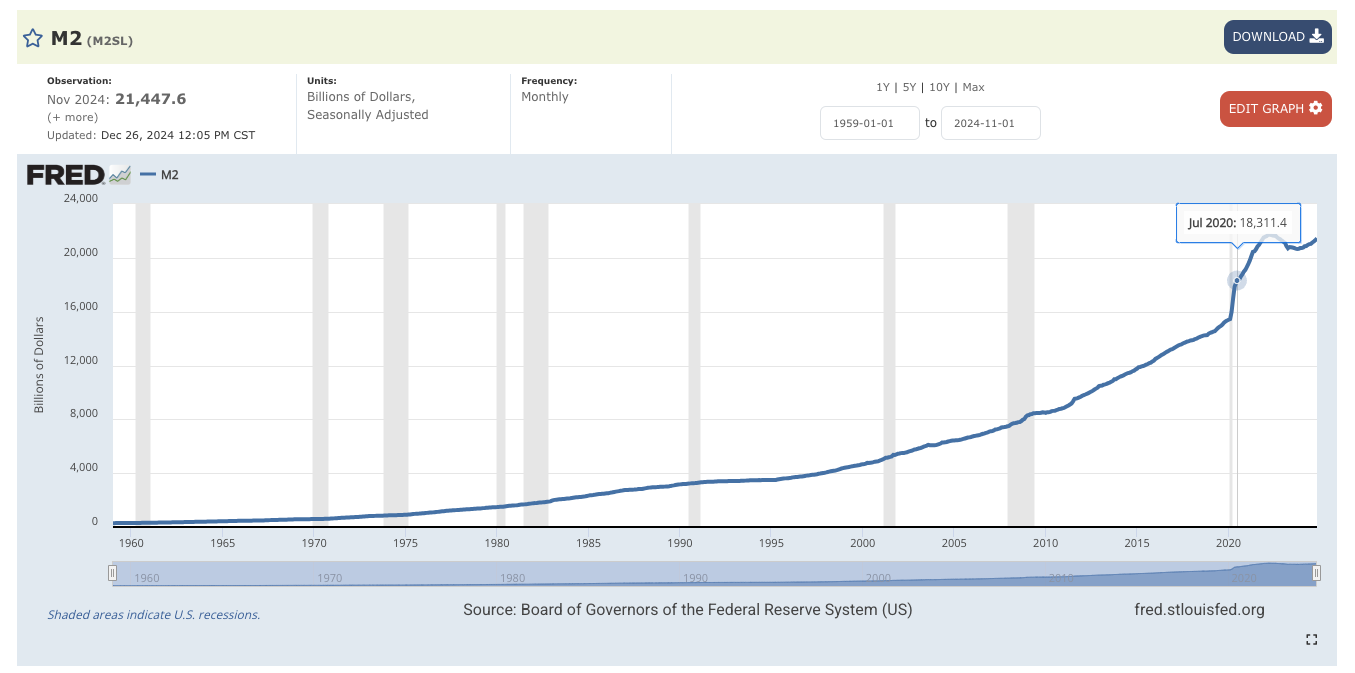
And the money supply is growing.
The M2 money supply bottomed a little over a year ago at $20.60 trillion. Since then, it has crept upward. As of October, it was at 21.3 trillion. That’s the highest level since December 2022.
So, even though Powell & Company would like to keep easing rates, they know that they have to tread softly in order to avoid another spike in price inflation.
Donald Trump’s Position
While President Trump acknowledges the inflation danger, he wants lower interest rates.
Last week, Trump emphatically declared that interest rates are too high.
“We are inheriting a difficult situation from the outgoing administration, and they’re trying everything they can to make it more difficult. Inflation is continuing to rage, and interest rates are far too high.”
Powell and Trump butted heads over interest rates during the president’s first term. As the Fed was finally trying to normalize rates in 2017 after holding them at zero for nearly a decade after the 2008 financial crisis, Trump frequently criticized Powell and urged him to lower rates.
Trump got his wish in 2019 after the economy became shaky and the stock market crashed in the fall of 2018. The Fed reversed course and began cutting rates. Even then, Trump wasn’t happy. He wanted deeper cuts. When the Fed only delivered a 25 basis point rate decrease in September 2019, Trump went after Powell on Twitter (now X) even though the interest rate was only at 2 percent.
“Jay Powell and the Federal Reserve Fail Again. No ‘guts,’ no sense, no vision! A terrible communicator!”
Trump’s affinity for low interest rates is understandable. After all, he is a real estate developer. He recognizes the stimulative value of low interest rates. But even Trump has to acknowledge the dark side – inflation.
The Catch-22
So, is Powell right?
Is Trump right?
The answer is yes.
This debt-riddled bubble economy can’t keep limping along in this higher interest rate environment. This is precisely why the Fed delivered a rate cut in December while simultaneously jawboning about caution and trying to dampen expectations of more rate cuts in 2025.
“Extreme bond market agitation has put the Federal Reserve in a bind. It can either cool long-term inflation fears or acquiesce to President-elect Donald Trump’s complaints about interest rates being “far too high.” It can’t do both and will likely opt to tackle the former, potentially setting up a running verbal battle with the White House over the coming year.” [Emphasis added]
The Reuters report goes on to say, “The Fed has routinely stated that containing inflation expectations is one of its primary roles,” and it’s “hard to imagine” the central bank will ignore signs of revived price inflation.
They can say that now, but it becomes easier to “imagine” when the economy starts to crack under the weight of high interest rates.
You see, there is a big elephant standing middle of the family room. The Fed already wrecked the economy with well over a decade of easy money. It pumped nearly $9 trillion in new money (inflation) into the economy through quantitative easing alone from the onset of the Great Recession through the pandemic. That’s on top of the inflation it created with nearly a decade of zero percent interest rates.
That monetary malfeasance has consequences. It created a massive debt bubble and all kinds of malinvestments in the economy. The impact hasn’t manifested yet.
When the economy visibly cracks, the Fed will be forced to get even more aggressive in loosening monetary policy – elevated inflation or not. If history is any indication, it will cut rates to zero again, and it will launch more rounds of QE. That means even more inflation.
The worst-case scenario is a protracted period of stagflation.
So, Trump may get his wish.
But that means we also get to pay more for everything.
The bottom line is the Federal Reserve is stuck between a rock and a hard place. And there is no easy way out.
(Money Metals Exchange) In a recent episode of the Money Metals Podcast, host Mike Maharrey interviewed Brien Lundin, a renowned expert in precious metals markets, publisher of Gold Newsletter, and organizer of the prestigious New Orleans Investment Conference.
The two discussed the state of gold and silver markets, the influence of geopolitical and economic factors, and the enduring relevance of sound money principles.
(Interview Starts Around 4:27 Mark)
Gold’s Resilience and Central Bank Buying
Reflecting on gold’s performance in 2024, Brien Lundin highlighted its resilience despite apparent headwinds. Gold prices, which had experienced a correction early in the year, ultimately rallied, consistently holding above $2,600 per ounce. Lundin attributed much of this stability to central banks’ sustained and accelerated purchases, driven by geopolitical and economic concerns, including:
Post-Russia Sanctions: Following the 2022 sanctions on Russia after its invasion of Ukraine, central banks sought to diversify away from the US dollar, fearing asset freezes or sanctions.
Fiscal Concerns: The rising debt levels and fiscal instability in the US and other developed nations prompted institutional investors to hedge with gold.
Treasury Yields: Rising yields reflected skepticism about the US’s ability to manage its fiscal trajectory, further bolstering gold’s appeal as a safe-haven asset.
“Gold traded contra to the traditional playbook, strengthening even in the face of rising Treasury yields and dollar strength,” Lundin observed. This indicated growing global uncertainty and a shift toward sound money.
A Fourth Bull Market for Gold?
Lundin believes we’re entering the fourth major bull market for gold since 1971. He emphasized the parallels between today’s economic conditions and those of past financial crises, arguing that continued debt accumulation and currency devaluation will inevitably lead to a reset. He pointed out that the depreciation of purchasing power, though gradual, acts as a “slow-motion default.”
“If historians look back 100 years from now, they won’t distinguish much between gradual devaluation and an outright default,” Lundin said, cautioning that sound money is essential for protecting wealth in such an environment.
Miners’ Underperformance and Opportunity
Despite gold’s strong rally in 2024, mining stocks lagged. Lundin attributed this disconnect to competition from alternative speculative assets like cryptocurrencies, AI investments, and leveraged ETFs. However, he expressed optimism that the mining sector would eventually benefit from higher metal prices, predicting that 2025 could mark a turning point.
“The miners are so cheap, and they’ve always offered leverage to gold,” Lundin remarked, adding that the sector’s small market size means even a modest inflow of funds could drive substantial gains.
The Legacy of the New Orleans Investment Conference
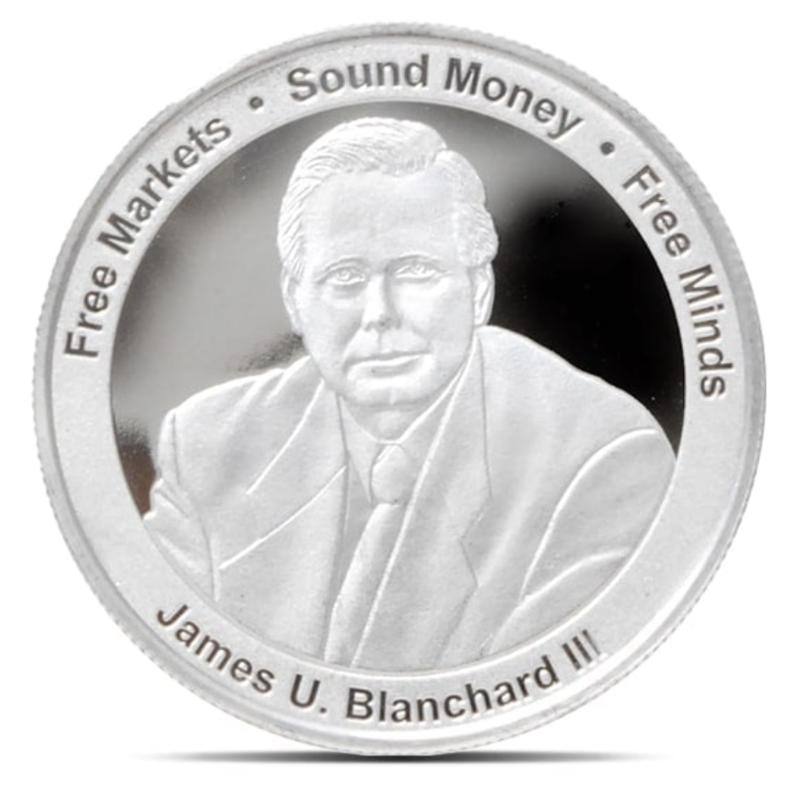
In 2024, the New Orleans Investment Conference celebrated its 50th anniversary. Lundin shared its storied history, dating back to 1974 when “Jim” James U. Blanchard III, a pioneer in the movement to legalize private gold ownership in the US, founded the event to educate investors on precious metals. The conference has since hosted luminaries such as Ayn Rand, Margaret Thatcher, and Milton Friedman.
Lundin highlighted the event’s modern mission: equipping investors with the tools and knowledge to navigate extraordinary times.
The 2024 conference featured an impressive roster of speakers, including James Grant, Brent Johnson, and Danielle DiMartino Booth. For the first time in its history, the event received no complaints, a testament to its success.
Looking Ahead: The Importance of Sound Money
As the global financial landscape becomes increasingly unstable, Lundin underscored the need for a renewed focus on sound money principles. He announced plans to collaborate with organizations like Money Metals Exchange to advocate for the federal recognition of gold and silver as money—a cause Blanchard championed decades ago.
“This is more important than ever because history is rhyming again,” Lundin said. “We need to ensure people can protect themselves against the coming uncertainties.”
A Silver Anniversary Commemorative
In partnership with Money Metals Exchange, the conference released a commemorative silver round celebrating its 50th anniversary. The silver round features Jim Blanchard’s image, honoring his pivotal role in the legalization of private gold ownership in the US.
Final Thoughts
Both Lundin and Maharrey agreed that gold and silver remain indispensable tools for preserving wealth amidst economic turbulence.
As Lundin aptly concluded, “You don’t need a financial apocalypse—just the repercussions of decades of easy money and debt accumulation—to see why owning real money matters.”
For more insights, Lundin’s Gold Newsletter is available at GoldNewsletter.com, and details about the New Orleans Investment Conference can be found at NewOrleansConference.com.
Key Questions & Answers
The following are the key questions and answers from the Money Metals Podcast interview with host Mike Maharrey and the precious metals market expert Brien Lundin:
What drove gold prices higher in 2024?
Brien Lundin attributed the rise in gold prices to central banks’ sustained and accelerated purchases. This trend was driven by geopolitical and economic factors, including the post-Russia sanctions that prompted a global shift away from reliance on the US dollar. Central banks sought to avoid potential asset freezes and to hedge against the growing fiscal instability in the US. Rising Treasury yields, reflecting skepticism over the US’s debt serviceability, also bolstered gold’s appeal as a safe-haven asset.
Is this the start of a new bull market for gold?
According to Lundin, we are entering the fourth major bull market for gold since 1971. He emphasized that ongoing debt accumulation and currency devaluation will likely lead to a financial reset. He described the gradual loss of purchasing power in fiat currencies as a “slow-motion default,” which will continue to drive investors toward gold and other monetary metals to preserve wealth.
Why did mining stocks underperform despite gold’s rally?
Mining stocks lagged in 2024 due to competition from speculative assets like cryptocurrencies, AI investments, and leveraged ETFs, Lundin explained. However, he expressed optimism that miners would eventually catch up as rising gold and silver prices improve their economics. Given the small size of the mining sector, even a modest inflow of investment could lead to significant gains.
What is the history and significance of the New Orleans Investment Conference?
The New Orleans Investment Conference, founded in 1974 by Jim Blanchard, celebrated its 50th anniversary in 2024. Lundin recounted how Blanchard played a pivotal role in legalizing private gold ownership in the US. The conference has since become a key event for educating investors on precious metals, hosting notable speakers like Ayn Rand, Margaret Thatcher, and Milton Friedman. In 2024, the event featured a diverse roster of financial experts and received unanimous praise from attendees.
Why is sound money advocacy more important than ever?
Lundin emphasized that history is “rhyming again” as the consequences of decades of easy money and rising debt become evident. He announced plans to collaborate with organizations like Money Metals Exchange to advocate for federal recognition of gold and silver as money. Lundin sees sound money as essential for protecting against the devaluation of fiat currencies and safeguarding wealth in an uncertain financial landscape.
What opportunities exist for investors in 2025?
Lundin highlighted the undervaluation of mining stocks as a significant opportunity for investors. He predicted that the sector would benefit from rising precious metal prices and renewed investor interest in 2025. Additionally, he encouraged investors to prioritize physical gold and silver as a hedge against economic and monetary instability.
(Ken Silva, Headline USA) Talk about being petty: The Times in London reported Saturday that the Biden administration has blocked British businessman Arron Banks and his partner Andy Wigmore from entering the country to attend their own £150,000 party celebrating Donald Trump’s return to the White House.
Banks and Wigmore were known as members of the so-called “Bad Boys of Brexit” alongside prominent UK politician Nigel Farage.
The party is reportedly set to host 300 guests at the “Stars and Stripes and Union Jack Party” on the rooftop of the Hay-Adams Hotel in Washington this Friday night. Guests include Trump and his family, Elon Musk, the US Sens. Rick Scott and Pete Ricketts, and the former Trump adviser Steve Bannon. Farage is supposed to be the guest of honor.
But all that may be in flux now.
Banks and Wigmore reportedly blasted the Biden administration for its “political decision.” Along with being conservative businessmen, the two were swept up in the phony Russiagate scandal that the FBI and Democrats waged against the first Trump administration for years. Banks has an open lawsuit against Observer journalist Carole Cadwalladr for reporting that he had a “covert relationship with the Russian government”—something he says is false and defamatory, according to the Times.
“I am shocked that that US embassy have blocked our visa to the US. This is a political decision and revenge for the failed Russia Hoax perpetrated on both sides of the Atlantic,” Banks reportedly said in a statement.
“The Biden administration weaponized corrupt lawfare, politics and the ‘dying fake media’ and President Trump fought it all to win the election, the biggest comeback in political history,” he said.
“With my visa blocked, I guess Andy and myself will have to cross the Rio Grande from Mexico into the US, along with the hundreds of thousands of gang members and bad hombres on the border, and claim our free hotel room and mobile phone in DC when we arrive.”
A U.S. spokesperson reportedly declined to comment.
Ken Silva is a staff writer at Headline USA. Follow him at x.com/jd_cashless.
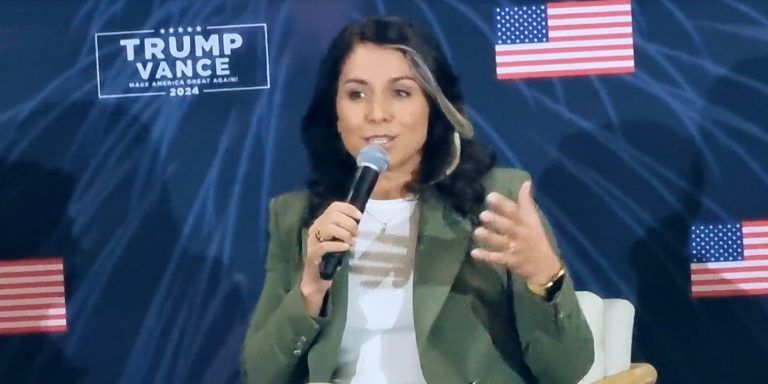
Gabbard had been one of the leading critics of FISA for years, going so far as to introduce legislation to abolish 702 when she was a Democrat congresswoman. Her change in stance comes with her ODNI nomination reportedly on the line.
According to Punchbowl News, GOP national security hawks were particularly concerned about Gabbard’s anti-FISA stance. Sen. James Lankford, R-Okla., a member of the Senate Intelligence Committee, reportedly suggested that she should disavow her previous opposition to the 702 program.
Gabbard apparently obliged.
“If confirmed as DNI, I will uphold Americans’ Fourth Amendment rights while maintaining vital national security tools like Section 702 to ensure the safety and freedom of the American people,” she said coming out of last week’s round of private Senate meetings.
“My prior concerns about FISA were based on insufficient protections for civil liberties, particularly regarding the FBI’s misuse of warrantless search powers on American citizens. Significant FISA reforms have been enacted since my time in Congress to address these issues.”
Other lawmakers, including Sen. Tom Cotton, R-Texas, said they’re reassured about Trump’s pick now that she supports warrantless spying on Americans.
“Tulsi Gabbard has assured me in our conversations that she supports Section 702 as recently amended and that she will follow the law and support its reauthorization as DNI,” Cotton said, according to Punchbowl News.
Gabbard is the latest high-profile FISA critic to reverse course after getting a taste of power.
Last April, Rep. Mike Johnson, R-La., helped renew the controversial law after becoming House Speaker. Johnson had previously called for abolishing Section 702, which allows the U.S. government to collect without a warrant the communications of targeted foreigners located in other countries — including when those subjects are in contact with Americans or other people inside the U.S. The arrangement often results in Americans having their communications read.
As House Speaker, Johnson pulled a bill that would have implemented crucial warrant requirements supported by privacy advocates. He replaced it with a watered-down FISA renewal bill on the grounds that it will “allow Congress more time to reach consensus on how best to reform FISA and Section 702.”
According to an ODNI report from last year, Section 702 was used to query the communications of U.S. persons 57,094 times between December 2022 and November 2023.
Ken Silva is a staff writer at Headline USA. Follow him at x.com/jd_cashless.
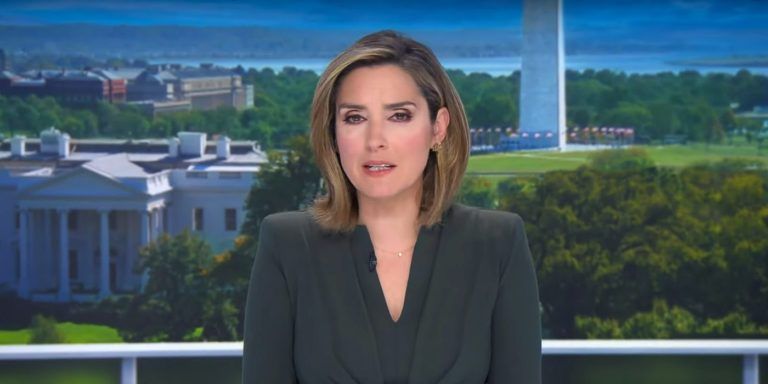
(Luis Cornelio, Headline USA) CBS News anchor Margaret Brennan implied President-elect Donald Trump should not halt the admission of refugees because the country might miss out on the next Albert Einstein.
Brennan made these comments during an interview with former House Speaker Newt Gingrich on the Sunday episode of Face the Nation, where the former House speaker promoted his new PBS documentary, Journey to America.
The documentary explores the inspiring stories of foreign nationals who pursued the American dream, including Einstein and former Secretary of State Henry Kissinger. Brennan suggested that this is why Trump should welcome more foreign nationals.
“Donald Trump set refugee admissions at very low levels first term. He’s talking about blocking refugee admissions this term. Is that a mistake?” Brennan asked.
In response, Gingrich pointed to President Joe Biden’s disastrous border policies and clarified that he supports lawful immigration.
“I think we’re going through a period of, frankly reacting to an extraordinarily disastrous immigration policy so you’re going to have some twists and turns,” Gingrich warned. “In the long run, we do want to have an ability to allow legitimate refugees to come here.”
He added, “We also and part of the reason Calista [Gingrich] and I made this documentary for PBS is we really believe strongly that legal immigrants are a major contribution to America’s success and to its exceptional nature.”
Gingrich emphasized his support for legitimate refugees and individuals who enter the U.S. with work visas, adding “We want people to be able to come to America if they do so legally.”
Brennan replied by asking Gingrich to clarify what he meant by “legitimate” refugees.
Gingrich swiftly retorted, “I think people can stand up and say, ‘I’ve now decided I’m a refugee I feel threatened.’ The question is, is that true or not. Are they really threatened or is that just their way of getting into the United States.”
Our new documentary, “Journey to America,” shares the inspiring stories of legal immigrants whose contributions have made the United States a more prosperous, safer, and freer nation. https://t.co/pwqOd71xC2pic.twitter.com/GsTY6RJZxP