Silver Aids Genetic Research and Other Silver News

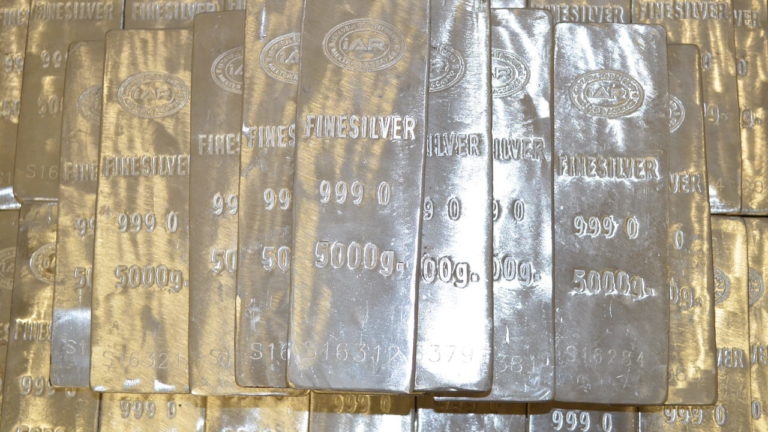
(Mike Maharrey, Money Metals News Service) Silver is an amazingly useful metal. In addition to serving as money, silver is used in a wide range of applications, from the tech sector to medicine.

And scientists continue to find new uses for silver.

For instance, Japanese researchers have discovered that silver can facilitate the cutting and re-ligation of DNA structures.

This is one of several interesting developments in the silver market reported by the Silver Institute in its recent Silver News publication.

Genetic engineering has a wide range of applications, from creating insect-resistant vegetables to developing new vaccines. A gene-editing technology known as CRISPR (Clustered Regularly Interspaced Short Palindromic Repeats) is at the heart of all gene-altering processes. Japanese researchers discovered properties of nano-silver that aid the precise cutting and reconnection of DNA structures.

According to the scientists, silver nanoparticles serve four functions in the CRISPR process. First, they help locate and trigger the best angle to cut the strands. Second, silver replaces enzymes usually used to split sites and does the job more cleanly. Third, the introduction of silver creates longer overhangs, thus making for tighter joints, and fourth, unused or waste DNA fragments are attracted to the silver and carried away.

“We believe this technology will be useful for synthesizing genomic DNA, with many possible applications in areas such as an mRNA library establishment for cancer vaccines and gene therapy, as well as the development of artificial protein drugs and genome crops. We have shown that two DNA fragments can be joined. Now, we need to confirm whether multiple fragments can be joined at the same time – a key step for building genome-scale DNA.”

The Silver Institute reported several other interesting technological and market developments related to silver:

  • After 45 years, Bunker Hill Mining Corporation has resumed silver mining in Idaho. The operations shut down in 1981 when the company could not comply with environmental regulations. The underground mine was flooded, and the entire area was remediated as part of the EPA’s Superfund Program. In 2020, a team began efforts to restart mining operations in the area after the EPA started allowing Superfund sites to be returned to economic use. Before shutting down, the Bunker Hill Mine produced 165 million ounces of silver and 4.5 tonnes of base metals, including lead and zinc.
  • Scientists in the UK have discovered that a ‘reversible’ glue using silver particles to keep electricity flowing can replace solder and facilitate the recycling of electrical components. Solder is typically used to connect electronic components. However, solder, along with screws and other connectors, makes it difficult to recycle e-waste because of its strong bonds to the printed circuit board. Using silver-based glues in electronics is not new; however, this new conductive adhesive is unique in its ability to be easily dissolved and unbonded on demand.
  • Silver is keeping AI chips and datacenters cooler. The heat generated by the silicon carbide chips often used in data centers can cause bonding failures. However, engineers have found that the chips can operate in heat as high as 350°C when sintered with silver paste. Sintering is a process that fuses powdered silver using heat and compression.
  • On May 22, Abaxx Exchange launched Silver Singapore (SSP) futures to help manage the physical silver trade in Asia. As silver industrial supply chains grow alongside rising investment demand, an active, two-way physical market has expanded across Asia. However, global price discovery has remained anchored to legacy hubs in London and New York. For commercial participants managing physical trade in Asia, this geographic mismatch introduces severe basis risk, timing friction, and unnecessary logistical costs. The 1,000-ounce contract is deliverable to vaults in Singapore. According to the Silver Institute, the contract is built for commercial trade. “SSP aligns with regional physical realities by requiring fournines silver, the higher-purity material needed by many industrial users to reduce unnecessary reprocessing or quality swap costs.
  • Linalool (LN), a naturally occurring alcohol, has been shown to shrink brain tumors. However, it has trouble breaching the brain/body protective barrier. Researchers in Saudi Arabia and Pakistan have found that adding silver nanoparticles to Linalool allows it to reach the brain and interact with tumors more easily.
  • New research from Korea shows that using an acidic, phosphorus-based liquid instead of chemicals offers a way to electroplate silver more safely without sacrificing smoothness or thickness. This discovery allows for expanded use of silver electroplating for companies that do not want workers to handle dangerous chemicals or worry about their release into the environment.

Mike Maharrey is a journalist and market analyst for Money Metals with over a decade of experience in precious metals. He holds a BS in accounting from the University of Kentucky and a BA in journalism from the University of South Florida.


Government Plans to Expand Scheme to Incentivize Indians to Let Go of Their Gold

(Mike Maharrey, Money Metals News Service) The Indian government plans to expand a program designed to incentivize people to turn in their gold after the original plan fell flat.

In 2015, the government created a gold monetization scheme (GMS) to encourage Indians to put “idle” gold into the country’s financial system. Under the plan, individuals can deposit as little as 10 grams of gold into an account maintained by a commercial bank.

After being tested for purity, the gold is melted and refined into standard .995 purity bars. Depositors receive interest in rupees. At the end of the term, depositors receive their choice of an equivalent quantity of gold or the value in rupees at the current gold price.

Initially, the program included short-, medium-, and long-term deposit options. However, the medium- and long-term variants were discontinued last year, while the short-term program remained in effect with terms from one to three years.

Officials hoped the plan would incentivize Indians to turn in some of their gold. This would lower the country’s dependence on imported gold.

In 11 years, the GMS monetized only 39 tonnes of gold.

That may sound impressive until you realize that the government estimates Indians hold nearly 30,000 tonnes of gold.

Indians value the yellow metal as a store of wealth, especially in poorer rural regions. Around two-thirds of India’s gold demand comes from beyond the urban centers, where large numbers of people operate outside the tax system. Many Indians use gold jewelry not only as an adornment but also to preserve wealth.

According to a 2018 survey, 87 percent of Indian households owned some gold. Even households at the lowest income levels in India hold some of the yellow metal. According to the survey, more than 75 percent of families in the bottom 10 percent of income managed to buy some gold.

The government would love to ratchet some of that gold out of the public’s hands. Lowering gold imports would help the country’s trade deficit. Beyond that, gold fuels India’s black market, and the government wants to “legitimize” that large segment of the Indian economy. (By legitimize, I mean tax.)

The new monetization scheme will reportedly allow jewelers to participate in the program. Industry officials say the government hopes to have the new program in place before the fall festival season.

The government is seriously examining the proposal to bring jewelers under the scheme because their involvement can help channel idle household gold into the formal system,” a senior gold trade official told the Times of India.

Jewelers would serve as collection and aggregation centers to channel the gold to authorized refiners. In return, they would receive a handling fee. They would also have access to monetized gold, providing jewelers with a “dependable and relatively lower-cost source of raw material,” while lowering dependence on imports.

The problem with this program is that most Indians would rather keep their gold in their hands.

This isn’t the first time government officials have tried to lower gold imports by discouraging gold “hoarding.”

In 2016, the government implemented tax reporting requirements, requiring customers making gold purchases over 200,000 rupees to disclose their tax ID, known as a Permanent Account Number (PAN). Instead of forcing these large transactions into the light, the regulation drove many dealers into the underground gold trade. According to a Reuters report at the time, “Some jewelers [are] moving to unofficial trade from official. No one wants to lose customers just because they don’t have a PAN card.”

Of India’s 1.25 billion people, only 223 million held PAN cards when the law went into effect

Instead of complying with the regulation, many dealers simply split large transactions into multiple smaller invoices.

You can see why the government wants to stop the flow of gold into these areas. The yellow metal allows people to hold on to their wealth outside the official system. But no matter what the government does, it fights a losing battle against much stronger cultural and economic realities.

Indians also understand that their gold holdings can become a lifeline during a crisis.  For instance, after the Indian government locked down the country during the COVID pandemic, banks tightened credit to mitigate the default risk. Unable to secure traditional loans, Indians used gold to secure financing. As Indians endured a second wave of lockdowns, many resorted to selling gold outright to make ends meet.

You can use your gold during a crisis if you don’t have it in your possession. This explains why, despite the monetary incentive, most Indians ignored the monetization program. In all likelihood, the expanded scheme won’t fare much better.


Mike Maharrey is a journalist and market analyst for Money Metals with over a decade of experience in precious metals. He holds a BS in accounting from the University of Kentucky and a BA in journalism from the University of South Florida.
Microsoft Cuts 4,800 Jobs, Including Many at Xbox in a ‘Reset’ of its Gaming Division

(Headline USA) Microsoft is cutting 4,800 jobs, about 2.1% of its global workforce, including a large number of workers at its Xbox video game business.

The layoffs included 1,600 Xbox workers, with more to come this year in a broader reorganization designed to “reset” Xbox as it faces heightened competition, the company said Monday.

“Our business today is not healthy,” said a memo from Xbox CEO Asha Sharma, who took over the gaming division earlier this year. “We are operating at margins that are 3-10x lower than comparable platform and publishing businesses.”

Sharma said the industry, in which Xbox competes with Sony’s PlayStation and Nintendo’s Switch, is facing a severe “hardware crisis” as costs soar for console components.

Beyond the layoffs announced Monday, Sharma said Xbox expects another 1,600 job cuts over the course of the fiscal year that began last week. The company is also spinning off four video game development studios previously acquired by Microsoft.

Nearly three years ago, Microsoft closed a $69 billion deal to acquire gaming giant Activision Blizzard, maker of “Call of Duty” and other blockbuster franchises. The company said at the time it wanted to broaden its game development portfolio and offer a Netflix-like streaming subscription service, but the strategy doesn’t appear to have been enough to get ahead of the competition.

“While those businesses have created meaningful value, they did not grow at the pace we expected,” Sharma said.

The Xbox cuts are in addition to broader Microsoft layoffs that the software giant’s chief people officer Amy Coleman tied to unspecified changes in customer needs.

“I also want to be direct that the roles eliminated today are not being replaced by AI,” Coleman wrote in a blog post.

The layoffs followed voluntary buyouts that Microsoft began offering to about 8,750 people in May. More than 30% of eligible workers accepted those voluntary retirement offers, Coleman said Monday.

Adapted from reporting by the Associated Press

Rosland Capital Bankruptcy Is a Reminder That HOW You Buy Gold Matters

(Stefan Gleason, Money Metals News Service) Since Money Metals was founded in 2010, we’ve warned investors that how you buy precious metals can be just as important as what you buy.

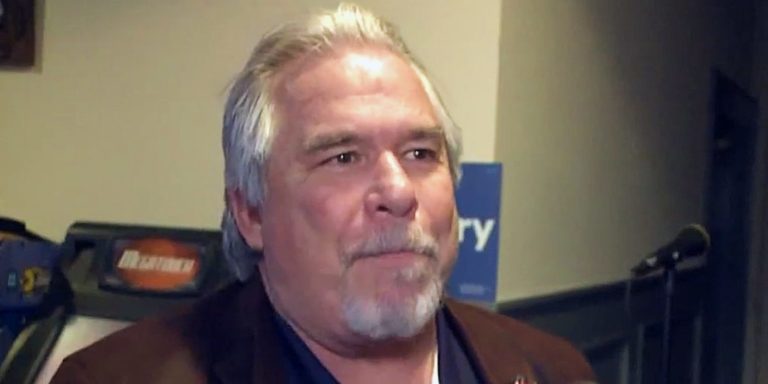
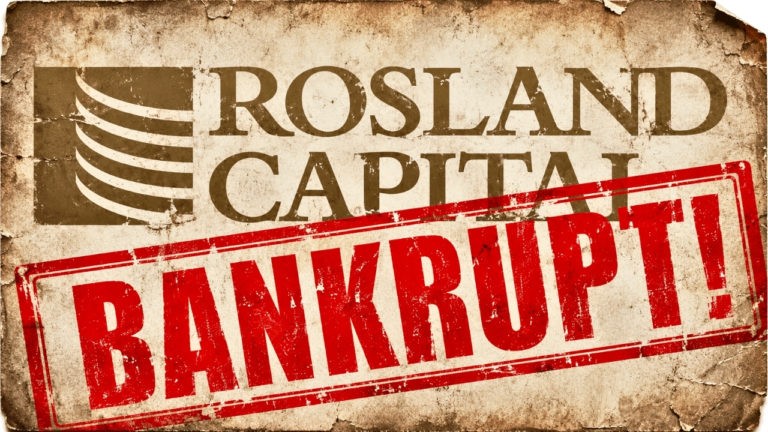
Last week’s bankruptcy filing by Rosland Capital – one of the industry’s most heavily advertised names, familiar through its Fox News commercials featuring William Devane – is another powerful reminder of why.

What Happened at Rosland Capital

Last week, Rosland Capital filed for Chapter 11 bankruptcy following years of mounting financial problems. According to sworn court filings submitted by the company’s newly appointed Chief Restructuring Officer, Rosland dismissed nearly all its employees last month and hopes to liquidate its business under court supervision.

According to the filing, some 617 customers are owed at least $60 million in undelivered orders and repurchase obligations.

For years, Rosland had achieved decent revenues. According to the bankruptcy declaration, annual sales exceeded $150 million in 2021 and remained near $100 million even through 2025.

And since it often sold supposedly “rare” or special coins at extremely high markups and paid huge commissions (15% to 35%) to its high-pressure sales team, it generated gross margins ranging from approximately 18% to 9%.

But the last year the company turned a profit was in 2021, after which profitability steadily deteriorated. The company lost $24 million between 2022 and 2025 – and $3.2 million so far this year.

With a capital deficit now greater than $60 million, Rosland apparently wasn’t purchasing and paying for the metals it sold until months after customers placed their orders.

According to the bankruptcy petition, when gold continued rising in recent years, Rosland often found itself paying substantially more for replacement inventory than customers had originally paid.

This suggests Rosland didn’t even offset its price exposure through hedging or other risk-management practices.

The filing also states that the company is the subject of a Securities and Exchange Commission (SEC) investigation concerning its precious-metals IRA business and that the New York Attorney General has been investigating the company’s sales practices as well.

Perhaps the most startling statement appears later in the declaration.

According to the Chief Restructuring Officer: “The Debtor no longer possesses any inventory of precious metals, coins, or bullion…”

Instead, he says the company’s principal remaining asset consists largely of its customer lists, marketing records, and related customer information, which it hopes to sell through the bankruptcy process. This adds insult to injury for customers who entrusted the company not only with their purchases, but also with their personal information.

Why We Constantly Warn About This Business Model

Longtime Money Metals customers may recognize something familiar.

Among countless articles and investor education guides we’ve published on this topic was Five Traps to Avoid When Buying and Holding Precious Metals.

The first trap we warned about was television celebrity precious-metals dealers – not because of the celebrities themselves, but because of the economics behind the business model.

National television advertising, celebrity endorsements, lead-generation campaigns, and large commissioned sales forces are expensive. Those costs must be recovered somehow.

In most cases, they’re funded by selling high-premium collectible or semi-numismatic coins carrying markups far above their bullion value. Investors frequently believe they’re simply buying gold or silver when they’re paying thousands more than necessary (Indeed, a quick perusal of Rosland’s website, still online, shows a wide variety of nonsense custom gold and silver products that are heavily pushed rather than standard bullion items).

What’s particularly amazing is that despite charging excessive markups of 50%, 100%, or more, many of these firms nevertheless couldn’t even deliver the actual metals customers purchased.

Rosland Capital is only the latest blowup. Regal AssetsRed Rock SecuredChase MetalsOxford Gold Group, Safeguard Metals, and Merit Gold are among the others.

Why Money Metals Took an Entirely Different Path

Money Metals wasn’t created to imitate that model. It was created because of it.

Following the 2008 financial crisis, Stefan Gleason, Mike Gleason, and Clint Siegner founded Money Metals to challenge an industry increasingly dominated by aggressive telemarketing, opaque pricing, phony collectibles, and excessive markups. We believe investors deserve transparent pricing, competitively priced bullion, and education—not pressure.

We believe informed customers make the best customers. That philosophy was a bedrock of our foundation and continues to guide every aspect of our business today.

Rosland’s bankruptcy should serve as a reminder that investors should carefully evaluate not only the products they buy, but also the business practices of the companies from which they buy them.

A dealer’s marketing strategy, pricing philosophy, fulfillment speed, inventory management, and overall business model matter.

The lesson from Rosland’s bankruptcy isn’t that every dealer using expensive television ads or a company with a celebrity spokesman is destined to be the next scandal. Investors must understand how their dealer makes its money.

Business models built around aggressive sales tactics and “special” products carrying massive markups over the bullion spot market price create incentives that work against the customer.

That’s a lesson worth remembering long after the headlines about Rosland Capital fade away.


Stefan Gleason is President and CEO of Money Metals Exchange, the company recently named “Best Overall Online Precious Metals Dealer” by Investopedia. A graduate of the University of Florida, Gleason is a seasoned business leader, investor, political strategist, and grassroots activist. Gleason has frequently appeared on national television networks such as CNN, FoxNews, and CNBC and in hundreds of publications such as the Wall Street Journal, TheStreet, and Seeking Alpha.

Pennsylvania Police Refused to Cooperate w/ Trump Shooting Investigation

(Ken Silva, Headline USA) The Pennsylvania State Police refused to have its officers be interviewed for a federal investigation into the July 13, 2024, assassination attempt against Donald Trump, according to a new report from Homeland Security’s Office of the Inspector General.

In a report released last week, the DHS-OIG said it sought to interview PSP troopers about the assassination attempt, which took place at a Trump rally in Butler, Pennsylvania. But the PSP denied the interview requests, the report said.

“We did not interview state law enforcement officers; PSP denied our interview requests,” the report said. The PSP did provide written responses to the inspector general’s questions, the report added.

The PSP did not immediately respond to a media inquiry from Headline USA about why it refused to have its officers interviewed for the DHS-OIG investigation.

Much of the rest of the report details security failures that have already been widely publicized—including in this author’s book about the event, titled The Trump Assassination Plots: What the Investigations Missed, and Why it Matters.

The report detailed how the Secret Service missed some 102 radio communications from local police about the would-be assassin, Thomas Crooks. That’s because the Secret Service’s communications center was separate from the one operated by the locals.

The report also noted how officials inside the Secret Service comms center were Googling the location of the AGR complex—where Crooks shot from—at the time of the shooting. Additionally, the report noted that officials from Trump’s security team didn’t notify their local counterparts from Pittsburgh about intelligence that Iran was purportedly plotting to assassinate Trump.

Last week’s findings came on the heels of another DHS-OIG report, which revealed that some Secret Service text messages were “compromised” last year thanks to an unsecured third-party messaging app.

In that report, the DHS-OIG said that the Secret Service deployed a third-party messaging app on agency-owned devices in March 2025.

“A limited number of Secret Service messages were compromised when the messaging solution improperly stored them on unsecured third-party servers,” the DHS-OIG report says.

The Secret Service told the DHS-OIG that the compromised messages contained employees’ information—but not “operationally sensitive data.” However, the DHS inspector general said he did not review the accuracy of the Secret Service’s claim.

The DHS-OIG study was launched after President Donald Trump was nearly assassinated at his July 13, 2024, campaign rally in Butler, Pennsylvania. The inspector general has also reviewed other elements of the agency, including how its snipers are trained. In that review, the DHS-OIG found that they’re overworked and not properly qualified.

The inspector general was reportedly being blocked from conducting some of this review.  DHS Inspector General Joseph Cuffari told Congress in March that he’s being blocked from investigating the agency’s intelligence-sharing ahead of the Butler rally.

Ken Silva is the editor of Headline USA. Follow him at x.com/jd_cashless.

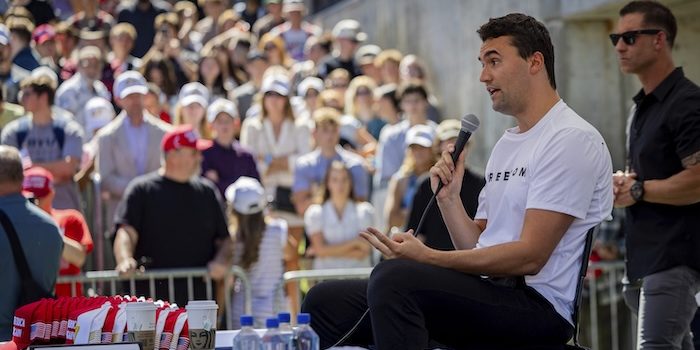
Prosecutors Argue the Alleged Charlie Kirk Killer Should Stand Trial

(Headline USAA key hearing kicks off Monday in Charlie Kirk’s murder case in Utah, where prosecutors aim to convince a judge they have enough evidence to try the man accused of killing him and seek the death penalty.

The five-day preliminary hearing will mark the most significant presentation of evidence in the case so far — and the first time that Kirk’s parents and widow will be in the courtroom with defendant Tyler Robinson.

Robinson, 23, is charged with aggravated murder in the Sept. 10 assassination of Kirk, a conservative activist and ally of President Donald Trump, at Utah Valley University. Robinson turned himself in a day after the shooting.

Prosecutors allege he confessed in a note left for his roommate, who was also his romantic partner, that read, “I had the opportunity to take out Charlie Kirk and I’m going to take it.”

Robinson has not yet entered a plea, and his attorneys have not commented on his guilt or innocence. They have, however, sought to get the death penalty taken off the table, so far unsuccessfully.

The proceeding will resemble a minitrial, but prosecutors need only demonstrate that there are reasonable grounds to believe Robinson killed Kirk. The standard is lower than for a trial, where prosecutors have to prove guilt “beyond a reasonable doubt.”

Once it’s finished, state District Judge Tony Graf must determine if there is enough evidence for the case to proceed to a trial.

Prosecutors have said they plan to present DNA evidence linking Robinson to the suspected murder weapon, testimony from investigators, autopsy findings, witness statements and video of Kirk’s killing. They are also expected to argue the shooting endangered others at Kirk’s campus event — an aggravating circumstance that could make the crime punishable by death under Utah law.

Prosecutors this week can use secondhand information, or hearsay, to help present their case.

Robinson’s roommate is not expected to testify in person during the hearing. Still, the roommate’s recorded testimony could be a focal point for prosecutors.

In addition to the alleged confession note, Robinson reportedly texted his roommate that he targeted Kirk because he “had enough of his hatred,” prosecutors have said.

Before his death, Kirk and the organization he co-founded, Turning Point USA, galvanized the conservative youth vote to help Trump win a second term.

The Republican president has said he hopes Robinson receives the death penalty.

Kirk’s widow, Erika Kirk, said during his memorial service that she forgives Robinson. She is expected in court throughout the week with her husband’s parents, Robert and Kathryn Kirk, according to a person familiar with the situation who spoke on condition of anonymity because they were not authorized to speak publicly.

Adapted from reporting by the Associated Press

Ohio Cop Fatally Shot; Suspect Dead Too

(Headline USAA police officer responding to a 911 call about gunshots at an Ohio home was fatally shot, and the suspect and two other people also died, a county sheriff said.

Two other officers and a police dog were hurt, Wayne County Sheriff Tom Ballinger told reporters. Their conditions were not immediately known.

The shootings happened Sunday night in Rittman, about 40 miles (64 kilometers) south of Cleveland.

Ballinger said the 911 call came in at about 9:30 p.m. about “some type of disturbance and shots fired.”

“Officers responded to the area and immediately started taking fire,” Ballinger said. “At this point, we have lost an officer in the line of duty.”

No names have been released.

Ballinger did not provide any further information on the deaths of the suspect and the other two people. He declined to answer any questions.

Adapted from reporting by the Associated Press

National Guardsmen Shoot Alleged Criminal Fleeing in Memphis

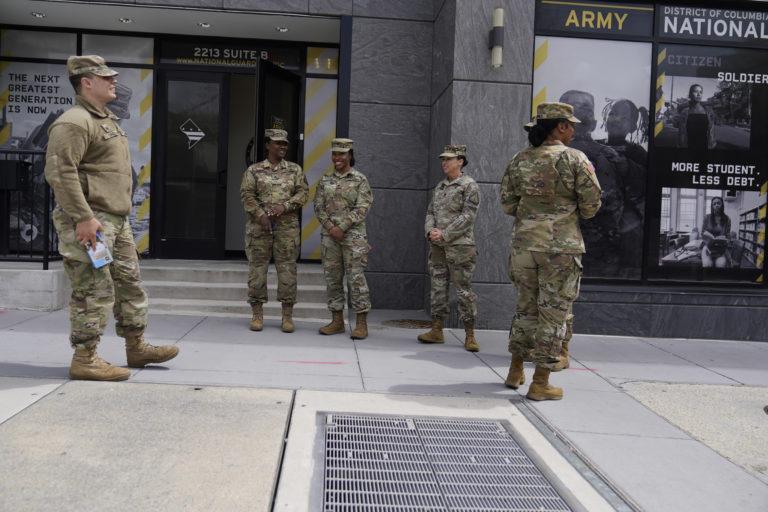
(Headline USATwo Tennessee National Guard members assigned to a crime-fighting patrol in Memphis fatally shot a man Sunday who turned toward the soldiers with a gun during a downtown pursuit, authorities said.

The Guard members are part of a federal task force in Memphis created by President Donald Trump, who last year sent troops and federal agents to cities that he described as overrun with crime. Tennessee Gov. Bill Lee, a Republican, had deployed the Guard to support the effort.

Authorities said the soldiers in Memphis were responding with local police to reports of gunshots around 4 a.m. when they began pursuing an armed man fleeing on foot. The guardsmen opened fire after the man turned toward them with his weapon, according to the city’s police department.

The Tennessee Bureau of Investigation identified the man as Tyrin Johnson, 20, and said it is investigating the circumstances of the shooting. No law enforcement officers were injured, the agency added.

Johnson died at the scene after two National Guard medical specialists attempted first aid, Guard spokesperson Lt. Col Darrin Haas said in a statement.

The troops are part of the Memphis Safe Task Force, convened by Trump and comprised of federal and local agencies.

The task force has led to more than 10,000 arrests, the U.S. Marshals Service reported in June.

There have been at least four officer-involved shootings tied to the task force, according to TBI data. Two of those shootings occurred in May and did not involve National Guard members discharging their weapons. The TBI also tied the task force to an October shooting, but did not specify which law enforcement agencies were involved.

The TBI and the National Guard did not respond to questions about whether Sunday’s shooting was the first instance troops had fired their weapons since they were deployed to the city.

For years, Memphis, whose population exceeds 600,000, has dealt with high violent crime, including assaults, carjackings and homicides. Both Democratic and Republican officials have noted decreases last year in some crime categories, preceding the deployment and paralleling trends across U.S. cities.

In April, the Tennessee Court of Appeals ruled that state and local Democratic officials lacked standing to block the deployment of federal troops in Memphis.

Adapted from reporting by the Associated Press

FBI Docs Expose Another Foreign Fraud Scam w/ Hillary’s Brother

(Ben Sellers, Headline USA) Move over, Hunter.

A recent Freedom of Information lawsuit revealed that the original influence-peddling, deadbeat presidential relative was still having his schemes discovered, even seven years after he died mysteriously.

In a June 26 announcement, public-interest watchdog Judicial Watch released 77 heavily redacted pages of FBI records pertaining to a 1996 investigation into Tony Rodham, amid allegations of wire and mail fraud.

According to the documents, Rodham, the brother of Hillary Clinton, was accused of bilking investors as part of a Romanian vehicle import scheme.

The probe of his brother-in-law would have been taking place right in the midst of then-President Bill Clinton’s reelection campaign, lest anyone wonder how it got buried for the past three decades.

Judicial Watch has been seeking records into Rodham since three days after his death in June 2019, which would have ostensibly closed any still-pending investigations into him that allowed the FBI to withhold sensitive materials.

In August 2019, the agency acknowledged having 13,000 pages of records and media files that somehow related to Rodham.

“What’s currently in the public record about the schemes of Hillary Clinton’s little brother Tony likely just scratches the surface,” said Judicial Watch President Tom Fitton in a press release last December. “Clearly, the Justice Department has been sitting on a wealth of information.”

The newly released documents show that Rodham undertook a business venture in the summer of 1996 called East European Imports, Inc.

Rodham and his business partners claimed that they had exclusive rights to import and sell two models of a Romanian four-wheel-drive vehicle.

However, “[q]uestions have now arisen as to whether, in fact, EEI ever had a legitimate contract with the Romanian government, and/or with the Rumanian [sic] manufacturer or exporter,” Judicial Watch said in its press release.

Nonetheless, Rodham and his business partners proceeded to demand nearly $70,000 apiece in deposits and fees from prospective dealerships seeking to sell the automobiles.

None of the vehicles were ever imported to the U.S.

Rodham, like several members of the Biden family, used his ties to power to run several scams, both for his own enrichment and as an intermediary for the Clintons.

He fashioned himself as a “facilitator” at Chinese investor conferences and sought contracts following a major earthquake in Haiti, during which the Clinton administration flooded the zone with disaster relief that likely came directly back into their own orbit.

Rodham most notably collaborated with future Virginia governor Terry McAuliffe (then a fundraising bundler for the Clintons) on a scheme known as GreenTech, in which Chinese investors pretended to be funneling money into an electric-car company but were, in fact, paying for Obama officials to fast-track their green cards.

The company went bankrupt in 2018, roughly a year after Rodham’s sister lost the presidency to Donald Trump.

The new revelation about Rodham’s Romanian dealings comes as Bill and Hillary Clinton are once again attempting to brazenly foist themselves into headlines with a deluge of public statements putting their lack of — or rather, their wanton disregard for — self awareness on full display.

Hillary Clinton last week called for seditious deep-state operatives to refuse to comply with orders from acting Director of National Intelligence Bill Pulte as he sought to gain access to and, in some cases, declassify materials on intelligence issues.

“The DNI has access to everything, everything that they want to see,” Clinton said during a podcast with her former campaign lawyer, Marc Elias. “I mean, I hope there are career and even political appointees in various of the agencies that are slow-walking or refusing to share information with Pulte.”

In response, Trump himself shared a link on Friday revealing that Pulte had fired dozens of insubordinate intel officials.

Bill Clinton, despite being viewed by many on the Left as a pariah due to his problematic history of sex abuse and ties to Jeffrey Epstein, released a much ballyhooed rant on July 4 condemning the current administration for allegedly doing many of the things that Democrats themselves have done shamelessly since Clinton’s presidency.

That included trying to “prosecute enemies, stamp out free speech” and use government as “a new profit center for themselves and their allies,” said legal expert Jonathan Turley in a three-part X thread.

“There are legitimate concerns raised by Trump business interests, but the last people (after the Bidens) who should raise such concerns are the Clintons,” Turley wrote.

Ben Sellers is a freelance writer and former editor of Headline USA. Follow him at x.com/realbensellers.

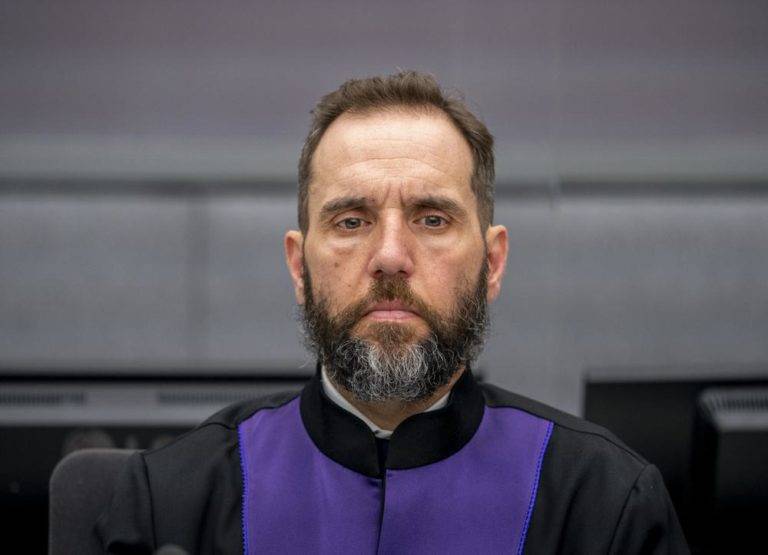
Anti-Trump Prosecutor Jack Smith Sets Up D.C. Law Firm w/ Top J6 Investigator

(Ben Sellers, Headline USA) Former anti-Trump prosecutor Jack Smith has resurfaced.

Smith has launched a new Washington, D.C.-based law firm with Timothy Heaphy, who was linked to the investigations of both the SPLC-funded Charlottesville riot and House Democrats’ Jan. 6 show-trial.

Their new firm — Heaphy, Smith, Harbach & Windom, which is located just a block from the White House at 1701 Pennsylvania Ave. NW — opened its doors in January.

“I have a lot of respect for Jack; I’ve never worked with him, but looking at the work he did as special counsel I’ve frankly been a fan,” Heaphy told Charlottesville outlet WINA in December.

Heaphy told WINA that he hoped the new law firm with Smith would “attract a lot of people interested in taking on the current Administration, challenging executive orders or representing individuals who’ve been unfairly maligned or fired by the Administration.”

Smith — who was removed from a Biden administration lawfare campaign against President Donald Trump after a judge ruled he had been improperly appointed as special prosecutor — also made his first TV appearance since his unceremonious ouster in a July 2 interview with MSNBC’s Nicolle Wallace.

Wallace is the wife of New York Times propaganda pusher Michael Schmidt, considered by many to be a co-conspirator in the Russia-gate hoax due to his publication of classified information supplied indirectly by former FBI Director James Comey.

The interview came as the walls continue to close in on Comey and former CIA Director John Brennan, both persons of interest in a grand-conspiracy case being investigated by Jason Reding Quiñones, the U.S. Attorney for South Florida.

Former Metro Police Officer Michael Fanone also was criminally referred to the Justice Department last week on several counts related to his testimony before the notorious House Jan. 6 Committee.

It is unclear whether Smith faces potential prosecution for his role in the massive lawfare campaign to meddle in the 2024 election. However, he pointedly was not given a preemptive pardon by former President Joe Biden, who was reportedly incensed that Smith had failed to close the deal on his two federal cases against Trump.

Unlike Fanone — who is rumored to be the subject of an upcoming movie written and directed by actor Sean Penn — Smith claimed during his MSNBC interview that he had no interest in being foisted back into the spotlight.

“I don’t have an interest in being on TV to talk just so I can be on TV to talk,” he told Wallace. “If there’s a way that I feel like I can be helpful, I’m going to do it. ”

His behind-the-scenes role may involve teaming up with D.C. law firms like Perkins Coie — another architect of the Clinton Russia-gate hoax — as a go-to legal resource for waging additional lawfare and election-meddling coup attempts.

Heaphy, who first rose up the ranks as a U.S. Attorney during the Obama administration, was tapped to oversee the official investigation into the 2017 Charlottesville riot. Leftists and their deep-state allies used the violent clash between Antifa and pro-Confederate demonstrators to promulgate misinformation and undermine Trump’s presidency early in his first term.

Although the riot was later proven to have been funded by leftist groups like the Southern Poverty Law Center, in coordination with the FBI and so-called white supremacist groups, Heaphy reached no such conclusion, advocating instead for tighter regulations at the University of Virginia and blaming the police response.

After a left-wing Obama crony, James Ryan, was appointed U.Va. president, he installed Heaphy to oversee the general counsel’s office, rubber-stamping its aggressive DEI agenda, until newly elected Virginia Attorney General Jason Miyares, a Republican, ousted him in 2022.

Heaphy quickly pivoted to a role as lead investigator for the House J6 Committee, which delivered to Smith the cherry-picked material he needed to criminally indict Trump in the run-up to the 2024 election.

Joining the high-profile lawfare operatives are two of Smith’s former assistant prosecutors on his anti-Trump team, David Harbach and Thomas Windom.

The re-emergence of some of the central figures in the failed coup to destroy Trump may signal the extreme anxiety that its operatives feel over pending DOJ probes into a seditious conspiracy. Among the events now potentially being investigated is the FBI’s 2022 raid of Trump’s Mar-a-Lago resort, authorized by Biden and Attorney General Merrick Garland, which included shoot-to-kill orders for Trump and his family members.

However, Smith’s re-emergence from the shadows may also indicate that the deep state is preparing to set in motion a new plan for meddling in the 2022 midterm election.

A recent chat between Sen. Mark Warner, D-Va., and Norm Eisen, the architect of several anti-Trump lawfare campaigns, suggested that leftists had begun wargaming different scenarios to undermine election integrity.

Ben Sellers is a freelance writer and former editor of Headline USA. Follow him at x.com/realbensellers.