


(Stefan Gleason, Money Metals News Service) Since Money Metals was founded in 2010, we’ve warned investors that how you buy precious metals can be just as important as what you buy.
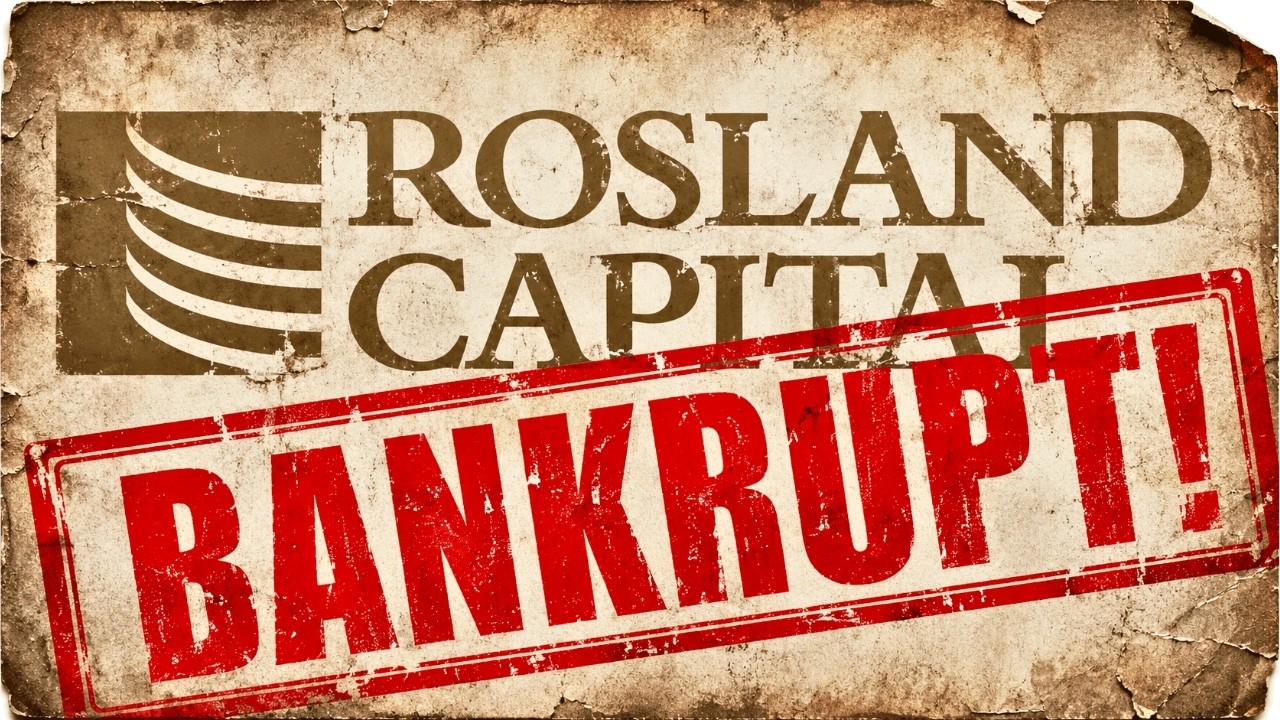
Last week’s bankruptcy filing by Rosland Capital – one of the industry’s most heavily advertised names, familiar through its Fox News commercials featuring William Devane – is another powerful reminder of why.
What Happened at Rosland Capital
Last week, Rosland Capital filed for Chapter 11 bankruptcy following years of mounting financial problems. According to sworn court filings submitted by the company’s newly appointed Chief Restructuring Officer, Rosland dismissed nearly all its employees last month and hopes to liquidate its business under court supervision.
According to the filing, some 617 customers are owed at least $60 million in undelivered orders and repurchase obligations.
For years, Rosland had achieved decent revenues. According to the bankruptcy declaration, annual sales exceeded $150 million in 2021 and remained near $100 million even through 2025.
And since it often sold supposedly “rare” or special coins at extremely high markups and paid huge commissions (15% to 35%) to its high-pressure sales team, it generated gross margins ranging from approximately 18% to 9%.
But the last year the company turned a profit was in 2021, after which profitability steadily deteriorated. The company lost $24 million between 2022 and 2025 – and $3.2 million so far this year.
With a capital deficit now greater than $60 million, Rosland apparently wasn’t purchasing and paying for the metals it sold until months after customers placed their orders.
According to the bankruptcy petition, when gold continued rising in recent years, Rosland often found itself paying substantially more for replacement inventory than customers had originally paid.
This suggests Rosland didn’t even offset its price exposure through hedging or other risk-management practices.
The filing also states that the company is the subject of a Securities and Exchange Commission (SEC) investigation concerning its precious-metals IRA business and that the New York Attorney General has been investigating the company’s sales practices as well.
Perhaps the most startling statement appears later in the declaration.
According to the Chief Restructuring Officer: “The Debtor no longer possesses any inventory of precious metals, coins, or bullion…”
Instead, he says the company’s principal remaining asset consists largely of its customer lists, marketing records, and related customer information, which it hopes to sell through the bankruptcy process. This adds insult to injury for customers who entrusted the company not only with their purchases, but also with their personal information.
Why We Constantly Warn About This Business Model
Longtime Money Metals customers may recognize something familiar.
Among countless articles and investor education guides we’ve published on this topic was Five Traps to Avoid When Buying and Holding Precious Metals.
The first trap we warned about was television celebrity precious-metals dealers – not because of the celebrities themselves, but because of the economics behind the business model.
National television advertising, celebrity endorsements, lead-generation campaigns, and large commissioned sales forces are expensive. Those costs must be recovered somehow.
In most cases, they’re funded by selling high-premium collectible or semi-numismatic coins carrying markups far above their bullion value. Investors frequently believe they’re simply buying gold or silver when they’re paying thousands more than necessary (Indeed, a quick perusal of Rosland’s website, still online, shows a wide variety of nonsense custom gold and silver products that are heavily pushed rather than standard bullion items).
What’s particularly amazing is that despite charging excessive markups of 50%, 100%, or more, many of these firms nevertheless couldn’t even deliver the actual metals customers purchased.
Rosland Capital is only the latest blowup. Regal Assets, Red Rock Secured, Chase Metals, Oxford Gold Group, Safeguard Metals, and Merit Gold are among the others.
Why Money Metals Took an Entirely Different Path
Money Metals wasn’t created to imitate that model. It was created because of it.
Following the 2008 financial crisis, Stefan Gleason, Mike Gleason, and Clint Siegner founded Money Metals to challenge an industry increasingly dominated by aggressive telemarketing, opaque pricing, phony collectibles, and excessive markups. We believe investors deserve transparent pricing, competitively priced bullion, and education—not pressure.
We believe informed customers make the best customers. That philosophy was a bedrock of our foundation and continues to guide every aspect of our business today.
Rosland’s bankruptcy should serve as a reminder that investors should carefully evaluate not only the products they buy, but also the business practices of the companies from which they buy them.
A dealer’s marketing strategy, pricing philosophy, fulfillment speed, inventory management, and overall business model matter.
The lesson from Rosland’s bankruptcy isn’t that every dealer using expensive television ads or a company with a celebrity spokesman is destined to be the next scandal. Investors must understand how their dealer makes its money.
Business models built around aggressive sales tactics and “special” products carrying massive markups over the bullion spot market price create incentives that work against the customer.
That’s a lesson worth remembering long after the headlines about Rosland Capital fade away.
Stefan Gleason is President and CEO of Money Metals Exchange, the company recently named “Best Overall Online Precious Metals Dealer” by Investopedia. A graduate of the University of Florida, Gleason is a seasoned business leader, investor, political strategist, and grassroots activist. Gleason has frequently appeared on national television networks such as CNN, FoxNews, and CNBC and in hundreds of publications such as the Wall Street Journal, TheStreet, and Seeking Alpha.