Report: US War Department To Deprioritize China, Focus on Homeland and Western Hemisphere

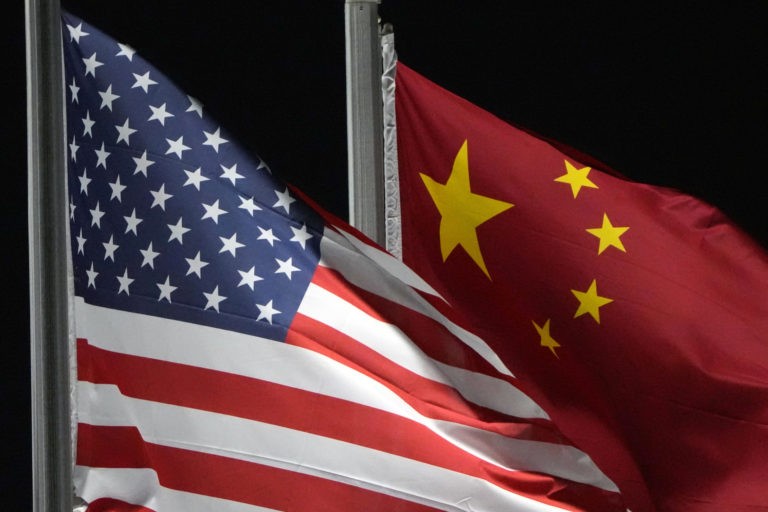
(Dave DeCamp, Antiwar.comThe newly rebranded Department of War is expected to release a National Defense Strategy that prioritizes missions in the homeland and the Western Hemisphere over countering China and Russia, a shift from the Pentagon’s policy in recent years, which has placed China as the top priority, according to a report from POLITICO.

The report said that the new NDS has been placed on the desk of Secretary of War Pete Hegseth, who could make changes to the document before it’s released. The news comes as the US military has been deploying National Guard troops in US cities and has sent an armada of warships near Venezuela in the Caribbean, where it recently bombed a boat allegedly carrying drugs.

The POLITICO report said the new NDS was drafted by Elbridge Colby, the Pentagon’s policy chief, who has a long history of urging the US to prioritize China and prepare for war over Taiwan despite the risk of nuclear war.

Colby also drafted the 2018 NDS, which outlined the shift away from counterterrorism in the Middle East to countering China and Russia. Colby’s 2021 book “The Strategy of Denial” argued that the US should scale back elsewhere to focus its military on denying China the ability to seize Taiwan.

In 2024, Colby wrote an op-ed in The Wall Street Journal, suggesting that if a significant change were not made, it might be too late for the US and Taiwan to build up the capabilities to fend off a Chinese invasion. “I haven’t yet given up hope, but the US and Taiwan must dramatically change course, or we won’t have a real option to defend the island,” he wrote.

The 2022 NDS released by the Biden administration labeled China as the top priority, and since then, the Pentagon has referred to China as the “pacing threat.” US military leaders have spoken openly about the fact that the US has been preparing for a war with China over Taiwan.

A new NDS that de-prioritizes China doesn’t mean that the US will slow its military buildup in the Asia Pacific, since China is still expected to be the top priority outside of the Western Hemisphere. Colby is also overseeing the Pentagon’s Global Posture Review, which could lead to US troop reductions in Europe and the Middle East, potentially allowing more troops to be deployed to Latin America and Asia.

This article originally appeared at Antiwar.com.


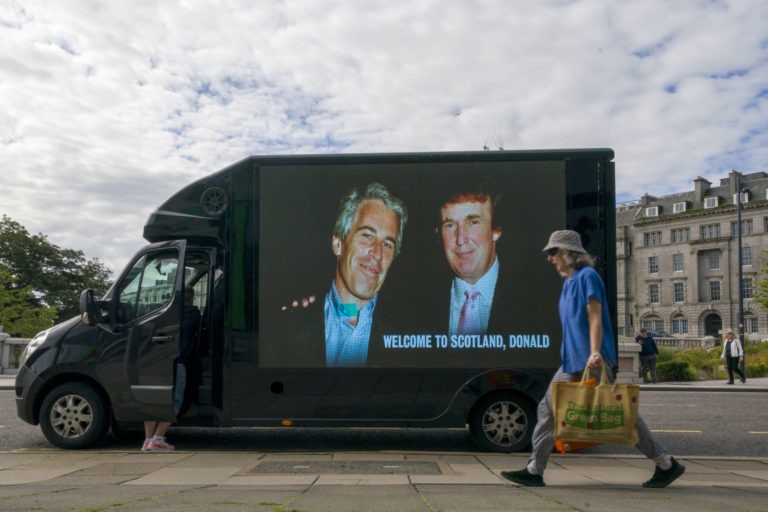
Trump Note to Epstein, Which He Denies Writing, is Released by Congress

(Headline USADemocrats on the House Oversight Committee released on Monday a sexually suggestive letter to Jeffrey Epstein purportedly signed by President Donald Trump, which he has denied.

The letter was included as part of a 50th birthday album compiled in 2003 for Epstein, a wealthy and well-connected financier who was once a friend of Trump’s. The full House committee on Monday night released a copy of the entire album, which bore names of some other prominent figures such as former President Bill Clinton and attorney Alan Dershowitz in a “friends” section, and included other letters with sexually provocative language.

Trump has said he did not write the letter or create the drawing of a curvaceous woman that surrounds the letter, and he filed a $10 billion lawsuit against The Wall Street Journal for earlier reporting on his link to the letter.

“As I have said all along, it’s very clear President Trump did not draw this picture, and he did not sign it,” White House press secretary Karoline Leavitt said in a statement posted on X. “President Trump’s legal team will continue to aggressively pursue litigation.”

White House deputy chief of staff Taylor Budowich posted various pictures on X of Trump’s signature over the years and wrote, “it’s not his signature.”

As House Republicans left the Capitol on Monday night, many waved off questions about the letter, echoing a similar theme.

“It’s not his signature. I’ve seen Donald Trump sign a million things,” said Rep. Byron Donalds of Florida.

Rep. Thomas Massie, who is leading a bipartisan push for a House vote to force the Justice Department to release its Epstein files, downplayed the letter’s relevance entirely.

“It doesn’t prove anything. Having a birthday card from Trump doesn’t help the survivors and the victims,” Massie said.

The release of the drawing comes as the president has for months faced increasing pressure to force more disclosure in the case of Epstein and his former girlfriend and accomplice, Ghislaine Maxwell. Epstein was accused of paying underage girls hundreds of dollars in cash for massages and then molesting them, while Maxwell was convicted of luring teenage girls to be sexually abused by him.

It also once again puts a spotlight on Trump’s former friendship with Epstein, which the president has said ended two decades ago after a falling-out. Trump said recently that he cut ties with Epstein because he “stole” young women — including Virginia Giuffre, who was among Epstein’s most well-known sex trafficking accusers — who worked for the spa at his Mar-a-Lago resort.

The case against Epstein was brought more than a decade after he secretly cut a deal with federal prosecutors in Florida to dispose of nearly identical allegations. Trump had suggested during the presidential campaign that he’d seek to open the government’s files into Epstein, but much of what the government has released so far had already been out there.

Democrats on the House Oversight Committee received a copy of the birthday album on Monday as part of a batch of documents from Epstein’s estate.

Trump has denied writing the letter and creating the drawing, calling The Wall Street Journal report on it “false, malicious, and defamatory.”

“These are not my words, not the way I talk. Also, I don’t draw pictures,” Trump said.

The letter released by the committee looks exactly as described by The Wall Street Journal in its report.

The letter bearing Trump’s name and what appears to be his signature includes text framed by a hand-drawn outline of a curvaceous woman.

“A pal is a wonderful thing. Happy Birthday — and may every day be another wonderful secret,” the letter says.

The letter’s disclosure comes amid a bipartisan push in Congress for the release of the so-called Epstein files amid years of speculation and conspiracy theories. Calls for the release of the records came from Republicans, including Vice President JD Vance, before he was sworn into the country’s No. 2 position.

The Justice Department in August began turning over records from the Epstein sex trafficking investigation to the House Oversight Committee.

The committee subpoenaed the Epstein estate for documents last month. In addition to the birthday book, lawmakers requested Epstein’s last will and testament, agreements he signed with prosecutors, his contact books, and his financial transactions and holdings.

Adapted from reporting by the Associated Press


Alleged Would-be Trump Assassin Apologizes to Potential Jurors on Day 1

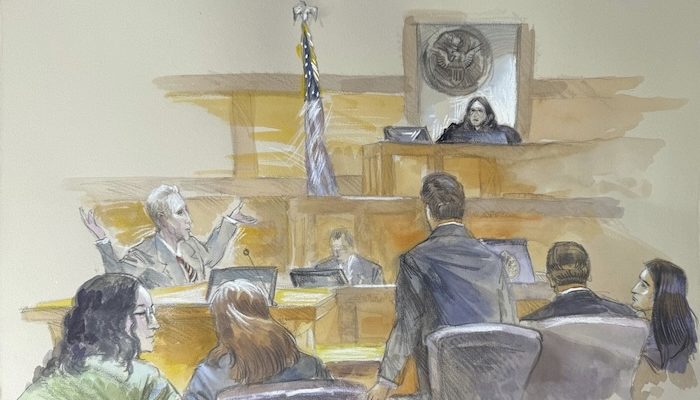
(Headline USAThe man charged with trying to assassinate Donald Trump while he played golf last year in South Florida stood before a group of potential jurors in a Florida courtroom on Monday and said he was “sorry for bringing you all in here.”

Ryan Routh, wearing a gray sports coat, red tie with white stripes and khaki slacks, is representing himself in the trial that began with jury selection on Monday in the federal courthouse in Fort Pierce, Florida.

“Thank you for being here,” Routh told the first group of 60 jurors who were brought into the courtroom after U.S. District Judge Aileen Cannon introduced prosecutors and Routh to the panel.

Cannon signed off on Routh’s request to represent himself but said court-appointed attorneys needed to remain as standby counsel.

During a hearing earlier to go over questions that would be asked of jurors, Routh was partially shackled. But he did not appear to be restrained when the first of three batches of 60 potential jurors were brought into the courtroom on Monday afternoon.

Cannon dismissed the questions Routh wanted to ask jurors as irrelevant earlier Monday. They included asking jurors about their views on Gaza, the talk of the U.S. acquiring Greenland and what they would do if they were driving and saw a turtle in the road.

The judge approved most of the other questions for jurors submitted by prosecutors.

The panel of 120 potential jurors filled out questionnaires on Monday morning and the first group was brought into the courtroom during the afternoon session. The judge inquired about any hardships that would prevent them from sitting as jurors during a weeks-long trial. Twenty-seven noted hardships and the judge dismissed 20 of them on Monday.

The other two groups of jurors will return to the courtroom on Tuesday morning for similar questioning. Those who are not dismissed will then return at 2 p.m. Tuesday for further questioning about the case and their views.

The court has blocked off four weeks for Routh’s trial, but attorneys are expecting they’ll need less time.

Jury selection was expected to take three days in an effort to find 12 jurors and four alternates. Opening statements were scheduled to begin Thursday, and prosecutors will begin their case immediately after that.

Cannon told Routh last week that he would be allowed to use a podium while speaking to the jury or questioning witnesses, but he would not have free rein of the courtroom.

Cannon is a Trump-appointed judge who drew scrutiny for her handling of a criminal case accusing Trump of illegally storing classified documents at his Mar-a-Lago estate in Palm Beach. The case became mired in delays as motions piled up over months, and was ultimately dismissed by Cannon last year after she concluded that the special counsel tapped by the Justice Department to investigate Trump was illegally appointed.

Routh’s trial begins nearly a year after prosecutors say a U.S. Secret Service agent thwarted Routh’s attempt to shoot the Republican presidential nominee. Routh, 59, has pleaded not guilty to charges of attempting to assassinate a major presidential candidate, assaulting a federal officer and several firearm violations.

Prosecutors have said Routh methodically plotted to kill Trump for weeks before aiming a rifle through the shrubbery as Trump played golf on Sept. 15, 2024, at his West Palm Beach country club. A Secret Service agent spotted Routh before Trump came into view. Officials said Routh aimed his rifle at the agent, who opened fire, causing Routh to drop his weapon and flee without firing a shot.

Law enforcement obtained help from a witness who prosecutors said informed officers that he saw a person fleeing. The witness was then flown in a police helicopter to a nearby interstate where Routh was arrested, and the witnesses confirmed it was the person he had seen, prosecutors have said.

The judge last week unsealed the prosecutor’s 33-page list of exhibits that could be introduced as evidence at the trial. It says prosecutors have photos of Routh holding the same model of semi-automatic rifle found at Trump’s club.

Routh was a North Carolina construction worker who in recent years had moved to Hawaii. A self-styled mercenary leader, Routh spoke out to anyone who would listen about his dangerous, sometimes violent plans to insert himself into conflicts around the world, witnesses have told The Associated Press.

In the early days of the war in Ukraine, Routh tried to recruit soldiers from Afghanistan, Moldova and Taiwan to fight the Russians. In his native Greensboro, North Carolina, he was arrested in 2002 for eluding a traffic stop and barricading himself from officers with a fully automatic machine gun and a “weapon of mass destruction,” which turned out to be an explosive with a 10-inch fuse.

In 2010, police searched a warehouse Routh owned and found more than 100 stolen items, from power tools and building supplies to kayaks and spa tubs. In both felony cases, judges gave Routh either probation or a suspended sentence.

In addition to the federal charges, Routh also has pleaded not guilty to state charges of terrorism and attempted murder.

Adapted from reporting by the Associated Press


Headline Rewind: Our Biggest Scoops from the Week September 1-7

(José Niño, Headline USA)  Watch Headline USA’s video breakdown of our best stories from last week, and find the time stamps and links below:

0:20: Homeless Man Who Stabbed Woman to Death on Charlotte Train May Not Stand Trial

Homeless Man Who Stabbed Woman to Death on Charlotte Train May Not Stand Trial

1:30: Speaker Johnson: Trump Was an FBI Informant Who Helped Take Down Jeffrey Epstein

Speaker Johnson: Trump Was an FBI Informant Who Helped Take Down Jeffrey Epstein


2:20: Secret Service Snipers Didn’t Meet Requalification Requirements in 2024

Secret Service Snipers Didn’t Meet Requalification Requirements in 2024

3:00: Alleged Would-be Trump Assassin Wanted Witness to Testify That He Refused to Spank Her

Alleged Would-be Trump Assassin Wanted Witness to Testify That He Refused to Spank Her

4:10: Conservative Influencers Exposed for Disseminating Pro-India Talking Points

Conservative Influencers Exposed for Disseminating Pro-India Talking Points

José Niño is the deputy editor of Headline USA. Follow him at x.com/JoseAlNino 

Boston Facing Mass Deportations under ‘Operation Patriot 2.0’

(The Center Square) Noncitizens in Massachusetts with prior arrests face escalating deportations under the Trump administration’s Operation Patriot 2.0.

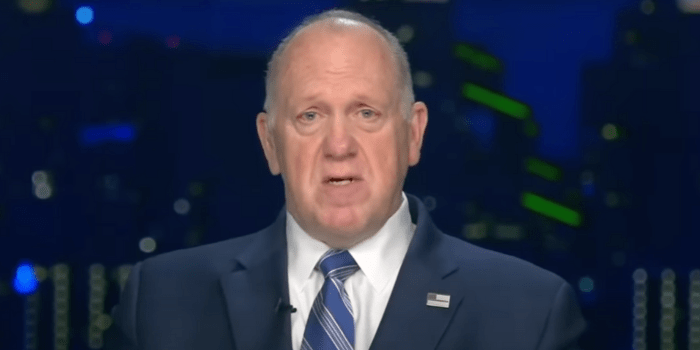
Modeled after its first round of mass roundups earlier this summer – particularly in sanctuary cities like Boston, New York and Los Angeles – Border Czar Tom Homan doubled down on his efforts to reduce migrant populations in blue states.

Homan said during an address for the State Freedom Caucus Foundation, that 70% of ICE arrests have been of migrants with violent criminal histories, while the rest are national security threats, and to a smaller degree, people who have broken immigration laws without any other crimes committed – technically.

“Where do we arrest most noncriminal nontargets? In sanctuary cities,” Homan told the crowd. “And why is that? Because they won’t give us the bad guy in the jail. They release them back into the community, which means now we have to go the community and find that person.

“And when we find them, many times they are with others. Others are in the country illegally but are not a criminal target, but guess what? They’re coming too.”

Last month, Boston’s liberal immigration policy landed it on the federal government’s updated list of sanctuary jurisdictions.

The designation means the state “impedes enforcement of federal immigration laws.” It’s the only Massachusetts jurisdiction cited by the Department of Justice.

However, according to the Center for Immigration Studies, the Bay State is one of a dozen sanctuary states, alongside five of its Northeast neighbors: New York, New Jersey, Connecticut, Rhode Island and Vermont.

The release says the executive order of second-term Republican President Donald Trump – Protecting American Communities from Criminal Aliens – requires the publishing of the list of state and local jurisdictions that obstruct enforcement of federal immigration law.

The same day Boston made the list, ICE announced the arrest of Manuel Umana Solorzano, an undocumented immigrant from El Salvador, for possession of child pornography, indecent assault of a minor under 14, statutory rape of a child, among other charges.

He was apprehended in Milford, about 40 miles southwest of Boston.

Homan over the weekend pointed to the broader trend, noting the “contradiction,” he said.

“So sanctuary cities,” he said, “you think they are hurting us? Sanctuary cities are cities for criminals, first of all. All we want is access to the jail, where you lock people up in a jail cell. You locked them up, apparently as a public safety threat, in a jail cell. He’s in the country illegally, let us have them when you’re done with them.”

US Troops in Southern Somalia Come Under ‘Indirect Fire’

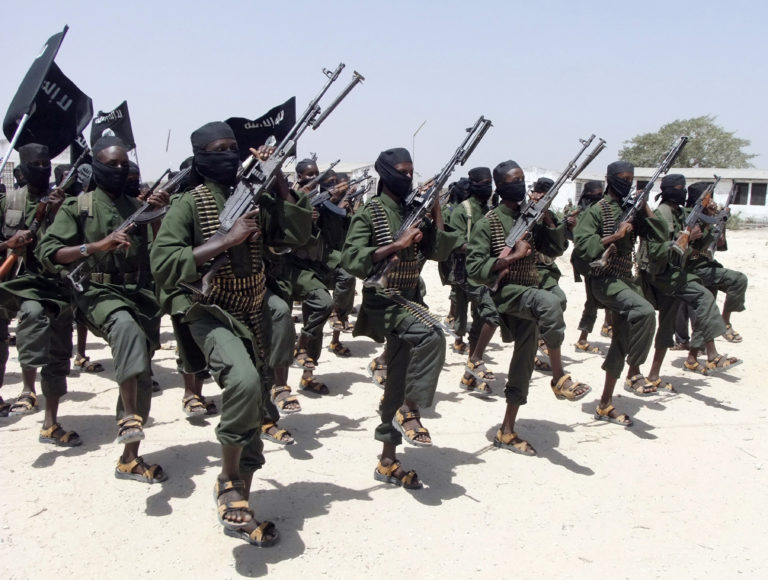
(Dave DeCamp, Antiwar.comUS troops and allied forces in Kismayo, southern Somalia, came under “indirect fire” on September 4, US Africa Command said in a press release.

The press release came after al-Shabaab said it attacked Kismayo’s airport, where US personnel are based, according to Somali media. Al-Shabaab claimed that it killed and wounded American troops, but AFRICOM denied that there were any casualties.

“There were no US or partner force injuries or casualties as a result of the attack, and no damage to the base or coalition property has been reported,” AFRICOM said. “Al-Shabaab routinely disseminates false and exaggerated claims regarding attacks to undermine public trust. These claims should be treated with skepticism.”

The US military is known to coordinate airstrikes against al-Shabaab from the base in Kismayo, which is located in Jubaland, Somalia’s southernmost region, which has a significant al-Shabaab presence. In June of this year, the US Combined Joint Task Force – Horn of Africa said US Army engineers were enhancing security at the US base in Kismayo.

While the US and al-Shabaab have been at war for nearly two decades, al-Shabaab cited US support for Israel’s genocidal war in Gaza as the reason for the attack. Back in 2020, al-Shabaab attacked a US base across the border in Kenya, killing one US soldier and two American contractors.

The attack in Kismayo comes as the US has launched a record number of airstrikes in Somalia this yearand has supported US-backed government forces and African Union troops in major battles against al-Shabaab. The US has been fighting against al-Shabaab since the group first emerged in 2007 following the US-backed Ethiopian invasion of Somalia that ousted the Islamic Courts Union, which briefly held power in Mogadishu.

This article originally appeared at Antiwar.com.

Center Square Exclusive: Secret Service Spent $11 million on Hunter Biden Travel Detail

(The Center Square) The Biden administration spent more than $10 million over three years on a security detail and related expenses for former First Son Hunter Biden after denying similar protections to other high-profile political figures, documents obtained by the Center to Advance Security in America and shared exclusively with The Center Square show.

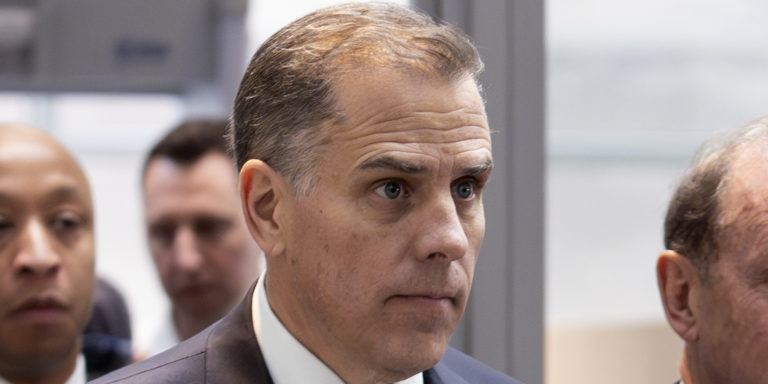
The security detail for former President Joe Biden’s son, Hunter, cost nearly $11 million, including on travel, real estate and expensive hotels, according to documents obtained through a Freedom of Information Act (FOIA) request CASA filed.

The documents from Jan. 1, 2022, to Dec. 31, 2024, indicate that the Biden administration spent nearly $9.3 million on hotels, $1.1 million on air and rail travel, and nearly $600,000 on car transportation and rentals for Hunter Biden’s Secret Service detail.

“Due to reports that Hunter Biden was playing a senior role in advising his father within the White House in 2024, CASA filed a FOIA request for information related to the taxpayer resources being spent to protect him,” CASA Director James Fitzpatrick told The Center Square in an exclusive interview. “What we found is that while the Secret Service denied protection to [then presidential candidate Robert F. Kennedy Jr.], and failed to properly protect President [Donald] Trump resulting in two assassination attempts, Hunter Biden was enjoying a robust detail wherever he traveled, including trips to Nantucket, South Africa, and the Virgin Islands.”

Nearly all costs – 95% – were incurred in California, where Hunter Biden often resided, but also were incurred on expensive trips to the Virgin Islands, Nantucket, and Santa Ynez, California.

“If the Biden Secret Service was truly low on funding and staffing as they claimed in July 2024, the American people deserve answers as to why their priorities were so grossly misaligned,” Fitzpatrick said.

According to the documents, taxpayer-funded Secret Service expenses for Hunter Biden included multiple trips to Nantucket, an exclusive island off of Cape Cod, Massachusetts.

This included several hundred thousand dollars spent for a 2022 Thanksgiving trip to Nantucket, including $10,000 on golf cart rentals, $120,000 on lodging with $740 nightly hotel rates; $120,000 on travel cards, among other expenses.

A 2023 Thanksgiving trip to Nantucket cost more than half a million dollars, including $26,000 on ferries, $10,000 on golf cart rentals, $36,000 on Salt House Nantucket lodging, $133,500 on White Elephant Hotel lodging, $198,000 on Faraway Nantucket lodging, $161k on The Beachside Hotel lodging, $60,000 on Nantucket Inn lodging, among others.

Hunter Biden reportedly stayed at the estate of Democrat Party donor Joe Kiani when visiting Nantucket. “Biden and his family have made a habit of vacationing at the homes of donors to the Democratic Party. The president and his family spent Thanksgiving together three years in a row at the Nantucket compound of private equity billionaire David Rubenstein, and rang in the New Year in 2023 at the U.S. Virgin Islands home of Democratic donors Bill and Connie Neville,” The Los Angeles Times reported.

Other trips carried hefty price tags: a New Year’s trip to St. Croix cost $372,000 for real estate property and $372,000 for travel cards, according to the documents.

Multiple trip costs were for Hunter Biden and Melissa Cohen, Hunter’s wife. They include:

  • $18,000 for a two-day trip to Santa Barbara;
  • $10,000 for one night in Arlington, Virginia;
  • more than $170,000 for a two-day trip to Wilmington, Delaware;
  • more than $250,000 on 13 hotels for a Biden family and Cohen day trip to New York City;
  • nearly $650,000 for a trip to Santa Ynex, Calif, for six hotels.

During the Biden administration, CASA recognized “a significant departure from the typical norms surrounding Secret Service protection coverage,” Fitzpatrick told The Center Square, which prompted his FOIA request. CASA, a nonpartisan organization, is dedicated to improving the safety and security of Americans.

Many also raised concerns about Biden administration policies. During the 2024 election season, the Biden administration denied former Democratic presidential candidate Kennedy secret service protection when he was running for president even though both his father and uncle were assassinated. Since then, extensive failures have been uncovered by congressional investigations regarding Secret Service protections, or lack thereof, for Trump, including during two assassination attempts made on his life.

A recent inspector general report highlights even more extensive failures. These include chronic understaffing of Secret Service counter snipers; agents working the equivalent of an additional 24 full-time employees’ workload each year in overtime; and agents missing mandatory weapons requalification testing.

CASA filed the FOIA request in June under the Trump administration and requested records within specific timeframes for resources, expenditures and other information related to travel and security detail for Hunter Biden.


Report: Jeffrey Epstein Offered to Influence Obama to Make JP Morgan CEO His Treasury Secretary

(Ken Silva, Headline USA) The New York Times published on Monday a deep dive into deceased sex offender Jeffrey Epstein’s relationship with JPMorgan Chase, revealing new details about how Epstein did business with the country’s largest bank.

According to the Times, Epstein paid JP Morgan millions of dollars in fees, making him one of the bank’s most lucrative clients. Epstein, in turn, received millions of dollars from the bank by facilitating deals. Additionally, he referred numerous potential clients, including Google co-founder Sergey Brin and Israeli Prime Minister Benjamin Netanyahu. Those facts may explain why the bank ignored the fact that Epstein was withdrawing millions of dollars in cash, which was reportedly used to procure young women and girls for his sexual desires.

Along with those details, the Times also reported Monday that Epstein offered to use his influence to make JP Morgan CEO Jamie Dimon the Obama administration’s treasury secretary in 2008.

“A rumor was circulating that Dimon might become the Treasury secretary in the Obama administration — in which case Staley would be a prime contender to succeed him as chief executive. Staley emailed Epstein about Dimon’s status. Epstein responded, ‘We can help push Obama,’” the Times reported.

The Times didn’t report additional details on Epstein’s offer. Dimon was not made treasury secretary, and the Times downplayed Epstein’s potential influence on the administration.

“Epstein was a master manipulator who sometimes exaggerated or lied about his access and power. It is not clear whether he had sway with officials in Barack Obama’s inner circle at the time, though he and a top Obama economic adviser, Lawrence Summers, were friendly,” the newspaper reported.

The Times did not report the fact that Epstein was also close with at least one other Obama official: Kathryn Ruemmler, who was Obama’s White House counsel from 2011 to 2014—years after Epstein offered to lobby for Dimon.

The Obama administration wasn’t the only government Epstein tried to influence. He also pitched former JP Morgan and Barclays executive Jes Staley on becoming the treasury security during the first Trump administration.

According to the Wall Street Journal, Epstein emailed Staley’s daughter, Alexa Staley, in the fall of 2016 to offer his father a potential gig as treasury secretary.

“Spoke with him. He said not yet, but thanks,” Alexa reportedly replied.

Meanwhile, Dimon was also reportedly considered to be the second Trump administration’s treasury secretary earlier this year.

Ken Silva is the editor of Headline USA. Follow him at x.com/jd_cashless.

ETFs Continue to Pile in Gold

(Mike Maharrey, Money Metals News Service) For the third straight month, gold flowed into ETFs globally, led by North American and European funds.

This continues the general trend this year. Gold inflows into ETFs through the first half of 2025 hit levels not seen since the pandemic.

In August, ETFs globally added 53 tonnes of gold totaling about $5.5 billion, according to the latest data compiled by the World Gold Council.

Assets under management (AUM) by ETFs globally closed at another month-end peak and is now just 6 percent below the all-time high reached during the pandemic.

Between August’s metal inflows and the increasing gold price, AUM rose by 5 percent last month to $407 billion, a new month-end record.

Year-to-date ETF gold inflows of $47 billion are the second-strongest on record, behind only the record set in 2020.

North American funds led the way, adding 37.1 tonnes of gold valued at $5.5 billion.

According to the World Gold Council, demand was driven by persistent trade risk, the consensus short dollar trade that reduced the opportunity cost of holding gold, and lower interest rate expectations after Jerome Powell delivered a dovish speech in Jackson Hole.

Powell’s remarks were particularly influential. There was a quick reversal of gold outflows after the speech.

According to the World Gold Council, low-cost gold-backed ETFs are having their best year on record in North America. These funds are often viewed as a proxy for long-term strategic positioning.

“We consider this to be a signal that – beyond short-term market noise – investors are steadily building safe-haven allocations in response to a backdrop of elevated risks.”

European funds also charted a solid month in August, adding 20.8 tonnes of gold valued at $1.9 billion. Funds based in the UK, Switzerland, and Germany led the surge.

High tariffs levied on Switzerland by the U.S. drove safe-haven investing and boosted gold demand.

German fund growth also reflected safe-haven buying. Analysts revised Q2 economic growth down further, and there are increasing worries about a looming recession.

In the UK, there are growing stagflation concerns as inflation has heated up.

Asian funds saw outflows of -4.7 tonnes in August. Equity strength in China drove a rotation out of safe-haven assets into stocks. The CSI300 Stock Index jumped 10 percent in August.

In contrast, Indian funds recorded their fourth consecutive monthly gold inflows, supported by elevated safe-haven buying in the midst of weak equities as well as ongoing global trade and geopolitical risks.

Funds in other regions, including Africa and Australia, reported modest outflows of -0.2 tonnes.

ETFs are a convenient way for investors to play the gold market, but owning ETF shares is not the same as holding physical gold.

ETFs are relatively liquid. You can buy or sell an ETF with a couple of mouse clicks. You don’t have to worry about transporting or storing metal. In a nutshell, it allows investors to play the gold market without buying full ounces of metal at the spot price.

Since you are just buying a number in a computer, you can easily trade your ETF shares for another stock or cash whenever you want, even multiple times on the same day. Many speculative investors take advantage of this liquidity.

But while a gold ETF is a convenient way to play the price of gold on the market, you don’t actually possess any gold. You have paper. And you don’t know for sure that the fund has all the gold either, especially when the fund sees inflows. In such a scenario, there have been difficulties or delays in obtaining physical metal.

Gold Trading Volumes

Gold trading volumes were broadly unchanged in August, averaging $290 billion per day. That was a modest 2 percent lower month-on-month.

The minor decline was led by a 17 percent month-on-month decline in exchange-traded volumes, as both the COMEX and the Shanghai Futures Exchange cooled. Even so, the average trading volume of $114 billion per day remains above the 2024 average.

Conversely, over-the-counter trading increased by 12 percent over July.

Total net longs on the COMEX fell by 3.4 percent in August, ending the month at 652 tonnes, even as money manager net longs rose 3.7 percent to 461 tonnes.


Mike Maharrey is a journalist and market analyst for Money Metals with over a decade of experience in precious metals. He holds a BS in accounting from the University of Kentucky and a BA in journalism from the University of South Florida.

US Considers Bombing Venezuela as It Deploys F-35 Fighter Jets to Puerto Rico

(Dave DeCamp, Antiwar.comThe Trump administration is considering multiple options for launching military strikes against alleged drug cartels in Venezuela, including hitting targets that could weaken Venezuelan President Nicolas Maduro, as it is deploying F-35 fighter jets to Puerto Rico, CNN has reported.

US officials told CNN that the US bombing of a boat near Venezuela last week was just the beginning of a much larger effort against drug trafficking that could lead to the ouster of Maduro. US officials claim the pressure on Venezuela and Maduro is about drug trafficking and a response to overdose deaths in the US, but fentanyl doesn’t come from or through Venezuela, and the majority of the cocaine that is transported to the US comes through the Pacific, not the Caribbean.

Regardless of the details, the US has labeled Maduro a “narcoterrorist” and increased the bounty on his head to $50 million over allegations of involvement in drug trafficking. On Friday, Trump downplayed the idea of regime change in Venezuela, saying, “We’re not talking about that. But we are talking about the fact that [Venezuela] had an election, which was a very strange election, to put it mildly.”

But on Sunday, Trump was asked about the possibility of targeting “cartels” in Venezuela and said, “Well, you’re going to find out.” Any US strikes on Venezuelan territory could lead to retaliation from Venezuela’s military, which would turn into a full-blown war.

The US deployed F-35s to Puerto Rico after it claimed that two Venezuelan F-16 fighter jets flew over a US Navy vessel. The Department of Defense, now known as the Department of War, said in a press release that the Venezuelan flight was “provocative” despite the fact that the US deployed a large number of naval vessels near Venezuela’s coast.

“The cartel running Venezuela is strongly advised not to pursue any further effort to obstruct, deter, or interfere with counter-narcotics and counter-terror operations carried out by the US military,” the Department of War said.

The policy toward Venezuela is largely being driven by Secretary of State Marco Rubio, who has long wanted regime change in Venezuela. In 2019, during the first Trump administration’s attempt at ousting Maduro, Rubio shared a photo on Twitter of former Libyan leader Muammar Gaddafi in the moment he was being brutally murdered in an apparent threat to Maduro.

The new pressure on Venezuela comes after Maduro’s government has been cooperative with the US on deportations, and after the Trump administration began allowing Chevron to resume oil operations in Venezuela. According to the CNN report, US and Venezuelan officials continue to coordinate on deportations despite the current tensions.

This article originally appeared at Antiwar.com.