Appeals Court Upholds E. Jean Carroll’s $83.3 Million Judgment against Trump

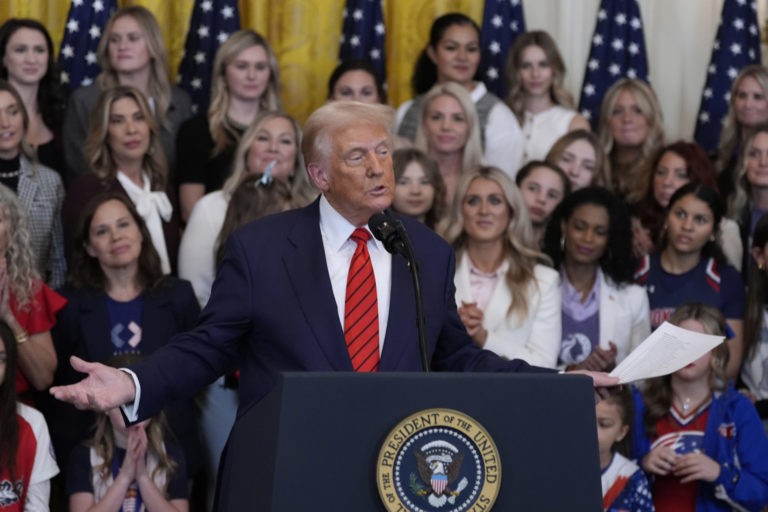
(Headline USAA federal appeals court has upheld a civil jury’s finding that President Donald Trump must pay $83.3 million to E. Jean Carroll for his repeated social media attacks against the longtime advice columnist after she accused him of sexual assault—even though a jury ruled that she lied about her rape allegations.

Carroll, whose advice column ran in the women’s magazine Elle from 1993 to 2019, has reportedly accused at least six prior men of raping her, including former CBS President Les Moonves. Her bizarre social-media history also included posts making light of sexual trauma and even asking her followers if they found Trump sexually attractive. Trump was prevented from submitting that evidence in his trial.

Despite her dubious track record, on Monday the 2nd U.S. Circuit Court of Appeals rejected Trump’s appeal of the defamation award, finding that the “jury’s damages awards are fair and reasonable.”

Trump had argued that he should not have to pay the sum as a result of a Supreme Court decision expanding presidential immunity. His lawyers had asked for a new trial.

A civil jury in Manhattan issued the $88.3 million award last year following a trial that centered on Trump’s repeated social media attacks against Carroll over her claims that he sexually assaulted her in a Manhattan department store in 1996.

That award followed a separate trial, in which Trump was found liable for sexually abusing Carroll and ordered to pay $5 million. That award was upheld by an appeals court last December.

In a memoir, and again at a 2023 trial, Carroll described how a chance encounter with Trump at Bergdorf Goodman’s Fifth Avenue in 1996 started with the two flirting as they shopped, then ended with a violent struggle inside a dressing room.

Carroll said Trump slammed her against a dressing room wall, pulled down her tights and forced himself on her.

A jury found Trump liable for sexual assault, but concluded he hadn’t committed rape, as defined under New York law.

Trump repeatedly denied that the encounter took place and accused Carroll of making it up to help sell her book.

He also said that Carroll was “not my type.”

Adapted from reporting by the Associated Press


Wealthy Asian Families Are Diving Into the Gold Market

(Mike Maharrey, Money Metals News Service) With the price of gold at record highs and demand surging in Asia, many ultra-wealthy families are embracing a 19th-century model and jumping into the gold business, taking on the role of bullion traders, financing, shipping, and flipping gold without the middlemen.

The Business Times highlighted Cavendish Investment as an example of this trend. It is a multi-family office run by the former chair of a Hong Kong jewelry company. This year, the company allocated about one-third of its portfolio to physical gold trade. As the Times put it, Cavendish has gone “a step beyond index trackers and vault holdings.

The company sources gold from small mines in Kenya and other African countries. It then flies the ore to Hong Kong, where they refine it and sell it at market prices to wealthy clients throughout Asia.

“If this sounds like a 19th-century trading house, that’s about right,” the Times observed.

This is not a business for the meek. Trading unrefined gold comes with a high level of risk. Players need to have a deep understanding of the market and have strong connections with other actors in the market.

When you absolutely know what you are doing, it’s mechanical and very lucrative,” Gold broker Patrick Tuohy said.

“But there is an enormous gap between not knowing exactly what you are doing and having a working process that’s tried and tested. And that lack of experience can cost you thousands, if not millions, of U.S. dollars.”

However, with a strong network in place, there is significant profit potential. Cavendish reports 5 to 10 percent premiums on each round-trip shipment.

Asian investors have historically turned to gold as a hedge against riskier trades, but with elevated levels of geopolitical tension, inflation worries, and monetary malfeasance have pushed demand for gold has been pushed even higher.

Asian investors, along with central bank gold buying, have been the primary drivers during the early stages of this gold bull market.

Bar and coin demand was up by 11 percent globally through the first half of 2025, rising to 582 tonnes, with Chinese and Indian investors leading the way.

Chinese bar and coin demand grew by 44 percent year-on-year in H1. Chinese investors snapped up 115 tonnes of gold bars and coins in the second quarter alone. It was the strongest H1 for physical gold buying since 2013.

According to the Times, wealthy Asian investors have shown “a strong appetite” for the yellow metal. Hong Kong-based investors have more than doubled their allocations to gold this year. There was also a dramatic increase in mainland China, with gold making up an average of 15 percent of wealthy investor portfolios. That was up from 7 percent just one year ago.

India bar and coin demand grew by 7 percent through the first half of the year.

Meanwhile, Americans continued to sell their gold. Year-on-year bar and coin sales plummeted by 53 percent in H1. Demand in the second quarter was only 9 tonnes, the lowest quarterly level since Q4 2019.

Precious metals broker Joshua Rotbart said, “Asian families understand gold more intimately than Western families because it’s been part of the culture for so long. They know they need to make this investment as a business.

Asian investors seem to intuitively understand that gold is sound money. Gold broker Tuohy told the Times, “Anywhere you go in Asia, everyone buys gold in much larger proportions than they do in the West.

“People hold gold because they know they can always liquidate it on a rainy day.”

Some wealthy families are doing just that. They’re using their gold holdings as liquidity to purchase other assets, including real estate and equities.

There is also a growing number of wealthy Asian families leasing their gold. According to the Times, billionaire families in the UAE and Hong Kong are earning 3 to 4 percent by loaning their physical bullion to jewelers. This allows gold investors to earn yield on top of the rapid price appreciation of the metal.

“They are turning a safe-haven asset into a quietly compounding cash machine.”

Additionally, some savvy Asian investors are buying discounted bars in Dubai and then flipping them in Hong Kong, where demand is red hot, and people are paying a premium to get their hands on physical metal.

Dollar weakness is giving Asian gold investors a boost. As the Times described it, “The U.S. dollar has been wobbling under the weight of a ballooning U.S. debt deficit and potential interest rate cuts from the Federal Reserve.”

This boosts gold’s safe-haven appeal and makes the metal priced in dollars for Asian buyers.

Hong Kong has currency issues of its own. A gold mining executive told the Times that the hedge against the Hong Kong dollar is getting physical metal.

Looking ahead, analysts think the red-hot market could cool somewhat as higher prices weigh on demand. However, another increase in geopolitical uncertainty surrounding the U.S. midterm elections could boost demand again.


Mike Maharrey is a journalist and market analyst for Money Metals with over a decade of experience in precious metals. He holds a BS in accounting from the University of Kentucky and a BA in journalism from the University of South Florida.


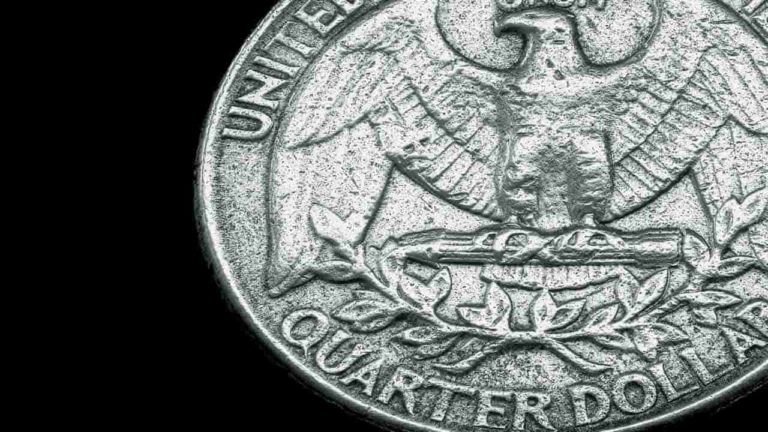
90% U.S. Coins: The Best Way to Buy Silver Right Now

(Clint Siegner, Money Metals News Service) Bid and ask premiums for 90% silver U.S. coins are perhaps the most volatile of any among retail bullion products. At the recent peak of retail buying demand in 2023, ask premiums for these older, circulated dimes, quarters, and half dollars went north of $15/oz over spot.

Today, dealer inventories are overflowing, and those ask premiums are south of $1/oz.

For people planning to buy silver, those coins are worth a look. There are a few good reasons to own some 90% silver, sometimes referred to as “junk” silver, or pre-1965 silver.

The best reason is the simplest. These coins are the cheapest way to buy silver at the moment. Investors can hardly go wrong buying at the lowest possible price per ounce.

Another reason is that low premiums present an interesting opportunity to speculate on the premiums in addition to the metal itself. If and when there is another big surge in buying demand for these coins, premiums will invariably be higher.

Some savvy investors took advantage when premiums were sky high in 2022 and 2023.

They sold the 90% silver coins for as much as $9/oz in bid premium. They turned around and bought lower premium silver, such as 100 oz or 1000 oz bars – increasing the number of ounces in their holding.

Silver dimesquarters, and half-dollars might also help investors mitigate the risk of a correction in silver prices. Right now, premiums are low because surging silver prices have resulted in more selling than buying. If there is a correction in the price, we are likely to see that trend reverse.

The premiums on 90% silver are traditionally the quickest to bounce when demand outstrips supply. The silver price rose and fell during the COVID years. Rising premiums offset some or all of the drops in the metal’s price during that time period.

It’s also worth considering that the supply of 90% silver U.S. coins only shrinks over time. The U.S. Mint made the last of those coins in 1964.

In recent months, these coins have been shipped to refiners to be melted. The silver can be converted into 1000 oz bars and sold at a profit.

The shrinking stock of these coins means there is an upward pressure on premiums over time – particularly when silver buying demand is strong.

Store with Money Money Metals: State of the Art Security, Lowest Fees, Insured and Isolated | Learn More Here

These coins will always be popular when people are buying silver. They are official, government-issued, and that inspires trust. And they come in small units, which appeals to buyers who want something suitable for barter in their stash.

A silver dime, for example, is worth a little over $3. That could be the right size to trade for a gallon of milk or a loaf of bread, should the paper dollar collapse.

Investors just need to know that 90% coins are often not beautiful. Many of the coins in a bag will be quite worn, and others may be tarnished. Most other coins, rounds, and bars will look like newly minted silver. The aesthetics of 90% coins are how they earned the moniker “junk” silver.

But for most people, the silver they buy is going into their safe. They aren’t collectors, and they aren’t planning to put the coins on display. These folks will likely be quite happy they decided to buy 90% silver when premiums were so low.


Clint Siegner is a Director at Money Metals Exchange, a precious metals dealer recently named “Best in the USA” by an independent global ratings group. A graduate of Linfield College in Oregon, Siegner puts his experience in business management along with his passion for personal liberty, limited government, and honest money into the development of Money Metals’ brand and reach. This includes writing extensively on the bullion markets and their intersection with policy and world affairs.

World’s Largest Retailer Struggles to Keep Costs Down as Tariffs Hit

(Brett Rowland, The Center Square) The world’s largest retailer says it’s doing everything it can to keep prices low as its costs increase each week due to the tariffs at the center of a high-profile legal challenge.

Walmart CEO Doug McMillon told investors that the company could be forced to raise prices further due to tariff pressure.

“With regard to our U.S. pricing decisions, given tariff related cost pressures, we’re doing what we said we would do,” he said. “We’re keeping our prices as low as we can for as long as we can.”

However, not even the Arkansas-based retail giant can entirely blunt the impact of the highest tariff rates in nearly a century.

“But as we replenish inventory at post-tariff price levels, we’ve continued to see our costs increase each week, which we expect will continue into the third and fourth quarters,” McMillon said during the company’s most recent earnings call. 

Some small businesses and Democrat-led states filed suit in April challenging Trump’s tariff authority. 

Trump’s Solicitor General, D. John Sauer, asked the U.S. Supreme Court to take up the case on an expedited schedule this week. The administration fears unwinding Trump’s trade deals will lead to an “economic catastrophe.”

Trump used a 1977 law that doesn’t mention tariffs to reorder global trade through tariffs to try to give U.S. businesses an advantage in the world market. Using tariffs under the International Emergency Economic Powers Act, Trump hit nearly every nation with import duties of at least 10%. Some countries face higher rates, up to 50%.

Two lower courts have already said the 1977 International Emergency Economic Powers Act doesn’t give the president unbounded tariff authority.

Last week, the U.S. Court of Appeals for the Federal Circuit affirmed a previous lower court ruling, but said Trump’s tariffs could remain in place while the administration appeals to the U.S. Supreme Court. In the 7-4 decision, the majority said that tariff authority rests with Congress.

Sauer asked the Supreme Court to decide by Sept. 10 whether to take up the case. He also asked for “expedited consideration of the merits to the maximum extent feasible.”

Sauer’s proposed schedule – which the high court has yet to agree to – calls for briefs to be filed in the case by Oct. 20 and oral arguments set for the first week of November.

New tariffs raised $58.5 billion in revenue between January and June of this year before accounting for income and payroll tax offsets, according to an analysis of federal data from the Penn Wharton Budget Model. The study found that the average effective tariff rate increased to 9.14% in June from 2.2% in January, when Trump returned to office.

Trump has said he wants to use tariffs to restore manufacturing jobs lost to lower-wage countries in decades past, shift the tax burden away from U.S. families and pay down the national debt.

A tariff is a tax on imported goods paid by the person or company that imports the goods. The importer can absorb the cost of the tariffs or try to pass the cost on to consumers through higher prices.

Economists, businesses and some public companies have warned that tariffs could raise prices on a wide range of consumer products.


Bipartisan Group of Lawmakers Aim to Increase Migrant Physician Jobs

(Andrew Rice, The Center Square) A bipartisan group of Congressional lawmakers wants to expand a program that allows noncitizens to fill physician vacancies in rural areas of the United States that are experiencing shortages.

The Conrad 30 program provides waivers to foreign medical graduates with educational visas so they can stay in the United States and serve as medical professionals in underserved areas. Typically, foreign medical graduates must return to their home countries to practice medicine after studying in the United States.

The program is administered through different agencies in each state and admits 30 graduates in each state per year. The states place the foreign medical graduates in medically underserved areas for a minimum three year contract.

The bipartisan bill aims to expand the amount of graduates each state can admit per year based on how many waivers get approved in that state in the year before.

U.S. Reps. David Valadao, R-Calif., Brad Schneider, D-Colo., Don Bacon, R-Ill., and Mike Garcia, D-Calif., cosponsored the bipartisan legislation.

“Programs like Conrad 30 have been instrumental in helping address this gap by bringing highly trained physicians to the areas that need them most,” Valadao said

The bill would allot 35 waivers to states that use 90% of their waivers from the previous year. The bill also would allow states to get more waivers each year as demand increases.

“Expanding the Conrad 30 visa waiver program is a smart, commonsense step that both parties can support to ensure all Americans have access to quality health care, from doctors they trust, where and when they need it,” Schneider said.

The bill could be seen as a necessary move in states where the Conrad 30 program is widely used and very popular. In fiscal year 2024, 19 states reported filling all slots in the Conrad 30 program, according to data collected by 3RNET, a nonprofit that connects health professionals with jobs in rural areas.

Those states are Arizona, Arkansas, Georgia, Indiana, Connecticut, Kansas, Kentucky, Louisiana, Maine, Massachusetts, Michigan, Minnesota, Missouri, New Mexico, New York, Ohio, Oregon, Pennsylvania and South Carolina. If the bill passes, these states would be eligible for an increase in granted waivers.

In fiscal year 2024, the Conrad 30 program filled 1,010 positions for physicians across the country, according to 3RNET.

The bill also could be popular among voters. A recent poll commissioned by The Center Square found 71% of American voters said it is “very important” to increase legal pathways for immigrants who are doctors and nurses to live and work in the United States.

The American Medical Association and Association of American Medical Colleges also praised the introduction of the bill. The AAMC sent a letter of support for the bill in March.

“With the physician workforce crisis showing no signs of abating, the Conrad 30 program remains an important tool to help ensure patients, particularly in rural and underserved communities, continue to have access to physicians,” said Bruce Scott, president of the American Medical Association.

Congressional Candidates Pledge Loyalty to Trump

(Kim Jarrett, The Center Square) Four of the 11 candidates hoping to take the 7th Congressional District seat all claimed their goal was to advance President Donald Trump’s agenda if elected.

State Reps. Jody Barrett, R-Dickson, Gino Bulso, R-Brentwood, and Lee Reeves, R-Franklin, participated in the debate along with Matt Van Epps, the former commissioner of the Tennessee Department of General Services. The debate, sponsored by Americans for Prosperity’s Tennessee chapter, included only candidates who had raised $250,000.

The candidates were asked what issue they differed on with Trump.

“I wish he spent more time at West Point than Annapolis,” said Van Epps, a graduate of West Point.

“I think an area we need to continue to dive into is spending control,” he said. “Our national debt is a national security issue, that’s a real challenge.”

Bulso also gave a light-hearted answer at first, saying their difference is that Trump spends a lot of time on the golf course and he prefers to spend time on the tennis court.

“I think Trump is a generational leader, unlike we have ever seen before,” Bulso said. “I don’t disagree with President Trump on anything.”

Reeve also did not indicate any policy differences with Trump.

“We need someone who is going to fight and scratch to get his agenda done,” Reeves said. “I am the only candidate on this stage that has supported President Trump, fully, since 2016. And I will continue to do so in Washington, D.C.”

Barrett said he feels differently about Operation Warp Speed, a Trump-led initiative that expedited COVID-19 vaccines in 2020.

“I think it’s impossible to go around the 7th District or anywhere in Tennessee, really anywhere in the United States, and find many folks who now think Operation Warp Speed was a real success,” Barrett said. “It’s easy to Monday morning quarterback and look back, now upon facts and things we know about COVID and about the vaccines, but anytime the government the government is stepping in on top of your individual rights and executing policies that are putting all of us in danger – we have millions of Americans now who are vaccine injured, dealing with the results of this vaccine mandate.”

Three of the candidates said they supported the One Big Beautiful Bill Act but were concerned about increasing the debt ceiling by $4 trillion.

“We are already passing on to our children and grandchildren a deficit that exceeds a number anyone on either side of the aisle would find to be reasonable,” Bulso said. “We’re spending $1 trillion a year in interest servicing that debt which is more than we spend on any federal program other than Social Security.”

Barrett said he was also concerned about the increase in the debt ceiling.

“That’s something that we’ve seen for many years,” Barrett said. “We’ve been operating outside of normal order for probably 30 years, since the last time we passed the budget, since the last time we balanced the budget. It’s a multi-pronged problem and we are not going to be able to grow our way out of it and we’re not going to be able to cut ours spending enough to get out of it. It’s going to take many, many things on both ends of that spectrum and changes in the way that we do business.”

Reeves called the debt ceiling increase “regretful.”

“We do know that we have to grow our way out as well as cut wasteful spending and get out of the things that the federal government should not be in,” Reeves said. “We know that both of those things are true.”

Van Epps said there were many things he liked in the One Big Beautiful Bill Act, including investing in nuclear power and getting rid of the Green New Deal.

“I am pro-oil and natural gas and pro-nuclear,” Van Epps said. “Tennessee is leading in nuclear technology and that’s really exciting.”

The Republican primary is Oct. 7, and the general election is Dec. 2. Early voting in the primary begins Sept. 17. The district covers 14 counties in middle Tennessee.

Trump to Release Illegals Detained at Hyundai Plant after South Korean Deal

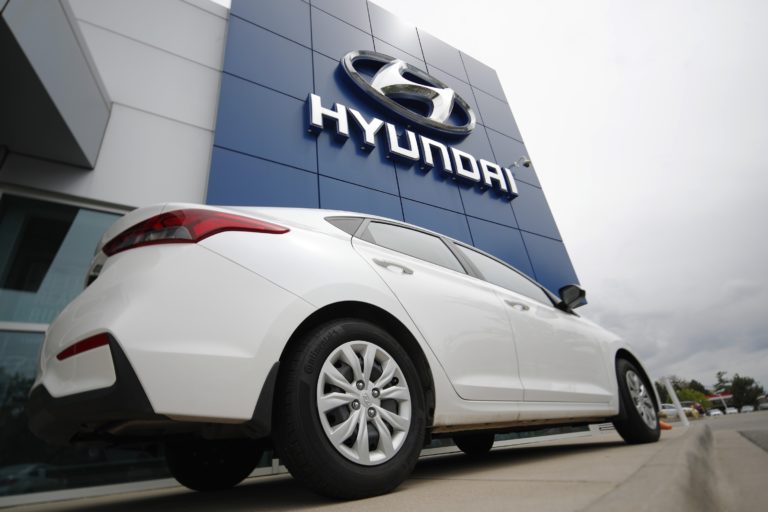
(Luis Cornelio, Headline USA) The Trump administration agreed this week to release hundreds of illegal aliens caught working at a Hyundai factory in Georgia.

The Sept. 4 raid led to the arrest of more than 475 illegal aliens, including 300 from South Korea. Over 400 federal agents were deployed to the site.

South Korea struck a deal with the Trump administration to secure the swift release of its nationals, Fox News reported Sunday. President Lee Jae Myung’s office will send a chartered flight to the U.S. to facilitate their deportation.

This comes after Korean Foreign Minister Cho Hyun said he was “deeply concerned” about the massive raid. He also announced that Lee ordered an “all-out effort” to help the detained illegal aliens.

DHS said the raid was the “largest single-site” operation in the nation’s history.

“This operation underscores our commitment to protecting jobs for Georgians and Americans,” HSI Special Agent in Charge Steven Schrank said at a press conference following the raid.

He said the illegal aliens had entered the country through various means. “Some that illegally crossed the border into the United States, some that came in through visa waiver and were prohibited from working, some had visas and overstayed their visas,” he added.

While Hyundai owns the plant, those arrested were allegedly employed by subcontractors.

“As of today, it is our understanding that none of those detained is directly employed by Hyundai Motor Company,” Hyundai said in remarks to Fox News. “We prioritize the safety and well-being of everyone working at the site and comply with all laws and regulations wherever we operate.”

Trump Berates ‘Second Rate’ Reporter over Chicago ‘War’ Question

(Luis Cornelio, Headline USA) President Donald Trump didn’t hold back on Sunday when NBC reporter Yamiche Alcindor tried to claim he was preparing to “go to war” with Chicago, calling her “second rate.”

Alcindor’s question was seemingly tied to an AI-generated meme Trump had shared in relation to the possibility of National Guard deployment to the city.

“When you say that, darling, that’s fake news,” Trump shot back.

A day earlier, Trump posted a photo of himself seated with flames in the background under the title “Chipocalypse Now” and captioned: “Chicago about to find out why it’s called the Department of WAR.”

Alcindor tried to interrupt but Trump swiftly cut her off, lecturing: “Listen. Be quiet. Listen. You don’t listen, you never listen. That’s why you’re second rate. We’re not going to war.”

Trump explained that a potential deployment of federal troops to Chicago would be aimed at cleaning up the city “so they don’t kill 5 people every weekend.”

“That’s not war—that’s common sense!” he added.

Trump’s exchange with Alcindor came as Illinois Democrats threatened to resist federal intervention in the crime-plagued state.

Some seized on the meme as a literal threat. Illinois Gov. J.B. Pritzker raged on X: “The President of the United States is threatening to go to war with an American city.”

“This is not a joke. This is not normal. Donald Trump isn’t a strongman, he’s a scared man. Illinois won’t be intimidated by a wannabe dictator,” he added.

Worse still, Chicago Mayor Brandon Johnson flirted with talk of insurrection last month.

“We’re gonna remain firm. We’ll take legal action, but the people of this city are accustomed to rising up against tyranny,” he said. “And if that’s necessary, I believe the people of Chicago will stand firm alongside me, as I work every single day to protect the people of this city.”

What to Know About a Large-Scale Immigration Raid at a Georgia Manufacturing Plant

(Headline USA) Hundreds of federal agents descended on a sprawling site where Hyundai manufactures electric vehicles in Georgia and detained 475 people, most of them South Korean nationals. 

This is the latest in a long line of workplace raids conducted as part of the Trump administration’s mass deportation agenda. But the one on Thursday is especially distinct because of its large size and the fact that it targeted a manufacturing site state officials have long called Georgia’s largest economic development project.

South Korea’s Foreign Minister Cho Hyun said Saturday that more than 300 South Koreans were among the 475 people detained.

Some of them worked for the battery plant operated by HL-GA Battery Co., a joint venture by Hyundai and LG Energy Solution that is slated to open next year, while others were employed by contractors and subcontractors at the construction site, according to Steven Schrank, the lead Georgia agent of Homeland Security Investigations.

He said that some of the detained workers had illegally crossed the U.S. border, while others had entered the country legally but had expired visas or had entered on a visa waiver that prohibited them from working.

But an immigration attorney representing two of the detained workers said his clients arrived from South Korea under a visa waiver program that enables them to travel for tourism or business for stays of 90 days or less without obtaining a visa.

Attorney Charles Kuck said one of his clients has been in the U.S. for a couple of weeks, while the other has been in the country for about 45 days, adding that they had been planning to return home soon.

The detainees also included a lawful permanent resident who was kept in custody for having a prior record involving firearm and drug offenses, since committing a crime of “moral turpitude” can put their status in jeopardy, Lindsay Williams, a public affairs officer for U.S. Immigration and Customs Enforcement, said Saturday.

Williams denied reports that U.S. citizens had been detained at the site since “once citizens have identified themselves, we have no authority.”

Hyundai Motor Company said in a statement Friday that none of its employees had been detained as far as it knew and that it is reviewing its practices to make sure suppliers and subcontractors follow U.S. employment laws. 

The South Korean government expressed “concern and regret” over the operation targeting its citizens and is sending diplomats to the site.

“The business activities of our investors and the rights of our nationals must not be unjustly infringed in the process of U.S. law enforcement,” South Korean Foreign Ministry spokesperson Lee Jaewoong said in a televised statement from Seoul.

Most of the people detained have been taken to an immigration detention center in Folkston, Georgia, near the Florida state line. None of them have been charged with any crimes yet, Schrank said, but the investigation is ongoing.

The raid was the result of a monthslong investigation into allegations of illegal hiring at the site, Schrank said.

In a search warrant and related affidavits, agents sought everything from employment records for current and former workers and timecards to video and photos of workers. 

Court records filed this week indicated that prosecutors do not know who hired what it called “hundreds of illegal aliens.” The identity of the “actual company or contractor hiring the illegal aliens is currently unknown,” the U.S. Attorney’s Office wrote in a Thursday court filing.

The raid targeted a manufacturing site widely considered one of Georgia’s largest and most high profile.

Hyundai Motor Group started manufacturing EVs at the $7.6 billion plant a year ago. Today, the site employs about 1,200 people in a largely rural area about 25 miles (40 kilometers) west of Savannah.

Agents specifically honed in on an adjacent plant that is still under construction at which Hyundai has partnered with LG Energy Solution to produce batteries that power EVs.

The Hyundai site is in Bryan County, which saw its population increase by more than a quarter in the early 2020s and stood at almost 47,000 residents in 2023, the most recent year data is available. The county’s Asian population went from 1.5% in 2018 to 2.2% in 2023, and the growth was primarily among people of Indian descent, according to Census Bureau figures.

Kemp and other Georgia Republican officials, who had courted Hyundai and celebrated the EV plant’s opening, issued statements Friday saying all employers in the state were expected to follow the law.  

Adapted from reporting by the Associated Press.

Phillies Game ‘Karen’ Caught on Video Snatching Child’s Baseball

(Luis Cornelio, Headline USA) Social media erupted against a woman dubbed “Baseball Karen” after she scolded a father over a home run ball during a Philadelphia Phillies-Miami Marlins game on Saturday.

The woman, not yet identified, was seen on video bending to catch a home run ball hit by  Phillies center fielder Harrison Bader at LoanDepot Park. A man suddenly rushed over, grabbed the ball and passed it to his child.

The visibly upset woman then approached the man, apparently claiming the ball was hers. A few seconds later, the startled father asked his child to return the ball to her.

Her actions triggered widespread outrage on X, with many calling her behavior unhinged.

Another angle:

“She went home with the baseball. Woke up with the entire country hating on her. Funny how life works,” one social media user wrote, garnering 22 million views.

“Completely unhinged,” another user added, referring to the woman.

“The entire section booed her out of her seat,” a third user wrote.

The father also faced backlash for his unusual response when the woman first confronted him.

“The father response is jarring because it’s a clear indication that his natural response to danger isn’t to protect or stand up for his son, but to recoil in fear,” journalist Savannah Hernandez wrote. “At a base level every father’s immediate response should be to stand up & protect their kid.”

Podcaster Benny Johnson echoed this sentiment: “Weak men create hard times.”

Although the ball was taken from him, the story ended on a high note for the child, as a LoanDepot Park official approached him and gave him official souvenirs.

Later, the child was invited backstage, where he met Bader, who signed a bat for him.

Meanwhile, it’s still unclear who the woman is or whether she will apologize for her widely criticized actions.