Amazon Cuts 14,000 Corporate Jobs as Spending on Artificial Intelligence Accelerates

(Headline USA) Amazon will cut about 14,000 corporate jobs as the online retail giant ramps up spending on artificial intelligence while cutting costs elsewhere.

Teams and individuals impacted by the job cuts will be notified on Tuesday. Most workers will be given 90 days to look for a new position internally, Beth Galetti, Senior Vice President of People Experience and Technology at Amazon, wrote in a letter to employees on Tuesday. Those who can’t find a new role at the company or who opt not to look for one will be provided transitional support including severance pay, outplacement services and health insurance benefits.

Amazon has about 350,000 corporate employees and a total workforce of approximately 1.56 million. The cuts announced Tuesday amount to about a 4% reduction in its corporate workforce.

In June CEO Andy Jassy, who has aggressively sought to cut costs since becoming CEO in 2021, said that he anticipated generative AI would reduce Amazon’s corporate workforce in the next few years.

Jassy said at the time that Amazon had more than 1,000 generative AI services and applications in progress or built, but that figure was a “small fraction” of what it plans to build.

Amazon has announced plans to invest $10 billion building a campus in North Carolina to expand its cloud computing and artificial intelligence infrastructure.

Since 2024 started, Amazon has committed to about $10 billion apiece to data center projects in Mississippi, Indiana, Ohio and North Carolina as it builds up its infrastructure to try to keep up with other tech giants making leaps in AI. Amazon is competing with OpenAI, Google, Microsoft, Meta and others. In a conference call with industry analysts in May, Jassy said that the potential for growth in the company’s AWS business is massive.

“If you believe your mission is to make customers’ lives easier and better every day, and you believe that every customer experience will be reinvented with AI, you’re going to invest very aggressively in AI, and that’s what we’re doing. You can see that in the 1,000-plus AI applications we’re building across Amazon. You can see that with our next generation of Alexa, named Alexa+,” he said.

Amazon’s workforce doubled during the pandemic as millions stayed home and boosted online spending. In the following years, big tech and retail companies cut thousands of jobs to bring spending back in line.

The cuts announced Tuesday suggests Amazon is still trying to get the size of its workforce right and it may not be over. It was the biggest culling at Amazon since 2023, when the company cut 27,000 jobs. Those cuts came in waves, with 9,000 jobs trimmed in March of that year, and another 18,000 employees two months later. Amazon has not said if more job cuts are on the way.

Yet the jobs market which has for years been a pillar in the U.S. economy, is showing signs of weakening. Layoffs have been limited, but the same can be said for hiring.

Government hiring data is on hold during the government shut down, but earlier this month a survey by payroll company ADP showed a surprising loss of 32,000 jobs losses in the private sector in September.

Many retailers are pulling back on seasonal hiring this year due to uncertainty over the U.S. economy and tariffs. Amazon Inc. said this month, however, that it would hire 250,000 seasonal workers, the same as last year’s holiday season.

Neil Saunders, managing director of GlobalData, said in a statement that the layoffs “represent a deep cleaning of Amazon’s corporate workforce.”

“Unlike the Target layoffs, Amazon is operating from a position of strength,” he said. “The company has been producing good growth, and it still has a lot of headroom for further expansion in both the U.S. and overseas.”

But Saunders noted that Amazon is not immune to outside factors, as global markets tighten and underlying costs climb.

“It needs to act if it wants to continue with a good bottom-line performance. This is especially so given the amount of investment the company is making in areas like logistics and AI. In some ways, this is a tipping point away from human capital to technological infrastructure,” he said.

Amazon will post quarterly financial results on Thursday. During its most recent quarter, the company reported 17.5% growth for its cloud computing arm Amazon Web Services.

Adapted from reporting by the Associated Press

Trans Teen, Who Wanted to Join FBI, Admits to Plotting Valentine’s Day Mass Shooting

(Ken Silva, Headline USA) An 18-year-old Indiana woman, who at one point identified as transgender, has reportedly pled guilty to planning a mass school shooting at a local high school earlier this year. She’s expected to serve about 12 years in prison.

WTHR in Mooresville reported in February that the local police had received a tip from the FBI about someone who was potentially planning a school shooting on Valentine’s Day.

“During the department’s investigation, officers identified the person of interest as Trinity Shockley, of Mooresville,” WTHR reported at the time. “Court documents say Trinity is transgender, going by the name Jamie.”

Court records reportedly state that Shockley sent numerous threatening messages to people on the gaming platform Discord. Those messages included, “I’ve been planning this for a YEAR,” and “Parkland part two”—a reference to the Parkland school shooting, where Nikolas Cruz killed 14 students and three staff members on Feb. 14, 2018.

Shockley reportedly told police she was “joking” and “would never do that and does not have access to a gun.” A law enforcement affidavit further stated that “Trinity wants to be in the FBI and is planning to attend Ivy Tech for criminology after she graduates in three months.”

She was arrested anyway. Some eight months later, WTHR in Indianapolis reported Monday that she will plead guilty to one count of conspiracy to commit murder, which is a Level 2 felony.

According to WTHR, her plea deal calls for a 20-year sentence with a cap of 12.5 years in prison and the rest suspended, plus five years probation.

“Shockley must continue mental health treatment and take all prescribed medications, is banned from all Morgan County school properties and schools events, cannot research school shooters online and may not possess any guns,” the news outlet added.

Shockley’s sentencing is reportedly set for Nov. 24.

Discord Shootings

Shockley represents the latest case of a mentally disturbed teenager plotting a shooting on Discord.

Perhaps the most infamous Discord-linked shooting occurred in May 2022, when white supremacist Payton Gendron killed 10 people at a Buffalo supermarket. Disturbingly, Gendron may have been chatting on Discord with a “retired federal agent” moments before he killed 10 people at a Buffalo supermarket, according to The Buffalo News.

Gendron’s shooting was followed by other attacks that had early warning signs on Discord.

In January 2024, 17-year-old mass shooter Dylan Butler—who killed a sixth grader, injured four others and fatally shot himself at a school in Iowa—was reported to have been in an extremist Discord chatroom. NBC reported days after the shooting that Butler was a member of a Discord group called “School Massacres Discussion,” which was dedicated to discussing school shootings. According to NBC, another Discord user had notified the FBI about the chatroom months before the attack.

Another Discord-linked shooting occurred some two months after the Butler shooting on Sept. 4, 2024, when 14-year-old Colt Gray opened fire at a Georgia high school and killed four people. After Gray’s shooting, the FBI admitted that Gray had been on its radar—but insisted that there was “no probable cause for arrest or to take any additional law enforcement action” against the teenager before his shooting spree.

About three months later, 15-year-old female student Natalie Rupnow, who went by the name Samantha, opened fire during a study hall at Abundant Life Christian School in Wisconsin—killing another student and a teacher, and wounding six others before killing herself.

Rupnow’s apparent manifesto, which was published on Discord before her shooting, references previous school shooters, including the same ones that apparently infatuated Shockley.

Most recently, alleged Charlie Kirk assassin Tyler Robinson was revealed to have been highly active on Discord—though no evidence has been released showing that he plotted there. Discord, for its part, says its platform was not used in the plot to kill Kirk.

Ken Silva is the editor of Headline USA. Follow him at x.com/jd_cashless.

Why Exactly Is the Federal Reserve Cutting Rates?

(Mike Maharrey, Money Metals News Service) The Federal Reserve kicked off its October meeting today (Tuesday, Oct. 28). The central bank is expected to cut interest rates another quarter percent and could announce a timetable to end balance sheet reduction.

But why?

A lot of the people clamoring for looser monetary policy claim the economy is booming. That isn’t generally a signal for rate cuts. So, why ease when price inflation remains well above the Fed’s purported 2 percent target and is rising?

In a sane world, the central bank would be holding rates higher to strangle inflation once and for all. It might even be hiking rates.

But we don’t live in a sane world.

We live in a world with a debt black hole. The debt-riddled bubble economy can’t function even with modestly higher interest rates. It needs its easy money drug. The Fed seems intent on supplying it to keep the party going, inflation be damned.

Simply put, the Fed is in a Catch-22. It must choose between fighting inflation and keeping the air in the bubbles. It can’t do both.

It picked inflation.

Based on the October CNBC Fed Survey, economists, strategists, and fund managers, the Fed will not only cut rates at the meeting, but it will also trim rates at the next two.

I’m not the only one questioning this pivot to easy money.

While 92 percent of the survey respondents said the Fed would cut at the October meeting, only 66 percent thought it should, with 38 percent indicating they opposed the cut.

Richard Bernstein Advisors CEO said he thinks politics are influencing the decision more than economic data.

“Financial conditions are near historically easy, GDP is tracking 3.5-4 percent, financial assets are ripping, and inflation remains well above the Fed’s target. In more normal times, there is no way the Fed would be cutting rates.”

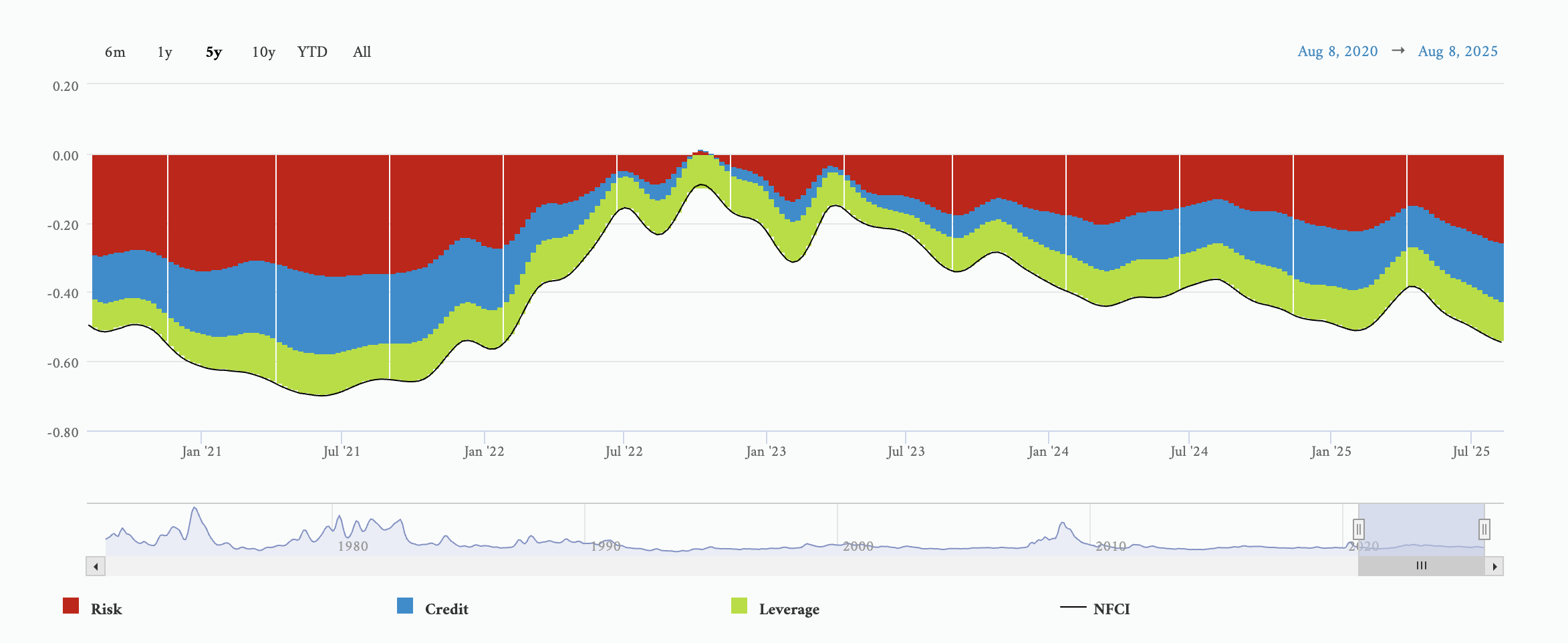
He’s right. The Chicago Fed’s own National Financial Conditions Index indicates that monetary policy is currently loose from a historical standpoint. In fact, it never got tight, even at the height of the hiking cycle.

Stifel chief economist Lindsey Piegza said there is also concern that the lack of data due to the government shutdown is obscuring the full picture.

“Fed officials are unable to draw much of a conclusion about anything and therefore should arguably remain on hold, waiting for additional information before potentially further compounding a policy error with a second-round rate cut if unwarranted by the evolution of inflation and hiring conditions.″

Janney Montgomery Scott chief fixed income strategist Guy Lebas likened it to “flying in a blizzard with a blindfold on and no backup instrumentation.”

“It’s even worse when there are mountains in the area.”

The lack of good data is a fair concern, but the reality is that even with perfect data, central planning will still fail. No brain-trust can ever possess all the knowledge necessary to run a complex economy. They will also run aground on the rocks of unforeseen consequences.

But what people lack in knowledge, they make up for in hubris. They’ll keep trying.

And they’ll keep failing.


Mike Maharrey is a journalist and market analyst for Money Metals with over a decade of experience in precious metals. He holds a BS in accounting from the University of Kentucky and a BA in journalism from the University of South Florida.

Gold Bulls Take a Beating But Are They Down and Out?

(Mike Maharrey, Money Metals News Service) Gold has been pounded lower over the last two weeks and is now struggling to hold the $4,000 level.

Are the bulls dead?

It’s important to keep the selloff in perspective. As I put it in my podcast last week, “keep your eye on the ball.”

Corrections are healthy and normal in a bull market. But a big selloff could also indicate the end of a bull run.

So, where are we now?

Even with the big selloff, gold is still up over 89 percent since Jan. 1, 2024. The yellow metal ran from $3,500 to $4,000 in just 36 days. It’s been a remarkable run, and it will end at some point.

The question investors need to ask themselves is: are the fundamentals that pushed gold to record levels still in play?

Risk On! Book Those Profits!

Two dynamics seem to be driving the current selloff.

First is simple profit-taking.

With gold scaling record after record, many investors are taking the opportunity to book big profits. As the price dips, more profit-takers jump on the bandwagon. The question becomes: when will the bargain seekers step in and stabilize the market?

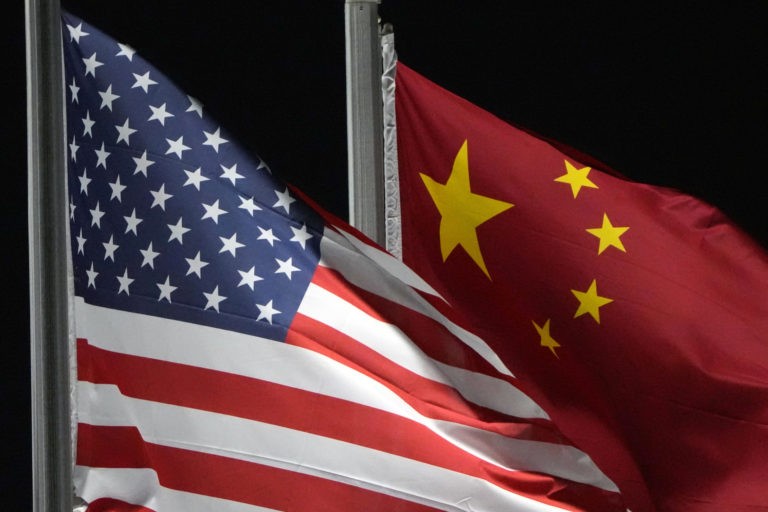
The second factor seems to be optimism that the U.S. and China are on the brink of a trade deal.

This has put investors in a risk-on mood. FOREX.com analyst Fawad Razaqzada noted, “As risk sentiment improved, the S&P 500 reached fresh record highs, leaving safe-haven assets like gold on the back foot.”

However, uncertainty remains the name of the game when it comes to trade policy. Razaqzada said that “while these developments have lifted market spirits, analysts remain skeptical that the underlying issues — such as national security and tech competition — will be fully resolved.”

The Case for the Gold Bulls

Even with the recent downturn, there is still a strong fundamental case for the bulls, with at least five factors working in gold’s favor.

  1. Falling real interest rates
  2. Persistent inflation
  3. Ongoing trade and geopolitical uncertainty
  4. U.S. fiscal irresponsibility and de-dollarization
  5. Systemic risks in the financial system

However, these bullish fundamentals don’t preclude corrections or even more prolonged periods of consolidation.

Saxo Bank commodity strategist Ole Hansen said that we could be entering into a longer consolidation period like we saw after gold cleared $3,000 an ounce in April, and then churned sideways for four months.

“The recent price action raises the possibility that the high for the year may already be in place, as a deeper pullback could take time to recover from amid rising trader caution and renewed strength in equities.”

However, Hansen pointed out that “the reasons for holding gold haven’t suddenly disappeared.”

“In my view, the next leg higher is more likely a story for 2026, not least considering the latest consolidation period that started back in April lasted four months.”

Metals Focus still projects $5,000 gold in 2026, citing “ongoing uncertainty surrounding US trade policy, and its impact on the global economy,” along with declining interest rates as the Fed continues to cut interest rates and ends its balance sheet reduction efforts.

Metals Focus also noted the massive national debt, saying that “confidence in the U.S. dollar and Treasury markets is unlikely to improve significantly, given the deteriorating fiscal outlook and lingering concerns about the Fed’s independence.”

“Geopolitical tensions are expected to remain elevated. Combined with broader macroeconomic uncertainty, this should continue to support investor interest in portfolio diversification.”

Meanwhile, Metals Focus analysts say central bank gold buying should continue to support the market.

“Although volumes may not match the record highs of 2022-2024, central banks are likely to remain substantial net buyers relative to historical averages, driven by efforts to diversify away from the U.S. dollar.”

Even with the recent selloff, Morgan Stanley raised its price forecast, calling for $4,400 gold in the new year.

“Investors are watching gold not just as a hedge against inflation, but as a barometer for everything from central bank policy to geopolitical risk. We see further upside in gold, driven by a falling U.S. dollar, strong ETF buying, continued central bank purchases and a backdrop of uncertainty supporting demand for this safe-haven asset.”

Morgan Stanley analysts remain bullish partly because gold demand is being supported by several sectors.

“For the first time since 1996, gold now accounts for a larger share of central bank reserves than U.S. Treasuries—a powerful signal of confidence in the metal’s long-term value. Exchange-traded funds (ETFs) have also been strong buyers of gold, signaling renewed interest from institutional investors. ETFs backed by physical gold posted a record inflow of $26 billion in the third quarter. Their total assets under management ended the quarter at $472 billion, also a record.”

Morgan Stanley analysts also expect a generally weaker dollar to support the yellow metal.

“As markets expect the U.S. dollar to weaken on prospects of slower growth in the world’s largest economy, many investors are shifting their safe-haven portfolios, moving from dollar-denominated assets to gold. Additionally, a weaker dollar makes gold more affordable for international buyers.”

Capitalight head of research Chantelle Schieven said gold could test $3,750, but called gold’s downside potential “limited.”

“This correction appears to represent a healthy consolidation within the broader structural bull market, and we continue to maintain a constructive long-term outlook for gold, given the ongoing macroeconomic and policy risks.”

If you believe gold still has long-term support, you should view these selloffs as buying opportunities.


Mike Maharrey is a journalist and market analyst for Money Metals with over a decade of experience in precious metals. He holds a BS in accounting from the University of Kentucky and a BA in journalism from the University of South Florida.

Sen. Rand Paul Slams Strikes on Boats in Caribbean as ‘Extrajudicial Killings’

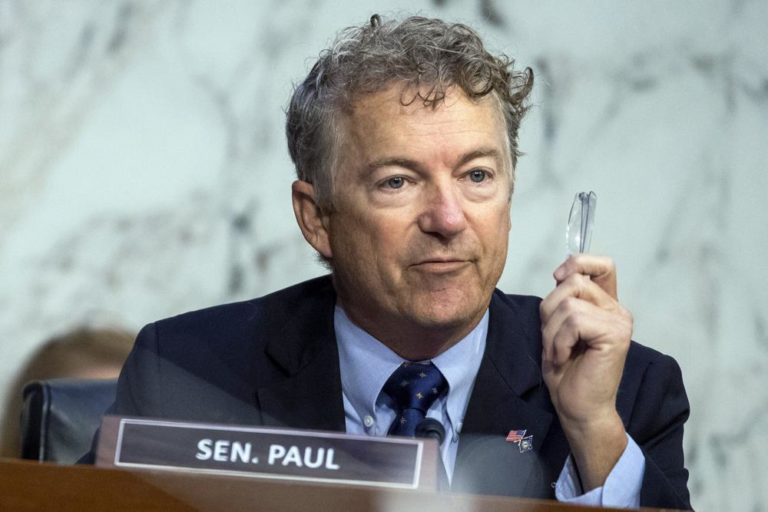
(Kyle Anzalone, Libertarian Institute) Senator Rand Paul blasted President Donald Trump’s strikes on alleged drug traffickers as unconstitutional and illegal.

“A briefing is not enough to overcome the Constitution. The Constitution says that when you go to war, Congress has to vote on it. … The drug war, or the crime war, has typically been dealt with through law enforcement,” Paul said on Fox News Sunday. “And so far they have alleged that these people are drug dealers … and we’ve had no evidence presented. So at this point we would call them extrajudicial killings.”

So far, the Department of War has bombed ten boats it claims are smuggling narcotics into the US. Nine of the strikes have been on vessels in the Caribbean, against alleged cartels linked to Venezuela. The White House has not provided evidence that the ships were carrying drugs.

“So far, they have alleged that these people are drug dealers. No one said their name. No one said what evidence. No one said whether they’re armed. And we’ve had no evidence presented,” Paul said.

One survivor of a strike was released by Ecuador, finding he was not engaged in wrongdoing when the boat was attacked. One family member said a victim of a US strike was a fisherman, and not working for a cartel.

Trump has discussed expanding the strikes into Venezuela and has given the CIA approval to conduct lethal operations against cartels. Secretary of State Marco Rubio claims that Venezuelan President Maduro is the leader of a cartel designated as a Foreign Terrorist Organization.

If Trump elects to expand the war, he told reporters that he will brief Congress on the plans. He went on to say he did not have to discuss the matter with the Legislator and has not sought a Declaration of War.

The Constitution explicitly grants Congress the authority to Declare War. However, the principle of preventing the President from unilaterally declaring war has been eroded over time. Congress has not declared war since World War 2 II. The last Authorization for Use of Military Force was passed in 2002 for the Iraq War.

Senator Paul has teamed up with Democratic Senator Tim Kaine to push a War Powers Resolution that would stop Trump from launching a war with Venezuela.

This article originally appeared at The Libertarian Institute.

Study Finds the Left’s Big Mystery Solved: Voters Hate Their Agenda

(Luis CornelioHeadline USA) A left-wing group commissioned a lengthy survey to study why Democrats keep getting humiliated in elections. The conclusion? Americans simply despise their radical policies, including immigration, gender and other social issues. 

The findings come from Welcome, a group that, in a 59-page report titled “Toward a Common Sense Renewal of the Democratic Party,” claims to have surveyed more than 500,000 Democratic voters since the 2024 presidential election. 

The group found Democrats have widely tarnished their reputation among a diverse bloc of voters, while largely growing support only among “white liberals.” 

Overall, a staggering 70 percent of voters think the Democratic Party is “out of touch” with everyday Americans, a 19 percent increase since 2013. 

The party has bled support, losing 16 percent among non-college-educated Latino voters and 15 percent among non-college-educated AAPI voters. 

Most voters believe that the party over-prioritizes controversial left-wing issues. According to the study, only 23 percent support protecting illegal aliens, 24 percent back tax hikes, 25 percent prioritize LGBTQ issues as a key concern. 

The same dire figures apply to climate change (35 percent), unions (36 percent) and DEI (39 percent). 

By contrast, voters overwhelmingly favor protecting Social Security (82 percent), lowering costs (79 percent), and making healthcare more affordable (74 percent). 

This trend was evident in the 2024 election, when President Donald Trump saw an unprecedented uptick in support from nearly all racial minority groups. 

With these findings in hand, Welcome plans to share the report with Democratic officials and at events in Washington, D.C., and New York, according to Semafor, the outlet that first reported on the findings.

The report calls on Democrats to rid themselves of these radical ties, which the study argues have dominated the party since the 2012 election. 

Report: Politico Journo Under Investigation for Working as Chinese Spy

(Luis CornelioHeadline USA) A reporter for left-wing news site Politico is under investigation in Europe over allegations that he secretly worked as a Chinese spy.

The journalist is suspected of using his position to “cultivate targets within Brussels-based organizations” on behalf of China, European news site Euractiv reported earlier this week,

Among his alleged activities were making “sexual overtures towards officials in these institutions,” the outlet reported, while withholding the reporter’s name.

The unnamed individual left Politico at an unknown date. It is not immediately clear whether his departure was related to the European investigation.

In a statement to the media, Politico said European authorities have not reached out and that the outlet “does not comment on personnel departures as these are confidential personnel matters.”

Politico did not return Headline USA’s request for further information, including a list of its former authors, before publication.

Euractiv reported that the European security probe remains in early stages.

“The probe comes amid a flurry of recent allegations involving China’s activities in the European capital,” the outlet added.

Several officials have recently been arrested over suspicion of spying for Beijing, including a Belgian police officer accused of working with Chinese intelligence.

In another case, Parliament staffer Jian Guo, who worked for a German politician, was sentenced to nearly years in prison after being convicted of spying for China.

American Participates in Hindu ‘Poop-Throwing’ Tradition, Documents It for World to See

(José Niño, Headline USA) An American YouTuber documented a cow dung ritual in a remote Karnataka village, and now he’s receiving online criticism, including from outlets such as the New York Post

Tyler Oliveira, 25, posted a teaser titled “Inside India’s Poop-Throwing Festival,” which rapidly accumulated over 5 million views on Twitter/X.

However, the footage from the Gorehabba festival, where villagers hurl dried cow dung at one another as part of a post-Diwali Hindu tradition, faced widespread criticism for dismissing the cultural and religious importance of the ancient ritual.

In a separate post, Oliveira shared an image of himself wearing a hazmat suit and goggles, smeared with brown stains after attending the event in Gumatapura, a remote village in Karnataka, southwestern India.

“Happy Diwali! Yes, I went to India’s poop throwing festival. It was the s—tiest experience of my life. I will never go back. Please pray that I survive,” he posted, adding a poop emoji to the caption.

Criticism mounted quickly across social platforms.

The YouTuber later posted screenshots suggesting his content was being censored and mass-reported by Indian users who claim he is tarnishing their nation’s reputation.

“Why do you have to come to India and then record a video of a cow dung festival by going in the middle of the event and then cry like a loser!” one Indian X user commented.

“I’ve filmed in many of these cities. Don’t be mad bro,” Oliveira replied.

Others insisted the footage of the annual festival, which also takes place in at least two other Indian villages, must be AI-generated content.

“This is 100% real. I can’t wait to show you a 30-minute version of it,” Oliveira responded to skeptics.

Festival participants believe their deity, Beereshwara Swamy, was born in cow excrement, and the ritual is considered sacred and spiritually cleansing.

José Niño is the deputy editor of Headline USA. Follow him at x.com/JoseAlNino 


Biden Judge Releases Man Who Ordered $45K Hit on Pam Bondi

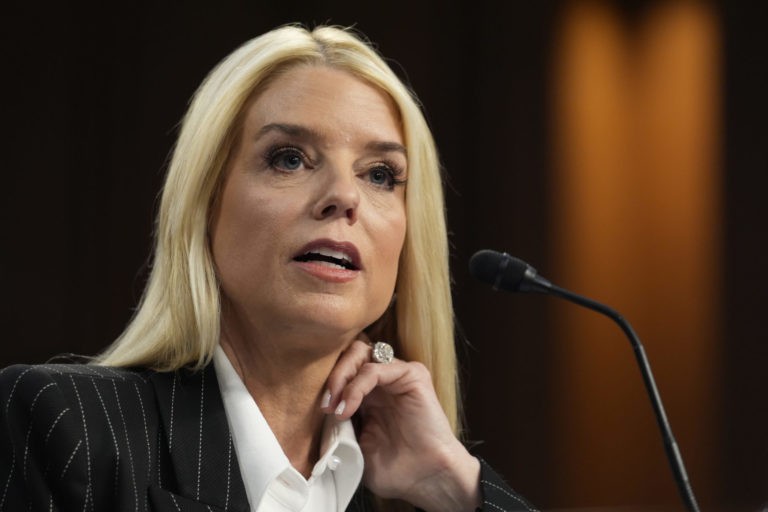
(Luis CornelioHeadline USA) A federal magistrate judge appointed during the Biden administration earlier this week released the anarchist accused of posting a bounty targeting Attorney General Pam Bondi. 

The judge, Douglas Micko, allowed Tyler Maxon Avalos to be released from a Minnesota federal prison as long as he does not travel outside the state and undergoes GPS monitoring. 

Avalos was arrested on Oct. 16 after allegedly posting a $45,000 bounty on Bondi, alongside an image of her with a target symbol over her head. 

Authorities were alerted to the threat on Oct. 9, describing it as a murder-for-hire scheme. The post included the caption, “*cough cough* when they don’t serve us then what?” 

According to prosecutors, Avalos’s TikTok profile used an anarchist symbol in place of the letter “A” in “Wacko.” The page also featured a link to “An Anarchist FAQ Book,” according to Law and Order. 

An FBI affidavit detailed Avalos’s lengthy criminal record, including a 2022 felony stalking conviction and a 2016 felony third-degree domestic battery.  

He was also charged in April 2016 with misdemeanor domestic assault, which was later upgraded to felony domestic assault by strangulation. 

Under Micko’s order, Avalos must avoid alcohol, surrender any weapons, stay away from the internet and comply with a daily curfew while awaiting further court proceedings. 

Micko was appointed to the bench by the district judges of the District of Minnesota in April 2023, replacing Judge Kate Menendez, who was elevated to a higher district court position by President Joe Biden. 

Judge Makes Key Decisions in Charlie Kirk Assassination Case

(Ken Silva, Headline USA) Utah’s 4th District Court Judge Tony Graf ruled Monday that alleged Charlie Kirk assassin Tyler Robinson is allowed to wear civilian clothes when going to his pretrial court hearings, but that he must remain in restraints.

Judge Graf also ordered that the media isn’t allowed to photograph Robinson in those restraints while he’s entering, exiting or standing in the courtroom.

Robinson’s attorneys had been seeking to have Robinson appear in court in regular street clothes instead of jail attire—both to maintain his presumption of innocence and to avoid prejudicing a future jury. The prosecution opposed that request for reasons that are unclear, as they were able to file their arguments in secret because their filing purportedly contains “secure information that might endanger personal and public safety if disclosed.”

A secret hearing was held Friday over the matter, with Judge Graf returning with his decisions on Monday.

“Mr. Robinson sits before court with presumption of innocence … This court finds that his right to presumption of innocence outweighs minimal [security] risks. He shall appear in civilian clothing,” Graf said before turning to the issue of restraings.

Judge Graf noted that Robinson has no criminal history, nor has he been hit with any infractions while in jail. But the charge against him, murder, is “serious” and carries the death penalty, the judge said. Therefore, he must remain in shackles for public safety, the judge ruled.

However, Judge Graf expressed concerns that pictures of Robinson in shackles could prejudice a jury. With that in mind, he prohibited media in the courtroom from recording the restraints.

“Restricting the recording of restraints strikes the balance between right to fair proceeding and right to transparency,” he said.

Meanwhile, a pretrial hearing that was set for Thursday has been delayed until Jan. 16. Judge Graf said the parties need more time for discovery, to decide whether future pretrial hearings should be held in person, and for him to decide whether cameras will be permitted.

Robinson has yet to enter a plea.

Ken Silva is the editor of Headline USA. Follow him at x.com/jd_cashless.