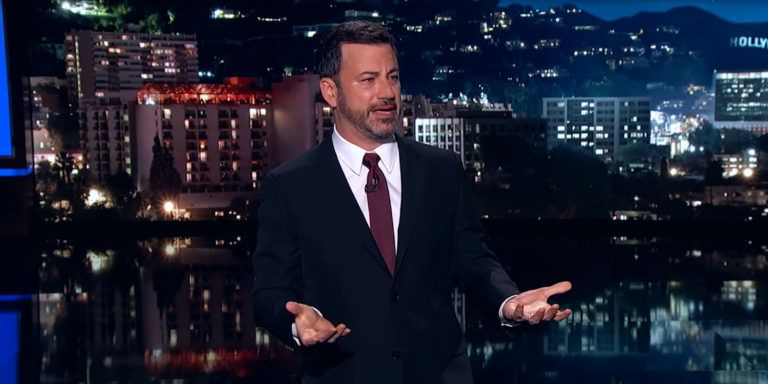
Jimmy Kimmel Accuses ICE Agent of Murder, Hurls Icy Insult At Melania  

(Mark E. Johnson, Contributor) Late-night host Jimmy Kimmel has accused the ICE agent who shot and killed Renee Good in self-defense of committing actual murder. A night later, the left-leaning comic followed up with a thinly veiled wisecrack about Menalia Trump’s sexuality. 

On January 7, Good drove her car directly at Jonathan Ross, a 10-year ICE veteran, in an clear and obvious attempt to strike him, a act of violence that has been found many times to justify the use of deadly force. 

But Kimmel offered a much different view of events in Tuesday night’s monologue:

“Trump also for the first time expressed a measure of sympathy for Renee Good, the woman who was murdered in Minneapolis.”

Ross has not been charged with murder or any other crime from that day at either the state or federal level. Despite Trump calling Good’s death “horrible” (twice) and “a tragedy” (also twice), Kimmel could not leave it at that, going on in a mocking tone to call into question the president’s motives:

“He now concedes that her death was a tragedy but not necessarily for the reason you might hope.”

Kimmel then offered video of Trump’s statement on Good:

“I felt horribly when I was told that the young woman who was—a tragedy, it’s a tragedy, it’s a horrible thing. Everybody would say — ICE would say the same thing, but when I learned her parents, and her father in particular, I hope he still is, but I don’t know, was a tremendous Trump fan, he was all for Trump, loved Trump. And you know, it’s terrible. I was told that by a lot of people, they said, “Oh, he loves you.” He was — I hope he still feels that way. I don’t know, it’s hard. Hard situation. But her father was a tremendous — and parents – were tremendous Trump fans. It’s so sad, it just happens. It’s terrible.

Kimmel closed by unleashing one final witticism on the matter:

“I have a theory, and I think this might explain a lot. Trump is jealous that all the shows on the History Channel are about Hitler and not him.” 

Once upon a time in America, media figures ascribed to a strict standard that all persons are considered innocent until proven otherwise in a court of law. And comparing one’s political opponent to Hitler was deemed waaay out of bounds. 

Also out of bounds at one time: personal attacks a on a First Lady – another boundary Kimmel saw fit to ignore on Wednesday night’s show: 

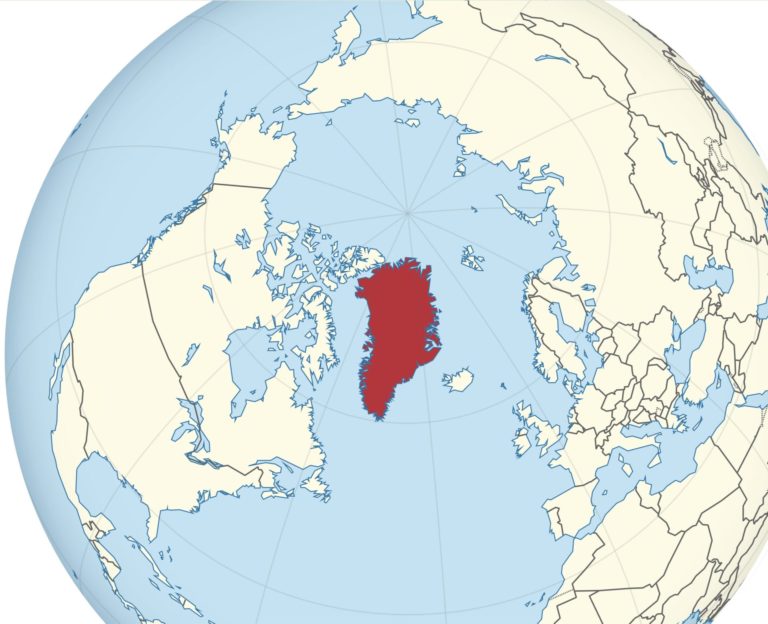
“Greenland, Greenland, Greenland. Greenland is not even land, it’s a big, beautiful block of ice. And, he [Trump] should know: He’s been married to one of those for twenty years.”

The remark calls to mind the Victorian-era term “frigid” in reference to a woman who is sexually repressed or unresponsive. The term is now deemed “unscientific and sexist” according to the Women’s Media Center, a progressive outlet founded by radical feminists Jane Fonda and Gloria Steinem

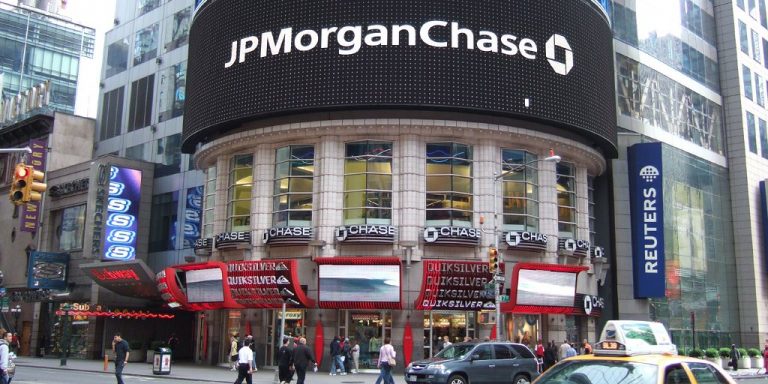
Trump Sues JPMorgan for $5 Billion for ‘De-Banking’ Him

(Headline USAPresident Donald Trump sued banking giant JPMorgan Chase and its CEO Jamie Dimon for $5 billion on Thursday over allegations that JPMorgan stopped providing banking services to him and his businesses for political reasons after he left office in January 2021.

The lawsuit, filed in Miami-Dade County court in Florida, alleges that JPMorgan abruptly closed multiple accounts in February 2021 with just 60 days notice and no explanation. By doing so, Trump claims JPMorgan and Dimon cut the president and his businesses off from millions of dollars, disrupted their operations and forced Trump and the businesses to urgently open bank accounts elsewhere.

“JPMC debanked (Trump and his businesses) because it believed that the political tide at the moment favored doing so,” the lawsuit alleges.

In the lawsuit, Trump alleges he tried to raise the issue personally with Dimon after the bank started to close his accounts, and that Dimon assured Trump he would figure out what was happening. The lawsuit alleges Dimon failed to follow up with Trump. Further, Trump’s lawyers allege that JPMorgan placed the president and his companies on a reputational “blacklist” that both JPMorgan and other banks use to keep clients from opening accounts with them in the future.

In a statement, JPMorgan said it believes the suit has no merit.

Trump threatened to sue JPMorgan Chase last week at a time of heightened tensions between the White House and Wall Street. The president said he wanted to cap interest rates on credit cards at 10% to help lower costs for consumers. Chase is one of the largest issuers of credit cards in the country and a bank official told reporters that it would fight any effort by the White House or Congress to implement a rate cap on credit cards. Bank industry executives have also bristled at Trump’s attacks on the independence of the Federal Reserve.

Debanking occurs when a bank closes the accounts of a customer or refuses to do business with a customer in the form of loans or other services. Once a relatively obscure issue in finance, debanking has become a politically charged issue in recent years, with conservative politicians arguing that banks have discriminated against them and their affiliated interests.

Debanking first became a national issue when conservatives accused the Obama administration of pressuring banks to stop extending services to gun stores and payday lenders under “Operation Choke Point.”

Trump and other conservative figures have alleged that banks cut them off from their accounts under the umbrella term of “reputational risk” after the Jan. 6, 2021, protest at the U.S. Capitol. Since Trump came back into office, the president’s banking regulators have moved to stop any banks from using “reputational risk” as a reason for denying service to customers.

Some of the other more high-profile examples of de-banking in recent years include Dr. Joseph Mercola, whose bank accounts were deactivated by JP Morgan Chase in 2023. Mercola achieved public prominence for his opposition to the COVID-19 vaccine.

Additionally, last May journalist Christina Urso, who’s making a documentary about the 2020 plot to kidnap Michigan’s governor, had her account closed by Bank of America.

Victims of de-banking have noted the irony that financial institutions de-bank political dissidents, but have no problem doing business with notorious criminals such as Jeffrey Epstein. The attorney general for the U.S. Virgin Islands revealed last year that JP Morgan Chase had a relationship with Epstein until mere months before his death in 2019.

“JPMC’s conduct … is a key indicator of a systemic, subversive industry practice that aims to coerce the public to shift and re-align their political views,” Trumps lawyers wrote in the lawsuit.

Trump accuses the bank of trade libel and accuses Dimon himself of violating Florida’s Unfair and Deceptive Trade Practices Act.

In its statement, JPMorgan said that it “regrets” that Trump sued the bank but insisted it did not close the accounts for political reasons.

“JPMC does not close accounts for political or religious reasons,” a bank spokesperson said. “We do close accounts because they create legal or regulatory risk for the company.”

This is not the first lawsuit Trump has filed against a big bank alleging that he was debanked. The Trump Organization sued credit card giant Capital One in March 2025 for similar reasons and allegations. That lawsuit is still winding its way through the court system.

Adapted from reporting by the Associated Press


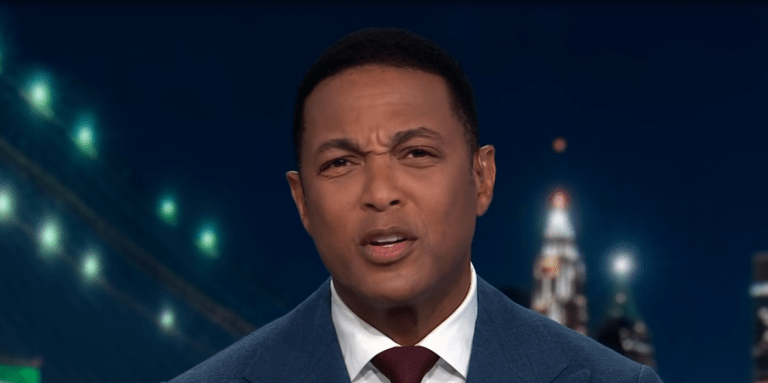
Judge Who Blocked Don Lemon Charges Has Glaring Conflict of Interest

(Luis CornelioHeadline USA) The federal judge who reportedly declined to approve a complaint against former CNN anchor-turned-YouTuber Don Lemon is married to a top prosecutor in Minnesota Attorney General Keith Ellison’s office.

The potential conflict involves U.S. Magistrate Judge Douglas Micko, whose wife, Caitlin Micko, serves as an assistant attorney general under Ellison. Critics said that the ties may amount to an appearance of political bias, given Ellison’s office’s aggressive opposition to President Donald Trump’s ICE operations.

The ties, first reported by Fox News, surfaced after Judge Micko declined to authorize federal charges sought by the Trump-led Department of Justice against Lemon in connection to this role in anti-ICE riot inside a St. Paul church.

According to CBS News, Lemon could still face charges as DOJ officials weigh all their options.

Lemon has claimed he was merely documenting the protest, though his own footage showed him interacting with demonstrators shortly before the rioters broke into the church.

Lemon’s attorney, Abbe Lowell, said Judge Micko’s reported decision validated Lemon’s actions.

“The magistrate’s reported actions confirm the nature of Don’s First Amendment protected work this weekend in Minnesota as a reporter,” Lowell wrote.

He added: “Should the Department of Justice continue with a stunning and troubling effort to silence and punish a journalist for doing his job, Don will call out their latest attack on the rule of law and fight any charges vigorously and thoroughly in court.”

The controversy comes as Attorney General Pam Bondi approved the arrests of Nekima Levy Armstrong, Chauntyll Louisa Allen and William Kelly on federal conspiracy-against-rights charges related to the same wave of anti-ICE unrest.

In a statement defending the prosecutions, Bondi underscored the seriousness of the church riot.

“Our nation was settled and founded by people fleeing religious persecution. Religious freedom is the bedrock of this country. We will protect our pastors. We will protect our churches. We will protect Americans of faith.”

Immigration Officials Allow Suspect in $100M Jewelry Heist to Self Deport, Avoiding Trial

(Headline USA) Federal immigration authorities allowed a suspect in a $100 million jewelry heist believed to be the largest in U.S. history to deport himself to South America in December, a move that stunned and upset prosecutors who were planning to try the case and send him to prison.

Jeson Nelon Presilla Flores was one of seven people charged last year with stalking an armored truck to a rural freeway rest stop north of Los Angeles and stealing millions worth of diamonds, emeralds, gold, rubies and designer watches in 2022.

Flores faced up to 15 years in federal prison if convicted on charges of conspiracy to commit theft from interstate and foreign shipment and theft from interstate and foreign shipment. He pleaded not guilty to the charges.

U.S. Immigration and Customs Enforcement deported Flores in late December after he requested voluntary departure, prosecutors said in court filings.

ICE did not immediately respond to an email seeking comment.

Flores’ attorney, John D. Robertson, motioned to dismiss the indictment against his client, asking for the charges to be permanently dropped and the case closed.

Federal prosecutors oppose the motion and say they still hope to bring Flores to trial, asking for charges to be dropped “without prejudice” to keep the door open for criminal prosecution in the future.

Despite Flores being a lawful permanent resident and released on bail, he was taken into ICE custody in September, according to court filings from his defense attorneys. Federal prosecutors say they were unaware Flores had an immigration detainer.

This was a violation of his criminal prosecution rights and warrants his case getting dismissed, Robertson said in his motion.

Flores opted for deportation to Chile during a Dec. 16 immigration hearing, according to court documents. The judge denied his voluntary departure application but issued a final order of removal, and he was sent to Ecuador.

“Prosecutors are supposed to allow the civil immigration process to play out independently while criminal charges are pending,” federal prosecutors wrote in their motion opposing the case dismissal. “That is exactly what they did in this case — unwittingly to defendant’s benefit in that he will now avoid trial, and any potential conviction and sentence, unless and until he returns to the United States.”

What happened to Flores is extremely unusual, especially in a case of this significance, former federal prosecutor Laurie Levenson said.

Ordinarily, if a criminal defendant had immigration proceedings against them — which is common — immigration officials would inform prosecutors what was happening. In minor cases, a defendant can sometimes choose to self-deport in lieu of prosecution.

“It’s just beyond me how they would deport him without the prosecutors … being in on the conversation,” Levenson said. “This really was the left hand not knowing what the right hand was doing.”

The jewelers who were stolen from are also demanding answers.

“When a defendant in a major federal theft case leaves the country before trial, victims are left without answers, without a verdict, and without closure,” Jerry Kroll, an attorney for some of the jewelry companies, told the Los Angeles Times.

The infamous jewelry heist unfolded in July 2022 after the suspects scouted the Brink’s tractor-trailer leaving an international jewelry show near San Francisco with dozens of bags of jewels, according to the indictment. While the victims reported more than $100 million in losses, Brink’s said the stolen items were worth less than $10 million.

A lawsuit filed by the Brink’s security company said one of the drivers was asleep inside the big rig and the other was getting food inside the rest stop when the thieves broke in.

Adapted from reporting by the Associated Press

Homicide Rate Declines Sharply in Dozens of US Cities, a New Report Shows

(Headline USA) Data collected from 35 American cities showed a 21% decrease in the homicide rate from 2024 to 2025, translating to about 922 fewer homicides last year, according to a new report from the independent Council on Criminal Justice.

The report, released on Thursday, tracked 13 crimes and recorded drops last year in 11 of those categories including carjackings, shoplifting, aggravated assaults and others. Drug crimes saw a small increase over last year and sexual assaults stayed even between 2024 and 2025, the study found.

Experts said cities and states beyond those surveyed showed similar declines in homicides and other crimes. But they said it’s too early to tell what is prompting the change even as elected officials at all levels — both Democrats and Republicans — have been claiming credit.

Adam Gelb, president and CEO of the council — a nonpartisan think tank for criminal justice policy and research — said that after historic increases in violence during the COVID-19 pandemic, this year brought historic decreases. The study found some cities recorded decades-low numbers, with the overall homicide rate dropping to its lowest in decades.

“It’s a dramatic drop to an absolutely astonishing level. As we celebrate it we also need to unpack and try to understand it,” Gelb said. “There’s never one reason crime goes up or down.”

The council collects data from police departments and other law enforcement sources. Some of the report categories included data from as many as 35 cities, while others because of differences in definitions for specific crimes or tracking gaps, include fewer cities in their totals. Many of the property crimes in the report also declined, including a 27% drop in vehicle thefts and 10% drop in shoplifting among the reporting cities.

The council’s report showed a decrease in the homicide rate in 31 of 35 cities including a 40% decrease or more in Denver, Omaha, Nebraska, and Washington. The only city included that reported a double-digit increase was Little Rock, Arkansas, where the rate increased by 16% from 2024.

Gelb said the broad crime rate decreases have made some criminologists question historic understandings of what drives trends in violent crime and how to battle it.

“We want to believe that local factors really matter for crime numbers, that it is fundamentally a neighborhood problem with neighborhood level solutions,” he said. “We’re now seeing that broad, very broad social, cultural and economic forces at the national level can assert huge influence on what happens at the local level.”

Republicans, many of whom called the decrease in violent crime in many cities in 2024 unreliable, have rushed to say that tough-on-crime stances like deploying the National Guard to cities like New Orleans and the nation’s capital, coupled with immigration operation surges, have all played a role in this year’s drops.

However, cities that saw no surges of either troops or federal agents saw similar historic drops in violent and other crimes, according to the Council’s annual report.

Democratic mayors are also touting their policies as playing roles in the 2025 decreases.

Jens Ludwig, a public policy professor and the Director of the University of Chicago Crime Lab, stressed that many factors can contribute to a reduction in crime, whether that’s increased spending on law enforcement or increased spending on education to improve graduation rates.

“The fact that in any individual city, we are seeing crime drop across so many neighborhoods and in so many categories, means it can’t be any particular pet project in a neighborhood enacted by a mayor,” Ludwig said. And because the decrease is happening in multiple cities, “it’s not like any individual mayor is a genius in figuring this out.”

He said while often nobody knows what drives big swings in crime numbers, the decrease could be in part due to the continued normalization after big spikes in crime for several years during the pandemic. A hypothesis that stresses the declines might not last.

“If you look at violent crime rates in the U.S., it is much more volatile year to year than the poverty rate, or the unemployment rate; It is one of those big social indicators that just swings around a lot year to year,” Ludwig said. “Regardless of credit for these declines, I think it’s too soon for anybody on either side of this to declare mission accomplished.”

Adapted from reporting by the Associated Press

Millions of Americans Prepare for Potentially Catastrophic Ice Storm. Here’s What the Numbers Show

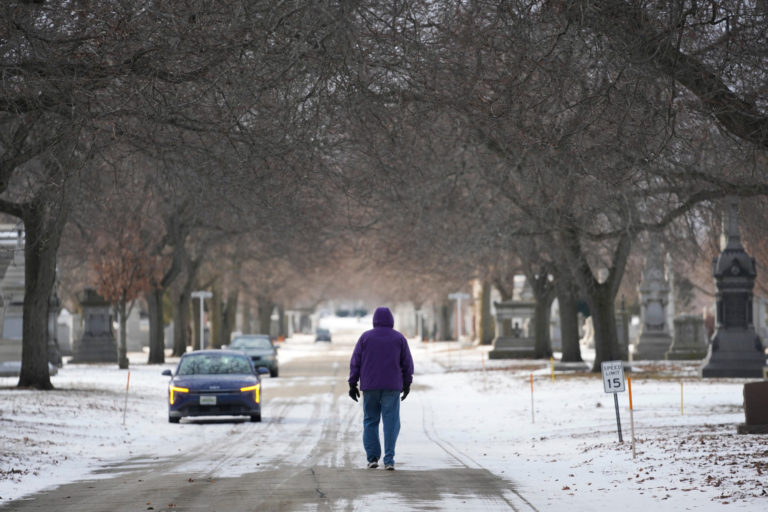
(Headline USA) Millions of Americans from New Mexico to the Carolinas are bracing for a potentially catastrophic ice storm that could crush trees and power lines and knock out power for days, while Washington, D.C., Philadelphia, New York City and Boston could see enough snow to make travel very difficult or nearly impossible, forecasters say.

About 78 million people in two-dozen states, from New Mexico and Montana in the West to the Carolinas and Maine in the east, were under winter storm or extreme cold warnings on Thursday. Millions more were in some type of watch, warning or advisory for rugged winter weather.

The storm, expected to begin Friday and continue through the weekend, is also projected to bring heavy snow and all types of wintry precipitation, including freezing rain and sleet. An atmospheric river of moisture could be in place by the weekend, pulling precipitation across Texas and other states along the Gulf Coast and continuing across Georgia and the Carolinas before heading northeast, forecasters said.

“Snow amounts could reach a foot or more in the I-95 major cities from D.C. to Boston,” said weather service forecasters on the East Coast, who are increasingly confident the storm will strike the big cities.

In Washington, D.C., “the combination of heavy snow and ice alongside prolonged very cold temperatures presents a unique and significant risk to life and property across virtually the entire region,” forecasters said in the weather service’s Washington/Baltimore office warned.

Here’s a look at the approaching storm and how people are preparing for it, by the numbers:

0

The number of snowplows owned by the city of Jackson, Mississippi, where a mix of ice and sleet is possible this weekend. The city uses other heavy machinery like skid steers and small excavators to clear roads, said James Caldwell, deputy director of public works. Jackson also has three trucks that carry salt and sand to spread across roads before freezing weather.

0.5

The amount of ice — half an inch, or 1.27 centimeters — that can lead to a crippling ice storm, toppling trees and power lines to create widespread and long-lasting power outages. The latest forecasts from the weather service warn of the potential for a half-inch of ice or more for many areas, including parts of Arkansas, Louisiana, Alabama, and Tennessee.

1

The number of Nashville snowplows named after country music legend and Tennessee native Dolly Parton (Dolly Plowton). Another snowplow in East Tennessee was named Snowlene after her classic hit song “Jolene” as part of a 2022 naming contest.

3

The number of layers needed to keep warm in extreme cold. AP video journalist Mark Vancleave in Minnesota explains the benefits of all three — a base layer, a middle layer and an outer shell — in this video.

4

The number of major U.S. hub airports in the path of the southern storm this weekend, when ice, sleet and snow could delay passengers and cargo: Dallas-Fort Worth; Atlanta; Memphis, Tennessee, and Charlotte, North Carolina. Still more major airports on the East Coast could see delays later, as the storm barrels east.

12

The number of beet juice-dispensing trucks in the city of Chicago, according to Cole Stallard, Chicago’s commissioner of Streets and Sanitation. The natural sugars of beet juice lower the freezing point of water, allowing salt mixtures to work at much lower temperatures and preventing refreezing, while also helping salt stick to the road longer.

15

The number of snow and ice removal trucks operated by Memphis, Tennessee’s Division of Public Works. The city also has six trucks that spread brine, a mixture designed to melt wintry precipitation. Statewide, the Tennessee Department of Transportation has 851 salt trucks and 634 brine trucks, and most of the salt trucks double as plows.

19

Parts of at least 19 states in the storm’s path were under winter storm watches by late Wednesday, with more watches and warnings expected as the system approaches. They include Texas, New Mexico, Oklahoma, Kansas, Missouri, Arkansas, Louisiana, Mississippi, Alabama, Georgia, Tennessee, North Carolina, South Carolina, Kentucky, Indiana, Illinois, Ohio, Virginia and West Virginia. An estimated 55 million people are included in these winter storm watches, the weather service said.

32

The degree in Fahrenheit when water freezes, equivalent to 0 Celsius. This is a magic number when it comes to winter weather, said Eric Guillot, a scientist at the weather service. If the temperature is slightly above 32, it will be mostly liquid. But the colder it is below the mark, the more efficiently precipitation will freeze.

45

The number of snowplow trucks at the ready in Nashville, Tennessee, according to the Nashville Department of Transportation and Multimodal Infrastructure.

50 below zero

The windchill value — how cold it feels to a person when winds are factored in — that is expected in parts of the Northern Plains, the weather service projects. That equates to minus 45.6 Celsius and is forecast for parts of northern Minnesota and North Dakota.

“When the weather forecast says, ‘feels like negative 34,’ it’s just a matter of covering skin and being prepared for it,” said Nils Anderson, who owns Duluth Gear Exchange, an outdoor equipment store in Duluth, Minnesota.

600

The number of miles added last year to snowplow routes in Nashville, Tennessee. That was done “to get deeper into our neighborhoods — roads that had never been plowed before,” said Alex Apple, a spokesperson for Nashville Mayor Freddie O’Connell.

1,000-plus

Texas has this number of pieces of winter weather equipment, including snowplows, motor graders and brine tankers, Texas Department of Transportation spokesperson Adam Hammons said. He said the agency also works with state partners and contractors to get more equipment when needed. In the Dallas area, “right now our main focus is treating our roadways in advance of the storm,” agency spokesperson Tony Hartzel said Wednesday.

78,000

The number of cubic yards of salt on hand at the Arkansas Department of Transportation. The state has 121 salt houses around the Arkansas, plus 600 salt spreaders and 700 snowplows, said Dave Parker, an agency spokesperson.

Adapted from reporting by the Associated Press

Trump Asks For ‘Decisive’ Military Operations for Iran

(Kyle Anzalone, Antiwar.com) The White House is developing military options for President Donald Trump to attack Iran

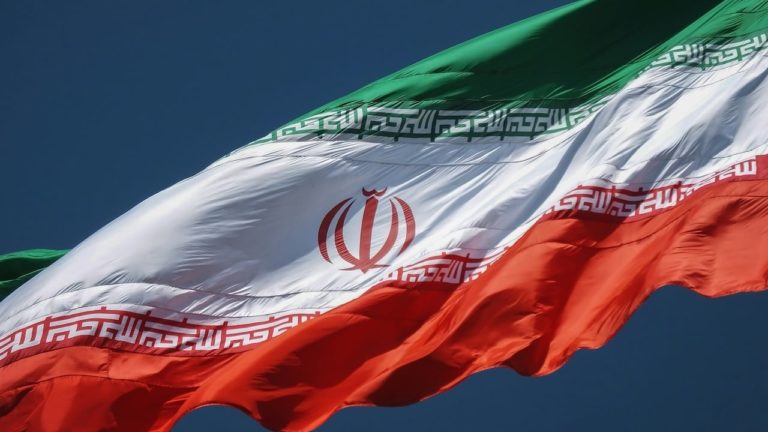
According to sources speaking with The Wall Street Journal, Trump is pressing top American officials to develop plans for attacking Iran that would be “decisive.” The options under development range from striking Iranian military facilities or attempting to overthrow the government with a bombing campaign. 

US military personnel in the Middle East and the Iranian government believed Trump was going to order strikes on Iran last week. However, after speaking with Israeli Prime Minister Benjamin Netanyahu, he declined to give the order. 

An official said that Netanyahu told Trump that Israel was unprepared for an Iranian counterattack. Trump’s advisors also could not give an assurance to the President that the planned attack would cause the Iranian government to fall. 

US officials were additionally concerned that the Department of War lacked the necessary military equipment in the Middle East to defend American soldiers from Iranian retaliatory attacks. 

Trump will have more options for a larger attack on Iran in the coming weeks as the US is moving military assets to the Middle East. The President has ordered an aircraft carrier strike group, air defense systems, and additional fighter jets to the Middle East. 

In recent months, the US moved two aircraft carrier strike groups out of the Middle East, including the USS Gerald Ford. The Ford and its support ships were moved into Latin America to target Venezuela. 

This article originally appeared at Antiwar.com.  


Canada Prepares for ‘Hypothetical’ US Invasion

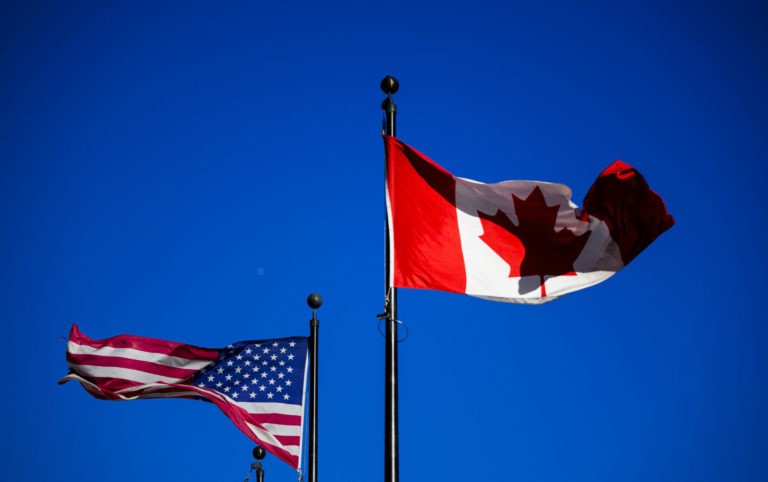
(Will Porter, Antiwar.com) The Canadian military has developed a theoretical model for how it would combat an American invasion, envisioning mujahideen-style insurgency tactics and other forms of unconventional warfare, according to the Globe and Mail.

While Canadian officials told the outlet that such a scenario is “unlikely,” the move reflects growing tensions between the two neighbors, with President Donald Trump having repeatedly floated the idea of making Canada the 51st US state. On Monday, he shared an edited photo depicting both Canada and Greenland as American territories.

“The Canadian Armed Forces have modelled a hypothetical US military invasion of Canada and the country’s potential response,” the Globe and Mail reported on Tuesday, citing two unnamed senior officials.

It added that the model “includes tactics similar to those employed against Russia and later US-led forces in Afghanistan,” which would aim to “impose mass casualties on US occupying forces.”

In the event of an attack, Canadian military planners believe US troops could overrun the country’s strategic positions both on land and at sea in as little as two days, the senior officials said. The model therefore proposes various types of “unconventional warfare,” including “ambushes, sabotage, drone warfare or hit-and-run tactics” by small groups of Canadian soldiers or “armed civilians.”

The new military modelling comes as the Trump administration steps up its threats toward Greenland – even hinting that it could seize the territory by force. Ottawa is now reportedly considering sending troops to Greenland, where several European states have deployed soldiers for military drills in an apparent warning to Washington.

Responding to recent comments by Canadian Prime Minister Mark Carney – who indirectly suggested the US president was causing a geopolitical “rupture” – Trump insisted Ottawa should be “grateful” for its relationship with the United States.

“Canada gets a lot of freebies from us, by the way. They should be grateful, also, but they’re not. I watched your prime minister yesterday. He wasn’t so grateful,” he said. “Canada lives by the United States. Remember that, Mark, next time you make your statements.”

Even as Canada’s military considers a hypothetical US invasion, one of the senior officials told Globe and Mail that relations between the two countries “remain positive,” noting that joint work continues on the proposed “Golden Dome” missile defense shield. However, Trump has argued that acquiring Greenland is vital to that project, a move that Canada opposes.

“We’re concerned about this escalation, to be absolutely clear… we always will support sovereignty and territorial integrity of countries, wherever their geographic location is,” Carney told reporters over the weekend.


This article originally appeared at Antiwar.com. 

Trump Says He Reached Framework of Greenland Deal

(Kyle Anzalone, Antiwar.com) Update 1/21/2026 7:10 pm est: Three senior officials told The New York Times that the deal discussed between President Donald Trump and NATO Secretary General Mark Rutte involves giving the US sovereignty over small portions of Greenland. 

President Donald Trump said he reached the “framework” of an agreement regarding Greenland after talks with NATO Secretary-General Mark Rutte.

“Based upon a very productive meeting that I have had with the Secretary General of NATO, Mark Rutte, we have formed the framework of a future deal with respect to Greenland and, in fact, the entire Arctic Region,” Trump wrote on Truth Social Wednesday. “This solution, if consummated, will be a great one for the United States of America and all NATO Nations.”

The President did not provide details of the framework agreement. Trump later said that “it’s a little bit complex, but we’ll explain it down the line,” adding the potential agreement is just a “concept.”

He explained that Vice President JD Vance, Secretary of State Marco Rubio, and Special Envoy Steve Witkoff would lead the US in talks on Greenland. 

It’s unclear whether Rutte has the power to negotiate an agreement with the US over Greenland. Rutte is the former prime minister of the Netherlands and the current top civilian official at NATO. 

In his post, Trump said he would drop the 10% tariffs imposed on eight European countries in response to their opposition to the US seizing Greenland from Denmark. 

In recent days, the President has argued that the US must take over Greenland or Russia, and China will seize the Danish colony. Trump has raised concerns over the past week when he repeatedly refused to rule out using military force against Greenland. 

However, earlier in the day on Wednesday, Trump told the attendees of the World Economic Forum in Davos that he would not deploy the military to take Greenland. He added that he did intend for Greenland to become part of the United States. 

The announcement of the framework agreement followed the European Parliament’s vote to suspend a trade agreement with the US. Last April, Trump threatened to impose 20% tariffs on European countries unless the bloc agreed to a trade deal with the US. 

In August, the EU and the US reached a new trade agreement. The US agreed to cap most tariffs at 15%. Europe pledged to invest hundreds of billions of dollars in the US economy and buy $750 billion in American energy exports. 


This article originally appeared at Antiwar.com.  

Russia Gold Gains Replace Frozen Assets

(Mike Maharrey, Money Metals News Service) Here’s one reason to own gold. The appreciation of Russia’s gold reserves has nearly replaced the value of the assets frozen by the European Union when the country invaded Ukraine.

Based on calculations by Bloomberg, the value of Russian gold reserves has surged by $216 billion since February 2022.

The EU froze approximately €210 billion in Russian sovereign assets held within the bloc. That equals about $244 billion.

As Bloomberg put it, the surge in gold reserves “restores most of Russia’s lost financial capacity,” even if it never gets those assets back.

Russia has held its gold reserve steady throughout the war. Today, it stands at the ready as a sort of emergency fund. As Bloomberg noted, “While securities and cash immobilized in Europe cannot be sold or pledged, gold can still be monetized if needed.”

Russia launched a gold buying spree beginning in 2014. Over the next six years, the Bank of Russia increased its reserves by around 40 million ounces (1,244 tonnes).

During this period, the price of gold ranged from $1,100 to $1,500 an ounce.

When the war began, Russia held about half of its reserves in dollar, euro, and pound sterling assets. The other half was in yuan and gold, which remain accessible.

The Russians also made a shrewd move before the invasion of Ukraine, transferring their National Welfare Fund holdings into yuan (60 percent) and gold (40 percent). A RAND Corporation study notes, “This was an indication that Russia was preparing for increased Western economic pressure. During the war, Russia has been using these funds to support the budget.

Bloomberg Economics analyst Alex Isakov noted that “Accumulating a gold pile was a hedge against geopolitical shocks — it worked.”

“The Bank of Russia’s approach to gold purchases addressed three different goals: (i) diversifying international reserve assets away from the risks of reserve currency issuing countries, (ii) boosting domestic local currency liquidity by exchanging physical gold for rubles, and (iii) providing a source of stable demand for local gold miners. The increase in the value of gold holdings proves the diversification and hedging value of gold reserves.

“Currently, the Russians appear content to sit on their gold cushion. According to Renaissance Capital Head of Research Oleg Kuzmin, the Bank of Russia has enough liquidity in yuan to deal with any potential shocks. Unless there is a major crisis, the Russians are unlikely to sell, given the ‘limited options to reallocate funds amid sanctions.’”

Russia has another advantage. It ranks as the world’s number two gold producer, mining around 300 tonnes every year. That means the government can access and use gold to support the national economy without tapping into reserves.

According to the Kyiv Independent, Russia has exchanged gold for other currencies, including dollars and euros. The country has also used gold directly for purchases.

“There is little doubt that Russia is already using gold to pay for goods it cannot procure conventionally, or for transactions it wishes to obscure. An open-source investigation by Sayari, for example, revealed that unsanctioned banks were trading gold for cash in Turkey. Russia has also partly paid Iranian drone manufacturer Sahara Thunder in gold for 6,000 Shahed drones and related equipment.”

Despite their best efforts, the West has found it difficult to stop Russia from using its gold due to its fungible nature (easy to exchange) and the global demand for the precious metal.

Gold is money, and it is recognized as such everywhere. Even if they don’t want dollars or some other fiat currencies, everybody wants gold.

This is not to justify Russia’s wartime actions. It merely underscores the nature of gold as money and its important role in the global economy. When fiat currencies are cut off or fail, gold will always remain a viable alternative.

This is precisely why so many countries are accumulating gold at a rapid pace.


Mike Maharrey is a journalist and market analyst for Money Metals with over a decade of experience in precious metals. He holds a BS in accounting from the University of Kentucky and a BA in journalism from the University of South Florida.