Pentagon Can Now Weaponize ChatGPT after Terms of Service Altered

(Ken Silva, Headline USA) The artificial intelligence firm OpenAI has stealthily removed prohibitions on using its technology for military purposes—a move that may pave the way for the Pentagon to weaponize programs such as ChatGPT, the popular tool that mimics human conversation.

The Intercept reported on Friday that OpenAI had deleted two days earlier a ban on “activity that has high risk of physical harm, including,” specifically, “weapons development” and “military and warfare.”

An OpenAI spokesperson told The Intercept that the AI company wants to pursue certain “national security use cases that align with our mission.” The spokesperson reportedly cited a plan to create “cybersecurity tools” with DARPA, and that “the goal with our policy update is to provide clarity and the ability to have these discussions.”

The Intercept noted that none of OpenAI’s current public technologies could be used directly to kill someone. However, programs such as ChatGPT can be useful for intelligence analysis, logistics and numerous other purposes.

“I could imagine that the shift away from ‘military and warfare’ to ‘weapons’ leaves open a space for OpenAI to support operational infrastructures as long as the application doesn’t directly involve weapons development narrowly defined,” Lucy Suchman, professor emerita of anthropology of science and technology at Lancaster University, told The Intercept.

OpenAI tech could also conceivably be used to help make convincing “deepfakes”—videos, audio or images where a person is replaced with someone else’s likeness.

And indeed, a Pentagon procurement document revealed last March that the Defense Department is looking to obtain numerous new technologies, including ones to create deepfakes.

The ostensible purpose of deepfakes is so that U.S. Special Operations Command can engage in “influence operations, digital deception, communication disruption, and disinformation campaigns at the tactical edge and operational levels,” according to the procurement document.

While the SOCOM document purports to only use its psyops on foreign populations, history shows that military technology used overseas often comes back home to be deployed on domestic populations—from drone technology first experimented with in Vietnam to facial recognition software developed in Afghanistan. Economists Chris Coyne and Abigail Hall, authors of Tyranny Comes Home, termed this the “the boomerang effect.”

“The U.S. government is able to experiment with a broader range of social controls,” Coyne and Hall wrote. “Under certain conditions, these policies, tactics, and technologies are then re-imported to America, changing the national landscape and increasing the extent to which we live in a police state.”

Ken Silva is a staff writer at Headline USA. Follow him at twitter.com/jd_cashless.

The Ninja Price Increase — Shrinkflation

(Mike Maharrey, Money Metals Exchange) You know all about price inflation and how it squeezes your wallet. But there are also ninja price increases out there that you might not notice. It’s called “shrinkflation.”

Inflation robs you of purchasing power by driving up the price of everything you buy. The government reports price inflation using the Consumer Price Index (CPI) but it’s a lot worse than they’re telling you.

In the first place, the CPI is rigged to understate the extent of price inflation. You probably realize this every time you go to the store.

But price inflation also manifests itself in ways a government formula could never capture, and you may not even notice. Not only do you pay more for everything you buy, you get less.

Literally.

And that’s called shrinkflation.

Consumers aren’t the only ones struggling with rising prices. Producers have to deal with them as well. The cost of materials, labor, and equipment go up, putting the squeeze on companies’ bottom lines. Eventually, they have to pass those costs on to their customers.

But raising prices isn’t a popular move. Ideally, a company would love to hide the price increase from you.

Enter shrinkflation.

Instead of raising the price, the company just gives you less for the same amount of money. It does this by shrinking packages or putting less stuff in the same size container.

Shrinkflation doesn’t show up in the CPI, and most of the time, you probably don’t even notice. But the effect is the same as rising prices. You ultimately end up with less stuff.

It is stealth inflation.

Here’s a recent example courtesy of Campbell’s Soup.

Notice you only get 16.3 ounces of soup in the “New Look” can. You used to get 18.8 ounces. That’s a 13.3 percent decrease in the amount of soup.

Make no mistake; you’ll pay the same amount for the “New Look,” if not more.

A friend of mine had his own run-in with shrinkflation. Here’s how he described it in a Facebook post.

Today I picked up a new Kentucky license plate for the Jeep. The plate they handed me felt more like plastic than metal, was thinner than usual, and no longer had the raised letters and numbers of the past. This, in a vacuum, would be unconcerned.

But as my friend astutely pointed out, it is “part and parcel” of a bigger picture and it reveals exactly what the government is doing to your money as a matter of policy.

The devaluation of the dollar manifests itself everywhere in ways we don’t even expect or measure. The consumer price index measures inflation charitably by allowing, at their discretion, for the use of substitute goods and services to offset price increases. There are no aggregate metrics to account for the decrease in quality of goods, for shrinkflation, and the precipitous declines we’re experiencing in the quality and formerly personal nature of important services.

MousePrint.org chronicles shrinkflation. Here are some recent examples.

  • A box of Huggies Simply Clean Wipes now has 64 fewer wipes per carton.
  • Walmart brand liquid soap went from 56 ounces per bottle to 50 ounces per bottle.
  • Folger’s Breakfast Blend coffee went from 25.4 ounces to 22.6 ounces.
  • The large 30-ounce carton of Pepperidge Farm Gold Fish was reduced by almost 10 percent from 30 ounces to 27.3 ounces.
  • The standard 92-ounce bottle of Gain detergent is now 88 ounces.
  • A family-size bags of Double Stuf Oreos now have four fewer cookies in each bag. (Did the family shrink?)

Most of the time, consumers don’t even notice shrinkflation. But when they do, they get mad. And their anger is usually directed at the “greedy” corporations that are charging them the same for less.

But there’s another culprit.

The Federal Reserve.

Price inflation is a symptom of monetary inflation. As the central bank creates money out of thin air and injects it into the economy, prices generally rise. Economist Murray Rothbard noted that since governments have deemed “paper tickets” and “computer digits” money, “then the government, as dominant money-supplier, becomes free to create money costlessly and at will. As a result, this ‘inflation’ of the money supply destroys the value of the dollar or pound, drives up prices, cripples economic calculation, and hobbles and seriously damages the workings of the market economy.”

Companies can’t just ignore their cost problems. They can either raise prices, which will make you mad, or shrink package sizes, which will still make you mad, but you might not notice.

But the end result is always the same. You end up paying more and getting less.

Gold Builds Support at $2,000; What’s Next?

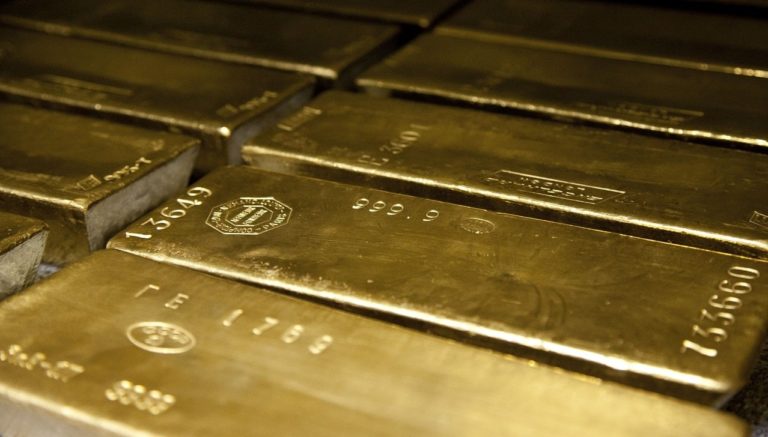
(Mike Maharrey, Money Metals Exchange) Gold appears to have built solid support above $2,000 an ounce, but momentum to move higher in the short term has eased with uncertainty about the timing of Federal Reserve rate hikes.

But short-term sentiment aside, there are plenty of reasons to remain bullish on the yellow metal.

The Fed appeared to surrender to inflation at its December meeting. While the central bank held rates steady, it signaled three rate cuts for 2024 with another four cuts in 2025. That would lower rates to between 2 and 2.5 percent.

The markets began anticipating this pivot late last fall, sparking a big rally in the price of gold.

But the December CPI report reveals a dirty little secret. The Fed clearly hasn’t won the inflation fight. Both headline and core CPI remain far above the Federal Reserve’s mythical 2 percent target.

Fed officials have even tried to walk back expectations of rate cuts. Right after the December FOMC meeting, Federal Reserve Chairman Jerome Powell confessed, “Inflation has eased from its highs, and this has come without a significant increase in unemployment. That’s very good news. But inflation is still too high. Ongoing progress in bringing it down is not assured and the path forward is uncertain.” [Emphasis added]

Gold surged to a record high of around $2,135 in early December as rate cut mania took hold. But the yellow metal quickly sold off from that record level, tumbling well below $2,000 an ounce in the following week before rallying and consolidating above $2,000 after the Fed meeting.

Where is Gold Going from Here in The Short Term?

It appears gold is currently undergoing a period of consolidation between $2,000 and $2,050 per ounce. This could set the stage for another big rally if the Fed goes forward with the anticipated rate cuts in the spring.

Currently, market sentiment seems to be mixed when it comes to the Fed. The December CPI report dampened rate cut enthusiasm, but optimism continues to bubble under the surface. Traders are still pricing in an 81 percent chance that the Fed will start cutting rates in March, according to CME’s Fed watch tool.

Exinity Group chief market analyst Han Tan told Reuters, “Gold’s window for posting fresh record highs should remain open as long as the Fed can move in line with market expectations.”

The most recent data from the Commodity Futures Trading Commission Commitments of Traders (COTs) report showed money managers are liquidating long positions built up during the recent rate cut speculative mania. That would appear to be a bearish indicator. But on the other side of the coin, money managers seem reluctant to build significant short positions.

Long positions in gold futures in the managed money category fell by 20,051 contracts to 134,333. But short positions only increased by 639 contracts to 45,874. Net longs have fallen to a 2-month low of 88,459 contracts.

Meanwhile, safe-haven buying due to the ongoing conflict in the Middle East and robust central bank gold buying has supported the price of gold despite increasing big fund managers moderating their bullish stance.

“A tossup” might be the best word to describe market sentiment when it comes to gold right now.

A TD Securities commodity analyst told Kitco News that emerging doubts about the early timing for rate cuts drove the move out of long positions.

Strong labor markets are associated with continued inflation pressures. And with core CPI much above the two percent target, the market concluded that a very early Fed easing is not in the cards.

But bullish sentiments die hard. The producer price index for December showed easing prices and that may reinvigorate the bulls, according to the TD analyst.

But with the most recent production prices coming in at below expectations, the market is once again going long, as it anticipates an early end to restrictive policy. There will likely be data-driven volatility as gold trends to our $2,200/oz Q2 target.

Looking at the Bigger Picture for Gold

The markets are fixated on what Powell and other Fed officials say. The real question is what will they do?

It’s important to understand the broader trajectory of the economy as we consider where gold might go in the longer term.

The reality is this economy is dependent on easy money. This is why the markets are desperate for rate cuts. Even if they won’t say it out loud, everybody knows an economy loaded up with debt can’t keep plugging along in a high interest rate environment.

We’re already seeing the negative impact of higher rates with corporate bankruptcies at higher levels than during the pandemic. Meanwhile, consumers and the federal government are levered to the hilt.

Ultimately, I think the markets are right about rate cuts.  It seems certain that the Fed will cut interest rates in the near future whether the inflation genie is back in the bottle or not. (And it’s not.)

But the markets are right for the wrong reason.

The mainstream narrative is that the Fed has essentially won the inflation fight without wrecking the economy. The central bank can now give back the easy money the economy depends on, guiding us to a “soft landing.”

But I think the more likely scenario is the Fed will be forced to cut interest rates more deeply and quickly than expected due to some type of crisis in the economy precipitated by higher rates.

Interest rates are at the same levels they were in 2006. After more than a decade of zero percent interest rates and trillions of dollars in money creation, there is even more debt and malinvestment in the economy now than there was then. If rising rates broke the economy and led to the Great Recession then, what makes anybody think things will be different this time around? Why should we expect a “soft landing?”

If (when) the economy does crash and there is some kind of financial crisis, the Fed will cut rates back to zero and it will relaunch quantitative easing. In other words, it will go right back to creating inflation. That’s the fork the Fed knows. History tells us it won’t hold the line against inflation during an economic crisis.

And as I’ve said before – any declaration of victory over inflation is really a surrender. It’s important to recognize any victory over inflation means the central bank is returning to inflationary policies. In effect, an end to rate increases, subsequent rate cuts, and loosening monetary policy will eventually lead to more price inflation.

In other words, as soon as the Fed declares victory, inflation wins. While you will likely see price volatility and some downward pressure on the price of gold as the markets digest every data point and try to read the Fed’s mind, it’s important to keep this bigger picture in mind.

A Woke Fascist? FBI Arrests Nazi for Threatening to Shoot ‘Transphobic Assholes’

(Ken Silva, Headline USA) Last week, the FBI arrested a biological male who identifies as a woman over threats on Facebook to kill “transphobic assholes” in a mass shooting.

Charging documents reveal that the defendant, Elizabeth West, of Oregon, identifies as transgender but also embraces Nazi ideology. It wasn’t until West started posting racist and antisemitic content on social media that the FBI arrested West—leading numerous media outlets to report on how an “Oregon woman” was arrested after threatening black people and Jews.

According to an affidavit from FBI special agent Damara Gonzalez, the FBI received a tip last September that West was posting threats on Facebook against coworkers.

“I’m writing to you right now is the fact that I’m at the end of my rope I’m probably gonna get fired from his job … I’m too old to keep looking for jobs and I’ve had it up to here being bullied by trans phobic assholes I am left with no alternative,” West allegedly said on Facebook.

A trans Nazi's Facebook post. PHOTO: FBI
A trans Nazi’s Facebook post. PHOTO: FBI

“I’ll probably have to go out in a blaze of glory. I’ve been preparing for this moment a long time at least then I’ll be remember I have no family no friends… So there really isn’t any point living anymore?”

The FBI also received information from a confidential informant last year that West attended neo-Nazi rallies in the Oregon area.

The FBI interviewed West last September and October. West, whose name at the time was Wyana Wolf, told agents about feeling lonely and suicidal.

Then, West suddenly started a Twitter account last October, and began to post racist and antisemitic content.

West posted and reposted multiple memes, videos and statements that contained violence toward black and Jewish people and immigrants, images of weapons owned, idolizing of Hitler and the Nazi flag, and a live-streamed video of the Christchurch Mosque shooting in New Zealand.

West’s Twitter bio states the following: “A Nazi dominatrix from Hell, who is tired of the blackening of America and Europe and ready to stand up to the Black orcs and the Jewish Wizards.”

West was again interviewed by FBI agents on Jan. 3 at West’s request. During that interview, West talked about having mental health issues, including bio-polar disorder and dissociative personality disorder.

“West stated that she is currently alone with no friends or family,” an FBI affidavit said of that Jan. 3 interview. “West needs someone to take care of her. She has no savings and does not know what she will do about retirement.”

A week later, FBI agents executed a search warrant at West’s home, finding “approximately” 11 handguns and 16 rifles, tens of thousands of rounds of ammunition, firearm accessories, a black book that matched the description of West’s “black shadow” journal, 48 drawings, and a black and white composition notebook containing notes made by West, according to the FBI affidavit.

Last Thursday, FBI agents interviewed a mental health worker assigned to work with West, who had given the mental health worker permission to speak with the agents.

“According to her provider, West had made a plan to check herself into a hospital on December 21, 2023. However, West’s plan to care for her animals while she was going to be in the hospital fell through, and she did not check herself into the hospital,” the FBI affidavit said.

“The mental health worker informed the agents that if West stopped receiving mental health treatment or had access to weapons, they felt she would be a danger to herself and others.”

The next day, the FBI arrested West for the Facebook posts identified back in September. West was charged with Interstate Threatening Communications, and has yet to make an initial court appearance.

The FBI agent who signed the affidavit outlining the facts of the case, Damara Gonzalez, had to disclose that she has previously been caught lying in at least one other investigation.

In a sex-abuse case against David George Hopkins, a judge found that agent Gonzales failed to properly advise the defendant of his Miranda rights, purposely made a misleading statement to the defendant regarding his rights and acted with “purposeful obfuscation.”

Ken Silva is a staff writer at Headline USA. Follow him at twitter.com/jd_cashless.

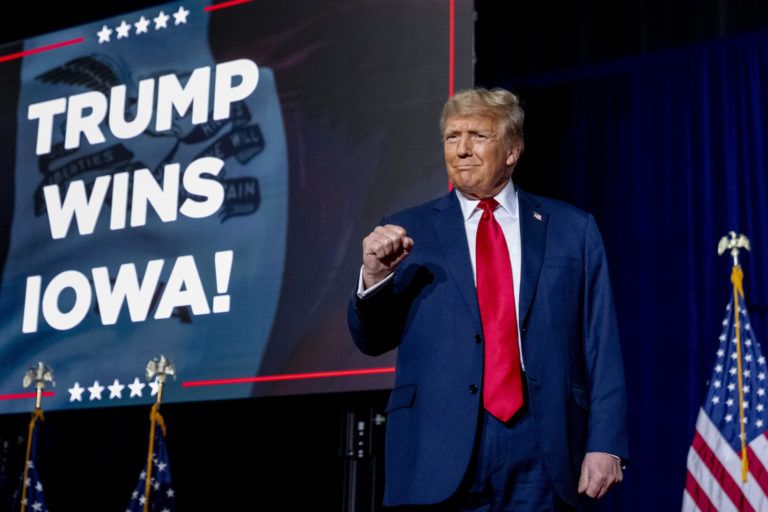
Trump Wins Iowa Handily, Calls for Party Unity as GOP Primaries Continue

(Former President Donald Trump on Monday night easily won the caucuses in Iowa, the first state to vote in a months-long primary process where Republican voters will decide who they want to face the likely Democratic nominee, President Joe Biden, in November.

Based on national polling and Trump’s decisive win Monday, it might not take months to decide the GOP nominee.

Initial results showed Trump winning more votes than all of his opponents combined, and he continued to hover just at or above the 50% threshold as more votes were counted.

The outcome seemed so lopsided early that most major news outlets – including Fox News, CNN, CBS News and ABC News – called the race less than 30 minutes into the caucuses.

Trump’s top challengers, former South Carolina Governor and UN Ambassador Nikki Haley and Florida Gov. Ron DeSantis, were in a tight battle for second place, but DeSantis started pulling away – up by more than two percentage points with more than 90% of precincts reporting – as the night wore on.

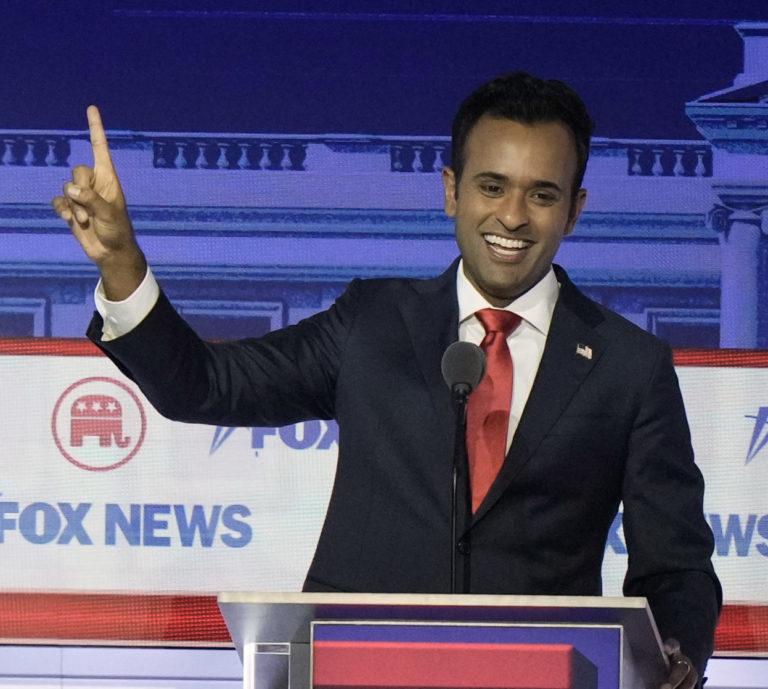
Businessman Vivek Ramaswamy was a distant fourth, leading to his departure from the race and his endorsement of Trump going forward.

“Well, that was fast,” the former president’s son, Donald Trump Jr., wrote Monday night on Twitter. “Thank you Iowa. Now let’s end this nonsense and go after the insanity that is today’s Democrat party. Enough is enough! It’s time to put America first for a change.”

Trump spoke later and, in addition to thanking Iowa voters for their support, he congratulated his opponents. Calling for unity, Trump said DeSantis and Haley “both did very well,” and he praised Ramaswamy for garnering about 7% of the vote after being relatively unknown less than a year ago.

“They are very smart, very smart people, very capable people,” Trump said of his primary challengers in a rare compliment paid to his political rivals.

In their post caucus addresses to supporters, both DeSantis and Haley indicated they would continue to fight to win the nomination.

Earlier, shortly after the caucuses opened, the DeSantis campaign lamented the media calling the race so early in the evening.

“It is absolutely outrageous that the media would participate in election interference by calling the race before tens of thousands of Iowans even had a chance to vote,” Communications Director Andrew Romeo said in a statement. “The media is in the tank for Trump and this is the most egregious example yet.”

U.S. Rep. Elise Stefanik, R-N.Y., who chairs the House Republican Conference, celebrated the “massive Trump victory” on Twitter Monday evening.

“I have said it before, I will say it again – President Trump is our Republican Nominee for 2024 & he will defeat Joe Biden this November to #SaveAmerica!” she wrote. “Congratulations [Trump] on your huge #TrumpTrain Iowa Caucus win! Choo-choo!!”

Trump leads Biden by four percentage points in the potential general election race, according to the latest the Center Square Voters’ Voice Poll. He also leads in most key swing states, according to recent polling.

Iowa Republicans faced snow and below-zero temperatures Monday to cast their votes in the state’s caucuses. Unlike most other states, Iowa caucus-goers attended party meetings at local schools, churches and more later in the evening to choose their candidates.

“I’m asking you to go out, brave the cold and support me in the Iowa Caucus,” DeSantis said in a video on Twitter ahead of the vote.

His opponents did the same.

“Bundle up and buckle up!” Haley said on X earlier Monday.

Former New Jersey Gov. Chris Christie withdrew from the race last week after lagging in the low single digits in polling. DeSantis and Haley also faced off in a CNN debate last week, one that Trump skipped and for which businessman Ramaswamy did not qualify.

Heading into the Iowa Caucuses, Trump held a hefty lead in the polls, outdistancing his challengers by about 30 points. Nationally, Trump holds an even bigger lead over his GOP rivals.

The Center Square’s Voter Voices poll released last week asked Republican voters, “Which of the following candidates are you most likely to vote for in the 2024 Republican primary?” Of those surveyed, 61% of Republicans picked Trump. In the poll, 13% of those surveyed chose Haley while 12% picked DeSantis.

New Hampshire voters are up next with the first primary on Tuesday of next week. Trump also holds a significant lead in polling there with 43.5% support, according to RealClearPolitics Poll Average of major polls across the country, but Haley has closed the gap down to about 14 percentage points with 29.3% support.

Nevada follows with a Feb. 8 caucus, followed by primaries on Feb. 24 in South Carolina and Feb. 27 in Michigan (though not all delegates will be awarded on this date in Michigan; more than half will be awarded at the state convention March 2); and caucuses in Idaho on March 2 and North Dakota on March 4.

The successful Republican candidate must secure at least 1,215 of 2,429 total delegates to secure the nomination. In Iowa, 40 delegates were up for grabs. Unlike the presidential general election in most states where all Electoral College votes go to the popular vote winner, the delegates in primaries and caucuses are divided between candidates by percentage.

On Super Tuesday, March 5, Republican voters from 15 states will select the candidate of their choice: Alabama, Alaska, Arkansas, California, Colorado, Maine, Massachusetts, Minnesota, North Carolina, Oklahoma, Tennessee, Texas, Utah, Vermont and Virginia.

Based on polling and Monday’s result, Trump could have the GOP nomination locked up by then.

SELLERS: Vivek Ramaswamy Has Earned a Hard Look for VP Nod

(Ben Sellers, Headline USA) Former President Donald Trump last week made big news when he said he had already selected his running mate during a town-hall discussion opposite the CNN-sponsored GOP debate.

The Iowa caucus-winner and presidential frontrunner appeared to walk back the remark ahead of Monday’s first nominating contest, indicating that the selection had not been fully discussed with his team.

However, the remarks both raise the temperature on speculation and, to some extent, give it closure—even though Trump’s pick remains a mystery to the public at large.

If Trump’s decision is made, there is not a lot of practical purpose for columnists to write at any great length in favor of one candidate or another in the hopes of somehow reaching the right set of eyes and moving the dial in a different direction.

Still, there is something that must be said in recognition of the unique role that Vivek Ramaswamy has played in the 2024 GOP campaign, and with the news that he appears now to be bringing his run to a close, some recognition is due, whether it is the nod as Trump’s running mate or not, to one long rumored to have been in the mix.

THE MAGA SURROGATE

After Ramaswamy dropped out of the race on Monday, following his fourth-place finish in the Iowa caucus, he offered his endorsement to Trump.

The former president, who had bashed Ramaswamy ahead of the contest, in turn offered praise to the businessman.

“He did a hell of a job,” Trump said. “He came from zero and he’s got a big percent, probably 8%, almost 8%. And that’s an amazing job.”

Yet, it’s safe to say that, in spite of his rhetoric to the contrary, Ramaswamy—who usually presented himself as the smartest guy in the room and the most closely allied candidate with Trumpian values—was wise enough to know that vice president was the position he was running for all along.

In effect, his true function in the primaries was to be a surrogate MAGA candidate and not allow the Nikki Haley faction to take control of framing the GOP narrative as it saw fit, while still allowing Trump to stay above the fray.

“Vivek’s job was to be the Trump stand-in and articulate Trump’s agenda effectively to a broader audience that have been turned off by Trump himself,” wrote Substack blogger Clandestine.

“He woke up a lot of people this way and garnered a lot of support, which he has now transferred to Trump via endorsement,” Clandestine continued. “Vivek did his job and I hope he can find himself a role in the Trump administration, because he is as sharp as they come and I am excited about him in the future if he proves he is for real.”

‘A PITCHER OF WARM PISS’

The vice presidency has often been given a bad rap for being a largely ceremonial position.

John Nance Garner, who served as vice president under Franklin Delano Roosevelt, famously told fellow Texan Lyndon B. Johnson that the office of the vice presidency “isn’t worth a pitcher of warm piss.”

But like FDR’s final running mate, Harry Truman, Johnson would go on to accept the post serving under President John F. Kennedy only to become president himself three years later when Kennedy died in office.

Conventional wisdom dictates that the vice president serves either as the mentor or de-facto leader to a more figurehead president (e.g. Dick Cheney to George W. Bush); as the buffoon or comic relief to a president with more gravitas (Dan Quayle, Joe Biden); or as a sort of sidekick whose main purposes are “to inquire daily as to the health of the president, and … to attend the funerals of Third World dictators,” in the words of former Sen. John McCain, R-Ariz.

Trump’s first pick, Mike Pence, undoubtedly filled the latter role.

In most every case in the modern presidency, though, the vice president has brought something to the table, politically speaking, that the president himself lacked or could not otherwise deliver.

Those criticized for their lack of experience tend to go with an elder statesman who knows the ins and outs of D.C.

Sometimes, a president whose base constituency leans to a particular demographic or geographic region will seek out balance to, say, clinch a crucial swing state.

Another crucial criterion is that a vice president not upstage the front-man, as McCain found out by choosing Sarah Palin for his ticket in 2008. Unfortunately, this has led to a succession of candidate with underwhelming charisma.

And, of course, morbidly but realistically, one never wants to select somebody who would give left-wing extremists an incentive to seek out regime change—as would, say, a coalition ticket of some kind.

NOT ANOTHER PENCE

Trump seemed to stick with many of these principles in his selection of Pence, who helped to assuage religious conservatives and others with reservations about the Manhattan mogul’s moral fiber.

But four years later, it was Pence who was on the outs with many of those same people for turning a blind eye to the 2020 election irregularities that no courts or secretaries of state had been willing to fully examine and audit prior to certifying the results.

Pence’s own presidential run last year proved to be a stunning failure, amassing large amounts of debt before becoming one of the first candidates to exit the race as his positions proved to be increasingly out-of-touch with the attitudes and values of GOP voters.

By contrast, Ramaswamy—with the exceptions, perhaps, of only Trump and Tucker Carlson—has become one of the leading ambassadors of the America First movement, which has come to dominate the GOP. It’s no surprise that Carlson, after signaling that he had no interest in the VP spot, came out in favor of Ramaswamy.

In many ways Ramaswamy is a better speaker than Trump himself at articulating the MAGA worldview. Time and time again, he has deftly dominated the media, running circles around their attempts to lay rhetorical traps and gotcha moments, and oftentimes successfully putting the questioners themselves on the defensive for their radical ideology.

Of course, some may worry that in seeking someone too similar to himself, Trump loses the benefit of using the running mate position to expand his voting base.

It is simply impossible, however, to imagine Trump selecting as his second-in-command someone who is not perfectly in sync with his own vision, and several factors bring that even farther to the forefront.

The first is that many—including Trump himself—see some of his poor staffing selections as the greatest failure of his first term. He’s pledged to use more prudence in his second-term selections.

“I’ve been through it. I know the good people, I know the bad people. I know weak people and strong people,” he said during a speech last June in Greensboro, North Carolina. “I know the people that are losers that we don’t want, I know the people that are winners that a lot of people don’t know or understand.”

A WORTHY SUCCESSOR

Trump’s age, although not as old or feeble as the current president and possible Democrat challenger, is also an important consideration for a running mate.

Whether his successor would potentially fill the remainder of his term or not, Trump certainly needs to anoint a successor to his movement who can begin to construct a vision for America’s future once the existential battle for its survival has been fought and won.

Ramaswamy’s youth makes him an obvious choice for the task, and while identity politics may be anathema to conservatives, his brown skin certainly doesn’t hurt the movement’s efforts at expanding its outreach and building on the inroads that Trump has made in that direction.

One final question, then, that remains is whether Ramaswamy could potentially upstage or outshine Trump. Here, however, Trump has proven to be a uniquely adroit figure.

Although Ramaswamy may be able to form craftier and more complex arguments, Trump’s uncanny ability to connect with his supporters has continued to defy all conventional logic and boils down to nothing more than the man himself and the cult of personality that surrounds him.

He is a larger than life figure at this point, reaching mythic proportions due to the significance the the leftists and their media allies have conferred upon him.

In a way, he could let his second term operate much as his campaign has thus far, coasting on his mythos, staying largely above the fray and allowing Ramaswamy to be his man on the ground doing the heavy lifting.

Ben Sellers is the editor of Headline USA. Follow him at twitter.com/realbensellers.

Biden White House Targeted in ‘Swatting’ Incident Triggered by 911 Call

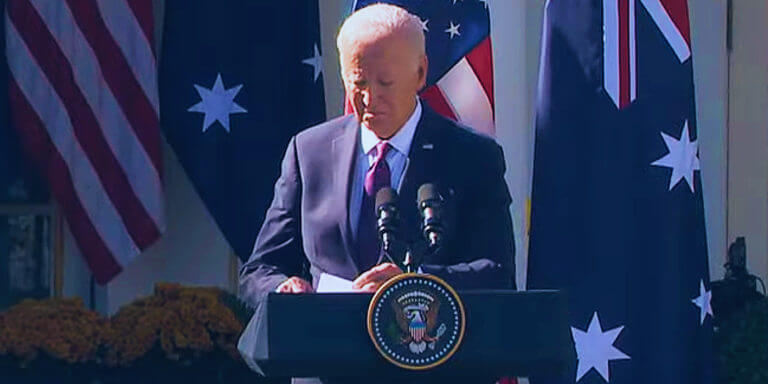
(Luis Cornelio, Headline USA) On Monday, the Biden White House fell victim to a swatting incident following a hoax 911 call falsely reporting a fire within the building, NBC News reported.

The unidentified prank caller falsely claimed that an individual was trapped inside, igniting the dispatch of several D.C. Fire and Emergency Medical Services Department units to the White House grounds at 7:00 a.m. ET.

According to NBC, Noah Gray, the spokesperson for D.C. Fire and Emergency, mentioned that the fake call was “in the same spirit” as previous “swatting” incidents involving various politicians.

The White House now joins a list including Reps. Marjorie Taylor, R-Ga.; Brandon Williams, R-N.Y.; Sen. Rick Scott, R-Fla.; Boston Mayor Michelle Wu; multiple Georgia state legislators; a former Nebraska lawmaker; and a current legislator from Ohio, all of whom have been targeted in swatting incidents.

Most recently, individuals known for their opposition to Donald Trump, such as such as Maine Secretary of State Shenna Bellows, Special Counsel Jack Smith, and U.S. District Judge Tanya Chutkan have also faced swatting incidents.

Swatting occurs when someone reports an imminent crime at a specific location with the intent of provoking a forceful law enforcement response.

D.C. Fire and Emergency said that no law enforcement was deployed to the White House, and the Secret Service stated that a potential fire would have been detected, according to NBC News.

At the time of the incident, President Joe Biden was at Camp David.

Greene, one of the most vocal critics of swatting who has been targeted multiple times, has proposed federal legislation seeking harsher penalties for individuals caught making fake police reports.

“The dangerous swatting harassment continues, as tonight, one of my family members was swatted at their house,” Greene said on Dec. 27. “I will be introducing legislation to make it much easier for law enforcement to arrest and prosecutors to prosecute these criminals.”

Bombshell: DA Willis Paid Much Higher Rate to Alleged Lover Than RICO Expert

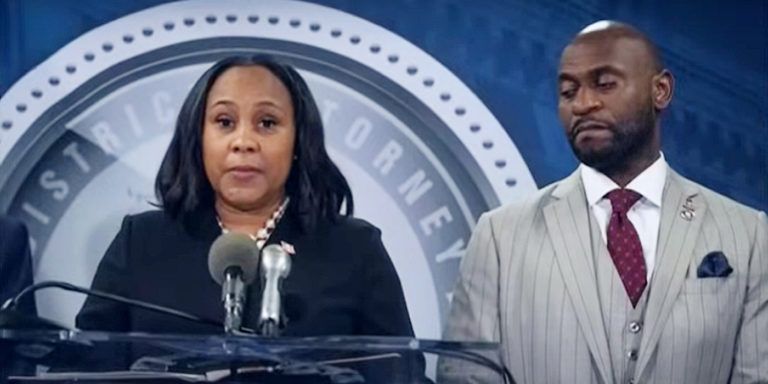
(Luis Cornelio, Headline USA) Fani Willis, the infamous district attorney in Fulton County known for her prosecution of Donald Trump, reportedly compensated a Racketeer Influenced and Corrupt Organizations (RICO) expert at a significantly lower rate than the man accused of being her lover, according to documents obtained by the Daily Caller. 

John Floyd, recognized as Georgia’s leading expert on RICO cases, received a contract of $150 per hour. In contrast, Nathan Wade, one of the three special prosecutors tapped by Willis, received a more generous hourly rate of $250, as reported by the Daily Caller. 

This development comes amid intense criticism directed at Willis for appointing Wade, who is relatively inexperienced and accused of an extramarital affair with Willis, to prosecute Trump and 18 other defendants.  

The charges relate to alleged attempts to challenge the results of the 2020 presidential election in Georgia. 

These revelations directly contradict Willis’ claims that both individuals along with a third prosecutor were paid the same rate, during a speech at Big Bethel AME Church.

“I’m a little confused. I appointed three special counsels, as is my right to do, paid them all the same hourly rate. They only attack one,” Willis claimed, as reported by the Daily Caller.

She added, “I hired one white woman, a good personal friend and great lawyer, a superstar, I tell you. I hired one white man, brilliant, my friend and a great lawyer. And I hired one black man, another superstar, a great friend and a great lawyer … First thing they say: ‘Oh, she [is going to] play the race card now.” 

Willis claimed, “You cannot expect black women to be perfect and save the world.” 

The Daily Caller reported that the third special prosecutor, Anna Cross, entered into a contract with Willis at an hourly rate of $250 on July 15, 2022. It remains unclear if Floyd also secured a new contract at the same rate, as the documents obtained only cover the period through April 2022. 

Critics, including Trump, have highlighted the alleged relationship between Willis and Floyd as a significant reason to dismiss the case.

Sharia Patrols Force German Students to Follow Islamic Law, Violators Face Stoning, Torture

(Dmytro “Henry” Aleksandrov, Headline USA) It was revealed that a high school in North Rhine-Westphalia, Germany, faced a troubling trend of young Muslim students from Islamic Sharia Patrols advocating stoning, torture, mandatory hijab-wearing, and segregation based on biological sex, which resulted in the involvement of the local law enforcement authorities.

A group of Muslim students between the ages of 17 and 19 has openly advocated for Sharia measures within their school in Neuss, the Rair Foundation USA reported.

Among those barbaric measures were stoning as a form of punishment, the promotion of torture, the enforcement of mandatory hijab-wearing for women and girls and insisting on gender segregation during swimming lessons, including teachers.

The students also had other requirements, such as early dismissal for Muslim students on Fridays for prayer.

It was also reported that the Islamists pressured and harassed fellow students and called them “bad Muslims.”

As expected, the students openly rejected Christian values within the classroom. This and the harassment of students who don’t share their Islamic views caused an atmosphere of fear and unease within the school among both students and teachers.

The extremism of the students resulted in the school management turning to law enforcement authorities, who initiated investigations into the actions of these students, including incidents that occurred both back in March and December of last year.

North Rhine-Westphalia’s Minister of the Interior, Herbert Reul, expressed his concern by recognizing that this case goes beyond “youthful mischief” and calling upon parents, teachers and guidance counselors to exercise heightened vigilance in the face of potential “radicalization” among young people, the news source reported.

It seems that Germans would truly need to be vigilant, considering that their own country is on the side of the terrorists.

“Welcome to the Islamic State of Germany! German courts ruled that Sharia Police are not against the law & can patrol Germany’s streets Sharia Police provoke, intimidate and force their ideology upon others while harassing women, gays, Jews, etc. Meanwhile, Germany supports them!” Amy Mek of the Rair Foundation USA wrote.

Joe, Kamala Look to Gen. Z for Support as Grown-Up Approval Hits New Low

(Luis Cornelio, Headline USA) President Joe Biden and running mate Vice President Kamala Harris appear to be adopting a new strategy for their sinking re-election bid: begging Gen. Z for support.

According to an ABC News/Ipsos poll, Biden’s approval ratings trail behind those of former President Donald Trump, the presumed Republican candidate for president.

Biden holds a 33% approval rating, three points lower than Trump’s 36%. This marks Biden’s lowest approval rating since George W. Bush from 2006 to 2008.

That’s not all. 

As shown in the ABC News, Trump leads in the public perception of “mental sharpness.” Forty-seven percent of respondents think Trump has the mental sharpness for an effective presidency, whereas a scant 28% express the same confidence in Biden.

Among women, only 31% express approval for Biden, a notable contrast to the 57% vote he secured in 2020. His approval ratings among black and Hispanic voters are 21 and 15 points below average, respectively.

Among black voters aged 50 and over, Biden boasts a 65% approval rating. However, this approval plunges dramatically to 32% among black voters under the age of 50.

In the face of challenges, the Biden-Harris ticket desperately clings to hope, all the while the vice president fumbles awkwardly in her attempts to connect with young voters.

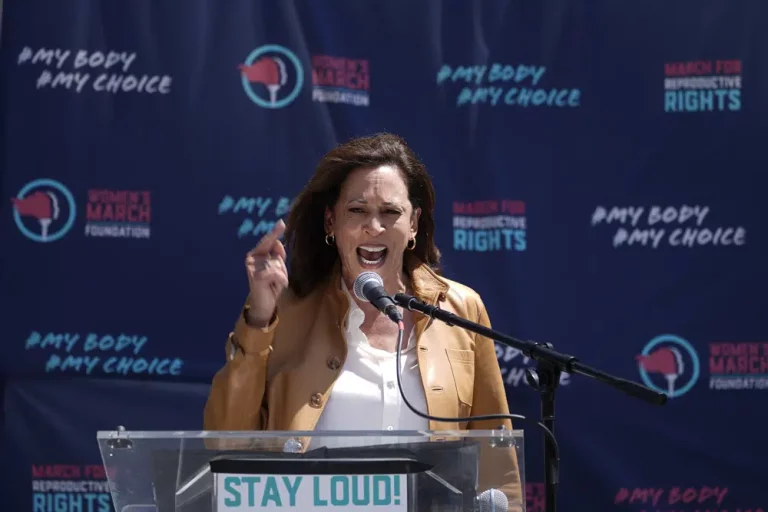
“I see our college students. Let me just tell you, I love Gen Z. I love Gen Z. Okay, for the older adults, this is a humbling thing I’m about to share with you,” Harris proclaimed in a speech in Columbia, South Carolina, celebrating Martin Luther King Jr. Day. 

“If someone is 18 years old today, they were born in 2005! Oh yeah, check that out. Think about that for a minute! Ha! Ha! Ha! Ha!” she shouted into the microphone, repeating a joke she had shared before. 

This wouldn’t be the first time Harris has expressed her newly-found and politically convenient admiration for Gen Z.

In a November 2023 event hosted by the Congressional Hispanic Caucus in Houston, Texas, Harris declared, “I Love Gen Z, I Love Gen Z,” before highlighting that those born in 2005 are now 18 years old.

In December 2023, Harris made a similar remark. “I will confess I love Gen Z. I love Gen Z. It will be a humbling moment for some of us to realize that anyone who is 18 now was born in 2005 and what that means for them,” she said at the time.