(Mike Maharrey, Money Metals News Service) Most people don’t understand the enormity of the national debt, the amount of government spending, or the size of the monthly deficits. As a result, they come up with all kinds of absurd “solutions” to the problem.
Whenever I talk about the national debt and government spending, somebody invariably comes at me with some variation of, “We just need to tax the rich more.”
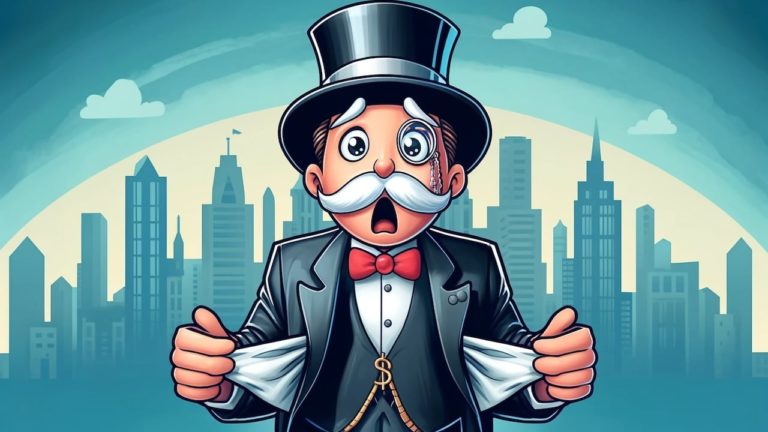
I recently ran across this meme on social media.
Myth: “The 5 richest men on the planet now hold a combined $869 billion in wealth. If each of them were to spend a million dollars daily, it would take them 476 years to exhaust their wealth. Don’t tell me they can’t afford a wealth tax.”
Whether or not they could afford a wealth tax is immaterial. The real question is: what good would it do?
(On a side note: the meme uses the five wealthiest people on the planet. One of those people is from France. I don’t think the U.S. can tax that individual, although I’m sure it would love to.)
If you read the meme through an emotional lens, and if you don’t understand the arithmetic of government spending, you might think taking some of that $869 billion would solve the debt problem.
It wouldn’t.
In fact, taking the entire $869 billion would have virtually no impact on the debt or the deficit. It would be like throwing a pail of water into the ocean.
Before I get into the numbers, it’s important to note that most wealth is in the form of stocks, real estate, and other assets. It’s not like these billionaires are rolling around in vaults of cash. One bad day in the stock market or a real estate bust could quickly wipe out big chunks of that wealth. But for the sake of argument, let’s pretend the entirety of billionaire wealth is held in cash and can be confiscated.
The Biden administration blew through $566.7 billion in April. That was right around the average monthly federal outlays for fiscal 2024. That means Uncle Sam spends about $142 billion per week. So, if you confiscated all of the wealth of the top five billionaires, it would fund federal spending for just over six weeks.
Then what?
Of course, there are more than five billionaires in the U.S. As of March 2024, America’s billionaires controlled about $5.5 trillion in wealth, according to Forbes.
In fiscal 2023, the federal government spent $6.3 trillion. So, you could take all of the wealth of all of the billionaires in the country and it wouldn’t even fund federal spending for one year.
But wouldn’t a wealth tax help close the deficit and at least stop the increase of the national debt?
In fiscal 2023, the deficit averaged about $147 billion per month. That means taking all of the wealth from our top five billionaires would cover the deficit for about six months.
That’s hardly a solution.
If you took all of America’s billionaires’ wealth, things look a little better. The government could remain deficit-free for about 39 years, assuming spending remained the same. Of course, the math isn’t that simple because the country would lose the productivity generated by those billionaires and other tax revenues would plunge.
And spending wouldn’t remain the same. If the government had more revenue, it would spend more money.
Even if everything remained equal, it would still leave a $34.7 trillion national debt.
By the way, all of the wealth held by billionaires in the U.S. is just under 15.9 percent of that national debt.
The bottom line is if you think taxing billionaires would solve anything, you don’t understand math. The government doesn’t have a revenue problem. It has a spending problem.
Mike Maharrey is a journalist and market analyst for MoneyMetals.com with over a decade of experience in precious metals. He holds a BS in accounting from the University of Kentucky and a BA in journalism from the University of South Florida.
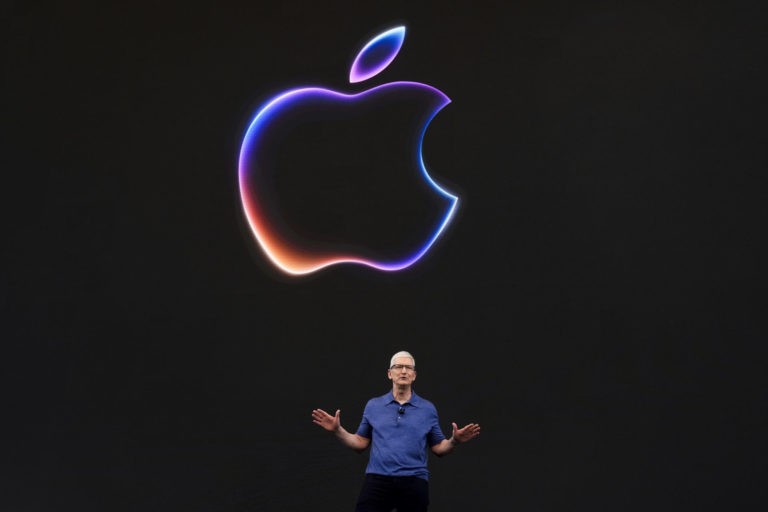
(Headline USA) Apple has jumped into the race to bring generative artificial intelligence to the masses, spotlighting a slew of features Monday designed to soup up the iPhone, iPad and Mac.
And in a move befitting a company known for its marketing prowess, the AI technology is coming as part of free software updates later this year is being billed as “Apple Intelligence.”
For some, however, it may seem more a move befitting the company’s troublesome track record on customer privacy.
If @elonmusk released a phone via @X@xai or @tesla with service from @Starlink, how many of you would buy it immediately after seeing that Apple’s putting OpenAI on your phone?
As a bonus the phone could have @grok and not coincidentally bug out right before the new model comes… pic.twitter.com/PeCZ406yGb
Even as it tried to put its own stamp on technology’s hottest area, Apple tacitly acknowledged during its World Wide Developers Conference that it needs help catching up with companies like Microsoft and Google, which have emerged as the early leaders in AI.
Apple is leaning on ChatGPT, made by the San Francisco startup OpenAI, to make its often-bumbling virtual assistant Siri smarter and more helpful.
“All of this goes beyond artificial intelligence, it’s personal intelligence, and it is the next big step for Apple,” CEO Tim Cook said.
Siri’s optional gateway to ChatGPT will be free to all iPhone users and made available on other Apple products once the option is baked into the next generation of Apple’s operating systems. ChatGPT subscribers are supposed to be able to easily sync their existing accounts when using the iPhone, and should get more advanced features than free users would.
To herald the alliance with Apple, OpenAI CEO Sam Altman sat in the front row of the packed conference, which was attended by developers from more than 60 countries.
“Together with Apple, we’re making it easier for people to benefit from what AI can offer,” Altman said in a statement.
Beyond allowing Siri to tap into ChatGPT’s storehouse of knowledge, Apple is giving its 13-year-old virtual assistant an extensive makeover designed to make it more personable and versatile, even as it currently fields about 1.5 billion queries a day.
When Apple releases free updates to the software powering the iPhone and its other products this fall, Siri will signal its presence with flashing lights along the edges of the display screen. It will be able to handle hundreds of more tasks—including chores that may require tapping into third-party devices—than it can now, based on Monday’s presentations.
Apple’s full suite of upcoming features will only work on more recent models of the iPhone, iPad and Mac because the devices require advanced processors. For instance, consumers will need last year’s iPhone 15 Pro or buy the next model coming out later this year to take full advantage of Apple’s AI package, although all the tools will work on Macs dating back to 2020 after that computer’s next operating system is installed.
The AI-packed updates coming to the next versions of Apple software are meant to enable the billions of people who use the company’s devices to get more done in less time, while also giving them access to creative tools that could liven things up.
For instance, Apple will deploy AI to allow people to create emojis, dubbed “Genmojis” on the fly to fit the vibe they are trying to convey.
Apple’s goal with AI “is not to replace users, but empower them,” Craig Federighi, Apple’s senior vice president of software engineering, told reporters. Users will also have the option of going into the device settings to turn off any AI tools they don’t want.
Monday’s showcase seemed aimed at allaying concerns Apple might be losing its edge with the advent of AI, a technology expected to be as revolutionary as the 2007 introduction of the Phone.
Both Google and Samsung have already released smartphone models touting AI features as their main attractions, while Apple has been stuck in an uncharacteristically extended sales slump.
AI mania is the main reason that Nvidia, the dominant maker of the chips underlying the technology, has seen its market value rocket from about $300 billion at the end of 2022 to about $3 trillion. The meteoric rise allowed Nvidia to surpass Apple as the second most valuable company in the U.S. Earlier this year, Microsoft also eclipsed the iPhone maker on the strength of its so-far successful push into AI.
Investors didn’t seem as impressed with Apple’s AI presentation as the crowd that came to the company’s Cupertino, California, headquarters to see it. Apple’s stock price dipped nearly 2% Monday.
Despite that negative reaction, Wedbush Securities analyst Dan Ives asserted in a research note that Apple is “taking the right path.” He hailed the presentation as a “historical” day for a company that already has reshaped the tech industry and society.
Besides pulling AI tricks out of its bag, Apple also used the conference to confirm that it will be rolling out a technology called Rich Communications Service, or RCS, to its iMessage app. The technology should improve the quality and security of texting between iPhones and devices powered by Android software, such as the Samsung Galaxy and Google Pixel.
The change, due out with the next version of iPhone’s operating software, won’t eliminate the blue bubbles denoting texts originating from iPhones and the green bubbles marking text sent from Android devices—a distinction that has become a source of social stigma.
In another upcoming twist to the iPhone’s messaging app, users will be able to write a text (or have an AI tool compose it) in advance and schedule a specific time to automatically send it.
Monday’s presentation marked the second straight year that Apple has created a stir at its developers conference by using it to usher in a trendy form of technology that other companies already had employed.
Last year, Apple provided an early look at its mixed-reality headset, the Vision Pro, which wasn’t released until early 2024. Nevertheless, Apple’s push into mixed reality—with a twist that it bills as “spatial computing”—has raised hopes that there will be more consumer interest in this niche technology.
Part of that optimism stems from Apple’s history of releasing technology later than others, then using sleek designs and slick marketing campaigns to overcome its tardy start.
Bringing more AI to the iPhone will likely raise privacy concerns—a topic that Apple has gone to great lengths to assure its loyal customers it can be trusted not to peer too deeply into their personal lives. Apple did talk extensively Monday about its efforts to build strong privacy protections and controls around its AI technology.
One way Apple is trying to convince consumers that the iPhone won’t be used to spy on them is harnessing its chip technology so most of its AI-powered features are handled on the device itself instead of at remote data centers, often called “the cloud.” Going down this route would also help protect Apple’s profit margins because AI processing through the cloud is far more expensive than when it is run solely on a device.
When Apple users make AI demands that requiring computing power beyond what’s available on the device, the tasks will be handled by what the company is calling a “private cloud” that is supposed to shield their personal data.
Apple’s AI “will be aware of your personal data without collecting your personal data,” Federighi said.
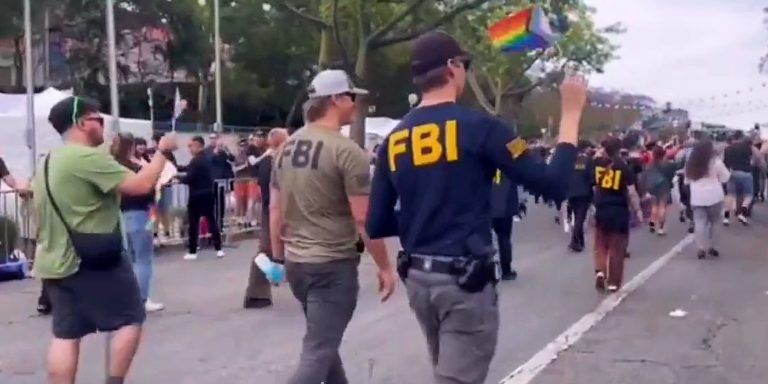
(Ken Silva, Headline USA) An anonymous whistleblower has revealed that the FBI administered internal loyalty tests to purge Trump supporters in the wake of the Jan. 6, 2021, Capitol Hill uprising.
The whistleblower’s revelations were first reported Monday by Just the News. Tucker Carlson also released a segment on the matter, interviewing Empower Oversight President Tristan Leavitt, whose organization represents FBI whistleblowers.
New whistleblower documents show the FBI is every bit the politicized secret police force you feared it was. pic.twitter.com/hFEUvjrNSL
The FBI whistleblower in question participated in Jan. 6, but didn’t enter the Capitol or act violently. He also self-reported his participation to the FBI. Nevertheless, his security clearance was reportedly suspended about 15 months later in March 2022, and revoked in April 2023.
During a review of the whistleblower’s security clearance, officials reportedly asked his colleagues whether he was known to support former President Donald Trump, if he had expressed concerns about the COVID-19 vaccine or had attended a Second Amendment rally.
“Agents for the FBI’s Security Division asked at least three witnesses in spring 2022 whether the employee, whose name and job title was redacted from the memos, had been known to ‘vocalize support for President Trump’ or ‘vocalize objections to Covid-19 vaccination.’ Agents ascertained from at least one witness that the worker, in fact, had declined to get the coronavirus inoculation,” Just the News reported.
“The latter questions about the vaccine were asked in spring 2022, a few months after the U.S. Supreme Court had struck down vaccine mandates in corporate workplaces and a separate federal court had issued an injunction on federal employee vaccine mandates.”
The anonymous FBI whistleblower has retired early over his ordeal. Empower Oversight is now seeking a DOJ Inspector General investigation.
“Our client makes this protected whistleblower disclosure to you based on the reasonable belief that the FBI violated the First Amendment not only in this case but likely on a systemic basis in many others,” Leavitt said in a letter to DOJ-IG Michael Horowitz.
According to a separate DOJ-IG report from last month, 106 FBI employees have had their clearances suspended for 6 months or longer in the last 5 years. Some of these employees presumably had their clearances suspended for legitimate reasons, but multiple FBI agents have claimed political retaliation.
One of the whistleblowers, Marcus Allen, had a rare win earlier this month when he had his security clearance restored. Allen was suspended more than two years ago for questioning FBI Director Chris Wray’s representations to Congress that his bureau didn’t have informants within the groups that participated in Jan. 6.
Allen and Empower Oversight alleged that he was suspended in retaliation for making a protected disclosure.
(Headline USA) Uber-woke Disney is opening a new attraction starring its first black princess at the company’s U.S. theme park resorts to replace an iconic former ride that cancel-culture adherents complained was based on a movie that contained racist tropes.
The new theme park attraction updates Tiana’s storyline from the 2009 animated film The Princess and the Frog and is opening this year in the space previously occupied by Splash Mountain. The water ride had been themed to Song of the South, a 1946 Disney movie based on Joel Chandler Harris’s “Uncle Remus” character that detractors claimed was filled with racist cliches about African Americans and plantation life.
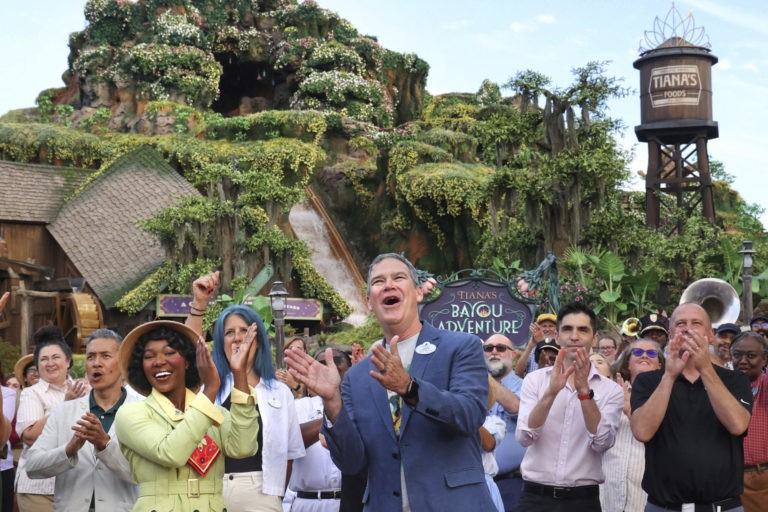
Tiana’s Bayou Adventure keeps Splash Mountain’s DNA as a log-flume ride, but it’s infused with music, scenery and animatronic characters inspired by Princess, set in 1920s New Orleans. It was not immediately clear what the setting had to do with the “bayou,” which is the series of canals and waterways found in rural southern Louisiana that is often more associated with white “Cajun” culture.
The ride opens to the public later this month at Walt Disney World in Florida and at Disneyland in California later this year.
“For little black girls, Tiana has meant a lot,” said Neal Lester, an English professor at Arizona State University, who has written about Tiana. “When a little child can see somebody who looks like them, that matters.”
Disney’s announcement that it would transform its longstanding Splash Mountain ride into Tiana’s Bayou Adventure was made in June 2020 following the George Floyd-inspired race riots.
BLM was later discovered, however, to be rooted in Marxist theory, while financial scandals involving misuse of the donations it had received left it largely discredited. Similarly, many corporations have abandoned their public race-based initiatives following backlash from consumers, policymakers and the U.S. Supreme Court.
Disney has borne the brunt of several of these, with boycotts cutting into its movie revenues and a high-profile spat with Florida Gov. Ron DeSantis over its efforts to meddle in Florida’s educational policies, resulting in several subsequent lawsuits.
Nonetheless, some contend that there is a valid need for the company to grapple with its own legacy, which includes cartoons and movies reflective of the prevailing cultural attitudes at the time they were produced and some that were, like much of the company’s modern-day fare, outright propaganda intended to nudge society in a particular direction.
The Song of the South film is a mix of live action, cartoons and music featuring an older black man who works at a plantation and tells fables about talking animals to a white city boy.
At the time, the idea of having “Uncle Remus” portrayer James Baskett in the film’s lead role, starring alongside white child actor Bobby Driscoll and others, likely would have been seen as a pioneering advancement in the fight against segregation.
Nonetheless, the film has been criticized by modern audiences for portraying stereotypes such as the “happy negro” trope. It hasn’t been released in theaters in decades and isn’t available on the company’s streaming service Disney+.
Other Disney classics also include scenes now denounced as racist even though they may, at the time, have been making a conscious effort to incorporate black culture and convey it to mainstream white audiences.
The crow characters from the 1941 film Dumbo and the King Louie character from 1967’s The Jungle Book (voiced by famed New Orleans singer Louis Prima, who was a white Italian) were viewed as African–American caricatures.
The depiction of Native Americans in the 1953 movie Peter Pan and the Siamese cats— often deemed as Asian stereotypes—from the 1955 film Lady and the Tramp also have been derided.
Despite Disney’s efforts at historic revisionism, however, some racial activists remain malcontent, believing, in true Marxist fashion, that total destruction is the only solution.
By refurbishing Splash Mountain into Tiana’s Bayou Adventure instead of dismantling the attraction completely, Disney has linked Song of the South with The Princess and the Frog, complained Katie Kapurch, an English professor at Texas State University who has written widely about Disney
Kapurch observed that both are silent, for the most part, on the racial realities of the segregated eras they depict since they are children’s movies intended to uplift and not documentaries about the brutal realities of life in the South at the time in which they are set.
In the case of Song of the South, few needed to be reminded about the reality of segregation, although the depictions of white and black children playing together might have been seen as radical.
Yet, Kapurch seemed determined to project her own values onto everything modern and historic, even if they do not reflect the vast majority of the culture in either case. And Disney has been eager in the past to capitulate to such extreme-left voices.
“We might see the impulse to replace rather than dismantle or build anew as a metaphor for structural racism, too,” Kapurch claimed. “Again, this is unintentional on Disney’s part, but the observation gets to the heart of how Disney reflects America back to itself.”
Imagineers who design the Disney rides are always attempting to look at the attractions with fresh eyes and ways to tell new stories “so that everybody feels included,” said Carmen Smith, a senior vice president for creative development at Walt Disney Imagineering.
“We never want to perpetuate stereotypes or misconceptions,” Smith said Monday. “Our intention is to tell great stories.”
It’s also important for the Imagineers to tell a variety of stories for its global audience, said Charita Carter, an executive creative producer at Walt Disney Imagineering who oversaw the development of the attraction.
“Society does change, and we develop different sensibilities,” Carter said. “We focus our stories differently depending what our society needs.”
The transformation from Splash Mountain to Tiana’s Bayou Adventure is one of several recalibrations at the entertainment giant’s theme parks for rides whose storylines are considered antiquated or offensive.
In 2021, Disney announced it would remodel Jungle Cruise, one of the original Disney parks’ rides, which had been been criticized in years past for being racially insensitive because of its depiction of animatronic indigenous people as savages or headhunters.
Three years before that, Disney eliminated a “Bride Auction” scene, deemed offensive since it depicted women lining up for auction, from its Pirates of the Caribbean ride.
Although it is unlikely the entertainment mega-corporation will ever be able to fully meet activists’ demands without razing the entire theme parks, their decisions about how to address Disney’s legacy of cultural insensitivity boil down to one thing: profitability.
“Disney is first and foremost about money and getting people into the park, and you can make money, still have representation and be aware of social justice history and make everyone feel like they belong there,” Lester said.
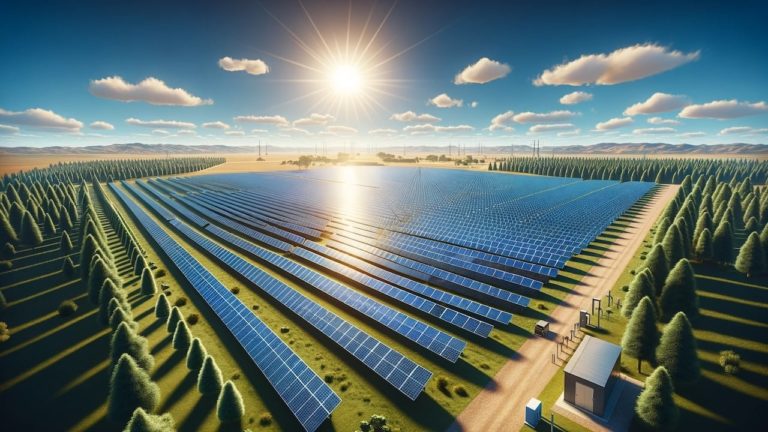
(Mike Maharrey, Money Metals News Service) Silver use by the solar energy sector is one of the primary factors driving the overall demand for silver, and there is reason to believe photovoltaic silver off-take will continue to increase in the years ahead.
Not only is the demand for silver panels growing, but the amount of silver used in each panel is also increasing.
Industrial demand for silver set a record of 654.4 million ounces in 2023 and it is expected to hit new highs this year. According to the Silver Institute, ongoing structural gains from green economy applications underpinned this surge in silver demand.
“Higher than expected photovoltaic (PV) capacity additions and faster adoption of new-generation solar cells raised global electrical & electronics demand by a substantial 20 percent. At the same time, other green-related applications, including power grid construction and automotive electrification, also contributed to the gains.”
Silver is the best conductor of electricity of all metals at room temperature. That makes it a vital input in the production of solar panels.
To manufacture a solar panel, silver is formed into a paste that is applied to the front and back of silicon photovoltaic cells. The front side collects the electrons generated when sunlight strikes the cell, while the back side helps to complete the electrical circuit.
Each solar panel uses approximately 20 grams (0.643 ounces) of silver. While this is a relatively small amount, the total adds up quickly when you consider the number of panels produced each year. The solar industry used approximately 100 million ounces of silver in 2023, accounting for about 14 percent of total silver demand.
Several years ago, analysts assumed that the amount of silver used in solar panels would decline over time with the development of new technologies. However, a Saxo Bank report in 2020 disputed this claim, saying, “Potential substitute metals cannot match silver in terms of energy output per solar panel.”
“Further, due to technical hurdles, non-silver PVs tend to be less reliable and have shorter lifespans, presenting serious issues for their widespread commercial development.”
It turns out, this analysis was correct. Newer more efficient technologies use 20 to 120 percent more silver.
In 2020, Passivated Emitter and Rear Cell (PERC) technology was the standard, accounting for virtually the entire solar market. A PERC solar panel uses about 10 milligrams of silver per watt.
By 2022, PERC technology was being replaced by Tunnel Oxide Passivated Contact (TOPCon) cells. This advanced technology enhances the efficiency of solar cells by improving the way they handle electron flow. A TOPCon cell is cheaper to produce but uses more silver than a PERC solar panel. It contains about 13 milligrams of silver per watt.
Now, heterojunction (HJT) technology is beginning to dominate the solar market. HJT cells are even more efficient than TOPCon technology and can capture energy on both sides of the panel. They are also more environmentally friendly. But they use even more silver – about 22 milligrams per watt. HJT cells only made up a small part of the market in 2023, but demand for these more efficient panels is expected to grow.
With demand for solar power increasing along with the amount of silver used in each panel, analysts believe that solar panel production will consume increasingly large amounts of silver in the future.
According to a research paper by scientists at the University of New South Wales, solar manufacturers will likely require over 20 percent of the current annual silver supply by 2027.
By 2050, solar panel production will use approximately 85–98 percent of the current global silver reserves.
The green energy sector is also essentially recession-proof because it is being driven, incentivized, and in some cases directly funded by governments around the world.
The silver market is already running significant deficits with silver demand outstripping supply. The structural deficit in 2023 came in at 184.3 million ounces.
While there is still a large silver stock available, market deficits will eventually deplete the reserve of available metal. We could see a significant supply squeeze in the coming years.
It’s also important to remember that while industrial demand is an important factor driving the price, silver is still fundamentally a monetary metal. As such, the price tends to track with gold over time. If you are bullish on gold, you should be even more bullish on silver. In fact, silver tends to outperform gold in a gold bull market.
Given the supply and demand dynamics, the economic environment, and a historically wide gold-silver ratio that indicates silver is underpriced, there are plenty of reasons to think silver will shine in the future.
Mike Maharrey is a journalist and market analyst for MoneyMetals.com with over a decade of experience in precious metals. He holds a BS in accounting from the University of Kentucky and a BA in journalism from the University of South Florida.
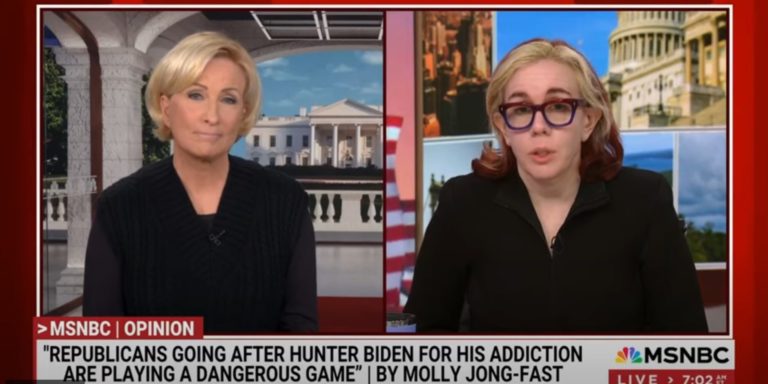
In a Sunday column for MSNBC, Molly Jong-Fast argued that addiction is a “disease” and that individuals who struggle with it “are sick, not bad.”
This defense appears to be a desperate attempt to elicit sympathy for Hunter Biden, who is currently embroiled in multiple scandals and facing two criminal indictments.
“Huge swaths of the country are affected by alcohol and drug addiction that affects not just them, but their family members and people who are even tangentially connected to them — the parents, grandparents and kids and brothers and sisters and acquaintances of the addict,” Jong-Fast added.
Hunter Biden is currently on trial for allegedly lying on a federal gun purchase form about his drug abuse.
Despite initially denying his addiction, Hunter Biden later admitted in his memoir, Beautiful Things: A Memoir, to smoking crack cocaine every 15 minutes—a far cry from the image of a reformed individual.
During a Monday interview on the anti-Trump show Morning Joe with host Joe Scarborough, Jong-Fast attempted to align her struggles with Hunter Biden’s.
“There is a reason why these, you know, drugs are a problem in this country and it’s largely because of addiction,” she asserted, seemingly downplaying his severe and illegal actions.
Jong-Fast’s attempt to mitigate Hunter Biden’s alleged criminal behavior overlooks the fact that his illegal activities occurred when he was between 45 and 48 years old. However, in Hunter Biden’s case, this appeared to be a pattern of reckless behavior.
Furthermore, Hunter Biden is also facing a criminal trial for allegedly failing to pay taxes for several years, highlighting a continuous disregard for the law.
Later in her piece, Jong-Fast claimed, “I came forward partially because I wanted to destigmatize this, and I feel like for a long time, alcoholism and addiction was this terrible secret we didn’t talk about.”
Jong-Fast’s claims appear to be a thinly veiled attempt to shield Hunter Biden from criticism.
She added, “I feel like for me, because I’ve been sober since I was a teenager, I have this ability to talk about it in a way that’s a little bit removed from the disease.”
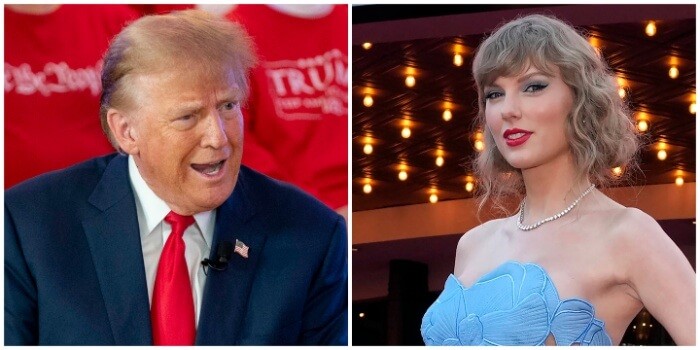
“I think she’s beautiful — very beautiful! I find her very beautiful. I think she’s liberal. She probably doesn’t like Trump. I hear she’s very talented. I think she’s very beautiful, actually — unusually beautiful!” Trump said, according toVariety.
During the 2016 election cycle, it was considered that Swift was just a “closeted” conservative. This rumor was destroyed in 2018 by Swift herself when she publicly endorsed Sen. Phil Bredesen, D–Tenn., and Rep. Jim Cooper, D-Tenn.
“In the past, I’ve been reluctant to publicly voice my political opinions, but due to several events in my life and the world in the past two years, I feel very differently about that now. I always have and always will cast my vote based on which candidate will protect and fight for the human rights I believe we all deserve in this country,” Swift wrote on Instagram in 2018 as a way to oppose conservative Sen. Marsha Blackburn, R-Tenn.
Swift also talked about her decision to become more political in her feminist documentary Miss Americana.
“Back in the [2016] presidential election, I was in such a horrendous place that I wasn’t going to pop my head out. These aren’t your dad’s celebrities and these aren’t your dad’s Republicans… I need to be on the right side of history,” she said.
Swift cemented her image as a far-left ideologue in 2020 when she went on to support Joe Biden and Kamala Harris, while also attacking Trump in one of her unhinged posts right after George Floyd died.
“After stoking the fires of white supremacy and racism your entire presidency, you have the nerve to feign moral superiority before threatening violence? ‘When the looting starts the shooting starts’??? We will vote you out in November,” she wrote.
After stoking the fires of white supremacy and racism your entire presidency, you have the nerve to feign moral superiority before threatening violence? ‘When the looting starts the shooting starts’??? We will vote you out in November. @realdonaldtrump
Despite all of that evidence, Trump still said that he doesn’t believe that she is a crazy leftist.
“She is liberal, or is that just an act? [Is she] legitimately liberal? It’s not an act? It surprises me that a country star can be successful being liberal,” he said.
(Headline USA) New York City residents are turning on the city over its handling of the migrant crisis, demanding that officials do more to curb the influx of illegal immigration.
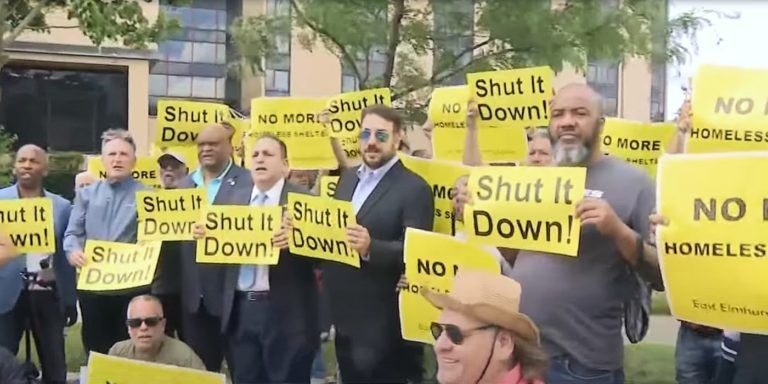
In Queens, dozens of residents rallied over the weekend outside the East Elmhurst migrant shelter, formerly a Courtyard Marriott hotel, demanding that the city shut the shelter down.
“Our community has been over-saturated with homeless shelters for far too long. This has been a total failure at all levels of government,” said former city councilman and state lawmaker Hiram Monserrate, according to the New York Post.
“You see it every day in our community, and we see how our quality of life has gone downhill,” he added. “Now we’re getting complaints about RVs and prostitution right here on Ditmars Boulevard. Drug sales right here on Ditmars Boulevard. Consumption of alcohol right here in our community.”
The final straw, Moserrate argued, was the attempted murder of two New York Police Department officers by an illegal Venezuelan who was living in the East Elmhurst migrant shelter.
Bernardo Castro Mata, 19, a suspected member of the Venezuelan “Tren de Aragua” gang, allegedly shot two officers in Queens and was arraigned last week.
Residents outside the shelter argued their neighborhood is at a breaking point, pointing out that Queens has more than 15 similar migrant shelters.
“Enough is enough,” said resident Frank Taylor, a member of the Ditmars Block Association.
“Time to start shutting some of them down, starting with this one,” he continued. “Our community has suffered. We are taxpayers and homeowners and we have been totally disrespected and taken for granted.”
The protests in Queens comes a few weeks after New York City residents in the Bronx rallied to support former President Donald Trump. Tens of thousands of people attended the former president’s campaign rally.
Trump has made it clear that he believes the notoriously blue New York City is winnable— in large part because of President Joe Biden’s open-border crisis.
“New Yorkers have something called common sense… and old fashioned common sense is exactly what I plan to bring back to the White House,” Trump said in the Bronx.
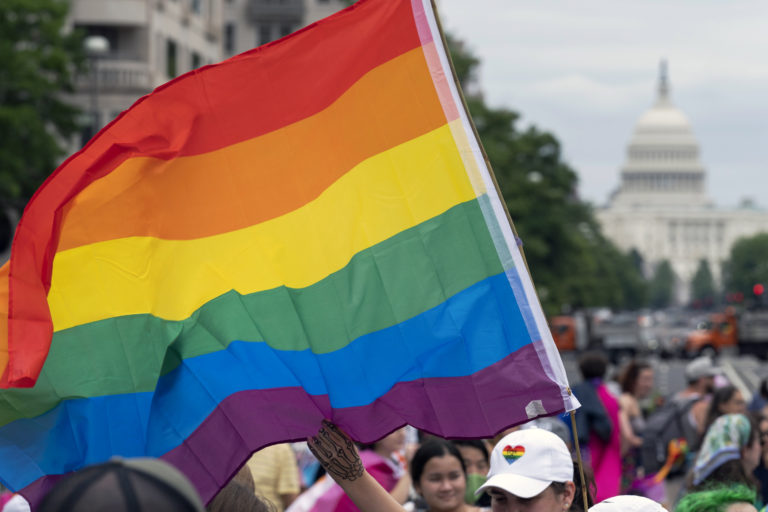
(Dmytro “Henry” Aleksandrov, Headline USA) Lime scooter rental company enacted a “no-go zone” on a “pride” crosswalk in Spokane, Wash., after three teenagers intentionally left skid marks with scooters as a way to protest the LGBT propaganda.
Now, people riding in the area will have their vehicles stop if the onboard GPS detects that they are within a certain distance of the LGBT mural, the Post Millennial reported.
The news came after three teenagers were arrested and charged with felonies for making those skid marks.
Those three suspects were arrested over “widespread damage” inflicted upon the crosswalk, the news source revealed, adding that Ruslan Turko, 19, and his two minor accomplices were each charged with one count of first-degree malicious mischief, which is a Class B felony in the state.
On June 7, 2024, two days after the “crime” took place, Lime created the “no-go zone,” with Director of Government Relations Hayden Harvey saying that he and everyone at the company “condemn these vile acts in no uncertain terms.”
“At a time when our teams at Lime are beginning pride celebrations around the globe, it is disturbing to see the hate taking place in Spokane. We will not let the hateful few spoil the joy of Pride Month in Spokane, and are grateful for those working to make Spokane more welcoming for all,” he said.
“No-go zones” are “indicated by red shading and a restricted symbol on the map,” and those who enter it will have their vehicle “gradually come to a stop” and be forced to “walk [their vehicles] out of the No-Go zone to resume [their] ride,” according to Lime’s website.
On June 5, 2024, police received calls that multiple people on scooters were “causing damage” to the mural, with “black scuff marks consistent with scooter wheels” being later discovered.
The news came just hours after the mural had been repainted following a May 16, 2024, incident in which a group of people set it on fire.
A similar situation happened in May of this year in St. Petersbourgh, Fla.
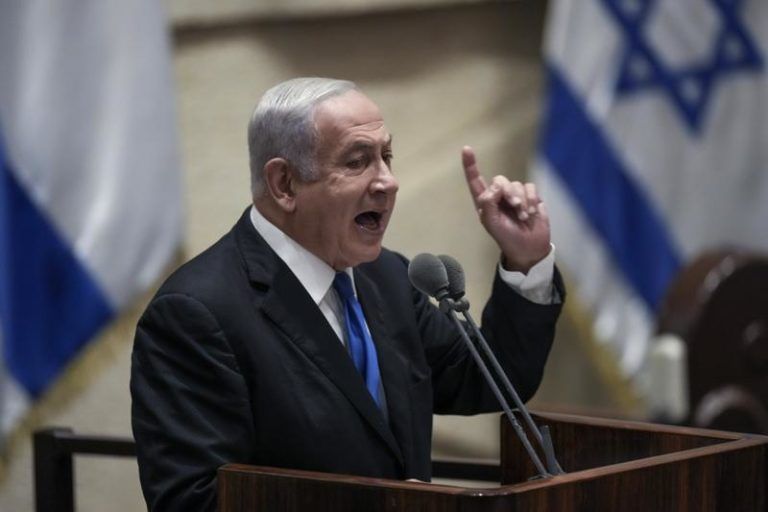
(Headline USA) A growing number of House Democrats plan to boycott Israeli Prime Minister Benjamin Netanyahu’s address at a joint session of Congress next month, increasing division within the Democratic Party over the U.S.’s continued support for the Jewish state.
Progressive Democrats have become increasingly opposed to further funding for Israel over the conflict in Gaza, while more centrist Democrats have defended Israel’s military action as justified.
However, even the less radical ones appeared wary of Netanyahu’s visit to the U.S., arguing the political timing wasn’t right—particularly as President Joe Biden walks a delicate line between trying to appease his remaining Jewish backers and pandering to his growing base of Muslim extremists, whose support in states like Michigan and Minnesota could mean the difference between winning and losing the November election.
“I still feel like this is a terrible time for him to come,” Rep. Becca Balint, D-Vt., said.
“We have this ceasefire on the table,” she continued. “I have strong concerns that it undermines not just the president but also undermines all of the Israelis who have taken to the streets in the last few days, demanding that Netanyahu take this deal.”
In order to avoid directly criticizing Israel, many Democrats have focused specifically on the Netanyahu administration, scapegoating it for Hamas’s ongoing refusal to negotiate for the full release of hostages taken during its Oct. 7 ambush and massacre in Israel.
“I won’t attend and turn my back towards him, so I’m just gonna stay away,” said Rep. Hank Johnson, D-Ga.
Even Rep. James Clyburn, D-S.C., the former House whip, said he would boycott the address, citing Netanyahu’s past tensions with former President Barack Obama.
“When it comes to that joint session, I do not plan to attend it,” Clyburn said on Sunday. “Because I’m going to treat him the same way he treated Barack Obama. But I am going to participate with a group of others in an alternative session to his joint session to see what now we can get some attention to what makes sense.”
It is unclear how Clyburn felt Netanyahu had shunned Obama. In 2015, Netanyahu similarly was invited to address Congress after having tried repeatedly to appeal to the Obama administration to withdraw from the Iran nuclear deal.
The deal seriously jeopardized Israel’s security, enabling Iran to bankroll even more regional terrorism while still pursuing nuclear weapons. However, Obama refused even to meet with the leader of one of America’s top allies due to his own political calculus of wanting to see Netanyahu lose his election that year.
Unsurprisingly, leftist “Squad” Rep. Alexandria Ocasio–Cortez, D-N.Y., one of Congress’s most outspoken anti-Semites, said she “certainly” does “not approve” of Netanyahu’s visit and that she will likely skip his address.
Netanyahu is tentatively set to address Congress on July 24, the BBC reported.