Gold Eyes Huge Breakout as Politicians Seek Big Rate Cut

(Mike Gleason, Money Metals News Service) As the political battle over inflation and the state of the U.S. economy heats up, gold prices continue to simmer near record highs.

The preeminent monetary metal teased breaking above the $2,500 level early in the week before succumbing to some mild selling pressure on Wednesday before rebounding back to $2,500 again on Friday.

Metals markets are likely to continue gaining if the U.S. dollar extends its recent slide versus a basket of foreign currencies. The U.S. Dollar Index has dropped in recent weeks on expectations of Federal Reserve rate cuts.

The central bank remains on course to lower interest rates next month, though Fed watchers are split between whether it will be by 25 basis points or a heftier 50 basis points.

Democrats and mainstream media commentators are trying to push the Fed to go big. They say inflation has come down enough already.

On Wednesday, the Labor Department reported that its Consumer Price Index rose by 2.9% in the past 12 months through July. That’s the first time the CPI has come in below 3% since March 2021.

CNN went so far as to proclaim that “the war on inflation has been won.”

But inflation hawks say it’s premature to declare victory over price inflation while official measures continue to run well above the Fed’s own 2% target. They also warn it’s dangerous and naïve to assume rates of consumer price increases will keep decelerating after the Fed starts easing.

Vice President Kamala Harris has this far offered little in the way of policy specifics when it comes to tackling inflation and other key issues. She is reportedly going to call for a federal ban on so-called price gouging by grocery stores.

If Kamala Harris passed Economics 101 in college, then she should know that price controls lead to shortages. They may not affect giant chains such as Walmart that already price items below what their smaller competitors charge. But price controls could surely put local grocery and convenience stores out of business.

In any event, such misguided measures target the symptoms of inflation rather than the root causes.

Massive deficit spending by the federal government artificially inflates aggregate demand without a corresponding increase in productivity. It also makes the scale of the Federal Reserve’s implicit promise to prevent the government from defaulting much bigger.

The government cannot pay down its $35 trillion debt and has no intention of ever doing so. At this point it cannot even keep up with the interest payments it owes on the debt without incurring more borrowing.

In other words, it is trapped in a cycle of needing an ever-expanding currency supply in order to avert insolvency.

We have so far heard virtually nothing on the campaign trail about how the next President of the United States will deal with these root causes of inflation. Most journalists won’t ask the tough questions. And even if they did, they’d likely get word salads and empty platitudes in response.

Politicians may try to avoid facing reality, but the extent to which their policies cause the currency to depreciate will ultimately be reflected in the real world. That includes prices for groceries and the price of real money itself – that being, of course, gold.

In other news, Money Metals Depository is excited to announce the opening of its very own Fort Knox, only substantially larger.

After three years of planning and construction, Money Metals has opened its state-of-the-art 37,000-square-foot vaulting and fulfillment facility in Eagle, Idaho.

Nestled into the base of the Boise Foothills, Money Metals’ high-security gold and silver storage compound cost nearly $28 million to construct and has the capacity to hold upwards of $100 billion in gold and silver.

The new depository offers an extremely secure location for individuals, businesses, family offices, governments, and financial institutions across the globe to store high-value precious metals assets.

Embedded into the facility are advanced security measures, around-the-clock monitoring, secure access controls, and a security team composed of armed former law enforcement and military personnel.

It is the largest Class 3 vault in North America, with more than twice the capacity as the United States Bullion Depository at Fort Knox.

Individuals who are wary of storing large amounts of bullion in personal home safes, bank safe deposit boxes, or smaller, less secure storage facilities may wish to turn to Money Metals Depository instead.


Mike Gleason is a Director with Money Metals Exchange, a precious metals dealer recently named “Best in the USA” by an independent global ratings group. Gleason is a hard money advocate and a strong proponent of personal liberty, limited government and the Austrian School of Economics. A graduate of the University of Florida, Gleason has extensive experience in management, sales and logistics as well as precious metals investing. He also puts his longtime broadcasting background to good use, hosting a weekly precious metals podcast since 2011, a program listened to by tens of thousands each week.

Democrats Attempt To BAN Green Party From Wisconsin Ballot

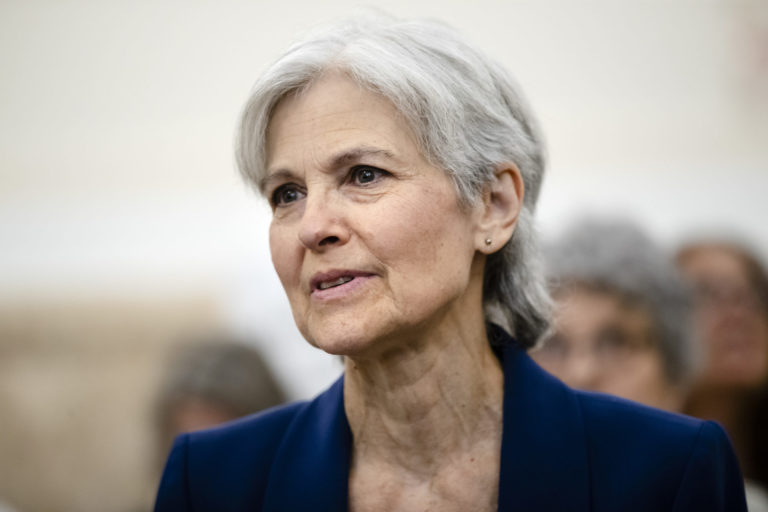
(Headline USA) An employee of the Democratic National Committee filed a complaint Wednesday seeking to remove the Green Party’s presidential candidate from the ballot in Wisconsin, arguing that the party is ineligible.

It’s the latest move by the DNC to block third-party candidates from the ballot. Democrats are also seeking to stop independent Robert F. Kennedy Jr. in several states.

The Green Party’s appearance on the presidential ballot could make a difference in swing state Wisconsin, where four of the past six presidential elections have been decided by between 5,700 votes and about 23,000 votes. Jill Stein is expected to officially become the Green Party’s presidential nominee at its national convention, which begins Thursday.

The Associated Press left email messages with the Green Party and Stein’s campaign Wednesday afternoon.

The last time Stein was on the ballot in Wisconsin for the Green Party was in 2016, when she got just over 31,000 votes — more than Donald Trump’s winning margin that year of just under 23,000 votes. Some Democrats blamed Stein for helping Trump win the state and the presidency.

The bipartisan elections commission in February unanimously approved ballot access for the Green Party’s presidential nominee this year because the party won more than 1% of the vote in a statewide race in 2022. Green Party candidate Sharyl McFarland got nearly 1.6% of the vote in a four-way race for secretary of state, coming in last.

But the complaint filed with the commission by a DNC employee alleges that the Green Party can’t nominate presidential electors in Wisconsin, and without them they are forbidden from having a presidential candidate on the ballot.

State law requires that those who nominate electors in October be state officers, which includes members of the Legislature, judges and others. They could also be candidates for the Legislature.

The Green Party does not have anyone who qualifies to be a nominator, and therefore can’t legally name a slate of presidential electors as required by law, the complaint alleges.

Because the Green Party could have mounted write-in campaigns for legislative candidates in Tuesday’s primary, but did not, the complaint could not have been brought any sooner than Wednesday, the filing alleges.

“We take the nomination process for President and Vice President very seriously and believe every candidate should follow the rules,” Adrienne Watson, senior adviser to the DNC, said in a statement. “Because the Wisconsin Green Party hasn’t fielded candidates for legislative or statewide office and doesn’t have any current incumbent legislative or statewide office holders, it cannot nominate candidates and should not be on the ballot in November.”

This is not the first time the Green Party’s ballot status has been challenged.

In 2020, the Wisconsin Supreme Court kept the Green Party presidential candidate off the ballot after it upheld a deadlocked Wisconsin Elections Commission, which couldn’t agree on whether the candidates filed proper paperwork.

This year, in addition to the Republican, Democratic and Green parties, the Constitution and Libertarian parties also have ballot access. The commission is meeting on Aug. 27 to determine whether four independent candidates for president, including Robert F. Kennedy Jr. and Cornel West, met the requirements to appear on the ballot. The DNC employee asks that the commission also consider its complaint at that meeting as well.

There are signs in some swing states, including Wisconsin, that those behind third-party candidates are trying to affect the outcome of the presidential race by using deceptive means — and in most cases in ways that would benefit Trump. Their aim is to to offer left-leaning, third-party alternatives who could siphon off a few thousand protest votes.

The latest Marquette University Law School poll conducted July 24 through Aug. 1 showed the presidential contest in Wisconsin between Democrat Kamala Harris and Trump to be about even among likely voters. Stein barely registered, with about 1% support, while Kennedy had 6%.

The complaint was filed by David Strange, deputy operations director in Wisconsin for the DNC.

Adapted from reporting by the Associated Press

Report: Ex-Secret Service Boss Receiving Taxpayer-Funded Security

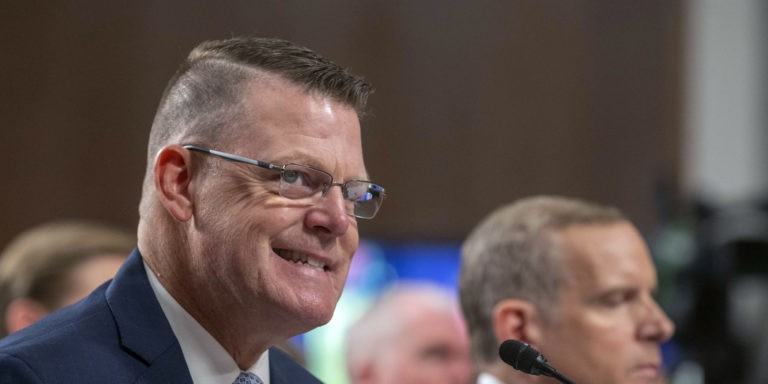
(Ken Silva, Headline USA) Former Secret Service Director Kimberly Cheatle is now receiving security from the agency she once led after she resigned last month in the wake of the Trump assassination attempt.

RealClearPolitics reporter Susan Crabtree revealed details about Cheatle’s security detail Friday, citing “three sources in the Secret Service community.” According to Crabtree, Cheatle is receiving Secret Service protection due to threats she’s received.

“At least for now, the Secret Service is providing the protection out of the Dignitary Protective Division, which secures foreign leaders when they visit the White House and other areas in D.C. and also protects lower-profile cabinet officials, according to these sources,” Crabtree reported.

“Using DPD, instead of the Washington Field Office, could be a way to keep the knowledge of Cheatle’s protection to a more limited number of agents or it could simply be a manpower issue.”

The Secret Service reportedly declined to comment on the matter.

Cheatle, who once served on Jill Biden’s security detail, was widely criticized in the wake of the Trump shooting. Among numerous other reasons, she was lambasted for her excuse as to why Secret Service wasn’t manning the roof used by Thomas Crooks to fire at Trump: She said the “slanted roof” was too dangerous for them.

Cheatle drew more ire from Republicans and Democrats alike at her July 22 congressional hearing, where she refused to answer basic questions,  including how Crooks was able to access the rooftop within 200 yards of Donald Trump during his July 13 rally in Butler, Pennsylvania. Cheatle also couldn’t provide a timeline of events for Congress.

Rep. Anna Paulina Luna, R-Fla., has called for Cheatle to be charged with perjury.

“Director Cheatle gave conflicting answers today regarding whether or not they were aware of a threat before shots were fired at President Trump. After today’s transcripts confirm her deception, I call for perjury charges against Kimberly Cheatle,” Luna following Cheatle’s testimony last month.

To Luna’s point, Headline USA also spotted inconsistent answers by Cheatle.

When Rep. Byron Donalds, R-Fla., asked her whether the rooftop used by the Trump shooter was identified as a security threat before the event, Cheatle said she didn’t know. But when asked the same question later by Rep. Tim Burchett, R-SC, she said that it was identified as a security threat.

Ken Silva is a staff writer at Headline USA. Follow him at twitter.com/jd_cashless.

Whistleblowing Lawyer Booted from Dominion Case over Damning Document Dump

(Headline USA) An Indian-born magistrate, appointed by the radical D.C. District Court, on Tuesday disqualified a pro-Trump lawyer from representing a prominent funder of election skeptics who is being sued by Dominion Voting Systems.

It marked the latest example of allies and supporters of former President Donald Trump being targeted and denied their rights as the corrupt judiciary, partisan government officials and private business interests collude to deny due process under the Biden administration’s two-tiered justice system.

Michigan lawyer Stefanie Lambert, who is accused of improperly accessing voting equipment following the 2020 presidential election, faces felony charges courtesy of Soros-backed, lesbian, alcoholic state Attorney General Dana Nessel.

She has been representing Patrick Byrne, the founder of Overstock.com, in a defamation lawsuit brought against him by Dominion.

The voting software and equipment manufacturer claims it was unfairly blamed for the widespread irregularities and suspicions of fraud stemming from the highly disputed 2020 race, which saw Democrat Joe Biden miraculously come from behind to defeat incumbent President Donald Trump, despite Trump’s hefty election-night advantage in key swing states such as Michigan.

Its biggest payday came in a settlement with Fox News—after the far-left company BlackRock, which maintains considerable ties to the Biden administration, bought up a 7% share of stock in Fox’s parent company.

Other cases have likewise been settled or resolved under dubious circumstances, without Dominion having to meet the requisite burden of proof that the allegations made against it were false.

Meanwhile, many of the far-left D.C. district judges who were appointed by former President Barack Obama after Senate Majority Leader Harry Reid declared the “nuclear option” to eliminate Senate filibusters on judicial appointments have paid off by rubber-stamping the Left’s lawfare efforts against Trump and his allies.

In a move echoing Dominion’s leak of Fox New’s private text messages, Lambert was disqualified from Byrne’s case on Tuesday after she acknowledged passing along to law enforcement thousands of confidential discovery documents that she had agreed to keep secret.

Due to Lambert’s actions, the documents that all parties “had agreed to keep confidential, have now been shared widely in the public domain,” U.S. District Court Judge Moxila A. Upadhyaya wrote in a 62-page opinion.

“Lambert’s repeated misconduct raises the serious concern that she became involved in this litigation for the sheer purpose of gaining access to and publicly sharing Dominion’s protected discovery,” wrote Upadhyaya.

Lambert’s lawyer, Daniel Hartman, said by phone Wednesday that Lambert would be “appealing the decision.”

“We are appealing,” Byrne wrote in a text to the Associated Press.

Dominion’s legal team “may think it was a tactical victory, but they will come to understand it was a strategic mistake,” she added.

The documents in question showed that Dominion’s equipment had been made using Chinese parts were susceptible to hacking and reprogramming.

After obtaining the documents through discovery in Byrne’s case, Lambert attached an affidavit to a filing in her own case in Michigan that included some of the leaked emails. It  was signed by Dar Leaf—a county sheriff in southwestern Michigan who has investigated allegations of widespread election fraud from the 2020 election.

The rest of the documents were posted to an account under Leaf’s name on the social platform X.

As a result, Dominion filed a motion demanding Lambert be removed from the Byrne case for violating a protective order that Upadhyaya had placed on documents in the case. It said Lambert’s damning disclosure had triggered a new round of threats toward the company.

The request was described by Upadhyaya as “extraordinary” but necessary after Lambert has repeatedly shown she “has no regard for orders or her obligations as an attorney.”

In the Michigan case, Lambert has been charged with four felonies for accessing voting machines in a search for evidence of vote fraud. She was arrested by U.S. Marshals earlier this year after a Michigan judge issued a bench warrant for missing a hearing in her case.

Along with a local clerk in Michigan, Lambert has also been charged with multiple felonies, including unauthorized access to a computer and using a computer to commit a crime, after transmitting data from a local township’s poll book related to the 2020 election.

Lambert has pleaded not guilty in both cases.

Lambert sued unsuccessfully to overturn Trump’s loss in Michigan.

Biden allegedly won Michigan by nearly 155,000 votes over then-President Trump.

Dominion’s suit against Byrne is one of several the company has filed against prominent election skeptics, including MyPillow founder Mike Lindell and attorney Sidney Powell.

Adapted from reporting by the Associated Press

Six Competitive House Races To Keep An Eye On This Election

(Headline USA) Resources are pouring into the few truly competitive congressional races expected to help determine the balance of power in Washington next year.

Democrats need to flip just four seats to take back control of the House, while Republicans hope to expand their majority and make it easier to get priorities over the finish line, something they have struggled to do.

While the most hotly contested House races tend to involve newer incumbents still building their name recognition, a few long-time veterans of Congress are facing competitive contests as well due to demographic shifts in their districts.

Overall, House control is likely to come down to the 16 Republican-controlled districts that Democratic President Joe Biden carried in 2020 and the five Democratic-controlled districts that Republican Donald Trump won. Such districts are rich targets for both parties.

Here’s a look at six of these toss-up races to watch this fall.

Maine’s 2nd Congressional District

National Republicans have tried before to unseat three-term Democratic incumbent Jared Golden. This time, they believe they’ve found the right candidate in Republican Austin Theriault, a state lawmaker and former NASCAR driver.

Nearly $16 million in political ads have been reserved for the district, which Trump won twice. That’s a lot of ad buys in a relatively inexpensive market. The planned spending is about evenly divided between Republican and Democratic groups, according to AdImpact, which tracks media buys. House Speaker Mike Johnson, R-La., visited the district this month, highlighting the race’s importance.

Golden, a Marine Corps veteran, has bucked Biden’s administration on some votes. Most notably, he was the only Democrat to vote against Biden’s COVID-relief bill in March 2021.

Golden subsequently voted for major bills to increase infrastructure spending and expand benefits for veterans exposed to burn pits and other toxic environments, and he voted for Biden’s centerpiece health and climate bill, referred to as the Inflation Reduction Act.

New York’s 4th Congressional District

Democrats see Long Island as a prime opportunity to recapture congressional seats and reclaim a House majority, starting with a race featuring a rematch of two years ago, freshman Republican Rep. Anthony D’Esposito versus Democratic challenger Laura Gillen.

Groups plan to spend nearly $11 million on advertising in this race with Democratic-aligned groups reserving nearly $7 million in ads and Republicans reserving nearly $4 million, according to AdImpact.

Gillen also had an advantage in cash on hand as of June 30, according to the Federal Election Commission, with $2.5 million versus nearly $2.2 million for D’Esposito. It’s unusual for the challenger to have more cash on hand than the incumbent.

D’Esposito is a former New York City Police detective who won in 2022 even though Biden carried his district by about 15 percentage points in 2020. D’Esposito has made public safety a priority of his campaigns and boasts of delivering millions of federal dollars to help local law enforcement.

Gillen is a former supervisor of the town of Hempstead, the largest town in Nassau County, and has emphasized support for a woman’s right to choose an abortion.

Pennsylvania’s 8th Congressional District

Matt Cartwright is used to competing in close races—and winning. The Democrat began his career in Congress in 2013. Judging by the resources pouring into this race, he’s in another dogfight. Democratic groups plan to spend about $13 million on ads and Republicans plan to spend more than $10 million, according to AdImpact.

His opponent is Republican Rob Bresnahan, who is emphasizing his experience as the CEO of an electrical contracting company and reinvesting in local communities.

Cartwright represents a northeast Pennsylvania district that sided with Trump in 2020 even though Biden is a Scranton native.

Cartwright voted against a sweeping House GOP bill to build more border wall and impose new restrictions on asylum seekers, but he is emphasizing in ads a vote to deport immigrants who commit crimes as he tries to blunt Republican criticism on border issues.

Arizona’s 1st Congressional District

Republican Rep. David Schweikert is used to winning election to Congress comfortably. Not anymore. Schweikert won his suburban Phoenix district by just 3,200 votes in 2022 against a relatively unknown rival who got minimal support from national Democrats.

This time, the House Majority PAC, which focuses on electing Democrats, is planning to spend more than $6 million on ads compared to about $4.9 million from the lead Republican group, the Congressional Leadership Fund.

Schweikert, serving his seventh term, will face Amish Shah, a physician and former Arizona state representative who emerged recently from a crowded Democratic primary as the winner.

California’s 13th Congressional District

Freshman Republican Rep. John Duarte won by just 564 votes in 2022 and did so in a district that Biden carried by double digits two years earlier. That makes this Central Valley-based district an automatic priority for both parties in what will be a rematch from two years ago.

The Democratic challenger is Adam Gray, who served for 10 years in the California State Assembly.

Democratic-aligned groups plan to spend about $7.6 million on ad buys. Republicans have reserved about $6.1 million in air time, according to AdImpact.

The state’s farm belt is more conservative than most of California with the cost of living and access to water for irrigation both being top challenges and priorities.

Duarte emphasizes his farming roots, growing grapes, almonds and pistachios, and says curbing Washington spending would lessen inflation. Gray touts money he’s helped deliver to the region from Sacramento for water storage and to repair aging canals.

Democrats hope Gray benefits from a presidential election that drives more voter turnout as opposed to the mid-term election that often benefits the party not in control of the White House. But Duarte can take comfort from winning the March primary earlier this year with nearly 55% of the vote compared to 45% for Gray. In California, the top two vote-getters regardless of party advance to the general election.

Washington’s 3rd Congressional District

Democratic Rep. Marie Gluesenkamp Perez will face Trump-endorsed Joe Kent in a rematch from two years ago that the Democrat won by less than 1 percentage point.

Republicans see Gluesenkamp Perez as vulnerable in a district that Trump won by more than 4 percentage points in 2020. Republican groups have reserved nearly $6 million in political ad buys while Democratic groups plan to spend about $5.3 million.

Gluesenkamp Perez supports abortion access and policies to counter climate change, but also speaks openly about being a gun owner. Meanwhile, Kent says Gluesenkamp Perez only pretends to be a moderate.

The southern border could be a defining issue in the race. American Action Network, a Republican-aligned issue advocacy group, has run ads showing the incumbent saying in March 2023 that “nobody stays awake at night worrying about the Southern border.”

But the comment has clearly become a focal point for Republicans who blame Democrats for not doing enough to stem illegal immigration.

Gluesenkamp Perez is emphasizing in campaign ads her willingness to work with Republicans on border issues. An ad that features some local public safety officials endorsing her ends with her saying she approved the message “to do whatever it takes to secure the border and keep Washington safe.”

Adapted from reporting by the Associated Press

Market Dynamics, Gold, and Bitcoin: Insights from Frank Holmes

(Money Metals News Service) In a recent Money Metals podcast, host Mike Maharrey interviewed Frank Holmes, the CEO and Chief Investment Officer of U.S. Global Investors, and Executive Chairman of HIVE Blockchain Technologies.

Holmes shared his extensive knowledge of various financial and market trends, providing insights into the current economic climate, the impact of the Japanese yen carry trade, and the future of alternative assets like gold and Bitcoin.

(Interview Begins Around 6:43 Mark)

Who is Frank Holmes?

Frank Holmes
Frank Holmes

Frank Holmes is the CEO and Chief Investment Officer of U.S. Global Investors, a company he has been leading since 1989 when he purchased a controlling interest. Under his guidance, the firm has become a prominent name in the financial world, with mutual funds that have received recognition from organizations like Lipper and Morningstar. Holmes is also the Executive Chairman of HIVE Blockchain Technologies, the first cryptocurrency mining company to go public, highlighting his forward-thinking approach in the rapidly evolving digital asset space.

Holmes is a well-known figure in the investment community, regularly sought after as a keynote speaker at national and international conferences. His insights are shared with over 100,000 subscribers through the Investor Alert newsletter and his Frank Talk blog, which is read in over 180 countries. Additionally, Holmes is the co-author of The Goldwatcher: Demystifying Gold Investing, further cementing his expertise in the precious metals sector.

In 2015, Holmes led U.S. Global Investors into the exchange-traded fund (ETF) business with the launch of the U.S. Global Jets ETF (NYSE: JETS), which focuses on the global airline sector. Two years later, the firm launched the U.S. Global GO GOLD and Precious Metal Miners ETF (NYSE: GOAU), targeting gold royalty companies. His strategic investment in HIVE Blockchain Technologies in 2017 marked his venture into the cryptocurrency industry, where he continues to make significant strides.

The Japanese Yen Carry Trade and Market Volatility

Holmes kicked off the discussion by addressing the recent market volatility, attributing it to the “Godzilla trade,” a term he uses to describe the Japanese yen carry trade. He drew parallels to 1997 when Japan pulled back $250 billion, triggering financial turmoil across Asia, with countries like Indonesia experiencing a 70% currency devaluation. Holmes highlighted a more recent version of this scenario when Silicon Valley Bank collapsed due to a mismatch between long-term bonds and rising interest rates. He pointed out that similar carry trade phenomena continue to impact global markets, leading to extreme volatility in assets like gold and Bitcoin.

Holmes emphasized that Japan’s decision to raise interest rates made its markets more attractive, causing speculators worldwide to unwind their trades in alternative assets. He believes that gold and Bitcoin are now moving from “weak hands” to “strong hands” as these cycles play out. However, Holmes noted that the current situation differs from 1997, as the U.S. has been slow to drop rates, whereas other countries have already begun doing so. He predicted a 90% probability of a rate drop in the U.S. by September, which could further influence global markets.

Recession and Soft Landing Predictions

When asked about the possibility of a recession, Holmes expressed his belief that the U.S. is already in a recession but heading towards a soft landing. He pointed to data from the airline industry, noting that despite increased prices, demand remains high, particularly due to post-pandemic psychological factors.

Airlines, trading at low multiples (six to eight times earnings), have seen negative sentiment despite their relative affordability. Holmes also observed that consumers are shifting spending patterns, with more people using cash due to maxed-out credit cards, indicating a broader economic adjustment.

Holmes supported his recession prediction with data from the global Purchasing Managers’ Index (PMI), which currently sits below 50, indicating a contraction. He explained that when the one-month PMI is below the three-month average, it signals a recession, reinforcing his belief that the U.S. is in a soft landing phase.

Comparing Gold and Bitcoin

Holmes delved into the comparison between gold and Bitcoin, explaining that both are alternative assets with unique characteristics. He likened Bitcoin to gold in terms of its decentralization, with over 18,000 nodes validating the cryptocurrency worldwide. He highlighted the generational shift in how people view digital assets, comparing today’s youth’s familiarity with digital currencies to the older generation’s experience with airline points.

Holmes pointed out that while gold remains a key driver of other precious metals, Bitcoin has captured the imagination of younger generations. He recounted his experience launching the first crypto mining company, HIVE Blockchain Technologies, and noted that the introduction of Bitcoin ETFs has been a significant development, attracting substantial capital. He believes that Bitcoin’s capped supply of 21 million coins differentiates it from gold, which still has a supply, and that both assets have a place in a diversified portfolio.

The Importance of Freedom and Civil Liberties

Towards the end of the interview, Holmes expressed concern about the growing threat to freedom of speech and civil liberties, particularly in the context of protests and social media censorship. He criticized the government’s response to organized protests, such as those involving Antifa, and warned of the dangers of centralized control by non-elected officials. Holmes stressed the importance of maintaining the balance between security and freedom, drawing parallels to financial regulations that restrict what he can say as a securities professional.

Closing Thoughts and Personal Insights

Holmes concluded the interview by discussing his personal life and reading habits. He shared his experience of rediscovering youth through his nine-year-old daughter, with whom he read all seven Harry Potter books and watched the corresponding movies. He also mentioned his latest reading material, a book titled Midas, which focuses on identifying entrepreneurial CEOs for investment.

Holmes invited listeners to follow his work through the U.S. Global Investors website, where he publishes a weekly Investor Alert newsletter and his blog, Frank Talk. He also highlighted HIVE Blockchain Technologies as an educational resource on cryptocurrency.

Final Takeaways

Frank Holmes provided a comprehensive analysis of current market dynamics, drawing on historical parallels and data-driven insights. His comparison of gold and Bitcoin, along with his predictions for a soft landing in the U.S. economy, offer valuable perspectives for investors navigating today’s volatile financial landscape. Holmes also emphasized the importance of staying informed and maintaining a positive mindset to seize emerging opportunities.

Key Questions and Answers:

What did you make of the recent market volatility and the recovery? Was it an overreaction to isolated events or a sign of things to come?

Holmes explained that the recent volatility was influenced by the “Godzilla trade,” a Japanese yen carry trade phenomenon. He drew parallels to 1997 when Japan’s demand for capital led to significant market disruptions. Holmes emphasized that such carry trade phenomena continue to affect markets today, particularly in assets like gold and Bitcoin. He believes that while volatility may continue, gold and Bitcoin are moving from “weak hands” to “strong hands.”

What’s your take on the recession? Are we heading towards one, or are we experiencing a soft landing?

Holmes stated that he believes the U.S. is already in a recession but heading toward a soft landing. He cited data from the airline industry, noting high demand despite increased prices, and discussed the shift in consumer spending patterns. Holmes also pointed to the global PMI, which indicates a contraction, supporting his view that the U.S. is in a soft landing phase.

How do you compare and contrast gold and cryptocurrency?

Holmes compared gold and Bitcoin as alternative assets with different appeals across generations. He noted that while gold has historically driven other precious metals, Bitcoin has captured the imagination of younger generations. He emphasized that Bitcoin’s capped supply of 21 million coins differentiates it from gold and discussed his experience launching HIVE Blockchain Technologies, the first crypto-mining company to go public.

What is something that many investors are missing in the current market environment?

Holmes emphasized the importance of freedom, particularly freedom of speech and protest. He expressed concern about increasing government control and censorship, particularly in response to organized protests. Holmes warned that centralized control by non-elected officials could threaten civil liberties and urged investors to remain vigilant in protecting their freedoms.

What are you currently reading, and how do you stay informed and inspired?

Holmes shared that he is reading a book titled Midas, which focuses on identifying entrepreneurial CEOs for investment. He also discussed his experience reading the Harry Potter series with his nine-year-old daughter, which has helped him stay youthful and connected with the next generation.

Google Confirms Iranians Are Trying to Hack Trump Campaign, Says Dems Targeted Too

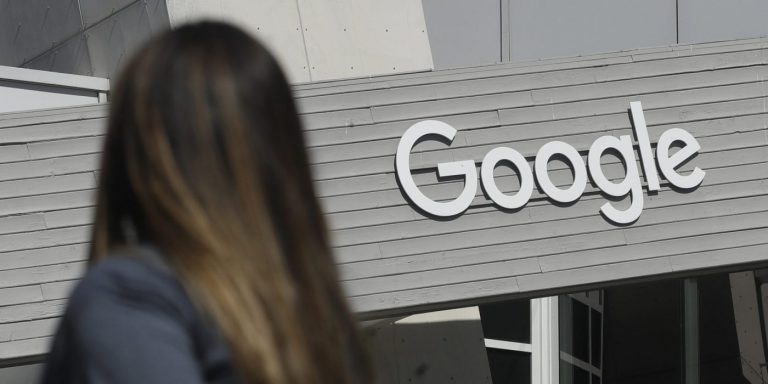
(Headline USA) Google said Wednesday that an Iranian group linked to the country’s Revolutionary Guard has tried since May to infiltrate the personal email accounts of roughly a dozen people linked to GOP presidential nominee Donald Trump and former Democrat candidate Joe Biden.

The admission follows a recent revelation from the Trump campaign that hackers had succeeded in infiltrating it and had sent sensitive information to several media outlets, including Politico, the Washington Post and the New York Times—all of which thus far have opted not to release the material due to potential legal liabilities.

The echoes of the 2016 race, when many claimed—without evidence—that Russia had hacked the Democratic National Committee and several accounts linked to the Hillary Clinton campaign, threatened to turn the tables on the Left’s years of panickmongering about foreign influence, particularly in light of the Biden–Harris administration’s soft stance toward Iran.

The hacking comes less than a year after the Biden-Harris administration granted Iran access to $16 billion in previously frozen assets, which it likely used to help support Hamas’s Oct. 7 sneak attack and massacre against Israel.

Both Biden and Harris have been ambivalent in their relations with America’s closest Mideast ally, even as Iran’s direct hostilities against Israel, and its in-kind response, have ratcheted up tensions significantly in the region.

The news also follows recent reports that Iran may have hired paid hitmen to enter the U.S. through Mexico and target former Trump administration officials. The Department of Homeland Security identified one such mercenary, a Pakistani national.

Google, meanwhile, has been exposed for promoting and colluding with the campaign of current Democrat nominee Kamala Harris in several key areas:

It is unclear whether the tech giant might have aided Iran’s efforts to hack into Trump’s campaign.

Google’s threat intelligence arm said the Iranian group was still actively targeting people associated with Trump, Biden and Harris. It said those targeted have included current and former government officials, as well as presidential campaign affiliates.

The new report from Google’s Threat Analysis Group affirms and expanded on a Microsoft report released Friday that revealed suspected Iranian cyber intrusion in this year’s U.S. presidential election.

It shed light on how foreign adversaries were ramping up their efforts to disrupt the election, which is now less than three months away.

Google’s report said its threat researchers detected and disrupted a “small but steady cadence” of the Iranian attackers using email credential phishing—a type of cyberattack where the attacker poses as a trusted sender to try to get an email recipient to share their login details.

John Hultquist, chief analyst for the company’s threat intelligence arm, said the company sends suspected targets of these attacks a Gmail popup that warns them that a government-backed attacker might be trying to steal their password.

Some have suggested that Republican impressario Roger Stone was the initial victim of the Trump hacking—while possibly relying on an AOL account.

“You could see why the Iranians would be opposed to Donald Trump’s return to the White House,” Stone told Newsmax on Tuesday.

Google’s report said its security team had observed the Iran-linked group gaining access to one high-profile political consultant’s personal Gmail account.

It reported the incident to the FBI in July. Microsoft’s Friday report had shared similar information, noting that the email account of a former senior adviser to a presidential campaign (presumably Stone) had been compromised and weaponized to send a phishing email to a high-ranking campaign official.

The group is familiar to Google’s threat intelligence arm and other researchers, and this isn’t the first time it has tried to interfere in U.S. elections, Hultquist said.

The report noted that the same Iranian group targeted both the Biden and Trump campaigns with phishing attacks during the 2020 cycle, as early as June of that year.

The group also has been prolific in other cyber espionage activity, particularly in the Middle East, the report said.

In recent months, as the Israel–Hamas War has aggravated tensions in the region, that activity has included email phishing campaigns targeted at Israeli diplomats, academics, non-governmental organizations and military affiliates.

While the Trump campaign hasn’t provided specific evidence linking Iran to the hack, both Trump and Stone have said they were contacted by Microsoft related to suspected cyber intrusions.

Google and Microsoft wouldn’t identify the people targeted in the Iranian intrusion attempts or confirm that Stone was among them. Google did confirm that the Iranian group in its report, which it calls APT42, is the same as the one in Microsoft’s research. Microsoft refers to the group as Mint Sandstorm.

Harris’s campaign, which has been up and running for less than a month, declined to say whether it has identified any state-based intrusion attempts, but has said it vigilantly monitors cyber threats and isn’t aware of any security breaches of its systems.

The FBI on Monday confirmed that it was investigating the intrusion of the Trump campaign. Two people familiar with the matter said the FBI also was investigating attempts to gain access to the Biden–Harris campaign.

While neither Microsoft nor Google specified Iran’s intentions in the U.S. presidential race, U.S. officials have previously hinted that Iran particularly opposes Trump. U.S. officials also have expressed alarm about Tehran’s efforts to seek retaliation for a 2020 strike on an Iranian general that was ordered by Trump.

Iran’s mission to the United Nations, when asked about the claim of the Trump campaign, denied being involved.

“We do not accord any credence to such reports,” the mission told the Associated Press. “The Iranian government neither possesses nor harbors any intent or motive to interfere in the United States presidential election.”

The mission did not immediately respond to a request for comment Wednesday about Google’s report.

Adapted from reporting by the Associated Press

Pivotal Georgia County to Start Charging People For Challenging Vote Fraud

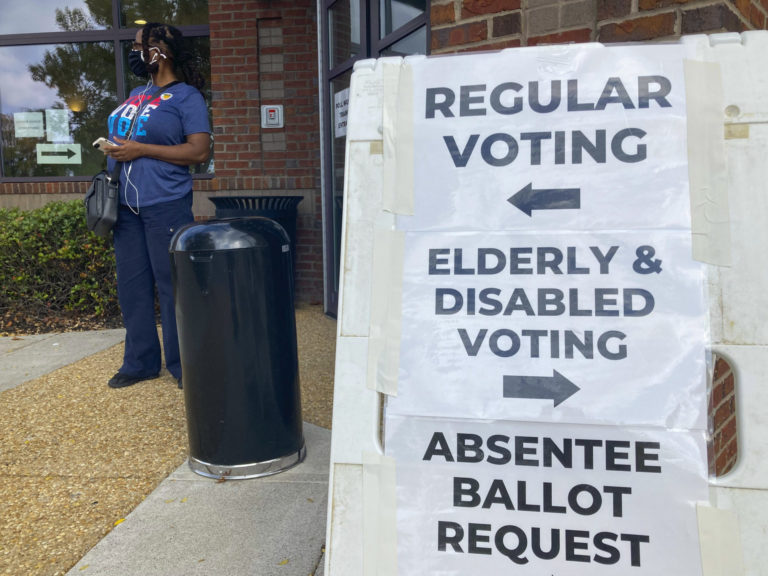
(Headline USA) An election board in one of Georgia’s largest counties has voted to start charging people who challenge the eligibility of voters for the cost of notifying the challenged voters.

The Cobb County Board of Elections and Registrations voted 4-1 on Tuesday to adopt the rule. Debbie Fisher, a Republican member of the board, was the only vote against the rule.

Republican activists are challenging thousands of voters in Georgia as part of a wide-ranging national effort coordinated by Donald Trump’s allies to take ineligible names off voting rolls to protect election integrity.

Democrats have been pushing to start charging for each challenge filed, in part as an effort to deter people from challenging vote fraud en masse. A 2021 Georgia law specifically says one person can challenge an unlimited number of voters in their own county.

In suburban Atlanta’s Cobb County, a onetime Republican bastion that now produces Democratic majorities, the board voted only to charge for the cost of printing the challenge notice and for postage to mail it, likely to be less than a dollar per challenge. But that could add up. Cobb County Elections Director Tate Fall has estimated that it cost about $1,600 to mail out notices from one batch of 2,472 challenges filed last month.

Democrats have also wanted counties to charge challengers for staff time to research and process challenges. But Daniel White, a lawyer for the board, said Tuesday that he concluded that the board couldn’t do that unless state law is changed to grant specific authorization. However, he said he concluded the board has the inherent power to charge for sending notices, in the same way a court has the inherent power to charge someone for serving notice of a lawsuit on the defendants.

“If you’re talking about 3,000 voters being challenged and notice having to go out to 3,000 voters being challenged, that really increases your costs,” White said.

But Republicans opposed the measure. Fisher called it “egregious” and “just wrong” to charge people for exercising their challenge rights.

Cobb County Republican Party Chairwoman Salleigh Grubbs said the board is failing to do its job of ensuring clean voter rolls, while challengers are stepping in to help.

“When the Board of Elections is trying to charge people for doing the job they should be doing, that’s a disgrace,” Grubbs said.

The board also adopted other rules around challenges, saying it won’t accept challenges against people who have already been moved to the inactive voter list. For people who have moved, federal law says Georgia can only cancel an inactive registration if a voter doesn’t respond to a mailing and then doesn’t vote in two following federal general elections. That process takes years. Challengers have been targeting inactive voters for quicker removal.

Counties are making rules in part because the state hasn’t issued guidelines to counties on handling challenges. That’s leading to differences in how counties handle the same types of challenges.

An Associated Press survey of Georgia’s 40 largest counties found more than 18,000 voters were challenged in 2023 and 2024, although counties rejected most challenges. Hundreds of thousands more were challenged in 2020, 2021 and 2022.

A new law that took effect July 1 could lead to a surge in challenges by making it easier for challengers to meet the legal burden of removing someone. Some groups have sued to block the Georgia measure, arguing it violates federal law.

Adapted from reporting by the Associated Press

Butler Police Had Radios for Secret Service; Snipers Never Retrieved Them

(Ken Silva, Headline USA) Many have blamed the July 13 Trump shooting on the fact that Secret Service and local law enforcement couldn’t communicate with each other due to differing radio systems.

“It was so apparent to me that in this incident, in the final 30 seconds which has been the focus of what happened before the assailant opened fire, there was clearly radio transmissions that may have happened on that local radio net that we did not have,” Secret Service Acting Director Ronald Rowe said at an Aug. 2 press conference.

“The interoperability challenge, it’s not an easy fix. It’s not as simple as just trying to figure out the local frequency of the agency you’re working with, and then typing that into your radio network. It requires a substantial technical fix.”

But according to findings from Rep. Clay Higgins, local police offered Secret Service radios—but the agency’s snipers never retrieved them. Higgins, who’s on the House Task Force to investigate the Trump shooting, released “preliminary findings” on his investigation Thursday.

“USSS did not retrieve the radios that had been set aside for them by Butler County tactical command. The radio comms were properly and perfectly arranged during the extensive pre mission planning,” said the congressman, who’s a former law enforcement officer.

“On J12, the Butler County ESU Commander personally reminded the USSS counter-sniper teams to pick up their assigned radios at the ESU Command Post RV, which was positioned according to planning at the Butler Fairgrounds, the following morning before 1100 hrs. It didn’t happen.”

Higgins’s comments were similar to those made by Sen. Ron Johnson, R-Wisc., to Fox News on July 28.

“We also have it confirmed that the radios that local law enforcement gave the Secret Service sniper teams were never used by the Secret Service,” Johnson said, as reported by Blaze Media.

Even without the local radios, the Secret Service’s inability to shoot at Crooks until 15 seconds after he opened fire begs questions. According to rallygoer Jon Malis, the Secret Service was monitoring the rooftop used by alleged shooter Thomas Crooks for at least 20 seconds before he opened fire.

“My wife was actually filming the area where Donald Trump was speaking, and she could see the Secret Service were talking to each other, and they started moving quickly towards the building. And the Secret Service snipers changed their focus from us to the rooftop,” Malis told News Nation in an interview published Thursday. “Maybe 20 seconds after that is when the first shots rang out.”

Malis’s claim was further supported the Washington Post, which reported that the Secret Service’s command post was notified by 6:09 p.m.—two minutes before the shooting—that Crooks was on the rooftop.

According to the Post, a local Butler officer radioed Sgt. Ed Lenz, the tactical commander for the Butler County mobile unit, command at 6:08 p.m.

“Someone’s on the roof,” a local officer radioed at 6:08 p.m., according to the Post, which said it’s obtained a time-stamped transcript of encrypted radio communications. “I have someone on the roof with white shorts.”

Lenz then reportedly relayed that information to a state trooper in the separate Secret Service command center a minute later. Crooks began firing two minutes after that at 6:11 p.m.

Ken Silva is a staff writer at Headline USA. Follow him at twitter.com/jd_cashless.

‘Parental Rights’ Takes Front Stage in Florida School Board Elections

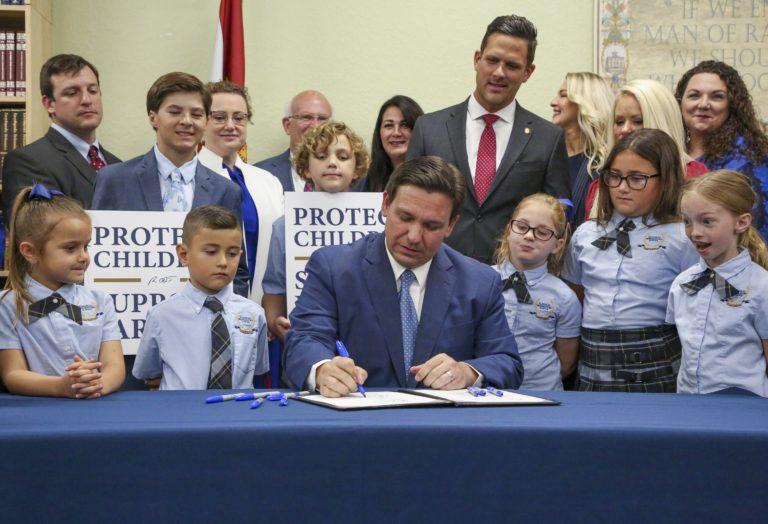
(Headline USA) Florida Gov. Ron DeSantis may not have won the Republican presidential nomination, but he’s still fighting political battles on another front—in Florida’s schools, where his policies have the potential to leave a lasting legacy on public education long after he leaves office.

Though the seats are officially nonpartisan, DeSantis has endorsed 23 school board candidates across 14 counties this cycle—and targeted 14 incumbent members. It’s part of his agenda to counter left-wing indoctrination in public schools.

Much of the political debate in the races has hinged on “parental rights” at a time when both parties are fighting to win over the contested voting bloc of suburban women. The modern parental rights movement grew out of opposition to pandemic lockdowns, forced masking and vaccine mandates and is now animated by frustration about increasing efforts to indoctrinate children on subjects such as sexual identity and critical race theory.

RINO’s quake in fear

Katie Blaxberg wants to make school board meetings “boring” again. But her campaign for an open seat on the Pinellas County School Board on Florida’s Gulf Coast has been anything but that.

Since launching her bid, the mom of three has been trolled online, labeled by opponents as a child abuser and has increased security at her home.

A registered Republican and a former legislative aide, Blaxberg supports school choice and parental involvement in the classroom. However, she’s been marked as complicit on most other left-wing policies, earning her a reputation as a “RINO.”

This has put her on the opposing side of the local chapter of Moms for Liberty, a nonpartisan parental rights group that has grown its ranks immensely despite attempts by the Federal Bureau of Investigation, Southern Poverty Law Center and far-left activist groups to label its members as “terrorists.”

Republican officials rally behind school board candidates

Conservative activists and elected officials are working to win majorities on local school districts, which are often among the largest employers and landowners in their counties.

DeSantis has embraced Moms for Liberty in their effort to flip school boards across the country.

“I think moms are the key political force for this 2024 cycle,” DeSantis said at the group’s national conference in Philadelphia in 2023.

“He knows who the true conservative is in my race,” said Pinellas County school board candidate Danielle Marolf, after winning DeSantis’ endorsement.

“My values are actually to protect children,” she said. “To make sure that our parents are engaged.”

The Pinellas school board races have caught the attention of other up-ballot candidates.

Florida Republican Congresswoman Anna Paulina Luna has campaigned with Marolf and the other Moms for Liberty-endorsed school board candidates in Pinellas, Stacy Geier and Erika Picard.

“Kicked off campaign door-knocking this morning with them,” Luna said in a video posted on August 3. “We want them to take over the school board.”

Other backers include Florida Faith Foundations, a group of pastors pushing to elect biblically aligned candidates to counter anti-Christian values at work in American life.

“The liberals, the anti-God people, they are running too much in this country,” FFF president Anthony McDaniel said in a YouTube video.

“So what are we going to do?” McDaniel said. “Get conservative competent Christians elected to the Pinellas County School Board.”

Leftist groups push back

Critics say there’s often a pattern when a conservative-leaning school board takes over — they go after the superintendent.

After newly elected members took office in November 2022, superintendents in Brevard and three other counties were forced out.

Erika Picard, a DeSantis-backed candidate in Pinellas, said she supports her district’s superintendent, who has the backing of the current board.

“They’re thinking anybody on Moms for Liberty is out to get everyone. And that is just not the case,” Picard said. “I just want to make very clear: I’m running my own campaign.”

Other DeSantis-aligned board members have worked to expand prayer in schools, to oppose homosexual celebrations in schools and toss out pornographic textbooks—actions that many Leftists have decried as extremist.

Left-wing groups have cropped up to counter conservative candidates with their own money and messaging. The Florida Democratic Party has advanced its own slate of 11 school board candidates.

Back in Brevard County, a Democratic school board candidate named Jennifer Jenkins has decided not to seek reelection. Instead, she’s launching a new PAC called Educated We Stand, to combat DeSantis and Mom’s for Liberty in Florida.

Adapted from reporting by the Associated Press