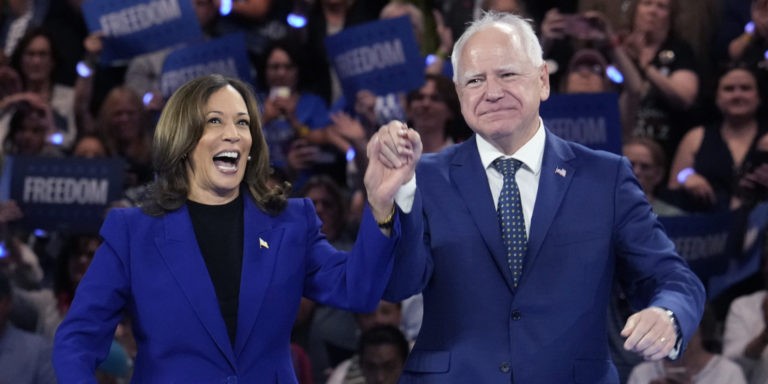
(Molly Bruns, Headline USA) During an Asian American and Pacific Islander meeting at the Democratic National Convention, supporters of vice presidential candidate Tim Walz openly admitted this week that Walz would be “the first Chinese vice president” if he and Democrat nominee Kamala Harris were to win the November election.
Riffing off the 1990s-era claim that Bill Clinton was the “first black president” due to his overall demeanor and perceived support for the black community, a speaker at the breakout session noted Walz’s affinity for the Asian superpower while introducing the Minnesota governor.
“When he broke out in Mandarin with me, my jaw dropped,” said the speaker.
Walz’s ties to Chinese cCommunist Party run deep. He traveled to China over 30 times, and even honeymooned there after he and his wife married on June 4, the anniversary of the Tiananmen Square Massacre.
An article he published in the 1990s described Chinese communism as “wonderful” because it effectively abolished private property.
“It means that everyone is the same and everyone shares,” Walz said during a lesson from a social-studies class in Nebraska in November 1991.
“The doctor and the construction worker make the same,” he continued. “The Chinese government and the place they work for provide housing and 14 kg or about 30 pounds of rice per month. They get food and housing.”
Critics have similarly argued that the system disincentivizes people from pursuing highly skilled or difficult jobs since there is nothing to be gained from it.
Walz also reportedly gave copies of Mao Zedong’s “Little Red Book” as gifts.
As a high-school teacher, he had a history of encouraging communism among young people.
A former student who traveled with Walz confirmed the candidate’s adoration for the Chinese state.
“He’s a Maoist to the core and should not be underestimated. … People need to have their eyes wide open,” said the student, who identified himself as “Shad.” “The snitch hotline in Minnesota is straight out of CCP. Tim Walz is a very bright guy. None of this by accident.”
Tim Walz: A Real-Life Manchurian Candidatehttps://t.co/v79xcpGinv A man who traveled with Walz on some of his 30+ trips to Communist China calls Walz "maoist to the core" and says that Walz could just not stop praising China's Communist system. pic.twitter.com/MtCtM69H1I
The House Oversight Committee recently launched an investigation into Walz’s Chinese connection, including his services at Macau Polytechnic University, a Chinese institution with a “long held devotion to and love for the motherland.”
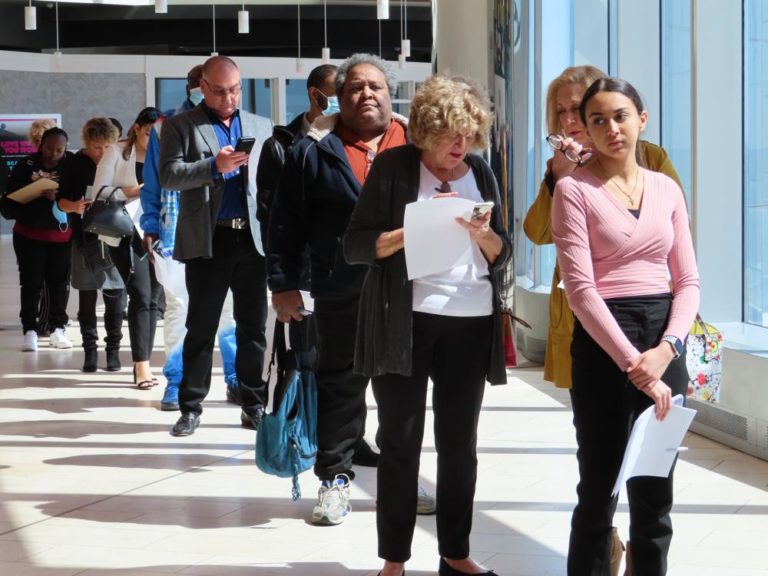
(Dmytro “Henry” Aleksandrov, Headline USA) A new labor market survey shows Americans have rarely felt more in need of new job opportunities, indicating that over 28% are currently looking for a new job.
The New York Federal Reserve’s latest consumer poll found that 28.4% of respondents were looking for a job—the highest reading since March 2014 and up from 19.4% a year ago. That includes people who don’t have a job and those who are currently employed but seeking a new and better position.
NBC News reported that the readings from the New York Fed’s thrice-annual Survey of Consumer Expectations Labor Market Survey indicate that the American economy is getting worse. The current unemployment rate is 4.3%, up from its “post-pandemic low” of 3.5%.
The new survey found that expectations of losing one’s job also hit a record. The average expected likelihood of losing your job rose to 4.4%, up from 3.9% a year ago and the highest level ever recorded for the survey, which dates back to 2014.
“It’s hard to find data moving in the right direction. The best you can say is that some data are in a good spot and not getting worse. But most data points are, on average, moving slowly in the wrong direction,” Guy Berger, director of economic research at the Burning Glass Institute, said.
According to the New York Fed, the increase in job searchers was most pronounced among respondents older than 45, those without a college degree, and those with an annual household income less than $60,000.
Rick Goins, a 64-year-old Houston resident with decades of communications experience, is among the people struggling to find a new job. He said he has not had a full-time role since 2016, managing only to get hired for contractor positions. In 2020, Goins secured a contractor role that lasted nearly two years but ended this February.
“I’m not old enough to retire [or] for Medicare. I want to keep my skills up … I’ve got a lot left in the tank,” he said, adding that he’d lost count of how many times potential employers ignored him during an interview process.
An Economist/YouGov poll released this week revealed that 51% of female registered voters supported Harris, and only 38% said they supported Trump. On the other hand, 49% of male registered voters said they planned to vote for Trump, while 42% said they would vote for Harris.
“There’s the gender gap. Then there’s the idea that for the last month, the Democratic Party has been rallying around a woman at the top of the ticket, which is — the only other time they did it is in 2016. And it has been noteworthy to see how they are learning about what to do and how to confront Donald Trump as the opponent to a woman. 2016 and now — very different campaigns, very different female candidates,” Bash said.
She then said that this year, Democrats are attempting to appeal to more effeminate men.
“They are doing so in trying to put forward male figures, Tim Walz being one of them, Doug Emhoff last night, who can speak to men out there who might not be the sort of testosterone-laden, you know, gun-toting kind of guy who wants to listen to Hulk Hogan and the kind of players that came out at the RNC or might want to listen to that. But also, in addition, understand that it’s okay in 2024 to be a man comfortable in his own skin who supports a woman,” Bash said.
Libs of Tiktok was one of the prominent conservative accounts who reposted the clip and mocked CNN for finally admitting that the only men who would support Harris are those men who also don’t act like men.
“The war on masculinity continues! CNN is at the DNC crying about toxic masculinity and Republican men being too masculine… They admit Democrat men are a bunch of low T soyboys,” Libs of TikTok wrote.
The war on masculinity continues!
CNN is at the DNC crying about toxic masculinity and Republican men being too masculine 😂
Dana Bash says Tim Walz and Doug Emhoff “can speak to men out there who might not be the testosterone laden gun toting guy.”
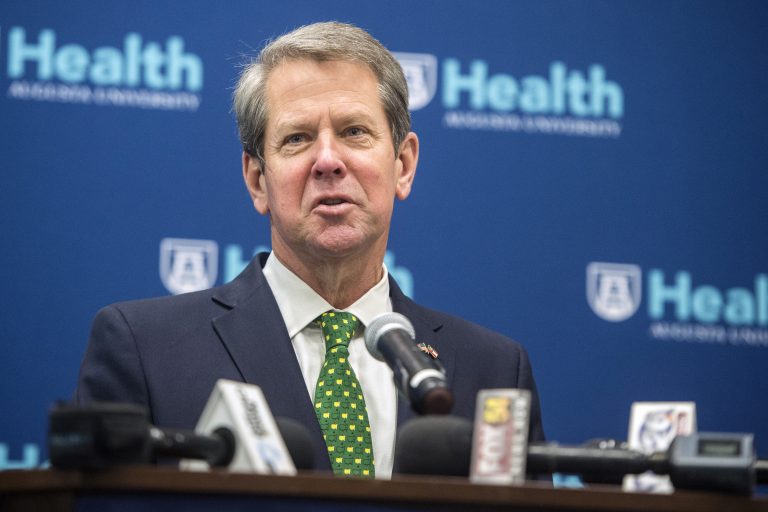
(Ben Sellers, Headline USA) Former President Donald Trump cast aside his four-year-old feud with Georgia Gov. Brian Kemp as the two agreed that the need to prevent a socialist takeover of America outweighed their past grievances.
Kemp made an appearance Thursday on Fox News host Sean Hannity’s show, where he was reacting to the Democratic National Convention on the same night that Democrat Kamala Harris was due to deliver her acceptance speech.
Among the speakers at the convention was his former lieutenant governor, NeverTrump RINO Geoff Duncan, who was briefly considered a potential presidential pick for the No Labels party.
Geoff Duncan's full DNC speech. "Doing the right thing will never be the wrong thing. Stay strong." pic.twitter.com/fJH3XoKDaY
Kemp countered the Democrats’ emotionally driven appeal for four more years with a brutal dose of reality.
“I feel the joy is subsiding and when the sugar high of the convention subsides, people are going to really start thinking ‘It’s not so joyful when I look in my bank account,'” he said, according to Fox 5 Atlanta. “It’s not joyful when I can’t make my car payment or my rent payment or I have to decide to buy gas or buy groceries.’”
However, according to The Hill, Kemp’s real objective in going on Hannity’s show—believed to be one of Trump’s favorites—was to bury the hatchet and offer the GOP presidential nominee his endorsement.
“We gotta win. We gotta win from the top of the ticket on down,” Kemp said. “We need to send Donald Trump back to the White House. We need to retake the Senate. We need to hold the House.”
Trump responded with kind words of his own, thanking him for his “help and support” in the key battleground state.
The bad blood between the two came after Kemp refused to get involved in efforts to challenge the outcome of the state’s 2020 election, where suspicious activity in Fulton County and other blue strongholds helped to deliver a narrow win to Biden with just under 12,000 votes.
Evidence from the Georgia Board of Elections and other investigations has subsequently proven that Fulton, in particular, violated election laws and likely processed enough fraudulent and invalid votes to more than reverse the outcome.
Initially Kemp—whom Trump endorsed in his own narrow 2018 election victory against Democrat powerhouse Stacey Abrams—had signaled that he would support a full signature audit of the votes.
However, a few weeks later he reversed himself, attributiong the allegations of vote fraud to “bogus online blogs,” according to 11Alive.
In between the two statements, 20-year-old Harrison Deal, an intern with then-Sen. Kelly Loeffler, R-Ga., and the boyfriend of Kemp’s college-age daughter, died in a fiery and mysterious car accident, leading some to suspect that he may have been compromised.
Eyewitness testimony sounds so awful, mentioning hearing multiple explosions. It also appears that Harrison Deal was pulled off to the side of the road beyond the shoulder with at least two other vehicles. I hope Chatham county does a thorough investigation https://t.co/rHWP1v99Bcpic.twitter.com/7pqcLpW96Q
Others openly wondered if Kemp—a frequent guest at the globalist World Economic Forum convention in Davos, Switzerland—and Georgia Secretary of State Brad Raffensperger—who once thanked his donors in fluent Mandarin Chinese—had been plants all along, secretly running as Republicans while trying to flip the reliably red state.
A staffer in Raffensperger’s office secretly recorded a January 2021 call between Trump and the state’s top election official in which Trump sought Raffenperger’s help finding evidence of fraud. The staffer, Jordan Fuchs, then leaked the audio to the Washington Post, which used the call to claim Trump was attempting to interfere in the election.
Fulton County District Attorney Fani Willis subsequently used it as the basis for her investigation, in which she attempted to charge Trump and 18 of his political allies with a racketeering conspiracy.
Earlier this month, Trump offered harsh words for Kemp and his wife during a rally in Atlanta, as well as on his Truth Social platform, prompting a sharp online retort from the governor.
My focus is on winning this November and saving our country from Kamala Harris and the Democrats – not engaging in petty personal insults, attacking fellow Republicans, or dwelling on the past.
A number of conservatives questioned Trump’s wisdom in reopening the old wounds.
Despite the personal animus, Kemp has supported legislation in Georgia to close some of the election loopholes that left-wing operatives exploited and to fortify the state’s election-integrity laws.
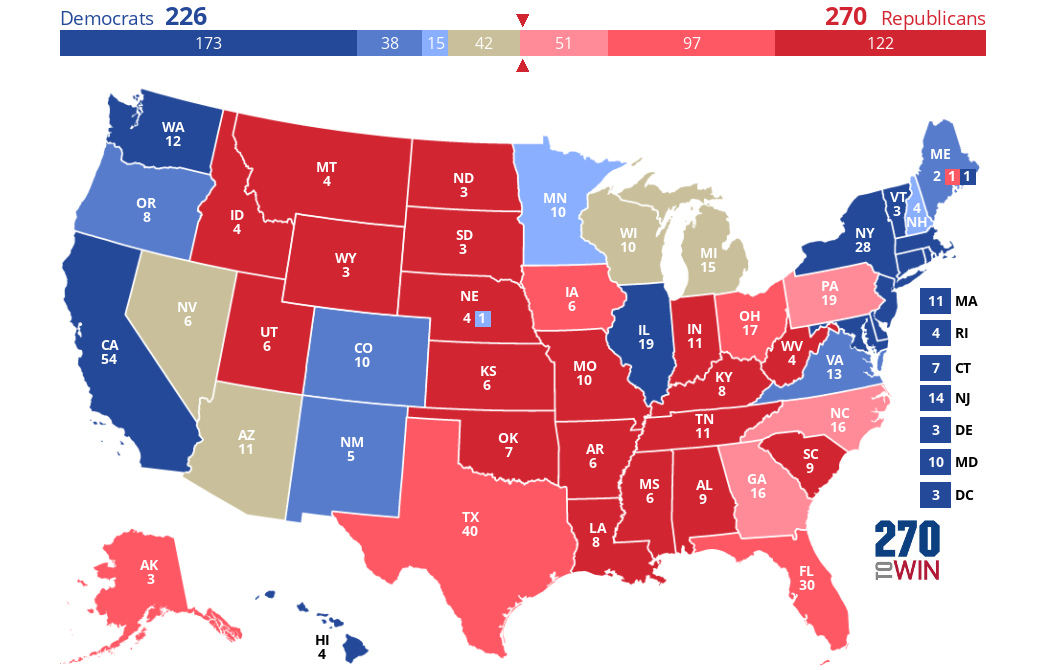
If Trump were to claim Georgia and Pennsylvania—two battleground states that swung his way in 2016 but were delivered to Biden in 2020—assuming he held all the states he won in 2020, it would be enough to put him at the 270 electoral votes needed to win the race.
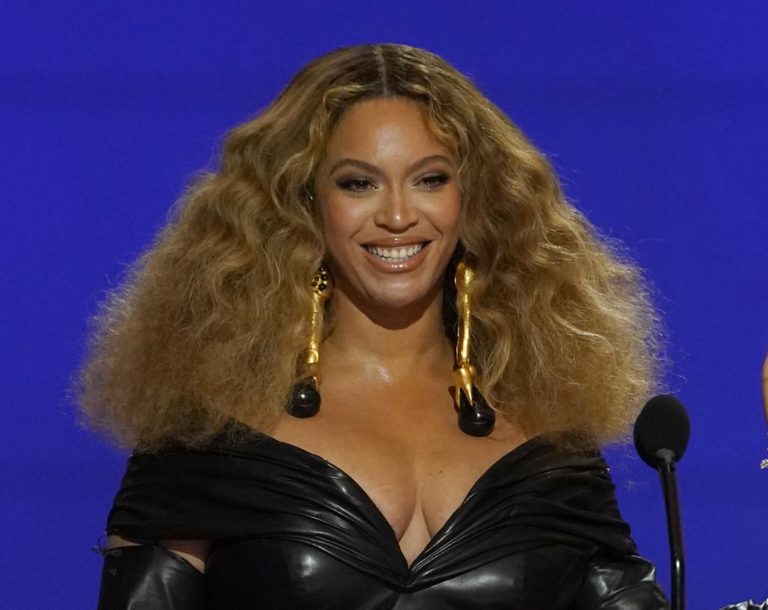
Kamala Harris is so bad at this her own party had to lie and tell attendees Beyoncé was coming so people wouldn’t bail before Harris’s speech and leave a bunch of empty seats for the cameras. Amazing. https://t.co/tnFap6tXsW
Although Harris, who recently became Democrats’ anointed presidential candidate following a coup against President Joe Biden, was the main draw, the evening lineup lacked the star power of previous nights, when heavy-hitters including Oprah Winfrey, Barack and Michelle Obama, and Bill and Hillary Clinton all graced the DNC stage.
To avoid the traffic jams, long security lines at O’Hare Airport and maggots in their hotel cereal, some may have considered cutting short the trip.
That is, until the gossip site TMZ and others began reporting that Knowles’s plane had touched down in Chicago.
Harris, who is not known for her speaking prowess and shattered no expectations with her falsehood-filled performance on Thursday, has regularly relied on gimmicks to fill the arenas, including musical guests like Megan Thee Stallion and Bon Iver.
She also has used Knowles’s song “Freedom” as her unofficial theme song, and it was said to be the theme of the DNC’s final night, adding more fuel to the speculation about a surprise cameo appearance.
Harris’s GOP rival, former President Donald Trump, has collected endorsements from a number of high-profile rappers as both campaigns jockey for a share of the youth vote and Trump actively seeks to court members of the black community who have reliably voted Democrat since the Lyndon Johnson presidency in the 1960s.
However, Knowles, who recently sparked controversy with her release of a country music album, made clear where her loyalties lay by granting Harris permission to use the song “Freedom” and then issuing a cease-and-desist notice to Trump campaign spokesman Steven Cheung after he posted a parody of it.
Others speculated that pop-star Taylor Swift might show up after flight trackers following the path of her private jet floated rumors that it had landed in Chicago.
TAYLOR IS FLYING TO CHICAGO O’HARE. I wonder why she needs to land in Chicago??
Swift—who launched her career as a country singer–songwriter on Toby Keith’s record label—first went political in 2018, endorsing the opponent of GOP Sen. Marsha Blackburn. Shortly thereafter an investment group that included George Soros bought out the rights to her early song catalog, leading some to suspect that she may be compromised.
George Soros owns Taylor Swift music. She is a performer following orders. Populist/conservatives should not be taking the dinosaur media’s bait and attacking her. The dying system is trying to subconsciously switch her out with Biden in young voters minds. This only works if you… https://t.co/FggrcZQCAq
Gradually, attendees began to realize that neither superstar would show. A representative for Knowles told the Hollywood Reporter that “Beyoncé was never scheduled to be there. The report of a performance is untrue.”
After neither superstar showed, some chalked it up to yet another of the many examples of left-wing gaslighting that party elites had engaged in during the four-day gathering.
Watch as Fox News hosts ROAST Kamala Harris and the Democrats for leaking the rumor that Beyonce was going to appear at the DNC last night:
Greg Gutfeld: "They needed people to stick around…They used Beyonce… So people would stick around for Kamala. Yeah! That just, that is… pic.twitter.com/lw1lq6CisB
CNN host Abby Phillip was among those who directed their ire at TMZ, saying in an X post that the site had “lost a lot of credibility.” However, conservatives fired back that her own network had issues of its own in that department.
Do you think the public views TMZ or CNN as having more credibility?
On Friday’s Fox and Friends, conservative-leaning hosts Will Cain and Lawrence Jones said the episode contributed to the perception that the DNC—and the Harris–Walz campaign overall—had an air of “phoniness” that was becoming harder to hide from the public, Mediaite reported.
“All the talk yesterday was Beyoncé. Where was Beyoncé? Beyoncé at the DNC!” said Cain.
“… Was that a bait and switch?” he continued. “There was no Beyoncé. [It was] used to pump up the ratings so more people would see Kamala.”
Jones concurred that the whole thing was a sham from the start.
“One-hundred , tt was a made up hoax from the very beginning,” he said. “… But it definitely got a lot of people to show up because I saw a lot of people that were there just for Beyoncé.”
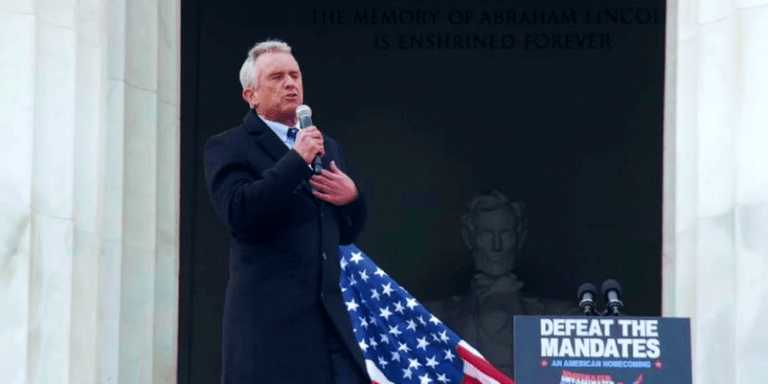
(The Center Square) – Independent presidential candidate Robert F. Kennedy Jr. dropped his presidential bid Friday to endorse Republican nominee Donald Trump in the Nov. 5 election.
Kennedy, his voice hoarse, called it quits during a speech Friday in Phoenix.
“In an honest system, I believe I would have won the election,” he said.
Kennedy said Friday that the Democratic party had changed significantly since he attended his first Democratic National Convention at the age of 6. He said it was no longer the party of his father and uncle. He blamed “shadowy DNC operatives” for fighting his campaign at every turn in legal battles challenging the signatures he turned in to get on the ballot in state after state. He also blamed media companies for failing to do their jobs.
He said Democrats abandoned democracy.
Kennedy said he had no path to victory and would suspend his campaign. He said his name would remain on the ballot. He also encouraged supporters to vote for him in both red and blue states. However, he said he would remove his name from the ballot in battleground states.
Kennedy also endorsed Trump.
On Tuesday, Trump said he’d “love” Kennedy’s endorsement and that he’d be open to having Kennedy in his administration.
Kennedy has been an outspoken critic of the deep state, even floating the possibility that the CIA may have been behind the high-profile assassinations of his father, RFK Sr., and uncle, President John F. Kennedy.
Conservatives—including Donald Trump Jr.—supported the idea of appointing Kennedy as CIA chief after the news broke that he was communicating with Trump’s campaign.
Another possibility would be to appoint Kennedy—a prominent vaccine skeptic and critic of ex-COVID czar Anthony Fauci—to oversee the National Institute of Allergy and Infectious Diseases, over which Fauci lorded for several decades prior to his 2022 retirement.
The move would be likely to roil Democrats to the extreme, although it may be poetic justice considering their own track record of controversial appointments during the Biden administration.
(Money Metals News Service) In a recent episode of the Money Metals podcast, host Mike Maharrey sat down with economist Daniel Lacalle to discuss pressing economic issues, including inflation, government policy, and the future of the U.S. dollar. Lacalle, a professor of global economy at IE Business School in Madrid and author of several influential books, brought his deep knowledge and unique perspective to the conversation.
(Interview Begins Around 6:56 Mark)
Who is Daniel Lacalle?
Daniel Lacalle
Daniel Lacalle is a prominent Spanish economist, investment manager, and professor of global economy at IE Business School in Madrid. Born on August 5, 1967, Lacalle has established himself as a leading voice in economics, with a reputation for clear and accessible explanations of complex economic issues. He has authored several influential books, including Life in the Financial Markets (2014), The Energy World is Flat (2015), Escape from the Central Bank Trap (2017), and Freedom or Equality (2020).
Lacalle is ideologically aligned with conservative liberal principles and has been closely associated with the Partido Popular, a major political party in Spain, although he is not formally affiliated with them. In 2019, he even ran for office in the Spanish general elections. Daniel Lacalle has been ranked as one of the top twenty most influential economists globally by Richtopia in both 2016 and 2017.
In addition to his work in academia and finance, Lacalle is a regular contributor to major media outlets, including CNBC, Bloomberg TV, BBC, and the Wall Street Journal. He also collaborates with organizations such as the World Economic Forum and the Mises Institute. His expertise spans a wide range of economic topics, from monetary policy to global energy markets, making him a sought-after commentator and analyst in both Europe and the United States.
Inflation: Is It Really Under Control?
Lacalle kicked off the discussion by challenging the narrative that inflation is “under control.” He emphasized that inflation is cumulative, meaning that even if the annualized rate appears to be declining, it doesn’t negate the financial strain on everyday people. He pointed out that non-replaceable goods and services, such as shelter and healthcare, continue to rise at annualized rates of 4-5%. This persistent inflation remains a significant concern, especially when services inflation and shelter costs remain high.
Lacalle also highlighted that markets often shift the narrative to make inflation seem under control, driven by the desire for rate cuts. He stressed that if inflation were solely caused by COVID-19-related disruptions, it should have subsided by now. However, inflation persists, suggesting deeper, more systemic issues.
Inflation as a Policy Tool
One of the most striking points Lacalle made was that inflation is not just an economic phenomenon; it’s a policy tool. Governments use inflation to erode their fiscal imbalances at the expense of citizens’ purchasing power. Lacalle explained that the commonly accepted 2% inflation target was essentially a “made-up figure” designed to make the loss of purchasing power more palatable in exchange for supposed economic growth.
He argued that inflation is a hidden tax, particularly harmful to the poorest citizens. Governments benefit from inflation by imposing indirect taxes on goods and services, which rise in price due to inflation, resulting in higher tax revenues without explicitly raising tax rates. This allows politicians to present themselves as the solution to the very problems they create, often by offering subsidies financed by more currency printing.
Kamala Harris’s Plan and Price Gouging
Lacalle also addressed U.S. Vice President Kamala Harris’s plan to combat inflation by targeting price gouging. He dismissed the concept of price gouging as “ludicrous,” especially in a highly competitive market like the U.S. grocery sector, where margins are around 1.6%. He argued that the notion of price gouging preys on voters’ ignorance and distracts from the real issue: the destruction of purchasing power caused by government policies.
Lacalle criticized Harris’s plan to increase expenditures by $1.7 to $2.5 trillion, offset by higher taxes on corporations and wealthy individuals. He labeled this approach as a classic election cycle lie, stating that it is impossible to generate such additional tax revenue through revenue measures alone. He warned that this kind of deficit spending threatens the U.S. dollar’s status as the world’s reserve currency.
Central Banks and Gold: A Shift in Strategy
The conversation then turned to the actions of central banks, particularly their increasing gold reserves. Lacalle noted that central banks have historically reduced their exposure to gold in favor of U.S. dollars and euros. However, with the fiscal and monetary imbalances in these currencies, central banks, especially in countries like China and India, are now turning back to gold as a more reliable store of value. He emphasized that gold has outperformed bonds and other assets over the last 50 years, making it an attractive option for central banks looking to stabilize their reserves.
The Threat of De-Dollarization
Lacalle also touched on the potential for de-dollarization, where the U.S. dollar could lose its status as the world’s reserve currency. While he acknowledged that this is not an immediate threat, he cautioned against complacency. He compared the situation to driving at 200 miles per hour and assuming everything is fine just because nothing has gone wrong yet. The real risk lies in ignoring the warning signs, much like what happened with the British pound when it lost its reserve status.
He pointed out that the U.S. dollar’s current strength is partly due to the fact that competing currencies, like the euro, are implementing similar flawed policies. However, should the U.S. undermine investor security and its independent institutions, the dollar’s reserve status could quickly unravel.
Discrepancy Between Headline Figures and Real-Life Experience
Lacalle ended the conversation by highlighting the discrepancy between headline economic figures and the reality faced by everyday citizens. While aggregate measures like GDP and CPI might suggest stability, disaggregated figures tell a different story. Small businesses and families, the backbone of the U.S. economy, are facing significant challenges, even as large corporations and the government perform well. He stressed the importance of paying attention to these warning signs to avoid further discontent and economic instability.
Conclusion
Daniel Lacalle’s insights in this Money Metals podcast episode shed light on the complexities of inflation, government policy, and the potential future of the U.S. dollar. His analysis underscores the importance of recognizing inflation as a deliberate policy tool and the risks associated with ignoring the warning signs in the global economy. As central banks shift their strategies and citizens grapple with rising costs, understanding these dynamics is crucial for navigating the uncertain economic landscape ahead.
Key Questions & Answers:
Here are the key questions and answers from the interview between Mike Maharrey and Daniel Lacalle on the Money Metals podcast:
Is inflation really under control, or is that narrative overstated?
Inflation is not under control. Inflation is cumulative, and even if the annualized rate decreases, people still feel the effects, especially with non-replaceable goods and services like shelter and healthcare rising at 4-5% annually. The narrative that inflation is under control is driven by market desires for rate cuts, not reality. If inflation were caused solely by COVID-related disruptions, it should have disappeared by now, but it hasn’t, indicating deeper issues.
How do governments and the political class benefit from inflationary policies?
Inflation is a hidden tax imposed by governments that erodes fiscal imbalances without explicitly raising taxes. It allows governments to dilute the purchasing power of citizens’ wages and savings while increasing indirect tax revenues. Politicians also present themselves as the solution to the inflation they cause by offering subsidies, funded by more money printing.
What are your thoughts on Kamala Harris’s plan to combat inflation by stopping price gouging?
The concept of price gouging is ludicrous, especially in competitive markets like the U.S. grocery sector, where margins are only 1.6%. The focus on price gouging distracts from the real issue of inflation caused by government policies. Harris’s plan to increase spending by $1.7 to $2.5 trillion and offset it with higher taxes is unrealistic and threatens the U.S. dollar’s status as the world’s reserve currency.
Why are so many central banks buying gold, and what does it signal?
Central banks are increasing their gold reserves because U.S. Treasury bills and other traditional assets are no longer providing the stability they once did. With fiscal and monetary imbalances in major currencies like the U.S. dollar and euro, gold offers a more reliable store of value. Gold has outperformed bonds and other assets over the past 50 years, making it a preferred choice for central banks.
Do you think de-dollarization is a potential problem for the U.S. in the future?
De-dollarization is a potential problem, although not an immediate one. The risk lies in complacency, as the U.S. dollar could lose its reserve status if the U.S. undermines investor security and its independent institutions. The current strength of the dollar is partly due to competing currencies, like the euro, implementing similar flawed policies. However, this situation could change rapidly.
What is something that you see in the economy or financial system that others might be missing?
There is a concerning discrepancy between headline economic figures, such as GDP and CPI, and the real-life experiences of citizens. Small businesses and families are struggling, even as large corporations and the government perform well. Ignoring these warning signs could lead to further economic instability and discontent, as seen in recent European elections.
These key questions and answers highlight the main topics discussed during the interview, focusing on inflation, government policies, and their broader economic implications.
(Headline USA)The average rate on a 30-year mortgage eased this week to its lowest level in 15 months, welcome relief for home shoppers navigating a housing market that remains out of reach for many Americans.
The rate fell to 6.46% from 6.49% last week, mortgage buyer Freddie Mac said Thursday. A year ago, the rate averaged 7.23%.
The average rate is now the lowest it’s been since mid-May last year, when it was 6.39%.
Borrowing costs on 15-year fixed-rate mortgages also fell this week, good news for homeowners seeking to refinance their home loan at a lower rate. The average rate fell to 5.62% from 5.66% last week. A year ago, it averaged 6.55%, Freddie Mac said.
Mortgage rates are expected to continue trending lower overall this year, as signs of waning inflation and a cooling job market have raised expectations that the Federal Reserve will cut its benchmark interest rate at its policy meeting next month, which would be the first such easing in four years.
“Although mortgage rates have stayed relatively flat over the past couple of weeks, softer incoming economic data suggest rates will gently slope downward through the end of the year,” said Sam Khater, Freddie Mac’s chief economist.
Democrats have been angling for the rate cut as a way to juice up the economy ahead of the November election.
Earlier in the week, the Biden administration’s Labor Department acknowledged that it had been lying about the jobs data for the past year, artificially inflating the numbers to give a sense that the economy was more robust than it really was.
But with unemployment higher than perceived, it essentially admitted that the narrative about a so-called soft landing to the Fed’s rate hikes had been fabricated.
The revised number indicated that they had inflated the figure by som 818,000 jobs.
“That equates to 68,000 fewer jobs per month than initially touted—and includes 115,000 fewer manufacturing jobs, 104,000 fewer trade, transportation, and utility jobs, and 45,000 fewer construction jobs,” noted Jake Schneider, rapid response director for the Republican National Committee, in a press release.
Critics noted that there were no losses to government jobs.
Despite the ploy, Fed chair Jerome Powell signaled that the trickery was likely to have its intended effect, locking in the much anticipated September rate-cut.
“The time has come for policy to adjust,” Powell said Friday at the Fed’s annual retreat in Jackson Hole, Wyo., according to CNBC.
After jumping to a 23-year high of 7.79% in October, the average rate on a 30-year mortgage has mostly hovered around 7% this year—more than double what it was just three years ago. But this month, the average rate has made its biggest downshift in more than a year, sliding to around 6.5%.
The recent pullback in mortgage rates overall has sparked a pickup in applications for home refinancing loans, which are 23% higher than a month ago, according to the Mortgage Bankers Association.
Applications for home purchase loans have lagged, however.
“We expect rates likely will need to decline another percentage point to generate buyer demand,” Khater said.
Elevated mortgage rates, which can add hundreds of dollars a month in costs for borrowers, have kept many would-be homebuyers on the sidelines, extending the nation’s housing slump into its third year.
Sales of previously occupied U.S. homes are running below last year’s pace, though they ended a four-month slide in July.
The rate on a 30-year mortgage is influenced by several factors, including how the bond market reacts to the central bank’s interest rate policy decisions. That can move the trajectory of the 10-year Treasury yield, which lenders use as a guide to pricing home loans.
The yield, which topped 4.7% in late April, was at 3.86% in afternoon trading in the bond market Thursday, following mixed data on the U.S. economy, which has been slowing under the weight of high interest rates meant to get inflation under control.
Most economists expect the average rate on a 30-year home loan to remain above 6% this year. That may not be enough for many prospective homebuyers in the face of record-high home prices and a shortage of properties for sale in many markets.
“Home prices are still rising in most markets,” said Lisa Sturtevant, chief economist at Bright MLS. “Opportunities for moderate-income and first-time homebuyers will still be limited even with a drop in rates.”
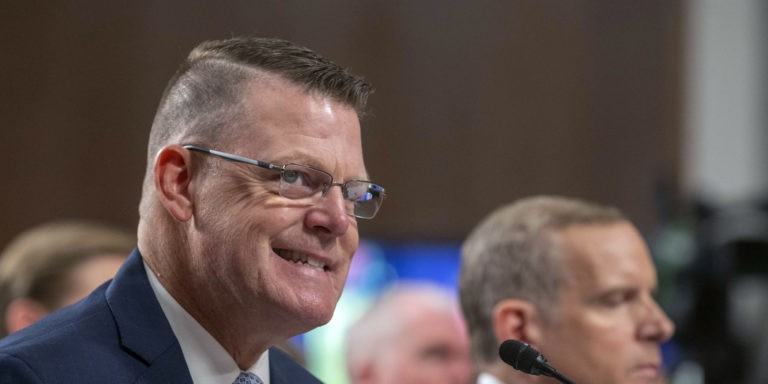
(Ken Silva, Headline USA) Former Secret Service Director Kimberly Cheatle and current acting boss Ronald Rowe have both told Congress that Donald Trump’s security team received all the resources it asked for ahead of the July 13 deadly rally in Butler, Pennsylvania.
But according to Sen. Josh Hawley, R-Mo., Trump’s security detail was told ahead of time that it shouldn’t ask for additional resources. Citing an unnamed whistleblower “with knowledge of Secret Service planning,” Hawley said Friday that Secret Service headquarters encouraged agents in charge of the trip not to request any additional security assets in its formal manpower request— effectively denying these assets through informal means.
“According to the whistleblower, the lead advance agent for a protectee trip typically submits a ‘manpower request’ to the local field office. This normally includes the number of personnel and other security assets needed for the event and is submitted to the U.S. Secret Service’s Office of Protective Operations – Manpower (OPO – Manpower) for final approval,” Hawley said in a letter to Rowe.
“According to the allegations, officials within this office preemptively informed the Pittsburgh field office that the Butler rally was not going to receive additional security resources because Trump is a former president and not the incumbent President or Vice President. According to the whistleblower, the manpower request did not include extra security resources because agents on the ground were told not to ask for them in the first place.”
🚨🚨 NEW – Whistleblower says Secret Service HQ told agents working the Butler PA event NOT to request additional manpower resources for the rally & warned any such requests would be denied. Contradicts Director Rowe testimony, who said no resources were ever denied pic.twitter.com/85sHTAI82u
Crucially, Hawley continued, the lack of additional resources meant that there were no one from the agency’s Counter Surveillance Division, which performs threat assessment of event sites before the event occurs. A separate whistleblower has told Hawley that if personnel from CSD had been present at the rally, the gunman would have been handcuffed in the parking lot after being spotted with a rangefinder before Trump took the stage.
Hawley’s letter did say that the Secret Service approved snipers the day before the event, which seems to contradict his whistleblower’s allegations. In fact, the July 13 rally where Trump was nearly assassinated may have been the first time Secret Service snipers were ever deployed to guard a former President, according to findings from Rep. Clay Higgins, R-La.
Hawley seeks info from Rowe about the whistleblower allegations, including a copy of the manpower request submitted by Trump’s security to Secret Service Office of Protective Operations. Hawley demanded answers “immediately.”
(Mike Gleason, Money Metals News Service) As central bankers from around the world gather in Jackson Hole to foist their agendas into the media spotlight, investors are counting down the days until the Federal Reserve starts cutting rates.
Minutes from the Fed’s last meeting showed several officials were sympathetic toward easing immediately. Although Fed Chairman Jerome Powell opted to hold off on cuts, he left little doubt that he intends to act in September.
A massive downward revision in the jobs numbers on Wednesday gave Powell and company additional leeway to opt for a potential 50 basis point rate cut instead of the more typical 25.
The Bureau of Labor Statistics announced that the economy created 818,000 fewer jobs than it had previously estimated. That’s no minor downward revision. In fact, it was the biggest one since 2009. And it didn’t go unnoticed by former President Donald Trump.
While on the campaign trail, Trump accused the Democrat administration of putting out fake statistics on the economy.
Donald Trump: “The Harris-Biden Administration has been caught fraudulently manipulating jobs statistics to hide the true extent of economic ruin that they’ve inflicted on America. The new data from the Bureau of Labor Statistics shows that the administration padded the numbers with an extra – listen to this one – 818,000 jobs that don’t exist. So, they said they existed, and they never did exist.
She gets four more years you’re going to see more jobs vanish… millions and millions will vanish, and inflation completely will destroy our country. We’ll have inflation worse than they’ve given us. You know, when I gave it to them I had virtually no inflation. And now their number’s up to 22, 23%. But their real number is probably 40 to 50%.”
Trump isn’t wrong to question the employment and inflation figures being reported by the government. Over 800,000 jobs that didn’t actually exist were arbitrarily modeled into existence by bureaucrats. As for the inflation data, it gets put through a series of adjustments and substitutions that have the effect of understating real-world price level increases.
The cumulative inflation that has occurred under the Biden administration is barely over 20% when going by the Consumer Price Index. But as Trump suggested, alternative measures of inflation – including the government’s own pre-1990, unmanipulated CPI formula – show consumer prices rising at about double the official rate.
It’s true that inflation by all measures has come down in recent months from previous highs. But despite claims in some circles that the inflation problem has been conquered, it continues to run above the Fed’s supposed target of 2% — even by the official measures.
The U.S. fiat dollar continues to lose purchasing power against hard money, as evidenced by gold’s ongoing ascent. After surging to a fresh record early in this week’s trading, gold prices turned lower by Thursday but rebounded back to their all-time nominal high of $2,520 on Friday.
Precious metals bulls see higher prices ahead as the economy deteriorates and the Fed pivots toward monetary easing. We could ultimately see silver, platinum, and palladium all follow gold’s lead to new records. They each have a lot of catching up to do.
In the meantime, gold is commanding a lot of newfound attention from the investing public. Unfortunately, high spot prices are also attracting sketchy opportunists and scammers into the market for physical gold products.
A Beverly Hills-based gold firm named Oxford Gold Groupfacing a class action lawsuit and potential federal charges after it sold customers on promises of securing their retirement assets – then took off with those very assets. Customers were pitched aggressively on high premium coins – and urged to store them in a depository, only later to discover that the metals were never actually stored on their behalf.
The company had allegedly paid people to post fake reviews on the internet in order to build up an apparently sterling reputation in a short amount of time. But a reputation that isn’t organically built and maintained over a period of years isn’t worth much.
Other types of scams now flourishing include the pushing of counterfeits, overpriced numismatics, and too-good-to-be-true offers that turn out to be bait-and-switch schemes or Ponzi schemes.
On the other side of the industry, so-called “cash for gold” middlemen are setting up shop to try to lure people to exchange real value for fiat – often with lowball offers that inflate their profit margins.
The lesson for precious metals investors is that in the precious metals industry, there is no substitute for trustworthiness. Regardless of whether you are looking to buy or sell precious metals, you can always expect an honest, fair, no-pressure experience when dealing with Money Metals Exchange.
Mike Gleason is a Director with Money Metals Exchange, a national precious metals dealer with over 500,000 customers. Gleason is a hard money advocate and a strong proponent of personal liberty, limited government, and the Austrian School of Economics. A graduate of the University of Florida, Gleason has extensive experience in management, sales, and logistics, as well as precious metals investing. He also puts his longtime broadcasting background to good use, hosting a weekly precious metals podcast since 2011, a program listened to by tens of thousands each week.