The High Stakes of Silver: A Billy the Kid Poker Parable

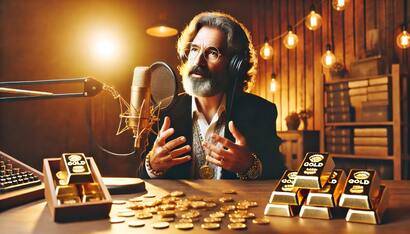
(Jon Forrest Little, Money Metals News Service) An old Sunday school story may be the best metaphor for the risks of today’s high paper-to-silver ratio.

Let me take you back to the Old West, New Mexico specifically.

There are over 15,000 abandoned mining sites in New Mexico, a state which boasts vast mineral resources such as copper, gold, silver, and uranium (but is small in comparison to States like Colorado, Idaho, Nevada, Oregon, and Arizona.)

As a native New Mexican, one of my favorite parts of state history is connected with Billy the Kid, who was raised around Lincoln County, two hours South of Albuquerque and 1.5 hours north of El Paso.

Silver Shenanigans in Santa Fe

In the dusty saloons of Santa Fe, New Mexico, a clever merchant named Silvius often rubbed elbows with the infamous Billy the Kid and his gang of horse bandits.

One fateful evening, as Billy bought a round of drinks for his outlaws, the sharp ping of a silver coin hitting the bar counter caught Silvius’s ear.

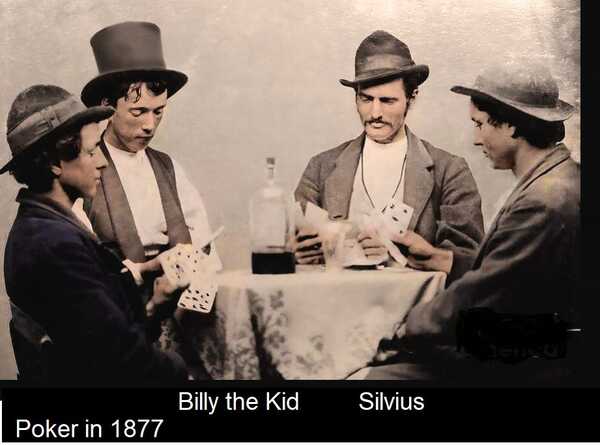
1877 Billy the Kid and Silvius play poker

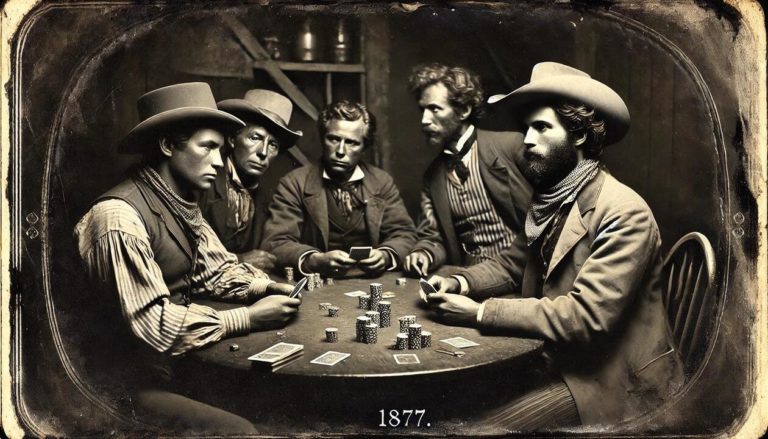
Later that night, he watched intently as Billy and his gang engaged in a lively poker match, using paper slips and chips to represent silver ounces, dividing the precious metal into betting increments.

This scene sparked an idea in Silvius’s mind — a scheme to resell the same silver over and over again.

He took his show on the road and traveled on horse 65 miles south to Albuquerque. In the “old town” market square, Silvius put his plan into action.

He owned a single, gleaming silver coin that caught everyone’s eye. Seeing an opportunity, Silvius devised a plan.

He created 400 paper tickets, each claiming to represent his silver coin. He approached his marks individually. “Buy a ticket, and you’ll own a share of my precious silver! “

The townspeople, enticed by the low price of the tickets, eagerly bought them. Soon, all 400 tickets were sold, and Silvius’s pockets were full of money.

One day, a wise old woman approached Silvius. “May I see the silver coin my ticket represents?” she asked.

Silvius smiled nervously. “Of course, but you see, there are 399 other ticket holders. You’ll have to wait your turn.”

The woman frowned. “But how can one coin be in 400 places at once?”

Word spread quickly. Soon, a crowd gathered, all demanding to see the silver coin they believed they owned a piece of. Panic ensued as people realized the absurdity of the situation.

In the chaos, Silvius slipped away, leaving behind a valuable lesson: just because something is written on paper doesn’t make it real.

The Moral

This parable illustrates the disconnect between paper representations and physical assets in the silver market. Just as Silvius created 400 tickets for one coin, the paper silver market often trades at ratios far exceeding the available physical silver.

The lesson here is twofold:

  1. The power of perception: Silvius, like modern financial institutions, created value from thin air by leveraging people’s trust and desire for profit.
  2. The fragility of paper promises: When everyone tried to claim their share simultaneously, the illusion collapsed, much like how a run on paper silver could expose the market’s vulnerabilities.

In the real world, this situation allows for price manipulation and creates a disconnect between paper and physical silver prices. 

It’s a stark reminder that in financial markets, as in the parable, those who set the rules can create realities that may not align with physical constraints.


Jon Forrest Little graduated from the University of New Mexico and attended Georgetown University’s Institute for Comparative Political and Economic Systems. Jon began his career in mining industry and now publishes “The PickAxe” which covers topics surrounding precious metals, energy, history, and politics.

Founding Father Edmund Randolph vs. The Federal Reserve

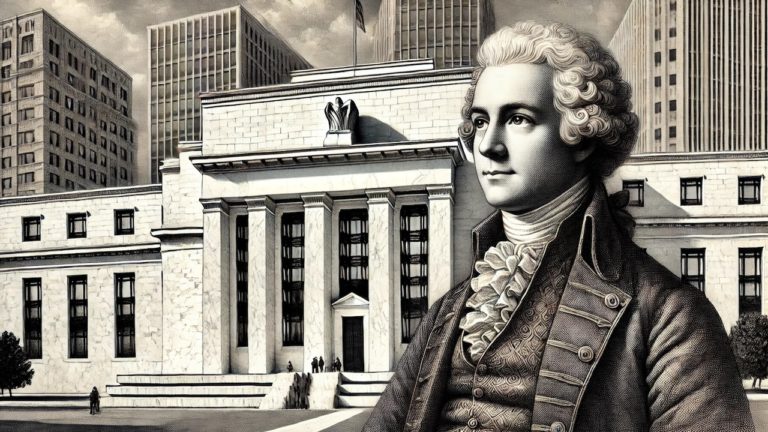
(Mike Maharrey, Money Metals News Service) After Congress passed a bill to establish the first national bank — a forerunner of the modern Federal Reserve — President George Washington asked Attorney General Edmund Randolph to prepare an opinion on the bill’s constitutionality. Randolph came down firmly against the measure, arguing that the Constitution didn’t delegate to Congress the power to charter corporations.

Randolph was an attorney and statesman who played a crucial role in the early formation of the United States. He served as the seventh Governor of Virginia and was an influential delegate to the Philadelphia Convention that drafted the Constitution. He was one of four prominent lawyers who drafted the Constitution’s necessary and proper clause, along with John Rutledge, Oliver Ellsworth, and James Wilson, all three of whom were to later serve as Supreme Court justices. Although he initially refused to sign the Constitution, Randolph became a leading proponent of ratification during the Virginia ratifying convention. He later served as the first U.S. Attorney General under President George Washington and subsequently served as the second U.S. Secretary of State. 

Alexander Hamilton submitted a report to Congress recommending the establishment of the Bank of the United States in December 1790. In response, Sen. Caleb Strong introduced a bill to charter the bank. The bill passed the Senate on Jan. 20, 1791. The House passed the bill a month later, sending it to President Washington’s desk.

As Washington considered whether or not to sign the bill, he discussed it with Randolph on at least two occasions between Feb. 8 and Feb. 11, 1791. At Washington’s request, Randolph provided a written opinion. In a cover letter sent with his draft dated Feb. 12, Randolph wrote that the “substance of the dispute …  arises from an examination of the Constitution itself.”

Randolph was considered one of the top legal experts in the country at the time. When Thomas Jefferson was out of the country, Randolph took over his clients. He also represented Washington in his business affairs. 

Randolph wrote two documents discussing the Bank Bill, the first outlining his own legal analysis and opinion on the bill’s constitutionality, and the second highlighting several arguments made both for and against the bill that he didn’t find cogent. 

In Randolph’s view, the central constitutional question surrounding the bank was whether the federal government was delegated the power of incorporation.

“It must be acknowledged, that, if any part of the bill does either encounter the Constitution, or is not warranted by it, the clause of incorporation is the only one.”

Randolph asserted “that the power of creating Corporations is not expressly given to Congress, is obvious.” [Emphasis in original]

That being the case there were only three ways the federal government could legitimately exercise the power to charter a corporation.

1st because the nature of the Federal government implies it; or
2d because it is involved in some of the specified powers of Legislation: or
3. because it is necessary and proper to carry into execution some of the specified powers.

Randolph proceeded to dismantle all three rationales. 

He quickly dismissed the implied powers doctrine, noting that, “To be implied in the nature of the Federal government would beget a doctrine so indefinite, as to grasp every power.” 

In other words, this implied power doctrine would give the federal government unlimited authority. But the Constitution clearly limits the scope of federal power.

“Governments, having no written Constitution, may perhaps claim a latitude of power, not always easy to be determined. Those, which have written Constitutions, are circumscribed by a just interpretation of the words contained in them—nay farther.”

Randolph went on to point out that the pending 10th Amendment made it clear Congress possesses and claims “no powers which are not delegated to it.”

He continued on these lines, noting, “While, on the one hand it ought not to be denied that the federal government superintends the general welfare of the states, it ought not to be forgotten, on the other, that it superintends it according to the dictates of the constitution.”

But does the Federal government have a delegated power that could be construed to authorize chartering corporations?

“We ask then, in the second place, whether upon any principle of fair construction, the specified powers of legislation involve the power of granting charters of incorporation? We say charters of incorporation, without confining the question to the Bank; because the admission of it in that instance, is an admission of it in every other, in which Congress may think the use of it equally expedient.”

Randolph noted that supporters of the Bank Bill justified it by arguing that a national bank would facilitate the execution of several specific delegated powers.

The first was  “in the power to lay & collect taxes &c.; because it facilitates the payment of them.”

Similarly, the power to “borrow money” would be supported because a bank “creates an ability to lend.”

Supporters of the bill also argued that a national bank would support “regulating commerce” because “it increases the medium of circulation; and thus encourages activity & industry.”

Finally, advocates of a bank asserted that it would facilitate “disposing and regulating property” because “the contributions, and the interest of the United States in the Banks, are property of the United States.”

But Randolph argued that construing any of these powers in such a broad way would effectively annihilate reserved powers, and create an all-encompassing federal authority.

“If the laying and collecting of taxes brings with it every thing, which in the opinion of Congress, may facilitate the payment of taxes: if to borrow money sets political speculation loose, to conceive what may create an ability to lend: if to regulate commerce, is to range in the boundless mazes of projects for the apparently best scheme to invite from abroad, or to diffuse at home the precious metals—if to dispose of, or to regulate property of the United States, is to incorporate a bank, that stock may be subscribed to it by them; it may without exaggeration be affirmed, that a similar construction on every specified federal power will stretch the arm of Congress into the whole circle of State Legislation.” [Emphasis added]

In other words, the expansion of these four powers to justify a bank could be used to rationalize the expansion of every federal power to justify pretty much any federal action, leaving the states and the people no power at all.  

However, supporters of the Bank Bill argued that the necessary and proper clause justified a latitude of construction and provided the justification needed to charter a bank. 

Alexander Hamilton argued that necessary could be construed as “convenient.” In support of his bill, he wrote, “It is certain that neither the grammatical nor popular sense of the term requires [a strict] construction. According to both, necessary often means no more than needful, requisite, incidental, useful, or conducive to.”

He continued, justifying his interpretation based on his view of the common usage of the word necessary.

“It is a common mode of expression to say, that it is necessary for a government or a person to do this or that thing, when nothing more is intended or understood, than that the interests of the government or person require, or will be promoted by, the doing of this or that thing.”

Randolph insisted this took the clause too far.

As one of the primary drafters of the necessary and proper clause during the Philadelphia convention, Randolph was keenly aware of the fact that “necessary and proper” was based on the legal doctrine of “principles and incidents.” He explained this in a speech at the Virginia Ratifying Convention, arguing “that the incident is inseparable from the principal, is a maxim in the construction of laws.”

But Randolph also argued that “a Constitution differs from a law.—For a law only embraces one thing—But a Constitution embraces a number of things, and is to have a more liberal construction.”

In other words, the necessary and proper clause allowed for the exercise only of “incidental powers,” meaning a power that is necessary to achieve a specific purpose, even though it is not explicitly granted, but in a constitution, this should be construed more broadly than in a statute.

Randolph’s view of the clause wasn’t as narrow as other opponents of the Bank. Jefferson and Madison took the position, as Jefferson put it, that “the Constitution restrained them to the necessary means, that is to say, to those means without which the grant of power would be nugatory.”

Madison put it this way.

“Its meaning must, according to the natural and obvious force of the terms and the context, be limited to means necessary to the end and incident to the nature of the specified powers.”

In effect, Madison and Jefferson both argued the clause was merely declaratory, or as Randolph described their view, superfluous.

Randolph thought the clause offered more latitude than Jefferson and Madison claimed, but not nearly as much as Hamilton did. In his view, the exercise of “incidental” powers was broader than merely those which are absolutely necessary. He argued that “to be necessary is to be incidental, or in other words may be denominated the natural means of executing a power.”

During the Virginia Ratifying Convention, Randolph called his view the “intermediate explanation” of the clause between an interpretation, like Jefferson’s, that Randolph argued made the clause superfluous and those, like Hamilton’s that made it “sweeping.”

But despite his nuanced differences with Jefferson and Madison, Randolph insisted that supporters of the bank “ought not to claim any advantage from this clause.” 

And he warned a broad construction of incidental powers comes with great risk.

“However, let it be propounded as an eternal question to those, who build new powers on this clause, whether the latitude of construction which they arrogate, will not terminate in an unlimited power in Congress?”

Randolph summed up his analysis by declaring that “so far as it incorporates the bank, he is bound to declare his opinion to be against its constitutionality.”

While Randolph came down firmly against the Bank Bill on constitutional grounds, his position was more moderate and nuanced than more vocal opponents of the bank, including Madison and Jefferson. 

He allowed for somewhat more latitude in the exercise of federal power under the Necessary and Proper Clause, but not enough to justify incorporating a bank. Ultimately, he took a middle-ground position that still excluded the power to create a national bank.

Ultimately, Hamilton won the day. Washington disregarded Randolph, Madison, and Jefferson’s constitutional arguments and took the more pragmatic route. The First Bank of the United States got its charter and set the stage for the creation of the Federal Reserve more than a century later. 

But if Randolph and others who objected to a national bank on constitutional grounds were correct – and the weight of evidence says they were – then the Fed of today shouldn’t even exist.

The Tenth Amendment Center contributed to this article. 


Mike Maharrey is a journalist and market analyst for MoneyMetals.com with over a decade of experience in precious metals. He holds a BS in accounting from the University of Kentucky and a BA in journalism from the University of South Florida.


Nassim Taleb: People Aren’t Seeing the Real De-Dollarization

(Mike Maharrey, Money Metals News Service) It’s not a “black swan” event. In fact, it’s playing out right before our eyes and was entirely predictable. The world is slowly but surely spurning the dollar. 

But most people haven’t noticed.

De-dollarization might seem like a wild conspiracy theory, but it is happening. Countries worldwide are trying to limit their exposure to the greenback, and the dollar’s clout is slowly ebbing.

No, the dollar isn’t on the verge of collapse due to a major trauma. It’s more like death by a million papercuts.

Nassim Taleb, best known for his book The Black Swan, said in a post on X that “people are not seeing the real de-dollarization in progress.” He pointed out that global transactions are still generally labeled in dollars “as an anchor currency.”  

“But central banks (particularly BRICS) have been storing, that is putting their reserves, in Gold.”

In other words, the dollar still serves as the primary medium of exchange, but more and more countries are turning to gold as a store of value. As author Richard Turrin put it, “The US will tout the USD’s high percentage use in trade all the way to the bottom.”

Turrin pointed out that the “dollar’s high percentage in trade settlements is increasingly meaningless” for two reasons. 

  1. Gold holdings show reserve storage.
  2. Migration of trade to alternate currencies isn’t captured on SWIFT statistics.

This trend toward storing wealth in gold instead of dollars makes sense given the U.S. government’s persistent evaluation of its currency that seems to be accelerating.

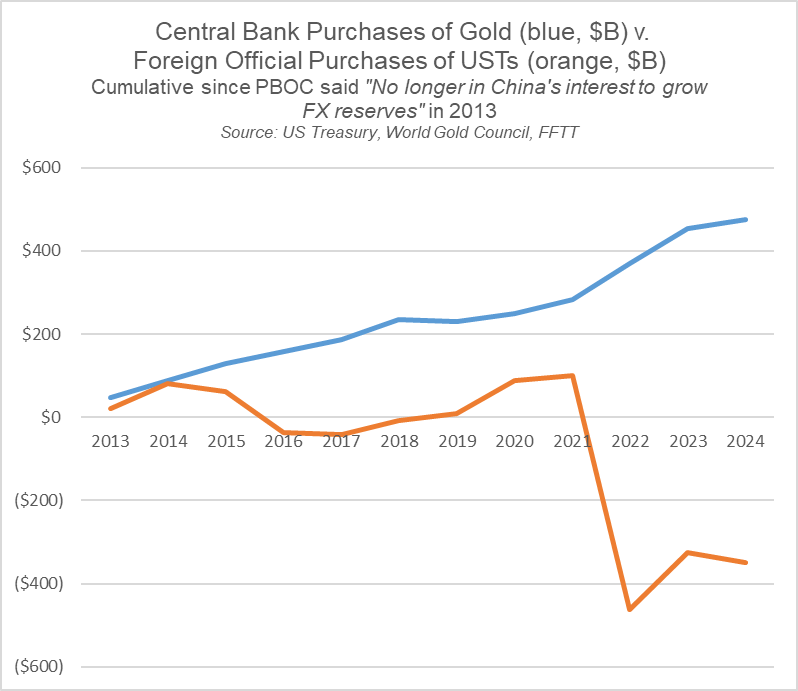
Luke Gorman, founder and president of Forest for the Trees confirmed Taleb’s point with a graph, noting that this de-dollarization trend has been in play for more than a decade and “got much louder post-2022 sanctioning of Russian FX reserves.”

In fact, dollar reserves globally have dropped by 14 percent since 2002. And as the graph shows, de-dollarization accelerated after the U.S. and her Western allies aggressively sanctioned Russia and froze the country’s assets after it invaded Ukraine.

Geopolitical and financial analyst Angelo Giuliano posted the same graph asserting, “De-dollarization is happening.”

“The US dollar Ponzi scheme is collapsing…the US exorbitant privilege to print endless amount of paper toilet currency is over.” 

He noted that gold hit yet another all-time high on Sept. 12, saying, “This is only the beginning.” 

Dollar Weaponization Undermining the Dollar

All of these experts confirm that the United States’s weaponization of the dollar is undermining its strength and role as a reserve currency.

A recent Atlantic Council report on the falling percentage of dollar reserves pointed out dollar weaponization was a factor behind this trend.

“In recent years, and especially since Russia’s invasion of Ukraine and the Group of Seven (G7)’s subsequent escalation in the use of financial sanctions, some countries have been signaling their intention to diversify away from dollars.”

The U.S. and its allies not only froze Russian assets, but they also locked the country out of the SWIFT financial system.

The Society for Worldwide Interbank Financial Telecommunication (SWIFT) system serves as the global economy’s superhighway. In effect, it operates as a global financial messaging service, facilitating cross-border payments. Since the dollar serves as the world reserve currency, SWIFT effectively facilitates an international dollar system.

This gives the U.S. a great deal of leverage, as the Russians discovered. 

This wasn’t the first time the U.S. used SWIFT and the dollar as a stick to advance its foreign policy goals. In 2014, the Obama administration locked several Russian financial institutions out of SWIFT as relations between the two countries deteriorated over Ukraine and Crimea. 

A few years later, the Trump administration threatened China in an attempt to force that country to join in sanctioning North Korea. 

Whether you think the sanctions were justified or not, it’s important to remember that other countries are watching. They realize that dependence on dollars makes them vulnerable to

U.S. manipulation and this is one of the reasons many countries are trying to diversify away from the USD. 

Think about it — if you are concerned that the U.S. could pull the “dollar rug” out from under you, why not pull out from the dollar system first?

This appears to be what is slowly happening. Again, it is death by 1 million paper cuts.

According to a 2023 Invesco survey, a “substantial percentage” of central banks expressed concern about how the U.S. and its allies froze nearly half of Russia’s $650 billion gold and forex reserves.

Central Banks Turning to Gold 

We see this shift toward gold in persistent central bank gold buying.

According to the most recent World Gold Council survey released in June, 29 percent of central banks plan to add more gold to their reserves in the next 12 months. The WGC said it was the highest level since the survey began in 2018.

Only 3 percent said they had plans to decrease gold reserves. 

Earlier this year, the World Gold Council said the continuation of gold buying supports its expectation that “2024 will be another solid year of central bank gold demand.”

“Last year central banks placed great emphasis on gold’s value in crisis response, diversification attributes, and store-of-value credentials. A few months into 2024 the world seems no less uncertain meaning those reasons for owning gold are as relevant as ever.”

Last year, central bank gold buying fell just 45 tons short of 2022’s multi-decade record.

According to the World Gold Council, central banks net gold purchases totaled 1,037 tons in 2023. It was the second straight year central banks added more than 1,000 tons to their total reserves.

Central bank gold buying in 2023 built on the prior record year. Total central bank gold buying in 2022 came in at 1,136 tons. It was the highest level of net purchases on record dating back to 1950, including since the suspension of dollar convertibility into gold in 1971.

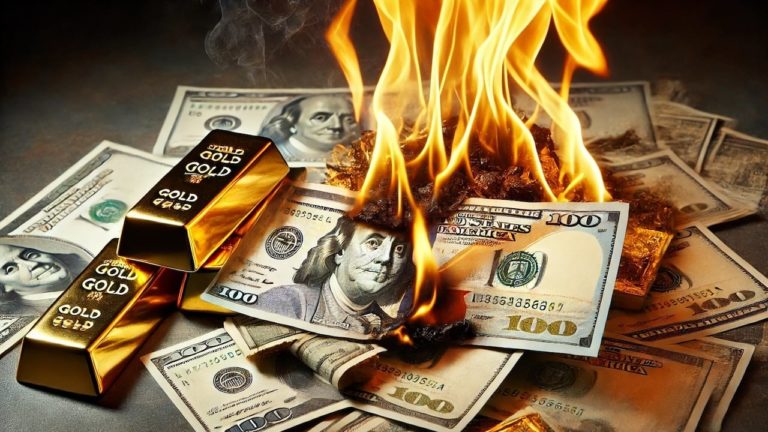
The skyrocketing price of gold confirms the wisdom of these central bankers. And it is a tangible sign that the dollar is losing value – and status. 


Mike Maharrey is a journalist and market analyst for MoneyMetals.com with over a decade of experience in precious metals. He holds a BS in accounting from the University of Kentucky and a BA in journalism from the University of South Florida.

Greg Weldon on Inflation, Debt, and the Rise of BRICS: Insights for Savvy Investors in 2024

(Money Metals News Service) In a recent episode of the Money Metals podcast, host Mike Maharrey interviewed Greg Weldon, founder and CEO of Weldon Financial, to discuss the latest trends in inflation, central bank policy, consumer debt, and the global shift led by BRICS nations.

Weldon, a 40-year market veteran, offered insights into how these developments are shaping the economic landscape in 2024 and beyond.

(Interview Begins Around 7:13 Mark)

Who is Greg Weldon?

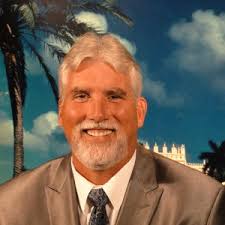
Greg Weldon
Greg Weldon

Gregory T. Weldon is a financial investor and a 40-year veteran of the global financial markets, with a career that began in 1984 on the trading floor of the COMEX in the World Trade Center. Over the decades, Greg Weldon has worn many hats, from a floor trader in the gold and silver pits to an institutional futures broker, hedge fund manager, and independent global macro-market researcher. Weldon is the founder and CEO of Weldon Financial, a firm renowned for its macroeconomic analysis and research publications.

Greg Weldon’s experience spans a wide range of financial services, including his time as a portfolio manager at Moore Capital and Commodity Corporation in the 1990s. Since founding Weldon Financial in 1997, he has published numerous reports, including Weldon’s Money Monitor, The Metal Monitor, and The ETF Playbook, offering insights into commodities, currencies, bonds, and stock markets for institutional investors and individuals alike. Weldon is also the author of Gold Trading Boot Camp (2006), a book that predicted the global credit crisis and the role of gold during central bank debt monetization.

Now, with decades of market experience and an ability to forecast economic trends, Weldon is regarded as one of the top macro-research professionals in the industry. He continues to provide market strategies through his Global Macro Strategy Report and remains a highly sought-after speaker and commentator on financial news outlets.

Monetary inflation Price inflation groceries

The discussion began with a breakdown of the August Consumer Price Index (CPI) report. Weldon noted that the headline inflation rate was 2.5%, while core inflation reached 3.2%, slightly higher than expected. The core inflation rose 0.3% month-on-month compared to the forecast of 0.2%.

Weldon highlighted that energy prices continued to decline, with crude oil inventories at a five-year low. This decline in energy prices was unexpected, especially considering ongoing geopolitical tensions in the Middle East. On the other hand, the inflationary pressure on services remained significant, with shelter inflation still exceeding 5%.

A drop in vehicle prices, driven by a 21% increase in unsold vehicle inventories, contributed to lowering inflation. However, Weldon warned that the cost of insuring and maintaining those vehicles saw double-digit inflation, compounding the financial strain on consumers.

Food Prices and Commodities

Weldon also discussed food inflation, which had shown signs of easing. He tracks 114 food items, and at one point, 78% of those items had experienced inflation above 5% year-over-year. Prices for commodities like grains and oil seeds have fallen sharply but have since stabilized. Despite large harvests, demand for these commodities remains strong, which could limit future price drops.

Debt Crisis and Central Bank Policies

Weldon emphasized that central banks’ primary challenge is balancing inflation control with debt management. He pointed out that U.S. government spending is at unprecedented levels, exceeding $500 billion per month, and the annual deficit is set to surpass $2 trillion. These are levels typically seen during major economic downturns, yet they are being sustained simply to maintain the status quo.

Weldon warned of the growing debt burden, explaining that printing 10% on $1 trillion today is far more significant than printing 10% on $100 billion in 1987. As the U.S. economy faces this growing debt, Weldon believes central banks will be forced to tolerate higher inflation to avoid deflation.

He likened this situation to the “ratchet effect,” a concept popularized by economist Robert Higgs, where government interventions tend to increase over time, pushing limits further with each crisis. Weldon noted that interest rates now face a downward ratchet effect, where they decrease faster but rise slower after each economic downturn.

Global Geopolitical Shifts: The Rise of BRICS

One of the most significant shifts Weldon discussed was the evolving power of the BRICS nations (Brazil, Russia, India, China, South Africa). He described a potential global economic realignment, with BRICS countries increasingly challenging Western dominance.

Weldon cited recent reports that Turkey, a NATO and EU member, has expressed interest in joining the BRICS bloc. This geopolitical development underscores the growing influence of BRICS as a counterbalance to the West. According to Weldon, the BRICS currency unit, which may be partially gold-backed, is gaining momentum. Central banks in BRICS nations have bought over 4,000 tons of gold in the last 28 months while selling $800 billion in U.S. Treasury securities.

This shift away from the U.S. dollar could significantly weaken the dollar’s global standing. Weldon predicted that if the BRICS currency becomes widely adopted, it could trigger a bull market in gold, which would see prices soar as demand for the yellow metal rises.

Gold Demand and U.S. Investor Complacency

Gold demand in BRICS countries is already on the rise. Weldon pointed out that India was the largest buyer of gold in the first half of 2024. While China has paused its gold buying due to price increases, Weldon expressed skepticism, noting that China has previously shown strategic behavior in the gold market.

Despite gold being one of the best-performing assets in 2024, Western investors remain focused on stock markets. Weldon attributed this to media narratives and vested interests in maintaining bullish stock market sentiment. He also noted that passive investing has led U.S. investors to ignore alternative assets like gold, further deepening their exposure to the stock market.

Consumer Debt: A Ticking Time Bomb

Consumer Debt Ticking Time Bomb

Weldon highlighted the U.S. consumer debt crisis, noting that revolving credit had increased by 9%, with credit card interest rates now as high as 30%. He pointed out that consumer savings have dropped from $6 trillion to $800 billion since 2019, leaving many Americans reliant on high-interest debt to sustain their lifestyles.

With inflation outpacing wage growth, real wage gains are effectively non-existent. Weldon warned that rising delinquencies and tightening lending standards could signal an approaching “uncle point” where the debt burden becomes unsustainable.

Currency Market Dynamics and BRICS Influence

Weldon emphasized the growing divergence in currency markets, noting that currencies linked to Russia and China are strengthening against the dollar, while those tied to the U.S. are weakening. He cited the Polish zloty and Indonesian rupiah as examples of currencies benefiting from their alignment with BRICS countries.

He also mentioned the weakening of the Canadian dollar and Mexican peso, currencies more closely tied to the U.S. economy. Weldon suggested that this divergence could signal the beginning of a larger shift in global currency dynamics, with profound implications for the U.S. dollar and gold.

Investment Strategies in a Volatile Market

As a seasoned market strategist, Weldon emphasized the importance of diversification in volatile market conditions. He advised against passive investment strategies and encouraged investors to look beyond the stock market, particularly toward commodities, bonds, and currencies.

He offered specific recommendations from his Global Macro Strategy Report, Portfolio Playbook, and Gold Guru publications. Weldon highlighted futures markets as a valuable tool for managing risk and gaining exposure to a wide range of assets across the globe.

Conclusion

Greg Weldon’s insights provide a sobering look at the current economic and geopolitical landscape. As inflation persists, debt mounts, and global power shifts accelerate, he warns that investors need to remain vigilant and adapt their strategies to protect their wealth.

With BRICS nations gaining ground and the U.S. dollar potentially losing its global dominance, Weldon believes that gold and alternative assets will play an increasingly important role in the years to come.

Key Questions & Answers:

Greg Weldon Gold Guru

Here are the key questions and answers from the interview between Mike Maharrey and Greg Weldon:

What are your thoughts on the recent August CPI report and its implications for inflation?

The August CPI data was interesting. While the headline number was in line with expectations at 2.5%, the core inflation came in slightly higher at 3.2%. This slight uptick in core inflation is concerning. Energy prices continued to decline despite inventories being near a five-year low. Food prices, which had previously seen inflation of over 5% for 78% of items, have now stabilized. While vehicle prices dropped, the cost of insuring and maintaining those vehicles is seeing double-digit inflation. Overall, the report shows that inflation is still present, and the Federal Reserve may be forced to tolerate higher inflation to protect the economy from debt deflation.

What is your perspective on the long-term debt crisis and central bank policies?

The debt crisis is escalating. U.S. government spending is at unprecedented levels, with monthly spending exceeding $500 billion and the annual deficit projected to be over $2 trillion. The central banks are trapped in a situation where they must print more money to keep up with the growing debt. This leads to a ratchet effect, where each crisis pushes debt levels and interest rates lower. The central banks will likely tolerate higher inflation to avoid debt deflation, creating a long-term issue.

How do you view the rise of BRICS and their influence on the global economic system?

BRICS is becoming a legitimate force, and it’s happening faster than anticipated. Countries like Turkey, a NATO and EU member, are now showing interest in joining BRICS. The BRICS nations are buying large amounts of gold and moving towards a currency backed by a basket of commodities and gold. Central banks from these countries have purchased over 4,000 tons of gold in the last 28 months and sold $800 billion in U.S. Treasury securities. This shift away from the U.S. dollar is significant and could lead to a bull market in gold as the dollar loses global dominance.

Why do you think gold demand is stronger in Asia than in the West?

Gold demand is stronger in Asia because central banks and investors in the BRICS nations recognize the importance of holding tangible assets. India was the largest buyer of gold in the first half of the year, and while China has paused its buying, I believe it’s strategic. In contrast, U.S. investors are focused on stock markets due to media narratives and passive investment trends. Even though gold has been one of the best-performing assets this year, it remains underappreciated in the West.

How do you see the U.S. consumer debt situation playing out?

U.S. consumer debt is a ticking time bomb. Revolving credit has increased by 9%, and credit card interest rates are now as high as 30%. Consumer savings have plummeted from $6 trillion to $800 billion since 2019. With real wage growth stagnant, consumers are relying more on debt to maintain their standard of living. The rising delinquency rates and tightening lending standards suggest we are nearing an “uncle point,” where the system could become unsustainable.

There’s a clear divergence in currency markets. Currencies linked to BRICS, such as the Polish zloty and Indonesian rupiah, are strengthening against the U.S. dollar. In contrast, currencies like the Canadian dollar and Mexican peso are weakening. This shift suggests a larger trend, as countries aligned with BRICS are benefiting from their geopolitical and economic ties. This is important because it could signal a broader weakening of the U.S. dollar, which would have significant implications for gold and global markets.

What investment strategies would you recommend in today’s market?

Investors should focus on diversification. The stock market alone won’t keep pace with the changes in the global economy. I recommend looking at commodities, currencies, and bonds. Futures markets provide valuable opportunities for managing risk and accessing global markets. In my Global Macro Strategy Report, we offer specific recommendations on how to navigate these uncertain times, and I advise investors to remain vigilant and adaptable.

These key questions and answers provide a deep dive into Greg Weldon’s views on inflation, debt, global shifts, and investment strategies in today’s economic environment.

TV: Stefan Gleason on ‘Fort Knox West’ and Why Miners Should Hold Gold

(Money Metals News Service) In a recent interview with Charlotte McLeod of Investing News, Stefan Gleason, president and CEO of Money Metals Exchange, shared his insights on key trends in the precious metals market, the company’s latest developments, and the increasing role of gold and silver as economic insurance.

Money Metals’ Growth and Expansion

Stefan Gleason, who has over 15 years of experience in the precious metals industry, emphasized the rapid growth of Money Metals since its founding in 2010.

Today, the company ranks among the top three largest precious metals dealers in the U.S. A recent milestone has been the completion of its cutting-edge depository in Eagle, Idaho, now the largest in North America.

Gleason noted, “It’s 40,000 square feet overall, the building and the vaults… there’s actually four massive vaults totaling almost 9,000 square feet, which is twice the amount of vault space that is in Fort Knox.”

While most clients prefer to store their precious metals personally, “A small percentage—maybe 2% to 5%—use depository storage, especially those with larger amounts or those needing more insurance.”

The Idaho facility offers top-tier security, including RFID tracking and dual control audits.

Gleason explained recent shifts in gold and silver demand, with retail interest slowing since its 2020 surge.

“There’s clearly more demand coming in, but it’s not really coming from North America or Europe. It’s coming from Asia; it’s coming from central banks,” he shared.

Central banks, concerned with geopolitical risks and de-dollarization efforts, have been major buyers of gold.

“We had our best-ever month in March 2023, driven by the regional banking crisis,” Gleason revealed.

However, he highlighted that only around 2% of Americans own physical gold or silver, compared to higher rates in Asia where precious metals are a cultural store of wealth.

Investment Tips: Focus on Gold and Silver

For investors considering precious metals, Gleason advised caution against rare coins or collectibles, as they often come with high premiums.

“The number one thing I encourage people to think about is, what is the melt value of the metal you’re buying? Don’t pay a whole lot more than that,” he stated.

He recommended focusing on low-margin items like gold bars or bullion coins such as Canadian Maple Leafs or American Eagles.

“Why pay more money than you have to for an ounce of gold?” he asked, emphasizing that simpler bullion products often provide better value.

Gleason also highlighted silver’s strong potential:

“Silver is way, way underperforming gold and is still substantially less than its 1980 high… Historically, silver is way undervalued compared to gold.”

Silver’s Breakout Potential

Silver's Breakout Potential

Silver’s fundamentals remain favorable, according to Gleason, with an ongoing annual production deficit of 200-300 million ounces.

“There’s more demand than supply, and it’s been that way for the last two or three years,” he explained. Solar energy, which uses 200 million ounces of silver annually, and emerging technologies like silver-based batteries are key demand drivers.

While the silver market hasn’t yet experienced a breakout, Gleason noted, “It only takes one or two things to unfold and then—boom—another major surge in demand.”

He believes silver’s industrial uses, combined with the tightening supply, will eventually push prices higher.

Sound Money Advocacy and Public Policy

Money Metals Exchange is a leader in sound money advocacy through its work with the Sound Money Defense League. Gleason mentioned their Sound Money Index, which ranks U.S. states based on sound money policies.

Wyoming, South Dakota, and Alaska rank at the top, while California and New Jersey are among the lowest.

Gleason emphasized the importance of removing taxes on precious metals, stating, “We’ve passed about 10 sales tax exemptions in the last 10 years… Some states are also removing the income tax on gold and silver, acknowledging that capital gains on precious metals are more about the devaluation of the Federal Reserve Note than actual gains.”

More states are now also beginning to hold gold as a reserve asset.

“Ohio owns about a billion dollars worth of physical gold in its pension plan, and Utah recently passed a law enabling the state treasurer to hold gold for the state as a reserve asset,” he shared.

This reflects a trend seen among central banks worldwide, as they diversify away from the U.S. dollar.

Conclusion: Opportunities for Companies and Investors

Gleason concluded by advising mining companies to consider holding some of their production as physical gold on their balance sheets.

He highlighted SilverCrest Metals as an example:

“They took about $30 million and put it into physical gold before the price ran up 30%, and now they’re sitting on a great position.”

He also encouraged individual investors to hold physical gold and silver as a hedge against inflation and economic uncertainty.

“The world is not getting safer… Gold and silver are a way to opt out of the system and get financial insurance,” he stated.

As the risks to the dollar become clearer, demand for precious metals is likely to grow.

Whistleblower Affidavit Confirms Biased ABC News Colluded w/ Kamala Campaign

(Ben Sellers, Headline USA) Insiders confirm that the media bias present at last week’s debate between GOP nominee Donald Trump and Democrat stand-in Kamala Harris went beyond garden-variety Trump Derangement Syndrome. It may have involved active collusion between the Harris campaign and debated host ABC News/Disney.

According to an ABC News whistleblower who filed an affidavit under penalty of perjury on Sept. 9, one day before the debate, the so-called news organization conducted multiple secret telephone meetings with Harris’s handlers, about which the Trump team was neither present nor aware.

“The Harris campaign received particular accommodations, including, but not limited to, the providing of a podium significantly smaller than that used by Donald Trump, and assurances regarding split-screen television views that would favorably impact Kamala Harris’s appearance relative to Donald Trump,” said the document , which circulated on Sunday via X with the name of the witness redacted.

“It was agreed that Donald Trump would be subjected to fact-checking during the debate, while Kamala Harris would not face comparable scrutiny,” it continued.

The individual, who identified as an ABC News employee of more than 10 years in “various technical and administrative positions” residing in New York, said it was widely known throughout the company that the fact-checking double-standard would occur.

“In fact, Harris campaign required assurances that Donald Trump would be fact checked,” said the whistleblower.

“This was done via multiple communications with the Harris campaign whereas the Trump campaign was not included in the negotiations,” the affidavit said. “To my understanding, [although] any rules negotiations and conversations pertaining to the debate should have had both the Trump and Harris campaign involved, the Harris campaign had numerous more calls regarding the debate rules without the Trump campaign aware or on the call.”

Indeed, Trump received five “fact checks”—some of which themselves proved false or lacking substantiation, while Harris received none.

The hostile conduct of the two moderators—David Muir and Linsey Davis—put Trump on the defensive for most of the evening and unable to press Harris on her record.

Although the two asked loaded questions about Harris’s race, the outcome of the 2020 election and the Jan. 6 uprising, among several other topics perceived as favorable to the Democratic talking points, the witness said significant stipulations were put limiting what they could ask Harris about:

  • “No questions regarding the perceived health of President Joe Biden,” which Harris was complicit for months—if not years—in covering up as he pursued the presidential nomination, only to have party elites force him out of the race
  • “No inquiries related to her tenure as Attorney General in San Francisco”—ostensibly the whistleblower was referring to both her terms as district attorney of San Francisco and attorney general of California. Harris has boasted of both of these, making the restriction on questions about her record seem particularly perplexing.
  • “No questions concerning her brother-in-law, Tony West, who faces allegations of embezzling billions of dollars in taxpayer funds and who may be involved in her administration if elected”—shockingly, West’s name has not appeared thus far in any notable media reports despite the seriousness of the allegations.

The witness went on to note that they had sent a certified letter to House Speaker Mike Davis and a FedEx package to their own house, delivered on Sept. 10, which “will remain unopened for potential investigative purposes” to confirm that the affidavit was issued prior to the debate.

Moreover, “I have secretly recorded several conversations that will prove that the Harris Campaign insisted upon not only the Fact Checking of Donald Trump, but also insisted on what questions were not to be asked under any circumstances or else the Harris campaign would decline to participate in the debate.”

The individual indicated that they were not a Trump supporter, but that the culture of bias and corporate influence on news coverage had grown toxic over the past two decades, since ABC News was first acquired by Disney.

“It is my belief that contemporary news organizations, including ABC News, no longer adhere to impartiality,” said the affidavit.

“The influence of commercial interests and substantial donors appears to affect news presentation, resulting in selective reporting and biased narratives,” it continued. “I have personally witnessed news stories being cut from programming and not reported at all due to the influence of certain corporations linked to our parent company…”

Several conflicts of interest involving key players in the debate have previously been noted.

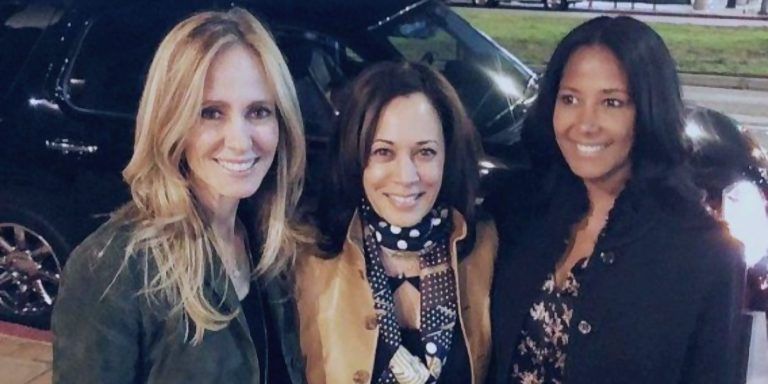
For instance, top Disney executive Dana Walden, who oversaw the debate, was identified as a major Harris donor and longtime friend.

Reports also indicated that Davis, who bitterly scowled at Trump while delivering questions, was a fellow sorority member with Harris in the Alpha Kappa Alpha organization.

While the two attended different universities and at different times, Davis has remarked in the past on the bond of sisterhood between them, noting the symbolism of the jewelry that Harris wore to the 2021 inauguration.

Moreover, a picture that showed Walden and Davis posing with Harris gives the perception of unseemliness, sufficient to be considered a violation of journalism ethics under the circumstances and to cast aspersions on the independence and objectivity of ABC News even without the affidavit to confirm the obvious.

Davis earlier acknowledged that the two-tiered fact-checking was predetermined and that newsroom operatives had been dispatched specifically for the purpose of undermining Trump’s claims in advance of the debate, Fox News reported.

While several polls—also from biased media outlets, such as CNN—suggested in the immediate aftermath that Harris has “won” the debate and received a significant polling boost as a result, the distrust in the media, which had already aroused significant suspicious about the authenticity of the Harris campaign, is likely to be the more enduring effect.

Harris has regularly refused interviews, and has put severe limitations on media access. Nonetheless, she was said to have bombed her first major sit-down interview, admitting among other things that her values had not changed since the 2019 democratic primary debates, when she proudly espoused views deemed too radical even for Democrats.

Ben Sellers is the editor of Headline USA. Follow him at twitter.com/realbensellers.

Gwen Walz’s Bizarre Hand Gesture Against Trump Draws Backlash

(Luis Cornelio, Headline USA) Gwen Walz, the wife of Democrat vice presidential nominee and Minnesota Gov. Tim Walz drew criticism with an ill-received hand gesture intended to attack President Donald Trump. 

While campaigning in Wisconsin on Saturday, the Minnesota first lady raised her hand and gestured from left to right to mimic Harris’s call to “turn the page” from Trump. 

“I kind of liked it when she did this… turn the page,” Walz said, awkwardly repeating the gesture as her husband stood behind her. 

“You liked that? Okay. So, I need you to be with me and practice with me. What are we going to do? We’re gonna turn the page,” Walz continued, instructing the crowd to mimic her gesture. 

She performed the same awkward gesture twice before adding, “You know what that looks like? Bye-bye!” she said, waving her hands. 

“Bye-bye, Donald Trump!” Walz shouted into the microphone. “We are turning the page. 52 days and we are turning the page! 52 days and we need a ‘Bye-bye! Donald Trump.’”

Walz’s speech lasted less than 15 minutes, but it took only moments for critics to call out her unusual behavior. 

The Trump War Room said on X, “CONFIRMED: Gwen Walz is just as cringe as Tampon Tim.” X personality Paul A. Szypula commented, “There’s something very wrong with these two.”

Podcast host Benny Johnson commented, “I can report that Tim Walz’ wife is now confirmed 1000x worse than Hillary Clinton. I’m sorry you have to watch this.” 

Johnson’s clip garnered 4.6 million views, while the Trump War Room’s post received 2.6 million. Fox News was the first to report on Walz’s awkward behavior.

Other criticisms included:

Mad Biden Berates Foreign Reporter: ‘You Be Quiet When I Speak’

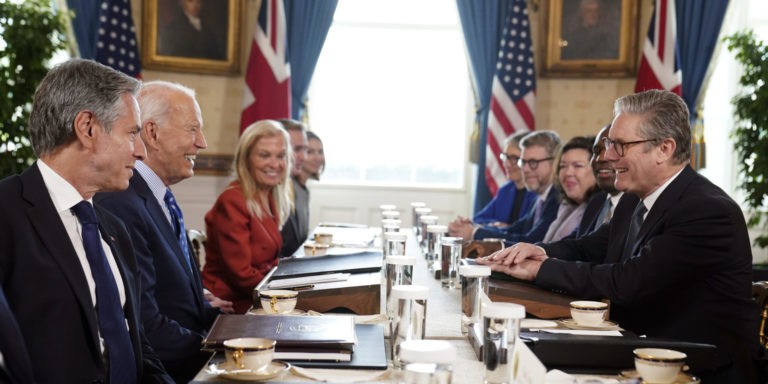
(Luis Cornelio, Headline USA) President Joe Biden threw his pledge of decency out of the window on Sunday when a British reporter asked about Russian threats of a potential war with the U.S. 

Biden—about to converse with British Prime Minister Keir Starmer—showed no interest in the question and told the reporter to hush. 

“I say you be quiet when I speak, okay? That’s what I say. Good idea?” Biden rudely said while sitting in front of Starmer and next to Secretary of State Antony Blinken and National Security Advisor Jake Sullivan. 

The reporter, presumably a member of the British press corps traveling with Starmer, reiterated his question despite Biden’s berating. 

“But what do you say to Vladimir Putin’s threat of war, sir? It’s a serious threat,” the journalist pressed, referring to Putin’s warning that any U.S. approval of long-range weapons for Ukraine could lead to war with Russia.

“You gotta be quiet and I’m going to make a statement, okay? Biden responded, turning back to Starmer and welcoming him to the White House. 

This incident—first reported by the New York Post—is part of Biden’s pattern of berating reporters who ask pointed questions. 

He previously referred to Peter Doocy, a White House correspondent for Fox News, as a “stupid son of a b*tch.” Doocy’s question about whether inflation was a “political liability” for the 2022 midterms triggered Biden’s anger.

In February 2024, Biden lashed out at Doocy during a press conference discussing Special Counsel Robert Hur’s findings on Biden’s mishandling of classified documents. Hur cited Biden’s weak memory as a factor in recommending against criminal prosecution. 

“How bad is your memory and can you continue as president,” Doocy asked, referencing Hur’s findings. 

Biden then retorted, “My memory is so bad I let you speak.” 

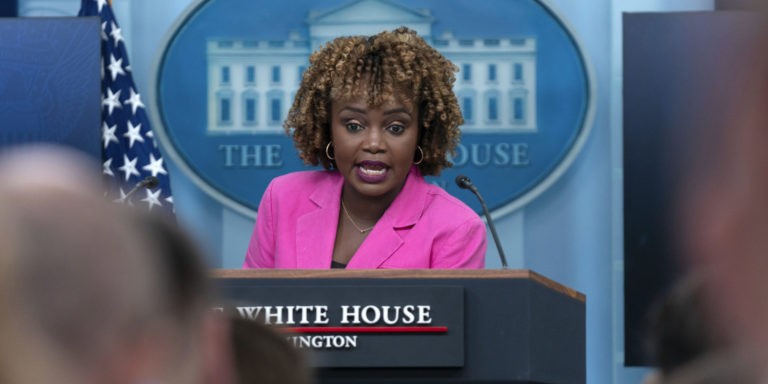
Seemingly taking cues from her boss, White House Press Secretary Karine Jean-Pierre on Friday berated Newsmax’s James Rosen for challenging her on Haitian nationals.

“Not everybody wants to hear the sound of your voice, sir,” she rudely told Rosen.

This behavior, though unsurprising, contradicts Biden’s purported pledge to restore “decency” and “respect” to the White House if elected in 2020.


Jean-Pierre, Daughter of Haitians, Chews Out Reporter Over Pet-Eating Question

(Luis Cornelio, Headline USA) White House Press Secretary Karine Jean-Pierre lost her composure on Friday when challenged about her claims that Haitian nationals in Ohio are part of a “vulnerable community” under attack. 

Newsmax White House Correspondent James Rosen challenged whether there were any “invulnerable” communities. Rosen’s question appeared to counter the left’s narrative that illegal aliens and paroled immigrants are universally victims.

But Jean-Pierre was not interested in hearing Rosen’s question, snapping, “It’s not funny. … Wait a minute, hold on. Hold on, wait! Hold on. It’s not funny.” 

As Rosen attempted to clarify his question, Jean-Pierre rudely interrupted him. “Not everybody wants to hear the sound of your voice, sir. Give me a second and I will tell you my answer. It’s not funny,” she retorted. 

Video footage of the exchange, captured by the Media Research Center, was widely shared on X, with some criticizing Jean-Pierre’s unprofessional and dismissive behavior. 

The confrontation followed a separate question about whether she took offense at accusations that Haitian nationals have been involved in pet thefts for consumption in Ohio. 

Jean-Pierre, the daughter of Haitian immigrants, expressed offense at attacks on “any vulnerable community.” She added, “Not just a community that I belong to, and proudly belong to, but any community that is attacked wrongfully so in a hateful way.”  

Presumably referring to President Donald Trump, Jean-Pierre said that “political leaders” should not attack foreign nationals. “That’s not who we should be. And if they’re gonna fall for conspiracy theories online, maybe they shouldn’t be our leaders,” she added.

These allegations, along with other concerns, have prompted Ohio Attorney General Dave Yost to launch an investigation into how to block the arrivals of foreign nationals under the Biden-Harris administration.

Leftists Spread Repulsive Falsehoods on Second Trump Assassination Attempt

(Luis Cornelio, Headline USA) Just like clockwork, opponents of President Donald Trump began spreading conspiracy theories following what the FBI called a second attempt on the GOP nominee’s life on Sunday.

Some users on X claimed, without evidence, that the attempt was a campaign ploy, while others dismissed the danger or blamed Trump’s rhetoric for the incident.

Anti-Trump defense attorney Janet Johnson took the prize for the most disturbing comment, writing in a now-deleted post, “I don’t mean to be skeptical but are they going to keep doing this every time he tanks in the polls.” 

But Johnson wasn’t the only one peddling conspiracies. Leftist activist Ed Krassenstein, recently accused of owning domains with references to “teen” porn, claimed that MAGA supporters had fabricated the assassination attempt. 

“Fact is Trump was never in any danger and after two people exchanged gunfire outside his Florida golf course. They just keep pushing more and more lies,” Krassenstein falsely wrote.

In reality, the two people involved in the gunfire were Secret Service agents responding to the would-be assassin, Ryan Routh. 

Rachel Vindman, wife of Alexander Vindman—who instigated Trump’s first impeachment—dismissed the threat by suggesting people move on since Trump wasn’t harmed. “No ears were harmed. Carry on with your Sunday afternoon,” she wrote on X.

Once the facts dispelled claims that the shooting was random and not a threat to Trump, NBC News’s Lester Holt suggested the incident was inspired by Trump’s past rhetoric.

“Today’s apparent assassination attempt comes amid increasingly fierce rhetoric on the campaign trail itself,” Lester claimed in a video shared by the Media Research Center. 

“Mr. Trump’s running mate, JD Vance, continues to make baseless claims about Haitian immigrants in Ohio. This weekend there were new bomb threats in that town,” Lester added. 

This leftist rhetoric was unsurprising. Just days before the recent assassination attempt, the Washington Post suggested Trump was fabricating threats, in a report headlined, “Trump stokes suspicions about assassination attempt, raising fears of more violence.” 

The piece by self-described “reporter” Isaac Arnsdorf accused Trump of inciting violence by questioning the release of information about his would-be assassin, Thomas Matthews Crooks. 

“Investigators have yet to identify a motive for the shooter,” Arnsdorf wrote. “Instead, the available evidence points to Crooks as a troubled young man like many of those behind past assassination attempts or, more often, school shootings.”