Trump Rebukes Bloodthirsty Iran, Laments Ukraine’s Demise in Economic Policy Speech

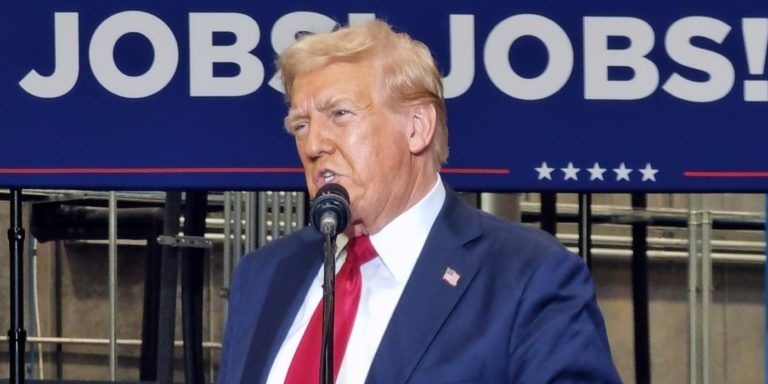
(Ben Sellers, Headline USA) The backdrop was a pipe-fitting warehouse. A sign hanging from the rafters said “Jobs! Jobs! Jobs!”

But the man onstage, as usual, had his own itinerary—and the chief order of business appeared to be addressing concerns about the possibility of another assassination attempt, hours after the Senate released its long-awaited report on the first one.

Former President Donald Trump’s remarks Wednesday in Mint Hill, N.C., on the outskirts of Charlotte, also reportedly followed a national intelligence briefing Tuesday on Iran’s recent attempts to kill him.

During his speech, Trump said that despite recent evidence that Iran was actively seeking to sow chaos and interfere in the U.S. election by hacking the GOP campaign and hiring hitmen to target the Republican nominee, President Joe Biden had audaciously arranged to meet with Iranian president Masoud Pezeshkian while the new leader was attending the United Nations General Assembly this week.

He called Biden’s cozy relationship with Iran “a strange set of circumstances” and observed that, if the tables were turned, he would be warning the rogue Islamic regime “that if they do anything to harm this person, we are going to blow your largest cities and the country itself to smithereens.”

Trump also had harsh words for Biden’s foreign policy in Ukraine, a day after its leader, Volodymyr Zelenskyy, made overtly partisan comments attacking him and his running mate, JD Vance, while autographing bombs in Pennsylvania with Democrat Gov. Josh Shapiro.

Trump slammed Zelenskyy—the ostensible reason for Democrats’ first attempt to impeach him in 2019—for “making little nasty aspersions” that could potentially drive a major foreign-policy wedge between the embattled Eastern European nation and its leading benefactor, if Trump were to be reelected in November.

“What’s happening in Ukraine is a very serious matter,” Trump said.

“… The country is absolutely obliterated,” he continued. “Millions and millions of people, including all of those great soldiers, they’re dead.”

Trump went on to say that the country’s war with Russia was an entirely preventable situation, but rather than engage in serious diplomacy, the Biden–Harris administration opted for tough talk and hollow ultimatums.

“A deal could have been made,” Trump said.

“There wouldn’t have been one person that died, and there woudn’t have been one golden tower laying shattered on its side,” he continued. “A deal could have been made if we had a competent president instead of a president that egged it all on.”

Trump’s ire for the Biden–Harris administration’s foreign-policy failures and corruption seemed simmering below the surface even in the parts of his speech that dealt with his economic policies, including a plan that would help jumpstart American prosperity to the detriment of those who have been leeching off it.

While Trump has brought up his plan for tariffs on foreign imports, he unveiled the “centerpiece” of his new economic plan, which would be additional tax incentives for American manufacturing businesses, dropping the corporate tax rate an additional 7% after already cutting it by 18% in his first term.

“This is why people and countries want to kill me,” Trump mused.

“…They only kill consequential presidents—remember that,” he continued. “If you’re one of the countries that’s affected, you’re not happy.”

During the speech, Trump made mention of his plans to return to Butler, Pa., the site of the July 13 assassination attempt that left his ear bloodied.

Shortly after the speech, his campaign rolled out additional details about the planned Oct. 5 visit in an official press release.

“President Trump’s return to Butler will stand as a tribute to the American spirit,” it said.

“In America, we do not let monsters like that evil assassin have the last word. Every time our nation is struck by attack or hardship, we rally, we persevere, and we prevail,” it continued. “… And when a shooter attacked our democracy and tried to end this movement, President Trump will return to the site, joined by tens of thousands of proud citizens, and together, they will celebrate a unifying vision for America’s future in an event like the world has never seen before.”

Trump has also been a regular presence in North Carolina, having done a rally just four days prior in Wilmington. Vance made a visit to Charlotte that featured several stops on Monday, and was in Raleigh the previous Thursday.

Trump noted his special affinity for the Tarheel State, including the fact that his 5-year-old granddaughter Carolina (whom he brought onstage at the Wilmingon event) was named after her mother Lara’s homestate.

But the reason for the extra attention may be less fortuitous, as some top party officials fear a CNN smear campaign against gubernatorial candidate Mark Robinson may not only take out the current lieutenant governor and one-time rising GOP star, but also drag down others on the ticket.

Robinson’s absence was palpably felt as Trump specifically referenced the state’s once booming furniture industry—a profession in which Robinson had worked before a viral 2018 speech on gun rights jumpstarted his political career.

Some of the political figures running for office, such as NC-07 congressional candidate Mark Harris have openly expressed their faith in Robinson—who has denied that a series of controversial online posts dating back more than a decade, and well before he was swept into politics, was made by him.

Harris, a Baptist preacher, was the victim of his own Democrat-led smear campaign—winning the 2018 race, only to be forced out amid allegations of illegal ballot harvesting. He was ultimately cleared of wrongdoing. After letting Rep. Dan Bishop keep his seat warm for three congressional terms, Harris is the heavy favorite to win the district in November and finally be fully vindicated.

Nonetheless, those in politically precarious races—including Trump—have been more reluctant to lend their full-throated support to the embattled Robinson, who, if elected, would be the state’s first African–American governor.

Trump posed for photos with Harris, who spoke at the rally, along with 14th district candidate Pat Harrigan. Addul Ali—who is fighting an uphill battle to unseat Democrat incumbent Alma Adams in the 12th district—was also among the VIP guests present.

However, the president made no mention of Robinson, whom he praised in March as “Martin Luther King on steroids” at a rally in Greensboro.

Ben Sellers is the editor of Headline USA. Follow him at x.com/realbensellers.
Biden Cabinet Member Calls on Americans to ‘Extinguish’ Trump ‘For Good’

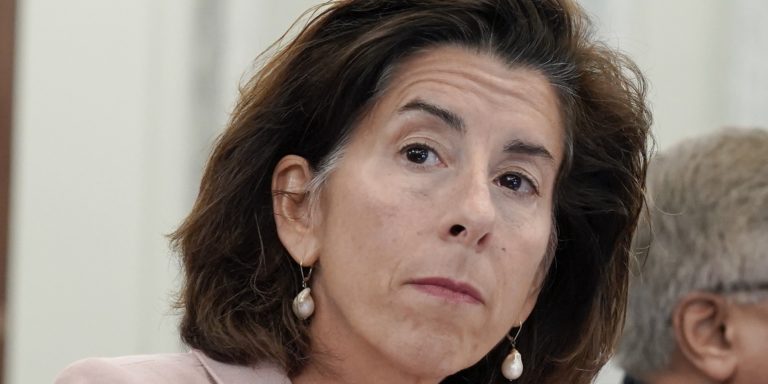
(Luis Cornelio, Headline USA) Biden’s Commerce Secretary Gina Raimondo urged Americans to “extinguish” President Donald Trump once and for all, just 10 days after he survived yet another assassination attempt. 

Raimondo made this sinister call to action during a Wednesday interview with MSNBC’s Mika Brzezinski on Morning Joe, where she was asked about the upcoming 2024 election and Trump’s pledge to protect women’s health. 

“It is just another lie. How did we get here?” Raimondo exclaimed. “Let’s extinguish him for good. We have an answer. We have a remarkably talented candidate, who is sincere, who is pragmatic, who is open. Let’s just get it done.”

Likely anticipating potential backlash, Brzezinski asked Raimondo to clarify, “And by ‘extinguish,’ you mean vote him out?” 

In response, Raimondo remarked, “Yes, absolutely. Vote him out. Vanish him from American politics. Yes, just vote him out so he goes away.” 

She added, “Let’s turn the page on his chaos, and craziness, vindictiveness, wrong-headed economic strategy, hatred toward women and move forward.” 

Raimondo’s rebuke comes as Democrats face pressure to tone down their personal and often vicious rhetoric against Trump, with Republicans accusing them of inciting violence against him. 

On Sept. 15, Trump escaped an assassination attempt, the second in less than two months. The suspect, Ryan Wesley Routh, was charged after Secret Service agents spotted him at Trump’s West Palm Beach golf club and foiled his plot. 

Two months earlier, Trump was nearly killed after would-be assassin Thomas Matthew Crooks opened fire at a campaign rally in Butler, Pennsylvania. 

Though one of Crooks’s bullets grazed Trump’s right ear, missing his head by centimeters, Corey Comperatore, a MAGA supporter and former fire chief, was fatally shot while heroically shielding his family. 

Crooks was killed on the scene. 

IG Report to Detail FBI Informants Involved w/ Jan. 6—But Not before This Election

(Ken Silva, Headline USA) DOJ Inspector General Michael Horowitz said Wednesday that he has an impending review about the FBI informants and other confidential human sources involved with the Jan. 6, 2021, Capitol Hill uprising—but that the report won’t be released until after Election Day.

Horowitz spoke about the impending report in response to questions from Rep. Thomas Massie, R-Ky., at a congressional hearing.

Massie asked why the report is taking nearly four years to release. Horowitz said he initially commissioned the review immediately after Jan. 6, 2021, but then he had to pause it due to the criminal cases in federal court.

He said he resumed the review last year, and is currently reviewing a draft report. But he said the report wont’ be released before the election because it still must undergo a classification review.

“I doubt it would be done in time for the election. My hope is it’s done before inauguration,” Horowitz said.

When asked about the number of informants involved in Jan. 6, the DOJ Inspector General said he can’t recall—and that he wouldn’t be able to answer in public anyway, since his report hasn’t undergone a classification review.

Horowitz also declined to say whether the informants were reimbursed for their travel to Jan. 6, or whether all the internal informant protocols were followed for the event.

Massie expressed dissatisfaction at Horowitz’s answers, calling for the report to be released before Election Day.

After the interaction, legal pundits predicted that Horowitz’s report will vindicate those who believe federal assets fomented violence on Jan. 6.

“I personally think this is the sleeper story of the day, so many lawmakers and pundits were decried as crazy for suggesting that there could be confidential human sources involved in January 6th, and it looks like there might just have been,” said Fox News legal analyst Kerri Urbahn.

Criminal court proceedings have revealed at least 50 informants that were likely involved with Jan. 6—and possibly far more than that.

Ken Silva is a staff writer at Headline USA. Follow him at x.com/jd_cashless.

FBI Claims it Doesn’t Have DNC’s Jan. 6 Pipe Bomb Footage

(Ken Silva, Headline USA) The FBI has claimed that it doesn’t have the Democratic National Committee headquarters’ security footage from the Jan. 6, 2021, Capitol Hill uprising—footage that would presumably show the discovery of a pipe bomb that was allegedly planted outside the DNC the night before.

The FBI’s admission was revealed in a Friday letter from Homeland Security Inspector General Joseph Cuffari to Rep. Thomas Massie, R-Ky. In that letter, Cuffari said he asked the FBI to review the DNC security videos from Jan. 6—but was told that the bureau doesn’t have that footage.

“On March 18, 2022, the FBI informed DHS OIG that it did not have any video footage from January 6, 2021,” Cuffari told Massie.

The letter to Massie was revealed Tuesday, the same day Revolver News published a report suggesting that the DNC pipe bomb footage was tampered with. Revolver reported that an unnamed DHS-OIG official viewed the DNC footage, and said that the footage clearly shows the pipe bomber planting a device on the evening of Jan. 5—something that the footage released by the FBI to the public doesn’t show.

Revolver also reported that the DHS-OIG official had to go to the DNC to view the footage—raising questions about why the FBI doesn’t have video of one of the most significant crimes from the whole Jan. 6 fiasco.

“We can only conclude that either the FBI is lying and did have footage, or they’re telling the truth and for some reason deleted the footage,” Revolver wrote on Tuesday.

Meanwhile, Vice President Kamala Harris continues to be tight-lipped on the subject, despite the fact that her motorcade drove past the DNC pipe bomb on Jan. 6. Harris left the Capitol at 11:21 a.m. arrived to the DNC at 11:25 a.m., but the nearby pipe bomb wasn’t discovered until 1:07 p.m. by a plainclothes Capitol Police officer.

Some J6 researchers argue that Harris’s silence on the issue suggests that the U.S. government is engaging in a coverup with the pipe bomb case—perhaps because a government asset planted the bombs, or for some other unknown reason. On Tuesday, Massie raised that possibility again.

“It’s almost as if they don’t want to know. Can you rule out that there were any confidential human sources involved in the whole pipe bomb thing?” Massie asked DOJ Inspector General Michael Horowitz.

Horowitz said he didn’t “recall” whether any government assets were involved, but he’d have to go back and refresh his memory. Massie then called for answers on the matter before Election Day.

Ken Silva is a staff writer at Headline USA. Follow him at x.com/jd_cashless.

Chicago Fed President Goolsbee Wants to Declare Pennies Nickels

(Mike Maharrey, Money Metals News Service) A recent comment by Chicago Federal Reserve President Austan Goolsbee gives you a glimpse into how Fed people think and helps to explain exactly why you’re paying more for everything.

It’s almost as if inflating was hardwired into Fed members’ brains.

Goolsbee recently sat down with Illinois Treasurer Mike Frerichs during the National Association of State Treasurers conference in Chicago. In the course of the conversation, the subject of pennies came up.

There are a lot of people who think the U.S. Treasury should do away with the penny. This would make sense financially. It costs about 3 cents to mint the 1-cent coin.

“How stupid do you need to be to mint money at a loss?” Goolsbee asked.

But there are about 250 billion pennies in circulation. That’s about $2.5 billion in pennies.

So, if we’re doing away with pennies, what happens to all those coins?

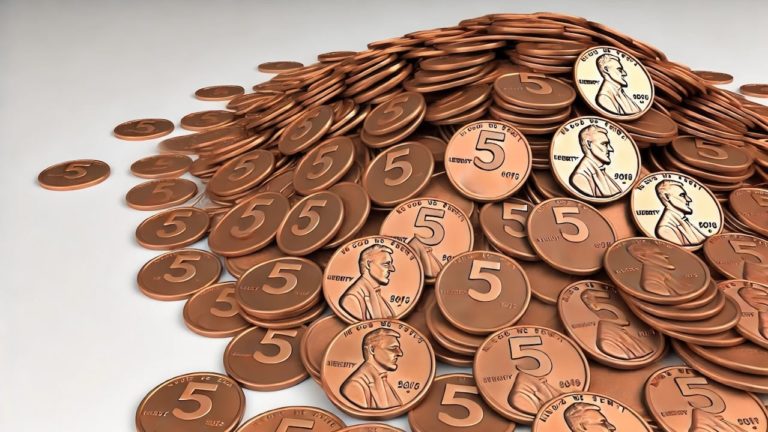
Goolsbee thinks we should wave a magic wand and declare pennies are all worth 5 cents.

“Pennies just become nickels,” Goolsbee said.

Well, OK then!

While we’re at it, can we declare dollar bills are worth a hundred?

This (bizarre) plan is apparently based on an idea presented by a Chicago Fed economist. He said there should be a “voluntary, universal declaration” that pennies are worth 5 cents.

I’m not even sure what that means, much less how it would work. It seems to imply there would be no government edict. Everybody would just agree, and voila.

Logistics aside, this idea shows you exactly how Fed people think. Money is created on a whim. It exists by decree. If we need more money, well, just say the word and “poof” — we have more money.

This is just a scaled-down version of the $1 trillion coin.

It’s also pretty much how quantitative easing works.

In a QE operation, the Federal Reserve buys securities (primarily U.S. Treasuries and mortgage-backed securities) on the open market with money created out of thin air. This is sometimes referred to as “money printing.” Of course, the Fed isn’t running off $100 bills in the basement of the Eccles Building. It’s more like using a debit card when no money is in the account. With a few keystrokes, the central bankers at the Fed transfer money that never existed until that moment to a bank or financial institution in return for securities.

Money creation is, by definition, inflation. One symptom of monetary inflation is rising consumer prices – price inflation.

This is what the Fed does.

And this is how Fed people think.

This thought process is a natural byproduct of a fiat money system. Money can be created on a whim. Governments love this kind of system because it enables government borrowing and spending far beyond anything possible in a sound money system. Fiat money drives big government!

As I talked about recently, inflation is the Fed’s stated policy. It’s on purpose. So, I suppose it’s not surprising that a Fed president would think declaring pennies are nickels is a great idea.

But from a normal person’s perspective, think about the inflationary impact of the move. Instead of $2.5 billion in pennies, we would suddenly have $12.5 billion in pennies.

Now, if you have a bunch of pennies lying around, this might seem like a good idea on the surface. You could buy more with your pennies. But so could everybody else. The bidding war would drive up prices, and you wouldn’t be any better off.

This is exactly how monetary inflation works, but on a much larger scale.

Of course, the penny plan pales in comparison to the $5 trillion the Federal Reserve created out of thin air running QE during the pandemic. But Goolsbee’s flippant attitude about creating more money is indicative of the root of the problem.

And it is exactly why you should never expect price inflation to go away. They don’t want it to go away. They just hope you don’t notice.


Mike Maharrey is a journalist and market analyst for MoneyMetals.com with over a decade of experience in precious metals. He holds a BS in accounting from the University of Kentucky and a BA in journalism from the University of South Florida.

Mystery ATF Agent at Butler Rally Was There in ‘Personal Capacity,’ Agency Says

(Ken Silva, Headline USA) A Tuesday report from the Senate Homeland Security Committee raises more questions about the actions of an unidentified ATF agent who was at the July 13 assassination attempt against Donald Trump.

Sen. Ron Johnson, R-Wisc., first revealed the ATF’s role in the deadly Butler, Pennsylvania rally about a week after the shooting. According to Johnson, a mysterious man in a gray suit was one of the first officials on top of the AGR building to examine the body of the alleged shooter, Thomas Crooks.

In his July 21 preliminary report, Johnson said the gray-suit man requested photos of Crooks’ dead body be sent to a phone number with a 215 (Philadelphia) area code. The recipient of those photos turned out to be an ATF agent, who supposedly wanted to conduct a facial-recognition search on Crooks. Johnson’s report said his staff tried talking to that ATF agent, but they were stonewalled.

The identity of the gray-suit man is still unconfirmed. But on Tuesday, the Senate Homeland Security report confirmed that an ATF agent was indeed present in Butler in his “personal capacity.”

“ATF told the Committee that there was an ATF agent present in his personal capacity at the Butler rally on July 13 but that ATF as an agency had no official presence at the rally and did not provide any security assistance before shots were fired. The committee has yet to speak with the ATF agent who was at the rally,” the report said.

The committee added that it “continues to seek a transcribed interview” with the agent, and that it is still seeking info “related to any ATF facial recognition searches of Crooks’ body.”

However, former ATF agent Peter Forcelli told Headline USA that the information coming out of the Senate doesn’t make sense. Forcelli expressed doubt that the man in the gray suit was with the agency. He also said Sen. Johnson’s allegations about facial recognition sound dubious.

“ATF agents don’t wear suits, except for in court. Even as a group supervisor, I almost never wore a suit. They also didn’t yet have access to facial recognition technology when I retired in late 2021 … The whole facial recognition thing makes me suspicious that it was an actual ATF Agent,” said Forcelli, who was a whistleblower in the ATF’s Obama-era Fast and Furious scandal.

“If it was an ATF Agent, I guarantee he’d have asked for the serial number on the gun, so he could request an ‘urgent trace’ and perhaps photos of the serial number and the gun itself. An ATF Agent would ask for that, if anything. But facial recognition? It’s odd. Very odd to the point that I question whether or not this is accurate.”

Ken Silva is a staff writer at Headline USA. Follow him at x.com/jd_cashless.

Money Metals’ New ‘Fort Knox’ Depository Profiled on Industry TV Show

(Money Metals News Service) In a recent TV interview, Jp Cortez, Executive Director of Money Metals’ Sound Money Defense League, highlighted the opening of the largest gold depository in North America, a major industry development supporting the growing sound money movement in the U.S.

He also discussed Money Metals’ recent legislative victories in several states and the increasing demand for gold, both globally and domestically, driven by economic uncertainty and the shift away from the weaponized U.S. dollar.

The Rise of Sound Money: Money Metals Exchange at the Forefront

Jp Cortez explained to KN’s Jeremy Szafron that sound money refers to currencies backed by tangible assets like gold and silver.

Unlike fiat money, which is printed by governments and not backed by real assets, gold and silver are resistant to inflation and preserve individual wealth.

“Sound money allows societies to make long-term plans and protects wealth,” Cortez emphasized. Backed by Money Metals Exchange, the Sound Money Defense League has been instrumental in pushing for these reforms.

He noted that 45 states have already eliminated sales tax on precious metals, showcasing a national trend toward sound money principles led by the efforts of Money Metals.

Legislative Wins: Nebraska and New Jersey Lead the Way

In 2024, states like Nebraska and New Jersey made notable strides in eliminating taxes on precious metals.

With the support of Money Metals, Nebraska passed comprehensive legislation that not only removed capital gains taxes on gold and silver but also reaffirmed their status as legal tender. The legislation additionally ruled that Central Bank Digital Currencies (CBDCs) would not be considered legal money in the state.

However, Nebraska saw an attempt to reverse these gains when legislators proposed reimposing a sales tax on precious metals. Cortez highlighted how grassroots pressure—mobilized by Money Metals Exchange—successfully blocked the measure.

“Only five states still charge a sales tax on precious metals,” Cortez pointed out, emphasizing the importance of local activism, which was driven by Money Metals’ network of supporters.

Meanwhile, New Jersey became the 45th state to eliminate sales tax on precious metals. However, the law still includes a 6.5% sales tax on transactions under $1,000, which Cortez criticized as regressive and harmful to small investors.

“This tax disproportionately affects small savers who are dollar-cost averaging by purchasing a few silver coins or rounds each paycheck,” Cortez said.

Utah’s Bold Move: Holding Gold on the State’s Balance Sheet

Encouraged by Money Metals policy efforts, Utah took a major step by greenlighting the state treasurer to hold $180 million worth of physical gold to protect the state’s finances. This groundbreaking legislation comes at a time when gold prices have surged to $2,600 per ounce.

In addition to this investment, Utah lawmakers are conducting a study on the role of precious metals in stabilizing the state’s economy.

The results of the study, expected in October 2024, will provide further insights into how states can use gold and silver to safeguard their financial stability amid rising concerns over the U.S. dollar.

The Growing Demand for Gold: Money Metals Exchange Leads the Way

Gold Demand Gold Coin

Cortez of Money Metals highlighted the growing demand for gold, particularly after the company announced the completion of construction of a massive new Class III depository in Idaho, more than twice the size of the U.S. Bullion Depository at Fort Knox.

Money Metals’ private depository serves individuals, states, institutions, and even foreign governments, reinforcing gold’s increasing importance as a hedge against systemic risks.

With inflation and interest rate volatility rising, the appeal of gold as a stable asset is stronger than ever.

“Gold is shining brighter than it ever has before, and people are waking up to the reality that paper money may not be as reliable as it seems,” Cortez said.

De-Dollarization: The Impact of U.S. Policy

The conversation also explored the growing trend of de-dollarization, as countries like Russia and China seek alternatives to the U.S. dollar. The Money Metals leader attributed this shift to U.S. policies that have weaponized the dollar, particularly through sanctions and removing countries like Russia from the SWIFT system.

“When the dollar eventually loses its global reserve currency status, it will be because of self-imposed policies by U.S. politicians,” Cortez said.

He referenced a recent article by Jan Nieuwenhuijs, a gold analyst for Money Metals, which pointed to the steady increase in global central bank gold holdings, a clear indicator that nations are seeking alternatives to the U.S. dollar.

Federal Reforms: Will They Catch Up to State-Level Victories?

While state-level reforms spearheaded by Money Metals have progressed rapidly, federal reforms lag behind. In 2024, Congressman Alex Mooney (R-WV) reintroduced legislation aimed at eliminating the capital gains tax on precious metals at the federal level.

Cortez expressed skepticism about the immediate prospects for federal action, noting that the IRS currently classifies gold and silver as collectibles, subject to a 28% tax.

Rep. Mooney has also called for a full audit of U.S. gold reserves, including a full review and disclosure of any encumbrances, swaps, or leases. While Cortez remains cautious about whether federal reforms will gain traction, he applauded Mooney for helping Money Metals continue to raise awareness about the need for federal sound money reforms.

The Push for Sound Money Continues: Money Metals Exchange’s Role

As the U.S. economy faces rising credit card debt—reaching $1.144 trillion in the second quarter of 2024—and declining consumer confidence, the urgency for sound money reforms increases.

Money Metals Exchange remains at the forefront of this movement, with Cortez emphasizing that the current monetary system is unsustainable and a return to gold and silver is essential to protect individuals and states from financial instability.

“Until we reject the principle of paper money, this nightmare will continue,” Cortez declared.

The sound money movement is gaining momentum, with Money Metals Exchange playing a pivotal role in driving state-level victories and legislative changes across the U.S.

As global demand for gold increases and the U.S. dollar faces growing challenges from de-dollarization, this push for sound money reforms could eventually reshape the financial landscape.

Key Questions & Answers

Jp Cortez Key Questions and Answers

Here are the key questions and answers from the interview between Jeremy Szafron and Jp Cortez:

What is the concept of sound money?

Sound money is the principle that money should maintain its value over time, typically backed by real assets like gold and silver.

This contrasts with fiat money, which is printed by governments without asset backing, making it vulnerable to inflation.

Sound money preserves individual wealth and provides long-term financial security.

Why do some states try to reverse progress on sound money reforms, like Nebraska’s attempt to reimpose a sales tax on precious metals?

Politicians often seek to reverse these reforms due to their hunger for tax revenue. Precious metals are seen as a potential golden “cash cow” for taxes, despite studies showing that imposing sales tax on precious metals is inefficient.

Most investors can easily avoid such taxes by purchasing online or shipping to tax-free states, which makes state-level taxation on precious metals ineffective.

How did grassroots activism play a role in reversing Nebraska’s attempt to reimpose taxes on gold and silver?

Grassroots pressure from constituents was key to stopping Nebraska’s attempt to reverse its sound money progress.

Citizens contacted key legislators and sponsors to express their opposition to taxing precious metals, ultimately preventing the reintroduction of the sales tax.

Grassroots activism is often more effective than expert testimony in shaping legislative outcomes.

What happened in New Jersey with the introduction of a “poor tax” on smaller precious metals transactions?

Although New Jersey became the 45th state to remove sales tax on precious metals, the law still imposed a 6.5% sales tax on transactions under $1,000. Cortez criticized this as a regressive tax that harms small savers and investors, many of whom buy small amounts of gold or silver regularly as part of their financial strategy.

How significant is Utah’s decision to hold physical gold in its state treasury?

Utah’s decision to hold $80 million worth of gold in its state treasury is a monumental step toward sound money and a hedge against dollar instability. This investment marks a growing trend where states are looking to gold and silver for financial stability. Utah has also commissioned a study on how precious metals can stabilize its economy, with results expected in October 2024.

What does the construction of Money Metals Exchange’s new depository in Idaho signify?

Sound Money Defense League Money Metals Exchange Jp Cortez Podcast Image

The new Class III depository in Idaho, which is larger than Fort Knox, reflects the rising demand for secure gold storage. The depository will serve individuals, states, institutions, and even countries. Cortez highlighted this as evidence of a growing interest in gold as a hedge against systemic risks and the increasing recognition of gold’s value in today’s economy.

How does the global trend of de-dollarization tie into the increasing demand for gold?

De-dollarization, driven by countries like Russia and China seeking alternatives to the U.S. dollar, is a major factor in the rising demand for gold. U.S. policies that weaponized the dollar, such as sanctions and removing Russia from the SWIFT system, have prompted countries to seek alternatives. Global central banks have steadily increased their gold holdings while U.S. dollar-denominated assets have stagnated.

What are the prospects for federal reforms on sound money, like Congressman Alex Mooney’s bills?

Cortez expressed skepticism about significant federal reforms happening soon. While Congressman Alex Mooney has reintroduced legislation to eliminate the capital gains tax on precious metals and audit U.S. gold reserves, Cortez is not optimistic that these bills will pass in the current political environment. However, he praised Mooney for continuing to push sound money issues at the federal level.

How does the rise in consumer debt and declining savings relate to the urgency of sound money reforms?

Cortez noted that rising credit card debt—now at $1.144 trillion—and historically low savings levels underscore the need for sound money. Americans are facing unsustainable financial pressures, which makes gold and silver even more vital as stable stores of value. Sound money reforms would provide a way for individuals to protect their wealth in the face of economic instability.

How do you respond to critics who argue that reintroducing gold and silver as money could lead to increased market volatility?

Cortez rejected the notion that a bifurcated monetary system would be problematic, arguing that competition in currencies is beneficial. He advocated for a monetary marketplace where multiple forms of money, including gold and silver, could compete, allowing the best money to win out. In his view, gold and silver have already proven their durability and reliability over thousands of years.

Who is Jp Cortez?

Jp Cortez Sound Money Defense League Money Metals Exchange
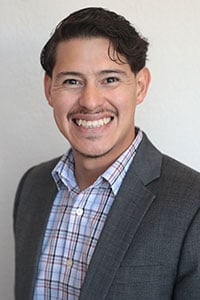
Jp Cortez

Jp Cortez is the Executive Director of the Sound Money Defense League, a nationally renowned policy group dedicated to advocating for a stable and constitutional monetary system. Known for his fervent commitment to sound money principles, Cortez has become a leading voice in the movement to restore gold and silver to their rightful place in the U.S. financial system.

A graduate of Auburn University, Cortez’s interest in monetary policy was sparked by his recognition of the vital role sound money plays in preserving individual liberty and fostering long-term economic prosperity. With a strong foundation in Austrian economics and a deep understanding of monetary history, he has focused on educating policymakers, grassroots organizations, and the general public about the dangers of fiat currency and the benefits of returning to a system backed by real assets like gold and silver.

Since 2018, under Cortez’s leadership, the Sound Money Defense League, in partnership with Money Metals Exchange, has achieved significant legislative victories in over a dozen states, including the removal of sales and capital gains taxes on precious metals. His advocacy extends beyond legislation; Cortez is the lead author of the Sound Money Index, an annual report ranking all 50 states on their pro-sound money environments. His work and analysis have been featured in prominent outlets such as Reuters, Business Insider, Huffington Post, Newsweek, and the Washington Examiner.

Outside of his professional advocacy, Jp enjoys backpacking, live music, and following Mets baseball. He currently resides in Charlotte, North Carolina, with his dog, Jackson, and is active on X (Twitter) at @JpCortez27.

Senate Releases Report on Trump Shooting without Interviewing Sniper Who Shot Crooks

(Ken Silva, Headline USA) The Senate Homeland Security Committee released its interim report on the July 13 assassination attempt on Donald Trump, revealing new info that raises more questions about what happened at that deadly event.

The 133-page report is underpinned by interviews with 12 Secret Service employees from the Butler rally, including the head of Pittsburgh’s field office, the lead advance agent, and the counter sniper team leader—who has been identified in the New York Times as John Marciniak.

However, the report revealed that the Senate hasn’t interviewed the sniper who killed the alleged shooter, Thomas Crooks.

“The Committee has requested to interview the USSS counter sniper who shot Crooks, but has not yet interviewed him,” the Senate report revealed.

According to the report, the sniper was stationed on the barn behind Trump’s podium—giving him a line of sight on the rooftop used by Crooks. The report included a picture that showing that the Secret Service counter sniper team “Hercules 1” indeed had a line of sight on Crooks.

“However, the USSS Counter Sniper Team Leader [Marciniak] and the Hercules 2 USSS counter sniper said

they never saw Crooks on the roof prior to shots being fired,” the report noted.

Once Crooks began firing, it took “mere seconds” for the Hercules 1 sniper to locate him, Marciniak told the Senate committee. As Headline USA has noted, that statement is misleading—it took the Secret Service 15 seconds to return fire, and it was a local cop who actually shot at Crooks first, about five seconds after the initial firing began.

The Senate report didn’t remark on the exact time it took for the Secret Service sniper to return fire, but it did acknowledge the heroics of the local cop on the Butler Emergency Services Unit.

According to the Senate report, the local Butler ESU officer saw Crooks fire his eighth round and “saw the gas come from the muzzle, I heard the snap, and then immediately I returned fire.”

The Butler ESU officer told the Committee that he believed that he shot Crooks in the right shoulder or right side of his neck.

Bizarrely, the FBI has claimed it has “no forensic evidence indicating that [the round fired by the local officer] either struck our subject or the subject’s rifle,” the Senate report noted. If that’s the case, it’s not clear why Crooks stopped firing after his initial eight shots, and it’s also unclear why Crooks’s rifle seems to have a chunk missing from it.

The Senate report stated that lawmakers will continue investigating the assassination attempt, as well as the more recent one that occurred on Sept. 15.

Committee ranking member Ron Johnson, R-Wisc., said federal agencies continue to stonewall his attempts to get to the truth of July 13—and he called for his colleageues to use all its power to get answers.

“Federal agencies like the Secret Service, FBI, and DOJ continue to withhold records that are vital to this Committee’s work. There is still much more information that the public and Congress deserve to know. Going forward, this Committee must be prepared to use compulsory process to ensure that the American people have a complete and thorough understanding of the security failures that resulted in the multiple attempts on former President Trump’s life,” he said.

Ken Silva is a staff writer at Headline USA. Follow him at x.com/jd_cashless.

Ex-Fox Host Reveals 20-Yr. Beef w/ Kamala as Rumors Swirl over Trump Split

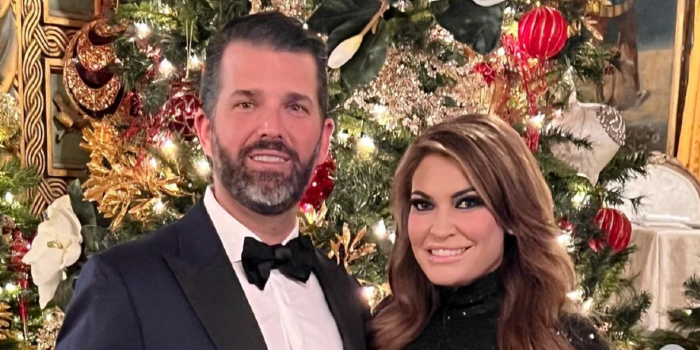
(Luis Cornelio, Headline USA) Republican strategist Kimberly Guilfoyle affirmed on Monday that Vice President Kamala Harris narcissistically tried to block her from a job in California when both women were emerging legal stars. 

Guilfoyle, who is now engaged to Don Trump Jr. and is a former Fox News host, made these assertions in an interview with the liberal New York Times, recalling events from over 20 years ago.

“She pretended to be a member of the hiring committee, which didn’t exist,” Guilfoyle said, referring to Harris, then an assistant district attorney in San Francisco.

This story has resurfaced amid media-created rumors that Guilfoyle and Trump Jr. may have split.

The feud dates back to the early 2000s, according to the SF Gate. Guilfoyle had previously worked in the San Francisco DA’s office but was fired in 1996 following the election of a new district attorney. 

She then moved to the Los Angeles DA’s office, located roughly six hours from San Francisco. When she sought to return to San Francisco, Harris allegedly plotted to intervene.

According to the Times, Harris—who later became a district attorney, senator, and vice president—told Guilfoyle there were no jobs available at the office. 

However, Harris’s superior hired Guilfoyle despite the future vice president’s pleas. Harris denied the allegations, vaguely claiming that she reached out to Guilfoyle to offer “help.”

“I never suggested to her there wasn’t a job for her in the San Francisco D.A.’s office — of that, I’m very clear,” she told the SF Gate in 2003. 

Guilfoyle was married to then-San Francisco Mayor Gavin Newsom from 2001 to 2006. They met in the mid-1990s. 

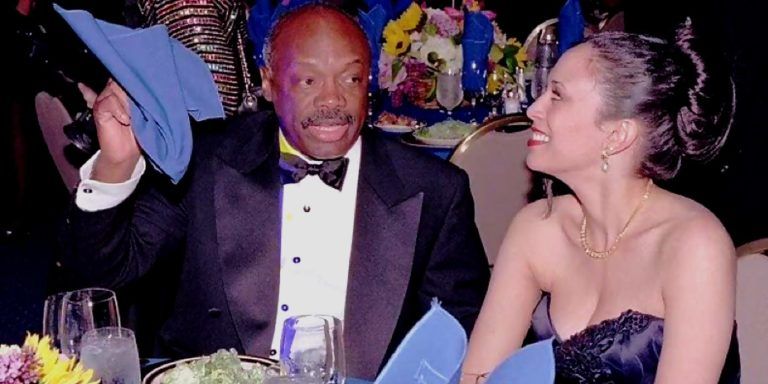
At the same time, Harris held a romantic relationship with then-California Assembly Speaker Willie Brown, then a married man.

She ran for San Francisco district attorney in 2003, holding the position until 2011 before running for attorney general. 

In 2003, Guilfoyle stated, “The bottom line is she didn’t want me there,” referencing her tensions with Harris. 

“She called me and said basically that she was on the hiring committee and in charge of the budget for the D.A.’s office, and that I should have gone through her if I wanted to return to the D.A.’s office — and that there was no money to hire me,” Guilfoyle added. 

Harris has developed a reputation for being ruthless and self-serving.

In 2020, Biden suspected her of orchestrating negative hit pieces targeting other women he considered for his vice presidential pick. 

Among those considered were Susan Rice and then-Reps. Karen Bass and Val Demings, all of whom faced intense scrutiny from damaging articles during the campaign.

Kamala Missed 1 in 5 Days under Willie Brown but Worked Her ‘A** Off’ for $100K Salary

(Luis Cornelio, Headline USA) Kamala Harris, appointed in the 1990s to the California Medical Assistance Commission by her former lover Willie Brown, took full advantage of the position, missing more meetings than any other active member. 

According to the Daily Mail, then-29-year-old Harris skipped 23 out of 111 CMAC meetings over five years, despite only being required to attend twice a month and being paid a $99,000 salary—all at the taxpayer’s expense.

This means that Harris missed 20 percent of the total meetings while earning over $400,000 from the position, which was widely regarded as a “patronage” job at the time, according to several outlets. 

Harris’s frequent absences from the commission meetings come as her past relationship with Brown haunts her as she campaigns for the 2024 presidential election.

The two dated a few years before Harris would launch her bid for San Francisco district attorney in 2003.  

Brown, then a 60-year-old married man and the influential speaker of the California Assembly, appointed Harris to two positions—the CMAC and the Unemployment Insurance Appeals Board—which angered many California politicians in the late 1990s.

As Harris campaigned for DA, she faced questions about whether she was qualified for the roles or if she only got them due to her controversial relationship with Brown. 

Harris dismissed these accusations, calling them “condescending” in an interview with the San Francisco City Journal.

“I know I’m gonna be painted as this socialite, ‘the mayor’s ex-girlfriend,’ but that’s bullshit. I’ve worked my ass off for everything I have,” Harris said, according to The Nation. “I know this race is gonna get dirty, gritty, sexist, maybe even racist.”

In an interview with SF Weekly, Harris stated, “Whether you agree or disagree with the system, I did the work.” 

In an infamous 2019 op-ed for the San Francisco Chronicle, Brown acknowledged that these two appointments may have propelled Harris into political stardom by boosting her image in the DA race. 

“Yes, I may have influenced her career by appointing her to two state commissions when I was Assembly speaker,” Brown wrote, adding that he had also helped other politicians, including former House Speaker Nancy Pelosi and California Gov. Gavin Newsom. 

Since Harris inherited the Democratic nomination for vice president, Brown has reentered the spotlight, first trending on Google and later offering several interviews about his ties to her. 

Democrats have long argued that any criticism of Harris’s ties to Brown is rooted in sexism and misogyny.