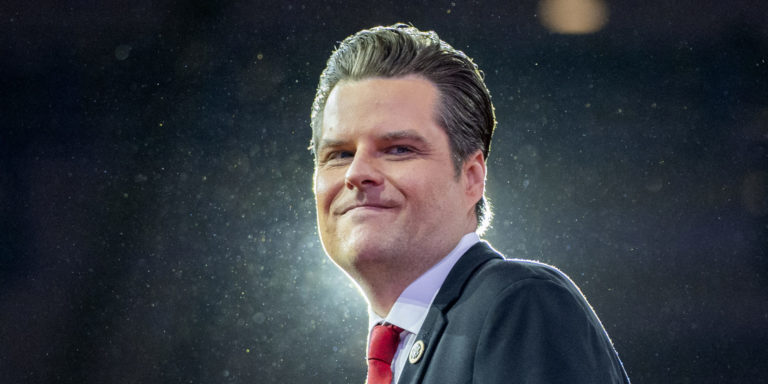
RINOs May Thwart Shocking Matt Gaetz AG Nomination as Leftists Freak Out

(Luis Cornelio, Headline USA) Republican senators have expressed doubts about President-elect Donald Trump’s blockbuster nomination of former Rep. Matt Gaetz for attorney general, with many hinting at a swift rejection. 

Sen. Lisa Murkowski, R-Alaska, said Gaetz’s confirmation in the Republican-led Senate would face a “significant challenge” and called him not “serious,” according to NBC News. 

“We need to have a serious attorney general. And I’m looking forward to the opportunity to consider somebody that is serious, Murkowski said. “This one was not on my bingo card.” 

Sen. Joni Ernst, R-Iowa, echoed part of Murkowski’s sentiments, stating, “He’s got his work cut out for him.” 

Sen. John Cornyn, R-Texas, who lost his bid for majority leader, said the Senate has a “constitutional responsibility,” suggesting that lawmakers may reject the nomination.

“I don’t know the man, other than sort of this public persona,” Cornyn added. 

Sen. Susan Collins, R-Maine, said Trump has the “right” to nominate anyone but noted that there would be “lots of questions” about Gaetz.

Meanwhile, Sen. Kevin Cramer, R-N.D., called Gaetz’s confirmation “a long shot.” 

Other anti-Trump critics and left-wing personalities voiced their opposition to Trump’s Gaetz nomination. 

John Bolton, for example, called it the “worst cabinet nomination in American history.” 

Attorney and National Review columnist Ed Whelan echoed Bolton’s criticism on X: “cannot imagine a worse pick for Attorney General than Matt Gaetz.”

Washington Post columnist Marc Thiessen called Gaetz “a huge unforced error.” 

Jonah Goldberg, editor-in-chief of The Dispatch, claimed he could not “imagine why someone would vote to confirm Matt Gaetz for host at Red Lobster, never mind Attorney General of the United States.” 

Similarly, left-wing critics continue to clutch their pearls over the prospect of Gaetz, a Republican firebrand, leading the infamous DOJ amid growing calls for immediate reform.

Their reactions are below.


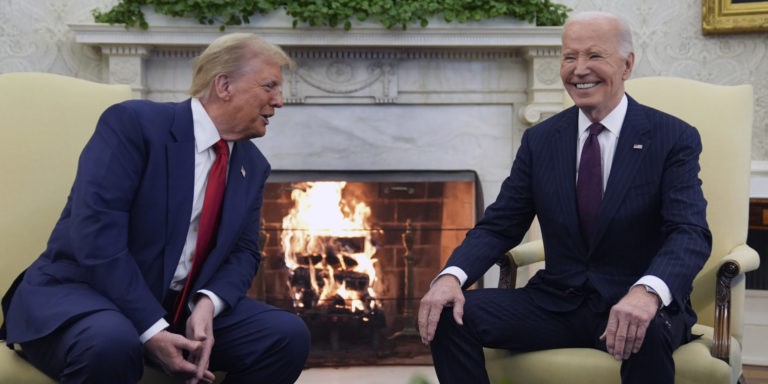
Biden Ridiculed for Calling Trump ‘Hitler,’ Then Taking Selfies w/ Him

(Luis Cornelio, Headline USA) Critics called out President Joe Biden for previously comparing President-elect Donald Trump to Adolf Hitler—then smiling next to him in a White House photo just weeks later. 

Many X users pointed out that Biden’s alarmist rhetoric against Trump in the 2024 election was a bunch of rubbish. 

Journalist Yashar Ali shared a photo of Biden and First Lady Jill Biden posing with Trump, questioning Biden’s previous “fascist” claims. 

“Is this the type of photo you take with a man whom you believe is a fascist? A threat to democracy?” he asked on X. “Hitler and Mussolini were fascists—would you be okay with someone taking a picture like this with either of them?” 

Daily Wire reporter Ryan Saavedra echoed Ali’s sentiments, posting Biden’s previous comments about Trump. “Biden looks ecstatic in these photos with Trump after he said the following about Trump during the election,” he wrote. 

Kristen Mag, who went viral last month for announcing her pro-Trump vote after previously backing Bernie Sanders, wrote: “I’m confused…why is President Biden just sitting there laughing with Hitler?” 

OutKick founder Clay Travis also shared the Oval Office photo, writing, “From he’s Hitler to let’s hang out by the White House fire in a week.” 

Philip Labonte, the lead singer of the metal band All That Remains, chimed in, writing, “Joe Biden welcomes ‘literally Hitler’ to the white house.” 

Some of Biden’s statements equating Trump to fascism include the following. “I mean this from the bottom of my heart: Trump is a threat to this nation,” Biden said in July 2024.

During a February fundraiser, Biden claimed, “There is one existential threat: it’s Donald Trump” 

Biden’s former presidential campaign repeated similar claims. Michael Tyler, the Biden campaign’s communications director, once said of Trump, “He’s going to echo the rhetoric of Hitler and Mussolini, and we’re going to make sure that people understand just how serious that is every single time.” 

On Wednesday, White House press secretary Karine Jean-Pierre refused to say whether Biden would apologize to Trump for calling him a “dangerous threat.” Jean-Pierre claimed in response that Biden stood behind his past rhetoric.

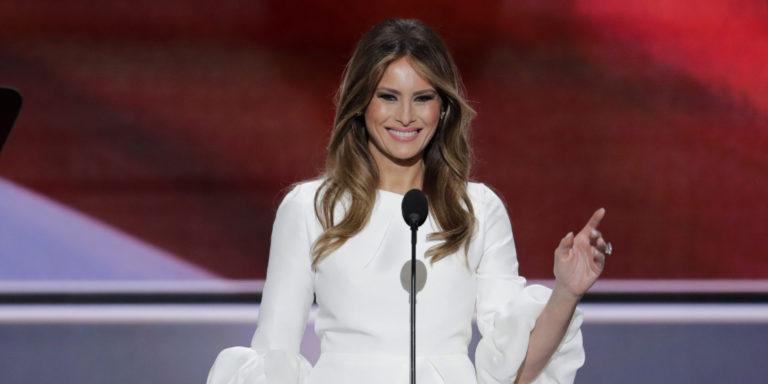
Melania Ready to Redefine First Lady Role in a Major Snub to DC Swamp

(Luis Cornelio, Headline USA) Incoming First Lady Melania Trump is done playing nice with the D.C. establishment as she prepares for her 2025 grand return to the White House. 

Melania is reportedly planning to mold the role of first lady to her own style, opting to divide her time between New York, Florida and Washington, D.C., to prioritize her and President-elect Donald Trump’s son, Barron. 

“Melania will be the first lady, but only on her terms,” a Mar-a-Lago source told the New York Post on Wednesday. “She’ll do the big events. But no ladies’ tea and no — or very few — interviews.” 

The source added, “She views winning as the main show, and the rest she’ll do as she pleases. She’s really in the driver’s seat as to her duties at the White House.”

The source affirmed that Melania “will be a part time first lady — while being a full-time mother and wife.” 

Melania’s new approach appears to be a response to the left-wing media and Deep State’s near-decade-long attacks against her.

During her 2017-2021 tenure as first lady, Melania faced constant attacks from Democrats, including sexist smears, media hits and ridicule targeting her proposals and even her son. 

Since leaving the White House, Melania has spoken out about her experience in D.C., including her reaction to the FBI searching her drawers during the Mar-a-Lago raid. 

Speaking to Fox News and promoting her best-selling book in September, Melania described the raid as an “invasion of privacy” that left her feeling “angry.” 

“I saw unpleasant stuff that nobody wants to see it. And you get angry because, you know, nobody should be putting up with that kind of stuff,” she said. “Some person — I don’t even know who or how many people — they, you know, they went through my stuff.” 

D.C. got a preview of the new Melania when she declined to meet outgoing First Lady Jill Biden for a White House transition meeting. 

A source told media outlets that the FBI raid influenced Melania’s decision to bluntly decline the invitation. 

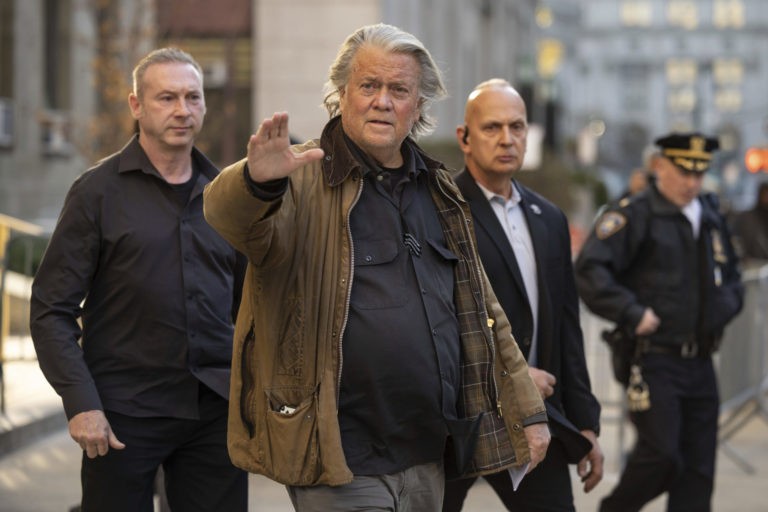
Steve Bannon Blasts ‘Lawfare’ as He Faces New York Trial after Federal Prison Stint

(Headline USA) After spending four months in federal prison for snubbing a congressional subpoena, conservative strategist Steve Bannon had a message Tuesday for prosecutors in cases against him and President-elect Donald Trump.

“You wait. The hunted are about to become the hunters,” Bannon said outside a New York court where he’s now facing a state conspiracy trial as soon as next month.

He stepped into a waiting car without elaborating on what “the hunters” intend to do.

The longtime Trump ally’s latest trial is set to start Dec. 9—but could be postponed after a hearing Monday—at the same Manhattan courthouse where the past-and-next president was convicted in his hush money case.

Separately, a judge Tuesday delayed a key ruling in the hush money case for at least a week as prosecutors ponder how to proceed in light of Trump’s impending presidency.

Bannon cast Trump’s election win as a “verdict on all this lawfare.” Voters, he said, “rejected what’s going on in this court.”

The former Trump 2016 campaign CEO and White House strategist is charged with conspiring to dupe people who contributed money to build a U.S.-Mexico border wall.

He has pleaded not guilty to charges including conspiracy and money laundering in the case which mirrors an aborted federal prosecution.

That was in its early stages when Trump pardoned Bannon in 2021, during the last hours of the Republican’s first presidential term.

The following year, Manhattan District Attorney Alvin Bragg and New York Attorney General Letitia James revived the case in state court, where presidential pardons don’t apply.

Both are Democrats.

Bannon and others involved with a charity called WeBuildTheWall Inc. told the public and donors that every dollar they gave would go to the wall-building effort, prosecutors say.

But, they say, Bannon helped steer at least $140,000 of the nonprofit’s money to its president for a secret salary.

Bannon’s indictment mostly accuses him of facilitating the payouts, not getting them himself, though it suggests he passed along only a portion of the WeBuildTheWall money that came under his control.

Prosecutors told a court Tuesday that some of the money was used to pay Bannon’s credit card bill, and they’d like to be able to present evidence of those transactions at his trial.

“He saw an opportunity to use that money to forward his political agenda, and he did that,” prosecutor Jeffrey Levinson said.

Defense lawyer John Carman said Bannon was simply reimbursed for expenses he incurred while traveling to the border to help WeBuildTheWall’s cause.

Bannon chaired the group’s advisory board.

“They’re attempting to smear Mr. Bannon by showing that he took money,” Carman said. “The money that he was taking was money that he was entitled to take.”

He asked Judge April Newbauer to delay the trial, saying that the defense would need to line up financial and nonprofit experts to rebut the evidence that prosecutors are seeking to introduce.

Newbauer scheduled a hearing Monday to decide whether to allow that evidence. She said she’d decide afterward whether to postpone the trial.

Bannon, 70, appeared to be at ease during Tuesday’s hearing, which came less than two weeks after he was freed from a federal prison in Connecticut.

A jury had convicted him of contempt of Congress for not giving a deposition and not providing documents for the body’s investigation into the U.S. Capitol on Jan. 6, 2021.

Bannon, who had called himself a “political prisoner,” is appealing his conviction.

Adapted from reporting by the Associated Press

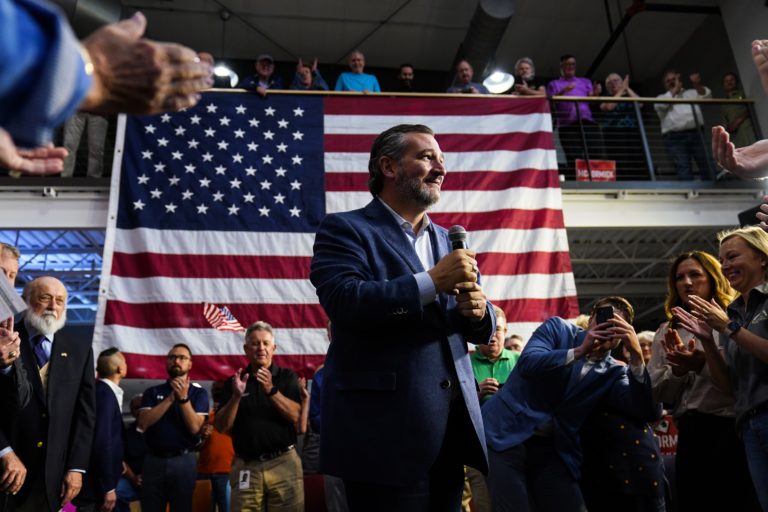
‘Ran the Fyre Festival of Campaigns’: Cruz Slams Kamala’s Presidential Run

(Julianna Frieman, Headline USA) Sen. Ted Cruz, R-Texas, called out the Harris campaign for outspending Republican President-elect Donald Trump by more than double on Wednesday’s episode of his podcast.

Cruz referenced an article in The Spectator World saying Vice President Kamala Harris “ran the Fyre Festival of campaigns” and slammed the vice president for losing with $20 million in debt.

“Kamala Harris ran the Fyre festival of campaigns, and it points out that Trump’s campaign spent roughly $488 million, and Kamala spent more than a billion,” Cruz said. “So, she outspent Trump more than two to one, and Kamala campaign ended up $20 million in debt.”

Cruz wondered where the money went.

Cruz noted that the Harris campaign spent a large sum of its money on celebrities, citing the vice president’s appearance on the Call Her Daddy podcast as an example.

The Harris campaign spent $1 million to turn a hotel into host Alex Cooper’s set, Cruz said, but the episode only received 800,000 downloads.

“Kamala right now, even though you’ve lost, Ben, and I will invite you on Verdict right now, we will welcome you,” Cruz said. “We will not charge you to build a set so you can save all your money. And you paid Oprah a million dollars for production costs, we will charge you for production costs on Verdict, what do you think 50 bucks?”

A TMZ reporter confronted TV icon Oprah Winfrey about the Washington Examiner’s report that Harris paid Winfrey’s production company $1 million for an endorsement, video released Monday shows.

She fumed before getting into her car, telling the reporter she “was paid nothing—ever.”

“Look, I’m a fiscal conservative, damn it. If you want to be there and you believe in saving the country, stand up and save the country,” Cruz said on Verdict. “And save the country, and if not, get the hell out.”

The Texas senator tore into Democrats who put “socialists” in elected positions to make it difficult for average Americans to get by.

“What is it with these lefties who, ironically, they want to put socialists in office who make it impossible for people to earn a living, and yet they’re such capitalists that they’re like, show me the money to do it,” Cruz said. “I mean, there is an intense hypocrisy on this.”

Julianna Frieman is a freelance writer published by the Daily Caller, Headline USA, The Federalist, and The American Spectator. Follow her on Twitter at @JuliannaFrieman.

Republicans Pick McConnell’s Right-Hand Man to Succeed Him in Senate Leadership

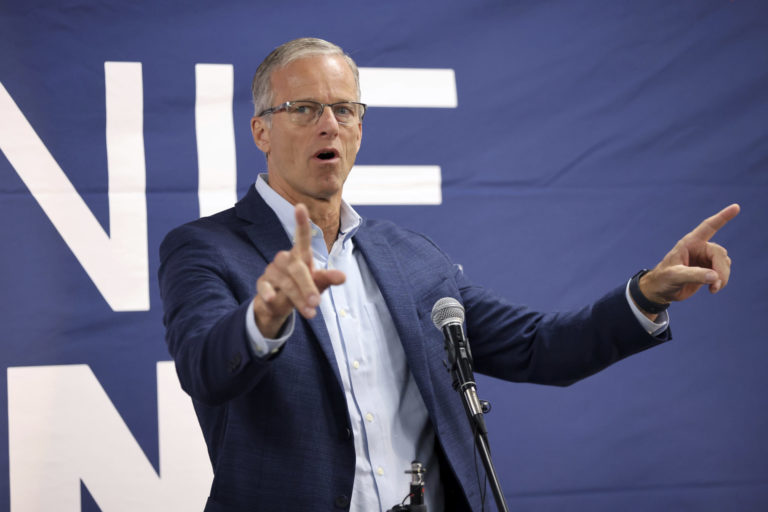
(Headline USA) Republicans have elected South Dakota Sen. John Thune as the next Senate majority leader, completing a momentous shift in their leadership that elevates a top deputy of Mitch McConnell into a key position as President-elect Donald Trump returns to the White House.

Thune, 63, has promised to work closely with Trump, despite differences the two have had over the years. The fourth-term senator will be a crucial part of the incoming president’s efforts to push through his policy agenda.

The two spoke on the phone shortly after Thune was elected, the senator posted on X Wednesday afternoon, adding that “Senate Republicans are excited and ready to get to work” with the incoming president.

Trump later congratulated Thune on his social media platform, Truth Social. “He moves quickly, and will do an outstanding job,” Trump wrote. “I look forward to working with him.”

Thune beat out two other competitors, Sens. John Cornyn of Texas and Rick Scott of Florida, by gaining majority support from GOP senators in two rounds of secret ballots behind closed doors.

Scott was eliminated on the first round and the final vote between Thune and Cornyn was 29-24, according to several people who requested anonymity to discuss the private meeting. Scott was seen as the closest ally to Trump, although is the multimillionaire hospital magnate is regarded as something of an eccentric, which may have cost him the loyalty of other Trump-backing lawmakers.

Cornyn has been vocally anti-Trump at times, drawing considerable backlash from the GOP core just a week after Trump’s landslide victory helped catapult Republicans back into the majority.

Republicans are replacing McConnell, the longest serving Senate party leader, as they prepare to take control of the Senate with the 53 seats they won in last week’s elections. It was the first competitive election for Republican leader in three decades and Senate Republicans’ first regime change since McConnell became GOP leader in 2007.

Thune’s election represents a major shift in the upper chamber’s GOP conference as many senators have been eager to move on from McConnell’s long and powerful reign. But it will also be a complicated test for Thune as he will have to manage a conference that is often divided over policy, navigate Trump’s demands of the legislative branch and secure policy wins for the president as he begins his second term.

“It is a new day in the United States Senate,” Thune told reporters immediately after he was elected. He said his majority will work to toughen border security laws, lower energy costs and overturn regulations they see as burdensome.

“We are excited to reclaim the majority and to get to work with our colleagues in the House to enact President Trump’s agenda,” Thune said.

As the candidates tried to win over individual senators, all of their pitches centered around how close they would be to Trump. That was a more difficult task for Cornyn and Thune, who broke publicly with the former president over his effort to challenge the dubious outcome of the 2020 presidential election and the Jan. 6, 2021 uprising at the Capitol. At the time, Thune called Trump’s actions “inexcusable.”

In recent months, though, Thune has worked to smooth over that relationship, visiting Trump at his Florida home and consulting with him on how to implement the incoming president’s agenda.

Thune told the Associated Press over the summer that he views their potential relationship as a professional one. If they both won their elections, Thune said then, “we’ve got a job to do.”

As he made his case, Thune has made clear that he will listen to Trump’s demands. When Trump posted on X Sunday that the new leader “must agree” to allow him to appoint Cabinet members and others when the Senate is on recess, avoiding confirmation votes, Thune quickly responded in a statement that the Senate must “quickly and decisively” act to get nominees in place and that “all options are on the table to make that happen, including recess appointments.”

Speaking to reporters after he was elected, Thune noted that “the Senate has an advise and consent rule in the Constitution” but that they will do everything they can to get his nominees in place.

“How that happens remains to be seen,” Thune said.

Thune’s win is all the more extraordinary because of his 2004 election to the Senate— defeating then-Senate Majority Leader Tom Daschle after arguing during the campaign that Daschle had lost his South Dakota roots during his years in Democratic leadership. Twenty years later, Thune will become majority leader himself.

Well liked and a respected communicator, Thune has been perceived as a front-runner for much of the year. Like McConnell, he hails from the Republican Party’s more traditional wing.

He is a former chairman of the Senate Commerce Committee and has held the Republican whip position—no. 2 in party leadership—since 2019. He took over for McConnell for several weeks last year when he was on a medical leave, a move that was widely seen as an audition of sorts as speculation surrounded McConnell’s future.

As he geared up to run for leader, Thune spent much of the year campaigning for his colleagues. According to his aides, he raised more than $31 million to elect Senate Republicans this cycle, including a $4 million transfer from his own campaign accounts to the Senate’s main campaign arm.

The election was difficult for many in the conference who saw Thune and Cornyn as similar choices. They are alike on policy, voting generally in step with the conference but working with Democrats at times. Cornyn is a longtime member of the Senate Judiciary Committee who took a leading role on controversial gun legislation two years ago.

But the two differed on whether the leader should be term limited—a key demand from some in the conservative wing. Cornyn pushed for limits, while Thune did not.

Scott, the former governor of Florida, was elected to the Senate in 2018 and quickly positioned himself as a foil to McConnell, running against him for leader in 2022 and aligning with Utah Sen. Mike Lee and others who have been highly critical of the current leadership.

As Thune and Cornyn wooed their colleagues one by one all year, Scott was tied up in his own reelection race. He handily defeated Democrat Debbie Mucarsel–Powell by more than 10 points.

In the week since the election, Scott aggressively stepped up his campaign for GOP leader, campaigning publicly as the candidate closest to Trump and winning endorsements from people who are close to the former and future president, such as billionaire Elon Musk. But some questioned whether that strategy might backfire.

South Dakota Sen. Mike Rounds, Thune’s home state colleague, said that he prefers the way that Thune and Cornyn have “handled it one-on-one with everybody,” but that he had talked to Scott as well. “We’ve got three qualified individuals,” he said ahead of the race.

Still, both Thune and Cornyn adopted some of Scott’s ideas as they worked to win over voters. Thune told the conference in a candidate forum Tuesday evening that he would allow more amendments on the floor and improve communication from McConnell’s regime, addressing frequent complaints from that wing of the conference.

McConnell did not say who he was supporting, but he said Thune’s victory was a “clear endorsement of a consummate leader” in a statement following the vote.

“The American people elected Republicans to restore stability and order after four years of Washington Democrats’ failure,” McConnell said. “John Thune will take the reins with a tremendous opportunity to lead this transformation, and Senate Republicans stand behind him, ready to get to work.”

Adapted from reporting by the Associated Press

Speaker Johnson Begins Fight for the House Gavel Promising to be Trump’s ‘Quarterback’

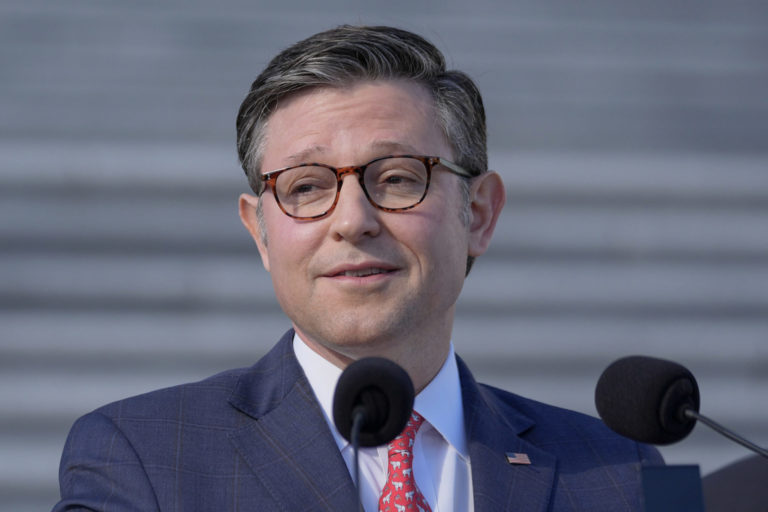
(Headline USA) Speaker Mike Johnson is beginning the hard fight for his gavel, a weeks-long campaign that starts Wednesday during internal House Republican leadership elections and will establish the new power centers in Congress for a Washington dominated by President-elect Donald Trump.

Johnson and his leadership team are all working behind the scenes to shore up support to stay on the job.

While Johnson has no serious challenger, he faces dissent within his ranks, particularly from hard-right conservatives and the Freedom Caucus withholding their votes as leverage to extract promises ahead.

The speaker is expected to host Trump ahead of voting, presenting a unified front.

“This leadership will hit the ground running to deliver President Trump’s agenda,” Johnson said Tuesday on the Capitol steps as lawmakers returned to Washington.

Johnson replaced ousted former speaker Kevin McCarthy more than a year ago and quickly set course by positioning himself alongside Trump and leading Republicans during the elections.

As Johnson tells it, Trump is the “coach” and he is the “quarterback” as their GOP team prepares to run the plays in the new year.

Johnson supported Trump’s plan of mass deportations, tax cuts, gutting the federal workforce and a more muscular U.S. image abroad.

Together they have been working on what the speaker calls an “ambitious” 100-days agenda hoping to avoid what he called the mistakes of Trump’s first term when Congress was unprepared and wasted “precious time.”

“We will be ready on day one,” Johnson said.

While Johnson expects to lead the House in unified government, with Trump in the White House and Republicans having seized the Senate majority, the House is expected to remain narrowly split, even as House control remains undecided with final races particularly in California still too early to call.

But the problems that come with a slim House majority and plagued Johnson’s first year as speaker when his own ranks routinely revolted over his plans are likely to spill into the new year, with a potential fresh round of chaotic governing.

Johnson needs just a simple majority in Wednesday’s closed-door voting to win the GOP nomination to become speaker.

But he will need majority support of the full House, 218 votes, to actually take hold of the gavel on Jan. 3, when the new Congress convenes and conducts the election for its speaker.

It took McCarthy some 15 rounds of voting in a weeklong election to win the gavel in 2023.

Trump has made Johnson’s problems more complicated by tapping House Republicans for his administration, reducing the numbers further.

Some Republicans want the House leadership elections postponed until control of the House is fully decided.

Still, with Trump in the White House, the speaker may enjoy a period of goodwill from his own ranks as Republicans are eager to disrupt the norms of governing and institutionalize Trump’s second-term agenda.

“His challenge is what it’s always been,” Rep. Ralph Norman, R-S.C., a member of the Freedom Caucus, said of Johnson.

But he said, “With Trump in charge, it’ll be easier for him to deliver.”

Conservatives have been discussing whether to field their own candidate as a signal to Johnson as they push their own priorities, using the same tactic they did with McCarthy to force the speaker into concessions, particularly on steeper budget cuts.

As Johnson begins the budget process for next year, including using a so-called budget reconciliation process that makes it easier in unified government to push Trump’s agenda through the House and Senate on simple majority votes, conservatives want him to load up those packages with their own policy priorities.

Democrats, who lent Johnson a hand at governing multiple times in Congress—supplying the votes needed to keep the federal government funded and turn back an effort by Rep. Marjorie Taylor Greene to bounce him from office—are unlikely to help him in the new year.

“Voters voted for them,” said Rep. Pramila Jayapal, D-Wash., the chair of the Congressional Progressive Caucus. “Let’s see what they do.”

It’s not just the speaker election Wednesday, but Republicans will also determine their down-ballot leadership.

Majority Leader Steve Scalise, also of Louisiana, and GOP Whip Tom Emmer of Minnesota, are expected to sail to their reelections in leadership.

The No. 4 position, the House GOP conference chair, is the most contested with Trump’s decision to tap Rep. Elise Stefanik of New York as his ambassador to the United Nations.

Her departure opens up the post that is being contested by several GOP lawmakers.

Adapted from reporting by the Associated Press

Trump Taps Gaetz for AG, Gabbard for Intelligence Director, and Rubio to Head State Dept.

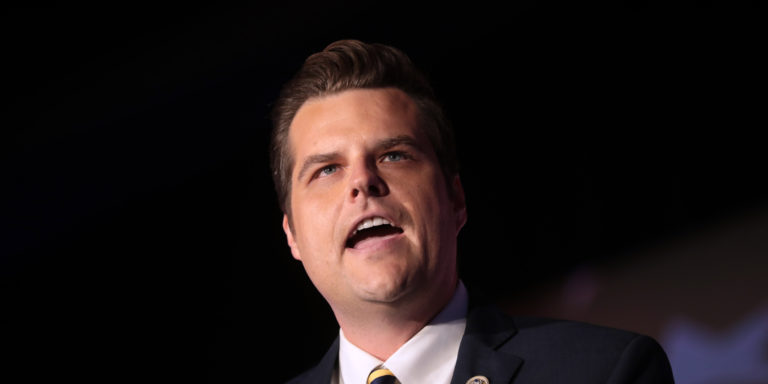
(Ken Silva, Headline USA) President-elect Donald Trump announced a trio of major appointments Wednesday: Rep. Matt Gaetz to serve as next Attorney General; former Rep. Tulsi Gabbard to be the next Director of National Intelligence; and Sen. Marco Rubio to head the State Department.

MAGA diehards expressed excitement for the first two picks, while criticizing Trump’s choice to go with Rubio.

Trump supporters expressed particular enthusiasm for the Gaetz pick, due in large part for his potential to expose government scandals, such as the role FBI informants and provocateurs played in the Jan. 6, 2021, Capitol Hill riot. For example, Gaetz revealed last year that the FBI’s Washington DC office refused to provide other field offices with Jan. 6 surveillance footage on the grounds that it could expose the identities of undercover agents and informants.

“Matt will end Weaponized Government, protect our Borders, dismantle Criminal Organizations and restore Americans’ badly shattered Faith and Confidence in the Justice Department,” Trump said in a statement.

Gabbard, too, has the potential to get to the bottom of government coverups, such as the U.S.-funded biolabs in Ukraine. In 2022, she said there are more than two-dozens bio labs conducting research on deadly pathogens in the midst of a war.

Gabbard would come to the role as somewhat of an outsider compared to her predecessor, Avril Haines who was confirmed by the Senate in 2021 following several years in top national security and intelligence positions.

Gabbard hasn’t worked directly in the intelligence community, though has served on House committees including two years on the Homeland Security Committee. Like others, she has been among Trump’s most popular political surrogates.

While the Gabbard and Gaetz picks were met with MAGA approval, that wasn’t the case with the next Secretary of State, Rubio.

Rubio detractors have noted that he supports funding the war in Ukraine, he supported Joe Biden in the wake of the 2020 election, and that his family has ties to drug dealing and criminal activity.

Observers expect Trump’s appointments to face resistance in the Senate confirmation process—especially with Gaetz, who has many enemies due to his controversial past and the fact that he led the ouster of former House Speaker Kevin McCarthy last year, among other reasons.

The Associated Press contributed to this report.

Ken Silva is a staff writer at Headline USA. Follow him at x.com/jd_cashless.

Partisan Judge Recuses Himself from Ariz. Lawfare Case after Equating Trump Allies to Nazis

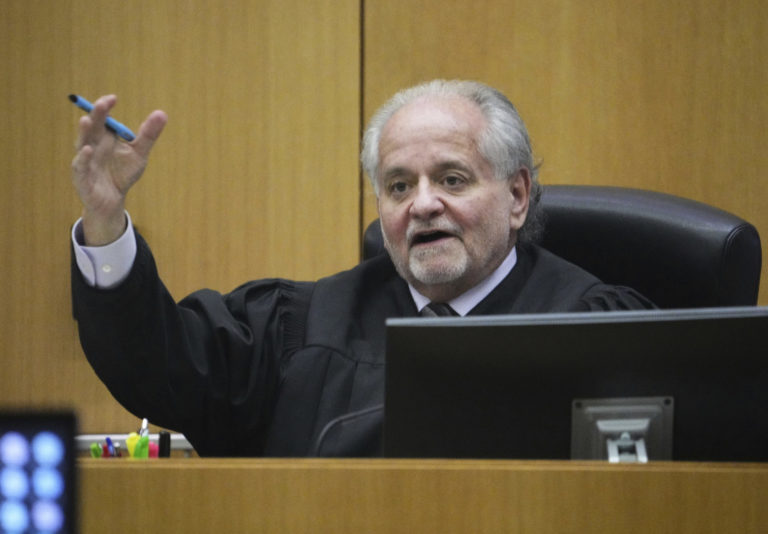
(Headline USA) A judge recused himself Tuesday from presiding over Arizona’s lawfare attack on alternate electors in the 2020 election after an email surfaced in which he told fellow judges to speak out against attacks on Democratic Vice President Kamala Harris’s campaign for the presidency.

In the Aug. 29 email, Maricopa County Judge Bruce Cohen lamented that he didn’t speak out when Harris was called a “DEI hire,” invoking the Holocaust to make his point while echoing the dangerous Nazi rhetoric of the Harris campaign.

Cohen didn’t specify who made the comment regarding Harris.

“We cannot allow our colleagues who identify as being a ‘person of color’ to stand alone when there are those [who] may claim that their ascension was an ‘equity hire’ rather than based solely upon exceptionalism,” the judge told his colleagues in the email.

Cohen later wrote another email telling his fellow judges that he let his passion cloud his views and apologized to anyone affected by his lapse in judgment in using an email forum for judges that was not appropriate for unsolicited comments.

Lawyers for Republican state Sen. Jake Hoffman, who faces nine felony charges in the case, sought the judge’s removal, arguing Cohen “bears a deep-seated personal political bias that overcame his professional judgment” and that their client has lost confidence in the judge’s impartiality.

Hoffman is one of 11 Republicans who submitted a document to Congress declaring that then-President Donald Trump won Arizona in the highly disputed 2020 election, which was then being contested in a series of court cases and, ultimately, an audit commissioned by the Arizona senate.

The victims of the lawfare attack, waged by George Soros-backed state Attorney General Kris Mayes, include the former state party chair, a 2022 U.S. Senate candidate and two sitting state lawmakers.

Two former Trump aides and five lawyers connected to Trump, including Rudy Giuliani, also were charged in the case. All 18 people were charged with charged with forgery, fraud and conspiracy.

“Given the statements the judge made, I think it’s appropriate that he recuse himself,” Arizona attorney Mark L. Williams, who is representing Giuliani, said after Cohen’s decision. “The way I see it, the case against Mr. Giuliani and the other defendants is falling apart and I think the attorney general should just wind down the case and dismiss it.”

A spokesperson for Mayes declined to comment on the judge’s recusal.

In a court record, Cohen said the original email was a stand for decency and didn’t reflect a personal bias, but he recognized that others may view it differently than he intended.

Cohen, who was appointed to the bench by Democratic Gov. Janet Napolitano in 2005, was scheduled to retire in January.

Most of the defendants had asked Cohen to throw out the charges under an Arizona law that bars using baseless legal actions in a bid to silence critics.

The law had long offered protections in civil cases but was amended in 2022 by the Republican-led Legislature to cover people facing most criminal charges after Mayes repeatedly sought to settle political scores by targeting Republican rivals.

Alternate electors have been used previously in disputed elections, including the 1960 election between John F. Kennedy and Richard Nixon, in which the votes in Hawaii were not yet finalized as the deadline for certifying the presidential race approached.

Cohen recused himself before deciding whether to dismiss the case, which will be assigned to another judge.

The defendants argued that Mayes tried to use the charges to silence them for their constitutionally protected speech about the 2020 election and actions taken in response to the race’s outcome. They say Mayes campaigned on investigating the electors and had shown a bias against Trump and his supporters.

Mayes’s office also has said the grand jury that brought the indictment wanted to consider charging Trump, but prosecutors urged them not to.

Two defendants have already resolved their cases.

Former Trump campaign attorney Jenna Ellis, who worked closely with Giuliani, signed a cooperation agreement with prosecutors that led to the dismissal of her charges. Republican activist Loraine Pellegrino also became the first person to be convicted in the Arizona case when she pleaded guilty to a misdemeanor charge and was sentenced to probation.

The remaining defendants have pleaded not guilty to the charges. Trump wasn’t charged in Arizona, but the indictment refers to him as an unindicted coconspirator.

Prosecutors in Michigan, Nevada, Georgia and Wisconsin also filed criminal charges related to the alternate electors slate.

Several of the cases against Trump are now being reviewed and under consideration for dismissal in light of the verdict last week from the American people, who overwhelmingly elected him back into the presidency.

Adapted from reporting by the Associated Press

WATCH: Officials Tell Congress That Pentagon Has Evidence of Alien Lifeforms

(Ken Silva, Headline USA) The House Oversight Committee returned to session Wednesday with a much-anticipated hearing on “Unidentified Anomalous Phenomena,” more commonly known as UFOs—with ex-Pentagon officials telling committee members that some UFO sightings include alien life. Skeptics are casting doubt on such claims.

“Let me be clear: UAP are real. Advanced technologies not made by our Government—or any other government—are monitoring sensitive military installations around the globe. Furthermore, the U.S. is in possession of UAP technologies, as are some of our adversaries,” former Defense Department official Luis Elizondo said Wednesday.

“I believe we are in the midst of a multi-decade, secretive arms race—one funded by misallocated taxpayer dollars and hidden from our elected representatives and oversight bodies.”

Elizondo was joined by Navy Rear Admiral (Ret.) Tim Gallaudet in is belief in alien UFOs. Former NASA official Michael Gold and public relations specialist Michael Shellenberger said they didn’t know whether such sightings included aliens.

Elizondo and Gallaudet’s claims were met with skepticism, including from Sean Kirkpatrick, who once led the Pentagon’s search for UFOs. Kirkpatrick said Gallaudet was bitter he didn’t hire him when he was the head of the All-Domain Anomaly Resolution Office, or AARO.

“Mr. Gallaudet is clearly still bitter that I didn’t hire him into AARO when he came looking for a job. His predisposed tendencies for conspiracies without evidence made him unsuitable for a job that required objectivity and evidence-based reason. I verified my decision with some of his previous bosses and peers,” Kirkpatrick said in a statement reported by journalist Steven Greenstreet.

Wednesday’s hearing comes more than a year after an initial UFO hearing in July 2023, when Retired Maj. David Grusch testified that the U.S. government has recovered “non-human” bodies from UFO crash sites. Grusch admitted that he has not seen direct evidence of these bodies—leading skeptics to scoff at the purported whistleblower’s claim.

According to Kirkpatrick, AARO has found no evidence of aliens or alien technology.

“During a full-scale, year-long investigation of this story (which has been told and retold by a small group of interconnected believers and others with possibly less than honest intentions—none of whom have firsthand accounts of any of this), AARO discovered a few things, and none were about aliens,” he said in January.

Kirkpatrick said he stepped down from his position last month because officials and members of Congress were ignoring his conclusions.

Ken Silva is a staff writer at Headline USA. Follow him at x.com/jd_cashless.