(Mike Maharrey, Money Metals News Service) It’s getting harder and harder to pretend the inflation problem isn’t a problem.
Last month, the markets and the mainstream media threw a party when the CPI data came in “cooler than expected.” CNBC led with this rosy summary. “U.S. stocks popped on Wednesday for their best day since November, on the back of the cooler-than-expected inflation reading.”
However, the actual CPI data told a different story. It was the same narrative we’d seen for several months – the inflation monster slithering back out from under the bed.
And the January inflation data was even more damning.
January CPI
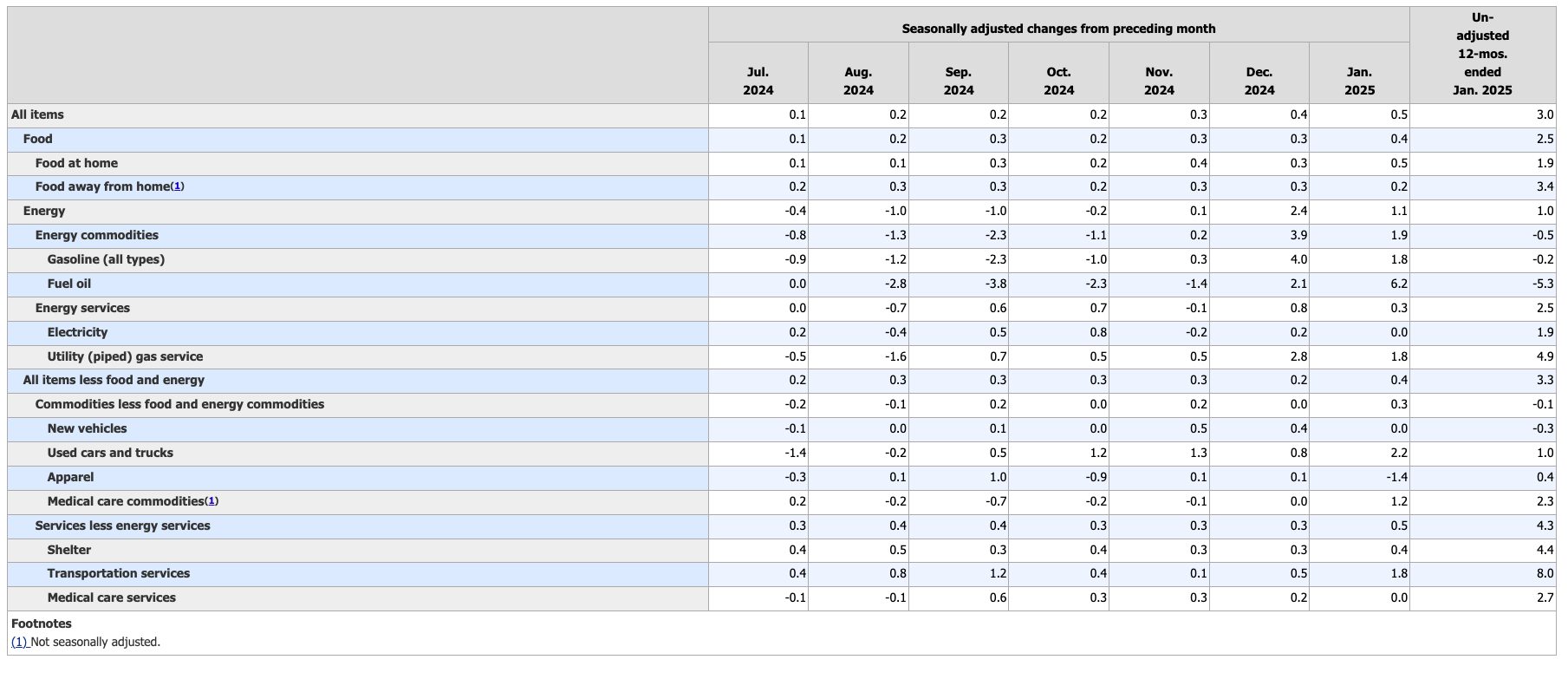
Prices rose 3 percent last month on an annual basis, the fourth straight increase in the headline CPI number. The CPI has crept up from 2.4 percent in September, 2.6 percent in October, 2.7 percent in November, and 2.9 percent in December.
The last time the CPI charted 3 percent was June 2024, and it was 3.1 percent in June 2023.
On a monthly basis, prices spiked by 0.5 percent. That came on the heels of a 0.4 percent increase in December. If you annualize the CPI over the last two months, it comes to 5.4 percent.
The “good news” last month was on the core inflation front.
That was short-lived
Coming off the encouraging 0.2 percent increase in December, core CPI stripping out more volatile food and energy prices surged by 0.4 percent in January. That pushed the annual core CPI to back up 3.3 percent. Core CPI has been mired in this range since last July.
Overall, the CPI data tells the same story it’s been telling for months: price inflation is stubbornly sticky.
And this time, the pundits and politicians can’t even gaslight you by claiming it was a good report because the numbers were “better than expected.” All of the January numbers were higher than forecast.
You don’t have to be an economist to understand that all of these numbers remain far above the Federal Reserve’s mythical 2 percent target.
Keep in mind that the CPI doesn’t tell the entire story of inflation. The government revised the CPI formula in the 1990s so that it understated the actual rise in prices. Based on the formula used in the 1970s, CPI is closer to double the official numbers. So, if the BLS was using the old formula, we’re looking at CPI closer to 6 percent. And using an honest formula, it would probably be worse than that.
Looking more closely at the data, we find that you paid more for virtually everything in January. The food index rose 0.5 percent month-on-month. Energy rose by 1.1 percent. Shelter was up 0.4 percent. Service costs spiked by 0.5 percent. The only category that declined was apparel.
Reaction to the January CPI
The hotter-than-expected CPI increased angst in the markets, as it further dashed hopes for more Federal Reserve interest rate cuts.
ClearBridge Investments investment strategy analyst Josh Jamner told CNBC he thinks this put “the final nail in the coffin for the rate cut cycle.”
“The ‘wait and see’ Fed is going to be waiting longer than anticipated after a red-hot January CPI inflation report.”
Market pricing pushed the timing of the next rate cut to at least September.
But while he was testifying on Capitol Hill, Federal Reserve Chairman Jerome Powell tried to keep hope alive.
“We don’t get excited about one or two good readings, and we don’t get excited about one or two bad readings.”
Of course, this is the same guy who swore price inflation was “transitory” before finally acknowledging the obvious and raising rates back in 2022.
On the other hand, the central bank needs to cut rates because the economy is addicted to easy money. Given the levels of debt and the amount of malinvestment, the economy can’t function in this higher interest rate environment. It needs its easy money drug.
How Powell & Company will navigate this remains to be seen, but they certainly can’t simultaneously raise and lower interest rates.
And it’s getting harder and harder to simply sweep the inflation problem under the rug.
Mike Maharrey is a journalist and market analyst for MoneyMetals.com with over a decade of experience in precious metals. He holds a BS in accounting from the University of Kentucky and a BA in journalism from the University of South Florida.
(Money Metals News Service) Gold prices have once again shattered records, reaching $2,900 per ounce for the first time in history, as demand for the yellow metal continues to surge worldwide.
According to Mike Maharrey, host of the Money Metals Midweek Memo podcast, 2024 has already seen 40 record-high gold prices, underscoring the growing importance of gold as a hedge against economic instability and currency devaluation.
Super Bowl and the Price of Silver
While many tuned in to the Super Bowl, Maharrey skipped the game but found a precious metals-related tidbit worth mentioning. The iconic Lombardi Trophy contains approximately 93.5 troy ounces of silver.
At Monday morning’s silver price following the game, the trophy’s melt value stood at $2,990, a significant increase from $2,111 at last year’s Super Bowl—highlighting silver’s upward trajectory despite its perceived underperformance in 2023.
The Demise of the Penny: A Lesson in Inflation
President Trump recently announced an order to halt the minting of the U.S. penny, further demonstrating the effects of inflation on currency. The purchasing power of the dollar has eroded so much that the cost to produce a penny far exceeds its face value.
According to Maharrey, prices have risen 73% since 1970, making the once-ubiquitous penny almost irrelevant in everyday transactions.
Central Banks Driving Record Gold Demand
Total global gold demand in 2024 reached a record-breaking 4,974 tons, surpassing the previous year by 1%. This spike, valued at $382 billion, was largely driven by central banks, which added over 1,000 tons of gold to their reserves for the third consecutive year.
For context, between 2010 and 2021, central banks increased their gold holdings by an average of 473 tons per year. The latest 1,044.6-ton increase is more than double that figure, marking the 15th consecutive year of expanding reserves.
The National Bank of Poland led the charge, adding 90 tons to its reserves.
Turkey and India ranked second and third, respectively.
China, despite reporting no purchases for six months, was the fourth-largest gold buyer, later disclosing that it had secretly purchased 100 tons in just October and November.
Maharrey suggests that these aggressive gold purchases stem from a growing distrust of the U.S. dollar, particularly after the U.S. and its allies froze Russia out of the SWIFT financial system following the Ukraine invasion. Countries worldwide appear to be preparing for a financial system less dependent on the dollar.
Investment Gold Demand Hits Four-Year High
Investment in gold surged 25% year-over-year, reaching 179.5 tons—a four-year high. The majority of this demand came from Asian markets, where physical gold purchases remain a cultural and financial mainstay.
Bar sales rose 10%, while coin sales fell 31%, reflecting a shift toward larger gold investments.
Indian gold bar and coin demand surged 29%, partly due to a tax cut in July.
Chinese gold investment demand climbed 20%, hitting its highest level in a decade.
Conversely, in the U.S. and Europe, demand slumped by 33%, signaling Western investors’ tepid interest in gold, despite its record-setting performance.
Maharrey finds this discrepancy striking. While gold reached 40 record highs in 2024, Western investors have remained largely on the sidelines. If demand from the West returns alongside strong Eastern demand, gold prices could see another significant surge.
Jewelry Demand Drops, but Spending Increases
Global jewelry demand declined 11% in volume terms to 1,877 tons, primarily due to soaring gold prices. However, total spending on gold jewelry rose 9% to $44 billion, indicating that consumers are buying less but paying more.
Chinese jewelry demand plummeted 24%, ceding the top jewelry market spot to India for the second time in three years.
Indian demand fell by just 2%, bolstered by strong third-quarter purchases, coinciding with the government’s gold tax reduction.
In the U.S., jewelry demand hit a five-year low, yet total spending reached a record $10 billion due to higher gold prices.
Notably, in markets like India and China, gold jewelry is viewed not only as a fashion item but also as a form of financial security, given its high-purity 24-karat content.
Technology and Industrial Demand See Growth
While a smaller segment of the market, technology-related gold demand rose 7% to 326.7 tons, with computing and AI-related industries driving growth. The surge in AI technology has increased the demand for precious metals in electronic components, benefiting both gold and silver.
What’s Next for Gold?
Maharrey predicts that central bank gold buying will remain strong, particularly among countries seeking to minimize their exposure to the U.S. dollar.
While Western investors have yet to fully engage in this gold bull market, early signs in January 2025 indicate that European ETFs saw their first net gold inflows in months—potentially signaling a shift in sentiment.
With the U.S. national debt surpassing $36 trillion, and interest payments exceeding $1 trillion per year, concerns over fiscal sustainability are growing. Maharrey argues that Western investors will eventually wake up to gold’s importance in wealth preservation, especially as economic pressures mount.
Final Thoughts: Time to Buy?
Despite gold’s strong performance, Maharrey believes it’s still a good time to enter the market. He emphasizes that waiting for a correction might not be wise, given the macroeconomic factors at play.
For those concerned about affordability, Money Metals Exchange offers a monthly installment plan, allowing investors to gradually build their precious metals portfolio at a discounted rate. You can also call directly: 1-800-800-1865.
As the global financial landscape continues to shift, gold remains a trusted hedge against uncertainty, currency devaluation, and economic turbulence. If 2024’s record-breaking trends are any indication, the yellow metal may still have plenty of room to run.
(Ken Silva, Headline USA) The Justice Department notified the court Wednesday that it intends to intends to keep classified information secret in the case of Ryan Routh, the man accused of attempting to assassinate Donald Trump on his Florida golf course last September.
The DOJ said in a Wednesday court filing that it intends to exercise Section 4 of the Classified Information Procedures Act, which allows the U.S. government to keep state secrets just that: secret—even if it negatively impacts the rights of a defendant.
Indeed, Section 4 of the CIPA “authorizes federal district courts to deny, or otherwise restrict, discovery of classified documents and information,” according to the DOJ. Instead of having to provide a defendant with access to the actual classified evidence, the DOJ is allowed to summarize such evidence under Section 4 of CIPA. The DOJ signaled Wednesday that it intends to do that with Routh.
NEW: The DOJ said in a Wednesday court filing that it intends to keep evidence secret in its case against alleged would-be Trump assassin Ryan Routh. Section 4 of the CIPA “authorizes federal district courts to deny, or otherwise restrict, discovery of classified documents and… pic.twitter.com/nSbMVqYoRu
“The defendant is charged with attempting to assassinate a then major presidential candidate and now President Donald J. Trump,” the DOJ said Wednesday.
“Due to the nature of the charges, the United States anticipates the need to file a motion for a protective order, ex parte, in camera, and under seal, pursuant to Section 4 of CIPA. That ex parte, in camera, under seal motion would refer to, relate to, or otherwise involve classified information.”
The DOJ’s Wednesday filing also nominated one of its lawyers, Daniella M. Medel, to serve as the classified information officer to review Routh’s discovery and decide what should be protected under CIPA.
The DOJ didn’t signal what evidence could be classified in Routh’s case, but it could pertain to his travels to Ukraine and connections to the U.S. intelligence community. Routh was recruiting fighters to go to Ukraine up to within days of his alleged Sept. 15 assassination attempt.
Routh is set to stand trial in September. His case is at least the second Trump assassination case to involve classified information.
In December, the DOJ filed a similar motion to keep classified information secret in the case of Asif Merchant, the Pakistani man who allegedly tried hiring two hitmen in an Iranian-sponsored assassination plot against Trump.
🚨IMPORANT: The DOJ has signaled that it will exercise its "state secrets privilege" to suppress evidence in the case of Asif Merchant, the the Pakistani who tried hiring 2 undercover FBI agents in the so-called Iran assassination plot against Donald Trump.
As Headline USA has detailed, the notion that Iran conspired to assassinate Trump is highly dubious. In the Merchant case, the two hitmen he attempted to hire were undercover FBI agents introduced to him by one of their informants. Merchant appears to have been an unwitting dupe in an FBI sting operation.
However, the evidence that would prove whether Merchant was a legitimate assassin or an FBI patsy may never see the light of day, thanks to CIPA.
Ken Silva is a staff writer at Headline USA. Follow him at x.com/jd_cashless.
(Luis Cornelio, Headline USA) A group of inspectors general fired by President Donald Trump want American taxpayers to keep funding their salaries—seemingly until they say otherwise.
Like clockwork, eight of the 18 ousted bureaucrats have asked a federal judge in liberal-friendly Washington, D.C. to reinstate them, claiming Trump broke the law by terminating their taxpayer-funded employment.
The IGs argue, without evidence, that Trump was required to notify Congress before removing them, insisting they are shielded from what they described as political interference and retribution. If the head of the executive branch lacks authority over them, it is unclear who does.
The IGs suing for reinstatement include Hannibal Ware (Small Business Administration), Phyllis Fong (Department of Agriculture), Robert Storch (Defense Department), Michael Missal (Veterans Affairs), Christi Grimm (Health and Human Services), Cardell Richardson (State Department), Sandra Bruce (Education Department), and Larry Turner (Department of Labor).
Trump dismissed them within days of taking office, allegedly sending termination notices via emails titled “White House Notification,” according to liberal outlet CNN.
Their access to government computers and offices was swiftly revoked as part of Trump’s efforts to reform the federal government in his second term.
The IGs disagreed, with their attorneys writing that their “purported removals were legal nullities, and so they remain the duly appointed IGs of their respective agencies, unless and until the President lawfully removes them in compliance.”
According to their lawsuit, the Trump administration’s “actions have inflicted substantial damage on the critical oversight ethos of transparency, truth-telling without fear or favor, and respect for the rule of law.”
The lawsuit added, “Plaintiffs’ integrity has been baselessly maligned publicly, with the abrupt and unlawful nature of their purported removals incorrectly implying that plaintiffs have done something wrong when in fact they have each done nothing but uphold the values of their positions and the IG community.”
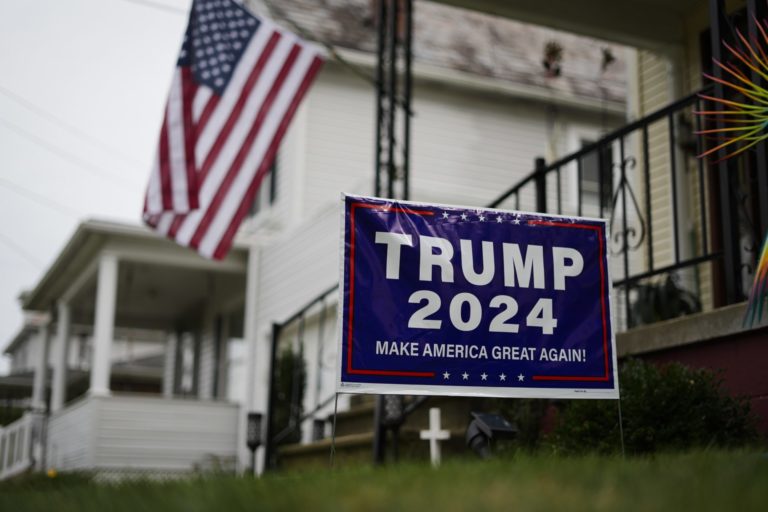
(Luis Cornelio, Headline USA) The ousted FEMA supervisor who ordered first responders to bypass Florida homes displaying signs in favor of President Donald Trump blatantly engaged in unlawful partisan activity at taxpayers’ expense, the U.S. Office of Special Counsel determined on Tuesday.
OSC found that Marn’i Washington, a Biden-era FEMA official, violated the Hatch Act when she unilaterally prohibited her staff from providing aid to homes with pro-MAGA signs after Hurricane Milton struck the Sunshine State in October 2024.
The Hatch Act bans federal workers from engaging in partisan activities on taxpayers’ dime. The federal watchdog agency filed a Hatch Act complaint with the U.S. Merit Systems Protection Board, seeking disciplinary action against Washington, who was fired after her misconduct was exposed.
“One of Congress’s goals in passing the Hatch Act was to ensure that government programs are administered in a nonpartisan manner,” Special Counsel Hampton Dellinger said in a press statement reviewed by Headline USA.
The OSC said Washington “violated the Hatch Act by instructing subordinates to avoid homes with certain campaign signs.”
It further clarified that a “federal employee clearly violates the Hatch Act by engaging in explicit partisan political bias or activity when on the job.”
Despite this, she was the only individual the Biden administration fired for the incident.
“Firstly, I’m being framed,” Washington insisted during an interview on NewsNation. “There’s no violation of the Hatch Act. I was simply following orders.”
She further justified her actions by citing “safety precautions,” claiming MAGA-supporting homes were more likely to attack federal agents when offered assistance. Neither FEMA nor Washington provided concrete evidence to support these assertions.
“It just so happened that, unfortunately, most of the hostile encounters, those running trends, did have those campaign signs,” Washington alleged.
She added, “So again, it’s a collective effort in order for everyone to feel comfortable, in order to render the servitude. I don’t have a horse in that race. My orders come from my superior, and I simply just execute.”
FEMA supervisor Marn'i Washington was fired last week after she allegedly told relief workers to avoid homes with Trump signs… but now she says being scapegoated! She joins Dan to discuss it all. pic.twitter.com/Xn94K56MMQ
In earlier interviews, Washington dismissed accusations of political bias, declaring the claims baseless because she was no fan of then-Vice President Kamala Harris, the Democratic presidential candidate who ultimately lost the election to Trump.
In response to the backlash, then-FEMA Administrator Deanne Criswell placed all blame on Washington.
“This is a clear violation of FEMA’s core values and principles to help people regardless of their political affiliation. This was reprehensible,” Criswell declared in a statement.
“I want to be clear to all of my employees and the American people, this type of behavior and action will not be tolerated at FEMA and we will hold people accountable if they violate these standards of conduct,” Criswell continued. She resigned on Jan. 20, 2025.
It has been an honor serving as @FEMA Administrator for nearly four years. The FEMA family takes immense pride in our mission of helping people before, during and after disasters. I know the agency will continue to serve the nation as we support this peaceful transition of power.
The order will require federal agencies to work with DOGE to significantly reduce their labor force.
A White House fact sheet, first reported by Semafor, says the order requires agencies hire “no more than one employee for every four employees” that are fired, with some exceptions, including for public safety and law enforcement.
DOGE and Musk have dominated the news cycle since Trump took office by exposing an onslaught of controversial federal spending, most notably as USAID, an agency that has been all but destroyed since Trump took office.
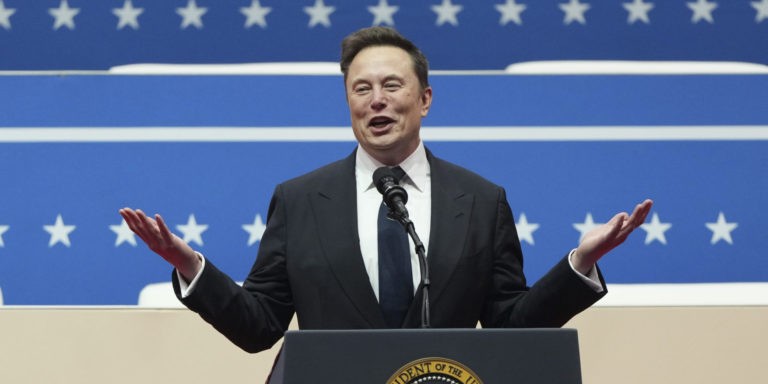
While with his young son Lil X, Musk spoke to reporters about DOGE’s efforts to instill what he calls “common sense controls” on federal spending.
“If the people cannot vote and have their will be decided by their elected representatives, by the form of the President, the Senate, and the House, then we don’t live in a democracy,” Musk said. “We live in a bureaucracy.”
The national debt is on track to hit $37 trillion this year, and interest payments on the debt are now one of the largest federal expenses.
Trump touted the cuts to corruption and “kickbacks” in the government when speaking to reporters.
“The public gets it,” Trump said.
Musk responded to criticisms that the agency cuts are a “hostile takeover.”
“The people voted for major government reform and that’s what the people are going to get,” Musk said. “That’s what democracy is all about.”
(Morgan Sweeney, The Center Square) President Donald Trump announced Tuesday in a post online that he’s issuing more executive orders, adding to his already historic tally.
“I am hereby instructing Secretary Lee Zeldin to immediately go back to my Environmental Orders, which were terminated by Crooked Joe Biden, on Water Standards and Flow pertaining to SINKS, SHOWERS, TOILETS, WASHING MACHINES, DISHWASHERS, etc.,” Trump posted Tuesday morning, “and to likewise go back to the common sense standards on LIGHTBULBS, that were put in place by the Trump administration, but terminated by Crooked Joe. I look forward to signing these Orders. THANK YOU!!!”
The previous Trump administration reinterpreted some water conservation law and circumvented other federal rules by creating new product categories, loosening water restrictions for the fixtures and appliances he mentioned.
He also enabled a return to incandescent light bulbs after LED bulbs had become the primary bulb on the market due to federal energy efficiency standards.
These are part of a handful of actions taken within the past few days concerning government environmental practice and policy. Last week, the administration placed about 170 workers from the U.S. Environmental Protection Agency’s environmental justice office on administrative leave, announcing plans to shutter the office.
Trump signed an executive order Monday removing the ban on plastic straws within the federal government, saying paper ones don’t work.
EPA Administrator Zeldin posted to X on Tuesday afternoon that the EPA was cancelling its subscriptions with Politico to save taxpayer dollars.
“EPA will not be renewing our membership with Politico and Politico E&E, saving the American taxpayers $458,919 per year,” Zeldin wrote.
With more than 50 executive orders issued in Trump’s first 23 days of office, there aren’t many policy areas that remain untouched. His orders have altered immigration and energy policy, created a new government efficiency department, withdrawn federal funds from transgender initiatives, terminated all diversity, equity and inclusion programs within the federal government, backed federal capital punishment and attempted to “[restore] freedom of speech.”
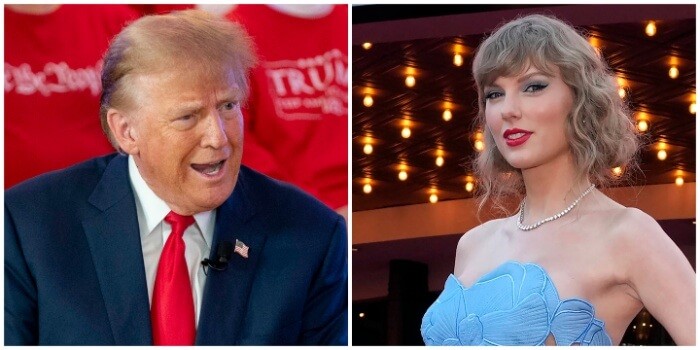
The leftist article was titled “Why Taylor Swift Getting Booed at the Super Bowl was Even More Chilling Than You Think” and proceed to try to claim there has been an increase in “misogyny” since Trump took office.
The senior editor for the outlet, Stephanie McNeal, attended the sporting event and outlined her opinion of the day.
“Since Donald Trump took office, there have been several times I felt chilled by the rapid increase in misogyny seeping in our culture,” McNeal wrote. “But watching Taylor Swift at Super Bowl LIX booed by a crowd of thousands on Sunday night was a new low.”
McNeal continued to attempt to use the rhetoric of there being “toxic masculinity” in the country.
She claimed “the country, has been reclaimed by Trump and the type of toxic masculinity he appears to be the beacon of.”
Trump received thunderous applause while he was shown on the Jumbotron during the national anthem.
Social media users quickly pounced on the article.
Fox News host Sean Hannity blasted the story with just one word, “PATHETIC.”
PATHETIC: Glamour Magazine Blames Trump and Misogyny for Reason Fans Booed Taylor Swift https://t.co/jaynS5r9aC
McNeal also took issue with Trump commenting on Swift getting booed on Truth Social.
“The only one that had a tougher night than the Kansas City Chiefs was Taylor Swift,” Trump wrote. “She got BOOED out of the Stadium. MAGA is very unforgiving!”
(Ben Sellers, Headline USA) While the work of Headline USA continues to bring honest information from a perspective that seeks actively to counter or debunk mainstream-media bias, this week I am formally announcing my “retirement” after six-plus years at the website, more than half of which I spent as its editor-in-chief.
Our star reporter, Ken Silva, will assume that mantle and bring his own vision to both the content and business aspects that we hope will help further to elevate Headline USA to prominence in an ever-growing field of conservative-friendly media where we find many friends, allies and role models, as well as competitors and copycats.
My journey here has been a deeply fulfilling experience—yet, having made my mark and (in the spirit of Sunday’s Super Bowl) driven the ball as far downfield as I can, it is time to pass it to a trusted teammate.
Nonetheless, I do so with the comfort of knowing that many of the wrongs I sought to right have ended in vindication—or, at least, they soon will due to Trump 2.0: a more savvy political machine than the original that now boasts the resources, infrastructure and mandate to drain the Swamp, hold the Deep State accountable and set the United States on a much needed course correction.
As for me, I will return to my nonpartisan roots as the executive director of an up-and-coming nonprofit organization that seeks to promote ideological diversity and free speech in higher education. But with Elon Musk’sDepartment of Government Efficiency having recently put the shadowy CIA piggybank USAID in its crosshairs, it is worthwhile to reflect back on why and how my foray into political journalism first began.
IMBALANCE OF POWER
The early stages of my journalism career, for the most part, involved feature stories and entertainment coverage, but there were a few rare moments when I was thrust into the political arena.
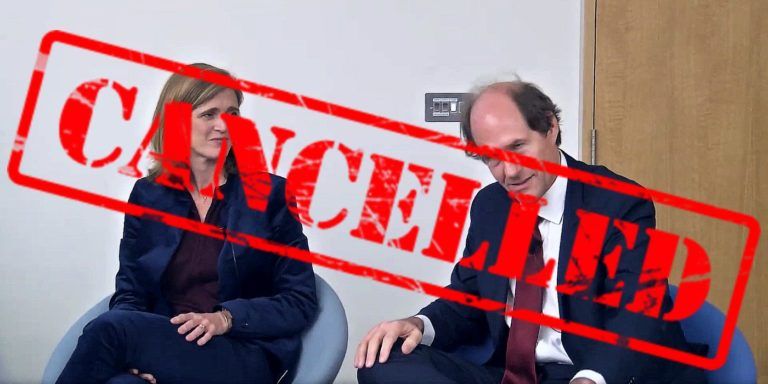
One of those was a February 2008 speech by Obama surrogates Samantha Power and Cass Sunstein that was hosted by the University of Mary Washington. I had the misfortune of being the “weekend duty” reporter (a task all newsroom reporters were assigned to in a regular rotation), although I probably welcomed the change of pace from my usual fare of trying to make local musicians seem like the “next big thing.”
At the time, Sen. Barack Obama, D-Ill., was locked in a nasty primary brawl with Sen. Hillary Clinton, D-N.Y. However, I correctly assumed that the two speakers that day were on a trajectory to becoming major political players—even if it would be another 17 years before my brush with infamy became fully realized.
Sunstein was a colleague of Obama’s at the University of Chicago law school whose claim to fame was promoting the idea of an “availability cascade” to effect radical change incrementally. His brand of political opportunism is not unlike what has been referred to as the “Overton window,” although in Sunstein’s view, it can—and should—be deliberately engineered, applying a Marxist “ends justifies the means” lens rather than waiting for drastic shifts in public policy to happen organically.
All three would go on to wield immense influence during the Biden administration (although it remains unclear exactly who was running what), despite never having been elected or confirmed by the U.S. Senate. In fact, Biden specifically crafted a new role for Rice (setting a precedent that President Donald Trump would follow with Musk and “border czar” Tom Homan) in order to circumvent what was likely to be an uphill battle for confirmation in an evenly-split Senate.
ROAD TO NOWHERE
Power and Sunstein—two lofty academics who also happened to be lovebirds—callously left their audience, mostly comprising faithful student volunteers for the Obama campaign, waiting for at least an hour past the event’s start time. They claimed to have been lost on the rural backroads, but for some reason that excuse rang hollow.
When they finally arrived, the two tried to paint their candidate as both a moderate populist and an erudite policy wonk.
“His sweet spot—his area of greatest comfort and security—is foreign policy,” Power claimed of Obama.
“That’s his pleasure reading at Christmastime,” she added, perhaps insinuating that the candidate who faced growing scrutiny for his association with firebrand religious leader Jeremiah Wright—and who was being clandestinely slandered as a Muslim by Clinton’s campaign—was curled by the fire partaking in some relatable yuletide R&R.
I was determined not to let my own disdain show in my writing, committed to the principle that journalists had an ethical obligation to remain neutral and objective. (As a side note, spurred by Rush Limbaugh’s “Operation Chaos,” I had registered for Virginia’s Democratic primary that year to cast my vote for Hillary Clinton, against the more dangerous and unknown threat posed by Obama—but to no avail.)
Between the long wait that undoubtedly left me fighting a tight deadline and the need to remain as sparse as possible or risk conveying my true opinions, my final product clocked in at fewer than 200 words—shorter than some of the sentences I may have written when my loquacious tendencies get the better of me.
UNEASY RIDER
For the next eight months, I went back to my culture and music beat, snagging interviews with country stars like Charlie Daniels and Trace Adkins in between the bread-and-butter profiles of local musicians.
“I like you, boy, you’re different,” Daniels told me, which I wore as a badge of honor. The “Long Haired Country Boy” singer—a one-time counterculture icon who had played at the 1977 inauguration of President Jimmy Carter—had become an outspoken critic of the Obama campaign and would continue speaking out on conservative issues until his death in 2020.
The month before the November 2008 election, with Obama already appearing to be the inevitable victor over GOP placeholder John McCain, the economy crashed, paving the way for what was then considered a massive spurt of bailout funding alongside a newly elected Democrat supermajority in Congress.
Although pitched as a stimulus infusion to help mitigate the impacts of the Great Recession, it was a blank check, basically, for Obama to implement a quasi-socialist agenda, with few of his “shovel ready” projects ever seeing the light of day.
Two years later, the impacts of lost advertising dollars caught up with local newspapers, and my career as a features writer at a legacy local media outlet came to a halt.
UNMASKED AND UNHINGED
I spent the next decade as a classroom teacher, trying to promote those same values of objectivity and newsroom ethics that had been impressed upon me to the next generation of journalists. But with the election of Donald Trump, the entire veneer of media objectivity was abruptly dismantled.
Already, Wikileaks had exposed so-called journalists like Glenn Thrush, who was caught actively colluding with the Clinton campaign to vet his stories ahead of publication at Politico.
Thrush faced no consequences to speak of. Instead, just two months later, in December 2016, he was hired by the New York Times.
Little unnerving — but fascinating to be in the middle of a ginned-up, self-serving shit-storm pushed by fake, in-the-bag partisan media.
Rather than attempting paltry, half-hearted excuses for their failures to live up to the time-honored standards, newsrooms like the New York Times, CNN and many others began offering full-throated justifications for their lopsided coverage, insisting that it would be irresponsible to “normalize” Trump.
I realized then that my mission had been redefined. I had a moral duty to challenge the media malpractice and propaganda—much of which clearly seemed to have been sourced by operatives within the D.C. intelligence community—not by urging neutrality, but by fighting back in kind.
In 2018, I undertook yet another career switch, joining the ranks of the nascent conservative-media movement for Liberty Headlines, the precursor to Headline USA.
On a personal level, the job has given me the opportunity to experience firsthand the sort of brushes with history and greatness that I might only have dreamed of in my early days as a newsroom reporter, including several front-row seats to see President Donald Trump speak from the “press pen.”
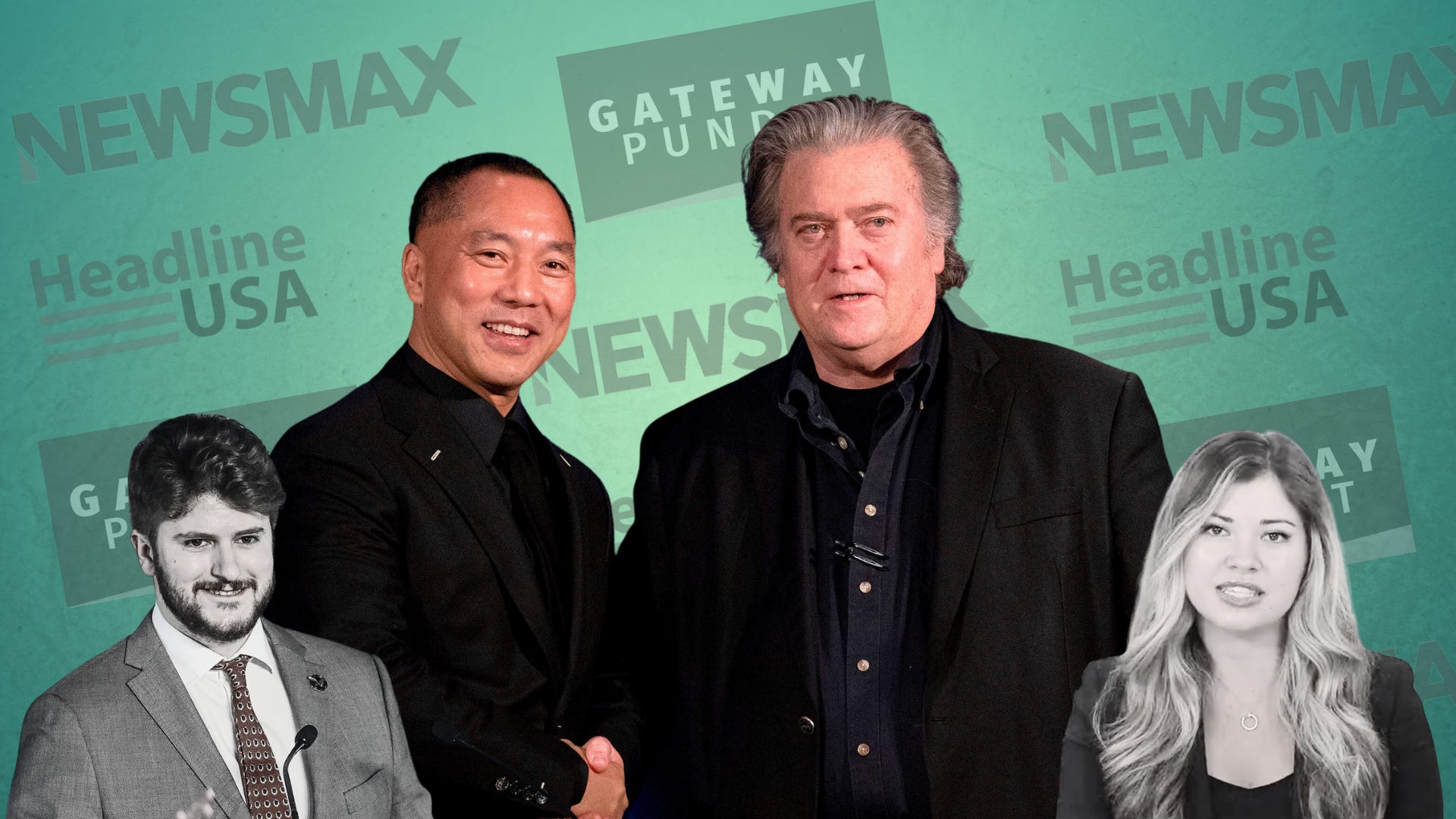
A graphic used by left-wing propaganda site Important Context shows Headline USA’s logo in good company with the Gateway Pundit, Newsmax, and Real America’s Voice stars Steve Bannon and Natalie Winters.
But even as we flourished, the country itself languished under the deep state’s boot. In the years that followed, the mainstream media outlook only grew bleaker as the lies grew bolder and more brazen.
It relied on a “cabal” of activist organizations, lawfare operatives, media, corporations and public institutions to wage a de-facto domestic color revolution, similar to those supported by the CIA in foreign nations whose interests were misaligned with U.S. global objectives.
The secret history of the shadow campaign that saved the 2020 electionhttps://t.co/xG3S60cP2L
The concept was not altogether unfamiliar, since the same tactics had reportedly been used on Ukraine in 2014, as the Obama administration sought to wrest control of the former Soviet nation—strategically important for both energy and food supplies (as well as other things)—from the Kremlin.
As it turned out, then-Vice President Joe Biden had been appointed to oversee the U.S. relations with the new puppet government, and had taken full advantage of the situation to cash in for his own personal gain.
But the subsequent efforts by Trump to force an investigation into those allegations of corruption were instead weaponized into a highly contrived impeachment proceeding against him—the first of many attempts to use the sacred institutions of justice prescribed by the U.S. Constitution and rule of law as political bludgeons against Trump and fellow Republicans.
With each failed attempt to lay cover for the Biden administration, mainstream media expended more and more credibility, until finally its influence over the public at large had dwindled to nothing when trying to sell the pop-up Kamala Harris campaign in 2024.
A KEY DISCOVERY
There is no guarantee that another pendulum swing won’t reverse all of the efforts to weed out the anti-democratic influences that threatened to turn the United States into a banana republic.
But so far, the actions taken by Trump, Musk and a bipartisan coalition of “Avengers” (including former Democrats like Tulsi Gabbard and Robert F. Kennedy Jr.) have been encouraging.
The Best Trump's Avengers MAGA Poster Yet. I hope the creator (not me) gets credit! pic.twitter.com/4FxHhcF0sv
Although activist judges are forcing a protracted legal battle over the defunding of government agencies where fraud is suspected of running rampant, the evidence is mounting everywhere to reveal the scope of the abuses—not to mention the trail of breadcrumbs that links them all together.
USAID was the Skelton key to unlocking all of the corruption. I’ve never seen Democrats so outraged about anything.
At the heart of it all, it seems, was the United States Agency for International Development. Not only was USAID shoveling billions toward egregious examples of government waste throughout the globe, but also looks to have been linked to many of the extralegal operations in geopolitical hotspots, providing the groundwork for covert missions by the CIA and other government agencies engaged in nation-building.
A lot of people, and by that I mean absolutely no one, have asked me, “What exactly is this USAID I keep hearing about?”
And this video breaks it down. Learn how billions of American dollars have been used to influence other counties.
Brazenly stonewalling any attempts at oversight or accountability
CLEAR ROAD AHEAD
With evidence newly in hand, lawmakers are likely to demand a clear account from the person who oversaw the USAID program during the Biden administration—none other than Samantha Power.
.@RandPaul Asks Samantha Power: 'Did USAID Fund Coronavirus Research In Wuhan China?'
"Should we be funding the Academy of Military Medical Research in China? …Some of the research proposals in 2018 were the Wuhan Insitute of Virology asking for money to create a virus with a… pic.twitter.com/SZ53PzWKnq
This time, however, Power won’t be able to blame the rural backroads of Virginia for giving investigators the runaround since all they have to do is follow the money—to borrow a phrase from a once-lionized Watergate “whistleblower.”
At the end of the day, even “Deep Throat” turned out to be nothing more than an ambitiously seditious FBI spook, quite possibly engaged in a massive coverup and using the very institution that was supposed to be providing checks against government corruption, the “free press,” as his weapon of choice.
Perhaps DOGE can correct the historical record once and for all. But, for now, my work here is done.
Ben Sellers is the editor emeritus of Headline USA. Follow him atx.com/realbensellers.
(Maire Clayton, Headline USA) The Associated Press was angry after a reporter was blocked from the Oval Office Tuesday after the outlet refused to update its style guidelines.
AP’s Executive Editor Julie Pace expressed her disappointment with the outlet not being allowed.
“It is alarming that the Trump administration would punish AP for its independent journalism,” Pace said in a statement. “Limiting our access to the Oval Office based on the content of AP’s speech not only severely impedes the public’s access to independent news, it plainly violates the First Amendment.”
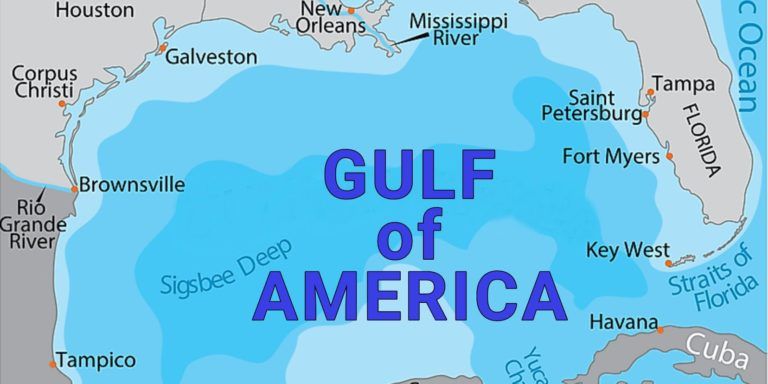
The statement included a link to when the outlet originally announced it would not be following President Donald Trump’s executive order to rename the Gulf of Mexico to the Gulf of America.
“The Gulf of Mexico has carried that name for more than 400 years. The Associated Press will refer to it by its original name while acknowledging the new name Trump has chosen,” AP noted. “As a global news agency that disseminates news around the world, the AP must ensure that place names and geography are easily recognizable to all audiences.”
Unlike AP, Apple and Google decided to update to the new title.
White House press secretary Karoline Leavitt was asked about the reporter getting barred from Tuesday’s meeting.
“Nobody has the right to go into the Oval Office and ask the president of the United States questions,” Leavitt said. “That’s an invitation that is given and there are hundreds of outlets on this campus, many of you in this room, who don’t have the privilege of being part of that pool every single day and getting to ask the president questions.”
Leavitt later added she did not understand why some news outlets did not want to update the new name.
Trump also changed Mount Denali to Mount McKinley. However, AP said it would be making that change to its style guide.




 Reaction to the January CPI