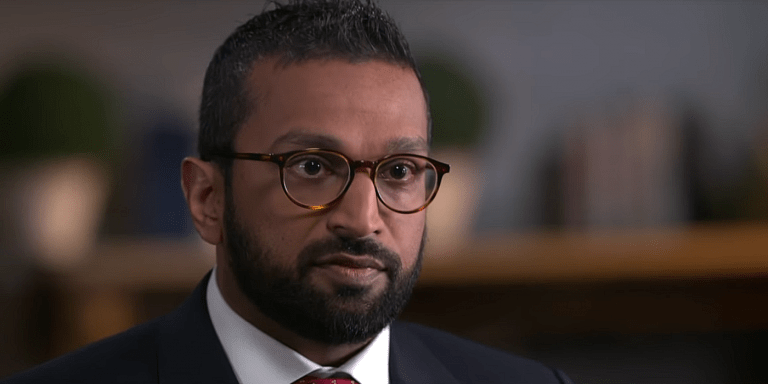
(Headline USA) The Senate Judiciary Committee voted along party lines on Thursday to advance the nomination of Kash Patel, Donald Trump’s pick for FBI director.
The committee voted 12-10 to send the nomination to the Republican-controlled Senate for full consideration.
It was not immediately clear when the final confirmation vote will occur, but so far even nominees once seen as having uncertain prospects — including new Defense Secretary Pete Hegseth and Tulsi Gabbard, the director of national intelligence — have been able to marshal sufficient support from Republicans eager to fall in line with Trump’s agenda.
Patel has raised alarm among defenders of the status quo, due in large part to his stated intentions to overhaul the FBI. Democrats expressed particular concerns about his vast catalog of incendiary past statements, which include calling investigators who scrutinized Trump “government gangsters” and describing at least some defendants charged in the Jan. 6, 2021 riot at the U.S Capitol as “political prisoners.”
At his confirmation hearing last month, Patel said Democrats were taking some of his comments out of context or misunderstanding the broader point that he was trying to make, such as when he proposed shutting down the FBI headquarters in Washington and turning it into a museum for the so-called “deep state.” And Patel denied the idea that a list in his book of government officials, who he said were part of a “deep state,” amounted to an “enemies list,” calling that a “total mischaracterization.”
Republicans, by contrast, praised Patel as the right person for the job, insisting he was needed to fix an FBI that they claim has been tainted by bias amid criminal investigations into Trump.
“The American people are sick and tired of two tiers of access, tiers of treatment and two tiers of justice. And during the Biden years, this was writ large in the acts of the DOJ and the FBI,” said GOP Sen. Marsha Blackburn of Tennessee.
GOP Sen. Ashley Moody of Florida said that Patel “might not have served in the upper echelons of the FBI, but aren’t we asking this agency to set a new course? Don’t we want a nontraditional candidate at this moment in time, with extensive federal experience?”
A former Justice Department prosecutor, Patel attracted Trump’s attention during his first term when, as a staffer on the Republican-led House Intelligence Committee, he helped author a memo with pointed criticism of the FBI’s investigation into ties between Russia and Trump’s 2016 campaign.
Patel later joined Trump’s administration, both as a counterterrorism official at the National Security Council and as chief of staff to the Defense Department.
(The Center Square) – The U.S. Senate has voted 52-48 Thursday to confirm Robert F. Kennedy Jr. as Secretary of Health and Human Services, where he will oversee the nation’s largest healthcare programs including Medicare and Medicaid.
Sen. Mitch McConnell from Kentucky was the only Republican who joined Democrats in opposing the candidate, whom they see as an unqualified wildcard.
Kennedy, an environmental lawyer, has spent decades calling out industry influence over regulatory agencies like the Food and Drug Administration, and has brought attention to the role ultra-processed foods and chemical additives play in the chronic disease epidemic.
He has also been criticized for questioning the safety and efficacy of certain vaccines, though he denies the label of “anti–vaxxer.”
“In my advocacy, I’ve often disturbed the status quo by asking uncomfortable questions. Well, I’m not going to apologize for that. We have massive health problems in this country that we must face honestly,” Kennedy said during his first confirmation hearing. “My approach to HHS is radical transparency.”
Kennedy had stumbled over his answers and seemed uncertain on specifics when Sen. Bill Cassidy, R-La., asked him about potential improvements to Medicaid and Medicare. The lawyer was adamant, though, that reforms are necessary, particularly given the cost of healthcare in the United States and the growing numbers of sick Americans.
“The United States has worse health than any other developed nation, yet we spend more on healthcare – at least double, and in some cases triple – as other countries. Last year we spent $4.8 trillion,” Kennedy said.
As of 2024, roughly 60% of Americans have at least one chronic disease and 40% have two or more, according to Centers for Disease Control and Prevention (CDC) data.
As HHS secretary, Kennedy has said he will push for nutrition reforms, such as scrutinizing food additives, providing healthy food options to those on SNAP benefits, and removing the agriculture lobby’s influence on the FDA’s nutrition department.
He promised, however, to work with the Department of Agriculture and all invested stakeholders when considering policies that may impact the food supply or the livelihoods of farmers.
Most Republicans celebrated Kennedy’s confirmation as a blow to Big Pharma and corrupt actors in the healthcare industry as Kennedy fights to “Make America Healthy Again.”
“Congratulations to @RobertKennedyJr on his confirmation as Secretary of Health and Human Services,” Sen. Rand Paul, R-Ky., said on X. “Finally, someone to detox the place after the Fauci era. Get ready for health care freedom and MAHA!”
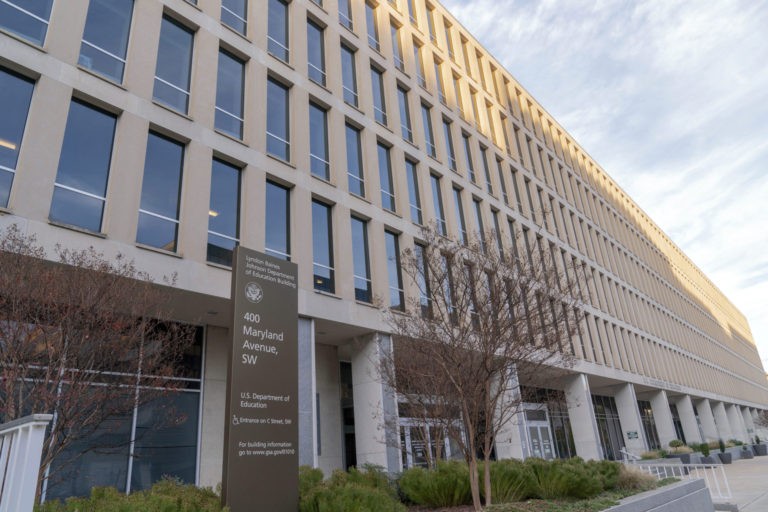
(Headline USA) If Linda McMahon is confirmed as Education secretary, President Donald Trump has said he wants her to “put herself out of a job.”
A plan being considered by the White House would direct the Education secretary to dismantle the department as much as legally possible while asking Congress to abolish it completely.
At her confirmation hearing Thursday, McMahon indicated she would seek “a better functioning Department of Education,” with more efficient programs that might be better implemented by different federal agencies.
Eliminating the department altogether would be a cumbersome task; McMahon said she believed that would require action from Congress. Already, the department has cut $900 million in contracts for its office that tracks progress of students in schools across America.
The agency’s main role is financial. Annually, it distributes billions in federal money to colleges and schools and manages the federal student loan portfolio—a function first assumed during the Obama adminsitration when the federal government took over the role of previously private student-loan financiers.
President Joe Biden’s controversial attempts to use loan “amnesty” to wipe debt from borrowers as a tool for political pandering brought additional scrutiny to the federal government’s role in micromanaging the public-education system.
However, disentangling it while assuring a soft landing for schools where learning loss already has become a serious issue will require deft maneuvering from McMahon, the billionaire wife of professional-wrestling magnate Vince McMahon.
During Trump’s first term, McMahon served as administrator of the Small Business Administration—a role that took on added importance during the coronavirus shutdowns, when Congress issued loans through the Paycheck Protection Program to ensure companies were able to continue paying their employees.
Apart from its involvement with student loans, financial aid and research grants at colleges and universities, federal funding makes up a relatively small portion of public school budgets—roughly 14%.
Trump has vowed to cut off federal money for schools and colleges that push “critical race theory, transgender insanity, and other inappropriate racial, sexual or political content” and to reward states and schools that end teacher tenure and support universal school choice programs.
(Peter C. Earle, Money Metals News Service) US President Donald Trump has proposed supplying Ukraine with ongoing military aid in exchange for access to its abundant reserves of rare earth minerals — elements critical to high-tech industries and defense applications. This proposal aligns with Trump’s long-standing perspective on leveraging foreign natural resources to offset US military expenditures. Notably, in 2011, he criticized the US strategy in Iraq, suggesting that seizing oil assets could have reimbursed the United States for its military involvement.
Such payments-in-kind are not without precedent. Historically, nations have engaged in similar deals, particularly involving oil. For instance, during the 1980s, the United States entered into agreements with Middle Eastern countries, exchanging military support for favorable oil terms. In the current context, Ukraine’s President Volodymyr Zelensky has expressed openness to this proposal, viewing it as a means to secure necessary defense aid while providing the US with valuable resources. Challenges persist, however, as many of Ukraine’s mineral deposits are located in conflict zones, complicating extraction efforts.
If undertaken, the arrangement is suggestive of a broader shift in the global economic landscape, one in which commodities and strategic resources are increasingly central to international trade and finance. The emerging order has been dubbed Bretton Woods III, in which nations seek alternatives to traditional fiat-based monetary systems by accumulating tangible assets and restructuring global trade dynamics. Unlike the original Bretton Woods system (1944–1971), which was based on fixed exchange rates and a gold-linked dollar, Bretton Woods II (since 1971) has been characterized by fiat money and floating exchange rates. Bretton Woods III, however, envisions a system of quasi-pegged exchange rates in which commodities play a more pivotal role as economies intervene in foreign exchange markets to manage their currencies and maintain competitive advantages in trade.
Bretton Woods III
In the modern international financial order, emerging markets (particularly in Asia and the Middle East) accumulate large reserves of US dollars and reinvest them into US assets, particularly Treasury securities. Envisioned by Zoltan Pozsar, Bretton Woods III is a global order emerging as a byproduct of both persistent trade imbalances and the widespread decimation of fiat currencies. For decades, nations, including China, Japan, and oil exporters, have maintained undervalued currencies to sustain export-driven growth. In so doing, those economies have become net lenders to the United States, effectively financing fiscal deficits and enabling prolonged periods of low interest rates.
China provides a prime example of an economy that actively manages its currency, the renminbi (RMB), by intervening in foreign exchange markets to maintain a competitive edge in global trade. The People’s Bank of China (PBOC) frequently adjusts the yuan’s exchange rate through a combination of currency pegs, capital controls, and foreign reserve management, ensuring that Chinese exports remain attractive by preventing excessive currency appreciation.
The implications of the new global economic regime, even if partly realized, are profound. On one hand, the former system supported global financial stability by ensuring demand for US debt. By doing that, it has allowed the US to run sustained current account deficits for improbably long periods without fiscal strain. The tradeoff of doing so, however, has been the emergence of structural imbalances, with emerging markets becoming dependent on US monetary policy as the US has grown dependent upon foreign financing.
The mutual reliance has given rise to a major risk: the potential for a rapid, disorderly unwinding or even sudden collapse of the linkage. If foreign creditors were to lose confidence in US debt sustainability or shift away from the dollar in favor of alternative reserve assets, exchange rate volatility, capital flight, and rapidly ascending borrowing costs are likely reactions with broad repercussions for global trade and financial markets. Geopolitical tensions and rapid de-dollarization movements by major economies, such as the BRICS bloc, could accelerate such an unraveling, resulting in a fragmented global monetary order where multiple reserve currencies compete for dominance.
Another likely outcome of the Bretton Woods III order is the growing role of commodities as a store of value and medium of exchange in global trade: a growing preference for outside versus inside money. As resource-rich economies and emerging markets seek alternatives to excessive dollar dependence, gold, oil, and industrial metals will increasingly play a role in reserve diversification and trade settlement.
Cryptocurrencies will as well. This shift has already begun, as seen in efforts by the expanded BRICS bloc to settle cross-border transactions in commodity-backed currencies or through bilateral trade agreements denominated in non-dollar assets. Central banks in China, Russia, and the Middle East have been ramping up gold purchases, driving the price to all-time highs while signaling a shift toward tangible, asset-backed reserves over the US dollar and Treasury securities.
If that trend accelerates, it could lead to a regional- or alliance-based, multipolar monetary system with commodities (including but not limited to gold) playing a stabilizing role. Among the many implications of Bretton Woods III are a severe weakening of the exorbitant privilege of the US dollar as the world’s dominant reserve currency.
Lines Are Already Being Drawn
If this international structure ultimately takes shape, the Trump administration’s proposed deal — trading weapons to Ukraine in exchange for rare earth metals — may eventually register as an early milestone of a broader shift toward commodities-backed transactions, away from fully financialized global trade. The European Union (EU) has a €900 million agreement with Rwanda aimed at obtaining critical raw materials like cobalt and lithium essential for technological industries. That deal has faced criticism due to Rwanda’s alleged involvement in the conflict in the Democratic Republic of the Congo (DRC), where, on the other side, China has solidified its influence through substantial investments in the DRC’s mining sector.
The Chinese have thus far committed $7 billion to infrastructure projects in exchange for access to the country’s abundant copper and cobalt reserves. In another instance, Turkey and Azerbaijan have strengthened their bilateral relations by trading natural gas and strategic metals, enhancing their economic and geopolitical ties. A definitive shift towards resource-based diplomacy is afoot where nations increasingly shirk paper and securities in favor of natural assets for forging alliances and advancing strategic interests.
Implications
A shift toward a real asset-based financial order may, after some period of time, significantly alter global power structures by elevating resource-rich nations while diminishing the influence of traditional financial centers. Countries endowed with vast reserves of oil, rare earth metals, or major, reliable agricultural production could see their geopolitical leverage increase as physical assets increasingly become a foundation for economic stability.
A resultant shift might be the hoarding of critical resources, as nations seek to control strategic materials in favor of exchange. In extreme cases, that development could escalate into resource-driven conflicts as states maneuver to secure deposits of high-value materials.
Moreover, bilateral and barter-based trade agreements could become more prevalent, with nations exchanging commodities directly for infrastructure, military aid, or technological expertise rather than using dollar-based financial markets. (During the Cold War, payments-in-kind between collectivist nations were common; sugar for oil between Cuba and the Soviet Union, for example.) Such a realignment could weaken traditional financial hubs like New York and London, reducing their dominance in global capital flows.
Fully realized, the Bretton Woods III paradigm could reshape the hierarchy of global powers, elevating smaller nations that possess disproportionately large resource reserves — such as Mongolia, which produces 99 percent of the world’s supply of terbium, or Namibia, the fourth largest supplier of uranium on Earth — provided their institutions are stable enough to capitalize on newfound wealth.
Conversely, countries that have historically maintained economic dominance through finance and technology but lack natural resources or the will to procure them could become more middling powers until or unless they secure stable commodity supply chains. Storage space and low shipping rates would become a new manifestation of capital adequacy. A commodity-driven system could also redirect innovation, shifting investment away from speculative technology and finance toward energy optimization, materials science, and supply chain resilience. Financial crises could evolve to take new forms, driven not by credit expansion but via supply chain collapses, extreme weather disruptions, or geopolitical embargoes that trigger instability cascades.
An emerging order where tangible assets — not abstract financial instruments — come to define national economic security and influence is not a foregone conclusion. Decades of technological infrastructure, operational practice, and human capital have built global financial markets, and they won’t be swept away overnight. But fiscal and monetary excesses, combined with the shifting importance of once-overlooked resources, are ushering in Bretton Woods III in fits and starts. The latest phase of slow but steady de-dollarization may have arrived in the form of an American president invoicing shipments of military weapons not for money but for mining contracts, leading to crates full of rapidly oxidizing, chalky, white metals.
Peter C. Earle is an economist who joined AIER in 2018. Prior to that he spent over 20 years as a trader and analyst at a number of securities firms and hedge funds in the New York metropolitan area. His research focuses on financial markets, monetary policy, and problems in economic measurement. He has been quoted by the Wall Street Journal, Bloomberg, Reuters, CNBC, Grant’s Interest Rate Observer, NPR, and in numerous other media outlets and publications. Pete holds an MA in Applied Economics from American University, an MBA (Finance), and a BS in Engineering from the United States Military Academy at West Point.
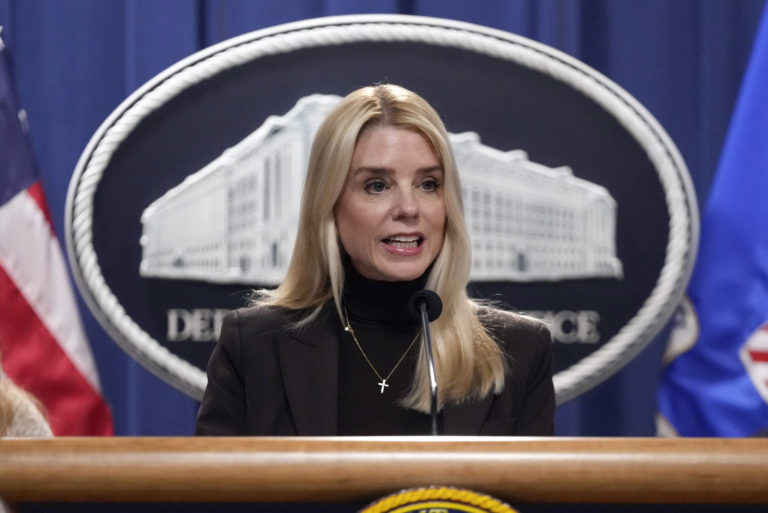
In the lawsuit, Bondi specifically named Gov. Kathy Hochul, New York Attorney General Letitia James and Mark Schroder, the New York commissioner of the Department of Motor Vehicles .
Bondi announced the lawsuit during a Wednesday evening news conference at the DOJ. She claims state officials failed to listen after the DOJ sued the state of Illinois for not complying with federal immigration laws.
“As you know, we sued Illinois, and New York didn’t listen,” Bondi told reporters. “So now, you’re next.”
The attorney general accused New York of prioritizing “illegal aliens over American citizens.”
Bondi lamented the flow of immigration and the dangers it poses to communities.
“Millions of illegal aliens with violent records have flooded into our communities, bringing violence and deadly drugs with them,” said the attorney general.
Bondi warned other states that they will be next and that they aren’t complying with federal immigration law.
“If you don’t comply with federal law, we will hold you accountable. We did it to Illinois. Strike one. Strike two is New York, and if you are a state not complying with federal law, you’re next. Get ready,” she said.
The attorney general referenced New York’s green light laws, which she claims are “giving a green light to any illegal alien in New York.”
She explained the hurdles law enforcement officers face with the green light law.
“Law enforcement officers cannot check their identity if they pull them over, law enforcement officers do not have access to their background, and if these great men and women pull over someone and don’t have access to their background, they have no idea who they’re dealing with,” Bondi said.
The immigration issue has become a lightning rod in New York, specifically New York City. Mayor Eric Adams is beginning to pivot on the issue. He began raising alarms about the strain the crisis has had on the city.
The state and city have noted significant financial strains stemming from housing and providing services caring for the migrants.
The Office of the New York State Comptroller reported that in the 2025-2026 Executive Budget Financial Plan, the state plans to spend $4.3 billion between fiscal years 2022-2023 through 2025-2026 on emergency spending for migrants. “Emergency spending for asylum seekers totaled $1.66 billion” through Jan. 31, 2025.
Meanwhile, New York City has recorded expenditures of $1.47 billion in fiscal year 2023, $3.75 billion in 2024 and $1.74 billion in 2025, although the comptrollers acknowledged that FY 2025 expenses are not yet final.
In addition to financial strain, New York has had its fair share of issues with migrant crime – specifically the Venezuelan gang, Tren de Aragua, which has been designated as a foreign terrorist organization.
According to ICE, the Tren de Aragua gang is known for engaging in various criminal activities, such as drug trafficking and violent crimes – including murder.
Homeland Security Secretary Kristi Noem revealed earlier on Wednesday that FEMA spent $59 million to house migrants in luxury New York City hotels, including the Roosevelt, which housed migrant violent gang members.
Noem disclosed that the hotel, at the expense of taxpayers, was being used as a base of operations for the violent gang and served as a residence to the convicted killer of Laken Riley.
Some of the gang members were tied to assaults on New York Police Department officers in Times Square last year. The attack garnered national outrage after four of the Venezuelan migrants indicted in the attack were apprehended by federal law enforcement but were released without deportation.
Hochul released a lengthy statement following the announcement and defended the state’s immigration policies, while claiming the lawsuit is a publicity stunt.
“Here are the facts: our current laws allow federal immigration officials to access any DMV database with a judicial warrant. That’s a common-sense approach that most New Yorkers support. But there’s no way I’m letting federal agents, or Elon Musk’s shadowy DOGE operation, get unfettered access to the personal data of any New Yorker in the DMV system like 16-year-old kids learning to drive and other vulnerable people.
“New York is proud that immigrants from across the globe come here searching for a better life — people like my grandparents who left Ireland looking for the American dream. We welcome law-abiding individuals who want to work, pay taxes and contribute to our communities, while at the same time protecting the public safety of all New Yorkers by cracking down on violent criminals.
“We expect Pam Bondi’s worthless, publicity-driven lawsuit to be a total failure, just like all the others. Let me be clear: New York is not backing down,” Hochul said in a statement.
James released a brief statement, saying her office is prepared to defend against the lawsuit.
“Our state laws, including the Green Light law, protect the rights of all New Yorkers and keep our communities safe. I am prepared to defend our laws, just as I always have,” James said in her statement.
(Headline USA) Attorney General Pam Bondi said she would “look into” why the corruption charges against New York City’s mayor have not yet been dropped, two days after a senior Justice Department official ordered federal prosecutors to ditch the case.
Speaking with reporters Wednesday evening, Bondi said she was unaware that the case against Mayor Eric Adams hadn’t yet been dismissed. She said she also hadn’t spoken personally with the prosecutor in New York who is, for now, overseeing the case, acting U.S. Attorney Danielle Sassoon.
But Bondi said other senior officials had spoken with Sassoon about the directive to dismiss the charges.
“So that case should be dropped,” Bondi said. “I did not know that it had not been dropped yet, but I will certainly look into that.”
In a two-page memo sent Monday, acting Deputy Attorney General Emil Bove directed Sassoon to dismiss the charges against Adams “as soon as is practicable.” He claimed the case was politically motivated and was interfering with the mayor’s ability to assist in the Trump administration’s crackdown on immigration and crime.
In the days since then, both Adams and his attorney have expressed confidence that the charges—which focused on bribes and illegal campaign donations—were permanently quashed. But the Justice Department memo left the door open to the case being brought back next fall following a review.
As of early Wednesday evening, prosecutors had not filed the legal papers needed to start the process of dismissing the charges.
Bove’s memo had indicated that before that could happen, Adams would be required to sign an acknowledgement that prosecutors could refile the charges against him at any point. Adams’s lawyer said Wednesday morning that the mayor had not signed any documents yet in connection with the possible dismissal.
Sassoon has not commented publicly since the Justice Department directive became public.
Prosecutors in New York had, until this week, indicated that they believed they had a strong case, and that the investigation had uncovered additional evidence of misconduct by Adams.
Sassoon’s power to resist the Justice Department directive, if she were to choose to do so, is limited. The U.S. attorney general has the power to replace U.S. attorneys at will, meaning anyone who opposes directives from Washington could potentially be removed.
At a press conference Wednesday morning, Adams’s lawyer, Alex Spiro, claimed victory. He said he didn’t believe prosecutors would ever bring the case back.
“There is no looming threat. This case is over. It will not be brought back,” he said. “Despite a lot of fanfare and sensational claims, ultimately there was no evidence that he broke any laws ever.”
Bove’s memo said the directive to halt the case was made without “assessing the strength of the evidence.” It also said the prosecutors should review the matter in November following the mayoral election.
The autoplayed disclaimer was added to classic films such as Dumbo and PeterPan on Disney+ in 2020.
“This program includes negative depictions and/or mistreatment of people or cultures,” the previous statement began. These stereotypes were wrong then and are wrong now.”
The lengthy warning noted of inclusivity and diversity as well.
“Rather than remove this content, we want to acknowledge its harmful impact, learn from it and spark conversation to create a more inclusive future together,” it added.
The disclaimer will now read, “This program is presented as originally created and may contain stereotypes or negative depictions.”
Axios was the first to report on Disney removing the warning before the classic films.
In addition to the disclaimer change, Variety noted a new “Talent Strategy” will be replacing the “Diversity and Inclusion” measure.
“This factor will assess how leaders uphold our company values, incorporate different perspectives to drive business success, cultivate an environment where all employees can thrive, and sustain a robust pipeline to ensure long-term organizational strength,” the internal memo stated.
Shortly after Trump’s presidential win, Disney made the decision in December to remove a transgender storyline in an animated Disney+ streaming series Win or Lose.
Disney CEO Bob Iger previously said in 2023 he wanted the company to return to its original values Axios reported.
“Our primary mission needs to be to entertain, and then through our entertainment to continue to have a positive impact on the world,” Iger said. “I’m very serious about that. It should not be agenda-driven, it should be entertainment-driven.”
The outlet added the company’s reputation with Republicans have been slowly going up since Iger returned to Disney.
(Maire Clayton, Headline USA) Minnesota Gov. Tim Walz’s daughter, Hope, went on a rant after President Donald Trump signed an executive order saying biological men are not allowed to compete with in women’s sports.
The 23-year-old went to TikTok Saturday to bash the order that will protect female athletes.
“It is dangerous for the trans community, women, minorities, anyone who is not a straight white man,” Hope Walz said. “We are talking about human beings, and the president of the United States is targeting them because he thinks it will gain him political points or whatever.”
She claimed she has in the past “felt unsafe” around men, but never around someone who is transgender.
Columnist Dustin Gage took to social media and pointed out one of the flaws with her statements.
“She says she has never felt unsafe around a trans person but has felt unsafe around men. Well, that’s kind of the point of the executive order,” he began. “Getting men out of women’s sports.”
Hope Walz is big mad that Trump signed an executive order.
She says she has never felt unsafe around a trans person but has felt unsafe around men.
Well, that’s kind of the point of the executive order. Getting men out of women’s sports. pic.twitter.com/80N22tsO6o
Other social media users shared a similar sentiment as Gage.
“No Hope Walz. Contrary to what your daddy thinks, many of us don’t want men in women’s bathrooms, locker rooms, or boys playing in girls sports,” one user wrote. “I’m sorry your parents are perverts.”
The failed vice presidential candidate previously signed a law that forced public schools to provided menstrual products to all students in 4th through 12th grades.
California Interscholastic Federation immediately stated it would be refusing to follow the new order and would continue to allow biological males to compete in female sports.
Minnesota State High School League, which happens to be the state Walz’s governs, claimed “[s]tudents in Minnesota are allowed to participate consistent with their gender identity.”
As Bloomberg put it, this adds to signs of “widespread tightness across markets for physical precious metals.”
In its announcement, the Korea Minting and Security Printing Corp. said it faced supply sourcing problems and was struggling to manage demand for gold bars.
The prices of gold and silver futures traded on the COMEX have surged above the spot price of gold in the London market. Mainstream analysts blame the dynamic on the threat of tariffs pushing the futures price of gold (and silver) higher in New York, but as Chris Powell reported, there could be a more fundamental issue at play: the fact that there is a lot more paper gold than physical metal.
Regardless of the reason, the movement of gold has driven record outflows of gold from London vaults, and it appears to be impacting supply in Asia as well. According to a Reuters article earlier this month, “Global bullion banks are flying gold into the United States from trading hubs catering to Asian consumers, including Dubai and Hong Kong, to capitalize on the unusually high premium that U.S. gold futures are enjoying over spot prices.”
Even though the price of gold surged in recent weeks and set new price records above $2,900 per ounce, the premium on the COMEX has created an arbitrage opportunity that big institutions capable of quickly moving metal between trading hubs can take advantage of.
JPMorgan was among several financial institutions that recently announced plans to deliver bullion contracts traded on the COMEX. The delivery announcements totaled 30 million ounces of gold, the second-largest level of planned deliveries since 1994.
The movement of gold and silver out of London vaults is becoming problematic.
This issue here is obvious. As metal flows out of London into New York, at some point, the gold and silver holdings across the pond will become depleted. As we reported a couple of weeks ago, this dynamic is creating significant uncertainty in both the gold and silver markets.
“This dynamic is having the effect of draining London vaults of gold and silver at an unusually fast rate –and at some point, these lower levels of vaulted metal in London could create price dislocations in that major market too. Those who have short positions in the New York market are in the process of getting squeezed, especially if they are having trouble getting their hands on physical metal to deliver into their short positions. Or get it into the right form.”
This squeeze is likely one of the factors that pushed the spot price of gold to record levels last week.
Mike Maharrey is a journalist and market analyst for MoneyMetals.com with over a decade of experience in precious metals. He holds a BS in accounting from the University of Kentucky and a BA in journalism from the University of South Florida.
(Jesse Colombo, Money Metals News Service) U.S. inflation expectations have surged over the past few months, and this has been a bullish driver for gold and silver.
Yesterday, the U.S. Consumer Price Index came in hotter than expected, reinforcing those inflation concerns and raising the specter of stagflation as economic growth slows and layoffs increase.
While these developments are troubling for the broader economy, they create a highly favorable environment for precious metals, which I will explore in this article.
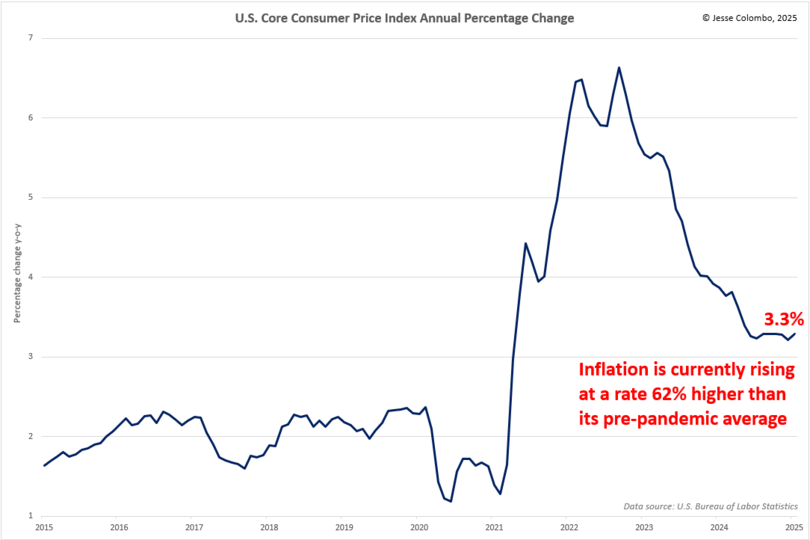
Yesterday’s report showed that the Consumer Price Index (CPI) rose at an annual rate of 3.0% in January, surpassing the expected 2.9%. Meanwhile, the core CPI, which excludes volatile food and energy prices, climbed 3.3% annually—higher than the anticipated 3.1%.
The Federal Reserve generally targets a 2% inflation rate, yet as the chart below illustrates, core CPI annual growth rate remains persistently elevated, standing 62% above its pre-pandemic average.
Adding to concerns, January’s data was recorded before President Trump’s tariffs took effect, suggesting inflationary pressures could intensify in the coming months.
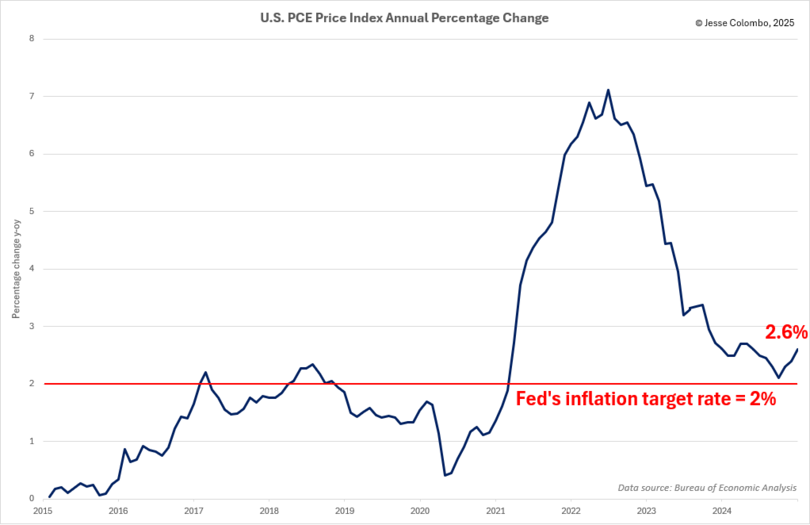
While the Consumer Price Index (CPI) is the most widely recognized measure of inflation, the Federal Reserve’s preferred gauge is the Personal Consumption Expenditures (PCE) price index.
In December, the PCE rose at an annual rate of 2.6%, reinforcing the same message as the CPI—inflation remains persistently high and has been trending in the wrong direction in recent months.
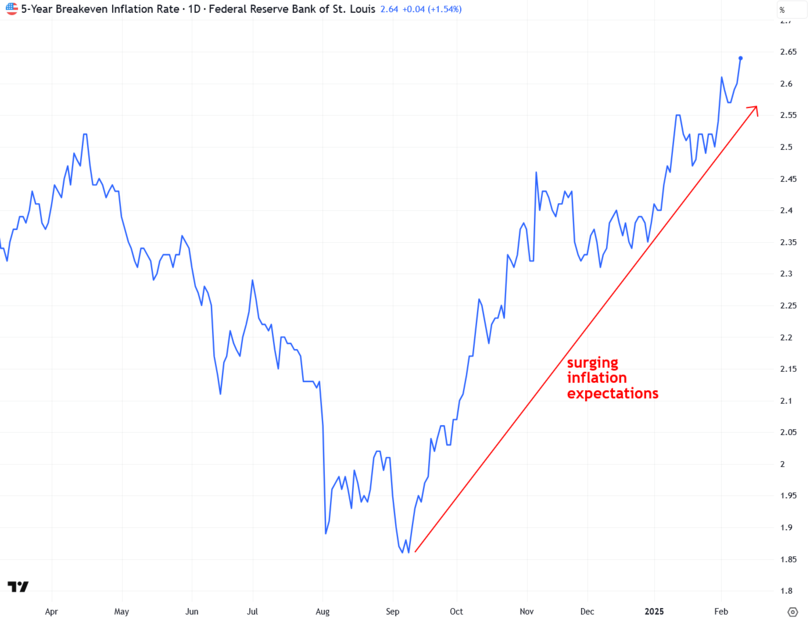
The increase in the inflation rate was anticipated by several inflation expectation indicators, including the 5-year inflation breakeven rate, as shown in the chart below.
This rate, calculated as the difference between the yield on a nominal 5-year U.S. Treasury note and a 5-year Treasury Inflation-Protected Security (TIPS), reflects the market’s forecast for average annual inflation over the next five years.
What’s especially concerning is the spike since late January, reflecting the market’s anticipation of the inflationary impact of the upcoming tariffs.
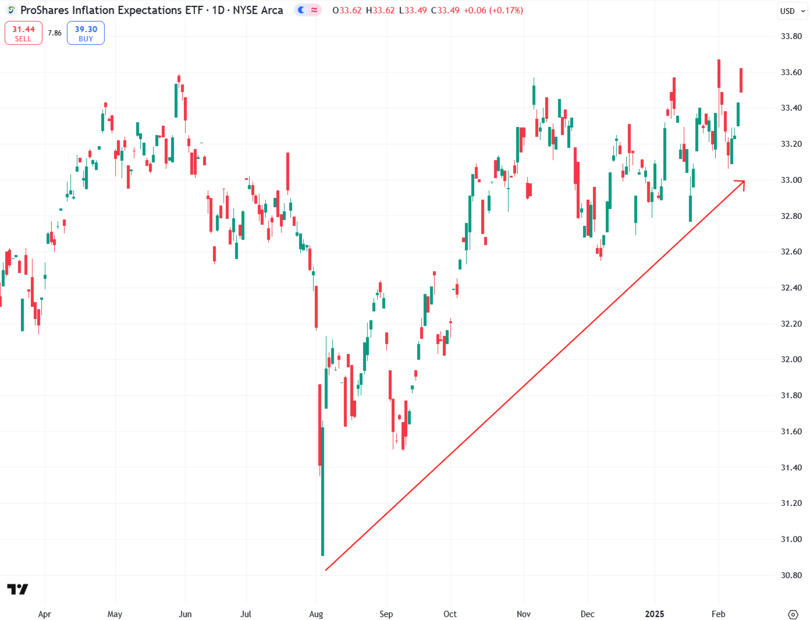
Another key indicator I closely monitor is the ProShares Inflation Expectations ETF (ticker symbol: RINF). As shown, it has surged over the past four trading sessions, building on its steady rise since August.
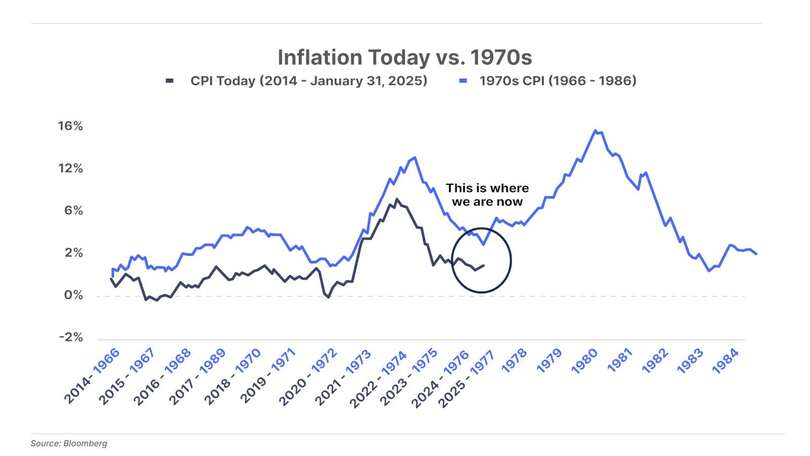
The persistent and rising inflation, coupled with a likely impending recession is setting the stage for “ stagflation ”—a condition marked by high inflation, stagnant economic growth, and elevated unemployment.
The U.S., UK, and other countries experienced stagflation in the 1970s, driven by rapid money supply expansion and energy crises.
If stagflation returns—which seems increasingly likely—the Federal Reserve will find itself in a difficult predicament, as its ability to implement monetary stimulus will be constrained by persistently high inflation.
The current inflationary pressures stem largely from the trillions of dollars injected into the economy through COVID stimulus programs, making inflation particularly stubborn. In the end, the Fed will likely prioritize economic support over inflation control, leading to high rates of inflation reminiscent of the 1970s.
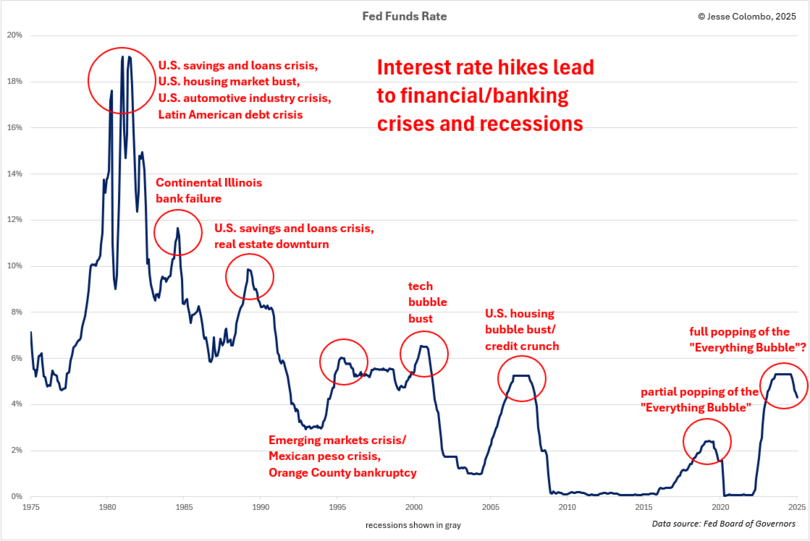
Recessions almost always follow rate hike cycles, and the latest cycle has been the most aggressive since the early 1980s. In just a year and a half, the Federal Reserve raised the fed funds rate from near zero to 5.33%, surpassing even the mid-2000s rate hikes that contributed to the housing bubble collapse and the Great Recession.
While many economists and investors remain optimistic about a soft landing, history suggests that such outcomes are rare—especially after a tightening cycle of this magnitude.
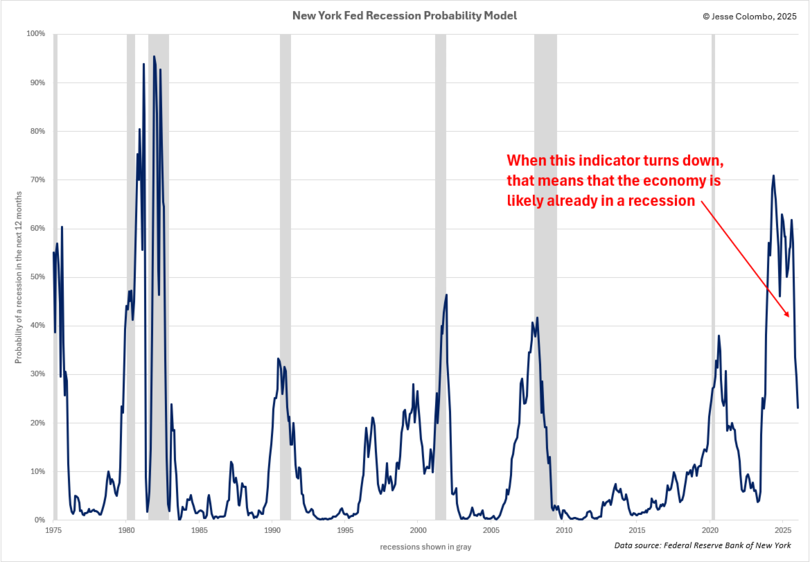
Several recession indicators are flashing warning signs, and one of the most reliable is the New York Fed Recession Probability Model, which assesses the likelihood of a recession within the next 12 months.
Historically, as this indicator rises, so does the probability of an economic downturn. However, once it begins to decline, it often signals that a recession has already begun.
Over the past year, this model has started to trend downward, indicating that the U.S. economy may already be in a recession or on the verge of entering one.
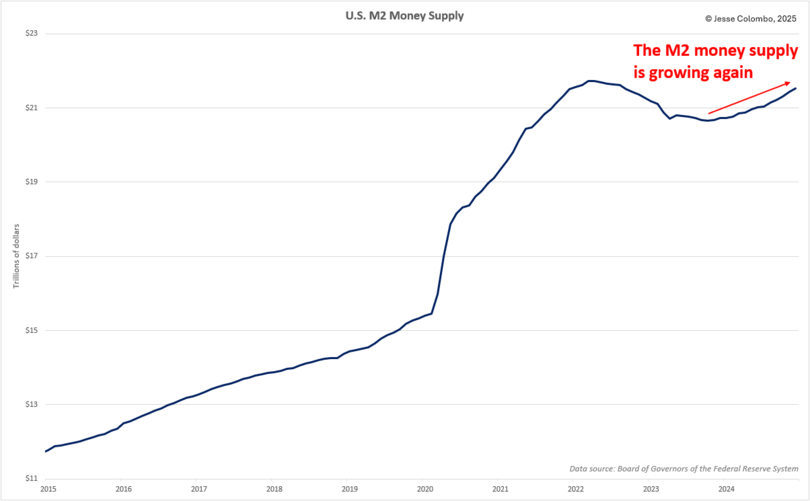
Further reinforcing the stagflationary outlook is the resurgence of U.S. M2 money supply growth over the past year, following a rare period of decline from early 2022 to late 2023.
Since money supply expansion is the root cause of inflation, this renewed growth helps explain why inflation has remained persistently high and why gold and silver have surged over the past year.
As Nobel Prize-winning economist Milton Friedman famously stated, “Inflation is everywhere and always a monetary phenomenon.”
While a stagflationary scenario would be highly detrimental to the overall U.S. economy, precious metals and mining stocks would benefit significantly—much like in the 1970s when gold emerged as one of the top-performing assets, vastly outperforming equities and bonds.
While gold was the stronger performer in the mid-1970s, silver ultimately stole the show as the precious metals bull market matured in the late 1970s.
A similar pattern appears to be unfolding today, with gold currently outpacing silver. However, as this bull market gains momentum, silver is likely to take the lead once again.
While President Trump and the Department of Government Efficiency (DOGE), led by Elon Musk, have made commendable progress in reducing government spending—cutting approximately $88 billion so far—that amount is merely a drop in the bucket compared to the nation’s $36.5 trillion debt and the record $840 billion budget deficit logged over the past four months alone.
Moreover, deeper spending cuts are likely to trigger more layoffs and a broader economic slowdown, given the economy’s heavy dependence on government expenditures.
Ironically, while DOGE’s efforts are fiscally responsible, they may inadvertently hasten a recession that was already in the works long before President Trump took office. Additionally, because President Trump is not addressing the root cause of inflation—the absence of sound money —the problem will not be resolved.
As a result, stagflation remains the most probable outcome, creating a highly bullish environment for gold, silver, and mining stocks.
Jesse Colombo is a financial analyst and investor writing on macro-economics and precious metals markets. Recognized by The Times of London, he has built a reputation for warning about economic bubbles and future financial crises. An advocate for free markets and sound money, Colombo was also named one of LinkedIn’s Top Voices in Economy & Finance. His Substack can be accessed here.