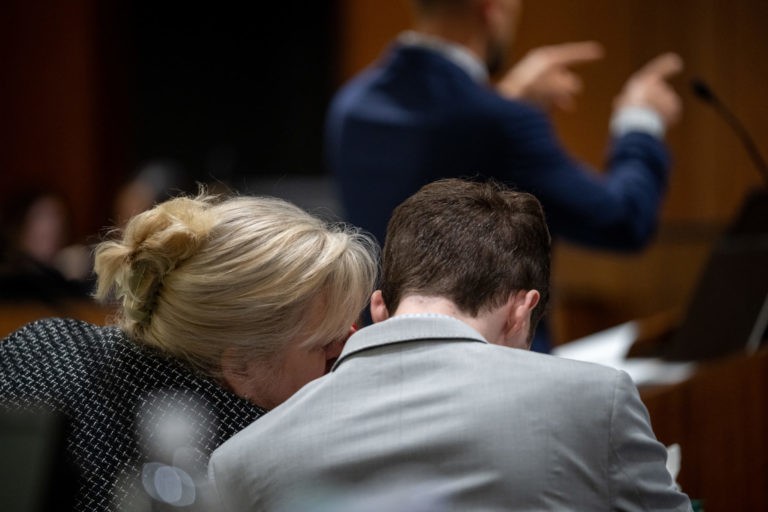
DNA Evidence from Charlie Kirk Assassination Disputed by Defendant’s Lawyers

(Headline USA) Lawyers for the man accused of killing conservative activist Charlie Kirk are expected to keep questioning the reliability of DNA testing used to link the defendant to the suspected murder weapon when a weeklong hearing resumes Wednesday.

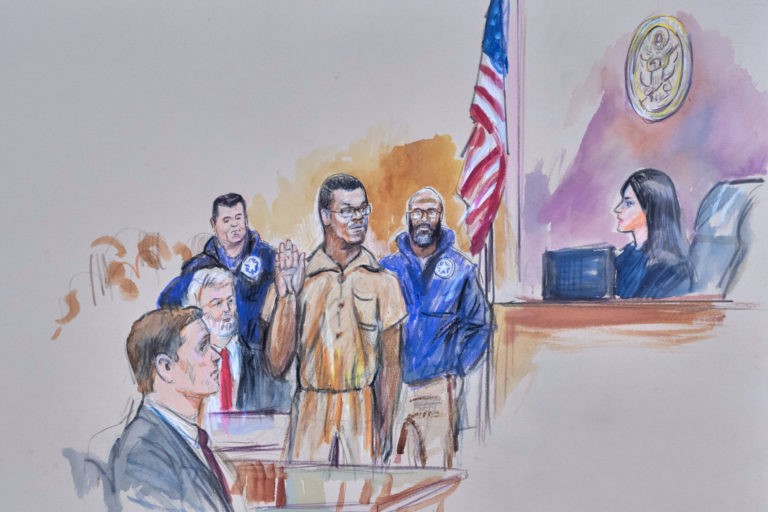
A member of Tyler Robinson’s defense team interrogated a DNA analyst from the FBI on Tuesday about the techniques she used to connect Robinson to a towel wrapped around a rifle found at Utah Valley University, where Kirk was shot in September while speaking to a large crowd.

Defense lawyer Michael Burt cast doubt on the analyst’s conclusions — a theme likely to recur during the five-day preliminary hearing.

“She can’t match Mr. Robinson to the questioned samples,” Burt argued.

Deputy Utah County Attorney Ryan McBride countered that the reliability of the DNA testing could be examined if the case goes to trial. He suggested the preliminary hearing — where prosecutors have a lower burden of proof compared with a trial — was not the time to take up the matter.

“The point is there are explanations that are susceptible to different interpretations and arguments,” McBride said. “Ultimately, we’re going to have an expert hearing where all the literature is going to be before the court and the court is going to determine if it meets the threshold of reliability for admission to trial.”

Prosecutors intend to seek the death penalty. State District Judge Tony Graf will decide at the conclusion of this week’s hearing if they have enough evidence to bring Robinson to trial on an aggravated murder charge.

Robinson has not yet entered a plea and his attorneys have not commented on his guilt or innocence. They have, however, sought to get the death penalty taken off the table, so far unsuccessfully.

FBI analyst Amanda Bakker said after Robinson’s roommate, Lance Twiggs, provided a DNA sample for comparison, she was able to rerun her tests and attribute all of the DNA to two people.

Investigators found the towel and suspected murder weapon — a bolt-action rifle with one spent round — in a wooded area near where Kirk was shot.

DNA on the towel matched to two people, Jennifer Faumuina with the State Bureau of Investigation testified. One was Robinson’s roommate and the other was very likely Robinson, she said. Twiggs, a key figure in the prosecution’s case, will not testify in person this week, but prosecutors have said they plan to introduce a recorded statement.

Prosecutors allege Robinson confessed in a note left for Twiggs, who was also his romantic partner, that read: “I had the opportunity to take out Charlie Kirk and I’m going to take it.”

Investigators say Robinson went to a rooftop near where Kirk was speaking and shot him once through the neck as the activist was taking questions from a crowd of several thousand people. Kirk was declared dead after being taken to a hospital.

Prosecutors contend the shooting endangered others at Kirk’s campus event — an aggravating circumstance that could make the crime punishable by death under Utah law. Robinson also faces possible sentence enhancements based on the prosecution’s claim that he targeted Kirk because of his political views.

During one of several appearances on campus by Robinson on Sept. 10, the defendant went to the amphitheater where Kirk was later shot, State Bureau of Investigation 

Agent David Hull testified Tuesday. Hull said Robinson made contact with representatives of Turning Point USA, a group co-founded by Kirk that galvanized the conservative youth vote to help Trump win a second term.

The investigator did not detail what occurred during that interaction or if members of Kirk’s security team were present.

Robinson turned himself in after the shooting. Prosecutors allege he sent a text to Twiggs saying he targeted Kirk because he “had enough of his hatred.”

Robinson’s defense team pushed back Tuesday on the idea that he was hostile to Kirk’s politics. Defense attorney Richard Novak sought to block prosecutors from introducing a statement describing the traditional Christian values of Turning Point USA.

“This doesn’t say anything about Mr. Robinson’s state of mind,” Novak said about the statement from Turning Point USA board member David Engelhardt. “I don’t think that this court should be deciding — based on the record before it — where, if at all, politics and religion intersect.”

The judge ruled that the Turning Point statement was relevant and would be “provisionally admitted,” with a final decision later on.

Adapted from reporting by the Associated Press

Kentucky Gov. Demands Health Update from Sen. McConnell

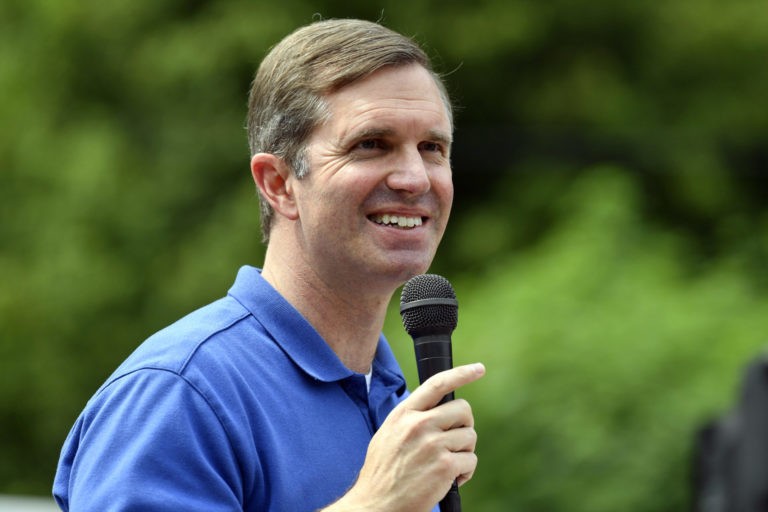
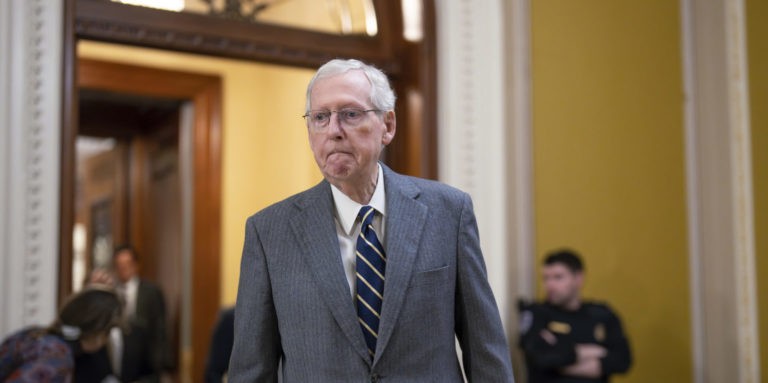
(Headline USA) Kentucky Gov. Andy Beshear is directly asking Sen. Mitch McConnell, the state’s most powerful figure in Congress, to disclose more about his condition after three weeks of silence from the 84-year-old since he was hospitalized in Washington.

The letter released Wednesday from Beshear, a Democrat who is considered a potential presidential candidate in 2028, to the former Senate Republican leader says “Kentuckians have grown increasingly concerned about the current state of your health and well-being, and ability to hold office.”

McConnell, whose physical condition has visibly declined in recent years, was hospitalized June 14. He has not released a public statement, photos or videos since. Aides have disclosed nothing specific about his condition, other than to say last week that McConnell “continues to improve, and is working closely with his staff on Kentucky and Senate matters while the Senate is out of session.”

That lack of detail has fueled rampant speculation about his prognosis and whether he will return to the Senate when it reconvenes next week. The firestorm was enough that Republican Senate leaders on Tuesday made public statements saying they had talked to McConnell and that he was alert and discussing current events.

McConnell is retiring at the end of his term in January, and the campaign to elect his successor already is underway. Kentucky’s Senate succession law, which Republican legislators have twice changed during Beshear’s tenure, does not give the governor a role in picking a temporary successor should McConnell’s seat become vacant before his term ends.

Under the latest change in 2024, if the seat becomes vacant before Aug. 3, there would be a special election to pick a replacement, perhaps held concurrently with the general election in November. The special election winner could take office nearly immediately. The general election winner would be sworn in as part of the new Congress in January.

If the seat were vacated after Aug. 3, there would be no time under the law for a special election and the seat would remain vacant until January.

Beshear ended the letter by wishing McConnell “a safe and speedy recovery.”

Adapted from reporting by the Associated Press

Ex-Wisconsin Judge Avoids Prison for Obstructing ICE Arrest of Illegal Immigrant

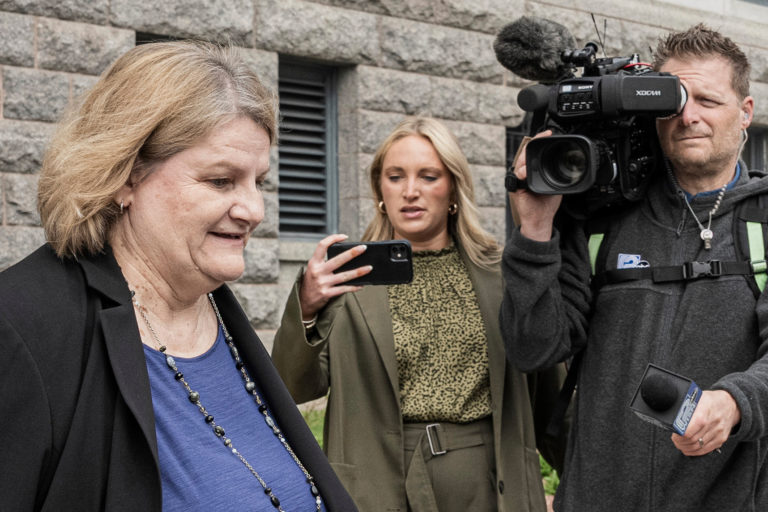
(Headline USA) Former Wisconsin Judge Hannah Dugan was spared from prison Wednesday for ushering a Mexican defendant out of her courtroom to evade U.S. Immigration and Customs Enforcement agents. A federal judge fined her $5,000 and cited her otherwise law-abiding life in issuing the sentence.

“I think this is a situation where an otherwise good person, upset by immigration policies in this country, made a bad decision in the moment,” U.S. District Judge Lynn Adelman said.

Dugan, 67, was convicted of felony obstruction in December. Her lawyers argued during her trial that President Donald Trump’s administration sought to “crush” Dugan in an effort to ensure judicial compliance with the ICE strategy of targeting immigrants as they showed up for court hearings.

Dugan resigned the Milwaukee County circuit judgeship she had held for nine years in January amid threats of impeachment from Republican state lawmakers who labeled her an activist judge. In her resignation letter, she said her prosecution threatened “the independence of our judiciary.” Republican U.S. Rep. Tom Tiffany, a fierce Trump loyalist running for Wisconsin governor, had urged authorities to “lock her up.”

Two Marquette University law professors spoke on her behalf, including a former state Supreme Court justice and a Jesuit priest who read a statement describing Dugan as a defender of oppressed people and saying he didn’t believe there was a need for punishment. “Hannah models what it means to be a Christian,” Gregory O’Meara said.

Dugan then addressed the court, saying she tried to do her best as a judge, and that her actions that day in April 2025 were not done maliciously but rather to maintain the “decorum and safety of the courtroom.”

“I have been cast as both a scofflaw and a hero. I am neither. I am a public servant who’s just trying to do my job,” Dugan said, adding that she has had to retire from public life due to threats against her and her family.

Executive Assistant U.S. Attorney Richard Frohling acknowledged that “she has experienced collateral damage because of her conduct,” but said “judges can’t choose to disregard the law.”

The judge then said he doesn’t believe prison is necessary, noting that Dugan lost her job, now has a felony conviction and experienced threats that forced her to move and stop attending community events. He also noted that Dugan’s actions didn’t stop the ICE agents from arresting the defendant outside the courthouse.

“This is a few minutes of conduct for someone who has dedicated her life to public service,” Adelman said. “It’s a marked deviation from an otherwise law-abiding life.”

Prosecutors had argued in a sentencing memo that Dugan violated her oath as a judge and put both law enforcement and the public at risk.

“Judges are entrusted with tremendous discretion, but there is a line they cannot cross,” Frohling wrote. “The defendant crossed that line.”

Dugan’s attorneys argued she has been “punished enough,” and should not be sentenced to any jail time beyond the hours she spent in federal custody.

Federal sentencing guidelines called for 15 to 21 months behind bars, but the judge, who was appointed by President Bill Clinton in 1997, wasn’t bound by them. Prosecutors did not recommend a sentence, but Frohling wrote that “this was a serious offense, and it warrants a correspondingly serious sentence.”

Attorney Jason Luczak said after the sentencing that they would still appeal Dugan’s felony obstruction conviction. Jurors acquitted her at trial of concealing an individual to prevent arrest, a misdemeanor.

On April 18, 2025, immigration officers went to the Milwaukee County courthouse after learning Eduardo Flores-Ruiz, 31, had reentered the country illegally and was scheduled to appear before Dugan for a hearing in a state battery case.

Dugan confronted agents outside her courtroom and directed them to the chief judge’s office, saying their administrative warrant wasn’t sufficient to arrest Flores-Ruiz. Her attorneys said she was following protocols that called for court employees to report any immigration agents to their supervisors.

After the agents left, she led Flores-Ruiz and his attorney out a private jury door. Agents spotted Flores-Ruiz in the corridor, followed him outside and arrested him after a foot chase. A week later, FBI agents arrested Dugan in the courthouse, leading her outside in handcuffs.

Flores-Ruiz was deported in November.

Adapted from reporting by the Associated Press

Trump: U.S. to ‘Probably’ Strike Iran Tonight; Oil Prices Rise

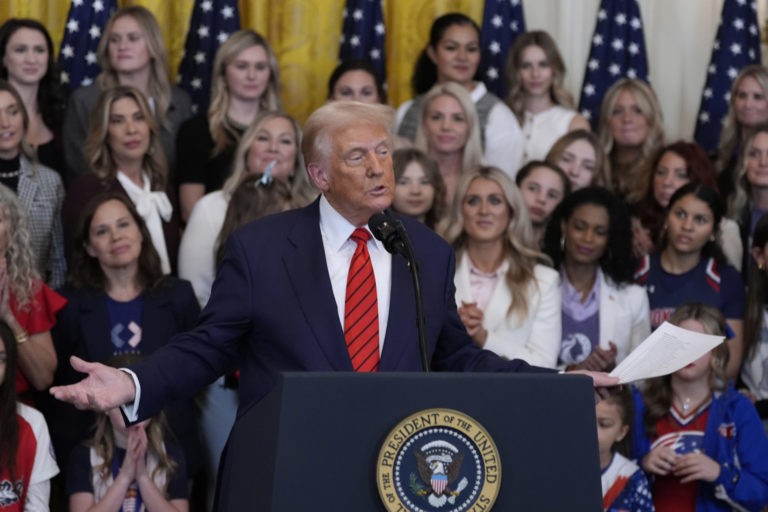
(Andrew Rice, The Center Square) President Donald Trump said the United States will “probably” strike Iran again on Wednesday night, after casting doubt on the ceasefire between the two countries.

“There may be a big attack tonight and it will knock out a lot of stuff,” Trump told reporters at a NATO summit in Turkey. ‘We don’t knock out nothing, we knock out a lot.”

U.S. oil prices sharply rose following Trump’s expressed doubt on the ceasefire. U.S. crude oil jumped more than 6.5% to $75 per barrel on Wednesday.

The president floated “taking over” Kharg Island, an area that handles the majority of Iran’s oil exports as part of the potential Wednesday night attacks.

Trump’s threat follows U.S. attacks on Tuesday night against Iran after three commercial ships were destroyed in the Strait of Hormuz. U.S. Central Command said the military struck more than 80 targets in Iran on Tuesday including air defense systems, coastal radar sites and more than 60 small boats in or near the Strait of Hormuz.

Secretary of War Pete Hegseth said the military was prepared to hit “deeper” targets in Iran if necessary.

“Tonight, if we need to, on your order, Mr. President, we will hit even more and even deeper,” Hegesth said.

Trump also cast doubt on the memorandum of understanding between the United States and Iran after trading strikes. He floated instituting a new blockade in the Strait of Hormuz strictly on Iranian ships.

“It will only be a blockade for Iran,” Trump said. “Anyone can have anything else they want.”

He said the 60-day memorandum of understanding between the U.S. and Iran is “over” and criticized the team of negotiators in Iran. The memorandum included lifting sanctions on Iran and allowing the country greater freedom to sell oil.

“To me, I think it’s over,” Trump said to a reporter in Turkey. “I don’t want to deal with [Iran] anymore. They’re scum. They’re sick people. They’re led by sick people.”

A delegation of U.S. negotiators is set to meet with Iranian forces on July 11 to discuss the future of the ceasefire deal between the two countries. Trump said he would allow the delegation, including Vice President JD Vance, to continue talks.

The Trump administration requested $87.6 billion from Congress to cover the costs of the conflict, including more than $70 billion for military expenses, according to a White House appropriations request.

Trump’s Pardons Don’t Apply to Alleged Jan. 5/6 Pipe Bomber, Judge Rules

(Ken Silva, Headline USA) President Donald Trump’s sweeping pardon for offenses related to the Jan. 6, 2021, Capitol Hill protest does not apply to the man accused of planting pipe bombs outside the RNC and DNC headquarters the night before, a judge ruled on Monday.

Lawyers for the pipe bomb suspect, Brian Cole Jr., had argued that Trump’s pardon applies to their client because the pipe bomb event was related to what happened on Jan. 6, 2021. Law enforcement found the devices right around the time the Capitol protest was turning violent. The discovery is said to have diverted law enforcement resources and contributed to the protest turning into a riot.

Cole Jr.’s lawyer, Mario Williams, made his case for why the pardon applies to his client in January to local news station Fox 5 DC.

“I think you have to employ some kind of common sense as applied to the allegations. So, if the allegations are that he went out there and he set down these components and that they were found on Jan. 6, the judge says that it’s a part of Jan. 6 apart and says that you were allowed to get a pardon for everything related to the events that occurred on or at the Capitol building on Jan. 6,” Williams said.

However, Judge Amir Ali disagreed.

“The pardon says that it applies to “individuals convicted of offenses related to events that occurred at or near the United States Capitol on January 6, 2021.” Even assuming that the conduct Cole is charged with is “related to events that occurred at or near the United States Capitol on January 6, 2021,” the pardon is expressly limited to people who had been “convicted of offenses” related to those events,” Ali said in his Monday decision.

“Cole had not been convicted of the conduct at issue when the President issued the pardon; indeed, he was not charged until many months after the President’s proclamation.”

Cole is set to have a status conference today at 2 p.m. If convicted, he faces up to 10 years of imprisonment on one charge and up to 20 years of imprisonment on a second charge that also carries a five-year mandatory minimum prison sentence.

Meanwhile, Cole’s attorneys have mentioned ex-Capitol Police officer and current CIA security guard Shauni Kerkhoff as possibly being the true culprit. Kerkhoff is the same person who was accused of being the pipe bomber in a Blaze Media article published last November. Kerkhoff’s lawyer has denied the accusations and filed a lawsuit over the matter. The FBI also reportedly cleared her as a suspect. Meanwhile, the Blaze has retracted the story and no longer employs the reporters who wrote it.

Pipe Bomb Case History

As Headline USA revealed in March 2024, the FBI had a suspect identified by Jan. 10, 2021 in the pipe bomb case, but never made any arrests.

FBI records released in September revealed that agents didn’t interview the woman who discovered a pipe bomb near the RNC around 12:40 p.m. on Jan. 6 until days later. That woman, former counterterrorism analyst and then-Commerce Department worker Karlin Younger, said she found the bomb while doing laundry.

Meanwhile, former Vice President Kamala Harris continues to be tight-lipped on the subject, despite the fact that her motorcade drove past the DNC pipe bomb on Jan. 6. Harris left the Capitol at 11:21 a.m. arrived to the DNC at 11:25 a.m., but the nearby pipe bomb wasn’t discovered until 1:07 p.m. by a plainclothes Capitol Police officer.

The lack of answers have driven many to suspect that it may have been a false-flag attempt overseen by the feds themselves to divert law enforcement from the Capitol right as the Jan. 6 protest was turning violent.

Rep. Morgan Griffith, R-Va., has said that it may be impossible to successfully prosecute the pipe bomber, even if he or she is ever arrested.

“Here’s what a good criminal defense attorney’s going to say: If you identified the individual who’s believed to place the bomb, then hours go by, and you had a search by the Secret Service at the DNC and the dog didn’t find the explosive—so clearly, the device [the defense attorney’s] client might have left there wasn’t the device that was determined to be the pipe bomb, because it wasn’t picked up by the bomb-sniffing dog,” Griffith argued in March 2024.

Ken Silva is the editor of Headline USA. Follow him at x.com/jd_cashless.

Graham Platner Accused of Removing Condoms During Sex w/o Consent

(Luis CornelioHeadline USA) Disgraced Maine Senate candidate Graham Platner repeatedly removed condoms during sexual encounters with a former girlfriend without her knowledge or consent, according to the woman.

The former girlfriend, Lindsey Fifield, told The Washington Post that on multiple occasions she asked Platner to use protection because she was not on birth control.

“He would pull condoms off,” Fifield said. “He would do it in a sneaky way. He wouldn’t tell me.”

Removing a condom during sex without a partner’s consent is commonly referred to as “stealthing” and is considered a form of sexual assault in some states.

Platner is challenging Sen. Susan Collins in the general election. His campaign called Fifield’s latest allegations “categorically false and politically motivated,” though it did not provide evidence to support that claim.

Democrats previously dismissed Fifield’s account of her tumultuous relationship with Plattner, with some individuals pointing to her past work at the conservative think tank Heritage Foundation to question her motives.

The Democratic attacks against Fifield were at odds with Democrats’ previous calls to believe “all” women who say they are victims of sexual misconduct.

Fifield’s allegations came after another woman, Jenny Racicot, told Politico that Platner sexually assaulted her while he was intoxicated during their past relationship.

Rasikott alleged the incident occurred nearly five years ago when she allegedly broke into her house. She repeatedly objected to the sexual act and she cut off contact with Platner afterward, she told the outlets.

The latest allegations are just the newest controversy to engulf Platner.

He has been under fire for having a Nazi-tied tattoo, making disturbing comments against the military on social media and downplaying sexual abuse.

Despite those controversies, several prominent Democrats supported Platner during his campaign. He received endorsements from Bernie Sanders and other progressive figures before defeating Janet Mills in the Democratic primary.

Platner may soon withdraw from the race after several Democrats reportedly withdrew their endorsements following the latest allegations.

Report: $12B Spent on Assisted Living Medicare, Medicaid

(Andrew Rice, The Center Square) Medicare and Medicaid funding accounted for almost $12 billion of services provided through assisted living facilities, according to a new report released by the Government Accountability Office.

The independent nonpartisan agency examined spending for services in assisted living facilities in 2024, the year with the most recently available data. The agency found $3.5 billion in federal Medicaid spending for services provided in assisted living facilities and $8.5 billion in traditional Medicare spending.

The agency said the figure was likely an undercount because the Department of Housing and Urban Development and Veterans Affairs programs are also used to support those in assisted living facilities with room and board costs.

As of March 2025, 44 state Medicaid programs covered assisted living services for older adults and people with disabilities. Medicare does not generally cover assisted living facility costs like room and board charges. However, the federal program is used to cover costs associated with specific care.

“These services could potentially allow beneficiaries with a need for skilled care to remain in the assisted living facility instead of moving to an institutional setting that provides a higher level of care, such as a nursing home,” GAO’s report reads. Medicare may also cover services such as in-home health evaluation visits that may be provided on-site in assisted living facilities.”

Federal Medicaid spending per patient averaged to be about $23,000, according to the report. About 21% of individuals receiving the benefits were 85 years old or older. More than 829,000 individuals were helped by the services provided through Medicare and Medicaid.

Spending on hospice services took up the largest amount of assistance provided through the federal government, at more than $6.1 billion. Most commonly, hospice services include personal care, clinical social worker services and skilled nursing services.

“This report provides Congress with data on Medicare and Medicaid spending on services provided in assisted living facilities as well as information on other federal programs that may fund services provided in those facilities,” Michelle Rosenberg, director of GAO’s health care team, said in a statement to The Center Square.

Rosenberg also said the report did not focus on uncovering fraudulent activity through state or federal Medicaid and Medicare payments. GAO analyzed claims data through the Center for Medicare and Medicaid Services’ Statistical Information System.

GAO also interviewed officials from several state Medicaid agencies who said the program’s scope was too limited. The officials called on Medicaid services to provide room and board aid for those in assisted living.

“The lack of funding for room and board under Medicaid leads to the perception of access to assisted living services through the Medicaid program on paper, but not in practice,” GAO wrote.

The officials also said some individuals are missing critical services because they do not have access to care.

“[Officials] said that unless a Medicare beneficiary is also eligible for Medicaid, there is little pathway for these beneficiaries to access assisted living services unless the beneficiary is able to pay privately or has long-term care insurance that covers assisted living services,” the GAO report reads.

Former Sen. Kirsten Gillibrand and Sens. Richard Blumenthal, D-Conn.; John Fetterman, D-Penn.; Mark Kelly, D-Ariz.; Raphael Warnock, D-Ga.; and Elizabeth Warren, D-Mass., requested the report from the Government Accountability Office.


McConnell Allies Deliver ‘Identical’ Message After ‘Brain Dead’ Claims Surface

(Luis CornelioHeadline USA) The top two Republican senators and a conservative figure said Tuesday that they recently spoke with Sen. Mitch McConnell amid unverified rumors that the Kentucky senator may be “brain dead.”

The statements made by Senate Majority Leader John Thune, Majority Whip John Barrasso and Scott Jennings did little to quell speculation about McConnell’s condition, as critics noted that the details of the alleged conversations were “identical.”

Some individuals suggested the messages were simply talking points distributed by McConnell’s team, though there is no evidence to support that theory.

McConnell has been hospitalized since June 14. His office has shared very little information about his health and potential return to the Senate.

McConnell’s office declined to deny that he was on life support or “brain dead” as alleged by journalists Laura Loomer and Desiree Townsend. The two women cited “sources” close to the White House for the information. Headline USA was unable to independently verify those claims.

In a now-viral X post, Jennings indirectly refuted those claims, affirming he spoke to his “old friend Mitch McConnell this morning.”

Jennings added that McConnell remains hospitalized but that he is recovering. He noted that their conversation was “just shy of 20 minutes.” They reportedly discussed matters about Iran, Ukraine, the midterm elections, “and even a little bit of Senate history,” Jennings wrote.

“I told him we want to see him back at work as soon as possible,” Jennings continued.

A Thune spokesperson said that the GOP leader and McConnell “had a lengthy and substantive conversation that covered a variety of topics, including national security.”

Barrasso spokesperson Kate Noyes added that the majority whip and McConnell “had a lengthy conversation early this afternoon” and spoke for roughly 20 minutes, according to Politico.

An EMS dispatch call leaked on July 2 showing that first responders were sent to McConnell’s home on June 14, where an individual was found unconscious. Reports identified the individual as McConnell.

DHS: Minnesota Pardon Could ‘Thwart’ Deportation of Criminal Illegal

(Elyse Apel, The Center Square) The U.S. Department of Homeland Security is criticizing Minnesota’s Board of Pardons after it issued a pardon for a criminal illegal immigrant ahead of his deportation.

The case quickly drew national attention after DHS issued a statement condemning the pardon.

“Gov. Tim Walz’s decision to pardon an illegal alien convicted child rapist so he can remain in our country is disgusting,” said DHS Acting Assistant Secretary Lauren Bis. “These are the criminal illegal aliens he and his Minnesota sanctuary politicians are protecting.”

The pardon was unanimously approved by Minnesota’s Board of Pardons, which includes Gov. Tim Walz, Attorney General Keith Ellison, and state Supreme Court Chief Justice Natalie Hudson. Both Walz and Ellison are Democrats, while Hudson serves in a nonpartisan role. She was appointed to her role by Walz.

According to DHS, the board granted a pardon to Tou Lue Vang on June 10.

Federal officials said Vang, who was convicted in 2006 of first-degree criminal sexual conduct, had a final order of removal issued by an immigration judge that same year. Before receiving the pardon, he was facing “imminent” deportation by the Trump administration.

That pardon has now removed the conviction that made Vang removable under federal immigration law, putting his deportation in jeopardy.

“Tou Lue Vang lost his legal status following his conviction for repeatedly sexually assaulting a 10-year-old girl,” Bis said. “Following the conviction, he was placed in removal proceedings and issued a final order of removal by a judge. This pardon will take away this child rapist’s qualifying convictions that made him removable from the United States.”

According to court records, Vang repeatedly sexually assaulted a 10-year-old girl between 2002 and 2004.

DHS said prosecutors alleged Vang attempted to pay the victim $10 to remain silent and later told investigators “it is a cultural thing” to marry and have sex with girls as young as 12. He also claimed the victim shared responsibility for the assaults.

Vang, a native of Laos, entered the United States in 1994 and obtained legal status. Following his conviction, he lost that status. This is according to DHS.

Minnesota House Republican Floor Leader Harry Niska, R-Ramsey, joined the Trump administration in criticizing the decision.

“This is not justice. This is not compassion,” he said in a statement. “This is Walz, Ellison, and Minnesota Democrats once again putting criminals ahead of public safety, and in this case, using a pardon to help shield a convicted child rapist from deportation.”

Niska argued the pardon is a direct challenge to the Trump administration’s immigration enforcement efforts.

“Minnesotans should be outraged. Gov. Walz and Attorney General Ellison’s first responsibility is to protect the people they serve, not to make a political statement, not to thumb their noses at lawful federal immigration enforcement, and certainly not to pardon someone convicted of such a horrific crime,” Niska said. “This decision is despicable, morally indefensible, and every Minnesotan deserves to know why they did this.”

The Minnesota Board of Pardons announced the decision following its June meeting after receiving a recommendation from the nine-member Clemency Review Commission. Both Vang and his victim submitted letters in support of his pardon.

Under Minnesota law, Vang’s pardon will set aside his criminal record and purge it from his criminal record. Vang would also no longer be required to disclose the conviction.

“Being granted a pardon is a notable achievement and a reflection of the work you have done since your conviction,” said Carli E. Stark, the executive director of the Clemency Review Commission, in a letter to Vang.

Stark told The Center Square that the commission does not comment on decisions made by Minnesota’s Board of Pardons.

The Center Square requested comment from Walz’s office and the Minnesota Board of Pardons. Neither responded before publication. It has also submitted a FOIA request regarding the board’s decision.

Arrests Made During Operation Targeting India-Based Gangs

(Chris Woodward, The Center Square) An international crackdown on India-based organized crime gangs has resulted in 24 arrests in the United States, Canada, and Europe.

Eleven of the defendants are in California.

First Assistant U.S. Attorney Bill Essayli announced the arrests Tuesday morning in Los Angeles. The arrests were conducted as part of Operation Hard Ball. The operation involved the FBI’s Los Angeles field office and the Los Angeles Police Department.

Authorities said the criminal syndicates are charged with racketeering, murders, shootings, extortion and trafficking narcotics across international borders.

“Transnational criminal gangs who spread fear, drugs, and violence will face the full force of justice and the weight of the federal government,” said Essayli, who discussed the arrests during a televised press conference. Essayli oversees the U.S. Attorney’s Office for the Central District of California.

Essayli said investigators believe the syndicates are linked to major international incidents, including the 2023 assassination of a prominent Indian political and religious figure in Canada.

At least two of the defendants managed to run these global criminal operations while imprisoned in India, Essayli said.

Meanwhile, federal, state and local law enforcement seized 1,000 kilograms of cocaine, 1 kilogram of heroin, 12 firearms and $40,000 in cash while executing dozens of search warrants across California, according to Essayli’s office. The search warrants were primarily in Sacramento, with 23 warrants, and Los Angeles, with 11.

One person was arrested in Indiana, along with one other person in Georgia. Three people were arrested in Canada, and one person was arrested in Spain.

Seven other people were already in custody, and another seven remain fugitives. There is a total of 37 defendants indicted, the U.S. Attorney’s Office reported.

Essayli said law enforcement is “determined” to target these syndicates.

Operation Hard Ball was a multi-year investigation.

Essayli stressed that it was not a matter of simply arresting what he described as a street dealer or a gang member.

“This is doing what the Department of Justice does best: dismantling organized criminal organizations,” Essayli said. “We go after the leadership, and we take out the entire leadership structure and organizers of these crime groups.”

Authorities said the criminal groups actively terrorized and extorted members of the Indian diaspora community in Southern California. The unidentified victims are in Los Angeles and Thousand Oaks, a Ventura County city just north of Los Angeles.

In another instance, authorities said 22-year-old Gurlal Singh of Stockton, Calif., “threatened” a victim, then provided the victim’s name to a corrupt law enforcement officer in India. This resulted in relatives of the victim being falsely accused of a January 2026 murder in India.

The U.S. Attorney’s Office identified Singh as “an illegal alien from India.”

Meanwhile, cocaine and meth were smuggled every week out of Southern California, using long-haul semi-trucks and commercial farm vehicles carrying narcotics from the region’s cities of Los Angeles, West Covina, Ontario, Fontana and Perris into Canada, according to authorities.

Los Angeles Police Chief Jim McDonnell also spoke at Tuesday’s press conference. McDonnell said his officers could not have done their job without state, federal, and international law enforcement partners.

“None of us have the resources to be able to do what we’d like to be able to do on our own,” McDonnell told reporters. “But together, it’s a very, very strong presence, and we have the ability to hold people accountable who are using LA as kind of the crossroads of their criminal enterprise, whether it’s drugs, extortion, murder, or other things that have been laid out in this indictment. So it is a team sport, if you will.”