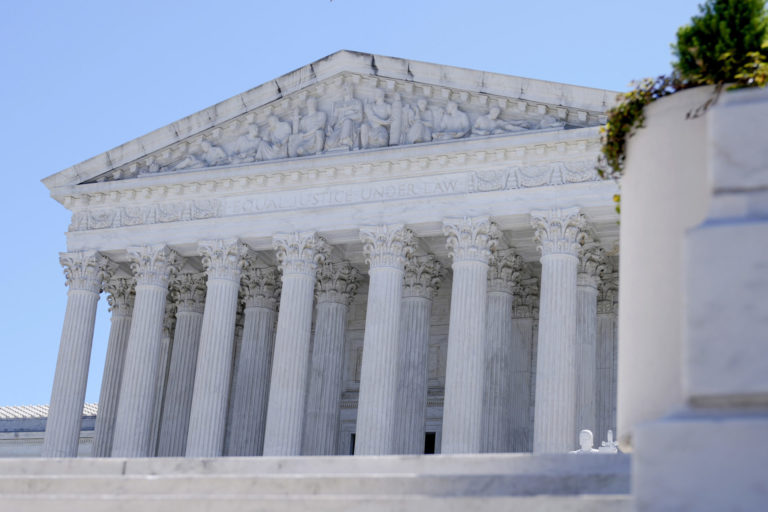
(Headline USA) The U.S. Supreme Court on Monday declined to block Texas from enforcing a state law that requires apps stores to verify users’ ages and obtain parental consent for minors seeking to download apps or make in-app purchases on mobile phones.
Justice Samuel Alito, in a pair of one-sentence orders, denied petitions by plaintiffs who claim that the Texas App Store Accountability Act violates users’ constitutional rights to free speech.
Last month, a three-judge panel from the 5th U.S. Circuit Court of Appeals ruled that the law can take effect. The panel suspended a district court’s ruling last December that the law is unconstitutional.
The plaintiffs suing to block the law include the Computer & Communications Industry Association and Students Engaged in Advancing Texas. Texas Attorney General Ken Paxton is a defendant in both cases.
Plaintiffs’ lawyers argued that the law impermissibly seeks to limit access to content protected by the First Amendment, including news and educational material.
“Equity and the public interest support relief because protecting First Amendment rights — and parents’ rights to supervise their children as they see fit, not as the government tells them they should — is always in the public interest,” wrote attorneys for Students Engaged in Advancing Texas.
Attorneys from Paxton’s office argued that the law protects children from “dangerous modern products.”
“A child with access to an app store and a mobile device (such as a tablet or smartphone) can potentially download any number of software applications, potentially agreeing to invasions of the child’s privacy and sale of the child’s data and be exposed to any conceivable content without parental consent or even parental knowledge,” they wrote.
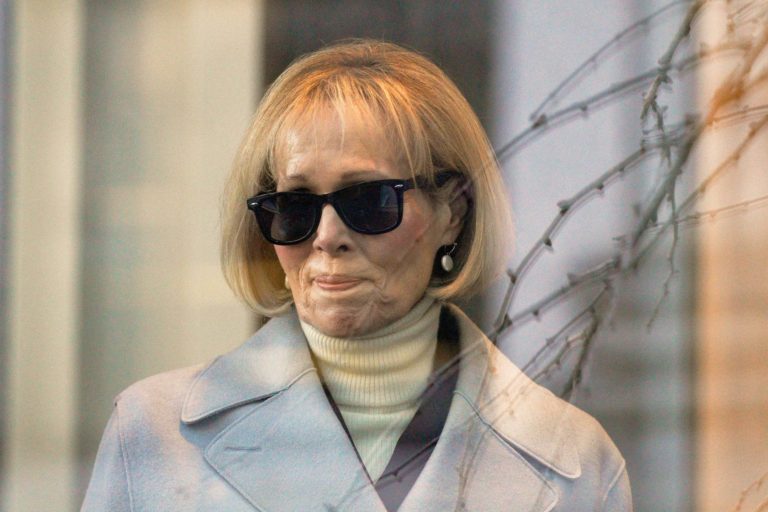
(Headline USA) The writer E. Jean Carroll can collect $5.8 million held in escrow since a jury found that President Donald Trump sexually abused and defamed her, a federal judge ruled Wednesday. Trump’s lawyers immediately appealed but were denied an emergency order to block the payment from being made.
Trump deposited the money in an account shortly after a jury ruled against him in 2023. The U.S. Supreme Court recently let the civil verdict stand, clearing the way for Judge Lewis A. Kaplan to release the money. The initial $5 million award has grown with interest.
The jury found Trump attacked Carroll in 1996 in the dressing room of a luxury Manhattan department store, and defamed her after she described it publicly in a 2019 memoir, during his first term as president. Trump called her allegations false and said “ she’s not my type ” in an interview.
Trump’s lawyers said Wednesday they would continue to appeal and accused his political opponents of using the legal system against him. They argued in appellate papers that Kaplan’s decision shouldn’t be allowed to take effect because Trump has asked the Supreme Court to reconsider its decision.
Late Wednesday, Judge Eunice C. Lee of the 2nd U.S. Circuit Court of Appeals rejected their request to stop the money from being transferred to Carroll.
“It is time for this case to come to an end,” Carroll’s lawyers wrote in a filing with the appellate court.
“Carroll has waited more than three years for a jury’s verdict to be paid,” they wrote. “She should not have to wait any longer.”
The jury had reached its verdict — in a trial that Trump did not attend — after Carroll testified that their flirtatious and friendly chance encounter at the department store turned violent.
Trump insisted he never knew Carroll, now 82, a former advice columnist. He accused her of trying to sell books at his expense and of having political motives.
Carroll sued Trump after New York changed its laws to give sexual abuse survivors a fresh chance to sue over attacks that happened in the distant past.
Trump “has been stalling this case for years,” Kaplan wrote in a memorandum detailing his decision. “It is time for him to ‘do equity’ and pay the judgment.”
Trump is also appealing $83 million in defamation compensation granted to Carroll by a separate Manhattan jury after a 2024 trial where Trump briefly testified.
At that trial, Kaplan required the jury to accept the findings of the previous jury and only determine how much money, if any, Trump owed Carroll for comments he made about her while he was president.
Trump’s lawyers complained that the judge, in setting rules for the damages trial, had barred Trump and his defense team from telling the jury that the encounter with Carroll never happened.
When the 2nd Circuit declined to let all of its judges rehear an appeal of the $83 million award, Circuit Judge Denny Chin wrote that Trump had said multiple times over many years that Carroll lied for political and financial gain and had suggested she was too unattractive for Trump to have sexually assaulted her.
“As a result of Trump’s statements, Carroll was harassed and humiliated, subjected to death threats, and feared for her physical safety for years,” Chin said.
“And Trump showed no remorse, continuing his attacks against Carroll during and after two federal trials, and even proclaiming two days into the Carroll I trial that he would continue to defame her ‘a thousand times.’”
(Mike Maharrey, Money Metals News Service) Despite significant outflows of metal in May and June, gold ETFs globally reported a net increase in gold holdings through the first half of 2026.
North American funds shed gold through H1, but every other region reported gold inflows through the first half of 2026. On net, ETFs globally added 17.6 tonnes of gold to their holdings from January through June.
Assets under management (AUM) by gold ETFs globally dipped to $526 billion in June, primarily due to a decline in gold prices. Through the first half of 2026, global gold ETF AUM dropped by 6 percent.
North American funds reported a 60.5-tonne decrease in gold holdings through H1 valued at $7.7 billion. It was the weakest first half for North American gold-backed funds since 2013.
North American fund reported outflows of 42.4 tonnes of gold in June alone. According to the World Gold Council, higher interest rate expectations are creating headwinds for gold, particularly in North America.
“As new Fed Chair Warsh sent hawkish – as the market interpreted – signals and the US-Iran conflict pushed inflation fears up, expectations intensified of higher interest rates ahead. This anticipation contributed to rising real yields and a strengthening dollar, pushing up investors’ opportunity costs of holding gold.”
In contrast, Asian gold ETFs had their best H1 on record, adding 69.7 tonnes of gold valued at $12 billion. This despite a 17.5-tonne metal outflow in June, the worst month on record.
According to the World Gold Council, June’s decline in Asian ETF gold holdings was primarily driven by Chinese selling. Equity gains, a bigger risk appetite, and a lower gold price have cooled the Chinese gold market in recent weeks.
European funds added 8.2 tonnes of gold in H1, valued at $3.2 billion. The market reported significant outflows totaling 12.1 tonnes in June. World Gold Council analysts say price weakness has driven net ETF sales over the last couple of months.
Meanwhile, the European Central Bank hiked interest rates by 25 basis points in June. It was the first ECB rate hike since September 2023.
Funds in other regions, including Australia and Africa, saw virtually no change in their gold holdings through the first half of 2026, reporting just a 0.2-tonne increase.
ETFs are relatively liquid. You can buy or sell an ETF with a couple of mouse clicks. You don’t have to worry about transporting or storing metal. In a nutshell, it allows investors to play the gold market without buying full ounces of metal at the spot price.
Since you are just buying a number in a computer, you can easily trade your ETF shares for another stock or cash whenever you want, even multiple times on the same day. Many speculative investors take advantage of this liquidity.
But while a gold ETF is a convenient way to play the price of gold on the market, you don’t possess any gold. You have paper. And you don’t know for sure that the fund has all the gold either, especially when it sees inflows. In such a scenario, there have been difficulties or delays in obtaining physical metal.
Trading Volumes
Gold trading volumes decreased by 13 percent month-on-month in June to $337 billion per day.
Over-the-counter (OTC) activities also declined 13 percent to $214 billion per day. That remains well above the 2025 average of $180 billion per day.
Global gold market liquidity surged to a record $488 billion per day in H1. It was the strongest semi-annual average in the World Gold Council’s data. According to the WGC, strength was “broad-based,” with every major segment posting its most active semi-annual averages on record.
Despite the weaker gold price, total COMEX net longs rebounded by 16 percent month-on-month to 538 tonnes. That was the highest month-end level since January. World Gold Council analysts said, “It is noteworthy that managed money net longs have been rising since early June despite a weakening gold price.”
Mike Maharrey is a journalist and market analyst for Money Metals with over a decade of experience in precious metals. He holds a BS in accounting from the University of Kentucky and a BA in journalism from the University of South Florida.
(Mike Maharrey, Money Metals News Service) Hong Kong has launched trial operations of its gold clearing and settlement system, putting the region in a position to challenge Western dominance of the global gold market.
London, New York, and Switzerland have served as the center of the gold trade for nearly two centuries. However, with gold progressively flowing from West to East, China and other Asian hubs are developing the infrastructure to challenge Western dominance.
Hong Kong Precious Metals Central Clearing Company CEO John Lee Ka-chiu called the commencement of operations “a milestone.”
“The launch of Hong Kong’s central clearing system for gold will create a historic foundation, allowing us to take the next major step, and that’s building a comprehensive gold trading ecosystem.”
The government-owned clearing system will reportedly “mirror” the financial infrastructure used by the LBMA in London.
Lee said the company will offer “a comprehensive suite of services ranging from gold deposits and withdrawals to transaction settlements in the over-the-counter market in Hong Kong,” adding that a new gold price ticker – HAU – would be introduced to “ensure that Hong Kong gold prices are fully accessible to global market participants.”
According to Lee, the first transactions involved multiple banks and refiners, along with mining and jewelry companies.
The new gold clearing system also features a partnership with the Shanghai Gold Exchange. Lee said that “Delivery Connect” will “bridge the fiscal liquidity pools of both markets.”
Cooperation between the Hong Kong clearing company and the Shanghai Gold Exchange will reportedly include facilitation of physical gold delivery, warehousing, and further enhancing financial connectivity between the two markets. Through this partnership, gold stored in approved Hong Kong vaults can be transferred into the SGE system and vice versa. Once the metal is inside either system, it becomes eligible for settlement without having to be re-assayed or shipped through an entirely separate process.
The Hong Kong government is reportedly considering offering tax incentives for eligible institutions conducting gold trading and settlement in Hong Kong to boost interest and participation in the regional clearing house.
Swiss precious metals trader MKS PAMP will participate in the new clearing system. Company CEO James Emmett said the system reflects “the growing connectivity between mainland China and international markets.”
According to reporting by Bloomberg, participants in the Hong Kong clearing house will be able to settle trades through “unallocated” accounts, meaning that the customer can hold a claim against a clearer on a quantity of gold without the need to own specific numbered bars.
In practice, the system is similar to fractional reserve banking. The customer owns the rights to a specific quantity of metal held by a bullion bank. However, the bank does not segregate or earmark specific bars for that customer. Trading through this mechanism is faster and more liquid; however, it increases counterparty risk for the customer because she or he bears the credit risk of the bullion bank.
Most London precious metals trades are facilitated through unallocated accounts.
According to Bloomberg, Hong Kong has invited “a number” of banks friendly to China to participate in the new clearing system.
Lee said the company was also considering introducing a renminbi-denominated gold futures contract with delivery support from the Shanghai Gold Exchange in collaboration with Bloomberg.
JPMorgan Chase Hong Kong CEO Kwang Kam Shing told the South China Morning Post that the new system will support efforts to strengthen Hong Kong’s role as a key gold trading center for the Asia-Pacific region.
“Global investor demand for gold has been increasing, and we see Hong Kong playing an important role in this market by supporting liquidity across time zones and meeting evolving client needs.”
In another move to elevate its status as a gold hub, Hong Kong officials plan to expand the region’s gold storage capacity from 200 to more than 2,000 tonnes over the next three years.
Looking at the bigger picture, it reveals a slow but steady migration of the gold trade from the West to the East.
In 2024, World Gold Council head of Asia-Pacific and global head of central banks, Shaokai Fan, noted this shift, saying the “center of gravity” of the gold market has shifted to the East, as gold consumption by emerging market economies is rapidly rising and the majority is concentrated in Asia.
Meanwhile, Chinese gold investment has primarily driven the recent bull market. Gold coin and bar demand hit a 12-year high of 1,374.1 tonnes in 2025 with a record-breaking value of $154 billion. More than half of that global coin and bar demand came from two countries – China and India.
Mike Maharrey is a journalist and market analyst for Money Metals with over a decade of experience in precious metals. He holds a BS in accounting from the University of Kentucky and a BA in journalism from the University of South Florida.
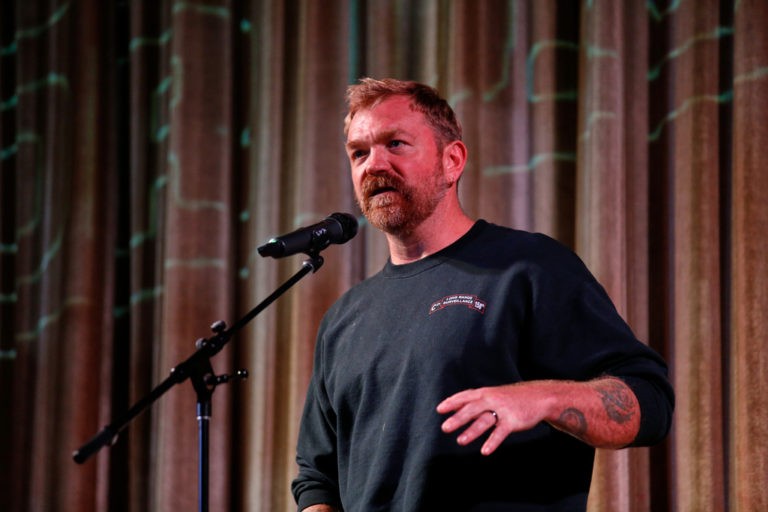
(Christen Smith, The Center Square) Graham Platner, the controversial Democratic nominee for Maine’s U.S. Senate seat, dropped out of the race Wednesday amid intense scrutiny over new sexual assault allegations from a former girlfriend.
The alleged assault was first reported by Politico, which said the woman — Jenny Racicot, 41 — claimed the attack occurred in the Maine town where she lived in 2021 when she and Platner were dating.
Platner denied the claims in a video message posted on social media, but said he would take time to “reflect” on how to proceed with his Senate campaign. He canceled several campaign events for Sunday and Monday.
On Wednesday, he reiterated that Racicot’s claims are “not remotely true.”
“Over the past couple of days, I have faced some serious allegations, and I just want to make it clear, this is all false,” he said. “The things that have been claimed did not happen. It’s not real.”
He went on to blame the corporate media system and the political establishment for acting as “judge, jury and executioner” in a conspiracy to thwart his populist agenda.
“They would rather see Susan Collins win than have me be the next senator from Maine,” he said.
Meanwhile, prominent Democrats across the nation who once backed him reversed course, calling on the Marine veteran and oyster farmer to withdraw from the race ahead of a July 13 deadline to replace him.
The race is considered a key plank of Democrats’ push to retake the Senate — where Republicans currently have a 53-47 majority.
The first-time candidate has been dogged by allegations of excessive drinking, infidelity, scandals involving explicit text messages, past online comments and a covered-up Nazi tattoo.
Despite this, recent polls showed Platner leading sitting Republican U.S. Sen. Susan Collins among likely voters.
“This is incredibly difficult because I know that some will think it’s an admission of guilt and it most certainly is not,” Platner said Wednesday in a video posted to X. “We are not doing it because of the allegations, we are doing it because of the structures that are being taken away from us by those in power.”
(Money Metals News Service) The sharp correction in gold prices during the first half of 2026 has left many investors wondering whether the precious metal’s bull market has come to an end. According to Money Metals’ Mike Maharrey, however, the market’s recent weakness is largely a matter of perspective.
While gold has fallen significantly from its January peak above $5,000 per ounce, the metal is actually down only about 7% year-to-date. The perception of a much larger decline stems from the extraordinary rally that occurred during the first two weeks of January, when gold set 12 all-time highs before entering a healthy correction.
Gold Remains One of the Year’s Top Performers
Although gold has retreated nearly 30% from its record high, much of that decline simply erased the unsustainable gains made during January’s surge. Since then, following a brief rally during the U.S.-Iran conflict, gold has largely traded between $4,000 and $4,500 per ounce.
Price swings have also been unusually large. Gold’s annualized volatility climbed above 50% early in the year before easing to around 30%, still well above its 20-year average of approximately 17%. Geopolitical uncertainty, labor market data, inflation expectations, and shifting Federal Reserve policy expectations have all contributed to the heightened volatility.
Despite the correction, gold remains one of the strongest-performing major assets over the past year. The metal is still up roughly 33% over the last 12 months, outperforming U.S. stocks, bonds, commodities, cash, and even a traditional balanced investment portfolio. Only emerging market equities have delivered stronger returns during the same period.
Labor Market Data Continues to Influence Gold Prices
Maharrey argues that much of the recent pressure on gold has come from investor confidence in the labor market and the belief that the Federal Reserve will maintain restrictive monetary policy.
He points to recent Bureau of Labor Statistics revisions that reduced prior employment estimates and notes that headline job reports often fail to capture broader labor market weakness, including involuntary part-time employment and workers holding multiple jobs.
According to Maharrey, investors should look beyond headline employment numbers because labor market perceptions have become one of the key drivers influencing expectations for future interest rate decisions and, by extension, precious metals prices.
The World Gold Council Expects Range-Bound Trading
The World Gold Council believes current gold prices generally reflect today’s economic backdrop of moderate growth, cooling—but still elevated—inflation, and expectations for limited additional central bank tightening.
Under those conditions, the Council expects gold to remain relatively range-bound, fluctuating roughly plus or minus 5% in the near term.
The Council also outlined several factors that could determine gold’s next major move. A weakening economy, renewed geopolitical turmoil, lower interest rate expectations, or increased buying during price dips could send gold back toward $4,500 per ounce or higher. Conversely, stronger economic growth, rising bond yields, and calmer financial markets could pressure prices further, although sustained central bank purchases and policy changes in countries such as India may help support demand.
Maharrey believes the more bullish scenario is ultimately more likely, arguing that slowing economic conditions will eventually force the Federal Reserve to abandon its restrictive stance.
Kevin Warsh’s Tough Inflation Rhetoric Faces Economic Reality
A major focus of the episode is new Federal Reserve Chair Kevin Warsh, who has repeatedly emphasized his commitment to returning inflation to the Fed’s 2% target.
Speaking at the European Central Bank Forum on Central Banking, Warsh stated that anyone expecting the Federal Reserve to tolerate inflation above 2% “is going to be disappointed,” pledging that the central bank will deliver price stability. He has also indicated that the Fed will no longer provide the same level of forward guidance that characterized Jerome Powell’s tenure, potentially creating greater market uncertainty and volatility.
Warsh’s hawkish messaging has significantly influenced financial markets. Only a few months ago, many investors expected additional rate cuts during 2026. Today, market sentiment has shifted dramatically toward expectations that rates will remain elevated—or even increase further before year-end.
Higher Rates May Not Be Sustainable
Despite Warsh’s firm rhetoric, Maharrey questions whether the Federal Reserve can realistically maintain tight monetary policy in an economy burdened by historically high levels of government, corporate, and consumer debt.
While today’s interest rates remain relatively low by long-term historical standards, Maharrey argues they are already restrictive enough to strain an economy that has become heavily dependent on cheap credit after decades of easy monetary policy.
He contends that the Federal Reserve faces an unavoidable dilemma. Maintaining higher interest rates could eventually trigger a recession, financial market stress, or a debt crisis. On the other hand, returning to an easier monetary policy would likely reignite inflation.
According to Maharrey, the central bank cannot simultaneously fight inflation aggressively while also providing enough monetary stimulus to sustain today’s debt-dependent economy.
Politics May Ultimately Override Inflation Fighting
Maharrey argues that history suggests political realities often outweigh inflation concerns.
While recessions help eliminate economic distortions created by years of artificially low interest rates and excessive money creation, they also create political pain. Policymakers typically respond by introducing new stimulus programs designed to soften economic downturns, even if doing so increases future inflationary pressures.
He points to the Federal Reserve’s response following the 2018 market slowdown, the subsequent 2019 rate cuts, and the extraordinary monetary response during the COVID-19 pandemic, when interest rates were reduced to 0% and nearly $5 trillion of quantitative easing was introduced. Rather than solving underlying structural problems, Maharrey believes those actions merely postponed an eventual economic reckoning.
Dunkley argues that policymakers have effectively abandoned the idea of allowing prolonged recessions, choosing instead to respond to economic weakness with additional stimulus whenever necessary. As government debt continues to expand, he believes central banks will ultimately suppress real interest rates and return to money creation rather than allow severe economic contractions.
According to Dunkley, these long-term structural forces remain highly supportive of gold despite the recent correction. While short-term expectations of tighter monetary policy have pressured prices, he believes the broader gold bull market remains intact because governments cannot tolerate sustained economic pain or significantly higher borrowing costs.
Gold’s Long-Term Outlook Remains Bullish
Maharrey concludes that current weakness in gold represents a buying opportunity rather than the end of the bull market.
Although he remains cautious in the short term due to persistent expectations of higher interest rates, he believes those expectations will eventually collide with economic reality. If recession risks increase or financial markets weaken significantly, he expects policymakers to return to lower interest rates, renewed quantitative easing, and additional money creation.
Because currencies steadily lose purchasing power over time, Maharrey argues that investors should continue accumulating physical gold and silver as long-term stores of wealth. With gold trading roughly $1,000 below its all-time high, he views the current environment as an attractive opportunity for long-term precious metals investors, particularly those using dollar-cost averaging through monthly purchasing programs.
(José Niño,Headline USA) The Jewish Federations of North America is actively lobbying lawmakers to pass the KIDS Act because the expansive legislative package will supposedly help combat “online antisemitism” according toJewish Insider.
Omer Yarden Oppenheim directs government relations at JFNA. He told Jewish Insider that online antisemitism has been a major conversation and challenge for Jewish families especially since the Oct. 7 2023 Hamas attacks on Israel.
He said the group identified four bills in the House’s online safety push that it felt could play a role in addressing online antisemitism which were ultimately packaged into the KIDS Act.
Chris Menahan recentlytweeted about this development and exposed the underlying motives behind the legislation. Menahan pointed out that the JFNA previously succeeded in lobbying the U.S. government to ban TikTok. Now they are backing the KIDS Act under the guise of child protection while secretly pushing for broader internet censorship.
The Jewish Federations of North America is lobbying lawmakers to pass the KIDS Act because the sprawling legislative package will help address "online antisemitism," Jewish Insider reports.
The Electronic Frontier Foundation recently published ascathing critique of the bill. The organization warned that the legislation contains dangerous provisions.
“Buried inside the KIDS Act are provisions that will push online services to verify all users’ ages, require government-directed moderation policies for online speech, and even create new rules about private and encrypted communications,” the EFF reported last month. “While supporters continue to claim this bill protects minors online, its requirements come at the expense of privacy, free expression, and the ability of people of all ages to use the internet without revealing sensitive data.”
Menahan accurately highlights how advocacy groups use child safety as a smokescreen to advance speech suppression. The KIDS Act passed the House recently according toCNBC. It bundles numerous bills together. The EFF warns that the legislation will force platforms to implement invasive age verification systems and police lawful speech.
José Niño is the deputy editor of Headline USA. Follow him at x.com/JoseAlNino
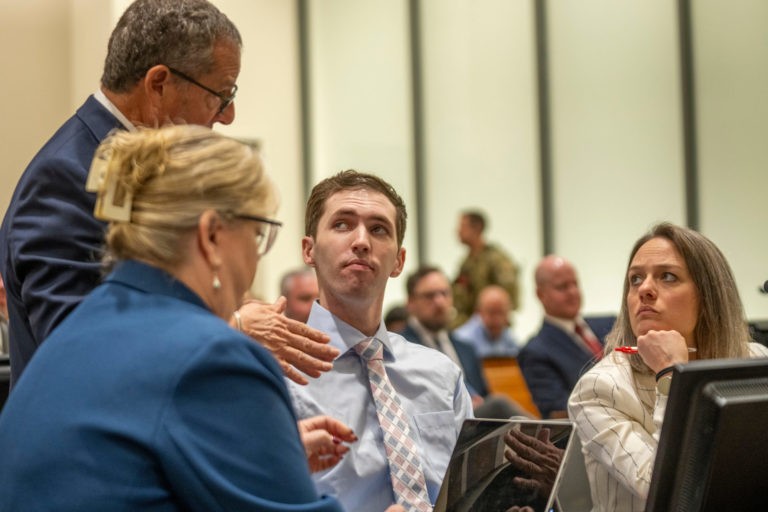
(Headline USA) Utah prosecutors plan to play audio clips in open court Thursday of law enforcement officials interviewing the roommate of the man accused of killing conservative activist Charlie Kirk.
Defense attorneys fought against the public release of the statements from Tyler Robinson’s roommate and romantic partner, Lance Twiggs. They said prosecutors would characterize the statements as a confession, undermining Robinson’s right to a fair trial if the statements are broadcast by the media.
Robinson is charged with aggravated murder and has not entered a plea. He turned himself in a day after the fatal shooting of Kirk, a close ally of President Donald Trump credited with helping galvanize the youth vote for Trump in the 2024 election.
Prosecutors allege Robinson confessed in a note left for Twiggs that read: “I had the opportunity to take out Charlie Kirk and I’m going to take it.” Robinson also allegedly sent a text to Twiggs saying he targeted Kirk because he “had enough of his hatred.”
Twiggs spoke to authorities on Sept. 12 — two days after Kirk was assassinated while speaking to a crowd of thousands at Utah Valley University — and again on April 20. He was given immunity for the statements, meaning what Twiggs said cannot be used against him in a potential criminal case.
State District Judge Tony Graf will decide at the conclusion of this week’s preliminary hearing if prosecutors have enough evidence to bring Robinson to trial.
Robinson’s attorneys have not commented on his guilt or innocence but have sought to get the death penalty taken off the table, so far unsuccessfully.
Attorneys for Kirk’s family and the media had urged the judge to make Twiggs’ statements and other evidence public.
“To not be transparent, to not be open and let the world see what happened will create doubt and distrust in the judicial system,” Kirk family lawyer Jeffrey Neiman told Graf.
Investigators say Robinson went to a rooftop near where Kirk was speaking and shot him once through the neck as the activist was taking questions from a crowd of several thousand people. Kirk was declared dead after being taken to a hospital.
Investigators found the suspected murder weapon — a bolt-action rifle with one spent round — wrapped in a towel in a wooded area near where Kirk was shot.
Robinson’s lawyers earlier this week questioned the reliability of DNA testing used to link the defendant to the towel and gun.
A member of Tyler Robinson’s defense team interrogated a DNA analyst from the FBI about the techniques she used to connect Robinson to the evidence. Defense lawyer Michael Burt cast doubt on the analyst’s conclusions.
“She can’t match Mr. Robinson to the questioned samples,” Burt argued.
But forensics expert Lawrence Quarino said law enforcement agencies use “extremely reliable” tests to determine the probability that a person matches with DNA found at a crime scene.
DNA testing “is the gold standard in forensic science,” said Quarino, a professor and director of the forensic science program at Cedar Crest College in Pennsylvania.
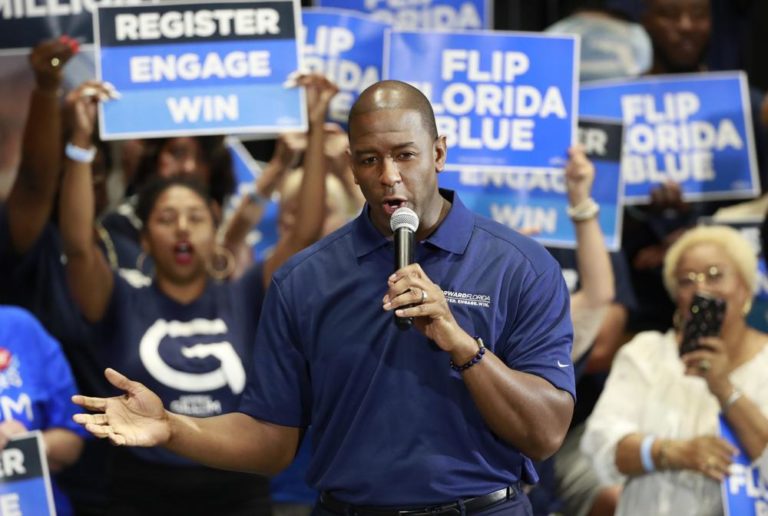
(Luis Cornelio, Headline USA) The disgraced former Democratic politician who nearly became Florida’s governor in 2018 was arrested days before July 4 on drug-tied offenses, Headline USA can confirm.
Andrew Gillum, once a leftist darling who lost the Sunshine State’s gubernatorial race to Ron DeSantis, was arrested after allegedly possessing drugs and a glass pipe during a traffic stop in Daphne, Alabama.
The Daphne Police Department reportedly stopped Gillum after officers spotted him driving erratically.
Police records reviewed by Headline USA show Gillum was arrested at approximately 10:44 p.m. local time on July 2 near the 20000 block of U.S. Highway 98.
DPD allegedly spotted a glass pipe on the center console, establishing probable cause for a vehicle search, according to Alabama outlet 1819.
🚨ARRESTED🚨
Former Florida gubernatorial candidate Andrew Gillum, who narrowly lost to Ron DeSantis in 2018, was arrested last week in Alabama on drug charges.
Gillum was taken into custody Thursday night in Daphne, AL, and booked into Baldwin County jail for possession of… pic.twitter.com/BfiKDRhPQC
DPD booked Gillum on charges of possession of dangerous drugs, drug paraphernalia and possession of marijuana.
Headline USA reviewed records from the Baldwin County Sheriff’s Office that indicate Gillum was transferred to the county jail on July 3. The records show he was released later that day after posting bond.
The July 2 arrest marks Gillum’s latest run-in with law enforcement since he narrowly lost the 2018 Florida gubernatorial election.
In 2020, Gillum was found heavily intoxicated in a Miami hotel room with a male escort who was reportedly suffering from a drug overdose. Gillum did not face charges in that incident.
Months later, Gillum, who is married to a woman, came out as “bisexual.” His wife, R. Jai Gillum, later said she had known about his bisexuality before they married.
Former Florida governor candidate Andrew Gillum tells Tamron Hall he's bisexual: "That is something I have never shared publicly before" pic.twitter.com/prUW7NPk1C
In 2022, Gillum was indicted by a federal grand jury on 21 counts in connection with an alleged conspiracy to commit wire fraud and making false statements to the FBI.
A jury acquitted him on the false statements charge but deadlocked on the remaining counts. The Biden administration later opted to drop all other charges.
Before running for Florida governor, Gillum served as Tallahassee’s mayor from November 2014 through 2018 and as a city commissioner from 2003 through 2014.
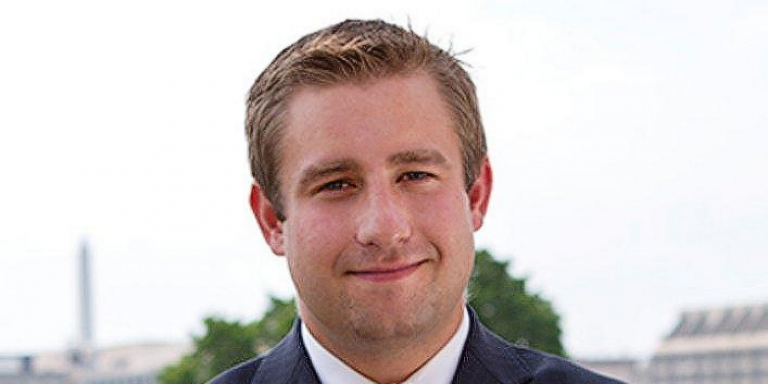
On July 7, 2026, the Tennessee Republicanposted on X that he had formally pressed FBI Director Kash Patel to surrender every document the bureau holds on the 2016 killing of DNC staffer Seth Rich. “I have called for @FBIDirectorKash to release all records related to the death of Seth Rich,” Burchett wrote. His press office added, “Today, I sent a letter to FBI Director Kash Patel asking for the release of all records related to the death of Seth Rich. The American people deserve answers.”
Theletter itself, dated on Tuesday, opens plainly. “I write to request the release of all Federal Bureau of Investigation (FBI) records related to the death of Seth Rich,” Burchett states. He then leans on the White House, urging, “Given the Administration’s commitment to transparency, I strongly urge the full release of these records, as permitted by law.”
Rich, 27, was shot and killed while walking home in Washington during the early morning hours of July 10, 2016. Police treated the case as a botched robbery, and it stays unsolved. Rich’s death later fueled a viral theory that he leaked DNC emails to WikiLeaks and was silenced for it.
Burchett’s demand follows years of FOIA warfare waged by attorney Ty Clevenger on behalf of plaintiff Brian Huddleston. The FBI first claimed it held no relevant files, thenconceded it possessed more than 20,000 pages of potentially relevant material, Rich’s work laptop, and an image of his personal one.
According to Radar, this week Clevengersaid a government lawyer told him he would soon receive confirmation that several hundred more Rich pages had surfaced inside a previously concealed room at FBI headquarters—the same unmapped SCIF where “burn bags” of Russia-probe files marked for destruction were reportedly found.
That connection remains Clevenger’s account. The FBI has not confirmed it, and the separate burn-bags report never established that Rich records were among those files.
José Niño is the deputy editor of Headline USA. Follow him at x.com/JoseAlNino