Eliyahu asked the crowd “Do we want Judea and Samaria [the West Bank]? Do we want Syria? Do we want Lebanon? Do we want Gaza?” leading to thunderous cheers and him admonishing that the crowd needs to “shout it out.”
The comments take on more relevance as Israel is already actively occupying parts of southern Lebanon and southwestern Syria, and the far-right is increasingly advocating for an expansion of that.
The conference was by the youth organization of the Ribonut organization, which advocates the extension of “sovereignty” over the West Bank and argues that it is immoral to even contemplate a two-state solution. They have called the Gaza War as an “opportunity” for their goals, though they did not previously go so far as to advocate taking Syria and Lebanon as well.
Minister Eliyahu, the grandson of a former Sephardi Chief Rabbi, has made the news several times lately. Last month he said in an interview that he sees no problem with Israel bombing food supplies in the Gaza Strip because “they need to starve.”
That statement didn’t lead to any repercussions politically for Eliyahu, and there hasn’t been any suggestion today’s comments will be any different. Back in 2023, however, he was temporarily suspended from cabinet meetings for a radio interview where he suggested that dropping a nuclear weapon on the Gaza Strip was an option.
Eliyahu is a minister from the Otzma Yehudit party of National Security Minister Itamar Ben-Gvir, who has claimed credit for preventing Israel from reaching ceasefires in the ongoing Gaza War.
(Ken Silva, Headline USA) Headline USA has obtained speeches alleged would-be Trump assassin Thomas Crooks recorded for class at the Community College of Allegheny County. Watch them here for the first time.
The speeches are from 2022, when a then-18-year-old Crooks was just starting at CCAC. Crooks graduated in the spring of 2024 and was set to attend Robert Morris University last fall—but he died on July 13 after he allegedly shot at Donald Trump at a Butler, Pennsylvania campaign rally, killing one attendee and seriously wounding at least two others in the process.
The New York Times released an excerpt of one of Crooks’s speeches earlier this month, but withheld the full recording. In that speech, Crooks talks about his passion for engineering and cooking with his family—aspects of his life that he said he valued the most.
🚨NEW: "Ever since I got my first LEGO set as a little kid, I’ve always loved building and creating things." — Thomas Crooks
We have obtained speeches Crooks recorded for class at the Community College of Allegheny County. Watch them in full here for the first time.
“Ever since I got my first LEGO set as a little kid, I’ve always loved building and creating things. From model airplanes to gaming PCs to 3D printing, I’ve always had a passion for building things with my hands and for problem solving. I also have an interest in technology, whether that be the latest computer technology, AI and robotics, or even cryptocurrency,” Crooks said.
“Outside of this, my family has always been a very important part of my life, and I don’t think there’s any better way to spend time with family than cooking meals together,” he added.
In another video, Crooks talked about 3D printing—comparing different brands and printer types. ATF agents found a 3D printer when they searched his house on July 13, though it’s unclear what he was making with that machine.
In yet another video, Crooks talks about fixing a flat tire.
And in the final video obtained by this news site, Crooks records a commercial for the 2022 Hyundai Elantra.
“There are many options on the market today for a mid-sized sedan, but none can match the quality and features in this car,” Crooks said in the video. “Clearly, the 2022 Hyundai Elantra should be at the top of the list for any new car provider.”
Crooks reportedly drove a Hyundai Sonata, though open-source researchers have determined that he, in fact, drove an Elantra.
Headline USA’s publication of Crooks’ college presentations follows its release of his college emails last month. Additionally, this publication was also the first to publish Crooks’ autopsy report, toxicology exams, and the 911 call his father made the night of July 13.
Note: This story has been updated to reflect that the conflicting reports about what vehicle Crooks drove.
Ken Silva is the editor of Headline USA. Follow him at x.com/jd_cashless.
(Andrew Rice, The Center Square) Democratic governors and Congress members shifted blame for immigration enforcement to the federal government and called ICE immigration enforcement a “gestapo operation” in opening statements at a congressional hearing Thursday.
U.S. Rep. Stephen Lynch, D-Mass., compared arrests by Immigration and Customs enforcement to “gestapo operations” in his opening statement.
“My dad served in the Second World War. He fought the Nazis in Northern Africa. He fought the Nazis on the Italian peninsula. And I think he’s looking down right now, and he’s happy that I’m fighting today’s Nazis,” Lynch said.
U.S. Rep. James Comer, R-Ky., criticized Walz and Lynch’s comments comparing ICE arrests to Nazi Germany. He said such comments have led to a 413% rise in assaults against ICE agents.
“Do you and other Democrat politicians understand why referencing ICE as Gestapo is offensive?” Comer asked.
“We see numerous videos of rioters obstructing and assaulting federal enforcements after your remarks, including in Los Angeles,” Comer said.
Governors on the panel said that the federal government is responsible for upholding immigration laws, while states continue to maintain order.
“Now we have a broken immigration system in this country,” Walz said.
Minnesota requires state and local law enforcement agencies to cooperate with Immigrations and Customs Enforcement, despite several cities in the state including Minneapolis and St. Paul limiting cooperation with federal immigration officers.
“Securing our borders does not mean we sacrifice our constitutional values. Unfortunately, the cruel and misguided policies of this current administration fail to live up to these values,” Walz said.
Kathy Hochul boasted about New York’s policies on immigration and said the state has “prospered” from immigration to the state.
“In New York, we understand the difference Between going after criminals and traumatizing law-abiding families,” Hochul said.
Both Walz and Hochul said it is the responsibility of Congress and the federal government to uphold immigration laws and protect the border.
“You all have the power to legislate, to investigate this administration’s abuse and overreach and protect the American people,” Walz said.
“If you truly care about public safety, if you truly care about the economy, if you truly care about human dignity, then sit down, negotiate, have real reform, secure the border, revive legal pathways and let people work,” Hochul added.
Republicans on the committee showed photos of non-citizens who committed crimes against U.S. residents. Republicans then asked the panel of governors about those crimes, the victims and why their states wouldn’t work with ICE.
Hochul took the brunt of those questions, but similar questions were posed to Pritzker and Walz.
(Mike Maharrey, Money Metals News Service) Argentines are married to the dollar, but they’re having a love affair with gold.
As a Bloomberg article framed it, Argentines were once “almost irrationally devoted to the dollar.” In fact, the country ranks among the top holders of U.S. dollars.
According to Bloomberg, the devotion to the dollar “is now being challenged by a growing appetite for gold.”
“From bullion and small bars to exchange-traded funds, Argentines are increasingly turning to the precious metal as an alternative store of value.”
The reason is simple – the dollar has lost its luster. In the minds of many Argentines, the greenback no longer provides the inflation hedge it once did.
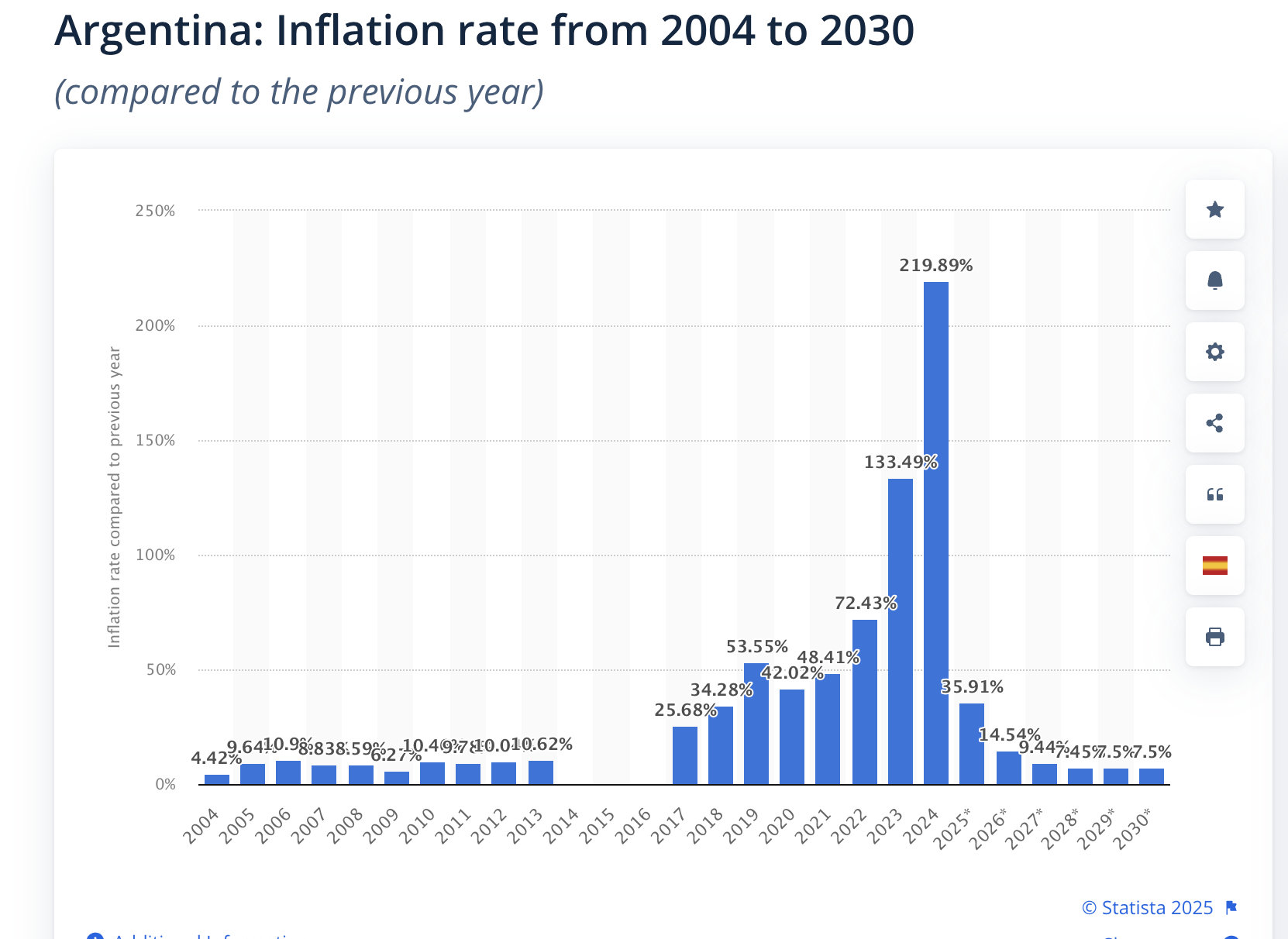
Argentines have struggled with inflation for decades. The country’s price index increased by 25 percent in 2017, and it got worse from there.
However, the peso has strengthened with the economic reforms introduced by President Javier Milei. Meanwhile, the U.S. continues to inflate the dollar. A population wary of the government abusing its currency has taken notice.
New government policies have also boosted gold’s appeal.
The Argentine government recently removed foreign exchange controls for individual investors, allowing them to purchase gold directly in pesos. This eliminated the need for dollars to buy gold. As Bloomberg put it, “That opened the door for small savers in search of a more stable store of value.”
Argentines can buy up to $7,200 in gold each month without disclosing the source of the purchasing funds. A recently proposed bill would raise the threshold to $12,000.
Banco Piano is one of the few Argentine banks that sells .999 pure physical gold with a certificate of origin. The bank has already quadrupled its gold imports from Switzerland this year.
Banco Piano director Leonardo Echegoyen told Bloomberg that investing in gold has become “very trendy.”
“People want to earn a return on their dollars, and they’re looking for that return in this commodity.”
He noted that even seasoned investors who have never considered gold have hopped on the bandwagon.
Brokers say there is also growing interest in gold ETFs. Win Securities partner Fabio Saraniti told Bloomberg, “There’s more demand for gold this year.”
“That happens because when financial assets rise, people want to buy. And when they fall, they want to sell.”
Jewelers are getting a boost from Argentina’s burgeoning love affair with gold. A spokesperson for one of the country’s most established jewelers said daily gold inquiries have tripled this year, and sales have already doubled over 2024.
“People want to preserve their capital amid economic uncertainty. They know time deposits offer low returns.”
Dollar weakness is driving Argentines to gold. The dollar index is down 7.5 percent since the beginning of the year, and many Argentines worry the dollar’s devaluation will accelerate. The U.S. government is buried under $36 trillion in debt and continues to borrow and spend with reckless abandon.
Argentines have an innate distrust of their banking system. During the country’s 2001 financial crisis, the government forcibly converted dollar deposits into pesos. As a result, Argentines pulled nearly $200 billion out of the financial system, storing money in safe deposit boxes, sheltering in real estate, or hiding it under their mattresses.
Juan Piantoni is the CEO of a safe deposit box manufacturer. He said that gold is now replacing dollars in those safe deposit boxes.
“Storing dollars in a safe deposit box isn’t common practice in most countries. It’s a uniquely Argentine habit,” he said, adding that Argentines view safe deposit boxes as a place meant for valuables.
Argentines spurning the dollar is more evidence of the trend toward de-dollarization. If it continues, it will be bad news for the U.S. economy.
Simply put, the U.S. needs the world to need dollars.
The U.S. depends on this global demand for dollars supported by its reserve status to underpin its massive government. The only reason Uncle Sam can borrow, spend, and run massive budget deficits to the extent that it does is the dollar’s role as the world’s reserve currency. It creates a built-in global demand for dollars and dollar-denominated assets. This absorbs the Federal Reserve’s money creation and helps maintain dollar strength despite the Federal Reserve’s inflationary policies.
Even a modest de-dollarization of the world economy would cause a dollar glut. The value of the U.S. currency would further depreciate. That translates to more price inflation at home. In the worst-case scenario, the dollar could collapse completely, leading to hyperinflation.
There is a way to shield yourself from the impacts of de-dollarization — minimize your exposure to the dollar. Instead of holding U.S. government fiat currency, buy gold and silver.
That’s exactly what Argentines are doing.
Mike Maharrey is a journalist and market analyst for Money Metals with over a decade of experience in precious metals. He holds a BS in accounting from the University of Kentucky and a BA in journalism from the University of South Florida.
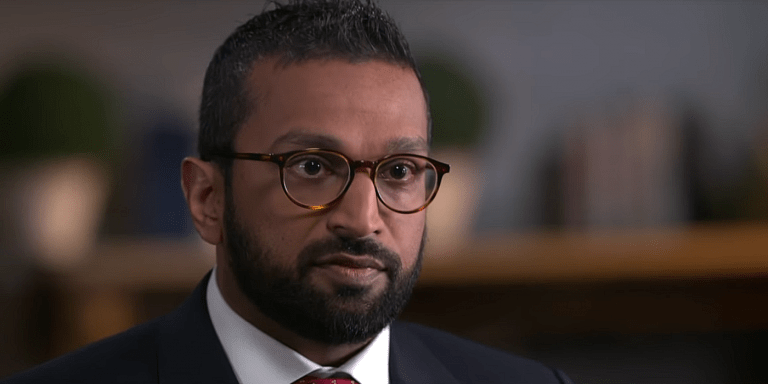
(Ken Silva, Headline USA) FBI Director Kashyap Patel has been flying his bureau’s jet around the country in recent months, including to visit sporting events, the Joe Rogan show, and even his girlfriend in Tennessee—all on the taxpayers’ dime.
However, Patel says he hasn’t visited any nightclubs, and he’s willing to file a defamation lawsuit to prove it. The newly minted FBI director filed a lawsuit earlier this month against former agent and current MSNBC contributor Frank Figliuzzi, who last month said: “Reportedly (Patel has) been visible at nightclubs far more than he has been on the seventh floor of the Hoover Building.” MSNBC retracted Figliuzzi’s comment on May 5.
Con artists are going to look back at Kashyap Patel as one of the best to ever do it. On the same week Patel promoted his shitty book on Joe Rogan, the sitting FBI Director also filed a defamation lawsuit against a former agent for saying that he spent more time in the nightclub… https://t.co/vn0G4DLOnHpic.twitter.com/IxhZR4H5NX
“There was no basis for [Figluizzi’s] fabrication, and Defendant’s use of the weasel word, ‘reportedly,’ is itself a fabrication, as Defendant did not rely on reporting by any other person. Defendant made up the story out of whole cloth, and by using the word ‘reportedly,’ attempts to distance himself from what is a maliciously false and defamatory statement,” Patel’s June 2 lawsuit states.
The FBI director also complained about Figluizzi’s assertion that “Patel may be even more dangerous than the late FBI Director J. Edgar Hoover.”
Patel seeks more than $75,000 in Compensatory, special, and punitive damages. It’s unclear how Figluzzi’s comments damaged Patel. In fact, Patel has arguably done more to destroy his own reputation in recent months by backtracking on his promises.
Indeed, far from shutting down the FBI’s headquarters and turning it into a “museum for the deep state”—as he said he would before he was nominated—Patel has maintained the status quo in the bureau.
Furthermore, he’s flip-flopped on domestic surveillance and now supports warrantless spying, he’s yet to release the Jeffrey Epstein files, and he hasn’t exposed the U.S. government’s involvement in the Jan. 6, 2021, protests-turned-riots. In fact, he’s even promoted a top FBI official who hunted J6ers over the last four years.
Most recently, Patel’s pushed for a bigger budget for the FBI, insisted that Epstein killed himself, and said that there’s nothing more for the public to know about the July 13 Trump assassination attempt. Despite saying that the investigation into July 13 is closed, Patel’s FBI has refused to release records on that incident.
🚨NEW: FBI Director Kash Patel told Fox News last week that its investigation into the July 13 Trump assassination attempt was CLOSED. When he said that, I immediately filed a FOIA for all FBI interview reports from its investigation. Today, I was denied that request on the… https://t.co/BaHqVq5usNpic.twitter.com/YveQAfsyGo
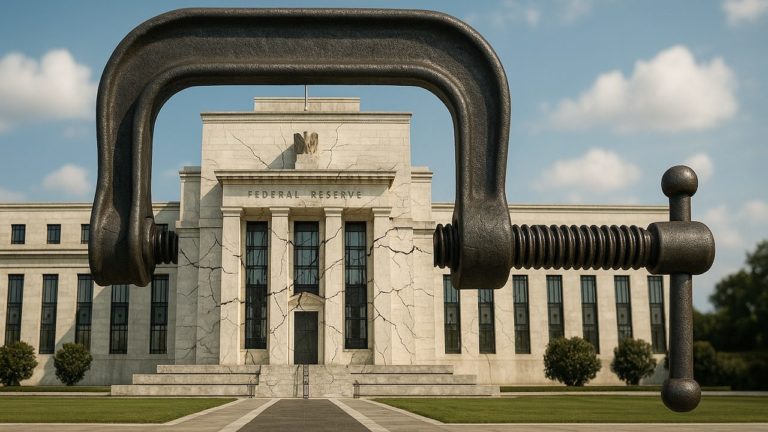
(Mike Maharrey, Money Metals News Service) The May CPI report is ratcheting up pressure on Jerome Powell and the Federal Reserve to cut interest rates.
In other words, the perception that the inflation problem is solved is raising the specter of more inflation.
In a social media post on Wednesday, Vice President JD Vance joined President Trump in publicly calling for the central bank to cut interest rates.
“The president has been saying this for a while, but it’s even more clear: the refusal by the Fed to cut rates is monetary malpractice.”
Trump has been badgering Powell about rate cuts for months. After the jobs report last week, Trump urged the Fed, “Go for a full point, Rocket Fuel!”
Trump, Vance, and others recognize the stimulative impact of artificially low interest rates. They understand that the debt-riddled economy is laboring under even the modestly higher rate environment today. Trump alluded to this in a follow-up post on Truth Social, posting, “If ‘Too Late’ at the Fed would CUT, we would greatly reduce interest rates, long and short, on debt that is coming due.”
But Trump, Vance, and other advocates of rate cuts are ignoring the inflationary impact of looser monetary policy. In the same post, Trump insisted, “There is virtually no inflation anymore.”
The May CPI report supports Trump’s claim.
May CPI By the Numbers
The headline annual CPI number rose from 2.3 percent in April (revised down from 2.4 percent) to 2.4 percent last month, according to the latest data from the BLS. Still, everybody fixated on the modest 0.1 percent monthly rise in prices. The forecast was for a 0.2 percent monthly gain.
Stripping out more volatile food and energy prices, core CPI also rose by a modest 0.1 percent month-on-month. On an annual basis, core CPI remained at 2.8 percent. Both numbers were better than expectations. The forecast was for a 0.3 percent month-on-month rise and a 2.9 percent annual core CPI reading.
April was the first time core CPI had dropped below 3 percent since March 2021.
As you parse the data, keep in mind that the CPI doesn’t tell the entire story of inflation. The government revised the CPI formula in the 1990s so that it understated the actual rise in prices. Based on the formula used in the 1970s, CPI is closer to double the official numbers. So, if the BLS used the old formula, we’d be looking at CPI closer to 6 percent. And using an honest formula, it would probably be worse than that.
However, this is the formula the government uses, and it drives decision-making.
It is also important to note that a federal government hiring freeze has reportedly stretched the BLS thin, and the agency recently reduced data collection and expanded a process known as “imputation,” which uses modeling to fill in incomplete data. In April, the BLS announced it was “reducing sample in areas across the country” and suspended data collection in Lincoln, Nebraska; Provo, Utah; and Buffalo, New York.
Looking deeper into the May BLS data, falling energy prices continued to pull the overall CPI lower. The energy index dropped a full 1 percent, with gasoline prices falling 2.6 percent.
This helped balance out a 0.3 percent increase in food prices and a 0.2 percent monthly jump in services.
While the CPI boosted optimism at the White House and among investors desperate for their easy money drug, many analysts remained wary of tariff-related price increases still in the pipeline.
Principal Asset Management chief global strategist Seema Shah told CNBC that the CPI report was “reassuring, but only to an extent.”
“Tariff-driven price increases may not feed through to the CPI data for a few more months yet, so it is far too premature to assume that the price shock will not materialize.”
Meanwhile, Fed watchers assign close to a zero percent chance that the central bank will cut rates at the June meeting next week.
They Are Calling for More Inflation
It’s important to emphasize that Trump and others are calling for more inflation. I’ve been harping on this point for months – beating inflation is losing. Falling price inflation greenlights a return to the inflationary policies that got us in this position to begin with.
This is all possible because of a wildly successful campaign to redefine inflation. Americans generally only understand half the inflation story. They think that inflation means rising prices. But price inflation is a symptom of monetary inflation (an expansion in the supply of money and credit). In the 70s, that’s what people meant when they used the term inflation.
Lots of things can cause some prices to rise (tariffs, for example). Only one thing causes the general price level to rise – monetary inflation.
In other words, a rise in the general price level isn’t inflation. It is caused by inflation.
Henry Hazlitt is best known for his brilliant book Economics in One Lesson. In another essay titled “Inflation in One Page,” he explained why using a more precise definition of inflation is crucial.
“Inflation is an increase in the quantity of money and credit. Its chief consequence is soaring prices.
“Therefore inflation—if we misuse the term to mean the rising prices themselves—is caused solely by printing more money. For this, the government’s monetary policies are entirely responsible.” (Emphasis added)
These confused definitions allow Trump, Vance, and others to claim that there is virtually no inflation when inflation is on the rise, and to push for even more inflationary monetary policy from the Fed.
Again, it’s important to emphasize that rate cuts are inherently inflationary.
Lower rates encourage borrowing. In turn, this boosts the money supply. This is, by definition, inflation. One of the symptoms of this monetary inflation is price inflation. In other words, any victory over price inflation opens the door for the Fed to resume the very policy that gave us higher price inflation to begin with.
We’re already seeing this inflationary pressure manifest after the first round of rate cuts and the slowdown of balance sheet reduction.
During the pandemic, the M2 money supply surged by roughly $6 trillion as the Federal Reserve unleashed massive monetary stimulus. That led to the bout of price inflation we suffered through in 2022.
During the Fed’s inflation fight, the M2 money supply contracted. This is exactly what needs to happen to wring out inflation from the economy. The money supply bottomed a little over a year ago at $20.60 trillion.
Since then, it has crept upward.
As of April, it was at $21.86 trillion. That’s the highest level since June 2022 and approaching the all-time high of $21.72 trillion hit in the spring of that year.
The Chicago Fed National Financial Conditions Index also reflects this increasingly inflationary environment. As of the week ending June 6, the NFCI stood at -0.51. A negative number reflects historically loose financial conditions.
And Trump et al want even more looseness!
The fact is, they’ve already gotten it.
Here’s the rub: they aren’t wrong. A higher interest rate environment will eventually crack the debt-riddled economy and pop the bubbles. The economy needs its easy money drug. However, a few good CPI reports notwithstanding, inflation is far from dead.
So, the central bank needs to simultaneously keep rates higher for longer and cut rates. That’s quite a Catch-22.
Mike Maharrey is a journalist and market analyst for Money Metals with over a decade of experience in precious metals. He holds a BS in accounting from the University of Kentucky and a BA in journalism from the University of South Florida.
(José Niño, Headline USA) For decades, the Pentagon secretly fueled America’s UFO obsession, according to a Wall Street Journal report published on Friday.
The Journal’s article recounted how inn the 1980s, an Air Force colonel visited a bar near Area 51, the famous secret base in Nevada. He handed the owner doctored photos of flying saucers, planting the idea that the base housed extraterrestrial technology.
As it turned out, the military was testing advanced stealth aircraft like the F-117, but officials worried that curious locals might spot something strange. At the time, defense officials reasoned that it would be better to let people believe in aliens than to risk exposing the public to classified military programs.
Similarly, in 1967, Air Force Captain Robert Salas was in a Montana bunker when a glowing orange object appeared overhead and disabled his nuclear missiles. For years, Salas and others believed they had witnessed an extraterrestrial event.
Investigations subsequently revealed the “UFO” was actually a secret electromagnetic pulse generator, part of a test to see if nuclear silos could withstand Soviet attacks. The witnesses were never told the truth, fueling decades of conspiracy theories and speculation.
The deception wasn’t limited to the public. New commanders in highly classified Air Force programs were subjected to bizarre briefings about a fake unit called “Yankee Blue”, supposedly tasked with reverse-engineering alien spacecraft.
Officers were shown fabricated photos and warned never to speak of their “mission.” Many believed the lie for years, and the practice continued for decades until it was uncovered and halted in 2023.
The Pentagon’s strategy was clear: use stories about UFOs as a smokescreen to protect real military secrets. But the myths took on a life of their own. Even senior officials began to believe in the conspiracies they had helped create. The lack of transparency only fueled public distrust, leading to congressional hearings and demands for the truth.
Salas, now 84, still believes he had participated in an otherworldly effort to avert nuclear catastrophe, one the government had sought to conceal.
The entire episode made the octogenarian profoundly mistrustful of the U.S. military and its commitment to the truth. “There is a gigantic coverup, not only by the Air Force, but every other federal agency that has cognizance of this subject,” he told the WSJ in an interview. “We were never briefed on the activities that were going on, the Air Force shut us out of any information.”
Sean Kirkpatrick, who formerly led the Pentagon’s UFO task force, has called the current “alien investigation” a hoax, as previously reported by Headline USA.
José Niño is the deputy editor of Headline USA. Follow him at x.com/JoseAlNino
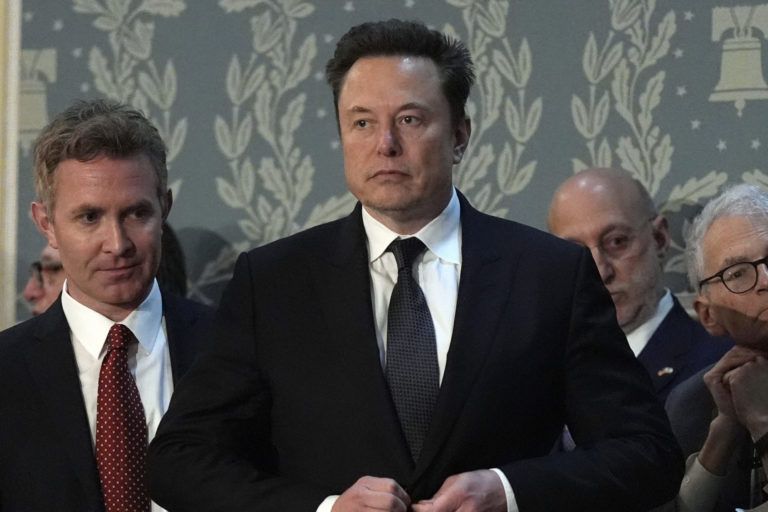
(José Niño, Headline USA) Federal agencies under the Biden administration monitored foreign visitors to Elon Musk, according to a Wall Street Journal report.
The Journal’s Tuesday report specifically revealed that, throughout 2022 and 2023, multiple U.S. government agencies monitored the movements of foreign nationals traveling to visit Musk at his properties.
The investigation, which included the Department of Homeland Security and the Justice Department, focused on individuals from Eastern Europe and other regions who might have sought to influence the tech billionaire.
Musk, who is the CEO of SpaceX and Tesla and holds top-secret security clearance, has been a prominent figure in both the business and political realms. He has unprecedented degrees of access to U.S. government officials and sensitive national security contracts.
The probe did not result in any criminal charges, and its current status remains unclear. The Journal’s article follows a December report from the New York Times, which reported that Musk is under three federal investigations related to alleged violation of security clearance regulations.
Officials from several agencies, including the FBI, were briefed on the investigation. The probe reflects broader concerns among federal officials about the potential for foreign actors to exert influence over high-profile business leaders who are closely tied to government operations.
Musk, born in South Africa and now a naturalized U.S. citizen, has built relationships with foreign leaders, including Russian President Vladimir Putin, since late 2022.
According to a 2022 report by Headline USA, former Deputy Assistant to the President & Senior Director for Europe and Russia Fiona Hill accused Musk of acting as a mouthpiece for Russian President Vladimir Putin by promoting a peace proposal that aligned with Russia’s interests in the Russo–Ukrainian War.
Staffers on Musk’s America PAC, which he launched to support President Trump’s re-election bid, and other campaign officials expressed concern about the number of foreign nationals in Musk’s orbit. These worries led to the implementation of more extensive vetting procedures for individuals involved in Musk’s political and business activities.
Despite the investigation, there have been no formal accusations or charges against Musk or his associates.
José Niño is the deputy editor of Headline USA. Follow him at x.com/JoseAlNino
(Dave DeCamp, Antiwar.com) The US is on high alert in the Middle East and is anticipating a potential Israeli attack on Iran, The Washington Post has reported. Amid the anticipation, the US is reducing the presence of non-essential personnel in the region.
The report said that “in recent months, US intelligence officials have grown increasingly concerned that Israel may choose to strike Iran’s nuclear facilities without the consent of the United States.”
US officials told The Associated Press on Wednesday that the military has authorized the “voluntary departure” of the dependents of US troops from locations across the Middle East.
The US is also evacuating personnel from its embassy in Iraq. CBS Newsreported that Israel has informed the US it’s “fully ready to launch an operation into Iran” and that US officials were concerned that Iran could retaliate by hitting US sites in Iraq.
The State Department has authorized the departure of non-essential personnel at its embassies in Kuwait and Bahrain, providing them with the option to leave rather than a mandatory evacuation.
The news came after Iran’s defense minister warned that Tehran would hit US bases in the region if a “conflict is imposed” on Iran. Iranian officials have previously said that they would hold the US responsible for an Israeli attack due to the US’s significant military support for Israel.
Previous reports have said that Israel was considering attacking Iran to disrupt negotiations between the US and Iran. According to The New York Times, Israeli officials close to Prime Minister Benjamin Netanyahu believe that the “US would have no choice but to assist Israel militarily if Iran counterattacked.”
The current tensions come as Netanyahu is facing a political crisis as ultra-Orthodox parties are threatening to dissolve the Knesset over the lack of a draft exemption law for Israel’s Haredi Orthodox Jews, although, according to the latest reports, the crisis may be defused.
President Trump has also been threatening to bomb Iran if he fails to reach a nuclear deal, and he continues to publicly demand the elimination of Tehran’s nuclear enrichment program, which is a non-starter for Iranian officials.
In another sign that the US may be preparing to take military action or back an Israeli attack on Iran, Gen. Michael Kurilla, the head of US Central Command (CENTCOM), postponed testimony he was set to deliver to Congress on Thursday due to tensions in the Middle East.
Amid the news that the US is evacuating its embassy in Baghdad, Iran’s mission to the UN reiterated in a post on X that Tehran is not seeking a nuclear weapon.
“Threats of ‘overwhelming force’ won’t change facts: Iran is not seeking a nuclear weapon, and US militarism only fuels instability,” the mission said. “Diplomacy—not militarism—is the only path forward.”
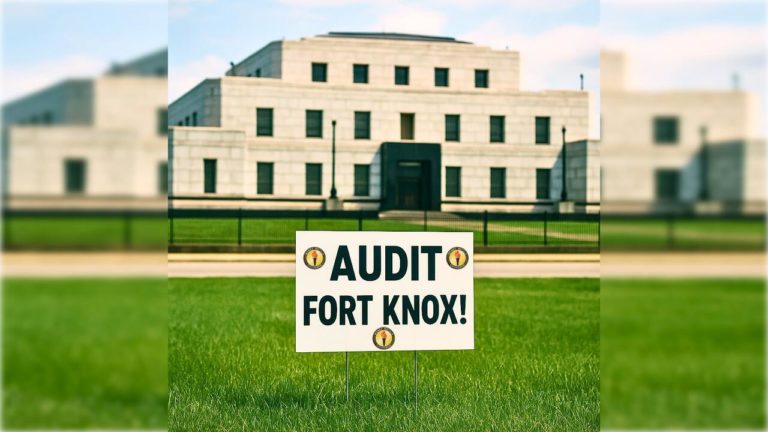
(Sound Money Defense League, Money Metals News Service) In a compelling interview with Investing News Network host Charlotte McLeod, Jp Cortez, Executive Director of the Sound Money Defense League, detailed a new legislative push to audit the United States’ gold reserves for the first time in decades.
According to Cortez, prior “audits” were largely ceremonial, involving inspections of storage containers rather than the actual gold bars.
Past audits failed to meet basic transparency or accounting standards, with reports now missing and no comprehensive assaying, weighing, or transactional history available to the public.
Cortez emphasized that private depositories, such as the one operated by Money Metals Depository in Idaho—the largest in North America—would face criminal charges for such loose practices.
The bill would apply not only to Fort Knox, but also to vaults in Denver, West Point, and other storage sites. It requires:
Physical inventory and verification through assaying
Accounting of all transactions over the last 50 years
Review of ownership status (whether gold is leased, swapped, or encumbered)
According to Cortez, this is essential because the U.S. Treasury claims to hold 261 million troy ounces of gold, much of it in impure, 90% fine “coin melt” bars that are no longer considered market-tradable. That means, even if the gold is there, it may not be liquid—a critical issue if the U.S. ever needs to sell or use it as a monetary reserve.
Trump, Musk, and Massie: Bipartisan and Popular Support Builds
While not yet formally endorsing the bill, former President Donald Trump has voiced support for an audit of Fort Knox. Likewise, Elon Musk stirred social media interest earlier in the year by suggesting a livestream of the U.S. gold reserves, though Cortez warns against repeating the superficial “dog-and-pony show” audits of the past.
The Sound Money Defense League has worked on this issue since its founding in 2014, with earlier versions introduced by Congressman Alex Mooney in 2019 and 2021 failing to even receive a hearing. But Cortez is optimistic that conditions have changed.
He points to rising grassroots support, social media momentum, and a growing concern over inflation, monetary debasement, and the status of the U.S. dollar. These concerns coincide with global calls for de-dollarization, and moves by countries like Germany to repatriate gold stored in the U.S.
Cortez believes support from Senators like Rand Paul (KY) and Mike Lee (UT) could pave the way for a companion bill in the Senate.
Congressman Thomas Massie, known for his principled stance on transparency and fiscal responsibility, is well-positioned to lead this initiative. Alongside the bill’s co-sponsors (Warren Davidson, Addison McDowell, and Troy E. Nehls), he brings a consistent record of challenging federal overreach and advocating for accountability—making them a strong team to push for a meaningful and credible audit of America’s gold reserves.
Federal Sound Money Reform: Capital Gains Tax Elimination
Beyond the audit bill, Cortez also highlighted another key federal initiative: the Monetary Metals Tax Neutrality Act, reintroduced in 2024 by Rep. Alex Mooney. The bill seeks to eliminate federal capital gains taxes on gold and silver—one of the biggest legal and financial barriers to treating bullion as money.
Since most states base their tax policy on federal returns, the bill would have the knock-on effect of removing capital gains taxes in most of the country, restoring gold and silver’s monetary utility.
“The biggest impediment to people using gold and silver as money today is the friction of taxes,” Cortez said. “Removing that friction allows individuals to reestablish their own gold standard.”
State-Level Victories and Momentum in 2025
While federal reform has been slow, 2025 has been the most successful legislative year yet for sound money at the state level, according to Cortez.
Over 35 states introduced sound money legislation in 2025
Nearly a dozen states passed bills into law
Reforms include tax exemptions, legal tender recognition, and state gold reserves
Just a year ago, only 7 states had enacted similar reforms.
This surge, Cortez said, reflects growing public concern about inflation and the long-term viability of fiat currency. States are increasingly choosing to protect their citizens and treasuries by embracing gold and silver as honest money.
A Global Trend: Gold in a De-Dollarizing World
Cortez linked the legislative momentum to the surging gold price, which has reached new all-time highs multiple times in recent months. As both U.S. states and foreign governments look for alternatives to fiat currency, gold is regaining its role as a neutral, superior monetary asset.
“More and more countries—adversaries and allies alike—are rediscovering gold as a hedge against inflation and monetary instability,” he noted.
With ongoing global inflation, rising debt, and eroding confidence in central banks, Cortez predicted the trend would continue. As long as paper currencies remain prone to manipulation, he said, sound money will remain a smart long-term bet.
Sound Money Defense League is a non-partisan public policy group working nationally since 2014 to restore gold and silver as sound money – America’s constitutional money. The League, in partnership with Money Metals, also publishes the annual Sound Money Index.