Green Officially Resigns from Congress

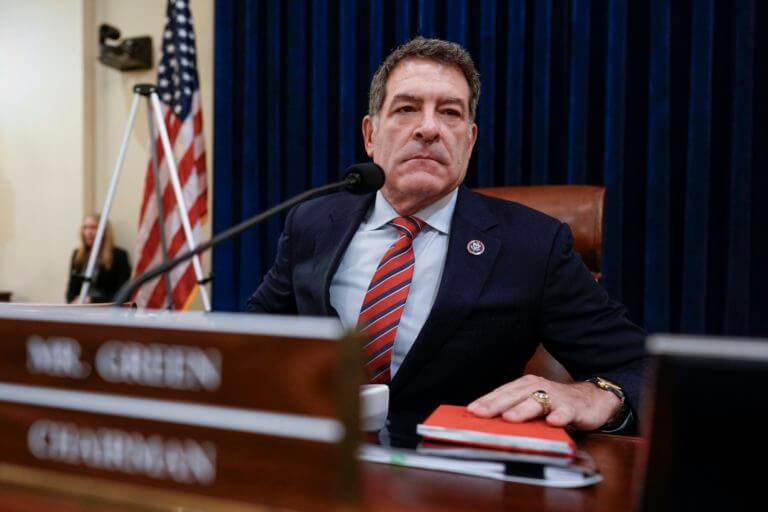
(The Center Square) U.S. Rep Mark Green, R-Tenn., announced his official resignation on Friday, July 4, a date he said he selected on purpose.

Green, who chairs the House Homeland Security Committee, said in June he was stepping down from Congress for an opportunity in the private sector. He said in a video published Friday on X that he will start a new business.

“While I cannot give the details here, I will be doing something specifically designed to help America compete against the CCP (Chinese Communist Party), but this time in business,” Green said.

Green served in the Tennessee Senate from 2013 to 2018. He won Tennessee’s Seventh District Congressional seat in 2018 after incumbent Marsha Blackburn decided to run for Senate.

The vote on the ‘big beautiful bill” was his last, Green said in a post on X.

“My time here started with a fire to serve veterans, it continued with leading the historic impeachment of a cabinet secretary, and now it ends with achieving real border security. I am grateful my last vote was for the one Big Beautiful Bill,” Green said.

Candidates began lining up in June to replace Green. Matt Van Epps, who served as commissioner of the Tennessee Department of General Services, Tennessee state Rep. Jay Reedy, Montgomery County Commissioner Jason Knight and combat veteran Jon Thorpe have announced their intentions.

State Rep. Jody Barrett said on X that he is praying about a possible run and could make a decision as soon as next week.

U.S. Expands Militarized Zones to 1/3 of Southern Border

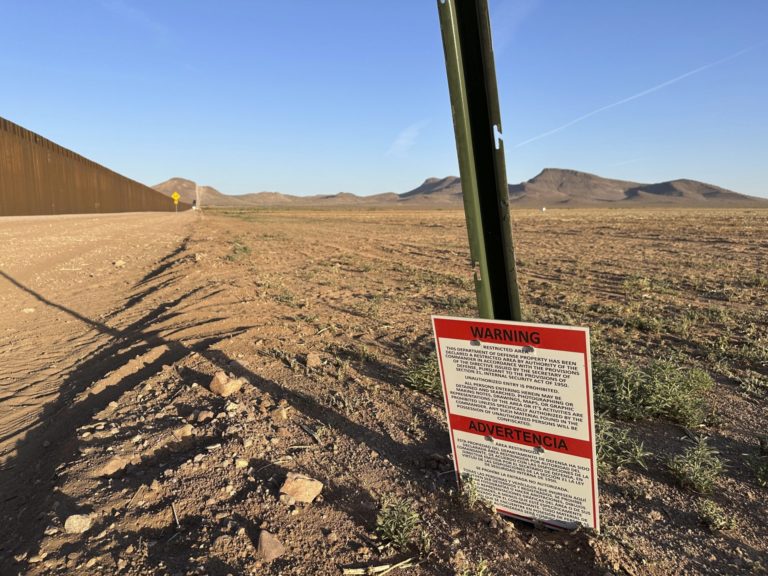
(Headline USAOrange no-entry signs posted by the U.S. military in English and Spanish dot the New Mexico desert, where a border wall cuts past onion fields and parched ranches with tufts of tall grass growing amidst wiry brush and yucca trees.

The Army has posted thousands of the warnings in New Mexico and western Texas, declaring a “restricted area by authority of the commander.” It’s part of a major shift that has thrust the military into border enforcement with Mexico like never before.

The move places long stretches of the border under the supervision of nearby military bases, empowering U.S. troops to detain people who enter the country illegally and sidestep a law prohibiting military involvement in civilian law enforcement. It is done under the authority of the national emergency on the border declared by President Donald Trump on his first day in office.

U.S. authorities say the zones are needed to close gaps in border enforcement and help in the wider fight against human smuggling networks and brutal drug cartels.

The militarization is being challenged in court, and has been criticized by civil rights advocates, humanitarian aid groups and outdoor enthusiasts who object to being blocked from public lands while troops have free rein.

Military expansion

Two militarized zones form a buffer along 230 miles of border, from Fort Hancock, Texas, through El Paso and westward across vast New Mexico ranchlands.

The Defense Department added an additional 250-mile (400-kilometer) zone last week in Texas’ Rio Grande Valley and plans another near Yuma, Arizona. Combined, the zones will cover nearly one-third of the U.S. border with Mexico.

They are patrolled by at least 7,600 members of the armed forces, vastly expanding the U.S. government presence on the border.

Reaction to the military buffer has been mixed among residents of New Mexico’s rural Luna County, where a strong culture of individual liberty is tempered by the desire to squelch networks bringing migrants and contraband across the border.

“We as a family have always been very supportive of the mission, and very supportive of border security,” said James Johnson, a fourth-generation farmer overseeing seasonal laborers as they filled giant plastic crates with onions, earning $22 per container.

Military deployments under prior presidents put “eyes and ears” on the border, Johnson said. This version is “trying to give some teeth.”

But some hunters and hikers fear they’re being locked out of a rugged and cherished landscape.

“I don’t want to go down there with my hunting rifle and all of a sudden somebody rolls up on me and says that I’m in a military zone,” said Ray Trejo, a coordinator for the New Mexico Wildlife Federation and a Luna County commissioner. “I don’t know if these folks have been taught to deescalate situations.”

Nicole Wieman, an Army command spokesperson, said the Army is negotiating possible public access for recreation and hunting, and will honor private rights to grazing and mining.

Increased punishment

More than 1,400 migrants have been charged with trespassing on military territory, facing a possible 18-month prison sentence for a first offense. That’s on top of an illegal entry charge that brings up to six months in custody. After that, most are turned over to U.S. Customs and Border Protection for likely deportation. There have been no apparent arrests of U.S. citizens.

At a federal courthouse in Las Cruces, New Mexico, on the banks of the Upper Rio Grande, migrants in drab county jail jumpsuits and chains filed before a magistrate judge on a recent weekday.

A 29-year-old Guatemalan woman struggled to understand instructions through a Spanish interpreter as she pleaded guilty to illegal entry. A judge set aside military trespassing charges for lack of evidence, but sentenced her to two weeks in jail before being transferred for likely deportation.

“She sells pottery, she’s a very simple woman with a sixth-grade education,” a public defense attorney told the judge. “She told me she’s going back and she’s going to stay there.”

Border crossings

Border Patrol arrests along the southern border this year have dropped to the lowest level in six decades, including a 30% decrease in June from the prior month as attempted crossings dwindle. On June 28, the Border Patrol made only 137 arrests, a stark contrast with late 2023, when arrests topped 10,000 on the busiest days.

The first militarized zones, introduced in April and May, extend west of El Paso past factories and cattle yards to partially encircle the New Mexico border village of Columbus, and its 1,450 residents. It was here that Mexican revolutionary forces led by Pancho Villa crossed into the U.S. in a deadly 1916 raid.

These days, a port of entry at Columbus is where hundreds of children with U.S. citizenship cross daily from a bedroom community in Mexico to board public school buses and attend classes nearby.

Columbus Mayor Philip Skinner, a Republican, says he’s seen the occasional military vehicle but no evidence of disruption in an area where illegal crossings have been rare.

“We’re kind of not tuned in to this national politics,” Skinner said.

Oversight is divided between U.S. Army commands in Fort Bliss, Texas, and Fort Huachuca, Arizona. The militarized zones sidestep the Posse Comitatus Act, an 1878 law that prohibits the military from conducting civilian law enforcement on U.S. soil.

Russell Johnson, a rancher and former Border Patrol agent, said he welcomes the new militarized zone where his ranch borders Mexico on land leased from the Bureau of Land Management.

“We have seen absolutely almost everything imaginable that can happen on the border, and most of it’s bad,” he said, recalling off-road vehicle chases on his ranch and lifeless bodies recovered by Border Patrol.

In late April, he said, five armored military vehicles spent several days at a gap in the border wall, where construction was suspended at the outset of the Biden presidency. But, he said, he hasn’t seen much of the military in recent weeks.

“The only thing that’s really changed is the little extra signage,” he said. “We’re not seeing the military presence out here like we kind of anticipated.”

Court challenges

Federal public defenders have challenged the military’s new oversight of public land in New Mexico, seizing on the arrest of a Mexican man for trespassing through remote terrain to test the legal waters.

They decried the designation of a new military zone without congressional authorization “for the sole purpose of enabling military action on American soil” as “a matter of staggering and unpreceded political significance.” A judge has not ruled on the issue.

In the meantime, court challenges to trespassing charges in the militarized zone have met with a mixture of convictions and acquittals at trial.

Ryan Ellison, the top federal prosecutor in New Mexico, won trespassing convictions in June against two immigrants who entered a militarized zone again after an initial warning

“There’s not going to be an issue as to whether or not they were on notice,” he told a recent news conference.

Adapted from reporting by the Associated Press

Boulder Attack Suspect Charged w/ Murder after Victim Dies, Family Could be Deported

(The Center Square) Mohamed Sabry Soliman has been officially charged with first-degree murder, following the death of 82-year-old Karen Diamond.

Soliman, a 45-year-old Egyptian national illegally in the country, wounded Diamond and 14 others on June 1 at what authorities say was a terrorist attack at a pro-Israel demonstration in Boulder, Colorado. Diamond died from her injuries on June 25.

“This terrorist will be prosecuted to the fullest extent of the law. We are investigating to what extent his family knew about this heinous attack, if they had knowledge of it, or if they provided support to it,” said Tricia McLaughlin, assistant secretary for public affairs at the Department of Homeland Security.

On Wednesday, U.S. District Judge Orlando Garcia also ruled that Soliman’s wife and five children can be deported, officially dismissing a legal challenge filed by the family to halt their deportations.

U.S. Immigration and Customs Enforcement officials detained Soliman’s family just days after the attack. At the time of the arrests, the White House said the family members could be deported immediately.

Hours after the announcement of their potential deportations, a federal judge blocked their deportation order, citing due process. They remained in ICE custody at that time.

Garcia declared in his ruling that “the court finds that petitioners’ habeas proceeding and their claims in this case must be and hereby are dismissed without prejudice. This case is closed.”

The Trump administration applauded that decision, but has not yet announced formal plans to deport the family.

“This is a proper end to an absurd legal effort on the plaintiff’s part,” McLaughlin added. “Just like her terrorist husband, she and her children are here illegally and are rightfully in ICE custody for removal as a result.”

Soliman faces dozens of charges, both federal and state. Those charges include first-degree assault and committing a hate crime. If convicted on all charges, Soliman will likely spend the rest of his life in prison.

Soliman had long premeditated the attack at Boulder’s Pearl Street Mall, authorities said at a news conference in June.

“He had been planning this attack for a year,” said Acting U.S. Attorney J. Bishop Grewell for the District of Colorado. “He acted because he hated what he called ‘the Zionist group.’”

The attack started at 1:26 p.m. on June 1 when Soliman allegedly attacked more than a dozen people with Molotov cocktails and a homemade flamethrower.

According to reports, Soliman was heard yelling, “Free Palestine” during the attack.

Soliman told law enforcement that “he wanted to kill all Zionist people and wished they were all dead.” He also allegedly said that he had no regrets for his actions and would “do it again.”

Soliman has already appeared in court twice and his bond was set at $10 million. The next state hearing in Soliman’s case will occur on July 15.

At Least 13 Dead in Texas Floods and More than 20 Children Missing from Girls Summer Camp

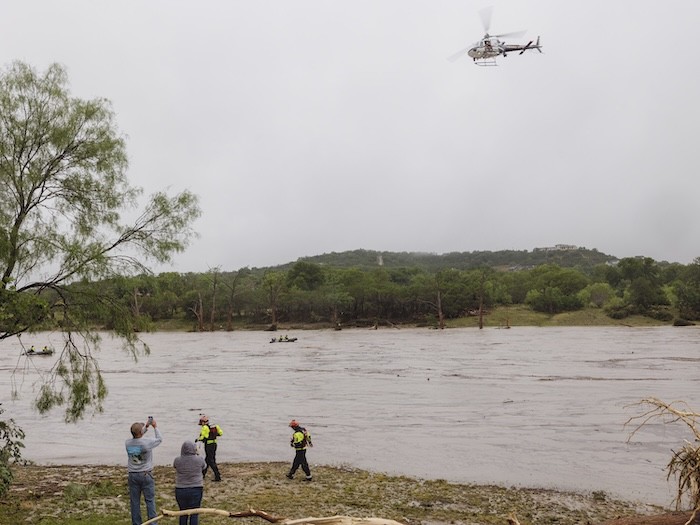
(Headline USAMonths worth of heavy rain fell in a matter of hours on Texas Hill Country, leaving at least 13 people dead and many more unaccounted for Friday, including about 20 girls attending a summer camp, as search teams conducted boat and helicopter rescues in fast-moving floodwaters.

Desperate pleas peppered social media as loved ones sought any information about people caught in the flood zone. At least 10 inches of rain poured down overnight in central Kerr County, causing flash flooding of the Guadalupe River.

Authorities stressed that the situation was still developing and that the death toll could change, with rescue operations ongoing for an unspecified number of missing. Lt. Gov. Dan Patrick said six to 10 bodies had been found so far. Around the same time, Kerr County Sheriff Larry Leitha reported that 13 people had died in the flooding.

Authorities were still working to identify the dead.

“Some are adults, some are children,” Patrick said during a news conference.

Pleading for information after flash flood

A river gauge at Hunt recorded a 22 foot rise in about two hours, according to Bob Fogarty, meteorologist with the National Weather Service’s Austin/San Antonio office. The gauge failed after recording a level of 29 and a half feet.

“The water’s moving so fast, you’re not going to recognize how bad it is until it’s on top of you,” Fogarty said.

On the Kerr County sheriff’s office Facebook page, people posted pictures of loved ones and begged for help finding them.

At least 400 people were on the ground helping in the response, Patrick said. Nine rescue teams, 14 helicopters and 12 drones were being used, with some people being rescued from trees.

About 23 of the roughly 750 girls attending Camp Mystic were among those who were unaccounted for, Patrick said.

Search crews were doing “whatever we can do to find everyone we can,” he said.

‘Pitch black wall of death’

In Ingram, Erin Burgess woke to thunder and rain at 3:30 a.m. Just 20 minutes later, water was pouring into her home directly across from the river, she said. She described an agonizing hour clinging to a tree and waiting for the water to recede enough so they could walk up the hill to a neighbor’s home.

“My son and I floated to a tree where we hung onto it, and my boyfriend and my dog floated away. He was lost for a while, but we found them,” she said.

Of her 19-year-old son, Burgess said: “Thankfully he’s over 6 feet tall. That’s the only thing that saved me, was hanging on to him.”

Matthew Stone, 44, of Kerrville, said police came knocking on doors at 5:30 a.m. but that he had received no warning on his phone.

“We got no emergency alert. There was nothing,” Stone said. Then: “a pitch black wall of death.”

Stone said police used his paddle boat to help rescue a neighbor. He and the rescuers thought they heard someone yelling “help!” from the water but couldn’t see anyone, he said.

‘I was scared to death’

At a reunification center set up in Ingram, families cried and cheered as loved ones got off vehicles loaded with evacuees. Two soldiers carried an older woman who could not get down a ladder. Behind her, a woman in a soiled T-shirt and shorts clutched a small white dog.

Later, a girl in a white “Camp Mystic” T-shirt and white socks stood in a puddle, sobbing in her mother’s arms.

Barry Adelman, 54, said water pushed everyone in his three-story house into the attic, including his 94-year-old grandmother and 9-year-old grandson. The water started coming trough the attic floor before finally receding.

“I was horrified,” he said. “I was having to look at my grandson in the face and tell him everything was going to be OK, but inside I was scared to death.”

‘No one knew this kind of flood was coming’

The forecast had called for rain, with a flood watch upgraded to a warning overnight for at least 30,000 people. But totals in some places exceeded expectations, Fogarty said.

Patrick noted that the potential for heavy rain and flooding covered a large area.

“Everything was done to give them a heads up that you could have heavy rain, and we’re not exactly sure where it’s going to land,” Patrick said. “Obviously as it got dark last night, we got into the wee morning of the hours, that’s when the storm started to zero in.”

Asked about how people were notified in Kerr County so that they could get to safety, Judge Rob Kelly, the county’s chief elected official, said: “We do not have a warning system.”

When reporters pushed on why more precautions weren’t taken, Kelly responded: “Rest assured, no one knew this kind of flood was coming.”

“We have floods all the time,” he added. “This is the most dangerous river valley in the United States.”

Popular tourism area prone to flooding

The area is known as “flash flood alley” because of the hills’ thin layer of soil, said Austin Dickson, CEO of the Community Foundation of the Texas Hill Country, which was collecting donations to help nonprofits responding to the disaster.

“When it rains, water doesn’t soak into the soil,” Dickson said. “It rushes down the hill.”

River tourism industry is a key part of the Hill Country economy, said Dickson. Well-known, century-old summer camps bring in kids from all over the country, he said. Between Hunt and Ingram are many river homes and cabins for rent.

“It’s generally a very tranquil river with really beautiful clear blue water that people have been attracted to for generations,” Dickson said.

Deaths in New Jersey blamed on thunderstorms

The flooding in Texas occurred as severe weather moved through central New Jersey, where thunderstorms were blamed for at least three deaths.

Among them were two men in Plainfield who died after a tree fell onto their vehicle, according to a city Facebook post.

The city canceled its July Fourth parade, concert and fireworks show.

Adapted from reporting by the Associated Press

U.S. Imposes More Sanctions on Iran, the First Round Since 12-Day War Ceasefire

(Dave DeCamp, Antiwar.comThe Trump administration on Thursday announced its first round of new sanctions on Iran since the ceasefire that ended the 12-day US-Israeli war on the country, signaling the so-called “maximum pressure campaign” against Tehran will continue.

The US Treasury Department said it targeted an Iraqi businessman and a “network” of companies he runs over allegations that they’re involved in purchasing Iranian oil.

“Treasury will continue to target Tehran’s revenue sources and intensify economic pressure to disrupt the regime’s access to the financial resources that fuel its destabilizing activities,” said Treasury Secretary Scott Bessent.

Axios reported on Thursday that US Middle East envoy Steve Witkoff is planning to meet Iranian Foreign Minister Abbas Araghchi in Oslo next week to restart nuclear negotiations, but the talks haven’t been confirmed by either side, and Iranian officials say they need guarantees from the US that they won’t be attacked again.

“How can we trust the Americans?” Iranian Deputy Foreign Minister Majid Takht-Ravanchi told NBC News in an interview published Thursday. “We want them to explain as to why they misled us, why they took such an egregious action against our people.”

Takht-Ravanchi said that Iran is in favor of dialogue and diplomacy but that the US needs “to convince us that they are not going to use military force while we are negotiating.”

The Iranian diplomat also said that Tehran would continue to enrich uranium as part of its civilian nuclear program, but it remains unclear how long it would take Iran to restart the program after the US and Israeli airstrikes on its nuclear facilities. President Trump has vowed he will bomb Iran again if it resumes uranium enrichment, though he is insisting that Iran won’t restart its program.

Before Israel launched the 12-Day War on June 13, the US and the International Atomic Energy Agency (IAEA) had no evidence that showed Iran was moving toward a nuclear weapon. Iran was willing to bring uranium enrichment levels down as part of a deal for sanctions relief, but the US decided to back the Israeli attack instead.

This article originally appeared at Antiwar.com.

Trump Signs ‘Big, Beautiful Bill’ at White House July 4 Celebration

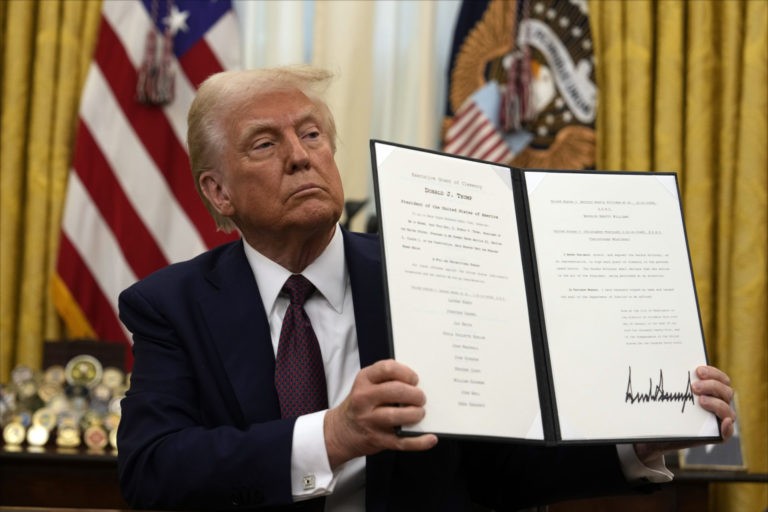
(The Center Square) President Donald Trump used an Independence Day celebration at the White House to sign his ‘big, beautiful bill.’

Trump and Republican congressional members delivered on the president’s July 4th deadline for the bill. The bill signing was preceded by a spectacular flyover of military planes, including B-2 stealth bombers, as the White House hosted members of the military and their families on the South Lawn.

Trump kicked off the start of “America 250” on Thursday evening in Des Moines. He used the holiday to tout his historic legislation, which narrowly passed the House Thursday afternoon.

“As we approach the 250th anniversary of America’s founding exactly one year from now, we are creating an economy that delivers wealth for the middle class, a border that is sovereign and secure, and a military that is unmatched, unequaled anywhere in the world,” said the president Friday evening.

Trump argues that the “massive” bill will spur economic growth, a claim some in his own party have disputed.

“This bill will fuel massive economic growth and lift up the hardworking citizens who make this country run,” said the president. “Our country is going to be a rocket ship economically.”

During the signing, the president was joined by House Speaker Rep. Mike Johnson, R-La., several members of his cabinet and congressional members.

‘Big Beautiful Bill’ Will Bring the 2026 Military Budget Over $1 Trillion

(Dave DeCamp, Antiwar.comThe House on Thursday passed a massive piece of legislation, dubbed the “Big Beautiful Bill” by President Trump, that includes extra military spending to bring the 2026 military budget over $1 trillion.

The bill passed in a vote of 218-214, with only two Republicans — Reps. Thomas Massie (KY) and Brian Fitzpatrick (PA) — and every Democrat voting against it. The legislation has already passed the Senate and now heads to President Trump’s desk for his signature.

The legislation includes $150 billion in additional military spending, and the White House plans to use $113 billion of it to supplement the 2026 military budget, bringing it to approximately $1.006 trillion, representing a 13% increase from 2025.

The $150 billion will go toward several military priorities of the Trump administration, including the so-called “Golden Dome,” a plan for a sprawling missile defense system in the United States that’s sure to kick off a new arms race and will be a boondoggle for the weapons makers.

According to Breaking Defense, the $150 billion includes:

  • $29 billion for shipbuilding
  • $25 billion for Golden Dome
  • $25 billion for munitions
  • $16 billion for innovative technologies such as drones, AI, and low-cost weapons
  • $15 billion for nuclear “modernization”
  • $12 billion for the US military’s buildup in the Asia Pacific
  • $9 billion for air superiority

While the US has never officially had a $1 trillion military budget, the actual cost of US military spending has exceeded $1 trillion for years. According to veteran defense analyst Winslow Wheeler, based on the $895 billion National Defense Authorization Act, US national security spending for 2025 was expected to reach about $1.77 trillion.

Wheeler’s estimate accounts for military-related spending from other government agencies not funded by the NDAA, such as the Department of Veterans Affairs and Homeland Security. It also includes the national security share of the interest accrued on the US debt, as well as other factors.

This article originally appeared at Antiwar.com.

Republican Congressional Intern Killed in Drive-by DC Shooting

(José Niño, Headline USA) Eric Tarpinian-Jachym, 21, was walking downtown Monday night when multiple gunmen opened fire, making him the 85th homicide victim in Washington D.C. in 2025.

The young congressional intern hailing from Granby, Massachusetts was reportedly walking near the Walter E. Washington Convention Center when multiple suspects exited a vehicle at the intersection of Seventh and M streets NW and began firing into a group of people around 10:30 p.m.

According to a report by the Washington Post, the University of Massachusetts at Amherst student was working as an intern for Rep. Ron Estes, R-KS, and was set to begin his senior year studying finance with a minor in political science.

Police confirmed Wednesday that Tarpinian-Jachym was apparently an innocent bystander caught in gunfire intended for someone else. Officers who were nearby heard the gunshots and rushed to the scene, finding three people shot: Tarpinian-Jachym, an adult woman, and a 16-year-old boy.

All three were taken to hospitals, but Tarpinian-Jachym died Tuesday from his injuries.

The shooting marked the 85th homicide in the District this year, slightly fewer than the 89 recorded at the same time last year. The suspect vehicle has been recovered, but no arrests have been made. Police are offering a $25,000 reward for information leading to an arrest and conviction, per a report by Fox News.

Emily Gest, the head of media relations for the University of Massachusetts at Amherst, said the school was aware of the shooting and was in contact with Tarpinian-Jachym’s family. “We extend our deepest condolences to all who knew him and will be communicating with the campus shortly to offer support,” Gest said in an email.

The young intern had joined Estes’ office in June and was described by colleagues as cheerful, dedicated, and passionate about public service. He was set to return to UMass Amherst in the fall to complete his senior year.

José Niño is the deputy editor of Headline USA. Follow him at x.com/JoseAlNino

Dems Target Trump Kids’ Citizenship After Calling Deportation Talk Racist

(Luis CornelioHeadline USA) A CNN personality called on the citizenship status of President Donald Trump’s children to be scrutinized even after Democrats insisted questioning leftists’ immigration status was racist. 

CNN political commentator Bakari Sellers made the call during a panel Tuesday on CNN NewsNight with Abby Phillip. The discussion centered on President Donald Trump’s move to strip naturalized Americans of their citizenship if they commit heinous crimes. 

“Look, if we want to have a conversation about who belongs where, when, how, and whether or not their citizenship status- and we want to look at everything, I mean, I would look at Donald Trump Jr.,” Sellers said. 

“I would look at all of Melania‘s kids, all of Ivana‘s kids. I mean, let‘s just have a full conversation over who belongs here, how did they get here, their citizenship status,” Sellers added. 

Sellers also called for a “full discussion about all of it,” continuing: “Why is that not on the table right now? I mean, the only person here should be Tiffany Trump, if we‘re going to have this discussion.” 

His comments were referring to Trump’s four children by his first wife, Ivana—Ivanka, Don and Eric—and his youngest son, Baron, born to Melania. Ivana became a U.S. citizen in 1998 and Melania in 2006. All five children were born on American soil. 

His remarks followed the circulation of a Department of Justice memo prioritizing the denaturalization of individuals “who pose a potential danger to national security, including those with a nexus to terrorism, espionage, or the unlawful export from the United States of sensitive goods, technology, or information raising national security concerns.”  

The memo explained that civil denaturalization allows the government to revoke citizenship from war criminals, extrajudicial killers or other serious human rights abusers. 

Sellers’s comments came after Democrats suggested that some Republican lawmakers’ questions about NYC mayoral candidate Zohran Mamdani’s citizenship were racist.

Trump on Mount Rushmore? At Least One Rep. Approves

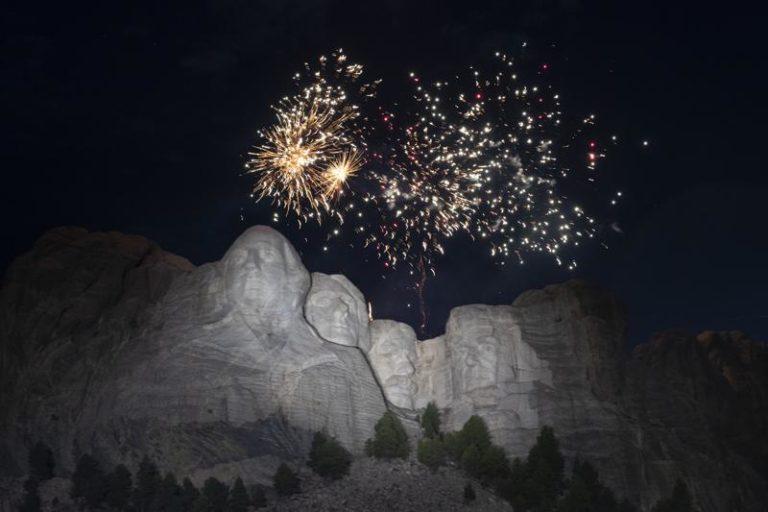
(Luis CornelioHeadline USAPresident Donald Trump could soon be added to Mount Rushmore. That is, if Interior Secretary Doug Burgum accepts a request from Rep. Andy Ogles, R-Tenn. 

Ogles urged Burgum to consider adding Trump to the iconic monument, citing the president’s achievements, including the recently passed Big Beautiful Bill, increased military funding and more. 

“Mount Rushmore honors presidents who represent the birth, growth, development, and preservation of the United States. President Trump’s leadership advances each of those pillars,” Ogles wrote. 

The monument currently features George Washington, Thomas Jefferson, Theodore Roosevelt, and Abraham Lincoln, representing the first 150 years of American history. 

Ogles argued that Trump, like Washington, “champions American Independence and is reshaping the presidency with strength and clarity of purpose.” Like Jefferson, he said Trump is “expanding America’s horizons.”  

The lawmaker linked Trump to Roosevelt for taking “on entrenched interests” and “renovating American industry.” And like Lincoln, Ogles said Trump is “fighting to preserve the Union” from invasion, drift, decline and the erosion of self-government. 

“These are not transient accomplishments,” Ogles continued. “They are structural changes with lasting national significance. For decades, historians, economists, and public servants will measure their work against the standard reestablished by President Trump.” 

Burgum has not publicly addressed the request. However, the National Park Service has previously said adding a new face poses logistical issues due to a purported lack of available space. 

Ogles acknowledged those concerns, writing: “While meeting the logistical challenges may require engagement with state and/or tribal officials, the national benefit of promptly recognizing President Trump’s accomplishments in restoring American greatness makes doing so a priority, and the benefits of elevating the dignity and relevance of the site, thus increasing both its grandeur and its visitor traffic, will accrue to South Dakota, the Lakota Sioux and the broader area.”