Elon Musk Officially Launches the ‘America Party’

(Ken Silva, Headline USA) It’s official: foreign-born billionaire Elon Musk has launched the “America Party” after being ousted from the Republican Party—a move reportedly brought on by his drug abuse, erratic behavior and personal attacks against President Donald Trump.

Musk said last week that he’d create a new political party if Trump’s “big beautiful” spending bill passed. After it was passed on Friday, Musk teased a third-party launch over the Independence Day holiday and held a poll about it on Twitter/X.

“By a factor of 2 to 1, you want a new political party and you shall have it!” Musk wrote in a post on X, which he owns, after the polling closed. “Today, the America Party is formed to give you back your freedom.”

By Sunday morning, the move appeared to be official. Paperwork filed with the Federal Elections Commission showed the formation of the America Party. Its treasurer and custodian of records is listed as Vaibhav Taneja, an Indian who was named CFO of Tesla in August 2023.

MAGA supporters and Musk critics quickly jumped on the fact that the “America Party” is led by foreigners. Musk was born in South Africa and came here on a student visa. According to the Washington Post, Musk entered the U.S. under a student visa in 1995 but never enrolled in courses. Instead, Musk began working, a potential violation of his visa.

The populist wing of MAGA, including Steve Bannon, have explicitly called for Musk’s deportation. Trump has also hinted at deporting Musk in response to questions from reporters. Largely, Trump has focused some of his criticisms of Musk on EV mandates and subsidies. In a post on Truth Social early Tuesday morning, Trump said Musk has known that he’s against an EV mandate and that people should not be forced to own electric vehicles.

“Elon may get more subsidy than any human being in history, by far, and without subsidies, Elon would probably have to close up shop and head back home to South Africa,” Trump wrote.

The President also cautioned Musk on the Department of Government Efficiency, or DOGE, which the billionaire used to lead.

“DOGE could be the monster that turns around and eats Elon,” Trump said.

In response to the attacks, Musk has called for Bannon to go to prison, and has accused Trump of being named in the Jeffrey Epstein files.

Ken Silva is the editor of Headline USA. Follow him at x.com/jd_cashless.

GOP Takes Action against Late-Arriving Mail-in Ballots

(Headline USAPresident Donald Trump and other Republicans have long criticized states that take weeks to count their ballots after Election Day. This year has seen a flurry of activity to address it.

Part of Trump’s executive order on elections, signed in March but held up by lawsuits, takes aim at one of the main reasons for late vote counts: Many states allow mailed ballots to be counted even if they arrive after Election Day.

The U.S. Supreme Court last month said it would consider whether a challenge in Illinois can proceed in a case that is among several Republican-backed lawsuits seeking to impose an Election Day deadline for mail ballots.

At least three states — Kansas, North Dakota and Utah — passed legislation this year that eliminated a grace period for receiving mailed ballots, saying they now need to be in by Election Day.

Even in California, where weekslong vote counting is a frequent source of frustration and a target of Republican criticism, a bill attempting to speed up the process is moving through the Democratic-controlled Legislature.

Order asserts federal law prohibits counting late ballots

The ballot deadline section of Trump’s wide-ranging executive order relies on an interpretation of federal law that establishes Election Day for federal elections. He argues this means all ballots must be received by that date.

“This is like allowing persons who arrive 3 days after Election Day, perhaps after a winner has been declared, to vote in person at a former voting precinct, which would be absurd,” the executive order states.

Ballots received after Election Day, in addition to being signed and dated by the voter, must be postmarked by the U.S. Postal Service indicating they were completed and dropped off on or before the final day of voting.

Accepting late-arriving ballots has not been a partisan issue historically. States as different as California and Mississippi allow them, while Colorado and Indiana do not.

In his executive order, most of which is paused by the courts, Trump directs the attorney general to “take all necessary action” to enforce federal law against states that include late-arriving ballots in their final counts for federal elections. He also directs the U.S. Election Assistance Commission to condition federal funding on compliance.

Trump’s rhetoric motivates Republican states

Republicans in five states have passed legislation since the 2020 election moving the mail ballot deadline to Election Day, according to the Voting Rights Lab, which tracks election legislation.

Earlier this year, GOP lawmakers in Kansas ended the state’s practice of accepting mail ballots up to three days after Election Day, a change that will take effect for next year’s midterms. Problems with mail delivery had prompted Kansas to add the grace period in 2017.

Kansas state Sen. Mike Thompson, a Republican who chairs the committee that handles election legislation, compared the grace period to giving a football team extra chances to score after the game clock expires.

“We need this uniform end to the election just so that we know that all voters are operating on the same time frame,” he said.

A history of complaints in California

California has long been a source of complaints about the amount of time it takes for ballots to be counted and winners declared.

“The rest of the country shouldn’t have to wait on California to know the results of the elections,” U.S. Rep. Bryan Steil, a Wisconsin Republican who chairs the Committee on House Administration, said during an April hearing.

He said California’s “lax election laws” were to blame for the delays.

The nation’s most populous state has the largest number of registered voters in the country, some 22.9 million, which is roughly equivalent to the number of voters in Florida and Georgia combined.

California also has embraced universal mail voting, which means every registered voter automatically receives a ballot in the mail for each election. The deadline for election offices to receive completed ballots is seven days after Election Day as long as they are postmarked by then.

A survey of some 35,000 Los Angeles County voters during last fall’s election found that 40% waited until Election Day to return their ballot.

Election officials say the exhaustive process for reviewing and counting mail ballots combined with a large percentage of voters waiting until the last minute makes it impossible for all results to be available on election night.

California Democrats consider changes to speed the count

Under state law, election officials in California have 30 days to count ballots, conduct a postelection review and certify the results.

Dean Logan, Los Angeles County’s chief election official, told Congress in May that his team counted nearly 97% of the 3.8 million ballots cast within a week of Election Day in 2024. Jesse Salinas, president of the state clerks’ association, said his staff in Yolo County, near Sacramento, already works 16-hour days, seven days a week before and after an election.

Assemblyman Marc Berman introduced legislation that would keep the state’s 30-day certification period but require county election officials to finish counting most ballots within 13 days after the election. They would be required to notify the state if they weren’t going to meet that deadline and give a reason.

He acknowledged that many counties already meet the 13-day deadline in his bill, which awaits consideration in the Senate.

“My hope is that this will strengthen people’s confidence in their election system and their democracy by having some of those benchmarks and just making it very clear for folks when different results will be available,” Berman said.

Adapted from reporting by the Associated Press


Texas Floods Leave At Least 51 Dead, 27 Girls Sill Missing

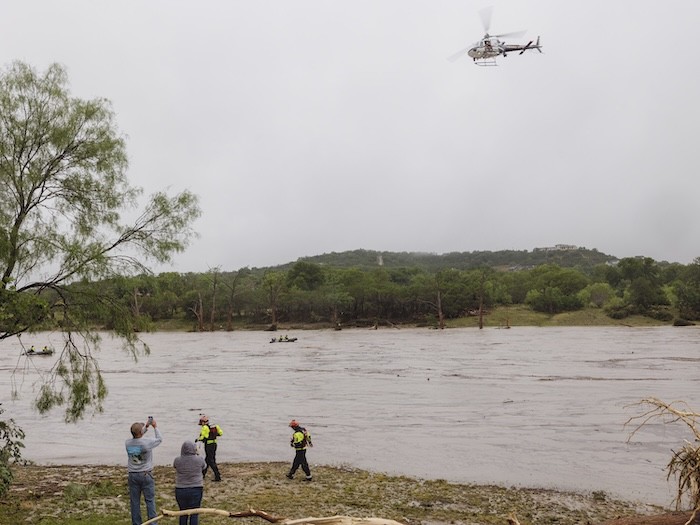
(Headline USARescuers scoured a devastated central Texas landscape of mangled trees, overturned cars and muck-filled debris Saturday in an increasingly bleak mission to locate survivors, including 27 girls who have not been seen since their camp was slammed with a wall of water in a historic flash flood.

The flooding in Kerr County killed at least 43 people, including 15 children, and at least eight people died in nearby counties.

Authorities still have not said how many people were missing beyond the children from Camp Mystic, a Christian summer camp along a river in Kerr County where most of the dead were recovered.

The destructive, fast-moving waters rose 26 feet on the Guadalupe River in just 45 minutes before daybreak Friday, washing away homes and vehicles. The danger was not over as rains continued pounding communities outside San Antonio on Saturday and flash flood warnings and watches remained in effect.

Searchers used helicopters, boats and drones to look for victims and to rescue people stranded in trees and from camps isolated by washed-out roads.

Gov. Greg Abbott vowed that authorities will work around the clock and said new areas were being searched as the water receded. He declared Sunday a day of prayer for the state.

“I urge every Texan to join me in prayer this Sunday — for the lives lost, for those still missing, for the recovery of our communities, and for the safety of those on the front lines,” he said in a statement.

Authorities were coming under scrutiny over whether the camps and residents in places long vulnerable to floodingreceived proper warning and whether enough preparations were made.

The hills along the Guadalupe River in central Texas are dotted with century-old youth camps and campgrounds where generations of families have come to swim and enjoy the outdoors. The area is especially popular around the July Fourth holiday, making it more difficult to know how many are missing.

“We don’t even want to begin to estimate at this time,” Kerrville City Manager Dalton Rice said earlier.

Raging storm hit camp in middle of the night

“The camp was completely destroyed,” said Elinor Lester, 13, one of hundreds of campers. “A helicopter landed and started taking people away. It was really scary.”

The raging storm, fueled by incredible amounts of moisture, woke up her cabin just after midnight Friday. When rescuers arrived, they tied a rope for the girls to hold as they walked across a bridge with water whipping around their legs, she said.

Frantic parents and families posted photos of missing loved ones and pleas for information.

Among those confirmed dead were an 8-year-old girl from Mountain Brook, Alabama, who was at Camp Mystic, and the director of another camp just up the road.

The flooding in the middle of the night caught many residents, campers and officials by surprise.

AccuWeather said the private forecasting company and the National Weather Service sent warnings about potential flash flooding hours beforehand.

“These warnings should have provided officials with ample time to evacuate camps such as Camp Mystic and get people to safety,” AccuWeather said in a statement. It called the Hill Country one of the most flash-flood-prone areas of the U.S. because of its terrain and many water crossings.

At the Mo-Ranch Camp in the community of Hunt, officials had been monitoring the weather and opted to move several hundred campers and attendees at a church youth conference to higher ground. At nearby Camps Rio Vista and Sierra Vista, organizers also had mentioned on social media that they were watching the weather the day before wrapping up their second summer session Thursday.

Authorities and elected officials have said they did not expect such an intense downpour, the equivalent of months’ worth of rain for the area.

U.S. Rep. Chip Roy, whose district includes the ravaged area, called it a once-in-a-century flood and acknowledged that there would be second-guessing and finger-pointing as people look for someone to blame.

Helicopters and drones used in frantic search

Search crews were facing harsh conditions while “looking in every possible location,” Rice said.

Officials said more than 850 people had been rescued in the last 36 hours and there were heroic efforts at the camps to save children.

Homeland Security Secretary Kristi Noem arrived and pledged that the Trump administration would use all available resources. Coast Guard helicopters and planes were assisting to ensure operations can continue even in darkness.

One reunification center at an elementary school was mostly quiet after taking in hundreds of evacuees the day before.

“We still have people coming here looking for their loved ones. We’ve had a little success, but not much,” said Bobby Templeton, superintendent of Ingram Independent School District.

People clung to trees and fled to attics

In Ingram, Erin Burgess woke to thunder and rain in the middle of the night. Just 20 minutes later, water was pouring into her home, she said. She described an agonizing hour clinging to a tree with her teen son.

“My son and I floated to a tree where we hung onto it, and my boyfriend and my dog floated away. He was lost for a while, but we found them,” she said.

Barry Adelman said water pushed everyone in his three-story house into the attic, including his 94-year-old grandmother and 9-year-old grandson.

“I was having to look at my grandson in the face and tell him everything was going to be OK, but inside I was scared to death,” he said.

Locals know the place as “ flash flood alley.”

“When it rains, water doesn’t soak into the soil,” said Austin Dickson, CEO of the Community Foundation of the Texas Hill Country, which was collecting donations. “It rushes down the hill.”

‘Nobody saw this coming’

The weekend forecast had called for rain, with a flood watch upgraded to a warning overnight Friday for at least 30,000 people.

“We know we get rains. We know the river rises. But nobody saw this coming,” said Kerr County Judge Rob Kelly, the county’s chief elected official.

The county had considered a flood warning system on the river similar to a tornado warning siren about six or seven years ago, but Kelly said the idea never got off the ground and the cost would have been an issue.

Kelly said he was heartbroken seeing body bags at the funeral home and the devastation on the ground during a helicopter tour.

“The rescue has gone as well as can be expected. It’s getting time now for the recovery,” he said. “And that’s going to be a long, toilsome task for us.”

Adapted from reporting by the Associated Press

Senator Proposes Aid for Areas Strained by Illegal Immigration

(The Center Square) U.S. Sen. Ruben Gallego, D-Arizona, reintroduced a bill this week that aims to help areas affected by illegal immigration.

The First Responders Emergency Assistance Act would establish emergency grants for law enforcement and first responders in areas that receive a high volume of calls related to illegal immigrants.

According to Gallego’s press release, the Department of Homeland Security would administer the grant program. The program would be made available to cities, counties, tribes and states that need help with equipment, operations, staffing, law enforcement overtime costs, first responders and emergency operation centers.

The FREAA mandates that 25% of the grant funds be allocated toward border communities, which are heavily impacted by illegal immigration.

To illustrate, in Yuma, Arizona, which is around 30 minutes from Mexico, one of its major hospitals spent over $26 million in 2023 to treat illegal immigrants who came to their hospital.

As a state, Arizona was hit hard by illegal immigration during the Biden administration. According to the House Homeland Security Committee, nearly 11 million illegal immigrants entered America. Almost 10 million of these foreign nationals came to the United States through the southwest border.

Gallego said during the surges of illegal immigration at the southern border, Arizona communities felt the “brunt of it.”

“I’ve heard directly from local fire and police departments who are answering more immigration-related emergency calls without enough resources,” the first-time senator said.

“This bill helps reimburse fire and police departments for these costs and delivers the federal support our brave public safety and emergency response workers deserve,” he added.

As a member of the U.S. House last year, Gallego introduced this bill, but it did not make it out of the House.

For endorsements, the United States Deputy Sheriff’s Association, the National Association of Police Organizations, the Fraternal Order of Police and the International Association of Fire Fighters said they supported this bill.

Patrick Yoes, national president of the Fraternal Order of Police, said as the number of migrants crossing into America increased, law enforcement members of his order “struggled to keep up with the amount of border crossings.”

“By providing grants for first responders, this bill would help coordinate efforts between agencies to address migrant needs and ensure that our first responders have the tools necessary to do their jobs,” he explained.

Since President Donald Trump took office in January, border communities have had less illegal immigration.

According to the White House, the United States had 6,070 encounters at the southern border last month.

U.S. Completes Deportation of 8 Criminals to South Sudan after Fighting Obstructionist Dems

(Headline USAEight men deported from the United States in May and held under guard for weeks at an American military base in the African nation of Djibouti while their legal challenges played out in court have now reached the Trump administration’s intended destination, South Sudan.

The immigrants from Cuba, Laos, Mexico, Myanmar, Vietnam and South Sudan arrived in South Sudan on Friday after a federal judge cleared the way for the Trump administration to relocate them in a case that had gone to the Supreme Court, which had permitted their removal from the U.S. Administration officials said the men had been convicted of violent crimes in the U.S.

“This was a win for the rule of law, safety and security of the American people,” said Homeland Security spokeswoman Tricia McLaughlin in a statement Saturday announcing the men’s arrival in South Sudan, a chaotic country in danger once more of collapsing into civil war.

The Supreme Court on Thursday cleared the way for the transfer of the men who had been put on a flight in May bound for South Sudan. That meant that the South Sudan transfer could be completed after the flight was detoured to a base in Djibouti, where they men were held in a converted shipping container. The flight was detoured after a federal judge found the administration had violated his order by failing to allow the men a chance to challenge the removal.

The court’s conservative majority had ruled in June that immigration officials could quickly deport people to third countries. The majority halted an order that had allowed immigrants to challenge any removals to countries outside their homeland where they could be in danger.

A flurry of court hearings on Independence Day resulted a temporary hold on the deportations while a judge evaluated a last-ditch appeal by the men’s before the judge decided he was powerless to halt their removals and that the person best positioned to rule on the request was a Boston judge whose rulings led to the initial halt of the administration’s effort to begin deportations to South Sudan.

By Friday evening, that judge had issued a brief ruling concluding the Supreme Court had tied his hands.

The men had final orders of removal, Immigration and Customs Enforcement officials have said. Authorities have reached agreements with other countries to house immigrants if authorities cannot quickly send them back to their homelands.

Adapted from reporting by the Associated Press

Death Toll Climbs to 27 after 3 Campers Found in Texas Hill Country Flooding

(The Center Square) At least 27 people are dead and dozens remain missing after flash floods overwhelmed communities along the Guadalupe River in Texas Hill Country.

The death toll climbed Saturday after three missing campers from Camp Mystic in Hunt, Texas, were found dead. Search and rescue teams continue to look for more than 20 girls from Camp Mystic, where they were attending an all-girls private Christian camp.

Nine of the 27 confirmed dead were children, 18 were adults, the Kerr County Sheriff’s Office said.

More than a foot of rain hit the region into Friday morning, pushing a 20-foot storm surge of water down the Guadalupe, according to the Kerr County Sheriff’s Office. The river rose 25 feet in less than an hour, officials said. More rain and flooding is expected in the region Saturday and Sunday, according to the National Weather Service.

“Heavy rainfall and flooding concerns remain for today across Central Texas and the Hill Country, with scattered thunderstorms expected this afternoon and evening,” the National Weather Service posted on its website.

“A Flood Watch has been issued through 7 PM Saturday. Additional rainfall amounts of 2-4 inches are possible with isolated pockets of 10 inches somewhere in the watch area,” NWS said. “It is very difficult to pinpoint where exactly the isolated heavy amounts will occur in this pattern.”

Video posted to social media shows helicopters lifting survivors from heavily flooded areas. Hundreds have been rescued so far, state and local officials said.

The Texas National Guard and U.S. Coast Guard were deployed to help with the search and rescue efforts.

Texas Gov. Greg Abbott declared a state of emergency for 15 counties, and more could be added to the llst.

“This is a time when we, as a state, need God more than ever,” Abbott said in a statement. “The one thing I hear the most are the prayers that are being sent for those who are in harm’s way. There is an extraordinary collaboration to make sure that we address everybody’s concern as quickly as possible. As part of this, I am signing a disaster declaration to ensure counties have access to every tool, strategy, and personnel that the State of Texas can provide to them, which will be limitless.”

President Donald Trump said he was ploying federal help to the region as well.

“Melania and I are praying for all of the families impacted by this horrible tragedy. Our Brave First Responders are on site doing what they do best,” Trump wrote on social media. “GOD BLESS THE FAMILIES, AND GOD BLESS TEXAS.,”

Abbott’s emergency declaration includes the counties of Bandera, Coke, Comal, Concho, Gillespie, Kendall, Kerr, Kimble, Llano, Mason, McCulloch, Menard, Reeves, San Saba and Tom Green.

“The Red Cross is assisting with reunification after this devastating flood. If you are missing someone during this emergency, please call 800.733.2767,” the Kerr Country Sherrif’s Office said.

Reunification centers are set up at Ingram Elementary School, 125 Brave Run W, Ingram, and The Arcadia Live Theater, 717 Water St, Kerrville.

Hezbollah Rejects U.S. Demand to Disarm, Says It’s a Domestic Issue

(, Antiwar.comEfforts to try to get Hezbollah to agree to disarm appear to have failed, with Hezbollah leader Naim Qassem announcing Wednesday evening that the group will not agree to give up its weapons, its land, or its right to resist.

Lebanon’s government has been in talks with Hezbollah according to recent reports, built around a US proposal / demand to fully disarm Hezbollah and every other faction within Lebanon by November in return for talks with Israel about normalizing relations.

It’s unclear the US could have delivered on this promise even if Hezbollah had agreed to disarm, since the proposals were effectively the same as came with last year’s ceasefire, which Israel never followed through on and which the US never called them to account over.

Hezbollah leader Naim Qassem | Image is CC 2.0 from Wikimedia

Since Israel is actively occupying parts of southern Lebanon, launching airstrikes nearly daily, and launching ground raids against the south, it is unsurprising that Hezbollah isn’t willing to unilaterally disarm on the slim hope that Israel will actually reciprocate.

Israel wasn’t even willing to engage in talks unless Hezbollah was disarmed first, and then it’s not clear that the normalization would necessarily end with either the withdrawal of Israeli troops or the end of Israeli airstrikes on Lebanese soil.

The US Treasury Department announced a new round of sanctions against Hezbollah-linked financial group Al-Qard al-Hassan on the grounds they helped Hezbollah evade other sanctions. They did not explicitly link this to the recent demands.

Qassem argued the question of armed groups inside Lebanon was purely a domestic matter and that they would not be convinced to disarm by US threats. The current government is reportedly keen on the idea of taking a full monopoly on all weapons in the country, but it’s not clear they have a mechanism to make that happen.

Since the ceasefire went into effect in November, Israel has launched several thousand strikes on Lebanese territory, and has never withdrawn its ground troops entirely from Lebanese soil. Hezbollah, on the other hand, has not launched a single attack on Israeli territory since then, though Israel regularly alleges Hezbollah’s violation of the spirit of the ceasefire by their very existence.

This article originally appeared at Antiwar.com.

Sound Money Saved the American Revolution

(Money Metals News Service) As Americans celebrate Independence Day with fireworks and festivities, it’s worth remembering that the ideals of 1776 were more than abstract declarations—they were backed by bold action, including the rejection of debased money and the embrace of gold and silver as the foundation of a free society.

In a special 4th of July edition of the Money Metals podcast, host Mike Maharrey spoke with Lawrence W. Reed (Larry Reed), President Emeritus of the Foundation for Economic Education (FEE), about the forgotten role of sound money in the American Revolution, and why its abandonment today threatens the very liberties the Founding Fathers fought to preserve.

(Interview Starts Around 6:44 Mark)

The Founders’ Distrust of Paper Money

The conversation began with a quote by Thomas Paine:

“Money is money and paper is paper. All the invention of man cannot make it otherwise.”

This quote captures the Founders’ deep skepticism toward paper currency.

As Reed explained, the generation that declared independence in 1776 had already learned that unbacked paper money destroys economies and liberties alike. The colonists knew that the most stable and honest form of money throughout U.S. history had always been precious metals—gold and silver.

During the Revolutionary War, Congress began issuing paper Continental dollars to finance the struggle against Britain. Initially manageable, the printing soon spiraled into hundreds of millions, leading to hyperinflation and the now-infamous saying: “not worth a Continental.”

Counterfeit Warfare and the Yorktown Turning Point

Sound money didn’t just play a philosophical role—it was decisive on the battlefield.

One of the most dramatic examples came in 1781, during the Battle of Yorktown—the final major military engagement of the American Revolution. Facing financial collapse and troops on the verge of desertion, George Washington had no way to pay his soldiers.

Paper currency had become worthless.

That’s when Admiral de Grasse of France stepped in—not just militarily, but financially.

With no gold or silver arriving from Mexico, he launched a fundraising campaign in Havana, Cuba, gathering donations of precious metals from Cuban citizens. Their contributions—voluntary and in sound money—enabled Washington to sustain the siege of Yorktown.

Thanks to these gold and silver donations, the Continental Army was paid in real money.

Morale surged. Victory followed.

Sound money quite literally saved the American Revolution.

Constitutional Roots of Sound Money

After securing independence, the Founding Fathers enshrined their hard-won lessons into the U.S. Constitution. Article I, Section 10 bars states from making anything but gold and silver legal tender.

Alexander Hamilton, America’s first Treasury Secretary, established a bimetallic standard, tying the fledgling nation’s currency to physical assets, silver and gold, that couldn’t be printed into oblivion.

Though the U.S. briefly deviated from this principle during the Civil War, the gold standard was restored by 1900, and for a time, America prospered under a stable, honest currency.

That changed in 1913, when Congress created the Federal Reserve, reducing gold backing and centralizing monetary control.

Paper Money as Hidden Taxation

Larry Reed emphasized that fiat money—government-issued paper currency not backed by gold or silver—functions as a hidden form of taxation. It erodes purchasing power, transfers wealth to the politically connected, and undermines savings.

Unlike transparent taxes, inflation silently robs the average American.

These patterns repeat throughout history.

From the monetary chaos of the Civil War to the inflationary spending of World War I, the Great Depression, and the post-2008 bailouts, governments consistently turn to the printing press in times of crisis.

The result is always the same: short-term gain, long-term ruin.

Can Sound Money Make a Comeback?

Despite decades of monetary mismanagement and central bank dominance, there are signs that sound money may be staging a grassroots revival—echoing the spirit of 1776.

Several U.S. states are taking legislative steps to reassert the monetary role of gold and silver. Declaring them legal tender may be symbolic for now, but it’s a step toward currency competition, which the Founders would surely support.

Even more promising, some states are repealing capital gains and sales taxes on precious metals—removing barriers that have long discouraged their use as money. Others are exploring gold-backed electronic payment systems or issuing bullion in transactional sizes, like small coins and bars.

Reed noted that while such changes may seem modest, they mirror the revolutionary thinking of the Founders: decentralization, integrity, and voluntary cooperation.

A true return to honest money may require a national or global crisis, but the groundwork is already being laid.

Global De-Dollarization and Individual Preparedness

This monetary shift isn’t confined to American states.

Around the world, nations are beginning to hedge against the risks of the U.S. dollar, which—despite being the global reserve currency—faces growing doubts.

Central banks in China, Russia, and elsewhere are buying gold at record rates, reducing their dollar holdings, and signaling a long-term retreat from fiat dependence.

With the U.S. now running $2 trillion annual deficits, faith in the dollar is wavering. Should reserve holders flee the dollar en masse, it could trigger a global crisis—ironically validating the very principles the Founders tried to preserve.

Reed urged individuals to follow the example of these central banks by converting part of their savings into gold and silver.

These metals aren’t just crisis hedges—they’re timeless, borderless stores of value that require no trust in politicians or central banks. In a world of financial manipulation and digital control, owning precious metals is a revolutionary act in its own right.

FEE and the Moral Case for Sound Money

Founded in 1946, the Foundation for Economic Education (FEE) carries forward the revolutionary legacy of liberty and honest commerce. Its mission is simple: teach the moral and practical foundations of free markets, limited government, and sound money.

Larry Reed reminded listeners that a system built on gold and silver aligns with moral principles—honesty, integrity, and responsibility.

FEE focuses on educating high school and college students through events, webinars, and online content. FEE.org

Reed also curates his work at LawrenceWReed.com, where readers can explore writings on economics, liberty, and U.S. history.

Misunderstanding Economics: The Short-Term Trap

Asked about the greatest economic misconception among Americans, Reed identified short-term thinking as the root of many fiscal blunders.

People accept inflation and debt so long as it “gets us through” the moment.

This mindset, famously captured by Keynes’s line—“In the long run, we’re all dead”—has eroded fiscal sanity for generations.

Reed also pointed to a moral blind spot: Americans would never steal from their neighbors directly, but many are fine with hiring politicians to do it through taxation and inflation.

This erosion of personal responsibility lies at the heart of unsound economics.

Final Thoughts

As we celebrate the 4th of July, Larry Reed urged Americans not only to enjoy the fireworks, but to reflect on the deeper meaning of Independence Day.

The Revolution of 1776 was not just a break from monarchy—it was a stand for principles: liberty, limited government, and sound money rooted in gold and silver.

“Let’s hope every American does more than simply look at the fireworks, but also thinks about the great ideas that made it all possible,” Reed concluded.

The Founders understood what we must remember: without sound money, freedom cannot endure.

In that spirit, Money Metals is actively working alongside the Sound Money Defense League to help restore the principles of honest currency. Together, they are leading nationwide efforts to eliminate sales and capital gains taxes on gold and silver, while advancing pro-sound-money legislation in dozens of state legislatures.

From recognizing gold and silver as legal tender to opposing central bank digital currencies, their shared mission is to help return America to the monetary values that sustained liberty in 1776—and must sustain it again today.

New Law Banning Foreign Ownership of Texas Land Goes into Effect Sept. 1

(The Center Square) As foreign espionage threats continue in the U.S. and in Texas, a new bill becomes law Sept. 1 that prohibits foreign ownership of Texas land.

SB 17, filed by state Sen. Lois Kolkhorst, R-Brenham, passed the Texas legislature with bipartisan support and was signed into law by Gov. Greg Abbott.

The Adversarial Land Ownership Act initially passed the Senate in March by a vote of 24-7. A watered-down version passed the House in May by a vote of 75-47 with Republicans and Democrats voting against it. Differences in the bill were ironed out in conference committee and each chamber voted to pass the bill with bipartisan support. Abbott signed the bill into law last month.

“For three years, I’ve worked to pass a bill to protect our land, homes, commercial buildings, water, timber, oil and gas and rare earth materials from being bought up by foreign adversarial nations like China, Russia, North Korea and Iran,” Kolkhorst said, adding that the final bill sent to the governor “is the strongest national security bill in the nation. Texas is not for sale to our enemy countries.”

As of Sept. 1, the new law will prohibit foreign governmental entities, companies, and individuals from purchasing private property in Texas if they are from or connected to countries listed in the latest Annual Threat Assessment report published by the Director of National Intelligence. To date, countries on the list are China, Iran, North Korea and Russia.

Prohibitions for real property includes agricultural land, commercial or industrial property, water rights, rare earth materials, groundwater, timber, and oil and natural gas.

The law gives the Office of Attorney General enforcement authority to investigate potential violations and initiate divestment proceedings against prohibited entities.

The prohibition “is a matter of national security,” Kolkhorst said, adding that during the interim session, her office proposed a stronger bill than in the last session, incorporating measures from a Florida bill that became law in 2023.

Once Kolkhorst’s bill becomes law, Texas will join 22 states that already enacted similar legislation. Between January 2023 and July 2024, at least 22 states enacted legislation regulating foreign ownership of real property, according to a Congressional Research Service analysis. Some states enacted multiple laws.

They include Alabama, Arkansas, Georgia, Florida, Idaho, Indiana, Iowa, Louisiana, Mississippi, Montana, Nebraska, New Hampshire, North Carolina, North Dakota, Ohio, Oklahoma, South Dakota, Tennessee, Utah, Virginia, West Virginia, and Wyoming.

The bill becoming law this year was the culmination of multiple years of dedication by Kolkhorst, including meeting with constituents, holding hearings, and surviving a wave of attacks during two legislative sessions by opponents claiming she and the bill were racist.

In the last legislative session, a coordinated effort to kill the bill used a social media platform with direct ties to the Chinese Communist Party, The Center Square exclusively reported.

One of the anti-Kolkhorst groups posted an article published by The Center Square about her bill that Abbott posted on social media on a WeChat platform. The platform was used by opponents of her bill who targeted Chinese Americans labeling them as Chinese traitors and spies, according to a Johns Hopkins expert on China who uncovered an alleged CCP-campaign on social media targeting her bill.

In 2023, her bill passed the Senate with bipartisan support but never made it out of the House State Affairs Committee chaired by state Rep. Todd Hunter, R-Corpus Christi.

Last year, Abbott issued multiple executive orders and directives to state agencies to increase security measures related to China, The Center Square reported. This year, the legislature passed bills incorporating those provisions related to cybersecurity, infrastructure and other public safety issues.

In Congress, U.S. Sen. Ted Cruz, a Republican from Houston, introduced a bill to protect military installations and training areas from America’s adversaries, including China, Iran, North Korea and Russia, as well as protecting energy projects, The Center Square reported.

The bills were filed after the Texas legislature unanimously passed the Lone Star Infrastructure Protection Act in 2021, banning Texas governmental entities and businesses from entering into contracts with companies owned or controlled by hostile foreign nations to gain access to Texas’ critical infrastructure.

They did so after learning that a Chinese billionaire and former Chinese People’s Liberation Army general bought over 130,000 acres of land just miles from Laughlin Air Force base in Val Verde County, the largest air force pilot training base in the U.S., The Center Square reported.

The bills were also filed as Chinese espionage threats continue nationwide, including CCP-secret police stations reportedly operating in Houston, Chinese spies being arrested in Houston and the greatest number of Chinese nationals illegally entering the U.S. in recorded history under the Biden administration, more than 176,000, The Center Square exclusively reported.

CA Data: Just One Palisades Brush Clearance before Fire

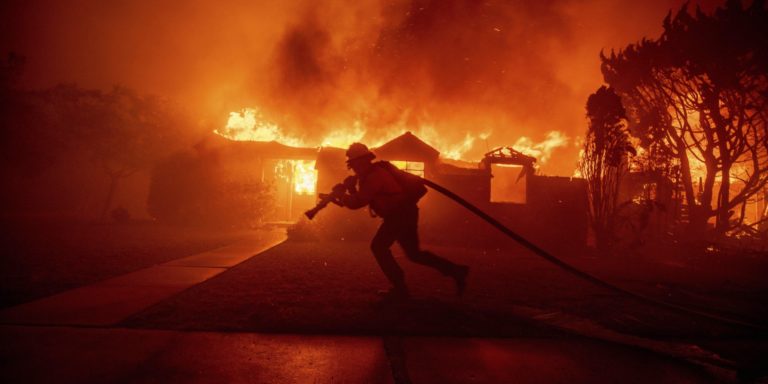
(The Center Square) State data shows the California Department of Forestry and Fire Prevention carried out only one brush clearance operation in the Pacific Palisades before the deadly Palisades Fire killed 12 Americans and destroyed 6,837 structures, highlighting the state’s slow progress in forest management.

This single Cal Fire-funded fuel reduction operation in Cal Fire’s database covering 2023 to the present involved mastication of 184 acres of scrubland across the over 75,000-acre Mountains Recreation and Conservation Authority between November and December 2024. This operation focused on the border between the coastal community of the Pacific Palisades and the slightly more inland Brentwood community in MRCA’s Westridge-Canyonback Park along Mandeville Canyon Road, and along the Bel-Air, eastern side of the San Diego Freeway.

The 23,488-acre Palisades Fire never made it to the San Diego Freeway, and was stopped on the western side of Mandeville Canyon, suggesting the operation may have played a role in stopping the fire from spreading further east through the Santa Monica Mountains.

But within the immediate Palisades area, however, CalFire’s MCRA mastication operation was only conducted on a thin sliver in Temescal Gateway Park immediately around the base of Temescal Fire Road, but not to the east or west, or even further up the road, leaving the entire Palisades community vulnerable to fire — including the treated area, which ultimately completely burned.

Gov. Gavin Newsom, meanwhile, claims California is doing its fair share and urging the federal government to step up its fire prevention efforts.

“It’s time for Trump to put his money where his mouth is. California has done more than our fair share of ‘raking’ the forests, now the federal government has to do its part to Make America Rake Again,” said Newsom in a July 1 statement. “We’re doing all we can to protect communities from catastrophic wildfire, will President Trump?”

Southern California’s coastal areas are characterized by the chaparral ecosystem, which is defined by winter rains that produce spring blooms that dry out over the summer and feed fall fires. These fires leave nutrients for post-rain blooms in a cycle that dominated California until European development and adoption of fire suppression as fire policy.

Researchers estimate approximately 1.8 million acres of California land burned every year before 1800. With the state 42.2 million hectares large, this means the entire state’s equivalent of land burned every 23 years.

Historians note that the indigenous populations adopted prescriptive burn tactics of their own, with the North Fork Mono Tribe adopting 30-year burn cycles in which three or more burns are conducted in an area during the first 10 years, with just one burn over the next 20 years.

As a result of practices like these and natural occurrences like lightning strikes that were able to unfold, California forest density was approximately half of what it is now, resulting in fewer but larger trees. These larger trees were not only more fire resistant due to their size, but refrained from drying out due to less competition and limited erosion. They were also less likely to spread fire from treetop to treetop, making the land more resilient to fire overall.

While prescribed burns are considered most effective for managing overgrowth, mastication, or the feeding of brush and smaller trees into mulching machines, can also reduce fire spread and intensity as part of a broader fuels management strategy.

According to the state of California, approximately one-third, or a million acres, of state-managed land is at “high risk from uncontrolled wildfire.” The state said as many as 15 million acres of land in California is in need of treatment.

Cal Fire’s project dashboard shows it funded 141,061 acres of fuels reduction between July 2023 and June 2024, and 123,488 acres between July 2023 and May 2024. (June data is not yet available.) At this rate, it would take about seven years to clear the forest management backlog on state lands, not including the new lands added to the state’s backlog each year.

Cal Fire’s reports note that treated acres do not denote the total number of acres that have been successfully cleared, but that “there can be multiple discrete Treatment Areas within a Project, and Treatments may contain multiple overlapping activities.” That means if one area is thinned, then pruned, then piled, then burned, an area can contribute multiple times its size toward the treatment total.

Thus, while the state reports it has completed 51,286 acres of prescribed burns — a milestone exceeding the state’s 50,000-acre goal — and 68,347 acres of fuels reduction in the 2024-2025 fiscal year, it’s likely many of those acres have been counted more than once, obfuscating the real scale of the state’s brush clearance efforts.

California Gov. Gavin Newsom’s then-record $298 billion budget for the 2024-2025 fiscal year notably cut $3 million from Cal Fire’s Forest Health Program, $35 million from stewardship programs of state-managed land, $5 million from prescribed fire and hand crews, and $28 million from conservancy projects, which likely accounted for some of the apparent forest treatment decline between the the 2023-2024 and the 2024-2025 fiscal years.

When Newsom came into office in 2019, the state was spending $200 million per year on wildfire prevention. The 2020-2021 budget increased funding to $536 million, and the 2021-2022 budget increased funding again to a record $988 million. Since then, however, funding has declined, with funding falling to $600 million in the 2022-2023 fiscal year, remaining steady for the 2023-2024 fiscal year, then declining to $543 million in the 2024-2025 fiscal year, and now to just $210 million for the 2025-2026 fiscal year.

This $210 million represents a relative decline since 2019 due to inflation — to keep up with inflation, the state would have had to have allocated $250 million this year.

Republican leaders have advocated that the state maintain a new wildfire prevention baseline of $1 billion per year, which a new working paper from Resources For the Future, whose lead author is a former U.S. Forestry Service senior researcher, suggests could eliminate the state’s highest-risk backlog in just five years.

Resources For the Future, an independent research institute, estimates it would cost approximately $17 billion to treat all of California’s lands at high risk of wildfire, finding mechanical thinning costing an average of $577 per acre, and prescribed burns $170 per acre based on U.S. Forestry Service data.

Should the state focus only on the highest-risk areas at the wildland-urban-interface where the risk of death and destruction from wildfire is the highest, RFF says treating these highest-risk 8.7 million acres would cost $5 billion.

RFF notes that these costs are based on national data, and do not count costly permitting or environmental review costs, or factor that significant scaling, and thus increased demand for labor and equipment, could raise treatment costs.

With the University of Chicago estimating the state’s 2018 record blazes caused $148.5 billion in losses, and the UCLA estimating the January fires cost as much as $164 billion, treating every acre of at-risk land in California could still cost significantly less than one catastrophic blaze.

Nonetheless, with the state starting to face budget pressures despite a record $321 billion budget, it’s unclear what other programs the state might be willing to cut to prioritize wildfire prevention.

Gabriel Kirkpatrick Mann, a seasoned wildfire documentarian who embedded with Cal Fire’s elite hotshot unit for six years to produce Hotshot, emphasizes the critical role of strategic fuel clearance in protecting communities.

“The entire forest could turn to moon dust, but if we have good fuel clearance around our neighborhood, it won’t matter,” Mann told The Center Square. “We saw this clearly on the Silverado Fire in 2020, which had the same conditions as the Palisades Fire, when 85 mile per hour winds pushed the fire straight into Orchard Hills, but because they had a 200-foot greenbelt of mulch and succulents, the fire fell to its knees.

“Contrast that with the Palisades, where you have a rats’ nest of fuels right up against people’s homes,” continued Mann. “Far different outcome.”

While the Silverado Fire in coastal Orange County burned 13,390 acres — a little less than half the size of the Palisades Fire — only five structures were destroyed, and no civilians died.

Despite the state’s wildfire prevention challenges, Newsom has leaned on the state’s efforts to go on the media offensive, hosting a “Make America Rake Again” press conference on Tuesday to unveil a model executive order for President Donald Trump to sign to improve national wildfire prevention efforts.

The model order calls for the federal government to match state and local forest management and firefighting capabilities, and reallocate funding to achieve this objective.

California Republican leaders responded by noting the state’s minimal fire prevention efforts relative to its budget — and the state’s challenge — and the decreases in fire prevention funding since the 2021-2022 fiscal year.

“Gavin Newsom has cut wildfire prevention funds every year since 2021. In 2021, myself and many other members of the legislature had to damn near shame him into a record investment of a billion dollars — this was in the aftermath of the Dixie Fire that devastated my district,” said Assembly Minority Leader James Gallagher, R-East Nicolaus. “Every year since then, in Gavin’s budgets, he has slashed the funding, including in this year’s budget, in 2025, where he allocated only $200 million toward wildfire prevention while he’s allocating $12 billion for health care for illegal immigrants.”

“In the aftermath of these devastating fires in Los Angeles and these devastating fires that have hit my area, that have hit many parts of California, $200 million out of a $321 billion budget,” continued Gallagher. “And he still has not met the [joint federal and state] goal of 500,000 acres treated a year — he committed to that under the first Trump administration … he hasn’t met that goal at all.”

According to CalFire, 96,994 acres have burned this year, with 3,290 wildfires, 30 fatalities, and 16,306 structures destroyed across the state, with 17 fires still ongoing at the start of the summer fire season.