SCOTUS Allows Trump to Deport 8 Men to South Sudan

(Luis CornelioHeadline USA) The Supreme Court ruled Thursday in favor of President Donald Trump’s wishes to deport eight violent illegal aliens to South Sudan, even though only one of the men is actually from the country. 

According to the Trump administration, South Sudan was the only nation willing to accept the men, who originate from Myanmar, Laos, Cuba and Vietnam.  

Among the men, one is a sex offender and another a convicted murderer. All eight had been detained at a U.S. military base in Djibouti after Biden-appointed Judge Brian Murphy blocked their deportations through an injunction. 

The high court struck down Murphy’s order in a 7–2 decision, with Justice Elena Kagan joining the conservative majority. Justices Sonia Sotomayor and Ketanji Brown Jackson dissented, as expected. 

The justices’ order followed a broader decision earlier this month granting Trump the authority to deport illegal aliens to countries other than their nations of birth. 

Still, Murphy falsely argued that his original injunction blocking the deportations to South Sudan remained in “full force and effect.” 

In response, the Trump administration asked the justices to clarify whether Murphy’s order had indeed been nullified by their earlier ruling. The justices said Murphy’s injunction was null. 

“The only authority [Murphy] cited was the dissent from the stay order,” the court wrote on Thursday, as quoted by the New York Post. 

“The May 21 remedial order cannot now be used to enforce an injunction that our stay rendered unenforceable,” the ruling added.  

Kagan wrote a concurring opinion, noting: “I do not see how a district court can compel compliance with an order that this Court has stayed.”

U.S. Supreme Court Allows Trump to Send Migrants to South Sudan

(The Center Square) The U.S. Supreme Court on Thursday granted a Trump administration request to deport eight noncitizens to South Sudan, a country where they have no ties.

The high court stopped an order allowing the foreign nationals to appeal removals to “third countries” where they say they could be in danger of violence or harm.

They were initially headed to South Sudan in May when a federal judge in Massachusetts halted their flight. The migrants stopped on a naval base in Djibouti where they waited for an order from the court.

The Supreme Court said a lower court’s order halting the flight was “unenforceable.” On June 23, the court paused a ruling that would give them  a chance to show they would face risk of torture if deported to a country other than their own.

Liberal Justice Elena Kagan concurred with the conservative majority’s opinion.

“I do not see how a district court can compel compliance with an order that this court has stayed,” Kagan wrote.

Justices Sonia Sotomayor and Ketanji Brown Jackson dissented from the majority opinion. Sotomayor wrote the dissenting opinion in which she criticized the majority decision and the Trump administration.

“Today’s order clarifies one thing: Other litigants must follow the rules, but the administration has the Supreme Court on speed dial,” Sotomayor wrote.

Trump Speaks With Putin, Says He Didn’t ‘Make Any Progress’ on Ukraine

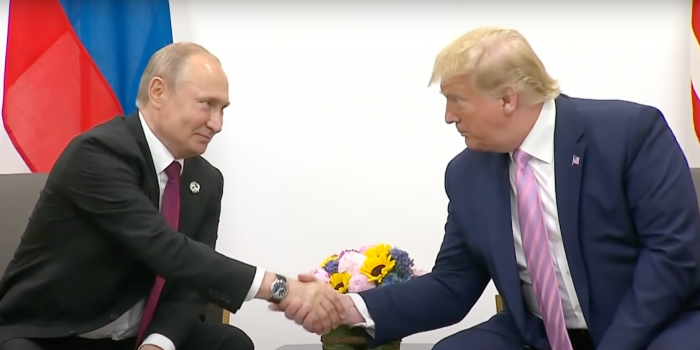
(Dave DeCamp, Antiwar.comPresident Trump spoke with Russian President Vladimir Putin on Thursday and said after the call that he didn’t “make any progress” on the issue of the Ukraine war.

“We had a call, it was a pretty long call, and we talked about a lot of things, including Iran. And we also talked about the war with Ukraine, and I’m not happy about that,” Trump told reporters before boarding Air Force One.

When asked if any progress was made on Ukraine, Trump said, “No, I didn’t make any progress today with him at all.”

According to the Kremlin, Putin told Trump that Russia wouldn’t give up on its war goals. “Our president said that Russia will achieve its goals, that is, eliminate the well-known root causes that led to the current state of affairs, to the current harsh confrontation. And Russia will not give up on these goals,”said Putin aide Yury Ushakov.

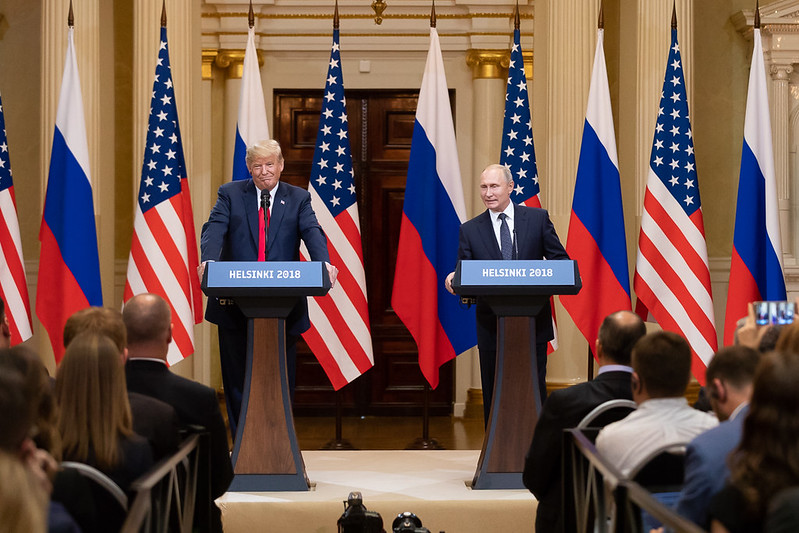
Trump and Putin in Helsinki, Finland, on July 16, 2018 (White House photo)

The call between the two leaders comes after the US halted the shipment of some air defenses and other munitions to Ukraine due to dwindling US stockpiles. Ushakov said that Trump and Putin didn’t discuss the halted US supplies to Ukraine.

The war in Ukraine has continued to rage despite Trump’s dialogue with Russia and push for a ceasefire, as the two sides remain very far apart on their conditions to end the conflict. The pause on some US military aid shipments could increase the likelihood of Ukraine making concessions to Russia. Ukrainian President Volodymyr Zelensky said on Wednesday that Ukraine was holding talks with the US to “clarify” the issue of US military support for Ukraine.

One of the main impasses is over the issue of territory, as Russia wants Ukraine to recognize four Ukrainian oblasts that Moscow annexed in 2022 as part of Russia, which would require Ukrainian forces to withdraw from territory it holds in those regions.

During short-lived negotiations in the early days of Russia’s invasion of Ukraine, in March and April of 2022, Russia’s main demand was Ukrainian neutrality. The Biden administration discouraged those negotiations, and later that year, Russia declared its annexation of the four Ukrainian oblasts and added the recognition of that territory as part of Russia to its demands to end the war.

This article originally appeared at Antiwar.com.


Famous Mexican Boxer Julio César Chávez Jr. Arrested by ICE for Deportation

(Headline USAFamed Mexican boxer Julio César Chávez Jr. has been arrested for overstaying his visa and lying on a green card application and will be deported to Mexico, where he faces organized crime charges, U.S. federal officials said Thursday.

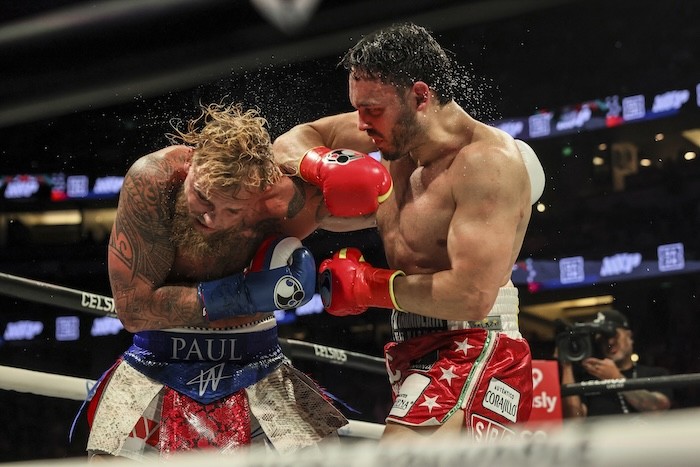
The arrest came only days after the former middleweight champion lost a match against influencer-turned-boxer Jake Paulin Anaheim, California. The Department of Homeland Security said officials determined Chávez should be arrested on June 27, a day before the fight. It was unclear why they waited to act for days after the high-profile event.

The boxer was riding a scooter when agents detained him

The 39-year-old boxer, according to his attorney Michael Goldstein, was picked up Wednesday by a large number of federal agents while he was riding a scooter in front of a home where he resides in the upscale Los Angeles neighborhood of Studio City near Hollywood.

Goldstein did not know where Chávez was being detained as of Thursday morning, but said he and his client were due in court Monday in connection with prior gun possession charges.

Chávez’s family issued a statement Thursday afternoon in support of him, the Los Angeles Times reported.

Before his recent bout, Chavez fought once since 2021

Before his bout with Paul on Saturday, Chávez had fought just once since 2021, having fallen to innumerable lows during a lengthy boxing career conducted in the shadow of his father, Julio César Chávez, one of the most beloved athletes in Mexican history and a member of the International Boxing Hall of Fame who won championships in several weight classes.

The son, who has battled drug addiction for much of his career, has been arrested repeatedly. In 2012, he was convicted of drunk driving in Los Angeles and sentenced to 13 days in jail and in January 2024 he was arrested on gun charges. Police said he possessed two AR-style ghost rifles. He was later freed on a $50,000 bond and on condition he went to a residential drug treatment facility. The case is still pending, with Chávez reporting his progress regularly.

He split his time between both countries. Immigration and Customs Enforcement officers detained Chávez for overstaying a tourist visa that he entered the U.S. with in August 2023 and expired in February 2024, the Department of Homeland Security said.

The agency also said Chávez submitted multiple fraudulent statements when he applied for permanent residency on April 2, 2024, based on his marriage to a U.S. citizen, Frida Muñoz. She is the mother of a granddaughter of imprisoned Sinaloa cartel kingpin Joaquin “El Chapo” Guzman.

U.S. officials said he is believed to be an affiliate of the powerful Sinaloa Cartel that is blamed for a significant portion of Mexico’s drug violence.

Federal officials called Chavez a public safety threat

U.S. Citizenship and Immigration Services flagged Immigration and Customs Enforcement about Chávez on Dec. 17, saying he “is an egregious public safety threat,” and yet he was allowed back into the country without a visa on Jan. 4 under the Biden administration, the agency said.

Mexico’s Attorney General’s Office said that an arrest warrant against “Julio “C was issued in Mexico in March 2023 in an investigation of organized crime and arms trafficking allegations and that Mexico on Thursday initiated extradition proceedings.

A federal agent who spoke on condition of anonymity because he was not authorized to speak publicly on the matter confirmed to The Associated Press that “Julio C” is Chávez. The agent declined to explain why Chávez was not arrested earlier in Mexico despite going back and forth between the two countries multiple times.

Adapted from reporting by the Associated Press

Trump Wants to Celebrate 250 Years of Independence w/ a UFC Fight at the White House

(Headline USAPresident Donald Trump said Thursday that he’s thinking of staging a UFC match on the White House grounds with upwards 20,000 spectators to celebrate 250 years of American independence.

“We have a lot of land there,” said Trump, a UFC enthusiast who has attended several of its mixed martial arts matches in recent months and is close friends with Dana White, the league’s president.

Trump announced his plan in Iowa during the kickoff for a year’s worth of festivities to celebrate America’s 250th birthday on July 4, 2026.

The Republican president also announced a culminating festival on the National Mall in Washington, and a separate athletic competition featuring high school athletes from across the country.

“So every one of our national parks, battlefields and historic sites are going to have special events in honor of America 250. And I even think we’re going to have a UFC fight,” Trump said.

″Think of this on the grounds of the White House. We have a lot of land there,” he said, adding that it would be a “full fight” with 20,000 to 25,000 people.

A White House spokesperson said they had no details to share beyond the president’s announcement, but White House press secretary Karoline Leavitt later said Trump was “dead serious” about those plans.

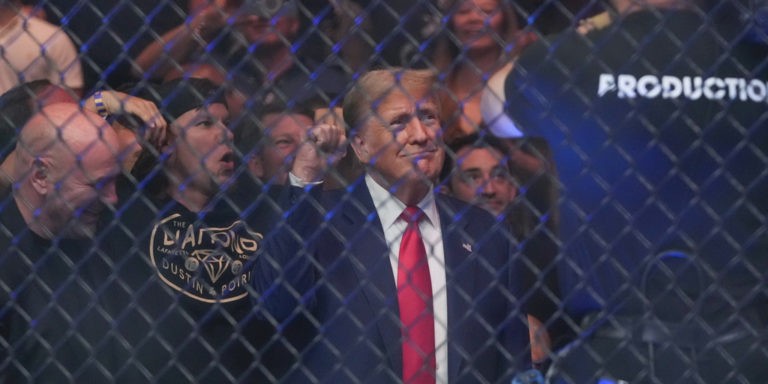
Trump has recently enjoyed standing ovations and cage-side seats for several UFC fights, including an appearance immediately after his 2024 reelection and another just last month alongside White for two championship fights.

Adapted from reporting by the Associated Press

Report: Israel-Syria Talks Propose U.S. Troop Deployment To Territory Israel Captured in Southern Syria

(Dave DeCamp, Antiwar.comAl-Monitor reported on Tuesday that talks between Israel and Syria have included discussions on the possibility of US troops deploying to areas of southwestern Syria that Israel captured following the regime change that ousted former Syrian President Bashar al-Assad.

Immediately after Assad was overthrown in December 2024, Israel invaded southern Syria, capturing a buffer zone that was established in 1974 between the Israeli-occupied Golan Heights and the rest of Syria’s territory, including the Syrian side of Mount Hermon, and also took more territory in the Daraa and Quneitra Governorates.

Sources told Al-Monitor that under a potential quasi-normalization/border deal, US troops could replace the Israeli presence on Mount Hermon, and Syrian government forces could be deployed to the buffer zone to prevent forces hostile to Israel from entering the areas.

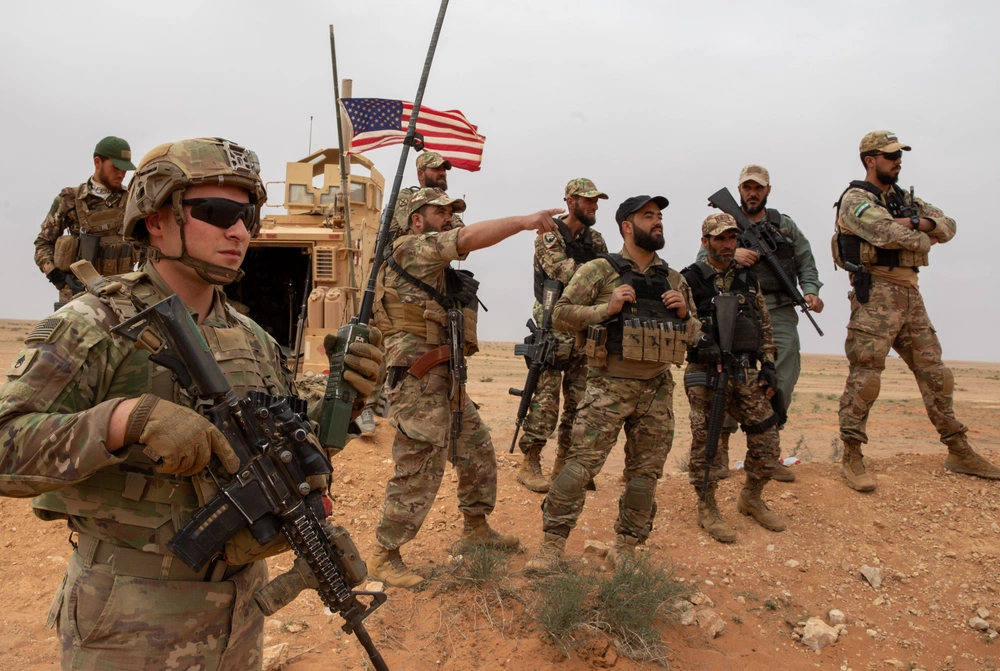
A US Army staff sergeant at an undisclosed location in Syria with Syrian partner forces on April 24, 2025 (US Army photo)

The report said that the discussions have not included anything about the side of the Golan Heights that Israel has occupied since 1967 and annexed in 1981, a move not recognized by any other country until the Trump administration did so in 2019.

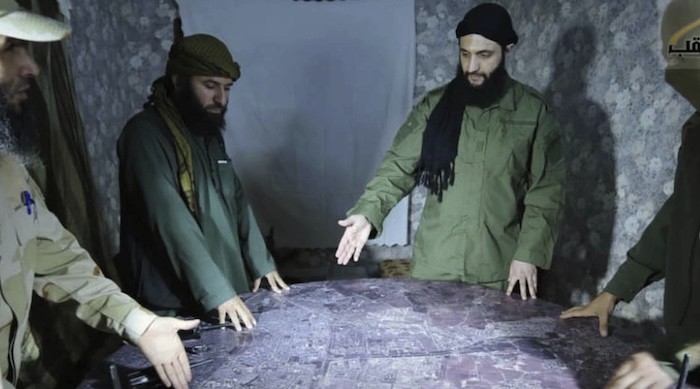
The US has been very friendly with the new Syrian government that’s led by Ahmed al-Sharaa, the founder of al-Qaeda in Syria, who rebranded in 2016 to gain international support. His group of jihadists, known as Hayat Tahrir al-Sham, led the offensive that ousted Assad, and he has become the country’s de facto president.

President Trump recently signed an executive order lifting the majority of US sanctions on Syria. In exchange, the US is hoping for some sort of deal between Israel and Syria. According to Al-Monitor, Israel now views the 1974 disengagement agreement, which established the buffer zone along the Israeli-occupied Golan Heights, as obsolete.

The US has been drawing down its number of troops in Syria, but it is planning to maintain a long-term military presence in the country. The US is expected to close its bases in northeastern Syria and keep fewer than 1,000 troops at its base at al-Tanf in the south, which is about 160 miles east of the Israeli-occupied areas of southwest Syria.

This article originally appeared at Antiwar.com.

Headline Geopolitics: Israel, Iran, and the New Global Order

(José Niño, Headline USA) In the debut episode of Headline Geopolitics, deputy editor José Niño sat down with Dr. Arta Moeini, Managing Director of the Institute for Peace & Diplomacy, to explore the unraveling of the liberal international order and the rise of multipolarity.

They also dug into the fallout from the recent 12-day war between Israel and Iran, and how that conflict is reshaping U.S. foreign policy and the broader security architecture of the Middle East.

Follow Arta Moeini: X: @ArtaMoeini

Website: https://peacediplomacy.org/

Project AGON: https://www.agonmag.com/

José Niño is the deputy editor of Headline USA. Follow him at x.com/JoseAlNino

WATCH: Against Odds, GOP’s ‘Big, Beautiful Bill’ Passes House, Heads to Trump’s Desk

(The Center Square) Against all odds, U.S. House Republicans finally united around the Senate-revised “big, beautiful bill” and passed it in a 218-214 vote Thursday afternoon, sending the multitrillion-dollar budget reconciliation package to the president’s desk.

The bill’s passage marks yet another herculean feat by House Speaker Mike Johnson, R-La., who not only persuaded – with President Donald Trump’s help – the most recalcitrant GOP holdouts to vote for the bill as is, but also passed it by a self-imposed July 4 deadline.

The $3.3 trillion megabill, formerly titled the One Big Beautiful Bill Act, hikes the debt ceiling by $5 trillion and implements the bulk of Trump’s tax, energy, border and defense agenda.

When Johnson barely passed the first version in the House last week, he promised fiscal hawks that the Senate would pair any additional tax cuts with dollar-for-dollar spending cuts. The House version extended most of the 2017 Tax Cuts and Jobs Act for the next 10 years while finding $1.7 trillion in offsets.

But Senate Republican leaders, itching to permanently extend the boosted maximum standard deduction and reduced cross-bracket tax rates, adopted a controversial accounting method to theoretically zero out the cost of codifying Trump’s tax policies.

That move and other changes, reported on by The Center Square, alienated multiple House Republicans and upset multiple delicate political compromises House Speaker Mike Johnson, R-La., had made his constituents earlier.

Despite threats by many Republicans in the House to oppose the final bill when it returned to their chamber, Johnson decided to muscle the bill through the House Rules Committee and onto the floor Wednesday, where he and other GOP congressional leaders spent all night pushing hardliners to fold.

“I do so deeply desire to have just normal Congress, but it doesn’t happen anymore,” Johnson told reporters around 1:30 a.m. Thursday. “I don’t want to make history, but we’re forced into these situations.”

Ultimately, Johnson’s gamble paid off, garnering praise from his colleagues and condemnation from Democrats.

House Minority Leader Hakeem Jeffries, D-N.Y., called the bill a “disgusting abomination” that will “have devastating consequences for everyday Americans” during his eight-hour long speech leading up to the final vote.

Among other things, the bill codifies the $15,000 maximum standard deduction, the 20% Qualified Business Income deduction, and the doubled child tax credit of $2,000, though both parents now need a Social Security number to claim it.

Key business tax credits would become permanent as well – full reimbursement for capital investments, an expanded deduction for corporation’s interest on debt, and streamlined deductions for companies’ research costs.

The bill also implements some temporary tax provisions that Trump promised during his campaign, such as creating a $6,000 deduction for eligible seniors and nixing taxes on tips and overtime. The Senate version requires seniors to have a Social Security number to claim the deduction, as well as caps deductions for tips at $25,000 and deductions for overtime at $12,500 for single filers.

To partially offset the bill’s cost and advance Trump’s goal to cut waste and fraud, the legislation would require able-bodied adults without dependents to fulfill work-related requirements to receive welfare benefits and cap the Medicaid provider tax at 3.5% – down from the current 6% rate – by 2030.

It also cracks down on states with high SNAP payment error rates and hikes states’ share of the program’s administrative cost by 2027.

Costly solar and wind subsidies from the 2022 Inflation Reduction Act will have slightly faster phaseouts than originally intended, saving about $517 billion over the next 10 years. The savings are less than fiscal hawks wanted, but a substantial enough spending decrease to eventually get them on board.

“The One, Big, Beautiful Bill is for the people who don’t have lobbyists in this town,” House Ways and Means Committee Chairman Jason Smith, R-Mo., told lawmakers early Thursday morning. “It’s about restoring sanity in a town that’s lost it, cutting waste and reining in reckless spending. It demands that if you’re able to work, you should. It stops asking working families to foot the bill for Washington’s bad decisions.”

The White House has scheduled a bill signing ceremony Friday.

Biden’s DOJ Stymied Investigation into 2023 Nashville Christian School Shooting, FBI Records Show

(Ken Silva, Headline USA) The FBI has released another batch of records about the March 2023 Nashville elementary school attack that killed six people, including three children. According to the records, Biden’s Justice Department declined to investigate the matter as a federal hate crime, despite calls from Republicans in Congress to do so.

A day after the shooting, Sen. Josh Hawley, R-Iowa, wrote to the DOJ on March 28, 2023, to demand a hate crime investigation.

“Federal law explicitly criminalizes acts of violence against individuals based on religious affiliation as hate crimes … Hale’s attack was both premeditated and ‘targeted’ against this Christian school,” Hawley said in a letter to then-FBI Director Chris Wray and then-DHS Secretary Alejandro Mayorkas.

“The full resources of the federal government must be brought to bear to determine how this crime occurred, and who may have influenced the deranged shooter to carry out these horrific crimes.”

Reps. Mary Miller and Marjorie Taylor Greene wrote a similar letter on the same day.

However, an FBI record from a week later shows that the DOJ declined to pursue the matter as a federal hate crime.

According to an April 20, 2023, FBI memo, the Metropolitan Nashville Police Department requested the FBI’s assistance in shutting down Hale’s social online accounts and issuing search warrants on social media firms. In response, the Joe Biden-appointed U.S. Attorney for the Middle District of Tennessee “denied federal search warrants absent federal nexus or charges,” the FBI memo states.

The U.S. Attorney at the time was the Biden-appointed Henry Cabell Leventis.

Instead of federal search warrants, the FBI assisted local law enforcement is issuing state warrants on social media firms.

At one point, law enforcement reportedly was looking into whether Vanderbilt University Medical Center—where the shooter, Audrey Hale, had been receiving treatment since 2001, when she was six years old— for failing to report Hale’s warning signs.

However, the MNPD issued a 50-page investigative case summary on the shooting in early April without recommending charges.

According to that report, Hale left behind “a series of notebooks, art composition books, and media files created by Hale documenting her planning and preparation for the attack, the events in her life that motivated her to commit the attack, and her hopes regarding the outcome of the attack,” police determined. Hale, who once attended Covenant, was killed by police.

Hale, a biological woman, identified as a man at the time of the attack, but the police report uses female pronouns. The report doesn’t refer to Hale as transgender.

The evidence held by law enforcement on Hale includes more than 100 gigabytes of data, which includes over 900 pages of her writings.

Ken Silva is the editor of Headline USA. Follow him at x.com/jd_cashless.

Freedom Dies When Money Lies: Why Sound Money is the Foundation of a Free Society

(David Morgan, Money Metals News Service) There’s an old truth we forget at our peril: when money loses its integrity, freedom soon follows.

Throughout history, the erosion of honest currency has marched in lockstep with the erosion of civil liberties.

The connection is not coincidental; it’s causal. Because money is not just a medium of exchange; it is the lifeblood of voluntary action. When it’s corrupted, everything downstream begins to decay-personal agency, self-reliance, and ultimately, freedom itself.

In a truly free society, individuals make decisions based on trust.

They trust that the fruits of their labor—measured in “currency”—will retain value over time. They trust that savings will serve as a store of wealth, not a melting ice cube. They trust that investments will respond to real-world fundamentals, not the whims of unelected technocrats operating behind closed doors.

But a rigged monetary system destroys that trust.

When central banks manipulate interest rates to artificially low levels, flood markets with fiat currency, and monetize endless government debt, they set off a chain reaction of distortions.

Prices no longer reflect reality. Markets no longer reward prudence. Debt becomes addictive. And those playing by the old rules—earning, saving, investing—find themselves punished rather than protected.

Inflation is the most insidious form of this punishment.

It operates in silence, without debate or legislation, yet affects everyone. It erodes purchasing power, diminishes the value of savings, and forces people to take on more risk just to stand still. It’s a hidden tax—and one with no vote, no debate, and no transparency.

And here’s the deeper issue: inflation doesn’t just attack the wallet. It attacks freedom.

When people can’t save, they can’t plan. When they can’t plan, they can’t act independently. They become more reliant on credit, on government assistance, on large institutions that can “manage” the instability the system itself created.

That dependency is the opposite of liberty. It breeds control. And that’s precisely the danger.

History shows that when monetary systems collapse, the political fallout is rarely far behind.

We saw it in Weimar Germany, where hyperinflation helped pave the way for authoritarianism. We see it today in places like Venezuela, where failed currency leads to failed governance—and widespread civil unrest.

Even in the United States, the weakening of the dollar’s purchasing power over the last century has coincided with a massive expansion of federal control over private life.

This isn’t alarmism. It’s pattern recognition.

When money is debased, citizens become easier to manage. Their time horizon shortens. Their stress level rises. They become less likely to resist, protest, or question—too busy making ends meet, too confused to see the bigger picture.

That’s why regimes throughout history have leaned on monetary manipulation: it’s the invisible handcuff.

In that light, the defense of sound money becomes more than a financial concern. It becomes a moral and political imperative.

A currency that holds its value empowers people to live independently, to think long-term, and to resist coercion. It protects sovereignty—both national and individual.

Remember, sovereignty simply means the capacity for self-determination.

Gold and silver have served this role for thousands of years, not because they’re shiny, but because they are scarce, verifiable, and resistant to central control. They are the antidote to fiat deception.

That’s why they’ve always been the enemy of empires—and the ally of free people.

Today, as central banks inflate away the last remnants of trust in the system, and digital currencies offer new tools of control under the guise of convenience, the battle over money is reaching a new inflection point.

Will we continue down the path of dependence and dilution? Or will we reclaim the principles of honest money—and with them, the promise of a truly free society?

The answer will determine far more than the price of gold or the return on your portfolio.

It will determine whether future generations live as free people—or managed subjects of a technocratic/financial system designed to control, not liberate.


A widely recognized expert on silver, David Morgan began investing in stocks and precious metals as a teenager. He obtained degrees in finance and economics as well as engineering. Author of the book The Silver Manifesto, he has devoted more than 30 years to educating investors on opportunities to protect and grow their wealth. In addition to advising private clients and fund managers, he writes at The Morgan Report, covering economic news, the global economy, currency debasement, and stellar opportunities in precious metals and mining stocks.