California Planning to Purge 5 GOP U.S. House Seats

(Headline USACalifornia Democrats are considering new political maps that could slash five Republican-held House seats in the liberal-leaning state while bolstering Democratic incumbents in other battleground districts.

A draft plan that’s circulating aims to boost the Democratic margin to 48 of California’s 52 congressional seats, according to a source familiar with the plan who was not authorized to discuss it publicly. That’s up from the 43 seats the party now holds. It would need approval from lawmakers and voters, who may be skeptical to give it after handing redistricting power to an independent commission years ago.

In addition, the proposal would generously pad Democratic margins in districts for competitive seats anchored in Orange County, San Diego County and the Central Valley farm belt, giving Democrats a potential advantage as Texas Republicans try to sway the tissue-thin balance of the House.

According to the proposal, districts now held by Republican Reps. Ken Calvert, Darrell Issa, Kevin Kiley, David Valadao and Doug LaMalfa would see right-leaning voters shaved and Democratic voters boosted in a shift that would make it likely a left-leaning candidate would prevail in each race.

In districts held by Democratic Reps. Dave Min, Mike Levin and Derek Tran, the party’s edge would be boosted to strengthen their hold on the seats, the source said.

Democratic members of California’s congressional delegation were briefed on the new map on Monday, according to a person familiar with the meeting who requested anonymity to discuss private conversations.

The move is reportedly a response to efforts by Texas Republicans to redraw House districts in order to strengthen the GOP hold on the chamber in 2026.

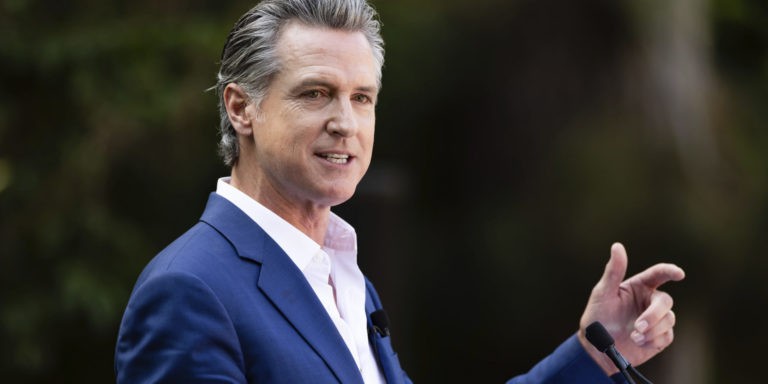
The proposal is being circulated at the same time that Democratic Gov. Gavin Newsom has said he wants to advance partisan redistricting. He says he won’t move ahead if Texas pauses its efforts.

Newsom said he’d call a special election for the first week of November. Voters would weigh a new congressional map drawn by the Democratic-controlled Legislature.

“California will not sit by idly and watch this democracy waste away,” Newsom said Monday.

Adapted from reporting by the Associated Press

DOJ to Present Russiagate Hoax to a Grand Jury for Criminal Charges

(Headline USAAttorney General Pam Bondi has directed that the Justice Department move forward with a probe into the origins of the Trump-Russia investigation, following the recent release of documents about collusion between the Obama administration and the 2016 Hillary Clinton campaign.

Bondi has directed a prosecutor to present evidence to a grand jury after referrals from the Trump administration’s top intelligence official, a person familiar with the matter said Monday. Fox News first reported the development.

It was not clear which former officials might be the target of any grand jury activity, where the grand jury that might ultimately hear evidence will be located or which prosecutors — whether career employees or political appointees — might be involved in pursuing the investigation. It was also not clear what precise claims of misconduct Trump administration officials believe could form the basis of criminal charges, which a grand jury would have to sign off on for an indictment to be issued.

In one batch of documents released last month, Gabbard disclosed emails showing that senior Obama administration officials were aware in 2016 that Russians had not hacked state election systems to manipulate the votes in Trump’s favor.

Sen. Chuck Grassley, the Republican chairman of the Senate Judiciary Committee, also released a set of emails last week. The emails were part of a classified annex of a report issued in 2023 by John Durham, the special counsel who was appointed during the first Trump administration to hunt for any government misconduct during the Russia investigation.

According to the annex, an FBI informer identified as “TI” provided the bureau in 2016 with two intelligence reports, which described “confidential conversations” between then-Democratic National Committee Chair Debbie Wasserman Schultz and two people at the George Soros-funded Open Society Foundation: Leonard Bernardo and Jeffrey Goldstein.

The report said that then-President Barack Obama didn’t want Hillary’s scandal to taint his legacy. Accordingly, “To solve the problem, the President puts pressure on FBI Director James Comey through Attorney General Lynch, however, so far without concrete results.” The same report also said that Comey favored Republicans, and that the FBI didn’t have any evidence against Clinton—because she deleted her emails.

While the FBI informant’s intelligence wasn’t corroborated at the time, the FBI indeed closed its investigation into Clinton without recommending charges.

Republicans have particularly focused on a July 27, 2016, email in Durham’s newly declassified annex that claimed that Hillary Clinton had approved a plan during the heat of the campaign to link Trump with Russia.

Durham’s own report took pain to note that investigators had not corroborated the communications as authentic and said the best assessment was that the message was “a composites of several emails” the Russians had obtained from hacking.

Adapted from reporting by the Associated Press

Is The GENIUS Act a Backdoor to CBDCs?

(Clint Siegner, Money Metals News Service) Congress recently passed the GENIUS Act, which provides a regulatory framework for private banks and other organizations to develop and operate stablecoins. These are digital tokens which have their value pegged to another “stable” asset, such as the U.S. dollar.

There was plenty of cheering from Washington and from Wall Street. We’re told the Act opens a new frontier for innovation and development in finance.

Innovation sounds nice. Unfortunately, Wall Street bankers have a terrible track record when it comes to developing new products and services which improve anyone else’s lives.

Mortgage-backed securities were hailed as an “innovation” prior to the 2008 financial crisis. Bankers used them as a vehicle for making garbage loans and then packaging them for sale with a bogus triple-A rating to pension funds and insurance companies.

When that fell apart, they peddled them to the Federal Reserve Bank (at full price).

The problem is that major financial institutions aren’t really like small businesses trying to innovate and succeed. There may be no cozier relationship than the one between Washington, DC, and Wall Street.

Large banks enjoy practical immunity from prosecution for their misdeeds. For example, no one in top leadership has ever been prosecuted for the widespread fraud which led to the 2008 crisis.

These banks also claim the ultimate protection against the consequences of bad decisions and/or poor luck. The public will bail them out.

Too Big to Jail

This bizarre privilege for banks used to be merely assumed. Politicians and central bankers were quick to step in after events like the failure of Long Term Capital Management in 1997 and the 2008 Financial Crisis.

Today, the 29 largest banks are officially designated as Globally Systemically Important Banks (G-SIBs), and governments are formally obligated to prevent them from failing.

In return for immunity from the consequences of bad judgment or misdeeds, the large banks tend to cooperate with government officials.

Consider initiatives such as Operation Choke Point. Bureaucrats and bankers worked together to prevent clients in out-of-favor businesses, such as gun shops and coin dealers, from being able to secure banking.

Now, Wall Street has a green light to build stablecoins – digital tokens which can represent currencies such as the dollar – in brand new payment systems.

The large banks will build centrally managed systems rather than decentralized networks like the one powering Bitcoin. They may have complete tracking and control over who is allowed to transact, what they can purchase, where they can buy or sell, and when transactions are allowed.

The GENIUS Act offers zero protection for privacy or against censorship to the users of stablecoins.

What could go wrong?

Stablecoins could become a backdoor method of getting the public to adopt something very close to a Central Bank Digital Currency (CBDC). To the extent the big banks are in charge of stablecoins, government officials may get access to transaction data and a large measure of control by proxy.

The recent spotlight on government funding of “Non-Governmental” Organizations (NGOs) revealed the federal government has a penchant for using “private” organizations as a workaround to citizens’ constitutional rights. Bureaucrats job out programs which are either illegal or too unpopular to handle directly.

The strategy might be working. There has been a lot of fear and consternation over CBDCs. Few seem worried about Wall Street’s rush into launching stablecoins.

More benevolent organizations may launch stablecoins. However, it is hard to imagine how a stablecoin might be built with decentralized control or the promise of privacy and anti-censorship.

The GENIUS Act requires token issuers to register as a “financial institution”. That means built-in requirements to screen users for Anti-Money Laundering (AML) and Know Your Customer (KYC). Issuers will be keeping a close eye on who uses their tokens and how.

It will, of course, be framed as a good thing – protecting society from drug dealers and terrorists.

One thing is clear. All these developments only make ownership of private, off-the-grid, gold and silver even more important for liberty-minded people.


Clint Siegner is a Director at Money Metals Exchange, a precious metals dealer recently named “Best in the USA” by an independent global ratings group. A graduate of Linfield College in Oregon, Siegner puts his experience in business management along with his passion for personal liberty, limited government, and honest money into the development of Money Metals’ brand and reach. This includes writing extensively on the bullion markets and their intersection with policy and world affairs.

Central Bank Gold Buying Slows in Q2 But Remains Far Above Historical Average

(Mike Maharrey, Money Metals News Letter) Higher prices appear to have put a drag on central bank gold buying. However, the pace of expanding gold reserves remains far above the historical average.

Central banks globally added 166 tonnes of gold to their reserves in the second quarter. That was a 33 percent quarter-on-quarter decline and the lowest quarterly demand since Q2 2022.

However, gold buying was still 41 percent above the quarterly average that was typical between 2010 and 2021.

Through the first half of 2025, central banks added a net 415 tonnes of gold to their reserves.

The World Gold Council notes that while central banks tend to make reserve decisions strategically, they are not totally insensitive to prices.

“As such, gold’s rally so far this year, up 26 percent, to new record levels, has likely contributed to the slowdown in central bank buying. But that they continue to add gold in the face of a higher price underscores their continuing favorable attitudes towards gold as a strategic asset amid such uncertainty.”

The National Bank of Poland was once again the top gold buyer in Q2. It added 19 tonnes of gold to its reserves last quarter, on top of 49 tonnes in Q1. Official Polish gold holdings now total 515 tonnes, making up about 22 percent of its reserves.

The National Bank of Poland now holds more gold than the European Central Bank.

Poland was the biggest buyer in 2024 as well, adding 90 tonnes to its holdings.

Last year, National Bank of Poland Governor Adam Glapiński indicated the central bank plans to increase its gold holdings to 20 percent of its reserves.

“This makes Poland a more credible country, we have a better standing in all ratings, we are a very serious partner, and we will continue to buy gold.”

The Polish central bank has exceeded that level and continues to add to its reserves.

The Central Bank of Turkey is buying gold again. It upped its reserves by 11 tonnes in the second quarter.

Turkey was one of the biggest buyers in 2024. While the pace of buying has slowed, the Turkish government will likely continue adding gold to its holdings. Meanwhile, the Turkish people are also buying a lot of gold as they deal with significant price inflation.

The National Bank of Kazakhstan added 16 tonnes of gold to its reserves last quarter. Since the beginning of the year, Kazakh gold holdings are up by about 15 tonnes.

China reported a 6-tonne increase to its official reserves in Q2. The country has reported an increase in its official gold holdings for eight straight months.

That pushed its official gold stockpile to 2,296 tonnes, about 6.5 percent of its total reserves.

Notice the emphasis on “official.”

China is one of the central banks that likely holds significantly more gold than it publicly discloses. As Jan Nieuwenhuijs has reported, the People’s Bank of China is secretly buying large amounts of gold off the books. According to data parsed by the renowned Money Metals researcher, the Chinese central bank is currently sitting on more than 5,000 tonnes of monetary gold located in Beijing – more than TWICE what has been publicly admitted.

Several other banks reported increases in their gold reserves.

  • Czech Republic – 6 tonnes
  • Kyrgyz Republic – 4 tonnes
  • Qatar – 2 tonnes
  • Cambodia – 2 tonnes
  • Ghana – 2 tonnes
  • Philippines – 1 tonne
  • Serbia – 1 tonne
  • Jordan  – 1 tonne

While not a central bank, the State Oil Fund of Azerbaijan increased its gold holdings by 16 tonnes in Q2. The fund now holds 181 tonnes of gold, accounting for about 29 percent of its portfolio.

Sellers last quarter included Singapore (5 tonnes), Uzbekistan (3 tonnes), German Bundesbank (1 tonne).

The Uzbek central bank has been the biggest seller of the year, decreasing its reserves by 27 tonnes. It is not uncommon for banks that buy from domestic production – such as Uzbekistan and Kazakhstan – to switch between buying and selling.

The World Gold Council remains bullish on central bank gold buying.

“We maintain our view that central banks will continue to add gold to their reserves. Our Central Bank Gold Reserves Survey 2025 shows that respondents overwhelmingly (95 percent) expect global central bank gold reserves to increase over the next 12 months, while 43 percent believe that their own gold reserves will also increase over the same period. Notably, none of the respondents anticipate a decline in their gold reserves.”

You can read more details about that central bank survey HERE.

On net, central banks officially increased their gold holdings by 1,044.6 tonnes in 2024. It was the 15th consecutive year of expanding gold reserves.

Last year was the third-largest expansion of central bank gold reserves on record, coming in just 6.2 tonnes lower than in 2023 and 91 tonnes lower than the all-time high set in 2022. (1,136 tonnes). 2022 was the highest level of net purchases on record, dating back to 1950, including since the suspension of dollar convertibility into gold in 1971.

Looking at the broader perspective, the central bank gold buying trend is now entering its 16th year.

World Gold Council analysts expect the trend to continue, with buying “close to the range seen over the past three years on continued elevated trade-related risks and uncertainty premia in U.S. assets.

The WGC also noted that “diversification” with “a reduction of U.S. assets” is one of the factors driving central bank gold buying. In other words, de-dollarization.

“We don’t see an end to this narrative unless there is a material shift in geopolitical tensions. The IMF has downgraded growth prospects in the U.S. more than in other major economies, citing policy uncertainty. This suggests that other countries may have leverage in negotiations, although these typically last months and years, not weeks. Hence, we don’t expect any near-term resolutions.”


Mike Maharrey is a journalist and market analyst for Money Metals with over a decade of experience in precious metals. He holds a BS in accounting from the University of Kentucky and a BA in journalism from the University of South Florida.


State Department May Require Visa Applicants to Post Bond of Up to $15,000 to Enter the US

The State Department is proposing requiring applicants for business and tourist visas to post a bond of up to $15,000 to enter the United States, a move that may make the process unaffordable for many.

In a notice to be published in the Federal Register on Tuesday, the department said it would start a 12-month pilot program under which people from countries deemed to have high overstay rates and deficient internal document security controls could be required to post bonds of $5,000, $10,000 or $15,000 when they apply for a visa.

The proposal comes as the Trump administration is tightening requirements for visa applicants. Last week, the State Department announced that many visa renewal applicants would have to submit to an additional in-person interview, something that was not required in the past. In addition, the department is proposing that applicants for the Visa Diversity Lottery program have valid passports from their country of citizenship.

A preview of the bond notice, which was posted on the Federal Register website on Monday, said the pilot program would take effect within 15 days of its formal publication and is necessary to ensure that the U.S. government is not financially liable if a visitor does not comply with the terms of his or her visa.

“Aliens applying for visas as temporary visitors for business or pleasure and who are nationals of countries identified by the department as having high visa overstay rates, where screening and vetting information is deemed deficient, or offering citizenship by investment, if the alien obtained citizenship with no residency requirement, may be subject to the pilot program,” the notice said.

The countries affected will be listed once the program takes effect, it said. The bond could be waived depending on an applicant’s individual circumstances.

The bond would not apply to citizens of countries enrolled in the Visa Waiver Program, which enables travel for business or tourism for up to 90 days. The majority of the 42 countries enrolled in the program are in Europe, with others in Asia, the Middle East and elsewhere.

Visa bonds have been proposed in the past but have not been implemented. The State Department has traditionally discouraged the requirement because of the cumbersome process of posting and discharging a bond and because of a possible misperceptions by the public.

However, the department said that previous view “is not supported by any recent examples or evidence, as visa bonds have not generally been required in any recent period.”

Adapted from reporting by the Associated Press.

Russia Downplays Trump’s Comments on Nuclear Submarines, Cautions Against ‘Nuclear Rhetoric’

(Dave DeCamp, Antiwar.com) The Kremlin on Monday downplayed President Trump’s recent announcement that two US nuclear submarines were being deployed to “appropriate regions” in response to comments from former Russian President Dmitry Medvedev.

According to Russia’s TASS news agency, Kremlin spokesman Dmitry Peskov noted that US nuclear-armed submarines are always at sea and on patrol, regardless of Trump’s comments. “In this case, it is obvious that US submarines are already on combat duty. This is an ongoing process,” he said.

Peskov also cautioned against rhetoric related to nuclear weapons. “Russia takes the issue of nuclear non-proliferation very seriously. And, of course, we believe that everyone should be extremely careful when it comes to nuclear rhetoric,” he said.

Trump announced the submarine deployment after Medvedev said that the US president’s ultimatums on the Ukraine war are “a threat and a step towards war. Not between Russia and Ukraine, but with (Trump’s) own country.”

Medvedev, who currently serves as the deputy of the Russian Security Council, is known for his hawkish rhetoric and hasn’t posted on social media since Trump’s announcement about the nuclear submarines.

Trump has given Russia a deadline of August 8 to end the war in Ukraine and is threatening that the US will impose tariffs on Moscow’s trading partners if a deal isn’t reached. Ukraine is calling for the US to “strangle” the Russian economy, but the tariffs and any potential economic sanctions aren’t expected to have much impact on Russia.

This article originally appeared at Antiwar.com.


Trump Administration Won’t Provide Disaster Relief to States and Cities That Boycott Israeli Companies

(Dave DeCamp, Antiwar.com) The Trump administration has said that states and cities will not receive funding to prepare for natural disasters if they choose to boycott Israeli companies, Reuters reported on Monday, citing a terms document from the Department of Homeland Security (DHS).

The document says that in order to receive funding from the Federal Emergency Management Agency (FEMA), which falls under the DHS, states must certify that they will not engage in a “discriminatory prohibited boycott.”

A discriminatory prohibited boycott is defined in the document as “refusing to deal, cutting commercial relations, or otherwise limiting commercial relations specifically with Israeli companies or with companies doing business in or with Israel or authorized by, licensed by, or organized under the laws of Israel to do business.”

Notably, there are no restrictions on US cities and states when it comes to boycotting American companies. The Reuters report said that the Israeli condition applies to at least $1.9 billion that states rely on to cover search and rescue equipment, emergency manager salaries, and backup power systems, among other things.

The condition takes aim at the Boycott Divestment and Sanctions (BDS) movement, which calls for a global boycott to pressure Israel over its occupation of Palestinian territory and now its ongoing genocide in the Gaza Strip. The BDS movement has been targeted by US laws at the state level for years, with at least 34 US states having a law on the books that prohibits boycotting Israel in some form.

The Israeli government has been involved in pushing US states to pass anti-BDS legislation. “In recent years, we have promoted laws in most US states, which determine that strong action is to be taken against whoever tries to boycott Israel,” the office of the Israeli prime minister wrote on X in 2020.

In 2021, the US-based ice cream company Ben & Jerry’s announced it would stop selling ice cream in illegal settlements in the Israeli-occupied West Bank. In response, Israeli officials called on US states with anti-BDS laws on the books to punish the company and Unilever, the British conglomerate that owns Ben & Jerry’s. Many states took action against Unilever until the British company sold its Ben & Jerry’s ice cream business in Israel and the West Bank to a local licensee.

This article originally appeared at Antiwar.com.

Headline Rewind: Our Biggest Scoops from the Week July 28 – August 3

(José Niño, Headline USA)  Watch Headline USA’s video breakdown of our best stories from last week, and find the time stamps and links below:

0:20: Judge Cannon: Disclosing Trump Assassination Attempt Evidence Could Damage National Security

Judge Cannon: Disclosing Trump Assassination Attempt Evidence Could Damage National Security


1:10: Secret Service Agent Who Made Flawed Butler Security Plan Disciplined for Leaking to Media

Secret Service Agent Who Made Flawed Butler Security Plan Disciplined for Leaking to Media

1:55: How ‘Non-Profit’ Status Allows R&D Groups to Hire Unlimited Foreign Workers

How ‘Non-Profit’ Status Allows R&D Groups to Hire Unlimited Foreign Workers

2:50: Forthcoming Book Reveals How a Former Cop and Army Elites Built a Drug Empire

Forthcoming Book Reveals How a Former Cop and Army Elites Built a Drug Empire

José Niño is the deputy editor of Headline USA. Follow him at x.com/JoseAlNino 


Israeli Forces Kill 104 Palestinians in Gaza Over 24 Hours

(Dave DeCamp, Antiwar.com) Gaza’s Health Ministry said on Sunday that Israeli forces killed 104 Palestinians and wounded 866 over the previous 24-hour period as US-backed Israeli strikes and the killing of aid seekers continue.

The Health Ministry said that the bodies of 15 Palestinians killed in previous Israeli attacks were also recovered. “A number of victims are still under the rubble and on the streets, where ambulance and civil defense crews are unable to reach them at this time,” the ministry wrote on Telegram.

Among the dead were 65 people killed by the IDF while attempting to get aid, and another 511 aid seekers were injured. The Associated Press reported that at least 33 Palestinians seeking aid were killed by Israeli forces on Sunday, including 11 killed while on their way to a distribution site run by the US-backed Gaza Humanitarian Foundation (GHF) in Khan Younis.

Other Palestinians were killed while attempting to reach UN aid trucks in northern Gaza. The Health Ministry said that since the GHF began operating at the end of May, at least 1,487 aid seekers have been killed and 10,578 have been wounded. The UN said on Friday that it has recorded the killing of 859 Palestinians in the vicinity of GHF sites and 514 along the routes of food convoys.

Israeli strikes on Sunday included the shelling of an office that belongs to the Palestinian Red Crescent Society (PRCS), and at least one PRCS staff member was killed in the attack. 

Palestinian rescue workers have been killed frequently in Israel’s genocidal war, as the IDF has employed “double tap” airstrikes that hit areas during rescue operations, a practice that has become routine, according to a recent report from 972 Magazine.

Heavy Israeli airstrikes were also reported in Gaza City on Sunday. According to the Palestinian news agency WAFA, 22 bodies were recovered from several neighborhoods in the city.

The Health Ministry said that the latest violence has brought its overall death toll since October 7, 2023, to 60,839 and the number of wounded to 149,588. Studies have found that the ministry’s numbers are likely a significant undercount.

This article originally appeared at Antiwar.com.


US Launches Airstrikes Against al-Shabaab During Major Battle in Somalia

(Dave DeCamp, Antiwar.com) US Africa Command has announced that its forces launched airstrikes against al-Shabaab during fighting in southern Somalia on Friday, the same day the African Union’s (AU) mission in the country, AUSSOM, reported a major battle.

AFRICOM offered no details about the strikes other than saying they were launched in support of the US-backed government in the vicinity of Bariire, a town about 30 miles west of Mogadishu. Al-Shabaab claimed that it killed 20 Ugandan members of the AU force and that it destroyed several armored vehicles.

AUSSOM issued a statement on the battle denying that it took heavy casualties and lost armored vehicles. The AU mission said that it “strongly refutes media reports alleging heavy casualties among its soldiers in Bariire town.”

“AUSSOM wishes to clarify that its forces, in coordination with the Somali National Armed Forces (SNAF), initiated a major offensive to recapture Bariire town on 1st August,” AUSSOM said. The mission also claimed that 50 al-Shabaab fighters were killed in the battle.

The Uganda People’s Defense Forces (UPDF) issued a statement on the battle, which also claimed 50 al-Shabaab fighters were killed. “The offensive remains active, with UPDF and SNAF troops continuing operations to dislodge remaining fighters and secure full control of the area,” the UPDF said on Saturday.

The US-backed Somali government has launched a new offensive against al-Shabaab, but has still continued to lose territory to the group. AFP reported last month that government forces “melted” in the face of al-Shabaab’s offensives and the government of President Hassan Sheikh Mohamud has become increasingly unpopular and controls little territory inside the internationally recognized borders of Somalia.

Despite the failures, the US has doubled down on propping up the Mogadishu-based government and continues to support it with airstrikes. The US has also been bombing the small ISIS affiliate in Somalia’s northeastern Puntland region, where the US is backing local forces.

It’s unclear how many airstrikes the US launched against al-Shabaab on Friday, but counting the bombing as two brings the total number of US airstrikes in Somalia this year to 55. The Trump administration is bombing Somalia at a record pace and is well on its way to breaking the annual record of 63 airstrikes, which President Trump set during his first term in 2019.

This article originally appeared at Antiwar.com.