The Vast Majority of US Adults are Stressed about Grocery Costs, an AP-NORC Poll Finds

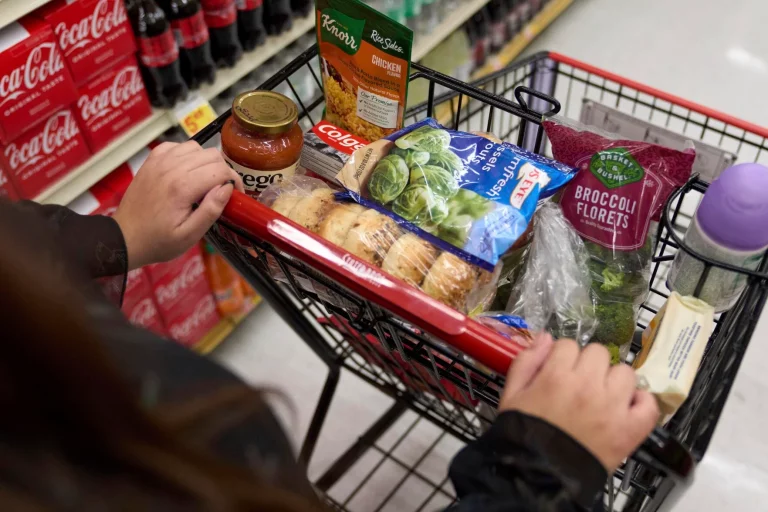
The vast majority of U.S. adults are at least somewhat stressed about the cost of groceries, a new poll finds, as prices continue to rise and concerns about the impact of President Donald Trump’s tariffs remain widespread.

About half of all Americans say the cost of groceries is a “major” source of stress in their life right now, while 33% say it’s a “minor” source of stress, according to the poll from The Associated Press-NORC Center for Public Affairs Research. Only 14% say it’s not a source of stress, underscoring the pervasive anxiety most Americans continue to feel about the cost of everyday essentials.

Other financial stressors — like the cost of housing or the amount of money in their bank accounts — are also broadly felt, but they weigh more heavily on younger Americans, who are less likely than older adults to have significant savings or own property.

The survey also found that about 4 in 10 Americans under age 45 say they’ve used what are known as “buy now, pay later” services when spending on entertainment or restaurant meals or when paying for essentials like groceries or medical care.

Adam Bush, 19, based in Portland, New York, is one of those younger Americans who has used pay-later services for things like groceries or entertainment. Bush works as a welder, fabricating parts for trucks for Toyota, and makes under $50,000 per year.

“I just keep watching the prices go up, so I’m looking for the cheapest possible stuff,” he said. “Hot pockets and TV dinners.”

Everyone is stressed about groceries

Groceries are one of the most far-reaching financial stressors, affecting the young and old alike, the poll finds. While Americans over age 60 are less likely than younger people to feel major financial anxiety about housing, their savings, child care, or credit card debt, they are just as worried about the cost of groceries.

Esther Bland, 78, who lives in Buckley, Washington, said groceries are a “minor” source of stress — but only because her local food banks fill the gap. 

Bland relies on her Social Security and disability payments each month to cover her rent and other expenses — such as veterinary care for her dogs — in retirement, after decades working in an office processing product orders.

“I have no savings,” she said. “I’m not sure what’s going on politically when it comes to the food banks, but if I lost that, groceries would absolutely be a major source of stress.”

Bland’s monthly income mainly goes toward her electric, water and cable bills, she said, as well as care of her dogs and other household needs.

“Soap, paper towels, toilet paper. I buy gas at Costco, but we haven’t seen $3 a gallon here in a long time,” she said. “I stay home a lot. I only put about 50 miles on my car a week.”

According to the poll, 64% of the lowest-income Americans — those who have a household income of less than $30,000 a year — say the cost of groceries is a “major” stressor. That’s compared with about 4 in 10 Americans who have a household income of $100,000 or more.

But even within that higher-income group, only about 2 in 10 say grocery costs aren’t a worry at all.

Women and Hispanic adults are especially economically anxious

Housing is another substantial source of worry for U.S. adults — along with their savings, their income and the cost of health care. About half of U.S. adults say housing is a “major” source of stress, according to the poll, while about 4 in 10 say that about the amount of money they get paid, the amount of money they have saved and the cost of health care.

About 3 in 10 say credit card debt is a “major” source of stress, while about 2 in 10 say that about the cost of child care and student debt.

But some groups are feeling much more anxiety about their finances than others. Women, for instance, are more likely than men to report high levels of stress about their income, savings, the cost of groceries and the cost of health care. Hispanic adults are also particularly concerned about housing costs and both credit card and student debt. About two-thirds of Hispanic adults say the cost of housing is a “major” source of stress, compared with about half of Black adults and about 4 in 10 white adults.

Some people are making changes to their lifestyle as a result of high costs. Shandal LeSure, 43, who works as a receptionist for a rehabilitation hospital in Chattanooga, Tennessee, and makes between $85,000 and $100,000 a year, said she’s started shopping for groceries at less expensive stores.

“It’s an adjustment,” she said. “Sometimes the quality isn’t as good.”

Many US adults have used ‘buy now, pay later’ services

As they stretch limited budgets, about 3 in 10 U.S. adults overall say they’ve used “buy now, pay later” services such as Afterpay or Klarna to purchase groceries, entertainment, restaurant meals or meal delivery, or medical or dental care, according to the poll.

Bland, the Washington state retiree, said she’s paid for pet surgery with a pay-later plan.

Younger Americans are much likelier than older people to have used pay-later plans for entertainment, groceries or restaurant meals, but there’s no age gap on medical care. Black and Hispanic people are also especially likely to adopt the plans.

An increasing share of “buy now, pay later” customers are having trouble repaying their loans, according to recent disclosures from the lenders. The loans are marketed as a safer alternative to traditional credit cards, but there are risks, including a lack of federal oversight. Some consumer watchdogs also say the plans lead consumers to overextend themselves financially.

LeSure said she’s used pay-later services for things like new clothes, while she balances debt payments for a car loan, student loans and medical bills. She’s also turned to them to cover hotel costs after being evicted.

“That’s been able to help me stretch my dollar,” she said.

Adapted from reporting by the Associated Press.
 

Abbott Orders House Democrats to Return to Austin or be Removed from Office

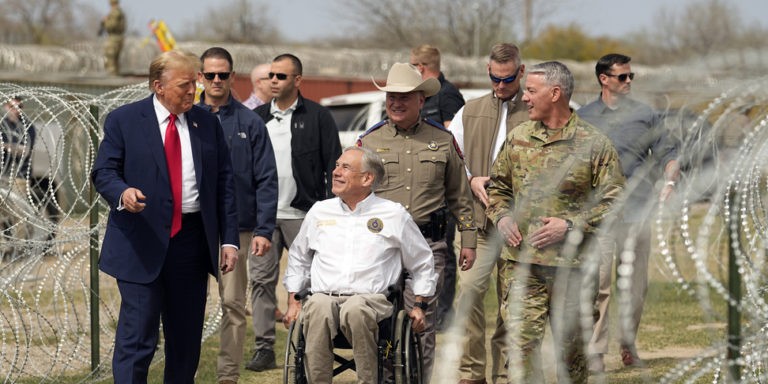
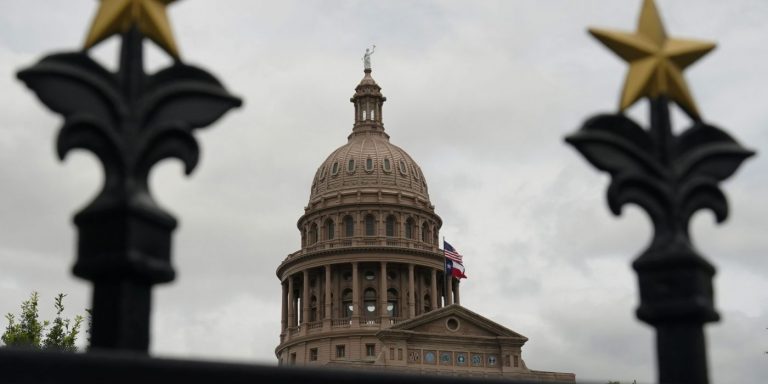
(Bethany Blankley, The Center Square) After Texas House Democrats left the state on Sunday, Gov. Greg Abbott ordered them to return to Austin or said he would take action to have them removed from office. He also said several of them may have committed felonies.

Several House Democrats posted videos of themselves Sunday appearing to board private planes for Chicago, saying doing so was in defiance of redistricting efforts. They also solicited donations on social media to support their “fight.”

The legislature is currently convened by Abbott for a special session to address 18 issues, including flood relief for Hill Country victims and redistricting. A House committee advanced a redistricting bill on Saturday, which Democrats argue is illegal. The full House is scheduled to vote on it on Monday, The Center Square reported.

On Sunday, Democrats said they were taking an “extreme measure” by causing a quorum break “to stop these bills from happening” and declared, “this special session is over,” The Center Square reported.

In response, Abbott issued a one-page statement, saying, “Real Texans do not run from a fight. But that’s exactly what most of the Texas House Democrats just did. Rather than doing their job and voting on urgent legislation affecting the lives of all Texans, they have fled Texas to deprive the House of the quorum necessary to meet and conduct business.

“These absences are not merely unintended and unavoidable interruptions in public service, like a sudden illness or a family emergency. Instead, these absences were premeditated for an illegitimate purpose – what one representative called ‘breaking quorum.’”

A quorum of two-thirds of the legislature is needed in each chamber, 100 in the Texas House, to conduct business, according to the state constitution and legislative rules. The House is comprised of 150 members, including 88 Republicans and 62 Democrats. Under House rules, members can request approved absences from the speaker. Unapproved absences can result in fines, censure, arrest and removal from office.

In 2021, after House Democrats absconded, the Texas Supreme Court ruled that those who left could be arrested, The Center Square reported.

On Sunday, House Democrats “hatched a deliberate plan not to show up for work, for the specific purpose of abdicating the duties of their office and thwarting the chamber’s business,” Abbott said, which is a violation of the Texas Constitution. Their actions amount “to an abandonment or forfeiture of an elected state office,” he said.

When the governor calls a special session, the Texas Constitution “provides that the ‘Legislature shall meet.’ TEX. CONST. art. III, § 5 (emphasis added),” Abbott explained. “It’s not optional. It’s a duty. The absconded Democrat House members were elected to meet and vote on legislation – not to prevent votes that may not go their way.

“Every session, legislators on both sides of the aisle find themselves on the losing side of a legislative vote. And every session, most of those legislators find a way to disagree agreeably and behave like adults, rather than going AWOL. This truancy ends now.”

He ordered the “derelict Democrat House members” to return to Texas and be in attendance when the House reconvenes at 3 p.m. on Monday. Otherwise, he will take action to remove them from office.

“I will invoke Texas Attorney General Opinion No. KP-0382 to remove the missing Democrats from membership in the Texas House,” he said, citing an opinion issued in 2021 after House Democrats absconded to prevent a vote on election reform. At the time, the attorney general was asked to consider “whether Texas law allows for a determination that a legislator has vacated office if they intentionally break quorum.”

The opinion concludes, “If a legislator is believed to have forfeited his or her office by abandonment, the attorney general or the county or district attorney of the proper county may initiate a suit in district court. If the court determines that the public officer has forfeited the office, the court ‘shall enter judgment removing the person from the office.’

“Texas courts recognize that a vacancy may occur by abandonment of office. Through a quo warranto action, a district court may determine that a legislator has forfeited his or her office due to abandonment and can remove the legislator from office, thereby creating a vacancy.”

Abbott argues the opinion “empowers me to swiftly fill vacancies under Article III, Section 13 of the Texas Constitution.”

He also said House Democrats “may also have committed felonies” by “soliciting funds to evade the fines they will incur under House rules. Any Democrat who ‘solicits, accepts, or agrees to accept’ such funds to assist in the violation of legislative duties or for purposes of skipping a vote may have violated bribery laws,” he said, citing Texas penal code. “The same could be true for any other person who ‘offers, confers, or agrees to confer’ such funds to fleeing Democrat House members.”

“I will use my full extradition authority to demand the return to Texas of any potential out-of-state felons,” he said.

House Speaker Dustin Burrows said the House will convene at 3 p.m. on Monday. “If a quorum is not present then, to borrow the recent talking points from some of my Democrat colleagues, all options will be on the table,” referring to imposing fines and potentially taking action to have them arrested.


Ukraine Calls for US To ‘Strangle’ Russia’s Economy

(Dave DeCamp, Antiwar.com) A senior advisor to Ukrainian President Volodymyr Zelensky is calling on the US to “strangle” the Russian economy by imposing tariffs on Moscow’s trading partners, though the US measures are unlikely to hurt Russia.

“The [Russian] economy, geared for war, cannot withstand the pressure and is holding on only through the sale of energy resources,” said Andriy Yermak, the head of Ukraine’s presidential office. “It is possible to strangle the economy with secondary tariffs proposed in the USA.”

President Trump has threatened to hit countries that are purchasing Russian oil with 100% tariffs, and a bill in the Senate would impose 500% tariffs on any country that “knowingly engages in the exchange of Russian-origin uranium and petroleum products.”

Either tariff rate would have a significant impact on the US economy since China and India are major buyers of Russian oil. President Trump has already announced a 25% tariff on India and an unspecified “penalty” on the country over its trade with Russia. But Indian officials say they will continue buying Russian oil despite the US threats of further action.

In response to US threats to impose tariffs over the purchase of Russian oil, the Chinese Foreign Ministry said Beijing would “take energy supply measures” based on China’s national interests.

“Tariff wars have no winners,” said Chinese Foreign Ministry spokesman Gua Jiakum. “Coercion and pressuring cannot solve problems. China will firmly safeguard its own sovereignty, security, and development interests.”

Russia has also made clear that it’s not fazed by the US’s ultimatum to reach a deal to end the war in Ukraine by August 8 or face tariffs and other economic measures. The deadline prompted a warning from former Russian President Dmitry Medvedev, who said each US ultimatum “is a threat and a step towards war. Not between Russia and Ukraine, but with (Trump’s) own country.”

Trump responded to Medvedev’s comments by announcing the deployment of two nuclear submarines, a highly provocative move. “I have ordered two Nuclear Submarines to be positioned in the appropriate regions, just in case these foolish and inflammatory statements are more than just that,” he wrote on Truth Social on Friday. “Words are very important, and can often lead to unintended consequences, I hope this will not be one of those instances.”

This article originally appeared at Antiwar.com.


Israel Preparing To Escalate Military Offensive in Gaza

(Dave DeCamp, Antiwar.com) The Israeli military is drawing up plans to escalate its genocidal war in the Gaza Strip that will soon be presented to Israeli political leadership, Haaretz reported on Sunday.

An Israeli official said Israeli Prime Minister Benjamin Netanyahu “is pushing for the release of hostages as part of a military resolution,” and he is set to discuss the matter with his cabinet on Tuesday. According to the Haaretz report, the idea is to extend ground operations into sensitive areas, including Gaza’s central refugee camps, where Israeli captives are believed to be held.

Israeli officials are now claiming that Hamas doesn’t want a deal, even though the group has long said it is willing to release all remaining Israeli captives in exchange for a permanent ceasefire. Officials are pointing to Hamas’s denial of a claim by US envoy Steve Witkoff, who said the group was willing to disarm. Hamas responded that it would only give up its weapons if an independent Palestinian state were established.

Witkoff was in Israel on Friday and Saturday and met with family members of Israelis being held in Gaza. He told them that President Trump no longer seeks a temporary ceasefire deal but wants a comprehensive one that will free the remaining 20 living Israeli captives. However, Netanyahu hasn’t shown interest in a deal, and there’s no sign that Trump is willing to put pressure on him.

The family members of Israeli captives in Gaza want a diplomatic solution and are against military escalation. The Hostages and Missing Families Forum has criticized the reported plans for the expansion of military operations, warning that “expanding the war endangers the lives of the hostages, who are already in immediate danger of death.”

Netanyahu claimed on Sunday that the videos of two emaciated Israeli captives released by Hamas and Palestinian Islamic Jihad (PIJ) show that Hamas “doesn’t want a deal” and vowed that he would work to “eliminate” the Palestinian group. For its part, Hamas insisted that the Israeli prisoners eat “what our fighters and our people eat” and said that the Red Cross could deliver aid to them if Israel permanently opened humanitarian corridors and halted airstrikes during aid deliveries.

Israel has been under significant international pressure to allow more aid into Gaza as Palestinians are starving to death due to its blockade. The Haaretz report said that the US and Israel appear to be moving toward expanding Gaza Humanitarian Foundation (GHF) distribution points in north Gaza, which would require Israel to occupy more territory.

Nearly 1,000 Palestinians have been killed by the IDF near GHF distribution sites, according to the UN. Anthony Aguilar, a retired US Army Green Beret who worked at GHF sites, has blown the whistle on the operation and says that the sites were designed purposely so Palestinians seeking aid would have to walk through combat zones where they can be killed. He said that he witnessed the IDF commit war crimes by firing into crowds of hungry civilians.

Despite the massacres near GHF sites, the operation has received a resounding endorsement from the Trump administration. On Friday, Witkoff and US Ambassador to Israel Mike Huckabee visited a GHF site, a move that was criticized as a PR stunt.

This article originally appeared at Antiwar.com.

China Pushes Back at US Demands to Stop Buying Russian and Iranian Oil

U.S. and Chinese officials may be able to settle many of their differences to reach a trade deal and avert punishing tariffs, but they remain far apart on one issue: the U.S. demand that China stop purchasing oil from Iran and Russia.

“China will always ensure its energy supply in ways that serve our national interests,” China’s Foreign Ministry posted on X on Wednesday following two days of trade negotiations in Stockholm, responding to the U.S. threat of a 100% tariff.

“Coercion and pressuring will not achieve anything. China will firmly defend its sovereignty, security and development interests,” the ministry said.

The response is notable at a time when both Beijing and Washington are signaling optimism and goodwill about reaching a deal to keep commercial ties between the world’s two largest economies stable — after climbing down from sky-high tariffs and harsh trade restrictions. It underscores China’s confidence in playing hardball when dealing with the Trump administration, especially when trade is linked to its energy and foreign policies.

U.S. Treasury Secretary Scott Bessent, emerging from the talks, told reporters that when it comes to Russian oil purchases, the “Chinese take their sovereignty very seriously.”

“We don’t want to impede on their sovereignty, so they would like to pay a 100% tariff,” Bessent said.

On Thursday, he called the Chinese “tough” negotiators, but said China’s pushback hasn’t stalled the negotiations. “I believe that we have the makings of a deal,” Bessent told CNBC.

Gabriel Wildau, managing director of the consultancy Teneo, said he doubts President Donald Trump would actually deploy the 100% tariff. “Realizing those threats would derail all the recent progress and probably kill any chance” for Trump and Chinese President Xi Jinping to announce a trade deal if they should meet this fall, Wildau said.

In seeking to restrict oil sales by Russia and Iran, a major source of revenue for both countries, the U.S. wants to reduce the funding available for their militaries, as Moscow pursues its war against Ukraine and Tehran funds militant groups across the Middle East.

China plays hardball

When Trump unveiled a sweeping plan for tariffs on dozens of countries in April, China was the only country that retaliated. It refused to give in to U.S. pressure.

“If the U.S. is bent on imposing tariffs, China will fight to the end, and this is China’s consistent official stance,” said Tu Xinquan, director of the China Institute for WTO Studies at the University of International Business and Economics in Beijing. WTO is the acronym for the World Trade Organization.

Negotiating tactics aside, China may also suspect that the U.S. won’t follow through on its threat, questioning the importance Trump places on countering Russia, Tu said.

Scott Kennedy, senior adviser and trustee chair in Chinese Business and Economics at the Center for Strategic and International Studies in Washington, said Beijing is unlikely to change its posture when it sees inconsistencies in U.S. foreign policy goals toward Russia and Iran, whereas Beijing’s policy support for Moscow is consistent and clear. It’s also possible that Beijing may want to use it as another negotiating tool to extract more concessions from Trump, Kennedy said.

Danny Russel, a distinguished fellow at the Asia Society Policy Institute, said Beijing now sees itself as “the one holding the cards in its struggle with Washington.” He said Trump has made it clear he wants a “headline-grabbing deal” with Xi, “so rejecting a U.S. demand to stop buying oil from Iran or Russia is probably not seen as a deal‑breaker, even if it generates friction and a delay.”

Continuing to buy oil from Russia preserves Xi’s “strategic solidarity” with Russian President Vladimir Putin and significantly reduces the economic costs for China, Russel said.

“Beijing simply can’t afford to walk away from the oil from Russia and Iran,” he said. “It’s too important a strategic energy supply, and Beijing is buying it at fire‑sale prices.”

China depends on oil from Russia and Iran

A 2024 report by the U.S. Energy Information Administration estimates that roughly 80% to 90% of the oil exported by Iran went to China. The Chinese economy benefits from the more than 1 million barrels of Iranian oil it imports per day.

After the Iranian parliament floated a plan to shut down the Strait of Hormuz in June following U.S. strikes on Iran’s nuclear facilities, China spoke out against closing the critical oil transit route.

China also is an important customer for Russia, but is second to India in buying Russian seaborne crude oil exports. In April, Chinese imports of Russian oil rose 20% over the previous month to more than 1.3 million barrels per day, according to the KSE Institute, an analytical center at the Kyiv School of Economics.

This past week, Trump said the U.S. will impose a 25% tariff on goods from India, plus an additional import tax because of India’s purchasing of Russian oil. India’s Foreign Ministry said Friday its relationship with Russia was “steady and time-tested.”

Stephen Miller, White House deputy chief of staff and a top policy adviser, said Trump has been clear that it is “not acceptable” for India to continue financing the Ukraine war by purchasing oil from Russia.

“People will be shocked to learn that India is basically tied with China in purchasing Russian oil,” Miller said on Fox News Channel’s “Sunday Morning Futures.” He said the U.S. needs “to get real about dealing with the financing of this war.”

Congress demands action

Sen. Lindsey Graham, a Republican from South Carolina, is pushing for sanctions and tariffs on Russia and its financial backers. In April, he introduced a bill that would authorize the president to impose tariffs as high as 500% not only on Russia but on any country that “knowingly” buys oil, uranium, natural gas, petroleum products or petrochemical products from Russia.

“The purpose of this legislation is to break the cycle of China — a communist dictatorship — buying oil below market price from Putin’s Russia, which empowers his war machine to kill innocent Ukrainian civilians,” Graham said in a June statement.

The bill has 84 co-sponsors in the 100-seat Senate. A corresponding House version has been introduced, also with bipartisan support.

Republicans say they stand ready to move on the sanctions legislation if Trump asks them to do so, but the bill is on hold for now.

Adapted from reporting by the Associated Press.

Texas Democrats Arrive in Illinois to Block Vote Back Home on Redrawn House Maps Sought by Trump

(Headline USA) A standoff in Texas over redrawn U.S. House maps sought by President Donald Trump sharply escalated Sunday when dozens of Democratic legislators left the state to block a vote, followed by Republican Gov. Greg Abbott warning them that he will seek their removal from office if they don’t return.

The revolt by Democrats, and Abbott giving them until Monday to come home or face efforts to strip them of their elected positions, pushed a widening fight over congressional maps ahead of the 2026 midterm elections into new territory. At the center of the deepening impasse is Trump’s pursuit of five more winnable congressional seats that will help bolster the GOP’s chances of preserving their slim U.S. House majority.

In response to Texas’ rare mid-decade political gerrymander, Democratic governors have floated the possibility of redrawing their own state’s maps in retaliation, but their options are limited.

Many of the Texas Democrats were bound for Illinois and a welcoming from Gov. JB Pritzker, a potential 2028 presidential contender, who in recent weeks has offered them support.

House Democratic Caucus Chair Rep. Gene Wu declined to say how long lawmakers were prepared to stay out of Texas, and it was unclear whether the gambit would succeed. Four years ago, House Democrats left Texas for 38 days in protest of new voting restrictions that still wound up passing once the holdout ended.

“We will do whatever it takes. What that looks like, we don’t know,” Wu said at a Sunday night news conference.

The state of the vote now

Lawmakers can’t pass bills in the 150-member Texas House without at least two-thirds of them present. Democrats hold 62 of the seats in the majority-Republican chamber and at least 51 left the state, said Josh Rush Nisenson, spokesperson for the House Democratic Caucus. In addition to those in Illinois, delegations of Democratic lawmakers left Texas for Boston and Albany, New York, among other places, Rep. Trey Martinez Fischer said.

Abbott threatened to seek the lawmakers’ removal, saying they were not meeting under the state’s constitution.

“This truancy ends now,” Abbott said in a statement released by his office Sunday night. Abbott also suggested the lawmakers may have committed felonies by raising money to help pay for fines they’d face.

Republican House Speaker Dustin Burrows said the chamber would still meet as planned on Monday afternoon.

“If a quorum is not present then, to borrow the recent talking points from some of my Democrat colleagues, all options will be on the table. . .,” he posted on X.

Republican Attorney General Ken Paxton, who is running for U.S. Senate, said on X that Democrats who “try and run away like cowards should be found, arrested, and brought back to the Capitol immediately.”

A refusal by Texas lawmakers to show up is a civil violation of legislative rules. The Texas Supreme Court held in 2021 that House leaders had the authority to “physically compel the attendance” of missing members, but no Democrats were forcibly brought back to the state after warrants were served that year. Two years later, Republicans pushed through new rules that allow daily fines of $500 for lawmakers who don’t show up for work as punishment.

In calling for the lawmakers’ removal, Abbott cited a non-binding legal opinion that was issued by Paxton’s office after the 2021 revolt by Democratic lawmakers.

The quorum break will also delay votes on flood relief and new warning systems in the wake of last month’s catastrophic floods in Texas that killed at least 136 people. Democrats had called for votes on the flooding response before taking up redistricting and have criticized Republicans for not doing so.

Texas Republicans last week unveiled their planned new U.S. House map that would create five new Republican-leaning seats. Republicans currently hold 25 of the state’s 38 seats.

Illinois hosts fleeing Texas lawmakers

Pritzker, who has been one of Trump’s most outspoken critics during his second term, had been in quiet talks with Texas Democrats for weeks about offering support if they chose to leave the state to break quorum.

Last week, the governor hosted several Texas Democrats in Illinois to publicly oppose the redistricting effort, and California Gov. Gavin Newsom held a similar event in his own state.

Pritzker also met privately with Texas Democratic Chair Kendall Scudder in June to begin planning for the possibility that lawmakers would depart for Illinois if they did decide to break quorum to block the map, according to a source with direct knowledge who requested anonymity to discuss private conversations.

“This is not just rigging the system in Texas, it’s about rigging the system against the rights of all Americans for years to come,” Pritzker said Sunday night.

Now, with Texas Democrats holed up in Illinois and blocking the Trump-backed congressional map, the stage may be set for a high-profile showdown between Pritzker and the president.

Trump is looking to avoid a repeat of his first term, when Democrats flipped the House just two years into his presidency, and hopes the new Texas map will aid that effort. Trump officials have also looked at redrawing lines in other states, such as Missouri, according to a person familiar with conversations but unauthorized to speak publicly about them.

Adapted from reporting by the Associated Press.

Former US Soldier Suspected of Killing 4 in Montana Remains at Large

(Headline USA) The former U.S. soldier suspected of killing four people at a Montana bar was still at large early Sunday and may be armed after escaping in a stolen vehicle containing clothes and camping gear, officials said.

Authorities believe 45-year-old Michael Paul Brown killed four people on Friday morning at The Owl Bar in Anaconda, Montana, about 75 miles (120 kilometers) southeast of Missoula in a valley hemmed in by mountains.

Montana Attorney General Austin Knudsen said at a news conference Sunday that Brown committed the shooting with a rifle that law enforcement believes was his personal weapon.

The victims ranged in age from 59 to 74 and were a female bartender and three male patrons.

Knudsen warned residents in the town of just over 9,000 people that Brown, who lived next door to the bar where he was a regular, could come back to the area.

“This is an unstable individual who walked in and murdered four people in cold blood for no reason whatsoever. So there absolutely is concern for the public,” Knudsen said.

Numerous public events were canceled over the weekend as the search entered its third day, according to local Facebook pages.

Robert Wyatt, 70, said he was neighbors with 70-year-old David Allen Leach, one of the three bar patrons killed on Friday morning.

The two men lived next door to each other in a public housing complex for elderly people and people with disabilities.

“Everybody is nervous” since Friday, Wyatt said. Leach was deaf and kept mostly to himself, Wyatt said, and he only recalls Leach having a family visit once almost a year ago. But Leach was always happy to help his neighbors with chores like moving furniture.

“If you needed help, Dave would help,” Wyatt said. “He was a good neighbor.”

Investigators are considering all possible options for Brown’s whereabouts, the attorney general said. That includes searching the woods where Brown hunted and camped while he was a kid. But Knudsen noted that during peak tourist season in western Montana some law enforcement officials would have to return to their local jurisdictions for their regular responsibilities.

Brown served in the Army as an armor crewman from 2001 to 2005 and deployed to Iraq from early 2004 until March 2005, said Lt. Col. Ruth Castro, an Army spokesperson. Brown was in the Montana National Guard from 2006 to March 2009, Castro said, and left military service at the rank of sergeant.

Brown’s niece, Clare Boyle, told The Associated Press that her uncle has struggled with mental illness for years and she and other family members repeatedly sought help.

“This isn’t just a drunk/high man going wild,” she said in a Facebook message. “It’s a sick man who doesn’t know who he is sometimes and frequently doesn’t know where or when he is either.”

Knudsen said on Sunday that Brown was known to local law enforcement before the shooting. It was widely believed that he knew at least some of the victims, given how close he lived to the bar.

Law enforcement released a photograph of Brown from surveillance footage taken shortly after the fatal shootings. He appeared to be barefoot and in minimal clothing.

But law enforcement now believes Brown ditched the vehicle he escaped in and stole a different one that had camping gear, shoes and clothes in it — leaving open the possibility that Brown is now clothed.

The last time that law enforcement saw Brown was on Friday afternoon, but there was “some confusion” because there were multiple white vehicles involved, Knudsen said.

There is a $7,500 reward for any information that leads to Brown’s capture.

“This is still Montana. Montanans know how to take care of themselves. But please, if you have any sightings, call 911,” Knudsen said.


Adapted from reporting by the Associated Press.
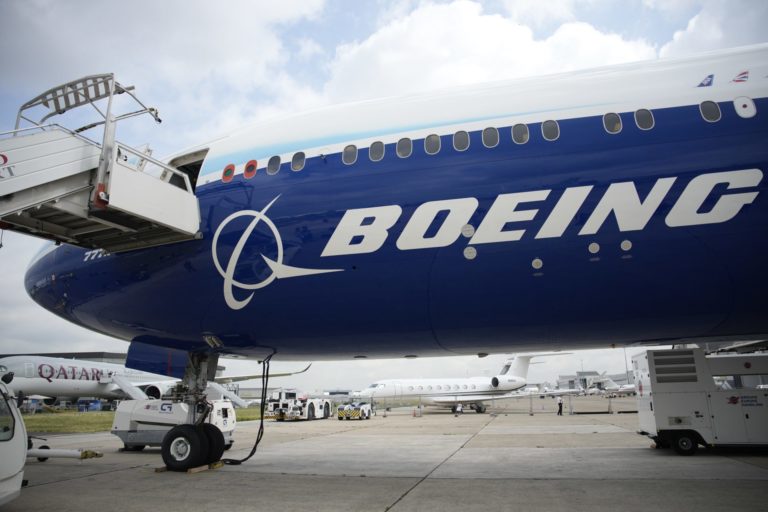
Boeing Workers Who Build Fighter Jets Plan to go on Strike

(Headline USA) Boeing workers who build fighter jets are planning to go on strike Monday at midnight.

About 3,200 workers at Boeing facilities in St. Louis; St. Charles, Missouri; and Mascoutah, Illinois, voted to reject a modified four-year labor agreement with Boeing, the International Association of Machinists and Aerospace Workers union said Sunday.

“IAM District 837 members build the aircraft and defense systems that keep our country safe,” said Sam Cicinelli, Midwest territory general vice president for the union, in a statement. “They deserve nothing less than a contract that keeps their families secure and recognizes their unmatched expertise.”

The vote followed members’ rejection last week of an earlier proposal from the troubled aerospace giant, which had included a 20% wage increase over four years.

At the time, union leaders had recommended approving the offer, calling it a “landmark agreement” and saying the offer would improve medical, pension and overtime benefits.

Then there was a cooling-off period of a week, followed by the union members rejecting Boeing’s latest proposal.

“We’re disappointed our employees rejected an offer that featured 40% average wage growth and resolved their primary issue on alternative work schedules,” said Dan Gillian, Boeing Air Dominance vice president and general manager, and senior St. Louis site executive. “We are prepared for a strike and have fully implemented our contingency plan to ensure our non-striking workforce can continue supporting our customers.”

Boeing has been struggling after two of its Boeing 737 Max airplanes crashed, one in Indonesia in 2018 and the other in Ethiopia in 2019, killing 346 people. In June, one of Boeing’s Dreamliner planes, operated by Air India, crashed, killing at least 260 people.

On Tuesday, Boeing had reported that its second-quarter revenue had improved and losses had narrowed. The company lost $611 million in the second quarter, compared to a loss of $1.44 billion during the same period last year.

Adapted from reporting by the Associated Press.
NC Seeks to Ban Police from Having Sex in Uniform, Cop Cars

(Ben Sellers, Headline USA) A proposed rule change in North Carolina threatens to ban law enforcement from having sex while on duty, in police vehicles or in uniform, Raleigh’s News & Observer reported.

Officers would further be prohibited from sex on police premises, with direct subordinates, or with students or instructors in police training programs.

The proposal being considered by the state’s Criminal Justice Education and Training Standards Commission stemmed from confusion and inconsistent standards.

“We want to be clear so folks can stay out of trouble and can remain certified to do their important work in their communities,” said commission chair Chris Blue, a former Chapel Hill police chief and town manager.

The measure also would address lying during internal or criminal investigations. And it would seek to clarify the conditions under which police certifications may be suspended, revoked or denied in order to help officers “understand where the guardrails are,” Blue said.

Other law enforcement organizations in the state also were considering the update to current guidelines, which simply stipulate that officers must demonstrate “good moral character.”

Although some contend that the line should be self evident, it has been tested in previous disciplinary hearings and court cases that argued the punishment didn’t fit the “crime.”

Mikael Gross, an attorney who represents officers at disciplinary hearings, said the commissions had recently begun cracking down after long allowing indiscretions to slide—perhaps due to a critical police shortage during the “defund the police” era.

In at least six prior cases spanning from 2010 to 2023, officers fought to retain their badges and certifications even when found to have demonstrated poor judgment. That included a 2023 case in which an officer was caught having sex with two women while on duty.

Another such case, in 2017, involved a married officer having sex with a woman in his patrol car and on the hood. The woman later reported it out of concern that nude photographs of her might be discovered on the officer’s phone. But the commission ruled that, by time of the hearing, the officer had already been “rehabilitated” and no further action was warranted.

Randy Hagler, who previously served as president of the North Carolina Fraternal Order of Police, said some members were “a little embarrassed” about the need to clarify the moral standards.

“Obviously, we expect our officer members to be moral and tell the truth,” he told the News & Observer.

Ben Sellers is a freelance writer and former editor of Headline USA. Follow him at x.com/realbensellers.

Did Obama Authorize Assassination Attempt on Trump?

(Ben Sellers, Headline USA) Leftist “fact-checkers” were rushing to debunk a viral post on social media that suggested former Democrat President Barack Obama oversaw a covert operation to assassinate current Republican President Donald Trump.

The story, sourced to a Barron Trump fan account on X, has since been picked up by right-leaning news sites including well-known blogger Lew Rockwell.

The X post, which has garnered more than 2 million views, may have taken its information from a July 21 Facebook post and accompanying video shared by self-identified “creepy comedian” Jonathan Gregory.

According to the viral X post, Obama oversaw a sweeping deep-state program known as “Operation Silence.” It quotes Director of National Intelligence Tulsi Gabbard as saying the program “was an organized, multi-agency plot to eliminate the President-elect.”

The post further claims that Gabbard was due to release another tranche of documents supporting the shocking scandal.

“The documents outline everything, from recruitment of black ops teams, to manipulation of communications, to the final phase; physical removal,” it cites Gabbard as saying during an “emergency news conference.”

Headline USA was unable to independently verify the viral claims about “Operation Silence,” and no reputable news sites outside of those covering the viral post appear to have reported on the DNI’s news conference.

Sites such as Snopes and NewsGuard dutifully dismissed the claims as disinformation.

“NewsGuard reviewed Gabbard’s statement and the government records that her office released and found no documents alleging that there was such a plot against Trump,” said the denial from the NewsGuard, which has known ties and financial backing from left-wing activists.

Nonetheless, the stunning allegation about an Obama black-ops operation comes as investigations remain ongoing into multiple verified assassination attempts against Trump during the 2024 election.

Many of the details in the July 13, 2024 assassination attempt in Butler, Pa., and the Sept. 15, 2024 attempt at Trump’s private golf club in West Palm Beach, Fla., remain shrouded in mystery.

Florida Judge Aileen Cannon, who is overseeing the case against would-be Trump assassin Ryan Routh, recently sealed evidence supplied by the Justice Department that she said could pose severe harm to U.S. national security.

Meanwhile, the bombshells coming from Gabbard’s office in recent days may have further put the “Operation Silence” claim well within the realm of plausibility.

Newly declassified releases show that Obama colluded with then-CIA Director John Brennan, DNI James Clapper and FBI Director James Comey—as well as many other co-conspirators—to push Hillary Clinton’s bogus allegations that Trump colluded with Russia during the 2016 election.

Among the recent Russia-Gate releases was an annex to the John Durham report that was allegedly discovered in a burn bag stowed in a secret room at the FBI. Its disclosures—including that the Russians had damning kompromat on Hillary Clinton—have drawn robust denials from leftist media like the New York Times, which suggested that the emails used to source Durham’s analysis might be Russian disinformation.

A day after the Times hit piece ran, Gabbard vowed to end the CIA’s ongoing Operation Mockingbird program, the purpose of which was to infiltrate newsrooms and use legacy media outlets to push government propaganda.

The recent revelations from Gabbard’s office have fueled intense speculation and hope among Trump supporters that the DOJ will soon act to indict many of the deep-state hoaxers for a criminal conspiracy, with some suggesting treason charges that would not be subject to any federal statute of limitations.

If indicted criminally, Obama is expected to use the same presidential immunity defense used last year by Trump—unless his actions fell outside the reasonable scope of presidential duties or continued after he had left office.

During its deliberations on the immunity case last April, the U.S. Supreme Court grappled with the question of whether a sitting president might weaponize the power to authorize a hit on a political opponent, much as the “Operation Silence” claims suggest.

Obama’s past criminal conduct also came under discussion during the oral arguments, including his drone strikes on innocent civilians in the Middle East.

Arguing in support of immunity, Trump attorney John Sauer asked, “Could President Obama be charged with murder for killing U.S. citizens abroad by drone strike?” Sauer also noted similar crimes committed by Presidents George W. Bush and Joe Biden.

Ben Sellers is a freelance writer and former editor of Headline USA. Follow him at x.com/realbensellers.