Homeless Man Who Stabbed Woman to Death on Charlotte Train May Not Stand Trial

(Ken Silva, Headline USA) Charlotte homeless man Decarlos Brown, who stabbed a 23-year-old female Ukrainian refugee to death on a train on Aug. 22, apparently may not stand trial after a local judge ordered him to undergo a competency examination at a psychiatric hospital.

Judge Roy Wiggins signed an order Friday to send Brown to Central Regional Hospital – Butner Campus for 60 days to “determine the defendant’s capacity to proceed.” Judge Wiggins’s order is heavily redacted, making his reasoning for the move unclear.

According to local reports, Brown, 34, has a slew of convictions for armed robbery, felony larceny, breaking and entering, and other offenses. On Aug. 20, he allegedly committed his most heinous offense of all—stabbing 23-year-old Iryna Zarutska to death on a train.

The arrest warrant for Brown says the incident was totally unprovoked. Police apparently have footage from a surveillance camera inside the train.

“The victim enters the train car and sits in the seats directly in front of the defendant. The train travels for approximately four and a half minutes before the suspect pulls a knife from his pocket, unfolds the knife, pauses, then stands up, and strikes the victim three times,” an affidavit for an arrest warrant says.

“Blood visibly drips on the floor as the defendant walks away from the victim. The victim goes unresponsive shortly after the attack. The defendant is the assailant on the video. There appears to be no interaction between the victim and the defendant.”

Officers responded to the scene, and witnesses told them Brown’s location. When they found him, he was wearing the exact same clothing. He also had a laceration on the outside of the right hand.

Brown was taken to the hospital and later charged with murder. He initially had his next court date on Sept. 19, but that’s apparently been suspended while he undergoes a psychiatric evaluation.

Meanwhile, Zarutska’s family is mourning her loss. A GoFundMe purportedly established by her family says she “recently arrived in the United States, seeking safety from the war and hoping for a new beginning.”

“Iryna was a sweet angel. The accused has taken a very bright, beautiful woman from our family and we are heartbroken by that,” her uncle reportedly said in court on Friday.

Ken Silva is the editor of Headline USA. Follow him at x.com/jd_cashless.

Chinese Networks Use U.S. to Launder Billions for Mexican Cartels

(Brett Rowland, The Center Square) Chinese networks are laundering billions of dollars in drug cartel cash through the U.S. financial system, according to a new report from the Treasury Department. 

Treasury’s Financial Crimes Enforcement Network said banks flagged about $312 billion in transactions from suspected Chinese money laundering networks from January 2020 to December 2024. That came from 137,153 Bank Secrecy Act reports from financial institutions. Treasury also linked Chinese money laundering networks to U.S. real estate transactions, casinos, human trafficking and even laundering through assisted living homes in New York. The networks also use Chinese students studying in the U.S. to help facilitate some schemes. Real estate alone accounted for about 13% of the total, but the vast majority was U.S. banks.

“Money laundering networks linked to individual passport holders from the People’s Republic of China enable cartels to poison Americans with fentanyl, conduct human trafficking, and wreak havoc among communities across our great nation,” Under Secretary for Terrorism and Financial Intelligence John Hurley said.

The report comes after Treasury Secretary Scott Bessent suspended a Biden-era small business rule in March designed to curb money laundering that small businesses had challenged in court. President Donald Trump said the Corporate Transparency Act, which Congress passed in 2021, was “outrageous and invasive.” Bessent said it was costly for small businesses. The CTA would have required small businesses to report information about their beneficial owners to Treasury’s FinCEN. The rules remain in place for foreign businesses. 

The FinCEN report noted that laws and regulations in Mexico and China also play a role.

“Mexico’s currency restrictions prevent large amounts of U.S. dollars from being deposited into Mexican financial institutions, hindering the cartels’ ability to launder funds through the formal Mexican financial system,” according to the report. The [People’s Republic of China] currency control laws limit the amount of money Chinese citizens can transfer abroad each year.”

The two groups have learned to work well together in recent years. FinCEN refers to Chinese money laundering networks as CMLNs. 

“Ultimately, Chinese citizens’ demand for large quantities of U.S. dollars and the cartels’ need to launder their illicit U.S. dollar proceeds has resulted in a mutualistic relationship wherein the cartels sell off their illicitly obtained U.S. dollars to CMLNs who, in turn, sell the U.S. dollars to Chinese citizens seeking to evade China’s currency control laws,” the report said.

Scott Greytak, an anticorruption attorney and the deputy executive director for Transparency International U.S., said the U.S. is considered one of the best places in the world for money laundering because of its strong property rights and rule of law. 

“Even though they don’t like the rule of law, they certainly like their money being protected by it,” he told The Center Square. “So we just tend to attract a ton of dirty money.”

Greytak said that U.S. law enforcement officials can’t track the money without stricter financial, business, and real estate reporting.

The FinCEN report highlighted China’s capital flight restrictions, which limit the amount of money Chinese citizens can transfer abroad annually to $50,000 for investment and financial purposes. That limit has sprouted its own underground banking network.

“Many Chinese citizens have turned to alternative methods, like the Chinese underground banking system (CUBS), to bypass these restrictions. The CUBS consists of various individuals and businesses from different industries who collaborate through ‘mirror transfers’ to move money across borders, as part of informal value transfer system schemes. The CUBS, in turn, depend on CMLNs to secure foreign currency.”

Trump Puts White House Contractor on Blast, Blacklists from Future Projects

(Ben Sellers, Headline USA) Although the Elon Musk-fronted Department of Government Efficiency has faded into the background, President Donald Trump’s efforts to ensure fiscal responsibility and exacting standards from federal government workers remain in full force—right down to the manual labor.

The former Manhattan real-estate mogul reverted back to his project-management days by chewing out a group of laborers who were contracted to work on the White House Rose Garden, according to a post Saturday on Truth Social.

The $1.9 million renovation project includes replacing the grassed-in area where many formal receptions and press conferences are held with slabs of marble and other high-quality stonework.

“Three days ago, while admiring the stonework, I happened to notice a huge gash in the limestone that extended more than 25 yards long,” Trump wrote.

“…Lo and behold, because of the fact that we’ve installed the finest security equipment anywhere, they brought back the stupid people, with their boss watching,” he added. “…It was a subcontractor that was installing heavy landscaping on a steel cart that was broken and tilting badly, with it rubbing against the soft, beautiful stone.”

Trump said he planned on charging the contractor to replace the stone and that the company would be banned from working at the White House again on his watch.

He then pivoted to praising the surveillance cameras.

“[H]ow great is the video equipment?” Trump asked. “We caught them, cold.”

Reactions on social media were mixed, with some praising the president for his ongoing winning streak and others wondering if his detail-oriented approach was really the best use of his time.

In particular, Trump’s praise for the White House security equipment became a focal point of many reactions.

Some suggested that the true purpose of the post was to showcase the surveillance capabilities of the newly improved Rose Garden.

The post comes as the walls have begun closing in on several deep-state conspirators in conjunction with the Russia-gate scandal and other acts of sedition.

The object was, in many cases, to enable loyalists of the Obama regime to justify illegal surveillance of the Trump campaign—and later, his administration—then to use that information to undermine or blackmail the Republican president and his team.

It is unclear when Trump added the new surveillance equipment in the Rose Garden, or whether he has access to footage of events that took place during Joe Biden’s presidency.

In at least one situation, video footage would have proven useful after a bag of cocaine was reportedly found in the West Wing. The Secret Service and FBI both botched the investigation into identifying the culprit and subsequently destroyed the evidence.

Many suspect it was connected to Biden’s son, Hunter, who received a blanket pardon for any crimes he may have committed dating back to the start of 2014.

Thus far, none of the suspected co-conspirators involved in the efforts to destroy Trump have been formally indicted, although federal attorney Ed Martin, who has been tasked with investigating some of the conspiracies, has hinted strongly that multiple grand juries have been empaneled.

Ben Sellers is a freelance writer and former editor of Headline USA. Follow him at x.com/realbensellers.

‘Worst-Smelling Man in Congress’ Announces His Retirement

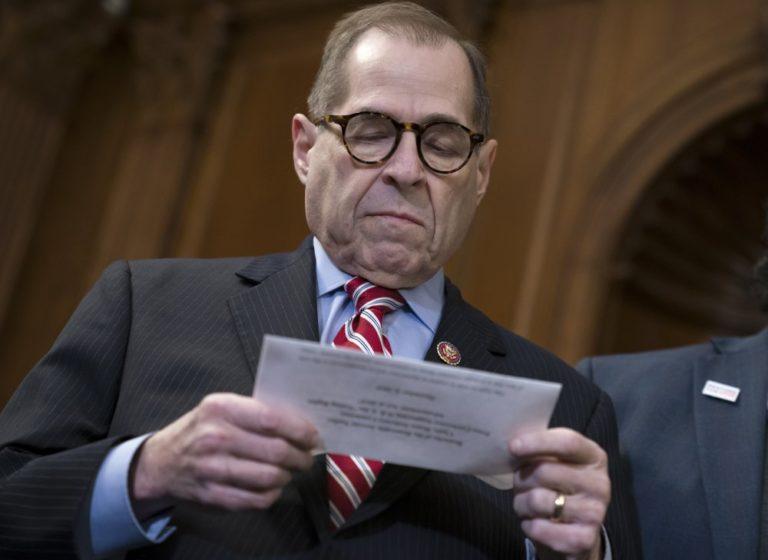
(Headline USADemocratic Rep. Jerry Nadler of New York says he will not run for reelection next year, according to an interview published Monday night by The New York Times.

Nadler told the Times that watching then-President Joe Biden’s truncated reelection campaign last year “really said something about the necessity for generational change in the party, and I think I want to respect that.” He suggested a younger Democratic lawmaker in his seat “can maybe do better, can maybe help us more.”

Nadler, 78, is serving his 17th term in Congress. He was chairman of the House Judiciary Committee from 2019 to 2023, then served as ranking member on the panel after Republicans won House leadership. He stepped down from that role late last year.

Nadler’s decision to relinquish that spot came a day after fellow Democratic Rep. Jamie Raskin announced his bid for the job and quickly amassed support from colleagues.

“I am also proud that, under my leadership, some of our caucus’s most talented rising stars have been given a platform to demonstrate their leadership and their abilities,” Nadler wrote then in a letter to Democrats that was obtained by The Associated Press.

Without naming names, Nadler suggested to the Times that some of his Democratic colleagues should also consider retirement.

“I’m not saying we should change over the entire party,” Nadler said in the interview posted Monday. “But I think a certain amount of change is very helpful.”

In April, the Washington Free Beacon reported that Nadler was dubbed by his colleagues as the “worst-smelling” man in Congress.

Nadler, who stands at 5-foot-4 and underwent weight-loss surgery in 2002, has been the subject of ongoing criticism and mockery. For instance, President Donald Trump once dubbed him “Fat Jerry.” 

Former Rep. Anthony D’Esposito, R-N.Y., said that Nadler “barrels through everyone” when making his way through the House floor. However, sometimes, he “doesn’t really need to barrel through because his stench kind of clears the way and it equates to his personality, which is nasty and most people want to keep away from.” 

A fellow House Democrat added, “Members of Congress don’t want to sit next to him because of it. Yeah, he smells. I don’t know what he does. Maybe he doesn’t take a bath, I don’t know what it is.” 

A New York congressman echoed these remarks, declaring that Nadler “reeks” before adding: “It’s not just like a guy who didn’t take a shower. I don’t know if it’s surgery or a colostomy bag, but it’s bad.” 

Adapted from reporting by the Associated Press


Military Pursues AI Systems to Suppress Online Dissent Abroad

(José Niño, Headline USA) The U.S. military wants artificial intelligence to do what human propagandists cannot: create and spread influence campaigns at internet speed while systematically suppressing opposition voices abroad, according to internal Pentagon documents obtained by The Intercept.

The classified wishlist reveals SOCOM’s ambition to deploy “agentic AI or multi-LLM agent systems” that can “influence foreign target audiences” and “suppress dissenting arguments” with minimal human oversight. The military branch seeks contractors who can provide automated systems that operate at unprecedented scale and speed.

“The information environment moves too fast for military remembers [sic] to adequately engage and influence an audience on the internet,” the document said. “Having a program built to support our objectives can enable us to control narratives and influence audiences in real time.”

As reported by The Intercept, the proposed AI systems would extend far beyond simple content generation. SOCOM envisions technology that can “scrape the information environment, analyze the situation and respond with messages that are in line with MISO objectives.” More controversially, the systems would “suppress dissenting arguments” and “access profiles, networks, and systems of individuals or groups that are attempting to counter or discredit our messages.”

The Pentagon plans to use these capabilities for comprehensive social manipulation, creating “comprehensive models of entire societies to enable MISO planners to use these models to experiment or test various multiple scenarios.” The systems would generate targeted messaging designed to “influence that specific individual or group” based on gathered intelligence.

SOCOM spokesperson Dan Lessard reportedly defended the initiative, declaring that “all AI-enabled capabilities are developed and employed under the Department of Defense’s Responsible AI framework, which ensures accountability and transparency by requiring human oversight and decision-making.”

The Pentagon’s move comes as adversaries deploy similar technology. Chinese firm GoLaxy has developed AI systems that can “reshape and influence public opinion on behalf of the Chinese government,” according to recent reporting by The New York Times. The company has “undertaken influence campaigns in Hong Kong and Taiwan, and collected data on members of Congress and other influential Americans.”

However, experts question whether AI-generated propaganda proves effective. Emerson Brooking of the Atlantic Council noted that “Russia has been using AI programs to automate its influence operations. The program is not very good.” He warned that “AI tends to make these campaigns stupider, not more effective.”

The Pentagon has previously conducted covert influence operations with mixed results. In 2022, researchers exposed a network of social media accounts operated by U.S. Central Command that pushed anti-Russian and Iranian messaging but failed to gain traction, becoming what Brooking called “an embarrassment for the Pentagon.”

Critics worry about the broader implications of automated propaganda systems. Heidy Khlaaf, former OpenAI safety engineer, cautioned that “framing the use of generative and agentic AI as merely a mitigation to adversaries’ use is a misrepresentation of this technology, as offensive and defensive uses are really two sides of the same coin.”

José Niño is the deputy editor of Headline USA. Follow him at x.com/JoseAlNino

Tranny Minneapolis Kid Killer’s Dad Had Links to Deep-State Agencies

(Ben Sellers, Headline USA) Could the now-deleted LinkedIn profile of James Westman, the father of Minnesota mass murderer Robert “Robin” Westman, hold the key to understanding what pushed him over the edge?

Online sleuths, supported by the X-based artificial intelligence platform Grok, have confirmed that the elder Westbrook spent nearly three decades at Esri, a tech company with ties to the Pentagon and the National Geospatial-Intelligence Agency, as well as other possible deep-state links.

For leftists, the transgender killer’s Second Amendment rights may have been the reason he gunned down two children and injured 18 during morning prayers at the Annunciation Catholic School on Wednesday.

For gun-rights advocates and others, the reams of documented evidence pointing to mental-health issues and borderline sociopathy may help explain it.

And for the investigative team at the New York Times, Westman’s homicidal motives may remain a mystery for the ages.

The case resembles a host of other recent mass-shooting incidents—including those of failed Trump assassin Thomas Matthew Crooks and Nashville transgender kid-killer Audrey Hale.

Many of them were engaged via online platforms like Discord with the Satanic cult 764 and other dark-web groups that may have coerced them into sending compromising photos and then blackmailed them into deadly action.

The groups typically prey on mentally weak and emotionally fragile individuals like Westman, including those with autism and those taking gender-reversing hormone treatments.

Westman’s various manifestos, including a diary written partially in Cyrillic, offer tell-tale indications of his involvement in online cult groups.

He also wrote the last names of several other school shooters on at least one of the weapons in his stockpile.

One “mystery” that may never be fully understood, however, is the scope to which U.S. intelligence agencies had a hand in monitoring and directing the activity in these dark-web chatrooms.

Like others—including Crooks, who had family ties to high-ranking military intelligence—Westman’s links to the intel community have now become a subject of intense speculation on social media.

Esri (formerly the Environmental Systems Research Institute), where James Westman worked for 29 years, has received more than $130 million in federal funding, with its primary function appearing to be geospatial intelligence through its ArcGIS system.

As is the case with many Silicon Valley tech companies, political donations from its employees also indicate a strong alignment with Democrat candidates.

All indications point to James Westbrook’s direct involvement with government projects through the Department of Homeland Security and various three-letter intelligence agencies, although his last login appears to have been in May, as Elon Musk’s Department of Government Efficiency began scrutinizing wasteful and corrupt government contracts.

Some have further suggested that the anti-Semitism expressed by Robert Westman may be rooted in his dad’s work with Hamas-affiliated organizations backed by USAID.

Meanwhile, others raised questions as to whether the parents of victims Harper Moyski, 10, and Fletcher Merkel, 8, may also have had government ties in the grid-surveillance industry that might have led to their children’s targeting.

It is unlikely that any investigations into the shooting will ever reach a conclusive end to this social-media rabbit hole, so perhaps the New York Times has inadvertently stumbled onto a true statement after all.

Ben Sellers is a freelance writer and former editor of Headline USA. Follow him at x.com/realbensellers.

Cap-Snatching CEO Teaches Kid a Valuable Life Lesson at U.S. Open

(Ben Sellers, Headline USA) Outrage simmered over on social media Friday as a viral video showed a grown man at the U.S. Open tennis tournament snatching a cap from a young autograph-seeker.

Polish tennis star Kamil Majchrzak let the world know that he was hoping to identify the boy in the video, which showed him plaintively looking at the apparent bully after losing out on both the cap and the autograph.

In the end, Majchrzak was able to track down the young fan, identified as “Brock,” and appeared to give him and his brother gift-bags full of swag at a personal meet-and-greet.

But the more valuable life-lesson appeared to have come from Piotr Szczerek, the CEO of Polish paving company Drogbruk, who—unlike other CEOs caught in viral PR nightmares—was said to have unapologetically taken ownership of the situation.

“The recent incident at the tennis match has caused a disproportionate online uproar,” said a statement attributed to Szczerek that had received more than 48 million X impressions as of Sunday.

“Yes, I took it. Yes, I did it quickly. But as I’ve always said, life is first come, first served,” the statement continued.

It went on to appeal to haters to keep their cool.

“I understand that some people might not like it, but please, let’s not make a global scandal out of the hat,” said the statement. “It’s just a hat. If you were faster, you would have it.”

It further warned those making threats and defamatory statements that they might be subject to legal liability.

“All offensive comments, slander, and insinuations will be analyzed for the possibility of taking the matter to court,” said the statement.

The firsthand advice from a successful CEO on how to win in life may prove indispensable to Brock as he realizes he can’t play the “kid card” forever.

Some social-media users were quick to point out other analogies to the crushing disappointments and shattered expectations that life likely has in store for the tousleheaded tennis fan.

Unfortunately for Szczerek, the episode offered a brutal lesson for him, as well.

Backlash led some to dub him the “most hated man on the internet,” according to the Daily Mail.

Within 24 hours, his company’s stock value plunged 15% as investors’ fears of a cancel-culture boycott were stoked, according to Bloomberg.

And even Szczerek’s wife, Anna, came under vicious scrutiny at outlets like Newsweek.

The cyberbullying included a false statement attributed to Anna acknowledging that Brock had received a “pro-bono life lesson.”

After the harassment, Szczerek issued a new statement, characterized by some as a “groveling apology,” in which he said he believed the hat was intended for him and his sons but that he had since given it back to the boy.

“[T]his incident has shown me that a moment of inattention can undo years of work and support,” he wrote. “It is a painful but necessary lesson in humility.”

Szczerek also unequivocally denied that the initial viral statements attributed to him and his family had, in fact, come from them.

He highlighted his past support for youth athletics while pledging to pay penance by becoming more active in “initiatives that support children” and “tak[ing] actions against violence and hate.”

Ben Sellers is a freelance writer and former editor of Headline USA. Follow him at x.com/realbensellers.

Kamala Harris Pro-Union X Post Inspires Major Labor Day Backlash

(Carleen Johnson, The Center Square) An X post from former Vice President Kamala Harris on this Labor Day has generated hundreds of mostly critical comments.

“When unions are strong, our communities and our country are strong. Every person in our nation has benefited from the labor movement. This Labor Day, we celebrate the workers and unions who have fought for fair wages, safe workplaces, and sick leave for all of us,” posted Harris.

One commenter posted in response, “The Dems talking point for today is…UNIONS. Today is literally for the worker but in true form, democrats make it about the evil system.”

Another wrote, “Kamala you should go work at McDonalds for real this time, so you don’t have to lie about it again in 2028.”

That was a reference to Harris’s claim during the 2024 Presidential campaign that she had worked at McDonalds during law school. Then candidate Donald Trump pushed back, insisting Harris made up the claim to make it sound like she had middle class roots.

McDonald’s said it didn’t have records extending back to when the vice president would have worked at any franchise.

Freedom Foundation, an Olympia, Wash., based think tank, has helped tens of thousands of American workers opt out of paying union dues since the landmark U.S. Supreme Court’s Janus decision in 2018.

SCOTUS ruled that requiring such union fees in the public sector violates the First Amendment right to free speech. Opting out does not mean a worker gives up their right to be represented by union leadership in collective bargaining, but they do lose voting rights in contract agreements.

“In July alone, 5,381 government employees made the decision to leave their union, bringing the total financial impact to more than $5 million in annual dues redirected away from unions that can no longer be used to fund their political agenda,” wrote Michael Ciccio with the Freedom Foundation in an Aug. 6, 2025, post. “Each opt-out represents a public employee reclaiming their First Amendment rights and taking control of their paycheck. And with momentum on our side, we’re not slowing down.”

Union members pay a percentage of their gross pay in monthly dues. The percentage can vary, but a worker represented by the Washington Federation of Public Employees making $100,000 a year would pay $1,500 a year or $125 per month.

As reported by The Center Square, Sept. 1 is the deadline for teachers in Washington state to make a decision about union participation. After that date, teachers can still opt out of union participation; however, their monthly dues will still be collected until this time next year.

Many public employees in New York are also walking away from their unions. According to FF, opt-outs surged 63% from July of 2024 to July of this year.

“This isn’t a one-off. It’s a movement. And if the pace continues, New York will crush last year’s totals,” wrote FF’s Ryan Brooks. “New Yorkers are waking up to where their dues are really going – political slush funds, six-figure union salaries and agendas that don’t represent them.”

Groups like the Service Employees International Union, which represents about two million American workers in healthcare, law enforcement, stadium workers and other public employees, counter FF’s opt-out message calling the organization right-wing extremist.

“They want to dismantle government, cut public services and outsource public jobs to the private sector. Our union protects public employees and the public good. As long as we’re strong, they can’t get their hands on the billions of dollars invested each year in public services and public education,” read a post from SEIU Local 73 titled ‘Don’t be Fooled by Freedom Foundation’.

For decades, labor unions have championed Democratic candidates and Republicans have not received a lot of union support. But in the 2024 Presidential election, Trump’s working-class base saw a good share of rank-and-file voting for Republicans.

Trump sat down with Teamster’s leadership ahead of the election hoping to get their endorsement. The Teamsters ultimately declined to endorse either Trump or Harris, though Teamsters leader Sean O’Brien spoke at the Republican National Convention.

According to the 2024 VoteCast survey conducted for AP and Fox News, 57% of union members voted for Harris compared with 41% for Trump.

Trump Says He will Sign Executive Order Ending Mail-in Voting

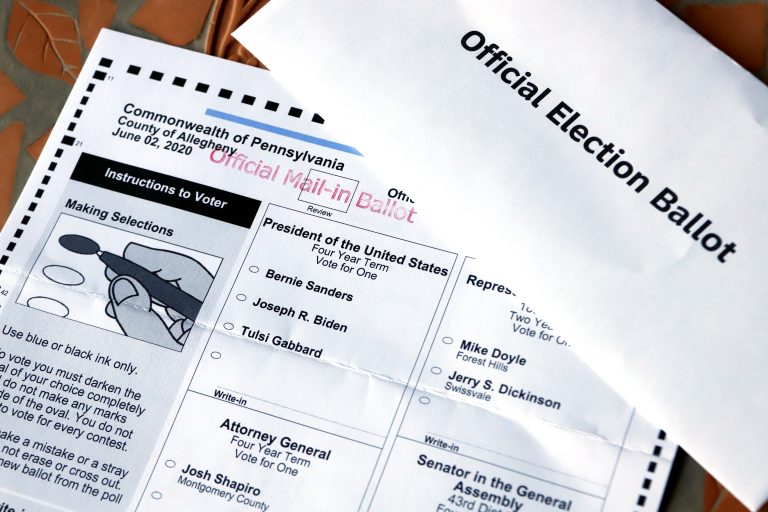
(Elyse Apel, The Center Square) President Donald Trump said he will be signing an executive order ending mail-in voting and requiring voter ID.

“Voter I.D. Must Be Part of Every Single Vote. NO EXCEPTIONS,” Trump posted on Truth Social Saturday night. “I Will Be Doing An Executive Order To That End!!! Also, No Mail-In Voting, Except For Those That Are Very Ill, And The Far Away Military. USE PAPER BALLOTS ONLY!!!”

Currently, every state in the U.S. allows for some form of mail-in voting. In a few states, elections are all-mail voting, meaning voting is conducted primarily by mail and registered voters are automatically sent ballots.

Those states include California, Colorado, Washington and five others. Utah will be ending automatic mail-in ballots starting in 2029.

Trump has long pushed for a strengthening of the American election system, especially after widespread allegations of voter fraud following the 2020 election.

As a part of that effort, Trump signed an executive order in March to bolster the enforcement of election law by establishing new voter identification requirements for federal elections.

That order also addressed some aspects of mail-in voting, namely directing the U.S. Attorney General to take “all necessary action” to ensure that mail-in votes are counted only up until Election Day and not after. Following many legal challenges to the March executive order, it is still making its way through the courts.

Critics say Trump taking additional executive action on elections could be considered unconstitutional as states have broad election authority.

“The president lacks the authority to take either step,” said Democracy Docket, a voters rights group, of Trump’s announcement. “A presidential order to end mail-in voting would be blatantly unconstitutional. The U.S. Constitution gives the states the primary authority to regulate elections, while empowering Congress to “at any time by Law make or alter such Regulations. The Framers never considered authorizing the president to oversee elections.”

Republicans have supported Trump’s effort, even looking to codify some of his March executive order’s actions into law, as previously reported by The Center Square.

This isn’t the first time Trump has teased a coming executive order ending mail-in voting.

“I am going to lead a movement to get rid of MAIL-IN BALLOTS,” he posted on Truth Social. “WE WILL BEGIN THIS EFFORT, WHICH WILL BE STRONGLY OPPOSED BY THE DEMOCRATS BECAUSE THEY CHEAT AT LEVELS NEVER SEEN BEFORE, by signing an EXECUTIVE ORDER to help bring HONESTY to the 2026 Midterm Elections.”

In that post, Trump also addressed claims that these actions are unconstitutional.

“States are merely an ‘agent’ for the Federal Government in counting and tabulating the votes,” Trump said. “They must do what the Federal Government, as represented by the President of the United States, tells them, FOR THE GOOD OF OUR COUNTRY, to do.”


Jeffrey Epstein Wanted U.S. to Attack Iran, Leaked Emails Suggest

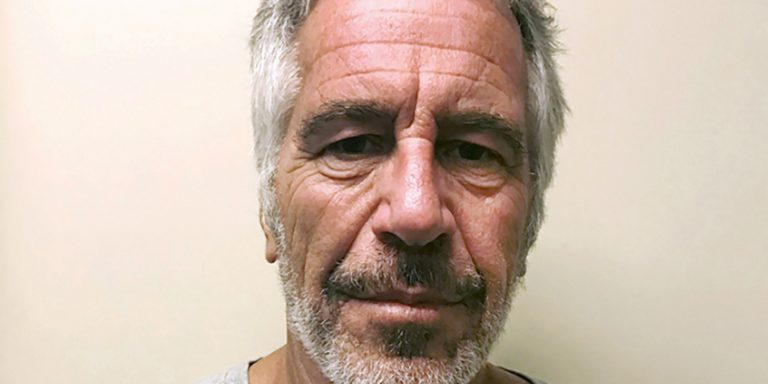
(Ken Silva, Headline USA) Hackers have leaked apparent emails from former Israeli Prime Minister Ehud Barak, many of them containing communications with deceased sex trafficker Jeffrey Epstein.

Barak’s association with Epstein has been known for years. The emails between them were posted on a site called Distributed Denial of Secrets—described as a site similar to WikiLeaks—and first reported on by Reason Magazine.

According to Reason, much of the communications between Barak and Epstein were about their venture into a firm called Carbyne Ltd., which sells software to police departments and other government agencies that allows them to access callers’ smartphones during emergencies.

Reason reporter Matthew Petti also found an email where Epstein apparently called for the U.S. to attack Iran.

“Hopefully someone suggests getting authorization now for Iran. The Congress [would] do it,” Epstein wrote to Barak on Sept. 1, 2013.

Epstein’s email came months after Iran unveiled a new uranium production facility, according to a contemporaneous report from the news site Your Middle East. Iran was also reportedly dealing with sanctions from the United Nations, and had failed to successfully negotiate a deal about its nuclear program.

Iran would go on to sign a deal with the Obama administration, which President Donald Trump then overturned shortly after taking office in 2016.

Fast forward nearly a decade, and Epstein might finally get his wish. Tensions between the U.S. and Iran are at new highs. The U.S. bombed Iran’s nuclear facilities in June, though the full extent of the damage done to them is unclear.

Congress has yet to authorize any military action against Iran.

Ken Silva is the editor of Headline USA. Follow him at x.com/jd_cashless.