Boasberg Hit w/ Articles of Impeachment After Gag Orders Kept Lawmakers in the Dark

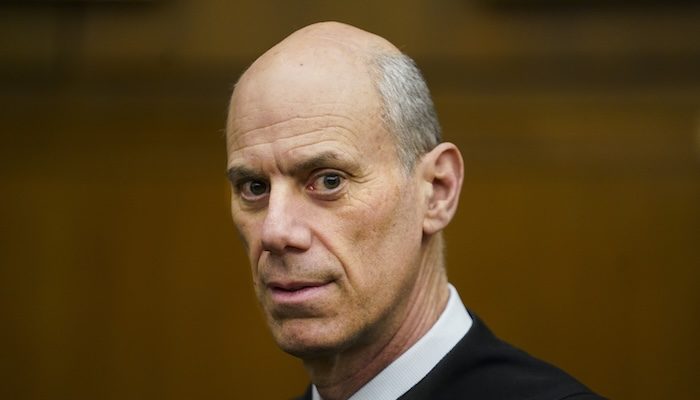
(Luis CornelioHeadline USA) A group of Republican lawmakers led by Rep. Brandon Gill, R-Texas, formally introduced articles of impeachment against U.S. Judge James Boasberg Tuesday after he approved FBI subpoenas for the phone records of several members of Congress. 

The subpoenas targeted lawmakers as part of both the Arctic Frost investigation and Special Counsel Jack Smith’s probe into President Donald Trump following the 2020 election. Newly declassified records show Boasberg also signed gag orders preventing phone carriers from notifying the targets.

Boasberg’s actions marked a major escalation in federal investigative power, raising concerns about potential violations of the separation of powers by targeting sitting members of Congress. 

Those targeted included GOP Sens. Ted Cruz, Texas; Marsha Blackburn, Tenn.; Ron Johnson, Wis.; Bill Hagerty, Tenn.; Josh Hawley, Mo.; Cynthia Lummis, Wyo.; Lindsey Graham, S.C.; Dan Sullivan, Alaska; and Tommy Tuberville, Ala.; and Rep. Mike Kelly, Pa. 

Gill’s articles accuse Boasberg of “high crimes and misdemeanors” for granting Smith “authorization to issue frivolous nondisclosure orders” as part of Arctic Frost. 

“These illegitimate and frivolous nondisclosure orders and subpoenas threaten Members of Congress by imposing undue legal scrutiny for fulfilling their constitutional duties,” the articles read. 

Other co-sponsors of the articles include GOP Reps. Andy Fine, Fla.; Chip Roy, Texas; Byron Donalds, Fla.; Lauren Boebert, Colo.; Anna Paulina Luna, Fla.; Keith Self, Texas; Marlin Stutzman, Ind.; Eli Crane, Ariz.; Andy Ogles, Tenn.; Mike Collins, Ga.; and Andy Biggs, Ariz. 

The articles must first be considered by congressional committees, like the House Judiciary Committee, which may investigate and vote on whether to recommend impeachment. 

If approved, the articles would then be passed to the House floor, where a simple majority is needed to impeach. By contrast, conviction and removal require a two-thirds vote in the Senate. 

If impeached, Boasberg would join a small group of just 15 federal judges who have faced similar action, only eight of whom were convicted and removed from office. 

Boasberg, appointed by then-President Barack Obama in 2013, has played a major role in judicial blockades against several Trump administration policies. 

Trump Says SNAP Benefits On Hold Until Government Reopens

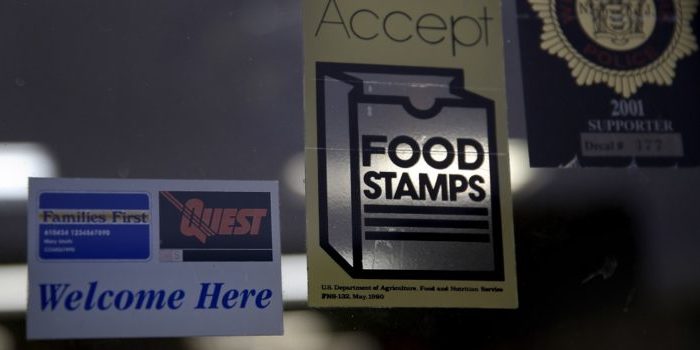
(Brett Rowland, The Center Square) President Donald Trump said Tuesday that federal food benefits won’t go out until the government reopens, a statement at odds with what his administration has said publicly and told federal judges who ordered the government to use emergency funds to keep benefits flowing.

Trump made the comments on social media. The president also criticized the Supplemental Nutrition Assistance Program, which helps about 40 million Americans each month. SNAP provides food benefits to low-income families to supplement their grocery budget.

“SNAP BENEFITS, which increased by Billions and Billions of Dollars (MANY FOLD!) during Crooked Joe Biden’s disastrous term in office (Due to the fact that they were haphazardly ‘handed’ to anyone for the asking, as opposed to just those in need, which is the purpose of SNAP!), will be given only when the Radical Left Democrats open up government, which they can easily do, and not before!,” Trump wrote.

Trump signed the post with his initials, adding to the confusion around funding for the program amid a partial government shutdown. 

Press Secretary Karoline Leavitt said Tuesday afternoon that the administration will abide by all court orders. She said the quickest way to get full funding for SNAP was for Congress to fund the government. She said Trump didn’t want to deplete emergency funds for the program.

“The recipients of these SNAP benefits need to understand it’s going to take some time to receive this money, because the Democrats have forced the administration into a very untenable position,” Leavitt said.

Despite previously denying it had the legal authority to do so, the U.S. Department of Agriculture said Monday that it will use emergency funds to partially cover SNAP benefits for the month of November. Two judges ordered the Trump administration last week to use reserve funds.

USDA says it only has enough emergency funds, roughly $4.6 billion, to cover 50% of November benefits. It will not tap other contingency funds, which historically have been used during events like natural disasters while the government is open.

In fiscal year 2024, SNAP served an average of 41.7 million participants per month. Federal SNAP spending totaled $99.8 billion and benefits averaged $187.20 per participant per month, according to the USDA’s Economic Research Service.

Historically, SNAP use expands when the economy is down and declines when conditions improve, according to the ERS. 

“Because SNAP is an entitlement program and benefits are means-tested, the program provides assistance to more low-income households during an economic downturn or recession and to fewer households during an economic expansion, serving as an automatic stabilizer to the economy,” it noted. “Historically, SNAP spending and the participation rate tend to track the unemployment rate and the poverty rate.”

A congressional funding lapse on Oct. 1 prompted what has since become the longest-ever partial shutdown of the federal government. Both parties have blamed the other on the lapse in appropriations. 

Bomb Threats at New Jersey Polling Places

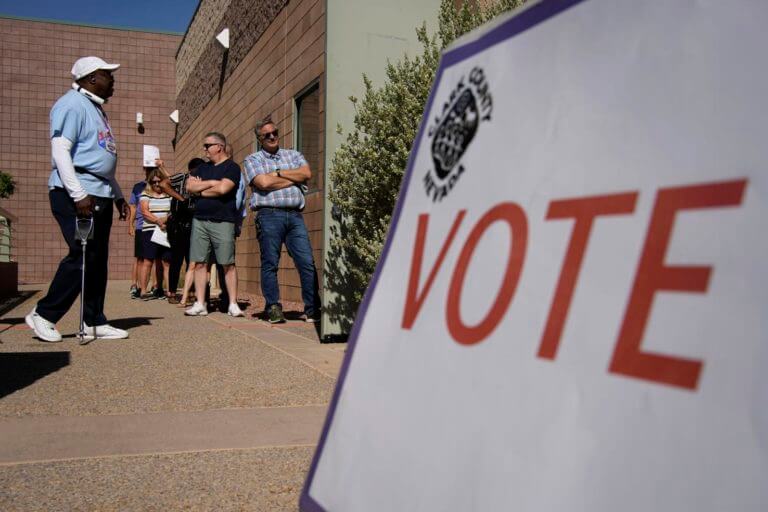
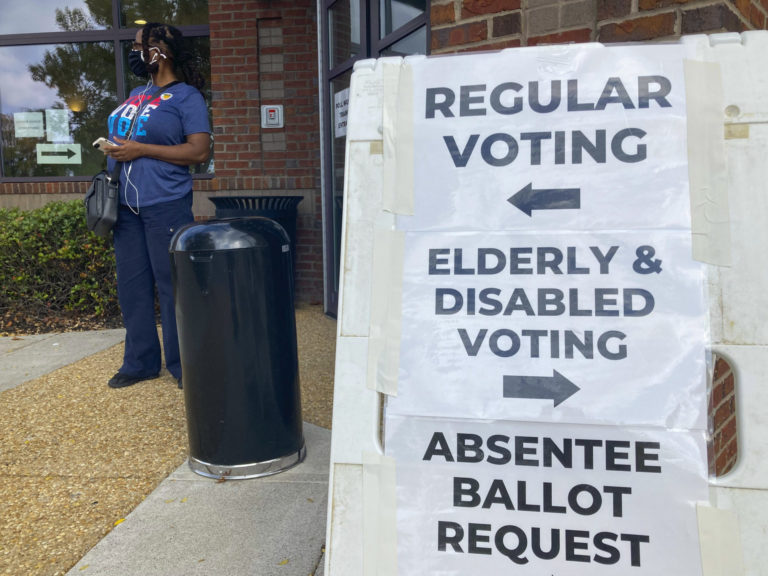
(Christina Lengyel, The Center Square) Tuesday’s New Jersey general election saw early attempts at voter intimidation with emailed bomb threats to Bergen, Essex, Mercer, Middlesex, Monmouth, Ocean, and Passaic counties.

Attorney General Matthew J. Platkin issued a statement saying that law enforcement had responded and “worked swiftly to secure” them.

Some of the polling places have already reopened, while voters reporting to others are being directed to nearby alternatives.

“We are grateful to the brave law enforcement officers and the dedicated poll workers who are working tirelessly to ensure everyone’s safety, and we are coordinating closely with our federal and local law enforcement partners,” said Platkin.

He added, “Voters should continue to have confidence that they can cast their ballot without fear of intimidation, and we will continue to work tirelessly to ensure a free, fair, and secure election. Make no mistake: We will not tolerate any attempts to interfere with our elections, and we will swiftly hold accountable anyone who seeks to interfere with the safety or security of our electoral process.”

The attorney general encouraged voters to call authorities if they witness any suspicious activity.


Congressional Perks: House Members, Staff Get Daycare, On-Call Doctor

(Arthur Kane, The Center Square) Job perks like an on-call doctor, on-site daycare and millions of dollars for food, beverages and bottled water sound like something offered to employees of big tech firms.

But actually, taxpayers are paying for those perks for members of Congress and often their staff, an investigation by The Center Square found.

Since the 2019 fiscal year, taxpayers paid about $30 million for the Office of Attending Physician, which handles medical emergencies but also offers members routine care for just $650 a year, an analysis of congressional data shows.

At least $10 million was spent on the House Childcare Center that provides staff and members below-market-rate childcare starting at $1,100 a month, data and interviews show. With Washington, D.C., having some of the highest daycare costs, the perk is popular and there is a waiting list.

U.S. House staff and members also are feasting on taxpayer dollars with $30 million spent on food and beverages, and $4.1 million just on bottled water since 2019, an analysis of 3 million lines of House spending data shows.

House leadership and the Republican conference alone spent $122,000 on Chick-fil-A over the past six years. Former U.S. Rep. Steven Palazzo, R-Miss., led individual congressional offices by ordering nearly $15,000 in chicken sandwiches and chips from the popular fast food venue, The Center Square analysis showed.

Gillian Mason, executive director of Healthcare-NOW, a Texas nonprofit that advocates for universal single-payer health coverage, said it is great that lawmakers are getting good care at taxpayer expense but the average taxpayer has to struggle to get medical treatment.

“One of the reasons it is so difficult to push health care reform for regular people is our reps and senators aren’t seeing the full force of what is happening out there because they’re isolated,” said Mason, who conceded she did not know about the attending physician perk in Congress until The Center Square told her about it. “They like their publicly funded health care … but won’t give it to anyone else.”

David Williams, president of the Taxpayers Protection Alliance, was outraged by the spending of taxpayer money for items that aren’t vital to the operations of Congress.

“It’s not Congress valuing their employees, it’s the taxpayer paying for this,” he said. “It’s easy to spend someone else’s money. I mean, that’s the easiest thing in the world to do.”

Williams said there was a spreadsheet shared around Congress listing all the free lunches available to staff and members so no one is starving on Capitol Hill with or without taxpayers chipping in.

Since no one in Congress – though some individual Congress members’ communications directors provided email statements – would agree to an interview on the record about their spending of taxpayer money, The Center Square asked the Bipartisan Policy Center to explain why it thinks some of the spending is necessary. The center studies government efficiency and worked with the House Select Committee on the Modernization of Congress to make suggestions to improve Congress.

How we did this story: The Center Square downloaded all the House disbursement spreadsheets from 2019 to June 2025 into a 3 million line database and queried the data for the top spenders in various categories. The data also allowed TCS to analyze various offices, categories and vendors to determine outliers and questionable expenditures when comparing the spending to House rules.

J.D. Rackey, the center’s associate director of the Structural Democracy Project, said Congress works long and unusual hours and so staff need certain perks both to do their jobs and to hire good people.

“Congress has this problem of always losing its institutional memory and the idea is, if we want to be able to recruit and retain top talent, then we need to be able to pay them more and also have other professional development opportunities for staff and things like that, so that Congress can actually function the way it’s intended,” he told The Center Square. “Congress is a workplace, but it’s kind of a little bit of an unusual workplace.”

Samantha Carter, spokeswoman for the chief administrative officer in the House, wrote, “The CAO has no comment. Thank you.” when The Center Square asked for basic information about the spending on various perks. Carter, paid $173,000 by taxpayers last year, according to Legistorm, didn’t respond to subsequent emails.

Congressional members and staff do not get the federal employee health insurance and must sign up through Small Business Health Options Program, according to the U.S. Office of Personnel Management.

Congressional members also are still spending millions in taxpayer funds for subscriptions to publications like Politico and Bloomberg despite Elon Musk’s Department of Government Efficiency targeting similar subscriptions to left-leaning publications by USAID and other executive branches, the data shows.

Since 2019, Politico subscriptions by Congress cost taxpayers $14 million, Bloomberg received nearly $13 million, CQ Rollcall $5.4 million, and $2.5 million went to the National Journal, the data shows.

Punchbowl News received $1.5 million, Thompson-Reuters about $2 million and the New York Times about $870,000, data shows.

Williams conceded that Congress needs access to the news and information but questioned the cost.

“There’s got to be a happy medium here,” he said after The Center Square told him of the price tags. “There’s got to be a way where Congress can still remain informed, whether it’s Politico, Roll Call or whatever, but not spend tens of millions of dollars.”

Since 2019, taxpayers have paid for roughly $88 million worth of publications and reference materials for members of the House and their staff.

Rackey said the House is working on internal ways to track bills and access staff lists without using some of the Politico Pro tools.

“I do have good news on that front in that over the past few years, as the work of the modernization committee and the House digital service has been ramping up,” he said. “They’ve been building more systems internally … Congress is never going to limit, saying, ‘oh, you can’t spend this money on Politico Pro,’ but they have been building systems internally that might make it obsolete.”

The in-house doctor was started in 1928 after a House member dropped dead and two collapsed, which was attributed to overwork, according to a Senate.gov write up of the history. The House then passed a resolution to have a Navy medical officer present when in session. In 1996, that perk cost $1.2 million but has since increased to more than $4 million a year, according to data from the American Governance Institute provided to The Center Square.

Williams said with telemedicine readily available and a plentiful supply of doctors around the D.C. area, the on-call physician’s office is “stuck in the past.” The on-call physician’s office staff did not respond to requests for comment.

When it comes to food, House leadership led the way in orders.

The Democratic Caucus and House speakers, a Democrat between 2019 and 2023 before Republicans took over, each spent $1.7 million since 2019 on food, beverages and meals. The offices of the minority leaders and majority whip spent $2.2 million combined. The Republican conference came in seventh in spending for food with about $686,000.

Those included both catering at the Capitol and meals while traveling.

The individual member with the most food, beverages and meals expenses in the past six years was U.S. Rep. Nanette Diaz Barragan, D-Calif., with $334,000 spent since 2019. Rounding out the top three individual office food spenders were U.S. Reps. Joyce Beatty, D-Ohio, and Al Green, D-Texas, whose offices each spent about $189,000 since 2019, data shows. None of those lawmakers’ staff responded to requests for comment.

When it came to Chick-fil-A, the speaker’s office spent $51,537.85, minority leader $36,308.56, majority whip $18,313.33 and Republican conference $16,517.28. Palazzo was next on the list with $14,585.27 and the Committee on Oversight and Accountability was sixth with $7,906.28 in chicken-sandwich spending, data shows.

Palazzo, who lost his primary reelection bid in 2022, said the Chick-fil-A tab was to feed about 300 to 400 high school seniors from his district each year who attended his youth leadership summit. He said that increased spending in the members representational allowance is absolutely vital to keeping congressional offices running and finding good staff.

“I think MRAs are absolutely important and need to increase as salaries and cost of labor increased,” he said, adding he opposed the 2011 Tea Party cuts.

He felt the spending on food was legitimate to help educate his youngest constituents.

Mason said lawmakers are disconnected from the problems of regular people because of the perks of office.

“Don’t sit in your ivory tower judging the system based on what you’re experiencing and your constituents aren’t getting the same care,” she told The Center Square.


Pentagon Classified New Year’s Day Cybertruck Bomber’s Manifesto

(Ken Silva, Headline USA) On Jan. 7, law enforcement discovered a “manifesto” on the phone of the highly decorated soldier who allegedly exploded a Tesla Cybertruck outside the Trump hotel in Las Vegas on New Year’s Day.

But within 48 hours, the Department of Defense classified the manifesto of the soldier, 37-year-old Matthew Livelsberger, keeping it hidden from the public, according to a newly released after-action report from the Las Vegas Metro Police Department.

The after-action report, released Monday, says the LVMPD was about to release information about the manifesto before federal authorities classified it on the grounds that it could harm national security.

“Before Sheriff McMahill’s third press conference, where he intended to provide updates on a manifesto that was recovered among Livelsberger’s digital devices, the FBI notified him that the Department of Defense had deemed the manifesto classified, and LVMPD could no longer release further information to the public,” the report says.

“Due to concerns regarding national security, LVMPD halted its investigation to allow its federal partners to take the lead, at the direction of the Department of Defense.”

The classification of Livelsberger’s manifesto deepens the mystery of a case that has already sparked conspiracy theories. An email posted by former CIA contractor turned podcaster Shawn Ryan, which was not confirmed by Headline USA, suggested that Livelsberger may have had inside information about the spate of recent drone sightings in American airspace.

The conspiracy theories were amplified by the fact that the Cybertruck incident occurred on the same day that a 42-year-old Army veteran Shamsud-Din Bahar Jabbar rammed a pickup truck into a crowd in New Orleans’s famed French Quarter—killing 14 people who were celebrating the New Year. Police fatally shot Jabbar in a following firefight, and authorities later determined that the incident was inspired by the foreign terrorist organization ISIS.

Sen. Chuck Grassley noted the similarities between the two incidents in a letter to the FBI in January.

“For example, both individuals had experience in the U.S. Army and the vehicles in both incidents were rented from the same company, Turo. Further, according to reports, authorities claimed Livelsberger and Jabbar “likely overlapped at Fort Bragg and again in Afghanistan,’” Grassley noted in a Jan. 24 letter. “It remains unclear whether there are additional similarities or connections between Jabbar and Livelsberger.”

Grassley asked the FBI in January whether the two attacks were connected, but never followed up on his letter.

The Cybertruck explosion caused minor injuries to seven people but virtually no damage to the hotel. Authorities said that Livelsberger acted alone.

“This was not a terrorist attack, it was a wakeup call. Americans only pay attention to spectacles and violence. What better way to get my point across than a stunt with fireworks and explosives,” Livelsberger wrote in a letter found by authorities who released only excerpts of it.

Ken Silva is the editor of Headline USA. Follow him at x.com/jd_cashless.

26 States Participate in Federal SAVE Program to Ensure Only US Citizens are Voting

(Bethany Blankley, The Center Square) In less than a few months, 26 states have begun working with the U.S. Citizenship and Immigration Services to ensure only U.S. citizens are voting in federal elections now that states have access to an upgraded database with critical immigration information.

The USCIS has been making upgrades to its Systematic Alien Verification for Entitlements (SAVE) database and working with states to verify citizenship status for a range of programs, including voter registration.

Trump administration improvements and expanded access to the SAVE database have enabled state agencies to submit more than 46 million voter verification queries ahead of Tuesday’s election, USCIS says.

“USCIS remains dedicated to eliminating barriers to securing the nation’s electoral process,” USCIS spokesman Matthew Tragesser said. “By allowing states to efficiently verify voter eligibility, we are reinforcing the principle that America’s elections are reserved exclusively for American citizens. We encourage all federal, state, and local agencies to use the SAVE program.”

“Currently, only 26 states already have, or are in the process of establishing, a memorandum of agreement for voter verification with SAVE,” USCIS says. “Government officials at all levels in all states should be committed to eliminating voter fraud and restoring faith in America’s elections.”

States can now access the SAVE database to verify the citizenship of those on state voter rolls using the last four digits of the registered voter’s Social Security number instead of requiring all nine numbers. Registered state agencies are also able to access the data without needing a Department of Homeland Security identifier, which was previously required.

Expanded access and upgrades to the system is a marked reversal from Biden administration policies that prevented state access to information, prompting 16 Republican attorneys general, including Texas, to sue. The AGs raised “grave concerns that by failing to work with States to verify voter registration information, [DHS] has failed to discharge its duty ahead of a national election,” The Center Square reported.

Similarly, a coalition of Republican attorneys general have repeatedly called on the U.S. Senate to pass the SAVE Act, a bill that would ensure additional safeguards are in place to prevent noncitizens from voting in federal elections. The bill passed the House but has failed to pass the Senate.

Florida was the first to sue DHS more than a decade ago identifying problems with the SAVE database, including an inability to verify Social Security numbers, driver’s license numbers and many other types of documentation, The Center Square reported.

Last year, Texas’ secretary of state removed an initial batch of 6,500 noncitizens from Texas’ voter rolls. She also requested information from the Biden administration’s DHS/USCIS, including a list of 454,289 registered voters in Texas “who have never had their citizenship verified.” The Texas SOS didn’t receive the requested information and also sued, The Center Square reported.

Six months later, under a new administration, the SAVE database was made available to all states. In March, President Donald Trump issued an election integrity executive order directing DHS to provide states with free access to the SAVE database.

Last month, the Texas SOS identified nearly 3,000 noncitizens on Texas’ voters roles after accessing SAVE database information, The Center Square reported. Other states have also been announcing similar findings.

The SAVE database isn’t just used for voter registration verification but also for federal, state and local government agencies to verify immigration status for those seeking benefits, licenses, background investigations and other applications. MOAs enable state and local agencies to submit information about an individual to cross check against the SAVE database, which includes data maintained by the departments of Homeland Security and Justice and the Social Security Administration.

Trump administration changes to the system have enabled federal agencies to submit more than 110 million queries to help verify eligibility for federally funded benefits. These initiatives, combined with SAVE’s status verifications for new benefit requests, have collectively resulted in more than 205 million status verifications queries as of October 2025, up from 25 million queries submitted last year, a 12-fold increase.

Reported Bomb Threat Halts Flights at Washington Reagan National Airport

(Sarah Roderick-Fitch, The Center Square) Flights in and out of Washington Reagan National Airport were momentarily halted due to a reported bomb threat on an incoming flight.

The app Flight Tracker showed multiple flights destined for Reagan being diverted to Dulles International Airport in Northern Virginia. However, shortly after 1 p.m., it appears flight departing the airport resumed.

Multiple reports indicate that the plane involved is a United flight, which landed safely and has been relocated to the eastern part of the airport. Video shot by bystanders at the airport shows passengers deplaning the aircraft onto the tarmac.

Median Age for a First-Time Home Buyer Hits 40, a Record High

(Brett Rowland, The Center Square) The median age for a first-time home buyer just hit 40, a record high, according to a new report from the National Association of Realtors. 

The median buyer age increased to a peak of 59 years, up from 56 the previous year. The median age of first-time buyers increased to 40 this year from 38 the previous year, while the typical age of repeat buyers also rose to 62 from 61. First-time homebuyers decreased to 21% of the market share, down from 24% last year. That marks the lowest share since NAR began collecting the data in 1981. Before the Great Recession, the historical norm was 40%. The report noted the division in the housing market.

“In the 1980s, the typical first-time home buyer was in their late 20s,” according to NAR’s 2025 Profile of Home Buyers and Sellers. “The housing market remains divided between an all-time high of all-cash home buyers and an all-time low of first-time buyers.” 

Jessica Lautz, NAR deputy chief economist and vice president of research, said the implications are “staggering.”

“The historically low share of first-time buyers underscores the real-world consequences of a housing market starved for affordable inventory,” she said. “The share of first-time buyers in the market has contracted by 50% since 2007 – right before the Great Recession. The implications for the housing market are staggering. Today’s first-time buyers are building less housing wealth and will likely have fewer moves over a lifetime as a result.”

Twenty-four percent of all buyers had children under the age of 18 living at home, a historically low percentage. That’s down from 27% last year and from 58% in 1985. This year, 11% of home buyers had one child, 9% had two children, and 5% had three or more children. Thirty-two percent of first-time buyers and 22% of repeat buyers had children under the age of 18. 

Seventy-six percent of all buyers had no children under the age of 18 living at home, up from 73% last year. 

“Unfolding in the housing market is a tale of two cities,” Lautz said. “We’re seeing buyers with significant housing equity making larger down payments and all-cash offers, while first-time buyers continue to struggle to enter the market.”

White people were more likely to purchase homes than members of other racial groups. Eighty-four percent of recent home buyers identified their ethnicity as White or Caucasian. Another 7% identified as Hispanic/Latino, 6% of recent buyers identified as Black/African American, 4% identified as Asian/Pacific Islander, and 3% identified as a different ethnicity.

Delaying home ownership can cost equity.

“For generations, access to homeownership has been the primary way Americans build wealth and the cornerstone of the American Dream,” said Shannon McGahn, NAR executive vice president and chief advocacy officer. “Delayed or denied homeownership until age 40 instead of 30 can mean losing roughly $150,000 in equity on a typical starter home.”

She said more housing was needed.

“Today, we must focus on policies that address the root cause of the affordability crisis: inadequate housing supply,” McGahn said. “That means both unlocking existing inventory and enabling new construction. We need solutions that encourage more owners to sell, revitalize underused properties, streamline local zoning and permitting barriers, and modernize construction methods to build more homes faster and more affordably. These common sense reforms make homes more affordable, restore opportunity, and help revive the dream of homeownership for generations to come.”

Government Shutdown to Surpass 35 days, Breaking all Records

(Thérèse Boudreaux, The Center Square) For the 14th time, U.S. Senate Democrats on Tuesday filibustered Republicans’ funding bill to reopen the government, guaranteeing that the ongoing shutdown, now on its 35th day, will be the longest in U.S. history.

The government has remained closed since Oct. 1, after Democratic senators first blocked the House-passed Continuing Resolution that would have extended federal funding until mid-November.

Democrats will not provide the necessary votes for any funding deal unless Republicans promise to make permanent the pandemic-era expansion of the Obamacare Premium Tax Credit. Because such a proposal would cost at least $350 billion and fail to address underlying health care policy issues, Republican leaders have refused.

In the meantime, dozens of critical federal services have halted, including the distribution of farm aid, small business and home loans, and SNAP benefits for 42 million low-income Americans.

Hundreds of thousands of government workers are on unpaid furlough, and tens of thousands more, including federal police and air traffic controllers, are forced to work without pay.

“For a party that claims to represent working people, it is striking to me how very little Democrats seem to care about working people during this shutdown,” Senate Majority Leader John Thune, R-S.D., said Tuesday.

With more than half of the seven weeks originally covered by the CR wasted in a shutdown, Republican leaders appear resigned to the fact that they must draft a new funding stopgap and extend the funding date.

This introduces a new host of problems for the party, though, because Republicans disagree on how long the new funding patch should last.

Before the shutdown, the government was already running off of appropriations levels from fiscal year 2024. Congress never passed a real budget last year, instead punting forward the shutdown deadline via three consecutive CRs.

So while Republicans don’t want to see funding levels from the Biden administration remain any longer than necessary, many are also concerned that a funding stopgap ending in December will turn into a “Christmas Cramnibus” filled with last-minute earmarks.

“Any new continuing resolution must extend past January 15 to avoid a Christmas omnibus loaded with earmarks,” Sen. Rick Scott, R-Fla., said on X. “My friends in the House want to extend a CR at least until March 31. Any spending bills we eventually pass should be closely aligned with the president’s proposed budget to deliver for the American people and bring fiscal sanity back to the nation.”

2nd Escaped Monkey Fatally Shot, Leaving 1 Monkey Still on the Loose after Mississippi Crash

(Headline USAA second monkey has been shot and killed and authorities said Tuesday that they were still searching for a third missing monkey a week after their escape from a truck that overturned on a Mississippi highway.

Someone shot the monkey after seeing it cross the highway on Monday evening about a mile from the scene of the Oct. 28 crash, Jasper County Sheriff Sheriff Randy Johnson said. Johnson said he was contacted by a person with the transport company who recovered the monkey after a civilian shot it.

The Mississippi Department of Wildlife, Fisheries and Parks confirmed Tuesday in a news release that one monkey was still unaccounted for after two of the escaped monkeys were “recovered deceased.” Officials have warned that people should not approach the Rhesus monkeys, saying they are known to be aggressive.

Over the weekend, a woman who said she feared for the safety of her children shot and killed another escaped monkey after her 16-year-old son saw a monkey outside their home near Heidelberg. Jessica Bond Ferguson said she and other residents had been warned that the escaped monkeys carried diseases so she shot it.

A truck carrying 21 monkeys overturned on Interstate 59 north of Heidelberg last week and several monkeys escaped. Video from the scene showed monkeys and wooden crates in tall grass beside the interstate. Searchers in protective equipment were seen scouring nearby fields and woods for missing primates. Five monkeys were killed during the search and three were missing initially, officials said.

The monkeys had been housed at the Tulane University National Biomedical Research Center in Louisiana, which routinely provides primates to scientific research organizations, according to the university. Tulane has said it wasn’t transporting the monkeys and they do not belong to the university. The remaining 13 monkeys arrived at their original destination last week, according to Tulane.

Prefabs, which describes itself on its website as a biomedical research support organization, said in a statement Monday that a vehicle transporting its non-human primates was involved in the crash and the animals were being lawfully transported to a licensed research facility. It stressed that the monkeys weren’t carrying any known diseases, but asked the public not to approach them as they were likely frightened and disoriented.

“We are cooperating with authorities and reviewing all safety procedures to ensure the continued well-being of both the animals and the community,” PreLabs said.

The escape is the latest glimpse into the secretive industry of animal research and the processes that allow key details of what happened to be kept from the public.

Adapted from reporting by the Associated Press