2nd Escaped Monkey Fatally Shot, Leaving 1 Monkey Still on the Loose after Mississippi Crash

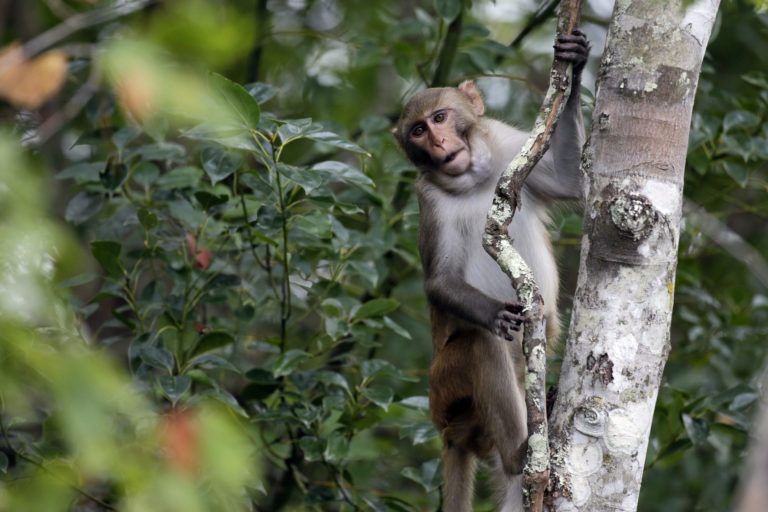
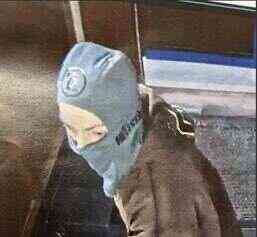
(Headline USAA second monkey has been shot and killed and authorities said Tuesday that they were still searching for a third missing monkey a week after their escape from a truck that overturned on a Mississippi highway.

Someone shot the monkey after seeing it cross the highway on Monday evening about a mile from the scene of the Oct. 28 crash, Jasper County Sheriff Sheriff Randy Johnson said. Johnson said he was contacted by a person with the transport company who recovered the monkey after a civilian shot it.

The Mississippi Department of Wildlife, Fisheries and Parks confirmed Tuesday in a news release that one monkey was still unaccounted for after two of the escaped monkeys were “recovered deceased.” Officials have warned that people should not approach the Rhesus monkeys, saying they are known to be aggressive.

Over the weekend, a woman who said she feared for the safety of her children shot and killed another escaped monkey after her 16-year-old son saw a monkey outside their home near Heidelberg. Jessica Bond Ferguson said she and other residents had been warned that the escaped monkeys carried diseases so she shot it.

A truck carrying 21 monkeys overturned on Interstate 59 north of Heidelberg last week and several monkeys escaped. Video from the scene showed monkeys and wooden crates in tall grass beside the interstate. Searchers in protective equipment were seen scouring nearby fields and woods for missing primates. Five monkeys were killed during the search and three were missing initially, officials said.

The monkeys had been housed at the Tulane University National Biomedical Research Center in Louisiana, which routinely provides primates to scientific research organizations, according to the university. Tulane has said it wasn’t transporting the monkeys and they do not belong to the university. The remaining 13 monkeys arrived at their original destination last week, according to Tulane.

Prefabs, which describes itself on its website as a biomedical research support organization, said in a statement Monday that a vehicle transporting its non-human primates was involved in the crash and the animals were being lawfully transported to a licensed research facility. It stressed that the monkeys weren’t carrying any known diseases, but asked the public not to approach them as they were likely frightened and disoriented.

“We are cooperating with authorities and reviewing all safety procedures to ensure the continued well-being of both the animals and the community,” PreLabs said.

The escape is the latest glimpse into the secretive industry of animal research and the processes that allow key details of what happened to be kept from the public.

Adapted from reporting by the Associated Press

 

USS Gerald Ford Leaves Mediterranean Bound for Waters Near Venezuela

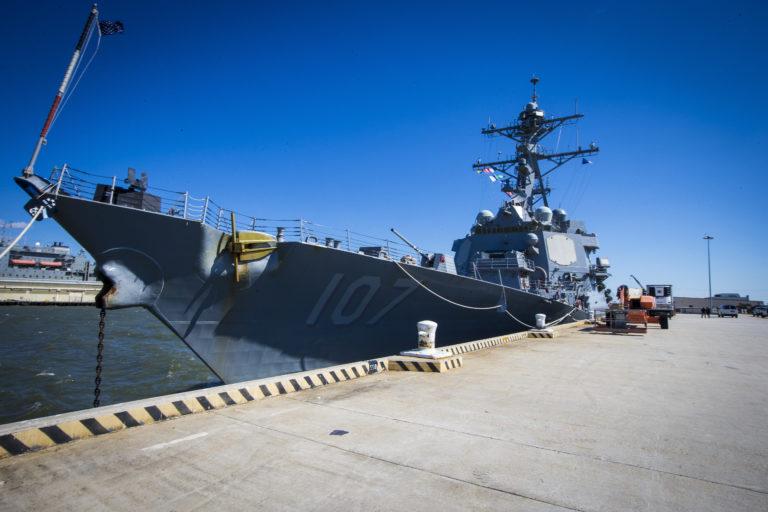
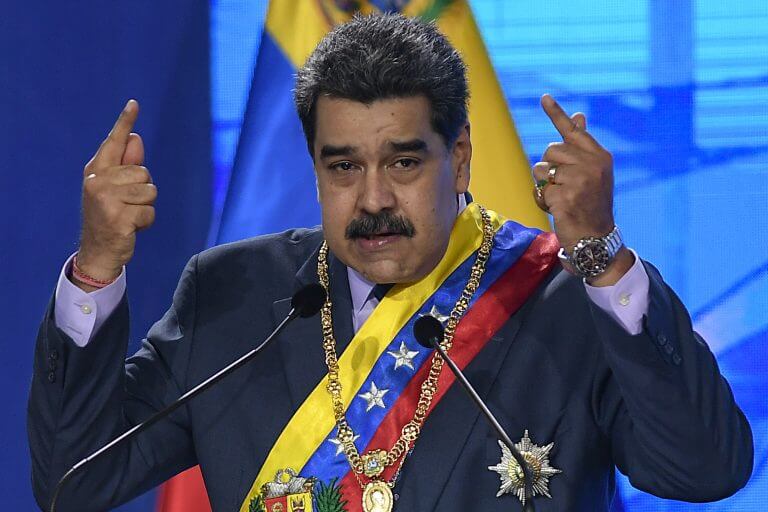
(Dave DeCamp, Antiwar.com) The USS Gerald Ford, the world’s largest aircraft carrier, has left the Mediterranean Sea and is bound for waters near Venezuela as the US continues its military buildup in the Caribbean that’s aimed at ousting Venezuelan President Nicolas Maduro.

The Pentagon first announced on October 24 that it was deploying the Gerald Ford and its strike group to the US Southern Command’s area of responsibility. The carrier transited through the Strait of Gibraltar on Tuesday and is now in the Atlantic Ocean, according to ship trackers.

The voyage is expected to take about a week, and the Gerald Ford and its strike group will join eight US warships currently operating in the Caribbean. The carrier was deployed with five guided-missile destroyers, but it’s unclear if they will all head to SOUTHCOM. According to USNI News, at least two of the destroyers are operating in the Red Sea while others have left the Mediterranean.

The deployment comes amid a US bombing campaign against alleged drug-running boats in the Caribbean and the Eastern Pacific Ocean, which so far has killed at least 64 people, according to numbers shared by the Trump administration.

The bombing campaign has come under increasing scrutiny as the Pentagon has not shared any evidence to back up its claims about what the boats are carrying and has admitted to Congress that it doesn’t know the identities of the people it has been extra-judicially executing.

The US has deployed significantly more firepower than is needed to bomb small, defenseless boats, and there have been multiple reports that say the Trump administration is preparing to bomb Venezuela. The US has also conducted at least three bomber flights off the coast of Venezuela in recent weeks.

This article originally appeared at Antiwar.com.

Report: US Asking Israel To Allow Foreign Journalists To Enter Gaza

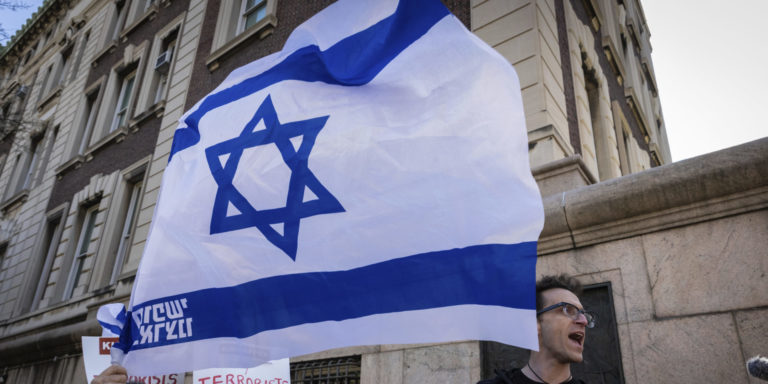
(Dave DeCamp, Antiwar.com) The Trump administration is asking Israel to allow foreign journalists to enter Gaza, The Times of Israel reported on Monday, citing two US officials.

President Trump said publicly back in August that Israel should allow foreign press into Gaza, and the report said that the US has renewed the request in the wake of the ceasefire deal, which Israel has repeatedly violated.

However, one US official said the issue isn’t high on the Trump administration’s list of priorities, signaling that the administration isn’t applying much pressure and that Israel may be able to maintain the ban. Israel has maintained the ban since October 7, 2023, besides a few controlled visits of journalists who were embedded with the IDF.

The Jerusalem-based Foreign Press Association (FPA) has petitioned the Israeli government to allow foreign journalists to enter Gaza, which was filed in 2024. On October 23, the Israeli Supreme Court said the government must clarify its position on the issue since the situation on the ground has changed in Gaza, but gave the government 30 days to do so.

According to a report from the Israeli news site Ynet, Israeli officials are preparing for a “propaganda war” for when international journalists are able to enter Gaza. The report said that officials are worried about a large number of human stories about Palestinian civilians in Gaza who have suffered under the Israeli bombing campaign and siege.

While foreign journalists haven’t been able to enter Gaza, Palestinian journalists and the ground have reported extensively on Israel’s genocidal war, and more than 200 of them have been killed by the IDF. In August, the Israeli military conducted a double-tap strike on the Nasser Hospital in Khan Younis, southern Gaza, which killed five journalists.

This article originally appeared at Antiwar.com. 

Rep. Nancy Mace Responds to Criticism over Her Charleston Airport Tirade

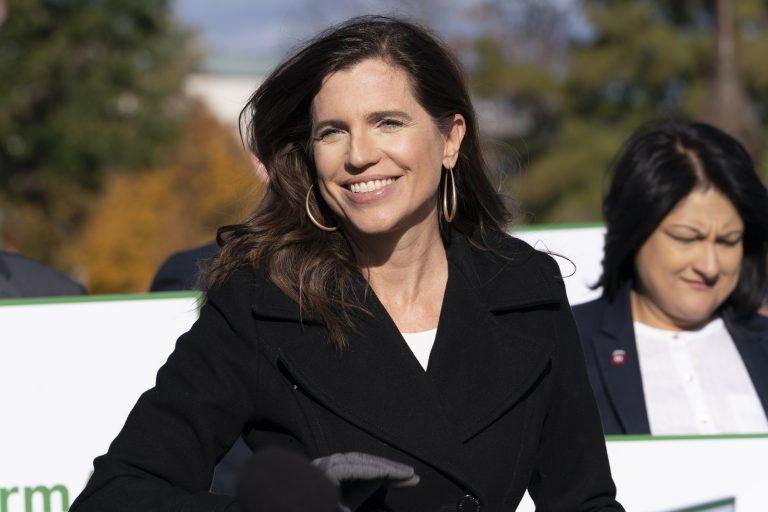
(José Niño, Headline USA) Representative Nancy Mace unleashed a profanity-laced verbal assault on law enforcement officers at Charleston International Airport last Thursday, according to a police incident report. But she’s not apologizing for anything.

The South Carolina Republican called officers “f***ing incompetent” and insisted “this is no way to treat a fucking US Representative” during a heated confrontation over a security escort, according to the Charleston County Aviation Authority Police Department report

Officers were scheduled to meet Mace at 6:30 a.m. to escort her to her flight, but when they arrived at her location just before 7:00 a.m., she was apparently infuriated and immediately began cursing and making derogatory comments.

According to the report, Mace continued her verbal outburst throughout the entire walk to her gate, cursing at officers and yelling into her phone. She also said, “[Senator] Tim Scott would not be fucking treated this way,” according to a report by FITSNews. After she boarded her flight, an American Airlines gate agent and several TSA agents told police they were “shocked and upset” by her behavior. One officer noted in the report that “any other person in the airport acting and talking the way she did, our department would have been dispatched, and we would have addressed the behavior.”

Rather than apologizing, Mace doubled down during a press conference Monday. “Last Thursday morning, I absolutely, a hundred percent, confronted the airport employees who put my safety at risk,” Mace said. “Did I drop an f-bomb? I hope I did. Did I call them incompetent? If I didn’t, they absolutely earned it.”

According to WCIV, Mace claims she has experienced “over two dozen security breaches” at Charleston International Airport in 2025 alone. Her office specifically referenced the September assassination of conservative activist Charlie Kirk to justify her security demands. 

Cameron Morabito, Mace’s Director of Operations, told The New York Times that “We are forced to take the congresswoman’s safety extremely seriously. After the world watched Charlie Kirk’s assassination, the threats against her have only intensified.”

The congresswoman directly attacked Charleston International Airport President and CEO Elliott Summey, calling him “lazy” and promising political consequences. “Until they’re willing to acknowledge the problem, apologize for the problem, and fix the problem, I have nothing more to say to Elliott Summey other than you’re fired when I’m governor,” Mace said.

The incident has drawn sharp criticism from Mace’s Republican gubernatorial primary opponents. South Carolina Attorney General Alan Wilson called her response a “tantrum” and stated she is “dangerous, reckless, and will use her position to come after her enemies.” He added that “next time she claims she supports law enforcement, don’t believe her.”

Airport CEO Elliott Summey defended his staff, stating that “the men and women of our police department demonstrate professionalism, vigilance, and dedication every day as they carry out their mission to serve and protect.”

José Niño is the deputy editor of Headline USA. Follow him at x.com/JoseAlNino 

2 Men Arrested in the Weekend Explosion at Harvard Medical School

(Headline USATwo Massachusetts men have been arrested in connection with a weekend explosion at Harvard Medical School, authorities said Tuesday.

The FBI’s Boston office announced the arrests on social media ahead of a 1 p.m. news conference. It didn’t provide further details.

The explosion occurred early Saturday on the fourth floor of Harvard Medical School’s Goldenson Building. No one was injured. The building houses labs and offices associated with the school’s neurobiology department.

Medical school officials said the explosion caused no structural damage and that all labs and equipment remained intact. The Boston Fire Department determined that the explosion was intentional. Police said officers did not find additional devices during a sweep of the building.

An officer who responded to a fire alarm that morning encountered two people running from the building, university police said.

Adapted from reporting by the Associated Press

 

Central Bank Gold Buying Hit Highest Level of the Year in September

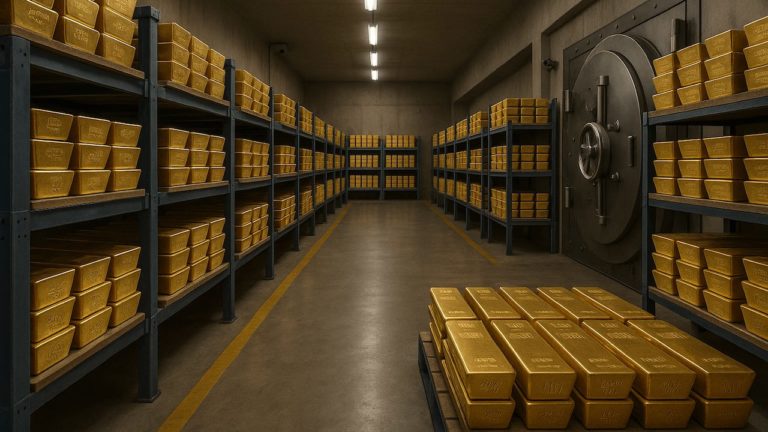
(Mike Maharrey, Money Metals News Service) Central bank gold buying hit the highest level of the year in September, with several new banks adding to their reserves.

Globally, central banks officially added a net 39 tonnes of gold to their holdings in September. That was up 79 percent month-on-month and was above the 12-month average of 27 tonnes.

A strong September drove official third-quarter central bank gold purchases to a net 220 tonnes. That was up 28 percent from Q2 and 6 percent above the five-year third quarter average.

The World Gold Council said the pickup in central bank gold demand in Q3, despite record prices, “is evidence that central banks continue to add gold strategically, despite facing higher prices.”

So far in 2025, central banks have gobbled up 634 tonnes of gold based on official data. This is below the level through the same period over the last three years, but above the pre-2022 average of 400 to 500 tonnes.

Brazil was the biggest buyer in September, adding 15 tonnes of gold to its reserves. It was the first reported increase in Brazil’s gold holdings since 2021. The Brazilian central bank now officially holds 145 tonnes of gold.

The National Bank of Kazakhstan continued adding gold to its holdings with an 8-tonne purchase. It was the seventh straight month of increasing Kazakh gold reserves. Kazakhstan was the biggest buyer in Q3, increasing its gold stockpile by 18 tonnes to 324 tonnes.

The Bank of Guatemala was another new player in the market, adding 6 tonnes of gold to its reserves in September. That pushed the country’s gold holdings to 13 tonnes, representing a 91 percent increase.

The Central Bank of Turkey increased its holdings by 2 tonnes in September. The Turkish central bank has been a net purchaser for 28 consecutive months – since June 2023.

The Czech Central Bank has followed a similar strategy – growing its gold reserves at a slow, steady pace. It added another 2 tonnes in September, its 31st straight month of gold accumulation. The Czech Republic now holds 67 tonnes of gold. Czech officials say they plan to increase gold reserves to 100 tonnes by 2028.

China has reported an increase in its official reserves for 11 straight months, adding an additional tonne in September. The People’s Bank of China has increased its official holding by 399 tonnes in that span.

Total official Chinese gold reserves are now over 2,300 tonnes, making up around 7 percent of its total reserves.

Notice the emphasis on “official.”

China is among the central banks that are likely to hold significantly more gold than they publicly disclose. As Jan Nieuwenhuijs has reported, the People’s Bank of China is secretly buying large amounts of gold off the books. According to data parsed by the renowned Money Metals researcher, the Chinese central bank is currently sitting on more than 5,000 tonnes of monetary gold located in Beijing – more than TWICE what has been publicly admitted.

Ghana (1 tonne) and Russia (3 tonnes) also reported gold purchases in September.

Uzbekistan was the only notable seller in September, reducing its gold reserves by 4 tonnes. It is not uncommon for banks that buy from domestic production – such as Uzbekistan and Kazakhstan – to flip-flop between buying and selling.

While Poland has not increased its gold reserves since May, it remains the biggest buyer of the year, having increased its reserves by over 67 tonnes. The country currently holds 515 tonnes of gold, accounting for 24 percent of total reserves.

The central bank recently announced plans to target its gold holdings at 30 percent of total reserves, up from the previous 20 percent target. It achieved that goal earlier this year.

Meanwhile, South Korean central bank officials recently indicated they are considering increasing their gold holdings. The last time the Bank of Korea expanded its gold reserves was in 2013. The country currently holds around 104 tonnes of gold.

Despite the slowdown in central bank buying this year, the World Gold Council remains bullish.

“We maintain our view that central banks will continue to add gold to their reserves. Our Central Bank Gold Reserves Survey 2025 shows that respondents overwhelmingly (95 percent) expect global central bank gold reserves to increase over the next 12 months, while 43 percent believe that their own gold reserves will also increase over the same period. Notably, none of the respondents anticipate a decline in their gold reserves.”

You can read more details about that central bank survey HERE.

On net, central banks officially increased their gold holdings by 1,044.6 tonnes in 2024. It was the 15th consecutive year of expanding gold reserves.

Last year was the third-largest expansion of central bank gold reserves on record, coming in just 6.2 tonnes lower than in 2023 and 91 tonnes lower than the all-time high set in 2022 (1,136 tonnes). 2022 was the highest level of net purchases on record, dating back to 1950, including since the suspension of dollar convertibility into gold in 1971.

To put that into context, central bank gold reserves increased by an average of just 473 tonnes annually between 2010 and 2021.

World Gold Council analysts said, “Central banks are likely to continue their buying spree,” calling central bank purchases “surprisingly resilient” given the rapid price increase.

The WGC has also noted that “diversification” with “a reduction of U.S. assets” is one of the factors driving central bank gold buying. In other words, de-dollarization.

“We don’t see an end to this narrative unless there is a material shift in geopolitical tensions. The IMF has downgraded growth prospects in the U.S. more than in other major economies, citing policy uncertainty. This suggests that other countries may have leverage in negotiations, although these typically last months and years, not weeks. Hence, we don’t expect any near-term resolutions.”


Mike Maharrey is a journalist and market analyst for Money Metals with over a decade of experience in precious metals. He holds a BS in accounting from the University of Kentucky and a BA in journalism from the University of South Florida.

Venezuela’s Nobel Prize Winner Says US ‘Escalation’ Is Needed To Overthrow Maduro

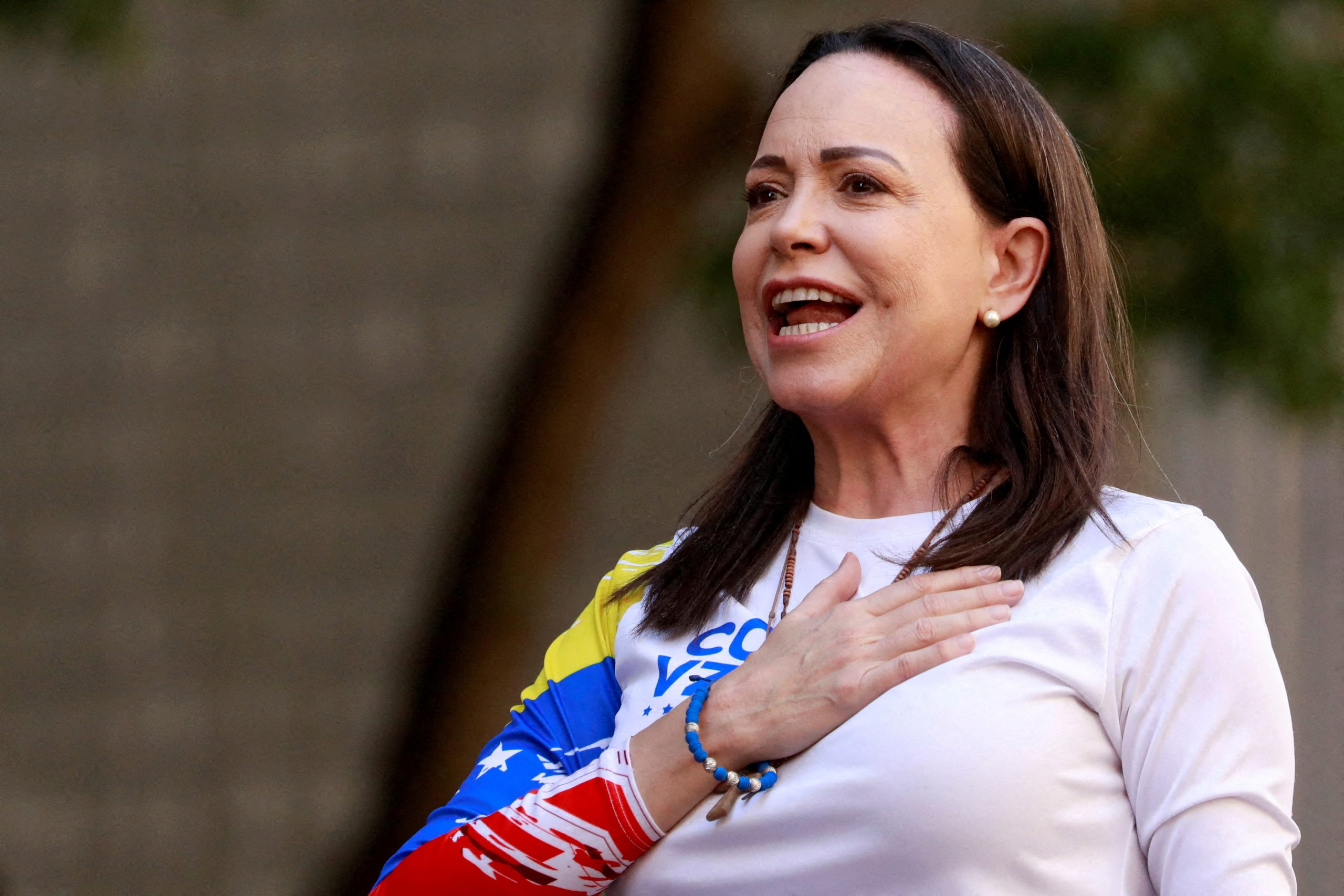
(Dave DeCamp, Antiwar.comMaria Corina Machado, the Venezuelan opposition leader who recently won the Nobel Peace Prize, said in an interview with Bloomberg that US military “escalation” is the only way to oust Venezuelan President Nicolas Maduro and confirmed that she is in contact with Trump administration officials.

When asked if she supports the idea of the US bombing Venezuela, Machado said, “I believe the escalation that’s taken place is the only way to force Maduro to understand that it’s time to go.”

She added, “I believe that this escalation is the last opportunity for those that still support Maduro to understand that they need to take all support away from him — and Maduro himself to understand that this is the last chance to truly facilitate a peaceful and orderly transition, which is what we want, which is what we fought for.”

Venezuelan opposition leader Maria Corina Machado gestures at a protest ahead of the Friday inauguration of President Nicolas Maduro for his third term, in Caracas, Venezuela, January 9, 2025. REUTERS/Leonardo Fernandez Viloria

Machado also said that she supported the US bombing campaign against alleged drug-running boats in the region, which the US military has been conducting without providing evidence to back up its claims about what the boats are carrying. The Pentagon has also admitted to Congress that it doesn’t know the identities of the people it has been killing.

When asked if she viewed the boat strikes as justified or as extra-judicial executions, Machado blamed the deaths on Maduro. “This is about saving lives. Maduro is absolutely conscious and has been warned what not to do. These deaths are the responsibility of Nicolás Maduro,” she said.

Machado was then asked about the rights to due process for the people on the boats, and said, “I certainly defend the rights of everyone, but you need to understand that this is a very cruel war. It was Maduro who turned this into an international conflict. Maduro is not a conventional dictator. We’re facing a narcoterrorist structure that has turned Venezuelan territory.”

Machado said that she has been in touch with US Secretary of State Marco Rubio, who has been leading US Venezuela policy and the push toward regime change. “I have been in touch with him, of course, and with his team and even further, in Congress. [In] both parties, we have really good friends and champions of our cause. This goes beyond ideological issues,” she said.

Machado was barred from running in last year’s presidential election and backed Edmundo Gonzalez, whom she and the opposition claim actually won, a position adopted by the US government, which hasn’t recognized Maduro as Venezuela’s president since 2019. The first Trump administration backed a failed coup against Maduro at the time, which involved recognizing opposition figure Juan Guaido as the “interim president,” imposing harsh economic sanctions, and covert CIA operations.

US officials have made clear that the real goal of the current military campaign in the Caribbean is regime change in Venezuela, and the Trump administration is considering bombing the country. Machado and other opposition figures insist that once Maduro is gone, a “peaceful transition” can happen, but a war would likely destabilize the country.

This article originally appeared at Antiwar.com.


BBC Caught Doctoring Trump’s J6 Speech to Smear Him as Violent

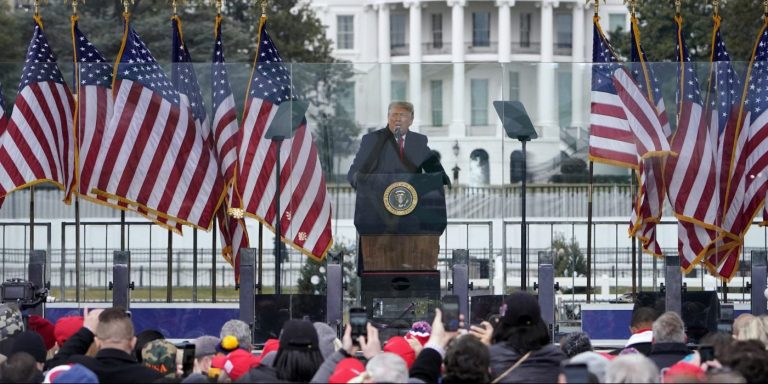
(Luis CornelioHeadline USA) British news channel BBC “doctored” President Donald Trump’s speech on Jan. 6, 2021, to make it appear he called on supporters to riot at the Capitol before lawmakers certified the 2020 election. 

The alteration was exposed in an internal memo first reported by British newspaper The Telegraph. The doctored footage concerned Trump’s speech on the Ellipse as aired by BBC’s Panorama in a 2024 special called Trump: A Second Chance. 

The broadcast trimmed Trump’s remarks to make it seem he said he would walk to the Capitol with his supporters to “fight, fight like hell.” 

In reality, Trump said he would walk to the Capitol to “cheer on” lawmakers opposing the certification. The “fight like hell” line came nearly an hour later, long after he vowed to head to the Capitol. 

Worse still, Trump had explicitly called on his supporters to “peacefully and patriotically make your voices heard.” 

The discrepancy was first identified by a BBC standards committee in a 19-page dossier. According to The Telegraph, the document found that Panorama made Trump “say” things he never said. 

The committee also called out BBC executives and its chairman for ignoring scathing complaints about bias, including in its Arabic coverage of the Israel-Gaza war. 

The damning dossier surfaced amid a string of humiliating losses for legacy media outlets over their coverage of Trump. 

In July, CBS News’s parent company, Paramount Global, entered a $16 million settlement with Trump after its 60 Minutes program edited a 2024 interview with then-Vice President Kamala Harris to make her appear more eloquent. 

Similarly, ABC News’s parent company Disney agreed to pay Trump $15 million in December 2024 after embattled host George Stephanopoulos falsely accused him of raping anti-Trump figurehead E. Jean Carroll. This settlement included a $1 million payment to cover Trump’s legal fees. 

Social media companies have also been forced to pay Trump for banning him following the 2020 election. 

Google’s YouTube paid Trump $24.5 million following its decision to shut down his channel after Jan. 6, 2021. Mark Zuckerberg’s Meta paid Trump $25 million, while X (then named Twitter) paid $10 million for the same act of censorship. 

Docs Show Ex-FBI Director Comey Knew Aide Leaked to Media

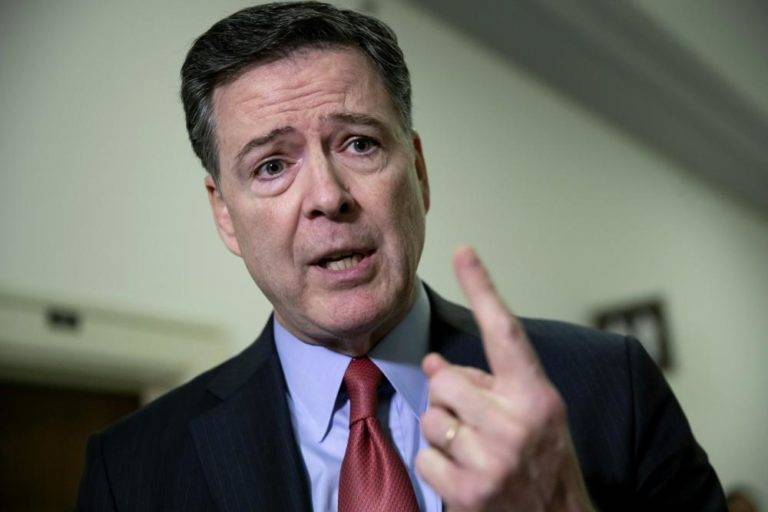
(Luis CornelioHeadline USA) Acting U.S. Attorney Lindsey Halligan released documents directly undercutting claims by disgraced former FBI Director James Comey that his criminal indictment is part of President Donald Trump’s political vendetta. 

The documents, filed on Monday by Halligan and her top deputy, Tyler Lemmons, revealed that Comey knew one of his top aides was leaking information to the legacy media in 2016, bolstering the legitimacy of the charges against him. 

Comey allegedly wrote “pretty good” after Dan Richman, an FBI special government employee and close friend, texted him a link to a New York Times story about Comey’s handling of the Clinton investigation. 

Subsequent texts show Comey and Richman discussing how Richman could talk to the media to help shape the narrative in Comey’s favor.  

In one message, Richman said he had been approached to write a New York Times op-ed and would do so if it helped make Comey look credible. 

Comey replied that there was no need, saying he expected to work for “president elect Clinton” after the election. He specifically wrote, “At this point it would [be] shouting into the wind. Some day they will figure it out. And as [Individual 1 and Individual 2] point out, my decision will be one a president elect Clinton will be very grateful for (although that wasn’t why I did it).” 

At the time, Comey was first under fire from the left for scrutinizing Clinton’s mishandling of classified emails, and later from the right for refusing to recommend criminal charges. 

In 2019, the DOJ Inspector General reportedly found that Comey asked his friend to share the contents of a memo with the New York Times to pressure the DOJ to investigate his conversations with President Donald Trump.

The DOJ declined to prosecute Comey over the leak in 2019, but his alleged 2020 perjury opened him up to new legal liability.

Halligan and Lemmons filed the documents in response to Comey’s attempt to have the grand jury indictment dismissed as a vindictive and selective prosecution. 

Comey’s defense cited social media posts from President Donald Trump criticizing him, claiming they showed bias. Halligan and Lemmons rejected that argument. 

“The defendant spins a tale that requires leaps of logic and a big dose of cynicism, then he calls the President’s post a direct admission,” they wrote. “There is no direct admission of discriminatory purpose. To the contrary, the only direct admission from the President is that DOJ officials decided whether to prosecute, not him.” 

Just the News was first to report on the documents.

Dick Cheney, the Champion of War, Surveillance and Torture, is Dead at 84

(Headline USADick Cheney, the neocon who became one of the most powerful and polarizing vice presidents in U.S. history and a leading advocate for the invasion of Iraq, has died at age 84.

Cheney died Monday night due to complications of pneumonia and cardiac and vascular disease, his family said in a statement.

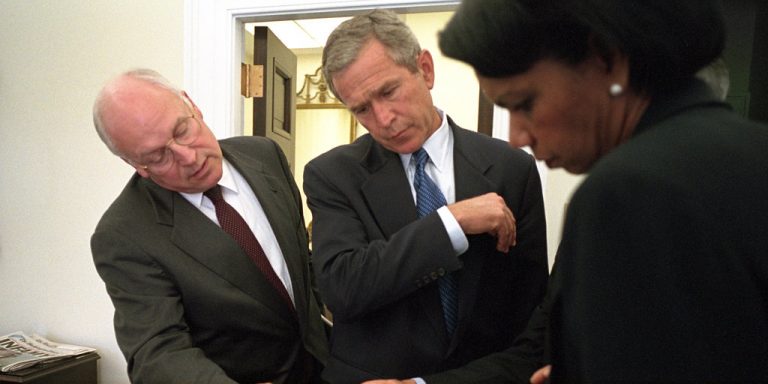
Cheney served father and son presidents, leading the armed forces as defense chief during the Persian Gulf War under President George H.W. Bush before returning to public life as vice president under Bush’s son George W. Bush.

Cheney was, in effect, the chief operating officer of the younger Bush’s presidency. He had a hand, often a commanding one, in implementing decisions most important to the president and some of surpassing interest to himself — all while living with decades of heart disease and, post-administration, a heart transplant. Cheney consistently defended the extraordinary tools of surveillance, detention and inquisition employed in response to the terrorist attacks of Sept. 11, 2001.

Years after leaving office, he became a target of President Donald Trump, especially after his daughter Liz Cheney became the leading Republican critic of Trump.

In a twist the Democrats of his era could never have imagined, Dick Cheney said last year he was voting for their candidate, Kamala Harris, for president against Trump.

A survivor of five heart attacks, Cheney long thought he was living on borrowed time and declared in 2013 he now awoke each morning “with a smile on my face, thankful for the gift of another day,” an odd image for a figure who always seemed to be manning the ramparts.

His vice presidency defined by the age of terrorism, Cheney disclosed that he had had the wireless function of his defibrillator turned off years earlier out of fear terrorists would remotely send his heart a fatal shock.

In his time in office, no longer was the vice presidency merely a ceremonial afterthought. Instead, Cheney made it a network of back channels from which to influence policy on Iraq, terrorism, presidential powers, energy and other cornerstones of a conservative agenda.

Fixed with a seemingly permanent half-smile — detractors called it a smirk — Cheney joked about his outsize reputation as a stealthy manipulator.

“Am I the evil genius in the corner that nobody ever sees come out of his hole?” he asked. “It’s a nice way to operate, actually.”

A hard-liner on Iraq who was increasingly isolated as other hawks left government, Cheney was proved wrong on point after point in the Iraq War, without ever losing the conviction that he was essentially right.

He alleged links between the 2001 attacks against the United States and prewar Iraq that didn’t exist. He said U.S. troops would be welcomed as liberators; they weren’t.

He declared the Iraqi insurgency in its last throes in May 2005, back when 1,661 U.S. service members had been killed, not even half the toll by war’s end.

Well into Bush’s second term, Cheney’s clout waned, checked by courts or shifting political realities.

Courts ruled against efforts he championed to broaden presidential authority and accord special harsh treatment to suspected terrorists. His hawkish positions on Iran and North Korea were not fully embraced by Bush.

Cheney operated much of the time from undisclosed locations in the months after the Sept. 11, 2001, attacks, kept apart from Bush to ensure one or the other would survive any follow-up assault on the country’s leadership.

His penchant for secrecy and backstage maneuvering had a price. He came to be seen as a thin-skinned Machiavelli orchestrating a bungled response to criticism of the Iraq war. And when he shot a hunting companion in the torso, neck and face with an errant shotgun blast in 2006, he and his coterie were slow to disclose that extraordinary turn of events.

The vice president called it “one of the worst days of my life.” The victim, his friend Harry Whittington, recovered and quickly forgave him. Comedians were relentless about it for months. Whittington died in 2023.

When Bush began his presidential quest, he sought help from Cheney, a Washington insider who had retreated to the oil business. Cheney led the team to find a vice presidential candidate.

Bush decided the best choice was the man picked to help with the choosing.

Together, the pair faced a protracted 2000 postelection battle before they could claim victory. A series of recounts and court challenges — a tempest that brewed from Florida to the nation’s highest court — left the nation in limbo for weeks.

Cheney took charge of the presidential transition before victory was clear and helped give the administration a smooth launch despite the lost time. In office, disputes among departments vying for a bigger piece of Bush’s constrained budget came to his desk and often were settled there.

On Capitol Hill, Cheney lobbied for the president’s programs in halls he had walked as a deeply conservative member of Congress and the No. 2 Republican House leader.

Jokes abounded about how Cheney was the real No. 1 in town; Bush didn’t seem to mind and cracked a few himself. But such comments became less apt later in Bush’s presidency as he clearly came into his own.

Politics first lured Dick Cheney to Washington in 1968, when he was a congressional fellow. He became a protégé of Rep. Donald Rumsfeld, R-Ill,, serving under him in two agencies and in Gerald Ford’s White House before he was elevated to chief of staff, the youngest ever, at age 34.

Cheney held the post for 14 months, then returned to Casper, where he had been raised, and ran for the state’s single congressional seat.

In that first race for the House, Cheney suffered a mild heart attack, prompting him to crack he was forming a group called “Cardiacs for Cheney.” He still managed a decisive victory and went on to win five more terms.

In 1989, Cheney became defense secretary under the first President Bush and led the Pentagon during the 1990-91 Persian Gulf War that drove Iraq’s troops from Kuwait. Between the two Bush administrations, Cheney led Dallas-based Halliburton Corp., a large engineering and construction company for the oil industry.

Cheney was born in Lincoln, Nebraska, son of a longtime Agriculture Department worker. Senior class president and football co-captain in Casper, he went to Yale on a full scholarship for a year but left with failing grades.

He moved back to Wyoming, eventually enrolled at the University of Wyoming and renewed a relationship with high school sweetheart Lynne Anne Vincent, marrying her in 1964. He is survived by his wife, by Liz and by a second daughter, Mary.

Adapted from reporting by the Associated Press