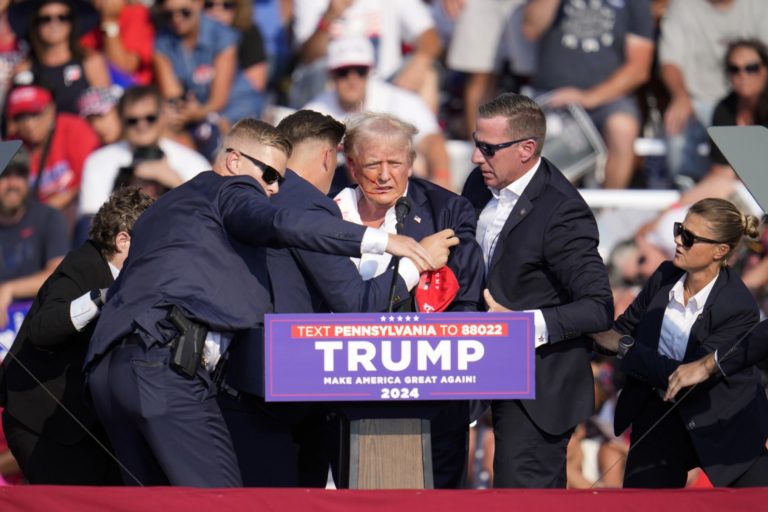
(Ken Silva, Headline USA) A judge has allowed the Justice Department to release grand jury records related to its investigation into the July 13, 2024, assassination attempt against Donald Trump—but that doesn’t mean the public will see them anytime soon.
U.S. District Judge Cathy Bissoon’s order on Friday came in response to a DOJ application to release records about its grand jury investigation into the alleged would-be assassin, Thomas Crooks. The investigation was intended to find out Crooks’s motive and whether he had help.
“In connection with that investigation, the government obtained pre-existing business records pursuant to grand jury subpoenas from numerous entities, such as telephone and internet service providers, email services, financial institutions, and others,” the DOJ’s application to the judge said.
“No testimony was presented to the grand jury in connection with the Crooks investigation. The grand jury’s sole role in the investigation was to receive pre-existing records pursuant to subpoenas. The grand jury investigation has since been closed.”
Major caveats here: 1. The records here are only related to Thomas Crooks's internet history–no FBI reports, surveillance footage, photos or other evidence 2. The order allows disclosure to Congress, but not the public. Congress has withheld other records, such as the autopsy https://t.co/ERUgpoS1GWpic.twitter.com/0lcTxjIvq9
With the investigation closed, the DOJ asked Judge Bissoon for permission to release the records. However, the application sought to release them to “other United States investigative agencies and Congress”—not to the public.
“The government seeks an Order authorizing the records to be shared with these other investigative agencies and Congress, including any agents, analysts, and support staff who work on investigations related to the attempted assassination,” the DOJ’s application said.
The public may never see the grand jury records, as Congress has withheld other documents related to the assassination attempt.
For instance, the chairman of the House Task Force investigating the incident, Rep. Mike Kelly, declined to release Crooks’s autopsy report on the grounds that it’s too “gruesome.” In that instance, Headline USA independently obtained and published the full report (contrary of Kelly’s claims, it is not gruesome).
The House and Senate also have an untold number of FBI records about the attempt that they haven’t released.
Despite that, Attorney General Pam Bondi touted the judge’s order as a fulfillment of the Trump administration’s transparency promise.
“President Trump is leading the most transparent administration in American history,” she said. “By moving to unseal these documents, we hope to give the American people more answers about that fateful day in Butler, Pennsylvania.”
Ken Silva is the editor of Headline USA. Follow him at x.com/jd_cashless.
(Luis Cornelio, Headline USA) New York Times columnist David Brooks reiterated that he never interacted with Jeffrey Epstein after House Democrats released photos from the Epstein estate showing Brooks at an event attended by the late sex offender.
The photos were reportedly taken in 2011 at a dinner tied to that year’s TED Conference. The images show Brooks in a selfie and another separate photo of Epstein. The two men did not appear in any of the released images.
The columnist defended himself Friday on PBS NewsHour, where he had previously discussed the Epstein files, insisting he never met Epstein despite the photos.
“As far as I know, I did not ever meet him,” Brooks claimed, noting that there were several other people at the dinner. “I never exchanged a word with him. We must have been at different tables. In my life — I went through all my email files — I have never exchanged a word. I have never had any contact with Jeffrey Epstein.”
Brooks also noted that the House Democrats’ photos do not show him with Epstein. “There’s one of me alone — because nobody wants to talk to me at a party— and another with me chatting with Sergey Brin, one of the Google co-founders,” he said.
Brooks’s on-air defense came a day after he told news outlet Semafor that he had no idea who Epstein was in 2011 and only became aware of him in 2018, the year the Miami Herald re-examined Epstein’s controversial 2008 plea deal with the DOJ.
The deal, known as a non-prosecution agreement, allowed Epstein to avoid federal sex trafficking charges by pleading guilty to prostitution-related offenses.
“I never heard of Epstein until i [sic] read a Miami Herald story about him in 2018. I’ve never had any contact with him by email or any other means,” Brooks said Thursday.
A month ago, NYT columnist David Brooks wrote a column decrying the media and political fixation on the Epstein story.
This afternoon, House Democrats released a new tranche of photos of an event that Brooks attended with Epstein. pic.twitter.com/NWY8oRVFWX
(Bethany Blankley, The Center Square) The U.S. House Committee on Homeland Security has released an updated reporthighlighting terrorism threats to Americans.
It did so after holding a hearing on Tuesday during which Director of the National Counterterrorism Center Joe Kent testified that the NCTC had identified at least 18,000 known or suspected terrorists who were released into the U.S. during the Biden administration, The Center Square reported. The NCTC has also added roughly 35,000 narco-terrorists to the federal Terrorist Screening Datasetsince he’s been in office.
The unprecedented 18,000 KSTs exclude the 6,525 KSTs the NCTC helped prevent from entering the country as of October, The Center Square reported.
The committee’s “Terror Threat Snapshot” highlights recent examples of terrorist acts that have occurred in the U.S. over the past six months. It also notes that more than 60 cases were reported between April 2021 and December 2025 related to individuals linked to or inspired by foreign terrorist organizations. This includes those who’ve provided material support to ISIS, Hezbollah and al Queda, who received military level training from Hezbollah and al Queda, and who claimed to commit attacks because they were inspired by foreign terrorist organizations.
It cites terrorist cases that have been prosecuted in at least 25 states.
Examples of recent terrorist attacks include two National Guard soldiers from Iowa and an interpreter killed by an ISIS gunman in Syria and Afghan nationals released into the U.S. through a failed Biden administration parole program.
Afghans continue to be arrested for committing crimes in the U.S. Recent examples include three Afghan men charged in one week with terrorism-related crimes. One shot two National Guard members in Washington, D.C., killing one; another was apprehended by Texas Department of Public Safety officers in Fort Worth accused of plotting a 9/11 style terrorist attack; another was arrested in Virginia accused of supporting ISIS.
Last month, three Muslim men were arrested in Dearborn, Michigan, charged with conspiring to provide material support to ISIS and possessing firearms to commit a terrorist act on behalf of ISIS. The FBI also arrested two teenagers in New Jersey last month for their role in the alleged plot, the report notes.
In October, a Palestinian man was arrested in Lafayette, Louisiana, for his alleged role in the Oct. 7, 2023, Hamas terrorist attack against Israel. He’s a member of a Palestinian National Resistance Brigade, known as the Martyr Umar al-Qasim Forces, the Department of Justice said. He entered the U.S. on Sept. 12, 2024, providing “false information in his U.S. visa application relating to his involvement with a paramilitary organization, connection to Hamas, participation in a terrorist attack, and military training,” the Department of Homeland Security said. Under the Trump administration, a DOJ Joint Task Force found him and arrested him.
In September, a Pakistani man was sentenced to nine years in prison for attempting to provide material support to ISIS, including planning to attack New Yorkers on pedestrian bridges in Queens.
Also in September, two Muslim men were arrested in Salt Lake City, charged with aggravated arson, threat of terrorism and possessing weapons of mass destruction, in connection to an attempt to blow up a Fox 13 vehicle, which failed.
In June, an Afghan national living in Oklahoma City pleaded guilty to two terrorism offenses, including providing material support to ISIS and receiving firearms and ammunition to commit an Election Day terrorist attack on behalf of ISIS.
“Twenty-four years after 9/11, what we heard from Director [of the National Counterterrorism Center Joseph] Kent in our annual Worldwide Threats hearing last week should disturb every American,” Committee Chairman Andrew Garbarino, R-New York, said. He pointed to Biden administration vetting failures, open-border policies and the deadly withdrawal of troops from Afghanistan, as well as the Oct. 7 Hamas attacks for exacerbating terrorism threats.
Under the Biden administration, Islamic terrorist incidents increased in the U.S. and worldwide with a majority of Americans polled expressing concerns about terrorism, The Center Square reported.
The response is a “whole-of-government approach,” including continued congressional oversight and legislative action, Garbarino said. “Congress has an immense responsibility to ensure our local, state, and federal agencies have the resources and tools to succeed in this no-fail mission.”
The report also includes examples of domestic terrorism, including Americans who attacked U.S. Immigration and Customs Enforcement officers, increasing antisemitic and terrorist attacks worldwide.
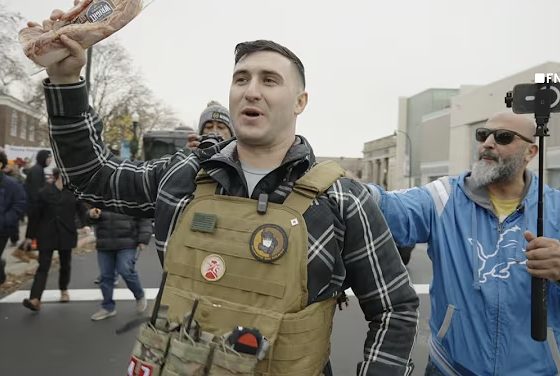
(José Niño, Headline USA) Jake Lang, a January 6 defendant running for the U.S. Senate in Florida, posted an explicit threat on Monday, declaring he would organize a prison break for Tina Peters, a former county clerk serving nine years stemming from her efforts to prove election fraud, unless she is released by January 31, 2026.
The inflammatory post on X escalates ongoing tensions over Peters’ imprisonment and raises new questions about Lang’s motivations amid persistent allegations from within the January 6 community that he may be a federal informant.
Lang’spost announced “WE THE PEOPLE ARE COMING TO BREAK TINA PETERS OUT OF PRISON IN 45 DAYS!!!” He claimed that if Peters is not released from La Vista Correctional Facility in Pueblo, Colorado, by his deadline, “US MARSHALS & JANUARY 6ERS PATRIOTS WILL BE STORMING IN TO FREE TINA!!”
🚨 BREAKING:
WE THE PEOPLE ARE COMING TO BREAK TINA PETERS OUT OF PRISON IN 45 DAYS!!!😳😳
If Tina M. Peters is not released from La Vista Prison in Colorado to Federal Authorities by January 31st, 2026;
— Jake Lang – January 6 Political Prisoner 🇺🇸 (@JakeLang) December 15, 2025
The threat represents the latest escalation in Lang’s pattern of using provocative rhetoric to build his political brand following his presidential pardon. As Newsweek previously reported, Lang launched his Florida US Senatecampaign in March 2025, challenging incumbent Republican Ashley Moody in the 2026 primary with the slogan “We Are Taking Over The Capitol Again.”
Peters served as Mesa County Clerk in Colorado from 2019 to 2023. In 2021, she was accused of allowing unauthorized individuals to access Dominion voting machines during a sensitive software update. On her website, she says she created a “forensic backup of her county’s Dominion Voting System server” in an effort to prove election fraud.
In August 2024, the BBC reported that Peters wasconvicted on seven charges including three counts of attempting to influence a public servant, conspiracy to commit criminal impersonation, first degree official misconduct, violation of duty, and failure to comply with Secretary of State requirements.
Peters, for her part, disavowed Lang.
“This type of inflammatory theatrical rhetoric is contrary to who Tina Peters is, what she stands for, and undermines her lawful actions,” stated a Twitter/X account linked to her.
ATTENTION:
Tina Peters is in no way affiliated with any event, gathering, demonstration, or protest at La Vista prison.
Tina categorically DENOUNCES and REJECTS any statements or OPERATIONS, public or private, involving a “prison break” or use of force against La Vista or any…
— Tina Peters🇺🇸 Whistleblower of fallen Navy SEAL (@realtinapeters) December 16, 2025
Last Thursday, President Donald Trumpclaimed to have pardoned Peters, posting on Truth Social that she “did nothing wrong, except catching the Democrats cheat in the Election.” However, this pardon carries no legal weight for Peters’ immediate freedom because she was convicted under Colorado state law, not federal law. The presidential pardon power extends only to federal offenses.
The Colorado Department of Corrections explicitly stated they have no plans to transfer Peters to federal custody and are reviewing the Federal Bureau of Prisons’ transfer request through standard procedures. CBS News reported that the federal magistrate judge in Denverdenied Peters’ request for release earlier this month, finding that federal courts cannot intervene in ongoing state criminal proceedings absent extraordinary circumstances.
Lang faces persistent suspicions within the January 6 community about his authenticity and motivations. Multiple posts on X claim Lang was a federal informant and previously associated with Antifa and BLM.
Jan. 6er Tim Hale, who was Lang’s cellmate at one point, posted “Jake Lang by his own father’s words was a junkie criminal before January 6. His relatives have outed him as a former BLM/Antifa rioter. Everyone who did time with him knows he’s an anarchist, not MAGA.”
For those still catching up. Jake Lang by his own father's words was a junkie criminal before January 6. His relatives have outed him as a former BLM/Antifa rioter. Everyone who did time with him knows he's an anarchist, not MAGA. Records show he didn't vote for Trump. He spent… https://t.co/9c7tAsanPHpic.twitter.com/TvsPJh1nMP
— Tim Hale – Criminally Funny J6er (@LouisofMonmouth) November 19, 2025
No direct evidence or official documentation has been produced to substantiate claims that Lang is a federal informant. Lang himself has directly addressed such speculation, telling Rolling Stone “My integrity stands before God. Why would they let a federal asset be tortured in solitary confinement for years in end?”
While imprisoned in June 2024, Lang announced the formation of a nationwide armed militia called the North American Patriot and Liberty Militia, later rebranded as the America First Constitutional Militia. The organization claimed chapters in all 50 states and purported membership exceeding 20,000 people, though extremism researchers believe this number wasexaggerated by nearly tenfold per Rolling Stone.
Jon Lewis, an extremism expert at George Washington University, characterized Lang as “a grifter who’s trying to appeal to the absolute lowest common denominator,” adding that he doesn’t believe that Lang’s previous militia project would not become the“flag bearers for the next January 6.” Instead, Lewis argued that Lang’s project is “a symptom of the disease.”
In November 2025, Lang led an anti-Islammarch in Dearborn, Michigan, where he attempted the desecration of the Quran, prompting widespread condemnation. As HeadlineUSA previously reported, the incident generated significant media attention and rallied his political base ahead of his Senate campaign.
José Niño is the deputy editor of Headline USA. Follow him at x.com/JoseAlNino
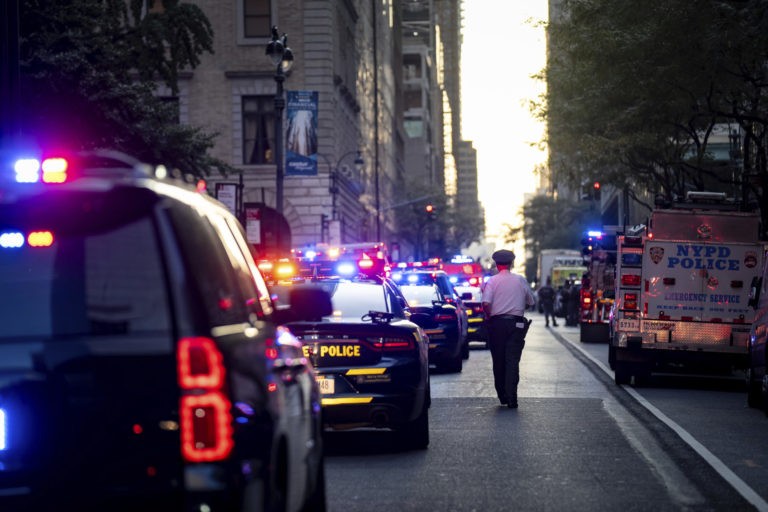
(Headline USA) Three police officers were hospitalized with gunshot wounds Saturday, the gunman was dead and another man was wounded after a domestic dispute turned into a volatile confrontation across multiple blocks in Rochester, New York, police said.
One officer was in critical condition, one in serious condition and the third was recovering from less serious injuries after the gunfire Friday night, Police Chief David Smith said at a news conference.
The events began around 10:15 p.m., when a man reported his girlfriend’s ex-boyfriend was trying to break into her house and might have a gun, Smith said, adding that the caller also told authorities he had a firearm himself.
Police responded, found the ex-boyfriend by the side of the house, and “without warning, they were shot at close range,” Smith said. Two officers were wounded at that point, and in ensuing gunfire — some of it between the suspect and the man who had called 911 — the caller was shot multiple times. He’s hospitalized in serious condition.
The suspect fled. When another officer found him a few blocks away, the suspect shot him, then was killed in return fire from that officer and others, Smith said.
Nearby resident Kenneth Jackson told News10NBC that he heard gunshots and car engines all at once, followed by police cars streaming down a street.
“It was a pretty hectic scene,” he said.
Police haven’t released the names of anyone involved.
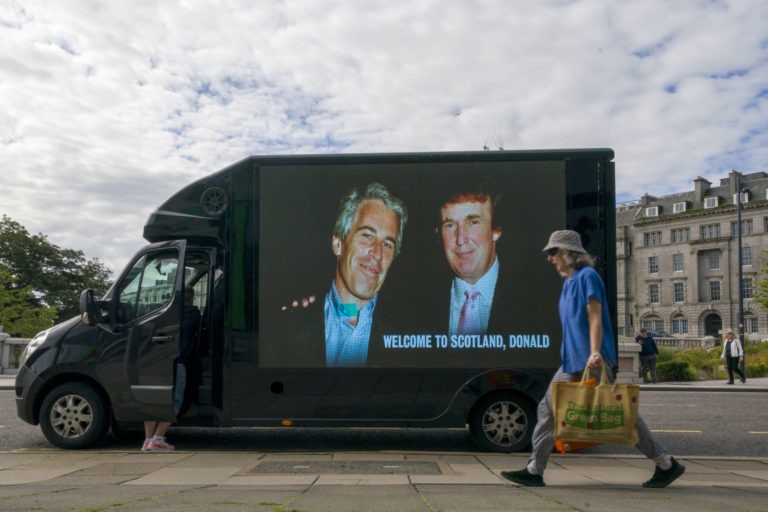
(Headline USA) At least 16 files disappeared from the Justice Department’s public webpage for documents related to Jeffrey Epstein — including a photograph showing President Donald Trump — less than a day after they were posted, with no explanation from the government and no notice to the public.
The missing files, which were available Friday and no longer accessible by Saturday, included images of paintings depicting nude women, and one showing a series of photographs along a credenza and in drawers. In that image, inside a drawer among other photos, was a photograph of Trump, alongside Epstein, Melania Trump and Epstein’s longtime associate Ghislaine Maxwell.
This photo, file 468, from the Epstein files that includes Donald Trump has apparently now been removed from the DOJ release.@AGPamBondi is this true? What else is being covered up? We need transparency for the American public. pic.twitter.com/3wYZAl2dse
The Justice Department did not say why the files were removed or whether their disappearance was intentional. A spokesperson for the department did not immediately respond to a request for comment.
Online, the unexplained missing files fueled speculation about what was taken down and why the public was not notified, compounding long-standing intrigue about Epstein and the powerful figures who surrounded him. Democrats on the House Oversight Committee pointed to the missing image featuring a Trump photo in a post on X, writing: “What else is being covered up? We need transparency for the American public.”
The episode deepened concerns that had already emerged from the Justice Department’s much-anticipated document release. The tens of thousands of pages made public offered little new insight into Epstein’s crimes or the prosecutorial decisions that allowed him to avoid serious federal charges for years, while omitting some of the most closely watched materials, including FBI interviews with victims and internal Justice Department memos on charging decisions.
Scant new insight in the initial disclosures
Some of the most consequential records expected about Epstein are nowhere to be found in the Justice Department’s initial disclosures, which span tens of thousands of pages.
Missing are FBI interviews with survivors and internal Justice Department memos examining charging decisions — records that could have helped explain how investigators viewed the case and why Epstein was allowed in 2008 to plead guilty to a relatively minor state-level prostitution charge.
The gaps go further.
The records, required to be released under a recent law passed by Congress, hardly reference several powerful figures long associated with Epstein, including Britain’s former Prince Andrew, renewing questions about who was scrutinized, who was not, and how much the disclosures truly advance public accountability
Among the fresh nuggets: insight into the Justice Department’s decision to abandon an investigation into Epstein in the 2000s, which enabled him to plead guilty to that state-level charge, and a previously unseen 1996 complaint accusing Epstein of stealing photographs of children.
HUGE NEWS from the new Epstein files:
Records show that Maria Farmer, who worked for Epstein, filed a "child pornography" report to the FBI in 1996.
The FBI has never before acknowledged that complaint. The case went nowhere, and mass abuse followed.https://t.co/FIErTJzxg4
The releases so far have been heavy on images of Epstein’s homes in New York City and the U.S. Virgin Islands, with some photos of celebrities and politicians.
There was a series of never-before-seen photos of former President Bill Clinton but fleetingly few of Trump. Both have been associated with Epstein, but both have since disowned those friendships. Neither has been accused of any wrongdoing in connection with Epstein and there was no indication the photos played a role in the criminal cases brought against him.
Despite a Friday deadline set by Congress to make everything public, the Justice Department said it plans to release records on a rolling basis. It blamed the delay on the time-consuming process of obscuring survivors’ names and other identifying information. The department has not given any notice when more records might arrive.
That approach angered some Epstein accusers and members of Congress who fought to pass the law forced the department to act. Instead of marking the end of a yearslong battle for transparency, the document release Friday was merely the beginning of an indefinite wait for a complete picture of Epstein’s crimes and the steps taken to investigate them.
“I feel like again the DOJ, the justice system is failing us,” said Marina Lacerda, who alleges Epstein started sexually abusing her at his New York City mansion when she was 14.
Many of the long-anticipated records were redacted or lacked context
Federal prosecutors in New York brought sex trafficking charges against Epstein in 2019, but he died in jail after his arrest.
The documents just made public were a sliver of potentially millions of pages records in the department’s possession. In one example, Deputy Attorney General Todd Blanche said Manhattan federal prosecutors had more than 3.6 million records from sex trafficking investigations into Epstein and Maxwell, though many duplicated material already turned over by the FBI.
Many of the records released so far had been made public in court filings, congressional releases or freedom of information requests, though, for the first time, they were all in one place and available for the public to search for free.
Ones that were new were often lacking necessary context or heavily blacked out. A 119-page document marked “Grand Jury-NY,” likely from one of the federal sex trafficking investigations that led to the charges against Epstein in 2019 or Maxwell in 2021, was entirely blacked out.
Trump’s Republican allies seized on the Clinton images, including photos of the Democrat with singers Michael Jackson and Diana Ross. There were also photos of Epstein with actors Chris Tucker and Kevin Spacey, and even Epstein with TV newscaster Walter Cronkite. But none of the photos had captions and was no explanation given for why any of them were together.
The meatiest records released so far showed that federal prosecutors had what appeared to be a strong case against Epstein in 2007 yet never charged him.
Transcripts of grand jury proceedings, released publicly for the first time, included testimony from FBI agents who described interviews they had with several girls and young women who described being paid to perform sex acts for Epstein. The youngest was 14 and in ninth grade.
One had told investigators about being sexually assaulted by Epstein when she initially resisted his advances during a massage.
Another, then 21, testified before the grand jury about how Epstein had hired her when she was 16 to perform a sexual massage and how she had gone on to recruit other girls to do the same.
“For every girl that I brought to the table he would give me $200,” she said. They were mostly people she knew from high school, she said. “I also told them that if they are under age, just lie about it and tell him that you are 18.”
The documents also contain a transcript of an interview Justice Department lawyers did more than a decade later with the U.S. attorney who oversaw the case, Alexander Acosta, about his ultimate decision not to bring federal charges.
Acosta, who was labor secretary during Trump’s first term, cited concerns about whether a jury would believe Epstein’s accusers.
He also said the Justice Department might have been more reluctant to make a federal prosecution out of a case that straddled the legal border between sex trafficking and soliciting prostitution, something more commonly handled by state prosecutors.
“I’m not saying it was the right view,” Acosta added. He also said that the public today would likely view the survivors differently.
“There’s been a lot of changes in victim shaming,” Acosta said.
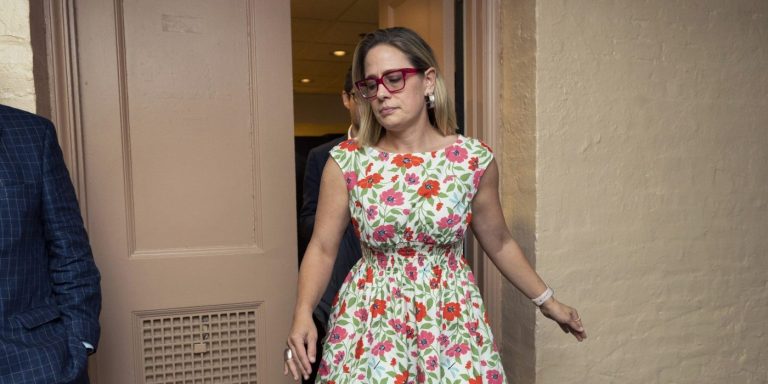
(Luis Cornelio, Headline USA) Officials in the Biden-led DOJ and FBI considered launching a criminal investigation into then-Sen. Kyrsten Sinema of Arizona, after she left the Democratic Party and became an Independent, the New York Postreported Friday.
The potential probe, discussed in internal FBI emails roughly 14 months after Sinema broke with Democrats, would have centered on a 2024 New York Post report on her use of campaign funds for what appeared to be personal expenses.
At the time, the Post reported that in 2023, Sinema paid for security, luxury hotels, cars and a concert.
According to the Post, the matter was raised in 2024 by a prosecutor in the U.S. Attorney’s Office in D.C., which at the time was led by Biden appointee Matthew Graves.
Sinema was one of the two senators who repeatedly blocked major Biden-era legislation and resisted Democratic efforts to abolish the filibuster.
The prosecutor reportedly flagged the Post’s reporting and forwarded it to officials at both the DOJ and the FBI.
Then-Assistant U.S. Attorney Elizabeth Aloi weighed investigating Sinema for purported violations of the Federal Election Campaign Act.
Walter Giardina, a former FBI agent who participated in then-special prosecutor Bob Mueller’s probe and prosecutions of Peter Navarro and President Donald Trump, appeared receptive to pursuing the case.
Tellingly, Giardina was among the top FBI officials fired by Trump’s FBI Director Kash Patel earlier this year.
“I’m interested in looking at the Sinema referral if its [sic] something you’re looking to assign,” Giardina wrote to an FBI colleague on Feb. 2, 2024, according to the Post.
The emails also revealed that the Biden administration had previously considered directing the DOJ’s Public Integrity Section to probe Sinema’s senatorial campaign.
This attempt was “unsuccessful,” according to the outlet.
In response, Sinema’s chief of staff Daniel Winkler said the attempted probe was driven by partisan politics.
“It’s disappointing, though not surprising, to learn that Walter Giardina, who led politically motivated investigations at the FBI, also sought to investigate Kyrsten for partisan political reasons after she defied Biden and the Senate Democrats to protect the filibuster,” Winkler said, as quoted by the Post.
“Giardina’s pathetic attempts led nowhere, his abuse of power is now exposed to the public, and the filibuster stands strong today,” he added.
Sinema entered the Senate as a Democrat in 2019, replacing former GOP Sen. Jeff Flake. She left office on Jan. 3, 2025, after declining to seek re-election.
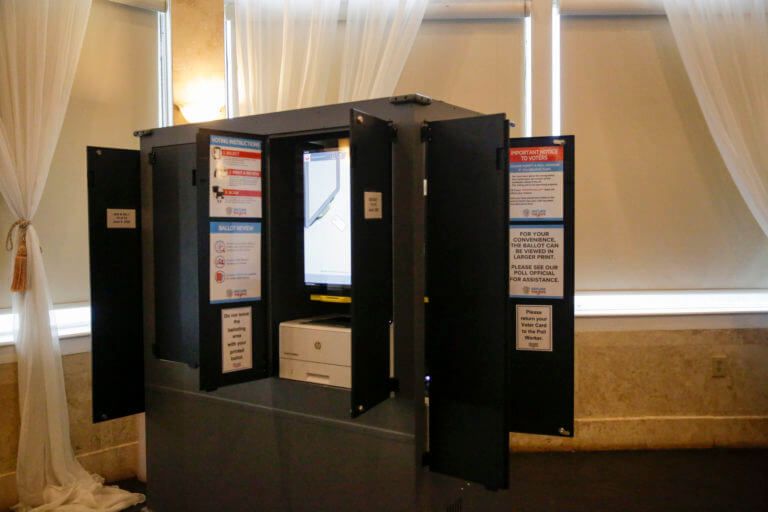
(Luis Cornelio, Headline USA) An attorney for Fulton County, Georgia admitted earlier this month that the county accepted roughly 315,000 early votes that were not lawfully certified in the 2020 presidential election.
Attorney Ann Brumbaugh made the admission while representing the Fulton County Board of Registration and Elections at a Dec. 9 hearing before the Georgia State Election Board, according to Wednesday’s reporting by The Federalist.
The SEB hearing pertained to a complaint filed by election integrity activist David Cross, who accuses Fulton County of having violated Georgia law by counting early votes that were not properly signed off by election workers.
As quoted by The Federalist, Brumbaugh told the board that Fulton County does “not dispute that the tapes were not signed.”
She added, “It was a violation of the rule. We, since 2020, again, we have new leadership and a new building and a new board and a new standard operating procedures. And since then the training has been enhanced. … But … we don’t dispute the allegation from the 2020 election.”
According to The Federalist:
“Georgia’s Secretary of State Office investigated the alleged failure to sign tabluation [sic] tapes and ‘substantiated’ the findings that Fulton County ‘violated Official Election Record Document Processes when it was discovered that thirty-six (36) out of thirty-seven (37) Advanced Voting Precincts in Fulton County, Georgia failed to sign the Tabulation Tapes as required [by statute],’ according to a 2024 investigation summary. In addition to probing the unsigned tabulation tapes, the investigation also found that officials at 32 polling sites failed to verify their zero tapes.”
The issue, as detailed by the outlet, is that Georgia statute orders election officials to print three “closing tapes” toward the end of each voting day.Doing so allows officials to officially end counting for the day and avoid votes from the previous day being overcounted.
“These signed tapes are the sole legal certification that the reported totals are authentic,” Cross said during the SEB hearing. “Fulton County produced zero signed tabulator tapes in early voting.”
Cross reportedly uncovered the discrepancy through open records requests that cost him $15,800.
“These are not clerical errors. They are catastrophic breaks in chain of custody and certification,” Cross said. “Because no tape was ever legally certified, Fulton County had no lawful authority to certify its advanced voting results to the secretary of state. Yet it did. And Secretary Raffensperger accepted and folded those uncertified numbers into Georgia’s official total without questioning them. This is not partisan. This is statutory. This is the law. When the law demands three signatures on tabulator tapes and the county fails to follow the rules, those 315,000 votes are, by definition, uncertified.”
(Ken Silva, Headline USA) Lawyers for alleged Charlie Kirk assassin Tyler Robinson have filed a motion to disqualify the Utah County Attorney’s Office from the case on the grounds that one of its prosecutors is related to someone who witnessed the Sept. 10 killing of the conservative activist.
In a motion filed Dec. 10 and made public Wednesday, Robinson’s lawyers said the relationship between the prosecutor and a witness of Kirk’s assassination is a clear conflict of interest. The names of the prosecutor and the witness are redacted.
The name of the Charlie Kirk case prosecutor with the conflict of interest is redacted. But based on the size of the name/title redactions, the description, and him being listed in this press release, I'm going to guess that it's Chief Deputy Chad Grunander.
According to the motion, the prosecutor believes his relative won’t be a witness for the prosecution. Therefore, the prosecutor does not believe that this circumstance presents a conflict precluding him from participating in the prosecution of Robinson.
But Robinson’s attorneys beg to differ.
“There is no way to predict at this time what directions this case may take, what critical prosecutorial decisions will be required, and how they may be impacted by the experience Mr. [REDACTED] had with his both in real time and after the initial crisis,” the motion says.
“These influences may be subtle. For example, Mr. [REDACTED] may be less inclined to believe a witness whose observations are not consistent with those of his [REDACTED]. Or he may make specific strategic decisions to avoid his [REDACTED] having to testify, even if that may not be in the best interests of the State’s case.”
Robinson’s lawyers don’t just want the specific prosecutor disqualified. They want the entire UCAO barred from the case on the grounds that the prosecutor shared his relative’s experiences with most of the office—something that may have influenced their decision to pursue the death penalty.
“Further, it appears that no effort has been made by the UCAO to mitigate the possible prejudice from Mr. [REDACTED’s] personal conflict, as he remains on and is still the of the prosecution team,” the defense attorneys added.
“The UCAO should be disqualified from prosecuting this case.”
The prosecutors have yet to publicly respond to the motion. Robinson has not yet been arraigned. His next hearing is in January.
Ken Silva is the editor of Headline USA. Follow him at x.com/jd_cashless.
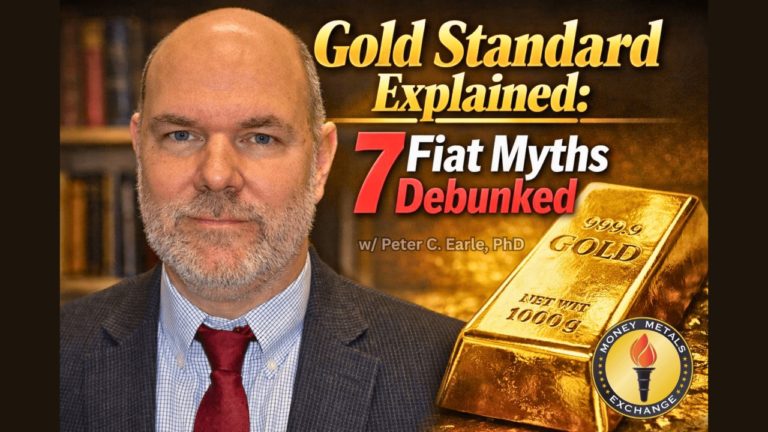
Earle brings both academic and market experience to the table, having spent more than 20 years as a trader and analyst before his work at AIER.
Across the conversation, Maharrey and Earle tackle seven persistent myths people repeat about fiat money and the gold standard—myths that sound plausible until you follow them to their real-world conclusions.
(Interview Starts Around 8:26 Mark)
What a Gold Standard Means
Earle defines a gold standard as a system where the unit of account—dollar, pound, franc, yen—is defined as a specific weight of gold. It’s not just a theme or a symbol. It means currency is convertible at a legally fixed rate.
That convertibility is the point. It forces money to be anchored to something scarce and costly to produce, limiting the ability of governments and banks to create money at will.
Earle puts it in a line that sticks: under a gold standard, “money answers to geology, not to politics.” Maharrey doesn’t hesitate—he’ll take geology over politics any day.
Why Gold Became Money
Earle rejects the mystical framing. Gold wasn’t chosen because it’s magical. It was selected over long stretches of history because it has the properties reliable money needs: durability, divisibility, portability, and credible scarcity.
Maharrey adds a practical observation that still holds today. You can go almost anywhere in the world, offer someone gold, and they’ll understand its value immediately. They may not want a dollar. They may not want a euro. But gold is recognized across borders because it doesn’t depend on trust in a particular government.
That’s the broader argument: a gold standard ties money to something outside the political system.
Fiat Money’s Bias Toward Inflation
Earle contrasts that with the system nearly everyone lives under today: fiat currency, money by decree. It has value because governments declare it has value and enforce its use through legal tender rules and the requirement to pay taxes in it.
Once money is severed from a hard constraint, Earle argues, it becomes discretionary. Central banks are pressured to ease, bail out, and stimulate. That creates an inflationary bias across countries—often not a blowout, but a steady erosion of purchasing power and recurring asset bubbles.
Maharrey frames it politically: fiat money is the engine that drives big government. Earle agrees. With no binding limit, governments can try to be all things to all people—until math wins.
Myth 1: “Gold Is Outdated or ‘Mystical’”
The first myth is the hand-wave: gold is a relic, a superstition, a shiny tradition.
Earle’s reply is practical. Gold became money because it works. It’s scarce in a way that can’t be legislated away, and it resists the human temptation to “fix” problems by printing claims.
That’s why he emphasizes that gold isn’t about vibes. It’s about constraints—and constraints are exactly what political systems don’t like.
Myth 2: “Fiat Money Is Neutral—It Doesn’t Automatically Inflate”
The second myth is that fiat money is simply modern, flexible money, and inflation is optional.
Earle says the bias is structural. In a fiat system, there’s constant pressure on central banks and governments to do “just a little more” easing, “just a little more” stimulus, “just a little more” rescue. Over time, that shows up as shrinking purchasing power and distorted markets.
This doesn’t require a catastrophe. It can arrive as something quieter: asset booms, mispriced risk, and the slow sense that normal life costs more each year.
Myth 3: “We Left the Gold Standard Because It Failed”
Maharrey asks the blunt question: if gold standards work so well, why did governments abandon them?
Earle argues they were abandoned because they worked too well at limiting state behavior. Governments don’t want binding limits on spending. They don’t want to lose the ability to paper over errors in debt, fiscal policy, or monetary policy.
Earle also frames the current era as temporary. He describes a long progression from classical gold standards to modified versions, to Bretton Woods, and then full fiat. In his view, we’re in an interregnum—a transitional period that won’t last forever.
Myth 4: “Without Fiat, Government Can’t Respond to Emergencies”
This is one of the most common objections Maharrey hears: the gold standard ties the hands of policymakers in emergencies.
Earle calls it historically unserious. Emergencies didn’t begin in the 20th century. Gold-based money existed through plagues, upheavals, and crises. He notes countries sometimes suspended gold during wars and then returned afterward, which reveals what the objection often masks: the desire for unlimited spending capacity.
He also argues that “emergency flexibility” can make responses fast but thoughtless, and sometimes destructive. Maharrey uses COVID as a modern example. Governments could shut down large parts of the economy, largely because they could print money to cover the consequences. Both suggest the long tail of that era is still with us.
Myth 5: “Falling Prices Are Always Bad”
Another staple claim is that prices must rise, and falling prices are inherently harmful.
Earle distinguishes healthy price declines from crisis deflation. Healthy declines come from productivity—more output for the same effort. He points to electronics: better laptops and TVs at lower prices over time.
He asks listeners to imagine that pattern across wider categories of life: gently falling prices that raise real incomes and reward saving without killing demand.
Then he contrasts that with destructive deflation caused by monetary contraction. He cites the early Great Depression, when the Federal Reserve raised interest rates and, within roughly 18 months, the money supply fell by “a third or so.” That kind of contraction creates a deflationary crunch. Earle treats that as a separate phenomenon from slow, progress-driven price declines.
Myth 6: “The Economy Can’t Grow Unless Money Supply Grows”
Maharrey raises the claim that a growing economy requires an expanding money supply—and that gold can’t support modern complexity like AI and quantum computing.
Earle says growth doesn’t require money printing. Prices adjust. More goods and services can be supported by the same or a slowly growing money base through lower prices.
He also calls the “gold can’t support modernity” argument technocratic arrogance. Gold-based money supported enormous economic leaps long before today’s technologies existed. There’s nothing about modern computing that cancels scarcity, incentives, or the need for disciplined money.
Maharrey adds that digital systems could make gold-backed accounting easier, not harder, because fractional claims can be tracked cleanly without requiring constant physical redemption.
Myth 7: “There Isn’t Enough Gold to Back Modern Money”
The “not enough gold” argument shows up whenever sound money is mentioned.
Earle says it misunderstands the mechanics. A gold standard doesn’t require convenient one-dollar redemptions for visible flakes of metal. It requires a unit definition. If gold is revalued appropriately and denominated into whatever number of units is required, the system can function.
Maharrey asks directly whether this implies revaluation. Earle agrees. He also argues the cost of converting would be small compared to the ongoing costs of running the fiat system—especially when you include the economic damage created by purchasing power loss and repeated cycles of distortions.
The “Hoarding” Claim, Saving, and Human Reality
Beyond the seven core myths, Earle addresses the idea that gold would cause hoarding and freeze spending.
He reframes it: call it saving. Saving finances real investment rather than speculative credit. And human life doesn’t stop because prices might be lower next year. People still buy food, fuel, and necessities. Maharrey gives the simple example: even if computers get cheaper next year, you still buy one when your current machine breaks.
Earle adds a deeper point: money still exerts influence even when it isn’t spent. Money held back changes the conditions of the overall money environment. Saving isn’t sabotage; it’s part of how money holds value.
Gold Buying, SWIFT, and De-Dollarization
Maharrey shifts to the present. He notes rapid central bank gold buying, especially among emerging markets and countries wary of dependence on the dollar.
Earle points to a catalyst “about three and a half years ago,” when the U.S. pressured SWIFT to remove Russian banks from the dollar messaging system. That action signaled to many countries—including allies—that dollar dependence could become a liability.
He sees the gold move as structural repricing, not a short-lived spike like 9/11 or 2008. He describes it as a “60 to 70% increase,” tied to geopolitical fragmentation, fiscal deficits, and skepticism about long-run monetary discipline. He also notes silver’s surge “over $65 an ounce,” and Maharrey adds: “$66 as of today (Wednesday, December 17, 2025).”
On de-dollarization, Earle says it’s real but slow because the dollar is deeply entrenched and Treasuries are widely used as collateral. He mentions an April 2023 article he wrote on de-dollarization that went viral. He doesn’t predict the dollar will disappear overnight, calling it “pretty much the only game in town,” but he agrees that even moderate declines in demand for dollars and Treasuries carry major consequences.
AIER and Where to Find Earle’s Work
As the episode closes, Maharrey asks Earle to describe AIER and where listeners can follow him.
Earle describes AIER as an independent nonprofit economic research and education organization founded in 1933, focused on sound money, economic freedom, personal responsibility, and limited government. He points to AIER.org and its daily publishing stream, “The Daily Economy.”
He also shares his handle on X as @Peter_C_Earl, while noting he’s a sporadic poster. Maharrey closes by stressing that these monetary foundations aren’t academic trivia—they’re the framework every saver, investor, and household has to live inside.