

Much-Anticipated ‘Epstein Files’ Are Mostly Redacted

(Headline USAThe Justice Department released thousands of files Friday about convicted sex offender Jeffrey Epstein, but the incomplete and heavily redacted document dump did not break significant ground about the long-running criminal investigations of the financier or his ties to wealthy and powerful individuals.

The files included photographs of famous people who spent time with Epstein in the years before he came under suspicion, including some candid snapshots of Bill Clinton, who flew on Epstein’s jet and invited him to the White House. But there was almost no material related to another old Epstein friend, President Donald Trump, aside from a few well-known images, sparing the White House from having to confront fresh questions about a relationship the administration has tried in vain to minimize.

The records, consisting largely of pictures but also including call logs, grand jury testimony, interview transcripts and other documents, arrived amid extraordinary anticipation that they might offer the most detailed look yet at nearly two decades worth of government scrutiny of Epstein’s sexual abuse of young women and underage girls. Yet the release, replete with redactions, seemed unlikely to satisfy the clamor for information given how many records had yet to be released and because some of the materials had already been made public.

Democrats and some Republicans seized on the limited release to accuse the Justice Department of failing to meet a congressionally set deadline to produce the files, while White House officials on social media gleefully promoted a photo of Clinton in a hot tub with a woman with a blacked-out face. The Trump administration touted the release as proof of its commitment to transparency, ignoring that the Justice Department just months ago said no more files would be released. Congress then passed a law mandating it.

In a letter to Congress, Deputy Attorney General Todd Blanche wrote that the Justice Department was continuing to review files in its possession, was withholding some documents under exemptions meant to protect victims and expected additional disclosures by the end of the year.

Trump, who was friends with Epstein for years before the two had a falling-out, tried for months to keep the records sealed.

But bowing to political pressure from fellow Republicans, Trump last month signed a bill giving the Justice Department 30 days to release most of its files and communications related to Epstein, including information about the investigation into his death in a federal jail. The law set a deadline for Friday.

New photos of Clinton

Unlike Trump, Clinton is featured prominently in the files, though the records included no explanation of how the photographs of the former president related to any investigation or the context surrounding them.

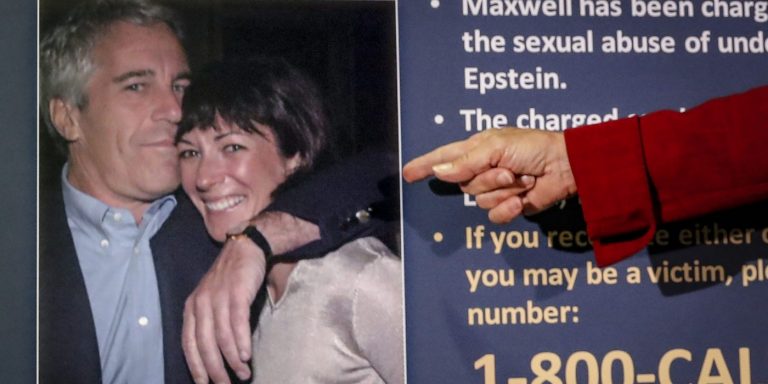
Some photos showed him on a private plane, including one with a woman, whose face is redacted, seated alongside him with her arm around him. Another shows him in a pool with Epstein’s longtime confidant, British socialite Ghislaine Maxwell, and a person whose face was also redacted. He is also seen in a hot tub with a woman whose face was redacted.

Senior Trump White House aides took to X to promote the Clinton photos.

White House press secretary Karoline Leavitt wrote “Oh my!” and added a shocked face emoji in response to a photo of Clinton in the hot tub.

“They can release as many grainy 20-plus-year-old photos as they want, but this isn’t about Bill Clinton,” Clinton spokesman Angel Ureña said in a statement.

“There are two types of people here,” he said. “The first group knew nothing and cut Epstein off before his crimes came to light. The second group continued relationships after that. We’re in the first. No amount of stalling by people in the second group will change that.”

The Epstein investigations

After nearly two decades of court action, a voluminous number of Epstein records had already been public before Friday, including flight logs, address books, email correspondence, police reports, grand jury records, courtroom testimony and deposition transcripts.

Besides public curiosity about whether any of Epstein’s associates knew about or participated in the abuse, Epstein’s accusers have also sought answers about why federal authorities shut down their initial investigation into the allegations in 2008.

“Just put out the files,” said Marina Lacerda, who says she survived sexual assault by Epstein. “And stop redacting names that don’t need to be redacted.”

One of the few revelations in the documents was a copy of the earliest known concern about Epstein’s behavior — a report taken by the FBI of a woman in 1996 who believed photos and negatives she had taken of her 12-year-old and 16-year-old sisters for a personal art project had been stolen by Epstein. The documents don’t show what, if anything, the agency did with that complaint.

Police in Palm Beach, Florida, began investigating Epstein in 2005 after the family of a 14-year-old girl reported being molested at his mansion. The FBI joined the investigation. Authorities gathered testimony from multiple underage girls who said they’d been hired to give Epstein sexual massages.

Ultimately, prosecutors gave Epstein a deal that allowed him to avoid federal prosecution. He pleaded guilty to state prostitution charges involving someone under age 18 and was sentenced to 18 months in jail.

Epstein’s accusers spent years in civil litigation trying to get that plea deal set aside. One of those women, Virginia Giuffre, accused Epstein of arranging for her to have sexual encounters, starting at age 17, with other men, including billionaires, famous academics, politicians and Andrew Mountbatten-Windsor, then known as Britain’s Prince Andrew.

Mountbatten-Windsor denied ever having sex with Giuffre, but King Charles III stripped him of his royal titles this year.

Prosecutors never brought charges in connection with Giuffre’s claims, but her account fueled conspiracy theories about supposed government plots to protect the powerful. Giuffre died by suicide in April.

Federal prosecutors in New York brought new sex trafficking charges against Epstein in 2019, but he died in jail after his arrest. Prosecutors then charged Maxwell, his longtime confidant, with recruiting underage girls for Epstein to abuse. She was convicted in 2021 and is serving a 20-year prison sentence.

Adapted from reporting by the Associated Press


Biden-FBI Wanted Jim Jordan’s Personal Emails

(Luis CornelioHeadline USA) The Biden-era FBI sought access to the personal email account of House Judiciary Committee Chairman Jim Jordan, R-Ohio, as part of its sweeping Arctic Frost investigation, House Republicans revealed Wednesday. 

The House Judiciary Committee released via X a screenshot of what appears to be a recently declassified FBI document referencing Jordan’s personal Gmail account. 

“PIN also concurs with sending a preservation request to Google for the account, which is the personal email account used by Jordan,” the document stated. 

“There are numerous emails between this account and Perry’s personal account in December 2020 and early January 2021,” it added, seemingly referring to Rep. Scott Perry, R-Pa. 

The FBI seized Perry’s phone in August 2022 while he was vacationing with his family in New Jersey.  

A federal judge later blocked the FBI’s access to some of the data seized from the device, as it pertained to Perry’s official business as a federal lawmaker. 

The House Judiciary Committee did not release the full document to provide additional information for the request. 

Republican lawmakers have previously called out the Biden administration’s extent to which it targeted Republican lawmakers in the aftermath of the Jan. 6 protests. 

The information seized under Arctic Frost paved the way for the appointment of Special Counsel Jack Smith, a radical prosecutor who went on to prosecute President Donald Trump.  It marked the first time a former president faced criminal prosecution. 

Previously declassified records revealed that Arctic Frost also targeted Trump’s government-issued cellphone, along with the phone data belonging to GOP Sens. Marsha Blackburn, Tenn.; Ron Johnson, Wis., Bill Hagerty, Tenn.; Josh Hawley, Mo.; Cynthia Lummis, Wyo.; Lindsey Graham, S.C.; Dan Sullivan, Alaska, and Tommy Tuberville, Ala.; and Rep. Mike Kelly, Pa. 

Overall, Arctic Frost triggered nearly 200 subpoenas and targeted the information of over 400 Republicans, according to documents released by the Senate Judiciary Committee.

Trump Signs Order Reclassifying Marijuana as Schedule III Drug

(Thérèse Boudreaux, The Center Square)  President Donald Trump signed an executive order to reclassify marijuana from a Schedule I to a Schedule III controlled substance, despite many Republican lawmakers urging him not to.

“I want to emphasize that the order I am about to sign is not the legalization [of] marijuana in any way, shape, or form – and in no way sanctions its use as a recreational drug,” Trump said. “It’s never safe to use powerful controlled substances in recreational manners, especially in this case.”

“Young Americans are especially at risk, so unless a drug is recommended by a doctor for medical reasons, just don’t do it,” he added. “At the same time, the facts compel the federal government to recognize that marijuana can be legitimate in terms of medical applications when carefully administered.”

Under the Controlled Substances Act, Schedule I drugs are defined as having a high potential for abuse and no accepted medical use. Schedule III drugs – such as anabolic steroids, ketamine, and testosterone – are defined as having a moderate potential for abuse and accepted medical uses.

Although marijuana is still illegal at the federal level, 24 states and the District of Columbia have fully legalized marijuana within their borders, while 13 other states allow for medical marijuana.

Advocates for easing marijuana restrictions argue it will accelerate scientific research on the drug and allow the commercial marijuana industry to boom. Now that marijuana is no longer a Schedule I drug, businesses will claim an estimated $2.3 billion in tax breaks.

Chair of The Marijuana Policy Project Betty Aldworth said the reclassification, which the Drug Enforcement Administration must approve, “marks a symbolic victory and a recalibration of decades of federal misclassification.”

“Cannabis regulation is not a fringe experiment – it is a $38 billion economic engine operating under state-legal frameworks in nearly half of the country that has delivered overall positive social, educational, medical, and economic benefits, including correlation with reductions in youth use in states where it’s legal,” Aldworth said.

Opponents of the reclassification, including 22 Republican senators who sent Trump a warning letter Wednesday, point out the negative health impact of marijuana use and its effects on occupational and road safety.

“The only winners from rescheduling will be bad actors such as Communist China, while Americans will be left paying the bill. Marijuana continues to fit the definition of a Schedule I drug due to its high potential for abuse and its lack of an FDA-approved use,” the lawmakers wrote. “We cannot reindustrialize America if we encourage marijuana use.”

Marijuana usage is linked to mental disorders like depression, suicidal ideation, and psychotic episodes; impairs driving and athletic performance; and can cause permanent IQ loss when used at a young age, according to the Substance Abuse and Mental Health Administration.

Additionally, research shows that “people who use marijuana are more likely to have relationship problems, worse educational outcomes, lower career achievement, and reduced life satisfaction,” SAMHA says.


HHS Takes Sweeping Action to Reverse Biden-era Policies on Gender Affirming Care

(Morgan Sweeney, The Center Square)   The U.S. Department of Health and Human Services unveiled a multi-pronged regulatory effort Thursday to curtail gender-affirming care for minors, including gender transition procedures at hospitals.

The Centers for Medicare & Medicaid Services has drafted a rule that would prohibit pharmaceutical or surgical gender reassignment procedures from receiving federal Medicaid or Children’s Health Insurance Program funding. It’s also proposing a rule that would allow it to withdraw Medicare and Medicaid funding from hospitals that perform such surgeries on minors. HHS is also working to “reverse the Biden administration’s attempt” to classify gender dysphoria as a type of disability. If gender dysphoria were to be defined as a disability, then health care providers who don’t want to perform what the department has dubbed “sex-rejecting” procedures could be in danger of violating anti-discrimination laws.

Health and Human Services Secretary Robert Kennedy, Jr., described gender affirming procedures as “unsafe” and “irreversible,” and framed the administration’s actions as “[protecting] America’s most vulnerable.”

“Our children deserve better – and we are delivering on that promise,” Kennedy told reporters Thursday.

The department is acting on directives from an executive order from President Donald Trump’s first few weeks in office. The Jan. 28 order called on government agencies to “[defund] chemical and surgical mutilation” of children, seemingly in the manner that HHS has proposed, as well as “rescind or amend all policies” relying on guidance from the World Professional Association for Transgender Health.

The Food and Drug Administration is also taking regulatory action against some organizations that market breast binders to minors.

“Illegal marketing of these products for children is alarming, and the FDA will take further enforcement action such as import alerts, seizures, and injunctions if it continues,” said Food and Drug Commissioner Marty Makary.

Kennedy signed a declaration Thursday that gender affirming procedures for minors “do not meet professionally recognized standards of health care” and the Assistant Secretary for Health and Head of the United States Public Health Service Commissioned Corps, Admiral Brian Christine, signed a public health message stating the same.

“Evidence shows sex-rejecting puberty blockers, cross-sex hormones, and surgeries are dangerous. Providers have an obligation to offer care grounded in evidence and to avoid interventions that expose young people to a lifetime of harm,” Christine said.

The House of Representatives passed a bill Wednesday that would criminalize the act of providing gender affirming care to minors.

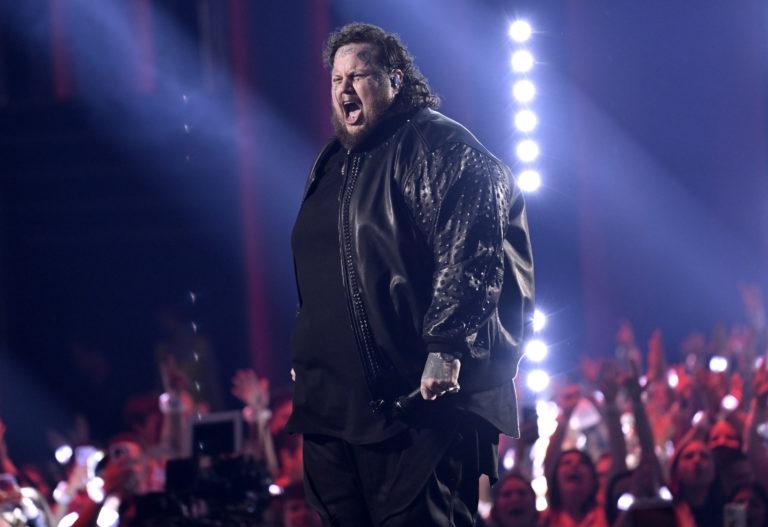
Singer Jelly Roll Pardoned by Tennessee Governor

(Kim Jarrett, The Center Square)  Among the names of 33 people pardoned Thursday by Tennessee Gov. Bill Lee was Jason DeFord, but that’s not the name that people would recognize. 

Jason DeFord is better known as Jelly Roll, a singer known for such as hits as “Son of a Sinner” and “I Am Not Okay.”

The singer received his pardon in the governor’s residence. Davidson County Sheriff Daron Hall appeared with DeFord in April when he petitioned the Tennessee Board of Parole for a pardon. The board approved his request, but the final decision was up to Lee. 

DeFord is open about his past arrest. His record shows convictions for robbery and possession of cocaine with the intent to distribute. 

To obtain a pardon, the applicant should have been out of prison for more than five years and not under community supervision and demonstrated “exemplary citizenship since the completion of the sentence,” according to the Board of Parole. 

DeFord’s name was seventh on the list. 

“After thoroughly reviewing the merits of each case, I have decided to grant 33 individuals executive clemency,” Lee said in a release. “Each individual case is unique and warranted consideration, and I thank the Board of Parole members for their thoughtful recommendations throughout this process.”

It’s been a good month for Jelly Roll. Last week it was announced he is joining the Grand Ole Opry.

Man Learns Not to Pack Silver Coins in Checked Bag the Hard Way

(Mike Maharrey, Money Metals News Service) Let’s talk about security. If you own precious metals and you opt to keep them in your possession, you need to take steps to keep them secure, right? You don’t want to be like the lady who hid her silver coins in a Tupperware container where her “boyfriend” could steal them.

This seems self-evident, and yet I’m constantly running across stories about people doing dumb things with their gold and silver.

So today, I have some advice that I never imagined I would need to offer.

Don’t pack your valuable silver coins in your checked luggage.

Darren King is a Utah coin dealer. He was flying out of the Salt Lake City airport heading toward the old Klondike Gold Rush town of Whitehorse, Yukon. He packed silver coins in his suitcase and when he arrived at his destination, discovered they were gone.

The coins were valuable in and of themselves, given that they were silver. Keep in mind, at the current price, a 1964, 90 percent silver U.S. quarter is worth nearly $12. And they call this junk silver!

King wasn’t carrying junk. He had some valuable coins minted in the 1800s. He specifically mentioned Morgan silver dollars. Their melt value is currently over $50 per coin, but some dates are worth significantly more to collectors. King estimated the value of his collection was over $10,000.

To be fair, it doesn’t sound like King’s bad decision-making was a function of some unfortunate circumstances.

It started because he was running late.

We’ve all been there, right? We get stuck in traffic. We spill coffee all over our shirts. We have to go back home because we forgot our ID. Later, we’re rushing through the airport, panicked that we might miss our flight. And then we hit the TSA security checkpoint and see a long line of people.

That’s apparently what happened to King. I mean, I made up the scenario, but it was almost certainly something similar. Or maybe he just slept through his alarm. Regardless, he was late and apparently not thinking clearly.

That’s when he made his second mistake of the day. He listened to a TSA agent who advised him to check his coins to avoid prolonged screening at the checkpoint.

Now, one has to wonder why some coins would trigger extra security measures. It’s not like you can take down an airliner with silver. Of course, there are a lot of things to wonder about when it comes to airport security.

Regardless, King followed the wisdom of the TSA and quickly regretted it. According to the report on KUTV, King spotted his bag on the tarmac and noticed something was amiss. When he arrived in Vancouver and retrieved his bag to switch airlines, he discovered all but one of his silver coins were missing.

King reported the theft to the police and filed a claim with Delta Airlines.

That was as fruitless as you can probably imagine.

Police said they found “no evidence a theft occurred, rather it seemed to show the (ramp) employees found a few coins had fallen out of a piece of luggage, and they picked them up and returned them to the bag.

If you are an observant reader, you’ve already picked up on a discrepancy. King said there was only one coin left in the bag. The police statement said “coins” (plural) were returned to the bag by ramp personnel.

In a statement, Delta said it has “zero-tolerance for baggage pilferage” and that it “completed a thorough investigation.” However, there doesn’t seem to be any theory on what happened to the coins. They are still missing, and nobody has been held accountable.

I guess Delta tolerated the pilferage.

However, the company does seem sorry.

“While we cannot change what happened, please know that we take these matters seriously and have reinforced our internal processes to ensure the highest standards of security and accountability.”

As you can imagine, King isn’t satisfied with the investigation, but it sounds like he learned his lesson. He told KUTV that he would never check valuables again.

“I gave you my belongings, entrusted you with my belongings to secure them and keep them safe, and I didn’t get them back.”

So, what have we learned?

Take care of your gold and silver, and don’t trust just anybody with it.

If you need a safe and secure place to store your gold and silver, consider Money Metals’ state-of-the-art bullion depository in Eagle, Idaho. It is bigger than Fort Knox, and I can assure you, you’ll get all of your coins back when you want them!


Mike Maharrey is a journalist and market analyst for Money Metals with over a decade of experience in precious metals. He holds a BS in accounting from the University of Kentucky and a BA in journalism from the University of South Florida.

Is the Gold Market a Bubble? Or Is Something Else Going On?

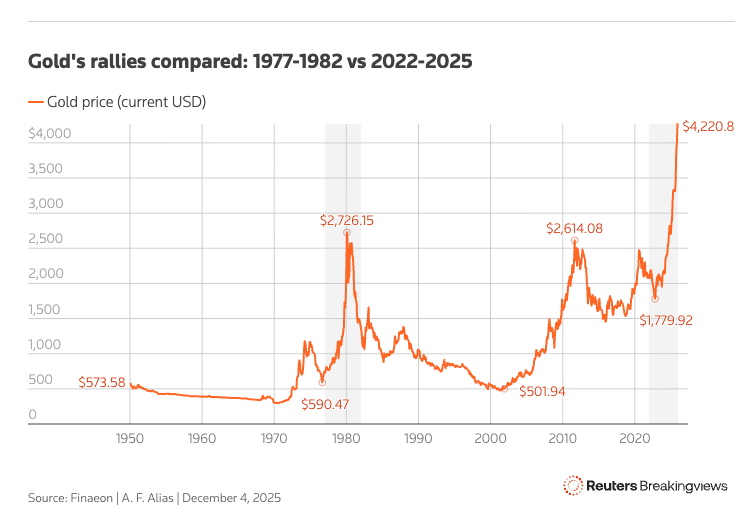
(Mike Maharrey, Money Metals News Service) Gold is up over 109 percent since the beginning of 2024. Some analysts say that the yellow metal is in a bubble destined to pop. However, there is another possibility. What if the meteoric rise in the price of gold is signaling a paradigm shift?

Reuters columnist Edward Chancellor thinks that’s the case, and I think he makes a pretty compelling argument.

Conventional wisdom holds that when an asset swiftly rises in price, it is setting up for a fall. Every time the gold price falls, mainstream pundits declare the air is coming out of the bubble. And every time gold rallies again.

Most recently, the mainstream declared the bottom was falling out when gold corrected in late October. But that downturn only trimmed about 9.8 percent from October’s record high price, and gold is once again testing that level less than two months later.

Of course, all this proves is that the gold bulls are resilient. It doesn’t preclude a deeper correction or even a deflating bubble in the future. But this resiliency could also signal that gold’s rapid price increase isn’t just bubble behavior.

Some analysts point to gold’s bull market in the 1970s to make the bubble case. The price rose rapidly through the 70s only to crash in the early 1980s when Paul Volcker cranked interest rates to 20 percent to slay the inflation dragon. After its peak in late 1979, gold gave up nearly two-thirds of its price.

But it’s not the early 80s, and needless to say, no Volcker is waiting in the wings. The next Federal Reserve Chairman is likely to be even more inclined toward easy money than Jerome Powell.

A New Monetary Era

Chancellor notes that gold’s market valuation “tends to reflect different monetary regimes.”

“Gold reset higher following the credit collapse of the 1920s, and jumped in the second half of the 1970s as the so-called ‘Great Inflation’ took hold; over the next two decades it remained in the doldrums as price increases abated and real interest rates remained high; after Alan Greenspan’s Federal Reserve slashed interest rates in the early 2000s, gold enjoyed a long bull run. During the era of zero interest rates and quantitative easing from 2008 to 2022, the price was volatile, but its upward trend continued.”

Could we be on the cusp of another monetary paradigm shift?

The yellow metal is certainly behaving differently than in the past.

Conventional wisdom holds that the price of gold moves inversely to real interest rates. Historically, the gold price has dropped when long-term interest rates rise, since it is a non-yielding asset. This is why we saw constant price pressure on the yellow metal in the early days of the Fed’s monetary policy tightening in early 2022. Conversely, falling rates tend to be bullish for gold.

However, in late 2022, gold began to break out of the doldrums despite falling inflationary pressures and rising inflation-adjusted bond yields.

In other words, the bull market picked up speed during a period when market dynamics should have been driving the price lower.

Wisdom Tree noted this disconnect, noting investors were beginning to perceive higher rates as bearish. Portfolio managers were “beginning to re-engineer portfolios for an era of structural deficits and active fiscal policy.

“The asset’s behavior has evolved: what was once a rate-sensitive trade has become a fiscal-risk hedge. Correlations with Treasury yields have flipped from deeply negative to positive, implying that gold now rises with, not against, higher long-term rates when those rates reflect sovereign stress. That’s an inversion of an old mental model.”

What happened that might account for this defiance of conventional wisdom?

The U.S. and its allies aggressively sanctioned Russia after it invaded Ukraine. Then, in the spring of 2024, the Biden administration threatened to liquidate and sell some $300 billion in frozen Russian assets. This weaponization of the dollar drove gold to fresh record highs.

Using U.S. bonds and the dollar as a foreign policy billy club could certainly incentivize other countries to “behave,” but it also sends another message – get out of dollars while you can.

Chancellor described the impact of these moves.

“This act shook the foundations of the international monetary system in which the U.S. dollar had long served as lynchpin. Reserve managers at a number of central banks started looking for an asset that could not be seized and was not the liability of another sovereign. They returned to the original reserve asset: gold.”

Central banks have been aggressively adding gold to their reserves over the last three years.

On net, central banks officially increased their gold holdings by 1,044.6 tonnes in 2024. It ranked as the third-largest expansion of central bank gold reserves on record, coming in just 6.2 tonnes lower than in 2023 and 91 tonnes lower than the all-time high set in 2022 (1,136 tonnes).

2022 was the highest level of net purchases on record, dating back to 1950, including since the suspension of dollar convertibility into gold in 1971.

To put that into context, central bank gold reserves increased by an average of just 473 tonnes annually between 2010 and 2021.

You might look at the sudden surge in central bank gold buying and dub it a bubble. But Chancellor noted, “The irrational exuberance that normally accompanies a mania is absent.

“Speculators are too busy obsessing about cryptocurrencies and anything related to artificial intelligence to pay much attention to the barbarous relic.”

He noted that despite the series of record prices, ETF gold holdings remain about 10 percent below the 2020 pandemic peak.

Gabelli Gold Fund portfolio manager Ceasar Bryan pointed out that the 1970s gold bull market was extremely volatile with several significant reversals. Knowing this history, investors hold their breath every time gold corrects. But so far, it has recovered quickly with each dip. Bryan said this time “feels different.”

As Chancellor noted, the monetary and fiscal background today couldn’t be more different than the 1970s.

“At the end of the 1970s, the United States was a significant international creditor. Today, it’s the world’s largest debtor. Back then, U.S. government debt was around 30 percent of GDP. Today, it is nearly four times higher. For the past three years, the U.S. fiscal deficit has averaged around 6 percent of GDP, roughly four times higher than the budget shortfall in 1979.”

Chancellor swerved into another reason for the recent de-dollarization trend and the pivot to gold. The U.S. government keeps right on borrowing and spending despite a $38 trillion debt. Last month, the federal government posted a $173.28 billion deficit in November, despite a massive increase in tariff revenue. At some point, you stop loaning money to your drunk uncle who can’t get his spending under control.

Chancellor sums up the current environment.

“It’s not unreasonable to conclude that the rising gold price reflects a host of fiscal, financial and geopolitical uncertainties.”

More Food for the Bulls

But the paradigm shift isn’t complete. While central banks have aggressively bought gold. Most investors – particularly in the West – hold relatively little gold in their portfolios.

Chancellor called this “a costly mistake.”

“According to Goldman Sachs, the optimal portfolio over the last 10 years would have held half its assets in gold.”

Most U.S. investors only hold a handful of gold, if any at all.

However, that paradigm may be shifting as well. In what was described as a “seismic shift,” Morgan Stanley CIO Michael Wilson recently came out with an investment strategy that includes a 20 percent allocation to gold.

Historically, the conventional wisdom on Wall Street was a 60/40 portfolio, with 60 percent of the holdings in equities and 40 percent in fixed-income investments, primarily bonds. Given the changing market dynamics, Wilson said investors should consider a 60/20/20 strategy, swapping half of the bond portfolio for gold to serve as a “more resilient” inflation hedge.

“Gold is now the anti-fragile asset to own, rather than Treasuries. High-quality equities and gold are the best hedges.”

Since Wilson floated this idea, the 60-20-20 allocation scheme has received increasing attention in the mainstream financial media.

If the idea gains widespread acceptance, it could push gold to even loftier highs. With the average allocation to gold in most portfolios under 1 percent, investors would need to buy a lot of yellow metal to boost their gold holdings to 20 percent!

In conclusion, it’s possible that gold is in a bubble. But it’s probably not. The fundamentals argue otherwise. It’s more likely that this historic gold bull market is telling us something. Chancellor thinks it may be signaling the beginning of a paradigm shift.

Analyst Brien Lundin put it even more bluntly.

“Gold’s remarkable advance so far tells us that a paradigm shift has already occurred. Gold has returned to official recognition as money, and the only money that cannot be debased.”


Mike Maharrey is a journalist and market analyst for Money Metals with over a decade of experience in precious metals. He holds a BS in accounting from the University of Kentucky and a BA in journalism from the University of South Florida.

Train Attack Suspect Now Facing City Hall Arson Charge

(Headline USA)  A man accused of setting a woman on fire on a Chicago train last month has been indicted on an additional charge alleging he attempted to set City Hall on fire days before the train attack.

Prosecutors say Lawrence Reed, 50, “maliciously damaged and attempted to damage and destroy, by means of fire,” Chicago’s City Hall building on Nov. 14, according to court records released Thursday.

Chicago Mayor Brandon Johnson described the Nov. 14 arson attempt days after it occurred, saying someone tried to start a fire outside of the building but that it did not spread beyond the initial flames or cause damage.

“It goes without saying that this type of violence has no place in our politics,” Johnson said.

In connection with the Nov. 17 train attack, Reed was charged in November with committing a terrorist attack, which carries a maximum penalty of life in prison.

Reed was sitting at the back of a Chicago Blue Line L train when he approached the woman as she sat with her back to him and doused her with gasoline, according to a Bureau of Alcohol, Tobacco, Firearms and Explosives arrest affidavit.

The 26-year-old woman fought off the man as he tried to ignite the gas, then ran from one end of the car to the other as Reed chased her, an investigator said in the affidavit, citing surveillance video from the train. Reed then ignited the bottle, approached the woman and set her on fire, according to the affidavit.

Images from the surveillance video were presented in court in November before a judge agreed to keep Reed in jail pending trial for the attack, which has garnered national attention. The hearing also confirmed a variety of court and law enforcement records dating back more than 30 years that detail 50-year-old Lawrence Reed’s frequent contact with police in and around Chicago.

Reed’s unusual courtroom behavior, including shouting “I plead guilty!” repeatedly as the judge spoke, also made national headlines.

Adapted from reporting by the Associated Press

Trump Halts Green Card Lottery After Brown University Shooting

(Headline USA) President Donald Trump suspended the green card lottery program on Thursday that allowed the suspect in the Brown University and MIT shootings to come to the United States.

Homeland Security Secretary Kristi Noem said in a post on the social platform X that, at Trump’s direction, she is ordering the United States Citizenship and Immigration Services to pause the program.

“This heinous individual should never have been allowed in our country,” she said of the suspect, Portuguese national Claudio Neves Valente.

Neves Valente, 48, is suspected in the shootings at Brown University that killed two students and wounded nine others, and the killing of an MIT professor. He was found dead Thursday evening from a self-inflicted gunshot wound, officials said.

Neves Valente had studied at Brown on a student visa beginning in 2000, according to an affidavit from a Providence police detective. In 2017, he was issued a diversity immigrant visa and months later obtained legal permanent residence status, according to the affidavit. It was not immediately clear where he was between taking a leave of absence from the school in 2001 and getting the visa in 2017.

The diversity visa program makes up to 50,000 green cards available each year by lottery to people from countries that are little represented in the U.S., many of them in Africa. The lottery was created by Congress, and the move is almost certain to invite legal challenges.

Nearly 20 million people applied for the 2025 visa lottery, with more than 131,000 selected when including spouses with the winners. After winning, they must undergo vetting to win admission to the United States. Portuguese citizens won only 38 slots.

Lottery winners are invited to apply for a green card. They are interviewed at consulates and subject to the same requirements and vetting as other green-card applicants.

Adapted from reporting by the Associated Press

Report: Charlie Kirk Was Supposed to be JD Vance’s Vice President

(Ken Silva, Headline USA) The Daily Mail reported Thursday that there were plans in the works for conservative activist Charlie Kirk to become JD Vance’s running mate in the 2028 presidential election before Kirk was assassinated on Sept. 10.

Citing a “confidante of Donald Trump,” the Daily Mail also reported that there were plans for Donald Trump Jr. to become Kirk’s vice president after eight years of Vance.

“The whole gig was, it was going to be JD Vance and Charlie for the eight years after Trump, and the next eight years after that it was going to be Charlie and probably Don Jr.,” Turning Point USA board member Mike Miller reportedly told the Daily Mail.

“But I’m not going to go into private conversations about that,” he added. “JD Vance is a very capable and competent man. Charlie introduced him to Trump.”

Meanwhile, Kirk’s widow, Erika Kirk, has endorsed Vance for the 2028 race. She made the endorsement at the opening of TPUSA’s America Fest annual conference Thursday night.

“We are going to get my husband’s friend JD Vance elected,” she said to thunderous applause.

Kirk was killed at a Utah Valley University event while debating mass shooting statistics. A 22-year-old named Tyler Robinson allegedly scaled a nearby rooftop and shot him with a .30-06 rifle from about 200 yards away.

Robinson was arrested about 33 hours later thanks to his family turning him in. He’s yet to enter a plea. His next court hearing is in January.

Ken Silva is the editor of Headline USA. Follow him at x.com/jd_cashless.